Hubbry Logo
James BevelJames BevelMain
Open search
James Bevel
Community hub
James Bevel
logo
8 pages, 0 posts
0 subscribers
Be the first to start a discussion here.
James Bevel
James Bevel
from Wikipedia

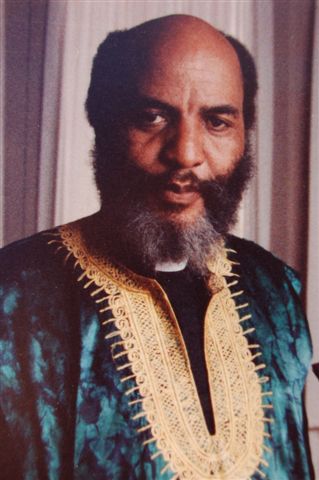
James Luther Bevel (October 19, 1936 – December 19, 2008) was an American minister and a leader and major strategist of the 1960s Civil Rights Movement. As a member of the Southern Christian Leadership Conference (SCLC), and then as its director of direct action and nonviolent education, Bevel initiated, strategized, and developed SCLC's three major successes of the era:[2][3] the 1963 Birmingham Children's Crusade,[4] the 1965 Selma voting rights movement, and the 1966 Chicago open housing movement.[5] He suggested that SCLC call for and join a March on Washington in 1963[6] and strategized the 1965 Selma to Montgomery marches which contributed to Congressional passage of the 1965 Voting Rights Act.[7]

Key Information

Prior to his time with SCLC, Bevel worked in the Nashville Student Movement, which conducted the 1960 Nashville Lunch-Counter Sit-Ins, the 1961 Open Theater Movement, and recruited students to continue the 1961 Freedom Rides after they were attacked. He helped with initiating and directing the 1961 and 1962 voting rights movement in Mississippi. In 1967, Bevel was chairman of the Spring Mobilization Committee to End the War in Vietnam. He initiated the 1967 March on the United Nations as part of the anti-war movement.[8][9] His last major action was as co-initiator of the 1995 Day of Atonement/Million Man March in Washington, D.C. For his work, Bevel has been called the strategist and architect of the 1960s Civil Rights Movement[10] and, with Dr. King, half of the first-tier team that formulated many of the strategies and actions to gain federal legislation and social changes during the 1960s civil rights era.[8][9]

In 2005 Bevel was accused by one of his daughters of incest. Three others accused him of sexual abuse that allegedly occurred when they were children, though he was never charged with those crimes. He was tried for incest in April 2008, convicted, and sentenced to fifteen years in prison and a fine of $50,000.[11] After serving seven months, he was freed awaiting an appeal; he died of pancreatic cancer in December 2008 and was buried in Eutaw, Alabama.[12]

Early life and education (1936–1961)

[edit]

Bevel was born in 1936 in Itta Bena, Mississippi, the son of Illie and Dennis Bevel.[13] He was one of 17 children and grew up in rural LeFlore County of the Mississippi Delta and in Cleveland, Ohio. He worked on a cotton plantation for a time as a youth and later in a steel mill. He was educated at segregated local schools in both Mississippi and Cleveland. After high school he served in the U.S. Navy for a time and pursued a career as a singer.[14]

Feeling an inner call to become a minister, he attended the American Baptist Theological Seminary in Nashville, Tennessee from 1957 to 1961 and became a Baptist preacher. He joined the Southern Christian Leadership Conference.[14] While at seminary, Bevel reread Leo Tolstoy's 1894 book The Kingdom of God Is Within You, which had previously inspired his decision to leave the military. Bevel also read several of Mohandas Gandhi's books and newspapers while taking off-campus workshops on Gandhi's philosophy and nonviolent techniques taught by James Lawson of the Southern Christian Leadership Conference. Bevel also attended workshops at the Highlander Folk School taught by its founder, Myles Horton, who emphasized grassroots organizing.[13]

Leading the movements (1960s)

[edit]

Nashville Student Movement (1960–1961) and SNCC

[edit]

In 1960, along with James Lawson's and Myles Horton's students Bernard Lafayette, John Lewis, Diane Nash, C.T. Vivian and others, Bevel participated in the Nashville Sit-In Movement organized by Nash, whom he would later marry, to desegregate the city's lunch counters. After the success of this action, and with the aid of SCLC's Ella Baker, activist students from Nashville and across the South developed the Student Nonviolent Coordinating Committee (SNCC). While working on SNCC's commitment to desegregate theaters, Bevel successfully directed the 1961 Nashville Open Theater Movement.[15]

The Open Theater Movement, led by Bevel, had success in Nashville, the only city in the country where SCLC activists had organized such an action. In this same period, the Congress of Racial Equality (CORE) had organized the 1961 Freedom Rides through the Deep South to challenge southern state laws and practices that interstate buses and their facilities remain segregated despite federal laws for equal treatment. After buses and riders were severely attacked, including a firebombing of a bus and beatings with police complicity in Birmingham, Alabama, CORE suspended the rides.[16] Diane Nash, the Nashville Student Movement's chairman, urged the group to continue the Freedom Rides, and called for college volunteers from Fisk and other universities across the South. Bevel selected the student teams for the buses. He and the others were arrested after they arrived in Jackson, Mississippi and tried to desegregate the waiting rooms in the bus terminal. Eventually, the Freedom Riders reached their goal of New Orleans, Louisiana, generating nationwide coverage of the violence to maintain Jim Crow and white supremacy in the South.[17]

While in the Jackson jail, Bevel and Bernard Lafayette initiated the Mississippi Voting Rights Movement. They, Nash, and others stayed in Mississippi to work on grassroots organizing.[18] Activists encountered severe violence at that time and retreated to regroup. Later efforts in Mississippi developed as Freedom Summer in 1964, when extensive voter education and registration efforts took place. Lafayette and his wife, Colia Lidell, also opened an SNCC project in Selma, Alabama, to assist the work of local organizers such as Amelia Boynton.

Bevel and King join forces (1962)

[edit]

In 1962, Bevel was invited to meet in Atlanta with Martin Luther King Jr, a minister who was head of the SCLC. At that meeting, which had been suggested by James Lawson, Bevel and King agreed to work together on an equal basis, with neither having veto power over the other, on projects under the auspices of the Southern Christian Leadership Conference (SCLC). They agreed to work until they had ended segregation, obtained voting rights, and ensured that all American children had a quality education. They agreed to continue until they had achieved these goals, and to ask for funding from the SCLC only if the group was involved in organizing a movement.[8][9]

Bevel soon became SCLC's director of direct action and director of nonviolent education to augment King's positions as SCLC's chairman and spokesperson.[citation needed]

Birmingham Children's Crusade (1963)

[edit]
A black-and-white photograph of a black male teenager being held by his sweater by a Birmingham policeman and being charged by the officer's leashed German Shepherd while another police officer with a dog and a crowd of black bystanders in the background look on
As Bevel sent 50 students at a time out of the 16th Street Baptist Church to march in Birmingham, Alabama, Associated Press photographer Bill Hudson took this well-known image of Parker High School student Walter Gadsden being attacked by dogs.

In 1963, SCLC agreed to assist its co-founder, Fred Shuttlesworth, and others in their work on desegregating retail businesses and jobs in Birmingham, Alabama, where discussion and negotiations with city officials had yielded few results. Weeks of demonstrations and marches resulted in King, Ralph Abernathy, and Shuttlesworth being arrested and jailed. King wanted to fill the jails with protesters, but it was becoming more difficult to find adults to march. They were severely penalized for missing work and were trying to support their families.

Bevel suggested recruiting students in the campaign.[14] King was initially reluctant, but agreed. Bevel spent weeks developing strategy, recruiting and educating students in the philosophy and techniques of nonviolence. Their meetings occurred at Birmingham's 16th Street Baptist Church, and it was from there that Bevel directed the students, 50 at a time, to peacefully walk to Birmingham's City Hall to talk to Mayor Art Hanes about segregation in the city. Almost 1,000 students were arrested on the first day. The following day, when more students arrived at the church and started to walk to city hall, Eugene "Bull" Connor, City Commissioner of Public Safety, ordered that German Shepherd dogs and high-pressure fire hoses be used to stop them. The national and international media covered the story, and photographs of the force used against schoolchildren generated public outrage against the city and its officials.

Dispute with President John F. Kennedy and the March on Washington

[edit]

During what was later called the Birmingham Children's Crusade, President John F. Kennedy asked King to stop using children in the campaign. King asked Bevel to refrain from recruiting students, and Bevel instead said that he would organize the children to march to Washington D.C. to meet with Kennedy about segregation, and King agreed.[6] Bevel went to the children and asked them to prepare to take to the highways for a march on Washington, with the goal of questioning the President about his plans to end legal segregation in America.[6] Hearing of this plan, and in response to the city's violent treatment of the students, the Kennedy administration asked SCLC's leaders what they wanted in a comprehensive civil rights bill. Kennedy's staff, who were already drafting one, came to an agreement on its contents with the SCLC's leadership. Bevel then called off plans for the children's march.

Alabama Project and the Selma Voting Rights Movement (1965)

[edit]
James Bevel's plan for a march from Selma to Montgomery resulted in "Bloody Sunday". Protesters later completed a march with federal protection, and thousands of people entered the capital in support of voting rights.

In September 1963, a bombing at the 16th Street Baptist Church in Birmingham killed four young girls attending Sunday School and damaged the church. It was later proven that a Ku Klux Klan chapter was responsible. Bevel proposed organizing the Alabama Voting Rights Project, and co-wrote the project proposal with his wife Diane Nash.[19] They moved to Alabama to implement the project along with Birmingham student activist James Orange.

At the turn of the 20th century, southern state legislatures had passed new constitutions and laws that effectively disenfranchised most blacks. Practices such as requiring payment of poll taxes and literacy tests administered in a discriminatory way by white officials maintained the exclusion of blacks from the political system in the 1960s. SNCC had been conducting a Voting Rights Project (headed by Prathia Hall and Worth Long) since the early 1960s, meeting with violence in Alabama. In late 1963 Bevel, Nash, and Orange also worked with local grassroots organizations to educate blacks and support them in trying to gain registration as voters, but made little progress. They invited King and other SCLC leaders to Selma to develop larger protests and actions, and work alongside Bevel's and Nash's Alabama Project.[5] Together the groups became collectively known as the Selma Voting Rights Movement, with James Bevel as its director.

The Movement began to stage regular marches to the county courthouse, which had limited hours for blacks to register as voters. Some protesters were jailed, but the movement kept the pressure on. On February 16, 1965, Jimmie Lee Jackson, his mother, and grandfather took part in a nighttime march led by C. T. Vivian to protest the related jailing of activist James Orange in Marion, Alabama. The street lights were turned off by Alabama State Troopers who attacked the protesters. In the melee, Jackson, 26, was shot in the stomach while defending his mother from an attack. He died a few days later.

Bevel and others were grieved and outraged. He suggested a march from Selma to Montgomery, the capital, to protest Jackson's death and press Governor George Wallace to support voting rights for African Americans.[9] As the first march reached the end of the Edmund Pettus Bridge and passed out of the city, they were attacked by county police and Alabama State Troopers. The large group were bludgeoned and tear-gassed in what became known as "Bloody Sunday". SNCC chairman John Lewis and Amelia Boynton were both injured.

In March 1965 protesters made a symbolic march, inspired by a fiery speech by Bevel at Brown Chapel A.M.E. Church, where much organizing was done.[14] The protesters were under an injunction, so they remained within city limits. Organizers appealed to the federal court against an injunction by the state against marching to complete their planned march to the capital. Judge Frank Johnson approved a public march. Following the nationwide publicity generated by Jackson's death and the previous attack on peaceful marchers, hundreds of religious, labor and civic leaders, many celebrities, and activists and citizens of many ethnicities traveled to Selma to join the march. By the time they entered Montgomery 54 miles away, the marchers were thousands strong. Even before the final march occurred, President Lyndon Johnson had gone on national television to address a joint session of Congress, appealing for passage of his administration-backed comprehensive Voting Rights Act.

In 1965 SCLC gave its highest honor, the Rosa Parks Award, to James Bevel and Diane Nash for their work on the Alabama Voting Rights Project.

Chicago Freedom Movement (1965–1966) and the Anti-Vietnam War Movement (1967)

[edit]

In 1966, Bevel chose Chicago as the site of SCLC's long-awaited Northern Campaign.[20] He worked to create tenant unions and build grassroots action to "end" slums. From previous discussions with King, and from work of American Friends Service Committee activist Bill Moyer, Bevel organized, and directed the Chicago open housing movement. Housing in the area was segregated in a de facto way, enforced by covenants and real estate practices. This movement ended within a Summit Conference that included Chicago Mayor Richard J. Daley.

As the Chicago movement neared its conclusion A. J. Muste, David Dellinger, representatives of North Vietnamese leader Ho Chi Minh, and others asked Bevel to take over the directorship of the Spring Mobilization Committee to End the War in Vietnam.[21] Bevel was influential in gaining King's support for the anti-war movement,[14] and with King agreeing to participate as a speaker, Bevel agreed to lead the antiwar effort.

He renamed the organization the National Mobilization Committee to End the War in Vietnam, recruited members of many diverse groups, and organized the April 15, 1967 march from Central Park to the United Nations Building in New York City. Originally planned as a rally in Central Park, the United Nations Anti-Vietnam War March became the largest demonstration in American history to that date.[citation needed] During his speech to the crowd that day, Bevel called for a larger march in Washington D.C., a plan that evolved into the October 1967 March on the Pentagon. This rally was attended by tens of thousands of peace activists who followed the growing counterculture movement.[22]

Memphis sanitation strike (1968)

[edit]

Although he opposed King's and SCLC's participation in it, Bevel, along with King and Ralph Abernathy, helped lead the Memphis sanitation workers' strike by organizing the protest and work stoppage.[23][24] The strike began on February 12, 1968, after two black sanitation workers, Echol Cole and Robert Walker, were crushed to death by a malfunctioning garbage compactor truck on February 1, and the city's discriminatory response to the deaths catalyzed over 1,300 sanitation workers to walk off their jobs.[23]

King arrived at Memphis on March 18, 1968, to address a crowd of approximately 25,000 people, the largest indoor gathering the civil rights movement had ever seen, where he encouraged supporters to engage in a citywide work stoppage and promised to return on March 22 to lead a protest march through the city.[23] When King left Memphis the following day, Bevel and Ralph Abernathy remained in the city to help organize the planned protest and work stoppage.[23][25] Their organizing efforts included coordinating with local leadership, planning demonstration logistics, and building community support for the March 22 citywide action.

The originally planned March 22 demonstration was postponed due to a massive snowstorm that prevented King's return to Memphis, forcing organizers to reschedule the march for March 28.[26] On March 28, the demonstration turned violent when some participants engaged in window-breaking and looting, resulting in the death of 16-year-old Larry Payne and injuries to approximately 60 people.[27][28]

Due to the violence that ensued during the strike, the city of Memphis filed a formal District Court complaint against King, Hosea Williams, James Bevel, James Orange, Ralph Abernathy, and Bernard Lee, all members of the Southern Christian Leadership Conference (SCLC) staff.[27][28] The legal complaint accused them of engaging in a conspiracy to incite riots or breaches of the peace. The strike ultimately concluded on April 16, 1968, twelve days after King's assassination on April 4 at the Lorraine Motel in Memphis, with the city recognizing the union and agreeing to wage increases for the sanitation workers.[23]

King assassination (April 4, 1968)

[edit]

In 1968 Dr. King objected to Bevel and other SCLC organizers' opposition to proceeding with King's planned Poor People's Campaign. Historian Taylor Branch quotes King in At Canaan's Edge: America in the King Years, 1965–1968 (2006) as saying that "Andrew Young had given in to doubt, Bevel to brains, and Jackson to ambition", and said that the movement had made them, and now they were using the movement to promote themselves. "He confronted Bevel, who had been a mentor to Jackson and Young, as 'a genius who flummoxed his own heart'. 'You don't like to work on anything that isn't your own idea,' King said, 'Bevel, I think you owe me one.'"[29]

Bevel was in the parking lot of the Lorraine Motel in Memphis and witnessed King's assassination on April 4, 1968. He reminded SCLC's executive board and staff that evening that King had left "marching orders" that, if anything should happen to him, he intended for Abernathy to take his place as SCLC's chairman.[30] Bevel continued to oppose the Poor People's Campaign, but served as its director of nonviolent education.

For Bevel, King's assassination "represented a great personal crisis."[31] In particular, he claimed that James Earl Ray had not killed King and he offered to defend Ray in court; also campaigning for Ray's release from prison, even though Ray pled guilty to the crime.[14]

Bevel was not the only prominent civil rights leader who believed Ray was a convenient scapegoat for Dr. King’s murder. The wife and family of Dr. King filed and won a civil suit in 1999 proving Ray had been framed by a group of murderous conspirators, including federal government agencies. Though the lawsuit remains largely ignored in media, the Loyd Jowers trial is well documented.

Bevel in the 1970s, 1980s, and 1990s

[edit]

SCLC's board of directors removed Bevel from his leadership positions in 1970. He had become "increasingly overbearing" in King's absence, and acted with "an almost studied arrogance," though the direct cause of his removal was the result of an incident at Spelman College, in Atlanta.[31]

Also in 1970, Bevel created the Making of the Man Clinic.[32]

In the 1980s, Bevel supported Ronald Reagan as president.[14] In 1986, Bevel, Chicago alderman Danny K. Davis, singer-songwriter Kristin Lems, and others participated in an unsuccessful project of creating a summit in Chicago for Gorbachev and Reagan to bring peace and resolution to the ongoing Cold War.[33]

In 1989, Bevel and Abernathy organized the National Committee Against Religious Bigotry and Racism. This was financially backed by the Unification Church of Sun Myung Moon, which appeared to be trying to improve its controversial image by allying with such respected leaders.[34][35] A year earlier, Bevel had denounced the deprogramming of a Moon follower and called for the protection of religious freedom. He also supported Unification Church members in their protest against news media use of the word "Moonie", which they considered offensive.[36][37]

Bevel moved to Omaha, Nebraska, in November 1990 as the leader of the "Citizens Fact-Finding Commission to Investigate Human Rights Violations of Children in Nebraska", a group organized by the Schiller Institute.[38] The commission was associated with conspiracy theorist Lyndon LaRouche, and sought to persuade the state legislature to reopen its two-year investigation into the Franklin child prostitution ring allegations. Bevel never submitted the collected petitions and left the state the following summer.[39]

In 1992, Bevel ran on LaRouche's ticket as the vice presidential candidate. At the time, he was living and working in Leesburg, Virginia, near LaRouche's headquarters. LaRouche, characterized as a perennial candidate, was serving a prison sentence for mail fraud and tax evasion.[40] He engaged in LaRouche seminars on issues including "Is the Anti Defamation League the new KKK?"[41] When Bevel introduced LaRouche at a convention of the 1996 National African American Leadership Summit, both men were booed off the stage. A fight broke out between LaRouche supporters and black nationalists.[42]

Criminal charges (2007–2008)

[edit]

In May 2007, Bevel was arrested in Alabama on a charge of incest committed sometime between October 1992 and October 1994 in Loudoun County, Virginia. At the time, Bevel was living in Leesburg, Virginia, and working with LaRouche's group, whose international headquarters was a few blocks from Bevel's apartment.

The accuser was one of his daughters, who was 13–15 years old at the time and lived with him. At a family reunion, three other daughters had also alleged that Bevel sexually abused them.[14] Virginia had no statute of limitations for the offense of incest. Bevel pleaded not guilty to the one count charged and maintained his innocence. During his four-day trial in 2008, the accusing daughter testified that she was repeatedly molested by him, beginning when she was six years old.[43]

During the trial, prosecutors presented key evidence: a 2005 police-sting telephone call recorded by the Leesburg police without Bevel's knowledge. During that 90-minute call, Bevel's daughter asked him why he had sex with her the one time in 1993, and she asked him why he wanted her to use a vaginal douche afterward. Bevel said that he had no interest in getting her pregnant. At trial, Bevel denied committing the sexual act and his recorded statement was used against him.[44]

On April 10, 2008, after a three-hour deliberation, the jury convicted Bevel of incest. His bond was revoked and he was taken into custody.[45] On October 15, 2008, the judge sentenced him, based on the jury's recommendation, to 15 years in prison and fined him $50,000. After the verdict, Bevel claimed that the charges were part of a conspiracy to destroy his reputation, and said that he might appeal. He received an appeal bond on November 4, 2008, and was released from jail three days later, after a diagnosis of pancreatic cancer.[14] Six weeks later he died of cancer, at the age of 72, in Springfield, Virginia.[46]

Bevel's attorney requested that the Court of Appeals of Virginia abate the conviction on account of Bevel's death. The Court of Appeals remanded the case to the trial court to determine whether there was good cause not to abate the conviction. The trial court found that abating the conviction would deny the victim the closure that she sought and denied the motion to abate. The Court of Appeals affirmed this judgment.[47] Bevel's attorney appealed the denial of the abatement motion to the Supreme Court of Virginia. In an opinion issued November 4, 2011, the commonwealth's Supreme Court held that abatement of criminal convictions was not available in Virginia under the circumstances of Bevel's case. Because the executor of Bevel's estate had not sought to prosecute the appeal, the Court affirmed the dismissal of his appeal as moot.[48]

Marriage and family

[edit]

In 1961, Bevel married activist Diane Nash after he completed his seminary studies. They worked together on civil rights, and had a daughter and son together. They divorced after seven years.[49] He married two other women in the following decades, and had told the court during his incest case that he had 16 children born of seven women.[14]

Cultural impact

[edit]

Actor and rapper Common portrays Bevel in the 2014 film Selma.[50]

See also

[edit]

References

[edit]
[edit]
Revisions and contributorsEdit on WikipediaRead on Wikipedia
from Grokipedia
James Luther Bevel (October 19, 1936 – December 19, 2008) was an American Baptist minister and civil rights activist who rose to prominence as a director of and nonviolent strategist for the (SCLC) from 1963 to 1969, devising tactics that pressured federal intervention against segregation in the American South. Bevel, born into a sharecropping family in , as one of sixteen children, initially served in the U.S. Navy before studying at American Baptist Theological Seminary in Nashville, where he participated in sit-ins that honed his commitment to Gandhian nonviolence. Joining SCLC under Martin Luther King Jr., Bevel orchestrated the 1963 Birmingham Children's Crusade, recruiting thousands of students to march against , an action credited with compelling President Kennedy to propose civil rights legislation by exposing police brutality through attack dogs and fire hoses. He also played a central role in planning the 1965 Selma to Montgomery voting rights marches, which galvanized national support leading to the Voting Rights Act, and advocated for integrating the 1963 March on Washington into SCLC's broader strategy. In later years, Bevel shifted toward economic justice initiatives like founding Students for Education and Economic Development () and aligned with fringe political figures, running as vice-presidential candidate alongside in 1992 while endorsing Reagan-era policies. His legacy was marred by a 2008 conviction for with his biological daughter in , resulting in a 15-year sentence he began serving shortly before dying of ; the appellate effort to vacate the conviction posthumously failed.

Early Life and Formation (1936–1961)

Childhood in Mississippi and Ohio

James Luther Bevel was born on October 19, 1936, in , to sharecropper Dennis Bevel and his wife Illie, becoming one of seventeen children in a family sustained by arduous agricultural labor. The Bevel family split time between rural —where young James contributed to cotton plantation work amid entrenched Jim Crow segregation and economic deprivation—and , reflecting patterns of Black migration for better prospects during the Great Migration era. This dual environment exposed him to stark racial hierarchies in the , including legalized in public facilities and schools, contrasted with northern urban industrial settings that offered limited escape from poverty but introduced new social dynamics. Household life was characterized by scarcity and rigid authority, with Bevel's mother enforcing discipline through frequent on the children, a practice common in some families grappling with survival pressures. Baptist religious practices permeated the family's worldview, providing communal structure amid hardship, though Bevel's deeper engagement with faith developed subsequently. These early conditions instilled resilience shaped by familial interdependence and the unyielding realities of racial and economic subjugation.

U.S. Navy Service and Religious Awakening

Bevel enlisted in the United States Naval Reserve in 1954 at age 17 and served until 1955. His service occurred during a period when the U.S. military remained partially segregated, with Black personnel often facing discriminatory treatment in assignments, promotions, and facilities, though specific personal experiences from Bevel's time are sparsely documented. Following his discharge, Bevel briefly pursued a career as a singer, performing with a group in the mid-1950s. Around 1959, he underwent a profound religious awakening, experiencing a personal call to evangelical that prompted his ordination as a Baptist minister that same year. This conversion emphasized direct spiritual revelation over entrenched denominational rituals, leading him to reject violence as incompatible with his newfound faith in non-resistant love modeled after biblical teachings. In the immediate aftermath, Bevel commenced preaching, assuming the pastorate of Chestnut Grove Baptist Church in Dixon, Tennessee, from 1959 to 1961. His early ministry focused on personal and moral transformation through , marking an ideological pivot from worldly ambitions to a commitment to spiritual and ethical purity, which later informed his advocacy for pacifist strategies.

Theological Education and Initial Activism

In 1959, James Bevel was ordained as a Baptist minister while enrolled at the American Baptist Theological Seminary in , where he pursued formal theological training that emphasized the integration of Christian principles with . There, he encountered Rev. James Lawson, who led workshops on Gandhian , teaching students—including Bevel—the philosophy of , role-playing techniques for enduring violence without retaliation, and the moral imperative of confronting injustice through disciplined rather than armed . These sessions, drawing from Lawson's studies in and King's advocacy, framed not merely as a tactic but as a spiritual discipline rooted in love and the belief that suffering could expose and transform systemic evil. Bevel's seminary experience bridged his personal religious awakening—sparked during U.S. Navy service—with organized activism, as he began applying these teachings to challenge . In early 1960, he participated in initial demonstrations at downtown Nashville lunch counters, testing nonviolent strategies by occupying segregated spaces and absorbing verbal and physical harassment to highlight discriminatory practices. These efforts sharpened his skills in coordinating small groups, maintaining discipline under pressure, and linking theological convictions to public witness, convincing him that faith demanded active resistance to oppression without recourse to violence. Bevel graduated from the seminary with a Bachelor of Arts degree in 1961, solidifying his resolve to pursue racial as a ministerial grounded in nonviolent . This period marked his transition from individual spiritual reflection to structured , viewing desegregation not as political expediency but as a fulfillment of biblical mandates for and , eschewing armed resistance in favor of methods that preserved moral authority.

Civil Rights Leadership and Strategies (1960–1968)

Nashville Student Movement and Nonviolence Training

James Bevel enrolled at American Baptist Theological Seminary in Nashville in the late 1950s, where he participated in nonviolence workshops organized by Rev. James Lawson starting in 1959. These sessions emphasized Gandhian principles, , and practical techniques such as simulated confrontations with segregationists to build discipline and resilience against verbal and physical abuse. Bevel, as one of the emerging student leaders, absorbed and applied these methods in coordinating actions within the Nashville Student Movement (NSM). From early 1960, Bevel collaborated with students from , , and other institutions to execute targeted sit-ins beginning February 13, 1960, at downtown lunch counters including Kress, McClellan, and Woolworth's. The campaign combined persistent demonstrations with economic boycotts of white-owned businesses, sustaining pressure despite over 150 arrests and instances of violence from opponents. Trained participants maintained nonviolent discipline, absorbing attacks without retaliation, which minimized escalation and garnered sympathetic media coverage. The preparation through workshops proved empirically effective: unlike sporadic earlier protests, the structured training reduced protester-initiated violence to near zero, enabling sustained mobilization that forced negotiations. By May 10, 1960, Nashville became the first major Southern city to desegregate its lunch counters following an agreement brokered by civic leaders, demonstrating the model's viability for challenging Jim Crow facilities. This success, with measurable desegregation of public accommodations, informed national tactics adopted by groups like the .

Alliance with SCLC and Martin Luther King Jr.

In 1962, James Bevel left the (SNCC) to join the (SCLC) as its Mississippi field secretary, marking his entry into national civil rights leadership under Drawing on his expertise in nonviolent training from the Nashville Student Movement, Bevel quickly advanced to head SCLC's Direct Action Department and serve as Director of Nonviolent Education, roles that formalized his advisory capacity to King on tactical implementation. This alliance integrated Bevel's emphasis on disciplined mass mobilization into SCLC's framework, complementing King's broader philosophical leadership. Bevel counseled King to prioritize direct confrontation over protracted elite negotiations, positing that widespread, disciplined nonviolent action would force exposure of institutional injustices and generate irresistible moral pressure for reform. His SNCC-honed methods stressed participants in resilience against repression, aiming to sustain momentum through collective commitment rather than isolated appeals. This strategic input positioned Bevel as a pivotal architect of SCLC's evolving operational , bridging energy with organizational discipline. Bevel's involvement catalyzed a shift in SCLC from predominantly adult-led initiatives to more inclusive models incorporating and networks, leveraging his prior success in student-led sit-ins and voter drives. This adaptation broadened participation bases, with SCLC expanding field staff and training programs under his direction to accommodate diverse demographics, thereby enhancing the scale and sustainability of nonviolent efforts prior to major urban campaigns.

Birmingham Children's Crusade: Tactics and Outcomes

James Bevel, as (SCLC) organizer, proposed involving children in the after adult arrests stalled progress, arguing that youth represented an untapped resource unburdened by adult responsibilities like jobs and mortgages, enabling sustained pressure to overwhelm local jails and compel federal intervention. On May 2, 1963, over 1,000 Black schoolchildren, trained briefly in nonviolent discipline at churches including 16th Street Baptist, marched downtown to protest segregation, resulting in nearly 1,000 arrests as police used paddy wagons and school buses to transport them when facilities overflowed. The next day, May 3, another 1,000 students joined, prompting Public Safety Commissioner Eugene " to deploy fire hoses and police dogs against the marchers, actions captured by national media and broadcast widely. These tactics succeeded empirically in generating intense media scrutiny of police brutality toward minors, which eroded moderate support in Birmingham and pressured the Kennedy administration to urge negotiations, culminating in a May 10, 1963, agreement between civic leaders and protesters to desegregate downtown stores, hire Black workers, and release jailed demonstrators without bond. Bevel's rationale emphasized children's inherent and willingness to participate, as he later stated that many youth viewed segregation as impermanent unlike resigned adults, providing the campaign's breakthrough after initial failures. However, the strategy drew ethical criticisms for exposing children to physical harm, with some SCLC leaders initially opposing it due to risks of injury or backlash; hesitated before approving, prioritizing the movement's desperation, while contemporaries like condemned the use of youth as exploitative, arguing it subjected innocents to violence under the guise of . countered that children volunteered after witnessing adult oppression and demanded involvement, framing their agency as key to causal disruption of systemic inertia rather than mere endangerment. Despite such debates, the immediate outcomes validated the approach's visibility gains, as the graphic imagery shifted national opinion against segregationist tactics without relying on adult-led stalemates.

Selma Voting Rights Campaign and Beyond

James Bevel, as director of direct action for the (SCLC), played a central role in initiating the Selma voting rights campaign in late 1964. Targeting , where only 383 of 15,165 eligible Black adults—approximately 2.5%—were registered to vote amid systemic barriers like literacy tests and poll taxes, Bevel coordinated early efforts combining voter registration drives with nonviolent demonstrations to the county courthouse. These actions, starting in January 1965, aimed to expose disenfranchisement and compel federal intervention, evolving Bevel's tactics from isolated protests to sustained campaigns integrating moral suasion with political pressure. Following the shooting death of protester Jimmie Lee Jackson on February 18, 1965, Bevel advocated for a march from Selma to the Alabama state capitol in Montgomery to demand voting rights protections. The first attempt on March 7, known as Bloody Sunday, saw state troopers and deputies assault approximately 600 marchers on the Edmund Pettus Bridge, drawing national media coverage and outrage. Bevel's strategy emphasized disciplined nonviolence to highlight brutality, forcing a moral crisis that shifted public and political opinion. A second march on March 9, dubbed Turnaround Tuesday, involved over 2,500 participants led by Martin Luther King Jr.; organized with input from Bevel, it advanced to the bridge but turned back under a temporary federal injunction and to avert further violence, symbolizing restraint while maintaining pressure. The Selma confrontations catalyzed President to introduce voting rights legislation on March 15, 1965, culminating in the Voting Rights Act signed on August 6. This law suspended literacy tests, authorized federal registrars, and covered jurisdictions with discriminatory histories, leading to rapid enfranchisement gains: Black voter registration in affected Southern counties rose from about 29% in 1964 to 61% by 1969, with Dallas County seeing registrants increase to over 11,000 by late 1965. Beyond Selma, Bevel extended similar tactics to St. Augustine, Florida, in spring 1964, directing SCLC demonstrations against segregation—including wade-ins and mass arrests—that intertwined public accommodations challenges with voter registration pushes, amplifying national pressure for the Civil Rights Act of 1964, which banned discriminatory voting practices. Bevel's approach prioritized creating visible crises to invoke federal oversight over purely litigious grassroots efforts, critiqued by some legal strategists for risking participant safety and diverting from court-based challenges, yet empirically effective in accelerating legislative breakthroughs where judicial remedies had stalled for decades. Post-Selma applications in other Alabama locales continued this blend, though data indicate sustained registration required ongoing federal enforcement alongside local organizing to counter residual intimidation.

Chicago Freedom Movement, Anti-War Efforts, and Memphis Strike

In 1966, Bevel directed nonviolent direct action for the (SCLC) during the , focusing on open housing to combat segregation in the North. He organized marches into all-white neighborhoods, including a demonstration in Marquette Park and subsequent events through August, where participants encountered severe white backlash, including rocks, bottles, and bricks thrown by crowds numbering in the thousands. These actions, drawing 30,000 to 45,000 participants at peak rallies like the July 10 Soldier Field event, pressured city officials but revealed the entrenched resistance of northern interests and political machines, yielding only the limited Summit Agreement on August 26, which promised nondiscriminatory practices but lacked enforcement mechanisms and failed to achieve systemic integration. By 1967, Bevel shifted emphasis to opposing U.S. involvement in , serving as national director of the Spring Mobilization Committee to End the War in and coordinating mass protests that framed the conflict as an imperial distraction diverting resources from domestic racial and economic inequities. He spearheaded the April 15 March on the in , which drew between 100,000 and 400,000 demonstrators—the largest anti-war protest to date—and followed with actions, influencing SCLC's internal debates and contributing to Martin Luther King Jr.'s public condemnation of the war in April 1967 as incompatible with civil rights goals. Bevel's strategy integrated anti-war activism with SCLC operations, arguing that militarism exacerbated black poverty and , though it strained alliances with pro-war moderates and federal authorities. In February 1968, Bevel coordinated SCLC support for the Memphis sanitation workers' strike, initiated on February 12 by over 1,100 of the city's 1,300 black sanitation employees demanding union recognition, higher wages (from $1.60 to $1.90 per hour), and safer conditions following the suffocation deaths of two workers, Euel Smith and Robert Walker, in malfunctioning garbage trucks during a storm. Remaining in Memphis after King's initial visit, Bevel collaborated with local leaders like group to orchestrate nonviolent marches and rallies, including a event that turned violent due to youth contingents, prompting his focus on disciplined economic justice framing to sustain the strike amid city intransigence under Mayor . This effort aligned with pre-strike planning for the , a multiracial push for federal anti-poverty legislation including a $30 billion annual commitment; Bevel led the Midwestern caravan departing May 8, 1968, to converge on , for Resurrection City encampments aimed at highlighting labor exploitation as a root of inequality. The Memphis action underscored Bevel's view of strikes as extensions of nonviolent leverage for wage equity, though logistical challenges foreshadowed broader campaign difficulties.

Philosophical Foundations and Theoretical Contributions

Bevel's Interpretation of Nonviolence

James Bevel conceptualized as an active moral and metaphysical force, fundamentally grounded in the principles of and truth, which he derived from Christian doctrine, Gandhian , and rational analysis of human conduct. He posited that nonviolence transcends mere absence of aggression, representing instead a disciplined commitment to uphold truth without violating persons or property, as "it's logical that you should people, you shouldn't violate people." This interpretation emphasized as a causal agent for transformation, where in divine —equated with —underpins resistance to , enabling victories through moral integrity rather than coercive power. Central to Bevel's framework was the notion of "soul force," adapted from Gandhi's satyagraha or truth-force, which he integrated with biblical imperatives to foster an inner spiritual strength that confronts injustice without retaliation. Influenced by workshops under James Lawson, Bevel viewed this soul force as a metaphysical reality that appeals to the conscience, breaking the cycle of retaliatory violence by refusing cooperation with evil—"no one has the power to oppress you if you don’t cooperate." He reasoned from first principles that love and nonviolation align with universal logic and constitutional equality, rendering nonviolence a scientific application: greater opposition to principled action clarifies moral contradictions, exposing the oppressor's brutality to onlookers and compelling societal reevaluation. Bevel critiqued passive interpretations of , arguing it operates causally through the deliberate revelation of evil's inherent flaws, not through cultivated victimhood. In his view, nonviolent discipline generates "creative tension" that highlights systemic , as when calm adherence to provokes disproportionate responses, thereby shifting public perception and without ethical compromise. Empirical outcomes in nonviolent struggles demonstrated this mechanism, where moral clarity—sustained by commitments to and truth—dismantled barriers by invoking broader ethical consensus, affirming nonviolence's efficacy as a force of inevitable rectification.

Integration of Science and Spirituality in Activism

Bevel framed as a deliberate "" requiring disciplined application to achieve , distinguishing it from passive inaction or sporadic violence. In a 1964 oral history interview, he explained that heightened resistance encountered during actions sharpens public perception of injustices, making the method a strategic tool for moral and political clarity rather than mere ethical posturing. This perspective stemmed from his training under James Lawson at Nashville's American Baptist Theological Seminary, where was taught as both a tactical discipline and a theological imperative rooted in love, influencing his coordination of campaigns like the Birmingham . Drawing from , Bevel sought to unify spiritual with systematic inquiry, proposing educational frameworks that interwove , , , , , and to empower individuals against . In a 1992 discussion, he advocated curricula enabling students to exercise " over the of the , and over the fowl of the air, and over every living thing that moveth upon the earth," as per Genesis, through nonviolent resolution of practical challenges like and , which naturally led to engagement with classical thinkers on . This synthesis aimed to cultivate activists capable of applying as a unifying force, echoing Tolstoy's interpretation of ' teachings where sustained amid adversity defines true religious practice, thereby bridging personal faith with . While Bevel's approach galvanized participants by aligning spiritual conviction with methodical strategy—evident in his recruitment and training of thousands for —contemporaries and historians noted its reliance on unquantifiable elements like moral resonance over falsifiable metrics, limiting broader scientific scrutiny. Skeptics, including those within movement circles favoring empirical analysis, critiqued such integrations as philosophically inspired but empirically undergirded primarily by observed outcomes in specific campaigns rather than universal principles akin to physical laws. Nonetheless, this blend sustained morale and tactical innovation, as seen in the psychological impact of disciplined on opponents during Selma and efforts.

Critiques of Nonviolent Tactics' Effectiveness and Ethics

The nonviolent tactics orchestrated by James Bevel in campaigns like Birmingham's produced measurable desegregation gains, yet analyses question whether these stemmed primarily from protest dynamics or concurrent economic and geopolitical pressures. On May 10, 1963, following weeks of demonstrations, Birmingham officials agreed to desegregate public facilities including stores, lunch counters, restrooms, and drinking fountains, while committing to nondiscriminatory hiring and the release of arrested protesters without . This accord accelerated local integration, with Black customers accessing previously segregated spaces within days, contributing to broader Southern shifts in public accommodations. Effectiveness critiques highlight multifaceted causation beyond nonviolent confrontation. Economic boycotts halved downtown commerce, pressuring business elites more directly than marches alone, while federal intervention under President Kennedy responded partly to Cold War imperatives: segregation's visibility abroad undermined U.S. credibility against Soviet propaganda on American hypocrisy. Scholarly assessments of note higher success rates when met with repression, as in Birmingham, but attribute elite concessions to pragmatic avoidance of sustained disruption and international embarrassment rather than ethical persuasion from . Conservative analyses further contend that while principled mitigated escalation, its reliance on law-defying disruption eroded public order, with durable reforms deriving from judicial enforcement of existing rights rather than street-level coercion. Ethical concerns center on the risks to participants, especially youth, in Bevel's strategies. The Children's Crusade mobilized over 1,000 students on May 2, 1963, resulting in nearly all arrests and, over subsequent days, exposure to police dogs that bit multiple protesters and high-pressure hoses that injured thousands of demonstrators. Bevel's rationale—that children faced fewer job-loss repercussions than adults—did not assuage doubts about deliberately courting violence against minors to generate media outrage, a tactic even initially opposed by Martin Luther King Jr. as potentially exploitative. Academic examinations label the approach controversial, arguing it subjected untrained youth to foreseeable harm under the guise of nonviolence, prioritizing spectacle over participant safety. Mainstream media depictions, often amplified by institutionally left-leaning outlets, emphasized police brutality while downplaying tactical provocations like blocking traffic, fostering a narrative that overstates moral suasion's role relative to enforced legal and economic realities.

Post-Assassination Activities and Political Engagements (1968–2000s)

Response to King's Death and Fragmentation of Movements

Following 's assassination on April 4, 1968, James Bevel assisted in advancing the Southern Christian Leadership Conference's (SCLC) unfinished initiatives, including demonstrations supporting the Memphis sanitation workers' strike that had drawn King to the city. As a core strategist for the —a multiracial effort launched earlier in 1968 to expose poverty and press for federal economic aid—Bevel contributed to its persistence amid widespread grief within the movement. The campaign relocated participants to , establishing Resurrection City as a encampment in May 1968, yet it grappled with poor weather, internal coordination issues, and arrests exceeding 3,000 by June. Under new SCLC president , the organization faced disputes over strategic direction, with sustained emphasis on and economic redistribution clashing against calls for institutional consolidation amid post-assassination disarray. Bevel's advocacy aligned with the campaign's core demands for annual incomes of at least $5,500 for poor families and a jobs guarantee, reflecting King's late shift toward systemic economic critique, though these efforts yielded limited policy gains. King's death eroded SCLC's cohesion, as evidenced by faltering transitions and fundraising shortfalls that hampered operations. The assassination accelerated the broader fragmentation of civil rights coalitions, transitioning from a relatively unified nonviolent front to decentralized splinter groups amid rising influences and urban unrest. SCLC's influence waned, marked by internal feuds and shrinking participation; by the 1970s, mobilization capacity had notably declined, with many allied organizations struggling or dissolving due to leadership vacuums and shifting priorities. This dissolution reflected empirical setbacks, including the Poor People's Campaign's collapse on June 24, 1968, when Resurrection City was cleared by authorities, underscoring the challenges of sustaining momentum without King's unifying presence.

Involvement in Anti-War and Third-Party Politics

In the early 1970s, following the escalation of U.S. involvement in , Bevel continued his anti-war efforts by linking military spending to the neglect of domestic economic inequities, arguing that the conflict undermined resources for poverty alleviation and civil rights enforcement. His prior role as national director of the Spring Mobilization Committee to End the War in in had organized protests drawing hundreds of thousands, including the April 15 demonstrations in New York and that mobilized 400,000 participants against the war's drain on American youth and finances. Bevel critiqued U.S. as inseparable from racial and class injustices at home, positing that wartime priorities exacerbated and joblessness in black communities. By the 1980s, Bevel's political activities pivoted toward electoral challenges outside traditional civil rights frameworks, including support for Ronald Reagan's 1980 presidential campaign and an unsuccessful 1984 bid for the in as a Republican, where he polled under 10% of the vote. These efforts reflected his growing emphasis on transcending racial divisions, through initiatives like founding Students for and (SEED) to promote joint ventures between poor whites and blacks. In 1992, Bevel joined independent candidate 's presidential ticket as vice-presidential nominee, campaigning on platforms prioritizing economic populism, including opposition to agreements and advocacy for massive public infrastructure projects to foster industrial recovery over what they termed divisive identity-based politics. LaRouche, serving a prison term for fraud convictions, secured in multiple states, but the ticket garnered just 43,128 votes nationally—0.07% of the total—highlighting limited electoral viability amid mainstream rejection of LaRouche's fringe associations and conspiracy-laden rhetoric. Critics within civil rights circles viewed Bevel's alignment with LaRouche as a dilution of his earlier strategic focus, associating him with a movement marred by legal scandals and ideological extremism that alienated traditional allies.

Associations with Fringe Groups and Evolving Views on Race and Society

In the 1980s and 1990s, Bevel shifted toward ideologies emphasizing spiritual unity across racial lines, advocating for a concept of "one humanity" that required moral and ethical transformation beyond legal desegregation. He argued that social systems perpetuating racial would dissolve in a divinely ordered society where love supplanted division, critiquing racial hierarchies as incompatible with universal principles of and reconciliation. This perspective positioned integration as a superficial remedy, insufficient without collective and renewal to address root causes of , such as individual moral failings and societal violence. Bevel's engagement with the Nation of Islam (NOI), despite its black nationalist and separatist doctrines, reflected his pursuit of transcending racial exclusivity through shared ethical imperatives. In 1995, he proposed the to NOI leader , framing it as a call for black men to embrace personal responsibility, family restoration, and atonement—principles he viewed as universally applicable to heal societal fractures. Farrakhan later honored Bevel at his 2008 funeral, underscoring their collaboration, though Bevel's universalist leanings contrasted with NOI's emphasis on racial separation, creating ideological tensions between his advocacy for interracial moral unity and the group's ethnocentric focus. Bevel extended his nonviolence philosophy to oppose abortion, equating it with moral violence that undermined the sanctity of and contradicted the movement's ethical foundations. He linked this stance to broader conservative critiques within activist circles, associating with groups that paralleled anti-abortion tactics in protesting perceived ethical lapses. This view aligned with his later emphasis on protecting vulnerable life forms as essential to societal renewal, though it drew criticism for aligning him with pro-life positions often at odds with progressive civil rights narratives. Bevel's anti-establishment evolution led to affiliations with fringe political entities, most notably his 1992 vice-presidential candidacy alongside , a convicted felon and proponent of conspiracy-laden economic theories. The , frequently characterized as cult-like by observers due to its insular structure and demands on members, attracted Bevel through shared critiques of mainstream institutions and calls for radical systemic overhaul. He also pastored the Hebraic-Christian-Islamic Assembly in , blending Abrahamic faiths in a syncretic approach that further distanced him from orthodox civil frameworks. These ties elicited accusations of cultish involvement, with detractors noting Bevel's immersion in groups prioritizing ideological conformity over empirical consensus, exacerbating tensions between his universalist ideals and the separatist or conspiratorial elements he courted.

Personal Life and Relationships

Marriages and Children

Bevel married civil rights activist in 1961 following his completion of seminary studies. The couple collaborated on civil rights initiatives and had two children: a daughter, Sherrillyn Jill Bevel, and a son, Douglas John Bevel. They divorced in 1968. Bevel married three additional times after his divorce from Nash. Across his relationships, he fathered 16 children with nine women, resulting in an extended family structure that aligned with his nomadic lifestyle and involvement in social movements.

Family Dynamics and Allegations of Abuse

James Bevel fathered at least 14 children across multiple relationships, creating a sprawling family network often centered in locations like Selma, Alabama, and Chicago's South Side, where he positioned himself as the primary spiritual and moral authority. Family interactions were shaped by Bevel's emphasis on patriarchal structures, including directives for male family members to fulfill roles as protectors and providers, reinforced through biblical interpretations that framed obedience and divine acknowledgment as pathways to favor and guidance. This dynamic fostered an isolated, insular environment, with Bevel promoting teachings on sexuality limited to procreation and discouraging external societal influences, which one daughter described as cult-like in its reliance on his unquestioned leadership. By the early 2000s, reports emerged of childhood within the , with multiple daughters alleging molestation by Bevel dating back to their youth. In November 2005, nine of Bevel's children confronted him collectively about these claims, which involved several daughters and stemmed from incidents as early as the 1990s or prior; Bevel denied the accusations and deflected responsibility toward his wife, asserting her control over custody matters. One accuser reported learning by 2004 of similar experiences among her sisters, noting that all eight sisters had been abused in varying forms, often obscured by the family's deference to Bevel's authority. These pre-conviction allegations remained unprosecuted at the time, highlighting patterns potentially enabled by Bevel's revered status as a civil rights strategist, which extended an aura of unchallengeable paternal and charismatic power into domestic spheres.

Charges of Incest and Trial Details

In May 2007, James Bevel was arrested in , and extradited to , to face a single charge of under Virginia Code § 18.2-366 for engaging in with his biological daughter between October 14, 1992, and October 14, 1994, when she was a minor aged 13 to 17. The alleged acts occurred while the family resided in , and the charge stemmed from a complaint filed by the victim in 2005, though Bevel was not immediately apprehended. The trial began on April 7, 2008, in the of Loudoun County, with Bevel pleading not guilty to the charge. The prosecution presented no , relying instead on and circumstantial accounts, including the victim's detailed that Bevel initiated with her at age 15 under the pretense that it would alleviate his personal "demons," amid a pattern of earlier molestation beginning around age 6. Corroboration came from the of the victim's sister, who described witnessing related abusive behaviors during the period. Key prosecution evidence also included an hour-long police-recorded telephone conversation from October 2005, in which Bevel alluded to their "interaction" without explicitly denying intercourse, blamed the victim for failing to resist, and suggested the encounter deepened his insights into marital dynamics. Prosecutors further noted post-arrest reports from multiple women across the country alleging similar victimization by Bevel, as well as a 2004 family confrontation where he did not refute the daughter's accusations. After approximately five hours of deliberation, the jury convicted Bevel of on April 10, , recommending a sentence of 15 years in prison and a $50,000 fine. The conviction centered on the specific acts with this daughter, despite broader familial allegations not forming separate counts in the .

Defense Arguments and Religious Justifications

Bevel maintained that his interactions with his daughter did not constitute incestuous conduct under legal definitions, attributing discrepancies in accounts to differing perceptions between participants. In a recorded 2005 phone conversation played during the trial, he described the encounter as an "interaction" initiated without sufficient resistance from his daughter, which purportedly expanded his "body of knowledge" on marital and intimate relations to better counsel others. He likened this to his civil rights-era confrontations, such as facing police dogs in Birmingham or marching in Selma, positioning it as a pedagogical duty to distinguish "emotional-sexual romance" from "constitutional intimacy." Bevel invoked biblical precedents to frame the alleged acts as spiritually redemptive rather than criminal, citing the Genesis account of Lot and his daughters—who engaged in to preserve lineage after Sodom's destruction—as evidence that such relations could serve divine or familial preservation purposes without moral condemnation. During a 2004 family intervention, he emphasized teaching his children about "evils in the world and within men," asserting sex's primary role in procreation over pleasure, and refused to concede wrongdoing beyond interpretive differences. These arguments portrayed the events as aligned with his ministerial worldview, aimed at familial or generational instruction unbound by secular norms. Bevel alleged the charges formed part of a broader by personal and ideological adversaries to discredit his legacy and influence. In appeals following conviction, he contended that prosecution violated his First Amendment rights to free exercise of by criminalizing faith-based interpretations of intimacy and authority within the family. Courts empirically dismissed these defenses, upholding statutory prohibitions on as prevailing over subjective religious rationales, thereby prioritizing legal standards of and kinship prohibitions against individual doctrinal claims.

Sentencing, Appeals, and Death

On October 15, 2008, Loudoun County Judge Mary A. Junk sentenced Bevel to 15 years in following his conviction for . He began serving the sentence immediately but was released on bond on November 26, 2008, after approximately seven months of incarceration, pending appeal; prosecutors opposed the release, citing the severity of the offense. Bevel's counsel filed a notice of prior to his death. On December 19, 2008, Bevel died of at age 72 in , at the home of one of his daughters. After Bevel's death, his attorneys moved to abate the ab initio, arguing that the termination of the appeal process warranted nullification of the judgment. The denied the motion, emphasizing that abatement was not automatic and that in finality outweighed procedural abatement based solely on death curtailing the appeal. The affirmed this denial in 2011, holding that law did not require abatement in such circumstances absent statutory mandate. The thus remained in effect without further resolution.

Legacy and Historical Assessments

Achievements in Civil Rights Strategy

James Bevel, as Director of and Nonviolent Education for the (SCLC), developed training programs that emphasized commitment to as essential for sustained protest effectiveness. These programs prepared participants for disciplined mass action, linking moral witness to economic and political pressure on segregationist structures. In the 1963 Birmingham Campaign, Bevel initiated the , recruiting and training approximately 1,000 students aged 6 to 18 for daily marches against segregation in public facilities. His strategy exploited youth as an untapped resource free from adult economic dependencies, enabling larger-scale demonstrations that overwhelmed police responses, including the use of dogs and fire hoses on May 2–3, 1963. The resulting national media coverage intensified economic boycotts, compelling Birmingham officials to agree on , 1963, to desegregate downtown businesses, hire Black workers, and release jailed protesters, marking a tactical victory that influenced broader desegregation efforts. Bevel's strategic planning extended to the 1965 Selma voting rights drive, where he coordinated mass voter registration attempts and proposed the Selma-to-Montgomery marches to dramatize disenfranchisement. Following the violent suppression of the March 7, 1965, "Bloody Sunday" march— which Bevel helped organize—these actions prompted federal intervention, culminating in President Lyndon B. Johnson's address and the Voting Rights Act of 1965. In Alabama's Black Belt counties, eligible Black voter registration rose from under 20% pre-1965 to over 50% within a year, demonstrating the causal impact of Bevel's pressure tactics on legislative outcomes.

Criticisms and Controversies Impacting Reputation

Bevel's orchestration of the Birmingham Children's Crusade in May 1963, which mobilized over 2,500 Black youth to protest segregation, faced significant backlash for endangering minors. More than 1,000 children were arrested in the initial days, with many exposed to police dogs and high-pressure fire hoses, resulting in injuries and . Even President voiced concerns about involving children in such high-risk demonstrations, highlighting ethical qualms over using youth as frontline participants against violent authorities. Within the , figures like expressed reservations about the potential for harm, underscoring debates on whether the strategic gains justified the collateral risks to young protesters. In the 1980s and 1990s, Bevel's deepening ties to , a convicted felon known for promoting conspiracy theories often laced with anti-Semitic undertones, alienated him from mainstream civil rights circles. Bevel served as LaRouche's vice-presidential running mate in the 1992 election and advocated for reopening investigations into 's assassination on LaRouche-affiliated platforms, actions that critics viewed as endorsing fringe extremism. This association drew sharp rebukes from Black leaders, including backlash against allies like for LaRouche sympathies, eroding Bevel's standing as a credible voice from the era. Bevel's 2008 conviction for with one of his daughters, resulting in a 15-year sentence, profoundly undermined his self-proclaimed prophetic authority and moral legacy. revealed patterns of familial abuse alleged by multiple daughters spanning decades, contradicting Bevel's public image as a nonviolent ethical guide. Observers noted that this , compounded by prior erratic behaviors such as demanding tests involving consumption from followers, rendered untenable any lingering claims to unimpeachable character essential for civil rights icon status. From a perspective emphasizing , detractors argue Bevel's protest-centric strategies, while tactically effective for legal reforms, overprioritized external confrontation over internal community empowerment, correlating with post-1960s stagnation in economic independence metrics like family stability and rates. Empirical post-Civil Rights Act shows initial poverty reductions giving way to traps, which some attribute to insufficient focus on cultural and economic self-sufficiency in movement tactics.

Broader Influence and Balanced Evaluations

Bevel's development of nonviolent frameworks, including intensive training to ensure participant commitment, shaped the tactical execution of civil rights campaigns by prioritizing moral witness over reactive confrontation. This approach influenced subsequent U.S. activism by demonstrating how disciplined mass demonstrations could leverage media exposure to compel federal responses, as seen in heightened scrutiny of Southern segregation tactics. Historians and contemporaries have praised Bevel's strategic ingenuity in orchestrating youth-led protests that amplified visibility and eroded white moderates' tolerance for brutality, crediting him with pivotal roles in shifting toward legislative reforms. Others, however, critique his methods for presuming 's sufficiency amid entrenched economic disparities and judicial precedents, arguing that civil rights gains derived from intertwined causal factors like sustained boycotts, litigation, and geopolitical incentives for U.S. image abroad rather than nonviolence alone. Bevel himself warned against superficial activism devoid of nonviolent discipline, which he linked to outbreaks of disorder undermining movement goals. Post- assessments, following his , portray a fractured legacy where tactical prowess is weighed against profound ethical failures, with obituaries noting how personal scandals obscured his advisory influence on and anti-war linkages to racial justice. reflections underscore this tension, affirming contributions to desegregation while decrying predatory behavior that alienated supporters and precluded broader emulation. Such evaluations resist , emphasizing empirical scrutiny of character in appraising nonviolent models' applicability beyond isolated U.S. contexts.

References

Add your contribution
Related Hubs
User Avatar
No comments yet.