Hubbry Logo
Marcus RenoMarcus RenoMain
Open search
Marcus Reno
Community hub
Marcus Reno
logo
8 pages, 0 posts
0 subscribers
Be the first to start a discussion here.
Marcus Reno
Marcus Reno
from Wikipedia

Colonel Marcus Albert Reno (November 15, 1834 – March 30, 1889) was a United States Army officer. He served in the American Civil War where he was a combatant in major battles, and later under George Armstrong Custer in the Great Sioux War against the Lakota (Sioux) and Northern Cheyenne.

Key Information

Reno played a prominent role in the Battle of the Little Bighorn, where he did not support Custer's battlefield position, remaining instead in a defensive formation with his troops about 4 miles (6.4 km) away. There has been longstanding controversy over his command decisions in the course of one of the most infamous defeats in U.S. military history.

Early life and career

[edit]

Marcus Albert Reno was born November 15, 1834, in Carrollton, Illinois, to James Reno (originally Reynaud) and his wife, the former Charlotte (Hinton) Miller, a divorcee with one daughter, Harriet Cordelia Miller, from her first marriage. The couple had six children together: Eliza, Leonard, Cornelia, Marcus, Sophronia, and Henry. Charlotte, the mother of Reno died June 25, 1848, after an extended illness.[1] Marcus was 13.

His future uncertain, at the age of 15, Reno wrote to the Secretary of War to learn how to enter the United States Military Academy at West Point, New York. After some initial disappointment, he was admitted and attended West Point from 1851 until 1857, requiring two extra years due to excessive demerits.[2] Reno graduated June 28, 1857, 20th in a class of 38. He was assigned to the 1st U.S. Dragoons as a brevet second lieutenant. He reported to the regiment at Carlisle, Pennsylvania, on July 1, 1857.[3]

In March 1858 he was ordered to duty with his regiment at Fort Walla Walla in Washington Territory, where he reported in September 1858.[3] With the outbreak of the Civil War, the 1st Dragoons were renamed as 1st Cavalry Regiment and transferred through Panama to Washington, D.C., arriving in January 1862. Reno, now a captain, fought in the Battle of Antietam. He was injured at the Battle of Kelly's Ford in Virginia on March 17, 1863, when his horse was shot and fell on him, causing a hernia. He was awarded the brevet rank of major for gallant and meritorious conduct. After convalescing, he returned to fight July 10, 1863, at the Battle of Williamsport.

In 1864, Reno took part in the battles of Haw's Shop, Cold Harbor, Trevilian Station, Darbytown Road, Winchester (3rd), Kearneysville, Smithfield Crossing and the Cedar Creek. For his service at Cedar Creek, he was brevetted lieutenant colonel. In January 1865, he entered volunteer service as colonel of the 12th Pennsylvania Volunteer Cavalry, later commanding a brigade against John Mosby's guerrillas. Reno received an appointment as brevet colonel in the Regular Army (United States), to rank from March 13, 1865, for "meritorious services during the war."[4] On January 13, 1866, President Andrew Johnson nominated Reno for appointment to the grade of brevet brigadier general, U.S. Volunteers, to rank from March 13, 1865, and the United States Senate confirmed the appointment on March 12, 1866.[5]

Following the war, Reno served briefly as an instructor at West Point. On October 31, 1865, he became judge advocate of the Military Commission in New Orleans, bringing his family with him. On December 4, 1865, he was assigned as provost marshal of the Freedmen's Bureau there. On August 6, 1866, he was reassigned to Fort Vancouver as assistant inspector general of the Department of the Columbia.[6] In December 1868, he was promoted to major and served on court martial duty at Fort Hays, Kansas. On July 21, 1871, he joined the 7th Cavalry as commander at Spartanburg, South Carolina. After several special assignments, he joined the consolidated regiment at Fort Abraham Lincoln in October 1875.[7]

Battle of the Little Bighorn

[edit]

Reno was the senior officer serving under Custer at the Battle of the Little Bighorn in June 1876. Reno, with three companies totalling 140 men, was to attack the Indian village from the south, while Custer with five companies intended to cross the Little Bighorn River farther north and come into the village from the opposite side; Custer ordered Captain Frederick Benteen with three companies to reconnoiter the areas south of the Sioux camp, and then return. Captain Thomas McDougall's company escorted the pack train carrying ammunition and supplies. Historians believe the cavalry officers did not understand how large the village was. Estimates vary as to the size of the village (up to 10,000 teepees) and the number of warriors engaged. After visiting the battlefield, General Nelson Appleton Miles estimated that the number of "warriors did not exceed thirty-five hundred", while Captain Philo Clark, who interviewed a number of Indian survivors, "considered twenty-six hundred as the maximum number". Miles concluded, "At all events, they greatly outnumbered Custer's command."[8]

Movement of Major Reno's three companies
Reno–Benteen defensive position

Reno set off for the village. Crossing the ford, he seemed uncertain. Dr. Porter, riding with him, thought it odd when Reno asked if Porter wanted his carbine. His horse was unruly and "the gun got in the way."[9] There was initially no resistance as the soldiers skirted the timber. After "not over ten minutes",[10] and as they came into view of village, Reno ordered "Halt!" and "Prepare to fight on foot!".[11]" He later explained, "I... saw that I was being drawn into some trap."[12]

The initially few Indian warriors ahead were still several hundred yards away when troops dismounted and formed a skirmish line.[13] Soon, however, the troops were outflanked by hundreds of warriors. Reno and his command fell back into the timber along the river. Near the river the Arikara scout Bloody Knife was shot through the head while next to Reno. Most of the other scouts slipped away and escaped. Reno led a hasty scramble across the river and up the bluffs on the other side. His retreat became a rout. There he was met by Benteen with his three companies. Out of breath, Reno called out, "For God's sake, Benteen! Halt your command and help me! I've lost half my men![14] By this time 40 of Reno's 140 men already had been killed, 7 were wounded, and an undetermined number had been left behind in the timber, although most of those abandoned would later manage to rejoin him.

Shortly afterward, they were surprised that the pursuing warriors began to turn away from them and head north. Two miles back, McDougall, marching with the pack train, heard gunfire, "a dull sound that resounded through the hills".[15] The troops with Benteen and Reno—even Lieutenant Edward Settle Godfrey, who was deaf in one ear—also heard it.[16] Both Reno and Benteen claimed they never heard it.[17] Further, they did not at once advance to find out the source, which would later gave rise to charges that they had abandoned Custer.[18]

Concerned with their seeming indifference to Custer's situation and not waiting for orders, Captain Thomas Weir rode north about a mile toward the sound of gunfire to the present-day Weir Point, followed by his company.[19] There they could see dust and smoke some three miles farther north.[20] They first assumed it was some of Custer's men.[21] As they watched, however, they saw warriors emerging from the smoke, heading toward them, "thick as grasshoppers in a harvest field".[22]

Soon Benteen arrived. Looking at the situation, he realized this was "a hell of a place to fight Indians."[23] He decided they should retreat to their original position, now called the "Reno-Benteen defense site" or simply "Reno Hill". Meanwhile, Captain McDougall had arrived at the site with the packtrain. Lieutenant Edward Mathey years later told Walter Camp that Reno greeted them holding up a bottle of whiskey and calling out, "I got half a bottle yet."[24] McDougall found Reno disoriented, perhaps suffering from shock, certainly taking no interest in their precarious situation. He urged Benteen to "take charge and run the thing."[25] Benteen quickly established a horseshoe-shaped defensive perimeter on the bluffs near where he and Reno had met earlier. They were attacked immediately and throughout the rest of the day.

As night fell the attack slackened off, while the Lakota village was alive with celebration. About 2:30 a.m., two rifle shots signaled a resumption of the attack. The firing resumed at dawn and continued until late in the afternoon, when the soldiers saw the distant village being broken up and the tribes moving south. The next morning, the 27th, the surviving troops moved closer to the river, where General Alfred Terry and Colonel John Gibbon and their forces found them. Thirteen survivors were awarded the Medal of Honor for their bravery in the battle. For Reno, criticism was his only reward. Between 1868 and 1878 the Army conducted nineteen attacks on Indian villages. Only one was unsuccessful: Reno's (not counting Custer's, which was not merely unsuccessful, but disastrous).[26]

Later military career

[edit]
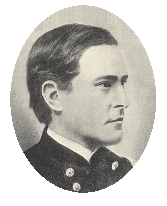
Marcus A. Reno

After the Battle of the Little Bighorn, Reno was assigned command of Fort Abercrombie, Dakota Territory. There, in December 1876, he was charged with making unwanted advances toward the wife of another officer of the Seventh Cavalry, Captain James M. Bell, while Bell was away. A general court-martial hearing began in St. Paul on May 8, 1877. Reno was found guilty on six of seven charges against him, and ordered dismissed from the army. Later, President Rutherford B. Hayes reduced the dismissal sentence to two years.[27]

Responding to charges of cowardice and drunkenness at the Little Bighorn, Reno demanded and was granted a court of inquiry. The court convened in Chicago on January 13, 1879, and called as witnesses most of the surviving officers who had been in the fight. After 26 days of testimony, Judge Advocate General W. M. Dunn submitted his opinion and recommendations to the Secretary of War George W. McCrary on February 21, 1879. He concluded, "I concur with the court in its exoneration of Major Reno from the charges of cowardice which have been brought against him." He added, "The suspicion or accusation that Gen. Custer owed his death and the destruction of his command to the failure of Major Reno, through incompetency or cowardice, to go to his relief, is considered as set to rest...."[28]

The court of inquiry did little to change public opinion. Enlisted men later stated they had been coerced into giving a positive report to both Reno and Benteen. Lieutenant Charles DeRudio told Walter Mason Camp "that there was a private understanding between a number of officers that they would do all they could to save Reno."[29] In 1904, a story in the Northwestern Christian Advocate claimed that Reno had admitted to its former editor that "his strange actions" during and after the Battle of Little Bighorn were "due to drink".[30]

In 1879, while commanding officer at Ft. Meade, Dakota Territory, Reno again faced court-martial, charged with conduct unbecoming an officer, including a physical assault on a subordinate officer, William Jones Nicholson.[31] He was convicted of conduct prejudicial to good order and discipline, and dismissed from the service April 1, 1880.[32] Reno took an apartment in Washington D.C., where he doggedly pursued restoration of his military rank while working as an examiner in the Bureau of Pensions.

Family

[edit]

Reno married Mary Hannah Ross of Harrisburg in 1863. They were the parents of a son, Robert Ross Reno, and owned a farm near New Cumberland, Pennsylvania, in Cumberland County. When she died of kidney disease in Harrisburg on July 10, 1874, Reno was in the field in Montana's Milk River Valley. On learning of her death, he requested leave to attend her funeral. He started for home only to learn that General Alfred Terry had denied his request.[33]

On October 20, 1882, he married Isabella Steele Ray McGunnegle of New York City. She was the widow of Lieutenant Commander Wilson McGunnegle and a mother of three adult children, including army officer George K. McGunnegle.[34] Almost immediately, friction arose between the new Mrs. Reno and her eighteen year old stepson Robert. She was concerned with his excessive gambling and wild lifestyle, while he objected to her constant supervision. They were living at the Lochiel Hotel in Harrisburg where Robert had run up a large bill. There, on Christmas night 1883, Robert, without invitation, entered the room of actress Carrie Swain through a window. Ms. Swain refused to press charges, but the management insisted the Renos leave. Reno sent his son to live with an uncle in Pittsburgh. The couple became estranged and over the next few years separated. Finally, Isabella brought charges of neglect, and in October 1888, she filed for divorce. The court did not immediately act on her request and in late February, 1889, Reno filed for divorce, claiming Isabella had "deserted him in February 1887".[35] Isabella died in Manila on January 14, 1904.[36]

Robert Ross Reno married Maria Ittie Kinney in May 1885. His business ventures failed and he became a traveling salesman. Ittie seldom heard from him; when she did, he asked for money. On August 19, 1898, he sent a telegram to her brother-in-law, "Make Ittie get a divorce or I will." She filed for divorce in October; it was granted June 22, 1899. She died on June 4, 1941.[37]

Death, military review and reburial

[edit]
Marcus Reno gravestone at Custer National Cemetery

By mid-March, 1889, Reno was diagnosed with oral cancer. He was admitted to Providence Hospital in Washington on March 19, 1889, and underwent surgery the same day. While hospitalized he developed pneumonia and died at the age of 54 in the early hours of March 30, 1889. No preparations had been made for his burial, so it was arranged that he be temporarily interred at Washington's Glenwood Cemetery until he could be reinterred with his first wife at the Ross family plot in Harrisburg, Pennsylvania.[38] No room could be found for his remains there, so his temporary, unmarked grave seemed his final resting place.

Years later, there was a move to erect a monument to Reno at the Little Bighorn Battlefield. Custer's widow Elizabeth Bacon Custer spoke out against a memorial to Reno at the site. Writing in 1926, she stated "I long for a memorial to our heroes on the battlefield of the Little Big Horn [sic] but not to single out for honor, the one coward of the regiment."[39]

In 1967, at the request of Reno's great-nephew Charles, a U.S. military review board reopened the 1880 court-martial. It reversed the decision, ruling Reno's dismissal from the service improper and awarding him an honorable discharge.[40]

On September 9, 1967, Reno's remains were reinterred with honors (including a church ceremony in Billings, Montana, and an eleven-gun salute at his gravesite) in the Custer National Cemetery, on the Little Bighorn battlefield. Reno was the only participant of the Little Bighorn battle to be buried with such honors at the cemetery named for his former commander.[41]

Miscellany

[edit]

At the time of his appointment to West Point, Reno was about 5 ft 8 in (173 cm) tall and weighed about 145 pounds (66 kg). He had dark hair, brown eyes and a dark complexion.[42]

While serving at Fort Vancouver, Reno became a Freemason, joining Washington Lodge #4. He was initiated on July 6, 1867, made a Fellowcraft Mason on August 3, and raised to Master Mason on August 21, 1867.[citation needed]

Portrayals in films and television

[edit]

Liam Sullivan portrayed Colonel Marcus Reno, with Barry Atwater as Custer, in the 1960 episode, "Gold, Glory, and Custer - Prelude" of the ABC/Warner Brothers western television series, Cheyenne, with Clint Walker in the title role of Cheyenne Bodie.[43] In the 1965 movie, "The Great Sioux Massacre", directed by Sidney Salkow, the part of Major Reno was portrayed by actor Joseph Cotten.[44]

Reno was portrayed by actor Ty Hardin in the 1967 film Custer of the West.[45] He was played by William Daniels in the 1977 TV movie The Court-Martial of George Armstrong Custer.[46] Reno was portrayed by Michael Medeiros in the 1991 television mini-series Son of the Morning Star.[47]

See also

[edit]

References

[edit]

Further reading

[edit]
[edit]
Revisions and contributorsEdit on WikipediaRead on Wikipedia
from Grokipedia
Marcus Albert Reno (November 15, 1834 – March 30, 1889) was a career officer in the United States Army, graduating twentieth in his West Point class of 1857 before serving in the Union Army during the . Assigned to the in 1871 as a major, Reno participated in frontier campaigns against Native American tribes, achieving brevet promotions for Civil War gallantry including wounds at Kelly's Ford. He is most noted for commanding the initial assault on a large Lakota and village at the on June 25, 1876, where his battalion retreated under heavy fire to a defensive position on Reno Hill, failing to link with Lieutenant Colonel George Armstrong Custer's separated command, which was annihilated. Reno's decisions at the battle—his hasty withdrawal amid superior enemy numbers and disputed failure to pursue relief efforts—have fueled persistent controversy, with critics charging or incompetence while defenders cite overwhelming odds and tactical necessities. Post-battle culminated in a 1879 Court of Inquiry that cleared him of direct culpability, but unrelated personal failings including led to a 1880 conviction for conduct unbecoming an officer, resulting in his dismissal from the service. Efforts to exonerate Reno persisted after his death from , reflecting debates over accountability in one of the U.S. Army's most infamous defeats.

Early Life

Childhood and Family Background

Marcus Albert Reno was born on November 15, 1834, in , to Reno and Charlotte B. Hinton. His father, born around 1801, managed a local with his wife, supporting the family through this enterprise in the small frontier town. Reno was the fourth of seven children in the household. Reno's mother, born October 24, 1799, in and a granddaughter of a officer, died on June 25, 1848, at age 48, when Reno was 13 years old. This early loss contributed to accounts portraying Reno as a "lonely and retiring" teenager amid the family's circumstances. The Reno family traced its American roots to French Huguenot immigrants, though specific details of Reno's immediate upbringing remain sparse beyond the hotelier environment and maternal lineage.

Education and Entry into Military Service

Marcus Albert Reno, born on November 15, 1834, in , received an appointment to the at West Point from his home state and entered the academy on September 1, 1851. During his time at West Point, Reno accumulated demerits for infractions including and minor rule violations, reflecting a pattern of disciplinary challenges common among some cadets of the era. He graduated on June 30, 1857, placing 20th in a class of 38. Upon graduation, Reno was brevetted as a of dragoons and commissioned into the 1st U.S. Cavalry, marking his formal entry into regular Army service. His early assignments placed him on frontier duty, initially in the , where he gained experience in mounted operations against Native American tribes before the outbreak of the Civil War.

Civil War Service

Key Engagements and Tactics Employed

Reno entered the Civil War as a captain in the Union cavalry, initially serving in reconnaissance and reserve roles before assignment to volunteer units. He participated in the Battle of Kelly's Ford on , 1863, commanding the Reserve Brigade of approximately 760 men in support of Brigadier General William W. Averell's main force against Confederate cavalry under . Reno's brigade advanced to engage the enemy, employing mounted charges and skirmish lines to probe Confederate positions, but faced stiff resistance from dismounted Confederates using cover along the . During the melee, Reno's horse was shot from under him, pinning the officer and resulting in a hernia injury; for his gallant conduct in pressing the attack, he received a brevet promotion to major. Following Kelly's Ford, Reno joined elements of the Michigan Cavalry Brigade under Brigadier General , contributing to screening operations and flanking maneuvers during the in July 1863. The brigade, including Reno's command, utilized aggressive cavalry tactics such as rapid mounted advances and dismounted volleys to harass Confederate supply lines and rear guards east of Gettysburg, helping to disrupt enemy and secure Union . In the Overland Campaign of 1864, Reno fought at the from May 31 to June 12, where his cavalry detachment supported infantry assaults through picket duties and artillery escort, employing defensive skirmish lines to counter Confederate probes amid the brutal positional warfare. He then engaged at the on June 11–12, a major cavalry clash, leading charges against Wade Hampton's Confederate troopers; tactics involved coordinated brigade assaults, carbine fire from horseback, and attempts to envelop enemy flanks, though Union forces suffered heavy losses in the confused woodland fighting. Reno's final major Civil War engagement was the on October 19, 1864, during the Shenandoah Valley Campaign. As part of Philip Sheridan's forces, he participated in the Union counterattack after an initial Confederate surprise, using cavalry to pursue retreating Jubal Early's army; Reno's brevet to recognized his meritorious leadership in these exploitation maneuvers, which emphasized speed, flanking, and relentless pressure to prevent enemy reorganization. Overall, Reno's tactics aligned with Eastern Theater cavalry doctrine—balancing shock charges with firepower from seven-shot Spencer carbines—earning him recognition for bravery despite the command's high attrition rates.

Promotions and Recognized Achievements

Reno advanced through ranks during the Civil War, promoted to in the 1st U.S. on April 25, 1861, following the redesignation of the 1st Dragoons, and to captain on November 12, 1861. He also received a temporary volunteer appointment as of the 12th on January 1, 1865. Reno earned multiple brevet promotions for specific acts of gallantry and sustained service. On March 17, 1863, he was brevetted major in the U.S. Army for gallant and meritorious conduct at the Battle of Kelly's Ford, , during which he sustained wounds while leading elements of the 1st . He received a brevet to lieutenant on October 19, 1864, recognizing his performance at the . As the war ended, Reno was brevetted in the regular U.S. Army and brigadier general of U.S. Volunteers, both effective March 13, 1865, for meritorious services throughout the conflict. These brevets highlighted Reno's roles in major cavalry operations, including the as quartermaster guard, actions at Cold Harbor and Trevilian Station, and contributions to Union victories in the . The honors, typical of late-war recognitions for regular officers, underscored his tactical leadership in mounted engagements against Confederate forces without elevating his permanent rank beyond .

Post-Civil War Military Career

Indian Wars Assignments Prior to 1876

Following the , Reno served in the with the 1st U.S. Cavalry Regiment from 1865 to 1868, during a period of intermittent conflicts with tribes including the and Snake-Paiute groups, though no documented combat actions involving Reno occurred in this theater. Upon promotion to major in 1868, Reno transferred to the 7th U.S. Cavalry at , , for operations against amid escalating tensions following events like the Sand Creek Massacre and Fetterman Fight. His initial duties there focused on administrative tasks, including proceedings, rather than field engagements. By July 1871, Reno assumed the role of regimental for the 7th Cavalry, managing logistics and supply lines critical to frontier campaigns against , , and raiders in and . In this capacity, he supported scouting expeditions but did not lead combat operations. Reno participated in Lieutenant Colonel George A. Custer's Black Hills Expedition of July to August 1874, commanding elements of the 7th Cavalry escort for a scientific and topographic survey into Lakota and territory sacred under the 1868 Fort Laramie Treaty. The 1,100-man force, including infantry and engineers, traversed approximately 600 miles without major hostilities, confirming gold deposits that spurred illegal white settlement and contributed to the –1877; Reno's involvement was logistical and protective rather than combative. Contemporary accounts and regimental records indicate Reno had no prior experience in direct combat against Native American forces prior to June 1876, with his pre-1876 service emphasizing garrison administration, supply oversight, and non-combative reconnaissance in active Indian Wars zones.

Integration into the 7th Cavalry Regiment

Following his promotion to major on December 26, 1868, Marcus Reno was assigned to the , then stationed at , , where he assumed duties as the regiment's senior field-grade officer and second-in-command under Lieutenant Colonel . This integration marked Reno's transition from post-Civil War assignments in the and scattered garrison duties to a frontier cavalry unit focused on operations against Native American tribes in the . Reno's early service with the 7th Cavalry involved frontier patrols and scouting expeditions, including operations in from May to August 1870, though his tenure was interrupted by detached assignments such as garrison duty at (July 1871–August 1872), membership on the Small-Arms Board (August 1872–April 1873), and commanding an escort for the Northern Boundary Survey (June–September 1874). These temporary roles delayed his full immersion in regimental affairs until October 30, 1875, when he rejoined the unit at , , in preparation for intensified campaigns against the and . In Custer's frequent absences—due to leaves, courts-martial, or other duties—Reno commanded the entire 7th Cavalry, including through the winter and early spring of 1876, when the regiment consolidated at Fort Abraham Lincoln for the Sioux Expedition under Brigadier General Alfred Terry. His administrative and operational oversight during these periods ensured regimental readiness, though personal frictions with Custer, stemming from differing temperaments and Reno's more methodical approach, were noted in contemporary accounts without evidence of operational discord prior to 1876. By May 1876, Reno's position as the regiment's ranking major positioned him to lead one of three battalions in the field under Terry's Dakota Column.

Battle of the Little Bighorn

Custer's Campaign Strategy and Reno's Orders

In the , Lieutenant Colonel George Armstrong Custer's operated as part of a coordinated by Brigadier General , with Colonel John Gibbon's column approaching from the north and Brigadier General George Crook's from the south, aiming to trap non-agency Lakota and Northern bands in the Little Bighorn Valley. Custer's specific campaign strategy emphasized rapid pursuit and decisive attack on villages to prevent warrior dispersal, drawing from prior successes against smaller encampments, though scouts reported a massive village exceeding 10 miles in extent upon sighting it around noon on June 25, 1876. Believing the element of surprise compromised after detection by Indian scouts, Custer abandoned the planned dawn assault on June 26 and initiated an immediate afternoon attack to envelop the village from multiple directions. Custer divided the 7th Cavalry's approximately 600 troopers into three battalions near the bluffs overlooking the : Major Marcus Reno's left wing of three companies (A, G, M; about 140 men), Captain Frederick Benteen's right wing of three companies (D, H, K; about 125 men) with orders to scout bluffs for escape routes, and Custer's remaining five companies (about 225 men) to maneuver north. This division aimed to strike the southern end of the village with Reno to draw warriors south, block retreats with Benteen, and assault the northern flank or rear with Custer's command, preventing the estimated 1,500-2,500 warriors from coalescing. Reno received verbal orders from Custer around 2:30-3:00 p.m. on June 25 to descend the bluffs, cross the , and charge the village's lower (southern) end, with assurances of support from the entire regiment. A subsequent written order, penned by William W. Cooke and delivered by Trumpeter John Martini, instructed Reno to "charge the Indians" after crossing the creek, emphasizing vigorous action against fleeing non-combatants observed earlier. Reno's advanced accordingly, but encountered intense resistance from hundreds of warriors defending the tipi lines, prompting a tactical withdrawal to the bluffs by approximately 4:30 p.m.

Reno's Battalion Actions and Tactical Decisions

On June 25, 1876, around 2:30 to 3:00 p.m., Lieutenant Colonel verbally ordered Major Marcus Reno to lead a consisting of Companies A, M, and G of the 7th Cavalry—totaling approximately 140 officers and men including Captains and Myles Moylan, and Lieutenants and Donald McIntosh—to attack the southern end of the Lakota and village along the . Reno's orders were to "charge the Indians wherever [he] could find them," without specific details on formation or support, prompting Reno to advance down Reno Creek before crossing the Little Bighorn into the valley. Reno decided to dismount his troopers upon entering the valley approximately one mile from the village, forming a skirmish line to engage an estimated 500 to 1,000 warriors who quickly responded with heavy and fire while maneuvering to flank his left. This tactical choice conserved horse strength and allowed for aimed fire from carbines but exposed the command to superior numbers emerging from the vast encampment, which Reno later described as the largest he had ever seen, stretching over three miles. After 20 to 30 minutes of combat, with casualties mounting and the line at risk of envelopment, Reno ordered a withdrawal to a timbered area by the river for defensive cover, where his men hastily entrenched using logs and saddles. Observing warriors massing upstream to cut off escape routes and fearing total annihilation against an overwhelming force, Reno made the critical decision to retreat mounted across the river and up the bluffs to higher ground, a maneuver executed under intense fire that resulted in 34 killed and 40 wounded from his battalion. This withdrawal, beginning around 4:00 p.m., abandoned the valley position but allowed survivors to consolidate on what became known as Reno Hill, where they repelled further assaults until reinforced by Captain Frederick Benteen's command. Reno's report emphasized the rapid escalation of the fight and the impossibility of holding the line without additional support, attributing the retreat to the tactical reality of facing thousands of mobile combatants from a concealed village.

Coordination with Benteen and Overall Battle Outcome

Following Reno's retreat from the valley around 4:00 p.m. on June 25, 1876, his three companies—reduced to approximately 112 effectives after suffering heavy casualties—reached the bluffs east of the river, where they linked up with Captain Frederick Benteen's three companies (about 125 men) and the pack train escort (roughly 130 men) shortly thereafter. This junction was facilitated by urgent messages, including one relayed earlier from via Trumpeter John Martin to Benteen: "Come on. Big village. Be quick. Bring packs. P.S. Bring packs," which prompted Benteen to secure the ammunition-laden packs before hastening to Reno's position. The combined force of roughly 350-400 men under Reno's overall command then consolidated on a defensible hilltop, later designated Reno-Benteen Hill, establishing a perimeter with skirmish lines and improvised breastworks using saddles, pack saddles, and cartridge boxes as cover. As dusk approached around 7:00 p.m., Lakota and Cheyenne warriors launched coordinated assaults on the position, firing from ridges 500 yards away and attempting close-range charges, but the 7th Cavalry troopers repelled them through disciplined volley fire and the timely distribution of reserve ammunition from the packs. Reno and Benteen maintained unity in command, with Benteen effectively leading much of the fighting after Reno's visible distress; Captain Thomas Weir briefly scouted northward toward distant gunfire—presumed to be Custer's engagement around 4:00 p.m.—but withdrew under intensifying pressure, precluding any relief effort. The defense held through intermittent attacks overnight and into June 26, when the warriors shifted south briefly before resuming pressure until late afternoon, at which point they disengaged to disperse, having already overwhelmed Custer's separated five companies (210 men) to the north. Reno-Benteen's command suffered 47 killed and 53 wounded overall, including losses from the valley phase, but preserved its cohesion until relieved by General Alfred Terry's column on June 27. The battle's outcome marked a rare and resounding tactical victory for the allied Lakota, Northern Cheyenne, and forces under leaders like and , who annihilated Custer's battalion with no survivors among its combatants, contributing to total U.S. casualties of 268 killed (including 14 officers) and 55 wounded out of approximately 700 engaged from the 7th . Native losses were comparatively light, estimated at 31 with perhaps up to 100 total based on later counts of bodies and village reports, reflecting the warriors' numerical superiority (up to 1,500-2,000 fighters) and effective use of terrain and mobility. While Reno and Benteen's coordination ensured the survival of over half the regiment, the failure to reunite with Custer—due to spatial separation, messenger interdiction by warriors, and the intensity of their own siege—exemplified the campaign's flawed division of forces, resulting in the U.S. Army's worst defeat against Native Americans and galvanizing national resolve for intensified operations that subdued major resistance within a year.

Controversies Surrounding Little Bighorn

Accusations of Cowardice and Leadership Failures

Following the defeat at the on June 25, 1876, Major Marcus Reno, who commanded three companies of the 7th Cavalry totaling approximately 140 men in an assault on the southern end of the Lakota and village, became the target of accusations that his retreat from the valley constituted . Critics contended that Reno's decision to withdraw after initial contact with an estimated 500 to 1,000 warriors, rather than holding the timber position or pressing forward, allowed Native forces to regroup and overwhelm George Custer's separate battalion, leading to its destruction. Writer Frederick Whittaker, in his 1876 biography A Complete Life of General George A. Custer commissioned by Custer's widow , explicitly blamed the massacre on Reno's cowardice, asserting that his premature abandonment of the attack diverted blame from Custer's tactical choices. Similarly, Confederate veteran Thomas Rosser, absent from the battle, published essays accusing Reno of disobedience and panic that doomed the command. Scout George Herendeen, who survived the valley fight, later testified that Reno issued conflicting orders to dismount and remount immediately after the death of Bloody Knife, fostering chaos and demoralizing troops under heavy fire. Leadership failures attributed to Reno included a disorganized retreat across the , during which some soldiers lost equipment, horses drowned, and the withdrawal appeared hasty without reconnaissance of the full village extent, estimated at over three miles long with 7,000 to 8,000 inhabitants. Interpreter Frederic Girard, dismissed by Reno prior to the inquiry, claimed in that the could have held the timber longer against flanking attacks, implying Reno's stemmed from poor rather than strategic necessity. These charges gained traction among Custer's surviving officers and supporters seeking to preserve his reputation, portraying Reno's actions as a dereliction that left Custer unsupported despite orders to charge aggressively into the village. Accusers further highlighted Reno's alleged loss of command control during , with reports of soldiers firing wildly in and Reno himself observed urging haste without rallying for a defensive stand, contrasting with expectations of sustained combat against a numerically superior foe. While these claims persisted in popular narratives, they were fueled by incomplete battlefield intelligence and efforts to attribute the 7th Cavalry's heaviest losses—over 260 killed—to individual failings rather than the campaign's overall underestimation of Native strength.

1879 Reno Court of Inquiry: Evidence and Exoneration

The Reno Court of Inquiry was convened on January 13, 1879, in Chicago, Illinois, at the request of Major Marcus A. Reno to examine accusations of cowardice, intoxication, and misconduct during his June 25–26, 1876, engagement in the Little Bighorn valley. The proceedings, presided over by Colonel William H. Winder with members including Lieutenant Colonel J.F. Wade and Major Silas Chapman, lasted until February 26, 1879, and included testimony from 23 witnesses, primarily 7th Cavalry survivors such as , , Lieutenant Edward Godfrey, and enlisted men like Daniel Kanipe. Key evidence addressed Reno's tactical decisions, including his advance with three companies (A, G, M) against an estimated 1,000 or more Lakota, Northern , and warriors in the valley, the subsequent retreat across the to defensive positions on the bluffs, and coordination with Benteen's arriving command. Witnesses, including Benteen and Godfrey, testified that Reno appeared sober and issued coherent orders during the valley fight and retreat, contradicting claims of drunkenness propagated by some post-battle rumors and figures like scout Peter Thompson. Multiple accounts confirmed overwhelming enemy numbers—far exceeding Reno's 140-man force—and the disorganized nature of the Indian village, supporting Reno's decision to withdraw rather than press a potentially suicidal charge, as no reinforcements from Custer's wing materialized as anticipated. Enlisted testimony, such as from Sergeant James Butler, described Reno personally leading efforts to rally troops during the retreat, with no evidence of personal flight or abandonment of men. The inquiry scrutinized specific allegations, including Reno's failure to pursue or scout aggressively and delays in linking with Benteen, but found these attributable to communication breakdowns, terrain challenges, and the absence of Custer's rather than dereliction. Benteen's , while noting Reno's verbal orders to "charge" upon his arrival (which Benteen interpreted restrictively), affirmed the defensive position's necessity against sustained attacks and Reno's role in organizing the perimeter defense that preserved approximately 350 survivors. Medical officer Dr. and others reported no signs of impairment in Reno, undermining intoxication charges often sourced from biased or accounts by Custer loyalists. On March 11, 1879, the submitted the findings, which exonerated Reno: after "maturely considering the evidence," the court concluded his conduct in the valley engagement was proper under the circumstances, with no basis for formal charges of or breach of duty, attributing retreat to tactical exigencies rather than personal failing. This ruling, while not a full acquittal, effectively cleared Reno's record at the time, though subsequent narratives from Custer's surviving William Cooke and others perpetuated criticism despite the evidentiary weight against them. The proceedings highlighted inconsistencies in accusers' recollections, such as inflated enemy estimates post-battle, underscoring the inquiry's reliance on contemporaneous survivor accounts over later partisan reconstructions.

Influence of Custer's Survivors and Media Narratives

Following the on June 25, 1876, narratives propagated by George Armstrong Custer's advocates shifted responsibility for the defeat onto Major Marcus Reno, portraying him as cowardly and incompetent to safeguard Custer's heroic legacy. Frederick Whittaker, a former 7th and prolific writer, published A Complete Life of Gen. George A. Custer Through the Civil War in November 1876, mere months after the battle, explicitly blaming Reno's premature retreat from the Indian village and failure to support Custer for the annihilation of Custer's battalion. Whittaker's work, which sold widely and romanticized Custer as infallible, accused Reno of treachery or timidity, influencing despite lacking from the battlefield. Custer's widow, , played a pivotal role in sustaining these attacks, dedicating decades to burnishing her husband's image through memoirs and correspondence while dismissing Reno's exoneration as biased. Libbie Custer rejected the Reno Court of Inquiry's findings, which on February 10, , cleared Reno of misconduct after 26 days of from 23 witnesses—most of whom affirmed his actions were prudent given the overwhelming numbers—and she aligned with claims to argue that Reno's hesitation doomed the regiment. Allies like Thomas Rosser, a Civil War acquaintance of Custer, co-authored essays in newspapers and magazines that echoed Whittaker, fingering Reno as the primary culprit and amplifying the narrative that Custer's strategy was sound but undermined by subordinates. Survivor accounts from Reno's and Captain Frederick Benteen's commands, while varied and often conflicting, were selectively invoked in media to bolster the anti-Reno storyline, though many testified at to the ferocity of the and resistance—estimated at 1,500 to 2,500 warriors—outnumbering Reno's 140 men threefold during his valley assault. Pro-Custer publications, such as Whittaker's letters to The Chicago Times post-inquiry, alleged a by Reno, Benteen, and Army officials, framing the defeat as internal rather than tactical miscalculation or underestimation of Native forces. This media-driven myth persisted, overriding the inquiry's evidence that Reno's withdrawal prevented of the regiment and that no timely reinforcement of Custer was feasible amid the chaos. The enduring Custer-centric narratives, fueled by commercial success of books and articles glorifying the fallen commander, entrenched Reno's vilification in , contributing to his isolation despite formal vindication and ignoring empirical factors like Custer's division of forces into unsupportable segments.

Later Military Service and Professional Decline

Post-Battle Reassignments and Performance

Following the in June 1876, Major Marcus A. Reno was reassigned to command Fort Abercrombie in , a posting that commenced in late 1876. In this role, Reno's performance deteriorated amid reports of chronic and erratic behavior, exacerbated by the recent death of his wife, Mary, on February 17, 1876. Specific incidents included Reno entering the quarters of subordinate James M. Bell while intoxicated on December 25, 1876, and attempting improper advances toward Bell's wife; he was also accused of assaulting an enlisted man who intervened. These events prompted charges of an officer and gentleman. A general assembled at , , beginning May 8, 1877, convicted Reno on six of seven counts, sentencing him to dismissal from the service. Reviewing authorities, including President , commuted the dismissal to a two-year suspension without pay or rank, effective from approximately May 1877. Upon completion of the suspension in early 1879, Reno briefly resumed duty with the 7th Cavalry but faced ongoing scrutiny over his fitness, including persistent alcohol issues and interpersonal conflicts with subordinates. No significant combat or operational reassignments followed, and his diminished command effectiveness contributed to the Army's decision to enforce his separation, with the original dismissal sentence taking effect on April 1, 1880, ending his 23-year military career. Following the on June 25, 1876, Major Marcus A. Reno exhibited signs of , which contributed to erratic behavior and professional lapses during his subsequent postings. Reports from contemporaries noted Reno's frequent intoxication, including instances of public drunkenness that undermined . In early 1877, Reno faced charges stemming from alcohol-fueled misconduct at Fort Abercrombie, . One specification accused him of being "drunk and disorderly in a public billiard saloon," where he allegedly used violent and abusive language toward enlisted men and civilians present. These episodes were compounded by other allegations of an officer and gentleman, including —drilling a hole in the floorboards to observe Captain Frederick Bell's wife, Clara Bell, while she undressed on October 5, 1876—though alcohol's direct role in that incident remains unproven in records. Reno pleaded not guilty to all specifications, attributing his actions to stress and personal habits rather than intent to dishonor the service. A general convened in St. Paul, Minnesota, on May 8, 1877, to adjudicate the charges against Reno. The proceedings examined testimony from witnesses, including subordinates who corroborated Reno's intoxication and disruptive conduct in the saloon incident, as well as evidence of his overall diminished capacity for command. On May 23, 1877, the court found Reno guilty on six of seven specifications, including the drunkenness charge, and sentenced him to dismissal from the U.S. Army. President approved the findings but suspended execution of the dismissal for two years, placing Reno on indefinite leave without pay, during which his alcohol issues persisted without formal military oversight. This outcome reflected the Army's recognition of Reno's prior service while acknowledging the severity of his alcohol-related lapses in judgment.

Resignation and Final Military Status

Following his 1877 court-martial at , , for charges including intoxication on duty, attempting to enter a subordinate's quarters under the influence, and an and gentleman involving harassment of an enlisted man's wife, Reno was convicted on multiple counts. The sentence of dismissal was commuted by President to a two-year suspension from rank and command, allowing Reno to retain his pay but barring him from until approximately 1879. Upon resumption of duties with the 7th Cavalry, Reno faced renewed allegations of misconduct, culminating in a second court-martial convened in 1879 at Fort Meade, Dakota Territory. Convicted of conduct to the prejudice of good order and military discipline—stemming from incidents such as assaulting an enlisted man while drunk and other breaches of decorum—he received a definitive sentence of dismissal from the U.S. Army, effective April 1, 1880, thereby ceasing to hold any military rank or status. This outcome persisted despite appeals to superiors like Generals William T. Sherman and Alfred Terry, who protested the severity but could not overturn it. Reno's efforts to secure reinstatement through civilian courts and congressional intervention failed during his lifetime, leaving his final active military status as that of a dismissed major without honorable discharge. In 1967, the U.S. Army Board for Correction of Military Records posthumously reviewed the 1880 proceedings, deeming the punishment excessive given the evidence and Reno's prior service, and restored his rank of major with an honorable discharge.

Personal Life

Marriage, Family, and Domestic Relations

Reno married Mary Hannah Ross, daughter of Robert James Ross and Mary Ewing Haldeman Ross, on July 1, 1863, in , . The couple resided together during Reno's early postings, including a period in New Orleans where their son was born. Their only child, Robert Ross Reno, was born in April 1864. Mary Reno died on July 10, 1874, at age 31, leaving Reno a widower with a ten-year-old son. No records indicate Reno remarried, though he maintained responsibility for Robert's upbringing amid his military duties and subsequent personal decline. Reno's domestic life prior to his wife's death appears stable, with the accompanying him on assignments when feasible, but her passing coincided with the onset of his documented struggles with alcohol and interpersonal conflicts, which strained relations thereafter. Robert Ross Reno survived his father, living until at least 1920.

Health Issues, Habits, and Interpersonal Conflicts

Following the death of his wife, Mary "Mollie" Shadburne Reno, on June 17, 1874, Major Marcus Reno developed a severe alcohol dependency that profoundly impacted his physical and . This condition manifested in chronic intoxication, contributing to his overall decline, including episodes of such as public drunkenness in a billiard saloon. Contemporaries observed Reno as increasingly morose and reliant on alcohol for escape, exacerbating his professional instability. Reno's habits extended beyond to include heavy use, with reports of constant as a coping mechanism amid personal turmoil. These patterns, rooted in and stress from setbacks, led to repeated alcohol-related incidents, including a 1877 court-martial conviction for an officer, stemming partly from his impaired judgment. Interpersonal conflicts plagued Reno's later years, marked by altercations with fellow officers and inappropriate advances toward women, including the wife of an absent subordinate, which prompted formal reprimands and fueled his 1877 charges. His behavior, often aggravated by intoxication, strained relationships within the 7th Cavalry, portraying him as a prone to authoritarian outbursts and personal indiscretions. These episodes underscored a pattern of volatility that isolated him from peers and contributed to his marginalization in military circles.

Death and Legacy

Final Years and Circumstances of Death

Following his dismissal from the U.S. Army on April 1, 1880, Reno resided in , and devoted much of his remaining years to unsuccessful petitions for reinstatement and restoration of rank. His efforts persisted for nearly a decade amid ongoing personal decline marked by , which had contributed to his earlier convictions. Reno remarried following the 1874 death of his first wife, Mary, but this second marriage dissolved in around 1888 after his spouse's alleged in 1887. In March 1889, Reno received a of tongue cancer, a condition likely worsened by chronic heavy and alcohol use. He died two weeks later on March 30, 1889, at age 54, and was buried in an unmarked grave at Glenwood Cemetery in .

Posthumous Military Reviews, Reburial, and Historical Reassessments

In the decades following Reno's death on March 30, 1889, his military record remained marred by the 1877 conviction for conduct unbecoming an officer, which had resulted in his reduction to captain and eventual resignation in 1880, despite the 1879 Reno Court of Inquiry exonerating him of specific charges of cowardice and drunkenness at the Battle of Little Bighorn. Initially buried in an at Glenwood Cemetery in , Reno's resting place reflected his diminished status. On May 26, 1967, the U.S. Army conducted a posthumous review of Reno's service record, restoring him to the rank of major and issuing an honorable discharge; while the verdict stood, the action cleared the path for national cemetery interment by affirming his overall honorable service. This decision, prompted by advocacy from historians and military analysts who argued Reno had been scapegoated for the 7th Cavalry's defeat amid overwhelming Native American forces estimated at 1,500–2,500 warriors, marked a formal acknowledgment of procedural inequities in his era's evaluations. Subsequently, on September 9, 1967, Reno's remains were exhumed and reinterred with full military honors at Custer National Cemetery within the in , where he holds the distinction as the highest-ranked officer buried. The included representatives from the 7th and Reno's descendants, underscoring a symbolic rehabilitation tied to evidentiary reassessments of the battle's chaos, including Reno's retreat from Reno Hill after sustaining heavy casualties—140 of approximately 470 men under his initial command. Historical reassessments since the mid-20th century have increasingly portrayed Reno as a competent operating under incomplete and numerical inferiority, rather than the of Custer's defeat propagated in some 19th-century accounts influenced by survivor biases and national mourning for Custer. Peer-reviewed analyses and compilations, such as those drawing on the inquiry's 30 days of from over 20 witnesses, affirm that Reno's valley assault disrupted the village but faced insurmountable flanking maneuvers, justifying his defensive consolidation on Reno Hill without evidence of personal dereliction. Later scholarship, including forensic battlefield studies, attributes the 7th Cavalry's annihilation primarily to Custer's divided tactics and underestimation of Lakota, Northern , and resolve, shifting scrutiny from Reno's survival decisions. These views, while not universally accepted—some critiques persist regarding his initial charge's hesitancy—prioritize tactical realism over hindsight moralizing, evidenced by Reno's pre-battle brevet brigadier general status from Civil War service at Antietam and Gettysburg.

References

Add your contribution
Related Hubs
User Avatar
No comments yet.