


Community hub
Recent from talks
Contribute something
Nothing was collected or created yet.
Match
View on Wikipedia

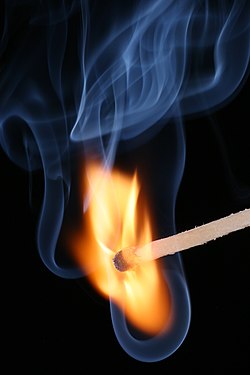
A match is a tool for starting a fire. Typically, matches are made of small wooden sticks or stiff paper. One end is coated with a material that can be ignited by friction generated by striking the match against a suitable surface.[1] Wooden matches are packaged in matchboxes, and paper matches are partially cut into rows and stapled into matchbooks. The coated end of a match, known as the match "head", consists of a bead of active ingredients and binder, often colored for easier inspection. There are two main types of matches: safety matches, which can be struck only against a specially prepared surface, and strike-anywhere matches, for which any suitably frictional surface can be used.
Etymology
[edit]
The word match derives from Old French mèche, referring to the wick of a candle.[2] Historically, the term match referred to lengths of cord (later cambric) impregnated with chemicals, and allowed to burn continuously.[1] These were used to light fires and fire guns (see matchlock) and cannons (see linstock)[3] and to detonate explosive devices such as dynamite sticks. Such matches were characterized by their burning speed i.e. quick match and slow match. Depending on its formulation, a slow match burns at a rate of around 30 cm (1 ft) per hour and a quick match at 4–60 centimeters (1.6–23.6 inches) per minute for unconfined to even 3–6 meters (10–20 feet) per second for confined.
The modern equivalent of a match (in the sense of a burnable cord) is the simple fuse such as a visco fuse, still used in pyrotechnics to obtain a controlled time delay before ignition.[4] The original meaning of the word still persists in some pyrotechnics terms, such as black match (a black-powder-impregnated fuse) and Bengal match (a firework akin to sparklers producing a relatively long-burning, colored flame). However, when friction matches became commonplace, the term match came to refer mainly to these.
History
[edit]Early matches
[edit]A note in the text Cho Keng Lu, written in 1366, describes a sulfur match, small sticks of pinewood impregnated with sulfur, used in China by "impoverished court ladies" in 577 during the conquest of Northern Qi.[5] During the Five Dynasties and Ten Kingdoms (907–960), a book called the Records of the Unworldly and the Strange written by Chinese author Tao Gu in about 950 stated:
If there occurs an emergency at night it may take some time to make a light to light a lamp. But an ingenious man devised the system of impregnating little sticks of pinewood with sulfur and storing them ready for use. At the slightest touch of fire, they burst into flame. One gets a little flame like an ear of corn. This marvelous thing was formerly called a "light-bringing slave", but afterward when it became an article of commerce its name was changed to 'fire inch-stick'.[5]
Another text, Wu Lin Chiu Shih, dated from 1270, lists sulfur matches as something that was sold in the markets of Hangzhou, around the time of Marco Polo's visit. The matches were known as fa chu or tshui erh.[5]
Chemical matches
[edit]
Before the use of matches, fires were sometimes lit using a burning glass (a lens) to focus the sun on tinder, a method that could only work on sunny days. Another more common method was igniting tinder with sparks produced by striking flint and steel, or by sharply increasing air pressure in a fire piston. Early work had been done by alchemist Hennig Brand, who discovered the flammable nature of phosphorus in 1669.[6] Others, including Robert Boyle and his assistant, Ambrose Godfrey, continued these experiments in the 1680s with phosphorus and sulfur, but their efforts did not produce practical and inexpensive methods for generating fires.[7]
A number of different ways were employed in order to light smoking tobacco: One was the use of a spill – a thin object something like a thin candle, a rolled paper or a straw, which would be lit from a nearby, already existing flame and then used to light the cigar or pipe – most often kept near the fireplace in a spill vase.[8] Another method saw the use of a striker, a tool that looked like scissors, but with flint on one "blade" and steel on the other. These would then be rubbed together, ultimately producing sparks. If neither of these two was available, one could also use ember tongs to pick up a coal from a fire and light the tobacco directly.
The first modern, self-igniting match was invented in 1805 by Jean Chancel, assistant to Professor Louis Jacques Thénard of Paris. The head of the match consisted of a mixture of potassium chlorate, sulfur, gum arabic and sugar. The match was ignited by dipping its tip in a small asbestos bottle filled with sulfuric acid.[4] This kind of match was quite expensive, however, and its use was also relatively dangerous, so Chancel's matches never really became widely adopted or in commonplace use.

This approach to match making was further refined in the following decades, culminating with the 'Promethean match' that was patented by Samuel Jones of London in 1828. His match consisted of a small glass capsule containing a chemical composition of sulfuric acid colored with indigo and coated on the exterior with potassium chlorate, all of which was wrapped up in rolls of paper. The immediate ignition of this particular form of a match was achieved by crushing the capsule with a pair of pliers, mixing and releasing the ingredients in order for it to become alight.
In London, similar matches meant for lighting cigars were introduced in 1849 by Heurtner who had a shop called the Lighthouse in the Strand. One version that he sold was called "Euperion" (sometimes "Empyrion") which was popular for kitchen use and nicknamed as "Hugh Perry", while another meant for outdoor use was called a "Vesuvian" or "flamer".[9] The head was large and contained niter, charcoal and wood dust, and had a phosphorus tip. The handle was large and made of hardwood so as to burn vigorously and last for a while. Some even had glass stems.[10] Both Vesuvians and Prometheans had a bulb of sulfuric acid at the tip which had to be broken to start the reaction.[11]
Samuel Jones introduced fuzees for lighting cigars and pipes in 1832. A similar invention was patented in 1839 by John Hucks Stevens in America.[12]
In 1832, William Newton patented the "wax vesta" in England. It consisted of a wax stem that embedded cotton threads and had a tip of phosphorus. Variants known as "candle matches" were made by Savaresse and Merckel in 1836.[10] John Hucks Stevens also patented a safety version of the friction match in 1839.[13]
Friction matches
[edit]Chemical matches were unable to make the leap into mass production, due to the expense, their cumbersome nature, and the inherent danger of using them. An alternative method was to produce the ignition through friction produced by rubbing two rough surfaces together. An early example was made by François Derosne in 1816. His crude match was called a briquet phosphorique and it used a sulfur-tipped match to scrape inside a tube coated internally with phosphorus. It was both inconvenient and unsafe.[14][15]

The first successful friction match was invented in 1826 by John Walker, an English chemist and druggist from Stockton-on-Tees, County Durham. He developed a keen interest in trying to find a means of obtaining fire easily. Several chemical mixtures were already known that would ignite by a sudden explosion, but it had not been found possible to transmit the flame to a slow-burning substance like wood. While Walker was preparing a lighting mixture on one occasion, a match that had been dipped in it took fire by an accidental friction upon the hearth. He at once appreciated the practical value of the discovery, and started making friction matches. They consisted of wooden splints or sticks of cardboard coated with sulfur and tipped with a mixture of sulfide of antimony, chlorate of potash, and gum. The treatment with sulfur helped the splints to catch fire, and the odor was improved by the addition of camphor.[6] The price of a box of 50 matches was one shilling. With each box was supplied a piece of sandpaper, folded double, through which the match had to be drawn to ignite it. Walker did not name the matches "Congreves" in honour of the inventor and rocket pioneer Sir William Congreve, as it is sometimes stated. The congreves were the invention of Charles Sauria, a French chemistry student at the time.[16][17] Walker did not divulge the exact composition of his matches.[18] Between 1827 and 1829, Walker made about 168 sales of his matches. It was, however, dangerous and flaming balls sometimes fell to the floor, burning carpets and dresses, leading to their ban in France and Germany.[11] Walker either refused or neglected to patent his invention.[6][19]
In 1829, Scots inventor Sir Isaac Holden invented an improved version of Walker's match and demonstrated it to his class at Castle Academy in Reading, Berkshire. Holden did not patent his invention and claimed that one of his pupils wrote to his father Samuel Jones, a chemist in London who commercialised his process.[20] A version of Holden's match was patented by Samuel Jones, and these were sold as lucifer matches. These early matches had a number of problems – an initial violent reaction, an unsteady flame, and unpleasant odor and fumes. Lucifers could ignite explosively, sometimes throwing sparks a considerable distance. Lucifers were manufactured in the United States by Ezekial Byam.[6]
The term "lucifer" persisted as slang for a match into the 20th century. For example, the song "Pack Up Your Troubles" includes the line "while you’ve a lucifer to light your fag". Matches are still called "lucifers" in Dutch.
Lucifers were quickly replaced after 1830 by matches made according to the process devised by Frenchman Charles Sauria, who substituted white phosphorus for the antimony sulfide.[21] These new phosphorus matches had to be kept in airtight metal boxes but became popular and went by the name of loco foco ("crazy fire") in the United States, from which was derived the name of a political party.[22] The earliest American patent for the phosphorus friction match was granted in 1836 to Alonzo Dwight Phillips of Springfield, Massachusetts.[23] But, the first production of friction matches in America was by Jacob Weller, B.S. (1775-1846), in 1825. He made the matches in Thurmont, Maryland.[24]
_black_background.jpg)
From 1830 to 1890, the composition of these matches remained largely unchanged, although some improvements were made. In 1843 William Ashgard replaced the sulfur with beeswax, reducing the pungency of the fumes. This was replaced by paraffin in 1862 by Charles W. Smith, resulting in what were called "parlor matches". From 1870 the end of the splint was fireproofed by impregnation with fire-retardant chemicals such as alum, sodium silicate, and other salts resulting in what was commonly called a "drunkard's match" that prevented the accidental burning of the user's fingers. Other advances were made for the mass manufacture of matches. Early matches were made from blocks of wood with cuts separating the splints but leaving their bases attached. Later versions were made in the form of thin combs. The splints would be broken away from the comb when required.[10]
A noiseless match was invented in 1836 by the Hungarian János Irinyi, who was a student of chemistry.[25] An unsuccessful experiment by his professor, Meissner, gave Irinyi the idea to replace potassium chlorate with lead dioxide[26] in the head of the phosphorus match.[25] He liquefied phosphorus in warm water and shook it in a glass vial, until the two liquids emulsified. He mixed the phosphorus with lead dioxide and gum arabic, poured the paste-like mass into a jar, and dipped the pine sticks into the mixture and let them dry. When he tried them that evening, all of them lit evenly. He sold the invention and production rights for these noiseless matches to István Rómer, a Hungarian pharmacist living in Vienna, for 60 florins (about 22.5 oz t of silver). As a match manufacturer, Rómer became rich, and Irinyi went on to publish articles and a textbook on chemistry, and founded several match factories.[25]
Replacement of white phosphorus
[edit]

Those involved in the manufacture of the new phosphorus matches were afflicted with phossy jaw and other bone disorders,[27] and there was enough white phosphorus in one pack to kill a person. Deaths and suicides from eating the heads of matches became frequent. The earliest report of phosphorus necrosis was made in 1845 by Lorinser in Vienna, and a New York surgeon published a pamphlet with notes on nine cases.[28][29]
The conditions of working-class women at the Bryant & May factories led to the London matchgirls strike of 1888. The strike was focused on the severe health complications of working with white phosphorus, such as phossy jaw.[30] Social activist Annie Besant published an article in her halfpenny weekly paper The Link on 23 June 1888.[31] A strike fund was set up and some newspapers collected donations from readers. The women and girls also solicited contributions. Members of the Fabian Society, including George Bernard Shaw, Sidney Webb, and Graham Wallas, were involved in the distribution of the cash collected.[32] The strike and negative publicity led to changes being made to limit the health effects of the inhalation of white phosphorus.
Attempts were made to reduce the ill-effects on workers through the introduction of inspections and regulations. Anton Schrötter von Kristelli discovered in 1850 that heating white phosphorus at 250 °C in an inert atmosphere produced a red allotropic form, which did not fume in contact with air. It was suggested that this would make a suitable substitute in match manufacture although it was slightly more expensive.[33] Two French chemists, Henri Savene and Emile David Cahen, proved in 1898 that the addition of phosphorus sesquisulfide meant that the substance was not poisonous, that it could be used in a "strike-anywhere" match, and that the match heads were not explosive.[34] British company Albright and Wilson was the first company to produce phosphorus sesquisulfide matches commercially. The company developed a safe means of making commercial quantities of phosphorus sesquisulfide in 1899 and started selling it to match manufacturers.[35][36]
Regulation of white phosphorus
[edit]| White Phosphorus Matches Prohibition Act 1908 | |
|---|---|
| Act of Parliament | |
 | |
| Long title | An Act to prohibit the Manufacture, Sale, and Importation of Matches made with White Phosphorus, and for other purposes in connection therewith. |
| Citation | 8 Edw. 7. c. 42 |
| Dates | |
| Royal assent | 21 December 1908 |
| Commencement | 1 January 1910 |
| Other legislation | |
| Repealed by | Factories Act 1937 |
Status: Repealed | |

The serious effects of white phosphorus led many countries to ban its use. Finland prohibited the use of white phosphorus in 1872, followed by Denmark in 1874, France in 1897, Switzerland in 1898, and the Netherlands in 1901.[28] An agreement, the Berne Convention, was reached at Bern, Switzerland, in September 1906, which banned the use of white phosphorus in matches.[37] This required each country to pass laws prohibiting the use of white phosphorus in matches.
The United Kingdom passed the White Phosphorus Matches Prohibition Act 1908 (8 Edw. 7. c. 42) prohibiting its use in matches after 31 December 1910. The United States did not pass a law, but instead placed a "punitive tax" in 1913 on white phosphorus–based matches, one so high as to render their manufacture financially impractical, and Canada banned them in 1914.[38] India and Japan banned them in 1919; China followed, banning them in 1925.
In 1901 Albright and Wilson started making phosphorus sesquisulfide at their Niagara Falls, New York plant for the US market, but American manufacturers continued to use white phosphorus matches.[34] The Niagara Falls plant made them until 1910, when the United States Congress forbade the shipment of white phosphorus matches in interstate commerce.[35]
Safety matches
[edit]

The dangers of white phosphorus in the manufacture of matches led to the development of the "hygienic" or "safety match". The major innovation in its development was the use of red phosphorus, not on the head of the match but instead on a specially designed striking surface.
Arthur Albright developed the industrial process for large-scale manufacture of red phosphorus after Schrötter's discoveries became known. By 1851, his company was producing the substance by heating white phosphorus in a sealed pot at a specific temperature. He exhibited his red phosphorus in 1851, at The Great Exhibition held at The Crystal Palace in London.
The idea of creating a specially designed striking surface was developed in 1844 by the Swede Gustaf Erik Pasch. Pasch patented the use of red phosphorus in the striking surface. He found that this could ignite heads that did not need to contain white phosphorus. Johan Edvard Lundström and his younger brother Carl Frans Lundström (1823–1917) started a large-scale match industry in Jönköping, Sweden around 1847, but the improved safety match was not introduced until around 1850–55. The Lundström brothers had obtained a sample of red phosphorus matches from Albright at The Great Exhibition,[39] but had misplaced it and therefore they did not try the matches until just before the Paris Exhibition of 1855 when they found that the matches were still usable.[39] In 1858 their company produced around 12 million matchboxes.[36]

The safety of true "safety matches" is derived from the separation of the reactive ingredients between a match head on the end of a paraffin-impregnated splint and the special striking surface (in addition to the safety aspect of replacing the white phosphorus with red phosphorus). The idea for separating the chemicals had been introduced in 1859 in the form of two-headed matches known in France as Allumettes Androgynes. These were sticks with one end made of potassium chlorate and the other of red phosphorus. They had to be broken and the heads rubbed together.[36] There was, however, a risk of the heads rubbing each other accidentally in their box. Such dangers were removed when the striking surface was moved to the outside of the box. The development of a specialized matchbook with both matches and a striking surface occurred in the 1890s with the American Joshua Pusey, who sold his patent to the Diamond Match Company.
The Swedes long held a virtual worldwide monopoly on safety matches, with the industry mainly situated in Jönköping, by 1903 called Jönköpings & Vulcans Tändsticksfabriks AB today Swedish Match.[40] In France, they sold the rights to their safety match patent to Coigent Père & Fils of Lyon, but Coigent contested the payment in the French courts, on the basis that the invention was known in Vienna before the Lundström brothers patented it.[40] The British match manufacturer Bryant and May visited Jönköping in 1858 to try to obtain a supply of safety matches, but was unsuccessful. In 1862 it established its own factory and bought the rights for the British safety match patent from the Lundström brothers.[40]
Modern matches
[edit]
The striking surface on modern matchboxes is typically composed of 25% powdered glass or other abrasive material, 50% red phosphorus, 5% neutralizer, 4% carbon black, and 16% binder; and the match head is typically composed of 45–55% potassium chlorate, with a little sulfur and starch, a neutralizer (ZnO or CaCO
3), 20–40% of siliceous filler, diatomite, and glue.[41] Safety matches ignite due to the extreme reactivity of phosphorus with the potassium chlorate in the match head. When the match is struck, the phosphorus and chlorate mix in a small amount and form something akin to the explosive Armstrong's mixture, which ignites due to the friction. The red color of the match head is due to addition of red dyes, not the red phosphorus content.[42]
Friction matches made with white phosphorus as well as those made from phosphorus sesquisulfide can be struck on any suitable surface. They have remained particularly popular in the United States, even when safety matches had become common in Europe, and are still widely used today around the world, including in many developing countries,[36] for such uses as camping, outdoor activities, emergency/survival situations, and stocking homemade survival kits.[43][44] However, strike-anywhere matches are banned on all kinds of aircraft under the "dangerous goods" classification U.N. 1331, Matches, strike-anywhere.[45]
Safety matches are classified as dangerous goods, "U.N. 1944, Matches, safety". They are not universally forbidden on aircraft; however, they must be declared as dangerous goods and individual airlines or countries may impose tighter restrictions.[45]
Storm matches
[edit]
Storm matches, also known as lifeboat matches or flare matches, are often included in survival kits. They have a strikeable tip similar to a normal match, but the combustible compound – including an oxidiser – continues down the length of the stick, coating half or more of the entire matchstick. The match also has a waterproof coating (which often makes the match more difficult to light), and often storm matches are longer than standard matches. As a result of the combustible coating, storm matches burn strongly even in strong winds, and can even spontaneously re-ignite after being briefly immersed in water.
Hobbyist collection
[edit]
The hobby of collecting match-related items, such as matchcovers and matchbox labels, is known as phillumeny.
See also
[edit]References
[edit]- ^ a b Concise Oxford Dictionary (10 ed.). London: Oxford University Press. 1999.
- ^ Whiter W (1825). Etymologicon universale: or, Universal etymological dictionary. Vol. 2. p. 428. Archived from the original on 17 February 2017.
- ^ Sawyer, C. W. (1910). Firearms in American history 1600–1800. Boston, The author. p. 5.
- ^ a b Barnett, E. de Barry (1919). Rideal, Samuel (ed.). Explosives. New York: D. Van Nostrand Co. pp. 158, 162–170.
- ^ a b c Needham, Joseph (1 January 1962). Science and Civilization in China: Volume 4, Physics and Physical Technology; Part 1, Physics. Cambridge University Press. pp. 70–71. ISBN 978-0-521-05802-5. Archived from the original on 2 January 2014.
sulphur matches were certainly sold in the markets of Hangchow when Marco Polo was there
{{cite book}}: ISBN / Date incompatibility (help) - ^ a b c d Crass, M. F. Jr. (1941). "A history of the match industry. Part 1". Journal of Chemical Education. 18 (3): 116–120. Bibcode:1941JChEd..18..116C. doi:10.1021/ed018p116.
- ^ Carlisle, Rodney (2004). Scientific American Inventions and Discoveries. New Jersey: John Wiley & Sons. p. 275. ISBN 0-471-24410-4.
- ^ "Early American Glass Spill Holders". Archived from the original on 7 May 2015. Retrieved 4 August 2015.
- ^ Wisniak, Jaime (2005). "Matches—The manufacture of fire" (PDF). Indian Journal of Chemical Technology. 12: 369–380. Archived from the original (PDF) on 6 November 2013. Retrieved 14 November 2011.
- ^ a b c Crass, M. F. Jr. (1941). "A history of the match industry. Part 3". Journal of Chemical Education. 18 (6): 277–282. Bibcode:1941JChEd..18..277C. doi:10.1021/ed018p277.
- ^ a b Tomlinson, C. (1898). "The Inventor of Lucifer Matches". Notes and Queries. 8 (4): 70–71.
- ^ Stevens, John Hucks (16 November 1839), U.S. Patent Number 1,414, Improved friction match for retaining fire, Entitled Stevens' "Fusse cigar light", archived from the original on 16 June 2014
- ^ Stevens, John Hucks (16 November 1839), U.S. Patent Number 1,412A, Improvement in the Manufacture of Friction-Matches for Preserving Them From Accidental Ignition, archived from the original on 16 June 2014
- ^ "Francois Derosne – French inventor". Archived from the original on 6 June 2014.
- ^ Encyclopædia Britannica (2012)
- ^ Bone, William A. (1 April 1927). "The Centenary of the Friction Match". Nature. 119 (2996): 495–496. Bibcode:1927Natur.119..495B. doi:10.1038/119495a0. ISSN 1476-4687.
- ^ "White Phosphorus". www.chm.bris.ac.uk. Archived from the original on 15 May 2021. Retrieved 15 May 2021.
- ^ "Walker, John (1781?-1859)". Dictionary of National Biography. London: Smith, Elder & Co. 1885–1900.
- ^ Brewis, W, Parke (1909). "Curator's Report for 1909". Archaeologia Aeliana. Third Series. 6: xviii-xix.
{{cite journal}}: CS1 maint: multiple names: authors list (link) - ^ John Wesley Hanson (1900) Wonders of the nineteenth century: a panoramic review of the inventions and discoveries of the past hundred years, W. B. Conkey Publishers, Chicago
- ^ Lewis R. Goldfrank; Flomenbaum, Neal (2006). Goldfrank's toxicologic emergencies. McGraw-Hill Professional. pp. 1486–. ISBN 978-0-07-147914-1. Archived from the original on 9 July 2014. Retrieved 19 November 2011.
- ^ Hatfield, J. (1856). "History of American Friction Matches". Scientific American. 11 (49): 387.
- ^ us 68, D. Phillips, published 24 October 1836
- ^ "Thurmont History - Jacob Weller: America's first manufacture of stick matches" (PDF). www.emmitsburg.net. Retrieved 9 October 2025.
- ^ a b c "János Irinyi". Hungarian Patent Office. Archived from the original on 4 March 2010. Retrieved 18 March 2008.
- ^ "Development of matches". Encyclopædia Britannica. Retrieved 18 March 2008.
- ^ Hughes, J. P. W; Baron, R.; Buckland, D. H., Cooke, M. A.; Craig, J. D.; Duffield, D. P.; Grosart, A. W.; Parkes, P. W. J.; & Porter, A. (1962). "Phosphorus Necrosis of the Jaw: A Present-day Study: With Clinical and Biochemical Studies". Br. J. Ind. Med. 19 (2): 83–99. doi:10.1136/oem.19.2.83. PMC 1038164. PMID 14449812.
{{cite journal}}: CS1 maint: multiple names: authors list (link) - ^ a b Crass, M. F. Jr. (1941). "A history of the match industry. Part 9" (PDF). Journal of Chemical Education. 18 (9): 428–431. Bibcode:1941JChEd..18..428C. doi:10.1021/ed018p428. Archived from the original (PDF) on 16 April 2020. Retrieved 15 November 2011.
- ^ Oliver, Thomas (1906). "Industrial disease due to certain poisonous fumes or gases". Archives of the Public Health Laboratory. 1. Manchester University Press: 1–21.
- ^ "Matchgirls Strike". Spartacus Educational. Archived from the original on 14 April 2012. Retrieved 19 May 2006.
- ^ "White slavery in London". Archived 19 July 2011 at the Wayback Machine The Link, Issue no. 21 (via Tower Hamlets' Local History Library and Archives)
- ^ Raw p. 137
- ^ Kohn, Moritz (1944). "The discovery of red phosphorus (1847) by Anton von Schrötter (1802–1875)" (PDF). J. Chem. Educ. 21 (11): 522, 554. Bibcode:1944JChEd..21..522K. doi:10.1021/ed021p522.[permanent dead link]
- ^ a b Threlfall (1951), "Chapter IX: The Second generation: 1880–1915: part II: The Private Limited Company"
- ^ a b Threlfall (1951)
- ^ a b c d Crass, M. F. Jr. (1941). "A history of the match industry. Part 5" (PDF). Journal of Chemical Education. 18 (7): 316–319. Bibcode:1941JChEd..18..316C. doi:10.1021/ed018p316.
- ^ Charnovitz, Steve (1987). "The Influence of International Labour Standards on the World Trading Regime. A Historical Overview". International Labour Review. 126 (5): 565, 571.
- ^ Donalda Charron and the E.B. Eddy Match Company Archived 8 August 2014 at the Wayback Machine. National Capital Commission. museevirtuel-virtualmuseum.ca
- ^ a b Threlfall (1951), Chapter V: "The Foundations, 1855–56: the phosphorus retort"
- ^ a b c Threlfall (1951), Appendix A to Chapter V: "The Match Industry"
- ^ "Fire". Archived from the original on 4 November 2011. Retrieved 19 November 2011.
- ^ "How Do Safety Matches Work?". 27 May 2020. Retrieved 12 August 2024.
- ^ Staff (10 March 2012). "Legality of Strike Anywhere Matches Is Up For Debate". PRWeb.com. Archived from the original on 10 July 2013. Retrieved 16 July 2013.
- ^ McCafferty, Keith (10 November 2009). "Strike Anywhere: The Best Matches for Survival Situations". Field & Stream. Archived from the original on 19 August 2013. Retrieved 16 July 2013.
- ^ a b IATA (2007). Dangerous Goods Regulations: Effective 1 January – 31 December 2007. Produced in consultation with ICAO. Montreal: International Air Transport Association. ISBN 978-92-9195-780-4.
Bibliography
[edit]- Threlfall, Richard E. (1951). The Story of 100 Years of Phosphorus Making: 1851–1951. Oldbury: Albright & Wilson Ltd.
Further reading
[edit]- Beaver, Patrick (1985). The Match Makers: The Story of Bryant & May. London: Henry Melland Limited. ISBN 0-907929-11-7
- Emsley, John (2000). The Shocking History of Phosphorus: A Biography of the Devil's Element. Basingstoke: Macmillan Publishing. ISBN 0-333-76638-5
- Steele, H. Thomas (1987). Close Cover Before Striking: The Golden Age of Matchbook Art. Abeville Press
External links
[edit]- "History of Chemical Matches". Chemistry.about.com. Archived from the original on 7 July 2011. Retrieved 11 November 2005.
- "The History of Matches". Inventors.about.com. Archived from the original on 8 December 2012.
- "Making 125,000 Matches An Hour", August 1946, Popular Science article on the modern mass production of wooden stem matches
- "History of matchbooks". Matchcovers.com/first100.htm. Archived from the original on 16 February 2006.
- "The Rathkamp Matchcover Society". matchcover.org.library.thinkquest.org/23062/match.htm
- "Lighting a Match", Royal Institution video on the ignition process
- Chemistry of Matches, Graphics and Video
 Media related to Matches at Wikimedia Commons
 The dictionary definition of Match at Wiktionary
| International | |
|---|---|
| National | |
| Other | |

Match
View on GrokipediaA match is a consumable fire-starting tool comprising a slender stem of wood or stiff paper with one end coated in a bead of flammable chemicals that ignites through frictional heat when struck against an abrasive surface.[1][2] The typical safety match head incorporates an oxidizer such as potassium chlorate, a fuel like antimony trisulfide, binders, and fillers, while the ignition relies on red phosphorus in the striking strip to generate sufficient heat for combustion without the toxicity of earlier formulations.[1][3] This design enables reliable, portable fire production, supplanting less convenient methods like tinderboxes and flint strikers.[4] The friction match emerged in 1826 when English pharmacist John Walker accidentally discovered that a dried paste of chemicals on a stick could ignite when scraped, marking the first practical self-igniting fire tool.[4] These early "lucifers" used white phosphorus, which facilitated easy striking but released toxic fumes and vapors during use and production.[4] By the mid-19th century, Swedish brothers Johan Edvard and Carl Frans Lundström advanced the technology with the safety match in 1855, separating the ignition components so the match head ignited only on a prepared red phosphorus-coated surface, mitigating accidental fires and reducing direct exposure to hazardous phosphorus in the match itself.[5][6] Mass production of matches spurred industrial growth but exacted a heavy toll on workers, as white phosphorus exposure caused phosphorus necrosis—or "phossy jaw"—a disfiguring and often fatal condition involving bone decay and abscesses, prompting labor unrest such as the 1888 Bryant & May matchgirls' strike in London against exploitative conditions.[4] International efforts, including the 1910 Berne Convention, phased out white phosphorus matches in favor of safer alternatives, establishing the modern standard that balances efficacy with reduced health risks.[4] Despite these advances, matches remain a staple for ignition in households, industry, and emergencies, underscoring their enduring utility in causal chains of fire generation.[1]
Etymology
Origins of the Term
The term "match," denoting a fire-starting device, entered Middle English as "macche" in the late 14th century, referring to the wick of a candle or lamp.[7] This sense derived from Old French "meiche" or "mèche," meaning a wick soaked in tallow or oil to sustain combustion.[8] The Old French term, in turn, stemmed from Vulgar Latin "*micca" or "*miccia," a diminutive form denoting a lamp wick.[7] Etymologically, the lineage traces to Latin "myxa," signifying the nozzle or spout of a lamp from which the wick extended, adapted to mean the wick itself.[9] Latin "myxa" was borrowed from Ancient Greek "múxa" (μύξα), originally referring to a lamp wick or the slimy, mucus-like nostril mucus, from Proto-Indo-European "*meug-" meaning "slimy" or "slippery," evoking the oily or waxy texture of early wicks.[7] By 1530, English usage shifted to describe a prepared cord or strand of hemp tow infused with sulfur or saltpeter, designed to burn slowly and ignite gunpowder in cannons or early firearms, such as matchlock mechanisms.[7] This "slow match" or "linstock match" functioned as a portable fire conveyor, bridging the wick's passive role to active ignition.[10] The term extended to the modern wooden friction match around 1830, coinciding with the commercialization of sulfur-tipped splints that ignited via striking, supplanting cord-based predecessors while retaining the name for their analogous fire-transferring purpose.[7] Earlier chemical experiments, like phosphorus "lucifers" from 1827, competed briefly but yielded to the more reliable "match" nomenclature by the mid-19th century.[11]Historical Development
Ancient and Pre-Industrial Fire Starters
Friction-based methods, such as the fire drill and bow drill, represent some of the earliest known techniques for generating fire without relying on preserved embers. In these approaches, a wooden spindle is rotated against a baseboard to produce frictional heat, igniting tinder. Archaeological evidence includes a 7,000-year-old drill stick and fireboard discovered at the Caoyangang site in Jiangsu Province, China, dating to the Neolithic period and indicating systematic friction fire production. Similarly, a wooden fire drill from Triquet Island, British Columbia, Canada, preserved for approximately 6,000 years, suggests widespread use in prehistoric North America. Bow drills, which employ a bowstring to rotate the spindle more efficiently, appear in the archaeological record from the 4th to 5th millennium BCE at Mehrgarh, Pakistan, where they were adapted for both fire-starting and drilling materials like lapis lazuli. These tools required dry tinder, such as punky wood or fungi, and were labor-intensive, often taking minutes of sustained effort.[12][13] Percussion methods, involving the striking of hard stones like flint against iron pyrites or later steel to produce sparks, emerged later but became dominant by the Iron Age. This technique dates back to at least the early Iron Age, with evidence of use-wear on Neanderthal hand axes from the Middle Paleolithic suggesting percussive fire-starting as early as 300,000 years ago, though direct confirmation remains debated. By Roman times (1st-3rd centuries CE), C-shaped steel strikers were common, striking sparks onto tinder to achieve ignition. The process relies on the high-temperature sparks (up to 1,650°C) igniting prepared tinder, such as charred linen or touchwood. In Europe, this method prevailed through the Middle Ages and Viking Age, often documented in survival kits carried by travelers.[14][15] Pre-industrial fire-starting culminated in the tinderbox, a portable kit combining a flint, steel striker, and tinder materials like char cloth (cotton linen charred in a low-oxygen environment for easy ignition). These boxes, often made of metal or wood, were household staples in Europe from the medieval period through the 18th century, enabling reliable fire ignition without friction's physical demands. For instance, 18th-century examples included compartments for tinder, flint nodules, and curved strikers, with users striking sparks repeatedly until the char cloth smoldered, then transferring to kindling. This system persisted until the late 18th century, when chemical innovations began displacing it, though archaeological finds confirm its use across cultures, including Tibetan variants from the 1800s. Tinder preparation involved pyrolysis to create low-ignition-point materials, enhancing efficiency over raw organics.[16][15][17]Invention of Chemical Matches
The invention of chemical matches marked a significant departure from mechanical fire-starting methods, relying instead on controlled exothermic reactions between prepared splints and acids. In 1805, French chemist Jean Chancel developed the first practical chemical match in Paris, consisting of a wooden splint coated with a paste of potassium chlorate, sugar, and gum arabic at one end.[18] [19] To ignite, the coated tip was dipped into a small glass vial of sulfuric acid, triggering immediate combustion through the acid's reaction with the chlorate-based mixture, which released oxygen and heat to sustain the flame.[20] [21] This design produced a portable, on-demand light without friction or sparks, though it required users to carry fragile acid containers, posing risks of spills and burns.[22] Chancel's matches built on prior chemical experiments with oxidizers and fuels, such as 18th-century trials with phosphorus vapors enclosed in glass, but his version was the earliest documented self-contained system for instant ignition.[23] The potassium chlorate served as the primary oxidizer, decomposing rapidly upon contact with the acid to generate the necessary heat, while the sugar acted as fuel; some variants incorporated antimony trisulfide for enhanced reactivity.[19] Production remained artisanal and limited, as the matches were expensive—costing several times more than tinderboxes—and prone to accidental ignition if mishandled, limiting widespread adoption.[24] Despite these drawbacks, the invention demonstrated the feasibility of chemical ignition, paving the way for refinements that addressed safety and convenience. The chemical match's core innovation lay in exploiting acid-base catalysis for fire production, a principle rooted in the oxidizing properties of chlorates discovered decades earlier. However, sulfuric acid's corrosiveness necessitated separate storage, often in wax-sealed glass phials, which users broke or uncorked immediately before use, further heightening hazard.[25] Chancel did not patent the design, allowing informal replication across Europe, though documentation of exact production scales is scarce, with estimates suggesting only hundreds produced annually in early workshops.[26] This era's chemical matches underscored the trade-offs of early pyrotechnic engineering: rapid utility at the expense of reliability and user safety, influencing subsequent friction-based alternatives.[27]Emergence of Friction Matches
The friction match, igniting solely through mechanical abrasion against a rough surface, emerged in the early 19th century as a practical advancement over prior chemical matches requiring separate ignition agents. English chemist and apothecary John Walker of Stockton-on-Tees invented the first such match in 1826 during laboratory experiments with a mixture of potassium chlorate, antimony sulfide, gum arabic, and starch applied to wooden splints.[28] Walker discovered the ignition property accidentally when a dried, coated stick scraped against his hearthstone burst into flame; he refined the formula and began selling these "friction lights" from his shop starting April 7, 1827, at a price of one shilling and twopence for 100 matches housed in tin cases with attached sandpaper strikers.[29] [30] Despite their utility, Walker's matches produced a foul odor, spluttered unpredictably, and posed risks of accidental ignition due to their sensitivity; notably, Walker declined to patent the invention, allowing widespread imitation without legal barriers.[4] Commercialization accelerated in the late 1820s as competitors improved upon Walker's design. London merchant Samuel Jones marketed enhanced versions under the name "Lucifers" by 1829, packaging them in paper cylinders for easier distribution and achieving broad popularity despite similar drawbacks.[28] In 1830, French chemist Charles Sauria introduced a significant refinement by incorporating white phosphorus into the match head, which eliminated the sulfurous stench, extended burn time, and produced a brighter flame, though this addition inadvertently heightened toxicity risks for users and later manufacturers.[28] Sauria's phosphorus matches, often struck on any dry surface, spread rapidly across Europe and America, with early American patents for similar friction variants appearing by 1836, such as that of Alonzo Dwight Phillips.[28] These developments marked the transition to mass-produced, portable fire-starting tools, supplanting tinderboxes and chemical dips in everyday use, though persistent issues with reliability and safety spurred further innovations.[4]White Phosphorus Era and Health Crises
The white phosphorus era of match production began in the early 1830s when French chemist Charles Sauria developed the first practical phosphorus-based friction matches around 1830–1831 by incorporating white phosphorus into the match head composition, replacing earlier sulfur-based formulations that produced foul odors.[31] These "lucifer" matches ignited reliably via friction on any surface, leading to rapid commercialization across Europe and the United States by the 1840s, with factories scaling production to millions of matches daily due to their convenience over previous chemical or flint-based igniters.[32] White phosphorus, a highly reactive allotrope stored under water to prevent spontaneous combustion, was vaporized during manufacturing, creating pervasive fumes in poorly ventilated workshops.[33] Exposure to these vapors caused "phossy jaw," or phosphorus necrosis of the jaw, an occupational osteonecrosis primarily affecting the mandible in approximately 75% of cases, with symptoms including severe toothache, gingival swelling, abscesses, and eventual bone sequestration leading to disfigurement and, in advanced stages, fatal complications like sepsis or brain abscesses.[34] The condition typically manifested after five or more years of chronic inhalation, with empirical observations from Viennese physician Friedrich von Lorinser in 1844 documenting 22 cases among match workers, establishing a direct causal link to white phosphorus toxicity through vapor absorption and poor oral hygiene exacerbating bone breakdown.[34] Prevalence varied by factory but reached epidemic levels, with reports of multiple deaths per site; for instance, at least five fatalities from phosphorus poisoning occurred at Bryant & May's London facility by the late 1880s, amid broader estimates of thousands affected globally before bans.[35] Acute effects included respiratory irritation, anemia, and delayed wound healing, while the luminescent glow of phosphorus deposits in necrotic tissue earned the disease its grim nickname.[34] Factory conditions amplified risks, with workers—predominantly adolescent girls and women—enduring 14-hour shifts in stifling, fume-filled rooms, handling diphosphorus pentoxide paste without protective gear, alongside punitive fines for minor infractions like talking or tardiness that eroded meager wages of about 4 shillings weekly.[35] At Bryant & May's East End plant, which produced over 36 million matches annually by the 1880s, management dismissed health complaints, attributing phossy jaw to workers' poor dental habits rather than acknowledging ventilation failures or chemical hazards, a stance reflective of industry-wide denial despite accumulating medical evidence.[36] This culminated in health crises, including disfiguring cases publicized in medical literature, prompting early regulatory scrutiny but limited action until labor unrest. The 1888 Bryant & May matchgirls' strike, involving over 1,400 workers from July 5 to July 16, marked a pivotal crisis, triggered by the dismissal of a worker for discussing conditions with a journalist but rooted in fines, low pay, and phossy jaw fears, with socialist activist Annie Besant amplifying grievances via her article "White Slavery in London."[35] Strikers marched on Parliament and gained public sympathy, forcing concessions including abolished fines, a 10% pay rise, and recognition of elected representatives, though white phosphorus use persisted.[35] The action spurred union formation and highlighted causal links between unchecked industrial practices and worker morbidity, influencing subsequent reforms. Regulatory responses accelerated post-strike, with the 1906 Berne Convention urging international curbs, followed by the UK's White Phosphorus Matches Prohibition Act 1908, effective January 1, 1910, banning manufacture and import after industry lobbying delayed enforcement.[36] In the US, federal legislation in 1911 imposed prohibitive taxes on white phosphorus matches, effectively ending their production by 1913, driven by similar health data and economic incentives for red phosphorus alternatives.[23] These measures eradicated phossy jaw in matchmaking by eliminating the primary exposure vector, underscoring how empirical health surveillance and labor pressure overcame initial corporate resistance grounded in cost concerns.[34]Transition to Phosphorus-Free Alternatives
The health hazards of white phosphorus matches, particularly phosphorus necrosis of the jaw known as "phossy jaw," prompted regulatory and industrial shifts toward safer formulations in the late 19th and early 20th centuries. Workers, often young women in match factories, suffered from exposure to white phosphorus vapors, leading to painful bone deterioration and disfigurement; by the 1890s, British manufacturers had documented hundreds of cases, though underreporting was common due to industry cover-ups.[37] The 1888 Bryant & May matchgirls' strike in London highlighted these risks, drawing public attention and accelerating calls for alternatives, though white phosphorus persisted due to its superior ignition properties.[38] Early alternatives relied on red phosphorus, a less reactive allotrope, applied to the striking surface rather than the match head, as pioneered by Swedish inventor Johan Edvard Lundström in 1855 with his "safety match" design using potassium chlorate on the head and red phosphorus on the box.[39] This configuration prevented accidental ignition and reduced toxicity, but adoption was slow outside Scandinavia until international pressure mounted. The Berne Convention of 1906, signed by multiple European nations, prohibited white phosphorus in matches from January 1, 1911, though enforcement varied; Finland had banned it as early as 1872, followed by Denmark in 1874.[40] In the United Kingdom, the White Phosphorus Matches Prohibition Act of 1908 mandated cessation by December 31, 1910, spurring companies like Albright and Wilson to commercialize red phosphorus-based safety matches.[41] For strike-anywhere matches, the key phosphorus-free alternative emerged with phosphorus sesquisulfide (P₄S₃), a non-toxic compound that mimicked white phosphorus's reactivity without its dangers. The Diamond Match Company in the United States patented this formulation in 1910, enabling production of "non-poisonous" strike-anywhere matches, and in 1911 voluntarily licensed it freely to competitors to facilitate industry-wide transition, effectively ending white phosphorus use domestically despite no federal ban.[42] British firm Albright and Wilson independently scaled sesquisulfide production around the same period, contributing to the global phase-out. By 1925, white phosphorus bans extended to China and other holdouts, correlating with the near-eradication of phossy jaw cases, as factory inspections in compliant nations reported zero new incidents post-transition.[40] These alternatives, while initially costlier—sesquisulfide required precise synthesis to avoid instability—proved viable through process refinements, prioritizing worker safety over short-term efficiency.[38]Evolution of Safety Matches
The safety match, distinguished by its requirement for ignition against a specialized striking surface containing red phosphorus, was first invented by Swedish chemist Gustaf Erik Pasch in 1844. Pasch's design separated the reactive components to enhance safety: the match head incorporated potassium chlorate and antimony trisulfide, while red phosphorus was applied to the striker, preventing accidental ignition from friction alone. Initial production began on October 1, 1844, but these early matches suffered from high production costs and inconsistent performance, limiting commercial viability.[6] Improvements came from brothers Johan Edvard Lundström and Carl Frans Lundström, who refined Pasch's concept starting in the 1840s. Johan Edvard experimented in a rented workshop from 1845 and secured a patent for the modern safety match in 1855, enabling more reliable ignition and cost-effective manufacturing. By 1852, they had established a factory in Jönköping, Sweden, scaling production and introducing phosphor-free variants alongside red phosphorus-based ones. These advancements addressed the instability of prior friction matches, which relied on hazardous white phosphorus prone to spontaneous combustion.[5][43] The safety match gained competitiveness around 1868, coinciding with declining red phosphorus prices and optimized Swedish manufacturing processes. Red phosphorus, far more stable and non-toxic than white phosphorus, ignited only under specific conditions on the striker, converting briefly to reactive white phosphorus upon friction to initiate combustion. This era marked a shift from white phosphorus "lucifer" matches, whose toxicity caused severe health issues like phosphorus necrosis ("phossy jaw") among workers, prompting regulatory pressures. Safety matches' adoption accelerated post-1900 with international agreements, such as the 1906 Berne Convention, gradually phasing out white phosphorus production by 1913 in signatory nations.[6][44] Further evolution included refinements in head formulations for consistent striking and reduced sensitivity, alongside automation in factories like Jönköping's, which by the late 19th century produced millions daily. By the early 20th century, safety matches dominated global markets, evolving into variants like book matches in 1892 and storm-proof designs, while maintaining the core red phosphorus mechanism for reliability in household and industrial use.[44]Chemical Composition and Ignition Mechanics
Key Components of Matches
A match comprises three fundamental physical components: the splint, which serves as the handle; the head, a coated tip that ignites upon friction; and, in the case of safety matches, a separate striking surface typically located on the matchbox or book. The splint is constructed from thin wooden rods, usually derived from softwoods such as aspen (Populus tremula) or poplar, selected for their straight grain and low density to ensure even burning.[45] These rods measure approximately 2 mm in diameter and 48-50 mm in length for standard matches, and are often impregnated with ammonium dihydrogen phosphate (NH4H2PO4) at concentrations around 10-15% to inhibit charring and afterglow post-ignition.[45] Additionally, the splint tip is dipped in paraffin wax (a mixture of hydrocarbons, primarily C20-C40 alkanes) to enhance flame transfer from the head to the wood.[1] The match head, applied as a paste-like mixture and dried, consists of an oxidizing agent, fuels, binders, and abrasives. Potassium chlorate (KClO3), comprising 40-60% of the head by weight, acts as the primary oxidizer, decomposing exothermically to release oxygen and support rapid combustion even in low-oxygen environments.[1] Fuels such as antimony trisulfide (Sb2S3, 20-50%) and elemental sulfur (S, 10-20%) provide the combustible material, while binders like potassium chlorate-starch paste or animal glue hold the components together, and fillers including ground glass (silica particles) increase friction sensitivity.[46] In safety matches, the head deliberately excludes self-igniting phosphorus to prevent accidental ignition, relying instead on the external striking surface for initiation.[46] The striking surface of safety matches, coated onto the match container, contains red phosphorus (P4 allotrope, 50-60%), which is non-toxic and stable at room temperature, mixed with powdered glass or sand for abrasion and a binder such as glue.[1] Friction from striking shears off red phosphorus particles, converting a small fraction to white phosphorus via localized heating above 240°C, which then ignites spontaneously and transfers heat to the match head.[46] This design, patented in 1844 by Anton Schrötter, enhances safety by separating ignition elements, contrasting with strike-anywhere matches where the head integrates phosphorus (typically 50% potassium chlorate, 40% red phosphorus or historical white phosphorus, and fillers) for ignition on any rough surface.[1] Modern formulations adhere to regulations limiting hazardous substances, with heads weighing 0.5-1 mg to minimize chemical exposure.[45]Friction-Based Ignition Process
Friction-based ignition in matches occurs when mechanical friction between the match head and a rough striking surface generates localized heat exceeding the ignition temperature of the pyrotechnic components, triggering rapid exothermic decomposition and combustion.[1] This process differs between safety matches and strike-anywhere matches due to the distribution of reactive chemicals. In both cases, the heat from friction, often amplified by abrasive particles like powdered glass, initiates the reaction without requiring an external flame.[45] In safety matches, the match head contains an oxidizer such as potassium chlorate (KClO₃) mixed with fuels like antimony(III) sulfide (Sb₂S₃) or potassium chlorate-reduced sulfur, along with binders and fillers, but lacks phosphorus.[1] The striking surface on the matchbox or book features red phosphorus (P₄), powdered glass for abrasion, and a binder.[1] Upon striking, the friction grinds the head against the surface, producing heat that partially converts red phosphorus to highly reactive white phosphorus allotrope, which ignites spontaneously at approximately 30°C in air, releasing heat that decomposes the chlorate in the head.[45] The chlorate decomposition provides oxygen and additional heat, oxidizing the fuel to sustain combustion and ignite the wood or splint coated with paraffin wax.[1] Strike-anywhere matches incorporate all necessary ignition components in the head, including potassium chlorate as oxidizer, red phosphorus or phosphorus sesquisulfide (P₄S₃) as fuel initiator, sulfur, and abrasives like ground glass.[46] Friction against any sufficiently rough surface, such as sandpaper or denim, generates heat to ignite the phosphorus component directly; red phosphorus requires about 260°C, while P₄S₃ lowers the ignition threshold further by facilitating easier oxidation.[1] This self-contained formulation allows ignition without a specialized surface, as the exothermic reaction between the ignited phosphorus and chlorate rapidly escalates to full flame.[46] The process completes in milliseconds, with peak temperatures reaching 1000°C or more at the reaction front.[45]Variations in Chemical Formulations
Safety matches separate the ignition components between the match head and striking surface to reduce accidental ignition risks. The match head typically comprises potassium chlorate (KClO₃, 45-55% by weight) as the primary oxidizer, antimony(III) trisulfide (Sb₂S₃) or sulfur as the fuel, binders such as starch or gum arabic, and fillers including powdered glass for friction enhancement.[1][47] The striking surface on the box or book contains red phosphorus (approximately 50%), powdered glass as an abrasive, and a binder, which generates sufficient heat upon friction to ignite the head's mixture without requiring white phosphorus.[48][49] In contrast, strike-anywhere matches incorporate all reactive components into the head for ignition on any rough surface. The formulation generally includes potassium chlorate as the oxidizer, tetraphosphorus trisulfide (P₄S₃, also known as phosphorus sesquisulfide) as the sensitizer and fuel (replacing the more hazardous white phosphorus used historically), ground glass for abrasion, and binders like stearic acid or gelatin.[49][50] Some variants feature a dual-layer head: a sensitive tip with P₄S₃ and KClO₃, overlaid on a base of additional oxidizer and fuel for sustained combustion.[51] These differ from safety matches by enabling self-contained ignition, though they pose higher spontaneous combustion risks due to the integrated phosphorus compound.[1] Further variations exist in specialty formulations, such as waterproof or "storm" matches, which incorporate higher proportions of potassium chlorate (up to 60%) and hydrophobic agents like paraffin wax to maintain efficacy in wet conditions, while retaining core components like Sb₂S₃ or P₄S₃.[47] Manufacturers may substitute antimony trisulfide with elemental sulfur or charcoal in certain eco-focused or regional blends to minimize toxicity, though potassium chlorate remains standard for its reliable oxygen release during the exothermic reaction.[1] These adjustments balance ignition reliability, safety, and regulatory compliance, with peer-reviewed analyses confirming that microstructural differences in particle size and distribution of these chemicals influence ignition temperature and flame duration.[52]Manufacturing Processes
Raw Materials and Sourcing
Modern match production primarily relies on wood splints derived from softwoods such as aspen (Populus tremula) or white pine (Pinus strobus), selected for their straight grain, porosity to absorb chemicals, and rigidity to resist breakage during use.[53] [54] These woods are sourced from managed forests in regions like North America and Scandinavia, with increasing emphasis on sustainable harvesting to address deforestation risks; for instance, aspen is favored for its rapid growth rate, allowing replenishment within 10-20 years under controlled forestry practices.[55] Post-harvesting, splints are treated with ammonium phosphate as a fire retardant and impregnated with paraffin wax to enhance water resistance and ignition consistency.[56] The chemical composition of safety match heads centers on potassium chlorate (KClO₃) as the primary oxidizer, comprising up to 50% of the mixture, combined with combustible agents like antimony trisulfide (Sb₂S₃) or sulfur, and fillers such as powdered glass for friction enhancement and starch or animal glue as binders.[1] [49] [46] Potassium chlorate is industrially produced via electrolysis of potassium chloride solutions and supplied by specialized chemical firms like Nouryon, which tailors grades for pyrotechnics and matches to ensure purity levels exceeding 99% for reliable combustion.[57] Antimony trisulfide, mined from stibnite ores primarily in China (accounting for over 80% of global supply as of 2023), provides the fuel but requires careful handling due to toxicity risks during processing.[55] Striking surfaces on matchboxes incorporate red phosphorus (P₄, allotrope converted from white phosphorus via controlled heating), mixed with abrasives like powdered glass (25-50% by weight) and binders; red phosphorus sourcing traces to phosphorus production hubs in the United States and Europe, where it is derived from phosphate rock via thermal processes yielding high-purity forms essential for safe, low-temperature ignition.[54] [1] Packaging materials, including paperboard boxes, are sourced from recycled pulp mills, with global suppliers prioritizing FSC-certified sources to mitigate environmental impacts from chemical runoff and resource depletion.[58] Supply chain challenges include volatile prices for potassium chlorate (influenced by energy costs for electrolysis) and regulatory scrutiny on antimony sourcing due to heavy metal contamination concerns in mining regions.[55]Modern Production Techniques
Modern match production primarily focuses on safety matches, utilizing highly automated continuous-operation machinery to achieve efficiencies such as producing up to 10 million matches in an eight-hour shift.[53] These systems integrate precision cutting, chemical dipping, drying, and packaging processes, minimizing human intervention to reduce contamination risks and ensure uniformity.[59] Automation relies on high-speed conveyor belts, robotic applicators, and sensor-based quality controls that detect defects like uneven coatings or structural flaws, enabling output rates exceeding 1,000 matches per minute on advanced lines.[60] The process begins with splint preparation from softwoods like aspen or poplar, where logs are debarked, chemically treated against fungi and insects, and sliced into thin rectangular sticks using rotary cutters or guillotine machines.[59] These splints undergo impregnation in a fire-retardant solution, typically ammonium phosphate, via vacuum or soaking methods to prevent afterglow following ignition.[54] Splints are then aligned in large bundles—often numbering thousands—and dipped into the igniting composition, a paste of potassium chlorate, antimony trisulfide, fillers, and binders heated to a viscous state for even application.[53] Drying occurs in climate-controlled tunnels or chambers at temperatures around 40-60°C to solidify the heads without cracking, followed by optional paraffin wax dipping on the tips to enhance flame transfer.[53] For safety matches, the striking surface is separately produced by coating cardboard or box exteriors with red phosphorus, glass powder, and binders using roller applicators, ensuring separation from the match head's oxidizer to prevent accidental ignition.[61] Completed matches are inspected via automated optical systems, bundled into rows, cut to length, and packaged into boxes or books on synchronized assembly lines that incorporate anti-static measures and dust extraction to mitigate explosion hazards from volatile chemicals.[59] Modern facilities emphasize enclosed production environments with ventilation systems to handle fumes, adhering to international standards like ISO 9001 for quality and OSHA-equivalent regulations for worker safety, reflecting ongoing refinements since the mid-20th century shift to phosphorus-free heads.[62]Global Production Centers and Scale
India dominates global match production, particularly safety matches, with its primary manufacturing hub in Sivakasi, Tamil Nadu, alongside nearby areas like Kovilpatti, accounting for roughly 80% of the country's output through over 6,000 factories.[63] [64] This cluster produces billions of matchboxes annually, supported by a skilled workforce and cost-effective operations that enable high-volume exports to over 100 countries.[65] In 2023, India's match exports totaled $69.8 million, representing the largest share worldwide and highlighting its role as the leading supplier amid declining demand in developed markets.[66] The Indian industry sustains an annual output of approximately 90 million bundles, with each bundle comprising 600 matchboxes containing 40 to 50 matchsticks, yielding trillions of individual sticks when scaled across operations.[67] This volume stems from a mix of mechanized factories and smaller units, though production faces challenges like raw material costs and competition from lighters.[68] Sweden remains a key center for premium and specialized matches, exporting $18.9 million in 2023, drawing on its legacy of phosphorus-free innovations pioneered in the 19th century.[66] Other significant producers include China and Indonesia for domestic and regional markets, Pakistan with factories outputting billions of matchsticks yearly, and Kenya, which exported $12.2 million in 2023.[66] [69] These centers collectively underpin a global market valued at $195.8 million in 2023, projected to grow modestly to $233.5 million by 2033 at a 1.8% CAGR, driven by persistent use in rural and low-income areas despite shifts toward electronic ignition.[68] Production scales vary, with developing nations emphasizing volume over innovation due to lower labor costs and simpler formulations.[70]Types and Varieties
Strike-Anywhere Matches
Strike-anywhere matches ignite upon friction against any abrasive surface, unlike safety matches that require a dedicated striking strip containing red phosphorus. This design incorporates all ignition chemicals into the match head, enabling versatility in use but increasing risks of unintended ignition.[71][72] Early strike-anywhere matches appeared in the early 19th century, with Charles Sauria developing a white phosphorus version in 1831 that facilitated easy ignition but caused severe health issues like "phossy jaw" in workers due to phosphorus toxicity.[53] Subsequent formulations replaced white phosphorus with safer alternatives, such as tetraphosphorus trisulfide (P₄S₃), patented in 1899 by Anton von Schenk, to mitigate these hazards while preserving ignitability.[1] The match head comprises potassium chlorate (KClO₃) as the oxidizer, providing oxygen for combustion; P₄S₃ as the primary fuel, which ignites at lower temperatures; ground glass or silica for generating frictional heat; and binders like stearic acid to hold components together.[49][1] Wooden splints, typically poplar or aspen, form the stem, coated with paraffin for flame transfer.[53] Ignition occurs when striking produces localized heat exceeding 50–60°C, decomposing P₄S₃ into reactive phosphorus and sulfur species that rapidly oxidize via the chlorate, yielding a flame temperature around 1000°C.[1] This self-contained reaction contrasts with safety matches, where red phosphorus from the strip must mix with head chemicals.[71] Strike-anywhere matches offer convenience for outdoor or emergency applications, such as camping, where prepared surfaces may be unavailable, but their sensitivity to friction heightens fire risks in pockets or bulk storage.[72] Regulations reflect these dangers: they are prohibited on all aircraft under UN dangerous goods code 1331 and must adhere to strict packaging for transport.[73] In the United States, they remain legal across states but face hazardous materials handling requirements.[74] Manufacturing involves dipping pre-cut wooden splints into a heated chemical slurry, drying, and inspecting for defects, with modern processes emphasizing automation to ensure uniform coating and minimize waste.[53] Annual global production exceeds billions of units, though strike-anywhere variants constitute a smaller share compared to safety types due to safety preferences.[53]Box and Book Safety Matches
Box and book safety matches represent two primary formats of safety matches, distinguished from strike-anywhere varieties by their reliance on a separate striking surface containing red phosphorus to initiate ignition, thereby reducing accidental fires.[46] The match head typically incorporates potassium chlorate as an oxidizer, antimony trisulfide for friction sensitivity, and binders like starch, but excludes white or red phosphorus to prevent spontaneous combustion.[46] This design, commercialized in 1855 by Johan Edvard Lundström following Gustaf Erik Pasch's 1844 invention, separates reactive chemicals until striking generates heat via friction, converting red phosphorus to ignitable white phosphorus.[44] Both formats prioritize portability and controlled use, with global production emphasizing standardized chemical stability for household and industrial applications.[54] Box safety matches feature slender wooden splints, usually aspen or poplar wood cut to 48-50 mm lengths, encased in a rectangular cardboard box measuring approximately 50 mm by 35 mm by 15 mm, containing 40-60 matches.[53] The striker strip, coated with red phosphorus, powdered glass for abrasion, and binder, lines one or both exterior sides of the box, enabling reliable ignition under moderate pressure.[46] This packaging originated in the mid-19th century alongside safety match production, offering durability for storage and transport, with the rigid box protecting splints from breakage and moisture.[54] Manufacturing involves impregnating wood with ammonium phosphate for fire resistance, followed by parabolic head dipping and drying, yielding matches with a burn time of 4-6 seconds and flame height of 30-40 mm.[53] They suit general household use, such as lighting stoves or candles, and are preferred in bulk packaging for their robustness in humid or outdoor conditions compared to paper alternatives.[75] Book safety matches, conversely, employ stiff paper or cardboard stems—typically 38-40 mm long—bound in rows of 20-50 to a folded cardboard cover forming a compact booklet, often 50 mm by 40 mm when closed.[54] The striker surface, identical in composition to box variants, adorns the exterior back cover, facilitating one-handed striking after tearing a match free.[46] Invented in 1892 by Philadelphia attorney Joshua Pusey, who patented the design (U.S. Patent No. 483,165) to create a portable, non-bulky alternative to loose matches, the format was acquired by the Diamond Match Company in 1896, spurring mass production.[76] Production cuts paperboard into comb-like arrays, dips heads in chemical slurry, and staples or glues them to the cover, resulting in lighter weight (under 20 grams per book) but lower durability, with matches prone to bending or absorbing humidity.[53] Valued for promotional printing on covers—enabling advertising since the early 1900s—they excel in transient settings like restaurants or pockets but wear out faster, with striker surfaces degrading after 20-30 strikes.[75] Key distinctions include material (wood versus paper), longevity (box matches endure repeated handling; books favor disposability), and ignition ergonomics (side-striking for boxes versus rear-striking for books), influencing applications: boxes for sustained utility, books for convenience and marketing.[75] Both adhere to safety standards limiting phosphorus content to under 0.5 mg per match head, minimizing toxicity risks during manufacturing or use.[54] Annual global output exceeds 500 billion units across formats, with book matches comprising about 10-15% due to niche appeal.[53]Specialty and Waterproof Matches
Specialty matches include varieties engineered for demanding environments, such as extended-length sticks for campfires, wind-resistant designs for outdoor use, and formulations resistant to moisture or extreme weather. These differ from standard safety or strike-anywhere matches by incorporating additives like waxes or oils that enhance durability and ignition reliability under adverse conditions.[77][78] Waterproof matches, a prominent subcategory, feature protective coatings on the wooden splint and match head to repel water, allowing ignition even after submersion. The wood is typically impregnated with paraffin wax or similar hydrophobic substances, while the head—often based on safety match chemistry with potassium chlorate as an oxidizer—receives an additional sealant layer. This prevents water from penetrating and deactivating the reactive components, enabling the match to relight post-immersion for durations of 12 to 25 seconds depending on the formulation.[77][79] The concept of waterproof matches traces to early 20th-century innovations, with U.S. Patent 1,961,920 granted to John B. Arpin on June 5, 1934, for a match design incorporating moisture-resistant treatments. During World War II, the U.S. military developed proprietary waterproof variants for field use, though exact compositions remained classified. Modern iterations, often termed stormproof or hurricane-proof, withstand winds up to 100 mph and burn reliably in heavy rain or after being doused in water, sand, or dirt. These are produced for survival kits, camping, and defense applications, with some NATO-approved models originally developed for the UK Ministry of Defence.[80][81][82] Extra-long specialty matches, such as those measuring 4.125 inches, provide prolonged burn times up to 25 seconds to facilitate starting larger fires in windy conditions. While effective, these matches require specialized strikers and storage cases to maintain waterproof integrity, as the coatings can make striking more challenging than with untreated matches. Production emphasizes quality control to ensure consistent performance, prioritizing empirical testing over anecdotal claims.[78][83]Safety, Health, and Risk Factors
Historical Occupational Hazards
In the 19th and early 20th centuries, match production primarily involved white phosphorus, a highly toxic substance that exposed workers to severe health risks, most notably phosphorus necrosis of the jaw, known as "phossy jaw." This condition arose from inhaling vapors during the mixing, dipping, and boxing processes, leading to symptoms such as persistent toothaches, gingival swelling, abscesses, sequestra formation in the alveolar bone, and draining fistulae, often progressing to facial disfigurement and, in severe cases, fatal complications like brain abscesses.[41][34] Reported mortality from advanced phossy jaw reached approximately 20% among affected individuals due to secondary infections and systemic spread.[84] The workforce in match factories consisted predominantly of women and children, with females comprising about 75% of employees, many as young as five to nine years old, who performed hazardous tasks like dipping splints into phosphorus paste without adequate ventilation or protective measures.[34][33] Children faced acute risks from phosphorus fumes, resulting in rapid tooth decay, respiratory issues, and premature death from overexposure, exacerbating the epidemic in poorly regulated factories.[85] Long workdays of up to 14 hours in toxic environments compounded these dangers, with workers often fined for complaining about early symptoms like jaw pain, discouraging medical intervention.[35] Notable cases emerged in London factories such as Bryant & May, where at least five worker deaths were recorded from phosphorus poisoning by the late 1880s, prompting the 1888 Matchgirls' Strike by 1,400 employees protesting phossy jaw risks alongside exploitative conditions.[35] This action highlighted systemic neglect, as serious necrosis was not uncommon among mixers and dippers, yet manufacturers resisted alternatives due to cost.[86] Regulatory responses lagged; while some European nations restricted white phosphorus from 1872, the UK mandated reporting of jaw cases in 1891 but delayed a full ban until the 1908 White Phosphorus Matches Prohibition Act, effective January 1, 1910, shifting production to safer red phosphorus formulations.[33][41]Accidental Fire and Burn Risks
Matches contribute to accidental fires primarily through misuse by children or improper storage, leading to unintended ignitions that can escalate rapidly in residential settings. According to data from the National Fire Protection Association (NFPA), municipal fire departments responded to an estimated annual average of 30,460 fires caused by playing with fire between 2014 and 2018, with matches and lighters accounting for the majority of ignition sources in such incidents.[87] Children under age five are particularly vulnerable, as they may access matches without understanding the consequences, resulting in an average of 49,300 annual fires associated with child play, including 110 civilian deaths and 880 injuries based on earlier U.S. National Park Service analysis of NFPA data.[88] Approximately 64% of child-initiated home fires involve lighters or matches, highlighting matches' role in these preventable events.[89] Burn risks from matches arise from direct contact with the flame, which reaches temperatures exceeding 1,000°C (1,832°F) during combustion, or from the hot matchstick post-extinguishment. While comprehensive match-specific burn statistics are limited, broader fire-related injuries numbered 398,000 in the U.S. in 2021 per American Burn Association estimates, with matches implicated in a subset via accidental handling or dropped lit matches igniting flammable materials like clothing or bedding.[90] Strike-anywhere matches pose higher accidental ignition risks than safety matches, as their heads contain all necessary chemicals for ignition on any frictional surface, enabling easier unintended lighting by children or in storage mishaps, whereas safety matches require a specialized striker, reducing spontaneous combustion potential.[72] Preventive measures, such as child-resistant storage and education campaigns, have mitigated some risks; for instance, NFPA reports emphasize never leaving matches accessible to young children, who as early as age two can ignite them.[91] Despite advancements in match design, empirical data underscores that human factors—supervision lapses and accessibility—remain the dominant causal elements in these incidents, rather than inherent product flaws alone.[92]Contemporary Safety Standards and Regulations
In the United States, the Consumer Product Safety Commission (CPSC) regulates matchbooks under 16 CFR Part 1202, a mandatory standard established to mitigate risks of burns and fires from accidental ignition or child access. This regulation requires the striking friction to be positioned on the outer back cover near the bottom, with the cover designed to shield match heads from incidental contact, and staples positioned to avoid exposure to heads during handling.[93] Labeling must include warnings such as "Close cover before striking" and "Keep out of reach of children," ensuring users are alerted to proper handling and storage to prevent unintended combustion.[93] These provisions stem from assessments of historical incidents where loose or improperly designed matchbooks contributed to over 5,000 annual fire-related injuries in the 1970s, though modern compliance has reduced such occurrences.[94] Safety matches, ignited only on designated surfaces containing red phosphorus, dominate contemporary production to minimize spontaneous ignition risks compared to strike-anywhere types, which rely on potassium chlorate and are restricted in shipping as hazardous materials under Department of Transportation rules.[95] Federal specifications further mandate chemical treatments to eliminate afterglow or residual burning post-extinguishment, reducing secondary fire hazards from discarded matches.[96] Strike-anywhere matches, while not banned for consumer sale, face export limitations in some markets and are prohibited in checked baggage by the Transportation Security Administration, allowing only one book of safety matches in carry-on luggage.[97] In the European Union, matches fall under the General Product Safety Regulation (EU) 2023/988, effective December 13, 2024, which mandates economic operators to perform risk assessments accounting for normal use, foreseeable misuse, and vulnerabilities like child access, without product-specific exemptions for matches.[98] Compliance involves tracing mechanisms for rapid recalls, integration of safety into e-commerce listings, and adherence to REACH restrictions on hazardous substances such as certain phosphorus compounds, ensuring no white phosphorus—a neurotoxin banned internationally since the 1906 Berne Convention—is present.[99] Manufacturers must document safety files, including chemical stability tests to prevent auto-ignition under heat or friction, with non-compliance risking market withdrawal.[100] Globally, while no dedicated ISO standard governs matches, regional specifications like East African Standard EAS 125 outline sampling, testing, and packaging for safety matches, requiring non-toxicity, consistent ignition, and moisture resistance to avoid failure-induced hazards.[101] These align with broader chemical safety protocols prohibiting acutely toxic additives, prioritizing empirical testing for flame duration (typically 4-8 seconds) and splint integrity to balance usability with risk reduction. Export-oriented production often incorporates dual compliance, such as U.S. Federal Specifications alongside ISO 9001 quality management for manufacturing consistency, though the latter focuses on processes rather than product endpoints.[102]Environmental and Sustainability Aspects
Lifecycle Impacts of Production and Use
The production phase of matches dominates environmental impacts, encompassing wood harvesting for splints, chemical synthesis for match heads and striking surfaces, and energy-intensive manufacturing steps such as cutting, impregnation, dipping, and drying. Raw materials include softwoods like aspen or poplar for splints, along with chemicals such as potassium chlorate (for oxidation), antimony trisulfide (as fuel), and red phosphorus (for the striker). A life cycle assessment of safety match production in Pakistan quantified impacts per carton (containing multiple boxes of matches) as follows: global warming potential of 43.69 kg CO₂ equivalent, primarily from transport of primary materials (85%) and sawn wood (11%); cumulative energy demand of 715.86 MJ, with 708.98 MJ from non-renewable fossil fuels; and water footprint of 0.265 m³, driven by material transport and processing.[103] On-site factory processes, including electricity for machinery, contribute most to abiotic resource depletion, while hazardous chemicals exacerbate toxicity potentials across categories.[103] In regions with unmanaged forestry, wood sourcing for splints links to deforestation, though sustainable practices in areas like Sweden utilize fast-growing aspen from certified forests to mitigate this.[104][105] Red phosphorus for safety match strikers derives from white phosphorus, produced via electric furnace reduction of phosphate rock, a process yielding phosphogypsum waste—containing radionuclides like radium—that risks soil and water contamination if not contained. Potassium chlorate synthesis via electrolysis of potassium chloride solutions demands substantial electricity, often fossil-derived, amplifying greenhouse gas emissions upstream. Manufacturing emissions include volatile organic compounds from drying solvents and particulate matter from wood processing, though modern facilities incorporate scrubbers to reduce releases.[106] Use-phase impacts occur during brief combustion, releasing biogenic CO₂ from the wood splint (offset by regrowth in sustainable sourcing), water vapor, and trace phosphorus pentoxide or potassium salts, which hydrolyze rapidly without persistent atmospheric effects. Per-match emissions are orders of magnitude lower than production burdens, rendering use negligible on a lifecycle basis despite global output exceeding billions of units annually. Aggregate fire-starting applications, however, contribute indirectly to larger combustion events like cooking or waste burning in developing regions.[103]Disposal and Biodegradability
Used matches, consisting primarily of wooden or paper stems, are typically disposed of in municipal solid waste after being fully extinguished by soaking in water to prevent re-ignition risks.[107] This practice minimizes fire hazards in landfills or incinerators, where the organic components degrade over time. Unused matches, however, must not be discarded in waste containers due to spontaneous combustion potential, requiring separate safe destruction methods such as controlled burning or chemical neutralization.[108] The biodegradability of matches stems from their wooden construction, which decomposes naturally through microbial action in soil or compost environments, often within months under optimal conditions.[109] Match heads, however, incorporate chemicals such as potassium chlorate (an oxidizer), sulfur, and phosphorus sesquisulfide, which can slow decomposition and introduce trace contaminants like heavy metals or reactive residues into ecosystems if leached during breakdown.[110][111] Small quantities of used wooden matches may be composted, as the chemicals dissipate in low concentrations without significantly harming microbial activity, though paper matches with wax coatings degrade more slowly.[107][111] Packaging materials, including paperboard boxes, contribute to overall waste; recyclable paper variants reduce landfill persistence, while biodegradable alternatives for matchbooks and boxes are increasingly available to minimize plastic-like residues.[112] In waste management hierarchies, matches align with biodegradable refuse rather than recyclables, as chemical residues preclude standard recycling streams and pose contamination risks.[107] Emerging practices, such as repurposing matchstick waste for cellulose extraction in industrial processes, offer pathways to divert scraps from disposal, though these remain limited to specialized applications.[113] Improper littering of matches can exacerbate micro-pollution in waterways, underscoring the need for responsible disposal to avoid cumulative environmental buildup.[109]Comparisons with Alternative Fire Starters
Matches exhibit lower long-term environmental impact than disposable butane lighters due to their biodegradability and minimal contribution to plastic waste accumulation in landfills. Wooden matches decompose naturally without persistent pollutants, whereas disposable lighters, composed primarily of non-recyclable plastics and residual butane, persist in environments for centuries and release hydrocarbons during production and use.[114][105] Refillable lighters mitigate some waste through reusability but still rely on fossil-derived butane refills, which emit greenhouse gases equivalent to approximately 10,457,250,000 cm³ for producing 1.825 billion units, amplifying lifecycle carbon footprints compared to matches sourced from certified sustainable forestry.[115][116] In terms of resource extraction, match production involves timber harvesting, which can strain forests if unsustainably managed, though many modern suppliers use fast-growing softwoods or recycled materials to reduce deforestation pressures. Lighters, conversely, demand petroleum for butane and petrochemicals for casings, linking their supply chain to higher extraction-related habitat disruption and spills. Matches avoid direct fossil fuel combustion for ignition, producing negligible hydrocarbon emissions per strike, unlike lighters that release butane—a potent short-lived climate pollutant—during operation.[117][118] Compared to ferrocerium rods, matches generate more cumulative waste as single-use items, requiring ongoing production and disposal for repeated applications, whereas a single ferro rod can yield thousands of ignitions with only trace metal shavings as byproduct. Ferro rods' manufacture incorporates rare earth mining, which entails energy-intensive processes and potential soil contamination from cerium and lanthanum extraction, but their durability—often exceeding 10,000 strikes—yields a lower per-use environmental burden for high-volume or survival scenarios.[119][120]| Aspect | Matches | Disposable Lighters | Ferrocerium Rods |
|---|---|---|---|
| Biodegradability | High (wooden components decay) | Low (plastics persist) | N/A (reusable metal) |
| Lifecycle Emissions | Low (no fuel burn per use) | High (butane production/use) | Low after initial mining |
| Waste per 1,000 Uses | ~1,000 units | ~1,000 units (landfill) | Negligible shavings |
| Resource Dependency | Timber (sustainable options) | Fossil fuels/plastics | Rare earth metals (one-time) |