Hubbry Logo
search
logo
Meadow
Meadow
current hub
2215156

Meadow

logo
Community Hub0 Subscribers
Read side by side
from Wikipedia
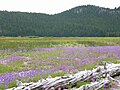
Wildflower meadow in the Bavarian Alps

A meadow (/ˈmɛd/ MED-oh) is an open habitat or field, vegetated by grasses, herbs, and other non-woody plants. Trees or shrubs may sparsely populate meadows, as long as they maintain an open character. Meadows can occur naturally under favourable conditions but are often artificially created from cleared shrub or woodland for the production of hay, fodder or livestock.[1] Meadow habitats as a group are characterized as semi-natural grasslands, meaning that they are largely composed of species native to the region, with only limited human intervention.

Living meadow, Austria

Meadows attract a multitude of wildlife and support flora and fauna that could not thrive in other habitats. They are ecologically important since they provide areas for animal courtship displays, nesting, food gathering, pollinating insects, and sometimes sheltering if the vegetation is high enough. Intensified agricultural practices (too frequent mowing, use of mineral fertilizers, manure and insecticides) may lead to declines in the abundance of organisms and species diversity.[2] There are many types of meadow, including agricultural, transitional, and perpetual – each being a unique and important part of the ecosystem.

Like other biomes, meadows will experience increased pressure (including on their biodiversity) owing to climate change, especially as precipitation and weather conditions change. However grasslands and meadows also have an important climate change mitigation potential as carbon sinks: deep-rooted grasses store a substantial amount of carbon in soil.

Types

[edit]

Agricultural meadows

[edit]

In agriculture, a meadow is grassland that is not regularly grazed by domestic livestock but rather allowed to grow unchecked in order to produce hay. Their origins extend back to the Iron Age, when appropriate tools for the hay harvest emerged. The ability to produce livestock fodder on meadows had a significant advantage for livestock production, since animals could be kept in enclosures, simplifying the control over breeding. Surpluses in biomass production during the summer could be stored for the winter, preventing damage to forests and grasslands since there was no longer the need for livestock grazing during the winter.[1]

Especially in the United Kingdom and Ireland, the term meadow is commonly used in its original sense to mean a hay meadow, signifying grassland mown annually in the summer for making hay. Agricultural meadows are typically lowland or upland fields upon which hay or pasture grasses grow from self-sown or hand-sown seed.[3] Traditional hay meadows were once common in rural Britain but are now in decline. Ecologist Professor John Rodwell states that over the past century England and Wales have lost about 97% of their hay meadows.[4] Fewer than 15,000 hectares (37,000 acres) of lowland meadows remain in the UK and most sites are relatively small and fragmented. 25% of the UK's meadows are found in Worcestershire, with Foster's Green Meadow managed by the Worcestershire Wildlife Trust being a major site.[5]

A similar concept to the hay meadow is the pasture, which differs from the meadow in that it is grazed through the summer rather than being allowed to grow out and periodically be cut for hay.[3] A pasture can also refer to any land used for grazing, and in this wider sense the term refers not only to grass pasture but also to non-grassland habitats such as heathland, moorland and wood pasture.[6] The term grassland is used to describe both hay meadows and grass pastures.[7]

The specific agricultural practices in relation to the meadow can take on various expressions. As mentioned, this could be hay production or providing food for grazing cattle and livestock but also to give room for orchards or honey production. Meadows are embedded and dependent on a complex web of socio-cultural conditions for their maintenance. Historically, they emerged to increase agricultural efficiency when the necessary tools became available. Today, agricultural practices have shifted and meadows have largely lost their original purpose. Yet, they are appreciated today for their aesthetics and ecological functions. Consequently, the European Union's Common Agricultural Policy subsidizes their management, mostly through grazing.[1]

Transitional meadows

[edit]

A transitional meadow occurs when a field, pasture, farmland, or other cleared land is no longer cut or grazed and starts to display luxuriant growth, extending to the flowering and self-seeding of its grass and wildflower species.[8] The condition is however only temporary, because the grasses eventually become shaded out when scrub and woody plants become well-established, being the forerunners of the return to a fully wooded state.[9] A transitional state can be artificially-maintained through a double-field system, in which cultivated soil and meadows are alternated for a period of 10 to 12 years each.[8]

In North America prior to European colonization, Algonquians, Iroquois and other Native Americans peoples regularly cleared areas of forest to create transitional meadows where deer and game could find food and be hunted. For example, some of today's meadows originated thousands of years ago, due to regular burnings by Native Americans.[9][10]

Perpetual meadows

[edit]

A perpetual meadow, also called a natural meadow, is one in which environmental factors, such as climatic and soil conditions, are favorable to perennial grasses and restrict the growth of woody plants indefinitely.[11] Types of perpetual meadows may include:

Urban meadow

[edit]
Southward view from the Nethermead Arches toward the Nethermead urban meadow in Prospect Park, Brooklyn, New York City
Urban Meadow at Botaniska Trädgården, Uppsala, Sweden
An urban meadow at Tifft Nature Preserve in Buffalo, New York

Recently, urban areas have been thought of as potential biodiversity conservation sites. The shift from urban lawns, that are widely spread habitats in cities, to urban meadows is thought to promote greater refuges for plant and animal communities. Urban lawns require intensive management that puts the life there at risk of losing their habitat, especially due to the mowing frequency. Cutting that mowing frequency has demonstrated to induce a clear positive effect on the plant community's diversity, which allows the switch from urban lawns to urban meadows.[12]

Due to increased urbanization, the EU Biodiversity Strategy 2017 decreed that there is a need to protect all ecosystems due to climate change. The majority of the people that live in the urban regions of any country usually get their plant knowledge from visiting parks and or public green infrastructure. Local authorities have the duty of providing the green spaces for the public, but these departments are constantly suffering major budget cuts, making it more difficult for people to admire natural wildlife in the urban sectors and also impairing the local ecosystem. In line with the increasing acceptance of a "messier urban aesthetic", the perennial meadows can be seen as a more realistic alternative to the classic urban lawns as they would also be more cost-efficient to maintain. Factors that managers of urban spaces list as important to regard are:

  • Aesthetics and public reaction
  • Locational context
  • Human Resources and economic sustainability
  • Local politics
  • Communication
  • Biodiversity and existing habitat
  • Physical factors.[13]
Urban meadows in comparison

Human intervention

[edit]

Artificially or culturally conceived meadows emerge from and continually require human intervention to persist and flourish.[14] In many places, the natural, pristine populations of free-roaming large grazers are either extinct or very limited due to human activities. This reduces or removes their natural influence on the surrounding ecology and results in meadows only being created or maintained by human intervention.[15] Existing meadows could potentially and gradually decline, if unmaintained by agricultural practices. Humankind has influenced the ecology and the landscape for millennia in many parts of the world, so it can sometimes be difficult to discern what is natural and what is cultural.[16] Meadows are one example. However, meadows seem to have been sustained historically by naturally occurring large grazers, which kept plant growth in checked and maintained the cleared space.[17][18]

As extensive farming like grazing is diminishing in some parts of the world, the meadow is endangered as a habitat. A number of research projects attempt to restore natural meadow habitats by reintroducing natural, large grazers.[15][17][18] These include deer, elk, goat, wild horse, etc. depending on the location. A more exotic example with a wider scope is the European Tauros Programme.[citation needed]

Some environmental organization recommend converting lawns to meadows by stopping or reducing mowing. They claim that meadows can better preserve biodiversity, water, reduce the use of fertilizers.[19] For example, in 2018 environmental organizations with the support of the Department for Environment Food and Rural Affairs of England, concerned by the decline in the number of bees worldwide, in the first day of Bees' Needs Week 2018 (9–15 July) give some recommendation how to preserve bees. The recommendations include 1) growing flowers, shrubs, and trees, 2) letting the garden grow wild, 3) cutting grass less often, 4) leaving insect nest and hibernation spots alone, and 5) using careful consideration with pesticides.[20]

Impact of tourism

[edit]

The impact of human activity has been noted to increase degradation of meadow soil. This has contributed to landslides in Sholas. E.g. due to skiing activities and urbanization, the meadows of the town of Zakopane, Poland, were noted to have altered soil compositions. The soil's organic material had faded away and was affected due to the chemicals from the artificial melting water from the snow and skiing machinery.[21]

Meadows and climate change

[edit]

Ecological consequences

[edit]

Climate changes impact temperature precipitation patterns worldwide. The effects are regionally very different but generally, temperatures tend to increase, snowpacks tend to melt earlier and many places tend to become drier. Many species respond to these changes by slowly moving their habitat upwards.[22] The increased elevation decreases mean temperatures and thus allows for species to largely maintain their original habitat. Another common response to changed environmental conditions are phenological adaptations. These include shifts in the timing of germination or blossoming. Other examples include changing migration patterns of birds of passage. These adaptations are primarily influenced by three drivers:

  • Increased temperature
  • Changing precipitation patterns
  • Reduced snowpack and earlier melting

In the meadows, as water turned out to be all the more scant, that implies less dampness for the plants.[23] The blooming plants do not develop too and hence do not give much food to the creatures. These kinds of changes in plants could influence the population of buffalo just as numerous other creatures, including bugs and insects.

Effects of higher temperatures

[edit]

In response to temperature changes, flowering plants can respond through either spatial or temporal shifts. A spatial shift refers to the migration towards colder areas, often on higher altitudes.[24] A temporal shift means that a plant may alter its phenology to blossom at a different time of the year. By moving towards the early spring or late autumn they can restore their previous temperature conditions. These adaptations are limited. Spatial shifts may be difficult if the areas are already inhabited by other species, or when the plant is reliant on specific hydrology or soil type.[25] Other authors have shown that higher temperatures can increase total biomass, but temperature shocks and instability seem to have negative impacts on biodiversity.[26] This even appears to be the case for multiyear species, which were previously considered to have a buffering effect on extreme weather events.[26]

Effects of changing precipitation patterns

[edit]

There is a variety of hydrological regimes for meadows, ranging from dry to humid, each yielding different plant communities adapted to the respective provider of water. A shift in precipitation patterns has very different effects, depending on the type of meadow. Meadows that are either dry or wet appear to be rather resilient to change, as a moderate increase or decrease in precipitation does not radically alter their character. Meanwhile, mesic meadows, with a moderate supply of water do change their character as it is easier to tip them into a different regime.[25] Dry meadows in particular are threatened by the invasion of shrubs and other woody plants and a decreasing prevalence of flowering forbs, whereas hydric sites tend to lose woody species.[27][28][25] Due to the dryer upper soil layers, forbs with shallow roots have difficulties obtaining enough water. Woody plants in contrast with their lower-reaching root systems can still extract water stored in lower soil layers and are able to sustain themselves through longer drought periods with their stored water reserves. In the longer term, changing hydrologic regimes may also facilitate the establishment of invasive species that may be better adapted to the new conditions.[25] The effects are already quite visible, an example is the substitution of Alpine meadows in the southern Himalayas through shrubland. Climate change appears to be an important driver of this process.[29] Wetter winters in contrast might increase total biomass, but favour already competitive species.[27] By harming specialised plants and promoting the prevalence of more generalist species, more unstable precipitation patterns could also reduce ecological biodiversity.[27]

Effects of reduced snowpacks

[edit]

Snow covers are directly related to changes in temperature, precipitation and cloud cover. Still, changes in the timing of the snowmelt seem to be, particularly in alpine regions, an important determinant for phenological responses.[30] Data suggests that the impact of snowmelt is greater than the warming alone. Snowmelt beginning earlier is not uniformly positive for plants, because moisture injected through snowmelt will be scarce earlier in the season. Additionally, it might allow for longer periods of seed predation. Also problematic is the lack of the insulating snow cover, possibly resulting in springtime frost events to have a greater negative impact.[31]

Effects on ecological communities

[edit]

All the drivers mentioned above give rise to complex, non-linear community responses.[32] These responses can be disentangled by looking at multiple climate drivers and species together. As different species show varying degrees of phenological responses, the consequence is a so-called phenological reassembly, where the structure of the ecosystem changes fundamentally. Phenological responses in blossoming periods of certain plants may not coincide with the phenological shifts of their pollinators[32] or growing periods of plant communities relying on each other may start to diverge.[30] A study of meadows in the Rocky Mountains revealed the emergence of a mid-season period with little floral activity.[33] Specifically, the study identified that the typical mid-summer floral peak was composed out of several consecutive peaks in dry, mesic and wet meadow systems. Phenological responses to climate change let these distinct peaks diverge, leading to a gap during mid-summer. This poses a threat to pollinators relying on a continuous supply of floral resources. As ecological communities are often highly adapted to local circumstances which can not be reproduced at higher elevations, Debinski et al. describe the short-term changes observed on meadows "as a shift in the mosaic of the landscape composition".[25] Therefore, it is important to monitor not only how specific species respond to climate change, but to also investigate them in the context of different habitats they occur in.[citation needed]

Phenological reassembly

[edit]

Animals as well as plants are changing rapidly to the anthropogenic global warming, and the number of individuals, habitat occupancy, changing reproductive cycles are the strategies to adapt to this severe and unpredictable environment alterations. The different types of meadows all around the planet are different communities of plants (perennial and annual plants) that constantly are interacting with each other to stay alive and reproduce. Timing and duration of flowering is one of the phenological reassembly driven by many different factors like snow melt, temperature and soil moisture to mention a few. All of the changes that a plant or an animal may go through are depending in habitat's topography, altitude, and latitude of a specific organism. It is important to monitor properly the plants because they are one of the best bioindicators of how climate change is affecting the planet.[32]

Flowering phenology is one of the most important features of plant in order to survive any type of adversity. Thanks to different modern techniques and constant monitoring we can assure which ecological strategy the plants are using in order to multiply their species. In alpine meadow of the eastern Tibet notorious variances and similarities were observed between annual and perennial plants. Where perennial plants flowering peak date was directly proportional to the duration and inversely proportional in annuals plants. This is just a limited quantity of many relationships on phenology and functional traits interacting with the environment to survive.[34]

Extreme weather

[edit]

Climate change is increasing temperatures all over the world, and boreal regions are more susceptible to suffer noticeable changes. An experiment was conducted to monitor the reaction of alpine arctic meadow plants to different patterns of increased temperatures. This experiment was based on vascular plants that live in arctic and subarctic environments within three different levels of vegetation: canopy layer, bottom layer and functional groups. It is crucial to keep in mind that these plants are usually sharing the space and constantly interacting with bryophytes, lichens, arthropods, animals and many other organisms. The result was a clear adaptation of a constant pattern that plants recognized and had time to reach thermal acclimation meaning that they got a net carbon gain by intensifying photosynthesis and slightly increasing respiration thanks to a warmer climate for a reasonable time period. However, plants that suffer changes of any kind (not only temperature rising and falling) in a short period of time are more likely to die because they did not have enough time to reach thermal acclimation.[35]

Meadow restorations

[edit]

Carbon storage in meadows

[edit]

Meadows can act as substantial sinks and sources of organic carbon, holding vast quantities of it in the soil. The fluxes of carbon depend mainly on the natural cycle of carbon uptake and efflux, which interplays with seasonal variations (e.g. non-growing vs growing season). The wide range of meadow subtypes have in turn differing attributes (like plant configurations) affecting the area's ability to act as sinks; seagrass meadows are for instant identified as some of the more important sinks in the global carbon cycle. In the instance of seagrass meadows, enhanced production of other greenhouse gases (CH4 and N2O) does occur but the estimated overall effect results in an offset of the total emission. Meanwhile, a usual driver of meadow loss (except for direct alterations due to human development) is climate change, consequently increasing carbon emissions and bringing up the topic of restoration projects which in some cases have prompted initiated meadow restorations (e.g. Zostera marina meadow in Virginia U.S.A).[36]

Grassland degradations

[edit]

Where grassland degradation has occurred, significant alterations to the carbon dioxide efflux during the non-growing season may take place. Both climate change and overgrazing factor into the degradation.[37] As exemplified by the alpine wetland meadow on the Qinghai-Tibetan Plateau, there is the potential of being a moderate source of CO2 and a carbon sink, due to high soil organic content and low decomposition. The more the dynamics have been quantified, however, the effects of degradation become more tangible.[38] A strong connection between grassland degradation and soil carbon loss has been seen, pinpointing that carbon dioxide release is being stimulated by this event. This subsequently indicates a climate change mitigation potential by restoring degraded grassland.[39]

Cap-and-trade

[edit]

Being a market-based regulation of emissions, the cap-and-trade system can sometimes incorporate restoration projects for climate mitigation. For example, the cap-and-trade program in California is looking at how meadow restorations can be incorporated into their system of reducing carbon emissions. Audubon's preliminary studies point to the potential of storing a substantially increased amount of soil carbon compared to degraded meadows while boosting the local biodiversity.[40] Most recently though, during the COVID-19 pandemic, difficulties with restoration are beginning to show: During the first years, areas under restoration are vulnerable to outside disruption, like meadow management put on hold when the ecosystem is most sensitive, for example to invasive species.[41]

See also

[edit]
Some subtypes of meadows: Closely related habitats:

References

[edit]
[edit]
Revisions and contributorsEdit on WikipediaRead on Wikipedia
from Grokipedia
A meadow is a field habitat composed primarily of grasses and other non-woody herbaceous plants, typically forming open areas free of dense trees or shrubs.[1] These ecosystems often rely on surface water or shallow groundwater to support their plant communities, distinguishing them from drier grasslands.[2] In many temperate regions, meadows represent temporary openings in forested landscapes, where natural or human-induced disturbances like grazing, mowing, or fire prevent succession to woodland.[3] Meadows encompass various types, including dry hay meadows managed for cutting, wet meadows in poorly drained basins, and pastures sustained by livestock grazing.[4] Species-rich variants, such as those on chalk downlands or floodplains, host diverse assemblages of wildflowers and grasses adapted to specific soil and moisture conditions.[5] Ecologically, they serve critical functions by providing habitat for pollinators, birds, and small mammals; filtering sediments and pollutants from floodwaters; and acting as carbon sinks through extensive root systems.[6][7] Despite their value, meadows face significant threats from agricultural intensification, abandonment leading to woody encroachment, and habitat loss, with over 97% of traditional meadows in parts of Europe lost since the mid-20th century.[8] Restoration efforts, including controlled grazing and native seed planting, have shown success in reviving these dynamic habitats and their associated biodiversity.[6]

Definition and Characteristics

Botanical and Physical Features

Meadows consist of open habitats dominated by herbaceous vegetation, primarily graminoids including grasses (family Poaceae) and sedges (family Cyperaceae), intermixed with forbs—non-graminoid herbaceous flowering plants—and occasional rushes (family Juncaceae).[9][10] This plant community features perennial species with low to moderate stature, typically 0.5 to 1.5 meters in height during peak growth, forming a dense sward that suppresses woody encroachment through competitive exclusion and resource dominance.[11] Forb diversity contributes to floral displays, with species richness varying from 20 to over 100 vascular plants per square meter in unmanaged examples, influenced by local edaphic factors. Physically, meadows occupy level to gently sloping topography in topographic depressions such as valley bottoms or basins, where impeded drainage maintains elevated soil moisture without permanent saturation.[12][13] Soil profiles are often alluvial or colluvial, with depths exceeding 50 cm, high organic matter content (up to 10-15% in surface horizons), and neutral to slightly acidic pH (5.5-7.0), supporting robust root systems that stabilize the substrate against erosion.[14] Exposure to full sunlight, with minimal shading from surrounding vegetation, promotes the open structure, while seasonal hydrology—such as spring flooding in flood-meadows—cycles nutrients and resets succession, preserving the herbaceous dominance.[10] These features distinguish meadows from adjacent forests or wetlands, as causal dynamics of light availability and moisture gradients dictate the exclusion of arborescent species.[15]

Hydrological and Soil Properties

Meadows exhibit distinct hydrological properties that enable them to function as critical water retention zones within landscapes. These ecosystems often maintain shallow groundwater tables, frequently at or near the land surface during summer months, which supports persistent wet conditions and facilitates aquifer recharge during flood events.[16][17] Springs, artesian conditions, and perched water tables are prevalent, particularly in meadows with complex underlying stratigraphy, enhancing their capacity to store and slowly release water, thereby sustaining baseflows in adjacent streams and mitigating downstream flooding.[16][18] Restoration efforts in degraded meadows, such as those in the Sierra Nevada, have demonstrated increases in groundwater elevations by up to several meters and expansions in wetted areas, underscoring their role in hydrologic recovery.[19] The persistence of meadow vegetation, especially in wet types, depends on specific hydrologic regimes, including adequate early-season soil moisture to prevent desiccation and support growth before summer drying.[20] Permanent vegetative cover and rooted soils in meadows and pastures promote infiltration and storage of floodwaters, with retention capacities influenced by substrate water-holding properties; for instance, studies on green roof analogs report average retention potentials of 15.3% under simulated conditions.[21][22] These features collectively position meadows as buffers against hydrologic extremes, storing surface water and reducing peak runoff velocities.[23] Soil properties in meadows vary by type but generally feature high organic matter content, which enhances water retention and nutrient cycling; organic matter can contribute up to 8.8 cm of additional available water for plant transpiration in grassland soils.[24] Meadows on mineral soils predominate in many regions, contrasting with peat-accumulating organic soils in wetter, low-oxygen environments, where bulk density remains low (often below 0.5 g/cm³) due to undecomposed plant residues.[25][26] Texture typically includes loamy to clayey profiles with dark, organic-enriched A-horizons, supporting fertility; pH ranges from neutral (around 6-7) in alluvial flood meadows to slightly acidic (5.5-6.5) in upland types.[27][28] Degradation, such as from overgrazing or erosion, coarsens soil particles, reduces organic matter by 20-50%, and diminishes water-holding capacity, particularly in the top 30 cm layer.[29][30] These characteristics underpin meadow productivity, with soil organic matter directly correlating to improved hydrologic function and resistance to drought.[31]

Classification and Types

Natural and Semi-Natural Meadows

Natural meadows, also termed perpetual meadows, persist without regular human intervention due to environmental factors such as poor soil drainage, frequent flooding, or harsh climates that suppress woody plant succession and favor herbaceous dominance.[32] These habitats feature diverse assemblages of native grasses, forbs, and sedges adapted to site-specific conditions, including shallow groundwater or seasonal inundation that sustains vegetation year-round.[2] Examples include montane meadows in the western United States, where cold temperatures and short growing seasons limit tree establishment, as observed in Oregon's perpetual meadows supporting endemic flora.[33] Similarly, flood meadows along rivers, such as those in the Danube basin, rely on periodic alluvial deposition and scouring to renew nutrient-poor soils and maintain open grassland structure.[34] Semi-natural meadows, by contrast, depend on low-intensity human management practices like seasonal mowing or light grazing to mimic natural disturbances and prevent encroachment by shrubs or trees, while preserving native species composition without plowing, reseeding, or chemical inputs.[35] These grasslands, prevalent in temperate Europe and parts of Asia, exhibit high plant species richness—often exceeding 40 vascular plants per square meter in unfertilized hay meadows—due to the cessation of succession enabled by traditional agriculture.[36] In the Himalayas, semi-natural alpine meadows in regions like northwest Yunnan support unique biodiversity hotspots with elevated endemism, though shrub encroachment has accelerated since the 1980s from reduced grazing pressures.[37] Such habitats contrast with intensively farmed fields by retaining ecological integrity through historical land-use patterns that align with natural disturbance regimes.[34] Distinguishing natural from semi-natural meadows hinges on dependency: the former self-sustain via abiotic controls, while the latter require ongoing anthropogenic disturbance to avoid reverting to woodland, as evidenced by abandoned European meadows undergoing rapid succession within decades.[38] Globally, natural meadows like those at Ash Meadows National Wildlife Refuge in Nevada host endemic species reliant on spring-fed wetlands, underscoring their role in preserving relict ecosystems amid surrounding arid shrublands.[39] Conservation efforts prioritize semi-natural types for their responsiveness to restoration, such as reintroducing mowing to reverse woody invasion, thereby sustaining pollinator and avian diversity.[40]

Agricultural and Managed Meadows

Agricultural and managed meadows encompass grasslands deliberately maintained through human practices to produce forage for livestock, distinguishing them from semi-natural or wild meadows by targeted interventions aimed at optimizing yield and nutritional quality. These systems typically involve seeding desirable grass and legume species, such as alfalfa or fescue, and applying fertilizers to boost biomass production. Management focuses on either direct grazing in pastures or periodic mowing for hay in meadows, with rotational strategies preventing overgrazing and soil degradation. For instance, rotational grazing has been shown to more than double pasture productivity compared to continuous grazing by allowing forage regrowth and improving soil health.[41] Globally, permanent meadows and pastures constitute a major land use category, though their extent has declined by approximately 150 million hectares since 2001 due to conversion to cropland and urbanization.[42] Pasture meadows prioritize livestock grazing, where animal stocking rates are adjusted to match forage availability, often yielding higher animal unit months (AUM) per area under best management practices; for example, rotationally grazed meadows can achieve 1.75 AUM per ton of hay equivalent, compared to half that for continuous grazing. Hay meadows, conversely, undergo one or more cuts per season for drying and storage, with timing critical to maximize dry matter yield and quality—typically harvested at early bloom stage to balance nutrition and digestibility. Differences in management lead to varied outcomes: hay production risks lower forage quality if cut too late, while pastures benefit from natural trampling that aids nutrient cycling but require fencing for rotation. Establishment involves soil testing and liming to address pH and nutrient deficiencies, ensuring persistence of stands over multiple seasons.[43][44] Intensive management, characterized by high fertilizer inputs and frequent harvests or grazing, elevates productivity—forages under such regimes can produce multiple tons of dry matter per hectare annually—but often diminishes plant species diversity and alters community structure. Extensive approaches, with minimal inputs and later cutting dates, preserve greater biodiversity while still providing viable forage, though at lower yields; studies indicate intensive grazing reduces overall species richness in swards. Silicon supplementation in intensive systems has been found to further enhance yield and forage value without proportionally harming diversity. These practices must balance economic forage output against long-term soil fertility, as overuse can lead to weed invasion or erosion, necessitating integrated pest management and periodic reseeding.[45][46][47]

Montane, Alpine, and Specialized Meadows

Montane meadows are non-forested habitats situated in mountainous regions below the timberline, typically at elevations between 1,700 and 2,900 meters (5,600 to 9,500 feet) in ecosystems like the Rocky Mountains.[48] These areas feature herbaceous vegetation dominated by grasses, forbs, and sedges on low-gradient landscapes with sandy or silty substrates, often influenced by subirrigation or seasonal snowmelt.[49] Ecologically, they support elevated biodiversity compared to surrounding forests, with plant communities shaped by factors such as soil moisture, fire regimes, and grazing, while providing services like flood attenuation, groundwater recharge, and habitat for wildlife including ungulates and pollinators.[50][51] Alpine meadows occupy treeless zones above the timberline, generally at elevations exceeding 3,000 meters (9,800 feet) depending on latitude and regional climate, with boundaries varying—for instance, above 3,500 feet in Vermont's Green Mountains or up to 5,000 meters in the eastern Qinghai-Tibet Plateau.[52][53] Characterized by short growing seasons (often 2-3 months), intense solar radiation, freeze-thaw cycles, and high winds, these meadows host cold-adapted perennials like cushion plants, graminoids, and dwarf shrubs, with vegetation cover limited by nutrient-poor soils and permafrost in higher subzones.[54] Biodiversity patterns show species richness declining with increasing elevation due to physiological stress, though functional diversity in traits like cold tolerance and nutrient acquisition supports multifunctionality in carbon storage and erosion control.[55][56] Specialized meadows encompass variants adapted to edaphic or hydrological extremes within montane and alpine contexts, such as wet meadows dominated by obligate hydrophytes in saturated soils or cryic meadows in perennially cold, snow-dominated environments of the Northern Rocky Mountains.[57][58] These include alpine-montane wet meadows spanning 1,000 to 3,600 meters, occurring as expansive valley floors or riparian strips with high water tables, where sedge- and rush-dominated communities enhance water retention—storing up to 30-50% of basin precipitation—and buffer against erosion via dense root systems.[59][60] Examples include the subalpine meadows of the Sierra Nevada, where restoration efforts have documented improved soil carbon sequestration and native forb recovery post-grazing exclusion, and tropical montane variants like those in the Kinabalu range above 1,500 meters, featuring sclerophyllous shrubs resilient to frequent fog and phosphorus limitation.[61][62] Such specialized types often exhibit lower resilience to disturbances like overgrazing or climate-driven drying, with empirical studies indicating 20-40% declines in cover under elevated temperatures simulating +2°C warming.[63]

Ecological Dynamics

Biodiversity and Species Interactions

Meadows, particularly semi-natural temperate grasslands, support high levels of plant species richness, often exceeding 20-40 species per square meter in unmanaged or traditionally managed sites, due to periodic disturbances like mowing or grazing that inhibit woody succession and promote niche partitioning among herbaceous plants.[64] [65] In intensively managed wet grasslands, alpha diversity averages 23 plant species per 200 m² at field edges, dropping to 15 in interiors, highlighting edge effects in fragmented habitats.[66] These communities feature a mix of grasses, forbs, and legumes, with diversity peaking in low-nutrient soils where competitive exclusion is limited.[67] Insect diversity in hay meadows is substantial, encompassing pollinators such as bumblebees and butterflies, herbivores like grasshoppers, and predators including ground beetles, with management intensity influencing functional traits and abundance.[68] [69] Semi-natural meadows provide floral resources, host plants, and nesting sites critical for pollinator conservation, where diversified mowing regimes enhance arthropod richness by creating heterogeneous structures.[70] [71] Species interactions in meadows are predominantly multitrophic, involving pollination that boosts plant reproduction, herbivory that regulates dominant species and stimulates regrowth, and predation that controls herbivore populations, thereby maintaining community stability.[64] [72] For instance, herbivores and seed predators can disadvantage rare plants in alpine meadows by intensifying selective pressures, while pollinators mediate top-down effects through predator avoidance behaviors that alter visitation rates.[73] [74] These dynamics underscore causal links where disturbance regimes foster coexistence by balancing competitive and antagonistic forces across trophic levels.[75] Vertebrate interactions include grazing by mammals that shapes vegetation structure and avian predation on insects, with European meadow birds relying on open habitats for foraging and nesting, though specific species assemblages vary by region and management.[76] Loss of plant diversity disrupts these networks, reducing carbon sequestration and resilience, as evidenced in temperate meadow experiments.[77]

Ecosystem Services and Functions

Meadows fulfill critical regulating services through hydrological functions, acting as natural sponges that absorb and store floodwaters from snowmelt or rainfall, thereby reducing peak flows and mitigating downstream flooding.[23] [6] This storage capacity supports gradual release of water during dry periods, sustaining baseflow in streams and recharging groundwater aquifers via percolation of surface water into the soil profile.[23] Additionally, meadow vegetation and soils filter sediments, nutrients, and pollutants such as heavy metals and pesticides, enhancing water quality for downstream ecosystems and human use.[23] In terms of climate regulation, healthy meadows function as net carbon sinks, sequestering atmospheric carbon dioxide primarily in soils through plant productivity and organic matter accumulation, with storage capacities varying by meadow type but often exceeding emissions from intact systems.[6] Degraded meadows, however, release stored carbon, diminishing this service.[6] Supporting services include nutrient cycling and soil formation, where diverse root systems stabilize soils against erosion and promote organic matter decomposition, maintaining fertility dependent on hydrologic integrity.[78] Meadows support high biodiversity, providing habitat for numerous species including amphibians like the Yosemite toad, invertebrates, birds, and fish, with restored meadows enhancing connectivity and resource availability for endangered taxa.[6] Species-rich meadows foster pollinator populations, indirectly bolstering pollination services essential for surrounding agriculture and wild plants.[79] Vegetation also controls erosion by anchoring soils along streambanks, preventing sediment loss during high flows.[23] These functions are interlinked, with disruptions like desiccation impairing water retention, carbon storage, and belowground microbial activity.[80]

Human Uses and Economic Value

Grazing and Forage Production

Meadows provide a primary source of forage for grazing livestock, particularly in temperate and montane regions where herbaceous vegetation supports high nutritional value for cattle, sheep, and other herbivores. Grazing in meadows typically involves rotational or continuous systems that leverage regrowth cycles to sustain productivity, with dominant species like grasses (e.g., Poa spp., Festuca spp.) and forbs contributing to dry matter (DM) yields often exceeding 5-10 tons per hectare annually under managed conditions.[81] Proper timing and intensity prevent overgrazing, which can reduce soil cover and future yields, while promoting nutrient recycling through animal manure.[82] Research demonstrates that spring grazing of hay meadows does not significantly diminish total DM production compared to ungrazed controls, with yields remaining comparable between native species mixtures and introduced forbs like creeping foxtail (Alopecurus arundinaceus), averaging around 4-6 tons DM/ha in subsequent hay cuts.[81] High-intensity early-season grazing enhances forage quality, increasing crude protein content and digestibility, which boosts average daily gains (ADG) in livestock by up to 0.2-0.5 kg/day for cattle on improved meadows.[83] In subirrigated meadows, post-freeze heavy grazing reduces regrowth but influences next-year forage quality, with moderate intensities preserving higher fiber digestibility.[84] Grazing intensity directly modulates biomass production and nutritional profiles; for example, sheep grazing elevates forage yields by 14-44% in perennial and annual stands by stimulating tillering and reducing lignification, though excessive pressure shifts species composition toward less palatable types.[85] Livestock performance data from meadow grazing show steer weight gains of approximately 244 pounds over a season, outperforming dry range by 36%, attributable to higher moisture and protein availability in meadow forage.[86] Moderate late-season grazing maintains ecosystem functions like biodiversity while supporting sustained forage output, contrasting with overgrazing that diminishes productivity in wet meadows by compacting soils and favoring invasive species.[87] Economic analyses indicate that integrating spring grazing with hay harvesting can yield net returns 20-30% higher than hay-only systems, driven by dual-use efficiency despite variable weather impacts on regrowth.[88]

Hay Harvesting and Crop Integration

Hay harvesting in meadows involves cutting herbaceous vegetation, primarily grasses and forbs, to produce dried forage for livestock feed, typically occurring in temperate regions during the summer growth period. The process begins with mowing the meadow using sickle-bar or rotary mowers to a height of approximately 8-10 cm, followed by tedding to spread and aerate the cut material for faster drying, raking into windrows, and baling into rectangular or round bales once moisture content reaches 15-20% to prevent mold.[89] Optimal timing targets the late boot stage of grass development, about 6-8 weeks after spring green-up when seed heads begin emerging, ensuring a balance between yield and nutritional quality, as delayed cutting reduces protein content while early cuts limit total biomass.[90] Multiple cuts per season are possible in managed meadows, with second harvests ideally 35-40 days after the first, though extending beyond 60 days diminishes forage quality.[91] Harvesting requires 3 consecutive days of sunny, dry weather to achieve proper drying, often commencing in late morning after dew evaporates to minimize wilting losses.[90][92] In agricultural systems, meadows are integrated into crop rotations via ley farming, where temporary grass-clover leys of 2-5 years are sown after arable crops to restore soil fertility before reverting to cereals or other field crops. This practice leverages nitrogen fixation by legumes in the ley, increasing soil nitrogen levels by up to 100-200 kg/ha over the ley period, reducing the need for synthetic fertilizers in subsequent crops and improving overall rotation profitability.[93][94] Ley integration enhances soil structure through deep-rooted perennials that prevent erosion, promote water retention, and boost organic carbon sequestration, with multispecies leys yielding 20-50% higher biomass than monocultures while supporting biodiversity and pest suppression.[95][96] Crop-livestock synergy is amplified as hay from leys provides winter feed, while manure from confined animals recycles nutrients back to meadows, closing nutrient loops and mitigating environmental runoff compared to continuous arable monocultures.[97] In temperate zones, such as the northern Great Plains, alfalfa-dominated meadow leys have averaged $65/ha net returns over a decade, outperforming some grain crops due to dual forage and soil benefits.[94] Fertilizer applications, such as 80 lb N/acre in early spring, can elevate first-cut yields by 20-30% in fertilized meadows without compromising regrowth for subsequent harvests or rotations.[98][99]

Recreation, Tourism, and Other Utilizations

Meadows provide spaces for low-impact recreational pursuits such as hiking, wildlife observation, and leisurely walks, leveraging their open terrain and floral displays for aesthetic and sensory enjoyment.[6] In alpine settings, these activities often involve trails traversing subalpine meadows, where visitors access panoramic views and seasonal wildflowers; the Five Lakes Trail in California's Granite Chief Wilderness, starting near Alpine Meadows, spans 4.8 miles with 1,095 feet of elevation gain, drawing hikers to alpine lakes amid meadow ecosystems during summer months.[100] Similarly, Tuolumne Meadows in Yosemite National Park serves as a hub for day hikes and backpacking, with its expansive grassy areas dotted by granite features accommodating thousands of outdoor enthusiasts annually from late spring through fall.[101] Tourism centered on meadows emphasizes ecotourism and nature appreciation, particularly in protected sites showcasing biodiversity hotspots. Valley of Flowers National Park in India's western Himalayas, a UNESCO World Heritage site, attracts visitors for its endemic flora blooming from July to August, recording 20,830 tourists (including 280 foreigners) in the 2022 season, with access limited to regulated treks to minimize ecological disturbance.[102] In the United Kingdom, ancient wildflower meadows managed as nature reserves by organizations like The Wildlife Trusts draw locals and tourists for guided walks and photography, preserving habitats that support over 200 plant species in some locales.[103] These destinations generate economic value through entry fees and guided tours, though overtourism risks trampling vegetation, prompting caps on daily visitors in sensitive areas like Valley of Flowers.[104] Beyond primary recreation, meadows facilitate ancillary uses such as educational outings and pollinator habitat enhancement, where species-rich stands support beekeeping and insect observation without intensive management.[105] Urban meadows, increasingly integrated into city planning, offer community greenspaces for passive recreation like picnicking and mental health restoration, as evidenced by stormwater-mitigating biodiverse lawns that double as informal parks.[106] In rural contexts, transitioned meadows from grazing to recreational zones enable nature-based activities, including trail networks that boost local economies via day-use fees and equipment rentals.[107] Such utilizations underscore meadows' role in balancing human access with habitat preservation, informed by empirical monitoring of visitor impacts on soil compaction and flora regeneration.[108]

Historical and Cultural Context

Origins and Evolution of Meadow Landscapes

Meadow landscapes primarily originate from abiotic and biotic factors that inhibit the establishment or dominance of woody vegetation, favoring herbaceous plant communities. In regions capable of supporting forests, natural meadows form in edaphically challenging sites with shallow, nutrient-poor soils, frequent flooding, or exposure to harsh climates that limit tree growth while sustaining graminoids, forbs, and sedges reliant on surface or shallow groundwater. For example, floodplain meadows arise from periodic inundation that deposits sediments and suppresses tree seedlings, as observed in pre-human ecosystems along rivers in Europe and North America. Similarly, montane or fire-prone areas maintain open grasslands through recurrent natural disturbances like lightning-ignited fires or avalanches, preventing succession to woodland; pollen cores from southwest British Columbia reveal such meadows persisting for thousands of years due to landform-climate-fire interactions independent of human activity.[2][109][110] Anthropogenic influences began transforming proto-meadows into managed landscapes during the Neolithic period, with forest clearance for settlement and livestock accelerating the expansion of open herbaceous areas across Eurasia. Archaeological and palynological evidence from Sweden indicates that systematic meadow development, including aftergrowth on arable fields and dedicated hay fields, intensified during the Iron Age (circa 500 BCE–400 CE), enabled by iron scythes for harvesting and the need for winter fodder in expanding pastoral economies. In England, Roman-era haymaking (1st–4th centuries CE) and Anglo-Saxon charters (5th–11th centuries CE) document widespread meadows as distinct from pastures, integral to mixed farming systems where mowing prevented shrub encroachment and enriched soil fertility through litter return. These semi-natural systems, often termed "cultural meadows," diverged from purely natural formations by relying on periodic disturbance to counter ecological succession toward forest, a process absent in unmanaged sites.[111][112] The evolution of meadows reflects intensifying human management and subsequent land-use shifts. Medieval European agriculture (circa 500–1500 CE) optimized meadows for dual hay and aftermath grazing, with innovations like English water meadows—irrigated systems emerging by the 16th century—extending productivity via controlled flooding to promote early grass growth and nutrient cycling. However, 19th–20th century agricultural modernization, including fertilizers and enclosure, homogenized many meadows, reducing species diversity, while rural depopulation post-1950s led to abandonment and woody succession in over 90% of traditional European sites, reverting them to scrub or woodland absent intervention. In North America, colonial-era meadows (17th–19th centuries) mirrored European practices on floodplains for livestock, but native perennial grasslands predating European arrival formed vast natural analogs in prairies, shaped by bison grazing and fires rather than mowing. This trajectory underscores meadows' precarious stability: natural ones endure via inherent constraints, while anthropogenic variants require ongoing maintenance to persist amid competitive tree recruitment.[113][112][114]

Representations in Culture, Literature, and Economy

Meadows have been depicted in visual arts as emblematic of pastoral serenity and seasonal cycles, with early representations appearing on Trajan's Column around 113 CE, illustrating hay meadows in Roman military contexts as managed landscapes supporting legions.[115] In 19th-century European painting, Impressionists like Alfred Sisley captured meadows in works such as Meadow (1880), using vivid greens and blues to convey enclosed, vibrant fields against rural backdrops, emphasizing light and transience over industrialization. Scandinavian Romantic art further romanticizes meadows, as in Nils Blommér's Ängsälvor (1850), portraying twilight fairy dances amid lush grasses, blending folklore with idealized nature. Collections like those of the UK's National Trust preserve meadow scenes in historical cattle paintings and landscapes, informing modern restoration by evidencing traditional biodiversity and land use.[116] In literature, meadows recur as motifs of introspection and renewal, often contrasting human turmoil with natural harmony. Czesław Miłosz's poem "The Meadow" (translated 1980s) evokes partisan executions staining a partisan gathering site, layering historical violence over idyllic terrain.[117] Theodore Roethke's works, such as explorations of marshy meadows, personify grasses as whispering confidants of ecological secrets, as in Ella Fraser Weller's "In the Meadow" (late 19th century), where they gossip nature's intimacies to the observer.[118] Pastoral traditions trace to ancient texts, but modern poetry like Louise Glück's "The Meadow" (2014) depicts snow-covered fields as metaphors for absence and memory, with the meadow "muddy with dreams" striving to regenerate wildflowers.[119] These depictions privilege meadows' empirical role as dynamic, grazed ecosystems rather than static Edens, reflecting causal processes of growth and decay. Economically, meadows symbolize agrarian self-sufficiency and fertility in cultural histories, from medieval European farmers relying on hay surpluses for winter fodder—enabling arable intensification—to steppe herders viewing open grasslands as emblems of prosperity and mobility.[120][121] In philosophical discourse, Thomas Berry's 1990s essay "The Meadow Across the Creek" posits meadows as benchmarks for economic viability, deeming practices "good" if they sustain regenerative capacities like pollination and soil renewal, versus extractive models diminishing them.[122] Cultural ecosystem assessments quantify meadows' non-monetary value in inspiring policy, with studies showing perennial meadows enhancing urban green space appreciation over mown lawns, linking aesthetic preference to biodiversity-driven services like forage yield.[123] Such representations underscore meadows' causal role in pre-industrial economies, where management for hay and grazing yielded measurable caloric outputs—e.g., supporting livestock densities of 1-2 animals per hectare in traditional systems—without modern inputs.[111]

Management Practices and Interventions

Traditional and Modern Agricultural Techniques

Traditional meadow agriculture, particularly in European hay meadows, centered on a single annual cut typically occurring between mid-July and late August, timed to permit wildflowers and grasses to set seed before harvest, thereby maintaining seed banks and plant diversity.[124] This was followed by aftermath grazing with low stocking densities, allowing regrowth without intensive disturbance, and relied on natural soil fertility supplemented by occasional livestock manuring rather than synthetic inputs.[111] Such practices, documented in Swedish farm records from 1873 to 1951, aligned harvesting with local phenological cues to optimize forage nutritive value while preserving ecological balance.[124] In regions like the Carpathian Mountains, historical management integrated corralling and light grazing post-mowing, fostering habitats for diverse flora and fauna without mechanical intervention.[125] These extensive methods supported high biodiversity, with traditionally managed hay meadows hosting 60.1% of recorded native plant species in comparative studies, outperforming converted intensive sites due to reduced disturbance and nutrient loading.[126] Empirical evidence from long-term observations indicates that late-season cutting preserves reproductive success of perennial herbs, countering succession toward woody dominance and sustaining pollinator-dependent communities.[127] Modern techniques prioritize yield maximization through early-spring nitrogen applications, such as 80 pounds per acre in mid-March to accelerate growth, enabling multiple harvests per season with mechanized mowers and balers.[99] Reseeding with improved grass cultivars and weed control via herbicides or rotational intensive grazing further intensifies production, often converting diverse meadows to monoculture-like pastures yielding higher dry matter but at the expense of species richness.[128][129] Intensive management, including frequent mowing and elevated fertilization, correlates with diminished plant and insect diversity, as plant community composition shifts toward competitive grasses and away from forbs, with studies documenting reduced structural complexity and interaction networks in grazed systems.[45][130] Extensive alternatives, mimicking traditional low-input regimes, better retain belowground microbial diversity and phosphorus cycling efficiency, underscoring causal trade-offs between short-term forage output and long-term ecosystem resilience.[131]

Restoration and Rehabilitation Efforts

Restoration efforts for meadows typically address degradation from factors such as woody encroachment, overgrazing, agricultural conversion, or abandonment, aiming to reinstate native plant diversity, soil health, and hydrological functions through targeted interventions.[132] Common techniques include seedbed preparation to ensure seed-soil contact, broadcasting native seed mixes adapted to local conditions, and initial suppression of competing vegetation via herbicide application or mechanical cultivation.[133] Topsoil removal or turf stripping is employed in intensive cases to reduce nutrient levels favoring weedy species, followed by reintroduction of target meadow flora.[134] In riparian and wet meadow contexts, low-tech methods such as installing Zeedyk structures, beaver dam analogs, or post-assisted log structures have demonstrated increased vegetation productivity by 25% and extended greenness periods, enhancing resilience in semiarid rangelands across sites in Colorado, Oregon, and Nevada.[135] For montane meadows, restoration via process-based approaches like gully stabilization and water retention features has yielded long-term carbon sequestration benefits, with projects in the Sierra Nevada showing sustained late-season water flows and reduced flood risks over a decade post-implementation.[136] Landscape-scale initiatives, such as the upland hay meadow restoration in the Pennine Dales of northern England from 2006 to 2012, involved harvesting seeds from 82 species-rich donor sites and spreading hay on degraded pastures, resulting in elevated floral diversity comparable to semi-natural meadows after eight years, though ongoing hay cutting and aftermath grazing were essential to maintain gains against succession.[137] Floodplain meadow restorations using seed-containing plant material transfer on former arable fields achieved mean species transfer rates of 60%, with long-term monitoring revealing persistent improvements in target species richness after 15-20 years, underscoring the value of donor site selection and hydrological reconnection.[138] Empirical data from these projects emphasize that success hinges on site-specific hydrology restoration and perpetual management to counteract natural succession to shrubland or forest, rather than passive recovery.[139] In California, machine learning-identified "lost meadows" have guided rehabilitation to recover groundwater storage and vegetation, with process-based restorations in Mediterranean climates demonstrating potential to mitigate drought impacts by reinstating natural catchment hydrology.[18] However, some traditional water meadow restorations show limited species richness gains, averaging below expectations without rigorous control of water levels and grazing pressure.[140] Overall, these efforts prioritize empirical metrics like species establishment rates and biophysical feedbacks over unsubstantiated biodiversity assumptions, with financial models indicating viability for carbon credit schemes based on belowground sequestration data from verified sites.[141]

Environmental Challenges and Debates

Impacts of Land Use Changes and Overgrazing

Land use changes, including the abandonment of traditional mowing and grazing practices, often result in ecological succession toward shrublands or forests in meadow ecosystems, leading to reduced herbaceous plant diversity and shifts in community composition. In temperate mountain meadows, reduced management has driven forest encroachment, with studies documenting scale-dependent drivers such as decreased disturbance allowing tree regeneration and canopy closure, which diminishes open grassland habitats essential for specialized meadow species.[142] Shrub encroachment specifically causes extensive declines in forb and graminoid functional groups, with herbaceous species richness dropping by up to 50% in affected areas, as evidenced by field surveys across grassy ecosystems.[143] Meta-analyses of European grasslands confirm that long-term abandonment more detrimentally impacts plant and lichen diversity compared to intensification, promoting woody species dominance over forbs and grasses.[144] Overgrazing intensifies meadow degradation by compacting soils, accelerating erosion, and altering vegetation structure, often shifting communities toward less palatable species and reducing overall productivity. Empirical studies in rangeland systems show that excessive livestock pressure decreases above- and below-ground biomass, leading to bare patches, diminished plant diversity, and increased susceptibility to invasive species.[145] [146] In alpine wetlands, overgrazing modifies environmental dependencies of diversity, favoring resilient but low-diversity assemblages while eroding soil organic matter and nutrient levels, with microbial communities reflecting reduced copiotrophic taxa.[147] [148] Grazing intensity experiments across temperate grasslands indicate that heavy utilization disrupts ecosystem stability, with aridity modulating effects but consistently negative outcomes for biodiversity under overgrazing thresholds.[149] Hydrological and soil impacts compound these biotic changes; in California's Sierra Nevada meadows, historic and ongoing overgrazing has incised channels, lowered water tables, and promoted shrub encroachment, desiccation, and unfavorable shifts in plant composition.[150] Soil carbon stocks decline regionally with land conversions involving meadows, as deforestation or tillage reduces organic matter accumulation, exacerbating erosion risks in grazed or abandoned sites.[151] These degradation processes underscore causal links between management cessation or excess and loss of meadow functionality, with restoration potential hinging on reinstating balanced disturbances to counteract woody invasion and soil loss.[152]

Climate Variability Effects and Empirical Evidence

Empirical studies indicate that increased precipitation generally enhances aboveground biomass productivity in meadow ecosystems, with one analysis across multiple ecoregions showing significant gains linked to higher precipitation levels and harvest frequency.[153] Conversely, periods of drought or high-intensity precipitation events diminish productivity, particularly when occurring during critical 110-day windows in the growing season, as observed in temperate grasslands where such variability overrides longer-term trends.[154] In semi-arid alpine meadows, interactive effects of warming and precipitation reveal that elevated temperatures reduce ecosystem multifunctionality—encompassing productivity, biodiversity, and nutrient cycling—under low precipitation, while adequate rainfall mitigates these declines by supporting plant and soil processes.[155] On biodiversity, climate variability often destabilizes community composition and stability. For instance, in alpine meadows, temperature perturbations combined with ecological factors decrease biomass stability for certain functional groups, with hygrophyte stability notably declining under warming scenarios.[156] Experimental warming gradients have been shown to lower species richness, diversity, and dominance while inhibiting above- and below-ground biomass accumulation, effects amplified in drier conditions.[157] Intra-annual fluctuations in temperature and precipitation further influence temporal biomass stability, with variability during the growing season driving shifts in community dynamics rather than absolute extremes alone.[158] Land management practices modulate these responses, as evidenced by eight-year field experiments in Central European grasslands where intensive use enhanced resistance to projected climate extremes compared to extensively managed or abandoned sites.[159] Belowground biomass exhibits differential sensitivity, with climatic extremes disproportionately affecting root systems in certain ecoregions and plant types, underscoring the role of edaphic and vegetative adaptations.[160] Overall, while directional increases in aridity from variability trends impair productivity and functional diversity, context-specific factors like baseline moisture and management prevent uniform negative outcomes across meadow types.[161] These findings derive primarily from controlled experiments and long-term monitoring in peer-reviewed ecological research, prioritizing data over modeled projections.

Conservation Policies, Controversies, and Alternative Perspectives

European Union conservation policies emphasize the protection and restoration of semi-natural grasslands, including meadows, under the Habitats Directive, which safeguards over 200 habitat types such as specific meadow formations.[162] The EU Biodiversity Strategy for 2030 mandates legal protection of at least 30% of EU land, encompassing grassland habitats, while the Nature Restoration Law requires restoring 20% of degraded ecosystems by 2030 and nearly all by 2050.[163] [164] National agri-environment schemes, such as those in the UK, provide incentives for traditional hay meadow management, including delayed mowing after mid-July to support ground-nesting birds and pollinators, though compliance has varied due to economic pressures on farmers.[165] Controversies surround the efficacy and implementation of these policies, particularly the tension between biodiversity goals and agricultural viability. Hay meadows have declined by approximately 97% in Britain since the early 20th century, largely due to conversion to silage production and arable farming, exacerbating pollinator losses, yet definitive data on current extents remains uncertain, marginalizing meadows in policy discussions.[166] [167] Agri-environment restrictions on mowing timing, intended to boost species diversity, have sparked debate as they may reduce hay yields and farmer incomes without proportionally increasing biodiversity in all cases.[165] Restoration efforts, such as invasive species removal in mountain meadows, can temporarily decrease target plant diversity, challenging short-term policy expectations.[168] Alternative perspectives highlight the anthropogenic nature of most meadows, arguing that passive approaches like rewilding lead to ecological succession toward scrub and woodland, diminishing the habitat for meadow specialists. Empirical studies correlate traditional annual hay cutting without fertilization or irrigation—followed by autumn grazing—with peak plant species richness, underscoring active management over laissez-faire methods.[169] Proponents of rewilding advocate reintroducing large herbivores for dynamic ecosystems, citing potential economic benefits in some contexts, but critics note uncertain biodiversity outcomes and conflicts with targeted conservation, as rewilding prioritizes process over specific communities.[170] [171] This divide reflects broader tensions, with farming stakeholders viewing rewilding as antithetical to productive landscapes, while conservationists seek hybrid models balancing restoration and extensification.[172]

References

User Avatar
No comments yet.