Hubbry Logo
Micro hydroMicro hydroMain
Open search
Micro hydro
Community hub
Micro hydro
logo
8 pages, 0 posts
0 subscribers
Be the first to start a discussion here.
Micro hydro
Micro hydro
from Wikipedia

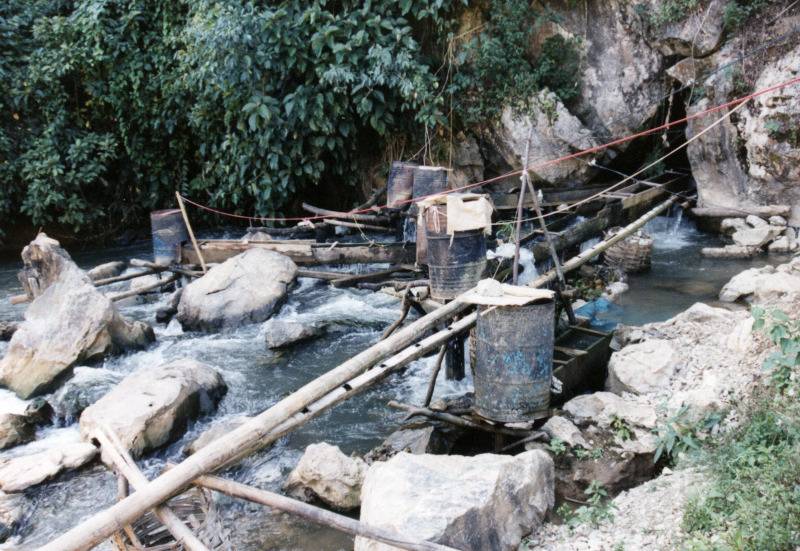
Micro hydro in northwest Vietnam

Micro hydro is a type of hydroelectric power that typically produces from 5 kW to 100 kW of electricity using the natural flow of water. Installations below 5 kW are called pico hydro.[1] These installations can provide power to an isolated home or small community, or are sometimes connected to electric power networks, particularly where net metering is offered. There are many of these installations around the world, particularly in developing nations as they can provide an economical source of energy without the purchase of fuel.[2] Micro hydro systems complement solar PV power systems because in many areas water flow, and thus available hydro power, is highest in the winter when solar energy is at a minimum. Micro hydro is frequently accomplished with a pelton wheel for high head, low flow water supply. The installation is often[when?][where?] just a small dammed pool, at the top of a waterfall, with several hundred feet of pipe leading to a small generator housing. In low head sites,[example needed] generally water wheels and Archimedes' screws are used.[citation needed]

Construction

[edit]
Typical microhydro setup.

Construction details of a microhydro plant are site-specific. Sometimes an existing mill-pond or other artificial reservoir is available and can be adapted for power production. In general, microhydro systems are made up of a number of components.[3] The most important include the intake where water is diverted from the natural stream, river, or perhaps a waterfall. An intake structure such as a catch box is required to screen out floating debris and fish, using a screen or array of bars to keep out large objects. In temperate climates, this structure must resist ice as well. The intake may have a gate to allow the system to be dewatered for inspection and maintenance.

The intake is then brought through a canal and then forebay. The forebay is used for sediment holding. At the bottom of the system the water is tunneled through a pipeline (penstock) to the powerhouse building containing a turbine. The penstock builds up pressure from the water that has traveled downwards. In mountainous areas, access to the route of the penstock may provide considerable challenges. If the water source and turbine are far apart, the construction of the penstock may be the largest part of the costs of construction. At the turbine, a controlling valve is installed to regulate the flow and the speed of the turbine. The turbine converts the flow and pressure of the water to mechanical energy; the water emerging from the turbine returns to the natural watercourse along a tailrace channel. The turbine turns a generator, which is then connected to electrical loads; this might be directly connected to the power system of a single building in very small installations, or may be connected to a community distribution system for several homes or buildings.[3]

Usually, microhydro installations do not have a dam and reservoir, like large hydroelectric plants have, relying on a minimal flow of water to be available year-round.

Head and flow characteristics

[edit]

Microhydro systems are typically set up in areas capable of producing up to 100 kilowatts of electricity.[4] This can power a home or small business facility. This production range is calculated in terms of "head" and "flow". The higher each of these are, the more power available. Hydraulic head is the pressure measurement of water falling in a pipe expressed as a function of the vertical distance the water falls.[4] This change in elevation is usually measured in feet or meters. A drop of at least 2 feet is required or the system may not be feasible.[5] When quantifying head, both gross and net head must be considered.[5] Gross head approximates power accessibility through the vertical distance measurement alone whereas net head subtracts pressure lost due to friction in piping from the gross head.[5] "Flow" is the actual quantity of water falling from a site and is usually measured in gallons per minute, cubic feet per second, or liters per second.[6] Low flow/high head installations in steep terrain have significant pipe costs. A long penstock starts with low pressure pipe at the top and progressively higher pressure pipe closer to the turbine in order to reduce pipe costs.

The available power, in kilowatts, from such a system can be calculated by the equation P=Q*H/k, where Q is the flow rate in gallons per minute, H is the static head, and k is a constant of 5,310 gal*ft/min*kW.[7] For instance, for a system with a flow of 500 gallons per minute and a static head of 60 feet, the theoretical maximum power output is 5.65 kW. The system is prevented from 100% efficiency (from obtaining all 5.65 kW) due to the real world, such as: turbine efficiency, friction in pipe, and conversion from potential to kinetic energy. Turbine efficiency is generally between 50–80%, and pipe friction is accounted for using the Hazen–Williams equation.[8]

Regulation and operation

[edit]

Typically, an automatic controller operates the turbine inlet valve to maintain constant speed (and frequency) when the load changes on the generator. In a system connected to a grid with multiple sources, the turbine control ensures that power always flows out from the generator to the system. The frequency of the alternating current generated needs to match the local standard utility frequency. In some systems, if the useful load on the generator is not high enough, a load bank may be automatically connected to the generator to dissipate energy not required by the load; while this wastes energy, it may be required if it's not possible to control the water flow through the turbine.

An induction generator always operates at the grid frequency irrespective of its rotation speed; all that is necessary is to ensure that it is driven by the turbine faster than the synchronous speed so that it generates power rather than consuming it. Other types of generator can use a speed control systems for frequency matching.

With the availability of modern power electronics it is often easier to operate the generator at an arbitrary frequency and feed its output through an inverter which produces output at grid frequency. Power electronics now allow the use of permanent magnet alternators that produce wild AC to be stabilised. This approach allows low speed / low head water turbines to be competitive; they can run at the best speed for extraction of energy, and the power frequency is controlled by the electronics instead of the generator.

Very small installations (pico hydro), a few kilowatts or smaller, may generate direct current and charge batteries for peak use times.[citation needed]

Turbine types

[edit]

Several types of water turbines can be used in micro hydro installations, selection depending on the head of water, the volume of flow, and such factors as availability of local maintenance and transport of equipment to the site. For hilly regions where a waterfall of 50 meters or more may be available, a Pelton wheel can be used. For low head installations, Francis or propeller-type turbines are used. Very low head installations of only a few meters may use propeller-type turbines in a pit, or water wheels and Archimedes screws. Small micro hydro installations may successfully use industrial centrifugal pumps, run in reverse as prime movers; while the efficiency may not be as high as a purpose-built runner, the relatively low cost makes the projects economically feasible.

In low-head installations, maintenance and mechanism costs can be relatively high. A low-head system moves larger amounts of water, and is more likely to encounter surface debris. For this reason a Banki turbine also called Ossberger turbine, a pressurized self-cleaning crossflow waterwheel, is often preferred for low-head micro hydro systems. Though less efficient, its simpler structure is less expensive than other low-head turbines of the same capacity. Since the water flows in, then out of it, it cleans itself and is less prone to jam with debris.

  • Screw turbine (Reverse Archimedes' screw): two low-head schemes in England, Settle Hydro and Torrs Hydro use an Archimedes' screw which is another debris-tolerant design. Efficiency 85%.
  • Gorlov: the Gorlov helical turbine free stream or constrained flow with or without a dam,[9]
  • Francis and propeller turbines.[10]
  • Kaplan turbine : Is a high flow, low head, propeller-type turbine. An alternative to the traditional kaplan turbine is a large diameter, slow turning, permanent magnet, sloped open flow VLH turbine with efficiencies of 90%.[11]
  • Water wheel : advanced hydraulic water wheels and hydraulic wheel-part reaction turbine can have hydraulic efficiencies of 67% and 85% respectively. Overshot water wheel maximum efficiency (hydraulic efficiency) is 85%.[12][13] Undershot water wheels can operate with very low head, but also have efficiencies below 30%.[14]
  • Gravitation water vortex power plant : part of the river flow at a weir or natural water fall is diverted into a round basin with a central bottom exit that creates a vortex. A simple rotor (and connected generator) is moved by the kinetic energy. Efficiencies of 83% down to 64% at 1/3 part flow.[citation needed]

Use

[edit]

Microhydro systems are very flexible and can be deployed in a number of different environments. They are dependent on how much water flow the source (creek, river, stream) has and the velocity of the flow of water. Energy can be stored in battery banks at sites that are far from a facility or used in addition to a system that is directly connected so that in times of high demand there is additional reserve energy available. These systems can be designed to minimize community and environmental impact regularly caused by large dams or other mass hydroelectric generation sites.[15]

Potential for rural development

[edit]

In relation to rural development, the simplicity and low relative cost of micro hydro systems open up new opportunities for some isolated communities in need of electricity. With only a small stream needed, remote areas can access lighting and communications for homes, medical clinics, schools, and other facilities.[16] Microhydro can even run a certain level of machinery supporting small businesses. Regions along the Andes mountains and in Sri Lanka and China already have similar, active programs.[16] One seemingly unexpected use of such systems in some areas is to keep young community members from moving into more urban regions in order to spur economic growth.[16] Also, as the possibility of financial incentives for less carbon-intensive processes grows, the future of microhydro systems may become more appealing.

Micro-hydro installations can also provide multiple uses. For instance, micro-hydro projects in rural Asia have incorporated agro-processing facilities such as rice mills – alongside standard electrification – into the project design.

Cost

[edit]

The cost of a micro hydro plant can be between 1,000 and 5000 U.S. dollars per kW installed.[citation needed]

Advantages and disadvantages

[edit]

Advantages

[edit]

Microhydro power is generated through a process that utilizes the natural flow of water.[17] This power is most commonly converted into electricity. With no direct emissions resulting from this conversion process, there are little to no harmful effects on the environment, if planned well, thus supplying power from a renewable source and in a sustainable manner. Microhydro is considered a "run-of-river" system meaning that water diverted from the stream or river is redirected back into the same watercourse.[18] Adding to the potential economic benefits of microhydro is efficiency, reliability, and cost effectiveness.[18]

Disadvantages

[edit]

Microhydro systems are limited mainly by the characteristics of the site. The most direct limitation comes from small sources with the minuscule flow. Likewise, flow can fluctuate seasonally in some areas. Lastly, though perhaps the foremost disadvantage is the distance from the power source to the site in need of energy. This distributional issue as well as the others are key when considering using a micro-hydro system.

See also

[edit]

References

[edit]
[edit]
Revisions and contributorsEdit on WikipediaRead on Wikipedia
from Grokipedia
Micro hydro, also known as microhydropower, is a type of small-scale hydroelectric power generation that typically produces up to 100 kilowatts (kW) of by harnessing the of flowing , such as from or rivers, often without the need for large or reservoirs. These systems, which range in capacity from as low as 0.1 kW for battery-charging applications to 100 kW for powering homes, farms, or small communities, operate primarily as run-of-river setups that divert a portion of the flow through a to generate . Key components of a micro hydro system include an intake structure to divert water, a penstock or canal to convey it to the turbine site, a turbine (such as an impulse type like Pelton or Turgo for high-head installations) that converts water's potential and kinetic energy into rotational motion, a generator to produce electricity, and wiring or transmission lines to deliver power. The power output depends on factors like water flow rate (Q), vertical head (H), gravitational constant (g), and system efficiency (typically 50-70%), calculated via the formula P = Q × H × g × e. Systems can be off-grid for remote locations, often paired with batteries for storage, or grid-connected with net metering to sell excess power. Micro hydro offers several advantages as a source, including high reliability with near-continuous operation (up to 24 hours a day), low operating and maintenance costs, and a lifespan of 20-50 years for major components like turbines. It produces no direct emissions, has minimal environmental impact compared to larger , and is particularly suitable for rural or isolated areas where grid extension is uneconomical. However, initial installation costs are high, ranging from 1,5001,500-9,000 per kW depending on site conditions and scale, and systems require site-specific assessments, permits, and environmental approvals to ensure compliance with water rights and ecological protections. Globally, micro hydro supports sustainable electrification in developing regions and contributes to for off-grid users in developed countries.

Definition and Fundamentals

Definition and Classification

Micro hydro refers to small-scale hydroelectric power systems that generate from the of flowing or falling , with an installed capacity typically up to 100 kW. These systems are designed for localized use, often serving remote communities, farms, or individual households, and are distinguished by their minimal environmental impact compared to larger installations. Classifications vary by country and organization, but micro hydro commonly ranges from 5 kW to 100 kW, with smaller systems sometimes included under the term. Within micro hydro, further sub-classifications exist based on power output to reflect varying scales of application and technical feasibility. Pico hydro systems produce less than 5 kW, suitable for powering a single home or small off-grid setup. These categories emphasize decentralized, low-investment solutions that leverage natural water flows without extensive damming. Classification of micro hydro systems also considers site suitability and operational modes, primarily run-of-river setups that divert water without significant storage reservoirs, versus those with small storage for consistent output during low-flow periods. Regulatory thresholds vary by country; requirements for permitting and licensing depend on national and local regulations, which may offer streamlined processes for small-scale projects. Compared to larger counterparts, micro hydro requires far less , such as modest penstocks and turbines rather than massive dams, making it more accessible for in developing regions. Mini hydro, spanning 100 kW to 1 MW, bridges to medium-scale applications with moderate grid integration, while large hydro exceeds 10 MW and often involves reservoir-based projects with substantial ecological and social considerations. This scale-based distinction underscores micro hydro's role in sustainable, community-level energy access without the high capital and land-use demands of bigger systems.

Basic Principles of Operation

Micro hydro systems operate by harnessing the potential and kinetic energy of flowing water to generate mechanical power, which is then converted into electrical energy. The process begins with water diverted from a stream or river, where the potential energy from the vertical drop—known as head—and the kinetic energy from the water's flow drive a turbine or waterwheel. This rotational mechanical energy spins a connected generator, producing electricity suitable for local use or grid connection. The theoretical power output of a micro hydro is determined by the equation: P=ρgQHηP = \rho \cdot g \cdot Q \cdot H \cdot \eta where PP is the power in watts, ρ\rho is the density of (typically 1000 kg/m³), gg is the acceleration due to gravity (9.81 m/s²), QQ is the (m³/s), HH is the effective head (m), and η\eta is the overall (typically 0.5–0.9). This formula quantifies the available based on the site's hydraulic characteristics, with higher head and flow rates yielding greater power potential. Efficiency in micro hydro systems is influenced by several factors, including hydraulic losses from in conveyance , mechanical losses in the and drive mechanisms, and electrical losses in the generator and power conditioning equipment. Hydraulic efficiency can be reduced by and pipe resistance, while depends on turbine design and alignment; electrical efficiency is affected by generator loading and wiring resistance. Overall, these losses result in real-world efficiencies of 50–90%, depending on system scale and maintenance. As a renewable energy technology, micro hydro relies on the natural water cycle—evaporation, precipitation, and runoff—to provide a continuous, replenished water source, ensuring long-term sustainability with minimal environmental disruption when implemented as run-of-river systems. This dependence on hydrological processes makes micro hydro a reliable baseload renewable option, often operating for decades with low operational emissions.

History and Development

Historical Evolution

The origins of micro hydro technology trace back to ancient water wheels used as precursors for harnessing water's . In ancient , during the around the 2nd century BCE, horizontal water wheels were developed for milling grain and other mechanical tasks, marking an early form of small-scale . Similarly, in the , water-powered mills emerged by the 1st century BCE, evolving from animal-driven rotary mills to more efficient water-driven systems that powered grain grinding and industrial processes across . These early inventions laid the conceptual foundation for later micro hydro systems by demonstrating the feasibility of localized water-based power generation without large-scale infrastructure. Advancements in the transformed these rudimentary devices into modern turbines suitable for small-scale applications. The , invented by James B. Francis in 1848, improved upon earlier designs by using a mixed-flow mechanism that achieved up to 88% efficiency, making it ideal for low- to medium-head sites in mills and early industrial settings. Shortly thereafter, in the late , Lester Allan Pelton developed the , an impulse turbine patented in 1880, which excelled in high-head, low-flow conditions common to mountainous regions and mining operations, such as its first installation at the Mayflower Mine in in 1878. These innovations enabled more reliable and efficient small hydro installations, shifting from traditional wheels to engineered turbines for localized power needs. Following , micro hydro gained momentum in rural electrification efforts across and during the 1950s and 1960s. In , post-war reconstruction emphasized decentralized energy solutions, with plants integrated into rural grids to support agricultural and community needs in countries like and . In , saw the formal initiation of micro hydro in the 1960s through Swiss-assisted manufacturing of local turbines, replacing diesel engines for agro-processing in remote areas, while India's post-independence programs from the late 1940s onward expanded for rural villages, building on pre-existing 19th-century sites. Key events in the and further propelled micro hydro adoption in developing countries. The , triggered by OPEC's production cuts and quadrupled prices, highlighted vulnerabilities in dependence, spurring international interest in off-grid renewables like micro hydro for in rural areas of and . In response, the (UNIDO) launched initiatives in the late 1970s and 1980s, including study tours to in 1979 and technical reports by 1987, to promote small and pico hydro (under 5 kW) for decentralized electrification in least-developed nations. These efforts established micro hydro as a for sustainable rural power by the late .

Modern Advancements and Innovations

Since the 2010s, integration of digital controls and (IoT) technologies has revolutionized micro hydro systems by enabling remote monitoring and automated operation. IoT sensors facilitate real-time data collection on water flow, turbine performance, and environmental conditions, allowing and optimization of energy output in distributed microgrids that include micro hydro as a key distributed energy resource. For instance, hierarchical control systems incorporating IoT have been deployed in European microgrids, such as those on Island, to enhance resiliency and integration with other renewables. algorithms, often paired with IoT, analyze hydrological data to forecast flow variations, reducing design time by up to 80% and improving overall system efficiency in small installations. Advancements in low-head turbine designs, particularly the Archimedes screw turbine (AST), have expanded micro hydro applicability to sites with heads below 1 meter since 2015. Post-2015 research has optimized AST geometry using (CFD), achieving hydraulic efficiencies up to 75.5% at low flow rates (0.0044–0.025 m³/s) and inclinations of 30–35 degrees, making them suitable for modular, portable installations in remote or settings. Modular AST designs, featuring adjustable frames and chain-drive systems, simplify assembly and scalability, with efficiencies reaching 92.9% in optimized configurations for . These improvements build on earlier screw concepts but emphasize fish-friendly, low-impact operations for ultra-low-head micro hydro. In the 2020s, policy shifts under the European Union's Green Deal have promoted micro hydro through incentives for retrofits and . The plan, part of the Green Deal, targets an additional 79 TWh annual production from small (under 10 MW) while enforcing environmental standards like fish passage solutions, with EU funding supporting innovative low-impact technologies across member states. This framework aims to add 40 GW of capacity by 2050, prioritizing refurbishments to align with the 55% emissions reduction goal by 2030. Globally, similar incentives have accelerated micro hydro adoption in off-grid regions. As of 2025, emerging trends in micro hydro include hybrid systems combining turbines with battery storage and AI-driven optimization to manage variable flows. These hybrids use AI algorithms, such as genetic algorithms integrated with neural networks, to dynamically balance power generation, battery charging, and discharge, enhancing reliability in microgrids with intermittent water resources. For example, paired hydro-battery systems employ mixed-integer for , minimizing costs and emissions while supporting . Additionally, 3D-printed components, like lightweight resin blades (25% lighter than metal) and intake adapters, have reduced production time from one month to three days and costs by up to 83% for custom parts in low-head setups. These innovations, demonstrated in projects like Ricoh's biomass-derived generators and Cadens' prototypes, lower barriers to deployment in diverse sites.

Technical Design

Site Assessment: Head and Flow

Site assessment for micro hydro systems begins with evaluating the hydraulic parameters of head and flow, which determine the site's potential power output and overall viability. Gross head refers to the total vertical drop in elevation from the water intake point to the location, representing the maximum available hydraulic energy. In contrast, net head accounts for energy losses due to in , fittings, and other system components, typically reducing the effective head by 5-15% depending on design efficiency. Accurate measurement of gross head can be achieved using for topographic surveys, optical or digital levels for precise elevation differences, or weir-based methods that involve constructing temporary structures to observe water levels over a known drop. These techniques ensure reliable data for sites with varying terrain, as emphasized in guidelines from the U.S. Department of Energy's resources. Flow rate, or the volume of available per unit time, is assessed to quantify the resource's consistency and capacity, often expressed in cubic meters per second (m³/s). Common gauging methods include the use of rectangular or triangular weirs, where flow is calculated from depth over crest using established empirical formulas like the Francis for rectangular weirs. Current meters, such as propeller or electromagnetic types, measure at multiple points across the cross-section, enabling the velocity-area method to compute discharge by integrating depth and width profiles. For micro hydro, these assessments must account for seasonal variations, such as reduced flows during dry periods, and assess low flows using duration curves to ensure reliable operation, typically designing around the flow (Q50 ≈50% exceedance) while reserving environmental compensation flows of 10-30% of average annual discharge to prevent ecological harm and system downtime during dry periods. The British Hydropower Association recommends long-term monitoring over at least 12 months to capture diurnal and annual fluctuations influenced by and upstream usage. To illustrate site potential, the theoretical power output can be estimated using the basic equation P = ρ g Q H η, where ρ is water density (1000 kg/m³), g is (9.81 m/s²), Q is flow rate, H is net head, and η is overall . For example, with a flow rate Q of 0.03 m³/s and a net head H of 20 m at 80% , the potential power P approximates 5 kW, sufficient for small-scale in remote areas. This calculation highlights how even modest head and flow combinations can yield viable micro hydro output, as demonstrated in case studies from the (IRENA). Beyond measurements, site suitability hinges on factors like stream gradient, which influences head development and erosion risks, with optimal gradients of 1-5% for micro hydro to balance potential and infrastructure feasibility. High loads from upstream can accelerate wear and reduce efficiency, necessitating assessments via sampling or sediment traps to measure loads, often assuming 0.5 kg/m³ in design if no data is available, and implementing desilting measures if high concentrations (>0.5 kg/m³) are anticipated to minimize wear over the long term. Additionally, environmental flow requirements must reserve 10-30% of mean annual flow to sustain aquatic ecosystems, as mandated by frameworks like the European Union's , integrating ecological needs into site evaluation. These considerations, drawn from the World Bank's sustainability tools, ensure that assessments prioritize both technical and environmental viability.

Turbine Types and System Components

Micro hydro systems primarily utilize two categories of turbines: impulse and reaction types, selected based on the available hydraulic head and flow rate at the site. Impulse turbines, such as the , operate by directing high-velocity water jets onto buckets or cups on a rotor, converting kinetic energy directly into mechanical rotation without significant pressure change across the runner. These are ideal for high-head applications exceeding 50 meters, where flow rates are typically low, achieving hydraulic efficiencies of 80% to 90%. In contrast, reaction turbines generate power through both kinetic and pressure differences, with water flowing continuously through the runner; they suit lower heads and higher flows, often reaching efficiencies over 90%. The Pelton turbine, a classic impulse design, features spoon-shaped buckets that split the jet to minimize loss, making it suitable for micro hydro sites with heads above 50 meters and flows under 0.1 m³/s. For medium heads between 10 and 50 meters, the —a reaction type with inward radial flow—provides robust performance across a broad range of flows, overlapping slightly with Pelton applications at the higher end. At low heads below 10 meters, the , an axial-flow reaction variant with adjustable blades, optimizes efficiency for higher flows by adapting to varying conditions. Additional turbine options expand suitability for specific micro hydro constraints. Cross-flow turbines, another impulse type, use water passing through the runner twice for better tolerance to debris and variable flows, performing well in medium-head, low-to-moderate flow scenarios with efficiencies around 70-85%. The turbine, suited for very low heads under 5 meters, employs a helical screw to lift and convert low-velocity flow into rotation; it is notably fish-friendly due to its gentle passage for aquatic life and achieves efficiencies of 70-85%. turbines, fixed-blade reaction designs akin to simplified Kaplans, serve low-head, steady-flow sites with efficiencies up to 85%. Turbine selection in micro hydro hinges on matching the site's head and flow—measured during assessment—to the turbine's , often guided by selection charts that plot head against flow for optimal . Turbine performance should be verified against standards like IEC 60193 for hydraulic testing to ensure reliable operation. For instance, Pelton turbines are preferred for flows below 0.1 m³/s at high heads, while reaction types like Kaplan handle higher flows at low heads. Beyond the turbine, micro hydro systems integrate essential components to ensure reliable energy conversion. Intake screens, or trash racks, positioned at the water diversion point, filter out like leaves and to protect downstream equipment, typically constructed from bars spaced 10-50 mm apart depending on site conditions. The , a conduit delivering to the , is commonly made from PVC for its resistance and ease of handling in smaller (up to 300 mm), or for higher-, longer runs; sizing follows rules of thumb like a of 3-5 m/s to balance losses against cost, often calculated as ≈ √(flow rate in m³/s × 1000 / ). Generators convert the turbine's mechanical output to electricity, with synchronous types providing stable voltage and frequency for grid-connected systems via direct excitation, while induction (asynchronous) generators—more common in micro hydro for their ruggedness, lower cost, and self-starting capability—suit off-grid setups but require capacitors for excitation. For off-grid applications, power conditioning involves inverters that convert the generator's AC output to DC for battery storage or back to AC for loads, ensuring compatibility with household appliances and stabilizing voltage fluctuations.

Construction and Installation

The construction and installation of micro hydro systems involve a series of phases designed to harness flow with minimal environmental disruption, typically for capacities between 10 and 50 kW. These phases prioritize run-of-river configurations, which divert a portion of the without creating large reservoirs, thereby reducing ecological impacts such as flooding and disruption compared to low-dam designs that require small impoundments and additional permitting. Low-dam setups, while feasible for stable flows, are less common in micro-scale projects due to their higher and potential for greater downstream flow alterations. Site preparation begins with topographic and geological assessments to evaluate terrain stability, soil composition, and access routes, often involving drilling for unconsolidated foundations and minimal earthmoving to limit alteration. This phase includes clearing vegetation and constructing temporary access paths, ensuring that natural features like rocks are preserved to blend the installation visually with the surroundings. Environmental impact assessments guide these activities, focusing on and agreements with landowners. Once prepared, the intake structure is built, typically as a or lateral diversion to capture while maintaining a reserved flow (often 10% of average stream volume) for aquatic life. Intakes feature trash racks and sediment traps to prevent debris and fine particles (down to 0.2-0.3 mm) from entering the system, with designs like Tyrolean s using sloping screens for self-cleaning in steep streams. Water conveyance follows, where open flumes or buried penstocks transport flow to the , selected based on site slope and head. Open flumes, often canals (e.g., 2 m x 2.5 m cross-section), suit low-gradient paths alongside rivers and allow easy inspection but expose to and . Buried penstocks, preferred for medium heads up to 200 m, minimize visual and thermal impacts; (HDPE) pipes are commonly used for their low roughness (e=0.003 mm), corrosion resistance, and lightweight installation, sized to maintain velocities of 3-5 m/s to balance friction losses and pipe cost. anchor blocks secure penstocks against thrust, and air-vacuum valves prevent vacuum collapse. These elements adhere to guidelines such as ASCE standards for and IEC 60193 for hydraulic efficiency in conveyance systems. The powerhouse setup concludes the build, housing the , generator, and controls in a compact, often buried or low-profile structure founded on rock or reinforced with jet grouting for stability. ensures waterproofing, with tailrace channels returning water to the stream to preserve downstream flow; mitigates noise from components like Pelton turbines. For 10-50 kW systems, the entire process typically spans 3-6 months, involving local skilled labor (5-10 workers) for excavation, pouring, and pipe laying, supplemented by specialists for turbine integration. This timeline allows for seasonal work, such as low-water periods, to further reduce ecological disturbance.

Operation and Control

Regulation and Automation

In micro hydro systems, mechanisms are essential for regulating speed to maintain stable electrical output, typically at 50 or 60 Hz depending on regional standards. Traditional mechanical s, such as types, use a arrangement driven by the to sense speed variations and adjust water flow via linkages and dashpots, providing proportional-integral (PI) control with inherent droop for load sharing. These systems, common in early installations, offer simplicity but limited precision due to mechanical wear and slower response times. In contrast, modern electronic s employ proportional-integral-derivative (PID) controllers to achieve finer speed by processing feedback and actuating or valves electronically, enhancing reliability and allowing self-diagnostics in micro hydro setups under 100 kW. Automation in micro hydro enhances through integrated sensors and control logic. Water level and flow sensors, often ultrasonic or electromagnetic types, monitor intake conditions to detect variations in head or discharge, enabling real-time adjustments to prevent inefficiencies or damage. Automatic shutoff mechanisms, triggered by low flow thresholds or overload conditions via programmable logic controllers (PLCs), close inlet valves to protect the from or excessive stress. Supervisory Control and (SCADA) systems, implemented with PLCs, facilitate remote monitoring and operation by aggregating data from sensors on parameters like flow, speed, and power output, allowing operators to intervene without on-site presence. Distinctions between grid-tied and off-grid configurations influence regulation strategies. In grid-tied micro hydro, inverters synchronize the system's AC output to the grid's and voltage, ensuring seamless integration and anti-islanding during outages. For off-grid setups, battery-based systems use diversion or dump loads—resistive elements like heaters—to dissipate excess power when batteries are fully charged, preventing generator and maintaining stability. To optimize efficiency amid variable water flows, variable speed drives (VSDs) have seen increased adoption in micro hydro since the , allowing turbines to operate below synchronous speed without fixed governors. These drives, typically full-power converters interfacing permanent magnet synchronous generators, adjust rotor speed to match flow variations, reducing mechanical stress and improving annual energy yield by up to 16% in fluctuating conditions compared to constant-speed designs.

Maintenance and Safety Protocols

Routine maintenance is essential for the and of micro hydro systems, with tasks typically including monthly of intake screens to prevent debris accumulation that can reduce water flow and performance. This involves removing leaves, , and other obstructions to maintain optimal hydraulic . Yearly inspections of the are recommended to check for leaks, , or structural weaknesses, often involving visual assessments and testing to ensure the pipeline's integrity under varying water s. , such as greasing bearings, should occur monthly to minimize and wear on rotating components, using manufacturer-specified waterproof greases. With proper adherence to these protocols, micro hydro systems can achieve an expected lifespan of 20 to 50 years, depending on site conditions and material quality. Safety protocols prioritize hazard mitigation through electrical grounding of all metal components and generators to prevent shocks and faults, in compliance with standards like those from the (OSHA) or equivalent international guidelines such as IEC 60364. Flood protection measures include installing water-level sensors and automated closures to detect rising waters and shut down operations, reducing risks from overflow or structural damage during heavy rains. Worker programs emphasize recognition, proper use of (PPE), and emergency procedures, ensuring operators are qualified to handle high-voltage systems and mechanical risks. These protocols align with broader safety frameworks that integrate risk assessments and regular drills to safeguard personnel and equipment. Troubleshooting common issues focuses on prompt identification and resolution to minimize . Sediment buildup, often at intakes or in the , can be addressed by flushing systems or manual cleaning during low-flow periods, restoring flow rates without major disassembly. Bearing , indicated by unusual vibrations or , requires and relubrication or replacement to prevent turbine imbalance and efficiency losses. Electrical faults, such as short circuits or grounding failures, involve systematic testing of wiring, connections, and inverters using multimeters to isolate and repair issues, often preventing cascading failures in the power output. In the 2020s, remote monitoring tools have enhanced maintenance efficiency by providing and alerts via AI-enabled platforms, such as those using motor current signature analysis for predictive fault detection in turbines and generators. These systems, including solutions like ekoXense's software, allow operators to receive notifications for anomalies like flow reductions or electrical irregularities, reducing the need for frequent on-site visits while integrating with for proactive interventions.

Applications and Implementation

Rural and Off-Grid Electrification

Micro hydro systems play a pivotal role in delivering reliable, decentralized to remote rural and off-grid communities, particularly in mountainous regions where extending national grids is economically and logistically unfeasible. These installations, typically ranging from 5 to 100 kW, harness local to power essential needs such as household lighting, pumps, and small-scale industries like grain milling or woodworking shops. For instance, a 10–20 kW system can serve 50–100 households, providing consistent energy that surpasses the intermittent output of alternatives like solar panels during cloudy periods or extended rainy seasons. Community-owned micro hydro schemes have been successfully implemented in the Himalayas of Nepal since the 1980s, evolving from rudimentary turbine mills to over 3,000 plants with a collective capacity exceeding 35 MW as of 2025, benefiting more than 500,000 people and enabling over 1,000 energy-based enterprises, which electrifies a significant portion of the off-grid population. In the Andes, similar initiatives in Bolivia's Yungas and Altiplano regions, such as projects in Calzada and Ch’allapampa communities, involve 1–70 kW installations managed by local electrification committees, often supported by organizations like the Universidad Mayor de San Andrés and UNDP. Peru's El Regalado project exemplifies this approach, utilizing river-based micro hydro to supply autonomous villages with stable power for basic loads. These examples highlight micro hydro's adaptability to rugged terrains, where systems are designed with site-specific head and flow assessments to ensure long-term viability. Despite their advantages, deploying micro hydro in remote areas faces significant challenges, including difficult access due to steep terrains, poor transportation routes, and that complicates installation and repairs. In Nepal's , for example, mountainous landscapes hinder maintenance, yet micro hydro's operational and maintenance (O&M) requirements remain lower than those of diesel generators, which demand frequent imports and produce higher emissions. training programs address these issues by building local expertise, ensuring systems operate with minimal external intervention. The socio-economic impacts of micro hydro extend beyond basic , fostering upliftment in and sectors. In rural and Bolivian Andean communities, access to evening lighting has significantly increased study hours, particularly benefiting girls and enabling adult programs, while powering facilities enhances overall learning environments. Health improvements include reduced indoor from kerosene lamps—achieving a 73% drop in battery and use in Bolivian projects—and reliable for medicines in community clinics, alongside pumps that secure clean water supplies. These changes support growth, such as agro-processing units, contributing to and local with benefits estimated at three times the investment costs.

Integration with Other Renewable Systems

Micro hydro systems are increasingly integrated with solar photovoltaic (PV) installations to create hybrid setups that leverage seasonal complementarities, providing stable baseload power in regions with variable water availability. In wet seasons, micro hydro generates reliable output from consistent stream flows, while solar PV supplements during dry periods when water levels drop, reducing overall system intermittency. For instance, in Africa's , , a hybrid hydro-solar mini-grid operational since the early 2020s combines four hydropower stations with solar capacity to serve over 19,000 users, achieving nearly 90% renewable penetration and cutting diesel reliance by addressing hydro's seasonal variability with solar's diurnal production. Similarly, Ghana's Integrated Power Sector Masterplan targets 60 MW of micro/small hydro alongside 210 MW of solar PV by 2026-2027, utilizing on hydro reservoirs to enhance efficiency in wet-dry cycles. Morocco's Programme employs hybrid small hydro and PV systems, including 300 MW projects on pumped hydro reservoirs like El Menzel, to ensure evening peak supply during dry seasons. Energy storage solutions further enhance micro hydro hybrids by mitigating intermittency from both hydro and solar sources, often through batteries or micro pumped hydro storage (PHS). Lithium-ion batteries store excess hydro or solar generation for dispatch during low-production periods, with control algorithms maintaining a minimum state of charge (e.g., 20%) to balance loads in off-grid communities, as demonstrated in a 220 kW Italian small hydro plant integrated with 280 MWh battery capacity achieving 91% round-trip efficiency. Micro PHS, using closed-loop reservoirs, complements solar PV by pumping water uphill with surplus energy and releasing it for generation, offering over 20 years of durability in harsh environments and addressing solar's daily variability without battery degradation issues. These storage integrations enable load balancing via predictive controls that optimize energy flow, reducing reliance on fossil backups in hybrid microgrids. For grid-connected applications, net metering policies facilitate micro hydro integration by crediting excess generation against consumption from paired solar systems, allowing hydro's surplus in wet seasons to offset solar deficits in dry ones. In the United States, policies under the Database of State Incentives for Renewables & Efficiency (DSIRE) permit for hybrid , , and micro-hydro systems up to specified capacities, enabling non-residential users to receive retail-rate credits for bidirectional energy exchange. Nepal's 2018 directive similarly allows micro hydro plants (up to 100 kW) to sell surplus to the national grid or buy during peaks, supporting hybrid offsets in distributed setups. As of 2025, declining battery costs—averaging USD 115 per kWh globally in 2024—have made hybrid micro hydro systems more viable for delivering 24/7 power in variable climates, pairing hydro's dispatchability with affordable storage to stabilize grids amid rising renewables. This cost reduction, projected to fall to approximately USD 110/kWh by late 2025, enhances economic returns through improved maintenance efficiency, tax incentives, and carbon credits, as seen in utility-scale hydro-battery hybrids that optimize headroom and .

Economic Considerations

Cost Structure and Analysis

The for micro hydro systems, typically ranging from 5 kW to 100 kW, are estimated at $1,500 to $3,000 per kW based on 2024 global data for small projects, with 2025 projections aligning closely due to stable trends in material and labor pricing. These s vary significantly with site-specific head, where higher heads reduce the per kW by improving and minimizing needs, such as shorter . A typical breakdown allocates 50-70% to civil works (e.g., , , and powerhouse construction) and 30-50% to electro-mechanical components (turbines, generators, and controls), with the remainder for engineering and contingencies. Operational and maintenance (O&M) costs for micro hydro systems generally constitute 2.2-3% of initial annually, primarily covering labor for inspections and minor repairs, along with replacement parts for electro-mechanical equipment. These expenses are lower than for larger due to simpler designs but can escalate in remote areas requiring specialized transport for parts. The levelized cost of energy (LCOE) for micro hydro is calculated as LCOE = (Total Lifetime Costs) / (Total Lifetime Energy), incorporating capital, O&M, and financing over the system's 30-50 year lifespan, yielding typical values of $0.05–$0.15/kWh in recent assessments. Global weighted averages for small hydropower reached $0.057/kWh in 2024, reflecting competitive economics in favorable sites. Key factors influencing overall costs include site remoteness, which elevates and expenses by 20-50% in isolated areas; import duties on turbines and generators, often adding 15% or more in developing regions; and , where pico hydro systems (<5 kW) incur higher per-kW costs (3,0003,000-5,000/kW) compared to micro systems due to fixed component overheads.

Funding, Incentives, and Feasibility

Funding for micro hydro projects often comes from international organizations, community-based financial mechanisms, and environmental offset programs. The World Bank supports renewable energy projects in developing regions through grants and initiatives leveraging carbon credits. The International Finance Corporation (IFC), part of the World Bank Group, scales up private finance for clean energy in emerging markets, offering loans and equity for small-scale hydropower developments that enhance energy access. Microfinance institutions play a key role in community-led projects, providing small loans to individuals and groups for installing micro hydro systems in rural areas of developing countries, as seen in programs promoting decentralized renewable energy. Additionally, carbon credits under the Clean Development Mechanism (CDM), operational since 2005, have financed numerous micro hydro initiatives, with hydropower comprising about 30% of registered CDM projects globally. Government incentives further bolster micro hydro adoption by reducing financial burdens. In the United States, the Investment Tax Credit (ITC) under the previously offered up to 30% for qualified hydropower investments through 2025 for small-scale projects, but the 2025 One Big Beautiful Bill Act scaled back these incentives, with many credits phased out or limited post-2025; production incentives providing payments for electricity generated were similarly affected. In , feed-in tariffs guarantee fixed payments for electricity fed into the grid, encouraging small hydro investments, though schemes vary by country with some phasing out in favor of market-based support as of 2025; for example, provides support schemes including feed-in tariffs for small hydropower up to 10 MW. In , countries like implement feed-in tariffs for small hydropower, with rates ranging from RM0.2300 to RM0.2599 per kWh to promote . These policies, often supported by international aid, aim to bridge the cost gap for renewable integration, though recent changes in some regions have introduced uncertainties. Feasibility studies for micro hydro projects typically evaluate economic viability through metrics like and (IRR). Payback periods generally range from 5 to 15 years, depending on site-specific energy output and local prices, making projects attractive in areas with consistent . IRR calculations often exceed 10-20% for well-sited installations, indicating strong returns when subsidized incentives are factored in. Tools such as RETScreen software facilitate these assessments by modeling production, life-cycle costs, and financial indicators like (NPV) and IRR for small hydro proposals. Despite these opportunities, barriers persist, particularly high upfront in developing regions, where initial investments can deter adoption without external support. As of 2025, trends in green bonds offer emerging solutions, with issuances in emerging markets reaching new highs to finance renewables, including , through dedicated bonds from institutions like the IFC.

Environmental and Social Impacts

Advantages and Benefits

Micro hydro systems offer significant environmental advantages due to their low , typically ranging from 0.01 to 0.05 kg CO₂ equivalent per kWh, far below those of fossil fuel-based generation. This run-of-river approach minimizes reservoir creation, resulting in negligible compared to large-scale . Additionally, micro hydro requires minimal , often utilizing existing stream flows without extensive infrastructure, in contrast to solar farms that can demand 10 to 100 times more area per unit of energy produced. On the social front, micro hydro contributes to job creation, particularly in , operation, and maintenance phases, fostering local in rural and remote areas. These projects enhance energy access for underserved populations, helping to alleviate by powering essential services like , , and small enterprises; for instance, they can benefit the approximately 660 million people worldwide without access, as of 2024, enabling economic productivity and improved quality of life. Technically, micro hydro excels with high capacity factors of 50–80%, allowing consistent output that outperforms the of solar (around 10–25%) or (30–40%). Systems can have long lifespans of 25-50 years or more with proper , providing reliable, dispatchable power that can be controlled to meet , unlike variable renewables. Scalability is another key benefit, as micro hydro designs can easily expand from pico (under 5 kW) to (5–100 kW) scales by adding modular turbines or optimizing flow diversion, without requiring major site redesigns or environmental overhauls. This flexibility supports gradual implementation tailored to needs.

Disadvantages and Challenges

Micro hydro systems, while beneficial for decentralized production, present several environmental challenges, particularly related to aquatic ecosystems. These installations can disrupt by blocking natural river pathways with weirs or intake structures, impeding upstream and downstream movement of species such as and , which rely on unobstructed access for spawning and feeding. Additionally, trapping occurs behind diversion structures, reducing downstream delivery essential for maintaining riverbed habitats, fertility, and coastal deltas, potentially leading to and degradation over time. To mitigate issues, fish ladders or bypass channels are often installed, though these add significant costs—typically increasing project expenses by 5–10% due to design, construction, and maintenance requirements tailored to small-scale flows. On the technical front, micro hydro's viability is highly site-dependent, requiring consistent water flow from or rivers with adequate head and volume to generate reliable power output. Interruptions in flow, such as seasonal variations, can drastically reduce efficiency, making systems unsuitable for arid or intermittent water sources without supplementary storage, which further complicates . Moreover, these systems are vulnerable to droughts and effects, including altered precipitation patterns and reduced , which diminish streamflows and can lead to operational shortfalls or complete halts in . In regions experiencing intensified frequency, micro hydro output may decline by up to 20–30% during dry periods, underscoring the need for backups. Social and economic hurdles also impede widespread adoption, especially in low-income areas where high upfront —ranging from $1,000 to $8,000 per kilowatt installed, depending on site conditions and scale—pose barriers for communities lacking access to financing or subsidies. In developing countries, these expenses can exceed local affordability thresholds, delaying projects and limiting benefits to wealthier stakeholders. Furthermore, disputes over water rights frequently arise, as upstream diversions for micro hydro can reduce downstream availability for , drinking, or traditional uses, sparking community conflicts and legal challenges that undermine project legitimacy and social cohesion. Regulatory obstacles compound these issues, with permitting processes often causing substantial delays due to complex water rights evaluations and environmental compliance requirements. In the United States as of 2025, approval timelines for small hydropower projects often extend to several years under state-level water allocation laws and federal oversight by the (FERC), with relicensing averaging 8 years according to industry reports, particularly in water-scarce western states where competing claims from and ecosystems intensify scrutiny. These delays not only inflate costs through prolonged planning but also deter investment in micro hydro amid ongoing reforms to streamline the (NEPA) reviews.

Global Case Studies

Successful Implementations

In , micro hydro has seen widespread adoption since the 1980s, with approximately 1,400 micro hydro plants installed by 2015, contributing to efforts. These systems, often in the 5-100 kW range, have provided electricity access to around 2 million people (400,000 households), primarily through community-managed off-grid installations. As of 2023, the number of micro hydropower projects has exceeded 3,000. Success in these implementations stems from local training programs that empower communities to operate and maintain the systems, ensuring long-term , with typical outputs reaching 50 kWh per day per small system to support household lighting, milling, and small enterprises. In , run-of-river micro hydro projects in the 1-50 kW range proliferated during the , focusing on rural areas with high stream flows, and many incorporated hybrid setups with solar or diesel for reliability. Notable examples include community-owned in regions such as Meru and Kirinyaga, serving local populations through mini-grids. Key success factors involved community participation in construction and operation, alongside technical training, enabling outputs of 20-100 kWh daily per system to power homes, , and agro-processing while reducing reliance on imported fuels. In the Andean regions of Peru, micro hydro projects typically ranging from 20-100 kW have been effectively deployed to electrify isolated communities, replacing diesel generators and cutting fuel consumption by up to 80% in targeted sites. Organizations like Practical Action installed 47 such systems totaling 1,568 kW, benefiting approximately 30,000 people across villages by providing reliable power for , , and income-generating activities. These implementations succeeded through emphasis on local technician training for maintenance and the use of crossflow turbines suited to variable river flows, yielding average daily outputs of approximately 400-1,900 kWh per system (around 640 kWh on average) at 80% availability to foster , such as starting over 1,000 small businesses.

Lessons and Future Prospects

One key lesson from micro hydro implementations is the critical role of involvement in ensuring long-term success and . Projects with strong local participation, such as through village electrification committees or ownership models, demonstrate significantly higher user satisfaction rates, reaching up to 93.8% in assessed cases in rural , where indigenous communities were engaged in planning and operation. In contrast, lack of community buy-in has led to high failure rates, as seen in initiatives where external imposition without local input resulted in underutilization and abandonment. Common failures in micro hydro systems often stem from poor maintenance practices, which can exacerbate technical issues like , equipment wear, and insufficient funding for repairs. For instance, in community-based projects in and , inadequate routine monitoring and preventive upkeep have caused operational downtime. These challenges highlight the need for capacity-building programs that train local operators to handle and upgrades, reducing attrition and extending system lifespan. Scalability of micro hydro remains hindered by policy gaps, particularly in addressing the needs of the approximately 666 million worldwide without electricity access as of 2023, predominantly in and rural . Effective policies must prioritize de-risking mechanisms, simplified regulations, and incentives for local to enable widespread adoption, as current barriers like high upfront costs and limited grid interconnection slow deployment. For example, dedicated micro hydro policies in regions like , , have facilitated subsidies and cooperative models, but broader international frameworks are needed to support the 160,000+ person-days of labor required for mini hydro projects up to 1 MW. Looking ahead, advancements in low-head micro hydro technologies offer promising opportunities for urban retrofits, allowing integration into existing distribution networks and canals with minimal environmental disruption. These systems, utilizing heads under 3 meters, can harness excess pressure in pipelines for decentralized generation, unlocking untapped potential in urban and building-scale applications as seen in pilot projects across and . Global capacity, including small-scale contributions, is projected to grow by around 12% to reach approximately 1,500 GW by 2030, driven by such innovations and the need for flexible renewables. Emerging innovations like AI-driven are poised to enhance micro hydro reliability by analyzing operational data to forecast failures, such as erosion or flow variations, thereby reducing in remote setups. Similarly, integration with smart grids enables real-time and hybrid systems, improving load balancing and interconnection with national networks, as demonstrated in smart micro hydro pilots in that boost efficiency through IoT-enabled controls. These developments, combined with community-focused scaling, position micro hydro as a vital tool for equitable energy access by 2030.

References

Add your contribution
Related Hubs
User Avatar
No comments yet.