Hubbry Logo
MinyueMinyueMain
Open search
Minyue
Community hub
Minyue
logo
8 pages, 0 posts
0 subscribers
Be the first to start a discussion here.
Minyue
Minyue
from Wikipedia

Key Information

Minyue
Traditional Chinese閩越
Simplified Chinese闽越
Transcriptions
Standard Mandarin
Hanyu PinyinMǐnyuè
Southern Min
Hokkien POJBân-oa̍t
Eastern Min
Fuzhou BUCMìng-uŏk
Pu-Xian Min
Hinghwa BUCMáng-e̤̍h
Northern Min
Jian'ou RomanizedMâing-ṳ̆e
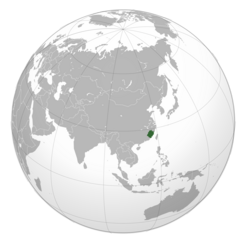
The location of Minyue kingdom before the conquest of the Han dynasty

Minyue (Chinese: 閩越; Pinyin: Mǐnyuè, Mínyuè) was an ancient kingdom in what is now the Fujian province in southern China[a]. It was a contemporary of the Han dynasty, and was later annexed by the Han empire as the dynasty expanded southward. The kingdom existed approximately from 306 BC to 110 BC.[2]

History

[edit]
A statue of Wuzhu, King of Minyue in Gulou District, Fuzhou
The Minyue and main polities in Afro-Eurasia and Oceania around 200 BC

Foundation

[edit]
Model recreation of the palace of Minyue in Gaohuping.

Both Minyue and Dong'ou were founded by the royal family of Yue that fled after being defeated by Chu and Qi in 334 BC. When the Qin dynasty fell in 206 BC, the Hegemon-King Xiang Yu did not make Zou Wuzhu and Zou Yao kings. For that reason, they refused to support him and instead joined Liu Bang in attacking Xiang Yu. When Liu Bang won the war in 202 BC, he made Zou Wuzhu king of Minyue and in 192 BC, he made Zou Yao king of Dong'ou (Eastern Ou).[3]

In 154 BC, Liu Pi King of Wu, revolted against the Han and tried to persuade Minyue and Dong'ou to join him. The king of Minyue refused but Dong'ou sided with the rebels. However, when Liu Pi was defeated and fled to Dong'ou, they killed him to appease the Han, and therefore escaped any retaliation. Liu Pi's son, Liu Ziju, fled to Minyue and worked to incite a war between the Minyue and Dong'ou.[3]

Wars against other countries

[edit]

Attack on Dong'ou

[edit]

In 138 BC, Minyue attacked Dong'ou and besieged their capital. Dong'ou managed to send someone to appeal for help from the Han. Opinions at the Han court were mixed on whether or not to help Dong'ou. Grand commandant Tian Fen was of the opinion that the Yue constantly attacked each other and it was not in the Han's interest to interfere in their affairs. Palace counsellor Zhuang Zhu argued that to not aid Dong'ou would be to signal the end of the empire just like the Qin. A compromise was made to allow Zhuang Zhu to call up troops, but only from Kuaiji Commandery, and finally an army was transported by sea to Dong'ou. By the time the Han forces had arrived, Minyue had already withdrawn its troops. The king of Dong'ou no longer wished to live in Dong'ou, so he requested permission for the inhabitants of his state to move into Han territory. Permission was granted and he and all his people settled in the region between the Changjiang (Yangtze) and Huai River.[3][4]

Invasion of Nanyue, defeat by Han and resettlement

[edit]

In 137 BC, Minyue invaded Nanyue. An imperial army was sent against them, but the Minyue king was murdered by his brother Zou Yushan, who sued for peace with the Han. The Han enthroned Zou Wuzhu's grandson, Zou Chou, as king. However, after the Han envoy left, Zou Yushan also proclaimed himself king without the consent of the Han Emperor Wu. The emperor was informed of Yushan's actions, and recognized him as king of Dongyue instead of ordering a second invasion, deeming it too troublesome to punish Yushan. As a result, there were two kings coexisting in Minyue.[5][4][6]

In 112 BC, Nanyue rebelled against the Han. Zou Yushan pretended to send forces to aid the Han against Nanyue, but secretly maintained contact with Nanyue and only took his forces as far as Jieyang. Han general Yang Pu wanted to attack Minyue for their betrayal; however, the emperor felt that their forces were already too exhausted for any further military action, so the army was disbanded. The next year, Zou Yushan learned that Yang Pu had requested permission to attack him and saw that Han forces were amassing at his border. Zou Yushan then proclaimed himself Emperor of Dongyue[7] and made a preemptive attack against the Han, taking Baisha, Wulin, and Meiling, killing three commanders. In the winter, the Han retaliated with a multi-pronged attack by Han Yue, Yang Pu, Wang Wenshu, and two Yue marquises. When Han Yue arrived at the Minyue capital, the Yue native Wu Yang rebelled against Zou Yushan and murdered him. Wu Yang was appointed by the Han as marquis of Beishi. Han Emperor Wu felt it was too much trouble to occupy Minyue, as it was a region full of narrow mountain passes. He commanded the army to evict the region and resettle the people between the Changjiang (Yangtze) and Huai River. Legend has it that this left the region (modern Fujian) a deserted land.[8][9]

An ancient stone city located in the inner mountains of Fujian is said to have been the Minyue capital. The nearby tombs show the same funerary tradition as Yue state tombs in Zhejiang Province.

Culture

[edit]

The indigenous Minyue of Fujian province had customs similar to those of some of the Taiwanese indigenous people, such as snake totemism, short hair-style, tattooing, teeth pulling, pile-dwellings, cliff burials, and uxorilocal post-marital residences. Perhaps the Taiwan aborigines were also Minyue people, derived in ancient times from the southeast coast of mainland China, as suggested by linguists Li Jen-Kuei and Robert Blust. It is suggested that in the southeast coastal regions of China, there were many sea nomads during the Neolithic era and that many spoke ancestral Austronesian languages, and were skilled seafarers.[10] In fact, there is evidence that an Austronesian language was still spoken in Fujian as late as 620 AD.[11]

See also

[edit]

Notes

[edit]

References

[edit]

Further reading

[edit]
[edit]
Revisions and contributorsEdit on WikipediaRead on Wikipedia
from Grokipedia
Minyue (閩越) was an ancient kingdom situated in the southeastern coastal region of China, encompassing modern-day Fujian Province and parts of eastern Guangdong, inhabited by the Minyue people, a subgroup of the non-Sinitic Baiyue ethnic groups. The kingdom emerged from earlier Yue tribal polities and was formally established in 202 BC when Han Emperor Gaozu enfeoffed Zou Wuzhu, a local leader claiming descent from the ancient Yue king Goujian, as its ruler, granting autonomy over the former Qin commandery of Minzhong. It persisted as a semi-independent vassal state under Han suzerainty for over a century, characterized by maritime prowess, pile-dwelling settlements, and cultural practices distinct from northern Han norms, such as body tattooing and short hair. The Minyue kingdom's history involved alliances and conflicts with neighboring Yue states like Dong'ou and , as well as intermittent submissions to Han authority, culminating in its conquest during the Han campaigns of 138–110 BC amid internal succession disputes and aggressive expansion under Emperor Wu. Notable for resisting full longer than some contemporaries, Minyue's rulers leveraged mountainous terrain and naval capabilities to maintain sovereignty until Han military superiority prevailed, leading to the of elites northward and gradual assimilation of the populace. Archaeological findings, including remains at Wangcheng, underscore a blend of indigenous Yue traditions with emerging Han influences in architecture and governance prior to annexation.

Geography

Territory and boundaries

Minyue's core territory was situated in the basin of the Min River, corresponding to much of modern Province in southeastern , with its population concentrated in the coastal plains and river valleys around present-day , extending into surrounding hilly interiors. The Min River served as a primary geographical and economic artery, facilitating settlement and trade within this subtropical region. The kingdom's boundaries approximated the coastal zones of southern Zhejiang Province to the north, where it adjoined territories associated with Eastern Ou; to the south, it reached into areas of northern under influence; eastward, it bordered the ; and westward, it was constrained by rugged inland mountains. This extent positioned Minyue along the southeastern seaboard between the and deltas, emphasizing its maritime orientation. The terrain featured defensible features such as river systems and elevated hills that promoted isolation from northern plains, alongside dense forests providing timber and coastal access yielding seafood resources, which underpinned the kingdom's self-sufficiency.

Capital and settlements

The primary capital of Minyue was Ye, or Yecheng, situated at Xindian Terrace on the slopes of Lianhua Mountain north of modern in Province, providing a defensible position overlooking strategic . King Wuzhu established or expanded the city around 202 BCE after his enfeoffment by Han Gaozu, marking the formal foundation of the kingdom as a . Excavations at the site since the have uncovered rammed-earth walls, one of the earliest iron furnaces in the region—demonstrating local advancements in for weapon production—and bronze artifacts blending Yue stylistic elements with Han influences. Urban features include drainage systems and workshop complexes, with the layout emphasizing irregular, topography-adapted forms and pile-dwelling structures characteristic of Yue traditions, distinct from the rigid orthogonal grids of Qin-Han central cities. Beyond the capital, Minyue settlements evolved from dispersed tribal villages of the pre-foundation era to fortified urban centers, including port facilities along the coast supporting maritime trade and naval activities. Archaeological from sites such as those in Pingtan County reveals this transition, with walled enclosures, specialized ironworking areas, and pottery kilns indicating centralized organization by the early Han period. Key secondary centers featured similar defensive earthworks and relic assemblages, including patterned bricks and iron tools, underscoring a network oriented toward both inland defense and coastal access rather than expansive inland grids.

History

Origins from the Yue state

The Minyue people descended from remnants of the Yue kingdom, which was conquered by the state of Chu in 333 BCE. Following this defeat, Yue princes and aristocratic elites migrated southward into regions beyond direct Chu control, forming splinter polities such as Minyue in the coastal areas of present-day Fujian province and Dong'ou to the northeast. These migrations preserved Yue political lineages and cultural practices amid the fragmentation of the original kingdom's territory during the late Warring States period. Minyue's ethnic roots aligned with the broader (Hundred Yue) confederations, characterized by linguistic affiliations to non-Sinitic Yue dialects and genetic continuities with southern coastal populations distinct from northern Zhou-influenced groups. Empirical markers of this distinction included customs such as body tattoos, short-cropped hair, and stilt-house dwellings, which contrasted with Han practices of long hair and untattooed bodies, as noted in Warring States texts describing Yue peoples. These traits reflected adaptive responses to and maritime environments rather than arbitrary "savagery," with tattooing likely serving protective or ritual functions in aquatic lifestyles. Prior to organized polity formation, hosted tribal confederations linked to Yue expansions, evidenced by archaeological sites from the (ca. 770–476 BCE) showing early settlements with bronze artifacts and structural remains indicative of non-Han . These pre-Qin communities in the Min River basin demonstrate cultural continuity through shared metallurgical techniques and habitation patterns, predating the consolidation of Minyue identity after Yue's fall.

Foundation and early development

Minyue emerged as a kingdom in 202 BCE when Han Emperor Gaozu enfeoffed Wuzhu, a Yue descendant and local leader who had assisted Han forces against Chu rebels, as King of Minyue over the former Qin commandery of Minzhong. This recognition formalized Wuzhu's authority among Minyue tribes, drawing from the fragmented Yue polity conquered by Qin decades earlier. Wuzhu, previously self-established near Fuzhou after Yue's fall, leveraged this title to consolidate control without immediate Han oversight. Wuzhu centered power in the capital at (modern area), where he initiated construction of an imperial city shortly after enfeoffment, marking a shift toward structured kingship. This development built on indigenous Yue organizational legacies, including tribal alliances and maritime adaptations, rather than wholesale Han imposition. Archaeological remains at the Minyue Wangcheng site confirm early urban fortification and administrative infrastructure under Wuzhu's reign, spanning approximately 202–179 BCE. Early Minyue metallurgy advanced with specialized bronze production, evidenced by arrowheads and artifacts from the imperial city ruins, indicating local casting techniques suited to defense and ritual needs. These findings, analyzed for composition and corrosion, reveal a distinct Minyue alloy tradition persisting from Yue precedents, supporting internal economic consolidation independent of northern influences. Such developments facilitated resource control and craftsmanship, foundational to the kingdom's cohesion before later expansions.

Conflicts with neighboring states

Minyue maintained a posture of territorial aggression toward the neighboring Dong'ou kingdom, engaging in persistent conflicts over coastal domains in the region spanning modern and northern provinces. These rivalries, rooted in competition for and maritime access following the fragmentation of Yue territories after the fall of the in 206 BCE, escalated into a direct assault around 138 BCE, when Minyue forces besieged the Dong'ou capital. The offensive achieved temporary subjugation of Dong'ou, allowing Minyue to assert dominance over disputed zones, though it strained local populations through and displacement, with estimates of involved forces numbering in the tens of thousands based on contemporaneous of Yue warfare scales. Parallel expansionist efforts targeted to the southwest, with Minyue initiating border incursions as early as 137 BCE and intensifying into full-scale invasion by 135 BCE under King Zou Ying. Motivated by opportunities to seize fertile lowlands in present-day amid the power vacuum left by Qin's collapse, these campaigns reflected pragmatic bids for hegemony among fragmented Yue successor states rather than ideological disputes. Initial successes included the capture of settlements, enhancing Minyue's resource base through and labor extraction, but the protracted engagements incurred heavy demographic costs, including warrior casualties and flows that depleted agricultural output in Minyue's core highlands. Such inter-Yue hostilities, while yielding short-term territorial gains and reinforcing Minyue's regional influence, ultimately overextended its capacities in a of mutual predation, where defensive mobilizations against counter-raids diverted resources from internal consolidation. Empirical records indicate these dynamics perpetuated cycles of aggression without stable , as each polity's advances prompted alliances or among rivals, underscoring the causal interplay of and in driving Yue power struggles.

Relations and conflicts with the Han dynasty

In 202 BCE, following the establishment of the , Emperor Gaozu enfeoffed Wuzhu, a leader of the Minyue people who had supported Han forces against rival claimants, as King of Minyue, initiating a relationship of nominal vassalage marked by periodic tribute payments while preserving Minyue's internal autonomy and military independence. This arrangement reflected Han strategy of co-opting southern polities through titles and ex post facto recognition rather than immediate subjugation, allowing Minyue to manage its affairs without direct Han administrative oversight. Tensions escalated in the late BCE under Zou Ying (r. circa 138–122 BCE), as Minyue adopted aggressive expansionism toward neighboring Yue states, prompting Han intervention to safeguard its southern frontier interests. In 139 BCE, Minyue forces invaded Eastern Ou, a smaller Yue polity under Han protection, leading Eastern Ou's ruler to seek Han assistance; Emperor Wu dispatched General Zhuang Zhu with a naval expedition from the region, which advanced into Minyue territory and compelled Zou Ying to retreat, release captives, and reaffirm submission through and border adjustments without achieving full Han occupation. Han demands at this juncture included princely hostages and territorial concessions to ensure compliance, highlighting Minyue's strategic resistance to erosion of its sovereignty amid Han expansionist pressures. Further conflict arose in 135 BCE when Minyue, again under Zou Ying, launched incursions into territory, exploiting perceived Han weakness in the south; Wu responded with a second expeditionary force, which inflicted defeats on Minyue armies and extracted temporary oaths of allegiance, including renewed tribute and restraint from aggression against Han-aligned states. These campaigns underscored Minyue's reliance on mountainous terrain for defense and its ability to negotiate from strength via guerrilla tactics, forcing Han commanders to settle for coerced deference rather than outright conquest, as recorded in contemporary Han emphasizing logistical challenges in southern operations. Despite these submissions, Minyue retained effective control over its core domains, illustrating the limits of Han projection into rugged southeastern frontiers during this period.

Conquest, annexation, and resettlement

In 111 BCE, following the , General Yang Pu, leading troops returning northward, initiated a decisive campaign against (also referred to as Dongyue under Zou Yushan). Han forces rapidly advanced, capturing the capital of Ye and overwhelming local defenses through superior numbers, , and coordinated assaults, which exploited internal divisions among Yue elites long weakened by fratricidal successions and prior Han interventions. This military disparity, rooted in Han's centralized command and iron-equipped versus Minyue's fragmented tribal levies, ensured swift victory without prolonged sieges. Zou Yushan, attempting to resist , fled into the mountains but was subsequently killed by his own subjects amid collapsing , paving the way for Han direct control. The dynasty installed puppet rulers from the Zou lineage, such as Zou Chou, but these regimes proved untenable due to persistent local rebellions fueled by resentment over lost and Han administrative impositions. Han authorities responded by annexing Minyue's core territories, reorganizing them into commanderies including Minzhong (covering former Minyue lands) and Dongye, thereby integrating the region into the imperial bureaucracy with appointed magistrates overseeing taxation and conscription. By circa 110 BCE, ongoing instability prompted Emperor Wu to authorize mass resettlement of Minyue's population, particularly elites and warrior classes, displacing tens of thousands inland to areas like the Jianghuai river basin and northern commanderies such as . This policy, executed by Han garrisons, aimed to dismantle entrenched local power networks by scattering communities, preventing unified revolt, and facilitating Han settler influx; it resulted in demographic upheaval, with many Minyue groups dispersed or absorbed, though pockets of resistance persisted briefly before subsidence. The strategy underscored Han prioritization of security through coercive relocation over nominal vassalage, leveraging logistical dominance to enforce compliance.

Government and rulers

List of kings

The kings of Minyue belonged to the Zou clan (騶氏), tracing descent from the royal house of Yue. Historical records, primarily the Shiji, document limited named rulers amid a lineage prone to short tenures and Han interference, reflecting the kingdom's precarious autonomy. Wuzhu (無諸) was enfeoffed as the first king by Emperor Gaozu of Han in 202 BCE for aiding against Chu forces, ruling until circa 179 BCE. His death prompted succession by an unnamed son, as noted in the Shiji, initiating a period of kin-based rule marked by brevity and vulnerability to internal strife. By 135 BCE, following the demise of the incumbent —possibly a grandson or further descendant—the Han court bypassed direct heirship due to concerns over loyalty, installing Wuzhu's grandson Zou Chou (騶丑, also titled Marquis of You or 繇君丑) as to install a more compliant proxy. Chou's reign underscored Han oversight, with his domain later partitioned after conflicts. In circa 111 BCE, the reigning Minyue , likely Chou or his immediate successor, was assassinated by his brother Zou Yushan (騶餘善), previously of the allied Dongyue state, who usurped the and proclaimed himself . This short-lived claim ended with Han conquest in 110 BCE, terminating independent Minyue kingship. The scarcity of named rulers beyond Wuzhu and Chou in primary texts like the Shiji attests to opaque successions and archaeological paucity, prioritizing verifiable Han annals over speculative genealogy.

Administrative and political structure

Minyue was governed as a hereditary monarchy, with kingship transmitted through the royal lineage. The kingdom was established in 202 BCE when Emperor Gaozu of Han enfeoffed the local chieftain Zou Wuzhu (also known as Zou Yufu) as King of Minyue, recognizing his control over the Ouyue tribes in the Fujian region. Subsequent rulers, including Zou Wuzhu's descendants like Zou Ying, maintained this dynastic continuity until Han conquest in 111 BCE. Political authority centered on the king, who derived power from tribal alliances and kin loyalties rather than a Confucian bureaucratic . Unlike the Han dynasty's system of appointed officials, ministries, and , Minyue lacked evidence of formalized administrative ranks or mechanisms, relying instead on decentralized structures and warrior elites for and mobilization. Tribal councils or assemblies of chieftains likely advised the king on matters of war and tribute, reflecting the tradition of supreme leaders (shuai) overseeing semi-autonomous groups. Archaeological evidence from the Minyue capital at Chengcun (near modern ) reveals a central urban complex with walls, palaces, and systems, indicating modest centralization for royal residence and defense. However, the distribution of artifacts and settlement patterns suggests persistent , with taxation and labor obligations tied to local agricultural yields and raiding expeditions rather than standardized imperial levies. This structure underscored Minyue's distinct political model, prioritizing over Sinicized administrative uniformity.

Society and economy

Social organization

Minyue society featured a hierarchical structure dominated by a , distinct from the Confucian bureaucratic norms of the . Elite , often tattooed on their bodies as a marker of status and martial prowess, formed the , leading raids and defending territories against incursions. This oversaw communities engaged in and , with power concentrated in tribal leaders who commanded loyalty through and military success rather than centralized administration. Clans within Minyue were organized along lines of descent from earlier Yue migrants, with royal lineages tracing ancestry to figures like King Goujian of the Yue state (r. circa 496–465 BCE). Such genealogical claims reinforced aristocratic authority and tribal cohesion among the multi-ethnic population, which included a substratum of indigenous groups speaking related Austroasiatic or Tai-Kadai languages. This descent-based organization facilitated alliances but also internal rivalries, as seen in succession disputes among Minyue kings during the Western Han period (206 BCE–9 CE). Gender roles exhibited empirical distinctions from Han patrilineal emphasis, with hints of matrilineal influences in clan inheritance and ritual participation. Women held prominent positions in certain ceremonies, potentially linked to ancestral snake totems, suggesting broader agency in spiritual affairs than in northern societies. Slavery existed, primarily comprising war captives from conflicts with neighboring states or Han forces, who were integrated as laborers under aristocratic control. Population estimates for Minyue around 110 BCE, drawn from Han administrative records, range from 100,000 to 500,000 individuals, reflecting a dense settlement in the Min River basin amid mountainous terrain. This multi-ethnic base underscored the kingdom's resilience but also its vulnerability to Han assimilation policies post-conquest.

Economic activities and trade

The economy of Minyue was predominantly subsistence-based, emphasizing , , and local resource exploitation to sustain its population amid the kingdom's rugged terrain and . Wet-rice cultivation predominated in the lowland river valleys of , where fertile alluvial soils supported paddy farming, while upland areas accommodated dryland crops like millet. Archaeological investigations in the Fuzhou Basin have uncovered phytolith and macrofossil evidence of rice processing and cultivation dating back to times, with continuity into the Warring States and early Han eras indicative of persistent agricultural practices in the region. supplemented land-based production, exploiting the coastline, river systems, and estuaries; remains of fish bones and net weights from contemporaneous sites underscore its role in daily sustenance. Resource extraction bolstered self-sufficiency, particularly through procurement and . Excavations at the Minyue imperial city ruins (Yecheng) yielded arrowheads composed primarily of copper-tin binary alloys, demonstrating advanced local techniques influenced by but distinct from Central Plains methods, which required access to regional sources for smelting and alloying. Timber harvesting from Fujian's dense subtropical forests provided essential materials for , tools, and ; the Yue peoples' renowned naval capabilities, including fleets used in conflicts with northern states, relied on these abundant hardwoods to craft durable vessels suited for coastal navigation. Pre-conquest trade remained circumscribed, with economic exchanges largely confined to tributary relations with the Han dynasty rather than extensive commercial networks. King Wuzhu, restored to power in 202 BC following Han Gaoxu's victory over Chu, dispatched tribute—including local specialties—to the Han court in return for royal titles and diplomatic recognition, as recorded in historical accounts of early Han peripheral policies. This system facilitated limited inflow of northern goods like iron tools or silk but did not foster deep integration. After the Han conquest in 111 BC and the establishment of commanderies such as Minyue and Dongyue, the region's ports and overland paths connected to imperial circuits, enabling expanded maritime and inland trade in commodities like timber and bronzes, though archaeological evidence points to gradual rather than abrupt economic transformation. Bronze artifacts from these sites affirm Minyue's pre-existing metallurgical autonomy, countering notions of inherent peripheral dependency on central states.

Culture

Customs and religion

The Minyue adhered to animistic beliefs, venering spirits inherent in nature, animals, and ancestral forces, with the snake serving as a primary totem emblematic of protection, fertility, and aquatic power. This reverence manifested in rituals invoking the snake-dragon for safeguarding against perils, particularly those from water and wilderness, distinguishing their practices from the more anthropocentric Confucian ancestor cults of northern polities. Customary markers of Minyue identity included short-cropped hair and extensive body tattoos, often depicting motifs to emulate the and deter predatory sea creatures or evil influences during maritime and hunting pursuits. These tattoos, applied as permanent ink or , functioned both as spiritual talismans and ethnic delineators amid interactions with long-haired Han migrants. Ancestor veneration emphasized oral invocations, communal offerings of and libations, and boat-centered ceremonies on rivers or coasts, reflecting their seafaring rather than the Han convention of inscribed wooden tablets housed in domestic shrines. Such rituals reinforced bonds without reliance on literate , prioritizing experiential continuity over textual mediation. Seasonal festivals aligned with cycles and marine rhythms, involving collective dances, feasting, and propitiations to ensure bountiful yields and safe voyages, practices paralleling those of Formosan indigenous groups in totemistic reverence for natural progenitors over deified abstractions.

Material culture and archaeology

Archaeological excavations at the Minyue Kingdom's imperial city ruins, located at Yecheng in present-day , , have uncovered extensive rammed-earth city walls, including sections of the East City Wall measuring several meters in height and width, constructed during the kingdom's peak in the 2nd century BCE. These fortifications, built with local clay compacted in layers, demonstrate defensive engineering adapted to the region's hilly terrain, distinct from the more standardized styles through irregular stone reinforcements and drainage features integrated into the base. Within the site, artifacts include arrowheads with characteristic local compositions—primarily , tin, and trace lead—produced via techniques suited to small-scale s, differing from the higher standardization of central Chinese bronzework by incorporating regional motifs and impurities reflective of southern ore sources. Iron residues from multiple sites yield analysis indicating processes for tools and weapons, supporting a oriented toward and conflict in forested environments. sherds, often wheel-thrown with incised patterns, and stone tools for and further evidence daily technologies tied to subsistence and . Recent geospatial modeling using high-resolution digital elevation models and least-cost path algorithms has mapped ancient road networks radiating from Yecheng, totaling over 200 kilometers of inferred paths optimized for low-gradient traversal through mountainous areas, corroborated by field surveys of terraced alignments and bridge foundations dating to the Warring States through early Han periods. These routes facilitated connectivity to coastal ports and inland resources, with of associated sediments confirming continuous use from at least the 3rd century BCE. Layered at the site reveals uninterrupted occupation spanning the Warring States era, with Minyue-specific artifacts overlying earlier Yue cultural deposits, underscoring technological continuity in bronze and iron working.

Legacy and historical interpretations

Assimilation and cultural impact

Following the conquest of Minyue in 111 BC, Emperor Wu of Han ordered the mass relocation of its population northward across the Yangtze and Huai rivers to suppress potential rebellions and integrate the territory. This dispersal, affecting tens of thousands, left core Minyue lands largely depopulated and enabled Han colonists to repopulate Fujian, promoting administrative Sinicization through intermarriage, Confucian education, and imperial bureaucracy. Historical records, such as the Shiji, document subsequent uprisings by relocated Minyue exiles, underscoring incomplete pacification despite these efforts. Cultural persistence manifested in the substrate of dialects, spoken by over 60 million today primarily in and coastal areas, which preserve pre-Han phonetic and lexical features traceable to Yue languages. (e.g., ), the linguistic heirs of Minyue-Han interactions, exhibits non-Sinitic influences like Austroasiatic loanwords and tonal patterns diverging from reconstructions, reflecting indigenous Yue contributions amid Han overlay. Genetic analyses reveal admixture in modern ese and broader populations, with autosomal DNA showing 10-20% southern indigenous ancestry linked to ancient Yue groups, countering narratives of wholesale erasure. Tai-Kadai and Austronesian-affiliated markers persist at higher frequencies among minorities like the She and , who self-identify with Yue heritage and retain practices such as matrilineal elements or riverine livelihoods. This admixture, evident in Y-chromosome haplogroups O-M7 and O-F11, underscores demographic continuity and cultural hybridity in demographics.

Modern archaeological insights

Recent excavations at the Imperial City ruins of the Minyue Kingdom in Fuzhou, Fujian Province, have uncovered bronze arrowheads and other artifacts demonstrating sophisticated metallurgical techniques, including multi-layered casting molds and alloy compositions with lead, tin, and copper ratios optimized for durability and penetration. Scientific analyses conducted in the early 2020s, using techniques such as X-ray fluorescence and scanning electron microscopy, reveal that these items were produced via independent lost-wax casting processes distinct from contemporaneous Han dynasty methods, indicating Minyue's self-sufficient technological capacity rather than reliance on northern imports. This challenges Han-centric historical narratives that portrayed Minyue as technologically primitive, as the artifacts' corrosion patterns and microstructures suggest exposure to humid subtropical environments consistent with local production and use in warfare against Han incursions. Application of digital elevation models (DEM) and Landsat 8 satellite imagery has enabled least-cost path analyses to reconstruct Minyue's ancient road networks, linking urban centers like the Imperial City to coastal ports and mountainous interiors over terrain spanning 200-300 meters in elevation. These models, calibrated against excavated sites such as Chengcun Han City—preserved by a catastrophic fire around 111 BCE—demonstrate engineered paths optimized for trade and military logistics, with gradients under 10% facilitating ox-cart and infantry movement, thereby refuting assumptions of infrastructural underdevelopment derived solely from Han records. Luminescence dating of pottery and sediments from the Xindian Ancient City further corroborates continuous occupation from the 3rd century BCE, aligning with Minyue's viability as a networked polity capable of sustaining resistance until Han conquest. Archaeological evidence from sites, integrated with genetic and linguistic data, supports cultural continuities between Minyue's Bai Yue populations and Austronesian groups in , evidenced by shared motifs, tattooing practices inferred from figurines, and rice-farming toolkits to 2000-1000 BCE. These links, traced through maritime artifact distributions rather than Han textual accounts—which often emphasized barbarism to justify expansion—highlight Minyue's role in broader southeastern coastal networks, with less direct ties to inland Dian culture in due to divergent styles and customs. Multi-proxy approaches, prioritizing empirical over dynastic , thus refine understandings of Minyue's fall as a consequence of Han military overmatch rather than inherent societal fragility.

References

Add your contribution
Related Hubs
User Avatar
No comments yet.