


Community hub
Recent from talks
Contribute something
Nothing was collected or created yet.
Continuously variable transmission
View on Wikipedia

| Automotive transmissions |
|---|
| Manual |
| Automatic / Semi-automatic |
A continuously variable transmission (CVT) is an automated transmission that can change through a continuous range of gear ratios, typically resulting in better fuel economy in gasoline applications.[1] This contrasts with other transmissions that provide a limited number of gear ratios in fixed steps. The flexibility of a CVT with suitable control may allow the engine to operate at a constant angular velocity while the vehicle moves at varying speeds. Thus, CVT has a simpler structure, longer internal component lifespan, and greater durability. Compared to traditional automatic transmissions, it offers lower fuel consumption and is more environmentally friendly.[2][3]
CVTs are used in cars, tractors, side-by-sides, motor scooters, snowmobiles, bicycles, and earthmoving equipment. The most common type of CVT uses two pulleys connected by a belt or chain; however, several other designs have also been used at times.
Types
[edit] | This section needs additional citations for verification. (July 2020) |
Pulley-based
[edit]

The most common type of CVT uses a V-belt which runs between two variable-diameter pulleys.[4] The pulleys consist of two cone-shaped halves that move together and apart. The V-belt runs between these two halves, so the effective diameter of the pulley is dependent on the distance between the two halves of the pulley. The V-shaped cross-section of the belt causes it to ride higher on one pulley and lower on the other; therefore, the gear ratio is adjusted by moving the two sheaves of one pulley closer together and the two sheaves of the other pulley farther apart.[5]
As the distance between the pulleys and the length of the belt does not change, both pulleys must be adjusted (one bigger, the other smaller) simultaneously to maintain the proper amount of tension on the belt. Simple CVTs combining a centrifugal drive pulley with a spring-loaded driven pulley often use belt tension to effect the conforming adjustments in the driven pulley.[5] The V-belt needs to be very stiff in the pulley's axial direction to make only short radial movements while sliding in and out of the pulleys.
The radial thickness of the belt is a compromise between the maximum gear ratio and torque. Steel-reinforced V-belts are sufficient for low-mass, low-torque applications like utility vehicles and snowmobiles, but higher-mass and -torque applications such as automobiles require a chain. Each element of the chain must have conical sides that fit the pulley when the belt is running on the outermost radius. As the chain moves into the pulleys the contact area gets smaller. As the contact area is proportional to the number of elements, chain belts require many very small elements.
A belt-driven design offers approximately 88% efficiency,[6] which, while lower than that of a manual transmission, can be offset by enabling the engine to run at its most efficient RPM regardless of the vehicle's speed. When power is more important than economy, the ratio of the CVT can be changed to allow the engine to turn at the RPM at which it produces the greatest power.
In a chain-based CVT, numerous chain elements are arranged along multiple steel bands layered over one another, each of which is thin enough to easily bend. When part of the belt is wrapped around a pulley, the sides of the elements form a conical surface.[7][8] In the stack of bands, each band corresponds to a slightly different drive ratio, and thus the bands slide over each other and need sufficient lubrication. An additional film of lubricant is applied to the pulleys. The film needs to be thick enough to prevent direct contact between the pulley and the chain, but thin enough to not waste power as each chain element enters it.[citation needed]
Some CVTs transfer power to the output pulley via tension in the belt (a "pulling" force), while others use compression of the chain elements (where the input pulley "pushes" the belt, which in turn pushes the output pulley).[9][10][11]
Positively Infinitely Variable (PIV) chain drives are distinct in that the chain positively interlocks with the conical pulleys. This is achieved by having a stack of many small rectangular plates in each chain link that can slide independently from side-to-side. The plates may be quite thin, around a millimeter thick. The conical pulleys have radial grooves. A groove on one side of the pulley is met with a ridge on the other side and so the sliding plates are pushed back and forth to conform to the pattern, effectively forming teeth of the correct pitch when squeezed between the pulleys. Due to the interlocking surfaces, this type of drive can transmit significant torque and so has been widely used in industrial applications. However, the maximum speed is significantly lower than other pulley-based CVTs. The sliding plates will slowly wear over years of usage. Therefore the plates are made longer than is needed, allowing for more wear before the chain must be refurbished or replaced. Constant lubrication is required and so the housing is usually partially filled with oil.[12][13]
Toroidal
[edit]
Toroidal CVTs, as used on the Nissan Cedric (Y34),[14][15] and those built by CVTCORP,[16] consist of a series of discs and rollers. The discs can be pictured as two almost-conical parts arranged point-to-point, with the sides dished such that the two parts could fit into the central hole of a torus. One disc is the input, and the other is the output. Between the discs are rollers, which vary the ratio and transfer power from one side to the other. When the rollers' axes are perpendicular to the axis of the discs, the effective diameter is the same for the input discs and the output discs, resulting in a 1:1 drive ratio. For other ratios, the rollers are rotated along the surfaces of the discs so that they are in contact with the discs at points with different diameters, resulting in a drive ratio of something other than 1:1.[17]
An advantage of a toroidal CVT is the ability to withstand higher torque loads than a pulley-based CVT.[18] In some toroidal systems, the direction of thrust can be reversed within the CVT, removing the need for an external device to provide a reverse gear.[19]
Ratcheting
[edit]A ratcheting CVT uses a series of one-way clutches or ratchets that rectify and sum only "forward" motion. The on-off characteristics of a typical ratchet means that many of these designs are not continuous in operation (i.e. technically not a CVT), but in practice, there are many similarities in operation, and a ratcheting CVT is able to produce a zero-output speed from any given input speed (as per an infinitely variable transmission). The drive ratio is adjusted by changing linkage geometry within the oscillating elements so that the summed maximum linkage speed is adjusted, even when the average linkage speed remains constant.
Ratcheting CVTs can transfer substantial torque because their static friction actually increases relative to torque throughput, so slippage is impossible in properly designed systems. Efficiency is generally high because most of the dynamic friction is caused by very slight transitional clutch speed changes. The drawback to ratcheting CVTs is the vibration caused by the successive transition in speed required to accelerate the element, which must supplant the previously operating and decelerating power-transmitting element.
The design principle dates back to before the 1930s, with the original design intended to convert rotary motion to oscillating motion and back to rotary motion using roller clutches.[20] This design remains in production as of 2017, for use with low-speed electric motors.[21] An example prototyped as a bicycle transmission was patented in 1994.[22] The operating principle for a ratcheting CVT design, using a Scotch yoke mechanism to convert rotary motion to oscillating motion and non-circular gears to achieve uniform input to output ratio, was patented in 2014.[23]
Hydrostatic/hydraulic
[edit]A hydrostatic CVT uses an engine-driven, positive-displacement pump to deliver oil under pressure to one or more hydraulic motors, the latter creating the torque that is applied to the vehicle's driving wheel(s). The name "hydrostatic CVT", which misuses the term "hydrostatic", differentiates this type of transmission from one that incorporates a hydrodynamic torque multiplier ("torque converter") into its design.
In a hydrostatic CVT, the effective "gear ratio" between the engine and the driving wheel(s) is the result of a difference between the pump's displacement—expressed as cubic inches or cubic centimeters per revolution—and the motor's displacement. In a closed system, that is, a system in which all of the pump's output is delivered to the motor(s), this ratio is given by the equation GR = Dm ÷ Dp, where Dp is the pump's effective displacement, Dm is the motor's displacement, and GR is the "gear ratio".
In a hydrostatic CVT, the effective "gear ratio" is varied by varying effective displacement of the pump, which will vary the volume of oil delivered to the motor(s) at a given engine speed (RPM). There are several ways in which this may be accomplished, one being to divert some of the pump's output back to the reservoir through an adjustable valve. With such an arrangement, as more oil is diverted by opening the valve, the effective displacement of the pump is reduced and less oil is delivered to the motor, causing it to turn more slowly. Conversely, closing the valve will reduce the volume of oil being diverted, increasing the effective displacement of the pump and causing the motor to turn more rapidly.
Another method is to employ a variable displacement pump. When the pump is configured for low displacement, it produces a low volume of oil flow, causing the hydraulic motor(s) to turn more slowly. As the pump's displacement is increased, a greater volume of oil flow is produced for any given engine RPM, causing the motor(s) to turn faster.
Advantages of a hydrostatic CVT include:
- Capacity scalability. A hydrostatic CVT's power-transmission capacity is readily adapted to the application by using a correctly-sized pump and matching hydraulic motor(s).
- Flexibility. As power transfer from the engine-driven pump to the hydraulic motor(s) is through the medium of flowing oil, the motor(s) can be mounted in otherwise-inconvenient locations by using hoses to convey oil from the pump to the motor(s), thus simplifying the design of all-wheel drive articulated vehicles.
- Smoothness. As the effective "gear ratio" of a hydrostatic CVT is infinitely-variable, there are no distinct transitions in torque multiplication, such as produced with conventional, geared transmissions.
- Simplified control. Operation through the full range of forward and reverse speeds can be controlled using a single lever or a foot pedal to actuate a diversion valve or variable-displacement pump.
- Arbitrarily slow crawl speeds. The potential for high torque multiplication at very low speeds allows for precise vehicle movement while under load.
Disadvantages of a hydrostatic CVT include:
- Reduced efficiency. Gears are one of the most efficient methods of mechanical power transmission, with efficiencies as high as 90 percent in many cases. In contrast, few hydrostatic transmission systems achieve more than about 65 percent efficiency. This is due to a combination of internal losses in the pump and motor(s), and losses in the piping and valves.
- Higher cost. For a given level of power-transmitting capacity, a hydrostatic CVT will be more expensive to produce than an equivalent geared transmission. In addition to the pump and motor(s), a hydrostatic system requires the use of an oil reservoir, piping and in many applications, an oil cooler, this last item being necessary to dissipate the waste heat that results from hydrostatic power transmission's relatively low efficiency.
- Greater weight. Due to the high oil pressure at which a hydrostatic CVT operates, the pump and motor(s) are under considerable mechanical stress, especially when maximum power and loading is being applied. Hence these items must be very robust in construction, typically resulting in heavy components. Additional weight will be found in the oil reservoir and its oil load, as well as the piping and valving.
Uses of hydrostatic CVTs include forage harvesters, combine harvesters, small wheeled/tracked/skid-steer loaders, crawler tractors, and road rollers. One agricultural example, produced by AGCO, splits power between hydrostatic and mechanical transfer to the output shaft via a planetary gear in the forward direction of travel (in reverse, the power transfer is fully hydrostatic). This arrangement reduces the load on the hydrostatic portion of the transmission when in the forward direction by transmitting a significant portion of the torque through more efficient fixed gears.[24]
A variant called the Integrated Hydrostatic Transaxle (IHT) uses a single housing for both hydraulic elements and gear-reducing elements and is used in some mini-tractors and ride-on lawn mowers.
The 2008–2010 Honda DN-01 cruiser motorcycle used a hydrostatic CVT in the form of a variable-displacement axial piston pump with a variable-angle swashplate.
Cone
[edit]
A cone CVT varies the drive ratio by moving a wheel or belt along the axis of one or more conical rollers. The simplest type of cone CVT, the single-cone version, uses a wheel that moves along the slope of the cone, creating variation between the narrow and wide diameters of the cone.
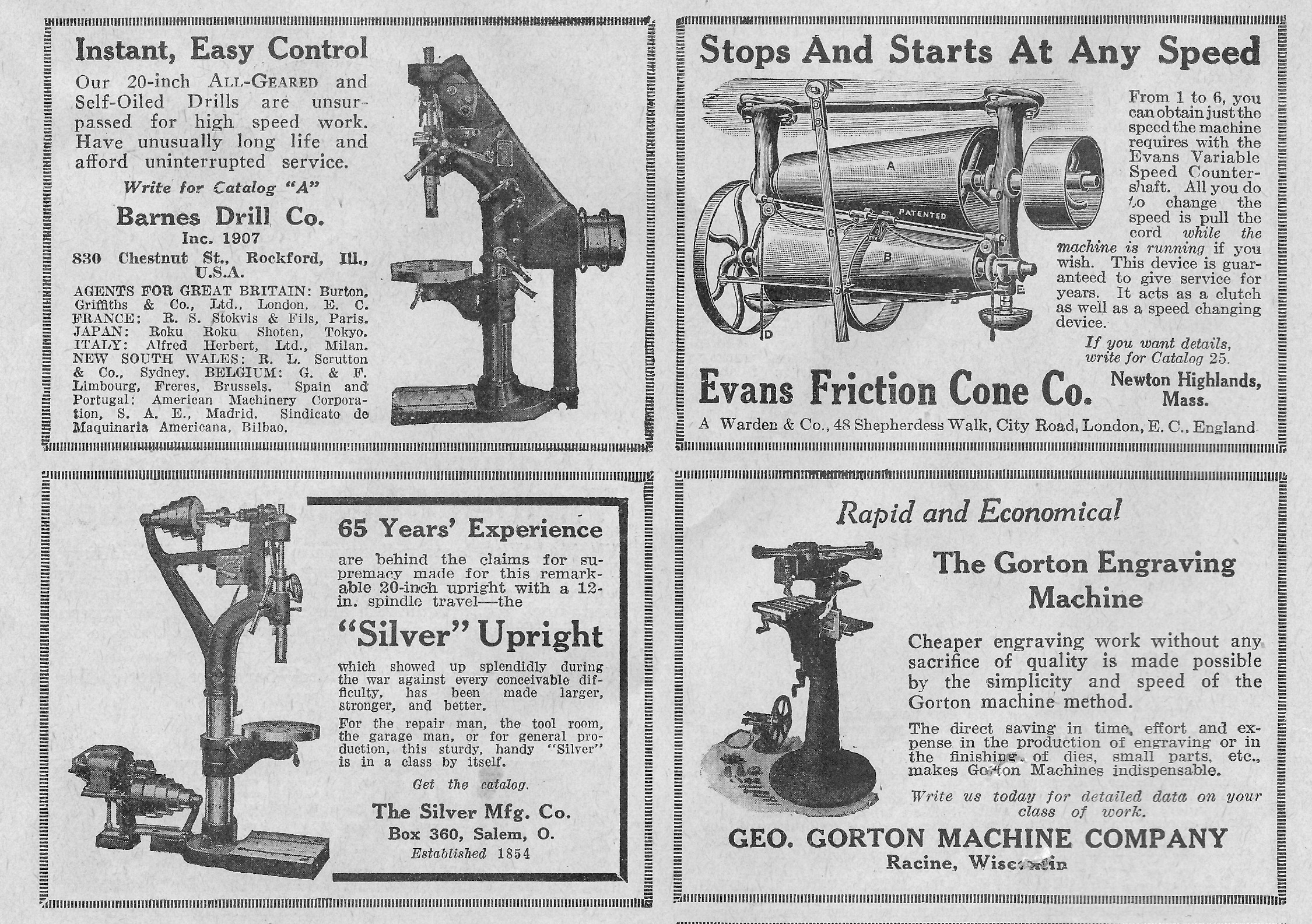
Some cone CVT designs use two rollers.[25][26] In 1903, William Evans and Paul Knauf applied for a patent on a continuously variable transmission using two parallel conical rollers pointing in opposite directions and connected by belts that could be slid along the cones to vary the transmission ratio.[27][28] The Evans Variable Speed Countershaft, produced in the 1920s, is simpler—the two rollers are arranged with a small constant-width gap between them, and the position of a leather cord that runs between the rollers determines the transmission ratio.[29]
Epicyclic
[edit]In an epicyclic CVT (also called a planetary CVT), the gear ratio is shifted by tilting the axes of spherical rollers to provide different contact radii, which in turn drive input and output discs. This is similar in principle to toroidal CVTs. Production versions include the NuVinci CVT.[30]
Hybrid electric
[edit]Several hybrid electric vehicles—such as the Toyota Prius, Mitsubishi Outlander PHEV, and Ford Escape Hybrid—use electric variable transmissions (EVTs, sometimes eCVT) to control the contribution of power from the electric motor and the internal combustion engine. These differ from standard CVTs in that they are powered by an electric motor in addition to the engine, often using planetary gears to combine their outputs instead of a belt used in traditional CVTs. A notable example is the Toyota Hybrid Synergy Drive.
The design is known for its durability with engineers reporting that internal parts "looked perfect, and would have been good for many more miles" after a complete teardown of the HF45 eCVT in a hybrid Ford Escape which operated as a New York City taxi for 450,000 miles (720,000 km).[31]
Other types
[edit]Friction-disk transmissions were used in several vehicles and small locomotives built in the early 20th century, including the Lambert and Metz automobiles. Used today in snow blowers, these transmissions consist of an output disk that is moved across the surface of the input disk upon which it rolls. When the output disk is adjusted to a position equal to its own radius, the resulting drive ratio is 1:1. The drive ratio can be set to infinity (i.e. a stationary output disk) by moving the output disk to the center of the input disk. The output direction can also be reversed by moving the output disk past the center of the input disk. The transmission on early Plymouth locomotives worked this way, while on tractors using friction disks, the range of reverse speeds was typically limited.[32]
Still in development, the magnetic CVT transmits torque using a non-contact magnetic coupling.[33] The design uses two rings of permanent magnets with a ring of steel pole pieces between them to create a planetary gearset using magnets.[34] It is claimed to produce a 3 to 5 percent reduction in fuel consumption compared to a mechanical system.[34]
Infinitely variable transmissions
[edit] | This section needs additional citations for verification. (February 2023) |
_in_planet_configuration.jpg)
Some CVTs can also function as an infinitely variable transmission (IVT) which offers an infinite range of low gears (e.g. moving a vehicle forward at an infinitely slow speed). Some IVTs prevent back driving (where the output shaft can freely rotate, like an automotive transmission in neutral) due to providing high back-driving torque. Other IVTs, such as ratcheting types, allow the output shaft to freely rotate. The types of CVTs which are able to function as IVTs include epicyclic, friction-disk, and ratcheting CVTs.
History
[edit]The idea for a continuously variable transmission originated with Leonardo da Vinci in 1490. While he didn't patent it or mass-produce it, his design was a concept for a step-less variable speed transmission.[35]
Later, in 1879, Milton Reeves invented a CVT (then called a variable-speed transmission) for use in sawmilling. In 1896, Reeves began fitting this transmission to his cars,[36] and the Reeves CVT was also used by several other manufacturers.
The 1911 Zenith Gradua 6HP motorcycle used a pulley-based Gradua CVT.[37][38] A year later, the Rudge-Whitworth Multigear was released with a similar but improved CVT. Other early cars to use a CVT were the 1913–1923 David small three-wheeled cyclecars built in Spain,[39] the 1923 Clyno built in the U.K., and the 1926 Constantinesco Saloon built in the U.K.
Applications
[edit]Passenger vehicles
[edit]
In 1958, the Dutch DAF 600 became the first mass-production car to use a CVT.[40] Its Variomatic transmission was used in several vehicles built by DAF and Volvo until the 1980s.[41]
In 1987, the ECVT, the first electronically controlled steel-belted CVT, was introduced as an optional transmission on the Subaru Justy,[42][43] Production was limited to 500 units per month due to Van Doorne's limited production output. In June of that year, supplies increased to 3,000 per month, leading Subaru to make the CVT available in the Rex kei car.[44] Subaru has also supplied its CVTs to other manufacturers (e.g., the 1992 Nissan Micra and Fiat Uno and Panda).[45] Also in 1987, second-generation Ford Fiesta and first-generation Fiat Uno were introduced with steel-belted CVTs, which are called CTX and Unomatic in Ford and Fiat, respectively.
The 1996 sixth-generation Honda Civic introduced a pulley-based Honda Multi Matic (HMM) CVT which included a multi-plate clutch, not a torque converter, to prevent idle creep.[46]
Use of CVTs then spread in the following years to models including the 1998 Nissan Cube, 1999 Rover 25 and 1999 Audi A6.[47]
The 1999 Nissan Cedric (Y34) used a toroidal CVT—unlike the pulley-based designs used by other manufacturers—marketed as the Nissan Extroid, which incorporated a torque converter. Nissan then switched from toroidal to pulley-based CVTs in 2003 marketed as the Nissan Xtronic.[48] The version of the CVT used with the VQ35DE engine in the fourth-generation Nissan Altima is claimed to be capable of transmitting higher torque loads than other belt CVTs.[49]
The 2019 Toyota Corolla (E210) is available with a CVT assisted by a physical "launch gear" alongside the CVT pulley. At speeds of up to 40 km/h (25 mph), the launch gear is used to increase acceleration and reduce stress on the CVT. Above this speed, the transmission switches over to the CVT.[50]
Marketing terms for CVTs include "Lineartronic" (Subaru), "Xtronic" (Jatco, Nissan, Renault), INVECS-III (Mitsubishi), Multitronic (Volkswagen, Audi), "Autotronic" (Mercedes-Benz) and "Intelligent Variable Transmission (IVT)" (Hyundai, Kia).
Racing cars
[edit]In the United States, Formula 500 open-wheel racing cars have used CVTs since the early 1970s. CVTs were prohibited from Formula One in 1994 (along with several other electronic systems and driving aids) due to concerns over escalating research and development costs and maintaining a specific level of driver involvement with the vehicles.[51]
Small vehicles
[edit]Many small vehicles—such as snowmobiles, golf carts, and motor scooters—use CVTs, typically of the pulley variety. CVTs in these vehicles often use a rubber belt with a non-stretching fixed circumference manufactured using various highly durable and flexible materials, due to the mechanical simplicity and ease of use outweighing their comparative inefficiency. Some motor scooters include a centrifugal clutch, to assist when idling or manually reversing the scooter.[52]
The 1974 Rokon RT340 TCR Automatic off-road motorcycle was fitted with a snowmobile CVT. The first ATV equipped with a CVT was the Polaris Trail Boss in 1985.[citation needed]
Farm and earthmoving equipment
[edit]Combine harvesters used variable belt drives as early as the 1950s. Many small tractors and self-propelled mowers for home and garden use simple rubber belt CVTs. Hydrostatic CVTs are more common on the larger units.[example needed] In mowing or harvesting operations, the CVT allows the forward speed of the equipment to be adjusted independently of the engine speed; this allows the operator to slow or accelerate as needed to accommodate variations in the thickness of the crop.
Hydrostatic CVTs are used in small- to medium-sized agricultural and earthmoving equipment. Since the engines in these machines are typically run at constant power output (to provide hydraulic power or to power machinery), losses in mechanical efficiency are offset by enhanced operational efficiency. For example, in earthmoving equipment, the forward-reverse shuttle times are reduced. The speed and power output of the CVT is used to control the travel speed and sometimes steering of the equipment. In the latter case, the required speed differential to steer the equipment can be supplied by independent CVTs, allowing the steering to be accomplished without several drawbacks associated with other skid steer methods (such as braking losses or loss of tractive effort).
The 1965 Wheel Horse 875 and 1075 garden tractors were the first such vehicles to be fitted with a hydrostatic CVT. The design used a variable-displacement swash-plate pump and fixed-displacement gear-type hydraulic motor combined into a single compact package. Reverse ratios were achieved by reversing the flow of the pump through over-centering of the swashplate. Acceleration was limited and smoothed through the use of pressure accumulator and relief valves located between the pump and motor, to prevent the sudden changes in speed possible with direct hydraulic coupling. Subsequent versions included fixed swash plate motors and ball pumps.[citation needed]
The 1996 Fendt Vario 926 was the first heavy-duty tractor to be equipped with a IVT transmission. It is not the same thing as a hydrostatic CVT. Over 100,000 tractors have been produced with this transmission.[53]
Power generation systems
[edit]CVTs have been used in aircraft electrical power generation systems since the 1950s.[citation needed]
CVTs with flywheels are used[citation needed] as a speed governor between an engine (e.g. a wind turbine) and the electric generator. When the engine is producing sufficient power, the generator is connected directly to the CVT which serves to regulate the engine's speed. When the power output is too low, the generator is disconnected, and the energy is stored in the flywheel. It is only when the speed of the flywheel is sufficient that the kinetic energy is converted into electricity, intermittently, at the speed required by the generator.
Other uses
[edit]Some drill presses and milling machines contain a simple belt-drive CVT system to control the speed of the spindle, including the Jet models J-A5816 and J-A5818.[54] In this system, the effective diameter of only the output shaft pulleys is continuously variable. The input pulley connected to the motor is usually fixed in diameter (or sometimes with discrete steps to allow a selection of speed ranges). The operator adjusts the speed of the drill by using a hand wheel that controls the width of the gap between the pulley halves. A tensioner pulley is implemented in the belt transmission to take up or release the slack in the belt as the speed is altered.
Winches and hoists are also an application of CVTs, especially for those adapting the transmission ratio to the resistant torque.
Bicycles with CVT gearing have had limited commercial success, with one example providing a range of gearing equivalent to an eight-speed shifter.[55] The bicycle's short gearing assisted when cycling uphill, but the CVT was noted to significantly increase the weight of the bicycle.[56]
The rise of the electric bicycle has brought a reappraisal of the CVT as a better solution for an optimal drive train set up in comparison to gearing systems historically applied on human powered bicycles.[57][58] The handsfree and continuously stepless operation combined with low maintenance make the CVT an appealing solution for use on city eBikes and by commuters.[59]
See also
[edit]References
[edit]- ^ "CVT Transmission vs. Automatic: Quick Guide". Car and Driver. Retrieved 19 January 2025.
- ^ "Advantages and Disadvantages of Continuously Variable Transmission (CVT)". ML truck. Retrieved 24 April 2025.
- ^ "THE ENVIRONMENTAL IMPACT OF AUTOMATIC AND CVT TRANSMISSIONS". Coastwide. 16 October 2023. Retrieved 24 April 2025.
- ^ Fischetti, Mark (January 2006). "No More Gears". Scientific American. 294 (1): 92–3. Bibcode:2006SciAm.294a..92F. doi:10.1038/scientificamerican0106-92. PMID 16468439.
- ^ a b "How CVTs Work". howsuffworks.com. 27 April 2005. Retrieved 26 August 2020.
- ^ "CVT Efficiency" (PDF). zeroshift.com. Archived from the original (PDF) on 14 July 2014. Retrieved 22 April 2014.
- ^ "XTRONIC CVT | Nissan | Technology". Nissan Motor Corporation Global Website. Nissan Motor Co. Ltd. Archived from the original on 20 January 2011. Retrieved 20 September 2021.
- ^ "Pushbelt". Bosch Mobility Solutions. Robert Bosch GmbH. Archived from the original on 8 May 2021. Retrieved 20 September 2021.
- ^ Ambrósio, Jorge A. C. (5 July 2005). Advances in Computational Multibody Systems. Springer. p. 271. ISBN 9781402033926. Retrieved 8 July 2020.
- ^ Pfeiffer, Friedrich (2008). Mechanical System Dynamics. Springer. p. 320. ISBN 978-3-540-79436-3. Retrieved 8 July 2020.
- ^ "CVT Transaxle Steel Push Belt Construction". Weber State University. 16 September 2016. Archived from the original on 7 November 2021. Retrieved 8 July 2020 – via YouTube.
- ^ "PIV Vertical Drives – Gayatri Gear". Retrieved 15 September 2020.
- ^ "Positively Infinitely Variable (PIV) Chain". usarollerchain.com. Retrieved 15 September 2020.
- ^ "Nissan's Weird Double CVT Is Perfect for High-Torque Applications". Road & Track. 5 December 2018. Retrieved 16 July 2020.
- ^ "Tech & Trends: Nissan Producing Amazing New CVT". wardsauto.com. 1 December 1999. Retrieved 16 July 2020.
- ^ "CVTCORP Technology".
- ^ "How CVTs Work – Toroidal CVTs". howstuffworks.com. 27 April 2005. Retrieved 16 July 2020.
- ^ "Extroid CVTs – For Application to Rear-Wheel-Drive Cars Powered by Large Engine" (PDF). nissan-global.com. Retrieved 16 July 2020.
- ^ "Developments in Full-Toroidal Traction Drive Infinitely & Continuously Variable Transmissions (CTI Innovative Automotive Transmissions Conference and Exhibition)" (PDF). Torotrak. August 2007. Archived from the original (PDF) on 17 September 2012.
- ^ Franklin, D. (1930). Ingenious mechanisms for designers and inventors ... (1st ed.). Industrial Press. pp. 343–345. ISBN 0-8311-1084-8.
{{cite book}}: ISBN / Date incompatibility (help) - ^ "drives". zero-max.com. Archived from the original on 1 March 2009. Retrieved 19 September 2009.
- ^ "US patent US5516132A: Variable-speed transmission". 22 July 1994. Retrieved 17 July 2020.
- ^ "US patent US9970520B2: Continuous variable transmission with uniform input-to-output ratio that is non-dependent on friction". 18 March 2014. Retrieved 17 July 2020.
- ^ "AGCO's Continuously Variable Transmission (CVT) Explained". YouTube. 2 August 2010. Archived from the original on 7 November 2021. Retrieved 26 October 2012.
- ^ "CVT Explained". February 2008. Archived from the original on 7 November 2021. Retrieved 27 August 2011 – via YouTube.
- ^ "CVT transmission". 23 November 2007. Archived from the original on 7 November 2021. Retrieved 27 August 2011 – via YouTube.
- ^ William Evans and Paul Knauf, Variable-Speed-Transmission Device, U.S. Patent 759872, granted 17 May 1904.
- ^ William Evans and Paul Knauf, Power-Transmission Device, U.S. Patent 759873, granted 17 May 1904.
- ^ "Evans Friction Cone Co. advertisement". Machinery Magazine. 19 January 1922. Retrieved 18 July 2020.
- ^ "Continuously variable planetary transmission". oemoffhighway.com. 21 February 2011. Retrieved 18 July 2020.
- ^ "Engineering Fords new HF45 hybrid transmission". www.sae.org. Retrieved 7 July 2025.
- ^ Engineers, Society of Automotive (1918). "Tractor Friction Transmissions". The Journal of the Society of Automotive Engineers: 440.
- ^ "Magnets offer advantages as an alternative to mechanical gears". engineerlive.com. 7 February 2012. Retrieved 7 February 2012.
- ^ a b "Magnetic Continuously Variable Transmission". magneticsmag.com. 4 November 2013. Retrieved 16 July 2020.
- ^ "What Is a Continuously Variable Automatic Transmission (CVT)?". caranddriver.com. February 2005. Retrieved 24 April 2025.
- ^ "A tale of two brothers". gasenginemagazine.com. January 2006. Retrieved 19 July 2020.
- ^ "Property of Pete Gagan, 1914 Zenith-JAP 8hp 'Gradua' Twin Frame no. 4499 Engine no. 46612". bonhams.com. Retrieved 19 July 2020.
- ^ "How it works: CVT". classicsworld.co.uk. 4 January 2019. Retrieved 19 July 2020.
- ^ "DAVID HISTORIA". autopasion18.com.
- ^ "When Did Cars Start Using the CVT Automatic?". autotrader.com. Retrieved 10 July 2020.
- ^ Hilton Holloway, Martin Buckley (2002). 20th Century Cars. Carlton. ISBN 978-1-84222-835-7.
- ^ "Fuji Heavy Industries to increase production of ECVT systems". Nihon Keizai Shimbun. Tokyo: 12. 13 June 1987.
- ^ "What Is a Continuously Variable Transmission (CVT)?". edmunds.com. 13 February 2001. Retrieved 10 July 2020.
- ^ "Fuji Heavy Industries to increase production of ECVT systems". Nihon Keizai Shimbun: 12. 13 June 1987.
- ^ Poulton, M.L. (1997). Fuel Efficient Car Technology. Computational Mechanics Publications. p. 69. ISBN 978-1-85312-447-1.
- ^ "Honda Worldwide – Technology Picture Book – CVT". honda.com. Retrieved 19 October 2015.
- ^ "Audi multitronic transmission". audiworld.com. Retrieved 10 July 2020.
- ^ "Nissan Technological Development Activities Overview: Xtronic Cvt". nissan-global.com. Archived from the original on 5 September 2012. Retrieved 19 September 2009.
- ^ "CVT". Jatco. Archived from the original on 4 December 2010.
- ^ 2019 Toyota Corolla Hatch: Top 5 Things You Need to Know!. 15 April 2018. Archived from the original on 7 November 2021. Retrieved 29 December 2019 – via YouTube.
2019 Toyota Corolla Hatch: Top 5 Things You Need to Know!
- ^ Keith Collantine (3 May 2007). "Banned! Continuously Variable Transmission". F1fanatic.co.uk. Retrieved 17 June 2011.
- ^ "use of clutch with CVT". scootnfast.com. Retrieved 6 January 2012.
- ^ "Fendt History". fendt.com. Retrieved 26 October 2012.
- ^ "Operating Instructions and Parts Manual 15-inch Variable Speed Drill Press Models: J-A3816, J-A5816, J- A5818" (PDF). jettools.com.
- ^ "Here's Proof That Commuter Bikes Don't Have to Suck". Wired. Retrieved 8 July 2020.
- ^ "How A Bike With Infinite Gears Changed The Way I Commute". gizmodo.com.au. 5 February 2017. Retrieved 12 July 2020.
- ^ Contò and Bianchi, Chiara and Nicola (23 December 2022). "E-Bike Motor Drive: A Review of Configurations and Capabilities". Energies. 16 (1): 160. doi:10.3390/en16010160. hdl:11577/3521993.
- ^ Peace, Richard (15 July 2022). "Guide To E-Bike Gearing Systems". Electric Bike Report. Retrieved 12 April 2024.
- ^ Piancastelli, Frizziero and Donnici (August 2014). "Study and optimzation of an innovative CVT concept for bikes". ARPN Journal of Engineering and Applied Sciences. 9 (8). Asian Research Publishing Network (ARPN).: 1289–1296. ISSN 1819-6608. Retrieved 12 April 2024.
| International | |
|---|---|
| National | |
| Other | |

Continuously variable transmission
View on GrokipediaFundamentals
Definition and principles
A continuously variable transmission (CVT) is a type of transmission system that can vary its gear ratio continuously over a range, rather than in discrete steps, allowing the engine to operate at optimal speeds matched to the vehicle's speed or load requirements.[7] This stepless variability enables smoother power delivery by eliminating the need for fixed gear shifts, providing an infinite number of ratios within predefined limits.[1] The basic principles of CVTs involve achieving variable input-to-output speed ratios through mechanical, hydraulic, or electrical mechanisms, all of which transmit power without relying on fixed gears. In mechanical approaches, such as traction drives, friction between contacting elements adjusts the effective diameter to alter the ratio; hydraulic systems use fluid pressure to vary displacement in pumps and motors; and electrical variants convert mechanical energy to electrical form via generators and motors for ratio control.[1] These methods ensure seamless adjustment of the transmission ratio, optimizing torque and speed transmission across operating conditions.[7] CVTs typically offer ratio coverage ranging from about 4:1 to 7:1, meaning the maximum reduction ratio to the minimum (often an overdrive) spans this spread, though specific designs vary.[8] The "stepless" shifting inherent to CVTs allows for continuous, smooth acceleration without the interruptions of gear changes, maintaining engine efficiency by holding RPM steady during speed increases.[9] Fundamentally, CVTs leverage the physics of torque multiplication and speed variation through ratio changes, where power conservation dictates that output torque increases as output speed decreases. For instance, the output speed relates to the input speed by the equation: where is the transmission ratio ( for speed reduction). This variation enables torque amplification at the output, (neglecting losses), facilitating adaptation to load demands.[9]Key components and operation
In the most common belt-driven continuously variable transmissions (CVTs), the core components include primary and secondary pulleys, also known as sheaves, which are variable-diameter elements that form the basis of the variator mechanism.[10] These pulleys consist of two conical halves each, allowing the effective diameter to adjust by changing the spacing between the halves.[11] A flexible belt or chain connects the primary (input) pulley to the secondary (output) pulley, transmitting torque while accommodating the varying diameters.[10] Hydraulic actuators, powered by pressurized oil, control the movement of the pulley halves, while electronic control units integrate sensors to manage the system.[11] In operation, torque flows from the engine crankshaft to the primary pulley, where rotational input drives the belt or chain.[10] The actuators then adjust the spacing of the primary pulley's halves to widen or narrow the gap, increasing or decreasing its effective diameter and causing the belt to ride higher or lower in the pulley grooves.[11] This action inversely adjusts the secondary pulley's diameter to maintain belt tension, altering the overall gear ratio continuously without discrete steps—the ratio is determined by the pitch radii of the pulleys.[10] The belt transfers the adjusted torque to the secondary pulley, which connects to the output driveshaft, delivering power to the wheels.[12] Lubrication systems play a critical role in CVTs by circulating specialized transmission fluid to reduce friction in the variator and actuators, while also providing cooling to dissipate heat generated from belt-pulley contact and hydraulic operation.[13] This fluid minimizes wear and maintains efficiency, as excessive heat can degrade the belt or chain.[11] Control mechanisms rely on electronic sensors monitoring parameters such as throttle position, vehicle speed, and engine load to automatically modulate the ratio via the actuators.[11] The control unit processes this data to optimize the pulley positions, ensuring the engine operates at efficient RPMs during acceleration or cruising.[10]Types
Belt-driven pulley CVTs
Belt-driven pulley CVTs employ two pairs of conical pulleys—one driving pair connected to the input shaft and one driven pair on the output shaft—linked by a flexible belt that transmits torque through friction. The pulleys feature adjustable widths achieved by axially sliding the conical halves closer together or farther apart, which alters the effective radius at which the belt rides and thereby continuously varies the transmission ratio without discrete steps.[14] This design allows for seamless ratio changes from underdrive to overdrive, optimizing engine performance across a wide speed range.[7] In operation, hydraulic or electromechanical actuators control the axial movement of the pulley halves to compress or extend them, maintaining belt tension and adjusting the ratio based on vehicle demands such as acceleration or cruising. The actuators apply clamping force to the pulleys, ensuring the belt does not slip under load; hydraulic systems use pressurized fluid for precise control, while electromechanical variants employ motors and spindles for improved efficiency by reducing hydraulic losses.[15] These systems are typically limited to torque capacities up to around 400 Nm in automotive applications, constrained by the belt's material strength and friction characteristics.[16] Modern implementations, like Nissan's Xtronic CVT as of 2025, incorporate simulated shift logic to mimic traditional gear changes, enhancing driver engagement.[6] Variants of belt-driven CVTs differ primarily in belt construction: traditional rubber V-belts, suitable for lower-power uses like scooters due to their flexibility and high friction, contrast with modern steel push-belts composed of layered metal bands and rigid elements that "push" torque rather than pull, enabling higher durability and load handling.[17] Push-belt designs, often featuring a series of interlocking steel links, have become dominant in passenger vehicles for their superior torque transmission and longevity under repeated stress.[16] The DAF Variomatic, introduced in the 1958 DAF 600, marked the first commercial application of a belt-driven pulley CVT, using a rubber V-belt between variable pulleys to provide automatic ratio adjustment.[4]Toroidal CVTs
Toroidal continuously variable transmissions (CVTs) utilize pairs of doughnut-shaped toroidal discs and power rollers to achieve friction-based power transmission without belts or chains. The design features input and output discs that are concave and form a toroidal cavity, with rollers positioned between them to contact both surfaces. By tilting or oscillating the rollers on their trunnions, the points of contact shift along the disc radii, allowing the effective gear ratio to vary continuously from underdrive to overdrive. Torque is transmitted through shear forces in the thin film of traction fluid between the rolling elements, which temporarily solidifies under pressure to prevent direct metal-to-metal contact and enable efficient power transfer.[18][19] Two primary configurations exist: double-toroidal and half-toroidal. In the double-toroidal setup, two toroidal cavities operate in parallel, each with multiple rollers, often incorporating regenerative gearing to extend the ratio range and balance loads axially. This arrangement enhances torque capacity and smoothness but increases complexity. The half-toroidal configuration employs a single cavity with discs shaped as halves of a toroid, clamped over two or three rollers; it simplifies the structure by using thrust bearings on trunnions and is more compact for automotive applications. Operation in both relies on hydraulic actuators to adjust roller tilt and apply clamping forces proportional to torque, ensuring stable contact and ratio shifts in approximately 2 seconds.[18][19][20] These systems offer advantages in compactness and efficiency, particularly for high-torque scenarios, with overall efficiencies reaching up to 95% under optimized conditions due to low slippage in the traction fluid film. Their robust roller-disc interface supports higher torque loads compared to belt-based designs, with limits around 450 Nm in prototypical automotive units, making them suitable for passenger vehicles and electric drives. However, torque capacity is constrained by Hertzian contact stresses, typically kept below 2.24 × 10^9 N/m² to ensure durability over 2,600 hours of operation.[18][19] A notable example is the Nissan Extroid CVT, a half-toroidal design introduced in 1999 for front-wheel-drive vehicles like the Cedric and Gloria. It employs two pairs of power rollers between input and output discs, with hydraulic control tilting the rollers to achieve a ratio spread of 4.4:1, transmitting up to 430 Nm of torque.[21][19][20] This configuration provides smooth acceleration and improved fuel efficiency in mid-size sedans, demonstrating practical viability in production.Ratcheting CVTs
Ratcheting CVTs approximate continuous ratio variation through mechanisms that convert rotary input into oscillatory motion, which is then rectified into unidirectional output using one-way clutches or ratchets, allowing incremental adjustments to the effective gear ratio.[22] The design typically involves helical gears, cams, or linkages with multiple engaging elements positioned out of phase to minimize torque ripple, providing near-infinite ratios via fine-tuned stroke lengths or pivot positions.[23] A classic example is the Zero-Max adjustable speed drive, which employs an eccentric connecting rod connected to one-way clutches on the output shaft, enabling manual adjustment of the ratio from zero to maximum input speed.[22] In operation, the input shaft drives reciprocating elements—such as pushrods or followers—that engage and disengage progressively, with ratcheting allowing slipping or locking to tune the output speed finely without discrete steps.[24] For instance, in cam-based variants, the cam profile dictates the oscillation amplitude, which is adjusted by shifting the follower's position along the cam axis, while one-way bearings ensure only forward motion contributes to output rotation.[22] This progressive engagement rectifies the intermittent power flow, though it inherently introduces some variation in output torque due to the on-off nature of the clutches.[23] Compared to true friction or traction CVTs, ratcheting designs exhibit limitations in smoothness, often producing noticeable torque ripple from backlash in the engaging elements, which can lead to vibrations in high-precision applications.[22] They are predominantly used in low-power scenarios, such as bicycles, small industrial tools, and auxiliary drives in machinery, where simplicity and cost-effectiveness outweigh the need for seamless operation.[23] Mechanical efficiency in these systems typically reaches 90-93% within optimal torque and speed ranges, benefiting from direct mechanical engagement that avoids slippage losses common in belt-driven types.[22]Hydrostatic CVTs
Hydrostatic CVTs employ a variable displacement hydraulic pump driven by the input shaft and a hydraulic motor—either fixed or variable displacement—connected via a closed-loop hydraulic circuit to transmit power through pressurized fluid flow.[1] The pump and motor are typically axial piston designs featuring adjustable swashplates for displacement control, with high-pressure lines operating at up to 5000 psi (approximately 345 bar) to handle substantial power levels.[25] A charge pump supplements the system to replenish fluid losses, cool the circuit, and maintain low-pressure relief, ensuring reliable operation in a compact configuration such as in-line or U-shaped arrangements.[25] In operation, the swashplate angle on the pump (and motor, if variable) is adjusted via servo mechanisms to vary the volumetric displacement, which directly controls the fluid flow rate and achieves seamless ratio changes without discrete steps.[1] This adjustment enables an infinite range of speed ratios, with the output speed determined by the ratio of pump displacement to motor displacement (), allowing reversal by shifting the swashplate to negative angles for bidirectional torque.[25] Torque multiplication occurs as pressure builds across the motor, providing high output torque at low speeds, while overall efficiency typically ranges from 80% to 85%, influenced by volumetric and mechanical losses in the pump and motor (approximated as the product of their individual efficiencies).[25] These transmissions excel in heavy machinery applications, such as agricultural tractors, skid-steer loaders, and excavators, where they deliver precise speed control and high starting torque—up to 48 kNm in low-speed, high-torque designs—ideal for tasks requiring dynamic braking and zero-speed holding without clutches.[26] Mineral-based hydraulic oils, such as ISO VG grades, are commonly used for their compatibility with system pressures and temperatures.[25] Variants include hydro-mechanical configurations that integrate the hydrostatic unit with mechanical elements, such as planetary gear sets, to extend the overall ratio range beyond the fluid circuit's limits and improve efficiency across broader operating conditions, as seen in power-split designs like the Sundstrand Responder.[1]Cone CVTs
Cone CVTs, also known as conical traction drives, employ conical surfaces in direct mechanical contact to achieve variable speed ratios through friction-based power transmission. The fundamental design features two opposing cones—one connected to the input shaft and the other to the output shaft—rotating in opposite directions, with one or more intermediate rollers or balls positioned between them to facilitate torque transfer. These rollers are typically arranged in a planetary configuration, such as two rows of five stepped planet rollers each, allowing for coplanar axes where the rolling radii determine the speed ratio. Axial sliding of the cones or rollers adjusts the contact points, varying the effective diameters and thus the transmission ratio continuously from high to low speeds.[27][28] In operation, the input cone is driven by the power source, and torque is transmitted to the output cone via shear forces in the elastohydrodynamic (EHD) contact patches between the rollers and cones, relying on adhesive friction rather than positive engagement. Traction fluids, with coefficients around 0.1, are used to enhance grip and minimize slip, while high normal loads—often applied hydraulically or via ramps (e.g., 41° angle)—prevent gross slippage and ensure equal load distribution across multiple rollers through controlled creep. The ratio change occurs smoothly as the roller position shifts axially, altering the contact radius on the cones; for instance, designs like the Nasvytis drive achieve ratios up to 250:1 in a single stage with three rows of planets. Efficiency reaches 94-96% in optimized systems, though heat generation from friction necessitates advanced lubrication, such as cone-rib designs with oil holes reducing temperatures by up to 34 K.[27][29][7] Historically, cone CVTs found early military applications due to their high power density and compact size, particularly in demanding environments. During World War II and subsequent decades, traction drive variants powered naval guns, aircraft landing gear, and gas-turbine engines, with post-war developments like the Kopp Variator (75 kW, 582 kg) and Fafnir CVT (up to 37 kW, 85% efficiency) proposed or used in auxiliary helicopter transmissions and experimental designs.[27][7] They were also employed in torpedo propulsion, exemplified by the Nasvytrac Drive (373 kW, 48.2:1 ratio, 53,000 rpm) for high-speed rocket-engine pumps in cryogenic conditions. Despite these uses, modern adoption remains rare in mainstream applications owing to challenges like roller wear, fatigue under high loads (e.g., life limited to 3000-50,000 hours at 70% load), and sensitivity to precise control, favoring other CVT types for broader commercial viability.[27][7]Epicyclic CVTs
Epicyclic continuously variable transmissions (CVTs) incorporate planetary gear sets, also known as epicyclic gear trains, where the rotational speeds of the sun gear, planet carrier, or ring gear are modulated continuously to achieve seamless ratio changes. In this design, power is typically split between a direct mechanical path and a variable path, with the planetary gears combining the outputs to produce an infinitely variable overall ratio. Unlike traditional belt or chain CVTs, epicyclic variants leverage the inherent compactness and torque-handling capability of planetary systems, often integrating hydrodynamic or geared elements to vary the speed of one gear train component without discrete shifts.[30] The operation relies on selectively controlling the motion of planetary elements through variable braking, clutches, or fluid coupling mechanisms. For instance, a variable brake or adjustable hydrodynamic device can impose a continuously tunable resistance or speed on the ring gear or carrier, allowing the overall gear ratio to sweep smoothly from underdrive to overdrive. This modulation enables the transmission to maintain optimal input speeds across a wide output range, with the planetary set superimposing the variable and fixed paths. In geared configurations, such as those using oscillating or tilting planet gears, the contact radii or phasing between elements provide the continuous variation, eliminating slippage common in friction-based CVTs.[1] A representative example is the Voith Vorecon, a fully mechanical epicyclic CVT that employs a hydrodynamic torque converter integrated with a planetary gear set. Here, input power from a prime mover drives both the output shaft directly and a secondary path through the torque converter, whose guide vanes or scoop tube position is adjusted to control slip and thus the speed contribution from the variable path. The planetary gears then combine these flows, achieving ratios from 1:1 to as low as 1:6, suitable for high-power applications up to 50 MW. This design has been deployed in over 600 installations for gas turbines and compressors in oil and gas sectors, demonstrating reliability with mean times between failures exceeding 48 years.[30] Another geared example is the Epilogics IVT developed by Fitz and Pires, which uses a series of planetary stages with phased planet gears to enable continuous ratio adjustment without belts or fluids. The system varies the relative phasing of planet carriers via a control mechanism, blending power paths for ratios spanning underdrive to overdrive, with experimental prototypes handling automotive torque levels. Epicyclic CVTs offer potential for hybrid integration by replacing the variable brake or hydrodynamic element with electric motor modulation on one planetary component, enhancing control and regenerative capabilities while retaining mechanical efficiency in gear phases up to 95%. This contrasts with fixed-ratio epicyclic transmissions, where elements are either locked or braked discretely to select predefined ratios, limiting adaptability; in CVTs, the continuous modulation of at least one element ensures infinite ratios within the design range, prioritizing efficiency and smoothness over stepped changes.[30]Hybrid and electric CVTs
Hybrid and electric CVTs integrate electric motors and generators with mechanical elements to enable seamless power delivery and ratio variation in hybrid and fully electric vehicles. A common design pairs a planetary gearset as the power split device with two electric machines: one functioning primarily as a generator (MG1) and the other as a traction motor (MG2). This configuration simulates continuous gear ratios without traditional belts or pulleys, allowing the internal combustion engine to run at efficient speeds while electric components handle variability.[31][32] In operation, power is divided between a mechanical path directly from the engine through the planetary gearset and an electric path managed by the motors, optimizing overall efficiency. The Toyota Hybrid Synergy Drive exemplifies this approach, where virtual transmission ratios are achieved through the speed differential between the motors and the engine, enabling smooth transitions across driving conditions. The total output power is the sum of engine and electric contributions, expressed as , with the effective ratio given by , where denotes angular speeds. This power-split mechanism supports modes like electric-only propulsion and regenerative braking, where kinetic energy is recovered via the motors to recharge the battery.[33][34] By 2025, advancements in hybrid and electric CVTs emphasize enhanced efficiency through refined electric control systems and better integration with regenerative braking, particularly in electric vehicle applications where multi-speed simulation improves range and performance. These systems now offer greater torque capacity compared to earlier designs, supporting applications in larger vehicles while maintaining compact footprints and high reliability.[35][36]Other variants
Magnetic continuously variable transmissions (CVTs) utilize electromagnetic fields to achieve torque transfer without physical contact between components, enabling smooth ratio changes and reduced wear. These systems typically employ permanent magnets or electromagnets arranged in configurations such as coaxial rotors or planetary setups, where varying the magnetic field strength or alignment modulates the effective gear ratio. For instance, a design proposed by Atallah et al. features a magnetic variator with steel pole pieces and an inner rotor for torque delivery to a differential, demonstrating potential in automotive applications with efficiencies up to 90% in prototypes.[37] Another variant, the electromagnetic CVT (EMCVT), integrates cone-and-belt mechanisms with electromagnetic actuators for precise control, offering advantages in collaborative robotics through efficient torque delivery and energy performance.[38] Infinitely variable transmissions (IVTs), a subset of CVT concepts, include hydraulic-mechanical hybrids that combine hydrostatic units with planetary gears to provide an infinite range of ratios, including a neutral state at zero output speed. These systems split power between a hydraulic path for variable ratio and a mechanical path for efficiency, allowing seamless transitions without discrete steps. John Deere's IVT in the 7000 TEN Series tractors exemplifies this, using an electro-hydraulic hydrostatic system integrated with a mechanical power train for agricultural applications, achieving broad speed ranges while maintaining high torque capacity.[39] Research on IVT power flows highlights their ability to optimize efficiency across operating conditions, with torque ratios analyzed for neutral gear configurations to minimize losses.[40] Emerging technologies in CVT design include ball-based variators, which use tilting spherical elements to vary contact diameters between input and output rings, providing high torque density and durability. The NuVinci CVT, developed by Fallbrook Technologies, employs six to eight balls in a planetary arrangement for bicycles and light vehicles, offering a ratio coverage of up to 3.5:1 with minimal efficiency losses compared to chain drives.[41] Adaptive friction systems enhance CVT performance by dynamically adjusting frictional interfaces, such as through electro-rheological fluids or variable clamping forces, to optimize traction under varying loads. A passively adaptive rotary-to-linear CVT, for example, tunes gear ratios based on axial forces, suitable for robotic actuators with up to 20% efficiency gains in variable-speed operations.[42] Niche applications include CVT-like variators for wind turbine pitch control, where mechanical variators adjust blade angles continuously to optimize aerodynamic efficiency across wind speeds. These systems employ traction drives or hydraulic variators to enable precise, real-time pitch adjustments, reducing fatigue loads and improving energy capture in variable conditions, as explored in NREL studies on variable-speed turbines.[43] Despite these innovations, many prototype variants, such as magnetic and adaptive friction CVTs, face commercialization challenges due to high development costs and complexity in scaling for mass production, often limiting them to specialized or experimental uses.[44]Comparisons
With stepped transmissions
Stepped transmissions, such as conventional automatic transmissions (ATs) with 6 to 10 fixed gear ratios or manual transmissions, operate by shifting between discrete gear ratios, leading to fluctuations in engine RPM as the vehicle accelerates or decelerates. In contrast, continuously variable transmissions (CVTs) provide seamless ratio changes across an infinite range, enabling the engine to operate at a more constant RPM near its peak efficiency point, which minimizes fuel consumption and emissions.[45] This continuous operation in CVTs results in smoother acceleration without the interruptions of gear shifts, but it can produce a characteristic "rubber-band" effect, where the engine RPM rises disproportionately to vehicle speed, creating a less direct throttle response compared to the stepped shifts in traditional transmissions. Despite this, CVTs offer fuel economy advantages, particularly in urban driving cycles with frequent stops and starts, where studies indicate potential savings of 3 to 5% over stepped ATs by optimizing engine speed.[45] Control strategies differ markedly: stepped transmissions typically employ a torque converter for smooth launches and hydraulic or electronic systems to manage discrete shifts between gears, ensuring power delivery during transitions. CVTs, however, rely on electronic modulation of the ratio—such as adjusting pulley diameters in belt-driven designs—to maintain optimal engine loading without physical shifts, though this requires precise feedback control to manage slip and clamping forces.[45]| Aspect | CVT | Stepped Transmission (e.g., 6-10 speed AT) |
|---|---|---|
| Efficiency | 85-90% overall, with advantages in variable load due to optimal RPM holding | 86-94%, higher in steady-state but losses from shifts and torque converter (up to 20% slip) |
| Complexity | Fewer components (e.g., no multi-clutch packs for shifts), but specialized belt/pulley mechanics | More gears, clutches, and valves; higher assembly complexity |
| Cost | Comparable or higher manufacturing costs compared to multi-speed ATs due to specialized components, but simpler design with fewer parts; higher repair costs for belts | Higher initial production from intricate gear sets in advanced designs, but proven durability reduces long-term ownership costs |