Hubbry Logo
Murraya paniculataMurraya paniculataMain
Open search
Murraya paniculata
Community hub
Murraya paniculata
logo
8 pages, 0 posts
0 subscribers
Be the first to start a discussion here.
Murraya paniculata
Murraya paniculata
from Wikipedia

Orange jasmine
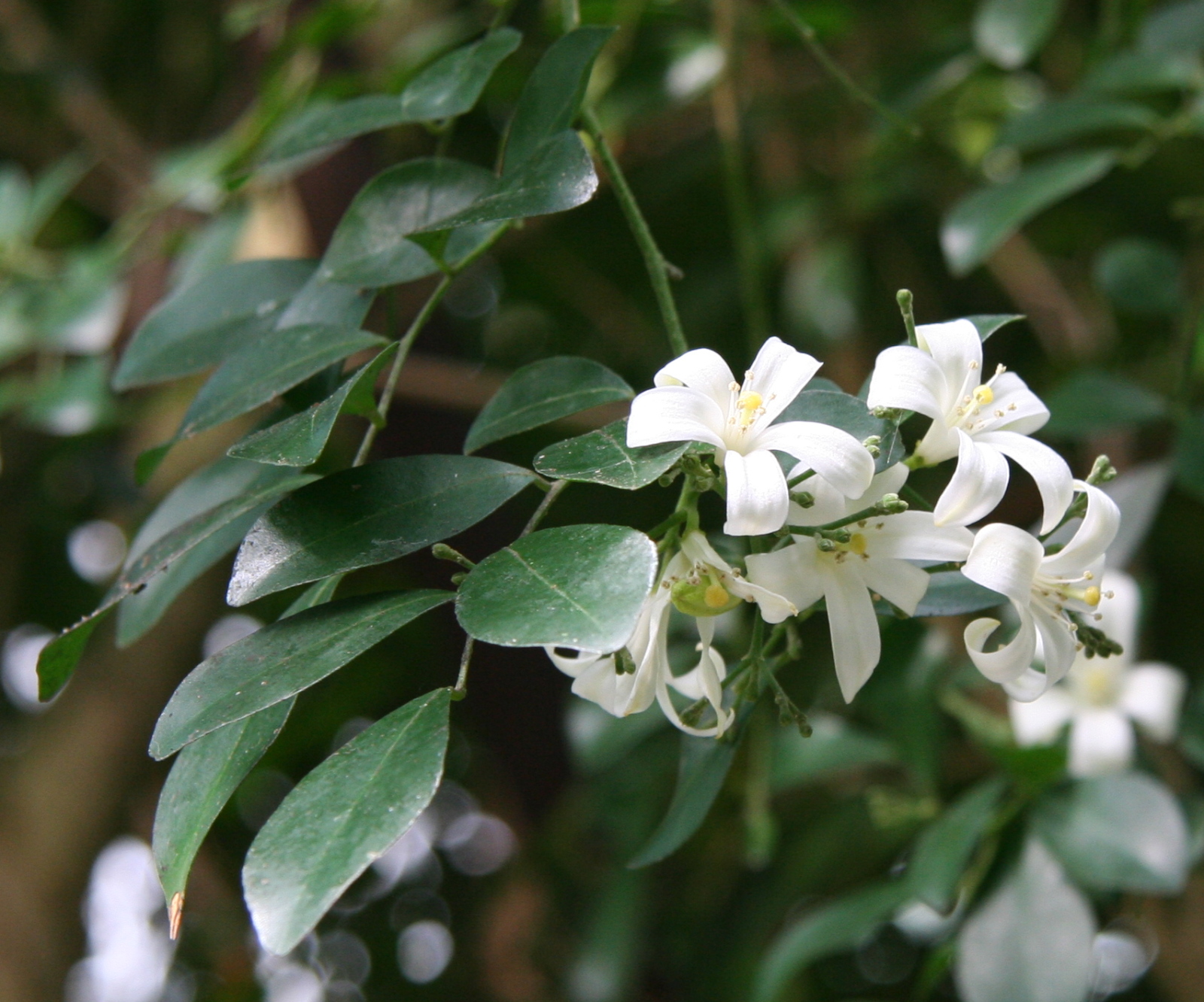
Foliage and flowers
Scientific classification Edit this classification
Kingdom: Plantae
Clade: Tracheophytes
Clade: Angiosperms
Clade: Eudicots
Clade: Rosids
Order: Sapindales
Family: Rutaceae
Genus: Murraya
Species:
M. paniculata
Binomial name
Murraya paniculata
Synonyms[2]

Homotypic Synonyms

  • Chalcas paniculata L. (1767), nom. cons.
  • Murraya exotica var. paniculata (L.) Thwaites (1858)

Heterotypic Synonyms

  • Connarus foetens Blanco (1837)
  • Connarus santaloides Blanco (1845), nom. illeg.
  • Camunium exoticum (L.) Kuntze (1891)
  • Chalcas exotica (L.) Millsp. (1895)
  • Chalcas japanensis Lour. (1790)
  • Limonia malliculensis J.R.Forst. ex Steud. (1840)
  • Marsana buxifolia Sonn. (1782)
  • Murraya amoena Salisb. (1796)
  • Murraya exotica L. (1771)
  • Murraya exotica var. buxifolia Thwaites (1858)
  • Murraya japonensis (Lour.) Raeusch. (1797)
  • Murraya paniculata var. buxifolia (Sonn.) Thwaites (1858)
  • Murraya paniculata var. exotica (L.) C.C.Huang (1959)
  • Murraya scandens Hassk. (1866)

Murraya paniculata, commonly known as orange jasmine, orange jessamine, china box, cosmetic barktree, or mock orange,[3] is a species of shrub or small tree in the family Rutaceae and is native to South Asia, Southeast Asia and Australia. It has smooth bark, pinnate leaves with up to seven egg-shaped to elliptical leaflets, fragrant white or cream-coloured flowers and oval, orange-red berries containing hairy seeds.

Description

[edit]

Murraya paniculata is a tree that typically grows to a height of 7 m (23 ft) but often flowers and forms fruit as a shrub, and has smooth pale to whitish bark. It has pinnate leaves up to 170 mm (6.7 in) long with up to seven egg-shaped to elliptical or rhombus-shaped. The leaflets are glossy green and glabrous, 25–100 mm (0.98–3.94 in) long and 12–50 mm (0.47–1.97 in) wide on a petiolule 2–6 mm (0.079–0.236 in) long.[3][4][5][6]

The flowers are fragrant and are arranged in loose groups, each flower on a pedicel 1–1.5 mm (0.039–0.059 in) long. There are five (sometimes four) sepals about 1 mm (0.039 in) long and five (sometimes four) white or cream-coloured petals 13–18 mm (0.51–0.71 in) long. and the fruit is an oval, glabrous, orange-red berry 12–14 mm (0.47–0.55 in) long containing densely hairy seeds.[3][4][5][6]

Phenology

[edit]

Flowering occurs from June to March in Australia, and the fruit ripen between January and October.[4][7] In the northern hemisphere flowering occurs from April to October and fruit ripen from April to February.[8]

Taxonomy

[edit]

This species was first described and illustrated by Georg Eberhard Rumphius in the latter half of the 17th century during his time in what was then known as the Dutch East Indies, and published posthumously in 1747.[9] However the first formal description was produced in 1767 by the Swedish botanist Carl Linnaeus who gave it the name Chalcas paniculata and published it in his book Mantissa Plantarum, which is an appendix to the 12th edition of his earlier work Systema Naturae.[10][11] In 1820 the Scottish botanist William Jack changed the name to Murraya paniculata in his book Descriptions of Malayan Plants [Malayan Miscellanies].[12][13]

Distribution and habitat

[edit]

Murraya paniculata grows in rainforest, often as an understorey shrub in vine thickets, including behind beaches. It is native to South and Southeast Asia, China and Australasia, while the distribution area extends from Pakistan via India, Sri Lanka and southern China to Taiwan, the Philippines, where it is called kamuníng,[14] the Ryūkyū Islands and the Mariana Islands, to the south via Malaysia and Indonesia to New Guinea and parts of Australia.[4][2] In Australia, it is native to the Kimberley region of Western Australia, northern parts of the Northern Territory, and parts of Queensland.[15][16] The species has been naturalised in other places, sometimes becoming an invasive weed, including on many Pacific islands.[17] In Queensland, it is regarded as different from the cultivated form Murraya paniculata 'Exotica', which is regarded as one of the most invasive plant species in southeast Queensland.[6]

Cultivation

[edit]

Murraya paniculata is cultivated as an ornamental tree or hedge because of its hardiness, wide range of soil tolerance (M. paniculata may grow in alkaline, clayey, sandy, acidic and loamy soils), and is suitable for larger hedges. The plant flowers throughout the year and produces small, fragrant flower clusters which attract bees, while the fruits attract small frugivorous birds.[5]

Propagation

[edit]

The orange jessamine is sexually propagated by its seeds. The fruits are eaten by birds, which then pass the seeds out in their feces. It may also be asexually propagated by softwood cuttings.[5]

Ecology

[edit]

This species is one of the preferred hosts of the citrus pest Diaphorina citri, the citrus psyllid, which is the vector for the Citrus greening disease.[17][18]

Diseases

[edit]

M. paniculata is vulnerable to soil nematodes, scales, sooty mold and whiteflies.[5]

[edit]

References

[edit]
Revisions and contributorsEdit on WikipediaRead on Wikipedia
from Grokipedia
Murraya paniculata, commonly known as orange jessamine, orange jasmine, or mock orange, is a broadleaf evergreen shrub or small tree in the Rutaceae family, typically growing 8 to 12 feet tall with a spread of 8 to 15 feet, though it can reach up to 20 feet in ideal conditions. It features glossy, dark green, odd-pinnate compound leaves with 3 to 9 ovate leaflets, each up to 2.5 inches long, and produces clusters of fragrant white flowers about 7/8 inch across, which bloom seasonally and are particularly aromatic at night, followed by small, ovoid red fruits containing 1 to 2 seeds. Native to tropical and subtropical regions of , including southern , , , , the Malesian region, and extending to northeastern and , Murraya paniculata thrives in the wet tropical biome, in rich, moist, well-drained loams. It prefers full sun to part shade and is sheltered from strong winds, with growth slowing as the plant ages, and it is hardy in USDA zones 10 to 12. Widely cultivated as an for its attractive foliage, profuse fragrant blooms, and compact form, Murraya paniculata is used for hedges, screens, or , and can be propagated from seeds or cuttings, requiring medium water and low maintenance. In cooler climates, it can be overwintered indoors in bright light, allowing the soil to dry between waterings. In , particularly in its native regions, Murraya paniculata has been used to treat ailments such as headaches, , stomachaches, skin irritations, and snake bites, with its leaves, roots, and flowers containing bioactive compounds like coumarins, , and alkaloids that exhibit pharmacological activities including , , antidiabetic, and effects. It also serves environmental roles, such as providing food for , and has social and food-related uses in some cultures.

Description

Morphology

Murraya paniculata is an or small with a bushy growth habit, typically reaching 2–4 m in height but occasionally up to 7 m, and featuring a dense, rounded canopy. The has spirally arranged, imparipinnate leaves that measure 60–115 mm long and consist of 3–9 leaflets, which are narrowly ovate to elliptical, glossy, and 15–70 mm long by 12–30 mm wide, with dark green upper surfaces and paler undersides. Leaflets are glabrous, glandular-dotted, with entire margins, wedge-shaped bases, and pointed tips. The flowers are fragrant, white, and bisexual, arranged in terminal or axillary panicles with up to 8 blooms per cluster; each flower is 5-merous, approximately 12–15 mm in diameter, with oblong to lanceolate petals 10–18 mm long that curve backwards, five green sepals 2–3 mm long, and 10 stamens. The fruits are egg-shaped to oval berries, about 10 mm long, that ripen from green to orange or bright red, each containing 1–2 dull, yellowish-grey to greenish, teardrop-shaped seeds covered in short hairs. Young stems are green and hairless or minutely pubescent, while older stems become woody, brown or grey, up to 13 cm in diameter, and develop a fissured, rough bark; the overall bark is pale grey. The often exhibits a multi-trunked or clumping form that can be trained into a single trunk.

Phenology

Murraya paniculata is an characterized by continuous production throughout the year. New growth flushes typically occur during wet seasons, often triggered by heavy rainfall following periods of . Flowering takes place several times annually, with prominent flushes stimulated by rainfall. In the , such as in , blooming is most abundant from spring to summer. In regions, flowering commonly occurs from to October. The flowers open primarily in the evening, emitting intense nocturnal fragrances. Berries form after flowering and ripen to a red or orange color, persisting on the for several months while appearing throughout much of the year in tropical and subtropical climates. The species employs a self-compatible reproductive strategy, enabling autogamous , although cross- enhances seed set; its nocturnal floral scents attract moths as primary pollinators.

Taxonomy

Classification

Murraya paniculata belongs to the kingdom Plantae, phylum Tracheophyta, class Magnoliopsida, order Sapindales, family Rutaceae, subfamily Aurantioideae, genus Murraya, and species M. paniculata. In phylogenetic analyses, Murraya paniculata is positioned within the Rutaceae family, in the subfamily Aurantioideae which includes the genus Citrus, based on chloroplast and nuclear DNA sequences that highlight shared evolutionary history in the Sapindales order. Molecular studies, including a 2023 chromosome-level genome assembly, further confirm its placement in the genus Murraya alongside species like M. koenigii, with evidence of conserved biosynthetic pathways for compounds such as carbazole alkaloids across the genus. The species was first documented in botanical literature by Georg Eberhard Rumphius in 1747 under the name Limonia paniculata in his Herbarium Amboinense. It was formally described as Chalcas paniculata by Carl Linnaeus in 1767 in Mantissa Plantarum. The name was transferred to the genus Murraya by William Jack in 1820, establishing the current binomial Murraya paniculata (L.) Jack. No subspecies are currently accepted for Murraya paniculata in major taxonomic databases, though horticultural cultivars such as 'Exotica' are recognized for their compact growth and ornamental qualities.

Etymology and synonyms

The genus is named in honor of Johann Andreas Murray (1740–1791), a Swedish botanist, physician, and pupil of who served as professor of medicine and at the . The species epithet paniculata derives from the Latin panicula, meaning "panicle," alluding to the plant's characteristic branched inflorescences arranged in panicles. Common names for Murraya paniculata vary regionally and reflect its ornamental and fragrant qualities. In English, it is widely known as orange jasmine, orange jessamine, mock orange, or , while "cosmetic bark tree" highlights traditional uses of its bark. In Hindi, it is called (meaning "beautiful" or "desirable"), and in Chinese, jiǔ lǐ xiāng (九里香, "nine-mile fragrance"), emphasizing the scent of its flowers that purportedly carries far. Other regional names include kamini kusum in Manipuri and honey bush in some Asian contexts. Historically, Murraya paniculata has accumulated numerous synonyms due to early taxonomic revisions and variations in cultivated forms. Key synonyms include Chalcas paniculata L. (the from Linnaeus's 1767 description), Murraya exotica L., Chalcas exotica (L.) Millsp., Camunium exoticum (L.) Kuntze, and Chalcas japanensis Lour., among over a dozen others documented in databases such as the (IPNI) and (POWO). In 1820, Scottish botanist William Jack transferred the name to the as M. paniculata, resolving some nomenclatural issues but not immediately ending confusion. A notable naming controversy arose from the overlap between M. paniculata and M. exotica, with the latter often applied to the more compact, cultivated variant; typification studies in confirmed M. exotica as a heterotypic of M. paniculata, lectotypified by a sterile Linnaean specimen to stabilize the under M. paniculata. This resolution aligns with POWO's current acceptance of M. paniculata as the valid name.

Distribution and habitat

Native range

Murraya paniculata is native to tropical and subtropical regions of South and Southeast Asia, including , , , , , , , and , as well as southern (including ) and northern , particularly . Its range extends eastward to parts of the Pacific, such as , within wet tropical biomes. In its native habitats, Murraya paniculata typically grows as an or small in tropical s, forests, and scrublands, often in shaded, humid environments near watercourses such as riparian zones. It prefers elevations from near up to 1,500 m, thriving in thickets, forest margins, and secondary growth areas. The plant co-occurs with other members of the family in these ecosystems, contributing to the layer. Climatically, Murraya paniculata is suited to USDA hardiness zones 10-12, with preferences for tropical conditions featuring annual rainfall between 1,000 and 2,500 mm. This range supports its growth in humid, warm environments with minimal dry periods.

Introduced range and invasiveness

Murraya paniculata has been widely introduced as an beyond its native range in tropical and subtropical , becoming naturalized or cultivated in regions such as (USA), , the Pacific Islands (including and ), , and parts of Mediterranean Europe. In southeast , , it has been naturalized since the , spreading into subtropical rainforests and coastal areas. The species exhibits invasive potential in several introduced areas, where it forms dense thickets that displace native vegetation. In , it is classified as a Category II invasive species by the Florida Exotic Pest Plant Council, indicating it has spread into natural areas and disrupts native plant communities but does not yet alter ecosystem functions significantly. In (Kaua‘i, , O‘ahu), it invades pastures, fence lines, and disturbed sites, outcompeting natives on atolls and soils. In , the M. paniculata 'Exotica' is ranked among the top 200 most invasive plants in southeast and is considered an environmental weed in , leading to restrictions on sale and planting in some regions. In , it is listed as a Category 1b invasive under the National Environmental Management: Biodiversity Act, requiring removal in , , and due to its high invasion risk. Spread occurs primarily through bird-dispersed seeds, as fruits are consumed by frugivorous birds, and to a lesser extent via vegetative from cuttings used in . Establishment is favored in disturbed sites, such as roadsides and forest edges, where it can mature under intact canopies. In some areas, like , non-native birds such as the facilitate further dispersal. Management involves mechanical and chemical methods to prevent further spread. Seedlings and small plants can be hand-pulled or grubbed out, while larger specimens require stem cutting, basal bark girdling, or application of herbicides like or to stumps. Ongoing monitoring in invasive regions utilizes platforms such as and occurrence databases like GBIF to track distribution and report new infestations.

Ecology

Habitat preferences

Murraya paniculata exhibits broad adaptability to various types, thriving in well-drained, rich loams while tolerating sandy, clayey, loamy, acidic, or alkaline conditions with a range of 5.5 to 7.5. It prefers nematode-free soils but demonstrates resilience in nutrient-poor or limestone-based substrates, provided drainage is adequate to prevent prolonged saturation. The plant flourishes in partial shade to full sun exposures, with optimal growth in locations receiving at least six hours of direct daily, though it can acclimate to dappled light in settings. Temperature-wise, it is frost-sensitive but tolerates brief dips to 5°C and occasional light frosts down to -4°C, with ideal ranges between 15°C and 35°C in subtropical to tropical climates. Water requirements are moderate, with established plants showing high once rooted, yet preferring humid environments and annual rainfall exceeding 1,000 mm to support vigorous growth and flowering triggered by heavy post-dry-season rains. It occurs naturally from to altitudes of 1,500 m, commonly in thickets and montane forest understories but capable of adapting to more open, disturbed landscapes.

Ecological interactions

Murraya paniculata flowers are primarily pollinated by insects, including bees, butterflies, and moths. Bees, such as honeybees, and butterflies are frequent visitors that facilitate pollen transfer, drawn to the plant's nectar and fragrant blooms. The flowers produce nectar as a reward for pollinators, with volatile compounds like phenylacetaldehyde emitted in higher amounts at night to attract nocturnal insects such as moths. Seed dispersal in M. paniculata occurs mainly through frugivory by birds and other animals, with the red berries serving as an attractant. Frugivorous birds, including like the (Pycnonotus cafer), consume the fruits and deposit viable seeds via feces, promoting spread in natural and disturbed habitats. In riparian zones, water can also aid dispersal by carrying floating seeds along watercourses. Symbiotic associations with nitrogen-fixing organisms are minimal in M. paniculata, as it lacks prominent root nodules typical of legumes. However, the plant provides habitat and food resources for small invertebrates, supporting local biodiversity through its foliage, flowers, and fruits. In trophic interactions, M. paniculata attracts beneficial pollinators like bees, enhancing pollination services in ecosystems. Conversely, it serves as a host for the citrus psyllid (Diaphorina citri), which feeds on the plant and vectors the bacterium causing Huanglongbing disease to nearby citrus crops, impacting agricultural systems. Recent 2023 genomic research, including a chromosome-level assembly, has advanced understanding of the plant's chemical profiles, aiding insights into allelopathic interactions where leaf extracts inhibit seed germination and growth of competing species in invaded areas.

Pests and diseases

Murraya paniculata is susceptible to several insect pests, including the Asian citrus psyllid (), which feeds on new flush and injects toxins causing shoot malformation and leaf curling. Scales attach to stems and leaves, sucking sap and weakening the plant. (Aleyrodidae) and colonize the undersides of leaves, extracting nutrients and producing honeydew that fosters growth. These sap-feeding insects collectively reduce vigor and aesthetic value in ornamental plantings. Key diseases include citrus greening (huanglongbing), caused by the bacterium Candidatus Liberibacter asiaticus and transmitted by the Asian citrus psyllid, leading to systemic infection in M. paniculata. A 2024 study in , , documented natural infection of field-grown M. paniculata with 'Candidatus Liberibacter asiaticus', confirming its potential as a for HLB in tropical regions. Root-knot nematodes (Meloidogyne spp.) infest roots, forming galls that impair water and nutrient uptake. Fungal leaf spots, often due to spp., manifest as necrotic lesions on foliage, exacerbated by humid conditions. Symptoms across these pests and diseases typically involve leaf yellowing and mottling from and psyllid feeding, defoliation from fungal spots and , and due to damage. Heavy infestations can cause branch dieback and plant decline, with economic impacts notable in regions where M. paniculata serves as a for psyllids affecting nearby orchards. Management relies on (IPM) approaches, combining monitoring, cultural practices, and targeted controls. Cultural methods include to remove infested flush and improve airflow, reducing humidity for fungal pathogens. Insecticides such as neonicotinoids are effective against psyllids and soft-bodied pests like and , applied during early infestation stages. Biological controls, including release of parasitic wasps (Tamarixia radiata) for psyllids, enhance natural suppression. For nematodes, or nematicides are recommended, while fungicides target leaf spots. Recent UF/IFAS guidelines emphasize scouting for psyllids and limiting flush to minimize vector populations, updated for 2025–2026 but reflective of 2024 practices.

Cultivation

Growing conditions

Murraya paniculata thrives in sites with full sun to partial shade, where it receives at least six hours of direct daily for optimal flowering and growth, though afternoon shade helps prevent leaf scorch in hotter climates. For hedging, should be spaced 0.9 to 1.5 meters apart to allow for their mature spread of 2.4 to 4.5 meters, and they benefit from protection against strong winds to avoid branch breakage. The plant prefers well-drained, fertile loamy soils with a range of 6.6 to 7.5, tolerating both acidic and alkaline conditions but requiring amendment with organic compost to enhance retention and structure. Fertilization should occur every 4 to 6 weeks during the (spring through fall) using a balanced NPK formula such as 10-10-10, applied at the recommended rate to support vigorous growth without promoting excessive vegetative development. Watering is essential during the establishment phase, providing about 2.5 cm of water weekly to maintain evenly moist , transitioning to moderate once rooted, allowing the to dry slightly between applications to prevent . Maintenance involves pruning after the main flowering period in late summer or fall to shape the and encourage bushiness, with light shearing suitable for hedges; the species exhibits high once established but performs best with consistent . Suitable for tropical and subtropical climates in USDA hardiness zones 10 to 12, Murraya paniculata requires temperatures above 10°C and humidity levels exceeding 50%, with protection recommended in cooler regions to avoid damage below -1°C. It is viable for coastal plantings where salt spray is present.

Propagation methods

Murraya paniculata is primarily propagated through , which should be collected fresh from ripe berries to maintain viability, though proper storage can extend viability for several months to over a year. Seeds dried at 20-25°C for 24 hours and stored at 5-22°C with can achieve 53-90% . They are sown in a sterile medium under shaded conditions without pretreatment, achieving germination rates of 70-85% within 21-28 days at temperatures around 20-30°C. Success rates typically range from 70-90% under optimal conditions. Vegetative propagation via cuttings is also common, using semi-hardwood or stems of 10-15 cm taken during summer. The basal end is dipped in (IBA) at concentrations of 1000-3000 ppm, often combined with naphthaleneacetic acid (NAA), to promote rooting in a well-drained medium under high . Rooting success reaches 80% or higher within 4-6 weeks, with lower stem cuttings showing superior results (up to 85% rooting at 3000 ppm IBA + NAA). cuttings are preferred for faster establishment compared to seeds. Other methods include air layering or ground layering, particularly for producing hedge plants, where a portion of a is wounded and wrapped in moist moss until roots form. Grafting onto resistant rootstocks is rare but feasible to enhance tolerance, though it is not widely practiced. Challenges in propagation include susceptibility to fungal damping-off in seedlings when grown in non-sterile media, which can be mitigated by using fungicides or sterile conditions. Cuttings may face lower rooting if taken from upper stems or without treatment.

Uses

Ornamental applications

_Murraya paniculata is widely utilized in for its dense, foliage and ability to form effective hedges, screens, and topiaries, providing year-round and in tropical and subtropical gardens. The plant's compact growth habit allows it to be pruned into formal shapes or maintained as a low barrier, while its glossy, dark green leaves contribute to a lush, tropical aesthetic suitable for standalone specimens in or settings. In regions like subtropical and , it is a staple in suburban landscapes for defining boundaries without the need for extensive maintenance. The aesthetic appeal of Murraya paniculata lies in its profuse clusters of fragrant white flowers, which bloom intermittently throughout the year and emit a sweet, orange-blossom-like scent, enhancing evening gardens. These blooms, followed by small red berries, add seasonal interest and attract pollinators such as bees and butterflies, promoting biodiversity in designed spaces. The plant's year-round verdure makes it ideal for formal hedges or informal screens, where its fragrance can subtly perfume outdoor areas. Specific cultivars enhance its ornamental versatility; for instance, the compact form known as 'Exotica' (often treated as a synonym or variety) is favored for small-scale hedges and container plantings due to its dwarf stature reaching only 1-2 meters. Similarly, selections like 'Min-a-min' offer a low-growing habit ideal for edging or potted displays, maintaining the species' fragrance while fitting constrained spaces. Introduced to European conservatories in the for its exotic appeal, Murraya paniculata has since become common in subtropical suburbs, such as those in and , where it serves as a reliable ornamental. However, its potential invasiveness in sensitive ecosystems necessitates the use of sterile or low-seed cultivars to mitigate risks of escape and naturalization.

Medicinal and ethnobotanical uses

_Murraya paniculata has been utilized in traditional medicine systems, particularly and (TCM), for treating various ailments such as , stomach aches, toothaches, swelling, and insect bites. In , leaves are applied as a to alleviate swelling and bites, while roots are prepared as a for and stomach issues. In TCM, the plant is employed for its and properties to manage pain and related conditions. Pharmacological studies have validated several therapeutic activities of M. paniculata, including anti-diabetic effects that reduce blood glucose levels, properties, action against pathogens like Escherichia coli and Staphylococcus aureus, and antioxidant capabilities. These findings are supported by a comprehensive 2023 review published through the . Recent 2025 research has further demonstrated potential against Helicobacter pylori via biomass extracts, suggesting anti-ulcer applications, and in-vitro anticancer activity from leaf fractions. Ethnomedicinal applications vary by region; in and , the plant, known locally as in some contexts, is used to treat through leaf infusions or extracts. In and , extracts from the leaves exhibit anti-anxiety effects, aligning with traditional uses for calming disorders. The plant demonstrates low toxicity in oral administrations, with no observed deaths or significant adverse effects in acute studies at doses up to 5,000 mg/kg in animal models. Recent research highlights its anti-cancer potential, where methanolic leaf extracts induce in cell lines, suggesting pathways for further therapeutic exploration. Due to increasing demand for its medicinal parts, overcollection in native tropical and subtropical ranges poses risks to wild populations, exacerbated by and low conservation awareness. Sustainable harvesting practices, such as controlled cultivation under optimal conditions (e.g., pH 6.5 , 31°C air ), are recommended to ensure long-term availability.

Phytochemistry and industrial applications

_Murraya paniculata contains a diverse array of phytochemicals, including coumarins such as murrangatin, paniculatin, and 2'-O-ethylmurrangatin; alkaloids like murrayamine; other alkaloids; and . The plant's essential oils, typically yielding 1-2% from leaves and flowers, are rich in sesquiterpenes like β-caryophyllene and monoterpenes such as . Essential oils are primarily extracted via from leaves and flowers, achieving yields of 0.5-1.5%, with gas chromatography-mass spectrometry (GC-MS) profiling revealing dominant components including β- (up to 11.8%), caryophyllene oxide (up to 16.6%), and (around 2.2%). In industrial applications, the essential oils serve as fragrance fixatives in perfumery due to their aromatic profile, while bark extracts are incorporated into such as soaps for their cleansing properties. The antimicrobial properties of the oils, particularly against foodborne pathogens like and , suggest potential in as natural flavoring agents. Certain coumarins from M. paniculata, including murranganone and paniculatin, exhibit mixed-type inhibition of and enzymes, with values in the micromolar range, indicating potential neuroprotective applications. Molecular docking studies of phytochemicals from methanolic extracts, such as murrangatin and , demonstrate strong binding affinities to targets like EGFR and HER2, supporting anti-breast cancer activity. A 2023 chromosome-level assembly of M. paniculata, spanning 216.87 Mb across nine chromosomes, has elucidated biosynthetic pathways for key metabolites, including those for coumarins, facilitating genetic insights into .

References

Add your contribution
Related Hubs
User Avatar
No comments yet.