


Community hub
Recent from talks
Contribute something
Nothing was collected or created yet.
Mustafa Tlass
View on Wikipedia
Mustafa Abdul Qadir Tlass (Arabic: مصطفى عبد القادر طلاس, romanized: Musṭafā ʿAbd al-Qādir Ṭalās; 11 May 1932 – 27 June 2017) was a Syrian military officer, author, historian and politician who was the Minister of Defense from 1972 to 2004 under Ba'athist-led Syria.[1] He was part of the four-member Regional Command during the Hafez al-Assad era.
Key Information


Early life and education
[edit]Tlass was born in Rastan near the city of Homs to a prominent local Sunni Muslim family on 11 May 1932.[2][3] His father, Abdul Qadir Tlass, was a minor Sunni noble who made a living during the Ottoman period by selling ammunition to the Turkish garrisons.[4] On the other hand, members of his family also worked for the French occupiers after the First World War.[5] His paternal grandmother was of Circassian origin and his mother was of Turkish descent.[6] Tlass is said to also have some Alawite family connections through his mother.[2][7] He received primary and secondary education in Homs.[2] In 1952, he entered the Homs Military Academy.[2]
Career
[edit]
Tlass joined the Ba'ath Party at the age of 15, and met Hafez al-Assad when studying at the military academy in Homs.[8] The two officers became friends when they were both stationed in Cairo during the period of 1958–1961 United Arab Republic merger between Syria and Egypt: while ardent Pan Arab nationalists, they both worked to break up the union, which they viewed as unfairly balanced in Egypt's favor.[citation needed] When Hafez al-Assad was briefly imprisoned by Nasser at the breakup of the union, Tlass fled and rescued his wife and sons to Syria.[4]
During the 1960s, Hafez al-Assad rose to prominence in the Syrian government through the 1963 coup d'état, backed by the Ba'ath party. He then promoted Tlass to high-ranking military and party positions. In 1965, while he was Ba'athist army commander of Homs, Lieutenant Colonel Mustafa Tlass arrested his pro-government comrades.[9] A 1966 coup by an Alawite-dominated Ba'ath faction further strengthened al-Assad, and by association Tlass.[citation needed] Tensions within the government soon became apparent, however, with al-Assad emerging as the prime proponent of a pragmatist, military-based faction opposed to the ideological radicalism of the dominant ultra-leftists. Syrian defeat in the 1967 Six-Day War embarrassed the government, and in 1968 al-Assad managed to install Tlass as new Chief-of-Staff.[citation needed] After the debacle of an attempted Syrian intervention in the Black September conflict, the power struggle came to open conflict.[citation needed]
In 1969, Tlass led a military mission to Beijing, and secured weapons deals with the Chinese government.[10][11][12] In a move deliberately calculated to antagonize the Soviet Union to stay out of the succession dispute then going on in Syria, Mustafa Tlass allowed himself to be photographed waving Mao Zedong's Little Red Book, just two months after bloody clashes between Chinese and Soviet armies on the Ussuri river.[13][14] The Soviet Union then agreed to back down and sell Syria weapons.[citation needed]
Under cover of the 1970 "Corrective Revolution", Hafez al-Assad seized power and installed himself as a dictator. Tlass was promoted to minister of defense in 1972, and became one of al-Assad's most trusted loyalists during the following 30 years of one-man rule in Syria. As'ad AbuKhalil argues that Mustafa Tlass was well-suited for Hafez al-Assad as a defense minister in that "he had no power base, he was mediocre, and he had no political skills, and his loyalty to his boss was complete."[15] During his term as defense minister, Mustafa Tlass was functional in suppressing all dissent regardless of being Islamists or democrats.[16]
On 19 October 1999, defence minister of China, General Chi Haotian, after meeting with Mustafa Tlass in Damascus to discuss expanding military ties between Syria and China, flew directly to Israel and met with Ehud Barak, the then prime minister and defence minister of Israel where they discussed military relations. Among the military arrangements was a 1 billion dollar Israeli Russian sale of military aircraft to China, which were to be jointly produced by Russia and Israel.[17]
At the beginning of the 2000s, Tlass was also deputy prime minister in addition to his post as defense minister.[18] He was also a member of Baath Party's central committee.[19] His other party roles included the head of the party military bureau and chairman of the party military committee.[20]
Controversial writings and controversies
[edit]Tlass attempted to create a reputation for himself as a man of culture and emerged as an important patron of Syrian literature. He published several books of his own, and started a publishing house, Tlass Books, which has been internationally criticized[21] for publishing anti-Semitic materials.[4]
In 1998, Syrian Defense Minister Tlass boasted to Al Bayan newspaper that he was the one who gave the green light to "the resistance" in Lebanon to attack and kill 241 US marines and 58 French paratroopers, but that he prevented attacks on the Italian soldiers of the multi-national force because "I do not want a single tear falling from the eyes of [Italian actress] Gina Lollobrigida, whom [I] loved ever since my youth."[22][23] In October of the same year, Tlass stated that there was no such country as Jordan, but only "South Syria".[24]
Tlass had also boasted to the National Assembly about cannibalist atrocities committed against Israeli soldiers who fell captive in the Yom Kippur war. "I gave the Medal of the Republic's Hero, to a soldier from Aleppo, who killed 28 Jewish soldiers. He did not use the military weapon to kill them but utilized the ax to decapitate them. He then devoured the neck of one of them and ate it in front of the people. I am proud of his courage and bravery, for he actually killed by himself 28 Jews by count and cash."[25][26]

There have been three missing Israeli soldiers in the Beqaa valley since the June 1982 war in Lebanon. Tlass allegedly told a Saudi magazine: "We sent Israel the bones of dogs, and Israel may protest as much as it likes."[27]
During his career, Tlass also became known for colorful language. In 1991, when Syria was participating on the Coalition side in the Gulf War, he stated that he felt "an overwhelming joy" when Saddam Hussein sent SCUD-missiles towards Israel. In August 1998, Tlass caused a minor uproar in Arab political circles, when he denounced Palestinian leader Yasser Arafat as "the son of sixty thousand whores."[28][29] The long-standing conflict between the Assad government and the Palestine Liberation Organization would not end until after Hafez al-Assad's death in 2000.[citation needed]
In 2000, the widow and children of Ira Weinstein, who was killed in a February 1996 Hamas suicide bombing, filed a lawsuit against both Tlass and the head of Syrian military intelligence in Lebanon, Ghazi Kanaan, charging that they were responsible for providing the perpetrators with material resources and training.[30]
In an interview which aired RT on 8 June 2009 (as translated by MEMRI), Tlass claimed that actress Gina Lollobrigida had once told him that he was the "one love in my life." He also claimed that Lady Diana wrote him letters that "were full of love and appreciation", and that Prince Charles gave him a gold-plated Sterling submachine gun as a gift.[31]
Books
[edit]
In 1986, he defended his doctoral dissertation on the military strategy of Marshal of the Soviet Union Georgy Zhukov at the Sorbonne. However, on the same year, his doctoral dissertation defense was rejected after the media publicised several anti-Semitic statements made by him.[32]
Tlass also wrote books about Syria's military and political history and also books of poetry, general Arab history, and a history of the military tactics used by Muhammad.[33] His writings allegedly reflect anti-Semitism and belief in conspiracy theories.[33] He also published two-volume memoirs (eventually extended to five), namely Mirat Hayati (Reflections of my life) in 2005.[33] The memoirs were widely ridiculed around the Arab world and outraged Bashar al-Assad[citation needed] due to its content, making various claims about ordering summary executions of dissidents and Israelis and crediting himself for bringing Hafez and Bashar to power.[34] Tlass, whom close friends had described as a sex-obsessed maniac who tried to sleep with as many women as he could, also described in graphic detail his outlandish attempts at seducing women: "As my eyes were fixated on her beautiful breasts I noticed she was wearing a white and transparent nightgown that concealed nothing of God's creation," Tlass wrote about a neighbor he fantasized for days.[35]
The Matzah of Zion
[edit]In 1983, Tlass wrote and published The Matzah of Zion, which is a treatment of the Damascus affair of 1840 that repeats the ancient blood libel that Jews use the blood of murdered non-Jews in religious rituals such as baking Matza bread.[36] In this book, he argues that the true religious beliefs of Jews are "black hatred against all humans and religions," and that no Arab country should ever sign a peace treaty with Israel.[37] Tlass re-printed the book several times, and stood by its conclusions. Following the book's publication, Tlass told Der Spiegel that his false accusation against Jews was valid and that his book is "an historical study ... based on documents from France, Vienna and the American University in Beirut."[37][38]

Regarding the book, Tlass stated that "I intend through publication of this book to throw light on some secrets of the Jewish religion based on the conduct of the Jews and their fanaticism", and that both Eastern and Western civilizations threw Jews into ghettos only after recognizing their "destructive badness". He also claimed that since 1840, "every mother warned her child: Do not stray far from home. The Jew may come by and put you in his sack to kill you and suck your blood for the Matzah of Zion."[39]
In 1991 The Matzah of Zion was translated into English. Egyptian producer Munir Radhi subsequently decided it was the ideal "Arab answer" to the film Schindler's List and later announced plans to produce a film adaptation of The Matzah of Zion.[40] The book also reportedly served as what was falsely termed a "scientific" basis for a renewal of the blood libel charge in international forums. In 2001, Al-Ahram published an article titled "A Jewish Matzah Made from Arab Blood", which summarized The Matzah of Zion, falsely concluding that: "The bestial drive to knead Passover matzahs with the blood of non-Jews is [confirmed] in the records of the Palestinian police where there are many recorded cases of the bodies of Arab children who had disappeared being found, torn to pieces without a single drop of blood. The most reasonable explanation is that the blood was taken to be kneaded into the dough of extremist Jews to be used in matzahs to be devoured during Passover."[38]
After Hafez al-Assad
[edit]The succession of Bashar al-Assad, Hafez's son, seems to have been secured by a group of senior officials, including Tlass.[41] After the death of Assad in 2000, a 9-member committee was formed to oversee the transition period, and Tlass was among its members.[42]
Whether true or not, Tlass and his supporters were viewed by many as opponents of the discreet liberalization pursued by the younger al-Assad, and to maintain Syria's hardline foreign policy stances; but also as fighting for established privileges, having been heavily involved in government corruption. In February 2002 in the Jordanian daily Al Dustour stated that Tlass submitted his letter of resignation to Bashar al-Assad, and was set to step down in July 2002.[30] However, in 2004, Tlass was replaced by Hasan Turkmani as defense minister.[20][43] It is also argued that Shawkat pushed for the removal of Mustafa Tlass.[44] Tlass also quit the regional command in 2005.[45]
Mustafa Tlass and his son, Firas, both left Syria after the revolt against Assad began in 2011.[46] Mustafa Tlass left for France for what he described as medical treatment.[46] Firas, a business tycoon, left Syria for Egypt in 2011, too.[46] It is also reported that he is in Dubai.[47]
In July 2012, Manaf Tlass, a Syrian officer and another son of Mustafa, defected from the Assad government and fled to Turkey and then to France.[46]
Personal life and death
[edit]Tlass married Lamia Al Jabiri, a member of the Aleppine aristocracy,[8] in 1958.[2] His marriage secured his position among the traditional elite and enabled him to advance socially.[4] They had four children: Nahid (born 1958), Firas (born 1960), Manaf (born 1964), and Sarya (born 1978).[48] His daughter Nahid was married to Saudi millionaire arms dealer Akram Ojjeh, forty years her senior.[49] She has lived in Paris since the onset of Syrian uprising.[49] His younger daughter, Sarya, is married to a Lebanese from Baalbak.[4]
Tlass was the only member of the Ba'ath government who had good relations with the traditional social establishment of Syria.[4] His hobbies are said to have included horseback riding, tennis, and swimming.[2]
Tlass died on 27 June 2017 in Avicenne Hospital in Bobigny, France, at the age of 85.[50]
Honours
[edit]National honours
[edit]- Syria:
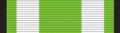 Order of the Umayyads (1st class)
 Order of Civil Merit (1st class)
 Order of Military Honor (1st class)
 Order for Bravery (1st class)
 Order of Devotion (Special class)
 Medal for Long and Impeccable Service (Special class)
 Medal for Preparation
 Order of Federation
 Commemorative Medal 'March 8'
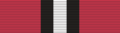 Commemorative Medal 'October 6'
_-_ribbon_bar.gif)

.png)
.png)

.png)
.png)

.png)
_-_ribbon_bar.png)
Foreign honours
[edit]- Austria:
- Egypt:
- East Germany:
- Greece:
- Kazakhstan:
 Order of Friendship (1st class)
- Lebanon:
- North Korea:
 Order of the National Flag (1st class)
 Order of the National Flag (3rd class)
- Pakistan:
 Nishan-e-Imtiaz (1st class)
- Russia:
- Soviet Union:


.png)


Bibliography
[edit]- Dagher, Sam (2019). Assad or We Burn the Country (First U.S. ed.). New York: Little, Brown & Company. ISBN 978-0316556705.
References
[edit]- ^ "Profile: Mustafa Tlas". BBC. 2004. Retrieved 5 July 2012.
- ^ a b c d e f "The Man who Enraged the Palestinians: Syrian Defense Minister Mustafa Tlas". The Estimate. Archived from the original on 13 September 2012. Retrieved 5 July 2012.
- ^ Who's Who in the Arab World 2007-2008. Beirut: Publitec. 2011. p. 809. ISBN 978-3-11-093004-7.
- ^ a b c d e f "Lt. Gen. Mustafa Tlass". Middle East Intelligence Bulletin. 2 (6). 1 July 2000.
- ^ Joseph Kechichian (27 July 2012). "Syria is bigger than individuals, says defected brigadier". Gulf News. Retrieved 27 July 2012.
- ^ Hanna Batatu (1999), Syria's Peasantry, the Descendants of Its Lesser Rural Notables, and Their Politics, Princeton University Press, p. 218 (Table 18-1), ISBN 140084584X
- ^ Shmuel Bar (2006). "Bashar's Syria: The Regime and its Strategic Worldview" (PDF). Comparative Strategy. 25 (5): 353–445. doi:10.1080/01495930601105412. S2CID 154739379.
- ^ a b Briscoe, Ivan; Floor Janssen Rosan Smits (November 2012). "Stability and economic recovery after Assad: key steps for Syria's post-conflict transition" (PDF). Clingendael: 1–51. Archived from the original (PDF) on 19 November 2012. Retrieved 7 March 2013.
- ^ Fisk, Robert (6 March 2012). "With that history, why did we think Syria would fall?". Belfast Telegraph. Retrieved 19 July 2012.
- ^ Peter Mansfield (1973). The Middle East: a political and economic survey. Oxford University Press. p. 480. ISBN 0-19-215933-X. Retrieved 28 June 2010.
- ^ George Meri Haddad, Jūrj Marʻī Ḥaddād (1973). Revolutions and Military Rule in the Middle East: The Arab states pt. I: Iraq, Syria, Lebanon and Jordan, Volume 2. R. Speller. p. 380. ISBN 9780831500603. Retrieved 28 June 2010.
- ^ Europa Publications Limited (1997). The Middle East and North Africa, Volume 43. Europa Publications. p. 905. ISBN 1-85743-030-1. Retrieved 28 June 2010.
- ^ Robert Owen Freedman (1982). The Soviet Policy Toward the Middle East Since 1970. Praeger. p. 34. ISBN 978-0-03-061362-3. Retrieved 28 June 2010.
- ^ Robert Owen Freedman (1991). Moscow and the Middle East: Soviet policy since the invasion of Afghanistan. CUP Archive. p. 40. ISBN 0-521-35976-7. Retrieved 28 June 2010.
- ^ AbuKhalil, As'ad (20 July 2012). "Damascus Bombs and Mysteries". Al Akhbar. Archived from the original on 21 January 2018. Retrieved 20 July 2012.
- ^ Koelbl, Susanne (21 February 2005). "A 101 Course in Mideast Dictatorships". Der Spiegel. Retrieved 24 July 2012.
- ^ "China defense minister visits Israel". Archived 30 May 2012 at the Wayback Machine World Tribune. 21 October 1999
- ^ Bruce Maddy-Weitzman (2002). Middle East Contemporary Survey, Vol. 24, 2000. The Moshe Dayan Center. p. 557. ISBN 978-965-224-054-5. Retrieved 9 February 2013.
- ^ Moubayed, Sami (26 May – 1 June 2005). "The faint smell of jasmine". Al Ahram Weekly. 744. Archived from the original on 25 March 2013. Retrieved 2 March 2013.
- ^ a b Hinnebusch, Raymond (2011). "The Ba'th Party in Post-Ba'thist Syria: President, Party and the Struggle for 'Reform'". Middle East Critique. 20 (2): 109–125. doi:10.1080/19436149.2011.572408. S2CID 144573563.
- ^ Question of Violation of Human Rights and Fundamental Freedoms in Any Part of the World. Archived 6 February 2015 at the Wayback Machine Written statement submitted by the Association for World Education, 10 February 2004
- ^ "A crush on Lollobrigida benefited Italian troops". Deseret News. 3 January 1998. Archived from the original on 6 October 2014. Retrieved 7 December 2012.
- ^ Karmon, Ely (28 February 2010). "No models of example". The Jerusalem Post. Retrieved 7 December 2012.
- ^ Schenker, David (2003). Dancing with Saddam (PDF). Lanham: Lexington Books. p. 11. Archived from the original (PDF) on 6 October 2014. Retrieved 29 January 2013.
- ^ Official Gazette of Syria (11 July 1974 Issue)
- ^ Letter Maurice Swan The New York Times 23 June 1975
- ^ London based Saudi weekly, 4–10 August 1984.
- ^ "Arafat 'son of 60,000 whores'". BBC. 4 August 1999. Retrieved 7 December 2012.
- ^ Gambill, Gary C. (April 2001). "Syria's Foreign Relations: The Palestinian Authority". Middle East Intelligence Bulletin. 3 (4). Retrieved 13 August 2013.
- ^ a b Gambill, Gary C. (October 2002). "Sponsoring Terrorism: Syria and Hamas". Middle East Intelligence Bulletin. 4 (10). Retrieved 7 July 2012.
- ^ Former Syrian Minister of Defense Mustafa Tlass Displays Personal Memorabilia and Reminisces about His Imaginary Affairs with Actress Gina Lollobrigida and Lady Di, MEMRI, Transcript – Clip No. 2144, 8 June 2009.
- ^ "French Government Has Reportedly Facilitated Review of Doctoral Dissertation by Anti-semitic Author". Jewish Telegraphic Agency. 22 June 1986. Retrieved 21 July 2022.
- ^ a b c Aboul Enein, Youssef H. (May–June 2005). "Syrian Defense Minister General Mustafa Tlas: Memoirs, Volume 2" (PDF). Military Review. Archived from the original (PDF) on 26 September 2012. Retrieved 5 July 2012.
- ^ Dagher 2019, p. 246.
- ^ Dagher 2019, p. 96.
- ^ An Anti-Jewish Book Linked to Syrian Aide, New York Times, 15 July 1986.
- ^ a b "Literature Based on Mixed Sources – Classic Blood Libel: Mustafa Tlas' Matzah of Zion". ADL. Archived from the original on 13 April 2011. Retrieved 5 July 2012.
- ^ a b Blood Libel Judith Apter Klinghoffer, History News Network, 19 December 2006.
- ^ Arabs' Hatred of Jews: Can the Carnage Be a Surprise? Abraham Cooper, Los Angeles Times, 12 September 1986.
- ^ Jeffrey Goldberg (2008). Prisoners: A Story of Friendship and Terror. Vintage Books. p. 250. ISBN 978-0-375-72670-5.
- ^ Ghadbian, Najib (Autumn 2001). "The New Asad: Dynamics of Continuity and Change in Syria" (PDF). Middle East Journal. 55 (4): 624–641. Archived from the original (PDF) on 12 December 2018. Retrieved 9 March 2013.
- ^ "Bashar Aims to Consolidate Power in the Short-Term and to Open up Gradually". APS Diplomat News Service. 19 June 2000. Retrieved 26 March 2013.
- ^ Flynt Lawrence Leverett (1 January 2005). Inheriting Syria: Bashar's Trial by Fire. Brookings Institution Press. pp. 190. ISBN 978-0-8157-5206-6. Retrieved 12 March 2013.
- ^ Gambill, Gary C. (February 2002). "The Military-Intelligence Shakeup in Syria". Middle East Intelligence Bulletin. 4 (2). Retrieved 7 July 2012.
- ^ "Syria military. Minister of Defense". Global Security. Retrieved 5 July 2012.
- ^ a b c d Oweis, Khaled Yacoub (5 July 2012). "Syrian general breaks from Assad's inner circle". Reuters. Retrieved 5 July 2012.
- ^ Julian Borger; Martin Chulov (5 July 2012). "Top Syrian general 'defects to Turkey'". The Guardian. Retrieved 5 July 2012.
- ^ "Personal Profile". Firas Tlass website. Archived from the original on 28 May 2004. Retrieved 6 July 2012.
- ^ a b "Defection of Syrian general 'significant': US". AFP. 6 July 2012. Archived from the original on 24 February 2014. Retrieved 6 July 2012.
- ^ "وفاة وزير الدفاع السوري الأسبق مصطفى طلاس".
| Kingdom of Syria (1920) | |
|---|---|
| French Mandate of Syria (1920–1946) post established 1932 |  |
| First and Second Syrian Republic (1946–1958) | .svg) |
| United Arab Republic (1958–1961) | ,_Flag_of_Syria_(1980%E2%80%932024).svg) |
| Second Syrian Republic (1961–1963) | |
| Ba'athist Syria (1963–2024) post-1963 Syrian coup d'état | |
| Transitional period (2024–present) | .svg) |
.svg)

Mustafa Tlass
View on GrokipediaMustafa Abdul Qadir Tlass (11 May 1932 – 27 June 2017) was a Syrian military officer and Ba'ath Party politician who served as Minister of Defense from 1972 to 2004, a tenure spanning over three decades under President Hafez al-Assad and briefly his son Bashar.[1][2][3]
Born into a Sunni Muslim family in Rastan near Homs, Tlass joined the Ba'ath Party as a teenager, trained at the Homs Military Academy alongside Hafez al-Assad, and rose through the ranks as a tank officer and staff chief following the 1967 Six-Day War.[1][2] As defense minister, he directed the Syrian offensive in the 1973 Yom Kippur War to reclaim the Golan Heights, oversaw military modernization with Soviet weaponry, and commanded interventions such as the 1976 deployment into Lebanon.[1][2]
A rare Sunni figure of influence in the Alawite-dominated regime, Tlass maintained personal loyalty to the Assad family, aiding the power transition to Bashar in 2000, though his career drew scrutiny for alleged involvement in repressive measures and for authoring The Matzah of Zion (1983), which promoted claims of Jewish ritual murder tied to the 1840 Damascus affair.[3][4] He retired in 2004, departed for France in 2011 amid the Syrian uprising for medical reasons, and died in Paris at age 85.[1][3]
Early Life and Background
Family Origins and Upbringing
Mustafa Tlass was born on 11 May 1932 in Rastan, a town near Homs in central Syria, during the French Mandate period.[1][2] He hailed from a prominent local Sunni Muslim family known for its regional influence.[1][3] His father, Abdul Qadir Tlass (also spelled Abdul-Khader), served as a minor Sunni notable and derived significant wealth from trading arms to Turkish garrisons amid the instability of colonial rule.[1] This commerce positioned the family as established figures in Rastan, a predominantly Sunni area that later became a center of unrest.[5] Reports indicate the family maintained some Alawite connections through Tlass's mother, which reportedly aided in navigating Syria's sectarian dynamics despite the family's Sunni roots.[6][7] Tlass's early years unfolded in this commercially astute household, fostering familiarity with local power structures and cross-communal relations in a region marked by French oversight and emerging nationalist sentiments.[1] The family's status provided a foundation that contrasted with broader socioeconomic challenges in rural Homs governorate during the mandate's final years.[5]Education and Initial Influences
Tlass was born on 11 May 1932 in al-Rastan, a town near Homs, to a prominent Sunni Muslim family; his father, Abdul Qadir Tlass, was a local landowner and trader who instilled in him values of independence and skepticism toward foreign influence.[6] He completed primary and secondary education in Homs, where exposure to anti-colonial sentiments prevalent in post-mandate Syria shaped his early worldview.[8] At age 15, in 1947, Tlass joined the Ba'ath Party, then an underground movement advocating Arab unity, socialism, and opposition to Western imperialism, reflecting his initial alignment with pan-Arab nationalist ideals amid Syria's turbulent independence era.[1] Following secondary school, he briefly worked as a physical education teacher in al-Rastan, a role that honed his organizational skills and physical discipline before pursuing a military path.[2] In 1952, Tlass enrolled at the Homs Military Academy, Syria's premier institution for officer training established to build a national army free from Ottoman or French legacies.[9] There, he met Hafez al-Assad, a fellow cadet and future Syrian president, forging a lifelong alliance rooted in shared Ba'athist commitment and mutual ambition; Tlass soon led a Ba'ath cell within the academy, advancing clandestine party activities despite official prohibitions.[1] These formative years at the academy, amid ideological fervor and military rigor, solidified his influences from Ba'ath socialism and Arab nationalism, prioritizing secular unity over sectarian divisions.[9]Military Ascendancy
Early Enlistment and Training
Mustafa Tlass enrolled in the Homs Military Academy in 1952, marking the beginning of his formal military career after completing primary and secondary education in Homs and briefly pursuing studies in law followed by a short stint teaching sports.[1][2] At the academy, Tlass underwent officer training within Syria's nascent post-independence armed forces structure, which emphasized discipline, basic tactics, and infantry skills amid the broader context of regional instability following the end of the French mandate.[9][10] During his time at Homs, Tlass formed a close association with fellow cadet Hafez al-Assad, a relationship forged through shared Ba'ath Party sympathies—Tlass had joined the party at age 15 in 1947—and mutual ambitions within the military hierarchy.[1][9] The academy's curriculum, modeled on French and British influences from the mandate era but increasingly oriented toward Arab nationalist ideals, prepared graduates for roles in the Syrian Army, where Tlass was commissioned as a lieutenant upon graduation in 1955.[2] Tlass's early training emphasized practical field exercises and ideological indoctrination, reflecting the Ba'athist push to professionalize the officer corps against perceived monarchical and sectarian influences in the region.[10] This period solidified his loyalty to pan-Arabist causes, setting the stage for subsequent assignments in infantry units, though specific details of his initial postings remain tied to the academy's output of mid-level officers amid Syria's volatile 1950s political landscape.[9]Participation in Major Conflicts
Tlass served as a senior officer in the Syrian Army during the 1967 Six-Day War, contributing to operations on the Golan Heights front amid Syria's broader coordination with Egypt and Jordan against Israel from June 5 to 10.[2] The rapid Israeli advance led to the loss of the Golan Heights, embarrassing the regime and prompting internal military reforms; Tlass's alignment with Hafez al-Assad positioned him for promotion to Chief of Staff and Deputy Defense Minister on February 16, 1968, replacing a rival loyalist amid post-war purges.[11][9] As Defense Minister since his appointment in 1972, Tlass held direct oversight of Syrian military strategy during the 1973 Yom Kippur War, orchestrating the October 6 surprise assault on Israeli positions in the Golan Heights alongside Egyptian forces crossing the Suez Canal.[2] He conducted clandestine coordination with Egyptian counterparts, including a covert meeting in Alexandria on August 21, 1973, with Egypt's Chief of Staff to align attack plans despite prior Syrian-Egyptian tensions.[12] Syrian troops, numbering around 60,000 with over 1,400 tanks, initially overran Israeli defenses, advancing up to 10 kilometers into the Golan before Israeli reinforcements halted and reversed the gains by October 10, resulting in heavy Syrian losses of approximately 3,500 killed and 250 tanks destroyed.[13] In a December 1973 address to the Syrian National Assembly, Tlass recounted alleged battlefield atrocities by Syrian soldiers against captured Israelis, citing an instance where a soldier consumed the raw liver of a dead Israeli as an act of "supreme valor" for which he awarded the Medal of Citizenship; he framed such reports as motivational propaganda to underscore Syrian resolve.[14] Post-war, Tlass facilitated Syrian rearmament through Soviet ties, securing advanced weaponry to rebuild forces depleted in the conflict.[1] These engagements solidified Tlass's reputation as a key architect of Syria's military posture in recurrent Arab-Israeli confrontations, though outcomes highlighted persistent challenges in Syrian operational effectiveness against Israeli countermeasures.[15]Appointment as Defense Minister
Mustafa Tlass was appointed Minister of Defense of Syria by President Hafez al-Assad in March 1972, following his prior role as deputy commander-in-chief of the armed forces established after Assad's 1970 "Corrective Movement" coup.[10][9] This elevation positioned Tlass, a Sunni from Rastan, as a key figure in balancing the regime's Alawite core with broader sectarian representation in military leadership, a deliberate strategy to legitimize Assad's rule amid Ba'ath Party infighting.[9][1] Tlass's appointment stemmed from his longstanding personal loyalty to Assad, forged during their joint training at the Homs Military Academy in the early 1950s and reinforced through shared Ba'athist activities and participation in regional conflicts.[1] He had actively supported Assad's consolidation of power by aiding in the arrest and neutralization of rival Ba'athist factions, including Salah Jadid's supporters, which solidified his status as a trusted enforcer.[1] By 1972, as a lieutenant general and experienced tank commander, Tlass was promoted to oversee the Ministry of Defense, succeeding interim arrangements and assuming command of Syria's military apparatus during a period of post-coup reorganization.[10] The role endowed Tlass with authority over the Syrian Arab Army's structure, procurement, and doctrine, amid escalating tensions with Israel and internal stabilization efforts; he retained the position for over three decades until his retirement in May 2004 at age 72.[10][16] This tenure marked him as one of the Arab world's longest-serving defense ministers, reflecting Assad's reliance on personal alliances over institutional norms in military governance.[1]Political Influence and Regime Role
Alliance with Hafez al-Assad
Mustafa Tlass first encountered Hafez al-Assad during their studies at the Homs Military Academy in the early 1950s, where both joined the Ba'ath Party and developed a close personal friendship rooted in shared ideological commitments and military training.[1][17] Tlass, a Sunni Muslim from Rastan, complemented Assad's Alawite background, providing the regime with a veneer of sectarian balance amid Ba'athist factionalism.[18] This early bond proved instrumental as Tlass rose through the ranks alongside Assad, serving as his chief of staff during Assad's tenure as defense minister in the mid-1960s.[19] Their alliance solidified during intra-party power struggles, notably in November 1965, when a Ba'ath Party congress attempted to remove Assad from his defense minister post and Tlass from his role as chief of staff, citing perceived deviations from radical ideology.[20] Assad and Tlass countered decisively by deploying military forces loyal to them to suppress the challenge, preventing the ouster and demonstrating Tlass's unwavering operational support.[17] This episode highlighted Tlass's role as a key enforcer, leveraging his command over air force units to back Assad against civilian party elements, though it contributed to the subsequent 1966 coup by radical officers that temporarily sidelined the duo.[19] Following Assad's "Corrective Movement" coup on November 16, 1970, which installed him as prime minister and de facto ruler, Tlass emerged as a pillar of the new regime, appointed deputy defense minister in 1971 and full defense minister on April 5, 1972—a position he retained until 2004.[1] Tlass's loyalty extended to critical regime survival efforts, including the suppression of the 1973 Hama uprising and the 1982 Hama massacre, where his oversight of military operations underscored his indispensability in maintaining Assad's grip on power despite lacking an independent power base.[1][18] As one of Assad's few Sunni confidants in an Alawite-dominated inner circle, Tlass facilitated alliances with tribal and military elites, bolstering the regime's stability until Assad's death on June 10, 2000.[21]Defense Policy and Soviet Relations
Upon his appointment as Minister of Defense in March 1972, Tlass immediately pursued enhanced military cooperation with the Soviet Union, signing an arms supply agreement on May 13, 1972, with Soviet Defense Minister Andrei Grechko that provided Syria with additional weaponry to bolster its forces following setbacks in the 1967 Six-Day War.[22] Tlass, who had undergone general staff training at the Voroshilov Academy in Moscow during the 1960s, positioned himself as a proponent of deepening ties with the USSR, viewing Soviet military doctrine and equipment as essential for Syria's defense strategy against Israel.[15] Under Tlass's oversight, Syria's defense policy emphasized rapid modernization of its armed forces through extensive Soviet arms imports, including tanks, aircraft, and surface-to-air missiles, which constituted the backbone of the Syrian military's inventory by the late 1970s.[23] Following the 1973 Yom Kippur War, Tlass acted as Syria's primary envoy to Moscow, successfully negotiating rearmament packages that restored and expanded Syrian capabilities, with approximately 1,000 Soviet military advisors and instructors embedded in Syrian units to facilitate training and operational integration.[1] [24] This policy aimed at achieving "strategic parity" with Israel, though it relied heavily on Soviet largesse amid Syria's limited domestic production capacity.[25] The culmination of these efforts was the Treaty of Friendship and Cooperation signed on October 8, 1980, between Syria and the USSR in Moscow, which formalized political, economic, and military collaboration for 20 years and included provisions for mutual consultations on security matters.[26] Although the treaty did not impose binding military obligations, it facilitated accelerated arms deliveries, such as advanced MiG-23 fighters and SA-8 missiles, under Tlass's procurement initiatives, strengthening Syria's deterrent posture during interventions in Lebanon and tensions with Israel.[27] Tlass's frequent visits to the Soviet leadership, including attendance at Yuri Andropov's funeral in 1984, underscored his role in sustaining these relations amid periodic strains, such as Soviet hesitancy over Syria's regional adventurism.[28] By the late 1980s, however, Soviet policy shifts under Mikhail Gorbachev led to reduced arms flows, constraining Tlass's ambitions for further military buildup and exposing vulnerabilities in Syria's dependence on external suppliers, as domestic economic woes limited alternative sourcing.[25] Despite this, Tlass's tenure entrenched Soviet-influenced command structures and equipment standardization in the Syrian Arab Army, shaping its operational doctrine around massed armor and air defense networks for protracted conflict scenarios.[15]Involvement in Internal Security Operations
As Syria's Minister of Defense from 1972 to 2004, Mustafa Tlass held ultimate authority over the Syrian Arab Army's deployment in counterinsurgency efforts against perceived internal threats, including the Muslim Brotherhood's armed uprising that intensified after 1976.[29] These operations encompassed widespread arrests, summary executions, and artillery bombardments targeting Brotherhood cells in cities like Aleppo and Palmyra during clashes in 1980.[30] Tlass coordinated with regime loyalists, such as Rifaat al-Assad's Defense Companies, to dismantle the insurgency, framing it as essential to preventing Islamist takeover amid Syria's sectarian tensions.[31] The campaign peaked in the Hama offensive from February 2 to 28, 1982, where government forces besieged and shelled the city—a Muslim Brotherhood stronghold—resulting in an estimated 10,000 to 40,000 civilian and combatant deaths, according to human rights documentation and eyewitness accounts.[29] [32] Tlass, as defense minister, authorized the military response under President Hafez al-Assad's directive, with Rifaat al-Assad's units executing house-to-house sweeps, mass killings, and destruction of neighborhoods; subsequent investigations have attributed command responsibility to Tlass for war crimes including indiscriminate bombardment and executions.[33] [32] The operation effectively crushed the Brotherhood's military capacity, though it entrenched long-term regime reliance on brutal internal repression.[31] Throughout the 1980s and 1990s, Tlass's oversight extended to ongoing security protocols suppressing residual dissent, including coordination with intelligence agencies for detentions and torture of suspected Islamists and secular opponents, maintaining Assad's Ba'athist control despite international criticism.[30] These measures prioritized regime stability over civil liberties, with Tlass publicly defending them as countermeasures to foreign-backed subversion.[31] By the time of his retirement in 2004, such operations had solidified Syria's security apparatus but at the cost of thousands of lives and pervasive fear among the populace.[32]Intellectual and Literary Output
Historical and Political Writings
Mustafa Tlass authored extensive works on Syrian military and political history, drawing from his decades-long career in the armed forces and government. His multi-volume memoirs, Mir'at Hayati (Mirror of My Life), detail key episodes in mid-20th-century Syria, with the first volume covering 1948–1958, encompassing early coups and the United Arab Republic union, and subsequent volumes extending to 1958–1968, including Ba'ath Party consolidation and internal power struggles. These accounts emphasize Tlass's role in pivotal events, such as the 1963 corrective movement, while portraying Syrian politics through a lens of personal loyalty to Hafez al-Assad and anti-imperialist rhetoric.[34] Tlass's historical writings extended to broader Arab narratives, including Siif Allah: Khalid ibn al-Walid (1985), a biography of the 7th-century Rashidun general that highlights tactical innovations in early Islamic conquests, and Al-Thawra al-Arabiyya al-Kubra (The Great Arab Revolt), analyzing the 1916–1918 Hashemite uprising against Ottoman control as a foundational anti-colonial effort. He also examined ancient Syrian figures in Zenobya Malikat Tadmor (Zenobia Queen of Palmyra), depicting the 3rd-century ruler's rebellion against Rome as emblematic of regional resistance and self-determination. On political and military strategy, Tlass published Harb al-Ighrabat (Guerrilla Warfare), advocating asymmetric tactics suited to Arab states facing superior conventional forces, and works like Al-Fann al-Askari al-Sufyiti (Soviet Military Art), which adapted Cold War-era doctrines to Syrian defense needs amid Soviet alliances from the 1970s onward.[35] Through Dar Tlass publishing house, established in Damascus, he issued texts probing pre-Ba'athist eras, such as 1940s–1950s political intrigues, positioning himself as an objective chronicler despite regime constraints, though these efforts often aligned with official narratives to legitimize Ba'ath continuity.Promotion of Antisemitic Narratives
In his literary works, Mustafa Tlass advanced antisemitic narratives by endorsing longstanding conspiracy theories about Jewish ritual practices, most prominently in his 1983 book The Matzah of Zion. This text reexamines the 1840 Damascus affair, presenting as factual the accusation that Jews ritually murdered Christian monks—specifically Father Thomas and his servant Ibrahim Amara—to harvest their blood for use in Passover matzah preparation.[4] Tlass framed the events as evidence of a historical Jewish pattern of blood sacrifice, drawing on medieval European blood libel tropes adapted to an Ottoman-era context, and supported his claims with purported eyewitness testimonies and consular reports from the period, while dismissing counter-evidence from European diplomats and the eventual exoneration of the accused Jews by Ottoman authorities. [36] The book, published through Tlass's own Tlass House imprint, achieved wide circulation in Arab markets and multiple editions, amplifying the narrative amid regional tensions. Tlass explicitly rejected characterizations of the work as antisemitic, insisting in public statements that it relied on verifiable documentation rather than fabrication, and attributing the Damascus events to Jewish religious imperatives rather than coincidence.[37] In a 2003 interview, he maintained that the blood libel "took place in Damascus" and was not an invention, positioning it as a defense of historical truth against Western dismissal.[37] [38] Tlass's broader oeuvre, including political and historical writings on Syria's conflicts with Israel, incorporated recurrent themes of Jewish global conspiracies and moral depravity, portraying Zionism not merely as a political movement but as an extension of alleged innate Jewish treachery. These elements aligned with state-sponsored propaganda under the Assad regime, where Tlass's ministerial platform lent official weight to such views, though he framed them as analytical history rather than prejudice. Critics, including international observers, identified these portrayals as perpetuating dehumanizing stereotypes without empirical substantiation beyond selective archival references.[4]Broader Reception of Works
Tlass's literary output, particularly The Matzah of Zion published in 1983, achieved commercial success in the Arab world, where it was promoted as a best-seller reviving claims from the 1840 Damascus Affair that Jews ritually murder non-Jews for matzah preparation.[39] The book, issued by his own publishing house Dar Tlas, aligned with Syrian state narratives under Hafez al-Assad, emphasizing anti-Zionist and antisemitic tropes that resonated in official and nationalist circles, including references in Syrian diplomatic statements at the United Nations in 1991.[40] Plans emerged in the 1990s to adapt it into a film as a counter to Schindler's List, reflecting its endorsement in some Arab media outlets.[38] Internationally, the work drew widespread condemnation for propagating unsubstantiated blood libel accusations, a medieval canard lacking empirical evidence and repeatedly debunked through historical and forensic analysis of the Damascus Affair cases.[41] Organizations including the American Jewish Committee and the Simon Wiesenthal Center highlighted its role in state-sponsored antisemitism, with the latter urging UN condemnation of Syrian endorsement of such ritual murder claims.[42] Critics, including U.S. State Department reports, noted its use to justify broader anti-Jewish rhetoric, underscoring Tlass's position as defense minister lending official weight to fabrications over factual inquiry.[40] Tlass's other writings, such as his memoirs Mirror of My Life (Mir'at Hayati), received more measured attention for offering rare insider perspectives on Ba'athist Syria's military and political machinations from 1963 onward, praised by some analysts as unparalleled in detail despite evident regime loyalty.[34] His books on Arab military history and poetry, numbering over 20 titles, circulated primarily within Syrian intellectual and official spheres but garnered limited external scrutiny, often overshadowed by the controversies of his antisemitic publications and viewed skeptically for blending personal anecdotes with unverified partisan interpretations.[38] Overall, while domestically his oeuvre bolstered his stature as a regime intellectual, global reception emphasized its propagation of conspiracy-laden narratives unsubstantiated by primary evidence or causal analysis.[43]Major Controversies and Criticisms
Blood Libel Advocacy in "The Matzah of Zion"
In 1983, Mustafa Tlass, then serving as Syria's Minister of Defense, authored and published The Matzah of Zion, a book that revives and endorses the blood libel accusation originating from the 1840 Damascus affair.[44] The work presents as historical fact the claim that Jews in Damascus ritually murdered a Christian monk, Father Thomas, and his Muslim servant, extracting their blood to mix into matzah for Passover rituals, drawing directly on medieval antisemitic tropes of ritual murder.[41] Tlass relies on coerced confessions obtained under torture during the original affair—later recanted by the accused—to argue the guilt of the Jewish community, dismissing European diplomatic interventions and exonerations as Jewish conspiracies.[37] The book's narrative explicitly advocates the blood libel's core allegation, asserting that Jewish religious practice demands human blood from non-Jews for sacred purposes, thereby portraying Jews as inherently predatory and linking this supposed tradition to broader conspiratorial themes.[39] Tlass frames the Damascus events not as a fabricated persecution but as evidence of a persistent Jewish custom, with the title itself evoking matzah desecrated by blood as a symbol of alleged Jewish perfidy. Multiple editions, including an eighth printing noted in regional distributions, indicate its popularity in Arab markets, where it was promoted as exposing "Zionist" crimes.[45] Critics, including international human rights monitors and antisemitism researchers, condemned the publication as a modern propagation of a debunked medieval falsehood, noting its endorsement by a high-ranking government official amplified state-sanctioned prejudice in Syria.[41] In a 2003 interview, Tlass defended the book against accusations of antisemitism, insisting it documented verifiable historical events rather than targeting Jews collectively, and rejected parallels to ritual murder libels as mischaracterizations.[37] Despite such rebuttals, the text's uncritical repetition of torture-extracted testimony—discredited by 19th-century investigations and contemporary scholarship—has been cited as exemplifying official Syrian endorsement of conspiratorial antisemitism during Tlass's tenure.[44]Complicity in Repressive Actions
As Minister of Defense from 1972 to 2004, Mustafa Tlass bore responsibility for directing the Syrian military's counterinsurgency efforts against the Muslim Brotherhood's armed revolt, which escalated through assassinations, bombings, and attacks on regime targets in the late 1970s.[29] Following incidents such as the Brotherhood's June 27, 1979, massacre of over 50 cadets at the Aleppo Artillery School, the regime responded with intensified security measures, including field military courts that issued death sentences en masse.[29] Tlass personally approved executions from these courts, later stating in a 2005 interview that he signed up to 150 death warrants per week in Damascus alone during the early 1980s, contributing to the extrajudicial killing of thousands of suspected Islamists whose families often received no notification.[46][47] The campaign's apex occurred in the February 1982 Hama massacre, triggered by a Brotherhood-led uprising in the city on February 2. Tlass coordinated the deployment of regular army units alongside intelligence branches, special forces under Ali Haidar, and Rifaat al-Assad's Defense Brigades, which besieged Hama for 27 days while employing heavy artillery bombardment, house-to-house sweeps, and summary executions.[29] The assault leveled much of the old city and killed an estimated 10,000 to 25,000 people, predominantly civilians, in what has been described as a deliberate act to eradicate opposition strongholds through overwhelming force.[29] Tlass publicly announced the rebellion's suppression on February 15, 1982, after which regime forces continued mopping-up operations involving torture and disappearances.[29] Tlass's oversight extended to earlier repressions, including the 1964 Hama events where he participated in quelling Brotherhood agitation as a senior officer.[29] Critics, including Syrian opposition groups and human rights organizations, have held him accountable for war crimes in Hama, citing his central role in the chain of command under President Hafez al-Assad; a 2012 complaint filed in France explicitly accused him of coordinating the massacre.[33] Despite these allegations, Tlass remained in power until his 2004 retirement and never issued a public apology for the operations.[48]Allegations of Corruption and Illicit Activities
During his tenure as Syria's Minister of Defense from 1972 to 2004, Mustafa Tlass faced allegations of receiving bribes from foreign companies seeking contracts with the Syrian government. In the late 1980s, U.S.-based Baxter International reportedly paid over $1 million in bribes through intermediaries to Syrian officials, including Tlass, to secure a lucrative deal for kidney dialysis equipment.[49] This claim emerged in a 1991 U.S. Department of Justice investigation into violations of the Foreign Corrupt Practices Act, though no formal charges were filed against Tlass himself.[50] Tlass was also accused of ties to illicit drug trafficking networks operating in Lebanon and Syria. Reports linked him to at least three known drug traffickers, including providing visas to facilitate their operations, such as smuggling to Argentina. He reportedly visited Mohammad Hussein el-Qissi, a major drug producer and trafficker in Lebanon's Baalbek region, on at least two occasions—in March 1983 and March 1990—amid broader Syrian facilitation of cross-border smuggling activities that exploited diplomatic channels.[51][52] These associations were cited in analyses of Syria's role in regional criminal syndicates, though Tlass publicly denied personal involvement in such enterprises.[52] Critics, including Syrian opposition figures, portrayed Tlass as emblematic of regime-wide corruption, alleging he amassed personal wealth through patronage and illicit oversight of military procurement and border controls.[53] However, these claims often stemmed from adversarial sources lacking independent verification, and Tlass maintained that his long service reflected loyalty rather than personal gain. No Syrian or international court convicted him of corruption during his lifetime.Post-Regime Period and Exile
Resignation and Withdrawal from Power
Mustafa Tlass resigned as Syria's Minister of Defense on May 13, 2004, after serving in the position for 32 years since his appointment by President Hafez al-Assad in 1972.[54] [9] He was 71 years old at the time and was immediately replaced by General Hassan Turkmani, a career officer from the Alawite community who had previously served as military attaché in Washington.[10] Tlass's departure marked the end of an era for the "old guard" loyalists from Hafez al-Assad's inner circle, amid Bashar al-Assad's efforts to consolidate power following his father's death in 2000.[55] The official announcement framed the resignation as a voluntary retirement, with Tlass citing his advanced age and a desire to step aside after decades of service.[54] However, observers noted that Tlass's influence had waned in the years prior, exacerbated by family scandals involving his son Firas Tlass, who faced accusations of corruption and illicit business dealings that strained relations with the presidential palace.[1] Reports suggested internal pressures, including from Assef Shawkat, Bashar al-Assad's brother-in-law and head of military intelligence, contributed to the timing of his exit, as Shawkat sought to curb the influence of Sunni figures like Tlass in key security roles.[6] In 2005, Tlass further distanced himself from the regime by resigning from the Ba'ath Party's Regional Command, the party's highest decision-making body in Syria, effectively completing his withdrawal from formal political and military authority.[10] This step severed his last official ties to the government, allowing him to retreat from public life in Damascus. Following these resignations, Tlass relocated aspects of his personal and family affairs abroad, setting the stage for his later years outside Syria's political sphere.[1]Relations with Bashar al-Assad's Government
Mustafa Tlass continued to serve as Syria's Minister of Defense under Bashar al-Assad following Hafez al-Assad's death on June 10, 2000, playing a key role in facilitating Bashar's smooth ascension to the presidency by promoting him in military rank and supporting the constitutional amendments that enabled the transition.[56][57] Despite reaching retirement age, Bashar reappointed Tlass to the position in 2002, extending his tenure for two additional years, which reflected ongoing trust in his loyalty and experience from decades under Hafez.[1][58] Tlass retired from the defense ministry on May 12, 2004, after 32 years in the role, amid Syria's withdrawal from Lebanon and reported family scandals, with General Hassan Turkmani appointed as his successor.[16][54] He subsequently stepped down from the Ba'ath Party command in June 2005, marking a formal withdrawal from active political and military involvement in the regime.[1] In his post-retirement years, Tlass resided primarily in Paris, where he focused on personal and literary pursuits rather than public engagement with Bashar's government. During the Syrian uprising beginning in March 2011, he relocated more permanently to France in 2012, citing medical treatment needs, and did not return to Syria or issue public statements of support for the regime.[1][3] While Tlass himself avoided direct criticism of Bashar, his family's actions signaled a broader rift: his son Manaf Tlass, a Republican Guard general and childhood friend of Bashar, defected to the opposition in July 2012, citing moral opposition to the regime's crackdown, and joined his father in Paris; his brother Firas Tlass also distanced himself from the government.[59][31] Analysts noted this family defection as indicative of strained Sunni elite ties to the Alawite-dominated regime, though Tlass's advanced age and health limited his personal involvement. Tlass died in Paris on June 27, 2017, without reconciling publicly with Bashar's government.[3][61]Final Years in Paris
Following the outbreak of the Syrian uprising in 2011, Tlass departed Syria for Paris in early 2012, citing the need for medical treatment amid escalating protests, including those in his hometown of Rastan.[1] He maintained a low public profile during his exile, refraining from commentary on the ongoing conflict despite his family's growing opposition to the Assad regime. His son Manaf, a general in the Republican Guard, defected from Bashar al-Assad's forces in July 2012 and joined Tlass in Paris, where he openly advocated for the opposition.[3] Another son, Firas, had fled to Egypt in 2011 after publicly calling for the Ba'ath Party to cede power.[1] Tlass spent his remaining years in France focused on his health, with no reported involvement in political activities or public statements regarding Syria. Tlass died on June 27, 2017, at the age of 85 in Avicenne Hospital in Bobigny, a Paris suburb, after a period of illness.[3][62] His son Firas announced the death and stated that Tlass would be buried in Paris pending the possibility of repatriation to Damascus.[62][3]Family Dynamics and Legacy
Personal Relationships and Offspring
Tlass married Lamia al-Jabiri in 1958; she hailed from an aristocratic family in Aleppo, and the union helped solidify his ties to Syria's traditional Sunni elite.[1] The couple remained married until Tlass's death, producing four children.[1] Their offspring included two sons, Firas (born 1960) and Manaf (born 1964), and two daughters, Nahid (born 1958) and Sarya (born 1978).[6] Nahid Tlass married the French-Syrian arms dealer Akram Ojjeh in 1978, at age 18, while he was 60 and already father to seven children from prior marriages; the couple inherited significant wealth upon Ojjeh's death in 1992, amid later family disputes over assets.[63] Firas pursued business interests, including media ventures, while Sarya maintained a lower public profile.[64]Son Manaf Tlass's Defection
Manaf Tlass, son of Mustafa Tlass, served as a brigadier general in the Syrian Republican Guard and commanded the elite 104th Brigade (also referred to as the 105th in some reports), a unit tasked with protecting the presidential palace.[59][65] A Sunni from the influential Tlass clan, Manaf had longstanding personal ties to Bashar al-Assad, having attended military academy together and maintained a close friendship that positioned him within the regime's inner military circle.[66][65] Tlass defected from the Syrian military in early July 2012, fleeing to Turkey before relocating to France, where he publicly declared support for the opposition against Assad's government.[67][7] The defection was confirmed by French Foreign Minister Laurent Fabius on July 6, 2012, and a relative verified it to opposition sources, marking it as one of the highest-profile exits from the regime at that stage of the Syrian uprising.[65] Tlass cited moral opposition to the regime's violent suppression of protests, particularly the 2011-2012 crackdown in Homs—his hometown region—as a key factor, stating he could no longer reconcile with orders to fire on civilians.[68][55] The event amplified scrutiny on the Tlass family's historical loyalty to the Assads, as Mustafa Tlass had been defense minister under Hafez al-Assad for three decades, fostering the clan's integration into the Alawite-dominated power structure despite their Sunni origins.[7] Opposition groups, including the Syrian National Council, hailed it as an "enormous blow" to Assad, potentially signaling cracks among Sunni elites who had previously bolstered the regime's stability.[69] Analysts noted it could incentivize further defections from Syria's Sunni merchant and military classes, though Tlass did not lead his brigade in revolt, limiting immediate operational damage.[70][59] Pentagon officials described it as "significant," viewing it as an early indicator of eroding regime cohesion amid mounting atrocities against Sunni populations.[71] In the broader context of family legacy, Manaf's actions contrasted with Mustafa's enduring allegiance to the Assad dynasty, even in retirement; however, they underscored the Tlass clan's strategic adaptability, as prior relatives had also defected, weakening patronage ties to Rastan, their power base.[72][7] Post-defection, Tlass advocated for a secular Syrian army and opposition unity from exile, though his influence waned as the conflict protracted without toppling Assad.[73][74]Enduring Impact on Syrian Politics
Mustafa Tlass's three-decade tenure as Syria's Minister of Defense from 1972 to 2004 profoundly shaped the military's role in politics, institutionalizing a system of personal loyalty to the Assad family that prioritized regime preservation over professional military norms.[1] This approach, characterized by patronage networks and purges of rivals, ensured the armed forces functioned as an extension of presidential power rather than a national institution, enabling Hafez al-Assad to consolidate control after the 1970 coup and maintain stability amid internal challenges like the 1982 Hama uprising.[31] Tlass's emphasis on allegiance over meritocracy created enduring precedents for Syrian governance, where military commanders advanced through familial and sectarian ties, reinforcing the Ba'athist regime's authoritarian structure.[75] As a prominent Sunni officer in an Alawite-dominated leadership, Tlass provided symbolic Sunni buy-in to the regime, helping to co-opt elements of the Sunni elite and blunt Islamist opposition by integrating select families into the power apparatus.[59] This balancing act contributed to the regime's longevity, allowing it to project an image of cross-sectarian unity while core security units remained loyal to Assad kin, a dynamic that persisted into Bashar al-Assad's era.[1] Tlass played a direct role in facilitating Bashar's unchallenged succession in June 2000 following Hafez's death, leveraging his influence over the officer corps to avert potential coups or factional strife.[56] Post-retirement, Tlass's direct political sway diminished amid family scandals and his 2004 resignation, yet the loyalty frameworks he embedded influenced the military's initial cohesion during the 2011 protests, where repression echoed tactics from his tenure.[1] However, the eventual fractures in these networks—evident in high-profile defections—exposed the fragility of reliance on personalist rule, contributing to the regime's vulnerabilities as civil war eroded co-opted alliances. Tlass maintained public silence on the regime's actions until his death on June 27, 2017, in Paris, never issuing apologies or critiques that might have challenged his legacy of unwavering support.[48][76]Honors and Recognitions
Syrian National Awards
Mustafa Tlass received the Order of the Umayyads (1st class), Syria's preeminent national decoration established to recognize extraordinary contributions to the state and military prowess.[77] This award, the highest in the Syrian honors system, was conferred upon him for his decades-long tenure as Minister of Defense and deputy commander-in-chief of the armed forces from 1972 to 2004.[1] In addition to the Order of the Umayyads, Tlass was granted the Order of Civil Merit (1st class), acknowledging his role in bolstering Syria's administrative and defense frameworks under the Ba'athist regime.[78] He also earned the Order of Military Honor (1st class) and the Order for Bravery (1st class), honors typically bestowed for distinguished military service and valor in command positions during conflicts such as the 1973 Yom Kippur War.[78] Further decorations included the Order of Devotion (1st class), the Medal for Long and Impeccable Service (special class), and the Medal for Preparation and Training (1st class), reflecting his sustained commitment to the Syrian Arab Army's development and operational readiness.[78] These awards underscore Tlass's integral position in Hafez al-Assad's military hierarchy, where he facilitated key alliances and rearmament efforts with Soviet support post-1973.[1]International Accolades
Mustafa Tlass received international accolades in the form of military decorations from nations allied with Syria, particularly those in the Soviet sphere and Arab world, reflecting the regime's geopolitical alignments during the Cold War and beyond. These honors were conferred in acknowledgment of his efforts in fostering defense cooperation and diplomatic ties.[79] Examples include awards from East Germany, such as the Scharnhorst Order, symbolizing mutual military support between the Ba'athist government and the GDR. Similarly, Egypt granted the Order of Merit in recognition of shared pan-Arab interests, while Lebanon bestowed the National Order of the Cedar for regional stability contributions. Greece awarded the Grand Cross of the Order of Honour, highlighting occasional engagements beyond ideological blocs. Such decorations were common for high-ranking officials in authoritarian regimes to cement alliances, though detailed conferral dates and ceremonies remain sparsely documented outside state archives.[80]References
- https://worldview.[stratfor](/page/Stratfor).com/article/critical-defection-syria
- https://commons.wikimedia.org/wiki/Category:Recipients_of_the_Order_of_the_Umayyads
- https://www.wikidata.org/wiki/Q403707