Recent from talks
Nothing was collected or created yet.
Nepeta
View on Wikipedia
| Nepeta | |
|---|---|
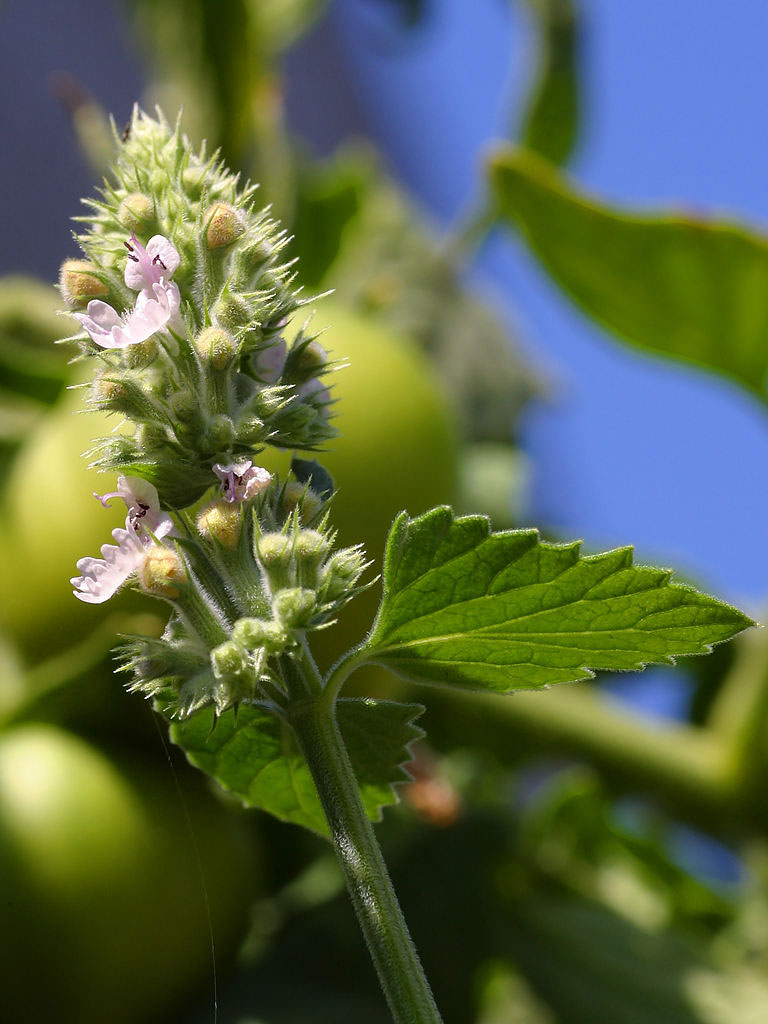
| Nepeta cataria – "true catnip" | |
| Scientific classification | |
| Kingdom: | Plantae |
| Clade: | Tracheophytes |
| Clade: | Angiosperms |
| Clade: | Eudicots |
| Clade: | Asterids |
| Order: | Lamiales |
| Family: | Lamiaceae |
| Subfamily: | Nepetoideae |
| Tribe: | Mentheae |
| Genus: | Nepeta L. (1753) |
| Synonyms[1] | |
| |
Nepeta is a genus of flowering plants in the family Lamiaceae. The genus name, from Latin nepeta (“catnip”), is reportedly in reference to Nepete, an ancient Etruscan city.[2] There are 295 accepted species.[1]
The genus is native to Europe, Asia, and Africa, and has also naturalized in North America.[3]
Some members of this group are known as catnip or catmint because of their effect on house cats – the nepetalactone contained in some Nepeta species binds to the olfactory receptors of cats, typically resulting in temporary euphoria.[4]
Description
[edit]Most of the species are herbaceous perennial plants, but some are annuals. They have sturdy stems with opposite heart-shaped, green to gray-green leaves.[5] Nepeta plants are usually aromatic in foliage and flowers.
The tubular flowers can be lavender, blue, white, pink, or lilac, and spotted with tiny lavender-purple dots. The flowers are located in verticillasters grouped on spikes; or the verticillasters are arranged in opposite cymes, racemes, or panicles – toward the tip of the stems.[5]
The calyx is tubular or campanulate, they are slightly curved or straight, and the limbs are often 2-lipped with five teeth. The lower lip is larger, with 3-lobes, and the middle lobe is the largest. The flowers have 4 hairless stamens that are nearly parallel, and they ascend under the upper lip of the corolla. Two stamen are longer and stamens of pistillate flowers are rudimentary. The style protrudes outside of the mouth of the flowers.[5]
The fruits are nutlets, which are oblong-ovoid, ellipsoid, ovoid, or obovoid in shape. The surfaces of the nutlets can be slightly ribbed, smooth or warty.[5]
Species
[edit]295 species are accepted.[1]
- Nepeta adenoclada Bornm.
- Nepeta adenophyta Hedge
- Nepeta adenothrix (Rech.f.) Jamzad & Serpoosh.
- Nepeta agrestis Loisel.
- Nepeta alaghezi Pojark.
- Nepeta alatavica Lipsky
- Nepeta algeriensis Noë
- Nepeta allotria Rech.f.
- Nepeta altimurana (Rech.f.) Jamzad & Serpoosh.
- Nepeta amicorum Rech.f.
- Nepeta amoena Stapf
- Nepeta anamurensis Gemici & Leblebici
- Nepeta annua Pall.
- Nepeta apuleji Ucria
- Nepeta archibaldii Rech.f.
- Nepeta argolica Bory & Chaub.
- Nepeta assadii Jamzad
- Nepeta assurgens Hausskn. & Bornm.
- Nepeta astorensis Shinwari & Chaudhri
- Nepeta atlantica Ball
- Nepeta autraniana Bornm.
- Nepeta avromanica Jamzad & Serpoosh.
- Nepeta azurea R.Br. ex Benth.
- Nepeta badachschanica Kudrjasch.
- Nepeta bakhtiarica Rech.f.
- Nepeta balouchestanica Jamzad & Ingr.
- Nepeta barbara Maire
- Nepeta barfakensis Rech.f.
- Nepeta batalica Reshi
- Nepeta baytopii Hedge & Lamond
- Nepeta bazoftica Jamzad
- Nepeta bellevii Prain
- Nepeta betonicifolia C.A.Mey.
- Nepeta binaloudensis Jamzad
- Nepeta bituminosa (Fisch. & C.A.Mey.) Jamzad & Serpoosh.
- Nepeta bodeana Bunge
- Nepeta × boissieri Willk.
- Nepeta bokhonica Jamzad
- Nepeta bombaiensis Dalzell
- Nepeta bornmuelleri Hausskn. ex Bornm.
- Nepeta botschantzevii Czern.
- Nepeta brachyantha Rech.f. & Edelb.
- Nepeta bracteata Benth.
- Nepeta brevifolia C.A.Mey.
- Nepeta bucharica Lipsky
- Nepeta caerulea Aiton
- Nepeta caesarea Boiss.
- Nepeta campestris Benth.
- Nepeta camphorata Boiss. & Heldr.
- Nepeta × campylantha Rech.f.
- Nepeta cataria L.
- Nepeta cephalotes Boiss.
- Nepeta chionophila Boiss. & Hausskn.
- Nepeta ciliaris Benth.
- Nepeta cilicica Boiss. ex Benth.
- Nepeta clarkei Hook.f.
- Nepeta coerulescens Maxim.
- Nepeta complanata Dunn
- Nepeta concolor Boiss. & Heldr. ex Benth.
- Nepeta conferta Hedge & Lamond
- Nepeta congesta Fisch. & C.A.Mey.
- Nepeta connata Royle ex Benth.
- Nepeta consanguinea Pojark.
- Nepeta crinita Montbret & Aucher ex Benth.
- Nepeta crispa Willd.
- Nepeta curviflora Boiss.
- Nepeta cyanea Steven
- Nepeta cyrenaica Quézel & Zaffran
- Nepeta czegemensis Pojark.
- Nepeta czukavinae Kamelin & Lazkov
- Nepeta daenensis Boiss.
- Nepeta decolorans Hemsl.
- Nepeta deflersiana Schweinf. ex Hedge
- Nepeta densiflora Kar. & Kir.
- Nepeta dentata C.Y.Wu & S.J.Hsuan
- Nepeta denudata Benth.
- Nepeta depauperata Benth.
- Nepeta dirmencii Yild. & Dinç
- Nepeta discolor Royle ex Benth.
- Nepeta distans Royle
- Nepeta drassiana Reshi
- Nepeta dschuparensis Bornm.
- Nepeta duthiei Prain & Mukerjee
- Nepeta elegans Lipsky
- Nepeta elegantissima Jamzad & Serpoosh.
- Nepeta elliptica Royle ex Benth.
- Nepeta elymaitica Bornm.
- Nepeta erecta (Royle ex Benth.) Benth.
- Nepeta eremokosmos Rech.f.
- Nepeta eremophila Hausskn. & Bornm.
- Nepeta eriosphaera Rech.f. & Köie
- Nepeta eriostachya Benth.
- Nepeta ernesti-mayeri Diklic & V.Nikolic
- Nepeta everardii S.Moore
- Nepeta × faassenii Bergmans ex Stearn (N. nepetella × N. racemosa)
- Nepeta flavida Hub.-Mor.
- Nepeta floccosa Benth.
- Nepeta foliosa Moris
- Nepeta fordii Hemsl.
- Nepeta formosa Kudrjasch.
- Nepeta freitagii Rech.f.
- Nepeta glechomifolia (Dunn) Hedge
- Nepeta gloeocephala Rech.f.
- Nepeta glomerata Montbret & Aucher ex Benth.
- Nepeta glomerulosa Boiss.
- Nepeta glutinosa Benth.
- Nepeta gontscharovii Kudrjasch.
- Nepeta govaniana (Wall. ex Benth.) Benth.
- Nepeta graciliflora Benth.
- Nepeta granatensis Boiss.
- Nepeta grandiflora M.Bieb.
- Nepeta grata Benth.
- Nepeta griffithii Hedge
- Nepeta gumerica Reshi
- Nepeta hedgei Freitag
- Nepeta heinzii Idrees
- Nepeta heliotropifolia Lam.
- Nepeta hemsleyana Oliv. ex Prain
- Nepeta henanensis C.S.Zhu
- Nepeta hindostana (B.Heyne ex Roth) Haines
- Nepeta hispanica Boiss. & Reut.
- Nepeta hormozganica Jamzad
- Nepeta humilis Benth.
- Nepeta hymenodonta Boiss.
- Nepeta hystrix Greuter
- Nepeta iranshahrii Rech.f.
- Nepeta iraqensis Dirmenci
- Nepeta iraqo-iranica Haloob, Bordbar & Qader
- Nepeta isaurica Boiss. & Heldr. ex Benth.
- Nepeta ispahanica Boiss.
- Nepeta italica L.
- Nepeta jakupicensis Micevski
- Nepeta jomdaensis H.W.Li
- Nepeta juncea Benth.
- Nepeta knorringiana Pojark.
- Nepeta koeieana Rech.f.
- Nepeta kokamirica Regel
- Nepeta kokanica Regel
- Nepeta komarovii E.A.Busch
- Nepeta kotschyi Boiss.
- Nepeta kurdica Hausskn. & Bornm.
- Nepeta kurramensis Rech.f.
- Nepeta ladanolens Lipsky
- Nepeta laevigata (D.Don) Hand.-Mazz.
- Nepeta lagopsis Benth.
- Nepeta lamiifolia Willd.
- Nepeta lamiopsis Benth. ex Hook.f.
- Nepeta lancefolia Reshi
- Nepeta lasiocephala Benth.
- Nepeta latifolia DC.
- Nepeta laxiflora Benth.
- Nepeta leucolaena Benth. ex Hook.f.
- Nepeta linearis Royle ex Benth.
- Nepeta lipskyi Kudrjasch.
- Nepeta longibracteata Benth.
- Nepeta longiflora Vent.
- Nepeta longituba Pojark.
- Nepeta lophanthus (L.) Fisch. ex Loew
- Nepeta ludlow-hewittii Blakelock
- Nepeta macrosiphon Boiss.
- Nepeta mahanensis Jamzad & M.Simmonds
- Nepeta manchuriensis S.Moore
- Nepeta mariae Regel
- Nepeta margallaica A.Sultan, Jamzad & A.Khan
- Nepeta maussarifii Lipsky
- Nepeta melissifolia Lam.
- Nepeta membranifolia C.Y.Wu
- Nepeta menthoides Boiss. & Buhse
- Nepeta meyeri Benth.
- Nepeta michauxii Briq.
- Nepeta micrantha Bunge
- Nepeta minuticephala Jamzad
- Nepeta mirzayanii Rech.f. & Esfand.
- Nepeta monocephala Rech.f.
- Nepeta monticola Kudr.
- Nepeta multibracteata Desf.
- Nepeta multicaulis Mukerjee
- Nepeta multifida L.
- Nepeta narynensis Kamelin & Lazkov
- Nepeta natanzensis Jamzad
- Nepeta nawarica Rech.f.
- Nepeta neocalycina Idrees
- Nepeta nepalensis Spreng.
- Nepeta nepetella L.
- Nepeta nepetoides (Batt. ex Pit.) Harley
- Nepeta nervosa Royle ex Benth.
- Nepeta nivalis Benth.
- Nepeta nuda L.
- Nepeta obtusicrena Boiss. & Kotschy ex Hedge
- Nepeta odorifera Lipsky
- Nepeta olgae Regel
- Nepeta orphanidea Boiss.
- Nepeta ouroumitanensis Franch.
- Nepeta oxyodonta Boiss.
- Nepeta pabotii Mouterde
- Nepeta padamica Reshi
- Nepeta paktiana Rech.f.
- Nepeta pamirensis Franch.
- Nepeta parnassica Heldr. & Sart.
- Nepeta paucifolia Mukerjee
- Nepeta persica Boiss.
- Nepeta petraea Benth.
- Nepeta phyllochlamys P.H.Davis
- Nepeta pilinux P.H.Davis
- Nepeta pinetorum Aitch. & Hemsl.
- Nepeta platystegia (Rech.f.) Jamzad & Serpoosh. ex Idrees
- Nepeta podlechii Rech.f.
- Nepeta podostachys Benth.
- Nepeta pogonosperma Jamzad & Assadi
- Nepeta polyodonta Rech.f.
- Nepeta praetervisa Rech.f.
- Nepeta prattii H.Lév.
- Nepeta prostrata Benth.
- Nepeta pseudokokanica Pojark.
- Nepeta pubescens Benth.
- Nepeta pungens (Bunge) Benth.
- Nepeta racemosa Lam.
- Nepeta raphanorhiza Benth.
- Nepeta rechingeri Hedge
- Nepeta rivularis Bornm.
- Nepeta roopiana Bordz.
- Nepeta rotundifolia (Benth.) Benth.
- Nepeta rtanjensis Diklic & Milojevic
- Nepeta rubella A.L.Budantzev
- Nepeta rugosa Benth.
- Nepeta saccharata Bunge
- Nepeta sahandica Noroozi & Ajani
- Nepeta santoana Popov
- Nepeta saturejoides Boiss.
- Nepeta schiraziana Boiss.
- Nepeta schmidii Rech.f.
- Nepeta schrenkii (Levin) Sennikov
- Nepeta schtschurowskiana Regel
- Nepeta schugnanica Lipsky
- Nepeta scordotis L.
- Nepeta septemcrenata Ehrenb. ex Benth.
- Nepeta sessilifolia Bunge
- Nepeta sessilis C.Y.Wu & S.J.Hsuan
- Nepeta shahmirzadensis Assadi & Jamzad
- Nepeta sheilae Hedge & R.A.King
- Nepeta sibirica L.
- Nepeta sorgerae Hedge & Lamond
- Nepeta sosnovskyi Askerova
- Nepeta souliei H.Lév.
- Nepeta spathulifera Benth.
- Nepeta sphaciotica P.H.Davis
- Nepeta spruneri Boiss.
- Nepeta stachyoides Coss. ex Batt.
- Nepeta staintonii Hedge
- Nepeta stenantha Kotschy & Boiss.
- Nepeta stewartiana Diels
- Nepeta straussii Hausskn. & Bornm.
- Nepeta stricta (Banks & Sol.) Hedge & Lamond
- Nepeta suavis Stapf
- Nepeta subcaespitosa Jehan
- Nepeta subhastata Regel
- Nepeta subincisa Benth.
- Nepeta subintegra Maxim.
- Nepeta subnivalis (Lipsky) Sennikov
- Nepeta subsessilis Maxim.
- Nepeta sudanica F.W.Andrews
- Nepeta sulfuriflora P.H.Davis
- Nepeta sulphurea C. Koch
- Nepeta sungpanensis C.Y.Wu
- Nepeta supina Steven
- Nepeta taxkorganica Y.F.Chang
- Nepeta tenuiflora Diels
- Nepeta tenuifolia Benth.
- Nepeta teucriifolia Willd.
- Nepeta teydea Webb & Berthel.
- Nepeta tibestica Maire
- Nepeta × tmolea Boiss.
- Nepeta trachonitica Post
- Nepeta transiliensis Pojark.
- Nepeta trautvetteri Boiss. & Buhse
- Nepeta trichocalyx Greuter & Burdet
- Nepeta tschimganica (Lipsky) Jamzad & Serpoosh.
- Nepeta tuberosa L.
- Nepeta turcica (Dirmenci, Yıldız & Hedge) Jamzad & Serpoosh.
- Nepeta tytthantha Pojark.
- Nepeta uberrima Rech.f.
- Nepeta ucranica L.
- Nepeta veitchii Duthie
- Nepeta velutina Pojark.
- Nepeta viscida Boiss.
- Nepeta vivianii (Coss.) Bég. & Vacc.
- Nepeta wettsteinii Heinr.Braun
- Nepeta wilsonii Duthie
- Nepeta woodiana Hedge
- Nepeta wuana H.J.Dong, C.L.Xiang & Jamzad
- Nepeta yanthina Franch.
- Nepeta yazdiana (Rech.f.) Jamzad & Serpoosh.
- Nepeta yesoensis (Franch. & Sav.) B.D.Jacks.
- Nepeta zandaensis H.W.Li
- Nepeta zangezura Grossh.
Gallery
[edit]-
Flower spikes of Nepeta curviflora
Uses
[edit]Cultivation
[edit]Some Nepeta species are cultivated as ornamental plants. They can be drought tolerant – water conserving, often deer repellent, with long bloom periods from late spring to autumn. Some species also have repellent properties to insect pests, including aphids and squash bugs, when planted in a garden.[2]
Nepeta species are used as food plants by the larvae of some Lepidoptera (butterfly and moth) species including Coleophora albitarsella, and as nectar sources for pollinators, such as honey bees and hummingbirds.
- Selected ornamental species
- Nepeta cataria (catnip, catswort) – the "true catnip", cultivated as an ornamental plant, has become an invasive species in some habitats.
- Nepeta grandiflora (giant catmint, Caucasus catmint) – lusher than true catnip and has dark green leaves and dark blue flowers.
- Nepeta × faassenii (garden catmint) – a hybrid of garden source with gray-green foliage and lavender flowers. It is drought-tolerant and deer-resistant.[2] The cultivar 'Walker's Low' was named Perennial of the Year for 2007 by the Perennial Plant Association.[6][7]
- Nepeta racemosa (raceme catnip) – commonly used in landscaping.[6] It is hardy, rated for USDA hardiness zone 5b.[8]
References
[edit]- ^ a b c Nepeta L. Plants of the World Online. Retrieved 15 April 2024.
- ^ a b c Missouri Botanical Garden: Nepeta × faassenii. Accessed January 10, 2013
- ^ Leon L. Bram (1983). Robert S. Phillips, Norma H. Dickey (ed.). Funk & Wagnalls New Encyclopedia. Vol. 5. New York: Funk & Wagnalls. ISBN 978-0-8343-0051-4.
- ^ Herron, Scott (2003). "Catnip, Nepeta cataria, a Morphological Comparison of Mutant and Wild Type Specimens to Gain an Ethnobotanical Perspective". Economic Botany. 57 (1): 135–142. doi:10.1663/0013-0001(2003)057[0135:cncamc]2.0.co;2. S2CID 29287116.
- ^ a b c d "Nepeta". Flora of China. 17: 107.
- ^ a b "ornamental Outlook".
- ^ "msucares.com: sgnews".
- ^ Richard G. Hawke. "Chicago Botanic Garden Plant Evaluation Notes" (PDF). Archived (PDF) from the original on 2022-10-10.
Further reading
[edit]- Jacobs, Betty E.M. (1981). Growing and Using Herbs Successfully. Pownal, Vermont: Garden Way Publishing.
- Turner, Ramona (May 29, 2007). "How does catnip work its magic on cats?". Scientific American. Retrieved February 14, 2009.
External links
[edit]- GRIN Species Records of Nepeta
- Flora of Nepal: Nepeta'
- Drugs.com: Catnip
- "Nepetalactone: What is in catnip anyway?"
- HowStuffWorks, Inc.: How does catnip work?
- Sciencedaily.com: "Catnip Repels Mosquitoes More Effectively Than DEET" – reported at the 2001 American Chemical Society meeting.
Nepeta
View on GrokipediaTaxonomy
Etymology
The genus name Nepeta derives from the Latin nepeta, an ancient term for an aromatic herb, which is thought to reference the Etruscan city of Nepete (modern-day Nepi, Italy), located approximately 50 km north of Rome, where the plant may have been first identified or grown abundantly.[5] This etymological link highlights the plant's historical presence in central Italy, tying its nomenclature to regional botany rather than a descriptive trait.[6] In ancient Roman texts, nepeta appears as a medicinal herb; Pliny the Elder, in his Natural History (Book XX, Chapter 158), describes it as having properties to dispel chills when decocted in water, aiding women's menstruation, soothing summer heat, and repelling snakes through its smoke and odor, recommending it be placed under the bed for those sleeping in fear.[7] This reference underscores nepeta's early recognition for both therapeutic and protective uses in classical herbalism. Common names such as "catmint" and "catnip" evolved specifically for Nepeta cataria, reflecting the plant's strong scent—due to compounds like nepetalactone—that attracts and stimulates domestic cats, a trait noted since at least the 13th century in English usage.[8] The species epithet cataria itself stems from Latin catus ("cat"), emphasizing this feline affinity, while "catnip" emerged in American English around 1712 as a blend of "cat" and "nip" (a variant of nepeta).[9]Classification
Nepeta is a genus of flowering plants in the family Lamiaceae, subfamily Nepetoideae, and tribe Mentheae, as established by the binomial nomenclature system.[10] The genus was first formally described and named by Carl Linnaeus in his Species Plantarum in 1753, marking its authoritative establishment in modern taxonomy.[11] Historically, several genera have been recognized as synonyms of Nepeta or involved in reclassifications of its species, reflecting evolving understandings of taxonomic boundaries. Notable synonyms at the genus level include Afridia Duthie, Marmoritis Benth., and Oxynepeta Bunge, with some species previously placed in these or transferred from related genera such as Glechoma (now often treated separately but historically overlapping in subtribe Nepetinae).[12] For instance, certain Asian species once classified under Marmoritis have been reincorporated into Nepeta based on morphological and molecular evidence, contributing to a more cohesive generic circumscription.[13] In 2025, a new species of Nepeta was described from Iran, further expanding the known diversity of the genus.[14] Molecular phylogenetic studies have clarified Nepeta's systematic relationships within tribe Mentheae, confirming its monophyly and placement in subtribe Nepetinae. A comprehensive analysis using chloroplast DNA (cpDNA) and nuclear ribosomal DNA (nrDNA) sequences positioned Nepeta as sister to a clade including genera like Agastache, Dracocephalum, Glechoma, Hymenocrater, Lophanthus, and Marmoritis, all sharing an origin in the Mediterranean to Central Asian region.[15] This subtribe Nepetinae is distinct from subtribe Menthinae, which encompasses genera such as Mentha (mints) and Clinopodium (calaminths), highlighting divergent evolutionary lineages within the tribe despite shared mint-family traits. More recent molecular investigations up to 2024, incorporating expanded sampling and additional markers like ITS and ETS, have reinforced Nepeta's integrity while noting polyphyly in allied genera like Lophanthus and Hymenocrater, some of which may warrant synonymy under broader concepts but not directly affecting Nepeta's core delimitation.[13]Description
Morphology
Nepeta plants are primarily herbaceous perennials, though some species are annuals or subshrubs, typically forming clumps or spreading mounds with sturdy, square stems that can reach 1-1.5 meters in height.[16][2] The stems are often branched, erect, and covered in fine hairs, giving them a grayish or green appearance, and they belong to the Lamiaceae family, which is characterized by such quadrangular stems.[17][18] The leaves of Nepeta are opposite, simple, and typically heart-shaped to ovate or triangular, measuring 2-5 cm in length, with serrate or toothed margins.[16][2] They are green to gray-green, often soft and downy, especially on the undersides, and covered in aromatic glands that release a minty scent when crushed.[17] Flowers are arranged in verticillasters that form dense spikes, cymes, racemes, or panicles at the stem tips, with each tubular corolla 1-2 cm long and two-lipped: the upper lip flat or concave (often two-lobed), and the lower lip larger and three-lobed.[16] Colors range from lavender, blue, and lilac to white or pink, featuring four exserted stamens and a tubular or campanulate calyx.[2][18] Blooming occurs from late spring to late summer, depending on the species.[17] The fruits consist of four nutlets per flower, which are oblong-ovoid to obovoid, smooth or slightly hairy, and often ribbed on the inner surface.[16] The overall foliage of Nepeta is aromatic due to essential oils, such as nepetalactone in some species.[2]Reproduction
Nepeta species generally initiate flowering in late spring and continue blooming through autumn, with the timing influenced by photoperiodic responses to lengthening days and moderate temperatures around 18–23°C (65–75°F). This extended flowering period allows for prolonged reproductive opportunities, as the tubular, bilabiate flowers—often lavender to white—are adapted for insect visitation.[20][21][22] Pollination in Nepeta is primarily entomophilous, with nectar-rich flowers attracting a diverse array of insects including bees, butterflies, wasps, and flies, which facilitate pollen transfer from the four stamens to the stigma. While many species are self-compatible and capable of autogamy in the absence of pollinators, outcrossing predominates to achieve higher seed set, promoting genetic diversity within populations. The flowers briefly reference the morphological features detailed elsewhere, such as their zygomorphic structure that guides pollinator behavior.[20][23] Following successful pollination, each flower develops a schizocarp fruit containing four small, ovoid nutlets that serve as the primary dispersal units. Seed production can be prolific, enabling rapid colonization, though germination often requires light exposure and temperatures of 21–27°C (70–80°F).[24] In addition to sexual reproduction, several Nepeta species propagate vegetatively through rhizomes or stolons, allowing clonal expansion in favorable habitats without reliance on seed dispersal.[25] Hybridization occurs frequently among Nepeta species, particularly in cultivated settings where geographic barriers are absent, leading to fertile or sterile offspring with novel traits. A prominent example is Nepeta × faassenii, a sterile hybrid resulting from crosses between N. racemosa and N. nepetella (or occasionally N. nervosa), valued in horticulture for its compact habit and prolonged blooms but propagated only vegetatively due to seed infertility. Such hybrids underscore the genus's adaptability but can complicate taxonomic identification in naturalized populations.[26][27]Distribution and Habitat
Native Range
The genus Nepeta is primarily native to temperate regions of Eurasia, extending from the Mediterranean Basin through southwestern and central Asia to eastern regions including the Himalayas and China, as well as Macaronesia and parts of eastern tropical Africa.[1] In Europe, species occur from Mediterranean zones in southern and eastern areas northward into temperate climates, while in North Africa, the range includes northwestern Morocco eastward to Egypt.[28] This broad distribution reflects the genus's adaptation to diverse Old World landscapes prior to human-mediated dispersal. Southwestern Asia stands out as a major center of diversity for Nepeta, particularly in Iran (approximately 70–80 species, many endemic) and Turkey (approximately 35–40 species).[29][30][31] The Mediterranean Basin is another hotspot, harboring numerous endemics such as Nepeta argolica in Greece and various Anatolian taxa, contributing to the region's high floristic richness.[32] These patterns underscore the genus's evolutionary ties to the Irano-Anatolian biodiversity hotspot, where endemism is particularly pronounced in mountainous terrains.[33] Biogeographically, Nepeta species thrive in temperate and subtropical climates, spanning elevations from sea level to over 4,000 meters, as seen in high-altitude endemics in central Asia and the Himalayas.[34] This vertical range allows occupation of varied habitats, from coastal scrub to alpine meadows. Historical distribution can be inferred from ancient uses within the Roman Empire, where species like N. cataria were cultivated and valued medicinally around the city of Nepete (modern Nepi, Italy), indicating early presence in Mediterranean Europe.[35]Introduced Ranges
Nepeta cataria, commonly known as catnip, was introduced to North America by European settlers in the 17th century for its medicinal and herbal properties.[36] It arrived via plant cuttings and seeds carried by colonists, quickly escaping cultivation to establish populations across the continent. Similarly, the species has been introduced to Australia and New Zealand, where it first appeared in the late 19th century through European colonization and trade.[37][38] In these regions, N. cataria has become widely naturalized, thriving in temperate climates similar to its native Eurasian origins. It is now established across much of the United States and Canada, as well as in southern and eastern Australia (including Victoria, South Australia, New South Wales, and Tasmania) and both North and South Islands of New Zealand.[39][40][37] While generally not highly aggressive, it is considered invasive in certain parts of North America, such as Kentucky, West Virginia, and areas like the Midwest where it can form dense stands in disturbed sites, potentially displacing native vegetation.[41][42] The spread of N. cataria is largely due to its popularity in ornamental gardens and traditional herbal remedies, which facilitated its escape into wild areas. Its adaptability to disturbed habitats, such as roadsides, waste grounds, and old fields, has enabled rapid colonization without requiring pristine conditions.[43][44] Today, N. cataria is widespread in temperate zones globally, but management efforts are underway in sensitive ecosystems like national parks to prevent further expansion. In places such as Antietam National Battlefield, control measures include manual removal and preventing seed set to mitigate its impact on native flora.[41][45]Diversity and Species
Number of Species
The genus Nepeta encompasses approximately 296 accepted species worldwide, as documented in the latest compilation by Plants of the World Online (2024), though taxonomic revisions continue to refine this count.[1] Most species are herbaceous perennials, comprising the dominant life form, while a smaller proportion consists of annuals and subshrubs.[29] Endemism is particularly pronounced in the Mediterranean and Irano-Turanian regions, where nearly half of the taxa in areas like Turkey are endemic, including numerous microendemics confined to montane habitats. For instance, as of 2022, approximately 44 Nepeta taxa have been recorded in Turkey, of which 20 are endemic.[46] Taxonomic challenges persist due to morphological similarities among species, but recent advances in DNA barcoding and phylogenetic analyses using markers like ITS and chloroplast genes have facilitated species splits and mergers, elevating the recognized count from around 250 in the early 2000s.[47][48] These molecular approaches have clarified monophyletic groups within the genus and resolved previously ambiguous classifications.[49]Notable Species
Nepeta cataria, commonly known as catnip, is a short-lived perennial herb in the Lamiaceae family, growing to a height of 2 to 3 feet (60-90 cm) with a similar spread. It features erect, branched, square stems clad in opposite, triangular to heart-shaped, gray-green leaves up to 3 inches (7.6 cm) long, which are coarsely toothed and covered in fine hairs. The small, two-lipped flowers, white with pale purple or pink spots on the lower lip, appear in dense whorls forming terminal spikes from late spring through fall. This species is renowned for its attraction to domestic cats, induced by the volatile compound nepetalactone in its leaves and stems, which elicits behaviors such as rolling and rubbing in about two-thirds of cats.[20][17][39] Nepeta racemosa, or eastern catmint, is a low-growing perennial native to the Caucasus region, Turkey, and northern Iran. It typically reaches 12 to 18 inches (30-45 cm) in height with a spread up to 2 feet (60 cm), forming spreading clumps of decumbent stems with aromatic, gray-green foliage. The plant produces spikes of violet to lilac-blue flowers in late spring to summer. Its minty-scented leaves contribute to deer and rabbit resistance, making it a favored choice for gardens.[50][51][52] Nepeta grandiflora, the large-flowered catmint, is a clump-forming perennial originating from the Himalayan region. It grows upright to 2 to 3 feet (60-90 cm) tall, bearing slightly hairy, gray-green leaves and vibrant blue to violet flowers in terminal clusters from summer into fall. This species is noted for its robust growth and showy blooms, adapted to mountainous environments.[53][54] Hybrids such as Nepeta × faassenii, a sterile cross between N. racemosa and N. nepetella developed in a Dutch nursery, exhibit compact, mounding habits reaching 1 to 2 feet (30-60 cm) tall and wide. These perennials produce abundant lavender-blue flowers from May to September, with no viable seed production due to sterility, promoting prolonged blooming without self-seeding. The cultivar 'Walker's Low' was named Perennial Plant of the Year in 2007 by the Perennial Plant Association for its reliability and landscape value.[26][27] Some Nepeta species face conservation challenges; for instance, N. nuda is listed as vulnerable in Switzerland and endangered in the Czech Republic due to habitat loss and limited distribution in parts of Europe.[55]Ecology
Chemical Compounds
Nepeta species are rich in bioactive chemical compounds, predominantly volatile essential oils concentrated in the leaves and stems. The primary compound is nepetalactone, an iridoid monoterpenoid that constitutes the main component of these oils and is responsible for eliciting behavioral responses in felines.[56][57] This bicyclic monoterpene features a fused cyclopentane ring and a lactone ring, with the molecular formula C10H14O2, and exists in stereoisomeric forms such as (Z,E)- and (E,Z)-nepetalactone, varying by species.[57][58] In addition to nepetalactone, essential oils from Nepeta contain other notable constituents, including the monoterpene oxide 1,8-cineole (also known as eucalyptol), the sesquiterpene β-caryophyllene, and the phenolic acid rosmarinic acid.[59][60] These compounds vary in concentration across species; for instance, N. cataria exhibits elevated nepetalactone levels (up to 80-90% of the oil), while others like N. sibirica may have higher proportions of 1,8-cineole (around 40%) and caryophyllene oxide (a derivative of β-caryophyllene, up to 20%).[61][59] Rosmarinic acid, often found in methanolic extracts rather than volatile oils, contributes antioxidant properties and is more abundant in roots and aerial parts of species such as N. multifida and N. cataria.[62][63] Essential oils are typically extracted via hydrodistillation or steam distillation, yielding 0.1-1% (v/w) from dried plant material, depending on species and harvest conditions.[59][64] Analysis by gas chromatography-mass spectrometry (GC-MS) has been widely employed to profile these oils, revealing their potential antimicrobial activities against pathogens like Staphylococcus aureus and Escherichia coli, attributed to the lipophilic nature of compounds such as nepetalactone and 1,8-cineole.[65][66] The biosynthesis of nepetalactone occurs specifically in glandular trichomes on the leaves, where it follows the iridoid monoterpenoid pathway initiated from geranyl pyrophosphate (GPP), derived from the methylerythritol phosphate (MEP) pathway in plastids.[58] Key enzymatic steps include the conversion of geraniol to 8-oxogeranial, followed by cyclization to nepetalactol and oxidation to nepetalactone, mediated by cytochrome P450 enzymes, iridoid synthases, and short-chain dehydrogenases.[58] This localized production enhances the plant's defensive capabilities through volatile emission.[67]Interactions with Animals
Nepeta species, particularly N. cataria (catnip), elicit a distinctive euphoric response in domestic cats due to nepetalactone, a compound that mimics feline facial pheromones and binds to specific olfactory receptors in the nasal tissue. This interaction triggers behaviors such as rolling, chin and cheek rubbing, head shaking, pawing at the ground, and vocalizing, interpreted as pleasurable or euphoric. Approximately 70% of domestic cats exhibit this response, which is genetically determined and absent in kittens under about six months old or in roughly 30% of adults lacking the relevant olfactory gene variants; the effect typically lasts 5 to 15 minutes before tolerance develops temporarily.[68][69] Behavioral experiments have documented these responses in controlled settings, where cats exposed to N. cataria extracts or plants consistently display active phases of rubbing and rolling followed by passive phases of lethargy or contentment, with no long-term adverse effects observed in typical exposures.[70][71] This attraction may serve an adaptive purpose, as the nepetalactone transferred to the cat's fur during rubbing acts as an insect repellent.[72] Beyond felines, Nepeta interacts with other animals through repellent and attractive properties. Nepetalactone effectively repels mosquitoes by activating irritant-sensing receptors like TRPA1, outperforming DEET in some assays.[73][74] The plant's flowers also attract butterflies as a nectar source, drawing species such as skippers and supporting pollinator biodiversity in gardens.[2][75] Nepeta's aromatic foliage and bitter taste render it unpalatable to mammalian herbivores, effectively deterring browsing by deer and rabbits in natural and cultivated settings.[76][20] While generally avoided, overconsumption by livestock such as cattle or sheep can lead to mild gastrointestinal upset due to the plant's essential oils, though toxicity is rated low and poisoning incidents are rare.[77]Pollination and Dispersal
Nepeta species are primarily pollinated by insects and, in some cases, birds, with flowers exhibiting adaptations that favor long-tongued visitors such as tubular corollas that restrict access to nectar deep within the bloom.[40] Primary pollinators include Hymenoptera like honey bees (Apis mellifera) and bumble bees (Bombus spp.), which are drawn to the abundant pollen and nectar rewards; these flowers provide high-sugar nectar that supports bee colony nutrition during foraging periods.[78] Lepidoptera, particularly butterflies, also serve as effective pollinators, transferring pollen between flowers as they feed on nectar from the lavender-blue to white blooms.[79] Hummingbirds occasionally visit certain Nepeta species, such as N. sibirica and N. x faassenii, attracted to the nectar-rich flowers, though their role is less dominant compared to insect pollinators in native ranges.[27] Pollinator visitation rates in N. cataria increase with larger patch sizes, reducing pollinator limitation and enhancing cross-pollination efficiency in natural populations.[80] Seed dispersal in Nepeta occurs mainly through anemochory and zoochory, facilitated by the plant's small, lightweight nutlets that are typical of the Lamiaceae family.[81] Wind dispersal (anemochory) is prominent, as the dry, obovoid nutlets—often smooth or slightly angled and weighing around 0.7 mg—are easily carried by air currents in open habitats, allowing spread over short to moderate distances.[82] Zoochory, particularly epizoochory, involves nutlets adhering to animal fur or feathers via mucilage produced upon wetting, enabling transport by mammals or birds. In drier environments, barochory (gravity dispersal) contributes, with nutlets falling near the parent plant and relying on subsequent disturbance for relocation.[32] These pollination and dispersal strategies play a key ecological role by integrating Nepeta into broader pollinator networks, where the genus supports biodiversity through consistent nectar and pollen availability across flowering seasons, benefiting rare and native bee species in both native and introduced ranges.[79] In invasive contexts, such as with N. cataria in North America, effective seed dispersal via wind and animals facilitates rapid colonization, altering local plant communities and potentially outcompeting native flora while still providing resources for generalist pollinators.[2]Human Uses
Ornamental Cultivation
Nepeta species, commonly known as catmints, are widely cultivated as ornamental perennials for their attractive lavender-blue flowers, aromatic foliage, and low-maintenance qualities in garden landscapes. Propagation can be achieved through seeds, which benefit from cold stratification for 2-4 weeks to improve germination rates of around 50%, followed by sowing in spring in well-drained seed trays kept moist at 60-70°F; cuttings taken in spring or early summer from 3-4 inch stem tips rooted in a perlite-soil mix under bright, indirect light; or division of established clumps in early spring or fall, separating the root ball and replanting immediately at the same depth.[83][84][85] These plants thrive in well-drained soils ranging from loamy to sandy or rocky, with a preference for neutral to slightly alkaline pH, and perform best in full sun receiving at least six hours of direct sunlight daily, though they tolerate partial shade in hotter climates. Once established, Nepeta is highly drought-tolerant, requiring deep watering only during prolonged dry spells, and its adaptability makes it suitable for borders, groundcovers, or container plantings. Most varieties are hardy in USDA zones 3-9, exhibiting resilience to cold winters and summer heat.[2][84][52][75] Pruning enhances ornamental value by promoting bushier growth and extended blooming; after the first flush of flowers in late spring or early summer, shear plants back by one-third to encourage a second bloom period into fall, and cut stems to 2-3 inches above ground in late fall to tidy the plant for winter. Popular compact hybrids include Nepeta × faassenii 'Walker's Low', which reaches 18-24 inches tall and is ideal for border edges or mass plantings as a deer-resistant groundcover, while taller selections like 'Six Hills Giant' suit back-of-border positions for vertical interest. Nepeta generally experiences minimal pest and disease issues due to its aromatic foliage, which also deters deer and rabbits effectively.[2][84][27][75][40]Medicinal and Culinary Uses
Nepeta species, particularly N. cataria, have been employed in traditional European folk medicine for centuries, with records of use in France, England, and North America for treating various ailments. Teas prepared from the leaves and flowers of N. cataria have historically been used to alleviate digestive issues such as stomach upset and diarrhea, owing to the plant's spasmolytic and myorelaxant properties. These infusions have also been applied for relieving anxiety, colds, and flu symptoms, including fever and coughs, due to their expectorant and diaphoretic effects. Additionally, nepetalactone, a key compound in the essential oil, contributes to sedative and antispasmodic actions, supporting its traditional role in calming nervousness and easing respiratory conditions like asthma.[86][87][88][89] Beyond N. cataria, numerous other Nepeta species have traditional medicinal uses across Eurasia and Africa. For instance, species like N. sibthorpii and N. racemosa are employed in Middle Eastern and Mediterranean folk medicine for treating respiratory disorders, gastrointestinal complaints, and skin conditions, attributed to their anti-inflammatory, antimicrobial, and antioxidant compounds such as flavonoids, phenolics, and terpenoids. Reviews indicate over 100 Nepeta species exhibit pharmacological activities, including analgesic, antidiabetic, and neuroprotective effects, with ongoing phytochemical research as of 2025 exploring their potential in modern therapeutics.[90][91] In culinary applications, the leaves of Nepeta cataria impart a mint-like flavor and are incorporated fresh or dried into salads, soups, stews, and sauces as an aromatic herb. Essential oils from lemon catnip (N. cataria var. citriodora) have been utilized in the production of certain liqueurs, vermouth, and other alcoholic beverages, as well as in soft drinks and herbal teas, enhancing their flavor profiles due to volatile compounds like citral. These uses leverage the plant's volatile compounds, such as nepetalactones in standard varieties, which provide a herbaceous, minty aroma similar to other Lamiaceae family members.[92][93][94] Modern research has explored the antimicrobial and anti-inflammatory properties of Nepeta cataria extracts and essential oils, demonstrating activity against various bacteria and fungi, which supports potential therapeutic applications. Studies indicate antioxidant and analgesic effects, with hepatoprotective benefits observed in models of liver injury. However, clinical trials specifically for conditions like irritable bowel syndrome (IBS) remain limited as of 2025, though the antispasmodic qualities suggest possible benefits for gastrointestinal disorders. Regarding safety, Nepeta cataria is generally considered safe for short-term use in adults at dosages of 1-2 grams of dried herb per day, but it should be avoided during pregnancy due to potential uterine stimulation.[95][65][96][97][98]Other Applications
Nepeta species, particularly Nepeta cataria (catnip), have found applications in pest control due to the compound nepetalactone, which exhibits strong repellent properties against mosquitoes and other insects. Scientific studies have demonstrated that essential oils from N. cataria and purified nepetalactone isomers achieve over 95% repellency against Aedes aegypti mosquitoes in laboratory assays, outperforming or matching synthetic repellents like DEET in duration and efficacy.[99] This repellency stems from nepetalactone's activation of the TRPA1 irritant receptor in insects, deterring feeding without affecting humans.[100] Commercial products incorporating catnip oil, such as sprays for livestock, have shown 99% effectiveness in repelling blood-sucking flies like stable flies on cattle, providing a natural alternative to chemical insecticides in agricultural settings.[101] In gardens, catnip-based sachets and plantings are used to deter cockroaches, mosquitoes, and other pests without toxicity to humans or pets.[102] In industrial applications, essential oils derived from Nepeta species contribute to the fragrance and cosmetic sectors. Components like phytol, coumarin, and eucalyptol in N. cataria extracts are utilized in perfumes, soaps, shampoos, and detergents for their aromatic profiles, enhancing scent stability and appeal.[87] Additionally, flowers and plant parts of N. cataria serve as sources for natural dyes, producing yellow hues suitable for textile coloring in traditional and eco-friendly dyeing practices.[103] Environmentally, certain Nepeta hybrids, such as Nepeta x faassenii (catmint), are employed for erosion control in dryland and arid regions due to their drought tolerance and robust root systems. These perennials stabilize slopes in lean, well-drained soils, thriving in full sun with minimal irrigation and helping prevent soil loss on steep banks or xeric landscapes.[104] In companion planting, catmint deters aphids, squash bugs, flea beetles, and cucumber beetles when interplanted with vegetables like squash and potatoes, reducing pest pressure through its repellent volatiles without the need for synthetic pesticides.[105] Culturally, N. cataria holds historical associations in folklore, particularly linked to witchcraft during periods of strong belief in sorcery, where it was harvested on St. John's Day for protective charms against evil.[106] In veterinary practice, catnip is used for behavioral management in cats, with its sedative effects—when ingested—helping to calm stressed, shy, or aggressive individuals in shelter settings, promoting eating and adjustment without pharmaceuticals.[107]References
- https://cales.[arizona](/page/Arizona).edu/yavapaiplants/SpeciesDetailForb.php?genus=Nepeta&species=cataria
- https://species.wikimedia.org/wiki/Nepeta_cataria
