


Community hub
Recent from talks
Contribute something
Nothing was collected or created yet.
Nikolas Rose
View on Wikipedia
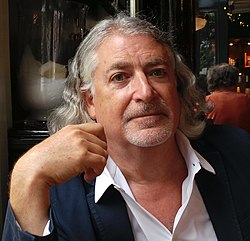
Nikolas Rose is a British sociologist and social theorist. He is Distinguished Honorary Professor at the Research School of Social Sciences,[1] in the College of Arts and Social Sciences at the Australian National University and Honorary Professor at the Institute of Advanced Studies at University College London.[2] From January 2012 to until his retirement in April 2021 he was Professor of Sociology in the Department of Global Health and Social Medicine (previously Social Science, Health & Medicine) at King's College London, having joined King's to found this new department. He was the co-founder and co-director of King's ESRC Centre for Society and Mental Health. Before moving to King's College London, he was the James Martin White Professor of Sociology at the London School of Economics, director and founder of LSE's BIOS Centre for the Study of Bioscience, Biomedicine, Biotechnology and Society from 2002 to 2011, and Head of the LSE Department of Sociology (2002–2006). He was previously Professor of Sociology at Goldsmiths, University of London, where he was Head of the Department of Sociology, Pro-Warden for Research and Head of the Goldsmiths Centre for Urban and Community Research and Director of a major evaluation of urban regeneration in South East London. He is a Fellow of the British Academy, the Royal Society of Arts and the Academy of Social Sciences, and a Fellow of the Royal Danish Academy of Science and Letters. He holds honorary doctorates from the University of Sussex, England, and Aarhus University, Denmark.
Key Information


Biography
[edit]Originally trained as a biologist, Nikolas Rose has done extensive research on the history and sociology of psychiatry, on mental health policy and risk, and on the social implications of recent developments in psychopharmacology. He has also published widely on the genealogy of subjectivity, on the history of empirical thought in sociology, and on changing rationalities of political power. He is particularly known for his development of the work of the French historian and philosopher Michel Foucault for the analysis of the politics of our present, and stimulating the revival of studies of governmentality in the Anglo-American world. His own approach to these issues was set out in his 1999 book Powers of Freedom: Reframing Political Thought.[3]
His first book, The Psychological Complex,[4] published in 1985, pioneered a new way of understanding the social history and implications of the discipline of psychology. This was followed in 1996 by Inventing Our Selves: Psychology, Power and Personhood and in 1989 by Governing the Soul: The Shaping of the Private Self. These three books are widely recognised as founding texts in a new way of understanding and analysing the links between expertise, subjectivity and political power. Rose argues that the proliferation of the 'psy' disciplines has been intrinsically linked with transformations in governmentality, in the rationalities and technologies of political power in 'advanced and liberal democracies'. (See also governmentality for a description of Rose's development of Foucault's concepts).
In 1989, he founded the History of the Present Research Network, an international network of researchers whose work was influenced by the writings of Michel Foucault. Together with Paul Rabinow, he edited the Fourth Volume of Michel Foucault's Essential Works.
In November 2001, he was listed by The Guardian newspaper as one of the top five UK based social scientists[5] on the basis of a twenty-year analysis of citations to research papers, and the most cited UK based sociologist.[citation needed]
For six years he was managing editor of the journal Economy & Society, one of the UK's leading interdisciplinary journal of social science, and he is a founder and co-editor of BioSocieties: An interdisciplinary journal for social studies of life sciences.
In 2007 he was awarded an ESRC Professorial Research Fellowship – a three-year project entitled 'Brain, Self and Society in the 21st Century'.[6] In 2013, writing with Joelle Abi-Rached, he published Neuro: the new brain sciences and the management of the mind. He has long advocated for 'revitalizing' the social and human sciences through a 'critical friendship' with the life sciences, setting out the nature and implications of his 'cartography of the present' in a number of widely cited papers and in The Politics of Life Itself, published in 2007.
Throughout his academic career he has been a critical analyst of psychiatry. His first book on this topic, The Power of Psychiatry, a collection edited together with Peter Miller was published in 1986. His most recent book Our Psychiatric Future: The Politics of Mental Health was published by Polity Press in October 2018. His recent work has been on the social shaping of mental distress and its biopolitical implications. His book The Urban Brain: Mental Health in the Vital City, written with Des Fitzgerald, was published by Princeton University Press in 2022. His most recent book, Questioning Humanity, Being Human in a Posthuman Age, written with Thomas Osborne, was published in 2024.
Nikolas Rose has led many international collaborative research projects, including BIONET, a major collaboration of European and Chinese researchers on the ethical governance of biomedical research in China. He is the Chair of the Neuroscience and Society Network, an international network to encourage critical collaboration between social scientists and neuroscientists, which was funded for several years by the European Science Foundation.[7]
He was previously a member of the Nuffield Council on Bioethics where he was a member of the council's Working Party on Medical profiling and online medicine: the ethics of 'personalised healthcare' in a consumer age (2008–2010) and on Novel Neurotechnologies: intervening in the human brain.[8] He also served for several years as a member of the Royal Society's Science Policy Committee. He was co-director of the first publicly funded UK centre dedicated to synthetic biology based at Imperial College.[9] where he led a team examining the social, ethical, legal and political dimensions of this emerging field.[9][10] At King's he led a team of researchers exploring the social implications of new developments in biotechnology, and committed to the democratisation of scientific research and technological development, with a particular focus on synthetic biology and neurobiology. For many years he was a member of the Social and Ethical Division of the Human Brain Project,[11] where he led the Foresight Lab[12] based at King's College London which aimed to identify and evaluate the potential impact of the new knowledge and technologies produced by the Human Brain Project in neuroscience, neurology, computing and robotics, and also examined such issues as artificial intelligence and the political, security, intelligence and military uses of novel brain technologies.[13]
His work has been translated into many languages including Swedish, Danish, Finnish, German, Italian, French, Hungarian, Korean, Russian, Chinese, Japanese, Romanian, Portuguese and Spanish.
Selected publications
[edit]Books
[edit]- Questioning Humanity: Being human in a posthuman age, with Thomas Osborne (Edward Elgar, 2024)
- The Urban Brain: Mental Health in the Vital City, with Des Fitzgerald (Princeton University Press, 2022)
- Our Psychiatric Future: the politics of mental health, (Polity, 2018)
- Neuro: The New Brain Sciences and the Management of the Mind, with Joelle M. Abi-Rached (Princeton University Press, 2013)
- Governing the Present: Administering Economic, Social and Personal Life, with Peter Miller (Polity, 2008)
- The Politics of Life Itself: Biomedicine, Power, and Subjectivity in the Twenty-First Century, (PUP, 2007)
- Powers of Freedom: Reframing Political Thought (Cambridge University Press, 1999)
- Inventing Our Selves: Psychology, Power and Personhood (Cambridge University Press, 1996)
- Governing the Soul: The Shaping of the Private Self (Routledge, 1989, Second edition, Free Associations, 1999)
- The Psychological Complex: Psychology, Politics and Society in England, 1869–1939 (Routledge, 1985)
Chapters in edited collections (selected)
[edit]- 'Writing the History of the Present', in Jonathan Joseph, ed., Social Theory: A Reader. Edinburgh: Edinburgh University Press, 2005 (with Andrew Barry and Thomas Osborne) (Reprint of selections from Introduction to Foucault and Political Reason, 1996.)
- 'Biological Citizenship', in Aihwa Ong and Stephen Collier, eds., Global Assemblages: Technology, Politics and Ethics as Anthropological Problems, pp. 439–463. Oxford: Blackwell, 2005 (with Carlos Novas)
- Introduction to The Essential Foucault: Selections from Essential Works of Foucault, 1954–1984, New York: New Press, 2004 (with Paul Rabinow)
- 'Becoming Neurochemical Selves', in Nico Stehr, ed., Biotechnology, Commerce and Civil Society, Transaction Press, 2004
- 'The neurochemical self and its anomalies', in R. Ericson, ed., Risk and Morality, pp. 407–437. University of Toronto Press, 2003.
- 'Power and psychological techniques', in Y. Bates and R. House, eds., Ethically Challenged Professions, pp. 27–46. Ross-on-Wye: PCCS Books, 2003.
- 'Society, madness, and control', in A. Buchanan, ed., The Care of the Mentally Disordered Offender in the Community, pp. 3–25, Oxford: Oxford University Press (2001)
- 'At Risk of Madness', in T. Baker and J. Simon, eds., Embracing Risk: The Changing Culture of Insurance and Responsibility, pp. 209–237, Chicago: University of Chicago Press (2001)
Papers in refereed journals (selected)
[edit]- 'Towards neuroecosociality: mental health in adversity', Theory, Culture and Society, 2021: https://doi.org/10.1177%2F0263276420981614
- 'Revitalizing sociology: urban life and mental illness between history and the present', British Journal of Sociology, 67, 1, 138-160 (With Des Fitzgerald and Ilina Singh)
- 'Still like 'birds on the wire'', Economy and Society, 2017, 46, 3–4, 303–323
- Reading the Human Brain How the Mind Became Legible', Body and Society, 2016, 22, 2, 140-177: doi:10.1177/1357034X15623363
- 'Spatial Phenomenotechnics: Making space with Charles Booth and Patrick Geddes', Environment and Planning D: Society and Space, 2004, 22: 209–228 (with Thomas Osborne).
- 'Neurochemical selves', Society, November/December 2003, 41, 1, 46–59.
- 'Kontroll', Fronesis, 2003, Nr. 14–15, 82–101.
- 'The politics of life itself', Theory, Culture and Society (2001), 18(6): 1–30.
- 'Genetic risk and the birth of the somatic individual', Economy and Society, Special Issue on configurations of risk (2000), 29 (4): 484–513. (with Carlos Novas).
- 'The biology of culpability: pathological identities in a biological culture', Theoretical Criminology (2000), 4, 1, 5–34.
Notes
[edit]- ^ "Professor Nikolas Rose".
- ^ "Professor Nikolas Rose". 27 September 2021.
- ^ Rose, Nikolas (1999). Powers of Freedom. doi:10.1017/CBO9780511488856. ISBN 9780521650755.
- ^ "The psychological complex - Psychology, Politics and Society in England 1869-1939" (PDF). Archived from the original (PDF) on 12 September 2015.
- ^ ("Top 20 most highly cited people - SUOA 8: Social Sciences". The Guardian. 27 November 2001. Retrieved 30 March 2022.)
- ^ "BIOS - units - Research and expertise - Home". www.lse.ac.uk. Retrieved 29 April 2017.
- ^ "European Neuroscience and Society Network (ENSN) : European Science Foundation". archives.esf.org. Retrieved 15 April 2022.
- ^ "About the Working Party - Nuffield Bioethics". Nuffield Bioethics. Archived from the original on 8 August 2018. Retrieved 29 April 2017.
- ^ a b Sanderson, Katharine (12 May 2009). "Synthetic biology gets ethical". Nature News. doi:10.1038/news.2009.464.
- ^ Smith, Colin (22 December 2008). "New centre will spearhead UK research in synthetic biology". Imperial College London.
- ^ https://www.humanbrainproject.eu/social-ethical-reflective
- ^ https://www.kcl.ac.uk/research/the-human-brain-project-the-foresight-lab
- ^ ""Opinion on 'Responsible Dual Use". Political, Security, Intelligence and Military Research of Concern in Neuroscience and Neurotechnology'".
External links
[edit]
Nikolas Rose
View on GrokipediaEarly Life and Education
Training in Biology and Psychology
Nikolas Rose began his higher education at the University of Sussex in the 1960s, where he studied biology and conducted laboratory work on fruit flies under the supervision of geneticist John Maynard Smith.[5] This empirical training emphasized hands-on experimentation in genetics and development, grounding his early understanding of living systems in observable biological processes rather than abstract theorizing.[6] Following his biological studies, Rose transitioned into psychology, acquiring formal qualifications in the field while engaging in behavioral research.[6] He performed experiments with animals such as pigeons and rats, testing responses in controlled settings like key-pecking tasks and maze navigation, where outcomes often deviated from predicted patterns, highlighting the limits of deterministic models in behavior.[5] These investigations extended to human applications, including examinations of historical psychological measures like Alfred Binet's early intelligence testing in the late 19th and early 20th centuries, which relied on quantifiable assessments of cognitive function.[5] This foundational phase in biology and psychology instilled a commitment to empirical verification and causal mechanisms in the study of organisms and behavior, prioritizing direct observation and experimental data over interpretive frameworks.[2] Rose's exposure to discrepancies between theoretical expectations and actual biological and behavioral realities during the 1960s and 1970s fostered an analytical approach rooted in material evidence, which later intersected with broader inquiries into the human sciences.[5]Transition to Sociology
In the 1970s, Nikolas Rose, initially trained in biology and psychology, engaged with the era's intellectual radicalism by collaborating with critical psychologists to interrogate established disciplinary boundaries. This socio-political milieu, characterized by Marxist, feminist, and linguistic critiques, prompted a shift toward sociological inquiry, as Rose co-founded the independent journal Ideology and Consciousness in 1976 alongside like-minded scholars. The journal, described by Rose as a "Marxist journal of ideology, linguistics and feminism," served as a platform for developing radical approaches to psychology that rejected isolated disciplinary silos in favor of interconnected analyses of subjectivity and power.[2][7][8] This transition reflected a broader dissatisfaction with psychology's tendency toward individualistic explanations, incorporating sociological perspectives to highlight how ideological and social forces mediate psychological processes. Rose's early involvement emphasized hybrid models that integrated empirical observations of power dynamics—such as institutional influences on consciousness—with psychological phenomena, moving beyond biological reductionism to account for contextual contingencies in human conduct. Verifiable markers include the journal's inaugural issues from 1976 onward, which featured interdisciplinary essays probing these intersections without relying on deterministic causal chains.[2][6] Empirical evidence of this pivot appears in Rose's contemporaneous writings and editorial role, which prioritized sociological deconstructions of power in everyday psychological practices over purely experimental or hereditarian frameworks. For instance, contributions aligned with the journal's ethos examined how socio-political events of the decade, including labor movements and cultural upheavals, necessitated models acknowledging contingency and relationality in mental life, laying groundwork for later empirical genealogies of disciplinary power techniques.[8][9]Academic Career
Early Positions and Editorial Roles
Rose co-founded and served as an editor of Ideology and Consciousness, a radical journal launched in 1977 that ran until 1979 and examined intersections of ideology, psychology, and social power.[2] As part of the editorial collective, he contributed to issues such as No. 4 (Autumn 1978), alongside collaborators including Diana Adlam and Julian Henriques, fostering debates on mental measurement and social administration within Marxist and post-structuralist frameworks.[10] His 1979 article "The Psychological Complex: Mental Measurement and Social Administration" in the journal's fifth issue analyzed how psychological expertise shaped governance, drawing on historical case studies from early 20th-century Britain to argue for its role in administering populations beyond overt coercion.[11] These efforts established early networks among sociologists critiquing institutional power, emphasizing empirical analyses of discourse and practice over abstract theory. In parallel, Rose co-founded Politics and Power during the late 1970s and early 1980s, collaborating with scholars like Paul Hirst to explore non-state forms of political authority and subjectivity.[2][6] The journal advanced radical sociology by prioritizing problematics of government and expertise, influencing subsequent work on liberalism and control through collective editorial processes that integrated interdisciplinary contributions from history, philosophy, and social theory. This editorial activity, rooted in the post-1968 intellectual milieu, built empirical connections across UK academic circles, evidenced by its role in disseminating Foucault-inspired critiques amid declining Marxist orthodoxy.[12] Rose's initial academic foothold came as a lecturer at Goldsmiths College, University of London, where he began developing interdisciplinary approaches bridging biology, psychology, and sociology in the late 1970s.[13] This position enabled practical engagement with radical networks, supporting his editorial initiatives and early publications that grounded theoretical claims in archival and observational data on institutional practices. By facilitating collaborations outside traditional departments, these roles underscored a commitment to sociology as a tool for dissecting power relations empirically, rather than ideological advocacy.[2]Major Professorships and Directorships
Rose served as the Martin White Professor of Sociology at the London School of Economics (LSE) from 2002 until 2012.[2] In this role, he directed the newly established BIOS Centre for the Study of Bioscience, Biomedicine, Biotechnology and Society, which he founded with support from LSE Director Anthony Giddens to foster interdisciplinary research on the social implications of life sciences.[14] Under his leadership, the centre secured grants for initiatives including the BIONET project on ethical governance in Asian biosciences, the CSynBI programme on synthetic biology, the European Neuroscience and Society Network (funded by the European Science Foundation from 2008, which Rose chaired and which supported exchange grants and neuroschools), the VOICEs project examining psychostimulant use in young children, and the ScoPE initiative on public deliberation over biotechnologies.[14] These efforts built a network of fellows, PhD students, and international visitors, culminating in the launch of the BioSocieties journal in 2006 with Cambridge University Press.[14] In 2012, Rose joined King's College London as Professor of Sociology and founding Head of the Department of Social Science, Health and Medicine (renamed Department of Global Health and Social Medicine), a position he held until 2018.[9] He also co-founded and co-directed the ESRC Centre for Society and Mental Health, advancing research on the societal dimensions of mental health through empirical studies on inequality, policy, and biomedicine.[9] His departmental leadership emphasized integrating social sciences with health and medicine, establishing interdisciplinary programmes that attracted funding for projects addressing global health inequities and biosocial research.[15]Retirement and Current Affiliations
Rose retired as Professor of Sociology at King's College London in April 2021, concluding his tenure as founding head of the Department of Global Health & Social Medicine and co-director of the Centre for Global Mental Health.[2] Following this, he assumed the role of Distinguished Honorary Professor in the Research School of Social Sciences at the Australian National University, where he continues to contribute to sociological inquiries into health, science, and society.[16] He also maintains an Honorary Professorship at University College London's Institute of Advanced Studies.[9] Post-retirement, Rose has sustained active involvement in academic events, delivering seminars on evolving psychiatric frameworks. In November 2023, he presented at a University College London Division of Psychiatry seminar, advocating an expanded biopsychosocial approach to mental distress that integrates biological, psychological, and social dimensions for more effective alleviation strategies.[17] That same month, he shared a draft paper on "5E Mental Health," outlining an emerging paradigm in psychiatric thought emphasizing experiential, embodied, embedded, enactive, and extended elements of mental health discourse.[18] Rose's publications through 2025 reflect ongoing engagement with neuroscience's societal implications. Notably, in October 2025, he co-authored "Experiments in Anticipation: Learning from Responsible Research and Innovation in the Human Brain Project" in the journal Futures, analyzing anticipatory practices in large-scale neuroscience initiatives to inform ethical governance amid advancements intersecting mental health research.[19] This work builds on his prior explorations of neuroscientific evidence in social policy contexts, such as poverty and justice.[20]Intellectual Framework
Influences from Foucault and Governmentality
Nikolas Rose incorporated Michel Foucault's concept of governmentality, first articulated in Foucault's 1978–1979 lectures at the Collège de France, into his analyses of political power starting in the late 1980s.[21] Governmentality, in this framework, refers to the historical problematizations of how to conduct the conduct of individuals and populations through rationalized techniques rather than mere sovereign command, emphasizing the dispersion of power across non-state actors and expertise.[22] Rose adapted this to examine advanced liberal regimes, where governance operates via the empowerment of autonomous subjects who internalize norms of self-regulation, shifting focus from centralized state authority to decentralized assemblages of knowledge and calculation.[23] In collaboration with Peter Miller, Rose applied governmentality to dissect liberal modes of rule, particularly in economic and social domains, arguing that intellectual practices such as accounting, statistics, and psychological expertise function as "technologies of government" to align individual freedoms with collective objectives.[24] This approach proved verifiable in analyses of UK policy landscapes, where governmental rationalities were traced through the proliferation of advisory bodies, performance metrics, and community-based interventions that ostensibly devolved power while maintaining oversight via calculative practices.[25] For instance, Rose highlighted how Thatcher-era reforms in the UK reframed public services through market-like mechanisms, illustrating governmentality's utility in decoding the apparent paradox of enhanced individual agency under intensified regulation.[23] Despite its analytical strengths, Rose's Foucauldian debt to a power-as-discourse model reveals empirical limitations when privileging causal realism, as the framework underdetermines innate biological imperatives that shape human behavior independently of governmental techniques. Behavioral genetics research, including large-scale twin and adoption studies, demonstrates substantial heritability for traits like aggression, impulsivity, and cognitive capacities—often exceeding 50% variance explained—indicating evolutionary and physiological constraints that discourse alone cannot fully override or construct. This causal underemphasis risks overattributing behavioral malleability to social practices, as evidenced by interventions failing to eradicate genetically influenced disparities despite intensive governmental efforts, underscoring the need to integrate biological realism into analyses of rule beyond relational power dynamics.Shift to Life Sciences and Biopolitics
In the late 1990s and early 2000s, amid the biotechnology expansion following milestones like the 2000 announcement of the Human Genome Project draft sequence, Rose redirected his sociological inquiries toward the life sciences, emphasizing their reconfiguration of governance and ethics. This pivot built on his prior governmentality analyses but incorporated empirical shifts in biomedicine, where molecular technologies enabled proactive interventions in biological processes, such as genetic screening for risk prediction. In 2002, Rose founded the BIOS Centre for the Study of Bioscience, Biomedicine, Biotechnology and Society at the London School of Economics, directing interdisciplinary research into how these advancements altered societal relations with vitality and disease.[14][26] Central to this turn was Rose's formulation of the "politics of life itself," articulated in his 2001 article of the same name, which posited that advanced liberal democracies increasingly politicize biological existence at the molecular scale through genomics and biotech innovations. This framework highlighted causal mechanisms in health policy, such as the integration of pharmacogenomics into treatment protocols, which by the mid-2000s influenced regulatory frameworks for drug development and personalized therapies, reshaping ethical debates over privacy and equity in genetic data use. Rose argued that these technologies fostered "biological citizenship," where individuals engage state and market actors via shared genomic vulnerabilities, evident in policies addressing hereditary conditions post-Human Genome Project.[27][28] By the publication of his 2007 book The Politics of Life Itself, Rose had systematized this analysis, tracing how biotech-driven molecularization—exemplified by the 1990s surge in recombinant DNA applications and early 2000s stem cell research—transformed biomedicine from reactive healing to anticipatory life management. This involved verifiable policy evolutions, including the European Union's 2000 strategy on life sciences and biotechnology, which prioritized ethical harmonization amid commercial genomics growth, thereby linking technological causality to broader shifts in population health governance and individual self-optimization practices.[29]Engagement with Neuroscience and Psychiatry
In the early 2000s, Rose turned his attention to the integration of neuroscience and psychiatry, particularly the rise of what he termed the "neurochemical self," wherein individuals increasingly understand and manage their emotional states through interventions targeting brain chemistry. This concept emerged amid the widespread adoption of selective serotonin reuptake inhibitors (SSRIs) for conditions like depression, with U.S. prescriptions rising from approximately 2.5 million in 1988 to over 20 million by 2002, reflecting a shift from psychosocial explanations to biochemical models of distress.[30] Rose argued that this transformation blurred traditional distinctions between organic and functional mental disorders, as psychiatric diagnostics increasingly invoked neurochemical imbalances amenable to pharmaceutical correction, supported by neuroimaging studies linking serotonin dysregulation to mood disorders.[31] However, he emphasized that such models do not fully reduce subjectivity to biology, noting empirical evidence from twin studies and genetic research showing heritability rates for disorders like schizophrenia at 80%, yet modulated by environmental factors. Rose's analysis balanced neuroscience's empirical achievements—such as functional MRI (fMRI) demonstrations of neural plasticity in response to cognitive behavioral therapy, with meta-analyses confirming effect sizes comparable to pharmacotherapy in treating anxiety—with critiques of over-reductionism.[32] He contended that brain sciences succeed where they identify verifiable causal pathways, like dopamine dysregulation in addiction validated through positron emission tomography (PET) scans correlating receptor binding with craving intensity, but falter when extrapolating to complex social behaviors without accounting for embedding contexts.[33] This engagement highlighted tensions between biomedical determinism, which posits brain states as primary drivers of action, and social embedding, where practices like risk governance in psychiatry incorporate neuroscientific tools to preemptively modulate behaviors, as seen in the U.S. growth of antipsychotic use in children from 1.2% in 2000 to 1.8% by 2007 for off-label conditions.[34] In works co-authored with Joelle M. Abi-Rached, Rose examined how post-2000 neuroscience promised enhanced mental health management through predictive analytics, such as genome-wide association studies identifying variants linked to bipolar disorder with odds ratios up to 1.5, yet warned against hype that ignores social determinants empirically tied to outcomes, like socioeconomic gradients in depression prevalence doubling risk across income quintiles. He advocated a non-reductive approach, acknowledging causal realism in neurobiological mechanisms—evidenced by randomized controlled trials showing antipsychotics reducing relapse rates by 60% in schizophrenia—while critiquing academic tendencies to over-socialize explanations at the expense of biological verifiability, a bias evident in selective citation of constructivist over mechanistic studies.[35] This framework positioned neuroscience not as a totalizing paradigm but as intertwined with societal practices, fostering debates on whether interventions like deep brain stimulation for treatment-resistant depression, effective in 40-60% of cases per clinical data, truly address root causes or merely recalibrate neural circuits within socially shaped vulnerabilities.[36]Major Theoretical Contributions
The Psychological Complex and Subjectivity
Rose's seminal 1985 work, The Psychological Complex: Psychology, Politics and Society in England, 1869-1939, delineates the historical formation of psychology not as a neutral academic discipline but as a dispersed "complex" of intellectual, institutional, and practical elements that intertwined with political and social administration.[37] This complex encompassed techniques such as mental measurement—exemplified by the adoption of intelligence testing from the 1890s onward, with Cyril Burt's work at the London County Council schools by 1913—and diagnostic practices in sites including clinics, factories, and welfare agencies.[38] Drawing on archival evidence from English institutions, Rose documented how these elements proliferated between 1869, marked by early child study initiatives, and 1939, amid interwar social reforms, enabling psychology to address problems of conduct ranging from juvenile delinquency to industrial efficiency.[39] Central to Rose's analysis is the causal role of this complex in reconfiguring subjectivity: individuals were increasingly construed as psychological entities—possessing inner mental states amenable to interpretation and modification—rather than mere subjects of sovereign authority.[40] This shift, Rose contended, arose from practical necessities in liberal governance, where direct state coercion proved inefficient for managing populations; instead, psychological techniques fostered self-governance by equipping individuals with interpretive frameworks for their own desires, emotions, and behaviors, as seen in the dissemination of advice literature and counseling from the 1920s.[37] Empirical instances include the integration of psychometrics into civil service selection post-1900 and the Mental Deficiency Act of 1913, which institutionalized psychological assessments to classify and normalize deviant conduct without overt repression.[41] By privileging relational and interpretive modes over deterministic models, the psychological complex, per Rose, generated a form of subjectivity oriented toward continual self-improvement and adaptation, aligning personal fulfillment with societal norms.[42] This was not a top-down imposition but emerged through alliances among psychologists, educators, and administrators, as evidenced by the British Psychological Society's founding in 1901 and its expansion to over 1,000 members by 1939, which amplified psy-expertise in policy domains.[43] Rose's account underscores the contingency of this development, rooted in England's specific socio-political context rather than universal scientific progress, thereby challenging teleological narratives of psychology's rise.[38]Powers of Freedom and Advanced Liberalism
In Powers of Freedom: Reframing Political Thought (1999), Nikolas Rose examines how political authority in advanced liberal democracies operates not through overt coercion but via the orchestration of individual freedoms, recasting citizens as autonomous, responsible agents who internalize governance.[44] He posits "advanced liberalism" as an evolution beyond classical liberalism, characterized by a decentered web of non-state actors—such as experts, NGOs, and communities—that shape conduct through "ethopolitics," or the strategic invention of ethical practices for self-governance and mutual obligations.[45] This framework, Rose argues, reframes political thought by analyzing power as immanent in the freedoms it enables, drawing on empirical shifts in governance from the welfare state's collectivism toward individualized autonomy. Central to Rose's analysis is the 1980s–1990s transformation in the UK and US, where policies under Margaret Thatcher (Prime Minister 1979–1990) and Ronald Reagan (President 1981–1989) promoted an "enterprise culture" emphasizing personal initiative over state dependency.[46] Freedom becomes an "ethopolitical technique," enlisting individuals in their own regulation through discourses of choice and responsibility, as seen in the UK's Community Care Act 1990, which devolved mental health and elder care from institutions to family and local networks, reducing state expenditure from £2.5 billion in institutional care in 1980 to community-based allocations by 1993 while amplifying risks borne by informal caregivers.[47] Similarly, US welfare reforms under the 1988 Family Support Act shifted aid toward work incentives, framing dependency as a moral failing amenable to self-improvement programs.[48] Rose links these to a "risk society" paradigm, where governance devolves probabilistic dangers—such as unemployment or health vulnerabilities—from centralized bureaucracies to prudent, self-managing subjects equipped with actuarial tools and expertise.[47] In the UK, this manifested in the 1986 Mental Health Act's emphasis on community supervision over confinement, correlating with a 40% rise in outpatient treatments from 1980 to 1995 amid deinstitutionalization.[46] US parallels include the expansion of managed care in the 1990s, where individuals navigated insurance risks via personal health choices, aligning with neoliberal metrics like the Health Insurance Portability and Accountability Act of 1996.[49] Ethopolitics here functions as a relay, with psychological and civic education programs fostering "responsible autonomy" to mitigate social costs. While Rose's ethopolitical lens highlights discursive mechanisms in neoliberal subjectivity—such as the moralization of self-reliance—empirical policy data indicate stronger causal drivers in fiscal imperatives and market deregulation, with UK public spending on welfare falling from 25% of GDP in 1979 to 22% by 1990, prioritizing economic incentives over cultural narratives alone.[50] This suggests advanced liberalism's "powers of freedom" operationalize pre-existing material constraints, where freedom's invocation served to legitimize cuts exceeding £10 billion in US social programs under Reagan by 1988, rather than originating as a primary technique of subjectivation.[51]The Politics of Life Itself
In The Politics of Life Itself: Biomedicine, Power, and Subjectivity in the Twenty-First Century, published in 2007, Nikolas Rose analyzes how molecular biomedicine has reconstituted politics around the direct governance of biological processes, marking a departure from disciplinary mechanisms toward strategies optimizing individual vitality.[29] This framework posits vitality—encompassing cellular repair, genetic potential, and physiological resilience—as a novel biopolitical arena emerging prominently after 2000, driven by technological capacities to intervene at the molecular level rather than merely managing populations or symptoms.[27] Rose draws on empirical observations of biomedical practices to argue that such interventions foster new forms of subjectification, where individuals actively participate in enhancing their own biological capacities through preventive and regenerative techniques.[52] Central to Rose's analysis are case studies from genomics, where post-genome sequencing advancements, such as those following the Human Genome Project's completion in 2003, enable risk stratification and pre-symptomatic interventions via genetic profiling and pharmacogenomics.[29] These developments, Rose contends, transform political rationality by prioritizing biological optimization over traditional welfare-state health metrics, embedding market-driven diagnostics and therapies into everyday life management.[49] In regenerative medicine, exemplified by early 2000s stem cell research and tissue engineering trials, biomedicine promises not just disease mitigation but active reconstruction of vital functions, raising empirical questions about the demarcation between therapeutic repair and elective enhancement.[29] Rose documents these through historical tracing of clinical innovations, highlighting how they engender "somatic expertise" among patients and experts alike.[27] Rose maintains a realist orientation by grounding his critique in verifiable biomedical trajectories, eschewing hyperbolic forecasts of dystopian control or unbridled progress.[53] He acknowledges the empirical promise of these technologies—such as reduced morbidity through genomic early detection—while cautioning against ethical perils amplified by commercial hype, including unequal access and the normalization of probabilistic risk as a basis for intervention.[52] This balanced assessment underscores causal linkages between technological affordances and sociopolitical shifts, evidenced by Rose's examination of regulatory frameworks and patient advocacy in biotech commercialization post-2000.[29] Unlike ideologically driven narratives, Rose's approach privileges observable practices over speculative ontology, revealing how vitality politics materializes through incremental, evidence-based biomedical adoption rather than top-down imposition.[53]Publications
Key Books
- The Psychological Complex: Psychology, Politics and Society in England, 1869-1939 (London: Routledge & Kegan Paul, 1985), Rose's first major monograph examining the historical emergence of psychology as a social force.[37]
- Governing the Soul: The Shaping of the Private Self (London: Routledge, 1990; second edition, London: Free Association Books, 1999), exploring the governmental role of psychological expertise in modern self-formation.[54]
- Inventing Our Selves: Psychology, Power and Personhood (Cambridge: Cambridge University Press, 1996), analyzing the construction of individuality through psychological discourses.[55]
- Powers of Freedom: Reframing Political Thought (Cambridge: Cambridge University Press, 1999), reframing political power in terms of liberal governance and autonomy.[56]
- The Politics of Life Itself: Biomedicine, Power, and Subjectivity in the Twenty-First Century (Princeton, NJ: Princeton University Press, 2007), addressing biopolitical shifts in contemporary biomedicine.