


Community hub
Recent from talks
Contribute something
Nothing was collected or created yet.
Nonlinear optics
View on Wikipedia
Nonlinear optics (NLO) is a branch of optics that studies the case when optical properties of matter depend on the intensity of the input light. Nonlinear phenomena become relevant only when the input light is very intense.[1] Typically, in order to observe nonlinear phenomena, an intensity of the electromagnetic field of light larger than 108 V/m (and thus comparable to the atomic electric field of ~1011 V/m) is required. In this case, the polarization density P responds non-linearly to the electric field E of light. In order to obtain an electromagnetic field that is sufficiently intense, laser sources must be used.[1] In nonlinear optics, the superposition principle no longer holds, and the polarization of the material is no longer linear in the electric field intensity. Instead, in the perturbative limit, it can be expressed by a polynomial sum of order n. Many different physical mechanisms can cause nonlinearities in the optical behaviour of a material, i.e. the motion of bound electrons, field-induced vibrational or orientational motions, optically-induced acoustic waves and thermal effects.[2] The motion of bound electrons, in particular, has a very short response timescale, so it is of particular relevance in the context of ultrafast nonlinear optics. The simplest way to picture this behaviour in a semiclassical way is to use a phenomenological model: an anharmonic oscillator can model the forced oscillations of a bound electron inside the medium. In this picture, the binding interaction between the ion core and the electron is the Coulomb force and nonlinearities appear as changes in the elastic constant of the system (which behaves similarly to a mass attached to a spring) when the stretching or compression of the oscillator is large enough.[3][4][5][2]
It must be pointed out that Maxwell's equations are linear in vacuum, so, nonlinear processes only occur in media. However, the theory of quantum electrodynamics (QED) predicts that, above the Schwinger limit, vacuum itself can behave in a nonlinear way.[3][4][5][6]
The description of nonlinear optics usually presented in textbooks is the perturbative regime, which is valid when the input intensity remains below 1014 W/cm2, which implies that the electric field is well below the intensity of interatomic fields. This approach allows to use a Taylor series to write down the polarization density as a polynomial sum.[2][3] It is also possible to study the laser-matter interaction at a much higher intensity of light: this field is referred to as nonperturbational nonlinear optics or extreme nonlinear optics and investigates the generation of extremely high-order harmonics, attosecond pulse generation and relativistic nonlinear effects.[2]
History
[edit]The first nonlinear optical effect to be predicted was two-photon absorption, by Maria Goeppert Mayer for her PhD in 1931, but it remained an unexplored theoretical curiosity until 1961 and the almost simultaneous observation of two-photon absorption at Bell Labs[7] and the discovery of second-harmonic generation by Peter Franken et al. at University of Michigan, both shortly after the construction of the first laser by Theodore Maiman.[8] However, some nonlinear effects were discovered before the development of the laser.[9] The theoretical basis for many nonlinear processes was first described in Bloembergen's monograph "Nonlinear Optics".[10]
Nonlinear optical processes
[edit]Nonlinear optics explains nonlinear response of properties such as frequency, polarization, phase or path of incident light.[8] These nonlinear interactions give rise to a host of optical phenomena:
Frequency-mixing processes
[edit]- Second-harmonic generation (SHG), or frequency doubling, generation of light with a doubled frequency (half the wavelength), two photons are destroyed, creating a single photon at two times the frequency.
- Third-harmonic generation (THG), generation of light with a tripled frequency (one-third the wavelength), three photons are destroyed, creating a single photon at three times the frequency.
- High-harmonic generation (HHG), generation of light with frequencies much greater than the original (typically 100 to 1000 times greater).
- Sum-frequency generation (SFG), generation of light with a frequency that is the sum of two other frequencies (SHG is a special case of this).
- Difference-frequency generation (DFG), generation of light with a frequency that is the difference between two other frequencies.
- Optical parametric amplification (OPA), amplification of a signal input in the presence of a higher-frequency pump wave, at the same time generating an idler wave (can be considered as DFG).
- Optical parametric oscillation (OPO), generation of a signal and idler wave using a parametric amplifier in a resonator (with no signal input).
- Optical parametric generation (OPG), like parametric oscillation but without a resonator, using a very high gain instead.
- Half-harmonic generation, the special case of OPO or OPG when the signal and idler degenerate in one single frequency,
- Spontaneous parametric down-conversion (SPDC), the amplification of the vacuum fluctuations in the low-gain regime.
- Optical rectification (OR), generation of quasi-static electric fields.
- Nonlinear light-matter interaction with free electrons and plasmas.[11][12][13][14]
Other nonlinear processes
[edit]- Optical Kerr effect, intensity-dependent refractive index (a effect).
- Self-focusing, an effect due to the optical Kerr effect (and possibly higher-order nonlinearities) caused by the spatial variation in the intensity creating a spatial variation in the refractive index.
- Kerr-lens modelocking (KLM), the use of self-focusing as a mechanism to mode-lock laser.
- Self-phase modulation (SPM), an effect due to the optical Kerr effect (and possibly higher-order nonlinearities) caused by the temporal variation in the intensity creating a temporal variation in the refractive index.
- Optical solitons, an equilibrium solution for either an optical pulse (temporal soliton) or spatial mode (spatial soliton) that does not change during propagation due to a balance between dispersion and the Kerr effect (e.g. self-phase modulation for temporal and self-focusing for spatial solitons).
- Self-diffraction, splitting of beams in a multi-wave mixing process with potential energy transfer.[15]
- Cross-phase modulation (XPM), where one wavelength of light can affect the phase of another wavelength of light through the optical Kerr effect.
- Four-wave mixing (FWM), can also arise from other nonlinearities.
- Cross-polarized wave generation (XPW), a effect in which a wave with polarization vector perpendicular to the input one is generated.
- Modulational instability.[16]
- Raman amplification[17]
- Optical phase conjugation.
- Stimulated Brillouin scattering, interaction of photons with acoustic phonons
- Multi-photon absorption, simultaneous absorption of two or more photons, transferring the energy to a single electron.
- Multiple photoionisation, near-simultaneous removal of many bound electrons by one photon.
- Chaos in optical systems.

Related processes
[edit]In these processes, the medium has a linear response to the light, but the properties of the medium are affected by other causes:
- Pockels effect, the refractive index is affected by a static electric field; used in electro-optic modulators.
- Acousto-optics, the refractive index is affected by acoustic waves (ultrasound); used in acousto-optic modulators.
- Raman scattering, interaction of photons with optical phonons.
Parametric processes
[edit]Nonlinear effects fall into two qualitatively different categories, parametric and non-parametric effects. A parametric non-linearity is an interaction in which the quantum state of the nonlinear material is not changed by the interaction with the optical field. As a consequence of this, the process is "instantaneous". Energy and momentum are conserved in the optical field, making phase matching important and polarization-dependent.[18] [19]
Theory
[edit]Parametric and "instantaneous" (i.e. material must be lossless and dispersionless through the Kramers–Kronig relations) nonlinear optical phenomena, in which the optical fields are not too large, can be described by a Taylor series expansion of the dielectric polarization density (electric dipole moment per unit volume) P(t) at time t in terms of the electric field E(t):

where the coefficients χ(n) are the n-th-order susceptibilities of the medium, and the presence of such a term is generally referred to as an n-th-order nonlinearity. Note that the polarization density P(t) and electrical field E(t) are considered as scalar quantities for simplicity. In a full treatment of nonlinear optics, both the polarization density and the field must be vectors, while χ(n) becomes an (n + 1)-th-rank tensor representing both the polarization-dependent nature of the parametric interaction and the symmetries (or lack of symmetries) of the nonlinear material.[2]
Wave equation in a nonlinear material
[edit]Central to the study of electromagnetic waves is the wave equation. Starting with Maxwell's equations in an isotropic medium, containing no free charge, it can be shown that

where PNL is the nonlinear part of the polarization density, and n is the refractive index, which comes from the linear term in P.
Note that one can normally use the vector identity

and Gauss's law (assuming no free charges, ),


to obtain the more familiar wave equation
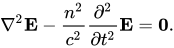
For a nonlinear medium, Gauss's law does not imply that the identity

is true in general, even for an isotropic medium. However, even when this term is not identically 0, it is often negligibly small and thus in practice is usually ignored, giving us the standard nonlinear wave equation:

Nonlinearities as a wave-mixing process
[edit]The nonlinear wave equation is an inhomogeneous differential equation. The general solution comes from the study of partial differential equations and can be obtained by the use of a Green's function. Physically, one gets the electromagnetic wave solutions to the homogeneous part of the wave equation:
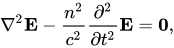
and the inhomogeneous term
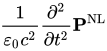
acts as a driver/source of the electromagnetic waves. One of the consequences of this is a nonlinear interaction that results in energy being mixed or coupled between different frequencies, which is often called a "wave mixing".
In general, an n-th order nonlinearity will lead to (n + 1)-wave mixing. As an example, if we consider only a second-order nonlinearity (three-wave mixing), then the polarization P takes the form

If we assume that E(t) is made up of two components at frequencies ω1 and ω2, we can write E(t) as

and using Euler's formula to convert to exponentials,

where "c.c." stands for complex conjugate. Plugging this into the expression for P gives
![{\displaystyle {\begin{aligned}\mathbf {P} ^{\text{NL}}&=\varepsilon _{0}\chi ^{(2)}\mathbf {E} ^{2}(t)\\[3pt]&={\frac {\varepsilon _{0}}{4}}\chi ^{(2)}\left[{E_{1}}^{2}e^{-i2\omega _{1}t}+{E_{2}}^{2}e^{-i2\omega _{2}t}+2E_{1}E_{2}e^{-i(\omega _{1}+\omega _{2})t}+2E_{1}{E_{2}}^{*}e^{-i(\omega _{1}-\omega _{2})t}+\left(\left|E_{1}\right|^{2}+\left|E_{2}\right|^{2}\right)e^{0}+{\text{c.c.}}\right],\end{aligned}}}](https://wikimedia.org/api/rest_v1/media/math/render/svg/722ad4d89541c4fa8fff167f8043df0cbfeeccbb)
which has frequency components at 2ω1, 2ω2, ω1 + ω2, ω1 − ω2, and 0. These three-wave mixing processes correspond to the nonlinear effects known as second-harmonic generation, sum-frequency generation, difference-frequency generation and optical rectification respectively.
Note: Parametric generation and amplification is a variation of difference-frequency generation, where the lower frequency of one of the two generating fields is much weaker (parametric amplification) or completely absent (parametric generation). In the latter case, the fundamental quantum-mechanical uncertainty in the electric field initiates the process.
Phase matching
[edit]


The above ignores the position dependence of the electrical fields. In a typical situation, the electrical fields are traveling waves described by

at position , with the wave vector , where is the velocity of light in vacuum, and is the index of refraction of the medium at angular frequency . Thus, the second-order polarization at angular frequency is





![{\displaystyle P^{(2)}(\mathbf {x} ,t)\propto E_{1}^{n_{1}}E_{2}^{n_{2}}e^{i[(\mathbf {k} _{1}+\mathbf {k} _{2})\cdot \mathbf {x} -\omega _{3}t]}+{\text{c.c.}}}](https://wikimedia.org/api/rest_v1/media/math/render/svg/6229621c7fa6db119f6025366e86c366241399a3)
At each position within the nonlinear medium, the oscillating second-order polarization radiates at angular frequency and a corresponding wave vector . Constructive interference, and therefore a high-intensity field, will occur only if


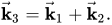
The above equation is known as the phase-matching condition. Typically, three-wave mixing is done in a birefringent crystalline material, where the refractive index depends on the polarization and direction of the light that passes through. The polarizations of the fields and the orientation of the crystal are chosen such that the phase-matching condition is fulfilled. This phase-matching technique is called angle tuning. Typically a crystal has three axes, one or two of which have a different refractive index than the other one(s). Uniaxial crystals, for example, have a single preferred axis, called the extraordinary (e) axis, while the other two are ordinary axes (o) (see crystal optics). There are several schemes of choosing the polarizations for this crystal type. If the signal and idler have the same polarization, it is called "type-I phase matching", and if their polarizations are perpendicular, it is called "type-II phase matching". However, other conventions exist that specify further which frequency has what polarization relative to the crystal axis. These types are listed below, with the convention that the signal wavelength is shorter than the idler wavelength.
| Polarizations | Scheme | ||
|---|---|---|---|
| Pump | Signal | Idler | |
| e | o | o | Type I |
| e | o | e | Type II (or IIA) |
| e | e | o | Type III (or IIB) |
| e | e | e | Type IV |
| o | o | o | Type V (or type 0,[21] or "zero") |
| o | o | e | Type VI (or IIB or IIIA) |
| o | e | o | Type VII (or IIA or IIIB) |
| o | e | e | Type VIII (or I) |
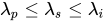
Most common nonlinear crystals are negative uniaxial, which means that the e axis has a smaller refractive index than the o axes. In those crystals, type-I and -II phase matching are usually the most suitable schemes. In positive uniaxial crystals, types VII and VIII are more suitable. Types II and III are essentially equivalent, except that the names of signal and idler are swapped when the signal has a longer wavelength than the idler. For this reason, they are sometimes called IIA and IIB. The type numbers V–VIII are less common than I and II and variants.
One undesirable effect of angle tuning is that the optical frequencies involved do not propagate collinearly with each other. This is due to the fact that the extraordinary wave propagating through a birefringent crystal possesses a Poynting vector that is not parallel to the propagation vector. This would lead to beam walk-off, which limits the nonlinear optical conversion efficiency. Two other methods of phase matching avoid beam walk-off by forcing all frequencies to propagate at a 90° with respect to the optical axis of the crystal. These methods are called temperature tuning and quasi-phase-matching.
Temperature tuning is used when the pump (laser) frequency polarization is orthogonal to the signal and idler frequency polarization. The birefringence in some crystals, in particular lithium niobate is highly temperature-dependent. The crystal temperature is controlled to achieve phase-matching conditions.
The other method is quasi-phase-matching. In this method the frequencies involved are not constantly locked in phase with each other, instead the crystal axis is flipped at a regular interval Λ, typically 15 micrometres in length. Hence, these crystals are called periodically poled. This results in the polarization response of the crystal to be shifted back in phase with the pump beam by reversing the nonlinear susceptibility. This allows net positive energy flow from the pump into the signal and idler frequencies. In this case, the crystal itself provides the additional wavevector k = 2π/Λ (and hence momentum) to satisfy the phase-matching condition. Quasi-phase-matching can be expanded to chirped gratings to get more bandwidth and to shape an SHG pulse like it is done in a dazzler. SHG of a pump and self-phase modulation (emulated by second-order processes) of the signal and an optical parametric amplifier can be integrated monolithically.
Higher-order frequency mixing
[edit]
The above holds for processes. It can be extended for processes where is nonzero, something that is generally true in any medium without any symmetry restrictions; in particular resonantly enhanced sum or difference frequency mixing in gasses is frequently used for extreme or "vacuum" ultra-violet light generation.[22] In common scenarios, such as mixing in dilute gases, the non-linearity is weak and so the light beams are focused which, unlike the plane wave approximation used above, introduces a pi phase shift on each light beam, complicating the phase-matching requirements.[22] Conveniently, difference frequency mixing with cancels this focal phase shift and often has a nearly self-canceling overall phase-matching condition, which relatively simplifies broad wavelength tuning compared to sum frequency generation.[22] In all four frequencies are mixing simultaneously, as opposed to sequential mixing via two processes.

The Kerr effect can be described as a as well. At high peak powers the Kerr effect can cause filamentation of light in air, in which the light travels without dispersion or divergence in a self-generated waveguide.[23] At even high intensities the Taylor series, which led the domination of the lower orders, does not converge anymore and instead a time based model is used. When a noble gas atom is hit by an intense laser pulse, which has an electric field strength comparable to the Coulomb field of the atom, the outermost electron may be ionized from the atom. Once freed, the electron can be accelerated by the electric field of the light, first moving away from the ion, then back toward it as the field changes direction. The electron may then recombine with the ion, releasing its energy in the form of a photon. The light is emitted at every peak of the laser light field which is intense enough, producing a series of attosecond light flashes. The photon energies generated by this process can extend past the 800th harmonic order up to a few KeV. This is called high-order harmonic generation. The laser must be linearly polarized, so that the electron returns to the vicinity of the parent ion. High-order harmonic generation has been observed in noble gas jets, cells, and gas-filled capillary waveguides.
Example uses
[edit]Frequency doubling
[edit]One of the most commonly used frequency-mixing processes is frequency doubling, or second-harmonic generation. With this technique, the 1064 nm output from Nd:YAG lasers or the 800 nm output from Ti:sapphire lasers can be converted to visible light, with wavelengths of 532 nm (green) or 400 nm (violet) respectively.[24]
Practically, frequency doubling is carried out by placing a nonlinear medium in a laser beam. While there are many types of nonlinear media, the most common media are crystals. Commonly used crystals are BBO (β-barium borate), KDP (potassium dihydrogen phosphate), KTP (potassium titanyl phosphate), and lithium niobate. These crystals have the necessary properties of being strongly birefringent (necessary to obtain phase matching, see below), having a specific crystal symmetry, being transparent for both the impinging laser light and the frequency-doubled wavelength, and having high damage thresholds, which makes them resistant against the high-intensity laser light.
Optical phase conjugation
[edit]It is possible, using nonlinear optical processes, to exactly reverse the propagation direction and phase variation of a beam of light. The reversed beam is called a conjugate beam, and thus the technique is known as optical phase conjugation[25][26] (also called time reversal, wavefront reversal and is significantly different from retroreflection).
A device producing the phase-conjugation effect is known as a phase-conjugate mirror (PCM).
Principles
[edit]


One can interpret optical phase conjugation as being analogous to a real-time holographic process.[27] In this case, the interacting beams simultaneously interact in a nonlinear optical material to form a dynamic hologram (two of the three input beams), or real-time diffraction pattern, in the material. The third incident beam diffracts at this dynamic hologram, and, in the process, reads out the phase-conjugate wave. In effect, all three incident beams interact (essentially) simultaneously to form several real-time holograms, resulting in a set of diffracted output waves that phase up as the "time-reversed" beam. In the language of nonlinear optics, the interacting beams result in a nonlinear polarization within the material, which coherently radiates to form the phase-conjugate wave.
Reversal of wavefront means a perfect reversal of photons' linear momentum and angular momentum. The reversal of angular momentum means reversal of both polarization state and orbital angular momentum.[28] Reversal of orbital angular momentum of optical vortex is due to the perfect match of helical phase profiles of the incident and reflected beams. Optical phase conjugation is implemented via stimulated Brillouin scattering,[29] four-wave mixing, three-wave mixing, static linear holograms and some other tools.

The most common way of producing optical phase conjugation is to use a four-wave mixing technique, though it is also possible to use processes such as stimulated Brillouin scattering.
Four-wave mixing technique
[edit]For the four-wave mixing technique, we can describe four beams (j = 1, 2, 3, 4) with electric fields:

where Ej are the electric field amplitudes. Ξ1 and Ξ2 are known as the two pump waves, with Ξ3 being the signal wave, and Ξ4 being the generated conjugate wave.
If the pump waves and the signal wave are superimposed in a medium with a non-zero χ(3), this produces a nonlinear polarization field:

resulting in generation of waves with frequencies given by ω = ±ω1 ± ω2 ± ω3 in addition to third-harmonic generation waves with ω = 3ω1, 3ω2, 3ω3.
As above, the phase-matching condition determines which of these waves is the dominant. By choosing conditions such that ω = ω1 + ω2 − ω3 and k = k1 + k2 − k3, this gives a polarization field:

This is the generating field for the phase-conjugate beam, Ξ4. Its direction is given by k4 = k1 + k2 − k3, and so if the two pump beams are counterpropagating (k1 = −k2), then the conjugate and signal beams propagate in opposite directions (k4 = −k3). This results in the retroreflecting property of the effect.
Further, it can be shown that for a medium with refractive index n and a beam interaction length l, the electric field amplitude of the conjugate beam is approximated by
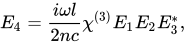
where c is the speed of light. If the pump beams E1 and E2 are plane (counterpropagating) waves, then

that is, the generated beam amplitude is the complex conjugate of the signal beam amplitude. Since the imaginary part of the amplitude contains the phase of the beam, this results in the reversal of phase property of the effect.
Note that the constant of proportionality between the signal and conjugate beams can be greater than 1. This is effectively a mirror with a reflection coefficient greater than 100%, producing an amplified reflection. The power for this comes from the two pump beams, which are depleted by the process.
The frequency of the conjugate wave can be different from that of the signal wave. If the pump waves are of frequency ω1 = ω2 = ω, and the signal wave is higher in frequency such that ω3 = ω + Δω, then the conjugate wave is of frequency ω4 = ω − Δω. This is known as frequency flipping.
Angular and linear momenta in optical phase conjugation
[edit]Classical picture
[edit]In classical Maxwell electrodynamics a phase-conjugating mirror performs reversal of the Poynting vector:

("in" means incident field, "out" means reflected field) where

which is a linear momentum density of electromagnetic field.[28] In the same way a phase-conjugated wave has an opposite angular momentum density vector with respect to incident field:[29]


The above identities are valid locally, i.e. in each space point in a given moment for an ideal phase-conjugating mirror.


Quantum picture
[edit]In quantum electrodynamics the photon with energy also possesses linear momentum and angular momentum, whose projection on propagation axis is , where is topological charge of photon, or winding number, is propagation axis. The angular momentum projection on propagation axis has discrete values .


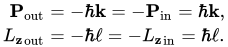
In quantum electrodynamics the interpretation of phase conjugation is much simpler compared to classical electrodynamics. The photon reflected from phase conjugating-mirror (out) has opposite directions of linear and angular momenta with respect to incident photon (in):
Nonlinear optical pattern formation
[edit]Optical fields transmitted through nonlinear Kerr media can also display pattern formation owing to the nonlinear medium amplifying spatial and temporal noise. The effect is referred to as optical modulation instability.[16] This has been observed both in photo-refractive,[31] photonic lattices,[32] as well as photo-reactive systems.[33][34][35][36] In the latter case, optical nonlinearity is afforded by reaction-induced increases in refractive index.[37] Examples of pattern formation are spatial solitons and vortex lattices in framework of nonlinear Schrödinger equation.[38][39]
Molecular nonlinear optics
[edit]The early studies of nonlinear optics and materials focused on the inorganic solids. With the development of nonlinear optics, molecular optical properties were investigated, forming molecular nonlinear optics.[40] The traditional approaches used in the past to enhance nonlinearities include extending chromophore π-systems, adjusting bond length alternation, inducing intramolecular charge transfer, extending conjugation in 2D, and engineering multipolar charge distributions. Recently, many novel directions were proposed for enhanced nonlinearity and light manipulation, including twisted chromophores, combining rich density of states with bond alternation, microscopic cascading of second-order nonlinearity, etc. Due to the distinguished advantages, molecular nonlinear optics have been widely used in the biophotonics field, including bioimaging,[41][42] phototherapy,[43] biosensing,[44] etc.
Connecting bulk properties to microscopic properties
Molecular nonlinear optics relate optical properties of bulk matter to their microscopic molecular properties. Just as the polarizability can be described as a Taylor series expansion, one can expand the induced dipole moment in powers of the electric field: , where μ is the polarizability, α is the first hyperpolarizability, β is the second hyperpolarizability, and so on.[45]

Novel Nonlinear Media
Certain molecular materials have the ability to be optimized for their optical nonlinearity at the microscopic and bulk levels. Due to the delocalization of electrons in π bonds electrons are more easily responsive to applied optical fields and tend to produce larger linear and nonlinear optical responses than those in single (𝜎) bonds. In these systems linear response scales with the length of the conjugated pi system, while nonlinear response scales even more rapidly.[46]

One of the many applications of molecular nonlinear optics is the use in nonlinear bioimaging. These nonlinear materials, like multi-photon chromophores, are used as biomarkers for two-photon spectroscopy, in which the attenuation of incident light intensity as it passes through the sample is written as .[45]
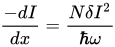
where N is the number of particles per unit volume, I is intensity of light, and δ is the two photon absorption cross section. The resulting signal adopts a Lorentzian lineshape with a cross-section proportional to the difference in dipole moments of ground and final states.
Similar highly conjugated chromophores with strong donor-acceptor characteristics are used due to their large difference in the dipole moments, and current efforts in extending their pi-conjugated systems to enhance their nonlinear optical properties are being made.[40]
Common second-harmonic-generating (SHG) materials
[edit]
Ordered by pump wavelength:
- 800 nm: BBO
- 806 nm: lithium iodate (LiIO3)
- 860 nm: potassium niobate (KNbO3)
- 980 nm: KNbO3
- 1064 nm: monopotassium phosphate (KH2PO4, KDP), lithium triborate (LBO) and β-barium borate (BBO)
- 1300 nm: gallium selenide (GaSe)
- 1319 nm: KNbO3, BBO, KDP, potassium titanyl phosphate (KTP), lithium niobate (LiNbO3), LiIO3, and ammonium dihydrogen phosphate (ADP)
- 1550 nm: potassium titanyl phosphate (KTP), lithium niobate (LiNbO3)
See also
[edit]Further reading
[edit]- Encyclopedia of laser physics and technology Archived 2009-06-03 at the Wayback Machine, with content on nonlinear optics, by Rüdiger Paschotta
- An Intuitive Explanation of Phase Conjugation Archived 2007-11-08 at the Wayback Machine
- SNLO - Nonlinear Optics Design Software Archived 2011-07-07 at the Wayback Machine
- Robert Boyd plenary presentation: Quantum Nonlinear Optics: Nonlinear Optics Meets the Quantum World Archived 2016-03-17 at the Wayback Machine SPIE Newsroom
- Boyd, R.W. (2020). Nonlinear optics (4th ed.). Academi. ISBN 978-0-12-811003-4.
References
[edit]- ^ a b Butcher, Paul N.; Cotter, David (1990-07-27). The Elements of Nonlinear Optics (1 ed.). Cambridge University Press. p. 1. doi:10.1017/cbo9781139167994.002. ISBN 978-0-521-34183-7.
- ^ a b c d e Weiner, Andrew Marc (2009). Ultrafast optics. Wiley series in pure and applied optics. Hoboken, N.J: Wiley. pp. 198–201. ISBN 978-0-471-41539-8.
- ^ a b c Boyd, Robert (2008). Nonlinear Optics (3rd ed.). Academic Press. ISBN 978-0-12-369470-6.
- ^ a b Shen, Yuen-Ron (2002). The Principles of Nonlinear Optics. Wiley-Interscience. ISBN 978-0-471-43080-3.
- ^ a b Agrawal, Govind (2006). Nonlinear Fiber Optics (4th ed.). Academic Press. ISBN 978-0-12-369516-1.
- ^ Buchanan, Mark (2006-11-01). "Past the Schwinger limit". Nature Physics. 2 (11): 721. doi:10.1038/nphys448. ISSN 1745-2473. Archived from the original on 2023-11-17. Retrieved 2025-08-03.
- ^ Kaiser, W.; Garrett, C. G. B. (1961). "Two-Photon Excitation in CaF2:Eu2+". Physical Review Letters. 7 (6): 229. Bibcode:1961PhRvL...7..229K. doi:10.1103/PhysRevLett.7.229.
- ^ a b Rigamonti, Luca (April 2010). "Schiff base metal complexes for second order nonlinear optics" (PDF). La Chimica & l'Industria (3): 118–122. Archived from the original (PDF) on 2016-01-01. Retrieved 2015-10-21.
- ^ Lewis, Gilbert N.; Lipkin, David; Magel, Theodore T. (November 1941). "Reversible Photochemical Processes in Rigid Media. A Study of the Phosphorescent State". Journal of the American Chemical Society. 63 (11): 3005–3018. Bibcode:1941JAChS..63.3005L. doi:10.1021/ja01856a043.
- ^ Bloembergen, Nicolaas (1965). Nonlinear Optics. World Scientific. ISBN 978-981-02-2599-5.
- ^ Chen, Szu-yuan; Maksimchuk, Anatoly; Umstadter, Donald (17 December 1998). "Experimental observation of relativistic nonlinear Thomson scattering". Nature. 396 (6712): 653–655. arXiv:physics/9810036. Bibcode:1998Natur.396..653C. doi:10.1038/25303. S2CID 16080209.
- ^ Bula, C.; McDonald, K. T.; Prebys, E. J.; Bamber, C.; Boege, S.; Kotseroglou, T.; Melissinos, A. C.; Meyerhofer, D. D.; Ragg, W.; Burke, D. L.; Field, R. C.; Horton-Smith, G.; Odian, A. C.; Spencer, J. E.; Walz, D.; Berridge, S. C.; Bugg, W. M.; Shmakov, K.; Weidemann, A. W. (22 April 1996). "Observation of Nonlinear Effects in Compton Scattering". Phys. Rev. Lett. (Submitted manuscript). 76 (17): 3116–3119. Bibcode:1996PhRvL..76.3116B. doi:10.1103/PhysRevLett.76.3116. PMID 10060879. Archived from the original on 21 June 2019. Retrieved 6 September 2018.
- ^ Koga, J.; Esirkepov, T.Z.; Bulanov, S.V. (2005). "Nonlinear Thomson scattering in the strong radiation damping regime". Physics of Plasmas. 12 (9) 093106. Bibcode:2005PhPl...12i3106K. doi:10.1063/1.2013067.
- ^ Thaury, C.; Quéré, F.; Geindre, J.-P.; Levy, A.; Ceccotti, T.; Monot, P.; Bougeard, M.; Réau, F.; d'Oliveira, P.; Audebert, P.; Marjoribanks, R.; Martin, Ph (1 June 2007). "Plasma mirrors for ultrahigh-intensity optics". Nat Phys. 3 (6): 424–429. Bibcode:2007NatPh...3..424T. doi:10.1038/nphys595.
- ^ Hernández-Acosta, M A; Soto-Ruvalcaba, L; Martínez-González, C L; Trejo-Valdez, M; Torres-Torres, C (2019-09-17). "Optical phase-change in plasmonic nanoparticles by a two-wave mixing". Physica Scripta. 94 (12): 125802. Bibcode:2019PhyS...94l5802H. doi:10.1088/1402-4896/ab3ae9. ISSN 0031-8949. S2CID 202145209.
- ^ a b Zakharov, V. E.; Ostrovsky, L. A. (2009-03-15). "Modulation instability: The beginning". Physica D: Nonlinear Phenomena. 238 (5): 540–548. Bibcode:2009PhyD..238..540Z. doi:10.1016/j.physd.2008.12.002.
- ^ Kouzov, A.P.; Egorova, N.I.; Chrysos, M.; Rachet, F. (2012). "Non-linear optical channels of the polarizability induction in a pair of interacting molecules". Nanosystems: Physics, Chemistry, Mathematics. 3 (2): 55. Archived from the original on 2017-06-13. Retrieved 2015-10-31.
- ^ Paschotta, Rüdiger (2008). "Parametric Nonlinearities". Encyclopedia of Laser Physics and Technology. Wiley. ISBN 978-3-527-40828-3. Archived from the original on 2011-08-22. Retrieved 2011-08-16.
- ^ Boyd 2008, pp. 13–15 1.2.10 Parametric versus Nonparametric Processes
- ^ Boyd 2008, 2.3. Phase Matching
- ^ Abolghasem, Payam; Junbo Han; Bhavin J. Bijlani; Amr S. Helmy (2010). "Type-0 second order nonlinear interaction in monolithic waveguides of isotropic semiconductors". Optics Express. 18 (12): 12681–12689. Bibcode:2010OExpr..1812681A. doi:10.1364/OE.18.012681. PMID 20588396.
- ^ a b c Strauss, CEM; Funk, DJ (1991). "Broadly tunable difference-frequency generation of VUV using two-photon resonances in H2 and Kr". Optics Letters. 16 (15): 1192–4. Bibcode:1991OptL...16.1192S. doi:10.1364/ol.16.001192. PMID 19776917. Archived from the original on 2024-05-29. Retrieved 2015-06-23.
- ^ Xhao, X.M.; Jones, R.J.; Strauss, C.E.M.; Funk, D.J.; Roberts, J.P.; Taylor, A.J. (1997). CLEO '97., Summaries of Papers Presented at the Conference on Lasers and Electro-Optics. Vol. 11. IEEE. pp. 377–378. doi:10.1109/CLEO.1997.603294. ISBN 978-0-7803-4125-8. S2CID 120016673.[dead link]
- ^ Bai, Zhenxu; Wang, Yulei; Lu, Zhiwei; Yuan, Hang; Jiang, Li; Tan, Tan; Liu, Zhaohong; Wang, Hongli; Cui, Can; Hasi, Wuliji (2016-10-01). "Efficient KDP frequency doubling SBS pulse compressed 532nm hundred picosecond laser". Optik. 127 (20): 9201–9205. Bibcode:2016Optik.127.9201B. doi:10.1016/j.ijleo.2016.07.021. ISSN 0030-4026.
- ^ Shkunov, Vladimir; Zel'dovich, Boris (December 1985). "Phase Conjugation". Scientific American. 253 (6): 54–59. doi:10.1038/scientificamerican1285-54. JSTOR 24967871.
- ^ Pepper, David M. (January 1986). "Applications of Optical Phase Conjugation". Scientific American. 254 (1): 74–83. Bibcode:1986SciAm.254a..74P. doi:10.1038/scientificamerican0186-74. JSTOR 24975872.
- ^ Pepper, David M.; Feinberg, Jack; Kukhtarev, Nicolai V. (October 1990). "The Photorefractive Effect". Scientific American. 263 (4): 62–75. Bibcode:1990SciAm.263d..62P. doi:10.1038/scientificamerican1090-62. JSTOR 24997062.
- ^ a b Okulov, A. Yu. (2008). "Angular momentum of photons and phase conjugation". J. Phys. B: At. Mol. Opt. Phys. 41 (10) 101001. arXiv:0801.2675. doi:10.1088/0953-4075/41/10/101001.
- ^ a b Okulov, A. Yu. (2008). "Optical and Sound Helical structures in a Mandelstam–Brillouin mirror". JETP Lett. 88 (8): 561–566. Bibcode:2008JETPL..88..487O. doi:10.1134/S0021364008200046.
- ^ The Fascinating Behavior of Light in Photorefractive Media | Optics & Photonics News Archived 2015-04-02 at the Wayback Machine.
- ^ Soljacic, Marin (2000-01-01). "Modulation Instability of Incoherent Beams in Noninstantaneous Nonlinear Media". Physical Review Letters. 84 (3): 467–470. Bibcode:2000PhRvL..84..467S. doi:10.1103/PhysRevLett.84.467. PMID 11015940.
- ^ Jablan, Marinko; Buljan, Hrvoje; Manela, Ofer; Bartal, Guy; Segev, Mordechai (2007-04-16). "Incoherent modulation instability in a nonlinear photonic lattice". Optics Express. 15 (8): 4623–33. Bibcode:2007OExpr..15.4623J. doi:10.1364/OE.15.004623. ISSN 1094-4087. PMID 19532708.
- ^ Burgess, Ian B.; Shimmell, Whitney E.; Saravanamuttu, Kalaichelvi (2007-04-01). "Spontaneous Pattern Formation Due to Modulation Instability of Incoherent White Light in a Photopolymerizable Medium". Journal of the American Chemical Society. 129 (15): 4738–4746. Bibcode:2007JAChS.129.4738B. doi:10.1021/ja068967b. ISSN 0002-7863. PMID 17378567.
- ^ Basker, Dinesh K.; Brook, Michael A.; Saravanamuttu, Kalaichelvi (2015-09-03). "Spontaneous Emergence of Nonlinear Light Waves and Self-Inscribed Waveguide Microstructure during the Cationic Polymerization of Epoxides". The Journal of Physical Chemistry C. 119 (35): 20606–20617. doi:10.1021/acs.jpcc.5b07117. ISSN 1932-7447.
- ^ Biria, Saeid; Malley, Philip P. A.; Kahan, Tara F.; Hosein, Ian D. (2016-03-03). "Tunable Nonlinear Optical Pattern Formation and Microstructure in Cross-Linking Acrylate Systems during Free-Radical Polymerization". The Journal of Physical Chemistry C. 120 (8): 4517–4528. doi:10.1021/acs.jpcc.5b11377. ISSN 1932-7447.
- ^ Biria, Saeid; Malley, Phillip P. A.; Kahan, Tara F.; Hosein, Ian D. (2016-11-15). "Optical Autocatalysis Establishes Novel Spatial Dynamics in Phase Separation of Polymer Blends during Photocuring". ACS Macro Letters. 5 (11): 1237–1241. doi:10.1021/acsmacrolett.6b00659. PMID 35614732.
- ^ Kewitsch, Anthony S.; Yariv, Amnon (1996-01-01). "Self-focusing and self-trapping of optical beams upon photopolymerization" (PDF). Optics Letters. 21 (1): 24–6. Bibcode:1996OptL...21...24K. doi:10.1364/OL.21.000024. ISSN 1539-4794. PMID 19865292. Archived from the original (PDF) on 2020-04-20. Retrieved 2019-08-26.
- ^ Okulov, A Yu (2000). "Spatial soliton laser: geometry and stability". Optics and Spectroscopy. 89 (1): 145–147. Bibcode:2000OptSp..89..131O. doi:10.1134/BF03356001. S2CID 122790937.
- ^ Okulov, A Yu (2020). "Structured light entities, chaos and nonlocal maps". Chaos, Solitons & Fractals. 133 (4) 109638. arXiv:1901.09274. Bibcode:2020CSF...13309638O. doi:10.1016/j.chaos.2020.109638. S2CID 118828500.
- ^ a b Gu, Bobo; Zhao, Chujun; Baev, Alexander; Yong, Ken-Tye; Wen, Shuangchun; Prasad, Paras N. (2016). "Molecular nonlinear optics: recent advances and applications". Advances in Optics and Photonics. 8 (2): 328. Bibcode:2016AdOP....8..328G. doi:10.1364/AOP.8.000328.
- ^ Kuzmin, Andrey N. (2016). "Resonance Raman probes for organelle-specific labeling in live cells". Scientific Reports. 6 28483. Bibcode:2016NatSR...628483K. doi:10.1038/srep28483. PMC 4919686. PMID 27339882.
- ^ Zhang, Silu; Liu, Liwei; Ren, Sheng; Li, Zilin; Zhao, Yihua; Yang, Zhigang; Hu, Rui; Qu, Junle (2020). "Recent advances in nonlinear optics for bio-imaging applications". Opto-Electronic Advances. 3 (10) 200003. doi:10.29026/oea.2020.200003. ISSN 2096-4579. Archived from the original on 2021-01-21. Retrieved 2023-11-27.
- ^ Gu, Bobo; Wu, Wenbo; Xu, Gaixia; Feng, Guangxue; Yin, Feng; Chong, Peter Han Joo; Qu, Junle; Yong, Ken-Tye; Liu, Bin (2017). "Precise Two-Photon Photodynamic Therapy using an Efficient Photosensitizer with Aggregation-Induced Emission Characteristics". Advanced Materials. 29 (28) 1701076. Bibcode:2017AdM....2901076G. doi:10.1002/adma.201701076. PMID 28556297. S2CID 205279732.
- ^ Yuan, Yufeng; Lin, Yining; Gu, Bobo; Panwar, Nishtha; Tjin, Swee Chuan; Song, Jun; Qu, Junle; Yong, Ken-Tye (2017). "Optical trapping-assisted SERS platform for chemical and biosensing applications: Design perspectives". Coordination Chemistry Reviews. 339: 138. doi:10.1016/j.ccr.2017.03.013.
- ^ a b McHale, Jeanne L. (2017). Molecular spectroscopy (2nd ed.). Boca Raton London New York: CRC Press, Taylor & Francis Group. ISBN 978-1-4665-8658-1.
- ^ Boyd, Robert W. (2020), "Nonlinear Optics of Plasmonic Systems", Nonlinear Optics, Elsevier, pp. 569–582, doi:10.1016/b978-0-12-811002-7.00023-0, ISBN 978-0-12-811002-7
| International | |
|---|---|
| National | |
| Other | |

Nonlinear optics
View on GrokipediaFundamentals
Linear versus Nonlinear Response
In linear optics, the polarization induced in a dielectric medium by an applied electric field of an electromagnetic wave is directly proportional to the field strength, expressed as , where is the vacuum permittivity and is the linear electric susceptibility tensor.[7] This proportionality implies that optical properties such as the refractive index and absorption coefficient remain constant regardless of the light intensity, leading to effects that scale linearly with the input power.[1] Common examples include refraction, where light bends upon passing through a medium like a lens due to a constant refractive index, and linear absorption, where the fraction of light absorbed is independent of intensity and depends only on the material's absorption coefficient and path length.[8] Nonlinear optics extends this description by accounting for higher-order contributions to the polarization when the electric field is sufficiently strong, resulting in a power-series expansion: , where , , and higher-order susceptibilities characterize the nonlinear response.[7] These nonlinear terms arise from the anharmonic motion of electrons and nuclei in the material, causing the medium's response to deviate from linearity and enabling phenomena where the output light properties do not scale proportionally with input intensity.[9] For instance, while linear refraction produces a fixed deviation angle, nonlinear effects can induce intensity-dependent changes in the refractive index, such as self-focusing, which occurs only above certain field strengths.[1] Nonlinear responses become observable under high-intensity conditions, typically requiring optical intensities exceeding W/cm², far beyond those of conventional light sources like the sun or incandescent lamps.[10] The invention of the laser in 1960 provided coherent, high-peak-power beams capable of achieving these intensities, enabling the first experimental demonstrations of nonlinear effects and transforming the field from theoretical curiosity to practical science.[11] Below this threshold, linear effects dominate, but above it, nonlinear processes can lead to efficient wave interactions, often necessitating phase matching to maximize conversion efficiency.[1]Nonlinear Susceptibility and Polarization
In nonlinear optics, the electric polarization induced in a dielectric medium by an applied optical electric field is generally nonlinear and can be expressed as a Taylor series expansion in powers of the field strength. The linear component is , while the nonlinear polarization is , where is the vacuum permittivity, is the linear susceptibility tensor, and (for ) are the higher-order nonlinear susceptibility tensors. This expansion assumes a perturbative regime where the field is weak enough that higher-order terms diminish rapidly, enabling the description of phenomena such as frequency mixing and self-phase modulation. The nonlinear susceptibilities are rank- tensors, reflecting the vector nature of the fields; for instance, the second-order susceptibility relates the -th component of to fields with frequencies and such that . These tensors possess intrinsic permutation symmetry due to the commutative nature of the expansion, meaning . Additionally, under the Kleinman symmetry condition—which holds when dispersion is negligible (i.e., all frequencies are far from electronic or vibrational resonances)—the tensor indices can be freely permuted without changing the value, further reducing the number of independent components from 27 to 10 for in non-centrosymmetric media. This symmetry arises from the real-valued nature of the dielectric response in the absence of absorption and is crucial for simplifying calculations in processes like second-harmonic generation. Nonlinear coefficients are typically quantified using the related tensor , with units of pm/V (picometers per volt) in the electrostatic system, reflecting the susceptibility's dimension of m/V when normalized by . Measurements of these coefficients often involve techniques such as second-harmonic generation or electro-optic effects, where the effective value is projected along the propagation direction using the tensor's symmetry-allowed components.[12] For third-order processes, has units of m²/V², but practical quantification frequently uses the nonlinear refractive index (in m²/W) derived from it. The distinction between intrinsic and effective nonlinearities accounts for local field effects, where the microscopic field at a molecule or atom differs from the macroscopic applied field due to neighboring dipoles. The intrinsic susceptibility describes the bare molecular response, while the effective (or macroscopic) susceptibility incorporates corrections via local field factors, such as the Lorentz-Lorenz expression extended to nonlinear orders: , with depending on the linear dielectric constant . These corrections can enhance or suppress the observed nonlinearity by factors of up to several times in dense media.[13] Nonlinear susceptibilities exhibit strong dispersion, varying with the frequencies involved in the process, as denoted by where energy conservation holds (). Near resonances (e.g., electronic transitions), the magnitude increases dramatically due to denominator terms in the quantum mechanical expressions, while off-resonance values follow dispersive tails. This frequency dependence necessitates careful selection of operating wavelengths to maximize efficiency and avoid absorption, as formalized in the early theoretical treatments of nonlinear interactions. Dispersion also underlies deviations from Kleinman symmetry close to resonances, where index permutations alter the tensor elements.Historical Development
Early Observations
The earliest observations of nonlinear optical effects predated the invention of the laser and involved the interaction of electric fields with optical media. In 1875, Scottish physicist John Kerr discovered the Kerr effect, in which an applied electric field induces birefringence in isotropic materials such as glass and certain liquids, demonstrating a quadratic dependence of the refractive index on the field strength.[14] This effect, now recognized as a manifestation of third-order nonlinear susceptibility, enabled early electro-optic modulation but was limited to low-frequency fields at the time. Similarly, in 1893, German physicist Friedrich Pockels identified the Pockels effect in non-centrosymmetric crystals like tourmaline and quartz, where the refractive index varies linearly with an applied electric field, providing the first evidence of second-order nonlinear response in solids.[15] These pre-laser discoveries laid the groundwork for understanding nonlinear polarization, where the material's response to an electric field includes higher-order terms beyond simple proportionality. The advent of coherent laser light in 1960 dramatically intensified optical fields, enabling direct observation of frequency conversion effects. In 1961, Peter A. Franken and colleagues at the University of Michigan performed the seminal experiment by focusing a pulsed ruby laser beam (wavelength 6943 Å) into a quartz crystal, detecting ultraviolet radiation at 3470 Å—the second harmonic of the input frequency—marking the first demonstration of second-harmonic generation (SHG).[16] This breakthrough, achieved just one year after Theodore Maiman's ruby laser invention, confirmed theoretical predictions of nonlinear frequency mixing but yielded extremely low conversion efficiency, on the order of 10^{-8}, primarily due to phase mismatch between the fundamental and harmonic waves in the crystal.[17] Concurrently, researchers at Bell Laboratories, including Robert W. Terhune, played a pivotal role in early laser development and nonlinear studies, contributing to the rapid exploration of these effects through high-intensity coherent sources and precise spectroscopic techniques.[17] These initial post-laser observations highlighted the potential of nonlinear optics while underscoring the need to address inefficiencies for practical applications.Key Milestones and Discoveries
The development of phase-matching techniques in 1962 by Armstrong, Bloembergen, Ducuing, and Pershan marked a pivotal advancement in nonlinear optics, providing a theoretical framework for compensating phase velocity mismatches in nonlinear interactions and thereby enabling efficient second-harmonic generation (SHG) in crystals like quartz.[18] This work, grounded in quantum-mechanical perturbation theory, predicted that birefringence or quasi-phase matching could achieve high conversion efficiencies, transforming SHG from a weak, inefficient process into a practical tool for frequency doubling.[18] In 1965, Giordmaine and Miller demonstrated the first optical parametric oscillator (OPO) using lithium niobate, achieving tunable coherent output across visible wavelengths by exploiting parametric down-conversion under phase-matched conditions.[19] This invention extended the utility of nonlinear crystals beyond frequency up-conversion to versatile tunable sources, laying the groundwork for mid-infrared generation and spectroscopy applications.[19] During the 1970s, demonstrations of four-wave mixing and phase conjugation expanded nonlinear optics into wave manipulation and imaging. Yariv's 1977 analysis of degenerate four-wave mixing in transparent media showed how two pump waves could generate a phase-conjugate beam, correcting wavefront distortions for applications in adaptive optics.[20] This process, relying on third-order nonlinearities, achieved amplified reflection and oscillation, influencing later developments in optical computing and beam cleanup. The 1980s and 1990s saw nonlinear optics integrate with fiber technologies, particularly through solitons. Hasegawa and Tappert's 1973 theoretical prediction of stable optical solitons in dispersive fibers, balancing self-phase modulation and group-velocity dispersion via the nonlinear Schrödinger equation, anticipated distortion-free pulse propagation over long distances.[21] Experimental confirmation came in 1980 with Mollenauer, Stolen, and Gordon's observation of picosecond soliton narrowing and splitting in single-mode silica fibers, validating the theory and enabling high-bit-rate telecommunications.[22] These fiber-based solitons, demonstrated over 700 meters without significant degradation, highlighted nonlinear optics' role in overcoming dispersion limits.[22] From the 2000s onward, nonlinear optics merged with quantum optics, notably through spontaneous parametric down-conversion for generating entangled photon pairs, advancing quantum key distribution and computing protocols.[23] Attosecond pulse generation, via high-harmonic generation in nonlinear media, enabled real-time observation of electron dynamics, as recognized by the 2023 Nobel Prize in Physics awarded to Agostini, L'Huillier, and Krausz for pioneering techniques that produce light pulses lasting mere attoseconds.[24] Recent advances up to 2025 include metamaterials engineered for enhanced nonlinearities, such as nonlinear metasurfaces that boost second-order responses in non-centrosymmetric structures, facilitating compact frequency converters and on-chip devices.[23] These developments underscore the field's maturation into integrated quantum and ultrafast technologies.[23]Theoretical Framework
Nonlinear Wave Equation
The nonlinear wave equation describes the propagation of electromagnetic fields in media where the polarization response includes nonlinear contributions, serving as the foundational equation for analyzing nonlinear optical interactions. Starting from Maxwell's equations in a non-magnetic, source-free medium, the curl equations ∇ × E = -∂B/∂t and ∇ × H = ∂D/∂t, with B = μ₀ H and D = ε₀ E + P, lead to the vector wave equation by taking the curl of the first equation and substituting the second. Assuming transverse fields where ∇ · E ≈ 0, this simplifies to the scalar form ∇²E - (1/c²) ∂²E/∂t² = (1/ε₀ c²) ∂²P/∂t², where c is the speed of light in vacuum.[25][26] In nonlinear media, the polarization P splits into linear P_L = ε₀ χ^{(1)} E and nonlinear P_NL components, with the linear part absorbed into an effective refractive index n via n² = 1 + Re[χ^{(1)}]. The resulting nonlinear wave equation becomes ∇²E - (n²/c²) ∂²E/∂t² = (1/ε₀ c²) ∂²P_NL/∂t², where P_NL acts as the driving source term for nonlinear effects.[25] In the frequency domain, under the Helmholtz form for monochromatic fields, this transforms to ∇²E(ω) + (ω²/c²) n²(ω) E(ω) = - (ω²/ε₀ c²) P_NL(ω), highlighting how nonlinear polarization induces field modifications at frequencies determined by the interaction.[27][25] For pulsed or broadband fields, the slowly varying envelope approximation (SVEA) simplifies analysis by representing the electric field as E(r, t) = A(r, t) exp[i(k z - ω t)] + c.c., where the envelope A varies slowly such that |∂²A/∂z²| ≪ |k ∂A/∂z| and temporal derivatives are small compared to the carrier frequency. Substituting into the nonlinear wave equation and neglecting second-order spatial derivatives yields the paraxial form 2 i k ∂A/∂z + ∇⊥² A = -\frac{ω^2}{ε_0 c^2} \tilde{P}{NL}(r, t), where \tilde{P}{NL}(r, t) is the complex envelope of the nonlinear polarization at frequency ω (obtained under SVEA by approximating ∂²P{NL}/∂t² ≈ -ω^2 \tilde{P}_{NL} e^{i(k z - ω t)} + c.c.), enabling tractable solutions for envelope evolution driven by P_NL.[25] To describe interactions among multiple waves, the coupled mode equations are derived by applying SVEA to each field component E_j = A_j(z, t) exp[i(k_j z - ω_j t)] + c.c. for j = 1, 2, 3, assuming plane-wave propagation along z. The nonlinear polarization P_NL at frequency ω_3 = ω_1 + ω_2 (e.g., for sum-frequency generation) couples the amplitudes, resulting in the set: \begin{align} \frac{\partial A_1}{\partial z} + \frac{1}{v_{g1}} \frac{\partial A_1}{\partial t} &= i \kappa_1 A_3 A_2^* \exp(i \Delta k z), \ \frac{\partial A_2}{\partial z} + \frac{1}{v_{g2}} \frac{\partial A_2}{\partial t} &= i \kappa_2 A_3 A_1^* \exp(i \Delta k z), \ \frac{\partial A_3}{\partial z} + \frac{1}{v_{g3}} \frac{\partial A_3}{\partial t} &= i \kappa_3 A_1 A_2 \exp(-i \Delta k z), \end{align} where Δk = k_3 - k_1 - k_2 is the phase mismatch, v_{gj} is the group velocity at ω_j, and κ_j are coupling coefficients proportional to the nonlinear susceptibility and frequencies (e.g., κ_3 = -ω_3 d_{eff} / (c n_3), with d_{eff} the effective second-order nonlinearity). These equations govern energy transfer among waves under the plane-wave assumption of uniform transverse profiles and infinite extent.[25] Dispersion and absorption are incorporated by allowing n(ω) to be frequency-dependent and complex, with the real part introducing group velocity dispersion via the Taylor expansion k(ω) ≈ k_0 + k' (ω - ω_0) + (1/2) k'' (ω - ω_0)^2, where k' = 1/v_g and k'' measures pulse broadening. Absorption enters as an imaginary refractive index n'' or decay coefficient α, modifying the coupled equations to include damping terms like ∂A_j/∂z → - (α_j / 2) A_j + nonlinear source, ensuring realistic propagation losses. Boundary conditions typically specify input amplitudes A_j(z=0) at the medium entrance, with plane-wave solutions assuming no transverse variations (∇_⊥² = 0) and infinite medium extent for simplicity.[25][27]Phase Matching Conditions
In nonlinear optics, efficient interactions among optical waves require satisfaction of both energy and momentum conservation laws. While energy conservation dictates the frequency relationships (e.g., ), momentum conservation necessitates that the wave vectors align such that , where for collinear propagation along the z-direction, with the refractive index at frequency . Failure to meet this condition leads to a phase mismatch parameter , causing the nonlinear polarization wave to dephase from the interacting fields over propagation distance , thereby reducing conversion efficiency.[28] Birefringent phase matching achieves by exploiting the refractive index anisotropy in non-centrosymmetric crystals, where the ordinary index (for light polarized perpendicular to the optic axis) differs from the extraordinary index (for polarization along the optic axis). In type I phase matching, the two input waves are both ordinary (or extraordinary) polarized, while the output is extraordinary (or ordinary), allowing the phase-matching angle inside the crystal to be tuned such that . Type II involves one ordinary and one extraordinary input, yielding . Common techniques include angle tuning, by rotating the crystal relative to the beam direction, and temperature tuning, leveraging the thermo-optic coefficient to adjust birefringence, often in crystals like KDP or BBO.[28] The conversion efficiency for second-order processes under phase matching is proportional to , where the sinc function reaches unity at and oscillates with decreasing amplitude for nonzero mismatch, limiting effective interaction length to roughly . For small mismatches, efficiency scales as , but deviates for larger .[28] Quasi-phase matching (QPM) compensates residual by introducing a periodic structure with grating vector , where is the period, such that (first-order QPM). This is realized via periodic reversal of the nonlinear susceptibility , for example, through ferroelectric domain inversion in materials like LiNbO3 or LiTaO3 using electric field poling, enabling phase matching without reliance on material dispersion or birefringence. QPM offers broader wavelength tunability and higher effective nonlinearity compared to birefringent methods, as the full can be utilized regardless of crystal symmetry.[28][29] A key limitation of birefringent phase matching is spatial walk-off, arising from the angle between the Poynting vector and wave vector of the extraordinary ray, which causes beam separation (e.g., pump and harmonic) over distance, reducing overlap and efficiency in focused geometries; typical walk-off angles are 1–3° in crystals like KTP, limiting crystal lengths to millimeters for high-power applications. QPM mitigates this by allowing propagation along principal axes without angular dependence on birefringence.[30][31]Core Processes
Second-Order Frequency Mixing
Second-order frequency mixing involves three-wave interactions driven by the second-order nonlinear susceptibility in non-centrosymmetric materials, where two input optical fields generate an output field at a frequency that is either the sum or difference of the inputs.[28] These processes arise from the quadratic term in the polarization expansion, , enabling frequency conversion without net energy loss in ideal conditions.[25] In sum-frequency generation (SFG), two input waves at frequencies and () interact to produce an output wave at , effectively combining photons from the lower-frequency fields into a higher-frequency photon.[32] Conversely, difference-frequency generation (DFG) occurs when a higher-frequency wave at interacts with a lower-frequency wave at to generate , transferring energy from the higher to the lower frequency.[32] Both processes require phase matching for efficient conversion, where the wave vectors satisfy .[28] Power conservation in these parametric processes is described by the Manley-Rowe relations, which link the powers at each frequency through photon number balance: for SFG/DFG, and , indicating that power gained at one frequency equals power lost at the others, scaled by frequency. These relations, originally derived for nonlinear circuits, apply universally to lossless three-wave mixing in optics.[25] The interaction strength is quantified by the effective nonlinear coefficient , which accounts for the tensor contraction over polarization directions and is typically on the order of 1–100 pm/V in common crystals like lithium niobate.[25] In practice, determines the coupling between fields in the coupled-wave equations governing the mixing.[33] A prominent example is optical rectification, a degenerate DFG case where , producing a quasi-static (DC) polarization at low frequencies, often used for terahertz generation from femtosecond pulses. Another key application is spontaneous parametric down-conversion (SPDC), a quantum variant of DFG where a pump photon at spontaneously splits into signal and idler photons at and , generating polarization-entangled pairs with near-unity fidelity in type-II crystals like beta-barium borate.[34] Conversion efficiency in these processes scales quadratically with the nonlinear crystal length (as ) and linearly with the pump intensity in the undepleted pump approximation, enabling high efficiencies (>50%) in periodically poled materials under focused conditions.[25]Third-Order Nonlinear Effects
Third-order nonlinear effects arise from the third-order nonlinear susceptibility tensor , which describes the response of a material to intense optical fields in centrosymmetric media where second-order effects are absent. The third-order polarization is expressed as where is the vacuum permittivity and is the electric field vector; this cubic dependence leads to intensity-dependent optical properties that enable a variety of wave-mixing and phase-modulation phenomena. These effects are central to applications in optical signal processing and ultrafast optics, as values in common materials like silica range from to m²/V², allowing observable nonlinearities at laser intensities of to W/cm². A primary manifestation of third-order nonlinearity is the Kerr effect, where the refractive index varies with optical intensity according to Here, is the linear refractive index, and is the nonlinear index coefficient, related to the real part of by , with the speed of light. This intensity-induced index change, first theoretically analyzed in the context of nonlinear wave interactions, underpins self-action effects in propagating beams and has been experimentally verified in gases and solids using picosecond pulses. Typical values, such as m²/W in fused silica, highlight the effect's scale in fiber optics.[35] Self-phase modulation (SPM) occurs when a single intense beam experiences a phase shift due to its own Kerr-induced index variation, broadening its spectrum through chirp. The nonlinear phase shift accumulated over propagation length is where is the wavelength; for femtosecond pulses in optical fibers, this can exceed radians, generating octave-spanning supercontinua. SPM was first observed in 1967 using ruby laser pulses in a carbon disulfide cell, demonstrating spectral broadening proportional to intensity. Cross-phase modulation (XPM) extends this to multiple beams, where the intensity of one beam modulates the phase of another co-propagating beam via the shared Kerr nonlinearity. The XPM phase shift for beam 2 due to beam 1 is , with the factor of 2 arising from the vectorial overlap in isotropic media; this effect is prominent in wavelength-division multiplexing systems, inducing crosstalk at powers above 1 W in silica fibers. XPM enables all-optical switching but can degrade signal integrity in dense fiber networks.[36] Four-wave mixing (FWM) involves the interaction of three input waves to generate a fourth "idler" wave, governed by energy conservation and phase-matching conditions. In the degenerate case, two photons from the same pump frequency mix with a signal at to produce an idler at , amplifying weak signals in parametric amplifiers. Non-degenerate FWM uses distinct frequencies for all inputs, enabling flexible wavelength conversion; efficiency scales with \chi^{(3)}^2 and is enhanced in dispersion-engineered waveguides, achieving gains over 20 dB in silicon photonics at pump powers of 100 mW.[35] First predicted and observed in 1962 using a ruby laser in quartz, FWM now supports broadband optical processing in fibers and integrated devices. Third-harmonic generation (THG) is a -mediated process where three fundamental photons at combine to produce output at , without requiring non-centrosymmetry. The nonlinear polarization driving THG is ; conversion efficiencies reach 10^{-4}) in gas cells with intense femtosecond lasers, limited by dispersion. THG provides a coherent UV source for microscopy, as demonstrated in early experiments with alkali vapors, and is adaptable via material engineering for phase matching.Higher-Order Interactions
Higher-order nonlinear interactions extend the perturbative description of optical polarization beyond the third-order susceptibility, encompassing fourth-order and higher terms in the expansion , where these contributions arise primarily under intense illumination that saturates lower-order responses.[37] Such susceptibilities, denoted as for , are typically negligible in conventional nonlinear optics due to their small magnitude compared to or , but they gain prominence in scenarios involving ultrashort, high-peak-power pulses like femtoseconds, where field strengths exceed W/cm².[38] These effects manifest as subtle modifications to wave propagation, such as higher-order phase accumulation or dispersion, and are particularly evident in materials with enhanced electronic nonlinearities under strong coupling conditions.[38] Multiphoton absorption represents a key higher-order nonlinearity, involving the simultaneous absorption of photons to bridge energy gaps that exceed single-photon transitions, governed by effective susceptibilities scaling with the -th order term.[39] This process leads to excitation in transparent media at wavelengths where linear absorption is absent, enabling applications in microscopy and lithography, though it introduces intensity-dependent losses.[39] Extending to multiphoton ionization, intense fields liberate electrons when the total photon energy surpasses the ionization threshold, often via tunneling or above-barrier mechanisms in the nonperturbative regime; this generates free carriers that can alter refractive indices and trigger avalanche effects in solids or gases.[40] For example, in noble gases under femtosecond irradiation, such ionization accompanies high-order harmonic emission, highlighting the interplay between absorption and field-induced electron dynamics. Cascaded second-order interactions provide another pathway to higher-order effects, where sequential applications of processes—such as difference-frequency generation followed by self-phase modulation—yield an effective third-order nonlinearity, even in centrosymmetric media lacking intrinsic .[41] This effective arises from phase-mismatched propagation that accumulates nonlinear phase shifts proportional to intensity squared, mimicking Kerr-like responses and enabling all-optical switching with efficiencies rivaling direct third-order processes.[42] In periodic poling structures, cascading enhances these effects by compensating walk-off, making it a practical route for integrated photonics.[41] At the microscopic scale, hyperpolarizabilities quantify atomic and molecular contributions to higher-order responses, with the third-order hyperpolarizability linking to , and higher analogs (e.g., for fourth-order) describing multi-photon-induced dipoles in intense fields.[43] In atomic systems, these parameters reflect the perturbation of electron clouds; for multiply ionized noble gases like xenon, second- and third-order hyperpolarizabilities diminish progressively with ionization stage due to fewer valence electrons, as calculated from time-dependent density functional theory.[44] This atomic-level insight underpins material design for extreme nonlinearities, where tailored hyperpolarizabilities amplify collective responses in ensembles.[44] These interactions underpin extreme nonlinear optics, notably high-harmonic generation (HHG), where atomic recollision in laser fields drives coherent emission of odd harmonics up to the 100th order, extending into the extreme ultraviolet (XUV) and soft X-ray regimes with pulse durations below 100 attoseconds.[45] In gaseous targets, HHG exemplifies nonperturbative higher-order dynamics, with plateau and cutoff structures emerging from multi-photon and tunneling pathways, offering tabletop sources for spectroscopy.[45]Parametric Amplification and Oscillation
Principles of Parametric Processes
Parametric processes in nonlinear optics involve the interaction of light waves in a medium with second-order nonlinearity, enabling energy transfer without absorption or stimulated emission. These processes, fundamentally based on three-wave mixing, allow a high-frequency pump wave to interact with a signal wave, generating an idler wave while conserving energy and momentum.[46] In parametric amplification, energy conservation dictates that a single pump photon at frequency splits into a signal photon at and an idler photon at , satisfying . This process occurs through the nonlinear polarization induced in the medium, described by the coupled wave equations for the slowly varying amplitudes , , and : where is the coupling constant proportional to the second-order susceptibility , and is the phase mismatch. Assuming undepleted pump approximation and perfect phase matching (), the solutions yield exponential growth of the signal and idler amplitudes, with the gain coefficient given by , where is the pump intensity and is the effective nonlinear coefficient; thus, .[46][47] For parametric oscillation, as in optical parametric oscillators (OPOs), the process requires feedback via an optical cavity resonant for the signal and/or idler waves to build up intensity from spontaneous parametric fluorescence. The threshold pump power occurs when the parametric gain equals the total losses (including mirror transmission and absorption), typically expressed as , where are mirror reflectivities, is the crystal length, is the loss coefficient, is the beam area, and accounts for focusing; singly resonant OPOs (feedback for one wave) have higher thresholds than doubly resonant ones. Above threshold, the signal and idler oscillate coherently, enabling tunable output.[48][47] Difference-frequency generation (DFG) represents a specific parametric process where two input waves at and () produce an output at , with the pump () amplifying the difference frequency under phase-matched conditions. The bandwidth and tuning range of parametric processes are primarily governed by phase matching, which limits the spectral extent over which ; the phase-matching bandwidth scales as , where is the group velocity dispersion and is the interaction length, while tuning is achieved by varying crystal temperature, angle, or pump wavelength to adjust birefringence or quasi-phase matching.[32][49][47]Applications in Amplifiers and Oscillators
Optical parametric amplifiers (OPAs) are widely employed to achieve broadband gain for ultrafast optical pulses, enabling amplification of femtosecond signals with minimal distortion across wide spectral bandwidths. These devices leverage second-order nonlinear processes in materials like beta-barium borate (BBO) or lithium triborate (LBO) to provide gain factors exceeding 10^6 in multi-stage configurations, supporting pulse durations as short as 5 fs in the visible and 15 fs in the near-infrared. For instance, noncollinear OPA geometries have demonstrated octave-spanning amplification, crucial for applications in attosecond science and high-harmonic generation.[50] Synchronously pumped optical parametric oscillators (OPOs) extend these capabilities to generate tunable mid-infrared radiation, where pump pulses from mode-locked lasers synchronize with cavity round trips to produce picosecond or femtosecond outputs. In magnesium oxide-doped periodically poled lithium niobate (MgO:PPLN) crystals, such systems achieve average powers up to 1.1 W at 4.5 μm with tuning ranges spanning 3-5 μm, ideal for molecular spectroscopy and atmospheric sensing. Recent implementations using femtosecond Er-doped fiber lasers as pumps have yielded broadband idler emission from 3.5 to 4.5 μm with pulse energies on the order of 1 nJ at repetition rates exceeding 80 MHz.[51][52][53] Fiber-based parametric amplifiers exploit the third-order nonlinearity χ⁽³⁾ in silica optical fibers to realize all-fiber amplification with gains over 50 dB across C- and L-bands, offering a compact alternative to bulk crystal systems. These amplifiers operate via four-wave mixing, where a strong pump at 1.06 μm or 1.55 μm transfers energy to signal and idler waves, achieving phase matching through dispersion engineering in highly nonlinear fibers with effective areas below 10 μm². Such devices support wavelength-division multiplexing in telecommunications, with demonstrated noise figures as low as 3 dB in distributed configurations spanning hundreds of kilometers.[54][55] In parametric amplification, noise figures are fundamentally limited by quantum mechanics, with phase-insensitive operation approaching a minimum of 3 dB due to added vacuum fluctuations from the idler field, as derived from the commutation relations of the electromagnetic field. Advanced schemes, such as phase-sensitive amplification, can surpass this quantum limit, achieving noise figures below 1 dB by correlating signal and idler modes, though practical implementations remain challenged by pump depletion and dispersion. Fiber OPAs, in particular, exhibit Raman noise contributions that elevate the effective noise figure to 4-6 dB under high-gain conditions.[56][57][58] Developments in the 2020s have focused on chip-scale OPOs for integrated photonics, miniaturizing these devices onto platforms like silicon nitride or thin-film lithium niobate for low-power, on-chip tunable sources. Kerr-based microresonators have enabled visible-to-mid-IR oscillation with thresholds below 100 mW and conversion efficiencies up to 20%, leveraging dispersion engineering for broadband phase matching. For example, silicon photonic chips have produced outputs from 590 to 1150 nm with milliwatt powers, paving the way for compact quantum optical systems and frequency combs in portable spectrometers.[59][60]Specific Applications
Frequency Doubling and Harmonic Generation
Second-harmonic generation (SHG), also known as frequency doubling, is a second-order nonlinear optical process in which two photons of frequency interact within a non-centrosymmetric medium to produce a single photon at frequency . This coherent frequency upconversion was first experimentally demonstrated in 1961 using a ruby laser focused into a quartz crystal, marking the inception of nonlinear optics as a field. The process relies on the second-order susceptibility to drive the polarization at , enabling efficient conversion when phase-matching conditions are satisfied to prevent destructive interference. The efficiency of SHG, denoted as in the low-conversion (undepleted pump) regime, is given by where is the effective nonlinear coefficient, is the interaction length, is the phase mismatch, , and is the pump intensity. Optimal efficiency occurs when , with the sinc function limiting conversion for mismatches beyond . Critical phase matching, achieved via birefringence in uniaxial crystals such as potassium dihydrogen phosphate (KDP) for near-infrared to visible conversion and beta-barium borate (BBO) for ultraviolet generation, aligns the refractive indices at and by orienting the crystal at a specific angle. This technique is essential for high-efficiency SHG, as it maximizes the coherence length . SHG configurations for lasers include external doubling, where the nonlinear crystal is placed outside the laser cavity to handle high pump powers without thermal issues, and internal (intracavity) doubling, which positions the crystal inside the resonator to benefit from intensity buildup for enhanced conversion at moderate powers. External setups often use enhancement cavities for single-frequency operation, achieving efficiencies up to 50% for continuous-wave sources, while internal configurations enable compact devices with up to 80% efficiency in pulsed systems. Higher harmonic generation extends SHG principles to third-harmonic generation (THG) at , which can proceed directly via the third-order susceptibility in any medium or through cascaded second-order processes: initial SHG to produce , followed by sum-frequency generation (SFG) of in materials. Cascaded THG offers quasi-phase matching flexibility and higher efficiencies in crystals like lithium niobate. In intense femtosecond laser fields, high-harmonic generation (HHG) in gases such as noble gases like argon or neon produces odd harmonics up to the hundredth order or beyond, driven by electron tunneling, acceleration, and recollision in the laser field, yielding attosecond pulses in the extreme ultraviolet. Applications of frequency doubling and harmonic generation include generating visible and ultraviolet lasers from infrared pumps, such as doubling 1064 nm Nd:YAG output to 532 nm green light for pointers, displays, and pumping other lasers, or further doubling to 355 nm ultraviolet for materials processing. In biological imaging, SHG integrated with two-photon microscopy visualizes non-centrosymmetric structures like collagen fibers in tissues without staining, providing label-free contrast for depths up to hundreds of micrometers due to the nonlinear confinement of the signal.Optical Phase Conjugation
Optical phase conjugation is a nonlinear optical process that generates a reflected wave whose electric field is proportional to the complex conjugate of the incident wave, denoted as , effectively reversing the phase distortions of the input wavefront. This phase reversal enables the conjugate wave to propagate backward along the same path as the original wave, counteracting aberrations introduced by the medium. The concept was first theoretically proposed by Hellwarth in 1977, building on earlier experimental observations of wavefront reversion in stimulated scattering processes. The primary technique for achieving optical phase conjugation is four-wave mixing (FWM), a third-order nonlinear effect where two pump beams and a probe beam interact in a nonlinear medium to produce the conjugate beam. In degenerate FWM, all waves operate at the same frequency, simplifying the process and enabling efficient conjugation in various media such as optical fibers or atomic vapors.[61] The interaction typically employs a reflection geometry, with counterpropagating pump beams interfering with the probe to form dynamic gratings that diffract light into the conjugate direction.[62] This setup was analyzed in detail by Yariv and Pepper in 1977, highlighting its potential for real-time wavefront correction. From a time-reversal perspective, the conjugate wave retraces the probe's path, undoing cumulative phase shifts caused by distortions like atmospheric turbulence.[63] For instance, in free-space propagation through turbulent air, the conjugate beam refocuses to the original source, compensating for scattering and beam spreading with high fidelity.[63] This property stems from the inherent phase-matching in backward FWM geometries, as first demonstrated in early experiments with atomic media.[62] Gain in phase conjugators arises from the amplification of the conjugate wave, often exceeding unity reflectivity, through mechanisms such as population gratings in resonant media or the electronic χ⁽³⁾ susceptibility in non-resonant cases.[62] In atomic vapors, for example, interference between pump and probe beams modulates the atomic population density, creating a refractive index grating that provides gain via stimulated processes.[62] In Kerr media like optical fibers, the χ⁽³⁾-induced intensity-dependent refractive index supports parametric gain without absorption, enabling low-power conjugation.[61] These gain mechanisms, rooted in third-order nonlinearities, allow conjugators to operate efficiently even with weak probes.Self-Phase Modulation and Solitons
Self-phase modulation (SPM) arises from the intensity-dependent refractive index in nonlinear media, leading to a phase shift that varies across an optical pulse and induces spectral broadening. This effect, first experimentally observed in silica optical fibers using mode-locked argon-ion lasers, manifests as frequency broadening proportional to the pulse peak power and fiber length. For an unchirped hyperbolic secant input pulse of peak power and width , propagating over distance in a fiber with nonlinear index , the instantaneous frequency chirp is given by where is the nonlinear parameter, the effective mode area, and the central wavelength; the sign indicates a red shift at the leading edge and blue shift at the trailing edge for positive . This chirp converts temporal intensity variations into spectral ones, with the spectral width scaling as .[64] In optical fibers with anomalous group velocity dispersion (), SPM can balance the dispersive broadening to form stable fundamental solitons that maintain their shape and spectrum during propagation. This balance occurs when the nonlinear length matches the dispersion length , yielding a soliton order , where is the nonlinear coefficient and the effective mode area. The pulse dynamics are governed by the normalized nonlinear Schrödinger equation (NLSE), with normalized distance , time , and amplitude ; the fundamental soliton solution is . This equation, derived for envelope propagation in weakly guiding fibers, predicts undistorted propagation over long distances, limited primarily by fiber loss and higher-order effects. For , higher-order solitons emerge, characterized by periodic compression and broadening cycles with a period ; these unstable structures can break up via modulation instability (MI), where weak perturbations amplify into pulse trains due to phase-matching between frequency sidebands. MI gain is maximum at wavenumber , leading to exponential growth of noise and potential soliton fission in the anomalous dispersion regime. Such dynamics, analyzed through the integrable NLSE, highlight the transition from stable to chaotic pulse evolution at higher powers. SPM enables all-optical switching by leveraging the intensity-induced phase shift for interferometric control, as demonstrated in silicon waveguides where peak powers of ~1 GW/cm² yield π-phase shifts for sub-picosecond pulses. In fiber systems, SPM initiates supercontinuum generation by rapidly broadening the spectrum of femtosecond pulses in photonic crystal fibers, extending from visible to near-infrared over centimeters, with initial red-shifted Raman-like edges evolving via four-wave mixing. These applications exploit SPM's femtosecond response for ultrafast signal processing and broadband sources in spectroscopy and telecommunications.[65]Materials and Molecular Aspects
Common Nonlinear Materials for SHG
Second-harmonic generation (SHG) relies on materials with significant second-order nonlinear susceptibility (χ^(2)) to efficiently convert fundamental laser wavelengths, such as 1064 nm from Nd:YAG lasers, to their harmonics. Inorganic crystals dominate practical applications due to their robustness, high optical quality, and compatibility with phase-matching techniques that mitigate dispersion-induced walk-off.[66] Among inorganic crystals, potassium titanyl phosphate (KTP, KTiOPO₄) is widely used for SHG in the visible and near-infrared, offering an effective nonlinear coefficient (d_eff) of approximately 3.5 pm/V for type II phase matching at 1064 nm, a transparency range from 0.35 to 4.5 μm, and a high damage threshold exceeding 1 GW/cm² for nanosecond pulses. Its moderate birefringence (Δn ≈ 0.08) enables efficient birefringent phase matching with low walk-off, making it suitable for high-average-power green laser generation, though it suffers from gray tracking at high intensities. Lithium triborate (LBO, LiB₃O₅) excels in broadband applications, with d_eff ≈ 0.85 pm/V for type I noncritical phase matching (NCPM) at 1064 nm (requiring| Material | d_eff (pm/V at 1064 nm SHG) | Transparency Range (μm) | Birefringence (Δn) |
|---|---|---|---|
| KTP | ~3.5 | 0.35–4.5 | ~0.08 |
| LBO | ~0.85 | 0.16–2.6 | ~0.04 |
| BBO | ~2.0 | 0.19–3.5 | ~0.12 |
| Urea | ~1.4 | 0.2–1.6 | ~0.12 (uniaxial) |