Hubbry Logo
Nuffield College, OxfordNuffield College, OxfordMain
Open search
Nuffield College, Oxford
Community hub
Nuffield College, Oxford
logo
8 pages, 0 posts
0 subscribers
Be the first to start a discussion here.
Nuffield College, Oxford
from Wikipedia

Nuffield College (/ˈnʌfld/) is one of the constituent colleges of the University of Oxford in England. It is a graduate college specialising in the social sciences, particularly economics, politics and sociology. Nuffield is one of Oxford's newer colleges, having been founded in 1937, as well as one of the smallest, with only around 90 students[2] and 60 academic fellows.[3] It was also the first Oxford college to accept both men and women, having been coeducational since foundation,[4] as well as being the first college exclusively for graduate students in either Oxford or Cambridge.[5]

Key Information

As of 2021, the college had an estimated financial endowment of £282 million.[1] Due to its small intake, it was the wealthiest educational institution per student in the world in 2013.[6] Since 2017, Nuffield has committed to underwriting funding for all new students accepted to the college.[7] Between 2019 and 2023, 5.1% of applicants to the college were admitted.[8]

Its architecture is designed to conform to the traditional college layout and its modernist spire is a landmark for those approaching Oxford from the west.

History

[edit]

Nuffield College was founded in 1937 after a donation to the University of Oxford by Lord Nuffield, the industrialist and founder of Morris Motors. On 16 November 1937, the University entered a Deed of Covenant and Trust with Lord Nuffield.[9] He donated land for the college on New Road, to the west of the city centre near the mound of Oxford Castle, on the site of the largely disused basin of the Oxford Canal.[10] As well as the land, Nuffield gave £900,000[n 1] to build the college and to provide it with an endowment.[9][12] For the creation of Nuffield College and for his other donations he was described in 1949 by an editorial in The Times as "the greatest benefactor of the University since the Middle Ages".[13]

From its inception, Nuffield College initiated a number of trends at both Oxford and Cambridge.[4] It was the first college to have both women and men housed together. It was also the first college to consist solely of graduate students. In addition, it was the first in modern times to have a defined subject focus, namely the social sciences.[14]

Nuffield appointed its first fellows in 1939, a group that notably included the historian Margery Perham, but the outbreak of World War II meant that the college's construction did not begin until 1949. During the War, Nuffield hosted the Nuffield College Social Reconstruction Survey, which examined issues related to post-War reconstruction. Nuffield admitted its first students in 1945, and received its Royal Charter from the hands of the Duke of Edinburgh on 6 June 1958.[14]

Drove to Oxford for the Nuffield College dance... Nuffield is vigorous and forward-thinking. It has absolute equality between men and women and close camaraderie between teacher and student. It draws its Fellows from a wide social background. There is no snobbery about it at all.

— Tony Benn, December 7, 1957[15]

In the 1960s, Nuffield became closely associated with Harold Wilson's "modernizing" Labour government. During his tenure as Wilson's Chancellor of the Exchequer, future Labour prime minister James Callaghan, who had no formal university education, took tutorials in economics at Nuffield overseen by College fellow Ian Little.[16] Such was the perceived intimacy between College and government that decades later, writer Christopher Hitchens could recall the "fast set that revolved between Nuffield and Whitehall".[17]

Buildings

[edit]

Nuffield is located on the site of the basin of the Oxford Canal to the west of Oxford. The land on which the college stands was formerly the city's principal canal basin and coal wharfs..[10]

A tall light-coloured stone square tower with a small metal spire; to the left, a smaller building in the same stone with a dark tiled roof
Nuffield College, facing New Road, with the library tower topped by a flèche. The main entrance to the college is in the middle of the building to the left of the tower.

The architect Austen Harrison, who had worked in Greece and British Mandatory Palestine, was appointed by the University to design the buildings. His initial design, heavily influenced by Mediterranean architecture, was rejected by Nuffield, who called it "un-English"[12] and refused to allow his name to be associated with it. Harrison reworked the plans, aiming for "something on the lines of Cotswold domestic architecture",[12] as Nuffield wanted. The plans were approved by Lord Nuffield in 1940. Construction of the college began after the war in 1949. Restrictions on construction after the Second World War meant that work on the college was not completed until 1960. The original plan for the college to occupy land on both sides of Worcester Street was scaled down as a result of budget and material shortages, and to this day the land to the west of the college is occupied by a "temporary" car park. In one change, the tower, which had been planned to be ornamental, was redesigned to hold the college's library. It was the first tower built in Oxford for 200 years and is about 150 feet (46 m) tall, including the flèche on top. The buildings are arranged around two quadrangles, with residential accommodation for students and fellows in one, and the hall, library and administrative offices in the other. The chapel has stained glass windows designed by John Piper.[18]

The architectural aesthetic of the final design, particularly the tower and its flèche, has attracted some criticism; unlike the other "dreaming spires" of Oxford, Nuffield's tower is a masonry-clad steel-framed book-stack. The architectural historian Sir Howard Colvin said that Harrison's first design was Oxford's "most notable architectural casualty of the 1930s";[19] it has also been described as a "missed opportunity" to show that Oxford did not live "only in the past".[20] Reaction to the architecture of the college has been largely unfavourable. In the 1960s, it was described as "Oxford's biggest monument to barren reaction".[21] The tower has been described as "ungainly",[22] and marred by repetitive windows. The travel writer Jan Morris wrote that the college was "a hodge-podge from the start".[23] However, the architectural historian Sir Nikolaus Pevsner, although unimpressed with most of the college, thought that the tower helped the Oxford skyline and predicted it would "one day be loved".[24] The writer Simon Jenkins doubted Pevsner's prediction, and claimed that "vegetation" was the "best hope" for the tower – as well as the rest of the college.[25]

Academics

[edit]

Around a third of Nuffield's fellows hold appointments at the University of Oxford as lecturers, readers or professors. In addition, the college fully funds around a dozen "Official Fellowships", which the college views as tenured research professorships (although most also teach on the University's graduate programme), and about a dozen three-year Postdoctoral research fellows. The college also houses a number of young scholars who hold distinguished awards, such as British Academy post-doctoral fellowships, some senior research fellows and a group of research-active emeritus and honorary fellows. The college also produces works in the Nuffield Election Studies.[26] The college is also home to the Centre for Social Investigation, an interdisciplinary research group examining inequalities and social progress in Britain.[citation needed]

The college was the birthplace of the "Oxford School" of Industrial Relations; it pioneered the development of cost-benefit analysis for developing countries; and it has made a major contribution to the methodology of econometrics.[3]

Student life

[edit]

All Nuffield students are members of the College Junior Common Room. Annual traditions include the Nuffield ball and Christmas Pantomime. All members of the College enjoy free lunches throughout the year. Nuffield fields men's and women's cricket and football teams, and members row for Linacre Boat Club.[27]

People associated with Nuffield

[edit]

Notable students and fellows

[edit]

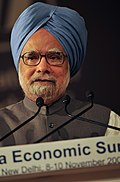
Many prominent people have studied at Nuffield, including Mark Carney, Prime Minister of Canada and former Governor of the Bank of England; Manmohan Singh, former Prime Minister of India; Geoff Gallop, former Premier of Western Australia; Nicholas Stern, former Chief Economist of the World Bank and President of the British Academy; and Jonathan Levin, President of Stanford University.

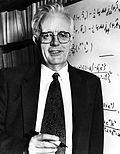
Notable fellows have included psephologist David Butler, political philosopher Michael Oakeshott, political theorist and economist G. D. H. Cole, researcher of inequality Tony Atkinson, and statistician David Cox, who served as Warden between 1988 and 1994. Among the college's fellows and former fellows are four Nobel Prize laureates, Philippe Aghion, John Hicks, James Mirrlees, and Amartya Sen.

Visiting fellows include Stephanie Flanders, former BBC economics editor; Tim Harford, author and economist; and George Soros, investor and philanthropist.

In 2008, a third of all economists who were fellows of the British Academy had connections to Nuffield, as did a quarter of all political science, sociology and social statistics fellows.[4]

Wardens

[edit]

Visitors

[edit]

The Visitor of Nuffield College is ex officio the Master of the Rolls.

[edit]

References

[edit]
[edit]
Revisions and contributorsEdit on WikipediaRead on Wikipedia
from Grokipedia
Nuffield College is a graduate-only constituent college of the dedicated to advanced study and research in the social sciences, with particular emphasis on , , , and . Founded in 1937 by —a philanthropist and founder of —the college received land and substantial funding from him to establish the first such postgraduate institution at , prioritizing interdisciplinary social scientific inquiry over traditional undergraduate teaching. Its buildings, constructed primarily after the Second World War in a traditional Cotswold stone style on New Road in central , enclose a small quadrangle that supports a close-knit community of around 70 fellows and 80 students, many of whom contribute to influential empirical research projects such as the British Election Study. The college has produced or hosted numerous prominent figures in and , reflecting its focus on rigorous, data-driven analysis amid broader academic trends toward quantitative methods in social sciences.

History

Founding by Lord Nuffield

Nuffield College was established in 1937 by William Richard Morris, 1st Viscount Nuffield, an industrialist who founded Morris Motors Limited and became one of Britain's leading philanthropists through his automotive wealth. Born in 1877 in Worcester and raised in , Morris left school at age 14 to enter the bicycle repair trade, eventually building a mass-production car empire that earned him the moniker "the English ." His donation to Oxford reflected a broader commitment to applying practical knowledge to societal challenges, having previously funded medical advancements like the iron lung and research at the university's hospitals. Under a Deed of Covenant and Trust dated 16 November 1937, Lord Nuffield donated a central Oxford site near the castle mound, along with £1,000,000—comprising £250,000 for building construction and £750,000 as an endowment—to create the college. He initially proposed an institution focused on engineering and undergraduate training to bridge technical education with industry, but university authorities redirected the emphasis to postgraduate research in social studies, aiming to tackle economic, political, and administrative problems through interdisciplinary inquiry. This pivot aligned with Nuffield's interest in real-world applications, promoting collaboration between scholars and non-academic experts from business and public service to generate evidence-based solutions. The founding charter positioned Nuffield as Oxford's pioneering graduate-only college, specializing in social sciences such as , , and , while uniquely admitting men and women equally from inception. Unlike traditional colleges blending undergraduates and , it prioritized advanced empirical analysis of modern industrial society's causal dynamics, including labor markets, policy impacts, and institutional reforms, free from undergraduate teaching burdens. Though physical development awaited post-war conditions, the endowment secured its autonomy and research mandate, with initial fellows appointed by 1939 to lay groundwork amid global disruptions.

World War II Interruptions and Post-War Construction

The outbreak of in 1939 halted plans for the physical construction of Nuffield College, despite its founding in 1937 and the appointment of initial fellows that year. Operations continued in temporary offices located on Banbury Road and Woodstock Road in . During the war, the college shifted focus to intellectual contributions toward post-war planning, hosting the Nuffield College Social Reconstruction Survey from 1941 to 1943, which analyzed economic and social issues for Britain's recovery, including , industry, and housing. This survey produced reports influencing policy, such as recommendations on and industrial relocation, though its findings faced criticism for overemphasizing state intervention without sufficient empirical grounding in market dynamics. Post-war construction commenced in 1949 after wartime material shortages and building restrictions were eased, with Lord Nuffield laying the that year. Designed by Austen Harrison in a traditional Cotswold style using local , the project faced ongoing challenges from and , extending completion to 1960. The initial £900,000 donation proved insufficient, prompting an additional gift from Lord Nuffield in 1959 to finish key elements, including the 150-foot tower—the first new tower in in over two centuries. Despite delays, the buildings on New Road formed a cohesive quadrangle emphasizing functionality for graduate scholars, with the design prioritizing austerity over ornamentation amid economic constraints.

Expansion and Institutional Maturation

In the years following the initial post-war construction, Nuffield College received its on 6 June 1958, formalizing its status as an independent college within the and enabling greater autonomy in governance and endowments. This milestone marked a key phase of institutional maturation, shifting from provisional operations amid wartime disruptions to a stable entity focused on graduate-level research. The reflected the college's growing , built on early contributions like the Social Reconstruction Survey (1941–1955), which analyzed wartime economic shifts and informed post-war policy on industry relocation and labor distribution. The college expanded its academic community incrementally, electing additional fellows to bolster expertise in , , and . Initial post-war fellowships, limited by resources, grew to support specialized initiatives; by the late , the body included around 60 academic fellows, including approximately 20 postdoctoral researchers, alongside roughly 90 graduate students. This selective growth emphasized quality over scale, maintaining Nuffield's distinctive small size—among Oxford's smallest colleges—while fostering interdisciplinary collaboration. Key to this maturation was the establishment of enduring research programs, such as the Nuffield Election Studies, launched with the 1945 UK general election and extended through subsequent volumes that pioneered empirical analysis of voter behavior and party dynamics. Further institutional development included advancements in applied social science, with fellows contributing to fields like cost-benefit analysis for and the "Oxford School" of during the 1950s and 1960s. Archives document expanded inquiries, such as the African Trade Unions project (1949–1969), which examined labor movements in decolonizing nations, and the Layfield Committee on finance (1974–1976), influencing fiscal policy debates. These efforts solidified Nuffield's role as a hub for policy-relevant , prioritizing empirical rigor over broader undergraduate teaching, and attracted visiting fellows from business and government to enhance practical insights.

Physical Infrastructure

Architectural Design and Buildings

The architectural design of Nuffield College was led by Austen Harrison, appointed in 1938 by the to create the buildings following Lord Nuffield's donation. Harrison's initial proposal drew from Mediterranean influences gained from his work in and , featuring elements like round arches and a Greek Doric style, but this was rejected by Lord Nuffield in favor of a traditional Cotswold style to align with Oxford's collegiate aesthetic. Construction commenced in 1949 after wartime delays, with the main buildings on New Road completed by 1960, comprising three-story quadrangles arranged in a traditional layout. The design incorporates a prominent steel-framed stone tower topped with a copper-covered , serving as a landmark visible from approaching routes into from the west. The quadrangles include features such as a water element and paving in the Lower Quad, all designated as Grade II listed in 1993 for their architectural and historical significance. Key interior elements include the chapel's stained glass windows designed by John Piper, integrating modern artistry within the traditional framework. Later additions, such as a lecture theatre and accommodation block, have adhered to the original stone grain and scale to maintain cohesion. The overall aesthetic embodies a post-war adaptation of the "Oxford myth," blending vernacular revival with functional graduate college needs.

Site Development and Facilities

The site for Nuffield College was donated by , Lord Nuffield, in 1937, comprising land on New Road in central , formerly occupied by a canal basin. Construction, initially designed in 1939–1940 by architect Austen Harrison in a traditional Cotswold style, was delayed by and commenced in 1949, with substantial completion by 1962. The development organized the buildings around two quadrangles, incorporating residential accommodations, administrative offices, and communal spaces, with the first formal meal served on 6 June 1958 during the presentation of the college's . Key facilities include the college library, a specialized social science research collection with holdings in , , , and , offering 24/7 access to members and extensive electronic resources. The dining hall, accommodating up to 96 for formal dinners with locally sourced food, adjoins the Fellows' Dining Room and supports daily free lunches for students and early-career researchers. Common rooms comprise the student-managed for social and academic activities, alongside a for fellows. Additional amenities encompass dedicated IT services with wired and wireless network access throughout, office spaces equipped for up to four years of use, and the chapel dedicated in 1961 featuring designs by John Piper and by Patrick Reyntiens. The copper-topped tower, standing 160 feet (49 meters) including its spire, houses reading rooms and overlooks the upper quadrangle. Student support extends to research allowances, travel grants, and nursery provisions, fostering a focused environment.

Academic Orientation

Core Disciplines and Research Priorities

Nuffield College maintains a focused academic orientation in the social sciences, with its core disciplines centered on , , and . Established as the first Oxford college to specialize in these fields, it supports graduate-level research that integrates empirical methods and theoretical analysis to examine societal structures and policy challenges. Fellows and students pursue doctoral and postdoctoral work emphasizing quantitative approaches, interdisciplinary collaboration, and real-world applications, distinguishing the college from broader humanities or sciences-oriented institutions at Oxford. In , research priorities include econometric methodologies, , and cost-benefit analysis, with historical contributions to developing-country policy evaluation and ongoing projects in and market design. The Economics Group oversees initiatives that bridge theoretical modeling with empirical data, often leveraging large datasets for on labor markets, inequality, and . Politics encompasses a wide spectrum, from political theory and comparative to electoral behavior, , and . Fellows investigate processes, dynamics, and the of voting, with notable long-term efforts like the British Election Study, which has tracked voter attitudes and outcomes since 1963 using panel surveys and experimental designs. Sociology prioritizes quantitative analysis of social stratification, family dynamics, gender roles, migration patterns, and inequality trends. Key outputs include the longitudinal research, which employs cohort studies to assess intergenerational mobility using administrative and survey from the 1958, 1970, and 2000 birth cohorts. Cross-disciplinary research priorities are advanced through specialized centers, including the Centre for Experimental Social Sciences (focusing on lab and field experiments in decision-making and institutions), the Centre for Social Investigation (monitoring social progress via data-driven briefings on inequality and impacts), the Leverhulme Centre for Demographic Science (addressing and ), and Climate Econometrics (modeling environmental-economic interactions). These initiatives underscore a commitment to evidence-based solutions for pressing issues like demographic shifts, social cohesion, and climate , often involving partnerships with policymakers. The college's "Oxford School" of further highlights early priorities in labor economics and institutional analysis, influencing post-war debates.

Educational Programs and Degrees Offered

Nuffield College admits solely graduate students pursuing advanced degrees in the social sciences, with a focus on , , , and . These students read for qualifications, primarily the DPhil—a research doctorate equivalent to a PhD—conducted through intensive, independent under faculty supervision. Taught master's programs, such as MSc degrees in , , or related interdisciplinary fields, are also supported for incoming students demonstrating potential for original . The college emphasizes a research-oriented environment, where study involves seminars, workshops, and access to specialized resources tailored to social scientific inquiry into policy-relevant issues like inequality, , and economic dynamics. All admitted students receive full from the college, including tuition fees and a sufficient for living expenses in , typically for the standard duration of their program (one year for MSc, three to four years for DPhil). This financial support, underwritten by the college's endowment, enables focus on academic pursuits without external employment. Admissions prioritize candidates with outstanding prior academic records, often evidenced by first-class honors or equivalent, and a clear aligned with Nuffield's strengths in quantitative and empirical methods. While the college does not run programs, it participates in outreach initiatives like the Nuffield Undergraduate Scholars' Institute, integrated into Oxford's UNIQ+ scheme to encourage high-achieving undergraduates from underrepresented backgrounds to consider graduate study in social sciences.

Community and Governance

Student and Fellow Demographics

Nuffield College admits exclusively students, with no undergraduate , focusing on advanced study and research in the social sciences such as , , and . The student body numbers approximately 100 postgraduates, fostering a close-knit environment. University records confirm 105 students affiliated with the college as of recent statistics. Complementing the students are around 25 postdoctoral researchers engaged in specialized projects. The college's academic fellows total approximately 60, including about 35 permanent academics who supervise and contribute to interdisciplinary initiatives. Demographic data specific to the college remain limited in public sources, though its graduate-only orientation attracts a diverse international cohort, aligning with broader trends where 60% of graduate students hail from outside the . The Equality, Diversity and Inclusion Committee oversees monitoring of , , and other factors, with student surveys highlighting elevated reports of gender-related microaggressions compared to staff. No comprehensive breakdowns by nationality or ethnicity are routinely published, reflecting the college's emphasis on excellence over detailed demographic tracking.

Administrative Structure and Wardens

Nuffield College is governed by its , which consists exclusively of the college's fellows and functions as the trustees under charity law, responsible for strategic oversight, academic appointments, financial stewardship, and compliance with the institution's founding documents. The Governing Body operates under the college's and Statutes, originally granted on 18 1958 and last substantively amended in 2003, which delineate powers including the election of officers, management of endowments, and regulation of admissions and discipline. These documents emphasize the college's dedication to advanced research, with decisions made collectively in meetings chaired by the Warden. The Warden serves as the chief executive and symbolic head, leading daily administration, representing the college externally, and ensuring alignment with its research-oriented mission. Elected by the for a renewable term—typically around five to seven years—the Warden presides over key committees and maintains academic standards without holding a teaching role. Professor Dame Julia , elected on 13 December 2023 as the tenth Warden, took office on 1 September 2024, succeeding Sir Andrew Dilnot CBE, who held the position from 1 October 2019 until his retirement. , formerly President of the (2021–2025), brings expertise in regulatory governance and law to the role. Supporting the Warden and are key administrative officers, including the Bursar, who manages finances, , investments, and operational logistics, as evidenced by annual financial statements approved by the . The structure also includes sub-committees for , , and equality, diversity, and inclusion, with fellows serving as representatives to integrate academic input into administration. This framework reflects the college's status as a self-governing entity within the , prioritizing fellow-led decision-making over external hierarchies.

Notable Associates

Prominent Fellows and Academics

Nuffield College has hosted multiple Nobel laureates in economic sciences as fellows. John Richard Hicks, a pioneering economist who developed key concepts in , served as a fellow at the college and shared the 1972 with for their contributions to and equilibrium analysis. James Mirrlees, recognized for foundational work on asymmetric information and optimal taxation, held a fellowship at Nuffield from 1968 to 1995 and received the 1996 in Economic Sciences. More recently, , a former Official Fellow, was awarded the 2025 in Economic Sciences for research on innovation's role in and firm dynamics. In statistics, Sir David Cox, developer of the Cox proportional hazards model widely used in , served as of Nuffield College from 1988 to 1994 and remained an active member until his death in 2022. His contributions advanced empirical methods in social sciences, aligning with the college's research priorities. Other emeritus fellows include economists like Sir , known for inequality studies, and political scientists such as Ivor Crewe, who analyzed British elections and . Current prominent academics encompass experts in econometrics and policy. John Muellbauer, a Senior Research Fellow, specializes in housing markets, consumer behavior, and macroeconomic forecasting, influencing models. Ben Ansell, Professor of , researches and , with publications on family influences on inequality. These fellows contribute to Nuffield's emphasis on rigorous empirical analysis in social sciences. Honorary fellows like , former Governor of the , extend the college's policy impact.

Influential Alumni

Nuffield College alumni have made significant contributions to economics, public policy, and international finance. , who completed his DPhil in Economics in 1960, served as from 2004 to 2014, overseeing reforms that accelerated GDP growth from an average of 5.8% in the 1990s to 7.7% during his tenure. Earlier, as Finance Minister from to 1996, he dismantled the , reducing industrial licensing requirements from over 18 items to 3, which empirical analyses attribute to a sustained increase in private investment and manufacturing output. Mark Carney, recipient of a DPhil in in 1993, led the as from 2008 to 2013, implementing that stabilized the Canadian economy during the global with GDP contracting only 2.8% compared to 4.3% in the . He subsequently governed the from 2013 to 2020, introducing forward guidance on interest rates that correlated with reduced market volatility, as measured by lower VIX-equivalent spreads in UK gilts. In March 2025, Carney assumed the role of following a federal election victory. Other prominent alumni include (DPhil 1957), a leading trade economist whose work on preferential trading arrangements influenced GATT/WTO negotiations, evidenced by citations in over 20,000 academic papers and policy adoption in agreements like NAFTA. , who studied at Nuffield, chaired the from 1982 to 1984, advocating supply-side reforms that data show contributed to a 3.5% average annual GDP growth in the subsequent Reagan expansion. Nicholas Stern, Baron Stern of Brentford, authored the 2006 , quantifying costs at 5-20% of global GDP annually without action, shaping international frameworks like the . In journalism and analysis, Martin Wolf, chief economics commentator at the Financial Times, has critiqued fiscal policies with reference to empirical multipliers, influencing debates on austerity measures post-2008. John Kay, economist and author, developed the concept of "radical uncertainty" in economic decision-making, supported by case studies from financial markets showing limitations of probabilistic models. These alumni exemplify Nuffield's emphasis on rigorous empirical analysis in social sciences, with their outputs cited in policy documents from institutions like the IMF and World Bank.

Distinguished Visitors

Nuffield College hosts a program of Visiting Fellows, designed to bring distinguished practitioners from government, business, finance, media, and related fields into the academic community for short-term residencies, typically lasting a term or more, to foster dialogue between scholars and policymakers. Among notable past Visiting Fellows is Mervyn King, who served from 2002 to 2009 after his tenure as Governor of the , contributing to seminars and research on . , founder of the polling firm , held the position from 1993 to 1995, engaging with the college's focus on empirical . , former Deputy Governor of the , was a recent Visiting Fellow, reflecting the program's emphasis on central banking expertise. Other prominent figures include , appointed in 2021 as a with interests in , who has participated in college events to exchange insights on . The program also attracts journalists and economists such as , former economics editor, and , known for his work on and . These visits enhance the college's interdisciplinary approach by integrating real-world policy experience with academic rigor.

Controversies and Critiques

Lord Nuffield's Political Views and Philanthropic Legacy

Lord Nuffield, born William Richard Morris, espoused right-wing political views emphasizing free enterprise and opposition to and industry , reflecting his background as a self-made industrialist who built into a major British automaker. In the 1930s, he faced criticism for expressing admiration for authoritarian figures like and , viewing their systems as models of efficient organization, though he publicly denied fascist sympathies in 1934 while aiding Jewish causes. These stances drew accusations of far-right leanings and financial support for groups like Oswald Mosley's , claims that have prompted modern critiques of his legacy despite his later distancing as public opinion shifted against . His philanthropic efforts, which distributed an estimated £30 million (equivalent to billions today) from his fortune, were channeled into health, education, and , including the 1937 endowment of Nuffield College at University with funds to establish a institution focused on applying scientific methods to social and economic problems. Additional legacies include the Nuffield Foundation (1943), which advanced medical and , and the Nuffield Provincial Hospitals Trust (1939, £1.2 million initial endowment), influencing healthcare developments like the British United Provident Association (). Critics argue these donations partly served to rehabilitate his public image amid political controversies, yet the institutions endure, funding empirical policy studies that prioritize evidence over ideological bias. Controversies surrounding his legacy extend to labor practices at , where he enforced low wages, resisted unionization, and maintained authoritarian control, leading to worker exploitation allegations that contrast sharply with his generous benefactions. Unsubstantiated personal allegations, including 2015 claims of against a minor, have further tarnished retrospectives, though lacking legal corroboration. Despite such critiques, Nuffield's endowments have demonstrably advanced in social sciences, with the college's research output yielding verifiable impacts on and , underscoring a disconnect between the founder's views and the apolitical rigor of his funded institutions.

Academic and Institutional Disputes

In late 2018, Nuffield College encountered internal and external pressure over Carl's scholarship, which examined statistical associations between , , and social outcomes, including rates and patterns. A signed by more than 200 academics, primarily from institutions, accused Carl of endorsing "racist " through his attendance at the London Conference on and alleged promotion of eugenics-adjacent ideas, demanding that universities withhold legitimacy from such work. Nuffield's leadership, including Professor Anthony Heath, a specializing in , defended Carl, stating opposition to racist doctrines but affirming that his research met rigorous standards and did not warrant suppression, as no evidence of methodological flaws or bias was substantiated. The episode underscored tensions between empirical inquiry into hereditarian influences—topics yielding peer-reviewed findings on group differences despite political sensitivities—and activist demands for preemptive , with critics attributing the backlash to ideological conformity in social sciences faculties. Carl departed Nuffield in summer 2018 amid the scrutiny, later facing dismissal from a fellowship in May 2019 following a parallel investigation that found no academic misconduct but cited reputational risks. In 2020, disclosures in Brittany Kaiser's book Targeted implicated Raymond Duch, an Official Fellow at Nuffield and director of its Centre for Experimental Social Sciences (CESS), in consulting for SCL Group, the parent entity of Cambridge Analytica. Duch reportedly supplied experimental designs and data analysis techniques used for psychographic voter targeting in political campaigns, including SCL's work in developing behavioral profiles from social media data. Nuffield's bursar denied a freedom of information request seeking details on Duch's involvement, invoking exemptions for commercial confidentiality and ongoing university processes, prompting critiques of opacity in how the college oversees fellows' external engagements with entities facing ethical allegations. Neither Nuffield nor Oxford University issued public statements or imposed disclosed sanctions on Duch, who retained his positions and continued publishing on political behavior experiments; the matter highlighted institutional conflicts between academic freedom in applied research and accountability for contributions to controversial data practices later scrutinized in regulatory probes.

Influence and Achievements

Contributions to Social Sciences

Nuffield College has advanced social sciences through rigorous, empirically grounded research in , , and , emphasizing interdisciplinary approaches and practical applications since its founding in 1937. The college's fellows and projects have developed foundational methodologies and datasets, influencing both academic discourse and . In , the college initiated the British Election Study (BES) in 1964 under Sir David Butler, establishing one of the world's longest-running election surveys and the UK's premier panel dataset on , turnout, and partisan change. This longitudinal effort, spanning every since, has enabled causal analyses of electoral dynamics, including the effects of economic conditions and media on voter preferences. Economic research at Nuffield has pioneered contributions to methodology and cost-benefit analysis tailored to developing economies, alongside the "Oxford School" of , which integrated empirical labor market studies with policy recommendations. Fellows such as , a in 1996 for optimal taxation theory, advanced incentive-compatible mechanisms during his tenure from 1968 to 1995. More recently, former fellow received the 2025 in for work on and firm dynamics, highlighting the college's role in growth theory. , an honorary fellow and 1998 Nobel winner, further exemplifies impacts in and development capabilities. Sociological inquiries emphasize quantitative approaches to social stratification, inequality, family structures, dynamics, and migration patterns, with programs like the in Britain initiative providing evidence on intergenerational mobility trends using large-scale survey data. Research by fellows such as Heath has informed government strategies on ethnic minority integration by documenting disparities in employment and social cohesion through census-linked analyses. These efforts underscore Nuffield's commitment to data-driven over ideological priors.

Policy Impact and Recognition

Nuffield College has exerted influence on primarily through dedicated centers that bridge academic analysis and policymaking. The Gwilym Gibbon Centre for , established to integrate scholarly rigor with policy timelines, has produced evidence-based submissions supporting governmental decisions across various domains. Similarly, the Nuffield Centre for Applied Macro Policy (NuCamp), launched in , facilitates open dialogues between academics and policymakers on economic trends, fiscal strategies, and monetary frameworks, aiming to inform real-time economic management. These initiatives have contributed to broader policy discourse, including parliamentary evidence on inequalities and post-16 participation policies. The college's policy-oriented research has garnered formal recognition via awards to its fellows for impactful contributions. In 2025, Professorial Fellow Zachary Parolin received the David N. Kershaw Award and Prize from the Association for Public Policy Analysis and Management for his empirical work on alleviation and social safety nets, which has shaped antipoverty strategies in multiple countries. Earlier, Professorial Fellow Lucie Cluver earned a 2019 Horizon Impact Award from the for research influencing child welfare policies amid public health crises. Institutional honors underscore the college's role in policy advancement. In the 2025 King's Birthday Honours, Warden Julia Black was appointed a Dame Commander of the for services to and financial , while Fellow Lucie Cluver received a Commander of the for contributions to child protection . Associate Fellow Mona Ibrahim was highly commended in the 2025 Emerging Impact category of the British Academy's President's Medal for -relevant sociological research. These accolades reflect the college's sustained emphasis on translating into actionable insights, though measurable causal effects on specific legislation remain subject to the inherent challenges of attributing academic influence amid multifaceted decision-making processes.

References

Add your contribution
Related Hubs
User Avatar
No comments yet.