Hubbry Logo
Operation Outside the BoxOperation Outside the BoxMain
Open search
Operation Outside the Box
Community hub
Operation Outside the Box
logo
8 pages, 0 posts
0 subscribers
Be the first to start a discussion here.
Operation Outside the Box
from Wikipedia

Orchard/Bustan
Part of the Iran–Israel proxy conflict
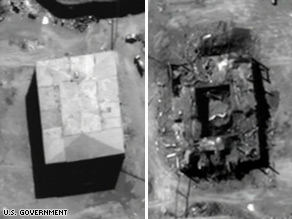
Before and after photo of target released by the U.S. government
Operational scopeStrategic bombing run
Planned byIsraeli Air Force[1]
ObjectiveDestroy the Syrian nuclear site, located in the Deir ez-Zor region
35°42′28″N 39°50′01″E / 35.70778°N 39.83361°E / 35.70778; 39.83361
Date6 September 2007
Executed byF-15I Ra'am fighters
F-16I Sufa fighters
1 ELINT aircraft
1 helicopter
Shaldag special forces
OutcomeSuccessful destruction of the site
Casualties10 North Korean nuclear scientists allegedly killed[2]

Operation Outside the Box,[a][3][4][5][6][7] also known as Operation Orchard,[b] was an Israeli airstrike on a suspected nuclear reactor,[8] referred to as the Al Kibar site (also referred to in IAEA documents as Dair Alzour), in the Deir ez-Zor region of Syria,[9] which occurred just after midnight (local time) on 6 September 2007. The Israeli and U.S. governments did not announce the secret raids for seven months.[10] The White House and Central Intelligence Agency (CIA) subsequently confirmed that American intelligence had also indicated the site was a nuclear facility with a military purpose, though Syria's Assad government denied this.[11][12] A 2009 International Atomic Energy Agency (IAEA) investigation reported evidence of uranium and graphite and concluded that the site bore features resembling an undeclared nuclear reactor. IAEA was initially unable to confirm or deny the nature of the site because, according to IAEA, Syria failed to provide necessary cooperation with the IAEA investigation.[13][14] Syria has disputed these claims.[15] Nearly four years later, in April 2011 during the Syrian Civil War, the IAEA officially confirmed that the site was a nuclear reactor.[8] Israel did not acknowledge the attack until 2018.[16]

The attack reportedly followed Israeli top-level consultations with the Bush administration.[17] After realizing that the US was not willing to bomb the site after being told so by U.S. president George W. Bush, Prime Minister Ehud Olmert decided to adhere to the 1981 Begin Doctrine and unilaterally strike to prevent a Syrian nuclear weapons capability, despite serious concerns about Syrian retaliation. In stark contrast to the doctrine's prior usage against Iraq, the airstrike against Syria did not elicit international outcry. A main reason is that Israel maintained total and complete silence regarding the attack, and Syria covered up its activities at the site and did not cooperate fully with the IAEA. The international silence may have been a tacit recognition of the inevitability of preemptive attacks on "clandestine nuclear programs in their early stages." If true, the Begin Doctrine has undoubtedly played a role in shaping this global perception.[18]

According to official government confirmation on 21 March 2018, the raid was carried out by Israeli Air Force (IAF) 69 Squadron F-15Is,[19] and 119 Squadron and 253 Squadron F-16Is,[20] and an ELINT aircraft; as many as eight aircraft participated and at least four of these crossed into Syrian airspace.[21] The fighters were equipped with AGM-65 Maverick missiles, 500-pound (230 kg) bombs, and external fuel tanks.[5][22] One report stated that a team of elite Israeli Shaldag special-forces commandos arrived at the site the day before so that they could highlight the target with laser designators,[19] while a later report identified Sayeret Matkal special-forces commandos as involved.[23]

The Israeli attack used sophisticated electronic warfare (EW) capabilities,[24] as IAF's EW systems took over Syria's air defense systems, feeding them a false sky-picture[24] for the entire period of time that the Israeli fighter jets needed to cross Syria, bomb their target, and return.[25]

On 6 March 2017, the Kibar nuclear site was captured by the Syrian Democratic Forces – a U.S.-backed coalition of Kurdish and Arab militia fighters – from a retreating ISIL force in northern Deir Ezzor province.

Following the fall of the Assad regime in December 2024, Syria permitted wider inspections by the International Atomic Energy Agency (IAEA) at sites allegedly linked to the facility. In September 2025, the IAEA reported the discovery of uranium particles of anthropogenic origin at one such location.[26]

Pre-strike activity

[edit]

In 2001, Mossad, Israel's external intelligence service, was profiling newly inducted Syrian president Bashar al-Assad. Visits by North Korean dignitaries, which focused on advanced arms deliveries, were noticed. Aman, Israel's military intelligence department, suggested nuclear arms were being discussed, but the Mossad dismissed this theory. In spring 2004, U.S. intelligence reported multiple communications between Syria and North Korea, and traced the calls to a desert location called al-Kibar. Unit 8200, Israel's signals intelligence and codebreaking unit, added the location to its watch list.[27]

The Daily Telegraph, citing anonymous sources, reported that in December 2006, a top Syrian official (according to one article this was the head of the Atomic Energy Commission of Syria, Ibrahim Othman[28]) arrived in London under a false name. The Mossad had detected a booking for the official in a London hotel, and dispatched at least ten undercover agents to London. The agents were split into three teams. One group was sent to Heathrow Airport to identify the official as he arrived, a second to book into his hotel, and a third to monitor his movements and visitors. Some of the operatives were from the Kidon Division, which specializes in assassinations, and the Neviot Division, which specializes in breaking into homes, embassies, and hotel rooms to install bugging devices. On the first day of his visit, he visited the Syrian embassy and then went shopping. Kidon operatives closely followed him, while Neviot operatives broke into his hotel room and found his laptop. A computer expert then installed software that allowed the Mossad to monitor his activities on the computer. When the computer material was examined at Mossad headquarters, officials found blueprints and hundreds of pictures of the Kibar facility in various stages of construction, and correspondence. One photograph showed North Korean nuclear official Chon Chibu meeting with Ibrahim Othman, Syria's atomic energy agency director. Though the Mossad had originally planned to kill the official in London, it was decided to spare his life following the discovery.[29] Israeli Prime Minister Ehud Olmert was notified. The following month, Olmert formed a three-member panel to report on Syria's nuclear program. The CIA was also informed and the American intelligence network joined the quest for more information.[28] Six months later, Brigadier-General Yaakov Amidror, one of the panel's members, informed Olmert that Syria was working with North Korea and Iran on a nuclear facility. Iran had funneled $1 billion to the project, and planned on using the Kibar facility to replace Iranian facilities if Iran was unable to complete its uranium enrichment program.[27]

In July 2007, an explosion occurred in Musalmiya, northern Syria. The official news agency, SANA, said 15 Syrian military personnel were killed and 50 people were injured. The agency reported only that "very explosive products" blew up after a fire broke out at the facility. The edition of 26 September of Jane's Defence Weekly claimed that the explosion happened during tests to weaponise a Scud-C missile with mustard gas.[30]

A senior U.S. official told ABC News that, in early summer 2007, Israel had discovered a suspected Syrian nuclear facility, and that the Mossad then "managed to either co-opt one of the facility's workers or to insert a spy posing as an employee" at the suspected Syrian nuclear site, and through this was able to get pictures of the target from on the ground."[31]

In mid August 2007, Israeli commandos from the Sayeret Matkal reconnaissance unit covertly raided the suspected Syrian nuclear facility and brought nuclear material back to Israel. Two helicopters ferried twelve commandos to the site in order to get photographic evidence and soil samples. The commandos were probably dressed in Syrian uniforms. Although the mission was successful, it had to be aborted earlier than planned after the Israelis were spotted by Syrian soldiers. Soil analysis revealed traces of nuclear activity.[27][32][33] There was disagreement between CIA director Michael Hayden and Mossad director Meir Dagan about whether the site should be bombed. Hayden was fearful that this would cause an all-out war, but Dagan was sure that Assad would not react, so long as the bombing was done covertly and not publicized.[28] Anonymous sources reported that once material was tested and confirmed to have come from North Korea, the United States approved an Israeli attack on the site.[23] Senior U.S. officials later claimed that they were not involved in or approved the attack, but were informed in advance.[34] In his memoir, President G. W. Bush wrote that Prime Minister Olmert requested that the U.S. bomb the Syrian site, but Bush refused, saying the intelligence was not definitive on whether the plant was part of a nuclear weapons program. Bush claimed that Olmert did not ask for a green light for an attack and that he did not give one, but that Olmert acted alone and did what he thought was necessary to protect Israel.[17] Another report indicated that Israel planned to attack the site as early as 14 July, but some U.S. officials, including Secretary of State Condoleezza Rice, preferred a public condemnation of Syria, thereby delaying the military strike until Israel feared the information would leak to the press.[35] The Sunday Times also reported that the mission was "personally directed" by Israeli Defense Minister Ehud Barak.[23]

Three days before the attack, a North Korean cargo ship carrying materials labeled as cement docked in the Syrian port of Tartus.[36] An Israeli online data analyst, Ronen Solomon, found an internet trace for the 1,700-tonne cargo ship, the Al Hamed, which allegedly was docked at Tartus on 3 September.[37] By 25 April 2008 the ship was under the flag of the Comoros.[38]

Several newspapers reported that Iranian general Ali Reza Asgari, who had disappeared in February in a possible defection to the West, supplied Western intelligence with information about the site.[39][40]

Target

[edit]
Alleged Syrian nuclear reactor, after it was destroyed by Israeli air strike

CNN first reported that the airstrike targeted weapons "destined for Hezbollah militants" and that the strike "left a big hole in the desert".[41] One week later, The Washington Post reported that U.S. and Israeli intelligence gathered information on a nuclear facility constructed in Syria with North Korean aid, and that the target was a "facility capable of making unconventional weapons".[42] According to The Sunday Times, there were claims of a cache of nuclear materials from North Korea.[19]

Syrian Vice-President Faruq Al Shara announced on 30 September that the Israeli target was the Arab Center for the Studies of Arid Zones and Dry Lands, but the center itself immediately denied this.[43] The following day Syrian President Bashar al-Assad described the bombing target as an "incomplete and empty military complex that was still under construction". He did not provide any further details about the nature of the structure or its purpose.[44]

On 14 October The New York Times cited U.S. and Israeli military intelligence sources saying that the target had been a nuclear reactor under construction by North Korean technicians, with a number of the technicians having been killed in the strike.[45] On 2 December The Sunday Times quoted Uzi Even, a professor at Tel Aviv University and a founder of the Negev Nuclear Research Center, saying that he believes that the Syrian site was built to process plutonium and assemble a nuclear bomb, using weapons-grade plutonium originally from North Korea. He also said that Syria's quick burial of the target site with tons of soil was a reaction to fears of radiation.[46]

On 19 March 2009, Hans Rühle, former chief of the planning staff of the German Defense Ministry, wrote in the Swiss daily Neue Zürcher Zeitung that Iran was financing a Syrian nuclear reactor. Rühle did not identify the sources of his information. He wrote that U.S. intelligence had detected North Korean ship deliveries of construction supplies to Syria that started in 2002, and that the construction was spotted by American satellites in 2003, who detected nothing unusual, partly because the Syrians had banned radio and telephones from the site and handled communications solely by messengers. He said that "The analysis was conclusive that it was a North Korean-type reactor, a gas graphite model" and that "Israel estimates that Iran had paid North Korea between $1 billion and $2 billion for the project". He also wrote that just before the Israeli operation, a North Korean ship was intercepted en route to Syria with nuclear fuel rods.[33]

The operation

[edit]
F15Is (below) and F16Is over the Mediterranean Sea in 2021

Ten Israeli F-15I Ra'am fighter jets (including aircraft '209') from the Israeli Air Force 69th Squadron armed with laser-guided bombs, escorted by F-16I Sufa fighter jets – including aircraft '432' from 253rd squadron and '459' from 119th squadron – and a few ELINT aircraft, took off from Ramat David Airbase. Three of the F-15s were ordered back to base, while the remaining seven continued towards Syria. The Israelis destroyed a Syrian radar site in Tall al-Abuad with conventional precision bombs, electronic attack, and jamming.[47]

Electronic warfare

[edit]
The IAF's Special Electronic Missions Aircraft, which reportedly took part in the operation

Israel reportedly used electronic warfare to take over Syrian air-defenses and feed them a false-sky picture,[24] for the entire period of time that the Israeli fighter jets needed to cross Syria, bomb their target and return.[25] This technology which neutralized Syrian radars may be similar to the Suter airborne network attack system. This would make it possible to feed enemy radar emitters with false targets, and even directly manipulate enemy sensors.[48][49] In May 2008, a report in IEEE Spectrum cited European sources claiming that the Syrian air defense network had been deactivated by a secret built-in kill switch activated by the Israelis.[50][51]

When the aircraft approached the site, the Shaldag commandos directed their targeting laser at the facility, and the F-15Is released their bombs. The facility was totally destroyed.[52]

The Shaldag commandos were extracted, and all Israeli aircraft returned to base. On their way back to Israel, the aircraft flew over Turkey and jettisoned fuel tanks over the Hatay and Gaziantep provinces.

Immediately following the attack, Israeli Prime Minister Ehud Olmert called Turkish Prime Minister Recep Tayyip Erdoğan, explained the situation, and asked him to relay a message to Syrian President Bashar al-Assad that Israel would not tolerate another nuclear plant, but that no further action was planned. Olmert said that Israel did not want to play up the incident and was still interested in peace with Syria, adding that if Assad chose not to draw attention to the incident, he would do likewise.

Israeli official statements

[edit]
Israeli 69 Squadron F-15I

The first report about the raid came from CNN. Israel initially did not comment on the incident, although Israeli Prime Minister Ehud Olmert did say that "The security services and Israeli defence forces are demonstrating unusual courage. We naturally cannot always show the public our cards".[53] Israeli papers were banned from doing their own reporting on the airstrike.[54] On 16 September, the head of Israeli military intelligence, Amos Yadlin, told a parliamentary committee that Israel regained its "deterrent capability".[55]

The first public acknowledgment by an Israeli official came on 19 September, when opposition leader Benjamin Netanyahu said that he had backed the operation and congratulated Prime Minister Olmert.[56] Netanyahu advisor Uzi Arad later told Newsweek "I do know what happened, and when it comes out it will stun everyone".[57]

On 17 September, Prime Minister Olmert announced that he was ready to make peace with Syria "without preset conditions and without ultimatums".[58] According to a poll done by the Dahaf Research Institute, Olmert's approval rating rose from 25% to 35% after the airstrike.[59]

On 2 October 2007, the IDF confirmed the attack took place, following a request by Haaretz to lift censorship; however, the IDF continued to censor details of the actual strike force and its target.[60]

On 28 October, Israeli Prime Minister Ehud Olmert told the Israeli cabinet that he had apologized to Turkish Prime Minister Recep Tayyip Erdoğan if Israel violated Turkish airspace. In a statement released to the press after the meeting he said: "In my conversation with the Turkish prime minister, I told him that if Israeli planes indeed penetrated Turkish airspace, then there was no intention thereby, either in advance or in any case, to—in any way—violate or undermine Turkish sovereignty, which we respect".[61]

Syrian reaction

[edit]

Abu Mohammed, a former major in the Syrian air force, recounted in 2013 that air defenses in the Deir ez-Zor region were told to stand down as soon as the Israeli planes were detected heading to the reactor.[62]

According to a leaked diplomatic cable, the Syrian government placed long-range missiles armed with chemical warheads on high alert after the attack but did not retaliate, as Olmert indicated Israel would "keep a low profile" if Syria refrained from retaliating.[63]

Syria at first claimed that its anti-aircraft weapons had fired at Israeli planes, which bombed empty areas in the desert,[64] or later, a military construction site.[65] During the two days following the attack, Turkish media reported finding Israeli fuel tanks in Hatay and Gaziantep Province, and the Turkish Foreign Minister lodged a formal protest with the Israeli envoy.[64][66]

In a letter to the Secretary-General of the United Nations, Ban Ki-moon, Syria called the incursion a "breach of airspace of the Syrian Arab Republic" and said "it is not the first time Israel has violated" Syrian airspace. Syria also accused the international community of ignoring Israeli actions. A UN spokesperson said Syria had not requested a meeting of the UN Security Council and France, at the time the president of the Security Council, said it had received no letter from Syria.[67]

On 27 April 2008, Syrian President Bashar al-Assad, making his first public comments about the raid, dismissed the allegations that it was a nuclear site which was attacked as false: "Is it logical? A nuclear site did not have protection with surface to air defenses? A nuclear site within the footprint of satellites in the middle of Syria in an open area in the desert?" Independent experts, however, suggested that Syria did not fortify its suspected reactor in order to avoid drawing attention and because the building was not yet operational. Besides a nuclear program, Syria is believed to have extensive arsenals, as well as biological and chemical warheads for its long-range missiles.[68][69] On 25 February 2009, IAEA officials reported that Ibrahim Othman, Syria's nuclear chief, told a closed IAEA technical meeting that Syria built a missile facility on the site.[70]

International reactions

[edit]

No Arab government besides Syria formally commented on the incident. The Egyptian weekly Al-Ahram commented on the "synchronized silence of the Arab world." Neither the Israeli nor Syrian government has offered a detailed description of what occurred. Outside experts and media commentators have filled the data vacuum by offering their own diverse interpretations about what precisely happened that night. Western commentators took the position that the lack of official non-Syrian Arab condemnations of Israel's action, threats of retaliation against Israel, or even professions of support for the Syrian government or people must imply that their governments tacitly supported the Israeli action. Even Iranian officials have not formally commented on the Israeli attack or Syria's reactions.[71]

U.S. Defense Secretary Robert Gates was asked if North Korea was helping Syria in the nuclear realm, but replied only that "we are watching the North Koreans very carefully. We watch the Syrians very carefully."[72]

The North Korean government strongly condemned Israel's actions: "This is a very dangerous provocation little short of wantonly violating the sovereignty of Syria and seriously harassing the regional peace and security."[73]

On 17 October, in reaction to the UN press office's release of a First Committee, Disarmament and International Security meeting's minutes that paraphrased an unnamed Syrian representative as saying that a nuclear facility was hit by the raid, Syria denied the statement, adding that "such facilities do not exist in Syria." However state-run Syrian Arab News Agency said that media reports had misquoted the Syrian diplomat.[61]

On the same day, the IAEA's Mohamed ElBaradei criticized the raid, saying that "to bomb first and then ask questions later [...] undermines the system and it doesn't lead to any solution to any suspicion."[74] The IAEA had been observing the disabling of the DPRK Yongbyon nuclear facilities since July 2007, and was responsible for the containment and surveillance of the fuel rods and other nuclear materials from there.[75]

U.S. House Resolution 674, introduced on 24 September 2007, expressed "unequivocal support ... for Israel's right to self defense in the face of an imminent nuclear or military threat from Syria." The bill had 15 cosponsors, but never reached a vote.[76]

On 26 October, The New York Times published satellite photographs showing that the Syrians had almost entirely removed all remains of the facility. U.S. intelligence sources noted that such an operation would usually take up to a year to complete and expressed astonishment at the speed with which it was carried out. Former weapons inspector David Albright believed that the work was meant to hide evidence of wrongdoing.[77][78]

On 28 April 2008, CIA Director Michael Hayden said that a suspected Syrian reactor bombed by Israel had the capacity to produce "enough plutonium for one or two weapons per year", and that it was of a "similar size and technology" to North Korea's Yongbyon Nuclear Scientific Research Center.[79]

In his memoir Decision Points, President George W. Bush claimed that the strike confirmed that Syria had been pursuing a nuclear-weapons program and that "intelligence is not an exact science", relating that while he had been told that U.S. analysts only had low confidence that the facility was part of a nuclear-weapons program, surveillance after the airstrike showed parts of the destroyed facility being covered up. Bush wrote that "if the facility was really just an innocent research lab, Syrian President Assad would have been screaming at the Israelis on the floor of the United Nations". He also wrote that in a telephone conversation with Olmert, he suggested that the operation be kept secret for a while and then made public to isolate the Syrian government, but Olmert asked for total secrecy, wanting to avoid anything that might force Syrian retaliation.[17]

In April 2011, after a lengthy investigation the IAEA officially confirmed that the site was a nuclear reactor.[8]

In 2012, the Non-aligned Movement adopted a statement according to which: 'The Heads of State or Government underscored the Movement's principled position concerning non-use or threat of use of force against the territorial integrity of any State. In this regard, they condemned the Israeli attack against a Syrian facility on 6 September 2007, which constitutes a flagrant violation of the UN Charter and welcomed Syria's cooperation with the IAEA in this regard’ (NAM Final Document 2012/Doc.1/Rev.2, para 176).

Release of intelligence

[edit]

On 10 October 2007, The New York Times reported that the Israelis had shared the Syrian strike dossier with Turkey. In turn, the Turks traveled to Damascus and confronted the Syrians with the dossier, alleging a nuclear program. Syria denied this with vigor, saying that the target was a storage depot for strategic missiles.[80] On 25 October 2007, The New York Times reported that two commercial satellite photos taken before and after the raid showed that a square building no longer exists at the suspected site.[81] On 27 October 2007, The New York Times reported that the imaging company Geoeye released an image of the building from 16 September 2003, and from this security analyst John Pike estimated that construction began in 2001. "A senior intelligence official" also told The New York Times that the U.S. has observed the site for years by spy satellite.[82] Subsequent searches of satellite imagery discovered that an astronaut aboard the International Space Station had taken a picture of the area on 5 September 2002. The image, though of low resolution, is good enough to show that the building existed as of that date.

A screenshot of a CIA computer model of the Syrian nuclear reactor at Al Kibar.

On 11 January 2008, DigitalGlobe released a satellite photo showing that a building similar to the suspected target of the attack had been rebuilt in the same location.[83] However, an outside expert said that it was unlikely to be a reactor and could be cover for excavation of the old site.[84] On 1 April 2008, Asahi Shimbun reported that Ehud Olmert told Japanese Prime Minister Yasuo Fukuda during a meeting on 27 February that the target of the strike was "nuclear-related facility that was under construction with know-how and assistance from North Korean technicians dispatched by Pyongyang."[85] On 24 April 2008, the CIA released a video[86] and background briefing,[87] which it claims shows similarities between the North Korean nuclear reactor in Yongbyon and the one in Syria which was bombed by Israel.[88] According to a U.S. official, there did not appear to be any uranium at the reactor, and although it was almost completed, it could not have been declared operational without significant testing.[89]

A statement from the White House Press Secretary on 24 April 2008, followed the briefing given to some Congressional committees that week. According to the statement, the administration believed that Syria had been building a covert reactor with North Korean assistance that was capable of producing plutonium, and that the purpose was non-peaceful. It was also stated that the IAEA was being briefed with the intelligence.[90] The IAEA confirmed receipt of the information, and planned to investigate. It was critical of not being informed earlier, and described the unilateral use of force as "undermining the due process of verification".[91]

Syrian officials, however, denied any North Korean involvement in their country. According to BBC News, Syria's ambassador to the UK, Sami Khiyami, dismissed the allegations as ridiculous. "We are used to such allegations now, since the day the United States has invaded Iraq – you remember all the theatrical presentations concerning the weapons of mass destruction in Iraq." Mr Khiyami said the facility was a deserted military building that had "nothing to do with a reactor".[92]

On 21 March 2018, Israel formally acknowledged the operation and released newly declassified materials including photographs and cockpit video of the airstrike.[16]

Initial skepticism about the US and Israeli claims

[edit]

Despite the release of intelligence information from the American and Israeli sources, the attack on the Syrian site was initially controversial. Some commentators had argued that at the time of the attack the site had no obvious barbed wire or air defenses that would normally ring a sensitive military facility.[93] Mohamed ElBaradei had previously stated that Syria's ability to construct and run a complex nuclear process was doubtful – speaking ahead of the IAEA inspection of the alleged Syrian nuclear site, which had been demolished, he said: "It is doubtful we will find anything there now, assuming there was anything in the first place."[94] The New York Times reported that after the publishing of US intelligence data on 24 April, "two senior intelligence officials acknowledged that the evidence had left them with no more than "low confidence" that Syria was preparing to build a nuclear weapon. However, while they said that there was no sign that Syria had built an operation to convert the spent fuel from the plant into weapons-grade plutonium, they had told President Bush last year that they could think of no other explanation for the reactor."[95] BBC Diplomatic Correspondent Jonathan Marcus commented on the release of the CIA video that "Briefings about alleged weapons of mass destruction programmes have a lot to live down in the wake of the US experience in Iraq".[96]

Aftermath

[edit]

IAEA investigation

[edit]

On 19 November 2008, IAEA released a report[97] which said the Syrian complex bore features resembling those of an undeclared nuclear reactor and UN inspectors found "significant" traces of uranium at the site. The report said the findings gleaned from inspectors' visit to the site in June were not enough to conclude a reactor was once there. It said further investigation and greater Syrian transparency were needed. The confidential nuclear safeguards report said Syria would be asked to show to inspectors debris and equipment whisked away from the site after the September 2007 Israeli air raid.[98]

On 19 February 2009, the IAEA reported that samples taken from the site revealed new traces of processed uranium. A senior UN official said additional analysis of the June find had found 40 more uranium particles, for a total of 80 particles, and described it as significant. He added that experts were analyzing minute traces of graphite and stainless steel found at and near the site, but said that it was too early to relate them to nuclear activity. The report noted Syria's refusal to allow agency inspectors to make follow-up visits to sites suspected of harboring a secret nuclear program despite repeated requests from top agency officials.[99] Syria disputed these claims. According to Syria's IAEA representative Othman, there would have been a large amount of graphite had the building been a nuclear reactor. Othman continued, "They found 80 particles in half a million tonnes of soil. I don't know how you can use that figure to accuse somebody of building such a facility."[15]

In a November 2009 report, the IAEA stated that its investigation had been stymied due to Syria's failure to cooperate.[14] The following February, under the new leadership of Yukiya Amano, the IAEA stated that "The presence of such [uranium] particles points to the possibility of nuclear-related activities at the site and adds to questions concerning the nature of the destroyed building. ... Syria has yet to provide a satisfactory explanation for the origin and presence of these particles".[100] Syria disputed these allegations, saying that there is not a military nuclear program in the country and that it has the right to use nuclear energy for peaceful purposes, especially in the field of nuclear medicine. Syria's foreign minister said, "We are committed to the non-proliferation agreement between the agency and Syria and we (only) allow inspectors to come according to this agreement. ... We will not allow anything beyond the agreement because Syria does not have a military nuclear program. Syria is not obliged to open its other sites to inspectors."[101] Syria maintains that the natural uranium found at the site came from Israeli missiles.[102] On 28 April 2011, the head of the IAEA, Yukiya Amano declared for the first time that the target was indeed the covert site of a future nuclear reactor, countering Syrian assertions.[103]

The site during Syrian Civil War

[edit]

During the Syrian Civil War, the reactor site fell to the Islamic State of Iraq and the Levant (ISIL) militant group in May 2014. On 6 March 2017, the site was captured by the Syrian Democratic Forces – a U.S.-backed coalition of Kurdish and Arab militia fighters. Since then, the site has remained inside the territory governed by the Autonomous Administration of North and East Syria.[104]

Claiming responsibility

[edit]

On 22 March 2018, the Israel Defense Forces (IDF) officially took responsibility for destroying a nuclear reactor built in the northeastern Syrian province of Deir al-Zor in 2007 after a decade of ambiguity.[105]

Post-Assad developments

[edit]

In June 2025, Syria’s new government granted the IAEA renewed access to sites allegedly linked to the destroyed Deir al-Zor facility, allowing inspectors to collect fresh environmental samples. Later that month, IAEA Director General Rafael Grossi met President Ahmed al-Sharaa, who pledged full transparency and cooperation regarding Syria’s past nuclear activities. In September 2025, the IAEA reported that samples from one of the inspected sites contained a significant number of uranium particles of anthropogenic origin, though not enriched, consistent with earlier assessments that the destroyed building had likely been an undeclared nuclear reactor.[26]

See also

[edit]

References

[edit]

Further reading

[edit]
[edit]
Revisions and contributorsEdit on WikipediaRead on Wikipedia
from Grokipedia
Operation Outside the Box was an airstrike conducted on 6 September 2007 that destroyed a plutonium-production under construction at the Al-Kibar site in Syria's region. The operation targeted a facility built with North Korean technical assistance, modeled after the Yongbyon reactor, to halt Syria's covert pursuit of nuclear weapons capability. Twelve F-15I and F-16I fighter jets, supported by electronic warfare aircraft, executed the mission with precision-guided munitions after a covert flight path over Turkish , achieving complete destruction without reported Israeli losses or significant Syrian retaliation. Israel maintained official silence on the strike for over a decade to avoid escalation, publicly acknowledging it only in 2018 alongside declassified intelligence, including and pilot footage, that substantiated the site's nuclear intent through graphite blocks and other reactor components. denied the facility's nuclear purpose, claiming it was a non-nuclear site, but inspections in 2008 detected anthropogenic uranium particles consistent with reactor use, leading to a 2011 conclusion that the structure was "very likely" an undeclared . The operation exemplified 's doctrine of preemptive action against existential proliferation threats, derailing 's nuclear ambitions at a nascent stage and prompting muted international response due to the site's clandestine nature and lack of IAEA safeguards declaration.

Background and Context

Syrian Nuclear Ambitions and North Korean Collaboration

Syria's pursuit of began in the mid-20th century but intensified in secrecy after ratifying the Nuclear Non-Proliferation Treaty in 1969, under which it committed to forgoing nuclear weapons. In the , President sought to acquire nuclear research reactors from and to advance capabilities, though these initiatives collapsed due to international pressure and technical hurdles. By the early 2000s, under , Syria initiated a covert program focused on production, constructing an undeclared reactor at the Al-Kibar site in province, designed to yield weapons-grade material sufficient for multiple nuclear devices annually once operational. This ambition reflected Syria's strategic aim to counter regional adversaries, including , amid longstanding hostilities and a of seeking asymmetric military advantages. North Korea provided critical technical collaboration for the Al-Kibar reactor, supplying design blueprints modeled directly on its 5 MWe at Yongbyon, which shares identical structural features such as annular core configuration and rod channel counts. U.S. assessments confirmed North Korean assistance through multiple senior nuclear officials' visits to Syria, on-site presence of North Korean engineers and technicians, and shipments of nuclear-grade blocks intercepted en route in 2002–2003. Video imagery captured inside the facility in 2007 depicted North Korean workers constructing components akin to Yongbyon's, underscoring direct proliferation support that violated UN Security Council Resolution 1718. This partnership built on prior Syrian-North Korean ties dating to the , including missile technology transfers, but extended into nuclear realms, enabling Syria to bypass IAEA safeguards and advance toward production by 2007. Post-strike IAEA investigations corroborated the site's reactor characteristics and detected particles consistent with undeclared fabrication, though Syria maintained it was a non-nuclear facility.

Discovery of the Al-Kibar Site

Israeli intelligence first suspected nuclear activity at the Al-Kibar site in northeastern during the mid-2000s, prompted by intercepts of frequent communications between Syrian officials and North Korean entities traced to the region, combined with revealing a large, concealed project resembling a reactor facility. By summer 2006, Israeli (Aman) flagged the site as potentially nuclear-related due to Syria's covert procurement of dual-use materials and historical ties to North Korea's nuclear program, though initial assessments debated Syria's technical capacity. The breakthrough came in March 2007, when operatives accessed the computer of Ibrahim Othman, director of Syria's Atomic Energy Commission, during a in , extracting approximately 36 photographs and technical documents depicting the Al-Kibar complex under construction. These materials showed a design nearly identical to 's Yongbyon facility, including North Korean engineers on-site, piping for from the nearby River, and concealment efforts to evade detection. Corroborating evidence from a February 2007 defector, former Iranian general , indicated Syrian collaboration with and on a secret plutonium-production project. Analysis of the stolen data pinpointed the site's coordinates—roughly 900 yards from the Euphrates, in a remote desert area—and confirmed its operational intent for weapons-grade plutonium by late 2007, prompting urgent high-level briefings within the Israeli government on March 13, 2007. Israel shared the intelligence with the United States in April 2007, where CIA and Department of Energy experts independently verified the reactor's characteristics via enhanced satellite reviews, though U.S. agencies had not previously identified the threat. This human intelligence coup, augmented by persistent overhead surveillance, resolved earlier ambiguities and underscored North Korea's direct role in transferring reactor technology to Syria starting around 2001.

Intelligence and Planning

Pre-Strike Surveillance and Assessment

Israeli intelligence agencies, primarily the Mossad and Military Intelligence Directorate (Aman), initiated surveillance of suspected Syrian nuclear activities as early as 2002, when Aman warned of Syria's potential pursuit of a nuclear weapons program. By 2004, efforts intensified with suspicions of foreign assistance from North Korean experts, leading to systematic monitoring of clandestine sites. In April 2006, identified the Al-Kibar facility in province as a probable reactor site through and tactical intelligence, noting its isolation and proximity to the River for cooling purposes. By summer 2006, further analysis confirmed construction of a graphite-moderated, resembling North Korea's Yongbyon plutonium production facility. On November 1, 2006, formally assessed the site as nuclear-related, with evidence of activity detected that month. A pivotal Mossad operation in early March 2007 involved hacking into the computer of Syrian atomic energy official Ibrahim Othman during his visit to , yielding approximately 36 internal color photographs of the reactor under construction, along with technical documents. These images depicted North Korean technicians and engineering features identical to Yongbyon, confirming the site's purpose as plutonium production for weapons. briefed on March 8 or 13, 2007, emphasizing the existential threat as the reactor neared operational status. Ongoing surveillance included satellite monitoring of infrastructure developments, such as water pipelines from the , and confirming North Korean involvement. In late August 2007, elite Israeli commando units, including Sayeret Matkal, conducted a covert infiltration via helicopters, with operatives disguised in Syrian uniforms, to collect soil samples and additional photographic evidence near the Al-Kibar site; analysis of the samples revealed traces of processed , indicating fuel loading was imminent and underscoring the urgency of preemptive action. Assessments concluded the reactor, if completed, would enable to produce weapons-grade , violating nonproliferation norms and directly threatening Israeli security.

Target Selection and Operational Preparation

The Al-Kibar facility near was selected as the target after Israeli confirmed its role as a covert plutonium-production reactor modeled on North Korea's Yongbyon design. Construction at the site began around 2001, with the reactor nearing operational readiness by mid-2007, prompting concerns over Syria's ability to produce weapons-grade material sufficient for one or two nuclear devices annually. This determination stemmed from a operation in in March 2007, where agents covertly accessed the laptop of Syrian nuclear official Ibrahim Othman, yielding photographs of the reactor's interior, North Korean technicians on site, and blocks essential for the reactor's core. U.S. assessments corroborated these findings, identifying the structure as a gas-cooled, undeclared to the , heightening the perceived existential threat to . Initial suspicions arose post-2003, following Libya's disclosure of its nuclear program and re-examination of A.Q. Khan network activities, which revealed Syrian shipments of suspicious materials to eastern ; late 2006 signals of renewed nuclear efforts further focused attention on the desert site's anomalous construction. The site's isolation, lack of cooling towers or waste facilities, and deliberate — including artificial walls and a sand-covered roof—aligned with covert hallmarks, distinguishing it from conventional installations and justifying preemptive action to avert loading and potential radioactive fallout from a delayed strike. Operational preparation commenced immediately after the March 2007 intelligence breakthrough, with Prime Minister convening briefings for former prime ministers and security chiefs, followed by intensive security cabinet deliberations from August through September 5, 2007, when final approval was granted to Olmert, Defense Minister , and Foreign Minister . Barak, upon taking office in June 2007, overhauled earlier plans deemed too conspicuous, prioritizing a precision with minimal footprint to reduce escalation risks after diplomatic overtures to the U.S.—which declined intervention but tacitly acquiesced—proved unsuccessful. The tactical blueprint incorporated eight aircraft—four F-15I Ra'am fighters for escort and standoff munitions, and four F-16I Sufa fighters for low-level bombing—launching from on the evening of September 5, 2007. Preparations emphasized electronic warfare to jam Syrian radars, mid-air refueling over the Mediterranean, and a circuitous route hugging the Syrian-Turkish border to evade detection, enabling a swift 12-minute window from 12:40 to 12:53 a.m. on September 6 for bomb delivery using bunker-busters and other precision-guided munitions. Prior rehearsals, including a 2004 , ensured amid strict compartmentalization to maintain operational secrecy.

Execution of the Strike

The Airstrike on September 6, 2007

On the evening of September 5, 2007, F-15I Sufa fighter jets from Squadron 69 ("The Hammers") took off from two air bases in southern at approximately 10:30 p.m. , initiating the phase of Operation Outside the Box. The formation, supported by aircraft from Squadrons 119 and 253, flew a low-altitude route over the , entering Syrian airspace via to reach the Al-Kibar target near , approximately 450 kilometers from . The strike occurred around 12:40 a.m. on , 2007, Syrian time, with the lead releasing precision-guided bombs that ignited the facility's contents, producing a large and fireball visible from afar. The payload totaled about 17 tons of explosives, delivered by four to eight jets in a coordinated bombing run that leveled the 50-meter-long reactor building under construction, reducing it to rubble without penetrating the structure deeply due to its early-stage completion. Syrian air defenses failed to detect or engage the incoming aircraft, allowing the mission to proceed unhindered; the jets egressed via northern and , returning to base after roughly four hours with no losses or interceptions reported. Post-mission confirmed the site's total destruction, preventing any potential production capability.

Electronic Warfare and Tactical Execution

Israeli forces utilized advanced electronic warfare techniques, including cyber network intrusions and jamming, to disable Syrian air defense systems prior to and during the airstrike. A cyber operation targeted Syrian networks, blinding operators and preventing detection of incoming . Electronic jamming systems further suppressed emissions, allowing Israeli jets to penetrate Syrian undetected. The tactical execution began with the destruction of a Syrian radar installation at Tall al-Abuad using precision-guided munitions combined with electronic attacks. A formation of four F-15I Ra'am and four F-16I Sufa fighter jets, departing from Israeli bases, flew at low altitudes over Turkish airspace and along the Syria-Turkey border to minimize signatures. The aircraft employed terrain-following flight paths and electronic countermeasures to evade remaining defenses, entering Syrian territory around 00:40 local time on September 6, 2007. Upon reaching the Al-Kibar site, the jets released approximately 17 tons of explosives in a coordinated bombing run, utilizing laser-guided bombs to ensure precise hits on the reactor structure. The strike lasted mere minutes, completely demolishing the facility without engaging Syrian interceptors, as air defenses remained ineffective due to prior electronic suppression. Post-strike, the formation egressed rapidly, returning to base without losses.

Immediate Aftermath

Israeli Official Positions

The Israeli government maintained a deliberate of ambiguity and official immediately following the September 6, 2007, airstrike, refraining from public acknowledgment of responsibility, the operation's execution, or the Al-Kibar site's alleged nuclear purpose. This no-comment stance was strategically employed to create uncertainty, deter Syrian escalation, and provide President an avenue to downplay the incident domestically without loss of face, thereby minimizing the prospect of retaliatory actions or wider war. Prime Minister Ehud Olmert pursued backchannel diplomacy by telephoning Turkish Prime Minister Recep Tayyip Erdoğan shortly after the strike to brief him on the circumstances and request transmission of a de-escalatory message to Assad, affirming Israel's aversion to broader hostilities while signaling intolerance for nuclear development. On October 28, 2007, Olmert publicly expressed regret to Erdoğan and the Turkish public for any perceived infringement on Turkish airspace linked to the mission, marking the government's most explicit immediate allusion to involvement without disclosing operational specifics. Israeli military and security officials, including spokespersons, consistently deflected queries from domestic and foreign media with non-committal responses, such as refusing to address "rumors" or Syrian accusations of aggression. The military censor enforced stringent restrictions on local reporting, prohibiting direct attributions to the and confining coverage to paraphrases of overseas accounts, which preserved operational amid mounting international speculation.

Syrian Government Response

The Syrian government responded to the September 6, 2007, airstrike by denying that the Al-Kibar site housed a nuclear reactor, instead characterizing it as a conventional, non-operational military facility. President Bashar al-Assad stated the following day that the target was an "incomplete and empty military complex that was still under construction," emphasizing no strategic assets were present. In the weeks following the attack, Assad reiterated the denial in a interview on September 27, 2007, asserting that Israeli warplanes had struck an "unused military building" with no ongoing activity or equipment. Syrian officials maintained this position consistently, protesting the violation of Syrian through diplomatic channels but avoiding any military retaliation, which observers attributed to the regime's assessment of limited options against Israel's air superiority. The response included limited public disclosure, with releasing images of the site purporting to show conventional structures rather than reactor components, while restricting access to the area to prevent independent verification. This stance persisted despite international intelligence assessments suggesting plutonium production capabilities, as Syrian authorities framed the strike as unprovoked aggression against a legitimate defense installation.

International Reactions

Responses from Key Nations and Organizations

The was consulted by Israel prior to the September 6, 2007, airstrike and provided some intelligence corroboration, though it did not participate directly. President George W. Bush refrained from public comment for over two weeks, despite awareness of intelligence indicating the Al-Kibar site was a plutonium-production reactor under construction with North Korean assistance. On September 12, U.S. officials confirmed the strike had hit a Syrian target but offered no further details amid ongoing assessments. Congressional criticism later focused on the administration's delay in briefing lawmakers, rather than the operation itself. Syria formally protested the incursion to the and on September 9, 2007, describing it as a "flagrant violation" of its and . However, the Security Council issued no resolution, debate, or condemnation, marking a departure from its unanimous rebuke of Israel's 1981 Osirak strike on . The muted response reflected broader international reluctance to engage amid unverified claims about the site's purpose. Russia, Syria's primary arms supplier and diplomatic backer, urged to confine its reaction to a UN letter, avoiding escalation, and offered no formal condemnation from its foreign or defense ministries. China similarly maintained on the strike itself, though it briefly postponed on North Korea's nuclear program due to related U.S. concerns over proliferation links. member states expressed no unified condemnation; France's Foreign Minister highlighted al nuclear risks in a statement but did not address the strike directly. The and most Arab governments remained notably restrained, with Egyptian state media observing a "synchronized " across the region, in contrast to vocal outrage over prior Israeli actions. The (IAEA) stated on September 15, 2007, that it would investigate any credible information on undeclared nuclear activities in but received no cooperation from at the time. Initial IAEA outreach in yielded denials from , delaying formal probes.

Initial Skepticism and Debates on Claims

's government categorically denied that the Al-Kibar site was a nuclear facility, asserting it was an unused complex, possibly intended for conventional storage, and that the structure was empty at the time of the Israeli airstrike on September 6, 2007. Syrian officials, including President , maintained that had no nuclear weapons ambitions and accused Israel of fabricating claims to justify aggression, a position echoed by allies such as and . This denial was bolstered by 's rapid demolition and cleanup of the site starting 10, 2007, which obscured potential and fueled arguments that no reactor existed. The (IAEA) adopted a cautious stance initially, unable to independently verify the site's purpose due to Syria's refusal to grant access despite repeated requests beginning in September 2007. stated on October 28, 2007, that without Syrian cooperation or conclusive evidence, the agency could not determine if a clandestine nuclear program was involved, emphasizing that speculation alone was insufficient and calling for transparency to avoid escalation. ElBaradei's position drew from U.S. and Israeli officials for appearing to lend undue credence to Syrian denials, reflecting broader tensions over the IAEA's verification processes in politically charged contexts. Debates among experts and analysts centered on interpreting pre-strike and leaks, with some questioning the site's nuclear credentials due to its apparent lack of robust , absence of cooling towers visible in public photos, and proximity to the River without evident safeguards—features atypical for operational reactors. Pro-Syrian outlets and certain non-proliferation skeptics argued the strike targeted a conventional site to preempt Israeli concerns over Iranian parallels or regional tensions, while U.S. assessments, though confident in the reactor's existence based on North Korean similarities, faced pushback for relying on unverified overhead rather than on-ground confirmation. These contentions persisted until declassified materials in 2008 provided graphic evidence of reactor-like components, though initial source credibility—particularly Syrian intransigence and IAEA procedural constraints—prolonged uncertainty.

Intelligence Revelations and Verifications

Declassification and Evidence Release

The Israeli government maintained a following the September 6, 2007, , refraining from public confirmation or detailed evidence release for over a decade to avoid escalation with and its allies. Privately, however, shared intelligence assessments with the , including and intercepted communications indicating North Korean technical assistance in constructing a graphite-moderated production reactor at Al-Kibar, modeled after North Korea's Yongbyon facility. These materials, gathered primarily by since late 2001, included photographic evidence of construction phases and soil analyses suggesting nuclear-related processing, which US officials independently verified as consistent with an undeclared weapons program. Public declassification occurred on March 21, 2018, when the Israel Defense Forces released a cache of previously classified documents, cockpit videos from participating F-15I and F-16I aircraft, and high-resolution photographs of the site before and after the strike. The imagery demonstrated the facility's architectural parallels to Yongbyon, such as the absence of a during early construction—indicating an attempt to conceal reactor operations—and the presence of approximately 50 North Korean workers on-site in the months prior. Intelligence summaries detailed how Israeli agents had obtained internal Syrian documents and digital files confirming the reactor's plutonium yield potential of 20-40 kilograms annually, sufficient for multiple nuclear devices. Further releases in September 2022 by the IDF declassified a 2002 report, which had identified Syria's nuclear ambitions five years before the strike, based on and defector accounts highlighting procurement of reactor components through covert channels. This document outlined early indicators, such as Syria's evasion of safeguards and unexplained imports of graphite and heavy water precursors, reinforcing the causal link between the Al-Kibar site and a state-sponsored proliferation effort. The disclosures underscored systemic opacity in Syrian nuclear declarations, with cross-verification from allied sources attributing the program's origins to a 1997 agreement with for reactor technology transfer.

IAEA Investigations and Findings

The (IAEA) first requested access to the Dair Alzour site on April 11, 2008, following intelligence alleging it housed an undeclared destroyed by on September 6, 2007. Inspectors conducted a limited visit on June 24, 2008, collecting environmental samples amid Syrian restrictions that prevented comprehensive evaluation of the site's layout or remnants. Analysis revealed a significant number of anthropogenic particles, indicating chemical processing inconsistent with natural occurrence or typical munitions residue, alongside and fragments typical of components. Syria maintained the site was a conventional facility for storing missiles and rejected nuclear allegations, attributing uranium traces to contamination from Israeli airstrike munitions. The IAEA contested this in May 2009, stating the particles' processed form—altered through industrial handling—made an external source like bombs improbable, as no such signatures appeared in cross-checked Israeli ordnance samples. Syria's subsequent actions, including debris removal and construction of an opaque structure over the site by late 2008, further impeded verification, violating safeguards obligations under Syria's NPT comprehensive agreement. Satellite imagery and information supplied by , including photographs of the site's construction phases showing an annular configuration akin to North Korea's Yongbyon , corroborated IAEA suspicions of undeclared production capability. On May 24, 2011, in report GOV/2011/30, IAEA Director General concluded the destroyed building "was very likely a " that Syria should have declared pursuant to Articles 41–43 of its safeguards agreement, based on the cumulative evidence of particles, material remnants, architectural parallels, and Syria's non-cooperation. This assessment prompted the IAEA Board of Governors on June 9, 2011, to declare in non-compliance and refer the matter to the UN Security Council, though no binding resolution followed due to geopolitical divisions.

Long-Term Consequences

Fate of the Site During the Syrian Civil War

The Al-Kibar site, reduced to rubble following the 2007 Israeli airstrike, experienced further instability during the that began in March 2011. The surrounding region, including areas near the site, saw escalating conflict as opposition forces challenged government control, leading to fragmented authority over the remote desert location. By 2012, parts of Deir ez-Zor fell to Al Qaeda-linked groups such as Jabhat al-Nusra, complicating any potential monitoring or access to the ruins. In 2014, the (ISIS) seized control of and the Al-Kibar vicinity, holding the remnants of the site amid their territorial expansion in eastern . During ISIS occupation, which lasted until their defeat in the region around 2017, international observers expressed concerns over possible scavenging of residual materials from the destroyed facility, though no verified instances of recovery or proliferation occurred. The group's control exacerbated IAEA access restrictions, already limited by Syrian government obstruction, as the rendered the site effectively inaccessible for inspections. Post-2007, Syria constructed a new building atop the Al-Kibar ruins, which sustained significant damage from civil war fighting, including artillery and airstrikes in the Deir ez-Zor battles. By the time Syrian Democratic Forces (SDF) and government forces recaptured the area in 2017, the site remained in advanced states of destruction, with no reported reconstruction efforts or nuclear-related activities. The ongoing conflict prevented comprehensive IAEA verification, leaving unresolved questions about any undeclared materials, though satellite imagery indicated no overt signs of nuclear revival.

Israeli Acknowledgment in 2018

On March 21, 2018, the Israeli government publicly confirmed for the first time that its had destroyed a secret under construction in Syria's region on September 6, 2007, as part of Operation Orchard. The acknowledgment ended over a decade of official ambiguity, with previously neither confirming nor denying the strike despite widespread international reporting and intelligence assessments attributing it to Israeli F-15I and F-16I jets from the 69th and 119th Squadrons. Israeli Prime Minister Benjamin Netanyahu framed the disclosure as a deliberate signal amid escalating tensions with Iran, stating that Israel would not allow enemies to develop nuclear weapons and citing the Syrian operation as precedent for potential action against Iranian nuclear sites. The Israel Defense Forces (IDF) released declassified details, including a nighttime video simulation of the raid showing aircraft penetrating Syrian and potentially Turkish airspace, evading radar, and striking the Al-Kibar facility—described as a plutonium-production reactor built with North Korean assistance. This revelation aligned with prior IAEA findings of undeclared nuclear activities at the site but provided Israel's first on-record validation, emphasizing the operation's success in neutralizing an existential threat without broader escalation.

Strategic Impact on Nuclear Proliferation

The airstrike on September 6, 2007, eliminated Syria's Al-Kibar reactor, a graphite-moderated facility under construction since 2001 with North Korean assistance and designed to produce weapons-grade plutonium, thereby averting the emergence of a nuclear-armed state in the Middle East. The Central Intelligence Agency assessed the site as part of a covert weapons program, though with low confidence in ancillary elements like fuel fabrication due to the reactor's destruction before full operation. Syria's concealment of the undeclared site violated its obligations as a Nuclear Non-Proliferation Treaty (NPT) signatory, underscoring the limitations of IAEA safeguards when states deny inspections. This operation reinforced Israel's of preventive military action against adversary nuclear facilities, succeeding where multilateral diplomacy faltered by decisively terminating Syria's program without prompting acceleration, in contrast to the Iraqi Osirak strike. The lack of significant international backlash, including no UN condemnation, reflected a pragmatic tolerance for such interventions against verified threats, potentially deterring covert proliferation by states reliant on foreign suppliers like . Broader effects included exposing North Korea-Syria nuclear cooperation, which strained Pyongyang's export networks and informed subsequent sanctions, while signaling to the risks of clandestine development amid intelligence-driven strikes. Although critics, including IAEA Director General , argued it undermined verification norms by favoring unilateral action, the empirical outcome—Syria's sustained absence of nuclear weapons capability—demonstrated military counterproliferation's role in enforcing nonproliferation when evasion tactics prevail.

Recent Developments

Post-2023 IAEA Access and Uranium Traces

In June 2025, the Syrian government, under new leadership following the collapse of the Assad regime, agreed to with the (IAEA) to address longstanding unresolved issues related to its undeclared nuclear activities, including the Dair Alzour complex destroyed in 2007. This marked a shift from prior non-compliance, as Syria committed to providing full transparency and facilitating IAEA access to relevant sites. During 2024, IAEA inspectors collected environmental samples from three locations suspected of functional links to the Al-Kibar reactor site at Dair Alzour, including areas potentially involved in uranium processing or fuel fabrication. Analysis of these samples, reported by IAEA Director General Rafael Grossi to the Board of Governors on September 1, 2025, revealed a significant number of natural uranium particles of anthropogenic origin—indicating chemical processing consistent with nuclear fuel preparation—at one of the sites. The particles' processed nature aligns with characteristics of fuel for a graphite-moderated reactor, such as the suspected North Korean-designed Magnox-type facility at Al-Kibar, though Syria's authorities claimed no knowledge explaining their presence. These findings build on prior IAEA detections of uranium particles from 2008 samples at the same site, which exhibited isotopic and morphological signatures indicative of undeclared operations, but the 2024 access enabled fresh verification amid improved conditions post-civil war destruction. The IAEA has requested Syria's assistance for imminent returns to the Dair Alzour site to collect additional samples and assess remnants, urging full to resolve discrepancies in Syria's safeguards declarations under the Nuclear Non-Proliferation Treaty. Independent analyses, such as those from the Institute for Science and , emphasize that the anthropogenic uranium corroborates intelligence on Syria's covert program, potentially involving up to 50 tonnes of fuel.

Implications Under New Syrian Leadership

The ouster of in December 2024 and the establishment of a transitional government led by Ahmed al-Sharaa, formerly of Hay'at Tahrir al-Sham (HTS), marked a significant shift in Syrian by mid-2025. This new leadership, prioritizing international rehabilitation and sanctions relief, has demonstrated unprecedented cooperation on unresolved nuclear issues, including access to sites linked to the pre-2007 program. Unlike the Assad regime's longstanding obstruction, al-Sharaa's administration granted the (IAEA) immediate and unrestricted access to suspected nuclear facilities in June 2025, facilitating inspections at locations such as the Al-Kibar (Dair Alzour) site destroyed in Operation Outside the Box. This cooperation has enabled the IAEA to advance verification of Syria's undeclared nuclear activities, with plans for a return visit to Al-Kibar in late 2025 to collect further environmental samples and assess any residual evidence of production capabilities. Such access addresses gaps left by prior limited probes, potentially confirming the site's role as a North Korean-assisted reactor intended for weapons-grade material, thereby retroactively underscoring the preventive efficacy of Israel's strike. No indications have emerged of renewed nuclear ambitions under the new , which has instead focused on dismantling chemical weapons stockpiles with international assistance, signaling a de-emphasis on weapons of mass destruction programs amid reconstruction priorities. This shift reduces the proliferation risks that the operation originally targeted, as the transitional government's pragmatic seeks economic reintegration over military adventurism. Strategically, the new leadership's overtures toward —including proposals for security dialogues and acknowledgments of shared threats from —suggest a diminished hostility that could normalize relations without revisiting past covert threats like Al-Kibar. Al-Sharaa has condemned specific Israeli actions in Syria but expressed willingness for bilateral agreements, potentially stabilizing the Golan Heights frontier and obviating future preemptive needs against Syrian nuclear revival. However, persistent Israeli airstrikes on residual Iranian-linked assets indicate ongoing caution, as the IAEA's findings could influence long-term nonproliferation assurances. Overall, these developments affirm the operation's enduring success in curtailing Syria's nuclear pathway, with the new government's transparency offering closure on historical suspicions rather than grounds for escalation.

References

Add your contribution
Related Hubs
User Avatar
No comments yet.