


Community hub
Recent from talks
Contribute something
Nothing was collected or created yet.
Piers Corbyn
View on Wikipedia
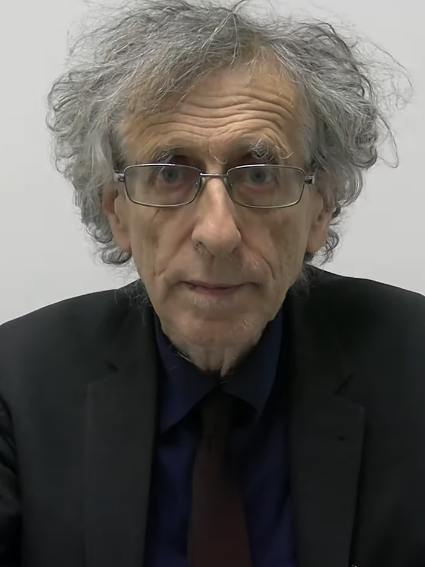
Piers Richard Corbyn (born 10 March 1947)[1] is a British weather forecaster, anti-vaccine activist, conspiracy theorist, and former politician.[n 1] Corbyn was born in Wiltshire and raised in Shropshire wherein he attended Adams' Grammar School. He was awarded a first class BSc degree in physics from Imperial College London in 1968 and a postgraduate MSc in astrophysics from Queen Mary College, University of London, in 1981. Corbyn was a member of the Labour Party and served as a councillor in the London Borough of Southwark from 1986 to 1990. He is the elder brother of former Labour Party leader Jeremy Corbyn, leaving Labour in 2003 due to his opposition to the Iraq War.
Key Information


Corbyn ran a weather monitoring company called WeatherAction in the 1990s and gained some prominence in the media for his predictions and, later more so, for his rejection of the scientific consensus on climate change.
Throughout the COVID-19 pandemic, he was a prominent proponent of conspiracy theories. He described SARS-CoV-2 as a "hoax", frequently campaigned against lockdowns and against COVID-19 vaccines, and described COVID-19 vaccines as dangerous. Corbyn was arrested on several occasions for taking part in protests against public health laws, and on suspicion of encouraging people to burn down the offices of members of Parliament.[2]
Early life and education
[edit]Piers Corbyn was born on 10 March 1947 in Chippenham, Wiltshire.[1][3] He grew up at Yew Tree Manor in Pave Lane, in Newport, Shropshire, a 17th-century country house which was once part of the Duke of Sutherland's Lilleshall estate.[4][5] He began recording weather and climate patterns in 1962 at the age of fifteen, constructing his own observation equipment.[6] He attended Castle House School and Adams' Grammar School in Newport, Shropshire.
Higher education
[edit]At 18, he went to Imperial College London,[1] being awarded a first class BSc degree in physics in 1968.[7] He commenced postgraduate research there into superconductivity, but then went into student representation and politics for some years. In 1979, he returned to postgraduate study at Queen Mary College, University of London, being awarded an MSc in astrophysics in 1981.[8] While he was an undergraduate, an article by Corbyn was published in the Royal Meteorological Society's magazine Weather discussing a brine barometer and an electrical thermometer.[1]
Student representative
[edit]In 1969, Corbyn became the first president of the Imperial College Students' Union to be directly elected by the student body. As president until 1970, Corbyn was successful in establishing a sabbatical union president, enabling the elected student leader to be registered at the college without having to study or pay fees (in fact they received a grant from the college and union).[9]
Corbyn set up a short-lived Imperial College Representative Council, seats on which were distributed between members of the college on the basis of their numbers, a system that almost gave students a majority. The ICAUT, a staff union, refused to cooperate with this student-led initiative. Although this particular council did not survive, increased student representation on college boards and committees became a lasting success of Corbyn's time as ICU president.[citation needed]
Corbyn, together with the rector at the time, Lord Penney, received the Queen when she opened a new administrative building in 1969. During the visit Corbyn petitioned the Queen in front of 900 people, asking for students to be given greater say in the governance of the college.[10]
Career
[edit]Housing-rights activist
[edit]Corbyn was a housing and squatters' rights activist in the north Paddington area of the City of Westminster in the mid-1970s. He helped organise the All London Squatters Federation, the Squatters Union and the Squatters Action Council (SAC).[11] Although they issued publications and mounted protests, in the assessment of the Metropolitan Police Special Branch the "real activists" in these organisations, Corbyn among them, were "limited to not more than about a dozen persons" and had "very little influence on squatters".[12]
In 1974, he stood for election to Westminster City Council in Harrow Road ward as a Squatters and Tenants candidate; in 1978, he and a colleague stood in Harrow Road as Decent Housing candidates.[13] In the 1977 GLC election he was the International Marxist Group candidate for Lambeth Central.[14]
He and some of the squatters in Elgin Avenue were, as a result of their campaign which included the building of barricades against eviction, rehoused by the GLC in 1975 spread out between Westminster and other London boroughs to discourage the risk of further united action. He later moved from that rehousing in Rust Square to the Alvey Estate in Southwark where he became a leader of the tenants association.[citation needed]
Party politics
[edit]Corbyn was a member of the Labour Party. He was elected as a Labour councillor for Burgess Ward of the Southwark London Borough Council in 1986 but lost in 1990.[15] In 1987, Corbyn was arrested for the defacing of an SDP–Liberal Alliance poster, but cautioned and released without charge.[16] For seven years he was an unpaid campaigns organiser in Southwark and Bermondsey, being thanked by Tony Blair in 1998 at Downing Street.[17] Corbyn left the Labour Party in 2002 in the run up to the invasion of Iraq,[18] and stood as an independent candidate in 2002 and in a 2015 council by-election.[19] According to The Sunday Times in September 2017, his attempt to rejoin the Southwark Constituency Labour Party in January 2017 was blocked.[18]
His brother, Jeremy Corbyn, was elected MP for Islington North in 1983, was re-elected in every following election as of 2025[update], and served as Leader of the Labour Party and hence Leader of the Opposition from 2015 to 2020. In August 2015, Corbyn supported his brother's campaign in the Labour Party leadership election, on the basis that he stood for proper debate and accountability, including on climate.[20][21][22] On Twitter, he urged people to register to vote and back Jeremy Corbyn to lead the Labour Party.[23]
In March 2016, Corbyn was among a group of protesters at a Lambeth council meeting who reportedly "screamed abuse in the faces" of party councillors. Corbyn later told the BBC that he personally sought to make his points by talking to people, rather than shouting.[24]
WeatherAction
[edit]Following some years of weather prediction as an occupation, he formed WeatherAction, a business, in 1995.[1] WeatherAction is the business through which Corbyn sells his predictions. He has in the past bet on these predictions. His betting attracted much interest in 1990, when his predictions of severe weather were met by a year of the "worst extremes".[25]
WeatherAction was formerly listed on the Alternative Investment Market (AIM) as 'Weather Action Holdings plc' in 1997,[26] and was transferred back to private ownership in 1999, primarily because of sustaining increasing losses and the impact of annual £70,000 costs related to listed status on annual revenues of £250,000.[27] Corbyn reacquired the weather prediction business; the listed shell was taken over by investors and changed its name to 'InternetAction.com', with the intent of researching potential net-based takeover targets.[28]
WeatherAction left the Alternative Investment Market in 1999 after reported losses of £480,000 incurred during its time as a public company; its share price dropped from 79p a share to 24p.[27]
Prediction methods
[edit]Corbyn's technique is stated to combine "statistical analysis of over a century of historical weather patterns with clues derived from solar observations."[1] He considers past weather patterns and solar observations and sun-earth magnetic connectivity. However, meteorological studies show that such influences cause minimal impact on the Earth's atmosphere.[29]
Scientific review
[edit]The only study involving Corbyn's work published in a peer-reviewed journal was in the Journal of Atmospheric and Solar-Terrestrial Physics (2001). Its investigation was limited to Corbyn's "likely damaging gale periods" predictions for the island of Great Britain for the period October 1995 – September 1997. Corbyn's enlisted work (carried out for a consortium of insurance companies) was only for the most likely periods of the strongest winds and specifically not a full forecast to include lesser winds:[30]
Forecasts prepared by WeatherAction would repay further attention. The results provide little evidence to dismiss the observed success rates as being attributable to mere chance or good fortune. Indeed the balance of evidence indicates that the system performs better than chance although it is recognized that the margin of success differs greatly between the seasons and is lowest in winter when gales are most frequent.
This analysis has been wholly empirical in nature, seeking only to establish the success levels of the gale forecasts. Other aspects of the forecasts have not been considered in this evaluation. Inevitably however these results draw into the debate questions surrounding the methodology by which the forecasts are prepared. This is not, however, the arena in which such issues should be taken up.
In a 1999 edition of Wired magazine, researchers Ian Jolliffe and Nils Jolliffe stated of Corbyn's predictions that:[31] "It is unusual for most of the detail to be completely correct, but equally it is rare for nearly everything to be wrong… Some forecasts are clearly very good, and a few are very poor, but the majority fall in the grey area in between, where an optimistic assessor would find merit, but a critical assessor would find fault."
In a 2012 article in Wired titled "The Fraudulent Business of Earthquake and Eruption Prediction",[32] Erik Klemetti, an assistant professor of Geosciences at Ohio's Denison University accused Corbyn of "cherry-picking" and said people who claimed to be able to forecast earthquakes were "faith healers of the geologic community and should be seen as such."
Media coverage
[edit]Critics have pointed to inaccurate predictions, such as a white Easter in 1989,[33] and "raging weather" in September 1997.[34] WeatherAction predictions were contested by the Met Office in 2008.[35]
While he was Mayor of London, Boris Johnson repeatedly suggested that Corbyn might be correct in his denial of anthropogenic climate change.[36]

Let London Live
[edit]In January 2021, it was announced that Corbyn would stand for his own party, Let London Live, in the 2021 London mayoral election and 2021 London Assembly election.[37] On 19 April, Corbyn told the BBC that if he were to be elected then he would "end lockdown on day one as mayor".[38] He finished 11th with 20,604 votes (0.8%) in the mayoral election, while his party finished 12th on the London-wide list with 15,755 votes.[39] He stood for Let London Live in the 2022 Southwark London Borough Council election.
He stood as a candidate in the 2023 Uxbridge and South Ruislip by-election for Let London Live;[40] Corbyn finished 11th of 17 candidates, receiving 101 votes (0.3%).[41]
Let London Live was deregistered as a political party in November 2023.[42]
As an independent he stood in Bermondsey and Old Southwark constituency in the 2024 general election; he received 403 votes (1.1%).
Promotion of conspiracy theories
[edit]In 2020, Corbyn was reported by Hope not Hate and the Community Security Trust to have attended a meeting organised by Keep Talking, a conspiracy theory discussion group based in the United Kingdom which has invited on occasion guest speakers involved in Holocaust denial.[43][44]
Climate change denial
[edit]Corbyn rejects the scientific consensus on climate change. He denies that humans play a role in climate change, and spreads false and discredited narratives about the issue. He has said that the media, Met Office and "corrupt scientists" are brainwashing the public as part of a Qatar-run conspiracy to keep oil prices high.[45]
Corbyn has stated his belief that the anthropogenic contribution to global warming is minimal, with any increase in temperature due to increased solar activity.[46] In 2009 he attended the International Conference on Climate Change organised by the Heartland Institute.[47]
Corbyn featured in a Channel 4 documentary The Great Global Warming Swindle in 2007; a scientifically reviewed complaint to Ofcom noted that he was introduced as 'Dr Piers Corbyn, Climate Forecaster' despite not having a doctorate nor any qualification specifically in climate science or environmental science.[48] In a 2016 interview Corbyn suggested that Margaret Thatcher endorsed the idea of man-made climate change as a strategy for phasing out the British coal industry and defeating the miners union in the 1984–85 miners' strike.[49] However, there is no evidence that Thatcher used environmental arguments about climate change at the time; her support for climate change policies did not start until later in the 1980s.[50]
In 2015, BBC Radio 4 apologised for an "unfortunate lapse" in a documentary presented by Daily Mail journalist Quentin Letts, which featured Corbyn in a critique of the Met Office's views on climate change while failing to mention the scientific consensus.[51]
In March 2016, Corbyn participated in a BBC climate change debate which resulted in several people complaining to the BBC for giving him airtime.[52]
He was interviewed by Dutch filmmaker Marijn Poels for his 2017 documentary feature film about climate, energy and agriculture, called The Uncertainty Has Settled.[53][54][55]
In April 2019, Corbyn tweeted about the Swedish environmental activist Greta Thunberg with an image of her next to a Nazi swastika, describing her as an "ignorant, brainwashed child".[56]
In April 2023 Corbyn was removed from an Extinction Rebellion church service in London after gatecrashing the event and telling environmental activists that man-made climate change "does not exist" and that they were "working for the Devil". The crowd, which had gathered for a service titled "No Faith in Fossil Fuels", began to sing the hymn "Amazing Grace" as he was escorted away.[57]
COVID-19 denial
[edit] | This section may be too long to read and navigate comfortably. (December 2021) |
Corbyn has stated his belief that COVID-19 and the associated ongoing pandemic is a "hoax".[58] On Twitter on 16 March 2020, he tweeted from an account that was later suspended an unfounded conspiracy theory that Bill Gates, George Soros and others had created the pandemic, that this was to mass vaccinate the world's population, and that vaccines are dangerous.[59][60][61] He called the pandemic a "psychological operation to close down the economy in the interests of mega-corporations" on Good Morning Britain; Dr. Hilary Jones described his views as spurious and "extremely dangerous" and hosts Piers Morgan and Susanna Reid challenged him during the programme.[62]
2020
[edit]On 16 May 2020, Corbyn was one of 19 people arrested for refusing to leave and failing to provide details whilst protesting against the UK's COVID-19 lockdown in Hyde Park, London. On this occasion, he advocated coronavirus-related 5G conspiracy theories and anti-vaccination claims before being arrested.[63][64][65]
On 30 May, Corbyn attended another protest at Hyde Park, and was again charged with, as described in The Independent, "contravening coronavirus rules".[66]
On 29 August, Corbyn was arrested by the Metropolitan Police near Trafalgar Square and warned he would be issued with a fixed penalty notice (FPN) for £10,000, on suspicion of breaking new Health Protection Regulations (2020) for the offence of holding a gathering of more than 30 people in an outdoor place. He appeared alongside conspiracy theorist David Icke and singer Chico Slimani.[67] Corbyn was fined £10,000 for organising an anti-lockdown rally in Trafalgar Square, London.[68]
On 5 September, Corbyn attended and helped to organise an anti-lockdown rally organised by StandUpX Mission in Sheffield. During the rally he argued: that the lockdown was taking place so the British government can "end your rights and freedom, to control you"; that the shift to mass vaccination was dangerous; and that the British government have a hidden agenda. At the end of the rally, Corbyn was arrested[69] and charged with three offences under the Health Protection (Coronavirus) Regulations 2020.[66] The charges were later dropped.[70]
On 6 September, Corbyn invited Sadiq Khan to permit a rally in Trafalgar Square London at noon on 26 September, and he invited MPs of any party to speak from the podium at the London rally.[71] On 18 September, Corbyn spoke at a rally in Cornwall against the use of face masks to protect against COVID-19, and described all politicians as liars.[72] On 24 September, Corbyn was one of the main speakers at an anti-mask rally in Norwich.[73] On 26 September, Corbyn attended a rally in Leeds and repeated the claims he had made in Cornwall.[74] By mid-September, Corbyn had been blamed for a split among conspiracy theorists promoting misinformation about COVID-19, with Kate Shemirani and Mark Steele no longer sharing platforms with Corbyn and David Icke.[58]
On 3 October, Corbyn attended and spoke at an anti-lockdown protest at Old Market Square in Nottingham.[75] On 9 October, Corbyn attended an anti-lockdown event in Oxford.[76] On 11 October, Corbyn attended an anti-lockdown protest outside the Welsh Parliament in Cardiff. He expressed his opposition to masks and told protesters to "free your face".[77] On 14 October, Corbyn was the leader of an anti-lockdown protest in Sheffield. During his speech at the protest, he called for supporters to disobey public health restrictions. He described the British Parliament as a "brainwashing institution" that was full of "fake scientists" who are "paid liars".[78]
On 14 October, Corbyn attended an anti-lockdown protest in Bristol which was organised by the conspiracy theory group Stand UpX. He was one of fourteen people who were arrested for breaching new laws on assembly during the pandemic.[79]
On 16 October, Corbyn attended a demonstration in Soho, London, against the 10pm pub curfew. He said: "We're here to drink against the curfew. To oppose the lockdowns, to oppose job losses caused by lockdowns, to oppose all of it. The whole lot should be lifted now."[80]
On 17 October, Corbyn attended an anti-lockdown protest through Hyde Park and Oxford Street in London.[81] Corbyn said to the crowd "Bill Gates wants vaccinations to control you and to control women's fertility to reduce world population".[82]
On 18 October, Corbyn attended an anti-lockdown protest in Clayton Square, Liverpool City Centre. In a speech to protesters, he denied the existence of COVID-19, also suggested it was a bioweapon, and said "it was used to unleash the most monstrous power-grab the world has ever seen".[83]
On 24 October, Corbyn attended an anti-lockdown protest by Save Our Rights UK using the slogan "Stop The New Normal" in London.[84] The police determined that the protesters were not adhering to the coronavirus rules and decided to break up the protest. At least 18 people were arrested during the protest.[85][86]
Corbyn was due to appear at Westminster Magistrates' Court on 17 November 2020 for breaching coronavirus rules on 16 and 30 May 2020. He was due to stand trial on 23 October 2020, but late disclosure of police logbooks delayed the proceedings.[87] Corbyn's barrister told the court that he was "specifically targeted" by the police.[87] Corbyn spoke outside of the court before the hearing on 23 October 2020: "Whatever happens, if they impose a fine, I will not pay the fine. I'm not going to pay any fines for these anti-just, illegal laws".[88]
Corbyn initiated and conceptualised an anti-vaccination leaflet which was distributed in Barnet and other areas of North London in December 2020 and Southwark in January 2021 comparing the Covid vaccine campaign to the Holocaust.[89][90] The leaflet had a drawing of the entrance to the Auschwitz concentration camp in which the Nazis' slogan Arbeit macht frei ("Work sets you free") had been altered to read "Vaccines are safe path to freedom."[90] Corbyn denied the accusation of antisemitism, saying, "I was married for 22 years to a Jewess and obviously her mother's forebears fled the Baltic states just before the war because of Hitler or the Nazis in general. I've worked with Jewish leading world scientists over the last 30 years. I've also employed Jewish people in my business Weather Action, one of whom was a superb worker".[91]
2021
[edit]During a voluntary visit to a London police station, Corbyn was arrested on 3 February 2021 on suspicion of malicious communications and public nuisance in connection with the leaflet;[92] he was released on bail until early March, along with a man aged 37.[93] Corbyn was arrested again at a protest in Fulham, West London on 27 February.[94] In the meantime, he claimed to Sky News via email that, while he accepted the existence of COVID-19, he spuriously compared it to flu, contradicting his leaflet's claim that COVID does not exist, as well as denying that there was a pandemic.[95] On 1 March the Metropolitan Police reported that Corbyn had been charged along with Kate Shemirani for a series of breaches of the UK Coronavirus regulations.[96]
In June, the police began investigating Corbyn after they became aware of a video that surfaced online of him removing public health signs informing people to maintain social distance and to wear a face mask on a London Underground train.[97]
On 10 July, Corbyn and other anti-lockdown protesters staged a protest outside a vaccine centre bus in Brighton and Hove, which subsequently caused the NHS Brighton and Hove CCG to announce that they had to cancel some vaccine jabs because of "disruption during the anti-lockdown measures protest in the city". The protest was condemned by the Brighton and Hove council leader Phelim Mac Cafferty, who said, "It is incredibly disappointing to see the irresponsible actions of a few putting in danger the many."[98]
On 20 July, Corbyn attended and spoke at a protest outside the Labour Party's headquarters opposing the expulsion of Labour Party members who had been accused of antisemitism. He said that he was "100 per cent" behind "those being purged from the Labour Party".[99] During his speech, Corbyn said that complying with the government's vaccine rollout was the same as the German people submitting to Nazi rule, stating, "You know what happened in Germany... they believed in Hitler. You know what happened, the rest is history".[99] Corbyn's attendance at the protest was not welcomed by everyone present at the protest, and some of the protesters distanced themselves from him due to his COVID-19 denial.[99]
In July, YouTube pranksters Josh Pieters and Archie Manners, posing as AstraZeneca investors, met Corbyn and offered him £10,000 under the condition that he would stop criticising the AstraZeneca vaccine.[100] In reality, Corbyn received Monopoly board game money.[101] The pranksters told LBC when asked whether they feel sorry for Corbyn that they feel more sorry for "those he's conning".[102]
Corbyn was present at an anti-vaxxer demonstration on 9 August outside Television Centre, London (protesters falsely assumed it was still a major BBC facility) and outside the ITN building on Gray's Inn Road on 23 August 2021.[103][104]
In September 2021, Corbyn staged a protest outside the Old Bailey in London, on the day former Metropolitan Police officer Wayne Couzens was being sentenced for the murder of Sarah Everard. Corbyn said the fact that Couzens showed Everard his police warrant card and claimed to be arresting her for breaches of the UK's lockdown regulations in order to kidnap her was evidence that coronavirus laws were "not about controlling a virus" but instead "about controlling the public". The protest was widely seen as inappropriate given the highly disturbing and emotive nature of the Everard murder, and a passerby approached Corbyn shouting "How dare you hijack Sarah's death for your own cause?".[105]
Corbyn attended another large demonstration against the UK government's proposed COVID restrictions on 18 December 2021 in Parliament Square. There, he featured in another music video, this time alongside rapper Remeece, in which they walk through crowds of protestors whilst repeatedly calling for viewers to refuse to take the COVID-19 vaccine.[106] In a later speech at the demonstration, Corbyn's comments on these proposals to enforce guidelines to combat the spread of the Omicron variant of the virus were met with widespread backlash. He had urged the crowd "to hammer to death those scum, those scum who have decided to go ahead with introducing new fascism", as well as suggesting that the offices of MPs who had voted for the restrictions should be burned down. Home Secretary Priti Patel responded to online footage of Corbyn's speech, describing it as "sickening" and called for the police to take action against him.[107] On 19 December, Corbyn was arrested for his comments.[2][108][needs update]
See also
[edit]Notes
[edit]- ^ For the conspiracy theorist descriptor, see:
- Glastonbury 5G report 'hijacked by conspiracy theorists'. BBC News.
- Anti-lockdown, anti-vaccine and anti-mask protesters crowd London's Trafalgar Square. The Independent.
- Coronavirus protests: Jeremy Corbyn's brother among protesters arrested at Hyde Park 'mass gathering'. The Independent.
- Piers Corbyn charged with breaching lockdown rules on two occasions. The Daily Telegraph.
- Who is Jeremy Corbyn's brother Piers? Mask protests, climate denial and support for a no-deal Brexit. The Daily Telegraph
References
[edit]- ^ a b c d e f Standage, Tom (1 February 1999). "Everyone Complains About the Weather... Piers Corbyn Is Doing Something About It". Wired. Archived from the original on 4 November 2012.
- ^ a b Wolfe-Robinson, Maya (19 December 2021). "Piers Corbyn arrested on suspicion of calling for MPs' offices to be burned down". The Guardian.
- ^ Trim, Liam; Colwill, Jack (3 May 2020). "5 dangerous virus claims made by anti-lockdown protests debunked". SomersetLive. Archived from the original on 28 October 2020. Retrieved 28 September 2020.
- ^ Burgess, Kaya (5 December 2016). "Corbyn's family mansion for sale". The Times. Archived from the original on 11 December 2019. Retrieved 27 August 2018.
- ^ Ross, Tim; Sawyer, Patrick (13 September 2015). "Labour Turns Left: How the outsider with two grade Es at A-level became a prime minister in waiting". The Sunday Telegraph. Archived from the original on 2 October 2015. Retrieved 17 December 2016 – via Press Reader.
- ^ Tom Standage (1 February 1999). "Everyone Complains About the Weather... Piers Corbyn Is Doing Something About It". wired. Retrieved 12 March 2023.
- ^ INTERVIEW: PIERS CORBYN Archived 5 March 2016 at the Wayback Machine 1 June 2007 issue of Executive Intelligence Review.
- ^ Whether the weather be... Archived 8 December 2015 at the Wayback Machine QUAD Magazine, 2007, Queen Mary University of London
- ^ The History of Imperial College London, 1907–2007, Hannah Gay, p. 437
- ^ Gay, Hannah (2007). The History of Imperial College London, 1907–2007. London: Imperial College Press, 437, 477 and Illustration 102. ISBN 978-1-86094-708-7.
- ^ Vasudevan, Alexander (16 May 2017). The Autonomous City: A History of Urban Squatting. Verso Books. ISBN 9781781687871 – via Google Books.
- ^ Deputy Assistant Commissioner, Metropolitan Police, Special Branch (12 August 1976). Special Report: Squatting. Undercover Policing Inquiry, 2021.
{{cite book}}: CS1 maint: multiple names: authors list (link) - ^ Harrow Road ward Archived 20 August 2007 at the Wayback Machine election results
- ^ "Greater London Council Election results: Lambeth". Archived from the original on 4 October 2006. Retrieved 14 March 2007.
- ^ Ex-Labour councillor Piers Corbyn to stand in Chaucer by-election Archived 10 September 2015 at the Wayback Machine Friday 3 April 2015, Bankside Press
- ^ "In Brief - A Labour candidate's brother was arrested". The Glasgow Herald. 11 June 1987. Archived from the original on 18 July 2021.
- ^ Paul Vallely He visited in glory days of '97, but has Blair kept his vow to Aylesbury Estate? Archived 2 July 2015 at the Wayback Machine The Independent, Tuesday 12 April 2005
- ^ a b Wheeler, Caroline; Leake, Jonathan (24 September 2017). "Jeremy Corbyn's brother Piers rejected by Labour". The Sunday Times. Archived from the original on 24 September 2017. Retrieved 24 September 2017.(subscription required)
- ^ "Chaucer by-election nears". Southwark News. 30 April 2015.
- ^ Piers Corbyn denies claims that he opposes brother Jeremy’s Labour leadership bid Archived 24 October 2015 at the Wayback Machine Southwark News, 20 August 2015
- ^ Piers Corbyn: the other rebel in the family" Archived 22 December 2019 at the Wayback Machine, The Guardian. Retrieved on 5 March 2018.
- ^ Usborne, Simon (14 August 2015). "Is there trouble ahead for Jeremy Corbyn? Enter sibling Piers, the wacky weatherman..." The Independent. Archived from the original on 13 December 2019. Retrieved 13 November 2018.
- ^ Corbyn, Piers (11 August 2015). "ONLY poll that counts open14Aug. Back #JeremyCorbyn 2lead Labour! Register 2vote by Midday12Aug #Corbyn4Labour #Piers". Twitter. Archived from the original on 7 October 2019. Retrieved 15 July 2017.
- ^ Mason, Chris (24 March 2016). "Jeremy Corbyn's brother 'part of Lambeth council meeting disruption'". BBC News. Archived from the original on 2 May 2021. Retrieved 2 May 2021.
- ^ Weather: The man who makes money out of sun-spots Archived 18 July 2021 at the Wayback Machine, The Independent, 24 October 1997.
- ^ Haven't the foggiest? Read on Archived 18 July 2021 at the Wayback Machine, The Independent, 22 November 1998. Said to be listed "13 months" prior to publication, ie 1997.
- ^ a b Atkinson, Dan (24 November 1999). "Weather goes private again". The Guardian. London. Archived from the original on 7 May 2014. Retrieved 22 May 2010.
- ^ MacAlister, Terry (21 December 1999). "Netvest shows 500% return". The Guardian. London. Archived from the original on 7 May 2014. Retrieved 22 May 2010.
- ^ Black, Richard (10 June 2007). "'No Sun link' to climate change". BBC News. Archived from the original on 13 September 2007. Retrieved 7 January 2008.
- ^ The Journal of Atmospheric and Solar-Terrestrial Physics, vol. 63, issue 1, January 2001, pp. 29–34: [1] Archived 16 June 2012 at the Wayback Machine URL accessed 8 September 2015. DOI 10.1016/S1364-6826(00)00155-3
- ^ How Good Is He, Anyway? Archived 24 October 2012 at the Wayback Machine – Wired, Issue 7.02, Feb 1999
- ^ "The fraudulent business of earthquake and eruption prediction". Wired. Archived from the original on 24 January 2013. Retrieved 11 March 2017.
- ^ Feedback – 15 April 1989 – New Scientist Archived 22 October 2012 at the Wayback Machine (Subscription only)
- ^ Rowan, Matthew (22 November 1998). "Haven't the foggiest?". The Independent. London. Archived from the original on 10 November 2012. Retrieved 20 November 2010.
- ^ "Prediction of −17 °C freeze cuts no ice with Met Office Archived 18 July 2021 at the Wayback Machine" Helen Pidd, The Guardian, January 2008
- ^ Ward, Bob (23 January 2013). "Boris Johnson's climate change "scepticism" is an embarrassment to London's scientists". New Statesman. Archived from the original on 5 January 2020. Retrieved 16 May 2020.
- ^ Corbyn, Piers (1 January 2021). "I Announce Running For Mayor Of London - special VID 31st embargoed to midnight". Twitter. Archived from the original on 18 July 2021. Retrieved 2 January 2021.
- ^ "Piers Corbyn: 'I will end lockdown on day one as mayor'". BBC. 19 April 2021. Archived from the original on 30 April 2021. Retrieved 30 April 2021.
- ^ "Results 2021". London Elects. 9 May 2021. Archived from the original on 8 May 2021. Retrieved 9 May 2021.
- ^ "Uxbridge by-election full candidate list revealed". BBC News. 23 June 2023. Retrieved 24 June 2023.
- ^ "Uxbridge and South Ruislip by-election 2023 results". Hillingdon Council. Retrieved 21 July 2023.
- ^ "Let London Live Party registration". The Electoral Commission. Retrieved 19 February 2024.
- ^ Townsend, Mark (22 February 2020). "UK left activists attended events with far right antisemites". The Observer. Archived from the original on 13 May 2020. Retrieved 24 April 2020.
Also present in the audience was Ian Fantom, co-founder of Keep Talking and a 9/11 "truther", who has appeared alongside Piers Corbyn, older brother of the Labour leader, at a Keep Talking event.
- ^ Rich, Dave; Muhall, Joe. "Inside Keep Talking" (PDF). Hope not Hate and Community Security Trust. pp. 1–28. Archived (PDF) from the original on 10 March 2020.
Piers Corbyn, older brother of Jeremy, has attended several meetings and addressed at least one event.
- ^ "Is there trouble ahead for Jeremy Corbyn? Enter sibling Piers, the wacky weatherman..." The Independent. 13 August 2015. Archived from the original on 13 December 2019. Retrieved 8 September 2017.
- ^ Adams, Tim (24 January 2016). "Piers Corbyn: the other rebel in the family". The Observer. Archived from the original on 22 December 2019. Retrieved 5 October 2019.
- ^ Think-tanks take oil money and use it to fund climate deniers Archived 23 September 2015 at the Wayback Machine The Independent, 7 February 2010
- ^ "Full Ofcom Complaint, Table of Contents, page i". Archived from the original on 4 March 2016. Retrieved 11 September 2015.
- ^ Piers Corbyn: the other rebel in the family Archived 22 December 2019 at the Wayback Machine The Observer, Tim Adams, 24 January 2016
- ^ The Independent (8 August 2021). "What did Margaret Thatcher have to say about climate change?". Independent.co.uk. Retrieved 28 September 2023.
- ^ What’s The Point of… the Met Office? Archived 14 September 2017 at the Wayback Machine Ian Burrell, October 2015, The Independent
- ^ Ward, Victoria (20 March 2016). "Viewers criticise BBC for 'misleading' Piers Corbyn appearance". The Telegraph. Archived from the original on 2 May 2021. Retrieved 2 May 2021.(subscription required)
- ^ Verheggen, Bart (17 July 2017). "A critical look at "The uncertainty has settled" documentary by Marijn Poels". My view on climate change. Retrieved 21 September 2022.
- ^ Reid, Andrew (10 October 2017). ""The Uncertainty Has Settled", a feature film shot using Magic Lantern raw video - Filmmaking Gear and Camera Reviews". EOSHD.com - Filmmaking Gear and Camera Reviews. Retrieved 21 September 2022.
- ^ Jakobs, Jan (3 March 2017). "The Uncertainty Has Settled". Marijn Poels. Original review - De Doorbraak / Written by: Jan Jacobs, politics and science journalist. Retrieved 21 September 2022.
- ^ Shute, Joe (31 August 2020). "Who is Jeremy Corbyn's brother Piers? Mask protests, climate denial and support for a no-deal Brexit". The Telegraph. Archived from the original on 6 September 2020. Retrieved 6 September 2020.
- ^ The Independent (21 April 2023). "Piers Corbyn gatecrashes Extinction Rebellion church service to tell eco-activists they're 'working for the Devil'". Independent.co.uk. Retrieved 30 September 2023.
- ^ a b Kennedy, Dominic; Ellis, Rosa (11 September 2020). "ANTIVAX Piers Corbyn blamed for split among coronavirus deniers". The Times. Archived from the original on 11 September 2020. Retrieved 12 September 2020.(subscription required)
- ^ Irwin, Luke (17 March 2020). "PECR - cyber attacks soar during coronavirus". IT Governance UK.
- ^ York, Chris (14 September 2020) [20 June 2020]. "Jeremy Corbyn's Brother, Piers, Charged With Breaching Coronavirus Regulations At 5G Protest". HuffPost. Archived from the original on 20 June 2020. Retrieved 15 December 2020.
- ^ Trim, Liam (3 May 2020). "5 dangerous coronavirus claims made by Piers Corbyn at Glastonbury anti-lockdown protest debunked". Somerset News. Archived from the original on 28 October 2020. Retrieved 28 September 2020.
- ^ "Anti-lockdown protestor Piers Corbyn challenged by Dr Hilary over COVID-19 'hoax' claims". ITV News. 1 September 2020. Archived from the original on 2 September 2020. Retrieved 2 September 2020.
- ^ Parveen, Nazia (16 May 2020). "Piers Corbyn among 19 held in coronavirus lockdown protests". The Guardian. Archived from the original on 20 June 2020. Retrieved 16 May 2020.
- ^ Dearden, Lizzie (16 May 2020). "Coronavirus protests: Jeremy Corbyn's brother among protesters arrested at Hyde Park 'mass gathering'". The Independent. Archived from the original on 2 June 2020. Retrieved 18 May 2020.
- ^ Bird, Steve (16 May 2020). "'Wish you weren't here': Anger mounts as visitors flock to beauty spots and national parks". The Telegraph. Archived from the original on 27 November 2020. Retrieved 15 December 2020.
- ^ a b Wylie, Catherine (8 September 2020). "Piers Corbyn charged with breaking coronavirus laws". The Independent. Press Association. Archived from the original on 1 November 2020. Retrieved 8 September 2020.
- ^ York, Chris (30 August 2020). "Jeremy Corbyn's Brother Piers Fined £10,000 Over Trafalgar Square Anti-Mask Protest". HuffPost. Archived from the original on 1 November 2020. Retrieved 30 August 2020.
- ^ Gayle, Damien (30 August 2020). "Piers Corbyn fined £10,000 for organising anti-lockdown rally". The Guardian. Archived from the original on 21 September 2020. Retrieved 2 September 2020.
- ^ "'We are now a movement' Piers Corbyn tells hundreds at Sheffield 'anti-mask' protest". The Star. 6 September 2020. Archived from the original on 1 November 2020. Retrieved 7 September 2020.
- ^ "Coronavirus: Piers Corbyn Sheffield charges dropped". BBC News. 2 November 2020. Archived from the original on 26 November 2020. Retrieved 15 December 2020.
- ^ Corbyn, Piers (6 September 2020). ""OUR MOVEMENT, WE CAN WIN" Says Piers Corbyn". YouTube. Archived from the original on 6 September 2020. Retrieved 10 September 2020.
- ^ Trewhela, Lee (18 September 2020). "Piers Corbyn calls brother Jeremy a liar at controversial Cornwall anti-mask rally". CornwallLive. Archived from the original on 24 September 2020. Retrieved 20 September 2020.
- ^ "Piers Corbyn leads coronavirus sceptics protest in Norwich". Norwich Evening News. 24 September 2020. Archived from the original on 26 September 2020. Retrieved 27 September 2020.
- ^ Drury, Colin (26 September 2020). "This is genocide': Inside the bizarre rise of coronavirus conspiracy theories". The Independent. Archived from the original on 16 October 2020. Retrieved 27 September 2020.
- ^ "Opinion: Anti-lockdown protest in Nottingham fails to grasp complexity of the pandemic". Nottingham Post. 4 October 2020. Archived from the original on 7 October 2020. Retrieved 5 October 2020.
- ^ Rice, Liam (10 October 2020). "Piers Corbyn speaks at coronavirus demonstration in Oxford". Oxford Mail. Archived from the original on 17 October 2020. Retrieved 15 October 2020.
- ^ "Covid rules breached at Cardiff anti-vaccination and anti-mask protest attended by Piers Corbyn". ITV News. 12 October 2020. Archived from the original on 14 October 2020. Retrieved 15 October 2020.
- ^ Williams, Molly (14 October 2020). "Piers Corbyn leads anti-lockdown protest in Sheffield and brands Covid-19 a 'hoax'". The Star. Archived from the original on 19 October 2020. Retrieved 15 October 2020.
- ^ Dearden, Lizzie (14 November 2020). "Lockdown protests: Jeremy Corbyn's brother arrested at conspiracy theorist demonstration in Bristol". The Independent. Archived from the original on 19 December 2020. Retrieved 15 December 2020.
- ^ Mare, Tess de la (17 October 2020). "Anti-lockdown marchers in London compare Covid-19 to man flu". Belfast Telegraph. Archived from the original on 1 November 2020. Retrieved 18 October 2020.
- ^ Coleman, Liam (17 October 2020). "Jeremy Corbyn's brother Piers joins lockdown rule-breaking revellers in central London". The Independent. Archived from the original on 1 November 2020. Retrieved 18 October 2020.
- ^ Lott-Lavigna, Ruby (17 October 2020). "Anti-Lockdown Conspiracy Theorists March in London as New Tier 2 Rules Hit". VICE. Archived from the original on 19 October 2020. Retrieved 18 October 2020.
- ^ Humphries, Jonathan (18 October 2020). "Conspiracy theorist Piers Corbyn tells crowd of unmasked protesters 'covid is a hoax'". Liverpool Echo. Archived from the original on 19 October 2020. Retrieved 18 October 2020.
- ^ Gayle, Damien (24 October 2020). "Police disperse fourth anti-lockdown march in London". The Guardian. Archived from the original on 24 October 2020. Retrieved 24 October 2020.
- ^ Dearden, Lizzie (24 October 2020). "Police make arrests at London anti-lockdown protest after risk assessment violated". The Independent. Archived from the original on 28 October 2020. Retrieved 24 October 2020.
- ^ "Covid: At least 18 arrested at anti-lockdown protests in London". ITV News. 24 October 2020. Archived from the original on 25 October 2020. Retrieved 24 October 2020.
- ^ a b "Police targeted Piers Corbyn at anti-lockdown protests, court told". The Guardian. Press Association. 23 October 2020. Archived from the original on 24 October 2020. Retrieved 24 October 2020.
- ^ "Piers Corbyn 'specifically targeted by police' at anti-lockdown protest court heard". BBC News. 23 October 2020. Archived from the original on 24 October 2020. Retrieved 24 October 2020.
- ^ Harpin, Lee (16 December 2020). "Piers Corbyn circulates leaflets in north London comparing vaccine campaign to Shoah". The Jewish Chronicle. Archived from the original on 5 February 2021. Retrieved 2 February 2021.
- ^ a b Quinn, Ben (2 February 2021). "Piers Corbyn investigated over Covid leaflets likening vaccination to Auschwitz". The Guardian. Archived from the original on 2 February 2021. Retrieved 2 February 2021.
- ^ Fort, Mathilde (4 February 2021). "Piers Corbyn arrested but denies antisemitism, saying he was married to 'Jewess'". The Jewish Chronicle. Archived from the original on 2 May 2021. Retrieved 30 April 2021.
- ^ "Piers Corbyn arrested over vaccine 'Auschwitz leaflet'". BBC News. 4 February 2021. Archived from the original on 27 February 2021. Retrieved 5 February 2021.
- ^ Quinn, Ben (4 February 2021). "Piers Corbyn arrested over leaflets comparing vaccine programme to Auschwitz". The Guardian. Archived from the original on 4 February 2021. Retrieved 5 February 2021.
- ^ "Piers Corbyn led away in handcuffs as he is arrested again at London anti-lockdown march". Yahoo! News. 27 February 2021. Archived from the original on 18 July 2021. Retrieved 28 February 2021.
- ^ "How COVID-conspiracists and anti-vaxxers are getting organised and making money". Sky News. 8 February 2021. Archived from the original on 27 February 2021. Retrieved 1 March 2021.
- ^ "Five people charged with breaches of Coronavirus regulations". Metropolitan Police. Archived from the original on 2 March 2021. Retrieved 9 March 2021.
- ^ Goddard, Emily (19 June 2021). "Police investigating after Piers Corbyn removes social distancing signs from London Tube". The Independent. Archived from the original on 14 July 2021. Retrieved 14 July 2021.
- ^ Glover, Ella (12 July 2021). "Brighton vaccine centre forced to cancel jabs after anti-lockdown protest involving Piers Corbyn". The Independent. Archived from the original on 14 July 2021. Retrieved 14 July 2021.
- ^ a b c Harpin, Lee (20 July 2021). "Piers Corbyn addresses protest outside Labour HQ against antisemitism expulsions". Jewish News.
- ^ Brambilla, Chiara (1 August 2021). "Anti-vaxxer Piers Corbyn takes fake bribe from pranksters posing as Astrazeneca reps". The Independent.
- ^ Plummer, Kate (1 August 2021). "Piers Corbyn tricked into 'accepting' £10,000 on condition he stops criticising AstraZeneca vaccine". The Independent. Retrieved 1 August 2021.
- ^ Hickey, Seán (1 August 2021). "Youtubers who tricked Piers Corbyn tell LBC they're more 'sorry for those he's conning'". LBC. Retrieved 23 August 2021.
- ^ Waterson, Jim (9 August 2021). "Anti-vaccine protesters storm BBC HQ – years after it moved out". The Guardian. Retrieved 23 August 2021.
- ^ Parker, Charlie; Kanter, Jake (23 August 2021). "Antivaxers storm ITN studios and abuse presenter Jon Snow". The Times. Retrieved 23 August 2021. (subscription required)
- ^ Blackall, Molly (30 September 2021). "Sarah Everard: Fury as Piers Corbyn tries to use murder case to protest Covid lockdown laws outside court". i. Retrieved 4 October 2021.
- ^ "Piers Corbyn has now made an anti-vaxx rap and it's truly dreadful". www.indy100.com. 18 December 2021. Retrieved 18 December 2021.
- ^ "Home Sec hits out at 'sickening' clip of Piers Corbyn telling people to 'hammer MPs to death'". LBC. 18 December 2021. Retrieved 18 December 2021.
- ^ "Piers Corbyn arrested over video calling for people to 'burn down the offices of MPs'". Sky News. Retrieved 20 December 2021.

| ||
| Leadership |   | |
| Politics | ||
| Policies | ||
| Elections | ||
| Family |
| |
| In the media | ||
| Post-leadership | ||

| Influences |  | |
|---|---|---|
| Squatter groups | ||
| Legalized squats | ||
| Former squats |
| |
| Notable squatters | ||
| Legal framework | ||
| Linked topics | ||
| Authority control databases: Artists |
|---|

Piers Corbyn
View on GrokipediaPiers Richard Corbyn (born 10 March 1947) is a British astrophysicist and meteorologist who founded and directs WeatherAction, a company specializing in long-range weather and climate forecasting using the Solar-Lunar-Action-Technique (SLAT), which emphasizes solar particle and magnetic activity alongside lunar phases over conventional atmospheric models.[1]
He holds a first-class honours degree in physics from Imperial College London and an MSc in astrophysics from Queen Mary College, with research experience in superconductivity, cosmology, and galaxy formation.[2][3]
The elder brother of former Labour Party leader Jeremy Corbyn, Piers has gained prominence for rejecting anthropogenic global warming, positing instead that solar variability primarily governs temperature trends and extreme weather events, with CO2 acting as an effect rather than a cause of climatic shifts.[4][2]
Corbyn's forecasts have included predictions of cooling periods and specific storm risks, backed by claims of verified accuracy through bookmaker challenges and empirical correlations outperforming official services in certain seasonal outlooks.[1]
Active in public dissent, he has organized and joined protests against COVID-19 lockdowns and vaccine mandates, resulting in multiple arrests for breaching regulations and related charges, and ran as an independent in the 2021 London mayoral election to oppose perceived authoritarian policies.[5][6][7]