Hubbry Logo
PromyelocytePromyelocyteMain
Open search
Promyelocyte
Community hub
Promyelocyte
logo
8 pages, 0 posts
0 subscribers
Be the first to start a discussion here.
Promyelocyte
Promyelocyte
from Wikipedia

Promyelocyte
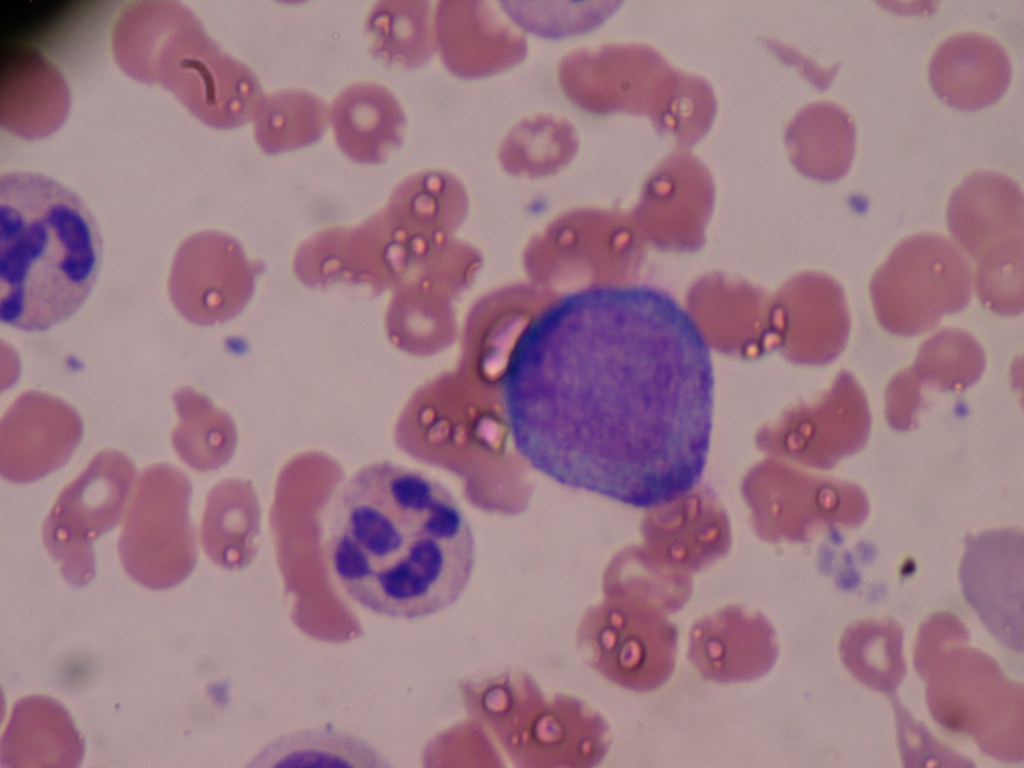
Promyelocyte from bone marrow examination
Details
PrecursorMyeloblast
Gives rise toMyelocyte
LocationBone marrow
Identifiers
THH2.00.04.3.04003
Anatomical terms of microanatomy

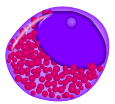
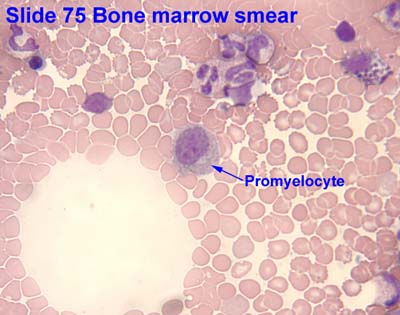
A promyelocyte (or progranulocyte) is a granulocyte precursor, developing from the myeloblast and developing into the myelocyte. Promyelocytes measure 12–20 microns in diameter. The nucleus of a promyelocyte is approximately the same size as a myeloblast but their cytoplasm is much more abundant.[1] They also have less prominent nucleoli than myeloblasts and their chromatin is more coarse and clumped.[1] The cytoplasm is basophilic and contains primary red/purple granules.[2]

Differentiation

[edit]

The differentiation of promyelocytes from hematopoietic stem cells is regulated by various growth factors, cytokines, and transcription factors, that ensure the balanced production of white blood cells for proper immune function.[3] Promyelocytes play a critical role in hematopoiesis by serving as an intermediate in the differentiation pathway leading to mature granulocytes (Hematopoiesis image below). This process involves a series of steps, including proliferation, differentiation, and maturation.[4]

Function

[edit]

The function of promyelocytes are closely linked to their differentiation into mature granulocytes, which include neutrophils, eosinophils, and basophils.[citation needed] These functions are essential for innate immunity and host defense mechanisms, including phagocytosis, inflammation, and immune surveillance.

Clinical significance

[edit]

Abnormalities in promyelocyte development or function can have significant clinical implications, leading to various hematologic disorders. Some of the notable conditions associated with promyelocytes include acute promyeloytic leukemia, myelodysplastic syndromes and infections/inflammatory conditions.[5]

Accumulation of Promyelocytes in Acute promyelocytic leukemia

Acute Promyelocytic Leukemia (APL) is a subtype of Acute Myeloid Leukemia, known for its accumulation of abnormal, course, densely granulated promyelocytes in the bone marrow.[6] The excessive proliferation of promyelocytes, attributing at least 30% of the myeloid cells in the bone marrow, result in a depletion of blood cells, including white blood cells, red blood cells, and platelets.[7][8] This variation is also called 'hypergranual' APL, as hypergranual promyelocytes are characterized by the dense azurophilic granule concentrations in the cytoplasm.[citation needed] APL is often associated with a specific chromosomal translocation involving the retinoic acid receptor alpha (RARα) gene on chromosome 17 and the promyelocytic leukemia gene on chromosome 15.[9]

In a less common variation of APL, called hypogranual APL, patients present with leukocytosis in addition to the excessive abnormal promyelocyte concentration. The cells in hypogranual APL have an irregular nucleus with finer granulation than the typical hypergranual APL.[10]

Treatment of APL involves a three phase regiment: induction phase, consolidation phase, and maintenance phase. The induction phase serves to put APL in remission by reducing the number of leukemic cells and lasts approximately two months. This involves the use of all trans-retinoic acid (ATRA) in combination with arsenic trioxide (ATO), chemotherapy, or chemotherapy plus ATO. The consolidation phase is intended to keep the patient in remission and destroy any remaining leukemic cells. This phase lasts several months and involves the use of ATRA plus ATO, ATRA plus chemotherapy, or chemotherapy alone. The last stage, the maintenance stage, uses a lower dosage of drugs to decrease the risk of patient relapse, and lasts approximately a year.[11]

Myelodysplastic Syndromes (MDS) are a group of disorders characterized by ineffective hematopoiesis or dysplasia changes in some myeloid lineages of the bone marrow. Abnormalities in promyelocyte maturation may contribute to pathogenesis of MDS and its associated complications.[5] These associated complications may include anemia, recurrent infections, excessive bleeding and an increased risk of cancer of the bone marrow/blood cells (leukemia).[12] Treatment of MDS is used to slow the disease, and involves blood transfusions, medications, and bone marrow transplants. There is currently no cure for MDS.

The assessment of promyelocytes and their derivatives is an essential component of the diagnosis of various hematologic disorders. Laboratory test commonly used to evaluate promyelocyte abnormalities include complete blood count (CBC), morphologic evaluation of peripheral blood smears, flow cytometry, and cytogenetic analysis, including bone marrow biopsies with aspirate.[13]

Promyelocytes are essential players in the body's immune system, serving as precursors to mature granulocytes involved in host defense and inflammatory responses. Understanding the characteristics, functions, and clinical significance of promyeloctes is crucial for the diagnosis, management, and treatment of various hematologic disorders.

Additional images

[edit]

References

[edit]
[edit]
Revisions and contributorsEdit on WikipediaRead on Wikipedia
from Grokipedia
A promyelocyte is a in the myeloid lineage during hematopoiesis, specifically an early stage in where it differentiates from the and gives rise to mature granulocytes, including neutrophils, , and . These cells are characterized by intense biosynthetic activity, particularly the formation of primary (azurophilic) granules containing antimicrobial proteins such as , cathepsin G, , and acidic hydrolases, which are essential for the microbicidal functions of mature granulocytes. Morphologically, promyelocytes are large, measuring 10-20 micrometers in diameter, with a high nucleus-to-cytoplasm ratio, a round or oval nucleus featuring fine and 1-2 prominent nucleoli, and basophilic densely packed with reddish-purple azurophilic granules visible under light . In normal , promyelocytes form part of the proliferative compartment of , undergoing before transitioning to the post-mitotic stage, where secondary and tertiary granules begin to develop. This stage is critical for lineage commitment to the granulocytic pathway, ensuring the production of functional leukocytes that contribute to innate immunity and responses. Abnormal proliferation of promyelocytes is associated with certain hematologic disorders, but in healthy individuals, they represent a transient, tightly regulated confined to the .

Definition and Morphology

Definition

A promyelocyte is a granulocyte precursor cell within the myeloid lineage of hematopoiesis, representing an intermediate stage in the development of granulocytes from the myeloblast to the myelocyte. These cells are characterized by the onset of primary (azurophilic) granule formation and commitment to the granulocytic pathway. Promyelocytes are classified into neutrophilic, eosinophilic, and basophilic subtypes based on their emerging granule content and lineage specification, which determines their eventual maturation into corresponding mature granulocytes. As immature myeloid cells, promyelocytes are found exclusively in the under normal conditions, comprising about 2% of nucleated cells there, and do not circulate in peripheral blood. Historically, promyelocytes have also been termed progranulocytes, a originating from early 20th-century studies that refined the classification of myeloid precursors.

Morphological Characteristics

Promyelocytes are intermediate-stage cells in , measuring 12–20 μm in , which positions them as larger than myeloblasts but smaller than mature granulocytes./Cells_Series) Under light , they exhibit a round to oval nucleus that is typically eccentric, featuring fine, lacy and 1–3 prominent nucleoli, without the indentation characteristic of subsequent maturation stages. The cytoplasm is abundant and intensely basophilic due to the presence of ribosomes and rough , with a prominent Golgi apparatus visible near the nucleus. These cells contain primary (azurophilic) granules, which are non-specific, membrane-bound structures appearing as reddish-purple under standard staining, scattered throughout the cytoplasm. With Wright-Giemsa staining, promyelocytes display deep blue cytoplasm reflecting high RNA content and azurophilic granules that stain reddish-purple, aiding in their identification./Cells_Series) Subtypes vary slightly; for instance, eosinophilic promyelocytes may show early-forming granules with an orange-red tint, while neutrophilic and basophilic variants retain the typical azurophilic appearance. Electron microscopy further elucidates their , revealing a well-developed Golgi apparatus actively involved in granule formation, extensive rough endoplasmic reticulum profiles, and centrioles positioned for impending mitotic activity and granule packaging. These features underscore the promyelocyte's role as a synthetic hub, with primary granules (0.3–1.0 μm in diameter) emerging as electron-dense spheres near the Golgi.

Development and Differentiation

Hematopoietic Origin

Promyelocytes arise within the hematopoietic from long-term hematopoietic stem cells (HSCs) residing in the , which first generate multipotent progenitors before committing to the myeloid lineage through common myeloid progenitors (CMPs). These CMPs, in turn, differentiate into colony-forming unit-granulocyte/macrophage (CFU-GM) cells, marking the specific commitment to and production that leads to promyelocyte formation. This myeloid specification is orchestrated by key transcription factors, including PU.1, which is essential for the development of CMPs and granulocyte-monocyte progenitors (GMPs) by regulating lineage commitment; C/EBPα, which drives the transition from CMPs to GMPs and activates granulocyte-specific genes; and GATA-2, which supports early myeloid proliferation and influences granulocytic differentiation from GMPs. Promyelocyte production is confined to the microenvironment, where stromal cells and provide essential support, augmented by cytokines such as (SCF) and interleukin-3 (IL-3) that promote the survival, proliferation, and differentiation of CFU-GM into promyelocytes. In healthy adults, promyelocytes typically represent 1-5% of nucleated bone marrow cells, reflecting their transient role in steady-state granulopoiesis; however, their proportion can rise during stress responses, such as infections, to meet increased demand for neutrophils.

Differentiation Stages

Promyelocytes represent a critical stage in granulopoiesis, marking the transition from the proliferative myeloblast phase to committed differentiation toward granulocytes. Myeloblasts, characterized by high proliferative capacity, give rise to promyelocytes through the influence of transcription factors such as C/EBPα and Gfi1, which suppress monocytic pathways and initiate granulocytic commitment. At this juncture, promyelocytes lose significant proliferative potential and begin synthesizing azurophilic (primary) granules, setting the stage for further maturation. This progression culminates in the formation of myelocytes, where secondary granule production commences, refining the cell's functional specialization. A hallmark of promyelocyte differentiation is the onset of lineage-specific gene expression, exemplified by the activation of the myeloperoxidase (MPO) gene, which encodes the enzyme stored in azurophilic granules for antimicrobial activity. MPO expression peaks during the late myeloblast to promyelocyte transition and is tightly regulated to ensure granulocytic identity. This stage also involves the downregulation of stem cell-associated genes, further locking in the granulopoietic fate. Subtype-specific pathways emerge here, with neutrophilic promyelocytes comprising the vast majority of granulocyte precursors, while eosinophilic and basophilic lineages diverge through cytokine signaling; interleukin-5 (IL-5) predominantly drives eosinophil commitment, and interleukin-3 (IL-3) supports basophil development alongside shared granulocyte-macrophage colony-stimulating factor (GM-CSF) influences. The entire differentiation process from promyelocyte to mature typically spans approximately 5-7 days within the niche, allowing for orchestrated cellular and molecular changes under steady-state conditions. This timeline is modulated by receptors (RARs), particularly RARα, which heterodimerize with X receptors to regulate myeloid gene transcription and promote granulocytic maturation without erythroid bias. Surface markers reflect this commitment: promyelocytes express CD13 (aminopeptidase N), CD15 (Lewis X antigen), and (Siglec-3), indicative of myeloid progression, while (a marker) is downregulated from earlier blast stages, distinguishing mature lineages. These immunophenotypic shifts facilitate monitoring of normal hematopoiesis via .

Physiology and Function

Granule Synthesis

Promyelocytes are the primary site of azurophilic (primary) granule synthesis during , where these granules are formed and packaged within Golgi-derived vesicles. These granules contain a diverse array of antimicrobial proteins essential for innate immunity, including (MPO), neutrophil elastase, cathepsin G, and such as human neutrophil peptides (HNPs). The synthesis process begins asynchronously at the promyelocyte stage, with proteins targeted to the granules via specific sorting signals that direct them into multivesicular bodies for fusion with lysosome-like compartments, ensuring proper maturation and storage. Biochemically, azurophilic granules are characterized as peroxidase-positive structures, with MPO playing a central role in generating for microbial killing upon activation in mature neutrophils; these granules function as acidic compartments that support enzyme activity. This granule formation is crucial for endowing downstream granulocytes with bactericidal capabilities, as the contents are not replenished after the promyelocyte stage. Promyelocytes produce a substantial number of azurophilic granules before progressing to the stage, representing a finite burst of synthesis that commits the lineage to function. The regulation of granule synthesis in promyelocytes is tightly controlled by transcription factors such as C/EBPε and PU.1, which drive the expression of granule protein genes like MPO and through promoter activation and . Defects in these pathways, as seen in congenital neutropenia syndromes like ELANE mutations, disrupt granule formation and lead to impaired function and recurrent infections. This process highlights the promyelocyte's specialized role in preparing the granulocytic lineage for host defense.

Role in Normal Hematopoiesis

Promyelocytes play a central role in steady-state by serving as the primary proliferative stage for precursors in the , contributing to the daily production of approximately 10^{11} s in healthy adults to replace short-lived circulating granulocytes. This output supports the continuous turnover of innate immune cells essential for host defense, with promyelocytes amplifying the myeloid lineage through targeted cell divisions before transitioning to non-proliferative maturation stages. Their activity ensures a balanced supply of mature granulocytes without excessive release into the periphery, maintaining in the absence of infection or stress. Homeostatic regulation of promyelocytes is primarily mediated by (G-CSF), which promotes their proliferation and differentiation in response to physiological demand, such as mild or routine immune surveillance. G-CSF signaling enhances promyelocyte expansion while preventing overproduction, thereby coordinating myeloid output with the needs of the peripheral blood pool and avoiding spillover that could disrupt tissue integrity. In the bone marrow microenvironment, promyelocytes interact with stromal cells through the CXCL12/CXCR4 signaling axis, which facilitates their retention in specialized niches until full maturation is achieved. This interaction anchors promyelocytes to supportive extracellular matrices and mesenchymal elements, regulating their localization and preventing premature egress to the circulation. The role of promyelocytes in granulocyte production is evolutionarily conserved across mammals, reflecting their fundamental contribution to innate immunity priming in vertebrates. Quantitatively, each promyelocyte typically undergoes 1-2 divisions before halting proliferation, optimizing efficient lineage expansion within the constrained space of the bone marrow.

Clinical Significance

Acute Promyelocytic Leukemia

Acute promyelocytic leukemia (APL) is a subtype of classified as M3 in the French-American-British system, characterized by the accumulation of abnormal promyelocytes in the and blood due to a t(15;17) that creates the PML-RARA fusion gene. This fusion results from the juxtaposition of the promyelocytic leukemia (PML) gene on and the retinoic acid receptor alpha (RARA) gene on chromosome 17, leading to the production of a chimeric protein that disrupts normal myeloid differentiation. APL accounts for approximately 5-10% of cases and is notable for its distinct clinical presentation, including a high risk of early hemorrhagic complications. The pathophysiology of APL centers on the PML-RARA , which acts as a transcriptional by binding to response elements and recruiting corepressor complexes, thereby blocking differentiation at the promyelocyte stage and promoting leukemic . This leads to the accumulation of immature promyelocytes that release procoagulant substances from their abnormal granules, contributing to a complex coagulopathy characterized by (DIC), , and proteolysis. Overexpression of annexin II on the surface of APL cells further exacerbates this by enhancing plasminogen activation and generation, which promotes degradation and increases bleeding risk. Diagnosis of APL relies on morphological identification of hypergranular (classic) or hypogranular (microgranular) variants of promyelocytes, with the former showing heavily granulated cytoplasm and , and the latter featuring bilobed nuclei and scant granules. Confirmation involves via (FISH) or (RT-PCR) to detect the PML-RARA fusion transcript, which is present in over 95% of cases. Flow cytometry typically reveals a myeloid immunophenotype with strong expression of CD13 and , variable CD117, and absence of and , aiding in rapid differentiation from other acute leukemias. Treatment of APL has evolved dramatically since its initial description in 1957 by Leif Hillestad, when outcomes were dismal with survival rates under 10% due to uncontrolled and resistance to conventional . The introduction of all-trans retinoic acid (ATRA) in the mid-1980s marked a by targeting the PML-RARA fusion to induce differentiation of leukemic promyelocytes, achieving complete remission rates of 80-90% when combined with . Subsequent integration of (ATO) in the 1990s further revolutionized therapy, as ATO degrades the fusion protein via sumoylation and ubiquitination pathways, resulting in cure rates exceeding 90% with ATRA-ATO combinations that minimize or eliminate in low- to intermediate-risk patients. Recent advances as of 2024-2025 emphasize chemotherapy-free regimens with ATRA and ATO, supported by long-term data showing 10-year overall survival rates of approximately 92-94% in standard-risk APL, alongside reduced toxicity and improved relapse-free survival through risk-adapted maintenance strategies. These non-chemotherapy approaches have significantly reduced early rates from , though still reported at 10-20% in many cohorts, establishing APL as a model for targeted differentiation therapy in . Early remains the primary obstacle to even higher survival, with 2025 studies emphasizing risk-adapted strategies and academic-community partnerships to further mitigate it.

Other Pathological Conditions

Reactive promyelocytosis refers to a transient increase in promyelocytes observed in non-neoplastic conditions, such as infections, administration of (G-CSF) therapy, or recovery phases following chemotherapy-induced myelosuppression. In these scenarios, the exhibits myeloid with a left shift, featuring elevated promyelocytes alongside maturing myeloid elements, but without dysplastic features or clonal abnormalities. This reactive response helps replenish pools during stress, such as acute or peripheral leukocyte demand. Promyelocytes may also appear in other subtypes of (AML), though less prominently than in (APL). In AML M1 (without maturation), promyelocytes are rare and represent immature precursors without significant granulation or maturation. In AML M2 (with maturation), promyelocytes contribute to partial granulocytic differentiation, comprising a notable portion of the myeloid lineage alongside blasts and more mature forms. Additionally, the microgranular variant of APL features hypogranular promyelocytes with folded nuclei, distinguishing it from the hypergranular classic form while sharing the same t(15;17) translocation. In congenital disorders like (Kostmann syndrome), bone marrow aspirates reveal elevated promyelocytes due to maturation arrest at the promyelocyte-myelocyte stage, leading to a paucity of mature . This arrest results from genetic mutations affecting development, such as in the ELANE gene, and requires serial monitoring via examinations to assess response to G-CSF therapy. Diagnostic challenges arise in distinguishing reactive promyelocytosis from APL, as both can show prominent promyelocytes; however, reactive cases lack , exhibit normal morphology with clear paranuclear Golgi zones, and display wild-type without the PML-RARA fusion. aids this differentiation by identifying the aberrant immunophenotype of APL cells, such as low or absent expression with bright and CD13 positivity, contrasting with the polyclonal pattern in reactive . The prognosis for reactive promyelocytosis is generally benign, with resolution upon addressing the underlying trigger, such as infection clearance or cessation of G-CSF, unlike the life-threatening coagulopathy and urgency of APL. In congenital neutropenia, promyelocyte elevation persists without intervention but improves with G-CSF, reducing infection risk, though long-term monitoring is essential to detect potential leukemic transformation.

References

Add your contribution
Related Hubs
User Avatar
No comments yet.