Hubbry Logo
Pyrenean SheepdogPyrenean SheepdogMain
Open search
Pyrenean Sheepdog
Community hub
Pyrenean Sheepdog
logo
8 pages, 0 posts
0 subscribers
Be the first to start a discussion here.
Pyrenean Sheepdog
Pyrenean Sheepdog
from Wikipedia
Pyrenean Sheepdog
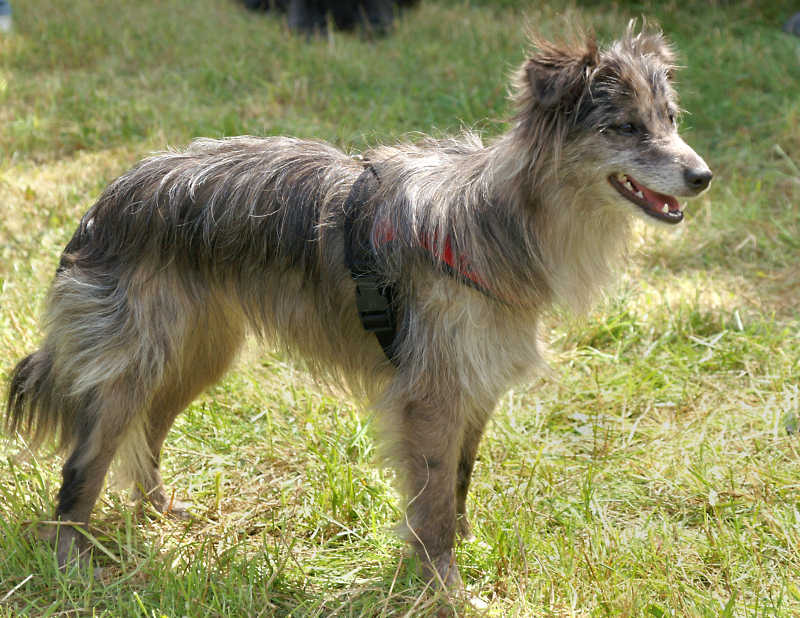
Smooth-faced Pyrenean Sheepdog
Pyrenean Sheepdog Long-Haired
Other namesFrench: Chien de Berger des Pyrénées
Berger des Pyrénées
Labrit
Labri
Pyrenees Sheepdog
Common nicknamesPetit Berger (Little Shepherd)
OriginFrance
Traits
Height Males 40–54 cm (16–21 in)
Females 38–52 cm (15–20 in)
Weight 8–15 kg (18–33 lb)
Coat Long or semi-long and dense
Colour Fawn, grey brindle, black or blue, can be overlaid with black and sometimes with a little white on the chest and on the limbs
Kennel club standards
SCC Smooth-Faced standard
SCC Long-Haired standard
Fédération Cynologique Internationale Smooth-Faced standard
Long-Haired standard
Dog (domestic dog)

The Pyrenean Sheepdog, the Chien de Berger des Pyrénées in French, is a small to medium-sized breed of herding dog from the Pyrenees Mountains region of France. It is found herding flocks of sheep throughout the Pyrenees alongside the much larger Pyrenean Mountain Dog which is kept as a flock guardian.

The Pyrenean Sheepdog is found in three coat types, the long-haired and goat-haired (together called the Chien de Berger des Pyrénées À Poil Long) as well as the smooth-faced (called the Chien de Berger des Pyrénées À Face Rase); the latter is recognised as a separate breed from the former two by the Société Centrale Canine.

History

[edit]

The Pyrenean Sheepdog is found along the entire length of the French Pyrenees and is even known in Basque Country to the west.[1] The breed is one of a number of similar rough-coated sheep herding-type breeds found throughout Europe including the Briard and Berger Picard from France, the Barbado da Terceira and Cao da Serra de Aires from the Azores and Portugal, the Polish Lowland Sheepdog from Poland, the Gos d'atura from Catalonia, the Pastore Fonnese from Sardinia, the Bearded Collie, Border Collie, Rough Collie and extinct Welsh Hillman from Britain, the Schafpudel from Germany, and the Schapendoes from Holland, as well as the Armant from Egypt (descended from French Briards).[2] A number of scholars believe it is possible the ancestors of these herding-type dogs were introduced to Europe during Indo-European migrations over 4,000 years ago, and they spread throughout the continent evolving through selective breeding into the regional breeds with certain physical characteristics to suit the demands or preferences of the region.[2]

Traditionally the Pyrenean Sheepdog is one of two breeds maintained by shepherds in the Pyrenees, the larger Pyrenean Mountain Dog was used as a flock guardian, protecting flocks from depredation from local predators (in particular wolves), as well as from thieves; the smaller Pyrenean Sheepdog was used to herd the flocks, an important function over the summer months when the flocks are grazed on mountain pastures.[1][3][4]

The Pyrenean Sheepdog was first recognised by the Société Centrale Canine in 1926; today they recognise it as two breeds, the first the long-haired or Chien de Berger des Pyrénées À Poil Long and the second the smooth-faced or Chien de Berger des Pyrénées À Face Rase.[1][2][4]

The Pyrenean Sheepdog is still used as a herding dog in the Pyrenees region, in France the breed is sometimes called the Labrit or Labri or the Berger des Pyrénées, it is often referred to as the Petit Berger which means Little Shepherd.[1][2][3][4]

Description

[edit]

Appearance

[edit]

The Pyrenean Sheepdog is a small to medium-sized breed (it is the smallest French herding breed) that resembles as small Berger Picard; they usually stand between 38 and 56 centimetres (15 and 22 in);[1][4] the breed standards state the long-haired dogs are 40 to 50 centimetres (16 to 20 in) and bitches 38 to 48 centimetres (15 to 19 in) whilst smooth-faced dogs are 40 to 54 centimetres (16 to 21 in) and bitches 40–52 centimetres (16–20 in).[5][6] The breed weighs between 8 and 15 kilograms (18 and 33 lb).[4] The breed has a lean, athletic build which gives them both speed and endurance as is typical of smaller herding dogs; the varieties are anatomically almost identical, although the smooth-faced variety is described as being slightly shorter in the body and having more compact feet.[1] The breed is considered very hardy and its build gives it impressive stamina, particularly so given the altitudes it works in, it easily covers over 32 kilometres (20 mi) in a day.[1]

The Pyrenean Sheepdog's coat can be medium (known as goat-haired) or long, the long-haired varieties have longer hair on the face whilst the smooth-faced variety has much shorter hair on its face.[1][2][4] The breed's coat provides excellent protection from extreme weather, particularly the long-haired variety, the variations seen in the breed's coats is an indication that the breed is primarily bred for working ability and not appearance.[1][4] The breed can be fawn, grey, blue, brindle or black in colour which can be overlaid with black and also can have some white on the chest and limbs.[1][4]

Traditionally the Pyrenean Sheepdog's ears and tail were docked although this custom is no longer common due to the procedures being restricted/ banned in numerous countries.[1]

Temperament

[edit]

The Pyrenean Sheepdog is an extremely active breed, sometimes described as a 'ball of fire', it is very intelligent and quick-witted, mischievous, has quick reactions and abundant nervous energy; like many breeds of sheepdogs the breed is rather wary of strangers although the smooth-faced variety is said to be less so.[1][3]

See also

[edit]

References

[edit]
[edit]
Revisions and contributorsEdit on WikipediaRead on Wikipedia
from Grokipedia
The Pyrenean Sheepdog, known in French as the Chien de Berger des Pyrénées, is a small to medium-sized originating from the Mountains along the -Spain border. It is prized for its agility, intelligence, and tireless work ethic in managing on rugged terrain. In , the breed is recognized in two distinct varieties: the long-haired (or rough-faced) with a medium-length, harsh, often windswept coat, and the smooth-faced with a shorter, finer coat; these have been classified as separate breeds by the Société Centrale Canine since 2001. The breed has ancient origins as a working dog, with formal standards established by the French Kennel Club in 1926 and by the Fédération Cynologique Internationale in 1955. It gained recognition beyond herding during for roles as a messenger and search dog. Today, it is acknowledged by major kennel clubs worldwide, including the (as the Pyrenean Shepherd since 2009) and (UK). The Pyrenean Sheepdog has a lean build, standing 15.5 to 21 inches (39–53 cm) tall and weighing 15 to 30 pounds (7–14 kg), with coat colors including fawn, grey, blue merle, brindle, and black. It is alert, affectionate, and energetic, requiring significant exercise and mental stimulation. With proper care, including grooming, diet, and training, it can live 17 to 19 years, though screening for issues like , eye conditions, and patellar luxation is advised. Beyond , it excels in dog sports such as and obedience.

History

Origins

The Pyrenean Sheepdog, known in French as the Chien de Berger des Pyrénées, traces its ancient origins to the rugged Mountains straddling the France-Spain border, where evidence of similar small herding dogs dates back to prehistoric times. Archaeological findings, including bones of small dogs in sub-fossil deposits, suggest these early canines coexisted with the region's developing sheep and goat herding practices as far back as 6000 BC. Some scholars propose that the ancestors of such herding breeds may have arrived in via over 4,000 years ago, bringing pastoral traditions that shaped the local dog populations. In its traditional role, the Pyrenean Sheepdog functioned as an agile herder in the French Pyrenees, directing and protecting sheep flocks through the challenging mountain terrain while collaborating with the larger , or , which served as the primary guardian against predators. This partnership was essential for , the seasonal movement of livestock between high pastures and valleys, allowing shepherds to navigate steep slopes and dense forests effectively. The breed's indigenous development occurred largely in isolation, preserving its genetic purity amid the remote alpine environment. The Pyrenean Sheepdog's adaptation to the harsh, isolated conditions of the Haute-Pyrénées region—characterized by severe winters, rocky landscapes, and variable altitudes—underscored its resilience as a working companion to shepherds for centuries, with herding practices well-established in the region since ancient times. Local Basque and Catalan shepherding practices further influenced the breed's evolution, emphasizing endurance and instinctive herding behaviors honed through generations of oral tradition and practical use, with minimal crossbreeding until the modern era. Historical accounts highlight its integral presence in every Pyrenean valley, supporting the pastoral economy without formal documentation until later centuries.

Development and Recognition

The standardization of the Pyrenean Sheepdog began in the early amid efforts to preserve its traditional herding role in the . The Réunion des Amateurs de Chiens Pyrénéens (RACP), the breed's parent club, was founded in 1923 and published the first official that year, focusing on the dog's agility, intelligence, and working capabilities as a . During , the breed gained recognition for its service as messenger and search dogs in the , though heavy losses nearly led to its extinction, prompting early preservation efforts. In 1926, the Société Centrale Canine (SCC), France's national kennel club, granted formal recognition to the breed, classifying it initially as two distinct varieties: the long-haired Chien de Berger des Pyrénées à Poil Long and the smooth-faced Chien de Berger des Pyrénées à Face Rase. The Fédération Cynologique Internationale (FCI) accepted both varieties on a definitive basis in 1955, placing them in Group 1 (Sheepdogs), Section 1 (Sheepdogs), with standard number 141 for the long-haired type and 138 for the smooth-faced; subsequent updates to the long-haired standard incorporated a rough-coated, "goat-haired" subtype distinguished by its coarser, longer fur. Following , the breed nearly vanished due to rural depopulation in the region and the of farming, which reduced demand for working shepherds; revival initiatives led by the RACP and dedicated breeders in the 1950s and 1960s, including programs and shows, restored its numbers and promoted its export. Internationally, the (AKC) entered the Pyrenean Shepherd (encompassing both varieties) into its Foundation Stock Service in 1995 to support development, achieving full recognition in the Herding Group effective January 1, 2009. In the , granted recognition to the long-haired variety in the Pastoral Group in 2011, with the smooth-faced variety following in 2021.

Characteristics

Appearance

The Pyrenean Sheepdog is a small to medium-sized characterized by a lean, athletic build that emphasizes and for mountainous . Males typically stand 40–54 cm (16–21 in) at the , while females measure 38–52 cm (15–20 in), with weights typically ranging from 7–14 kg (15–30 lb) across varieties to ensure a frame that allows for swift movement without excess bulk. The body is proportioned longer than it is tall, forming a rectangular silhouette with a level topline, deep chest extending to the elbows, and well-sprung ribs that provide ample lung capacity for sustained activity. Limbs are strongly angulated for efficient propulsion, with a short, slightly arched and oblique contributing to balance and speed; the tail, set low, reaches the hock and is carried in a gentle curve or straight when at rest. The head presents a harmonious, wedge-shaped profile with a triangular outline, featuring a moderately defined stop, a straight muzzle slightly shorter than the , and a scissor bite supported by strong jaws. Almond-shaped eyes of dark brown hue convey an alert, intelligent expression, framed by black rims, while the ears are small, triangular, and set high, folding close to the in a semi-erect or dropped carriage. Overall, the breed exhibits a rustic, functional conformation without exaggerated features, prioritizing a dry, sinewy structure that underscores its role as an energetic rather than a show specimen.

Temperament

The Pyrenean Sheepdog is renowned for its energetic and lively , displaying tremendous energy and stamina relative to its small size, often manifesting as a vigilant and vivacious demeanor suited to tasks. This breed possesses high and quick-wittedness, coupled with a mischievous streak that highlights its alert and inquiring nature. Its strong instincts drive rapid reactions, including nipping at heels to control or family members during play. In social interactions, the Pyrenean Sheepdog is deeply loyal and affectionate toward its family, forming devoted bonds and eagerly seeking to please its owners while remaining independent in thought. It tends to be wary and reserved around strangers, acting as a protective yet non-aggressive watchdog without excessive nervousness. This breed generally gets along well with children and other dogs when properly socialized, though its background may prompt gentle corralling behaviors. The Pyrenean Sheepdog thrives with ample mental stimulation and physical exercise to channel its nervous energy and prevent boredom-induced issues. It is sensitive and responsive to firm, positive training methods, such as reward-based techniques, which leverage its trainability and initiative. Ideal for active owners engaging in dog sports like agility, obedience, herding trials, or rally, this breed is less suitable for sedentary households due to its demanding exercise needs and potential for restlessness if understimulated.

Varieties

The Pyrenean Sheepdog is recognized in two main coat varieties by the (FCI), each adapted to the rugged Pyrenean terrain while sharing a core athletic build for . These varieties—long-haired (à poil long, Standard 141, which includes semi-long or "goat-haired" subtypes) and smooth-faced (à face rase, Standard 138)—differ primarily in coat length, texture, and maintenance needs, but all exhibit the breed's lively, agile demeanor. The long-haired variety features a semi-long to long, straight or slightly wavy coat that is dense and fairly harsh, reaching 6-7 cm at the and while forming a prominent ruff around the , thicker layers on the back, , and for added protection. This coat often develops woolly underlayers on the thighs and may form cords or strands ("cadenettes") on the chest and forelegs in some individuals, requiring regular weekly brushing to prevent matting and tangles. The semi-long subtype (sometimes called goat-haired or demi-long) has a shorter, rougher, tousled texture intermediate between long and smooth, with less fringing and easier maintenance. The smooth-faced variety possesses a short, smooth coat overall, with finer, close-lying hair on the face, ears, and legs, supplemented by light fringing on the forelegs and on the hind legs, making it the easiest to maintain with minimal weekly combing. This variety offers less natural protection against cold climates compared to the rougher types but excels in warmer conditions with low shedding. Color patterns are consistent across all varieties, predominantly fawn (in shades from pale to dark), , or blue merle, often accented by , black, or markings, with white permitted on the chest, feet, and head but limited to no more than one-third of the body to preserve the solid base color. While all varieties demonstrate exceptional agility and alertness, subtle behavioral nuances exist: the smooth-faced type tends to be slightly less wary of strangers and more adaptable to new environments than the rougher long- and semi-long varieties, though each retains the breed's core intelligence and energy.

Health and Care

Common Health Issues

The Pyrenean Sheepdog, also known as the Pyrenean Shepherd, is generally a hardy breed with few major health concerns, but like many herding dogs, it can be predisposed to certain genetic and orthopedic conditions. Responsible breeders prioritize health screenings through organizations like the Orthopedic Foundation for Animals (OFA) and the Canine Health Information Center (CHIC) to minimize risks, focusing on hips, patellas, eyes, and heart evaluations. Common issues include joint malformations, eye disorders, and congenital heart defects, often detected early via or radiographic exams. Hip dysplasia is an orthopedic condition in which the hip joint develops abnormally, leading to malformation, pain, limping, and reduced mobility, particularly in larger individuals within the breed. Approximately 19.4% of OFA-evaluated Pyrenean Shepherds showed dysplastic hips based on data from 108 dogs assessed between 1974 and 2010. Symptoms typically emerge in , and management involves weight control, anti-inflammatory medications, or in severe cases; recommends preliminary hip evaluations for breeding stock to reduce inheritance. Progressive retinal atrophy (PRA) is an inherited eye disorder that causes gradual degeneration of the , resulting in night blindness and eventual total vision loss, often starting around 3-5 years of age. While rare in the breed, with DNA testing showing low incidence, genetic screening for the prcd-PRA mutation is available and recommended for breeding dogs to prevent transmission. Annual eye examinations by an American College of Veterinary Ophthalmologists (ACVO) diplomate, registered with OFA or CERF, are required for certification to detect early changes. Patent ductus arteriosus (PDA) is a where the , a fetal , fails to close after birth, leading to abnormal blood flow, potential heart enlargement, and failure if untreated. It occurs occasionally in Pyrenean Shepherds, with no breed-specific prevalence data widely reported, but surgical ligation is highly effective for correction, ideally before six months of age. Cardiac evaluations, though optional for , are advised for breeding to identify affected individuals. Patellar luxation involves of the kneecap from the femoral groove, graded from 1 (mild, intermittent) to 4 (severe, permanent), causing lameness, skipping steps, or of the legs, and is more common in active small breeds like the Pyrenean Shepherd. It appears occasionally, often bilaterally, and can be managed conservatively with for low grades or surgically for higher ones to restore joint stability. OFA patellar evaluations after 12 months are mandatory for breeding qualifications. The breed also shows predispositions to , manifesting as recurrent seizures due to neurological causes, though infrequent. Epilepsy management includes medications; responsible breeding emphasizes certifications for hips, eyes, patellas, and heart to screen for these and other heritable risks overall.

Maintenance and Lifespan

The Pyrenean Sheepdog typically has a lifespan of 17 to 19 years when provided with proper care, though this can vary based on , diet, and overall factors. Grooming requirements differ by coat variety, with the long-haired (rough-faced) type needing weekly brushing to remove tangles and prevent matting in its dense, harsh double . The goat-haired variant benefits from bi-weekly sessions to manage its woolly texture, while smooth-faced dogs require only minimal brushing every few weeks to maintain their shorter, finer fur. Bathing should occur only as needed to avoid stripping natural oils, with monthly nail trims and ear cleanings essential across all types to prevent infections. These active dogs demand at least 1 to 2 hours of daily vigorous exercise, such as running, herding simulations, or work, to channel their high energy levels and avoid or destructive behaviors. Mental enrichment through puzzle toys, obedience training, or scent games is equally important to satisfy their intelligent, working nature. should consist of a high-quality, balanced diet formulated for active medium-sized dogs, with portion control to sustain a lean body weight and support joint health. Regular veterinary check-ups, up-to-date vaccinations, and consistent parasite prevention are crucial for longevity, while spaying or neutering decisions should consider potential impacts on orthopedic health in this breed. The Pyrenean Sheepdog thrives in rural or active urban environments that provide ample space for movement, adapting well to family homes with outdoor access. Smooth-coated varieties may require additional protection from extreme cold, such as coats or , due to their shorter fur offering less insulation in harsh weather.

References

Add your contribution
Related Hubs
User Avatar
No comments yet.