
.jpg/250px-Full_attention_(8067543690).jpg)


.jpg/2000px-Full_attention_(8067543690).jpg)
Community hub
Recent from talks
Contribute something
Nothing was collected or created yet.
Poodle
View on Wikipedia
| Poodle | |||||||||||||||||||||
|---|---|---|---|---|---|---|---|---|---|---|---|---|---|---|---|---|---|---|---|---|---|
.jpg) | |||||||||||||||||||||
| Other names | |||||||||||||||||||||
| Origin | Germany or France (see history) | ||||||||||||||||||||
| |||||||||||||||||||||
| |||||||||||||||||||||
| Dog (domestic dog) | |||||||||||||||||||||
The Poodle, called the Pudel in German (German: [ˈpuːdl̩] ⓘ) and the Caniche in French, is a breed of water dog. The breed is divided into four varieties based on size, the Standard Poodle, Medium Poodle, Miniature Poodle and Toy Poodle, although the Medium Poodle is not universally recognised. They have a distinctive thick, curly coat that comes in many colours and patterns, with only solid colours recognised by major breed registries. Poodles are active and intelligent, and are particularly able to learn from humans. Poodles tend to live 10–18 years, with smaller varieties tending to live longer than larger ones.
The Poodle likely originated in Germany, although the Fédération Cynologique Internationale (FCI, International Canine Federation) and a minority of cynologists believe it originated in France. Similar dogs date back to at least the 17th century. Larger Poodles were originally used by wildfowl hunters to retrieve game from water, while smaller varieties were once commonly used as circus performers. Poodles were recognised by both the Kennel Club of the United Kingdom and the American Kennel Club (AKC) soon after the clubs' founding. Since the mid-20th century, Poodles have enjoyed enormous popularity as pets and show dogs – Poodles were the AKC's most registered breed from 1960 to 1982, and are now the FCI's third most registered breed. Poodles are also common at dog shows, where they often sport the popularly recognised Continental clip, with face and rear clipped close, and tufts of hair on the hocks and tail tip.
History
[edit]
Most cynologists believe the Poodle originated in Germany in the Middle Ages, from a dog similar to today's Standard Poodle. The Poodle was Germany's water dog, just as England had the English Water Spaniel, France the Barbet, Ireland the Irish Water Spaniel and the Netherlands the Wetterhoun.[1][2][3][4][5] Among the evidence used to support this theory is the Germanic name for the breed, Poodle or "Pudel" in German, which is derived from the Low German word "puddeln", meaning "to splash". Numerous works by various German artists from as early as the 17th century depict dogs of recognisably Poodle type.[1][2][3][5] Some cynologists believe the Poodle originated in France, where it is known as the "Caniche" and that the breed descends from the Barbet. This view is shared by the Fédération Cynologique Internationale (FCI, International Canine Federation).[6][7] Others argue that the breed originated in Russia, Piedmont or Northwest Africa.[4][7]
Whatever the Poodle's country of origin, both their German and French breed names indicate the modern Poodle's ancestors were widely used by waterfowlers both to retrieve shot game and to recover lost arrows and bolts that had missed their mark.[3][4]
Size variants
[edit]Due to their intelligence, obedient nature, athleticism and looks poodles were frequently employed in circuses, particularly in France.[2][3][5][7] In French circuses poodles were selectively bred down in size to create what is now known as the miniature poodle, which was known as the toy poodle until 1907, as a smaller sized dog is easier to handle and transport in a travelling circus.[5] As circus performers the variety was frequently seen performing all manner of tricks including walking tightropes, acting out comedies and even performing magic and card tricks.[2][3][5]
The Toy Poodle was created at the beginning of the 20th century when breeders again bred Miniature Poodles down in size to create a popular companion dog.[2][3][5] Initially, these efforts resulted in disfigured or misshapen pups, as well as pups with behavioural problems, as a result of irresponsible breeding for dwarfed size only. As new breeding practices were adopted, the variety became set as a toy-sized replica of the original.[2][3][5] Later attempts to create an even smaller variety, the Teacup Poodle, were unable to overcome serious genetic abnormalities and were abandoned.[5]
The last of the Poodle varieties to be recognised was the Medium Poodle, which in size is mid way in between the Standard and the Miniature Poodle. Not universally recognised by the world's kennel clubs, the Medium Poodle is recognised by the FCI and most Continental European kennel clubs.[3][5][6] One of the reasons for creating this fourth size variety may have been a desire to reduce the number of entries of Poodles by variety at conformation shows.[5]
Recent history
[edit]The Poodle was recognised by the Kennel Club of the United Kingdom in 1874, and by the American Kennel Club (AKC) in 1886, soon after the founding of both clubs.[8] In the United States, poodles were unpopular until 1935, when the Poodle Nunsoe Duc de la Terrace won best in show at Westminster.[9] Afterwards, they rapidly gained prominence, becoming the AKC's most registered breed from 1960 to 1982.[10] Since 1935, Poodles have won best in show at Westminster 10 times, the second-most of any breed.[11] As of 2012, the Poodle was the third-most popular FCI registered breed worldwide, after the Labrador Retriever and German Shepherd, with 118,653 new dogs registered per year from the 25 countries surveyed.[12]
Description
[edit]Appearance
[edit]
The Poodle is an active, athletic breed with the varieties differing mostly by size.[1][2][3] The FCI's breed standard states the Standard Poodle stands between 45 and 62 centimetres (18 and 24 in), the Medium Poodle between 35 and 45 centimetres (14 and 18 in), the Miniature Poodle between 28 and 35 centimetres (11 and 14 in) and the Toy Poodle 24 and 28 centimetres (9.4 and 11.0 in).[6]
The kennel clubs which do not recognise the Medium Poodle variety typically have the Standard Poodle between 38 and 60 centimetres (15 and 24 in) and Miniature Poodle between 28 and 38 centimetres (11 and 15 in), with the toy variety remaining unchanged.[3][5]
A healthy adult Standard Poodle typically weighs between 20 and 32 kilograms (44 and 71 lb), a Medium Poodle between 15 and 19 kilograms (33 and 42 lb), a Miniature Poodle between 12 and 14 kilograms (26 and 31 lb) and a Toy Poodle between 6.5 and 7.5 kilograms (14 and 17 lb).[3]
Coat
[edit]Poodles have thick, curly coats with harsh fur. A pet owner can anticipate grooming a Poodle every four to eight weeks.[13]
Poodles are often cited as a hypoallergenic dog breed. Their individual hair follicles have an active growth period that is longer than that of many other breeds; combined with the tightly curled coat, which slows the loss of dander and dead hair by trapping it in the curls, an individual Poodle may release less dander and hair into the environment. However, researchers have generally not found a difference in allergens across breeds.[14][15][16]
Clips and grooming
[edit]
The FCI and AKC allows Poodles to be shown in the Puppy, Continental (Lion in the FCI standard), English Saddle, or Sporting (Modern) clip. The FCI additionally recognises the Scandinavian clip.[17][18] The most popular in the show ring is the Continental clip, where the face and rear end of the body are clipped, leaving tufts on the hocks and tip of the tail and rosettes on the hips.[19][17] A similar clip was historically used to prevent the poodle from getting weighted down by their fur when swimming to retrieve a bird, while still leaving their joints and vital organs covered.[11] Pet poodles are most often clipped similarly to the Sporting clip —evenly over their entire body, with the face and paws cut shorter.[19]
In most cases, whether a Poodle is in a pet or show clip, the hair is completely brushed out. Poodle hair can also be "corded" with rope-like mats similar to those of a Komondor or human dreadlocks. Though once as common as the curly Poodle, corded Poodles are now rare. Corded coats are difficult to keep clean and take a long time to dry after washing.[20] Corded Poodles may be shown in all major kennel club shows.[6][21]
Colours
[edit]The Poodle has a wide variety of colouring, including white, black, brown, blue, gray, silver, café au lait, silver beige, cream, apricot, and red, and patterns such as parti-, abstract, sable, brindle and phantom.[22][23] Recognised FCI colourations are black, white, brown, gray, fawn, brindle, black&fawn, brown&fawn, bicolour and tricolour.[18] Recognition of multi-coloured Poodles varies by registry. They were common historically, but became less popular in the early 1900s, and are excluded from many registries.[24] The American Kennel Club (AKC) recognises Poodles in either solid-coloured and multi-coloured coats; however, only solid-coloured poodles may compete in conformation.[17][25]
A parti-Poodle has patches of any other solid colour over a primarily white coat.[26] When a parti-coloured Poodle has black-and-white markings that resemble those of a tuxedo, it is called a "tuxedo" Poodle.[27] An abstract Poodle is primarily solid-coloured, with patches of white.[26] Phantom Poodles have a solid main colour with a lighter colour appearing on their "eyebrows", muzzle and throat, legs and feet and below their tail. Phantom Poodles may also have a full face of the secondary colour.[26]
-
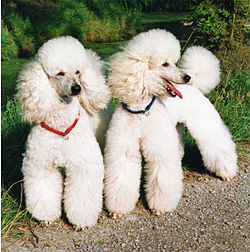 White Poodles
 -
 Apricot and red Poodles
 -
 Black Poodle
 -
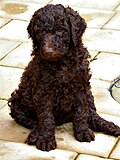 Brown Standard Poodle at five weeks
 -
 Mature silver Poodle
 -
 Phantom Poodles
 -
 Miniature parti-Poodle
 -
 Dog show champion
 -
 Café au Lait Standard Poodle


.jpg)


Temperament
[edit]Poodles are a highly intelligent, energetic, and sociable breed. A 1994 book by Stanley Coren ranked them second out of 130 breeds in "working and obedience intelligence", a measure of their ability to learn from humans.[28] Shyness or sharpness is considered a serious fault in the breed.[17]
Health
[edit]The life expectancy of the Poodle varies based on size, as smaller dogs live longer than larger dogs.[29] A study in Japan found the Toy Poodle to have a life expectancy of 12.7 years.[30] A 2024 UK study found a life expectancy of 14 years for the breed compared to an average of 12.7 for purebreeds and 12 for crossbreeds.[31] A 2005 Swedish study found 25% of miniature and toy Poodles died by the age of 10, less than the overall rate of 35% of dogs dying by the age of 10.[32]
Poodles suffer from a number of hereditary diseases. The Poodle Health Registry lists over 50 major health disorders of Standard Poodles.[8] Some of the worst common hereditary poodle diseases are the skin disease sebaceous adenitis (estimated prevalence 2.7%) and Addison's disease, an endocrine system disorder. Both diseases became more prevalent in poodles after the 1960s burst in poodle popularity led to rapid breeding aimed at producing good show dogs. The breeding focused on a small number of popular bloodlines, creating a genetic bottleneck.[33][8] One study estimated that two average Standard Poodles are about as closely related as the offspring of two full sibling village dogs.[33]
The Poodle is predisposed to the following dermatological conditions: allergic skin disease, alopecia X or follicular arrest, injection site alopecia, otitis externa, melanoma, and sebaceous adenitis.[34]
The Poodle is predisposed to hypothyroidism and[35][34] Cushing's syndrome.[36]
The Poodle is one of the more commonly affected breeds for progressive rod-cone degeneration. An autosomal recessive mutation in the PRCD gene is responsible for the condition in the breed.[37]
Work and sport
[edit]
Poodles were originally bred for waterfowl hunting.[18] Despite this history, they are currently classified as companion dogs by the FCI.[18] Since the late 1980s, some breeders in the United States and Canada have been selecting for dogs with drive for birds in order to revive the breed for hunting, with some success.[38] Poodles are highly trainable dogs that typically excel in obedience training.[22] Historically, they were a popular circus dog. In addition to hunt tests, they do well in agility and rally.[11] They are among the most popular service dog breeds.[39]
Poodles have been used as working dogs in the military since at least the 17th century, most likely because of their highly intelligent, trainable nature. Their background as a hunting dog makes them suitable to battlefields, and they can be trained to ignore gunfire. During the English Civil War, Prince Rupert of the Rhine had a famous hunting Poodle who would ride into battle with his master on horseback. Napoleon Bonaparte wrote in his memoirs about the faithfulness of a grenadier's pet Poodle who stayed with the body of his master at the Battle of Marengo.[40]
Cultural references
[edit]The perceived passive and obedient nature of the breed has led to use in politics of "poodle" as a political pejorative to assert the sycophancy of a politician who obediently or passively follows the lead of others.[41] It is considered to be equivalent to lackey.[42] The term was used as a label to criticise British Prime Ministers who are perceived to be too close to the United States.[43] During the 2000s, it was used against Tony Blair with regard to his close relationship with George W. Bush and the involvement of the United Kingdom in the Iraq War. The singer George Michael used it in his song "Shoot the Dog" in July 2002, the video of which showed Blair as the "poodle" on the lawn of the White House.[44] Romanian-Israeli politician Colette Avital unsuccessfully tried to have the term's use banned from the Knesset in June 2001.[45] By extension, the phrase "attack poodle" has been used to denote a particularly vociferous but servile defender of a given political leader, party, or faction. It gained popular currency in 2002 when Paul Marsden a member of the British Parliament who ran afoul of the Labour party Chief Whip Hilary Armstrong charged that Prime Minister Tony Blair was setting out "one of his attack poodles" to bring him or her into line.[46] The term was further popularised by the American culture critic James Wolcott in his 2004 book, Attack Poodles and Other Media Mutants.
See also
[edit]
.jpg)


References
[edit]- ^ a b c Alderton, David (1987). The dog: the most complete, illustrated, practical guide to dogs and their world. London: New Burlington Books. pp. 87–88. ISBN 978-0-948872-13-6.
- ^ a b c d e f g Alderton, David (2008). The encyclopedia of dogs. Bath: Parragon Books Ltd. pp. 131 & 354. ISBN 978-1-4454-0853-8.
- ^ a b c d e f g h i j k Fogle, Bruce (2009). The encyclopedia of the dog. New York: DK Publishing. pp. 68–69, 190 & 282. ISBN 978-0-7566-6004-8.
- ^ a b c Hancock, David (2013). Gundogs: their past, their performance and their prospects. Ramsbury, Marlborough: The Crowood Press Ltd. pp. 33 & 37–38. ISBN 978-1-84797-492-1.
- ^ a b c d e f g h i j k Morris, Desmond (2001). Dogs: the ultimate dictionary of over 1,000 dog breeds. North Pomfret, VT: Trafalgar Square Publishing. pp. 295–297 & 526–529. ISBN 978-1-57076-219-2.
- ^ a b c d "FCI-Standard N° 172: Poodle" (PDF). Fédération Cynologique Internationale. 23 January 2015. Archived (PDF) from the original on 3 March 2016. Retrieved 21 March 2021.
- ^ a b c Fiorone, Fiorenzo (1973). The encyclopedia of dogs: the canine breeds. New York: Thomas Y. Cromwell Company. pp. 377–381. ISBN 978-0-690-00056-6.
- ^ a b c Pedersen, N. C.; Liu, H.; McLaughlin, B.; Sacks, B. N. (18 April 2012). "Genetic characterization of healthy and sebaceous adenitis affected Standard Poodles from the United States and the United Kingdom". Tissue Antigens. 80 (1): 46–57. doi:10.1111/j.1399-0039.2012.01876.x. ISSN 0001-2815. PMID 22512808.
- ^ Flaim, Denise (15 October 2019). "Madame Poodle: Hayes Blake Hoyt Helped Create the Modern Sculpted Show Dog". American Kennel Club. Retrieved 31 January 2023.
- ^ "AKC Registration Statistics Fact Sheet". Archived from the original on 13 April 2011.
- ^ a b c Flaim, Denise. "The Poodle Paradox: History Behind a Haircut". American Kennel Club. Retrieved 3 April 2022.
- ^ "Registration figures worldwide – from top thirty to endangered breeds". DogWellNet. 14 April 2017. Archived from the original on 17 June 2024. Retrieved 20 February 2022.
- ^ Guidry, Virginia Parker (5 May 2010). Your Poodle's Life: Your Complete Guide to Raising Your Pet from Puppy to Companion. Crown. ISBN 978-0-307-54998-3.
- ^ Nicholas, Charlotte E.; Wegienka, Ganesa R.; Havstad, Suzanne L.; Zoratti, Edward M.; Ownby, Dennis R.; Johnson, Christine Cole (2011). "Dog allergen levels in homes with hypoallergenic compared with nonhypoallergenic dogs". American Journal of Rhinology & Allergy. 25 (4): 252–256. doi:10.2500/ajra.2011.25.3606. ISSN 1945-8924. PMC 3680143. PMID 21819763.
- ^ Grady, Denise (5 February 1997). "Nonallergenic Dog? Not Really". The New York Times. Archived from the original on 30 January 2009. Retrieved 21 April 2011. How hypoallergenic the dog is may vary with the individual dog and the individual person.
- ^ Bakalar, Nicholas (11 July 2011). "The Myth of the Allergy-Free Dog". New York Times. Archived from the original on 23 February 2022. Retrieved 20 February 2022.
- ^ a b c d "AKC Breed Standard". The Poodle Club of America. Archived from the original on 20 February 2022. Retrieved 20 February 2022.
- ^ a b c d "FCI-Standard N° 172 - Poodle (Caniche)" (PDF). Fédération Cynologique Internationale. Archived (PDF) from the original on 3 March 2016. Retrieved 10 December 2014.
- ^ a b "Poodle". American Kennel Club. Archived from the original on 20 February 2017. Retrieved 7 February 2021.
- ^ Zsolt (9 July 2015). "How to Cord a Poodle Coat". Dog Grooming Tutorial. Archived from the original on 24 November 2022. Retrieved 24 November 2022.
- ^ "United Kennel Club: Standard Poodle Breed Standard. Retrieved May 12, 2007". Archived from the original on 11 November 2006.
- ^ a b "Poodle Dog Breed Information". American Kennel Club. Archived from the original on 6 December 2020. Retrieved 20 February 2022.
- ^ "Breed Standards: Multi-Colored Standard Poodle | United Kennel Club (UKC)". www.ukcdogs.com. Retrieved 22 November 2022.
- ^ "Multi-Colored Poodle History". United Poodle Association. 29 March 2018. Archived from the original on 9 April 2022. Retrieved 9 April 2022.
- ^ "Parti Poodles: Full Breed Guide". 4 January 2021. Retrieved 7 November 2023.
- ^ a b c Ewing, Susan M. (4 May 2011). Poodles For Dummies. John Wiley & Sons. ISBN 978-1-118-06812-0.
- ^ "Poodle Coat Colors". United Poodle Association. 5 February 2018. Archived from the original on 9 April 2022. Retrieved 9 April 2022.
- ^ Coren, Stanley (1994). The intelligence of dogs: a guide to the thoughts, emotions, and inner lives or our canine companions. New York: Free Press. ISBN 978-0-7432-8087-7. OCLC 61461866.
- ^ Nam, Yunbi; White, Michelle; Karlsson, Elinor K.; Creevy, Kate E.; Promislow, Daniel E. L.; McClelland, Robyn L. (17 January 2024). "Dog size and patterns of disease history across the canine age spectrum: Results from the Dog Aging Project". PLOS ONE. 19 (1) e0295840. Public Library of Science (PLoS). Bibcode:2024PLoSO..1995840N. doi:10.1371/journal.pone.0295840. ISSN 1932-6203. PMC 10793924. PMID 38232117.
- ^ INOUE, Mai; KWAN, Nigel C. L.; SUGIURA, Katsuaki (2018). "Estimating the life expectancy of companion dogs in Japan using pet cemetery data". Journal of Veterinary Medical Science. 80 (7). Japanese Society of Veterinary Science: 1153–1158. doi:10.1292/jvms.17-0384. ISSN 0916-7250. PMC 6068313. PMID 29798968.
- ^ McMillan, Kirsten M.; Bielby, Jon; Williams, Carys L.; Upjohn, Melissa M.; Casey, Rachel A.; Christley, Robert M. (1 February 2024). "Longevity of companion dog breeds: those at risk from early death". Scientific Reports. 14 (1). Springer Science and Business Media LLC. doi:10.1038/s41598-023-50458-w. ISSN 2045-2322. PMC 10834484.
- ^ Egenvall, A; Bonnett, Bn; Hedhammar, å; Olson, P (30 September 2005). "Mortality in over 350,000 Insured Swedish Dogs from 1995–2000: II. Breed-Specific Age and Survival Patterns and Relative Risk for Causes of Death". Acta Veterinaria Scandinavica. 46 (3). doi:10.1186/1751-0147-46-121. ISSN 1751-0147. PMC 1624818. PMID 16261925.
- ^ a b Pedersen, Niels C.; Brucker, Lynn; Tessier, Natalie Green; Liu, Hongwei; Penedo, Maria Cecilia T.; Hughes, Shayne; Oberbauer, Anita; Sacks, Ben (27 August 2015). "The effect of genetic bottlenecks and inbreeding on the incidence of two major autoimmune diseases in standard poodles, sebaceous adenitis and Addison's disease". Canine Genetics and Epidemiology. 2 (1): 14. doi:10.1186/s40575-015-0026-5. ISSN 2052-6687. PMC 4579369. PMID 26401342.
- ^ a b Hnilica, Keith A.; Patterson, Adam P. (19 September 2016). Small Animal Dermatology. St. Louis (Miss.): Saunders. ISBN 978-0-323-37651-8.
- ^ Rhodes, Karen Helton; Werner, Alexander H. (25 January 2011). Blackwell's Five-Minute Veterinary Consult Clinical Companion. Ames, Iowa: Wiley-Blackwell. p. 148. ISBN 978-0-8138-1596-1.
- ^ Carotenuto, Gaia; Malerba, Eleonora; Dolfini, Costanza; Brugnoli, Francesca; Giannuzzi, Pasquale; Semprini, Giovanni; Tosolini, Paolo; Fracassi, Federico (19 February 2019). "Cushing's syndrome—an epidemiological study based on a canine population of 21,281 dogs". Open Veterinary Journal. 9 (1): 27–32. doi:10.4314/ovj.v9i1.5. ISSN 2218-6050. PMC 6500859. PMID 31086762.
- ^ Oliver, James A.C.; Mellersh, Cathryn S. (2020). "Genetics". In Cooper, Barbara; Mullineaux, Elizabeth; Turner, Lynn (eds.). BSAVA Textbook of Veterinary Nursing (Sixth ed.). British Small Animal Veterinary Association. p. 131. ISBN 978-1-910-44339-2.
- ^ "Poodles ready to hunt". Denverpost.com. 19 February 2008. Archived from the original on 11 December 2014. Retrieved 11 December 2014.
- ^ Bauhaus, Jean (15 July 2021). "Most Popular Service Dog Breeds". American Kennel Club. Archived from the original on 20 February 2022. Retrieved 20 February 2022.
- ^ Cawthorne, Nigel (2012). Canine Commandos: The Heroism, Devotion, and Sacrifice of Dogs in War. Ulysses Press. ISBN 978-1-61243-055-3.
- ^ "Tony Blair: The US poodle?". bbc.co.uk. 31 January 2003. Retrieved 17 May 2007.
- ^ "Poodle". etymonline.com. 2 July 2007. Retrieved 2 July 2007.
- ^ "Blair battles "poodle" jibes". BBC News. 3 February 2003. Retrieved 17 May 2007.
- ^ "Michael denies attack on Bush". BBC News. 5 July 2002. Retrieved 25 June 2021.
- ^ "Israeli lawmaker wants to ban 68 insults in parliament". seattletimes.nwsource.com. 22 July 2001. Retrieved 17 July 2010.
- ^ "Chief whip's actions 'contemptible'". 7 December 2001. Retrieved 1 April 2020.
External links
[edit]

Poodle
View on GrokipediaThe Poodle is a breed of water dog originating in Germany, where it was known as the Pudelhund, derived from "pudeln" meaning to splash in water, bred primarily as a retriever for hunting waterfowl over four centuries ago. [1] [2] The breed is defined by its dense, curly coat of hair—rather than fur—that grows continuously and sheds minimally, often making it a preferred choice for those with mild allergies, though no canine breed is entirely hypoallergenic. [3] [4] Poodles exhibit exceptional intelligence, trainability, and athleticism, consistently ranking among the most versatile working dogs capable of excelling in obedience, agility, and retrieving tasks. [5] [6] Available in three size varieties—Standard (over 15 inches at the shoulder), Miniature (10 to 15 inches), and Toy (under 10 inches)—all Poodles share proportional builds, lively temperaments, and the same breed standard traits, with size differences not altering core personality or capabilities. [5] [7] Refined in France during the 18th and 19th centuries for circus performances and as aristocratic companions, the Poodle transitioned from utilitarian hunter to symbol of elegance, with traditional clips originally designed to enhance swimming efficiency by reducing water retention on the hindquarters and joints. [1] [8] Today, Poodles remain popular worldwide for their adaptability as family pets, service dogs, and competitors in conformation shows, underscoring their enduring utility beyond ornamental stereotypes. [5] [9]
Origins and Etymology
Name and Linguistic Roots
The English name "poodle" entered usage around 1808, derived from the German "Pudelhund," a compound of "Pudel" (puddle or splashing in water) and "Hund" (dog), denoting a water-retrieving hound.[10] [1] This etymology underscores the breed's origins as a working dog specialized in retrieving fowl from water, with the term reflecting the action of splashing or paddling.[11] The root "Pudel" traces to Low German "puddeln" or "pudeln," an onomatopoeic verb mimicking the sound and motion of splashing in puddles or water, later shortened in German to simply "Pudel" for the breed.[12] [13] In contrast, the French designation "caniche" stems from "chien canard" (duck dog), highlighting a similar aquatic function but independent of the Germanic linguistic lineage adopted in English.[1]Early Historical Evidence
The earliest indications of dogs resembling the poodle appear in ancient artifacts from the Greco-Roman period. Carvings on Roman tombs and images on Greek and Roman coins dating to approximately 30 A.D. depict curly-coated canines with clipped hindquarters, traits consistent with water-retrieving functions that later characterized the breed.[1] Distinct evidence for the poodle breed emerges in medieval Europe, with records tracing its origins to Germany around the 14th century. There, it was known as the Pudelhund, a term derived from the German verb "pudeln," meaning to splash in water, underscoring its development as a water retriever for hunting waterfowl.[14][15] Artistic representations from the 15th and 16th centuries provide visual confirmation of the breed's early form. German artworks illustrate curly-coated dogs employed in marshy terrains for retrieving game, aligning with the Pudelhund's working role before its refinement and popularization in France.[16][17] By the 17th century, more detailed depictions appear in European fine art, such as Rembrandt's 1631 self-portrait featuring a dog of recognizably poodle-like conformation, indicating the breed's established presence among elites and hunters alike.[18]Historical Development
Origins as a Working Breed
The Poodle breed originated in Germany as a specialized water retriever for hunting waterfowl, particularly ducks, with the earliest historical records dating to the 14th century.[14] Known initially as the Pudelhund, the name derives from the German verb "pudeln," meaning to splash in water, reflecting its primary function in retrieving game from wetlands and rivers.[1] These early Poodles were large, robust dogs bred for endurance in cold water, featuring a dense, curly coat that provided insulation while allowing efficient swimming; hunters clipped the coat short on the body to reduce drag and weight when wet, leaving insulating puffs on the joints and chest to protect against hypothermia.[19] Prior to formal breed development around 400 years ago, ancestral water dogs akin to Poodles assisted in duck netting by fetching nets, demonstrating innate retrieving instincts honed over generations for practical utility in fowl hunting.[20] Empirical evidence from hunting records and breed morphology supports German origins over the popularized French narrative, as the Pudelhund's development aligned with regional waterfowling practices in Central Europe, where larger variants excelled at marking and retrieving fallen birds without disturbing decoys.[20] Standard-sized Poodles, weighing 45-70 pounds and standing over 15 inches at the shoulder, were the foundational working form, capable of navigating dense reeds and diving for game, with their non-shedding coat minimizing interference during hunts.[1] This utilitarian role persisted for centuries in Europe, where Poodles demonstrated superior scenting and pointing abilities in addition to retrieval, often outperforming other breeds in marshy terrains due to their agility and water-resistant fur.[21] While later refined in France, the breed's core working traits—strong swimming propulsion, keen intelligence for handling training, and physical conformation for load-bearing retrieves—stem directly from these Germanic hunting imperatives, unadorned by later ornamental adaptations.[1]Emergence of Size Variants
The Standard Poodle, originating as a large water-retrieving dog in Germany around the 15th to 18th centuries, served as the foundational size for all variants, bred for duck hunting with its dense, curly coat aiding buoyancy and insulation.[1] Smaller sizes emerged primarily in France during the 18th century, when breeders selectively reduced the Standard's stature through repeated crossings to produce the Miniature Poodle, adapting the breed for urban companionship and lighter duties among nobility and city residents who favored more manageable pets over large working dogs.[1] [22] Historical records indicate small Poodles appeared in French royal households by the mid-18th century, though debates persist on whether these predated or paralleled the Standard's dominance in regions like Spain.[23] Miniature Poodles, typically measuring 10 to 15 inches at the shoulder, were occasionally employed for truffle hunting in France or as agile performers in circuses, but their primary appeal lay in ornamental roles, reflecting a shift from utilitarian breeding to aesthetic and portable pet preferences driven by aristocratic tastes.[1] The Toy Poodle variant arose in the early 20th century, particularly around the 1900s, via further miniaturization of the Miniature through targeted breeding of the smallest specimens, yielding dogs under 10 inches tall suited exclusively as lap companions and gaining traction in Europe and America amid rising demand for diminutive, trainable house pets.[22] [24] This progression maintained the Poodle's core genetic uniformity across sizes—all variants share the same breed standard—but prioritized companionship over the Standard's original retrieving prowess, with formal kennel club distinctions following practical development by decades.[1]Standardization and Recognition
The Poodle breed underwent formal standardization in the late 19th century, coinciding with the establishment of major kennel clubs that codified traits such as coat texture, body proportions, and size distinctions derived from its historical water-retrieving function. The Kennel Club of the United Kingdom registered its inaugural Poodle in 1874, initiating systematic documentation and breeding guidelines that emphasized the breed's dense, curly coat and athletic build.[8] This was followed by the founding of the Poodle Club of England in 1876, which advanced uniformity in type by promoting exhibitions and selective breeding away from working variability toward consistent conformational ideals.[8] In the United States, the American Kennel Club (AKC) recorded its first Poodle registration in 1886 and officially recognized the breed the following year, initially prioritizing the Standard variety over 15 inches at the shoulder.[5] The AKC maintains the Poodle as a single breed with three varieties—Standard, Miniature (10–15 inches), and Toy (under 10 inches)—judged under one standard that differentiates solely by height while requiring proportional scaling of features like head shape and tail carriage.[1] Miniature and Toy variants, bred down from Standards in 18th-century France for urban companionship and performance roles, were integrated into this framework without separate breed status, reflecting empirical observations of scalable genetics rather than distinct lineages.[1] The Fédération Cynologique Internationale (FCI), attributing French origins to the breed, published its valid standard (N° 172) on November 3, 2014, recognizing four sizes: Standard (over 45 cm), Medium (35–45 cm), Dwarf (28–35 cm), and Toy (under 28 cm), with allowances for proportional adjustments in smaller varieties to preserve original traits like waterproof coat density.[25] This standard evolved from earlier European efforts, incorporating genetic stability in colors and structure amid 20th-century refinements, including a 2024 update to explicitly include additional coat patterns previously underrepresented in shows.[26] The United Kennel Club (UKC) recognized the Poodle in 1914, treating smaller sizes equivalently to Standards until a 2000 division into separate breeds—Standard Poodle and Poodle—for competitive grouping, though standards remain nearly identical except for height thresholds.[27] In France, where the breed symbolized national identity despite Germanic roots, standardization by bodies like the Société Centrale Canine reinforced show-oriented traits, with empirical breeding data showing reduced variability in hip angles and gait by the early 20th century.[17] The Poodle Club of America, active since the 1930s, influenced AKC revisions, approving a new standard in 1932 that prioritized intelligence-linked trainability alongside physical form.[28]Physical Characteristics
Body Conformation and Sizes
The Poodle's body conformation adheres to a square outline across all size varieties, with the length from prosternum to point of buttocks equaling the height at the withers, promoting balance and athleticism derived from its water-retrieving heritage.[29] The chest is deep and moderately broad, extending to the elbows, while the tuck-up is evident but not exaggerated.[6] Legs are straight and muscular, with shoulders well-laid-back and elbows fitting close to the ribcage; hindquarters feature well-developed thighs and hocks that turn neither in nor out.[29] The topline remains level during movement, and the tail is set high, typically docked to about two-thirds its original length, carried upward but not curled over the back.[9] Poodles are classified into three size varieties by the American Kennel Club (AKC), each maintaining proportional conformation to the Standard without structural deviations.[5] The Standard Poodle exceeds 15 inches (38 cm) at the withers, commonly measuring 18-24 inches (46-61 cm), with weights ranging from 40-70 pounds (18-32 kg) for males and slightly less for females.[30][7] Miniature Poodles stand 10-15 inches (25-38 cm) tall, weighing 10-20 pounds (4.5-9 kg).[31] Toy Poodles measure under 10 inches (25 cm), with weights of 4-6 pounds (2-3 kg).[7]| Variety | Height at Withers | Typical Weight Range |
|---|---|---|
| Standard | Over 15 in (38 cm) | 40-70 lb (18-32 kg) |
| Miniature | 10-15 in (25-38 cm) | 10-20 lb (4.5-9 kg) |
| Toy | Under 10 in (25 cm) | 4-6 lb (2-3 kg) |
Coat Structure and Maintenance
The Poodle's coat consists of a single layer of dense, curly hair that grows continuously, lacking an undercoat typical of many breeds, which results in minimal shedding as loose hairs become trapped within the curls.[34][35] This structure, with hair follicles producing tightly coiled strands of harsh texture, provides natural water repellency and insulation, adaptations suited to the breed's historical role in water retrieval.[27][36] Breed standards specify a profuse, dense coat of naturally curly or wavy form, with even distribution and no bald patches, emphasizing quality over clip style for evaluation.[9] Maintenance demands consistent care to avoid matting, which can lead to skin issues if neglected, given the hair's tendency to interlock without intervention. Daily brushing using a slicker brush followed by a fine-toothed comb from root to tip is essential, particularly on dry hair to separate curls effectively and distribute natural oils.[37][38] Professional grooming every 4 to 6 weeks typically involves clipping to a desired length—such as the short puppy clip for ease or traditional continental clip for show—while scissoring face, feet, and tail furnishings for neatness.[37][39] Bathing occurs every 4 to 8 weeks with mild, pH-balanced canine shampoos to cleanse without stripping protective sebum, followed by thorough drying to prevent fungal growth in dense areas like armpits and groin.[37] Ears require regular cleaning due to hair growth in canals, and nails should be trimmed biweekly to maintain mobility.[40] Owners must monitor for coat changes, such as sudden wooliness or thinning, which may signal nutritional deficiencies or health issues like hypothyroidism.[41]Color Genetics and Variations
The coat colors of poodles result from interactions among multiple genetic loci regulating eumelanin (black/brown pigment) and pheomelanin (red/yellow pigment) production, distribution, and dilution. Key loci include B (TYRP1 gene, black B- dominant over brown bb), D (MLPH gene, normal pigmentation D- dominant over dilute dd), and E (MC1R gene, full eumelanin extension E- dominant over pheomelanin-only ee). Additional modifiers, such as intensity genes for pheomelanin shades and progressive graying factors (potentially G-like loci), influence variations like fading or lightening over time.[42][43][44] Black represents the default dominant eumelanin phenotype (genotype B- D- E-), producing solid black coats with black nose, eye rims, lips, and dark eyes. Brown requires the recessive bb genotype, yielding chocolate-brown coats with liver (brown) pigmentation on nose and skin. Dilution via dd modifies black to blue (intense dilute) or brown to cafe au lait (dilute brown), while progressive accumulation of white hairs—driven by one or more graying alleles—converts black to gray (partial) or silver (extensive lightening, often requiring homozygous effects). Silver differs from blue in extent of graying, with silvers typically carrying two graying modifiers versus one in blues.[42][45][46] Pheomelanin-based colors arise from ee homozygosity, restricting eumelanin and allowing red tones modulated by polygenic intensity factors: deep red carries fewer diluting alleles than apricot (paler), cream (near-white yellow), or white (extreme dilution with residual pigment). White poodles retain dark eyes and skin pigmentation, distinguishing them from albinos (which lack all melanin and have pink noses). Coat fading, observed in some lines (e.g., black to near-silver or red to cream), stems from incomplete dominance or environmental interactions with these modifiers, though not fully mapped to a single locus.[44][47][48] Beyond solids, patterns emerge from loci like A (agouti, controlling tan points as/at for phantom markings—color with tan on face, chest, legs) and S (MITF gene, piebald spsp for parti: white base with colored patches). Phantoms mimic Doberman patterns on black, blue, or brown bases; partis combine white spotting with solids. Brindle (striped overlay) arises rarely from K locus (dominant black modifier) interactions with agouti. The American Kennel Club recognizes only solid colors for conformation—black, blue, gray, silver, white (black points); brown, cafe au lait, apricot, cream, red (liver points)—excluding patterns despite registration eligibility. Fédération Cynologique Internationale standards align closely but have expanded to accept certain combinations since 2024.[42][29][49]| Color Category | Primary Genotypes | Pigmentation Traits | Recognized Shades |
|---|---|---|---|
| Eumelanin Solids | B- D- E- (black); bb D- E- (brown) | Black nose/eyes (black); liver nose (brown) | Black; brown |
| Dilute Eumelanin | B- dd E- (blue/gray/silver); bb dd E- (cafe au lait) | Black nose; progressive lightening | Blue, gray, silver; cafe au lait |
| Pheomelanin Solids | Any B/D with ee | Liver nose; intensity modifiers | Red, apricot, cream, white |
| Patterns | A (at/at for phantom); S (spsp for parti) | Base color + white/tan overlays | Phantom (e.g., black/tan); parti (e.g., black/white) |
Temperament and Intelligence
Core Personality Traits
Poodles are distinguished by their high intelligence, often evidenced by rapid learning and problem-solving capabilities in obedience and working tasks. This cognitive prowess, combined with an inherent eagerness to please, makes them highly responsive to training and adaptable to various roles, from companionship to performance activities.[5][7][50] The breed typically displays an affectionate and outgoing temperament, forming devoted attachments to family members while remaining friendly toward strangers and compatible with other pets when socialized early. They exhibit playfulness and sociability, though their sensitivity to routine changes can lead to anxiety if mental stimulation is insufficient.[51][52][53] Active and alert by nature, poodles carry themselves with dignity and pride, often serving effectively as watchdogs due to their vigilant demeanor without inherent aggression. Their energy levels demand regular exercise to channel their lively disposition constructively, preventing issues like restlessness or vocalization from boredom. Temperament consistency holds across standard, miniature, and toy varieties, though individual variation arises from genetics and environment.[29][50][7]Cognitive Ranking and Trainability
Poodles rank among the most intelligent dog breeds according to adaptive intelligence metrics, particularly in obedience and working tasks. In psychologist Stanley Coren's 1994 book The Intelligence of Dogs, updated in 2006, Standard Poodles placed second out of 138 breeds evaluated, behind only the Border Collie, based on surveys of 199 obedience trial judges assessing breeds' ability to learn new commands in fewer than five repetitions and obey the first command at least 95% of the time.[54][55] This ranking focuses on trainable intelligence rather than instinctive or independent problem-solving abilities, drawing from empirical data on competition performance but potentially biased toward breeds favored in obedience events.[56] Miniature and Toy Poodles, derived from the same lineage, exhibit comparable cognitive capabilities, though size variants may show slight differences in focus due to breeding emphases; Coren grouped them similarly high in rankings.[56] Empirical studies beyond Coren's work, such as a 2020 analysis of cognitive heritability across breeds, indicate that traits like human-directed social cognition covary with genetic relatedness, positioning Poodles—known for versatile working history—in the upper echelons without breed-specific dominance in logical reasoning tasks.[57] A 2022 study testing social cognition, inhibitory control, and spatial problem-solving found significant breed differences in five of seven metrics, with working breeds like Poodles performing strongly in trainable domains but not universally superior.[58] Trainability stems from Poodles' high adaptability, alertness, and low distractibility, enabling rapid acquisition of complex behaviors such as retrieving, agility courses, and scent work, historically leveraged in hunting and circus roles.[59] Owners report success with positive reinforcement methods, where Poodles respond to rewards like treats or praise within 5-25 repetitions for basic commands, though their cleverness can manifest as stubbornness or manipulation if training lacks consistency or mental challenge.[60] Excessive repetition without variety risks boredom, underscoring the need for ongoing enrichment; failure to provide this can lead to behavioral issues misattributed to inherent traits rather than environmental deficits.[61] Individual variation exists, influenced by genetics, early socialization, and health, with no breed guaranteeing uniform outcomes.[56]Health and Genetics
Predominant Genetic Disorders
Poodles, across standard, miniature, and toy varieties, are predisposed to several hereditary conditions due to selective breeding emphasizing conformation over health screening in some lines. Prominent among these are hypoadrenocorticism (Addison's disease), progressive retinal atrophy (PRA), hip dysplasia, and von Willebrand's disease (vWD), each with documented genetic components and varying prevalence influenced by incomplete penetrance and polygenic factors.[62][63] Routine genetic testing via DNA panels, such as those screening for breed-specific mutations, enables breeders to reduce incidence through informed mating decisions.[64] Addison's disease primarily affects standard poodles, with studies indicating a prevalence of 8-10% in the breed, far exceeding the general canine rate of 0.06-0.28%. This autoimmune disorder involves adrenal gland failure, leading to hormone deficiencies that manifest as lethargy, vomiting, and collapse; heritability is suggested by familial clustering and breed predisposition, though no single causative mutation has been identified, complicating predictive testing.[63][65] Management relies on lifelong hormone replacement, but early diagnosis via ACTH stimulation tests improves outcomes.[62] Progressive retinal atrophy (PRA) causes progressive vision loss through photoreceptor degeneration and is inherited recessively in poodles, with distinct mutations affecting toy/miniature (e.g., prcd-PRA) and standard varieties. DNA tests detect carriers, allowing elimination from breeding pools; untreated, it leads to complete blindness by middle age.[62] Eye certification from bodies like the OFA or CERF is recommended to screen for this and related ocular issues.[66] Hip dysplasia, a polygenic malformation of the coxofemoral joint, shows an 11.9% prevalence in poodles per Orthopedic Foundation for Animals (OFA) radiographic evaluations, more common in standards due to their size. It results in lameness, arthritis, and pain from incongruent joint development; PennHIP or OFA scoring guides breeding exclusions for dysplastic hips.[67][68] Von Willebrand's disease, a bleeding disorder from deficient clotting factor VIII carrier protein, occurs recessively in standard poodles, with DNA tests identifying homozygous affected and heterozygous carriers. Clinical signs include excessive bleeding post-trauma or surgery; prevalence data is limited but underscores pre-surgical screening in the breed.[62][69] Other notable genetic risks include idiopathic epilepsy in standards, with familial patterns indicating heritability, and degenerative myelopathy, a progressive spinal cord disorder linked to SOD1 mutations testable via DNA. Breed clubs advocate comprehensive health clearances to mitigate these, as unchecked propagation amplifies polygenic loads.[68][70]Lifespan Factors and Management
The average lifespan of poodles varies by size variety, with standard poodles typically living 10 to 18 years, miniature poodles 12 to 15 years, and toy poodles often reaching 14 to 18 years, as smaller body size correlates with reduced risks of age-related conditions like cancer and cardiovascular disease observed in larger canines.[71][50] Empirical data from breed health surveys indicate that environmental and care-related factors can extend these ranges beyond medians, such as the 11-year median reported for standards in early longevity analyses, by mitigating cumulative wear from obesity, infections, and joint degeneration.[72] Key non-genetic factors influencing poodle longevity include nutrition quality, physical activity levels, and preventive healthcare adherence. High-protein diets composed of whole meats and minimal fillers support muscle maintenance and immune function, reducing obesity risks that accelerate joint strain in this active breed; overweight poodles face heightened bloat and mobility issues, shortening life expectancy by up to 2 years in canine studies.[73][74] Daily exercise, such as 30-60 minutes of walking or retrieving, preserves cardiovascular health and prevents sedentary-induced metabolic disorders, while mental stimulation via puzzles counters cognitive decline akin to human dementia models.[75][76] Effective management strategies emphasize routine veterinary interventions and breed-specific grooming. Annual checkups with screenings for dental disease—prevalent due to dense coats trapping debris—enable early tartar removal, averting systemic infections that compromise organ function over time.[77] Regular clipping every 4-6 weeks prevents matting-induced folliculitis, a causal pathway to chronic skin conditions that indirectly shorten lifespan through secondary sepsis risks. Parasite control via monthly preventives and vaccinations sustains baseline vitality, as untreated infestations exacerbate anemia and organ stress in hypoallergenic breeds like poodles.[78] Weight monitoring via body condition scoring, targeting lean mass, and delayed or selective neutering—supported by observational data linking early procedures to increased orthopedic risks—further optimize outcomes, though individual assessments by veterinarians are essential.[79] Socialization and stress reduction, including stable environments, bolster endocrine balance, as chronic cortisol elevation correlates with accelerated aging in longitudinal dog cohorts.[75]Breeding Practices
Principles of Responsible Breeding
Responsible breeding of Poodles prioritizes the long-term health, genetic diversity, and adherence to breed standards over commercial volume, selecting breeding pairs that complement each other in conformation, temperament, and verified soundness to improve the breed.[80][81] Breeders must ensure both sire and dam are registered with recognized kennel clubs like the American Kennel Club (AKC) and have demonstrated performance through titles or working ability, avoiding pairings solely for profit.[80][81] Health screening forms the cornerstone, with DNA tests required to identify carriers of breed-specific conditions such as progressive retinal atrophy (PRA) via the PRCD test, von Willebrand's disease (vWD), and neonatal encephalopathy with seizures (NEWS).[82][64] Orthopedic evaluations, including Orthopedic Foundation for Animals (OFA) certification for hip dysplasia in Standards and patellar luxation in Toys and Miniatures, alongside cardiac exams by boarded specialists and ophthalmologist evaluations for eye clearance, must precede breeding.[83][84] Thyroid function and sebaceous adenitis (SA) testing are recommended for Standards, while Miniatures require screening for dwarfism (osteochondrodysplasia) to prevent producing affected offspring.[85][83] Breeders avoid mating known carriers without rigorous clearance, using these tests to guide decisions that minimize hereditary diseases.[86] Temperament assessment evaluates stability and trainability, favoring dogs proven in performance events to ensure offspring inherit the breed's intelligence and low aggression propensity, reducing risks of behavioral surrenders.[87] Conformation to AKC standards—curly coat, proportionate build, and size-specific heights (over 15 inches for Standards, under 15 for Miniatures, 10 inches or less for Toys)—guides selections, with pedigrees tracked to maintain genetic diversity and limit inbreeding coefficients below 5-6% where possible.[5][80] Ethical practices include transparent record-keeping, health guarantees, and take-back policies for the dog's lifetime, with puppies raised in home environments for early socialization and screened buyers via contracts.[81][88] Breeders limit litter frequencies to protect dam health, typically one or two per year, and reject breeding dogs with disqualifying faults or unproven utility.[89][90]Ethical Issues and Overbreeding Risks
Overbreeding of Poodles, driven by high demand for their hypoallergenic coat and companionable traits, has contributed to widespread ethical lapses in breeding practices, including operations resembling puppy mills where profit supersedes animal welfare. In such facilities, breeding females are often confined to cramped, unsanitary wire cages, subjected to repeated litters without adequate veterinary care, nutrition, or socialization, resulting in chronic health deterioration and high mortality rates among progeny.[91] [92] This mass production prioritizes quantity over genetic quality, exacerbating inherited disorders through unchecked inbreeding and minimal health screening.[93] Inbreeding depression, a consequence of closed breeding pools in purebred lines like Poodles, manifests as reduced fertility, weakened immune function, and shortened lifespan, with studies showing purebred dogs experiencing up to 20-30% lower longevity compared to outcrossed populations when inbreeding coefficients exceed 10-15%.[94] For Poodles, average coefficients of inbreeding (COI) in standards hover around 15%, while miniatures and toys often reach higher due to selective pressure for diminutive sizes derived from repeated down-breeding of standards, increasing susceptibility to conditions like patellar luxation, progressive retinal atrophy, and Addison's disease.[95] [96] Ethical breeders mitigate these risks via genetic testing (e.g., for PRA and vWD) and controlled outcrossing, but irresponsible ones ignore such protocols, perpetuating a cycle where offspring inherit compounded defects.[81] [97] The ethical tension arises from conformation-focused breeding, where aesthetic standards—such as exaggerated coat curls or parti-color patterns—override health, leading to structural vulnerabilities like hip dysplasia and bloat (gastric dilatation-volvulus), which affect up to 20% of standards due to deep-chested builds selected for show appeal rather than functional robustness.[98] Overbreeding also fuels crossbreeding for "doodle" hybrids without preserving Poodle lineage integrity, diluting breed health while introducing untested genetic risks, as breeders exploit popularity without temperament or orthopedic evaluations.[99] Responsible oversight, such as adherence to codes mandating spaying/neutering of non-breeding stock and limiting litter frequency, contrasts sharply with profit-driven excess, where females may produce 10-15 litters before disposal, underscoring a causal link between unchecked commercialization and welfare decline.[87] [100]Roles and Utility
Historical and Traditional Functions
The Poodle breed originated in Germany as a water retriever for hunting waterfowl, with the name derived from the German word "pudel," meaning to splash in water, reflecting its primary function as a puddling or water dog.[1] Standard Poodles, the largest variety, were selectively bred from earlier water dogs such as the Barbet and Hungarian Water Hound, dating back over four centuries, to retrieve ducks and other game from water bodies during hunts in Europe.[53] [101] Early depictions of curly-coated dogs with clipped hindquarters, similar to Poodles, appear on Roman tombs and Greek and Roman coins as far back as 30 A.D., indicating ancient roots in water-related tasks.[1] Traditionally, Standard Poodles served as versatile gun dogs in European hunting traditions, particularly among market hunters in the North and Baltic Seas during the early 1800s, where they excelled in retrieving wildfowl due to their strong swimming ability, dense curly coat for insulation, and methodical quartering skills.[20] The breed's distinctive grooming, including shaved hindquarters and leg bands, originated in the 16th to 17th centuries to reduce water drag and weight during retrieves while preventing hypothermia by keeping vital areas warm; pom-poms on joints and tails served practical purposes rather than mere ornamentation.[101] [102] In medieval Europe, Poodles gained prominence for wildfowl hunting, with larger specimens handling geese and ducks, while smaller varieties emerging later were sometimes used for truffle hunting on land, though the core traditional role remained aquatic retrieval.[103] [19] Although the breed's association with France—where it became the national dog and was refined—led to later perceptions as lap or show dogs, historical records from German cynologists in the 19th century, such as Dr. Fitzinger, affirm the Poodle's foundational identity as a northwest German water retriever, with six varieties noted but the standard size tied to hunting utility.[11] [104] This functional heritage persisted in European field work, where Poodles demonstrated high drive and bird-finding prowess, underscoring their evolution from working retrievers rather than ornamental pets.[21]Modern Applications and Performance
Poodles demonstrate exceptional versatility in modern contexts, serving in competitive sports, limited working roles, and as companions valued for their athleticism and low-shedding coat. All varieties—toy, miniature, and standard—participate in events like agility trials, where their speed and agility allow competitive performance across height classes, with courses spanning approximately 100 by 100 feet.[105] Standard Poodles, in particular, have succeeded in obedience and rally competitions, earning titles through structured training that leverages their quick learning and eagerness to please.[106] In conformation shows, Poodles remain prominent, classified in the Non-Sporting Group by the American Kennel Club yet frequently advancing to Best in Show contention due to their elegant structure and grooming standards. For instance, the Standard Poodle "Siba" won the Non-Sporting Group at the 2020 Westminster Kennel Club Dog Show, highlighting the breed's continued success in breed standards emphasizing form over function.[107] Their performance extends to novelty events like obreedience, where teams of Toy Poodles have competed at Crufts, combining obedience with freestyle elements.[108] Working applications include water retrieving and hunt tests, reviving their historical duck-hunting heritage, with trained Poodles competing in AKC events and demonstrating retrieval skills in modern field scenarios.[109] Some have participated in endurance challenges, such as the Iditarod sled race, underscoring their physical resilience.[110] In service roles, Standard Poodles are utilized as mobility assistance dogs for their size (40-85 pounds) and strength, though individual temperament variability, including potential shyness, affects suitability.[111] Therapy work benefits from their intelligence and sociability, with Poodles among breeds employed for emotional support due to their ability to provide comfort and detect stressors via keen senses.[112] Overall, Poodles' performance metrics in sports reflect their adaptability, with successes in agility, dock diving, and tracking attributed to innate athleticism rather than specialized breeding lines, though no formal divide exists between show and performance specimens.[113] Limitations arise in high-drive hunting contexts, where their non-sporting classification and grooming focus may prioritize aesthetics over raw field utility.[114]Cultural Impact and Debates
Representations in Culture
![Wenceslas Hollar etching of a poodle][float-right] Poodles have appeared in European art since the 17th century, as evidenced by Wenceslas Hollar's etching A Poodle, After Matham, which captures the breed's distinctive curly coat and alert posture. Earlier depictions of curly-coated water dogs, precursors to the modern poodle, appear in ancient Roman tomb carvings and on Greek and Roman coins dating back over 2,000 years, illustrating their historical role in hunting scenes.[1] In 18th- and 19th-century French paintings, poodles frequently symbolized elegance and aristocracy, often portrayed as companions to nobility, reinforcing their association with refinement amid the breed's rise in popularity during the French aristocracy's era.[115] In literature and personal accounts of notable figures, poodles served as muses and companions. American writer Gertrude Stein and her partner Alice B. Toklas owned three successive white poodles, all named Basket, which featured in their domestic life and writings, embodying loyalty and intellectual companionship.[116] British Prime Minister Winston Churchill kept poodles named Rufus and Rufus II during World War II, crediting them with providing emotional support; Rufus II accompanied him to key meetings, including the 1945 Yalta Conference.[117] These representations highlight poodles' perceived intelligence and adaptability beyond utilitarian roles. In 20th-century popular culture, poodles epitomized sophistication and luxury, appearing in Hollywood alongside celebrities. Actress Elizabeth Taylor owned a poodle in 1955, while Audrey Hepburn posed with two during a 1954 photoshoot for the film Sabrina, aligning the breed with mid-century glamour.[118] Poodles' clipped styles and poised demeanor made them icons of high society, often featured in fashion illustrations and advertisements, though their portrayal sometimes veered into caricature, emphasizing vanity over the breed's working heritage.[119] Culturally, poodles symbolize elegance, intelligence, and affluence, traits rooted in their historical versatility but amplified through aristocratic and celebrity associations.[120][121]Controversies Surrounding Commercialization
Commercial breeding of poodles, particularly miniature and toy varieties sought after in the pet trade, has drawn criticism for prioritizing profit over animal welfare, often resulting in operations resembling puppy mills where dogs endure substandard living conditions and inadequate veterinary care. These facilities mass-produce litters to meet high demand, leading to overcrowding, minimal socialization, and frequent health neglect, as breeders focus on volume rather than genetic screening or temperament evaluation. For instance, poodles from such sources commonly exhibit exacerbated breed-typical issues like patellar luxation, progressive retinal atrophy, and sebaceous adenocarcinomas due to inbreeding and selective breeding for smaller sizes without health clearances.[122][93][123] The surge in popularity of poodle mixes, such as labradoodles and goldendoodles, has intensified these problems by increasing demand for source poodles, many of which are sourced from unregulated commercial breeders or mills lacking breed standards. Critics argue this "designer dog" trend encourages backyard and commercial operations to breed poodles unethically, producing genetically unpredictable offspring sold at premium prices—often $2,000 to $5,000 per puppy—despite underlying health risks from poor parentage selection and overbreeding. Ethical breeders and veterinary organizations contend that such practices undermine purebred poodle preservation efforts, as mills flood the market with substandard animals prone to behavioral issues like anxiety and aggression stemming from early deprivation.[124][125][126] Regulatory responses highlight the scale of the issue; in 2019, California enacted AB 485, the first state law banning the sale of commercially bred dogs, cats, and rabbits from such facilities, citing welfare violations including untreated genetic disorders prevalent in high-volume poodle production. Studies on commercial kennels reveal that dogs in these environments suffer higher incidences of joint dysplasia and skin conditions compared to responsibly bred counterparts, with overbreeding linked to 99% of veterinarians reporting increased pregnancy complications in affected lines as of 2020 surveys. Opponents of unchecked commercialization, including humane societies, emphasize that while not all profit-oriented breeding is abusive, the lack of oversight in many operations perpetuates a cycle of dumping unhealthy adults into shelters once breeding value diminishes.[127][128][129]References
- https://en.wiktionary.org/wiki/poodle