



Community hub
Reiki
View on Wikipedia

| Part of a series on |
| Alternative medicine |
|---|
 |
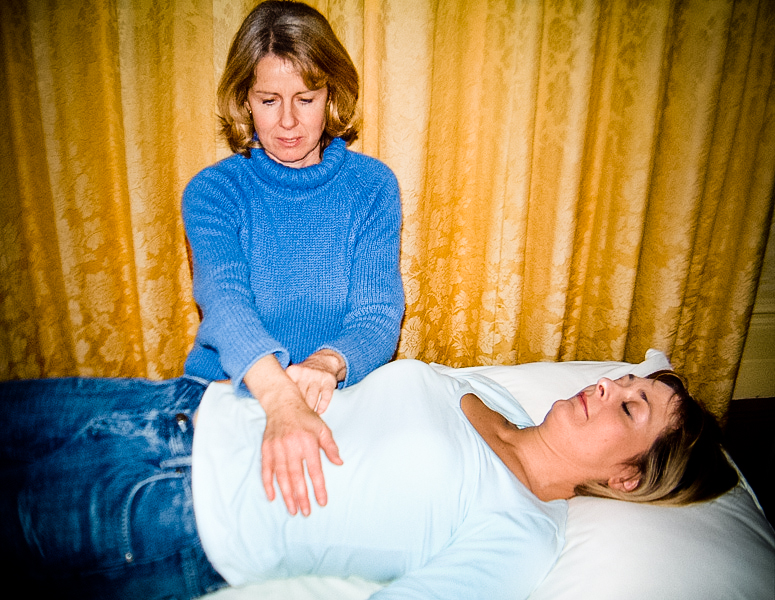
Reiki[a] is a pseudoscientific form of energy healing, a type of alternative medicine originating in Japan.[1] Reiki practitioners use a technique called palm healing or hands-on healing through which, according to practitioners, a "universal energy" is transferred through the palms of the practitioner to the client, to encourage emotional or physical healing. It is based on qi ("chi"), which practitioners say is a universal life force, although there is no empirical evidence that such a life force exists.[2][3]
Reiki is used as an illustrative example of pseudoscience in scholarly texts and academic journal articles.[2][3] The marketing of reiki has been described as "fraudulent misrepresentation",[3] and itself as a "nonsensical method",[4] with a recommendation that the American government agency NCCIH should stop funding reiki research because it "has no substantiated health value and lacks a scientifically plausible rationale".[5]
Clinical research does not show reiki to be effective as a treatment for any medical condition, including cancer,[6][7] diabetic neuropathy,[8] anxiety or depression.[9] There is no proof of the effectiveness of reiki therapy compared to placebo. Studies reporting positive effects have had methodological flaws.[2]
Etymology
[edit]According to the Oxford English Dictionary, the English alternative medicine word reiki comes from Japanese reiki (霊気) "mysterious atmosphere, miraculous sign", combining rei "universal" and ki "vital energy"—the Sino-Japanese reading of Chinese língqì (靈氣) "numinous atmosphere".[10]
Conceptual basis
[edit]Reiki's teachings and adherents claim that qi is a physiological force that can be manipulated to treat a disease or condition. There is no evidence that qi exists.[2] Reiki is classified as a pseudoscientific practice based on confusion between metaphysical and empirical concepts.[11]
Most research on reiki is poorly designed and prone to bias. There is no reliable empirical evidence that reiki is helpful for treating any medical condition,[2][6][7] although some physicians have said it might help promote feelings of general well-being.[7] In 2011, William T. Jarvis of The National Council Against Health Fraud stated there "is no evidence that clinical reiki's effects are due to anything other than suggestion" or the placebo effect.[12]
The 22 April 2014 Skeptoid podcast episode entitled "Your Body's Alleged Energy Fields" relates a reiki practitioner's report of what was happening as she passed her hands over a subject's body:
What we'll be looking for here, within John's auric field, is any areas of intense heat, unusual coldness, a repelling energy, a dense energy, a magnetizing energy, tingling sensations, or actually the body attracting the hands into that area where it needs the reiki energy, and balancing of John's qi.[13]
Technique
[edit]A session usually lasts for approximately one hour. A "Level 1" practitioner places their hand or hands on or near various parts of the body for several minutes. During this time, a vital energy is meant to flow from the practitioner into the client's body.[6] "Level 2" practitioners alternatively may offer their services at a distance with no skin contact.[6]
Research and critical evaluation
[edit]Reiki is used as an illustrative example of pseudoscience in scholarly texts and academic journal articles.[11][14][15][16] David Gorski writes that reiki vies with homeopathy to be the "one quackery that rules them all" because of its "sheer ridiculousness and disconnect from reality".[17] Jann Bellamy, a lawyer and critic of alternative medicine, has described the marketing of reiki as "fraudulent misrepresentation".[3]
In criticizing the State University of New York for offering a continuing education course on reiki, one source stated, "reiki postulates the existence of a universal energy unknown to science and thus far undetectable surrounding the human body, which practitioners can learn to manipulate using their hands,"[18] and others said, "In spite of its [reiki's] diffusion, the baseline mechanism of action has not been demonstrated ..."[19] and, "Neither the forces involved nor the alleged therapeutic benefits have been demonstrated by scientific testing."[20]
Several authors have pointed to the vitalistic energy which reiki is claimed to treat,[21][22][23] with one saying, "Ironically, the only thing that distinguishes reiki from therapeutic touch is that it [reiki] involves actual touch,"[23] and others stating that the International Center for Reiki Training "mimic[s] the institutional aspects of science" seeking legitimacy but holds no more promise than an alchemy society.[24]
A guideline published by the American Academy of Neurology, the American Association of Neuromuscular & Electrodiagnostic Medicine, and the American Academy of Physical Medicine and Rehabilitation states, "Reiki therapy should probably not be considered for the treatment of PDN [painful diabetic neuropathy]."[8] Canadian sociologist Susan J. Palmer has listed reiki as among the pseudoscientific healing methods used by cults in France to attract members.[25]
Stephen Barrett of Quackwatch describes reiki as a "nonsensical method".[4] As a reason for why NCCAM should stop funding reiki research, he writes: "Reiki has no substantiated health value and lacks a scientifically plausible rationale. Science-based healthcare settings should not tolerate its use, and scarce government research dollars should not be used to study it further."[4][5]
Evidence quality
[edit]A 2008 systematic review of nine randomized clinical trials found several shortcomings in the literature on reiki.[2] Depending on the tools used to measure depression and anxiety, the results varied and were not reliable or valid. Furthermore, the scientific community has been unable to replicate the findings of studies that support reiki. The review also found issues in reporting methodology in some of the literature, in that often there were parts omitted completely or not clearly described.[2] Frequently in these studies, sample sizes were not calculated and adequate allocation and double-blind procedures were not followed. The review also reported that such studies exaggerated the effectiveness of treatment and there was no control for differences in experience of reiki practitioners or even the same practitioner at times produced different outcomes. None of the studies in the review provided a rationale for the treatment duration and no study reported adverse effects.[2]
Safety
[edit]Safety concerns for reiki sessions are very low and are akin to those of many complementary and alternative medicine practices. Some physicians and health care providers, however, believe that patients may unadvisedly substitute proven treatments for life-threatening conditions with unproven alternative modalities, including reiki, thus endangering their health.[26][27]
Catholic Church concerns
[edit]In March 2009, the Committee on Doctrine of the United States Conference of Catholic Bishops issued the document Guidelines for Evaluating Reiki as an Alternative Therapy, in which they declared that the practice of reiki was based on superstition, being neither truly faith healing nor science-based medicine: "Reiki lacks scientific credibility. It has not been accepted by the scientific and medical communities as an effective therapy."[28] They stated that reiki was incompatible with Christian spirituality since it involved belief in a human power over healing rather than prayer to God,[29] and that, viewed as a natural means of healing, it lacked scientific credibility.[30] The 2009 guideline concluded that "since reiki therapy is not compatible with either Christian teaching or scientific evidence, it would be inappropriate for Catholic institutions, such as Catholic health care facilities and retreat centers, or persons representing the Church, such as Catholic chaplains, to promote or to provide support for reiki therapy."[28] Since this announcement, some Catholic lay people have continued to practice reiki, but it has been removed from many Catholic hospitals and other institutions.[31]
In a December 2014 article from the USCCB's Committee on Divine Worship on exorcism and its use in the Church, reiki is listed as a practice "that may have [negatively] impacted the current state of the afflicted person".[32]
Training, certification and adoption
[edit]A reiki practitioner who offers teaching is known as a "reiki master".[6]
There is no central authority controlling use of the words reiki or reiki master.[33] Certificates can be purchased online for under $100.[34] It is "not uncommon" for a course to offer attainment of reiki master in two weekends.[35] There is no regulation of practitioners or reiki master in the United States.[36]
The Washington Post reported in 2014 that in response to customer demand, at least 60 hospitals in the United States offered reiki, at a cost of between $40 and $300 per session.[37] Cancer Research UK reported in 2019 that some cancer centers and hospices in the UK offer free or low-cost reiki for people with cancer.[7] The cost per session for treatment vary widely, but a CNBC report found a practitioner charging $229 per session of 60–90 minutes.[38]
History
[edit]![[icon]](https://en.wikipedia.org/wiki/File:Wiki_letter_w_cropped.svg) |


Mikao Usui originated the practice in Japan.[1] According to the inscription on his memorial stone, Usui taught his system of reiki to more than 2,000 people during his lifetime. While teaching reiki in Fukuyama, Usui suffered a stroke and died on 9 March 1926.[39][better source needed]
The first reiki clinic in the United States was started in 1970 by Hawayo Takata, a student of Chujiro Hayashi (who was a disciple of Usui).[9]
See also
[edit]
Notes
[edit]References
[edit]- ^ a b Belcaro, G.V. (2018). Complementary, Alternative Methods And Supplementary Medicine. World Scientific Publishing Company. p. 36. ISBN 978-1-78634-568-4. Retrieved 13 June 2024.
- ^ a b c d e f g h Lee, MS; Pittler, MH; Ernst, E (2008). "Effects of reiki in clinical practice: A systematic review of randomised clinical trials". International Journal of Clinical Practice (Systematic Review). 62 (6): 947–54. doi:10.1111/j.1742-1241.2008.01729.x. PMID 18410352. S2CID 25832830.
Most trials suffered from methodological flaws such as small sample size, inadequate study design and poor reporting....The mechanisms that may be involved in reiki are hypothetical. The existence of Ki (or Qi, life energy) has not been proven scientifically....In conclusion, the evidence is insufficient to suggest that reiki is an effective treatment for any condition. Therefore the value of reiki remains unproven.
- ^ a b c d Bellamy, Jann (12 June 2014). "Reiki: Fraudulent Misrepresentation". Science-Based Medicine. Archived from the original on 21 March 2021. Retrieved 21 April 2021.
- ^ a b c Barrett, Stephen (3 March 2022). "Reiki Is Nonsense". Quackwatch. Retrieved 14 June 2024.
- ^ a b Barrett, Stephen (23 June 2009). "Why NCCAM Should Stop Funding Reiki Research". Quackwatch. Retrieved 14 June 2024.
- ^ a b c d e Russell J; Rovere A, eds. (2009). "Reiki". American Cancer Society Complete Guide to Complementary and Alternative Cancer Therapies (2nd ed.). American Cancer Society. pp. 243–45. ISBN 978-0-944235-71-3.
- ^ a b c d "Reiki | Complementary and alternative therapy | Cancer Research UK". about-cancer.cancerresearchuk.org. Archived from the original on 10 May 2021. Retrieved 12 February 2020.
- ^ a b Bril, V; England, J; Franklin, GM; Backonja, M; et al. (2011). "Evidence-based guideline: Treatment of painful diabetic neuropathy: Report of the American Academy of Neurology, the American Association of Neuromuscular and Electrodiagnostic Medicine, and the American Academy of Physical Medicine and Rehabilitation" (PDF). Neurology. 76 (20): 1758–65. doi:10.1212/WNL.0b013e3182166ebe. PMC 3100130. PMID 21482920. Archived (PDF) from the original on 12 July 2017. Retrieved 15 May 2015.
- ^ a b Joyce, Janine (3 April 2015). "Reiki for depression and anxiety". Cochrane Database of Systematic Reviews (4) CD006833. doi:10.1002/14651858.CD006833.pub2. PMC 11088458. PMID 25835541.
- ^ "Reiki". Oxford English Dictionary (OED). 2003.
- ^ a b Semple, D.; Smyth, R. (2013). "Ch. 1: Psychomythology". Oxford Handbook of Psychiatry (3rd ed.). Oxford University Press. p. 20. ISBN 978-0-19-969388-7.
- ^ Jarvis, William T. "Reiki". National Council Against Health Fraud. Archived from the original on 23 August 2009. Retrieved 31 March 2011.
- ^ Dunning, Brian. "Skeptoid #411: Your Body's Alleged Energy Fields". Skeptoid. Retrieved 3 September 2016.
- ^ Donlan, Joseph E. (2009). Ordaining Reality in Brief: The Shortcut to Your Future. Universal Publishers. pp. 63–. ISBN 978-1-59942-892-5.
- ^ Lobato, E; Mendoza, J; Sims, V; Chin, M (2014). "Examining the relationship between conspiracy theories, paranormal beliefs, and pseudoscience acceptance among a university population". Applied Cognitive Psychology. 28 (5): 617–25. doi:10.1002/acp.3042.
- ^ Gorski, DH; Novella, SP (2014). "Clinical trials of integrative medicine: Testing whether magic works?". Trends in Molecular Medicine. 20 (9): 473–76. doi:10.1016/j.molmed.2014.06.007. PMID 25150944.
- ^ Gorski DH (9 March 2020). "No, editors of The Atlantic, reiki does not work". Science-Based Medicine.
- ^ Lilienfeld, Scott O.; Lynn, Steven Jay; Lohr, Jeffrey M. (2014). Science and Pseudoscience in Clinical Psychology. Guilford Press. pp. 202–. ISBN 978-1-4625-1789-3.
- ^ Ferraresi, M; Clari, R; Moro, I; Banino, E; et al. (2013). "Reiki and related therapies in the dialysis ward: An evidence-based and ethical discussion to debate if these complementary and alternative medicines are welcomed or banned". BMC Nephrology. 14 (1): 129–. doi:10.1186/1471-2369-14-129. PMC 3694469. PMID 23799960.
- ^ Reiboldt, Wendy (2013). Consumer Survival: An Encyclopedia of Consumer Rights, Safety, and Protection. ABC-CLIO. p. 765. ISBN 978-1-59884-937-0.
- ^ Canter, Peter H. (2013). "Vitalism and Other Pseudoscience in Alternative Medicine: The Retreat from Science". In Ernst, Edzard (ed.). Healing, Hype or Harm?: A Critical Analysis of Complementary or Alternative Medicine. Andrews UK Limited. pp. 116–. ISBN 978-1-84540-711-7.
- ^ Smith, Jonathan C. (2011). Pseudoscience and Extraordinary Claims of the Paranormal: A Critical Thinker's Toolkit. John Wiley & Sons. pp. 251–. ISBN 978-1-4443-5894-0.
- ^ a b Sarner, Larry (2002). "Therapeutic Touch". In Shermer, Michael (ed.). The Skeptic Encyclopedia of Pseudoscience. ABC-CLIO. pp. 252–. ISBN 978-1-57607-653-8.
- ^ Pigliucci, Massimo; Boudry, Maarten (2013). Philosophy of Pseudoscience: Reconsidering the Demarcation Problem. University of Chicago Press. pp. 178–. ISBN 978-0-226-05182-6.
- ^ Palmer, Susan (2011). The New Heretics of France: Minority Religions, la République, and the Government-Sponsored "War on Sects". Oxford University Press. pp. 129–. ISBN 978-0-19-987599-3.
- ^ "Reiki: Holistic Therapy Treatment Information". Disabled world.com. January 2014. Retrieved 19 September 2015.
- ^ Ventola, C. L. (2010). "Current Issues Regarding Complementary and Alternative Medicine (CAM) in the United States". P & T: A Peer-Reviewed Journal for Formulary Management. 35 (9): 514–522. PMC 2957745. PMID 20975811.
- ^ a b Committee on Doctrine United States Conference of Catholic Bishops (25 March 2009). "Guidelines for Evaluating Reiki as an Alternative Therapy" (PDF). Archived from the original (PDF) on 31 March 2015.
- ^ Kosloski, Phillip (23 October 2018). "The spiritual dangers behind reiki healing services". Aletia. Média-Participations Group and WordPress. Foundation for Evangelization through the Media. Archived from the original on 26 February 2020. Retrieved 26 February 2020.
- ^ Fernandes, Earl. "WHAT DOES THE CHURCH TEACH ABOUT REIKI?". The Catholic Telegraph. Archdiocese of Cincinnati. Archived from the original on 15 November 2019. Retrieved 19 August 2019.
- ^ Lawton, Kim (12 February 2010). "Reiki and the Catholic Church". PBS. Archived from the original on 1 July 2015. Retrieved 28 June 2015.
- ^ USCCB Committee on Divine Worship and the Secretariat of Divine Worship (December 2014). "29 Questions on Exorcism and Its Use in the Church, Part Two". Committee on Divine Worship Newsletter. Vol. L. United States Conference of Catholic Bishops. Retrieved 19 August 2019.
- ^ Elaine Stillerman (2014), Modalities for Massage and Bodywork, Elsevier Health Sciences, p. 295, ISBN 978-0-323-26079-4,
Currently there is no standard for certification in Reiki throughout the world.
- ^ Diane Stein (2011), Essential Reiki Teaching Manual: A Companion Guide for Reiki Healers, Potter/TenSpeed/Harmony, pp. 7–8, ISBN 978-0-307-78380-6
- ^ Penelope Quest; Kathy Roberts (2012), "Reiki Training Levels", Reiki Collection, Penguin, ISBN 978-1-101-57620-5
- ^ Nina L. Paul (2011), "Reiki classes and certification", Reiki for Dummies, John Wiley & Sons, ISBN 978-1-118-05474-1
- ^ Sacks B (16 May 2014). "Reiki goes mainstream: Spiritual touch practice now commonplace in hospitals". The Washington Post. Archived from the original on 6 January 2019. Retrieved 6 December 2018.
- ^ Here's the budget breakdown of a 37-year-old ex-CIA analyst turned energy healer who makes $108,000 a year Archived 2021-04-19 at the Wayback Machine, CNBC, Emmie Martin, 19 February 2019. Retrieved 19 April 2021.
- ^ Inscription on Usui's memorial
Further reading
[edit]

- National Center for Complementary and Alternative Medicine (4 May 2010). "Reiki: An Introduction (NCCAM Backgrounder)". Retrieved 5 May 2010.
External links
[edit]- "Reiki Can't Possibly Work. So Why Does It?", 2020 article in The Atlantic
| International | |
|---|---|
| National | |
| Other | |

Reiki
View on GrokipediaOrigins and History
Etymology
The term "Reiki" consists of two Japanese kanji: 霊 (rei) and 気 (ki). The kanji 霊 (rei), originating from Middle Chinese 靈 (leng), means "ghost," "soul," or "spirit" in Japanese contexts.[4] The kanji 気 (ki), derived from Middle Chinese 氣 (khj+jH) and simplified in 1946, denotes "spirit," "mood," "air," "atmosphere," or "vital energy."[5] In general Japanese usage, "reiki" (霊気) translates to "mysterious atmosphere" or "miraculous sign," evoking a sense of spiritual or supernatural essence.[6] Within the Reiki healing system, however, "rei" is interpreted as "universal" or "higher power/God's wisdom," while "ki" signifies "life force energy," yielding the composite meaning "spiritually guided life force energy."[7] This contextual translation emphasizes a pervasive, guiding vital energy, distinct from the term's broader linguistic roots.[8] The word's formation reflects influences from Japanese spiritual traditions, including Buddhism—which transmitted Chinese qi concepts via Tendai texts—and Shinto, where notions of divine spirits (kami) parallel the ethereal connotations of "rei."[9] When Hawayo Takata brought Reiki to the West in 1937, she adapted explanations of the term for English-speaking audiences, popularizing the "universal life force energy" phrasing to align with familiar spiritual and energetic ideas, while retaining the original Japanese name.[10] This early 20th-century shift facilitated its integration into Western alternative healing practices.[11]Historical Development
Mikao Usui, a Japanese Tendai Buddhist and scholar born in 1865, developed the Reiki system in 1922 following a profound spiritual experience. After years of studying various healing traditions, including Shinto and Buddhist practices, Usui undertook a 21-day fast and meditation retreat on Mount Kurama near Kyoto. On the final day, he reportedly experienced satori—a sudden enlightenment—during which he received visions and symbols that formed the basis of Reiki, a method of channeling universal life energy for healing. Usui then established the Usui Reiki Ryoho Gakkai society and opened a clinic in Tokyo's Harajuku district to teach and practice the technique, training over 2,000 students before his death from a stroke in 1926.[9][12] Usui's student, Chujiro Hayashi, a former naval officer, played a pivotal role in preserving and expanding Reiki in the 1930s. Trained as one of Usui's last masters, Hayashi founded the Hayashi Reiki Kenkyukai clinic in Tokyo around 1931, where he modified some aspects of the practice to emphasize hands-on treatment sequences. Hayashi trained additional masters, including Hawayo Takata, a Japanese-American woman who sought healing at his clinic in 1935 for health issues stemming from surgery and stress. Takata, cured after several months of sessions, apprenticed under Hayashi and became a master in 1937, marking her as the first woman initiated into the highest level. She returned to Hawaii in 1937, establishing the first Reiki practice outside Japan and initiating the system's transmission to the West.[12][13][14] Following World War II, Reiki faced challenges in Japan under the Allied Occupation (1945–1952), as U.S. authorities issued the Shintō Directive to dismantle state-sponsored religious practices, viewing them as linked to militarism; this led to the dissolution of many spiritual groups. The practice survived through a few dedicated lineages but remained obscure domestically until its revival in the late 20th century, partly through reintroduction from Western practitioners. In the United States, Takata trained 22 masters before her death in 1980, fueling a surge in popularity during the 1980s holistic health movement. Her granddaughter, Phyllis Lei Furumoto, emerged as the lineage bearer and co-founded the Reiki Alliance in 1983 at a gathering in Canada, an organization dedicated to upholding traditional Usui Shiki Ryoho standards and fostering global unity among masters. By the 1990s, Reiki had integrated into broader complementary health practices, with Furumoto's leadership helping standardize training amid growing international adoption.[15][16][12]Conceptual Basis
Core Principles
Reiki's core principles form the philosophical foundation of the practice, guiding practitioners toward personal growth and ethical healing. Central to this framework are the Five Reiki Precepts, known as the Gokai in Japanese, which were established by Mikao Usui, the founder of Usui Reiki Ryoho, as daily affirmations to foster mindfulness and spiritual development.[17] These precepts emphasize living in the present moment, releasing attachments to negative emotions, cultivating gratitude, diligent effort, and compassion, serving as a moral compass for practitioners to integrate into their routine through recitation, often twice daily with hands in the gassho position.[18] The precepts are traditionally recited as follows, with original Japanese, romaji transliteration, and English translation:| Japanese | Romaji | English Translation |
|---|---|---|
| Kyō dake wa | Kyō dake wa | Just for today |
| Okoru na | Okoru na | Do not anger |
| Shinpai su na | Shinpai su na | Do not worry |
| Kansha shite | Kansha shite | Be filled with gratitude |
| Gō o hagemu | Gō o hagemu | Devote yourself to your work |
| Hito ni shinsetsu ni | Hito ni shinsetsu ni | Be kind to people |