


Community hub
Recent from talks
Contribute something
Nothing was collected or created yet.
S-400 missile system
View on Wikipedia
The S-400 Triumf (Russian: C-400 Триумф – Triumf; translation: Triumph; NATO reporting name: SA-21 Growler), previously known as the S-300 PMU-3,[4] is a mobile surface-to-air missile (SAM) system developed in the 1990s by Russia's NPO Almaz as an upgrade to the S-300 family of missiles. The S-400 was approved for service on 28 April 2007 and the first battalion of the systems assumed combat duty on 6 August 2007. The system is complemented by its successor, the S-500.
Key Information


Development
[edit]
The development of the S-400 began in the early 1980s to replace the S-200 missile system, but was rejected by a state commission due to high cost and inability to address the threat of cruise missiles. In the late 1980s, the programme was revived in under the codename Triumf as a system capable of engaging aircraft at long range plus cruise missiles and stealth aircraft.[5] The Soviet government approved the Truimf programme on 22 August 1991, but the collapse of the Soviet Union put development into limbo. It was announced by the Russian Air Force in January 1993.[6] On 12 February 1999 successful tests were reported at Kapustin Yar in Astrakhan, and the S-400 was scheduled for deployment by the Russian army in 2001.[7] The S-400 was officially revived on 7 July 1999, albeit as a modernization of the S-300PM rather than an S-200 replacement.[5] Alexander Lemanskiy of Almaz-Antey was the Chief Engineer on the S-400 project.
In 2003, it became apparent that the system was not ready for deployment. In August, two high-ranking military officials expressed concern that the S-400 was being tested with older interceptors from the S-300P system and concluded that it was not ready for deployment.[7] The completion of the project was announced in February 2004. In April, a ballistic missile was successfully intercepted in a test of the upgraded 48N6DM missile.[8][9] The system was approved for service by the government on 28 April 2007.[10] Russia had accepted for service the 40N6 long-range missile for the S-400 air-defence system, a source in the domestic defense industry told TASS news agency in October 2018.[11]
The S-400 Triumf and Pantsir missile system can be integrated into a two-layer defense system.[12][13]
Structure
[edit]
S-400 missile systems are organized around the 30K6E administration system, which can coordinate eight divizions (battalions).[14][15][16] The 55K6E is a command and control center based on the Ural-532301 vehicle. The 91N6E[14] is a panoramic radar detection system with a 340 km (210 mi) range and protection against jamming, and is mounted on an MZKT-7930 vehicle.[better source needed] Six battalions of 98ZH6E surface-to-air missile systems (an independent combat system)[17] can track no more than six targets on their own,[18] with an additional two battalions if they are within a 40-kilometre (25 mi) range. The 92N6E (or 92N2E) is a multi-functional radar with a 340-kilometre (210 mi) range, which can track 20 targets.[19] The 5P85TE2 transporter-erector-launcher and the 5P85SE2 on a trailer (up to 12 launchers) are used for launch. The 48N6E, 48N6E2, 48N6E3, 48N6DM, 9M96E, 9M96E2, and the ultra-long-range 40N6E missiles have been authorized by a Russian presidential decree.[20]

Optional elements of the S-400 (98ZH6E)[17][21] include the 15I6ME–98ZH6E, which extends coverage 30, 60, and 90 km (19, 38, and 57 mi) from that provided by the 30K6E. The 96L6E[22] has a 300-kilometre (190 mi) detection range. The 40B6M is housing for the 92N6E or 96L6E radar. The Protivnik-GE is an anti-stealth UHF radar with a 400-kilometre (250 mi) range.[23] The Moscow-1 passive sensor is 2+1⁄2 times more effective than the Protivnik, with a 400-kilometre (250 mi) range[24] Orion[25] for a target-designation on-the-air defense system, and the Avtobaza-M[26] and Orion+ Avtobaza add high-precision detection. The 1RL220BE[17][27] versions were reportedly used for jamming.[28] The 400-kilometre (250 mi)-range S-200D Dubna (SA-5c) missiles and S-300 P-family radar systems can be used without additional command-and-control centers.[29] S-300 (SA-20A, SA-20B) missiles may also be guided.[30] A-50 and A-50U[14] aircraft provide early warning and command-and-control target designation.[31]
_(523-55).jpg)
The 30К6Е control system can be integrated with the[17] S-400 Triumf 98ZH6E system; the S-300PMU2 (through the 83М6Е2 control system); the S-300PMU1 (through the 83М6Е control system); the Tor-M1 through the Ranzhir-M battery-command post; the Pantsir-S1 through the lead battery vehicle. The Protivnik-GE and Gamma-DE radars, integrated with the 92H6E radar system, enables communication between each battery with Baikal-E senior command posts and similar types; nearby 30К6Е, 83М6Е and 83М6Е2 administration systems; the Polyana-D4М1 command post; fighter-aircraft command post, and mobile long-range radars. The system's VHF component provides sector search-and-tracking, with the X- and L-band components providing fine-tracking capability. Good placement of the radars relative to the threat axis enables the L- and X-band components to illuminate the incoming target from angles where the target radar cross-section (RCS) is sub-optimal. The RLM-S and RLM-D have better elevation-tracking accuracy than the RLM-M, and the Nebo-M should be capable of producing high-quality tracks suitable for mid-course guidance of modern surface-to-air missiles and trajectory guidance of legacy SAMs.[32]

The Gamma-C1E SHF mobile radar station has a 300-kilometre (190 mi) detection range.[33] The Nebo-M VHF mobile radar station and the Resonance-NE radar station have a detection range of 400 kilometres (250 mi), and 40 kilometres (25 mi) to an altitude of 500 metres (1,600 ft). All Nebo-family locators are doubled for army air defense.[34] During the 1970s, the long-range mobile UHF 5H87, and SHF 5H69 low-altitude locators were used.[35] A goal of the 1980s was detection at an altitude of 10 metres (33 ft) at a distance of 40 km (25 mi).[36] The Elbrus-90 computer is used to control the system.[37]
Components
[edit]According to the Almaz-Antey product brochure,[better source needed] the 92N6E multi-function radar acts as the primary radar with an actual detection range of 340 km. An interceptor missile is highly dependent on 92N6E multi-function radar rather than Nebo-SVU high-altitude VHF radar.
The 91N6E panoramic radar[38] has a declared targeting range of 150 km (93 mi)[39] Maximum targeting ranges (detection ranges are wider) are:
- For a ballistic target (speed of 4800 m/s and a RCS of 0.4 square metres): 200 km (120 mi)
- For a target with RCS of 4 square metres: 340 km (210 mi)[better source needed]
- For targeting of strategic-bomber sized types: 340 km (210 mi)[better source needed]

The 96L6 high-altitude detector (TSBS)[40][41] radar and equipment operates independently of the 96L6E low-level radar detector. The 96L6E2 export version can track a maximum of 20 targets,[better source needed] and is resistant to false returns of clutter in mountainous terrain. It can perform the functions of a command post for battalions of S-300 (SA20/20A/20B)[42] or S-400. The 96L6-1[43] serves as command of S-400 and S-500 batteries.
- PBU 55K6E command center[44] with a maximum distance between the command center and the battalion of 98ZH6E when re-transmitters are being used is 100 km (62 mi).
Missiles are launched from 5P85TE2 self-propelled launchers or 5P85SE2 trailer launchers operating in conjunction with a BAZ-64022 or MAZ-543M tractor-trailer. A new type of transporter was introduced in 2014 to improve mobility while reducing fuel consumption. The cost of transporters in 2014 is 8.7 million rubles.[45] The MAZ launcher chassis are reportedly of higher quality than the domestic equivalent.[46]
Missiles
[edit]
One system comprising eight divizion (battalions) can control 72 launchers, with a maximum of 384 missiles[47] (including missiles with a range of less than 250 km [160 mi]).[48][49][better source needed] A gas system launches missiles from launch tubes. At 30 metres (98 ft) downrange rocket motor ignition activates.[30] In April 2015, a successful test firing of the missile was conducted at an airborne target at a range of 400 km (250 mi);[50][51] transporter erector launchers (TELs) carrying the long-range 40N6 may only hold two missiles instead of the typical four due to their large size.[52] Another test recorded a 9M96 missile using an active radar homing head that reached an altitude of 56 km (35 mi).[53] All missiles are equipped with directed explosion warheads, which increases the probability of complete destruction of aerial targets but are less effective against ballistic targets.[54] In 2016, Russian anti-aircraft missile troops received upgraded guided missiles for S-300 and S-400 defense systems.[55] The anti-aircraft version of the missile system, designed to destroy aircraft, cruise, and ballistic missiles, can also be used against ground targets.[56] The S-400 is able to intercept cruise missiles at a range of only about 40 km (25 mi) due to their low-altitude flight paths.[57]
| GRAU index | Range | Altitude | Maximum velocity | Maximum target velocity | Weight | Warhead | Guidance | Notes |
|---|---|---|---|---|---|---|---|---|
| 40N6E[58] | 380 km (240 mi)[58] | 30 km (98,000 ft)[58] | 1,190 m/s (2,700 mph; Mach 3.5)[59] | 4,800 m/s (11,000 mph; Mach 14)[58] | 1,893 kg[60] | Semi-active radar homing or active radar homing |
With an active radar homing head, climbs to designated altitude then guidance switches to search & destroy mode.[30] | |
| 48N6DM/ 48N6E3 |
240 km (150 mi)[61] | 27 km (89,000 ft) | 2,000 m/s (4,500 mph; Mach 5.9)[61] | 4,800 m/s (11,000 mph; Mach 14)[61] | 1,835 kg (4,045 lb)[61] | 180 kg (400 lb)[61] | Semi-active radar homing[17] | |
| 48N6E2 | 200 km (120 mi)[61] | 27 km (89,000 ft) | 2,000 m/s (4,500 mph; Mach 5.9)[61] | 2,800 m/s (6,300 mph; Mach 8.2)[61] | 1,835 kg (4,045 lb)[61] | 180 kg (400 lb)[61] | Semi-active radar homing[17] | |
| 9M96 and 9M96E2 |
120 km (75 mi)[62] | 30 km (98,000 ft)[62] | 1,000 m/s (2,200 mph; Mach 2.9)[62] | 420 kg (930 lb)[62] | 24 kg (53 lb)[62] | Active radar homing[62] | Claimed high hit probability with one missile against fast, maneuvering targets. Aircraft = 0.9; UAV = 0.8; Cruise missile = 0.7.[14][62] Load factor of more than 20 g at 30 km (19 mi) altitude greatly increases the probability to destroy short- to medium-range ballistic missiles.[29] | |
| 9M96E | 40 km (25 mi)[62][63] | 20 km (66,000 ft)[63] | 900 m/s (2,000 mph; Mach 2.6)[64] | 333 kg (734 lb)[63] | 24 kg (53 lb)[63] | Active radar homing[65] | ||
| 9M100E |
- The anti-ballistic missile (ABM) capabilities of the S-400 system are near the maximum allowed under the (now void) Anti-Ballistic Missile Treaty.
- The new anti-ballistic missiles 77N6-N and 77N6-N1 to enter service in 2022 supposedly add inert/kinetic anti-ballistic capability to the S-400 system and are too large for the SA-20.[66] The same missiles will also be used by the S-500, which has a clearly stated ABM role.[67]
Missile gallery
[edit]-
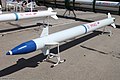 9M96E2 SAM at the 2017 MAKS airshow
 -
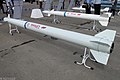 9M96E2 SAM at the 2017 MAKS airshow
 -
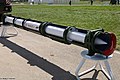 9M96E2-1 at the 2017 MAKS airshow
 -
 5P85TM TEL for S-400 missile system
 -
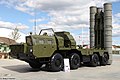 5P85SE2 TEL for S-300PM2
 -
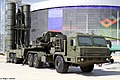 5P85TE2 TEL
 -
S-400 firing in 2020 at the Ashuluk Training Ground
-
S-400 firing in 2013 at the Ashuluk Training Ground
-
S-400 firing during Kavkaz 2020 exercise


S-300 system family tree
[edit]| S-300 family | |||||||||||||||||||||||||||||||||||||||||||||||||||||||||||||||||||||||||
| S-300V | S-300P | S-300F | |||||||||||||||||||||||||||||||||||||||||||||||||||||||||||||||||||||||
| S-300V1 | S-300V2 | S-300PT | S-300PS | Fort | Rif | ||||||||||||||||||||||||||||||||||||||||||||||||||||||||||||||||||||
| S-300VM | S-300PT-1 | S-300PM | S-300PMU | Fort-M | Rif-M | ||||||||||||||||||||||||||||||||||||||||||||||||||||||||||||||||||||
| Favorit-S | |||||||||||||||||||||||||||||||||||||||||||||||||||||||||||||||||||||||||
| S-300VM1 | S-300VM2 | S-300PT-1A | S-300PM1 | S-300PMU1 | |||||||||||||||||||||||||||||||||||||||||||||||||||||||||||||||||||||
| Antey 2500 | S-300PM2 | S-300PMU2 | Russian Ver. | ||||||||||||||||||||||||||||||||||||||||||||||||||||||||||||||||||||||
| S-300V4 | Favorit | Export Ver. | |||||||||||||||||||||||||||||||||||||||||||||||||||||||||||||||||||||||
| S-300VMD | S-400 | ||||||||||||||||||||||||||||||||||||||||||||||||||||||||||||||||||||||||
Morpheus defence system
[edit]- A separate independent air defense system, the 42S6 Morfey (Morpheus) is being developed. This system is designated as a short-range air defense system to protect the S-400 from various threats during its terminal phase, and will also act together with the S-350E as a supplement to the S-400. Together, these systems form part of the Russian Aerospace Defence Forces.[68]
- Development of Morfey started in 2007 and was planned to be introduced in 2013, but was delayed until at least 2015, in 2023 the development is not completed.[69][70][71] The missile system consists of omnidirectional 29YA6 radar and 36 missiles.[68] The missiles have up to 10 km (6.2 mi) range and an altitude of up to 3500 m.[68][72]
- An external independent target system is in the works (RLS "Niobium"). Mobility looks to be in the 5 minute range. It uses multiple frequency capability (band S and UHF) with a declared detection parameter of a 1 square meter RCS at 430 km (270 mi) including a target speed of 8000 km/h (4791 mph, Mach 6.35). The detection system requires the operator to transfer command of targeting to subordinate systems; in this application, the maximum target speed is obtained by use of the subordinate systems.[73]
Specifications
[edit]| Max. target speed | 4.8 km/s (17,000 km/h; 11,000 mph; Mach 14)[21] or
lower than 850 metres per second (3,100 km/h; 1,900 mph; Mach 2.5)[75] |
| Max. Target detection distance (km) | 600[76] |
Range against aerodynamic target (km)
|
400[77] 2[48] |
Altitude limits for aerodynamic target (2015, km)
|
27[21] (easily)/30[49] |
Range against tactical ballistic targets (km)
|
60 5[17] |
| The number of simultaneously engaged targets (full system) | 36[78] |
| The number of simultaneously guided missiles (full system) | 72, can use 2 missiles to attack 1 target[79] |
| Ready for operation on a signal from driving on the march | 5 min;[80] 10–15 min during development[81] |
| Ready for operation on a signal from standby | ready and enabled 35 sec; ready 3 min[38] |
| Time between major overhauls | 10,000 hours |
Service life
|
At least 20 years 10 years |
- Types of targets:[82]
- All-purpose maximum radial velocity is 4.8 kilometres per second (17,000 km/h; 11,000 mph; Mach 14); absolute limit 5 kilometres per second (18,000 km/h; 11,000 mph; Mach 15),[63] the minimum target speed is zero.[17]
- System response time 9–10 seconds.[83]
- The complex can move on roads at 60 km/h (37 mph) and off-road at speeds up to 25 km/h (16 mph).[84]
- According to the Pravda state newspaper, the price of one battalion (about 7–8 launchers) is US$200 million.[85]
Deployment history
[edit]Russia
[edit]
On 21 May 2007 the Russian Air Force announced that S-400 systems would be put on combat duty near the town of Elektrostal in Moscow Oblast, to defend Moscow and Central Russia, by 1 July 2007.[86] On 6 August 2007 the first regiment equipped with S-400 systems entered active service near Elektrostal, according to Channel One Russia. The regiment was the 606th Guards Anti-air Rocket Regiment, 9th PVO Division, 1st PVO Corps, of the Special Purpose Command.[87]
On 8 February 2008 Lt. Gen. Vladimir Sviridov announced that Russia would be replacing the S-300 systems in the northwest of Russia with the S-400. Military experts expect Russia's use of the system as a major component of their ballistic missile defense until 2020.[88]
In September 2006 Deputy Prime Minister Sergei Ivanov announced the purchase of 18 S-400 battalions for internal defense for the period 2007–2015.[89]
The Baltic Fleet in Kaliningrad received S-400 SAM systems which went into operational status in April 2012.[90] One S-400 divizion is deployed on combat duty in the Russian far east city of Nakhodka.[91]
As of 2012, one system (in Electrostal) was operational, with three more S-400 battalions being deployed. All 56 battalions will be delivered by 2020.[92][needs update]
Russia plans to recommission the Kirov-class battlecruiser Admiral Nakhimov in 2023. Plans called for the installation of the 48N6DMK anti-aircraft missile derived from the land-based S-400. This will extend the Kirov's air defense from 100 km (62 mi; 54 nmi) to 250 km (160 mi; 130 nmi).[93][needs update] Adm. Vladimir Korolev stated at that time that Russia's Northern Fleet's Coastal Forces had deployed S-400s.[94][95]
On 1 March 2016 the acting commander of the 14th Air Force and Air Defense Army, major general Vladimir Korytkov, said that six S-400 units had been activated at the air defense formation in Russia's Novosibirsk Oblast.[96] TASS also reported that as of the end of 2015, a total of eleven Russian missile regiments were armed with S-400, and by the end of 2016 their number was expected to increase to sixteen.[96]
2015 – Syria
[edit]It was reported in November 2015 that S-400s would be deployed to Syria along with the contingent of Russian troops and other military hardware in the course of the air campaign conducted by the Russian forces in support of the Syrian government.[97] However, those claims were refuted by Russia.[98] On 25 November 2015 the Russian government announced it would deploy S-400s in Syria as a response to the downing of its Su-24M jet by Turkey.[99] By the next day, deployment of S-400 air defense systems to Syria was underway.[100] The first S-400 unit was activated at the Khmeimim Air Base in Latakia Governorate.[101] In April and July 2017 a second S-400 unit was activated 13 km (8.1 mi) northwest of Masyaf, Hama Governorate.[101] Although these systems are located in Syria, they are under the command of the Russian military and not the Syrian (nor Iranian) military,[102] making the Russian government liable if used against another state (that is, its use would be considered an attack by Russia rather than Syria).
On 22 May 2018 Israeli Air Force commander Major General Amikam Norkin reported that Israel became the first country in the world to use the F-35I Adir in combat during recent clashes with Iran in Syria.[103] In mid-2020, several media outlets, including Turkish media, questioned the combat capability of the S-400 air defense system.[104] In late December 2021, the Israeli Air Force flew military jets over areas protected by S-400 and Pantsir SAM in Syria and bombed Iran-backed Hezbollah militia based in Latakia.[better source needed] Russia operates a naval base in the port of Tartus, 85 km (53 mi) to the south near the port of Latakia.[105][106] Considering the engagement range advertised by the Russians, the S-400 could have engaged Israeli aircraft but did not. Neither Russian fighter jets nor the S-400 systems attempted to intercept the Israeli aircraft.[102] It is widely believed that Russia and Israel have an agreement that Israel will guarantee the safety of Russian personnel and assets during its strikes on non-Russian targets in Syria and in return, Russia will not target Israeli aircraft nor repel Israeli strikes.[102]
2022 – Ukraine
[edit]Initial Ukrainian sources claimed that, on 25 February 2022, the Su-27 of Ukrainian Colonel Oleksandr Oksanchenko was shot down by an S-400 over Kyiv.[107]
On 14 April 2022, the Russian Defence Ministry claimed that a Ukrainian Mi-8 was shot down by a S-400 near Horodnia, Chernihiv Oblast on its way to an air base following an attack on Russian territory near Klimovo, Bryansk Oblast.[108][109]
In August 2022, Ukraine claimed that a 92N6E radar used in the S-400 SAM system was destroyed in Kherson region.[78]
On 16 October 2023, units from the Ukrainian Special Operations Forces carried out precision strikes targeting two key Russian airbases in Berdiansk and Luhansk destroying S-400 surface-to-air missiles.
On 30 October 2023, Ukraine launched ATACMS missiles with M39 munition[110] that destroyed Russia's S-400 surface-to-air missile in Luhansk Oblast.
On 23 August 2023, GRU released a video of two alleged elements of an S-400 battery being destroyed in Olenivka, Crimea, 120 km (75 mi) south of Kherson, by a barrage of Ukrainian missiles.[111][112] Ukrainian forces, according to Ukrainian media, used a R-360 Neptune and a drone to destroy the missile's radar.[113][114]
On 14 September 2023, Ukraine claimed to have destroyed a Russian S-400's radar near Yevpatoria, Crimea.[115] On 4 October 2023, Ukrainian kamikaze drone destroyed one radar and a missile launcher of S-400 system in Belgorod region.
In late October 2023, Russian sources claimed that the S-400 was used in conjunction with the Beriev A-50 flying radar to shoot at Ukrainian air targets with new warheads of anti-aircraft guided missiles.[116][117]
On 9 November 2023, the UK MoD intelligence assessment indicated that due to the destruction of "several" Russian S-400s in Ukraine, Russia may have to redeploy S-400 systems from "distant parts" of Russia's borders to Ukraine.[118][119]
On 19 April 2024, Ukraine launched ATACMS missiles at Russian military airfield in Crimea and destroyed Russia's S-400 launchers, three radars and Fundament-M air surveillance system.[120][121]
On 23 April 2024, Ukraine's Tivaz Artillery Battery launched American-made HIMARS at Russia's S-400 missile system's 92N2 radar and 96L6 high-altitude radar and destroyed both of the radar system.[117][121]
On 28 April 2024, Ukraine launched multiple ATACMS missiles at Russian based in the occupied Crimean peninsula and destroyed Russian S-400 air defence systems.[121]
On 6 May 2024, Ukrainian forces reportedly destroyed a tracked version of Russian S-400 missile launcher in the occupied Zaporizhzhia region.[120]
On 30 May 2024, the Security Service of Ukraine (SBU) destroyed a Russian Nebo-SVU long-range VHF surveillance radar system in Crimea.[122] The Nebo-SVU is a surveillance radar deployed as part of the S-400 missile system.[123]
Russians have been reported to use reprogrammed S-400 missiles to launch ballistic ground-to-ground attacks. In one such attack on 13 December 2023 out of 10 missiles fired at Kyiv, all were supposedly downed, but falling debris still caused some damage in residential regions. The missiles were most likely reprogrammed 48N6.[124][125]
On 3 June 2024, Ukrainian forces destroyed for the first time an S-400 air defence missile system in Belgorod using a U.S.-supplied M142 HIMARS rocket launcher.[126]
On 10 June 2024, Ukrainian forces struck a Russian antiaircraft missile system, including S-400 missile launchers in the Dzhankoy area in Crimea.[127] According to a Newsweek report, visual confirmation and satellite mapping confirmed that Russia lost fifteen air defence systems in Crimea, including missile launchers, power supply units and radar stations to Ukrainian ATACMS and drone strikes.[128]
On 2 August 2024, Ukraine struck four Russian S-400 surface-to-air missile systems in Crimea. According to CNN news, four S-400 systems were severely damaged by the Ukrainian attacks.[129][130]
On 24 November 2024, Ukraine struck one Russian S-400 surface-to-air missile systems in Kursk region. The S-400 missile launchers were targeted by U.S.-made ATACMS missile.[131]
On 27 January 2025, videos emerged of a 96L6E radar of the S-400 reportedly being hit by a Ukrainian HIMARS missile.[132][133]
On 29 August 2025, a video emerged of a Russian 91N6E radar of the S-400 reportedly being hit in Crimea by a Ukrainian drone.[134]
Belarus
[edit]In 2011 State Secretary of the Union State of Russia and Belarus Pavel Borodin stated that Russia will supply the S-400 air defense system to Belarus.[135] On 1 December 2021 Belarus President Alexander Lukashenko, in response to a reporter's question, replied that a Belarusian training center already has S-400 systems. The president said: "Yes. We train our guys in this training center. I'd like to ask the president [of Russia] to leave this system here."[136]
China
[edit]In March 2014, it was announced that Russian President Vladimir Putin had given authorization to sell the S-400 system to China.[137] On 13 April 2015, the chief executive of the Russian state-run arms trader Rosoboronexport confirmed that China secured a contract for the purchase of the S-400 air defense system.[138] Delivery of the system began in January 2018.[139] China test fired Russian S-400 systems for the first time in early August 2018.[140][141] Deliveries were reportedly postponed after the delivery of two S-400 units.[142]
The acquisition of S-400, reported to initially consist of six batteries, improves China's air space defense. A reported 400 km (250 mi) coverage range would allow China's defense to cover all of the Taiwan Straits and the Diaoyu Islands. Taiwan plans countermeasures using signals intelligence units to locate and destroy S-400 systems before they can be used.[143]
Turkey
[edit]In late 2017 Turkish and Russian officials signed a US$2.5 billion agreement for delivery of the S-400 air defense system to Turkey.[144][145] The US Secretary of State raised concerns over the deal,[146] which were rebuffed by President Erdogan and other Turkish officials, citing the US refusal to sell the upgraded MIM-104 Patriot to Turkey, considered to be an important American ally by the US. Turkey received its first installment of the Russian S-400 missile defense system on 12 July 2019.[147] On 17 July 2019, Turkey was suspended from the F-35 program, the US stating "F-35 cannot coexist with a Russian intelligence collection platform that will be used to learn about its advanced capabilities"[148] and on 14 December 2020, the US imposed CAATSA sanctions on Turkey.[149] As of 2020, 4 batteries consisting of 36 fire units and 192 or more missiles were delivered to Turkey.[150]
India
[edit]Contract
[edit]A deal to purchase S-400 systems by India was first reported in October 2015.[151] On 15 October 2016, during the BRICS Summit, India and Russia signed an Inter-governmental Agreement (IGA) for the supply of five S-400 regiments to India.[152] On 1 July 2018, the Defence Acquisition Council (DAC), chaired by the then Defence Minister Nirmala Sitharaman, cleared the procurement. The deliveries were expected to commence within 24 months after contract signing (October 2020) while they would complete all deliveries within 60 months (April 2023).[153][154] On 26 September 2018, the Cabinet Committee on Security (CCS), headed by the Prime Minister Narendra Modi further cleared the acquisition.[155] The US$5.43 billion deal (₹40,000 crore) was formally signed on 5 October 2018, ignoring the threat of US sanctions.[156][157]
In March 2021, U.S. Secretary of Defense Lloyd Austin discussed India's planned purchase of Russia's S-400 air missile system and warned that the purchase of S-400 could trigger CAATSA sanctions.[158]
On 5 August 2025, the Defence Acquisition Council (DAC) accorded the Acceptance of Necessity (AoN) for the comprehensive annual maintenance contract of S-400 missile systems.[159][160]
In October, it was reported that top officials from the Indian defence ministry is expected to meet their Russian counterparts for the purchase of five additional systems of S-400. These systems will be either directly delivered from Russia or jointly manufactured in India. The cost of these systems will be based on the 2018 deal except for compensating the annual price escalations. The deal is expected to be cleared before the scheduled visit of Russian President, Vladimir Putin, to India on 5 December. Reports also debunked the purchase of any S-500 missile system by India.[161][162]
As reported on 21 October 2025, the DAC is expected to approve a deal worth ₹10,000 crore (US$1.2 billion) to procure missiles to equip the S-400 systems. The approval is expected to be granted during the DAC meet scheduled on 23 October.[163]
Delivery and deployment
[edit]| Regiment Name | Received on | Deployed at | Source |
|---|---|---|---|
| First regiment | December 2021 | Along the Line of Control (LoC) in Pathankot region to protect Punjab-Jammu & Kashmir sector | [164] |
| Training regiment | April 2022 | Received simulators and other equipment for a training regiment | [165] |
| Second regiment | July 2022 | Along the Line of Actual Control (LAC) in Sikkim sector. | [166] |
| Third regiment | February 2023 | Rajasthan-Gujarat sector | [167][168][169] |
Delivery of the remaining two systems are likely to be dependent on the resolution of issues such as insurance and establishment of mechanism for balance payments which are delayed due to sanctions on Russia following the 2022 Russian Invasion of Ukraine. Delivery expectations were later revised to August 2026.[170][171][172]
In February 2025, it was reported that in the fourth regiment is to be delivered by the end of the year while the last regiment would be delivered by 2026,[169] later revised to February and August 2026.[173]
Organisation
[edit]The S-400 system is named Sudarshan Chakra in Indian service, after Sudarshan Chakra[174] and is unified with the Integrated Air Command and Control System (IACCS). Each battalion is composed of two batteries. Each battery (or firing unit) is equipped with 6 launchers, a radar and a control center with 128 missiles. A battalion has a total of 16 vehicles. India bought a total of 60 launchers with around 6,000 missiles including 9M96E2 (120 km), 48N6E2 (200 km), 48N6E3 (240 km) and 40N6E (380 km).[166][169][155]
Service history
[edit]In July 2024, during an air defence exercise of the Indian Air Force, the S-400 system 'shot down' 80% of the 'aggressor aircraft'. Some Indian jets were used as aggressor jets which were tracked, targeted and locked on by the S-400 system.[174][175]
2025 India–Pakistan conflict
[edit]On 10 May 2025, it was claimed by several media outlets that an IAF S‑400 system intercepted and destroyed a PAF AWACS aircraft approximately 314 km inside Pakistani airspace.[176][177][178]
On August 9 2025, Indian Air Chief Marshal Amar Preet Singh claimed India had, in May, shot down five Pakistani fighters. Singh also stated that in addition, a "large aircraft" had been shot down at a distance of 300 km, and described it as the "largest-ever recorded surface-to-air kill that we can talk about". The Marshall attributed most of the downed aircraft to the S-400 system. Pakistan has rejected these claims.[179][180]
During the 2025 India–Pakistan conflict, the Pakistan Air Force had claimed of destroying components of India's S‑400 Triumf air defence system deployed at Adampur Air Force Station.[181] The Indian Ministry of External Affairs (MEA) however rejected Pakistan's claim of damage to S-400 defence system.[182][183][184][185][186]
Prime Minister Narendra Modi visited the Adampur Air Force Station in Punjab on 13 May 2025, and posed in front of an S-400 system that appeared visually undamaged.[187][188]
Foreign interest
[edit]Saudi Arabia
[edit]In September 2009 the S-400 was reportedly part of a US$2 billion arms deal between Russia and Saudi Arabia.[189] The Saudis wanted to acquire the S-400, but Russia was only willing to sell S-300 air defense system at the time.[190] By November 2019 the deal had still not been finalized.[191] Saudi Arabia is no longer considering the Russian S-400 air defense system, following the kingdom's deal for an American alternative. The American Terminal High Altitude Area Defense (THAAD) system has been cleared for sale to the Saudis by the U.S. State Department. The sale of the THAAD package sold to Saudi Arabia is estimated at $15 billion in 2017 dollars.[192]
Iran
[edit]In June 2019 some Iranian officials expressed interest in procuring the S-400 missile system to further improve its defense capabilities along with the previously purchased S-300PMU2. Russia stated at the time it was ready to sell the S-400 system to Iran if an official request was made.[citation needed] In November 2024, Davood Sheikhian, deputy for operations of the IRGC Aerospace Force, stated that Iran never requested the S-400 systems, and that Iran's current capabilities were far superior to them, additionally stating that Iran is actively using the S-300.[193] This is in contradiction both to reports from Iran's media outlets addressing its attempts to acquire the S-400, and to other reports of the disabling of all active S-300 systems belonging to Iran during Israeli airstrikes.[193] An Iranian lawmaker said on 23 September 2025 that S-400s are being supplied to Iran "in significant numbers".[194]
Egypt
[edit]In February 2017 Sergey Chemezov, CEO of Rostec, stated that Egypt was interested in the S-400 air defense system. He explained that Russia offered to sell Egypt either the Antey-2500 or S-400. According to Chemezov, the negotiations were delayed due to Egypt's financial issues.[195]
Iraq
[edit]In February 2018 Iraqi Minister of Foreign Affairs Ibrahim al-Jaafari confirmed ongoing rumors that his country had shown interest in the S-400 and that negotiations with Russia were underway.[196][197][198] In May 2019 Iraq's ambassador to Russia, Haidar Mandour Hadi, said the Iraqi government had decided to procure the S-400 air defense system.[199]
United States
[edit]In June 2020 United States senator John Thune proposed an amendment to the (ultimately unsuccessful) Senate version of the 2021 National Defense Authorization Act to allow the US Department of Defense to purchase Turkey's S-400 system with funds from the U.S. Army's missile procurement account,[200] thus negating Turkey's contravention of the CAATSA sanctions.[201] This was an attempt to allow Turkey to re-enter the F-35 Lightning II acquisition and ownership program.[201]
Serbia
[edit]Foreign variant
[edit]South Korea
[edit]South Korea is developing the KM-SAM, a medium-range SAM system based on technology from the 9M96 missile, with assistance from NPO Almaz. The prime contractor is Hanwha Group (formerly Samsung-Thales, a defunct joint venture between South Korea's Samsung and France's Thales).[204] The KM-SAM will consist of an X-band multifunction radar vehicle built by Hanwha in technical cooperation with Almaz,[205] with fire control and TEL vehicles built by Doosan.[206] Missiles will be provided by LIG Nex1.[207]
Operators
[edit]
Current operators
[edit]
- Algerian Territorial Air Defence Forces – First S-400 units delivered in September 2021.[208][better source needed]

- Belarusian Air Force – Contract signed in May 2022 and executed in December.[211]

- People's Liberation Army Air Force – Contract signed in September 2014, deliveries of units began in January 2018, and are being introduced.[212][209]

- Indian Air Force – A contract was signed in October 2018 during an official meeting between Russia's President Vladimir Putin and India's Prime Minister Narendra Modi in New Delhi. The deal, worth of $US5.43 billion, includes delivery of the 1st regiment of the S-400 beginning November 2021. India deployed the 1st regiment of the S-400 in April 2022. 3 regiments delivered, with 2 more to join by August 2026.[171][172]

- Russian Aerospace Forces
- Western Military District
- 3 battalions of the 210th Anti-Aircraft Rocket Regiment, Dmitrov[213][214]
- 3 battalions of the 606th Anti-Aircraft Rocket Regiment, Elektrostal[215][216]
- 2 battalions of the 93rd Anti-Aircraft Rocket Regiment, Zvenigorod[217]
- 2 battalions of the 549th Anti-Aircraft Rocket Regiment, Podolsk[218]
- 2 battalions of the 584th Anti-Aircraft Rocket Regiment, Zelenograd[219]
- 2 battalions of the 500th Anti-Aircraft Rocket Regiment, Gostilitsy[220]
- 2 battalions of the 1488th Anti-Aircraft Rocket Regiment, Zelenogorsk[219]
- 2 battalions of the 1544th Anti-Aircraft Rocket Regiment, Luga[221]
- 2 battalions of the 183rd Anti-Aircraft Rocket Regiment, Kaliningrad[222]
- 2 battalions of the 1545th Anti-Aircraft Rocket Regiment, Kaliningrad Oblast[223]
- Eastern Military District
- 2 battalions of the 589th Anti-Aircraft Rocket Regiment, Nakhodka[224]
- 3 battalions of the 1532nd Anti-Aircraft Rocket Regiment, Petropavlovsk-Kamchatsky[225]
- 2 battalions of the 1533th Anti-Aircraft Rocket Regiment, Vladivostok[226]
- 2 battalions of the 1530th Anti-Aircraft Rocket Regiment, Khabarovsk[227]
- 2 battalions of the 1724th Anti-Aircraft Rocket Regiment, Yuzhno-Sakhalinsk[228]
- Southern Military District
- 2 battalions of the 1537th Anti-Aircraft Rocket Regiment, Novorossiysk[229]
- 2 battalions of the 18th Anti-Aircraft Rocket Regiment, Feodosia, Crimea[219]
- 2 battalions of the 12th Anti-Aircraft Rocket Regiment, Sevastopol, Crimea
- Central Military District
- Northern Military District
- Western Military District

- Turkish Air Force:
- Air Defense Command (Hava Savunma Komutanlığı)[210]
Gallery
[edit]-
 S-400's 92N2 radar and 5P85T2
 -
 The 96L6 high-altitude detector
 -
 The 48N6E3 missile used by the S-400.
 -
 S-400 Triumf launch vehicle
 -
 22T6 loader for S-400 and S-300 systems
 -
 5P85SM2-01 TEL launcher from the S-400 system
 -
 ТЗМ 22Т6 on the Ashuluk proving ground in 2017
 -
 S-400 surface-to-air missile systems during the Victory parade 2010
 -

-
 S-400 system during a rehearsal for Russia's 2009 Victory Day parade in Moscow.
 -
 Russian 15.00 rubles stamp commemorating the 150th anniversary of the Obukhov State Plant
 -
 9M83ME and 9M82ME SAM for S-300VM Antey-2500 missile system and 48N6E3 SAM for S-400 system
 -
 The self-propelled launch vehicle 5P90S on a BAZ-6909-022 chassis for the S-400 system
 -
 The all-altitude detection radar 96L6E of S-300/400 systems, mounted on the chassis of MZKT-7930
 -
 The BAZ-69092-021 towing vehicle for the 5I57A power generator and the 63T6A power converter for the S-400 system
 -
 76N6 Clam Shell FMCW acquisition radar is used to support the Flap Lid SA-10 fire control radar. NATO code name: "Clam Shell."
 -
 The BAZ-69092-021 towing vehicle for the 5I57A power generator and the 63T6A power converter for the S-400 system
 -
 Two 5P85SM surface-to-air missile launchers and a 92Н6 radar guidance at Russia's Khmeimim airbase in Syria
 -
 Anti-access/area denial bubble created by Iskander-M and S-400 systems deployed at Russia's Khmeimim airbase in Syria. Red – ballistic missile range (700 km). Blue – maximum range of the S-400 system with 40N6 missile (400 km).


.jpg)


.jpg)

See also
[edit]References
[edit]- ^ "Russia is luring international arms buyers with a missile system that costs much less than models made by American companies". CNBC. 19 November 2018. Archived from the original on 27 December 2022. Retrieved 16 May 2023.
- ^ "Turkey, Russia sign deal on supply of S-400 missiles". Reuters. 29 December 2017. Archived from the original on 28 June 2018. Retrieved 28 June 2018.
- ^ "S-400 missile system". Archived from the original on 23 February 2024. Retrieved 24 January 2024.
- ^ Bryen, Stephen (17 October 2017). "Russia's S-400 Is a Game Changer in the Middle East (and America Should Worry)". Archived from the original on 19 October 2017. Retrieved 19 October 2017.
- ^ a b Zaloga, Steven J. (2023). The Russian S-300 and S-400 Missile Systems. Osprey Publishing. pp. 26–27. ISBN 9781472853769.
- ^ Land Based Air Defence, Jane's, 2010–2011
- ^ a b "S-400 (SA-20)". Missile Threat. CSIS.
- ^ "Russia: New S-400 Air Defense System Coming Soon". Periscope Daily Defense News Capsules. 4 April 2001.
- ^ "Russia Trumpets New S-400 Missile System". BBC Monitoring. 23 March 2001.
- ^ "ЗРС С-400 Триумф" [S-400 Triumf] (in Russian). S400.ru. Archived from the original on 31 October 2001. Retrieved 29 October 2013.
- ^ "Advanced long-range missile for S-400 system accepted for service in Russia". TASS. Archived from the original on 21 October 2018. Retrieved 21 October 2018.
- ^ "Russia's newest anti-air defenses are in Syria – and the US should be worried". Business Insider. 11 April 2018. Archived from the original on 19 July 2018. Retrieved 10 August 2018.
- ^ "The S-400–Pantsir 'Tandem': The New-Old Feature of Russian A2/AD Capabilities". Jamestown. Archived from the original on 10 August 2018. Retrieved 10 August 2018.
- ^ a b c d "Зенитный ракетный комплекс С-400 'Триумф'" [Anti-aircraft missile system S-400 'triumph'] (in Russian). Archived from the original on 6 October 2014. Retrieved 14 November 2014.
- ^ "Характеристики зенитной ракетной системы С-400 "Триумф"" [Characteristics of surface-to-air missile systems s-400 "triumph"]. RIA Novosty (in Russian). 17 February 2010. Archived from the original on 4 November 2014. Retrieved 14 November 2014.
- ^ "-400 "" (, )". -. Archived from the original on 6 October 2014. Retrieved 14 November 2014.
- ^ a b c d e f g h "ГСКБ Концерна ПВО Алмаз-Антей имени академика А.А. Расплетина (ОАО НИЭМИ): с-25 беркут, бункин борис васильевич, с 300 пму, с-300 пму, зрс, с-400 триумф, средства пво, четырёхсотка, противовоздушная оборона". Archived from the original on 3 April 2014. Retrieved 14 November 2014.
- ^ "Западные СМИ: зенитно-ракетные комплексы S-400 и S-500 могут стать лучшими комплексами противовоздушной обороны в мире". 7 December 2012. Archived from the original on 6 October 2014. Retrieved 14 November 2014.
- ^ "ГСКБ Концерна ПВО Алмаз-Антей имени академика А.А. Расплетина". Archived from the original on 29 November 2014. Retrieved 14 November 2014.
- ^ Частокол противовоздушной обороны / Вооружения / Независимая газета. Nezavisimaya Gazeta (in Russian). 29 February 2008. Archived from the original on 13 April 2014. Retrieved 29 October 2013.
- ^ a b c Мобильная многоканальная зенитная ракетная система С-400 "Триумф" [Mobile multichannel air defense missile system S-400 "Triumf"] (in Russian). Archived from the original on 2 January 2014. Retrieved 30 August 2014.
- ^ "АО НПО ЛЭМЗ – ПРОДУКТЫ и УСЛУГИ – УПРАВЛЕНИЕ ВОЗДУШНЫМ ДВИЖЕНИЕМ". lemz.ru. Archived from the original on 8 July 2013. Retrieved 1 January 2014.
- ^ "РЛС "Гамма-ДЕ" (67Н6Е)". АО "Концерн ВКО "Алмаз - Антей". 21 March 2017. Archived from the original on 20 May 2017. Retrieved 21 July 2017.
- ^ "Армия получит комплекс радиолокации "Москва-1"". rostec.ru. Archived from the original on 27 November 2016. Retrieved 26 November 2016.
- ^ "RusArmy.com –". Archived from the original on 16 March 2015. Retrieved 14 November 2014.
- ^ "1Л222 Автобаза". Archived from the original on 22 October 2014. Retrieved 14 November 2014.
- ^ "Индексы ГРАУ МО СССР / РФ". Archived from the original on 2 January 2014. Retrieved 14 November 2014.
- ^ "Россия представит уникальные военные разработки". Archived from the original on 22 October 2014. Retrieved 14 November 2014.
- ^ a b "-400". Archived from the original on 13 October 2014. Retrieved 14 November 2014.
- ^ a b c "Зенитная ракетная система С-400 "Триумф"". Archived from the original on 9 October 2014. Retrieved 14 November 2014.
- ^ "ТАНТК им. Г. М. Бериева – самолёт радиолокационного дозора и наведения А-50Э". beriev.com. Archived from the original on 23 February 2014. Retrieved 29 September 2014.
- ^ "Russian / PLA Low Band Surveillance Radars". Archived from the original on 2 March 2017.
- ^ "RusArmy.com – Радиолокационная станция "Гамма-C1E"". rusarmy.com. Archived from the original on 3 January 2012. Retrieved 22 October 2016.
- ^ bmpd (21 April 2016). "Закупка радиолокационных станций "Ниобий-СВ"". Archived from the original on 5 December 2016. Retrieved 26 October 2016.
- ^ "РЛС "Противник-Г"- ломка стереотипов | Журнал "Воздушно-космическая оборона"". vko.ru. Archived from the original on 22 October 2016. Retrieved 22 October 2016.
- ^ "ОСНОВЫ СИСТЕМЫ ПРО/ПВО". ВОЕННЫЕ НОВОСТИ. Archived from the original on 23 October 2016. Retrieved 22 October 2016.
- ^ Sudakov, Dmitry (25 September 2017). "Russia's S-400 air defence systems for NATO armies". Pravda Report. Archived from the original on 27 October 2018. Retrieved 3 November 2018.
The S-400 works equally well in 360 degrees of activity area. Its phased array radar antenna with Elbrus-90 computer ensures the detection range of up to 600 kilometres.
- ^ a b "НЕВСКИЙ БАСТИОН, ВОЕННО-ТЕХНИЧЕСКИЙ СБОРНИК, ВООРУЖЕНИЯ, ВОЕННАЯ ТЕХНИКА, ВОЕННО-ТЕХНИЧЕСКИЙ СБОРНИК, СОВРЕМЕННОЕ СОСТОЯНИЕ, ИСТОРИЯ РАЗВИТИЯ ОПК, БАСТИОН ВТС, НЕВСКИЙ БАСТИОН, ЖУРНАЛ, СБОРНИК, ВПК, АРМИИ, ВЫСТАВКИ, САЛОНЫ, ВОЕННО-ТЕХНИЧЕСКИЕ, НОВОСТИ, ПОСЛЕДНИЕ НОВОСТИ, ВОЕННЫЕ НОВОСТИ, СОБЫТИЯ ФАКТЫ ВПК, НОВОСТИ ОПК, ОБОРОННАЯ ПРОМЫШЛЕННОСТЬ, МИНИСТРЕСТВО ОБОРОНЫ, СИЛОВЫХ СТРУКТУР, КРАСНАЯ АРМИЯ, СОВЕТСКАЯ АРМИЯ, РУССКАЯ АРМИЯ, ЗАРУБЕЖНЫЕ ВОЕННЫЕ НОВОСТИ, ВиВТ, ПВН" [Nevsky Bastion, The Military Technical Collection, Weapons, Military Equipment, Military Technical Collection, State of the Art, The History of the Development of the Defense Industrial Complex, The Bastion of the PTS, Nevsky Bastion, Magazine Sampler, Mic, Army, Exhibitions, Showrooms, Military-Technical, News, Latest News, Military News, Events, Facts of the MIC, Mic News Defense Industry, Ministry of Defence, The Security Forces, The Red Army, The Soviet Army, Russian Army, Foreign Military News, A And Me, HRP]. nevskii-bastion.ru (in Russian). Archived from the original on 18 July 2017. Retrieved 30 March 2015.
- ^ "С-400 vs Patriot: в чем американцы уступают нашим ЗРС". 28 April 2015. Archived from the original on 2 February 2017. Retrieved 22 February 2017.
- ^ "РАДИОЛОКАЦИОННАЯ СТАНЦИЯ 96Л6Е" [96L6E RADAR]. guns.ru (in Russian). Archived from the original on 20 December 2014. Retrieved 3 April 2015.
- ^ "ОРУЖИЕ ОТЕЧЕСТВА, ОТЕЧЕСТВЕННОЕ ОРУЖИЕ И ВОЕННАЯ ТЕХНИКА (ОВТ)ВООРУЖЕНИЯ, ВОЕННАЯ ТЕХНИКА, ВОЕННО-ТЕХНИЧЕСКИЙ СБОРНИК, СОВРЕМЕННОЕ СОСТОЯНИЕ, ИСТОРИЯ РАЗВИТИЯ ОПК, БАСТИОН ВТС, НЕВСКИЙ БАСТИОН, ЖУРНАЛ, СБОРНИК, ВПК, АРМИИ, ВЫСТАВКИ, САЛОНЫ, ВОЕННО-ТЕХНИЧЕСКИЕ, НОВОСТИ, ПОСЛЕДНИЕ НОВОСТИ, ВОЕННЫЕ НОВОСТИ, СОБЫТИЯ ФАКТЫ ВПК, НОВОСТИ ОПК, ОБОРОННАЯ ПРОМЫШЛЕННОСТЬ, МИНИСТРЕСТВО ОБОРОНЫ, СИЛОВЫХ СТРУКТУР, КРАСНАЯ АРМИЯ, СОВЕТСКАЯ АРМИЯ, РУССКАЯ АРМИЯ, ЗАРУБЕЖНЫЕ ВОЕННЫЕ НОВОСТИ, ВиВТ, ПВН" [Weapons of the Fatherland, Our Arms And Military Equipment (OVT) Weapons, Military Equipment, Military Technical Collection, State of the Art, The History of the Development of the Defense Industrial Complex, The Bastion of the PTS, Nevsky Bastion, Magazine Sampler, Mic, Army, Exhibitions, Showrooms, Military-Technical, News, Latest News, Military News, Events, Facts of the MIC, Mic News Defense Industry, Ministry of Defence, The Security Forces, The Red Army, The Soviet Army, Russian Army, Foreign Military News, A And Me, HRP]. bastion-opk.ru (in Russian). Archived from the original on 8 April 2015. Retrieved 3 April 2015.
- ^ "Масштабные учения со стрельбами из С-300 и С-400 пройдут под Астраханью" [Extensive exercises with the firing of S-300 and S-400 will be Astrakhan]. arms-expo.ru (in Russian). Archived from the original on 23 July 2015. Retrieved 5 May 2015.
- ^ "ЗРС С-500 начнут поступать в войска в 2016" [S-500 will come to troops in 2016]. arms-expo.ru (in Russian). Archived from the original on 8 April 2015. Retrieved 3 April 2015.
- ^ "ЗРС С-400 "Триумф": обнаружение – дальнее, сопровождение – точное, пуск – поражающий – Журнал "Воздушно-космическая оборона"" [S-400 "triumph": Discovery-far, escorts-fine, start-striking-magazine "air-space defense"]. vko.ru (in Russian). Archived from the original on 23 July 2015. Retrieved 5 May 2015.
- ^ "Ростех :: Новости :: "Авиационное оборудование" модернизировало транспортную машину для С-400" [Rustech: News: aviation equipment "modernized transport car for S-400]. rostec.ru (in Russian). Archived from the original on 18 March 2015. Retrieved 5 May 2015.
- ^ Ferris, Emily (12 January 2023). "Could Russia's Reliance on Belarus be its Soft Underbelly?" (PDF). The Royal United Services Institute for Defence and Security Studies. Archived (PDF) from the original on 12 January 2023. Retrieved 17 January 2023.
- ^ "Missiles sol-air S-400 (Triumph)" (in French). RIA Novosti. 17 December 2009. Archived from the original on 16 October 2014. Retrieved 14 November 2014.
- ^ a b "ЗРС С-400 "Триумф"". Archived from the original on 29 September 2014. Retrieved 14 November 2014.
- ^ a b "Характеристики зенитной ракетной системы С-400". РИА Новости. 17 February 2011. Archived from the original on 27 November 2014. Retrieved 14 November 2014.
- ^ "Минобороны России испытало новую ракету для ЗРС С-400". РИА Новости. 4 April 2015. Archived from the original on 4 April 2015. Retrieved 5 April 2015.
- ^ "ТАСС: Армия и ОПК – Минобороны испытало дальнюю ракету для С-400". ТАСС. Archived from the original on 6 April 2015. Retrieved 5 April 2015.
- ^ Are Russia's Lethal S-400 SAMs Equipped with the Latest Long-Range Missiles? Archived 7 November 2017 at the Wayback Machine – Nationalinterest.org, 19 January 2017
- ^ "SA-21 GROWLER (S-400)". Archived from the original on 24 July 2015. Retrieved 12 August 2015 – via Scribd.
- ^ "Применение ЗРС С-400 Триумф". s400.ru. Archived from the original on 26 November 2013.
- ^ "Russian Aerospace Force receives over 30 planes and helicopters in 2016". TASS. Archived from the original on 4 July 2019. Retrieved 4 July 2019.
- ^ "Russian troops in Crimea receive S-400 antiaircraft missile system". TASS. Archived from the original on 4 July 2019. Retrieved 4 July 2019.
- ^ After U.S. Strikes Syrian Air Base, Russians Ask: 'Where Were Our Vaunted Air Defense Systems?' Archived 4 May 2017 at the Wayback Machine – Radio Free Europe/Radio Liberty/Radio Liberty/Radio Liberty, 7 April 2017
- ^ a b c d "Характеристики зенитной управляемой ракеты большой дальности 40Н6". livejournal.com. 24 August 2018. Archived from the original on 12 August 2019. Retrieved 24 August 2018.
- ^ "Характеристики зенитной управляемой ракеты большой дальности 40Н6". 24 August 2018. Archived from the original on 12 August 2019. Retrieved 19 October 2018.
- ^ сборник, БАСТИОН: военно-технический. "НЕВСКИЙ БАСТИОН, ВОЕННО-ТЕХНИЧЕСКИЙ СБОРНИК, ВООРУЖЕНИЯ, ВОЕННАЯ ТЕХНИКА, ВОЕННО-ТЕХНИЧЕСКИЙ СБОРНИК, СОВРЕМЕННОЕ СОСТОЯНИЕ, ИСТОРИЯ РАЗВИТИЯ ОПК, БАСТИОН ВТС, НЕВСКИЙ БАСТИОН, ЖУРНАЛ, СБОРНИК, ВПК, АРМИИ, ВЫСТАВКИ, САЛОНЫ, ВОЕННО-ТЕХНИЧЕСКИЕ, НОВОСТИ, ПОСЛЕДНИЕ НОВОСТИ, ВОЕННЫЕ НОВОСТИ, СОБЫТИЯ ФАКТЫ ВПК, НОВОСТИ ОПК, ОБОРОННАЯ ПРОМЫШЛЕННОСТЬ, МИНИСТРЕСТВО ОБОРОНЫ, СИЛОВЫХ СТРУКТУР, КРАСНАЯ АРМИЯ, СОВЕТСКАЯ АРМИЯ, РУССКАЯ АРМИЯ, ЗАРУБЕЖНЫЕ ВОЕННЫЕ НОВОСТИ, ВиВТ, ПВН". nevskii-bastion.ru. Archived from the original on 18 July 2017. Retrieved 6 February 2017.
- ^ a b c d e f g h i j Kopp, Carlo (May 2009). "Fakel 48N6E3 and 40N6 Surface to Air Missiles". Almaz-Antey 40R6 / S-400 Triumf Self Propelled Air Defence System / SA-21. p. 1. Archived from the original on 25 June 2015. Retrieved 11 January 2016 – via AusAirpower.
- ^ a b c d e f g h Kopp, Carlo (May 2009). "Fakel 9M96E and 9M96E2 Surface to Air Missiles". Almaz-Antey 40R6 / S-400 Triumf Self Propelled Air Defence System / SA-21. p. 1. Archived from the original on 25 June 2015. Retrieved 14 November 2014 – via AusAirpower.
- ^ a b c d e f "С-400 "Триумф", зенитная ракетная система" [S-400 "Triumph" surface-to-air missile system]. Arms Expo (in Russian). Archived from the original on 23 March 2011.
- ^ "Зенитный ракетный комплекс ПВО средней дальности С-350 50Р6А "Витязь"". Archived from the original on 13 May 2016. Retrieved 28 May 2016.
- ^ "Пять преимуществ С-400 над Patriot". 5 May 2014. Archived from the original on 18 October 2016. Retrieved 23 October 2016.
- ^ Andrei Kislyakov, specially for RIR (18 December 2012). "Russia to roll out new hypersonic missiles". Indrus.in. Retrieved 29 October 2013.
- ^ "S-500 Prometheus". MissileThreat.com. 26 April 2013. Archived from the original on 29 October 2013. Retrieved 29 October 2013.
- ^ a b c "Национальная оборона / Оборонно-промышленный комплекс / В интересах ВКО России". oborona.ru. 2 October 2013. Archived from the original on 19 April 2015. Retrieved 22 May 2015.
- ^ Редактор. "В России создаётся новый ЗРК "Морфей"". army-news.ru. Archived from the original on 13 May 2015. Retrieved 22 May 2015.
- ^ "НОВЫЙ ЗРК "МОРФЕЙ"". narod.ru. Archived from the original on 23 March 2015. Retrieved 22 May 2015.
- ^ ""Морфей" опаздывает на два года". vpk-news.ru. Archived from the original on 4 October 2015. Retrieved 22 May 2015.
- ^ "42С6 "Морфей" – зенитный ракетный комплекс ближнего действия". army.lv. Archived from the original on 14 March 2015. Retrieved 22 May 2015.
- ^ сборник, БАСТИОН: военно-технический. "ВООРУЖЕНИЯ, ВОЕННАЯ ТЕХНИКА, ВОЕННО-ТЕХНИЧЕСКИЙ СБОРНИК, СОВРЕМЕННОЕ СОСТОЯНИЕ, ИСТОРИЯ РАЗВИТИЯ ОПК, БАСТИОН ВТС, НЕВСКИЙ БАСТИОН, ЖУРНАЛ, СБОРНИК, ВПК, АРМИИ, ВЫСТАВКИ, САЛОНЫ, ВОЕННО-ТЕХНИЧЕСКИЕ, НОВОСТИ, ПОСЛЕДНИЕ НОВОСТИ, ВОЕННЫЕ НОВОСТИ, СОБЫТИЯ ФАКТЫ ВПК, НОВОСТИ ОПК, ОБОРОННАЯ ПРОМЫШЛЕННОСТЬ, МИНИСТРЕСТВО ОБОРОНЫ, СИЛОВЫХ СТРУКТУР, КРАСНАЯ АРМИЯ, СОВЕТСКАЯ АРМИЯ, РУССКАЯ АРМИЯ, ЗАРУБЕЖНЫЕ ВОЕННЫЕ НОВОСТИ, ВиВТ, ПВН, информация по военной технике, сайт по Военной технике". bastion-karpenko.ru. Archived from the original on 20 July 2017. Retrieved 22 February 2017.
- ^ "ЗРС "Триумф" – ОАО "НПО "Алмаз"". Archived from the original on 3 July 2015. Retrieved 14 November 2014.
- ^ a b "Російські війська не можуть збити "Хаймарси" ракетами ППО, бо швидкість "Хаймарсів" значно вища, ніж у С400 на зльоті". greenpost.ua (in Ukrainian). Retrieved 7 May 2023.
- ^ "Operation Sindoor: How is Russia's S-500 different from the S-400 defence system?". Wion. Retrieved 11 June 2025.
- ^ New missile for the s-400 is already being prepared for serial production "Military parity" (18 March 2010)
- ^ a b Цензор.НЕТ (16 October 2022). "5 августа украинская армия впервые в мире уничтожила многофункциональный радар новейшей российской зенитно-ракетной системы С-400 "Триумф", - Бутусов. ФОТО". Цензор.НЕТ (in Russian). Retrieved 7 May 2023.
- ^ "S-400令土耳其疏遠北約 普京乘虛而入". BBC. 13 September 2017.
- ^ "Зенитная ракетная система С-400 "Триумф" в деталях". Военно-патриотический сайт "Отвага". Archived from the original on 14 December 2014. Retrieved 14 November 2014.
- ^ "С-400 и С-500 в программе "Военная Тайна"". 21 October 2009. Archived from the original on 24 June 2015. Retrieved 14 November 2014 – via YouTube.
- ^ Defense Update. "After 3 years Delay, S-400 Triumf is Officially Fielded". Archived from the original on 16 October 2014. Retrieved 14 November 2014.
- ^ "S-500 Prometheus". Missile Threat. Archived from the original on 29 October 2013. Retrieved 14 November 2014.
- ^ "Зенитная ракетная система большой и средней дальности С-400 "Триумф"". vpk.name. Archived from the original on 7 January 2015. Retrieved 7 December 2014.
- ^ "С-400 против MEADS" [S-400 against MEADS]. Правда.Ру (in Russian). 27 February 2013. Archived from the original on 6 October 2014. Retrieved 14 November 2014.
- ^ "Systém S-400 připraven k obraně Moskvy" [The S-400 system is ready to defend Moscow]. ATM online (in Czech). CS. RIA Novosti. 31 May 2007. Archived from the original on 3 July 2007. Retrieved 9 December 2010.
... S-400 ... will be put in full combat readiness to defend Moscow and central Russia (near the city of Elektrostal in the Moscow Region) on 1 July 2007.
- ^ "Russia to Belarus fearing of Ukraine". Charter 97.org. 15 April 2008. Archived from the original on 27 September 2011. Retrieved 10 December 2010.
...sources report the regiment based at Elektrostal is the 606th Guards Anti-air Rocket Regiment, 9th PVO Division, 1st PVO Corps, of the Special Purpose Command
- ^ "Russia moves to longer-range interceptors". United Press International. 8 February 2008. Archived from the original on 12 February 2008. Retrieved 9 December 2010.
Russian military experts expect the S-400 to be the backbone of the country's missile defenses through at least 2020.
- ^ Оружия не хватит – Для переоснащения армии нет средств [The Army cannot afford enough weapons for retooling]. Vedomosti (in Russian). 8 August 2008. Archived from the original on 30 June 2009. Retrieved 9 December 2010.
LG-2015 provides for... the purchase of... 18 anti-aircraft missile battalions of S-400
- ^ "Baltic Fleet Receives S-400 Air Defense Missile Systems". Rus navy. 6 April 2012. Archived from the original on 14 May 2012. Retrieved 29 October 2013.
- ^ "SA-21 Growler/S400 Triumph Long Range TABM/SAM – Russian Military Analysis". be: Warfare. Archived from the original on 1 March 2017. Retrieved 29 October 2013.
- ^ Admin (19 March 2012). "Russia to induct three S-400 battalions in 2012". Air Force Technology. Archived from the original on 16 June 2013. Retrieved 6 April 2012.
- ^ "Russia's Kirov Class Cruiser Admiral Nakhimov to be Fitted with 48N6DMK Missiles From S-400", Navy recognition, 12 November 2015, archived from the original on 17 November 2015, retrieved 16 November 2015
- ^ Henderson, Isaiah M. (18 July 2019). "Cold Ambition: The New Geopolitical Faultline". The California Review. Archived from the original on 8 February 2021. Retrieved 19 July 2019.
- ^ Bora, Kukil (1 June 2015). "Russian Military To Deploy Bastion Anti-Ship Missile Complexes In Arctic In 2015". International Business Times. Archived from the original on 19 July 2019. Retrieved 19 July 2019.
- ^ a b "S-400 Triumph missile systems put on combat duty in Siberia". TASS. 1 March 2016. Archived from the original on 2 March 2016. Retrieved 1 March 2016.
- ^ Россия разместила в Сирии новейшие системы ПВО С-400 "Триумф", утверждает пресса Archived 15 November 2015 at the Wayback Machine NEWSru, 13 November 2015.
- ^ No, This Image Is Not Proof That Russia Deployed S-400 Advanced SAMs To Syria Archived 14 November 2015 at the Wayback Machine – Foxtrotalpha.Jalopnik.com, 13 November 2015
- ^ Missing Russian jet pilot 'alive and well' in Syria Archived 19 April 2018 at the Wayback Machine. Retrieved 25 November 2015.
- ^ "Россия развернула в Сирии ЗРК С-400". Kommersant. 26 November 2015. Archived from the original on 27 November 2015. Retrieved 26 November 2015.
- ^ a b Binnie, Jeremy; O'Connor, Sean (29 September 2017). "Second Russian S-400 in Syria confirmed". Jane's Information Group. Archived from the original on 2 October 2017. Retrieved 1 October 2017.
- ^ a b c "When Israel bombs Syria, Russia turns a blind eye | Nikola Mikovic". AW. 3 January 2022. Retrieved 9 January 2022.
That night, neither Russia's S-400 nor Syria's air defence systems attempted to hit the Israeli planes. The truth is, Russia never activates its air defence systems against Israeli jets. Such passivity is believed to be part of a wider deal between the two countries. After the Kremlin started its military adventure in Syria in 2015, it reached an agreement with the Jewish State: Israel reportedly pledged to guarantee the safety of Russian citizens and military installations in Syria during its strikes on Iranian militias and Syrian military targets. In return, Moscow promised not to use its weapons to repel Israeli attacks. [...] Although the Russian military operating in Syria has the power to prevent Israel from hitting Iranian and Syrian targets, Russia constantly turns a blind eye to Israel's activity in Syria. The attack on Latakia port was no exception.
- ^ Kubovich, Yaniv (22 May 2018). "Israel Is First Country in World to Carry Out 'Operational Attack' With the F-35 Stealth Fighter, Air Force Chief Says". Haaretz. Archived from the original on 22 May 2018. Retrieved 25 February 2022.
- ^ Egozi, Katz (9 June 2020). "Unanswered Israeli Air Strikes Against Syria Raise S-400 Questions". Breaking Defense. Retrieved 9 January 2022.[permanent dead link]
- ^ Beirut, Agence France-Presse in (28 December 2021). "Israeli airstrike sets port of Latakia ablaze, says Syrian media". The Guardian. Archived from the original on 28 December 2021. Retrieved 9 January 2022.
The Syrian government's other major ally, Russia, operates a naval base in the port of Tartus, 53 miles (85 km) to the south.
- ^ "Israeli attack on Syria port causes 'significant material damage'". Al Jazeera. Retrieved 9 January 2022.
Russia, which has been President Bashar al-Assad's most powerful ally during the war, alongside Iran, operates an airbase at Hmeimim, some 20 km (12 miles) south of the city.
- ^ "Legendary Ukrainian display pilot known as Grey Wolf dies in combat". The Week. 1 March 2022. Archived from the original on 5 March 2022. Retrieved 2 March 2022.
- ^ "Russian troops destroy 456 drones, 2,213 tanks in Ukraine special operation — top brass". TASS. 15 April 2022. Retrieved 14 July 2022.
- ^ "Russia pledges more strikes on Kyiv after missile attack". Reuters.com. 15 April 2022. Archived from the original on 17 April 2022. Retrieved 14 July 2022.
- ^ "US-supplied ATACMS enter the Ukraine war". Reuters. 20 October 2023. Archived from the original on 15 November 2023. Retrieved 15 May 2024.
- ^ "Ukraine Says Destroyed Russian Missile Defense System in Crimea". The Moscow Times. 23 August 2023. Retrieved 24 August 2023.
- ^ Stepanenko, Kateryna; Bailey, Riley; Wolkov, Nicole; Evans, Angelica; Mappes, Grace; Kagan, Frederick W. "Russian Offensive Campaign Assessment, August 23, 2023". Institute for the Study of War. Archived from the original on 24 August 2023. Retrieved 24 August 2023.
- ^ Axe, David (25 August 2023). "To Blow Up Russia's S-400 Battery In Crimea, Ukraine Tweaked Its Cruiser-Sinking Neptune Missile". Forbes. Archived from the original on 25 September 2023. Retrieved 26 August 2023.
- ^ "Neptune anti-ship missile struck Russian S-400 radar in Crimea — report". News Yahoo!. 25 August 2023. Archived from the original on 26 August 2023. Retrieved 26 August 2023.
- ^ "Russian air defence system destroyed in Crimea, Ukraine says". BBC. 14 September 2023. Archived from the original on 14 September 2023. Retrieved 14 September 2023.
- ^ Satam, Parth (26 October 2023). "Russia 'Fuses' S-400 Missiles With A-50 AWACS To Shoot Down Ukrainian Aircraft At Longest Possible Range". Latest Asian, Middle-East, EurAsian, Indian News. Archived from the original on 19 January 2024. Retrieved 19 January 2024.
- ^ a b "Ukraine destroyed a prized $500M+ Russian air-defense system with cruise missiles, reports say". Yahoo Finance. 14 September 2023. Retrieved 26 May 2024.
- ^ Thibault Spirlet (10 November 2023). "Russia will need to sacrifice air defense at its own borders to help cover gaps in Ukraine, UK intel says". Business Insider. Retrieved 11 November 2023.
- ^ Chursina, Kateryna (25 May 2024). "Ukraine Says It Struck Anti-Missile Defense Radar in Russia". bloomberg.com. Archived from the original on 23 June 2024. Retrieved 23 June 2024.
- ^ a b Axe, David (17 May 2024). "A Storm Of 3,000 Ukrainian Bomblets Blew Up Four Russian Jets At Their Base In Crimea". Forbes. Retrieved 26 May 2024.
- ^ a b c Security, Ellie Cook; Reporter, Defense (26 May 2024). "Ukraine's ATACMS wreak havoc deep behind Russia's lines". Newsweek. Retrieved 27 May 2024.
- ^ "SBU drones destroyed Russia's long-range radar in Crimea, sources say". Yahoo News. 31 May 2024. Archived from the original on 1 June 2024. Retrieved 1 June 2024.
- ^ "Mobile standby meter frequency range radar with active solid-state electronic antenna array "Nebo-SVU" | Catalog Rosoboronexport". roe.ru. Retrieved 1 June 2024.
- ^ "Russians attack Kyiv with Iskander cruise missiles and S-400 anti-aircraft guided missiles, Ukrainian Armed Forces hold back Russians on front − General Staff". Ukrainska Pravda. Archived from the original on 13 December 2023. Retrieved 13 December 2023.
- ^ "What is known about the 48N6 ballistic missiles that Russia could have used to hit Kyiv: all the details". Obozrevatel. Archived from the original on 13 December 2023. Retrieved 13 December 2023.
- ^ "'US slap' for Russia: HIMARS destroyed S-400 on Russian soil". 3 June 2024. Archived from the original on 7 June 2024. Retrieved 7 June 2024.
- ^ Service, RFE/RL's Ukrainian. "Ukrainian Military Says It Destroyed Russian Antiaircraft Systems In Crimea". RadioFreeEurope/RadioLiberty. Retrieved 11 June 2024.
- ^ "Crimea map shows all Russian air defense damaged in strikes since April". Newsweek. 17 June 2024. Archived from the original on 21 June 2024. Retrieved 21 June 2024.
- ^ Lendon, Radina Gigova, Brad (4 August 2024). "Russian submarine sunk in Crimean port, Ukraine claims". CNN. Retrieved 4 August 2024.
{{cite web}}: CS1 maint: multiple names: authors list (link) - ^ "Ukraine claims Russian Rostov-on-Don submarine sunk in Crimea". BBC. 3 August 2024. Retrieved 4 August 2024.
- ^ Security, Ellie Cook; Reporter, Defense (24 November 2024). "Ukraine strikes advanced Russian air-defense system in Kursk: Kyiv". Newsweek. Archived from the original on 25 November 2024. Retrieved 24 November 2024.
- ^ world military news (27 January 2025). Ukraine hits critical Russian radar in precision strike. Archived from the original on 30 January 2025. Retrieved 28 January 2025 – via YouTube.
- ^ "Ukrainian Forces Destroy Key Radar of Russia's S-400 Air Defense System, Video". UNITED24 Media. 27 January 2025. Archived from the original on 27 January 2025. Retrieved 28 January 2025.
- ^ Gubina, Evgenia. "GUR fighters hit a Russian radar system from the S-400 complex in Crimea". Mezha.media. Retrieved 29 August 2025.
- ^ "Россия установит в Белоруссии ракетные системы С-400 "Триумф"". km.ru. 24 May 2011. Archived from the original on 22 August 2018. Retrieved 28 April 2019.
- ^ a b "Lukashenko: A Belarusian training center already has S-400 systems". December 2021. Archived from the original on 3 December 2021. Retrieved 3 December 2021.
- ^ Keck, Zachary. "Putin Approves Sale of S-400 to China". thediplomat.com. Archived from the original on 8 June 2023. Retrieved 8 June 2023.
- ^ "Китай закупил у России зенитную ракетную систему С-400" [China has purchased Russian anti-aircraft missile system S-400]. NTV.ru (in Russian). 13 April 2015. Archived from the original on 27 November 2015. Retrieved 26 November 2015.
- ^ Dominguez, Gabriel (18 January 2018). "Russia begins delivering S-400 air defence systems to China, says report". Jane's Information Group. Archived from the original on 20 January 2018. Retrieved 19 January 2018.
Russia has begun delivering the Almaz-Antei S-400 Triumf self-propelled surface-to-air missile (SAM) system to China under the terms of a contract signed in 2014, TASS news agency cited an unnamed source close to the Russian military-industrial complex as saying on 18 January.
- ^ "China to test fire Russian S-400 systems for first time in late July-early August – source". TASS. 27 July 2018. Archived from the original on 24 December 2018. Retrieved 23 December 2018.
China plans to carry out the first-time test firing of Russia's S-400 Triumf missile defense systems in the end of July or in early August, a military and diplomatic source told TASS.
- ^ "China successfully tests Russia's S-400 missile air defence system". The Economic Times. 27 December 2018. Archived from the original on 4 May 2019. Retrieved 10 June 2019.
- ^ "In another setback to China, Russia suspends deliveries of S-400 surface-to-air missiles". The Economic Times. 27 July 2020. Archived from the original on 2 July 2022. Retrieved 2 July 2022.
- ^ "China's Checkmate: S-400 Looms Large Over Taiwan". Defense News. 6 December 2014. Retrieved 25 July 2021.
- ^ Gumrukcu, Tuvan. "Turkey, Russia sign deal on supply of S-400 missiles". U.S. Archived from the original on 28 June 2018. Retrieved 28 June 2018.
- ^ "Turkey signs deal to get Russian S-400 air defence missiles". BBC. 12 September 2017. Archived from the original on 9 April 2019. Retrieved 28 April 2019.
- ^ "Pompeo presses Turkey on S-400 missiles purchase from Russia". Reuters. Archived from the original on 29 June 2018. Retrieved 28 June 2018.
- ^ "US warns of sanctions as Turkey gets Russian S400". Archived from the original on 13 July 2019. Retrieved 13 July 2019.
- ^ "US removes Turkey from F-35 fighter jet programme". BBC. 17 July 2019. Archived from the original on 17 July 2019. Retrieved 18 July 2019.
- ^ "The United States Sanctions Turkey Under CAATSA 231". U.S. Embassy & Consulate in Greece. 14 December 2020. Archived from the original on 5 December 2021. Retrieved 5 December 2021.
- ^ "S-400'leri beklerken: Kaç tane alıyoruz, maliyeti ne?". Diken. 29 June 2019. Archived from the original on 25 November 2020. Retrieved 27 January 2020.
- ^ "India to go ahead with S-400 Triumf deal with Russia notwithstanding US sanctions". The Times of India. ISSN 0971-8257. Retrieved 6 February 2025.
- ^ "Russia preparing to supply S-400 missile systems to India: Dmitry Rogozin". news. 2 June 2017. Archived from the original on 5 June 2017. Retrieved 2 June 2017.
- ^ "India moves towards acquiring Russian S-400 missile systems despite US opposition". The Times of India. ISSN 0971-8257. Archived from the original on 8 April 2025. Retrieved 6 February 2025.
- ^ Bedi, Rahul (3 January 2019). "India to begin inducting S-400 air-defence systems from October 2020". Jane's 360. New Delhi. Archived from the original on 3 January 2019. Retrieved 3 January 2019.
- ^ a b Bedi, Rahul (1 October 2018). "India's CCS clears procurement of five S-400 air-defence missile systems". IHS Jane's 360. New Delhi. Archived from the original on 6 October 2018. Retrieved 6 October 2018.
- ^ Peri, Dinakar (5 October 2018). "India signs $5.43 billion S-400 missile deal with Russia". The Hindu. New Delhi. Archived from the original on 6 October 2018. Retrieved 6 October 2018.
- ^ "India inks $5.43 billion deal to buy S-400 Triumf missiles from Russia". The Times of India. New Delhi. 5 October 2018. Archived from the original on 6 October 2018. Retrieved 6 October 2018.
- ^ "U.S. defense secretary urges India to avoid buying Russian equipment". Reuters. 20 March 2021. Archived from the original on 13 April 2021. Retrieved 9 April 2021.
- ^ "MoD clears big arms deals, including BrahMos, armed drones, worth Rs 67,000cr". The Times of India. 6 August 2025. ISSN 0971-8257. Retrieved 6 August 2025.
- ^ "DAC clears proposals worth Rs 67,000 crore to enhance operational capability of the Armed Forces" (Press release). Press Information Bureau. 5 August 2025. Retrieved 6 August 2025.
- ^ Gupta, Shishir (6 October 2025). "India, Russia in talks to acquire 5 more S-400 air defence systems". Hindustan Times. Retrieved 6 October 2025.
- ^ "India to buy five more S-400 defence systems from Russia; deal to be finalised before Putin's visit". India TV News. 6 October 2025. Retrieved 6 October 2025.
- ^ "India, Russia discussing Rs 10,000 cr missiles deal for 'Sudarshan' S-400 air defence systems". The Economic Times. 21 October 2025. ISSN 0013-0389. Retrieved 22 October 2025.
- ^ ANI (21 December 2021). "India deploys first S-400 air defence system in Punjab sector, to take care of aerial threats from China, Pakistan". The Economic Times. Archived from the original on 26 December 2021. Retrieved 17 April 2023.
- ^ "Amid Ukraine War, Russia Starts Delivery Of Second S-400 Missile System To India". india.com. Indo-Asian News Service. 15 April 2022. Archived from the original on 16 April 2022. Retrieved 17 April 2023.
- ^ a b "India to deploy 2nd S-400 squadron at China front as PLA jets buzz near LAC". The Times of India. ISSN 0971-8257. Archived from the original on 4 March 2025. Retrieved 6 February 2025.
- ^ Bali, Pawan (10 October 2022). "India will get 3rd squadron of S-400 by November". Deccan Chronicle. Archived from the original on 14 December 2022. Retrieved 17 April 2023.
- ^ Huma Siddiqui (28 February 2023). "Russia delivers the 3rd regiment of S-400 'Triumf' to India". The Financial Express. Archived from the original on 28 February 2023. Retrieved 17 April 2023.
- ^ a b c "India to receive 4th squadron of Russian S-400 air defence system by year-end". India Today. 6 February 2025. Archived from the original on 11 February 2025. Retrieved 6 February 2025.
- ^ "Russia To Deliver Last Two Squadrons Of S-400 Air Defence Missiles By 2026". Zee News. Retrieved 21 March 2024.
- ^ a b Dubey, Ajit (20 March 2024). "Russia to deliver last two squadrons of S-400 air defence missiles by 2026". ANI News. Archived from the original on 20 March 2024. Retrieved 21 March 2024.
- ^ a b "Russia to deliver last two squadrons of S-400 air defence missiles by 2026". The Economic Times. 20 March 2024. Archived from the original on 11 April 2024. Retrieved 21 March 2024.
- ^ https://www.msn.com/en-in/news/other/india-to-bolster-air-defense-might-with-final-s-400-deliveries-from-russia-in-2026-sources/ar-AA1FPfcz?ocid=msedgntp&pc=U531&cvid=ce7dd114480743a7d2eef9c9d67976ee&ei=59
- ^ a b "S-400 air defence system 'shot down' 80% of entire 'enemy' package in exercise". India Today. 27 July 2024. Archived from the original on 27 July 2024. Retrieved 27 July 2024.
- ^ "IAF's Sudarshan S-400 'shot down' 80% of enemy aircraft in exercise". Firstpost. 27 July 2024. Retrieved 27 July 2024.
- ^ "S-400 Missile System Success India: Indian S-400 Air Defense System Shoots Down Pakistani AWACS Aircraft at 314 KM Range Amidst Escalating India-Pakistan Conflict". The Asia Live. 25 May 2025. Retrieved 28 May 2025.
- ^ "IAF missiles shot down JF-17 Thunder, AWACS flying 300 km inside Pakistan, two F-16s, and a C-130J during Operation Sindoor: Report". The Economic Times. 24 May 2025. Retrieved 28 May 2025.
- ^ "India Shoots Down Pakistani AWACS: What Are These 'Eyes in the Sky'". Times Now. 9 May 2025. Retrieved 12 June 2025.
- ^ Patel, Shivam (9 August 2025). "India shot down six Pakistani military aircraft in May, air force chief says". Reuters. Retrieved 10 August 2025.
- ^ Amrita Nayak Dutta (10 August 2025). "Operation Sindoor's 300-km kill: How the Indian Air Force may have set a rare record". The Indian Express. Retrieved 19 August 2025.
- ^ "Pakistan destroys India's S-400 air defence system in Adampur". The Express Tribune. 10 May 2025. Retrieved 8 June 2025.
- ^ "Pakistan's claim of destroying India's S-400 missile systems false: Indian military". The Hindu. 10 May 2025. Retrieved 10 May 2025.
- ^ "MEA rejects Pakistan's claim of damage to S-400 defence system: 'Malicious misinformation campaign'". Hindustan Times. 10 May 2025. Retrieved 10 May 2025.
- ^ "No strike on S-400, airfields or airports; attack on Nankana Sahib: India busts Pakistan's fake machine with facts and firepower". Business Today. 10 May 2025. Retrieved 10 May 2025.
- ^ "Fact-check: No, Pakistan didn't capture woman IAF pilot or destroy S-400 defence system". First Post. 10 May 2025. Retrieved 10 May 2025.
- ^ "Defence officials bust fake claims of damage to S400 defence system". ANI. Retrieved 10 May 2025.
- ^ "PM Modi poses in front of S-400 missile system at Adampur Air Base days after Pakistan claimed it was destroyed". The Times of India. 13 May 2025. ISSN 0971-8257. Retrieved 13 May 2025.
- ^ "Modi fact-checks Pakistan, visits Adampur, releases video & photo with S-400 in background". The Print. 13 May 2025. Retrieved 13 May 2025.
- ^ "Saudi Arabia to buy Russian tanks and helicopters in $2 billion weapons deal". 1 September 2009. Archived from the original on 16 December 2009.
- ^ "Riyadh mulls big Russian missile buy". United Press International. 22 March 2010. Archived from the original on 14 October 2017. Retrieved 29 April 2019.
- ^ "Saudi Arabia warms to idea of purchasing S-400s from Russia". 4 November 2019. Retrieved 24 April 2020.[permanent dead link]
- ^ "Saudi Arabia has no interest in the S-400, says Russian industry official". 16 November 2021. Retrieved 3 December 2021.
- ^ a b "Iran dismisses need for Russia's S-400, touts domestic missile strength". iranintl.com. 17 November 2024. Archived from the original on 8 December 2024. Retrieved 8 December 2024.
- ^ Daftari, Amir (24 September 2025). "Russia Delivers MiG-29 Jets to Iran Air Force". Newsweek. Retrieved 25 September 2025.
- ^ "Россия ведет с Турцией и Египтом переговоры по продаже С-400". NEWSru. 20 February 2017. Archived from the original on 22 February 2017. Retrieved 29 April 2019.
- ^ "Iraq needs S-400 air defense systems to defend against air attacks — MP". TASS. 24 February 2018. Archived from the original on 5 August 2019. Retrieved 6 August 2019.
- ^ Binnie, Jeremy (1 March 2018). "Iraqi foreign minister confirms interest in S-400". London. Archived from the original on 1 March 2018. Retrieved 10 March 2018.
- ^ Rogoway, Tyler (26 February 2018). "Iraq Looking To Buy Russia's S-400 Air Defense System: Report". The Drive. Archived from the original on 27 February 2018. Retrieved 10 March 2018.
- ^ "Iraq to purchase Russia's S-400 missile systems". TASS. 15 May 2019. Archived from the original on 5 August 2019. Retrieved 6 August 2019.
- ^ "S.Amdt.2164 to S.4049". Archived from the original on 2 September 2022. Retrieved 18 December 2022.
- ^ a b Gould, Joe (29 June 2020), "US could buy Turkey's Russian-made S-400 under Senate proposal", Defense News website, retrieved 2 September 2022,
Senate Majority Whip John Thune, R-S.D., has proposed an amendment to the 2021 National Defense Authorization Act that would allow the purchase to be made using the U.S. Army's missile procurement account. The move comes a year after the U.S. expelled NATO ally Turkey from the multinational F-35 program because it received the S-400 in a $2.5 billion deal.
- ^ "Serbia and S400". TASS. 6 November 2019. Archived from the original on 2 December 2021. Retrieved 2 December 2021.
- ^ "Why China wants Russian S-400 missile defence system?". International Insider. 24 March 2020. Archived from the original on 9 December 2020. Retrieved 24 March 2020.
- ^ "대한민국 방위산업의 미래를 지키는 기업 Hanwha Thales". samsungthales.com. Archived from the original on 12 July 2007. Retrieved 2 May 2007.
- ^ "Defense & Security Intelligence & Analysis". Jane's Information Group. Retrieved 29 October 2013.
- ^ "Doosan Corporation Mottrol: Defence Weapon". Doosan.com. Archived from the original on 5 December 2009. Retrieved 29 October 2013.
- ^ "True Dream Partner – LIG Nex1". Lignex1.com:8001. Archived from the original on 13 July 2011. Retrieved 29 October 2013.
- ^ a b https://avia-pro.fr/news/alzhir-poluchil-pervye-rossiyskie-s-400-stav-chetvyortoy-stranoy-v-mire-prinyavshey-eti-zrk-na"L'Algérie a reçu les premiers S-400 russes, devenant ainsi le quatrième pays au monde à adopter ces systèmes de défense aérienne". 23 September 2021. Retrieved 13 January 2024.
- ^ a b "Janes | Latest defence and security news". Janes.com. Archived from the original on 6 September 2020. Retrieved 14 December 2020.
- ^ a b "S-400 tartışmaları ve son gelişmeler". VeryansınTV. 26 August 2019. Archived from the original on 28 November 2020. Retrieved 14 December 2020.
- ^ "ЦАМТО / / Александр Лукашенко: в Белоруссии поставлены на боевое дежурство ЗРС С-400 и ОТРК "Искандер"". Archived from the original on 23 May 2023. Retrieved 21 December 2022.
- ^ "Russia begins delivering S-400 air defence systems to China, says report". 18 January 2018. Archived from the original on 19 January 2018.
- ^ "В Подмосковье заступает на боевое дежурство второй полк ЗРС С-400 "Триумф"". vesti.ru. Archived from the original on 18 February 2015. Retrieved 3 December 2015.
- ^ Беларусь. "210-й зенитно-ракетный полк ВВС и ПВО России, дислоцированный около поселка Морозки Дмитровского района Московской области, получил на вооружение два дивизиона новейшей зенитно-ракетной системы С-400. / Союзное вече / Приложения / Народная газета". Ng.by. Archived from the original on 29 December 2011. Retrieved 29 October 2013.
- ^ "Бойцы ПВО показали, как работает новый ЗРК С-400 "Триумф"". РИА Новости. 11 April 2010. Archived from the original on 25 December 2015. Retrieved 3 December 2015.
- ^ "Еще пять дивизионов новейших систем ПВО С-400 могут поступить в ВВС в будущем году". Interfax.ru (in Russian). 26 November 2009. Archived from the original on 8 December 2015. Retrieved 3 December 2015.
- ^ "BBC Russian – Россия – Минобороны: три полка С-400 защитят Москву к концу года" (in Russian). BBC. 22 July 2011. Archived from the original on 25 December 2015. Retrieved 3 December 2015.
- ^ "Оборону Москвы усилили четвертым полком С-400". ТВ Центр – Официальный сайт телекомпании (in Russian). Archived from the original on 25 December 2015. Retrieved 3 December 2015.
- ^ a b c "Зенитчики ЮВО приняли на вооружение новую зенитную ракетную систему С-400 "Триумф": Министерство обороны Российской Федерации". function.mil.ru. Archived from the original on 16 August 2016. Retrieved 14 August 2016.
- ^ "Новые комплексы С-400 "Триумф" поступили на вооружение ЗВО". Interfax.ru. 25 November 2015. Archived from the original on 25 November 2015. Retrieved 25 November 2015.
- ^ "Лужский дивизион ПВО в Ленобласти перевооружен на С-400 "Триумф"". rossaprimavera.ru. 19 December 2018. Archived from the original on 5 May 2019. Retrieved 17 November 2019.
- ^ "Первый комплекс С-400 развернут в Калининградской области". Российская газета. 13 January 2012. Archived from the original on 8 December 2015. Retrieved 3 December 2015.
- ^ "В Калининградской области развернули батареи С-400 "Триумф"". RIA Novosti. 15 March 2019. Archived from the original on 17 March 2019. Retrieved 17 November 2019.
- ^ "В Находке заступил на боевое дежурство четвертый полк С-400 "Триумф"". arms-expo.ru. Archived from the original on 25 December 2015. Retrieved 3 December 2015.
- ^ "Партия зенитной ракетной системы С-400 прибыла на Камчатку". РИА Новости. 20 April 2015. Archived from the original on 20 April 2015. Retrieved 21 April 2015.
- ^ "Военные во Владивостоке начали осваивать С-400 "Триумф"". РИА Новости. 25 November 2015. Archived from the original on 3 December 2015. Retrieved 3 December 2015.
- ^ "Зенитные комплексы С-400 прикрыли дальневосточное небо". dvnovosti.ru. 18 October 2018. Archived from the original on 30 March 2019. Retrieved 17 November 2019.
- ^ "Новый дивизион ПВО С-400 заступит на боевое дежурство на Сахалине". «Интерфакс» (in Russian). 20 February 2021. Archived from the original on 26 March 2021. Retrieved 16 March 2021.
- ^ "Зенитно-ракетный полк ЮВО ВВС России получил на вооружение комплекс С-400 "Триумф" – Телеканал "Звезда"". Tvzvezda.ru. 2 January 2011. Archived from the original on 19 December 2013. Retrieved 29 October 2013.
- ^ a b "Новые С-400 прибыли на место дислокации в Саратовскую область". 22 December 2017. Archived from the original on 22 December 2017. Retrieved 22 December 2017.
- ^ "Вооруженные силы досрочно получили первый в 2020 году полк С-400". Российская газета. 12 March 2020. Archived from the original on 31 March 2020. Retrieved 28 September 2020.Юлия Горностаева (10 December 2019). "Под Самарой в 2020 году развернут комплексы С-400 «Триумф»". Известия (in Russian). Archived from the original on 12 February 2020. Retrieved 28 September 2020.
- ^ "Минобороны получило еще один полк С-400". РИА Новости (in Russian). 5 August 2020. Archived from the original on 25 August 2020. Retrieved 28 September 2020."Зенитные системы С-400 впервые развернут на Урале и в Поволжье". Российская газета. 3 January 2020. Archived from the original on 6 May 2021. Retrieved 28 September 2020.
- ^ "Новый полковой комплект зенитной ракетной системы С-400 получили войска ПВО России". bmpd.livejournal.com. 13 September 2019. Archived from the original on 17 November 2019. Retrieved 17 November 2019.
- ^ "Первый полк С-400 заступил на боевое дежурство в Мурманской области" [The first Regiment with the S-400 entered active military duty in the Murmansk region]. NTV.ru (in Russian). 21 March 2015. Archived from the original on 17 December 2015. Retrieved 26 November 2015.
- ^ ""Триумф" на Кольском полуострове защитит РФ от самолетов-разведчиков". Российская газета. 11 September 2014. Archived from the original on 25 December 2015. Retrieved 3 December 2015.
- ^ "ABD'liler S-400'leri uydudan izleyecek, etraftaki tarlalar satın alınacak". aydinlik.com.tr. 7 October 2019.
- ^ "S-400'ler bakın nereye yerleştirilecek". odatv. 20 September 2017. Archived from the original on 8 March 2021. Retrieved 14 December 2020.
- ^ "S-400 hazırlığı başladı! S-400'ler nereye kurulacak?". Ahaber. 9 July 2019.
- ^ "S-400 nereye konuşlanacak? İşte öne çıkan 3 yer..." aydinlik.com.tr. 7 August 2019. Archived from the original on 8 March 2021. Retrieved 14 December 2020.
External links
[edit]
- S-400 Triumf | CSIS Missile Threat
- www.almaz-antey
- Radar S-400 (basic and potential as Protivnik-GE, Gamma-DE) their exact specifications and photos, indicated target size, height and distance, resistance to interference and anti-stealth capabilities, time to deployment, and other details.
- Almaz S-400 Triumf
- German: S-400 at www.dtig.org
- A lot of photos of all elements S-400 from various foreshortenings (copy prohibited). Photos can be enlarged fullscreen
- www.ausairpower.net
S-400 missile system
View on GrokipediaDevelopment
Origins and evolution from S-300
The S-400 Triumph system originated as a direct successor to the S-300 family of surface-to-air missile systems, which Almaz-Antey (formerly NPO Almaz) developed starting in the late 1960s to provide long-range air defense against aircraft, cruise missiles, and ballistic threats.[5] By the late 1980s, amid the Soviet Union's dissolution and emerging post-Cold War threats like stealth aircraft and improved precision-guided munitions, Russian designers initiated work on an advanced iteration to extend the S-300's engagement envelope and multi-target handling capabilities, initially designating it the S-300PMU-3.[1] This evolution preserved approximately 70-80% of the S-300's core technologies, including missile storage, transporter-erector-launcher (TEL) chassis, and basic command structures, while prioritizing modular upgrades for radar resolution, missile velocity, and simultaneous target tracking to address the S-300's limitations against low-observable targets and hypersonic threats.[1] Development accelerated in the 1990s under Almaz-Antey's lead, with the Russian Air Force publicly announcing the program in January 1993 as a means to modernize aging S-300PM/PMU deployments without full redesign.[6] Key evolutionary steps included integrating active radar-homing missiles for terminal guidance—building on the S-300's semi-active homing—and enhancing the fire control radar's power output for detection ranges exceeding 600 km, a roughly 50% improvement over late-model S-300 variants like the S-300PMU-2.[6] These changes stemmed from iterative testing of S-300 upgrades in the 1980s and early 1990s, incorporating feedback from export variants such as the S-300PMU-1 sold to China in 1993, which highlighted needs for better electronic countermeasures resistance and reduced reaction times.[7] By February 1999, the first successful target engagement test validated the system's phased-array radar adaptations from the S-300, paving the way for prototype production.[6] Full-scale state trials concluded in 2004, confirming interoperability with S-300 batteries for layered defense, and the S-400 achieved initial operational capability on August 6, 2007, near Moscow, marking a seamless transition where existing S-300 infrastructure supported early S-400 regiments.[6] This evolutionary path emphasized cost-effective inheritance—reusing 5P85-series TELs and 30N6-series radars with software and hardware retrofits—allowing Russia to field over 30 S-400 battalions by 2020 while phasing out older S-300Ps, though integration challenges like supply chain disruptions delayed full replacement.[7]Research, testing, and production milestones
The S-400 Triumph system's research and development phase began in the early 1990s under Almaz-Antey, driven by Russian military requirements for a long-range surface-to-air missile system surpassing the S-300PMU in detection range, target engagement capacity, and adaptability to emerging aerial threats like stealth aircraft and hypersonic missiles.[1] Initial design efforts emphasized modular architecture, integrating upgraded radars and multiple missile types for layered defense.[2] The Russian Air Force publicly disclosed the program in January 1993, marking the formal start of publicized development amid post-Soviet defense restructuring.[8] Testing milestones commenced with state trials in 1999 at the Kapustin Yar proving ground, where the initial successful intercept test occurred on February 12, 1999, validating core radar-missile integration against simulated targets.[9] Subsequent trials from late 1999 through the early 2000s focused on multi-target scenarios, electronic warfare resistance, and extended-range engagements, incorporating prototypes of the 48N6E3 and 9M96 missiles.[1] By May 1999, preliminary evaluations confirmed the system's ability to track up to 100 targets simultaneously, though full operational validation extended into the mid-2000s due to iterative refinements in fire control algorithms.[9] Production transitioned to serial manufacturing following official approval for service on April 28, 2007, with the first battalion achieving combat readiness on August 6, 2007, near Moscow. Initial output prioritized domestic deployment, producing eight battalions by 2010 for Russian Aerospace Forces integration.[2] Key later milestones included pre-production of the 40N6E extended-range missile in 2013 and completion of its state trials by October 2019, enabling incorporation into S-400 regiments for 400 km engagements.[10][11]Upgrades and recent production expansions
The S-400 Triumf system incorporates upgraded missile variants to enhance its engagement capabilities, including the 48N6DM, an improved version of the 48N6E2 with extended range up to 250 km due to enhanced propulsion.[12] Another key upgrade is the 40N6 missile, designed for intercepting high-altitude targets at distances reaching 400 km, forming part of the system's three-tier architecture alongside shorter-range 9M96 and medium-range 48N6 types.[2] These missiles maintain compatibility with existing S-400 launchers and radars, allowing incremental improvements without full system redesign.[13] Recent production expansions have focused on increasing output to meet wartime demands. In 2025, Almaz-Antey, the prime contractor, more than doubled the production volume of S-400 missiles and associated technical equipment compared to the prior year.[14] This surge addresses heightened consumption rates in operational theaters, particularly amid the Ukraine conflict, where S-400 units have faced attrition from precision strikes.[15] The expanded capacity also supports export deliveries, such as ongoing supplies to India under prior contracts.System Design and Components
Radar and acquisition systems
The S-400 missile system's radar and acquisition components form a multi-layered network designed for long-range detection, tracking, and engagement of airborne threats, including aircraft, missiles, and drones. Primary radars include the 91N6E for initial surveillance, the 92N6E for fire control, and optionally the 96L6E for enhanced low-altitude and early-warning coverage. These operate across S-band, X-band, and other frequencies to provide overlapping capabilities, with detection ranges extending up to 600 km under optimal conditions.[13][16] The 91N6E, NATO-designated Big Bird, serves as the primary acquisition and battle management radar, functioning in the S-band for panoramic surveillance. It detects and tracks over 300 targets, including aircraft, rotorcraft, cruise missiles, and ballistic threats, at distances up to 600 km for fighter-sized aircraft and 400 km for ballistic missiles. This radar enables initial target classification and cueing to engagement systems, supporting simultaneous monitoring within a 360-degree azimuth.[13][17][16] The 92N6E Grave Stone is a trailer-mounted, multi-functional phased-array radar operating in the I/J (X-band) for high-resolution fire control and missile guidance. It tracks up to 100 targets and simultaneously guides missiles to 36, with an instrumental range of approximately 400 km and resistance to jamming through digital beam steering. Integrated with the command post, it provides precise tracking for semi-active and active radar homing missiles.[18][19][20] The 96L6E Cheese Board complements the suite as a 3D early-warning radar, emphasizing low-altitude detection with a maximum range of 300 km and elevation coverage up to 40 degrees. Employing a phased-array antenna, it classifies targets such as aircraft, helicopters, UAVs, and cruise missiles while offering high electronic counter-countermeasure (ECCM) resistance. Typically deployed per battalion, it enhances acquisition in cluttered environments.[21][22] All radars are truck-mounted for mobility, allowing rapid deployment within minutes, and integrate via datalinks for networked operation across S-400 batteries. Reported capabilities derive from manufacturer specifications and defense analyses, though real-world performance may vary due to electronic warfare and environmental factors.[19][22]Command, control, and engagement elements
The S-400 system's command, control, and engagement elements are centered around the 55K6E mobile command post, which serves as the primary integration hub for battery operations. Mounted on a Ural-532301 vehicle chassis, the 55K6E accommodates up to five operator stations and interfaces with surveillance radars, engagement radars, and launchers to manage target data fusion, threat prioritization, and firing decisions. It can oversee up to six batteries within a regiment, aggregating status information from subordinate units and enabling automated or manual engagement protocols.[13][23][12] Engagement is primarily handled by the 92N6E "Grave Stone" multi-functional fire control radar, deployed one per battery on an 8x8 wheeled chassis for mobility. This phased-array radar performs target acquisition, tracking, and illumination for semi-active radar homing missiles, with a detection range exceeding 400 km against aerodynamic targets and the capacity to simultaneously track up to 300 targets while guiding missiles against 36 of them. The 92N6E computes launch acceptable regions, prioritizes threats based on predefined criteria such as speed and trajectory, and supports engagement of diverse targets including aircraft, cruise missiles, and ballistic missiles at altitudes from near-ground level to 30 km. Each 92N6E can control up to 12 transporter-erector-launchers (TELs), facilitating rapid response times under 10 seconds from target detection to missile launch.[12][23][24] Integration between the 55K6E and 92N6E relies on secure digital data links, allowing real-time sharing of track data and command dissemination across the battery. The command post can receive inputs from higher-echelon sensors or networked air defense systems, enhancing situational awareness and enabling distributed engagements where multiple batteries coordinate against saturated raids. This architecture supports both standalone battery operations and regiment-level control, with the 55K6E capable of offline functionality for up to 30 minutes during communication disruptions. Operational doctrine emphasizes high automation to reduce crew workload, though human override remains available for complex scenarios.[12][20][25]Launcher vehicles and support infrastructure
The primary launcher vehicles for the S-400 missile system are the 5P85TE2 self-propelled transporter-erector-launchers (TELs) and the 5P85SE2 trailer-based launchers.[13][4] The 5P85TE2 is mounted on a BAZ-64022 6×6 tractor truck chassis or similar heavy-duty platforms like the MAZ-79100 series, enabling high mobility across varied terrain.[13] Each TEL accommodates four vertical launch tubes capable of holding a mix of compatible missiles, such as the 48N6, 9M96E, or 9M96E2 variants, allowing flexible loadouts for different engagement scenarios.[13][26] These launchers feature rapid erection and firing mechanisms, with deployment times as short as 5-10 minutes from arrival at a site, followed by immediate relocation to evade counter-battery fire.[27] Road speeds reach 60 km/h, while off-road mobility is approximately 25 km/h, supported by all-wheel drive and robust suspension systems designed for rough conditions.[28] A typical S-400 battery includes 4 to 12 such launchers, providing salvo capacities of 16 to 48 missiles ready for launch.[25] Support infrastructure encompasses reload transporters, power supply units, and logistics vehicles essential for sustained operations. Twin-missile reload packs, often double-stacked on trailers, facilitate missile replenishment, with a full battery deployment potentially requiring 39 such packs alongside 90-100 ancillary vehicles including fuel tankers, generators, and maintenance trucks.[29] These elements ensure operational continuity, with secure power and fuel logistics critical for extended field use, though specific maintenance requirements like cryogenic cooling for certain missiles can impose 72-hour recalibration intervals post-reload.[30] Trained crews handle these assets, emphasizing the system's reliance on robust supply chains for mobility and readiness.[27]Missiles and Capabilities
Variant types and specifications
The S-400 system incorporates four main missile types to enable multi-layered air defense, allowing engagement of aerodynamic and ballistic targets at varying distances and altitudes. These missiles are vertically launched from transporter-erector-launcher (TEL) vehicles and differ in propulsion, guidance, and performance envelopes.[13][2] The 9M96E serves as the short-range missile, with a maximum engagement range of 40 km and operational ceiling up to 20 km, optimized for intercepting low-flying threats such as cruise missiles and aircraft using inertial navigation with active radar homing in the terminal phase.[4] The extended variant, 9M96E2, extends this capability to 120 km range and 35 km altitude, maintaining similar guidance while providing higher maneuverability for medium-tier defense against agile targets.[31][4] For longer ranges, the 48N6E3 (also designated 48N6DM) offers a 250 km intercept distance and altitudes up to 30 km, employing semi-active radar homing and capable of engaging targets at speeds up to 4.8 km/s, including ballistic missiles in their terminal phase.[32][31] The 40N6 provides the system's outermost layer, with a 400 km range against aircraft and AWACS and up to 60 km against ballistic missiles, featuring active radar homing for beyond-horizon engagements and entering service around 2018 after extended testing.[12][32]| Missile Variant | Maximum Range (km) | Maximum Altitude (km) | Guidance Type | Primary Targets |
|---|---|---|---|---|
| 9M96E | 40 | 20 | Inertial/active radar | Aircraft, cruise missiles |
| 9M96E2 | 120 | 35 | Inertial/active radar | Aircraft, cruise missiles |
| 48N6E3/DM | 250 | 30 | Semi-active radar | Aircraft, ballistic missiles |
| 40N6 | 400 (aerodynamic), 60 (ballistic) | 30-35 | Active/semi-active radar | AWACS, long-range aircraft, ballistic missiles |
Engagement envelopes and target types
The S-400 missile system utilizes a layered defense architecture with four missile variants—9M96E, 9M96E2, 48N6DM, and 40N6E—each optimized for specific engagement envelopes to counter a spectrum of aerial threats.[34] These missiles enable intercepts from altitudes of 5 meters to 30 kilometers, with ranges varying by target type and kinematics.[34] The system's radars support simultaneous tracking of up to 300 targets and engagement of 80, though practical limits depend on missile availability and environmental factors.[35] Short-range engagements rely on the 9M96E (40 km maximum range) and 9M96E2 (120 km), which employ high-maneuverability designs with gas-dynamic controls for up to 20g turns at altitudes exceeding 30 km.[11] These are suited for low-altitude cruise missiles, unmanned aerial vehicles (UAVs), and precision-guided munitions, as well as maneuvering aircraft at speeds up to Mach 2.9.[11][36] Medium- to long-range intercepts use the 48N6DM missile, achieving 250 km against aerodynamic targets like fighter jets and bombers flying at subsonic to supersonic speeds.[36] Against ballistic targets with velocities up to 4,800 m/s, its effective range reduces to approximately 60 km, focusing on short-range ballistic missiles (SRBMs).[37] The missile's semi-active radar homing supports engagements in cluttered environments, though performance against hypersonic threats remains constrained by terminal velocity limits.[2] The extended-range 40N6E missile extends the envelope to 400 km for high-altitude, low-speed targets such as airborne early warning aircraft, with capabilities up to Mach 14 for ballistic intercepts, though primarily verified against aerodynamic profiles.[31][38] Overall, the S-400 targets include fixed-wing aircraft, rotary-wing assets, cruise missiles, tactical ballistic missiles, and drones, with layered fire channels prioritizing threat density and velocity.[39] Export variants may feature reduced ranges for the 40N6E to comply with international agreements.[30]Integration with networked defenses
The S-400 Triumph air defense system incorporates advanced command-and-control architecture to enable seamless integration into multi-layered, networked defenses, forming the upper echelon of an integrated air defense system (IADS) alongside complementary assets. Its 55K6E command post functions as a central processing hub, equipped with automated consoles that aggregate surveillance data from multiple radars and batteries, supporting up to six fire units in coordinated operations.[13][23] This setup allows the S-400 to share fused target tracks via digital data links and secure radio frequencies, facilitating real-time threat assessment and engagement handoff to subordinate systems.[20] Integration extends to legacy and parallel Russian systems, where the S-400's command elements can oversee S-300 battalions, providing upgraded fire control while leveraging their missiles for extended engagements.[23] Shorter-range platforms like the Pantsir-S1 are networked for two-layer protection, with the S-400 handling long-range intercepts and Pantsir addressing low-altitude or saturation threats that evade initial layers, achieved through bidirectional data exchange for synchronized firing solutions.[40] Medium-range assets such as Buk and point-defense systems like Tor connect via the S-400's automated control loops, enabling distributed resource allocation where the primary radar illuminates targets for semi-active guidance across the network.[41] In operational doctrine, this networking supports echeloned defense by prioritizing threats based on shared sensor inputs, reducing single-point failures through redundant data paths and decentralized launch authority under centralized oversight.[13] Export variants demonstrate adaptability, as seen in Turkey's incorporation of the S-400 into the indigenous HAKİM 100 air command framework for national-level fusion with other sensors and effectors.[42] Such capabilities demand skilled operators to maintain network integrity, as isolated deployment limits effectiveness against coordinated aerial assaults.[43]Operational Deployments
Initial Russian fielding and exercises
The S-400 Triumph system was officially accepted into service with the Russian Air Force on April 28, 2007, following successful state trials that began in 1999. The first battalion entered combat duty on August 6, 2007, deployed near Elektrostal in the Moscow region under the 1st Air Defense Corps to safeguard the capital against aerial threats.[44][1] This initial regiment consisted of a standard battalion configuration with eight 5P85TE2 launcher vehicles, each capable of carrying up to four missiles, supported by associated radars and command posts for multi-target engagement.[13][2] Early operational exercises post-fielding focused on integration with existing S-300 systems and validation of the 92N6E Grave Stone multi-function radar's detection and tracking capabilities against simulated high-speed targets. Russian Ministry of Defense reports indicated successful live-fire drills at Kapustin Yar and Ashuluk ranges in 2007–2008, where S-400 batteries intercepted ballistic missile simulators at ranges exceeding 200 km, though these outcomes rely on official announcements without independent third-party observation.[44] By mid-2008, additional training emphasized rapid deployment and electronic warfare resistance, preparing units for layered air defense roles amid Russia's modernization of its PVO-Strany network.[45] These initial activities demonstrated the system's mobility, with full battalion redeployment achievable in under 5 minutes, prioritizing defense of strategic assets over widespread dispersal.[13]Deployments in Syria (2015 onward)
Russia first deployed the S-400 Triumf air defense system to Syria in November 2015, positioning a battery at Khmeimim Air Base in Latakia province to protect its military assets after Turkish F-16 fighters downed a Russian Su-24M bomber on November 24, 2015, near the Syrian-Turkish border.[46][47][48] The initial deployment occurred around November 26-28, with components including radars and launchers transported via Antonov An-124 heavy-lift aircraft, enhancing coverage over key Russian facilities and signaling deterrence against NATO and US-led coalition aircraft operating in Syrian airspace.[49][50] Following this, coalition airstrikes in the area reportedly decreased, with increased reliance on drones for reconnaissance and strikes, attributed in part to the S-400's engagement envelope extending up to 400 kilometers.[46] In January 2018, Russia reinforced its air defenses by deploying an additional S-400 battery to Syria, amid escalating tensions including Israeli airstrikes and US responses to chemical weapons allegations.[51] The systems operated under strict deconfliction protocols with coalition forces to avoid incidents, focusing on base protection rather than offensive engagements.[50] The S-400 batteries remained operational at Khmeimim and Tartus naval base through the Russian intervention, contributing to layered air defense alongside S-300 and Pantsir systems, until December 2024.[52] Following the rapid overthrow of Bashar al-Assad's regime on December 8, 2024, Russian forces commenced withdrawal of advanced equipment, including dismantling and airlifting S-400 radars and components via cargo planes, with some relocated to bases in eastern Libya by mid-December.[53][54][55]Use in Ukraine conflict (2022–present)
Russia deployed S-400 systems to occupied Crimea in May 2022 to bolster air defenses against Ukrainian counteroffensives and long-range strikes.[56] Additional batteries were positioned in eastern Ukraine and border regions such as Belgorod Oblast to protect troop concentrations and logistics hubs from Ukrainian drones, missiles, and aircraft.[57] These systems integrated with shorter-range defenses like Pantsir to form layered coverage, prioritizing interception of cruise missiles, ballistic threats, and low-flying drones prevalent in Ukrainian operations.[58] The S-400 demonstrated capability in engaging Ukrainian aerial threats, including Storm Shadow/SCALP missiles and Bayraktar drones, with Russian reports indicating successful intercepts supported by A-50 airborne early warning aircraft in late 2023.[58] By mid-2024, the system contributed to downing high-speed targets beyond the reach of older defenses like S-300, though overall Russian air defense efficacy relied on saturation tactics and electronic warfare rather than standalone S-400 performance.[35] Ukrainian forces, however, adapted with suppression of enemy air defenses (SEAD) using ATACMS missiles and FPV drones, exploiting radar vulnerabilities during mobile redeployments or low-altitude approaches.[59] Ukraine claimed multiple successes against S-400 components, including an ATACMS strike on November 23, 2024, destroying two launchers near Mariupol, and drone attacks in Crimea destroying radars on June 26, 2025, and September 30, 2025.[60] [61] [62] Further strikes targeted a launcher in Kaluga Oblast on September 22, 2025, and radar elements in Belgorod in January 2025, with footage released by Ukrainian intelligence verifying partial damage to acquisition radars critical for target tracking.[63] [57] These losses, totaling at least five confirmed S-400 elements by October 2025, highlighted operational challenges such as limited mobility and susceptibility to precision-guided munitions, though Russia maintained production and redeployment to mitigate attrition.[64] [60] Despite vulnerabilities, the S-400's deployment constrained Ukrainian deep strikes into Russian territory, forcing reliance on standoff weapons and reducing fixed-wing sorties over frontline areas.[65] Independent assessments noted that while individual systems proved interceptable, Russia's stockpile—estimated over 50 batteries—prevented systemic depletion, with repairs and decoys sustaining coverage amid escalating drone swarms by late 2025.[60] Ukrainian claims of broader effectiveness often stemmed from state-affiliated sources, potentially inflating impacts amid information warfare, whereas empirical losses aligned with patterns of asymmetric attrition favoring low-cost Ukrainian munitions over high-value targets.[66]Combat Effectiveness and Performance
Empirical results in Syria
The Russian S-400 system was first deployed to Syria in late November 2015 at the Hmeimim airbase near Latakia to safeguard Russian military assets amid escalating airstrikes and potential threats from coalition forces and insurgents.[52] This deployment marked the system's initial combat-zone operational testing outside Russia, with radar and launcher components integrated into a layered air defense network including Pantsir-S1 and S-300 variants.[50] Russian officials reported early successes in countering low-tech threats, such as destroying multiple armed drones launched by ISIS militants targeting Hmeimim in 2017–2018, attributing these intercepts to the system's multi-target engagement capability.[50] However, independent verification of these claims remains limited, relying primarily on Russian Ministry of Defense statements without third-party sensor data or wreckage analysis. Against more advanced adversaries, empirical outcomes were less conclusive. During the April 2018 U.S.-led strikes on Syrian chemical facilities, the S-400 was present but not activated, allowing over 100 cruise missiles to penetrate defenses with Syrian systems claiming only partial intercepts (71 of 103 per Russian reports, disputed by U.S. assessments showing higher success rates for incoming munitions).[67][68] Israeli airstrikes, numbering over 200 annually from 2017 onward targeting Iranian-linked sites, proceeded largely unimpeded despite S-400 coverage over western Syria; no verified intercepts of Israeli jets or precision-guided munitions occurred, raising questions about the system's detection and engagement efficacy against low-observable or standoff threats.[69] Analysts from RUSI noted that while the S-400 could theoretically damage cruise missile salvos, it failed to prevent or decisively blunt coordinated Western or Israeli operations, often due to tactical deconfliction agreements or vulnerabilities to suppression tactics.[70] By 2020, performance assessments highlighted difficulties in tracking and neutralizing low-altitude, slow-speed targets like armed drones or loitering munitions, with S-400-linked systems struggling in Syria's cluttered electromagnetic environment.[71] Israeli operations continued to exploit these gaps, striking high-value targets near Russian positions without triggering S-400 responses, as evidenced by repeated unanswered raids in 2019–2021.[69][72] Overall, the system's Syria tenure demonstrated reliable deterrence against unsophisticated threats but limited empirical success against peer-level incursions, with Russian claims of invulnerability contrasted by observable operational penetrations and a reputation for underperformance in contested airspace per Western defense analyses.[72] No confirmed shootdowns of manned aircraft or ballistic threats were publicly documented, underscoring reliance on integrated networks rather than standalone S-400 capability.[50]Performance assessments in Ukraine
Russian S-400 systems deployed in the Ukraine conflict since February 2022 have faced repeated Ukrainian strikes, resulting in the confirmed destruction or damage of multiple batteries and components, highlighting vulnerabilities to long-range precision weapons and drone swarms. Ukrainian forces targeted an S-400 launcher and radar in early September 2025 using special operations assets. On June 26, 2025, Ukraine's military intelligence struck two 91N6E "Big Bird" acquisition radars integral to S-400 operations. In November 2024, elements of an S-400 battery in Simferopol, Crimea, were destroyed by Ukrainian missiles, as verified by British intelligence assessments of strike aftermath. Additional losses include four S-400 launchers destroyed in mid-April 2024 at a Crimean airfield via ATACMS missiles, and a system damaged in September 2024 within Russian territory by drones. These incidents demonstrate that S-400 positions, often reliant on fixed or semi-mobile setups, have been compromised by Western-supplied munitions like ATACMS and Storm Shadow, which exploit gaps in low-altitude detection and require saturation tactics to overwhelm layered defenses.[63][73][74][75][66] Despite these losses, Russian sources assert significant intercepts attributed to S-400 systems, including claims of downing over 20 Ukrainian warplanes in coordination with A-50 airborne early warning aircraft during late October 2025 operations. The system's 400 km engagement range and multi-target tracking have reportedly contributed to broader air defense efforts against Ukrainian drones and missiles, though specific attribution to S-400 versus shorter-range systems like Pantsir remains unclear amid integrated networks. Independent analyses indicate S-400's effectiveness diminishes against low-flying cruise missiles and decoys, as evidenced by Ukrainian successes in penetrating Russian airspace for strikes on rear-area assets. By mid-2025, cumulative losses prompted Russia to request repatriation of exported S-400 units from Turkey to offset shortages, underscoring operational strain despite initial stockpiles exceeding 50 batteries.[76][77][78] Empirical outcomes reveal S-400's limitations in a high-intensity electronic warfare environment, where Ukrainian adaptations—such as drone decoys and low-observable munitions—have forced Russian operators to displace systems frequently, reducing sustained coverage over frontlines. While Russian air defenses overall intercepted approximately 80-90% of incoming threats in layered operations through 2024, S-400-specific contributions lack granular verification, with propaganda-influenced reporting from both sides inflating claims. Ukrainian deep strikes have degraded at least 10-15% of deployed S-400 assets by October 2025, per aggregated open-source intelligence, without commensurate evidence of the system neutralizing high-value Ukrainian aviation assets at scale. This performance contrasts pre-war hype of invulnerability, exposing reliance on supporting radars and vulnerability to counter-battery fire in contested zones.[60][79]Role and outcomes in 2025 India–Pakistan conflict
In the brief but intense 2025 India–Pakistan conflict, spanning May 6–10 and dubbed Operation Sindoor by Indian forces, the S-400 systems played a prominent role in India's integrated air defense architecture along the western border. India had repositioned several S-400 batteries to forward bases including Adampur, Bhuj, and Bikaner in anticipation of escalation following cross-border skirmishes in Kashmir. Pakistani sources reported conducting suppression of enemy air defenses (SEAD) missions targeting these assets early in the conflict, with claims of successful strikes on radar components using precision-guided munitions. Independent verification emerged via an obituary for an Indian S-400 operator, suggesting at least partial destruction of system elements during Pakistani raids.[80] Indian military assessments credited the S-400 with significant intercepts, including the downing of five to six Pakistani fighter jets, such as F-16s and JF-17s, and a reconnaissance drone at ranges exceeding 300 km, primarily using the 40N6E long-range missile variant integrated with the system's multi-band radars.[81][82] Air Force Chief Amar Preet Singh stated that the S-400 accounted for most of the six confirmed Pakistani aircraft losses, attributing this to its ability to engage low-observable targets amid electronic warfare interference. These claims were echoed in post-conflict analyses praising the system's role in deterring deeper Pakistani air incursions and contributing to the rapid de-escalation via ceasefire on May 10. However, Pakistani Air Force (PAF) reports countered that their operations exposed S-400 limitations, including radar vulnerabilities to jamming and saturation attacks, with assertions that Indian victory narratives overstated successes while concealing losses of Indian aircraft—estimated at six by some observers—due to failures in S-400 coverage gaps.[83][84][85] Overall outcomes highlighted the S-400's strengths in long-range engagements against conventional threats but revealed operational challenges in a high-intensity scenario with peer adversaries employing Chinese-supplied electronic warfare and standoff weapons. While Indian procurement plans post-conflict included the Defence Acquisition Council clearing a deal for 280 additional S-400 missiles, valued at approximately $1.1 billion, to replenish stocks depleted during the exchanges and enhance capabilities following the system's performance against Pakistani aircraft, critics noted that the system's immobility during rapid repositioning and susceptibility to preemptive strikes underscored the need for enhanced mobility and decoy integration.[86][87] Pakistani analyses, drawing from their HQ-9 equivalents, argued that the engagements shattered perceptions of S-400 invincibility, influencing regional arms race dynamics by validating asymmetric tactics over raw technological superiority. No independent satellite imagery or third-party forensics conclusively resolved the kill claims, leaving assessments reliant on national disclosures prone to bias.[88][89][90]Export Contracts and Operators
Key international sales and deliveries
The primary international export of the S-400 system occurred to China under a contract reportedly approved in 2014, marking the first foreign sale of the platform.[91] Deliveries began in January 2018, with the initial regimental set accepted in April 2018 following successful test-fires.[92][93] A second regimental set was completed by late 2019, enabling full operational capability for at least two regiments.[94] Turkey signed a $2.5 billion agreement in late 2017 for four batteries, despite NATO interoperability concerns.[95] The first components arrived on July 12, 2019, with initial deployment achieved by October 2019; subsequent batches faced delays amid technology transfer negotiations and external pressures, extending timelines into 2020 and beyond.[96][97][98] India finalized a $5.43 billion contract in October 2018 for five squadrons, prioritizing enhanced air defense amid regional threats.[99][100] The first squadron was delivered in December 2021, followed by the second and third by mid-2025, with the remaining two squadrons scheduled for 2026 and 2027 despite disruptions from the Russia-Ukraine conflict.[101][102] In October 2025, following the demonstrated effectiveness of the S-400 in achieving multiple kills against Pakistani Air Force aircraft during Operation Sindoor in the 2025 India–Pakistan conflict, India's Defence Acquisition Council cleared a ₹10,000 crore (approximately $1.1 billion) proposal for the procurement of 288 additional missiles for the Indian Air Force's S-400 systems from Russia under the foreign trade procurement route, supplementing the ongoing deliveries from the 2018 contract.[103] Algeria received deliveries starting around 2021, with visual evidence of components arriving by early 2022, confirming operational integration as one of the system's early North African adopters.[104]| Country | Contract Year | Estimated Value | Key Delivery Milestones |
|---|---|---|---|
| China | 2014 | Undisclosed | First regiment: April 2018; second: by late 2019[93][94] |
| Turkey | 2017 | $2.5 billion | First batch: July 2019; full deployment phased into 2020s[96][98] |
| India | 2018 | $5.43 billion | Squadrons 1-3: 2021-2025; 4-5: 2026-2027[99][102] |
| Algeria | ~2020 | Undisclosed | Components: by January 2022[104] |
Geopolitical tensions and sanctions impacts
The acquisition of the S-400 system by non-Russian states has triggered significant geopolitical frictions, primarily with the United States, due to concerns over interoperability with NATO systems and potential intelligence sharing with Russia. The U.S. Countering America's Adversaries Through Sanctions Act (CAATSA), enacted in 2017, mandates sanctions on entities engaging in significant transactions with Russian defense firms like Almaz-Antey, the S-400 manufacturer, aiming to deter reliance on Russian weaponry among U.S. partners. This has manifested in targeted penalties against buyers, exacerbating alliance strains and influencing defense procurement decisions. Turkey's $2.5 billion deal with Russia, signed in December 2017 and with initial deliveries in July 2019, exemplified acute tensions.[105] The U.S. expelled Turkey from the F-35 joint program in July 2019, citing risks that S-400 radars could collect data on NATO aircraft, potentially compromising alliance security if shared with Moscow.[106] In December 2020, the U.S. imposed CAATSA sanctions on Turkey's Presidency of Defense Industries (SSB), including a ban on U.S. export licenses, asset freezes, and visa restrictions on SSB executives, which disrupted bilateral defense cooperation and heightened NATO discord.[107][108] By 2025, these pressures persisted, with reports of U.S. discussions to restore F-35 access if Turkey rendered the S-400 "inoperable," alongside Russian overtures to repurchase the systems, underscoring ongoing relational strains.[109][110] China, the first export customer with deliveries completed between 2018 and 2019, faced U.S. CAATSA sanctions in September 2018 targeting its equipment manufacturer for the S-400 acquisition alongside Su-35 jets, including export bans and asset restrictions.[111] These measures aimed to curb Sino-Russian military ties but had limited deterrent effect, as Beijing integrated the systems into its defenses without major operational disruptions.[95] India's $5.4 billion agreement in October 2018, with five squadrons delivered starting December 2021, elicited U.S. warnings but no formal sanctions, with the U.S. continuing to refrain from imposing CAATSA sanctions for India's Russian arms purchases, including ongoing S-400 deliveries, and no major new sanctions or punitive responses reported in 2025 or 2026.[112][113] This reflects Delhi's strategic autonomy amid threats from China and Pakistan. The U.S. has emphasized deepening bilateral defense ties, positively viewing India's diversification away from Russian suppliers and reduction in dependence from approximately 60% historically to lower levels, while issuing no specific new threats regarding planned imports in 2025-2026. The U.S. discouraged the purchase citing CAATSA risks, yet granted implicit waivers via congressional amendments in 2022 and prioritized broader Indo-Pacific alignment over penalties.[114][115] Negotiations for additional "Sudarshan" missiles in 2025 further tested ties, though U.S. responses emphasized dialogue over enforcement, contrasting with stricter actions against Turkey and China.[88][116] Overall, these dynamics highlight Russia's use of S-400 exports to exploit fissures in Western alliances, with sanctions yielding mixed results in curbing proliferation.[117]Current and prospective operators
Russia operates the S-400 as its cornerstone long-range surface-to-air missile system, with over 40 regiments deployed by 2025 to protect key strategic areas, including Moscow and border regions, following initial fielding in 2007 and serial production ramp-up amid the Ukraine conflict.[118] Export deliveries have established five additional operators by late 2025. China received six regiments under a $3 billion contract signed in 2014, with full integration completed by 2019, enhancing its layered air defenses along eastern and southern frontiers.[119] India, the largest foreign buyer, activated three regiments from a five-regiment $5.43 billion deal inked in 2018, deploying them to cover threats from China and Pakistan, with the remaining two slated for 2026 delivery despite delays from Russia's wartime production priorities.[120][89] Turkey took delivery of four batteries in 2019 under a $2.5 billion agreement, rendering them operational in 2020 over U.S. objections and CAATSA sanctions, primarily stationed near Ankara and borders.[121] Belarus integrated systems supplied in 2022, bolstering joint defenses with Russia through exercises like Zapad 2025, where S-400 units simulated intercepts alongside Belarusian forces.[122] Algeria confirmed operational deployment via live-fire tests during the Al-Sumoud 2025 exercises in May, following contract fulfillment from a 2021 deal valued at around $1 billion, positioning systems to safeguard coastal and inland assets.[123]| Country | Regiments/Batteries | Contract/Delivery Timeline | Operational Status (2025) |
|---|---|---|---|
| China | 6 regiments | Signed 2014; delivered 2018–2019 | Fully integrated |
| India | 3 of 5 regiments | Signed 2018; 3 delivered by 2025 | Active, expansion planned |
| Turkey | 4 batteries | Signed 2017; delivered 2019 | Active since 2020 |
| Belarus | Undisclosed | Delivered 2022 | Integrated in joint ops |
| Algeria | Undisclosed | Signed ~2021; operational by 2025 | Confirmed via tests |