Hubbry Logo
search
logo
1955574

Serration

logo
Community Hub0 Subscribers

Wikipedia

from Wikipedia
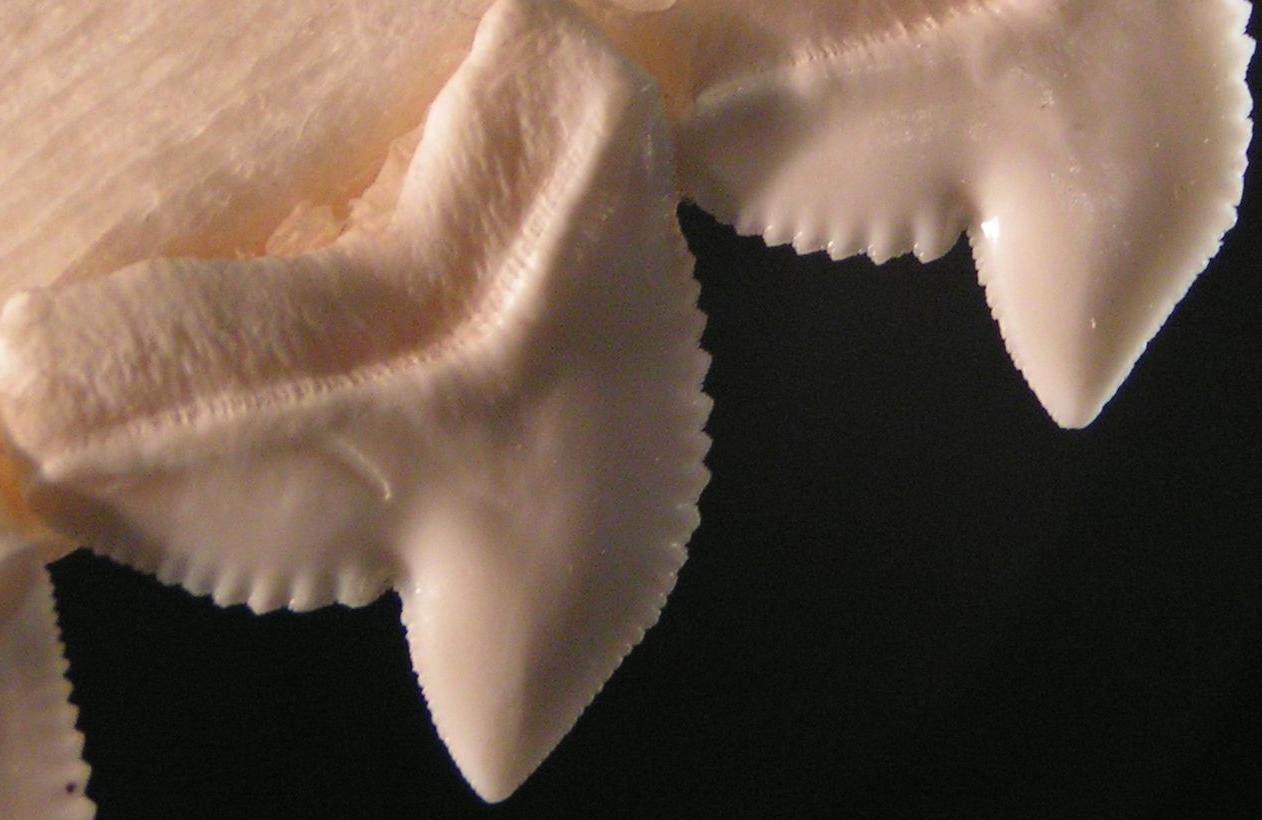
The serrated edges of tiger shark teeth
A hunting knife with a serrated back edge

Serration is a saw-like appearance or a row of sharp or tooth-like projections. A serrated cutting edge has many small points of contact with the material being cut. By having less contact area than a smooth blade or other edge, the applied pressure at each point of contact is greater, and the points of contact are at a sharper angle to the material being cut. This causes a cutting action that involves many small splits in the surface of the material being cut, which cumulatively serve to cut the material along the line of the blade.[1]

Serration in nature

[edit]
Serrated leaves of the stinging nettle, Urtica dioica

In nature, serration is commonly seen in the cutting edge on the teeth of some species, usually sharks. However, it also appears on non-cutting surfaces, for example, in botany where a toothed leaf margin or other plant part, such as the edge of a carnation petal, is described as being serrated. A serrated leaf edge may reduce the force of wind and other natural elements.[2] Probably[clarification needed] the largest serrations on Earth occur on the skylines of mountains (the Spanish word sierra, as in the Sierra Nevada, means a saw). These occur due to the uneven action of landform edges pushing rock upwards, and the uneven action of erosion.[citation needed]

Human uses of serration have copied, and gone beyond, those found in nature. For example, the teeth on a saw or other serrated blade serve a similar cutting or scraping purpose as the serration of an animal tooth. Tailors use pinking shears to cut cloth with a serrated edge, which, somewhat counterintuitively, reduces fraying by reducing the average length of a thread that may be pulled from the edge.[3] A type of serration is also found in airframe shapes used in certain stealth aircraft, which use the jaggedness of the serrated edge to deflect radar signals from seams and edges where a straight, non-serrated edge would reflect radar signals to the source. Screw threads show serration in profile, although they are usually shown in abbreviated or symbolic fashion on mechanical drawings to save time and ink. Brogue shoes are made with serrated edges on the leather pieces, for no known purpose at all other than style. The step clamp and step block assembly in metalworking adopt serration for the purpose of applying clamping pressure from an adjustable position.

Serration in blades

[edit]
A Meyerco bolt action knife, designed by Blackie Collins, and featuring a partially serrated blade.

Humans have used serrated blades since the Mesolithic era, when prehistoric humans made these from flint.[4] A serrated blade has a toothlike rather than a plain edge, and is used on saws and on some knives and scissors. It is also known as a dentated, sawtooth, or toothed blade. Many such blades are scalloped,[5] having edges cut with curved notches, common on wood saws and bread knives.

With kitchen knives, the finer serrated edge is found typically on paring and cheese knives, particularly for slicing harder cheeses like cheddar or Wensleydale. The wider scalloped-edge serrations are found on practically all bread knives and typically on fruit knives. These serrated knives are better able to cut through a firmer or tougher outer crust or skin without crushing the softer and more delicate inner crumb or flesh.

Serrations give the blade's cutting edge less contact area than a smooth blade, which increases the applied pressure at each point of contact, and the points of contact are at a sharper angle to the material being cut. This causes a cutting action that involves many small splits in the surface of the material being cut, which cumulatively serve to cut the material along the line of the blade.[6]

Cuts made with a serrated blade are typically less smooth and precise than cuts made with a smooth blade. Serrated edges can be difficult to sharpen using a whetstone or rotary sharpener intended for straight edges but can be sharpened with ceramic or diamond coated rods. Further, they tend to stay sharper longer than similar straight edges. A serrated blade has a faster cut, but a plain edge has a cleaner cut. Some prefer a serrated blade on a pocket knife[7] or on an emergency rescue knife, especially with the latter for its increased ability to cut through cords, ropes, and safety belts.

Types of blade serration

[edit]
  • Tooth serration — Vertical serration along edge of blade
  • Single edge serration — Serration on one side, the other remains flat
  • Double edge serration — Serration on both sides
  • Fan serration — Side-to-side serration without necessarily having a toothed edge
    • Micro-serration — Serration much smaller than thickness of blade creating something like a fan pattern

See also

[edit]

References

[edit]
[edit]

Grokipedia

from Grokipedia
Serration refers to the condition of being serrate or the formation of a series of sharp, tooth-like projections resembling the edge of a saw, often serving to enhance cutting, gripping, or aerodynamic functions.[1] In biology, serrations commonly appear in plant leaves as serrate margins, where sharp, forward-pointing teeth along the edge aid in water drainage and adaptation to cooler climates.[2][3] These structures are regulated by genetic factors, such as the WOX1 gene, which controls the growth and number of serrations to prevent overproduction.[4] In animals, serrated teeth are prevalent among carnivores, enabling efficient tearing of flesh; for instance, theropod dinosaurs like Tyrannosaurus rex possessed dentine-enamel serrations that formed deep interdental folds for piercing and holding prey.[5][6] Similarly, the teeth of monitor lizards exhibit serrations indicative of a carnivorous diet, with evolutionary novelty in their development.[7] Beyond teeth, serrations on owl wings—specifically comb-like structures on the leading edges of primary flight feathers—reduce aerodynamic noise during hunting by breaking up airflow turbulence into smaller streams, contributing to silent flight.[8][9] In engineering and manufacturing, serrations are engineered for mechanical advantage, such as in shaft splines and serrations, which transmit rotational torque between components like gears and pulleys by providing positive locking with minimal backlash.[10] Hirth serrations, a precise form with radial teeth, enable high-accuracy positioning in couplings and workpieces, often used in turbine and gearbox assemblies for their ability to handle high loads.[11] In cutting tools, serrated blades distribute cutting pressure across multiple teeth, allowing them to grip and slice through fibrous materials like bread, rope, or meat more effectively than straight edges, while requiring less force.[12] Flange serrations in piping systems, such as those specified in ASME B16.5, improve gasket sealing by embedding into the material for better compression and leak prevention.[13] Additionally, bioinspired designs, like serrated trailing edges on aircraft wings or wind turbines, draw from owl wing morphology to mitigate noise and enhance efficiency.[9]

Fundamentals

Definition and Characteristics

Serration refers to a saw-like edge or a row of sharp, tooth-like projections along a surface, creating multiple discrete points of contact that facilitate cutting, gripping, or force modulation.[14] These projections typically form a notched or jagged profile, distinguishing serrations from smooth edges by enabling localized interactions with materials. In general, serrations increase the effective contact area through their repetitive geometry, allowing for enhanced mechanical engagement without requiring uniform pressure across the entire edge.[15] Key characteristics of serrations include their variable tooth geometry, which can range from macro-serrations with larger, coarser teeth suited for heavy-duty tasks, to micro-serrations featuring finer, more closely spaced projections for precision work.[16] Tooth angles commonly fall between 18 and 25 degrees for optimal cutting performance in knife serrations, as this range balances penetration depth with resistance to wear, concentrating stress at the tips to initiate micro-tears in targeted materials.[17] Overall, these features amplify pressure concentration compared to plain edges, enabling efficient deformation or severance.[15] Serrations serve broad functions across applications, primarily enhancing cutting efficiency by gripping and propagating tears through fibrous or tough substances, reducing the need for excessive force.[12] They improve grip by creating interlocking points that prevent slippage, distributing applied force to maintain stability during motion. In fluid dynamics contexts, serrations can reduce drag and noise by disrupting airflow or turbulence patterns, as seen in designs that achieve 6–7 dB attenuation.[18] Additionally, they aid material deformation by localizing stress, promoting controlled yielding rather than uniform failure. A universal principle of serrations lies in their ability to distribute force across multiple teeth, preventing slippage through a mechanical interlocking effect that resists shear and tangential movement. For instance, in tooth geometry, the alternating peaks and valleys create a ratcheting action, where pointed tips embed into surfaces to anchor the edge, while valleys channel debris or allow flex. This setup ensures reliable performance in dynamic scenarios, from static gripping to high-speed slicing, by converting linear force into distributed micro-interactions.

Etymology and Historical Development

The term serration originates from the Latin adjective serratus, meaning "saw-like" or "notched like a saw," derived from serra, the Latin word for "saw." This root is potentially linked to the Proto-Indo-European sers-, signifying "to cut off" or actions involving severing. The noun form serratio (or serration-) entered New Latin scientific terminology, and the word was borrowed into English around the early 18th century, with its earliest recorded use in 1706 in Edward Phillips's dictionary The New World of Words.[19][20] Serrations first appeared in human technology during the Paleolithic period, with chipped stone tools featuring rough, serrated cutting edges for processing materials like wood and hides, as seen in handaxes and denticulate implements from sites dating back over 100,000 years. By the Mesolithic era around 10,000 BCE, more refined micro-serrations on flint blades improved efficiency in woodworking and butchery tasks. In ancient civilizations, such as Rome, iron saws with clearly defined serrated edges were common by the early 1st millennium CE, used for construction and crafting. During the medieval period, serrated designs persisted in tools like knives and early saws, aiding in cutting fibrous materials, though full swords rarely adopted them due to practical limitations in combat sharpening and penetration.[21][22][23][24] In the 18th century, serration gained prominence in botany through systematic classifications, notably by Carl Linnaeus, who described leaf margins as "serrate" in works like Species Plantarum (1753), distinguishing notched edges in species such as Ulmus americana (American elm) with doubly serrate leaves. The 19th century saw further evolution with industrialization, as mechanized production standardized serrated edges in saws and cutting tools for efficiency in woodworking and manufacturing, aligning with broader advancements in metalworking during the Industrial Revolution. Naturalists of the era, including Charles Darwin, highlighted serrations' adaptive roles in nature, observing how such structures enhanced survival in plants and animals through better tearing or gripping capabilities, as noted in discussions of morphological variations. By the 20th century, patents proliferated for specialized serrated blades, such as the 1916 design for a bread and cake knife (U.S. Design Patent D49,295) and later innovations in food processing, like the 1951 serrated-edge knife for cutting fibrous meats (U.S. Patent 2,555,735).[25][26][27][28]

Biological Serrations

In Plants

In botany, serrations manifest as serrate leaf margins, characterized by sharp, forward-pointing teeth along the edge, which can be singly serrate with uniform teeth or doubly serrate with smaller secondary teeth on each primary tooth. These features represent evolutionary adaptations that enhance plant survival through improved defense against herbivores, better water management, and optimized light capture for photosynthesis. For instance, in the Violaceae family, leaf teeth serve multiple roles, including creating physical barriers to deter insect and vertebrate herbivores by complicating feeding, forming moisture-retaining pockets to reduce transpiration in dry environments, and altering leaf morphology to improve sunlight absorption at various angles.[29][2] Serrations contribute to mechanical resilience by preventing tissue tearing during storms, a benefit observed in species with toothed margins that allow flex without sail-like exposure. They also deter herbivores through structural sharpness; for example, the coarsely serrated leaves of stinging nettle (Urtica dioica) combine with stinging trichomes to form an effective barrier against mammalian grazing, though the teeth alone act as a secondary physical deterrent. Additionally, serrations increase the edge surface area, promoting higher photosynthetic rates, particularly in early-season growth where veins and stomata concentrate near teeth, enhancing local photosynthetic rates by 20–50% at tooth margins and contributing to higher carbon uptake in temperate deciduous species. This edge enhancement is especially advantageous in cool, shady habitats, where toothed margins can elevate overall photosynthesis compared to smooth ones.[30][31] Representative examples include the coarsely serrated leaves of oak (Quercus spp.) and elm (Ulmus spp.), which exhibit singly or doubly serrate margins adapted for temperate climates, aiding in frost resistance and herbivore deterrence. Conifer needles, such as those in firs (Abies spp.), often display fine serrations that support environmental adaptation, including reduced water loss in arid conditions.[3][32][33] The development of serrate margins is genetically regulated, with the CUP-SHAPED COTYLEDON 2 (CUC2) gene in Arabidopsis thaliana playing a key role in initiating and maintaining tooth outgrowth by repressing growth in sinus regions between teeth, in balance with microRNA miR164A. Other genes, such as WOX1, further modulate tooth outgrowth in coordination with CUC2. Environmental factors influence serration morphology; for example, shade exposure reduces tooth depth in Arabidopsis and related species as part of the shade avoidance response, prioritizing petiole elongation over complex margin formation to compete for light.[34][35][36]

In Animals

In zoology, serrations are defined as saw-like, tooth-like projections found on the edges of teeth, claws, mandibles, or other appendages in animals, providing enhanced mechanical advantage for tasks such as cutting, gripping, or reducing friction during movement. These structures typically consist of fine, triangular denticles that increase surface area and edge sharpness, allowing for more efficient interaction with substrates or prey. In predatory species, serrations evolved to optimize force application, minimizing energy expenditure while maximizing effectiveness in natural environments.[37] Serrations serve multiple functions across animal taxa, primarily improving the cutting and tearing of prey by reducing slippage and binding during penetration, as seen in carnivorous dentition where they facilitate slicing through flesh without the tooth becoming lodged. In locomotion, they aid grip on irregular surfaces, such as during climbing or perching, by embedding into substrates for stability. Additionally, in certain flying animals, serrations minimize aerodynamic noise during hunting by disrupting airflow vortices, enabling stealthy approaches to prey. These adaptations enhance overall survival by supporting specialized behaviors like predation and foraging.[37][38][8] Prominent examples include the carinae serrations on the teeth of sharks, such as the great white, and theropod dinosaurs like Tyrannosaurus rex, where fine denticles along the mesial and distal edges enable precise flesh slicing and prevent prey escape during bites, with denticle density correlating to prey size for optimal tearing efficiency. In insects, burying beetle (Nicrophorus spp.) larvae possess serrated mandibles from hatching, allowing independent tearing and consumption of carrion flesh without parental assistance, facilitating rapid feeding in competitive environments. Bird wings provide another illustration, with leading-edge serrations on owls (Tyto alba and Strix spp.) breaking up turbulent vortices to reduce noise by up to 10 dB during low-speed flight, promoting silent hunting; these comb-like structures scale with body mass to maintain aerodynamic efficiency across species. Serrated bills in fish-eating birds, such as mergansers (Mergus spp.), demonstrate similar grip enhancement, with denticles preventing slippery prey from escaping during capture.[38][37][39][8][40] Serrations exhibit convergent evolution across diverse taxa, appearing independently in reptiles, mammals, birds, and insects as adaptations to similar ecological pressures, such as predation or resource acquisition; for instance, ziphodont dentition in theropods and sharks evolved separately for flesh-shearing despite phylogenetic distance. In owls, serration size positively correlates with body mass, optimizing lift and noise reduction for larger species that hunt noisier prey, reflecting aerodynamic trade-offs in flight performance.[37][41]

Technological Serrations

In Cutting Tools

Serrated edges are integral to various cutting tools such as saws, knives, and scissors, where multiple pointed teeth facilitate initial penetration and slicing through materials like wood, fabric, metal, or food by distributing cutting force across several contact points.[12] These designs enable faster cuts compared to straight edges, particularly for tough or fibrous substances, as the teeth grip and tear material progressively during a sawing motion.[42] Historically, serrated cutting tools trace back to the Mesolithic period, around 10,000–5,000 BCE, with microdenticulate flint flakes featuring fine serrations along one or both edges for processing plant materials or hides. These early tools, often called serrated flakes, demonstrate prehistoric adaptation of serration for efficient cutting without advanced metallurgy.[43] Serrated tools offer advantages including quicker initial cuts, enhanced performance on irregular surfaces, and prolonged edge retention through even wear distribution across teeth, reducing the need for frequent sharpening.[12] However, they produce rougher finishes unsuitable for precision work and are more challenging to sharpen due to the complex tooth geometry, often requiring specialized equipment.[44] Design principles for serrations in cutting tools emphasize tooth pitch—the distance between adjacent teeth—for material clearance; rake angle—the forward lean of the tooth face relative to the blade direction—to control cutting aggressiveness; and gullet depth—the space below teeth for chip or debris removal to prevent clogging.[45] For instance, zero-degree rake angles with round gullets define standard regular teeth in metal-cutting band saws, balancing durability and efficiency.[46] Single-sided serrations suit unidirectional cuts, while double-sided variants allow bidirectional use, optimizing for specific applications like rip or crosscutting.[47] In specific tools, hacksaws employ coarse-to-fine tooth pitches (e.g., 14–32 teeth per inch) with high rake angles for aggressive metal cutting, enabling straight or angled cuts in pipes and bars.[48] Coping saws feature fine, high-tension blades with 20–30 teeth per inch for intricate curves in wood or plastic, where the U-frame and rotatable handle enhance maneuverability.[49] Bread knives typically use low-angle, scalloped serrations to slice crusty loaves without compressing the soft interior, as seen in designs with 10–15 teeth along an 8–10 inch blade.[50] Pinking shears incorporate zigzag serrations to create notched edges on fabric, reducing fraying by shortening threads at the cut and aiding finishing in sewing.[51] Cheese knives often feature wired or micro-serrated blades to cut soft varieties without sticking, with the wire tension preventing deformation during slicing.[52]

In Engineering Design

Serrated surfaces in mechanical and structural engineering components are engineered to enhance friction, improve alignment, and provide vibration damping, primarily without the intent of material severance. These features involve patterned teeth or grooves that interlock or grip mating surfaces, distributing loads more evenly and minimizing relative motion under dynamic conditions. For instance, serrated holes in dowel pin assemblies prevent axial displacement and ensure precise alignment in CNC machines and automated systems.[53] In fastening applications, serrated lock washers use toothed edges to bite into adjacent materials, increasing frictional resistance against loosening due to vibrations or torque.[54] Key applications of serrations include leak-proof sealing in piping systems, where concentric or spiral serrated finishes on flange faces promote gasket conformity and reduce leakage under pressure. Concentric serrated flanges, machined with 90° V-grooves approximately 1/64 inch deep and 1/32 inch apart, are standard for non-metallic gaskets in ASME B16.5-compliant connections, optimizing seal integrity at pressures up to 900 psi.[55][13] In power transmission, cogged V-belts feature inner serrations that enhance flexibility, allowing operation on smaller pulleys while improving heat dissipation through increased surface area and airflow, thereby extending belt life in high-speed applications.[56] Additionally, serrated step clamps and blocks in machining fixtures provide adjustable gripping for workpieces; the matching serrations on clamps and blocks ensure secure, incremental height adjustments from 2.5 to 6 inches, maintaining workpiece stability during milling or drilling.[57][58] Design considerations for serrated components emphasize tooth geometry and material compatibility to optimize performance. Tooth profiles, such as triangular serrations in lock washers or screws, are tailored to resist rotation by embedding into softer mating surfaces, with the geometry influencing preload and friction coefficients—serrations typically require 10-20% higher tightening torque than smooth equivalents to achieve equivalent clamping force.[59] Material selection balances wear resistance and compatibility; steel serrations, often case-hardened to 1018 grade, offer superior durability in high-load environments like automotive assemblies, while plastic variants provide lower friction and reduced wear on delicate surfaces but may deform under extreme torque.[60][61] The advantages of serrations include enhanced torque transmission and reduced slippage, critical in load-bearing scenarios. In automotive systems, serrated splines on pulleys distribute torque evenly across multiple teeth, supporting higher loads without fatigue and minimizing slippage in belt drives.[62] Similarly, in construction, deformed rebar with ribbed (serrated-like) surfaces achieves 2-10 times greater bond strength to concrete compared to plain bars, improving structural integrity through mechanical interlock.[63] Modern innovations leverage additive manufacturing, such as 3D-printed robotic grippers incorporating serrated or textured interfaces for adaptive grasping, enabling precise handling of irregular objects in automation without traditional electronics.[64]

Advanced Applications

In Materials Science

In materials science, serrated yielding, commonly referred to as the Portevin-Le Chatelier (PLC) effect, describes an instability in the plastic deformation of certain metallic alloys, manifesting as abrupt stress drops in the stress-strain curve during tensile testing. This jerky flow arises from localized deformation bands that propagate through the material, leading to discontinuous yielding rather than smooth plastic flow.[65] The phenomenon was first documented in the 1920s by Albert Portevin and Félix Le Chatelier during tensile tests on aluminum-copper alloys like duralumin, where irregular load oscillations were noted under specific loading conditions.[66] The underlying mechanism of the PLC effect is dynamic strain aging (DSA), a process in which diffusing solute atoms interact with mobile dislocations, temporarily pinning them and creating a velocity-dependent solute drag. When the applied strain rate allows solute atoms to catch up with dislocations, pinning builds until dislocations suddenly break free, causing avalanche-like motion and the observed stress serrations.[67] This interaction is highly sensitive to temperature, strain rate, and alloy composition, typically occurring in dilute alloys where solute diffusion is thermally activated.[65] For instance, in high-entropy alloys such as the equiatomic NiCrFeCoMn (Cantor alloy), serrated flow has been reported due to similar solute-dislocation dynamics, often at intermediate temperatures and strain rates, highlighting the effect's relevance in advanced multi-principal-element materials.[68] A classic example of serrated flow appears in aluminum-magnesium alloys, such as Al-5 wt.% Mg, where type A or B serrations emerge at room temperature and low strain rates (around 10^{-4} s^{-1}), transitioning to more pronounced instabilities at elevated temperatures up to 200°C due to enhanced magnesium diffusion.[69] These patterns not only alter the deformation texture but also correlate with surface markings like stretcher strains, which can compromise formability in sheet processing.[70] The PLC effect has significant implications for material performance, as it signals limits to ductility by promoting strain localization that reduces uniform elongation and increases the risk of premature fracture.[65] In metals, this instability elevates flow stress and work-hardening rates but diminishes overall ductility, often by 20-30% in affected regimes, making it a critical consideration for predicting failure modes.[71] For aerospace applications, where reliable deformation is essential, alloy designs—such as optimized solute content in aluminum 7xxx series—aim to suppress serrations, ensuring smooth yielding in high-stress components like airframes to maintain structural integrity under cyclic loads.[71] As of 2025, recent studies on additively manufactured alloys, including laser powder bed fusion of Al-Si-Mg, explore serration suppression through microstructural control to enhance ductility in 3D-printed aerospace parts.[72] In manufacturing contexts, uniform serrations can be intentionally created on metal surfaces using techniques like laser etching, which employs focused beams to ablate precise saw-tooth patterns, or molding processes that imprint serrated geometries during casting or forming.[73] These methods enhance surface functionality, such as improved adhesion in coatings, but can impact fatigue strength; for example, laser-induced surface perturbations in titanium alloys have been shown to reduce fatigue life by up to 20% due to introduced stress concentrations and altered residual stresses.[74] Careful parameter control in etching or molding is thus essential to balance feature uniformity with mechanical durability.[75]

In Aerodynamics and Acoustics

Serrations integrated into the leading or trailing edges of aerodynamic surfaces disrupt coherent vortex structures, suppress turbulence intensity in the wake, and modify acoustic scattering to dampen noise propagation in high-speed flows.[76] These passive modifications alter the interaction between turbulent boundary layers and solid edges, promoting smoother flow transitions and reduced energy dissipation into sound waves.[77] In aerodynamics, leading-edge serrations inspired by owl wing fringes facilitate low-noise flight by mitigating flow separation and enhancing lift generation at low Reynolds numbers, as demonstrated in bio-mimetic propeller designs achieving up to 4.4 dBA noise reduction without significant aerodynamic penalties.[78] Trailing-edge serrations on wind turbine blades improve the lift-to-drag ratio by delaying stall, particularly in post-stall regimes, with experimental results showing enhanced performance in vertical axis wind turbines (VAWTs) under turbulent urban conditions.[79] Acoustically, trailing-edge serrations on aircraft flaps and airfoils attenuate airfoil self-noise by interfering with the convective amplification of turbulent eddies, yielding broadband reductions of 5-10 dB in low-Mach-number flows.[77] Flexible serrations outperform rigid designs in achieving broader attenuation, providing an additional 2-3 dB noise suppression at high frequencies due to adaptive alignment with local flow gradients.[80] Practical applications include trailing-edge serrations on VAWT blades to counteract stalled conditions at low tip-speed ratios, where they extend the operational angle of attack range and boost power coefficient by up to 15% through vortex stabilization.[79] In aero-engines, leading-edge serrations on stator blades mitigate noise from turbulent inflow interactions, delivering 2-6 dB reductions in rotor-stator broadband tones while preserving stage efficiency.[81] Ongoing research leverages computational fluid dynamics (CFD) simulations to optimize serration geometry, revealing that peak performance occurs at amplitude-to-wavelength ratios of 0.1-0.2 times the boundary layer thickness, balancing noise cuts with minimal drag increments.[82] Bioinspiration from owl wing combs, explored in 2010s studies, underscores the role of serrated structures in suppressing trailing-edge noise during silent predation flights, informing scalable designs for urban air mobility.[8] As of November 2025, applications in electric vertical takeoff and landing (eVTOL) vehicles have incorporated flexible trailing-edge serrations, achieving up to 8 dB noise reductions in urban flight tests for quieter operations.[83]

References

User Avatar
No comments yet.