Hubbry Logo
SetariaSetariaMain
Open search
Setaria
Community hub
Setaria
logo
8 pages, 0 posts
0 subscribers
Be the first to start a discussion here.
Contribute something
Setaria
Setaria
from Wikipedia

Setaria
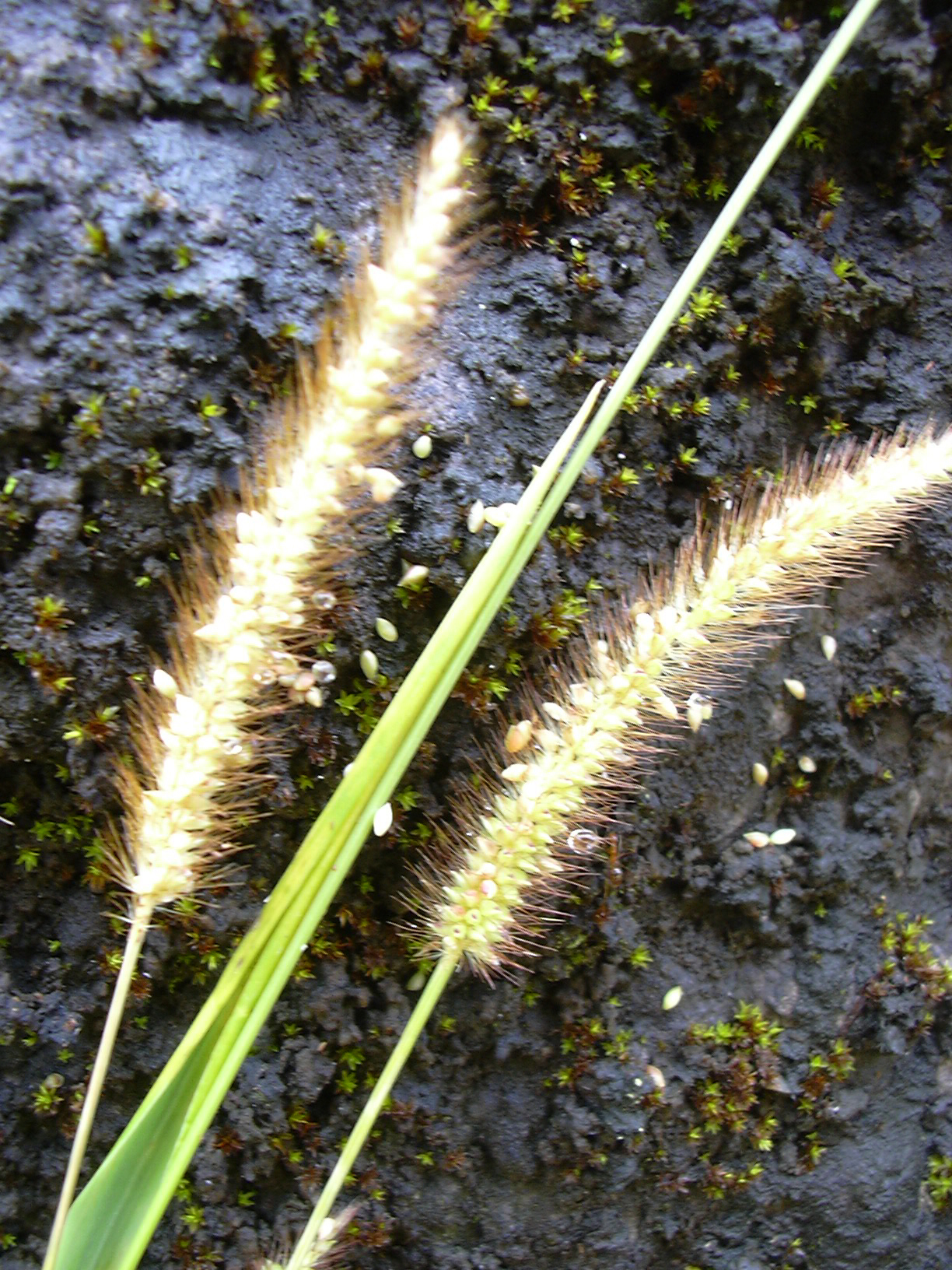
Setaria parviflora in Hawai'i
Scientific classification Edit this classification
Kingdom: Plantae
Clade: Tracheophytes
Clade: Angiosperms
Clade: Monocots
Clade: Commelinids
Order: Poales
Family: Poaceae
Subfamily: Panicoideae
Supertribe: Panicodae
Tribe: Paniceae
Subtribe: Cenchrinae
Genus: Setaria
P.Beauv. 1812, conserved name not Ach. ex Michx. 1803 (a lichen)[1][2]
Type species
Setaria viridis
Synonyms[4]
  • Acrochaete Peter
  • Chaetochloa Scribn.
  • Cymbosetaria Schweick.
  • Camusiella Bosser
  • Tansaniochloa Rauschert
caption=Setaria distantiflora (A.Rich.) Pilg., herbarium sheet

Setaria is a widespread genus of plants in the grass family.[5][6] The name is derived from the Latin word seta, meaning "bristle" or "hair", which refers to the bristly spikelets.[7]

The genus includes over 100 species distributed in many tropical and temperate regions around the world,[8] and members are commonly known as foxtail or bristle grasses.[2][9][10][11][12][13]

Description

[edit]

The grass is topped by a cylindrical long-haired head, which tend to droop when ripe. The seeds are less than 6 millimetres (14 inch) in length.[14]

Species

[edit]

As of May 2024, Plants of the World Online accepted the following species:[15]

Formerly included[4]

Numerous species were once considered members of Setaria but have since been reassigned to the genera Brachiaria, Dissochondrus, Echinochloa, Holcolemma, Ixophorus, Oplismenus, Panicum, Pennisetum, Pseudoraphis, Setariopsis, and Urochloa.

Uses

[edit]

The grains can be eaten raw, though are hard and can be bitter; boiling can reduce both of these properties.[14]

Several species have been domesticated and used as staple crops throughout history: foxtail millet (S. italica), korali (S. pumila) in India, and, before the full domestication of maize, Setaria macrostachya in Mexico.[16] Several species are still cultivated today as food or as animal fodder, such as foxtail millet and korali (S. pumila), while others are considered invasive weeds.[17] S. italica and S. viridis are being developed as genetic model systems for the study of monocots and bioenergy grasses.[18]

Other species that have been cultivated as crops include S. palmifolia (highland pitpit) of Papua New Guinea, where it is cultivated as a green vegetable; S. parviflora (knot-root foxtail), historically cultivated in Mesoamerica; and S. sphacelata (African bristle grass) of Sudan, a "lost millet" of Nubia.[19]

See also

[edit]

References

[edit]
[edit]
Revisions and contributorsEdit on WikipediaRead on Wikipedia
from Grokipedia
Setaria is a of approximately 140 species of annual and perennial grasses in the family , subfamily , tribe , commonly known as foxtail or bristle grasses owing to their characteristic dense, spike-like panicles of spikelets often subtended by persistent bristles. These grasses are typically cespitose or rarely rhizomatous, with culms ranging from 10 to 600 cm tall that are erect or decumbent, and leaves that are flat, folded, or plicate with membranous, ciliate, or hairy ligules. The inflorescences are terminal panicles that may be spikelike and contracted or more open and lax, bearing small, to subglobose caryopses. Native predominantly to tropical and warm-temperate regions of , , and the , Setaria exhibits a through both natural ranges and widespread introductions, with species documented across over 150 native regions and introduced to more than 50 others. In alone, 27 species occur, including 15 natives and several established introductions, many of which thrive in disturbed habitats such as roadsides, fields, and waste areas. The genus's taxonomic circumscription remains somewhat fluid due to its polyphyletic nature and close relations to genera like Paspalidium, as evidenced by phylogenetic studies. Economically, Setaria holds significant value through its cultivated species, particularly foxtail millet (Setaria italica), one of the oldest domesticated cereals originating in China around 5000 BCE and now a major grain and forage crop in Asia, especially China and India, yielding nutritious seeds for human consumption and high-biomass fodder for livestock. This fast-growing annual reaches 90-220 cm in height, adapts to diverse soils and climates (5-35°C, pH 5.5-8.3), and matures in 60-120 days, though it is sensitive to salinity and can accumulate nitrates or oxalates that limit fodder use. Ecologically, many wild species such as green foxtail (Setaria viridis) and yellow foxtail (Setaria pumila) are aggressive weeds in agricultural settings worldwide, capable of rapid colonization and competition with crops, while others like Setaria macrostachya provide valuable forage in native rangelands. Additionally, Setaria viridis serves as a model organism in plant genetics research due to its small genome and close relation to crops like maize, facilitating studies on C4 photosynthesis and adaptation.

Taxonomy

Etymology and History

The genus name Setaria derives from the Latin seta, meaning "bristle" or "hair," a reference to the characteristic bristly inflorescences of its species. Setaria was formally established by Ambroise Marie François Joseph Palisot de Beauvois in 1812, in his work Essai d'une nouvelle Agrostographie, where he transferred several species previously placed in Panicum to the new genus. The type species is Setaria viridis (L.) P. Beauv., originally described as Panicum viride L. This description marked a key advancement in the classification of panicoid grasses, distinguishing Setaria based on its bristle-bearing spikelets. Species now assigned to Setaria appeared in botanical literature as early as the 18th century, with including several in his genus in (1753), laying the groundwork for later generic separations. Throughout the 19th and early 20th centuries, additional genera such as Chaetochloa Scribn. (1897) were proposed for segregates, but these were gradually recognized as congeneric with Setaria. In the 20th and 21st centuries, taxonomic revisions refined the circumscription of Setaria, reducing synonyms like Ixophorus Benth. to synonymy based on phylogenetic analyses showing it nested within the genus, and reassigning certain species to other genera including Brachiaria (now largely Urochloa) and Echinochloa through morphological and molecular studies. These changes, exemplified in monographic treatments like Rominger (1962) for North America and Veldkamp et al. (2014) for the Old World, emphasized the genus's monophyly within the Paniceae tribe while excluding peripheral taxa.

Phylogenetic Classification

Setaria is classified within the Kingdom Plantae, Phylum Tracheophyta, Class Liliopsida, Order Poales, Family Poaceae, Subfamily Panicoideae, Tribe Paniceae, and Subtribe Cenchrinae. This placement situates the genus among the panicoid grasses, a diverse group characterized by C4 photosynthesis and inflorescences often bearing bristles or setae. Molecular phylogenetic analyses, primarily using chloroplast genes such as ndhF and nuclear markers, have demonstrated that Setaria forms a monophyletic group within Paniceae, nested in the "bristle clade" alongside related genera. The genus exhibits close evolutionary relationships with Pennisetum, Cenchrus, and Echinochloa, with shared synapomorphies including spikelets subtended by persistent bristles and similar inflorescence structures; for instance, Cenchrus is sometimes derived within a paraphyletic Pennisetum, highlighting ongoing taxonomic debates in Cenchrinae. These relations are supported by expanded phylogenies incorporating over 100 Setaria accessions, confirming the clade's integrity despite historical suggestions of paraphyly. Traditional subgeneric divisions in Setaria, such as subgenus Setaria (with simple bristles) and subgenus Pennisetum-like groups (with more complex, fused bristles), were based on spikelet morphology, as outlined in early 20th-century revisions. However, DNA-based phylogenies reveal that these morphological classifications do not fully align with evolutionary clades, which instead correlate more strongly with geographic distribution and genetic markers, leading to proposals for revised infrageneric groupings. Recent taxonomic revisions, including a 2014 treatment of species and updates through 2023, recognize approximately 140 accepted species in Setaria, distributed primarily in tropical and warm-temperate regions. These efforts, drawing from integrated morphological and molecular data, have refined species boundaries within Cenchrinae while maintaining the genus's .

Morphology

Vegetative Structure

Setaria plants exhibit a range of vegetative habits, primarily as or grasses that are cespitose (tufted) or, less commonly, rhizomatous and sod-forming. species tend to form loose tufts for rapid , while often develop denser clumps or spreading mats via short rhizomes, enabling persistence in varied environments. Growth forms vary from erect to decumbent or geniculately ascending, with branching typically concentrated at the base in many . The culms, or stems, of Setaria are robust and versatile, ranging 10–600 cm in height and frequently branched at the lower nodes. Internodes are typically hollow and thin-walled, though some species exhibit solid or spongy internodes; surfaces are smooth to scabrous or pubescent, with nodes often glabrous but occasionally hairy. These structures support the plant's upright or sprawling posture, contributing to its adaptability in open habitats. Leaf morphology is characteristic of the genus, with linear to broadly lanceolate blades measuring 5–50 cm long and 2–15 mm wide in most species, though broader leaves up to 80 mm occur in select perennials. Blades are flat, folded, involute, or plicate, often with a prominent midrib and scabrous margins or surfaces. Leaf sheaths are overlapping, typically keeled, and glabrous to pilose, enclosing the culm base; ligules consist of a fringe of hairs (0.5–3 mm) or a short membranous structure fringed with cilia. These features aid in and mechanical support. Root systems in Setaria are fibrous, originating from the base of the culm and lower nodes. In species, roots are shallow (often less than 50 cm deep) to facilitate quick establishment in disturbed soils. Perennials develop deeper, more extensive systems (up to 1 m or more), often with rhizomatous extensions in rhizomatous taxa, enhancing through improved water access.

Reproductive Features

The inflorescences of Setaria species are characteristically dense, cylindrical panicles that resemble , typically measuring 2–30 cm in length and often drooping at maturity due to their weight. These panicles consist of numerous s clustered along short secondary branches, with each spikelet subtended by 1–15 bristles (awns) that are 2–20 mm long, scabrous, and variously colored in , tan, straw, or green; the bristles aid in spikelet attachment and may persist after or fall with the spikelets. The overall structure varies from tightly spikelike to more open and loose across species, serving as a key diagnostic feature for taxonomic identification. Spikelets in Setaria are elliptic to ovate, 1.5–6 mm long, compressed to subterete, and glabrous to puberulent, disarticulating as a single unit below the or with the lower glume and sterile lemma separating separately. Each spikelet contains two florets: the lower floret is typically sterile or staminate, with a membranous lemma 1.5–6 mm long that is 5–9-veined and equaling or exceeding the upper floret, accompanied by a palea that may be well developed or reduced; the upper floret is fertile and bisexual, featuring a firm, indurate lemma 1.5–5 mm long that encloses the palea, with margins inrolled to flat, an apex that is acute, acuminate, or two-toothed, and sometimes a short awn up to 5 mm. The are unequal, with the lower glume 0.2–3 mm (15–50% of spikelet length) and 1–3-veined, and the upper glume 2–6 mm (70–100% of spikelet length) and 5–9-veined. The fruits of Setaria are caryopses less than 6 mm long, to subglobose, and dorsiventrally compressed, with surfaces that are smooth or transversely rugose and colors ranging from or red-brown to dark . These grains often remain adherent to the lemma and palea at maturity, forming the dispersal unit, and may exhibit a groove on the commissural side. Setaria exhibit a bisexual , with spikelets bearing bisexual upper florets that feature two plumose stigmas and three anthers (0.5–3 mm long), facilitating ; the lower florets contribute to rather than fertility. Cleistogamous (self-fertilizing without ) forms occur in some , such as S. italica and S. macrostachya, enhancing reproductive assurance in variable environments.

Distribution and Habitat

Global Range

The genus Setaria is native primarily to the and warm-temperate regions worldwide, with the highest diversity in tropical (more than half the species), where numerous species are concentrated, including endemics in , and significant representation in (particularly and ), the , and parts of . A key example is Setaria italica (), which was domesticated in northern approximately 10,000 years ago, marking one of the earliest instances of grass cultivation in . Through human-mediated dispersal via trade, agriculture, and accidental introduction, Setaria species have become widespread globally. Many were introduced to regions outside their native ranges, becoming established in North and South America by the 18th and 19th centuries, often as weeds in agricultural fields and disturbed sites, alongside the native species (15 in North America). Similar patterns occurred in Australia and Pacific islands, where species like S. viridis and S. verticillata arrived and naturalized through colonial activities and crop transport. Today, the comprises approximately 140 accepted and exhibits a , particularly in disturbed habitats across all continents except . While native centers remain in , , and the , introduced populations have expanded the range, contributing to the ecological and agricultural roles of Setaria worldwide, as documented in recent assessments.

Environmental Adaptations

Setaria species exhibit the C4 photosynthetic pathway, which enhances their efficiency in hot and dry environments by concentrating CO2 around the enzyme , thereby minimizing . This pathway, specifically the NADP-ME subtype in species like , relies on Kranz in the leaves, where bundle sheath cells surround vascular bundles and contain large chloroplasts positioned centrifugally to facilitate CO2 . The anatomical separation of initial CO2 fixation in mesophyll cells and subsequent activity in bundle sheath cells allows Setaria to maintain high photosynthetic rates under elevated temperatures and low water availability, contributing to its success in arid and semi-arid regions. Drought and tolerance in Setaria are supported by physiological adaptations, including a shallow in annual that enables rapid establishment in arid soils with limited moisture penetration, while perennial forms like Setaria sphacelata develop deeper roots for accessing deeper water reserves in prolonged dry periods. Optimal growth occurs at temperatures between 25°C and 30°C, with studies showing sustained performance under short-term stress up to 38–42°C, though prolonged exposure beyond 30°C can impair development. These traits, combined with efficient water-use efficiency from the C4 mechanism, allow Setaria to thrive in fluctuating environmental conditions typical of warm-season grasslands. Setaria demonstrates broad soil adaptability, growing well in sandy, loamy, and clay soils as long as drainage is adequate, with a preferred pH range of 5.5–8.0 that supports nutrient uptake across mildly acidic to slightly alkaline conditions. It performs best in fertile, well-drained sites but can tolerate poorer soils, particularly when nitrogen is available, as the genus shows strong responsiveness to nitrogen fertilization, which enhances growth and yield through improved biomass allocation. In response to environmental disturbance, Setaria rapidly colonizes open, sunny sites due to its prolific seed production and variable timing, which ensures establishment in newly exposed soils such as those disturbed by or . This opportunistic strategy, observed in species like , allows it to dominate early successional communities in managed or natural habitats, leveraging high seed output for quick population expansion.

Species Diversity

Number and Types

The genus Setaria comprises approximately 140 accepted species as recognized by authoritative botanical databases in 2024, though historical counts including synonyms and unresolved taxa exceeded 200. Recent taxonomic revisions, informed by molecular phylogenetic analyses such as those using the chloroplast ndhF gene, have reduced this number through reclassifications and transfers to related genera like Paspalidium, confirming the of Setaria while resolving polyphyletic groupings. These updates, including a comprehensive revision of species, emphasize genetic evidence over morphological variability alone. Species within Setaria are broadly categorized by ecological and human utilization roles: cultivated types primarily include grain-producing millets; wild and weedy types encompass aggressive colonizers known as foxtails in agricultural settings; and ornamental types feature species valued for aesthetic inflorescences in . Infrageneric classification recognizes subgenera such as Setaria s.s. (with multiple bristles subtending ) and Paurochaetium (with fewer or no bristles), differentiated further by spikelet arrangement in dense or lax panicles. Diversity hotspots for Setaria are concentrated in tropical Africa and Asia, where over half of the species occur natively, reflecting adaptations to warm, open habitats across these continents. Regarding conservation, the vast majority of Setaria species are assessed as least concern globally due to their widespread distributions and weedy tendencies, though a small number face regional rarity from habitat fragmentation and are prioritized for local protection.

Notable Species

Setaria italica, commonly known as foxtail millet, is an annual grass domesticated approximately 9,000 to 6,000 years before present in northern from its wild . Its consists of densely cylindrical panicles measuring 2–15 cm in length and 0.5–1.2 cm in diameter, with spikelets subtended by 8–12 bristles. The grains are small, typically 2–3 mm in length, enclosed within these spikelets. Setaria viridis, or green foxtail, serves as the wild progenitor of S. italica and is a weedy annual grass valued as a genetic model for C4 photosynthesis research due to its diploid genome of about 510 Mb, short life cycle, and simple growth requirements. It forms small tufts of culms reaching 30–90 cm in height, with light green, hairless leaf blades 5–30 cm long and 2–12 mm wide. Setaria faberi, giant foxtail, is a tall annual grass introduced to the from , capable of reaching up to 2 m in height with multiple erect to ascending culms branching near the base. Its flat blades are 10–40 cm long and 1–3 cm wide, often with short hairs on the upper surface, while the is a densely packed, nodding, cylindrical 5–18 cm long and 1–2.5 cm thick. Setaria palmifolia, known as palmgrass, is a grass native to , distinguished by its broad, glossy, palm-like leaves that are 30–60 cm long and 5–15 cm wide, arranged in a rosette and forming clumps up to 2 m tall. Its culms are robust and erect, supporting loose, cylindrical panicles up to 50 cm long with green to purplish spikelets. Among other notable species, Setaria verticillata (hooked bristlegrass) is an annual grass up to 1.5 m tall, featuring panicles 3–15 cm long with whorled spikelets subtended by retrorsely barbed bristles that render the seeds burr-like and adhesive. Setaria parviflora (knotroot foxtail) is a rhizomatous forming dense tufts up to 1.5 m high, with flat leaves 10–40 cm long and 5–15 mm wide, and panicles 5–20 cm long bearing pale, straw-colored bristles.

Reproduction

Life Cycle

Setaria species exhibit diverse life cycles, primarily distinguished by and habits, which influence their developmental timing and persistence in various environments. species, such as Setaria italica (), complete their life cycle within a single , typically germinating in or when soil temperatures reach at least 18°C (65°F). Vegetative growth follows rapidly, with the plant developing tillers and elongating stems before transitioning to reproductive phases. Flowering leads to maturity in 75-90 days under optimal warm conditions. This compressed timeline enables quick adaptation to short-season in temperate regions. In contrast, perennial species like Setaria sphacelata (golden wonder grass) maintain vegetative persistence year-round in tropical and subtropical climates, relying on short rhizomes and prolific ing for regrowth after disturbance or seasonal stress. These plants exhibit continuous shoot production from basal nodes, with optimal growth from spring through autumn, though they can tolerate light frost or , which stimulates additional tiller formation. Flowering is seasonal, often triggered by shorter day lengths in late summer or autumn, producing spike-like panicles, but the focus remains on vegetative accumulation rather than rapid set. Seed dormancy in Setaria varies by and environmental conditions, typically lasting 0-6 months in freshly harvested seeds, which prevents immediate and contributes to seedbank formation. is broken through after-ripening (dry storage at for weeks to months) or stratification (moist conditions at 4°C for 4-12 weeks), increasing rates from near 0% to over 90% in like Setaria viridis. Viable seeds can persist in for up to 3-5 years, though viability declines over time, allowing staggered emergence over multiple seasons. The growth phases of Setaria follow a typical grass ontogeny, beginning with the juvenile stage marked by coleoptile emergence 7-14 days after at 21°C (70°F). This progresses to tillering, where lateral shoots develop from basal nodes over 2-4 weeks, enhancing resource capture. Stem elongation and follow, with the sheath enclosing the emerging , typically 4-6 weeks post-. (flowering) ensues rapidly, lasting 1-2 days per floret, before grain filling, where seeds accumulate reserves over 2-3 weeks until physiological maturity. Many Setaria species, including S. italica, are photoperiod-sensitive, with short-day conditions (less than 12-14 hours) promoting flowering initiation from development through stages. Some perennial Setaria species, such as S. macrostachya and S. leucopila, also exhibit , a form of through seeds that produces offspring genetically identical to the mother plant.

Pollination and Dispersal

Setaria species exhibit primarily anemophilous pollination, relying on to transfer , with occurring nocturnally when temperatures drop below 35°C, allowing spikelets to open briefly for pollen release. During this process, anthers are exserted within 60-75 minutes after flower opening, facilitating efficient pollen dispersal over short distances. While the system is self-compatible, outcrossing rates are low, typically less than 4% in most populations. The breeding system in Setaria is predominantly autogamous, promoting self-fertilization within florets, which contributes to low within populations due to reduced . Some , including the cultivated (S. italica), display , where certain florets remain closed and self-pollinate internally, further reinforcing . This autogamous nature results in strong population differentiation but limited variation at the level. Seed dispersal in Setaria occurs mainly through barochory, with mature shattering via and falling close to the parent plant under gravity; in wild species like S. viridis, the entire disarticulates as the unit of dispersal. Bristles subtending the enhance attachment to animal or feathers, enabling secondary zoochory over short to moderate distances. In cultivated forms, seed shattering is reduced, causing grains to remain enclosed on the for . Long-distance dispersal is largely human-mediated, through agricultural activities such as contaminated and machinery movement, allowing spread across continents. Seed viability supports zoochorous up to several kilometers by adhering to mobile animals.

Uses and Cultivation

Agricultural Applications

Setaria species, particularly Setaria italica (foxtail millet), have been integral to agriculture as a staple grain crop in semi-arid regions of Asia and Africa for millennia. Domesticated from its wild progenitor Setaria viridis approximately 10,000 years ago in northern China, foxtail millet remains a key food source in countries like China, India, and parts of sub-Saharan Africa, where it supports food security due to its adaptability to poor soils and low rainfall. Its drought resistance allows cultivation in areas with annual precipitation as low as 300-500 mm, making it a resilient alternative to more water-demanding cereals like rice or maize. Yields typically range from 1 to 3 tons per hectare under rainfed conditions with improved varieties, though global averages for millets hover around 0.75 t/ha due to variable farming practices. Beyond grain production, several Setaria species serve as valuable and crops, enhancing in tropical and subtropical farming systems. Setaria sphacelata (golden wonder grass), for instance, is widely grown for hay, , and , producing high of 10-15 tons of dry matter per on average, with irrigated and fertilized stands reaching 26-28 t/ha. This species is prized for its palatability to , sheep, and , owing to its leafy growth and moderate fiber content, which supports efficient fermentation. Cultivars like 'Nandi' are particularly suited for haymaking, curing in 50-70 hours with minimal loss, while 'Kazungula' excels in production when ensiled with additives like . Cultivation of Setaria crops emphasizes simplicity and integration into diverse systems to optimize yields and . is typically sown in rows spaced 20-45 cm apart or broadcast at seed rates of 20-40 kg per , with planting depths of 1-2 cm in well-prepared seedbeds during the warm season ( >15°C). Harvesting occurs 75-90 days after planting, at 50-70% grain maturity to minimize shattering and damage, using combines or manual methods depending on scale. To enhance fertility and break pest cycles, rotations with legumes such as or groundnut are recommended, improving availability and sustaining long-term productivity in marginal lands. The nutritional profile of Setaria grains underscores their role in human diets, especially in regions combating . grains contain 10-15% protein, providing essential like and , alongside high levels of micronutrients such as iron (approximately 40–50 mg/kg) and (approximately 20–40 mg/kg), which contribute to prevention and immune function. As a naturally gluten-free , it is ideal for those with celiac disease and is commonly processed into porridges, flatbreads, and traditional fermented beers in Asian and African cuisines, offering a digestible, low-glycemic energy source.

Research and Emerging Uses

Setaria viridis serves as a key in plant biology due to its diploid , C4 photosynthetic pathway, and utility in and improvement research. As a close relative of the cultivated (Setaria italica), it facilitates genetic studies applicable to panicoid grasses like and switchgrass. Its was sequenced in 2012, providing a high-quality assembly that covers approximately 80% of the and over 95% of genes, enabling detailed genomic analyses. The species' rapid life cycle of 6-8 weeks supports efficient experimental iterations in and transformation protocols. Recent genetic advancements in Setaria emphasize its potential for hybrid breeding and stress tolerance. In 2025, researchers developed male-sterile lines in S. viridis by targeting the ortholog of Setaria italica NO POLLEN 1 (SiNP1), which encodes a PPR protein essential for development, accelerating for production. Concurrently, genome-wide identification of the DREB gene family in revealed 166 members responsive to abiotic stresses like and , with expression analyses showing upregulation under stress conditions to enhance tolerance mechanisms. These findings underscore Setaria's role in climate-resilient crops through targeted editing. Setaria species hold promise for biofuel production owing to their high biomass yield and C4 photosynthetic efficiency, which optimizes carbon fixation and resource use under varying environmental conditions. S. viridis has been evaluated as a feedstock model, demonstrating favorable saccharification efficiency for conversion, with lignocellulosic biomass comparable to other panicoid grasses. This efficiency positions Setaria as a candidate for developing climate-resilient crops that minimize water and nitrogen inputs while maximizing yields. Emerging health applications of Setaria include pharmacological properties identified in recent studies. A 2025 investigation found that ethanol extract from S. viridis attenuates sarcopenic in high-fat diet-induced obese mice by reducing muscle loss and body fat accumulation through flavonoid-mediated activation of the AMPK pathway, which regulates and mitochondrial function. In ornamental , certain Setaria species enhance . Setaria macrostachya, known as plains bristlegrass, is cultivated for its slender, millet-like panicles that exhibit a feathery appearance in summer, adding texture and movement to designs.

Ecological Role

Ecosystem Interactions

Setaria species play significant roles in providing habitat within grassland ecosystems, offering both cover and food resources for various wildlife. The seeds of Setaria viridis, for instance, are consumed by upland gamebirds, songbirds, and wetland birds, contributing to their foraging needs in disturbed fields and prairies. Additionally, the plant supports insect communities, serving as a host for grasshoppers, flea beetles, leaf beetles, aphids, stinkbugs, and seed-eating gall fly larvae, which in turn may attract predatory insects and birds. Setaria species are primarily wind-pollinated. The fibrous root systems of Setaria grasses contribute to soil stabilization, particularly in disturbed or erosion-prone environments. In Setaria viridis, the root-soil composite increases shear strength and reduces slip resistance on shallow slopes, with root tensile strength rising linearly with diameter to anchor soil effectively. Similarly, species like Setaria finita and Setaria scottii use their extensive fibrous roots to bind soil particles, preventing erosion during heavy rains in grasslands and savannas. In mixed stands, Setaria associates with nitrogen-fixing bacteria, such as Azospirillum brasilense and Herbaspirillum seropedicae, which colonize roots and enhance plant growth by improving nitrogen availability without external fertilizers. As , Setaria contributes to by facilitating early stages of in prairies and savannas. Setaria viridis and Setaria lutescens rapidly colonize exposed oldfields and sandy lands post-disturbance, their quick and growth stabilizing bare while creating microhabitats that support subsequent establishment and increase local . In , these grasses enhance early-stage diversity by providing shade and , transitioning disturbed sites toward more complex communities. Setaria engages in competition dynamics that shape community structure, including allelopathic effects and mutualistic associations. Some species like Setaria release , such as ferulic and p-coumaric acids, which inhibit and growth of nearby through interference with physiological processes. Conversely, mutualisms with arbuscular mycorrhizal fungi (AMF) bolster nutrient uptake; in Setaria italica, AMF colonization, such as with Funneliformis mosseae, improves acquisition by extending hyphal networks into , enhancing tolerance to nutrient-poor conditions in grasslands. These interactions balance competitive exclusion with symbiotic benefits, influencing overall ecosystem dynamics.

Invasiveness and Management

Several species within the genus Setaria are recognized as invasive weeds, particularly in agricultural settings, where they compete aggressively with crops and reduce yields. Setaria faberi (giant foxtail), Setaria viridis (green foxtail), and Setaria parviflora (knotroot foxtail) are among the most problematic, infesting farmlands, roadsides, and disturbed areas in the United States and . In the midwestern U.S., S. faberi can cause yield losses of up to 14% in corn at densities of 10 plants per square meter, with higher densities leading to reductions exceeding 25% in crops like switchgrass. Similarly, S. viridis may reduce small grain yields by as much as 15% when it overtakes fields, while S. parviflora invades pastures and crops in , occasionally listed as an environmental weed in regions like and Victoria. These species thrive in warm-temperate and tropical environments, exacerbating their spread through human activities such as and soil movement. The invasiveness of Setaria species is driven by prolific seed production and evolving resistance to herbicides, facilitating rapid colonization. A single Setaria plant can produce thousands of seeds, with population-level outputs reaching up to 100,000 seeds per square meter under favorable conditions in row crops, enabling long-distance dispersal via , , animals, and contaminated hay or equipment. Herbicide resistance, particularly to acetolactate synthase () inhibitors like nicosulfuron and rimsulfuron, has been documented in S. faberi populations, often through enhanced metabolism-based mechanisms that confer cross-resistance, as identified in recent studies from U.S. cornfields. Ecologically, these grasses outcompete native and disrupt microbial communities; for instance, competition between S. viridis and alters microbial composition, reducing beneficial bacterial diversity and impairing ecological functions. may further expand their ranges, with projections indicating increased invasion potential for S. parviflora in the Mediterranean Basin due to warmer temperatures and altered precipitation patterns. Management of invasive Setaria relies on integrated approaches to prevent seed set and minimize resistance development, as biological controls remain limited to experimental stages. Cultural practices such as with winter cereals, timely mowing to clip inflorescences before seed maturity, and mulching to suppress germination are effective in reducing populations by over 90% in some systems. Chemical control involves preemergence like or for burndown, combined with postemergence options, but requires rotation of herbicide modes of action and resistance monitoring to address ALS-inhibitor issues. Potential biological agents, such as the Pyricularia setariae, show promise in reducing S. viridis by more than 80% in lab trials, but field-scale adoption is constrained by environmental factors and regulatory hurdles. Overall, proactive integrated weed management, emphasizing prevention and diverse tactics, is essential for mitigating Setaria's impacts in invaded regions.

References

Add your contribution
Related Hubs
Contribute something
User Avatar
No comments yet.