Hubbry Logo
Ski resortSki resortMain
Open search
Ski resort
Community hub
Ski resort
logo
8 pages, 0 posts
0 subscribers
Be the first to start a discussion here.
Ski resort
Ski resort
from Wikipedia
Ski resorts in the world by country

A ski resort is a resort developed for skiing, snowboarding, and other winter sports. In Europe, most ski resorts are towns or villages in or adjacent to a ski area–a mountainous area with pistes (ski trails) and a ski lift system. In North America, it is more common for ski areas to exist well away from towns, so ski resorts usually are destination resorts, often purpose-built and self-contained, where skiing is the main activity.

Ski resort

[edit]
Map of world ski resorts

Ski resorts are located in both hemispheres, on all continents except Antarctica. They typically are located on mountains, as they require a large slope. They also need to receive sufficient snow (at least in combination with artificial snowmaking, unless the resort uses dry ski slopes).

High concentrations of ski resorts are located in the Alps, Scandinavia, western and eastern North America, and Japan. There are also ski resorts in the Andes, scattered across central Asia, and in Australia and New Zealand.

Extreme locations of non-indoor (at least one ski lift outside) ski resorts include:

Types

[edit]
El Pas de la Casa, Andorra. Grandvalira is the largest ski resort in the Pyrenees.
Mzaar Kfardebian Ski Resort in Lebanon

The ski industry has identified advancing generations of ski resorts:[1][2]

First generation
Developed around a well-established summer resort or village (e.g. Davos, St. Moritz, Kitzbühel, Chamonix, Cortina d'Ampezzo, Megève, Val Gardena).
Second generation
Created from a non-tourist village or pasture (e.g. St Anton am Arlberg, Lech, Courchevel, L'Alpe d'Huez, Aspen/Snowmass, Breckenridge Ski Resort).
Third generation or integrated
Designed from scratch on virgin territory to be a purpose-built ski resort, all the amenities and services nearby (e.g. Sestriere, Flaine, La Plagne, Isola 2000).
Fourth generation or village resorts
Created from a virgin territory or around an existing village, but more concerned with traditional uses (e.g. Valmeinier, Valmorel, Shahdag Mountain Resort).

The term ski station is also used, particularly in Europe, for a skiing facility which is not located in or near a town or village. A ski resort which is also open for summer activities is often referred to as a mountain resort.

Facilities and amenities

[edit]
This image of Zauchensee, Austria, shows the pistes, served by a gondola lift, detachable chairlift and a funicular. There is a snow fence to prevent snowdrift; and avalanche towers and avalanche barriers to mitigate the risk of avalanches
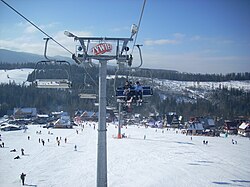
Jasná ski resort in Slovakia
Cerro Catedral Ski Resort, Argentina
Ski resorts can also be situated on a volcano like this one on Etna in Sicily
Gambarie, a ski resort above the Strait of Messina

Ski areas have marked paths for skiing known as runs, trails or pistes. Ski areas typically have one or more chairlifts for moving skiers rapidly to the top of hills, and to interconnect the various trails. Rope tows can also be used on short slopes (usually beginner hills or bunny slopes). Larger ski areas may use gondola lifts or aerial tramways for transportation across longer distances within the ski area. Resorts post their trail map illustrating the location of lifts, trails, services and the ski area boundary, and during the ski season issue a daily snow conditions report listing open trails, operating lifts and weather status.

Ski areas usually have at least a basic first aid facility, and some kind of ski patrol service to ensure that injured skiers are rescued. The ski patrol is usually responsible for rule enforcement, marking hazards, closing individual runs or areas as conditions require, and removing (dismissing) dangerous participants from the area.

The typical ski area base includes a ticket office, ski lodge, ski school, equipment rental/repair shop, restaurant/bar, shopping, shuttle bus stop and parking.[3]

Some ski resorts offer lodging options on the slopes themselves, with ski-in and ski-out access allowing guests to ski right up to the door. Ski resorts often have other activities, such as snowmobiling, sledding, horse-drawn sleds, dog-sledding, ice skating, indoor or outdoor swimming and hot tubbing, game rooms, and local forms of entertainment, such as clubs, cinema, theaters and cabarets.

Après-ski (French for after skiing) is a term for entertainment, nightlife or social events that occur specifically at ski resorts.[4][5] These add to the enjoyment of resort-goers and provide something to do besides skiing and snowboarding. The culture originated in the Alps, where it is most popular and where skiers often stop at bars on their last run of the day while still wearing all their ski gear.[6] Though the word "ski" is a derivation of the Old Norse skíð via Norwegian, the choice of French is likely attributed to the early popularity of such activities in the French Alps, with which it was then linked.[7]

Environmental effects

[edit]

As rising temperatures, receding glaciers and declining snowfall affect the environment, resort development and operations also have an environmental impact on land, lakes, streams, and wildlife.[8] Amenities and infrastructure such as concrete buildings, ski lifts, access roads, parking lots, and railways have contributed to the urbanization of mountainous zones.

Primary (direct) impact of resort development

[edit]

In recent years, the use of snow cannons by many ski resorts has increased to compensate for reduced levels of snowfall.[9] In order to sustain good quality snow coverage, snowmaking requires large amounts of water and sometimes the creation of artificial lakes. Snow cannons also introduce a noise element.

Secondary (indirect) impact of resort development

[edit]

The required infrastructure can affect erosion through the increased area of impervious surfaces, redirecting the flow of water runoff.

Mitigation efforts

[edit]

Many resorts are taking steps to reduce their energy and water consumption and waste production, increase recycling, and restore habitats. Initiatives aimed at addressing environmental concerns include:

[edit]

See also

[edit]

References

[edit]
Revisions and contributorsEdit on WikipediaRead on Wikipedia
from Grokipedia
A ski resort is a destination centered on winter sports, offering groomed slopes for skiing and snowboarding, mechanical lifts to access terrain, lodging, equipment rentals, and dining facilities tailored to participants. These resorts typically operate in elevated, snowy mountain regions where natural precipitation or artificial snowmaking enables consistent conditions from late fall to spring. Ski resorts evolved from early 20th-century European developments, such as Norway's Holmenkollen in 1908, which pioneered organized jumping and racing infrastructure, expanding into comprehensive recreational hubs with lifts and trails by the mid-1900s. Key features include varied terrain ratings—green for novices, blue for intermediates, and black diamonds for experts—to accommodate skill levels, alongside amenities like lessons, spas, and non-skiing activities such as ice skating. Globally distributed across continents, they cluster in areas like the Alps, Rockies, and Japanese ranges, drawing millions for their blend of adrenaline and alpine scenery. Economically, ski resorts drive regional growth through tourism, with the U.S. industry alone generating over $20 billion yearly and sustaining more than 191,000 jobs via direct operations and visitor spending. Yet, they contend with environmental pressures, including land clearing for runs that disrupts habitats and heavy water and energy demands for snow production, which has become essential amid observed reductions in natural snow cover—costing the U.S. sector over $5 billion in lost revenue since 2000 due to warmer conditions shortening seasons. Operators mitigate via efficient grooming and sustainable practices, though dependency on variable weather underscores vulnerabilities in site selection and long-term viability.

Overview

Definition and Characteristics

A ski resort is a specialized destination centered on winter sports, particularly downhill skiing and snowboarding, encompassing groomed slopes, mechanical lift systems, and ancillary services to facilitate participant access and enjoyment. These establishments are engineered around mountainous terrain conducive to snow accumulation, either naturally or via artificial production, enabling consistent operations during cold seasons. Unlike isolated ski areas limited to terrain and lifts, resorts integrate comprehensive visitor support, transforming raw geography into commercial hubs for extended stays. Core infrastructure includes classified runs—ranging from gentle novice greens to steep black diamond experts—interconnected by detachable chairlifts, fixed-grip tows, and enclosed gondolas for efficient vertical transport. Snow management practices, such as grooming and supplementation via high-pressure cannons, maintain surface quality amid variable weather, with piste maps guiding navigation across hundreds of kilometers in larger operations. Safety features like avalanche control and marked boundaries further define operational standards, prioritizing controlled access over ungroomed backcountry pursuits. Beyond slopes, characteristics extend to on-site amenities including equipment rentals, instructional programs, base facilities for ticketing and respite, and après-ski options like dining and lounges, fostering a self-contained ecosystem for tourists. Lodging variants, from villages to high-end hotels, cluster adjacently or onsite, supporting multi-day immersion while leveraging proximity to natural snow belts for economic viability. This configuration underscores resorts' role as tourism anchors, blending recreation with hospitality in regions like the European Alps or North American Cordillera.

History

Origins and Early Development

The practice of skiing originated as a utilitarian mode of winter travel in prehistoric Scandinavia, with archaeological evidence of wooden skis dating to approximately 6000 BCE in regions like Karelia. By the 19th century, Norwegian enthusiasts transformed it into a competitive sport, hosting the world's first documented ski race in Trysil in 1855, which spurred the formation of early ski clubs such as the Trysilgutten Ski Club in 1861. These developments laid the groundwork for organized recreational skiing, shifting focus from cross-country utility to downhill techniques enabled by innovations like Sondre Norheim's cambered Telemark ski and binding system introduced in 1868. In the European Alps, ski resorts emerged from existing summer tourism infrastructure as railways facilitated access to high-altitude villages in the late 19th century. St. Moritz in Switzerland pioneered winter tourism in the 1860s, when hotelier Johannes Badrutt convinced British guests to extend stays into winter, initially for activities like curling and tobogganing, but soon incorporating Norwegian-style skiing amid reliable snow cover. By the 1890s, Norwegian expatriates and academics introduced skis to Swiss locales like Davos and Montana, where the first Alpine ski races occurred, blending Scandinavian cross-country methods with steeper downhill descents suited to the terrain. Austrian regions such as the Arlberg benefited from the 1884 opening of the Arlberg railway tunnel, which connected remote valleys and enabled early ski touring and competitions by the 1900s. Early ski "resorts" prior to mechanical lifts were modest, relying on natural slopes near villages with rudimentary accommodations for affluent Europeans seeking novel winter pursuits. In France, areas like La Clusaz hosted initial ski events by 1907, building on 19th-century road improvements for access. North American adoption lagged, with the first U.S. ski club forming in New Hampshire in 1880 among Scandinavian immigrants, primarily for jumping and cross-country rather than resort-style downhill skiing. This period's causal drivers included technological aids like improved bindings and the romantic appeal of Alpine scenery, fostering a market for seasonal visitors despite challenges like variable snow and uphill skinning.

20th-Century Expansion and Commercialization

The commercialization of ski resorts accelerated in the early 20th century as skiing evolved from an elite pastime to a viable tourist industry, particularly in the European Alps where infrastructure investments supported broader access. In Austria's Arlberg region, St. Anton emerged as a pioneering hub around 1901, with early cable cars and organized ski schools attracting international visitors and fostering dedicated resort economies centered on lodging and guided tours. This model emphasized alpine skiing's thrill over Nordic styles, drawing affluent Europeans and Americans who funded expansions in lifts and trails, though operations remained seasonal and labor-intensive without widespread mechanization. In North America, railroads drove purposeful commercialization to counter declining passenger revenues during the Great Depression, transforming remote mountain areas into engineered destinations. Union Pacific Railroad developed Sun Valley, Idaho, opening it on December 21, 1936, as the continent's first purpose-built ski resort, complete with a lodge, aerial tramway, and the world's inaugural chairlift—a two-seat design by engineer James Curran that ascended 1,100 vertical feet, enabling efficient uphill transport for novices and experts alike. The resort's marketing targeted celebrities and middle-class travelers via rail packages, yielding over 10,000 visitors in its debut season and establishing a template for revenue from lift tickets, accommodations, and ancillary services like rentals. Technological lifts supplanted rudimentary rope tows—first mechanized in the U.S. around 1910 for short hauls—and spurred site selection based on terrain viability rather than proximity alone, with developers prioritizing snow reliability and vertical drop for commercial scalability. By 1939, U.S. states like Vermont authorized private leases on public lands for ski operations, signaling a shift to for-profit models that integrated real estate sales with seasonal recreation, though economic constraints limited scale until wartime innovations in materials and engineering. This era's expansions, totaling dozens of nascent U.S. areas by 1940, relied on empirical site assessments for snowfall data and causal factors like accessible transport, prioritizing profitability over recreational purity.

Post-WWII Boom and Global Spread

Following World War II, ski resorts proliferated in the United States and Europe due to technological innovations, such as improved chairlifts and early snowmaking systems, combined with economic recovery and leisure demand from a burgeoning middle class. Returning veterans from specialized mountain units, including the U.S. 10th Mountain Division, applied their wartime skiing expertise to resort development; many founded or led projects at sites like Aspen and Vail, which opened in 1962. Arapahoe Basin became Colorado's first postwar ski area in 1946, exemplifying early momentum. From 1940 to 1960, 82 new U.S. ski areas emerged, followed by 107 more in the 1960s, reflecting explosive growth amid rising disposable incomes and accessible transportation. In Europe, Alpine nations leveraged postwar reconstruction aid, including Austria's use of Marshall Plan resources for infrastructure upgrades, to transform skiing from an elite pursuit into mass tourism. Military training from both world wars had familiarized populations with skis, priming demand, while cable car expansions facilitated access to high-altitude terrain. Snowmaking advancements, originating in the U.S. but adopted widely, extended seasons and reduced weather dependency, underpinning sustained expansion through the 1950s and 1960s. This postwar surge facilitated global dissemination as improved aviation and international economic ties enabled development beyond traditional snowy regions. In Japan, U.S. occupation forces prompted early ski infrastructure in 1946, igniting domestic popularity; by the 1950s, approximately 30 ski areas operated, evolving into a major industry during the economic miracle. Australia's Snowy Mountains saw accelerated growth from returning troops and European immigrants versed in alpine sports, with resorts like Perisher expanding facilities in the late 1940s and 1950s. In South America, Chile's Portillo resort debuted in 1949, initiating commercial skiing in the Andes and attracting hemispheric visitors amid regional modernization. These developments marked skiing's transition to a worldwide recreational enterprise, though concentrated initially in economically advanced areas with reliable snow.

Types

By Scale and Location

Ski resorts are classified by scale primarily according to the extent of skiable terrain, measured either in hectares or acres for North American resorts or in kilometers of groomed pistes for European ones, alongside the number of ski lifts and vertical drop. Large-scale resorts typically exceed 200 km of pistes or 5,000 acres of terrain, enabling extensive skiing across multiple peaks or valleys and supporting high-volume international tourism with diverse infrastructure including hotels, restaurants, and non-ski activities. Examples include Les 3 Vallées in France, the world's largest interconnected ski area at 600 km of slopes spanning eight resorts, and Whistler Blackcomb in Canada with 8,171 acres, which together account for significant portions of global ski visitation due to their capacity for thousands of skiers daily. Medium-scale resorts, often 100-200 km or 2,000-5,000 acres, balance accessibility with variety, such as Park City in Utah (7,300 acres), appealing to intermediate skiers with interconnected terrain but fewer extreme features than mega-resorts. Small-scale resorts, under 100 km or 1,000 acres, predominate in local or regional contexts, offering shorter vertical drops (typically under 1,000 meters) and fewer lifts, which result in quicker progression between runs and lower operational costs but limited terrain diversity. These smaller operations, common in areas like the Appalachian Mountains or rural Europe, emphasize community access and affordability, with lift tickets often 50-75% cheaper than at large destinations, though they rely more on natural snow and face closure risks from poor winters. Locationally, over 6,000 ski resorts operate worldwide, concentrated in mid-latitude mountainous zones with annual snowfall exceeding 3-5 meters, driven by orographic lift in ranges like the Alps and Rockies where cold air masses interact with terrain to produce reliable powder. The European Alps, spanning France, Switzerland, Austria, Italy, and Germany, host the densest cluster with interconnected mega-domains like the Arlberg (305 km) and Dolomiti Superski (1,200 km across 12 areas), facilitated by proximity to population centers and EU infrastructure investments that enable seamless cross-border skiing. In North America, the Rocky Mountains dominate with vast, lift-served acreages suited to North American measurement standards, as seen in Big Sky, Montana (5,850 acres), where expansive bowls and glades support backcountry-style skiing within bounds, contrasting Europe's piste-focused grooming. Asia features notable hubs in Japan's Hokkaido (e.g., Niseko with deep powder from Siberian winds) and emerging sites like China's Yabuli, while the Southern Hemisphere's Andes in Chile and Argentina (e.g., Valle Nevado with 900 acres) provide austral summer skiing but shorter seasons limited to June-September due to thinner snowpack. Oceanic regions like New Zealand's Southern Alps and Australia's Snowy Mountains offer boutique-scale resorts with variable snow reliability influenced by El Niño cycles, totaling under 5% of global capacity.
RegionKey CharacteristicsExample Large ResortSkiable Terrain
European AlpsInterconnected pistes, high density of lifts (over 24,000 worldwide), reliable snow from Atlantic moistureLes 3 Vallées, France600 km pistes
North American RockiesAcreage-based vastness, emphasis on natural terrain variety, longer verticals (up to 1,600 m)Whistler Blackcomb, Canada8,171 acres
Japanese Alps/HokkaidoPowder-focused, volcanic terrain, cultural après-skiNiseko United, Japan2,100 acres combined
Andes (Southern Hemisphere)High-altitude bases (2,500+ m), heli-ski potential, seasonal reversalValle Nevado, Chile900 acres
This distribution reflects climatic determinism: Northern Hemisphere sites benefit from persistent westerlies for snowfall, while Southern ones endure melt risks from equatorial proximity, influencing scale with Europe and North America claiming over 80% of large resorts by terrain extent.

By Primary Activities and Terrain Focus

Ski resorts are broadly categorized by their primary activities, which dictate the core infrastructure, equipment requirements, and participant skills, alongside terrain focus encompassing slope steepness, snow preservation characteristics, and natural features like bowls or glades. Alpine skiing and snowboarding dominate, with resorts engineered around lift-served descents on engineered or preserved snowpack, typically allocating terrain across difficulty levels: green circles for beginners (slopes under 25% pitch), blue squares for intermediates (25-40% pitch), and black diamonds or double blacks for experts (over 40% pitch with obstacles). These resorts often groom 20-50% of their acreage nightly to maintain consistent packed powder or machine-groomed conditions, prioritizing accessibility and volume over untouched snow. Nordic-focused resorts, in contrast, center on cross-country skiing, featuring wide, machine-set tracks on low-gradient terrain (under 10% pitch) without fixed-heel bindings or lifts, emphasizing endurance and self-powered traversal over 10-100 km of looped trails. These facilities, often adjacent to or integrated with alpine areas, cater to aerobic pursuits in preserved natural snow, with minimal vertical drop (under 300 meters) and reliance on cold, dry powder for glide rather than descent speed. Freestyle-oriented segments within larger alpine resorts incorporate terrain parks with jumps, rails, and halfpipes, where 5-15% of area may host artificial features for aerial maneuvers and technical tricks, drawing competitors in events like X Games disciplines. Terrain-focused classifications highlight resorts optimized for specific snow and topographic traits, such as powder havens in deep-snow regions like the Utah Wasatch Range, where annual accumulations exceed 500 inches enable untracked skiing in bowls and chutes, versus East Coast venues reliant on machine-made snow for variable, icier bases averaging 100-200 inches naturally. Expert-terrain specialists, exemplified by Jackson Hole with 4,139 acres including double-black chutes exceeding 50-degree pitches, allocate over 50% of runs to advanced users, fostering steep, variable conditions that demand precise control amid avalanches and rocks. Backcountry-access resorts integrate heli- or cat-skiing operations, dropping participants into ungroomed alpine touring zones with verticals up to 5,000 feet per run, prioritizing low-density powder (12+ inches fresh) but requiring avalanche certification due to unmitigated hazards absent in lift-served bounds. Hybrid models prevail, with 80% of U.S. resorts offering mixed activities, though specialization drives niche visitation, as Nordic centers report 10-20% lower infrastructure costs than alpine due to absent lifts.

Operations and Infrastructure

Lift Systems and Terrain Management

Ski resort lift systems transport skiers and snowboarders uphill efficiently, enabling access to varied terrain while optimizing vertical rise and passenger throughput. Common types include surface lifts such as T-bars, J-bars, and rope tows, which grip participants via handles or bars and achieve capacities up to 1,200 people per hour (pph) on steeper terrain. Chairlifts, prevalent since the 1930s, range from fixed-grip models with 2-4 seats operating at 4-6 meters per second to detachable high-speed variants carrying 6-8 passengers at up to 1,000 meters per minute, yielding capacities of 2,400 to 4,000 pph. Gondolas and enclosed cabins provide weather protection and higher capacities, often exceeding 3,000 pph, with detachable systems minimizing wait times through rapid loading mechanisms. Advanced configurations like funitels and tricable lifts combine stability and speed for long spans, supporting resort expansions in challenging topography. Lift design prioritizes capacity calculation, derived by dividing 3,600 seconds per hour by carrier loading intervals and multiplying by passengers per carrier, ensuring alignment with terrain demands and peak-hour traffic. Modern installations, such as those planned for the 2025-26 season, incorporate energy-efficient drives and heated seats to enhance reliability amid variable conditions. Terrain management encompasses grooming, classification, and hazard mitigation to maintain safe, navigable slopes. Pistes are graded by difficulty using color codes—green for novice, blue for intermediate, red for advanced, and black for expert—standardized internationally but varying slightly by region, with North American systems emphasizing double-black diamonds for extreme runs. Grooming employs winch-equipped snowcats to compact snow, redistribute coverage, and shape terrain features, optimizing surface for recreational and racing use. Avalanche control integrates explosive mitigation, signage, and terrain exposure assessments to delineate controlled boundaries, reducing risks in lift-served areas through daily patrols and hazard ratings from low to extreme. Integrated systems monitor crowd flow via lifts and trails, preventing bottlenecks and erosion, with emerging AI tools targeting grooming in high-traffic zones. These practices ensure sustainable access, balancing skier volume against environmental and safety constraints.

Snow Production and Maintenance

Ski resorts depend on a combination of natural snowfall and artificial snow production to ensure consistent slope coverage, particularly amid variable weather patterns and shortening natural snow seasons. Artificial snowmaking, which accounts for a significant portion of piste preparation in many operations, involves nucleating water droplets into ice crystals under sub-freezing conditions. This process typically requires air temperatures below -5°C (23°F) for optimal efficiency, though modern systems can operate marginally warmer with advanced automation. In the United States, over 90% of ski areas employ snowmaking, covering more than 70% of skiable terrain on average. The core technology comprises snow guns—either air-water hybrids or automated fan guns—that atomize pressurized water into fine droplets while injecting compressed air and nucleating agents, such as silver iodide or protein-based bacteria, to initiate freezing. Water is drawn from reservoirs, rivers, or ponds via pumping stations, with droplets evaporating partially to enhance cooling before solidifying into snow upon contact with cold air. A typical resort withdraws approximately 212,113 cubic meters of water annually for this purpose, though usage varies widely from negligible to over 1 million cubic meters depending on terrain size and snow demands. Producing 2.5 cubic meters of artificial snow requires about 1,000 liters of water, with roughly 75% converting to snow and the remainder lost to evaporation, minimizing net consumptive use. Energy demands are substantial, with Austrian resorts alone consuming 281 gigawatt-hours yearly for snowmaking across equipped slopes, equivalent to 5.3 kilowatt-hours per skier visit. Snow maintenance focuses on grooming and conservation to preserve quality and extend usability. Grooming employs specialized vehicles like snowcats equipped with tillers, blades, and winches to redistribute snow, break up ice, compact the base layer for stability, and carve corduroy patterns for skier traction. These operations, often conducted nocturnally, mitigate erosion and enhance snowpack density, with tillers aerating deeper layers to prevent crusting. Conservation strategies include snow farming, where excess winter snow is piled in shaded, insulated pits or under geotextile covers during summer to retard melt, a technique increasingly adopted in Europe to supplement early-season needs amid warmer temperatures. Such methods can retain up to 70% of stored snow volume, though they require significant labor and space. Efficiency improvements in both production and maintenance have reduced environmental footprints; for instance, variable-frequency pumps and automated nozzles cut energy use by optimizing output to real-time weather data, while non-consumptive water cycles—where meltwater is recaptured—limit hydrological impacts to 10-20% of annual precipitation in managed catchments. However, rising temperatures necessitate greater reliance on these systems, projecting up to 79% increases in water demands by late century under high-emission scenarios, underscoring the trade-offs between operational viability and resource intensity.

On-Site Facilities and Amenities

Ski resorts typically offer a range of accommodations, including hotels, lodges, condominiums, and chalets, often designed with ski-in/ski-out access to minimize travel time to slopes. These lodging options frequently include amenities such as fully equipped kitchens, fireplaces, private hot tubs, and on-site laundry facilities to enhance guest convenience during extended stays. Dining facilities at ski resorts encompass on-mountain restaurants, base lodges with cafeterias, and après-ski bars serving hot meals, quick bites, and beverages to cater to varying schedules and preferences. Many resorts provide diverse culinary options, from casual fare to upscale dining, with some incorporating mobile food services like trucks for slope-side access. Equipment rental shops are standard on-site, stocking skis, snowboards, boots, poles, helmets, and accessories, with services extending to repairs, tuning, and custom fittings to accommodate different skill levels and body types. Ski schools operate alongside these, offering lessons for beginners to advanced participants, often with group classes, private instruction, and specialized programs for children. Wellness amenities, particularly in larger or luxury resorts, include spas with massages, saunas, steam rooms, and hot tubs for post-ski recovery, alongside fitness centers and sometimes indoor pools. Family-oriented facilities feature childcare centers, kids' clubs, and dedicated play areas, enabling parents to ski while supervised activities engage younger visitors. Additional services often comprise retail shops for apparel and gear, medical clinics for minor injuries, and storage areas for equipment to streamline guest logistics. These amenities collectively support extended operations, with variations by resort size and location influencing the extent and quality of offerings.

Economic Contributions

Industry Revenue and Visitor Statistics

The global ski resort industry recorded approximately 366 million skier visits during the 2023/24 season, marking the third consecutive year of robust post-pandemic recovery and surpassing the pre-COVID average of the early 21st century. This figure reflects sustained demand, with strong performances in markets such as the United States (60.5 million visits in 2023/24, rising to 61.5 million in 2024/25, the second-highest on record), China (achieving a record season), and Italy (all-time high attendance). Underperformers included France, Austria, Japan, and Germany, where visits remained below historical peaks due to variable snow conditions and economic factors. Revenue estimates for the mountain and ski resorts sector vary across analyses but generally place the global market size at around USD 15-18 billion in 2024, driven primarily by lift tickets, accommodations, and on-mountain services. In the United States, the dominant market, ski and snowboard resort revenues reached approximately USD 4.2 billion in 2025, reflecting a compound annual growth rate of 2.0% amid rising operational costs and pass sales. These figures exclude broader equipment sales (e.g., skis and apparel, valued at over USD 15 billion globally) and indirect tourism spending, which amplify total economic contributions but are not core to resort operations.
Top Countries by Skier Visits (2023/24 Season, millions)Skier Visits
United States60.5
(Other leading markets: China, Italy; exact rankings vary by source)N/A
Note: Comprehensive global breakdowns are limited; the United States accounts for roughly 16-17% of worldwide visits, with Europe (particularly the Alps) comprising the largest regional share. Visitor trends indicate resilience to short-term weather variability, with minimal long-term decline in attendance over two decades despite climate concerns.

Employment and Local Economic Multipliers

Ski resorts directly employ workers in roles spanning mountain operations, such as lift mechanics and snow groomers; guest services, including ski instructors and rental technicians; and ancillary functions like hospitality and administration. In the United States, the ski and snowboard resorts sector supported 70,156 direct jobs as of 2024, with employment concentrated seasonally during winter months when operations peak. These positions often involve physical demands and certifications, such as avalanche safety training for patrol staff, contributing to labor shortages in remote areas reliant on imported seasonal workers. Local economic multipliers extend these direct effects through indirect employment in supplier industries (e.g., equipment maintenance and food provisioning) and induced effects from worker and visitor spending on housing, retail, and services. Studies using input-output models, such as RIMS II, typically estimate job multipliers of 1.3 to 1.7, meaning each direct ski resort job generates additional positions elsewhere in the economy. For example, in Idaho during the 2020/21 season, direct ski activities supported 4,266 year-round equivalent jobs, with multiplier effects adding 1,437 more for a total of 5,703. Visitor expenditures off-resort—on lodging, dining, and transportation—further amplify impacts, often accounting for half of total tourism spending in ski-dependent communities. In North Carolina, the industry's economic output multiplier reached 1.65, transforming $138.2 million in direct spending into $228 million total value, including sustained local tax revenues and business retention. Empirical analyses in Alpine regions confirm causal links, with ski area development correlating to 51.6 percentage points higher federal income tax revenue growth and 38.0 percentage points higher per-resident growth compared to non-ski areas, driven by population inflows and diversified economic activity. These multipliers vary by resort scale and remoteness, with larger operations in accessible locations exhibiting stronger spillovers due to greater visitor volumes.

Technological Advancements

Innovations in Snow Management and Operations

Artificial snowmaking has evolved significantly since its inception in the 1950s, with modern systems enabling production at temperatures as marginal as -2°C (28°F) using automated, energy-efficient guns that nucleate water droplets via compressed air and high-pressure fans. These advancements reduce water and energy consumption by up to 80% compared to early models, as seen in upgraded cannons deployed across European and North American resorts, allowing extended seasons amid variable natural snowfall. For instance, in 2019, Keystone Resort installed 53 automated snowmaking machines with enhanced piping, covering 2-mile runs more efficiently and minimizing operational downtime. Snow preservation techniques complement production by mitigating melt during off-seasons. Insulating snow blankets, made from geotextile materials, cover slopes to retain up to 80% of stored snow by reducing sublimation and radiation, enabling earlier openings; U.S. resorts like those in Colorado began adopting them widely by 2024 to combat warmer springs. Similarly, snow storage systems, such as Finland's Snow Secure method patented in the 2010s, pile and insulate snow piles during winter for summer reuse, with resorts reporting trail base extensions of weeks; TIME magazine recognized it as a 2025 best invention for sustainable operations in North America. Grooming operations have integrated precision technologies for optimal snow redistribution. GPS-enabled systems like PistenBully's SNOWsat, introduced in the early 2010s, use satellite data and onboard radar to map snow depth and density in real-time, allowing operators to target thin areas precisely; resorts such as Palisades Tahoe and Diamond Peak report improved corduroy consistency and fuel efficiency gains of 10-20%. LiDAR-equipped snowcats, deployed in Tahoe areas by 2024, project depth measurements 150 feet ahead, enabling automated tilling that preserves base layers and reduces over-grooming erosion. Emerging drone and LiDAR applications further enhance monitoring. Drones equipped with thermal cameras and LiDAR sensors survey snowpack thickness across large areas, providing 3D models for avalanche risk assessment and coverage optimization; European studies since 2015 validate their accuracy within centimeters, outperforming manual probes in efficiency. Leica's iCON alpine system integrates these with GPS for holistic slope management, cutting costs by extending usable terrain through data-driven decisions. These tools prioritize empirical snow metrics over anecdotal reporting, fostering resilient operations against climatic variability.

Guest Experience Enhancements

Technological integrations such as mobile applications and RFID systems have streamlined access and navigation at ski resorts, reducing wait times and operational friction for guests. For instance, Vail Resorts' My Epic app, updated in 2024, enables hands-free lift access by storing passes directly on smartphones, alongside real-time updates on snow conditions and trail status, which has facilitated quicker entry and informed decision-making for millions of annual visitors across its 40+ resorts. Similarly, Whistler Blackcomb implemented mobile pass technology in the 2024-25 season via the My Epic app, consolidating lift access, reservations, and resort information into a single platform to minimize physical interactions and enhance convenience during peak periods. RFID-enabled lift tickets and wristbands further personalize the experience by linking to guest profiles for cashless payments, speed gates, and data-driven services. Resorts like Sun Valley introduced RFID with Bluetooth Low Energy (BLE) integration for the 2025-26 season, allowing future app-based expansions such as proximity-based notifications and seamless lodging-to-lift transitions, which operational data indicates cut processing times by up to 30% at adopting facilities. Snowbasin Resort adopted RFID in 2025 alongside lift upgrades to elevate throughput and guest flow, enabling contactless validation that eliminates manual ticket checks and supports analytics for peak-hour crowd dispersal. These systems, as implemented at over 200 North American resorts by 2024, correlate with reported increases in guest satisfaction scores by providing faster access and reducing bottlenecks at high-volume lifts. Artificial intelligence and sensor networks deliver real-time personalization and predictive insights, adapting to individual preferences and behaviors. AI algorithms in apps like My Epic analyze RFID-tracked ski patterns to offer tailored recommendations on terrain difficulty, lift lines, and dining options, with Vail reporting enhanced engagement from users receiving skill-matched suggestions as of October 2025. GPS and IoT sensors deployed at modern resorts, such as those detailed in 2024 industry analyses, provide live feeds on slope conditions, weather micro-variations, and lift availability via apps, enabling proactive route planning that mitigates overcrowding and improves safety perception. Data aggregation from these tools has driven operational tweaks, like dynamic pricing or grooming prioritization, yielding measurable uplifts in repeat visitation rates at tech-forward operations. Emerging robotics and virtual tools augment on-mountain immersion, though adoption remains selective due to cost barriers. Autonomous grooming robots, tested at select U.S. resorts by early 2025, ensure consistent slope quality overnight, indirectly boosting daytime enjoyment by maintaining optimal terrain without human delay. Virtual reality previews, integrated into pre-visit apps at facilities like Vail, allow remote terrain simulations, correlating with higher booking conversions by setting accurate expectations and reducing on-site dissatisfaction from mismatched skill levels. Overall, these enhancements prioritize empirical friction reduction—evidenced by post-implementation metrics from vendors like SKIDATA showing 15-20% efficiency gains—over superficial features, fostering causal improvements in throughput and satisfaction without relying on unverified experiential claims.

Safety Considerations

Risks to Participants

Skiing and snowboarding at resorts carry inherent risks, with injury rates having declined to approximately 0.44 injuries per 1,000 skier days in recent decades, reflecting improvements in equipment, terrain management, and participant education. Fatalities remain low relative to participation, averaging around 35-40 per season in the United States according to National Ski Areas Association (NSAA) data for the 2023/2024 season, which reported 35 deaths and 49 catastrophic injuries such as paralysis. These incidents disproportionately affect males, who account for about 90% of both fatalities and severe injuries, often occurring on intermediate terrain among skiers rather than snowboarders. The primary cause of death involves collisions with fixed objects, particularly trees at high speeds exceeding 50-60 miles per hour, where deceleration forces lead to unsurvivable trauma without barriers or forgiving terrain. Falls constitute the leading mechanism for both fatal and non-fatal injuries, frequently resulting in head and neck trauma, including brain injuries that represent the most common severe outcome and highest fatality rate among skiing-related incidents. Knee injuries, such as anterior cruciate ligament tears, dominate non-fatal cases at 30-40% of all accidents but rarely cause death. Collisions between participants contribute to injuries but less often to fatalities compared to environmental impacts. Avalanches pose a low-probability but high-severity risk within resort boundaries, with 17 fatalities recorded from 14 in-bounds events over the past 20 years in North America, typically triggered by skier activity in uncontrolled areas despite mitigation efforts like explosive control. Asphyxia remains the predominant cause of avalanche deaths, followed by trauma, underscoring the causal role of burial in loose snow packs. Tree wells and deep snow immersion suffocation (SIS) represent another insidious hazard, where participants fall into unconsolidated snow around tree bases, leading to immobilization and rapid asphyxiation—potentially within minutes if unassisted—accounting for a notable portion of preventable fatalities, with 65% of analyzed snow immersion deaths linked to tree wells. Ski lift incidents are comparatively rare for fatalities, primarily stemming from user errors like improper loading or panic-induced jumps rather than mechanical failures, with NSAA data indicating negligible deaths from aerial ropeway malfunctions. Overall, these risks are mitigated by factors such as helmet use, which reduces head injury severity, and resort policies enforcing speed limits and trail etiquette, though individual factors like excessive speed and terrain mismatch amplify causal vulnerabilities.

Operational and Infrastructure Safety

Ski resorts prioritize infrastructure integrity through adherence to established engineering standards and mandatory inspections for aerial lifts, gondolas, surface tows, and related facilities. In the United States, these systems conform to the American National Standards Institute (ANSI) B77.1-2022 standard for passenger ropeways, which specifies requirements for design, construction, operation, inspection, and maintenance to minimize risks from mechanical failure, structural degradation, or operational errors. State regulations typically mandate annual third-party inspections by certified engineers prior to seasonal operation, supplemented by daily pre-operational checks and ongoing maintenance logs to detect wear on cables, towers, grips, and safety devices like anti-derailment mechanisms. Accident data underscores the efficacy of these protocols: the National Ski Areas Association (NSAA) reports that, from 1973 to 2024, only 14 fatalities occurred due to mechanical malfunctions on U.S. chairlifts and aerial ropeways, amid billions of passenger rides, yielding a fatality rate of approximately 0.14 per 100 million miles traveled—far lower than comparable transport modes like automobiles. While isolated incidents, such as evacuations from cable slips or tower failures, have occurred (e.g., four notable U.S. lift malfunctions in the 2024-25 season), they predominantly stem from human error in loading or extreme weather rather than systemic infrastructure flaws, with resorts required to implement immediate shutdowns and evacuations per ANSI guidelines. Operational safety extends to avalanche mitigation, where resorts integrate forecasting, terrain modification, and active triggering to avert in-bounds slides. Techniques include permanent remote avalanche control systems (RACS) that deploy gas-powered explosives along ridges, snow netting for stabilization, and or hand-cast charges to release unstable slabs preemptively, reducing zones by up to 90% in controlled areas. U.S. resorts report negligible in-bounds fatalities—contrasting with backcountry incidents—due to these measures, with NSAA guidelines emphasizing daily stability assessments via probes, snow profiles, and weather monitoring. Additional infrastructure safeguards encompass slope grooming equipment standards, emergency access roads, and building codes resilient to snow loads, with patrollers enforcing closures for unmarked hazards or deteriorating conditions. Comprehensive emergency response plans, including on-site medical facilities and lift evacuation training, further mitigate risks, as evidenced by rapid resolutions in recent events where no long-term injuries resulted from infrastructure-related disruptions. Overall, these practices yield injury rates from operational failures below 1% of total resort incidents, primarily skier-induced rather than infrastructural.

Environmental Aspects

Direct Ecological Impacts of Development

Ski resort development typically requires extensive land clearing for ski runs, lifts, and , resulting in direct loss and fragmentation. Machine-grading and removal eliminate native forests and alpine meadows, reducing available contiguous for such as birds, mammals, and reptiles that rely on these ecosystems for and breeding. In mountainous regions, this fragmentation can decrease connectivity by up to 41% for like the , limiting movement and gene flow while increasing that alter microclimates and predation risks. Modeling studies indicate that for with small territories around one , abundance may decline by 32-41% due to patch isolation and reduced patch size from such developments. Construction alters soil properties, promoting and degrading site stability. Grading compacts soil, increasing by 30-50%, which diminishes water infiltration and holding capacity while elevating levels (often above 7 compared to 3.8-5 in undisturbed soils) and reducing organic carbon and content by 3-15%. These changes lead to heightened rates, with suspended yields from ski areas 2.5 times higher than surrounding landscapes, and aggregate stability losses reaching 58% versus 34% in controls, fostering and particularly on steeper slopes. Shallow root systems in recovering vegetation (3.9-13 cm depth versus 5-20 cm in controls) exacerbate runoff and limit , especially at elevations above 2,400 meters where recovery is slower. Vegetation recovery post-construction is partial and compositionally altered, even after decades. In the Monterosa Ski Resort in the Italian Alps, where runs were built between 1988 and 1996, initial near-total vegetation loss gave way to 72% cover by 2017 (versus 86% in controls), with species richness rising from 9 to 25 species per plot but dominated initially by seeded non-natives before shifting toward 45% native cover. Diversity indices approach control levels over 20-30 years with restoration efforts like topsoil reuse and hydroseeding, yet soil fertility deficits persist, hindering full renaturalization and sustaining altered plant communities less resilient to further disturbances. These persistent changes indirectly affect wildlife dependent on specific native flora for food and cover, underscoring the long-term ecological footprint of development despite mitigation.

Climate Variability and Industry Adaptations

Climate variability, particularly rising temperatures and shifting precipitation patterns, has reduced natural snow reliability at many ski resorts worldwide. Empirical analyses indicate that from 2000 to 2019, the average U.S. ski season shortened by 5-7 days due to diminished snow cover, with projections estimating this reduction could double or triple by 2050 under moderate warming scenarios. Globally, a 2024 study of over 2,000 ski areas found that 13% are projected to lose all natural annual snow cover by the end of the century, while 20% may see reductions exceeding 50%, driven primarily by warmer winters that elevate snow lines and shorten viable skiing periods. In the French Alps, for instance, snow reliability at lower elevations has declined, with groomed slopes alone insufficient to maintain historical conditions even at 1.5°C global warming. These trends stem from observed increases in winter minimum temperatures and decreased snowfall frequency, exacerbating operational challenges such as delayed openings and early closures. A 2021 assessment of internal climate variability highlighted that short-term fluctuations, like El Niño events, compound long-term warming effects, leading to snow-scarce seasons that affect up to 64% of demand in vulnerable regions if unmitigated. Projections under representative concentration pathway scenarios suggest season lengths could contract by over 50% in many locations by 2050, with base elevations experiencing the most severe declines—up to 80% by 2090 in some downhill skiing areas. Such variability has prompted economic analyses linking warmer temperatures to increased resort ownership consolidation as a risk-hedging strategy, based on U.S. data from 1920-2020 showing correlations with warm-day anomalies. Ski resorts have adapted primarily through expanded snowmaking infrastructure, which now covers a significant portion of slopes to offset natural deficits. In the French Alps, increasing snowmaking from 30% to 50% of slopes has been shown empirically to counteract up to 42% of projected snow loss from warming, maintaining reliability comparable to historical baselines at 2°C global warming when combined with grooming. By 2024, over half of global resorts at high risk under 2°C scenarios rely on such systems, though energy and water demands have risen, with U.S. operations increasingly using efficient automated guns and weather forecasting to optimize production during cold snaps. Studies confirm that resorts investing in snowmaking post-poor natural snow years, as observed in over 100 French sites from 2000-2018, sustain operations but face escalating costs tied to variable conditions. Beyond technical fixes, diversification into non-winter activities represents a key long-term strategy to buffer revenue volatility. Industry surveys identify artificial snow production, product extension (e.g., summer biking or hiking), and year-round operations as the most adopted measures, particularly at lower-altitude sites vulnerable to snow loss. In Utah, for example, resorts have integrated mountain biking and golf alongside skiing, with operators perceiving these shifts as essential given observed snow declines since the 1980s. Enhanced climate forecasting tools further enable proactive scheduling, allowing resorts to extend shoulder seasons or pivot offerings based on predictive models of snow scarcity. While these adaptations mitigate immediate risks, their efficacy depends on sustained cold periods for snowmaking and broader economic viability amid rising operational expenses.

Sustainability Practices and Conservation

Ski resorts have increasingly adopted sustainability practices to mitigate their environmental footprint, driven by programs such as the National Ski Areas Association's (NSAA) Sustainable Slopes initiative, launched in 2000, which encourages voluntary commitments to operational improvements across energy, water, waste, and habitat management. Similarly, the International Ski Federation (FIS) released its first Sustainability Guide for Ski Resorts in December 2024, outlining steps like carbon footprint assessments and renewable energy integration, with 58% of European resorts implementing some initiatives as of that year. These efforts address high resource demands, including energy for lifts and grooming, water for snowmaking, and land use that can fragment habitats, though adoption rates vary, with only 12% of European resorts actively measuring carbon emissions. Renewable energy adoption is a core practice, with resorts installing solar panels on lift structures and transitioning snowcats to renewable diesel or electric models to reduce Scope 1 and 2 emissions. Over 50 North American ski areas participate in NSAA's Climate Challenge for net-zero goals in direct operations, including powering facilities with hydropower or wind where feasible. Geothermal heat pumps are employed at various ski resorts, such as Verbier in the Swiss Alps, for heating buildings and lowering emissions. These systems often do not strictly require pumping heat into the ground during summer to replenish reserves, depending on design, climate, and load balance. In systems with balanced heating and cooling demands, summer cooling recharges the ground by rejecting heat into it. However, ski resorts' heating-dominated profiles—characterized by intense winter extraction and limited summer cooling—can lead to gradual ground cooling over time, potentially diminishing efficiency. Many installations mitigate this through passive regeneration via solar gain, groundwater flow, or conduction, especially with oversized loops. Active recharge options include supplemental boilers, solar thermal input, or waste heat utilization in summer, alongside hybrid configurations. Emerging approaches involve seasonal thermal storage, injecting summer heat into boreholes. Design and monitoring generally address imbalances without obligatory summer pumping; persistent issues may necessitate auxiliary heating. Water conservation measures, such as efficient snowmaking systems that recycle meltwater and install snow fencing to capture natural snowfall, help curb the industry's substantial freshwater use, which can exceed millions of gallons per resort annually during low-snow seasons. Waste reduction programs, including composting food scraps and repurposing materials like old snowboards for signage, have been implemented at facilities like Arapahoe Basin, earning NSAA's top environmental award for diverting over 90% of waste from landfills. Conservation efforts emphasize biodiversity protection and habitat restoration, with resorts like Copper Mountain designating 558 acres for ecosystem rehabilitation through soil enhancement and native plant revegetation as of 2023. Partnerships with organizations such as the U.S. Forest Service enable land trusts and restricted development zones, as seen at Alta Ski Area, which prioritizes resource preservation over expansion to maintain ecological integrity. Sundance Resort has led in long-term initiatives, including trail decommissioning and wildlife corridor preservation since the 1980s, integrating conservation into core operations. Industry-wide, over 60% of resorts now feature eco-initiatives like recycling and emission tracking, with participation growing 8% annually, though effectiveness depends on verifiable metrics rather than self-reported claims.

Controversies

Corporate Consolidation and Pricing Practices

Over the past two decades, the ski resort industry has undergone significant corporate consolidation, driven by the need for capital-intensive investments in infrastructure, snowmaking technology, and marketing amid fluctuating natural snowfall. Vail Resorts, Inc., the largest operator by revenue with approximately $2.9 billion in fiscal year 2024 net revenue, has expanded through aggressive acquisitions, including Whistler Blackcomb in 2016 for $1.1 billion, Perisher in Australia in 2015 for $135 million, and Peak Resorts in 2019 for $264 million. Alterra Mountain Company, formed in 2018 from the merger of KSL Capital Partners, Henry Crown and Company, and Intrawest Resort Holdings, controls a competing portfolio of resorts and launched the Ikon Pass with 23 destinations initially. Together, these entities form a duopoly dominating North American destination skiing, with Vail operating 42 resorts across four countries by 2025. This consolidation has reduced independent ownership, with Vail and Alterra collectively controlling over 50% of major U.S. ski area visits through their Epic and Ikon season pass programs, which incentivize multi-resort loyalty and aggregate demand. Historical precedents include the U.S. Department of Justice's 1990s challenges to mergers like American Skiing Company's proposed acquisition of S-K-I Limited, reflecting antitrust concerns over concentrated market power in regional markets. Proponents argue that scale enables efficiencies, such as centralized snowmaking and lift upgrades, which independent resorts struggle to fund amid climate variability requiring expanded artificial snow production. However, reduced competition has correlated with pricing opacity and elevated costs for non-pass holders. Pricing practices have shifted toward dynamic models, where single-day lift tickets adjust in real-time based on demand, weather, and capacity, often peaking at $356 for adults at Vail Mountain and Beaver Creek in the 2025-26 season—up from historical averages like $9 at Vail in 1972. Vail's Epic Pass, priced around $1,000 for unlimited access at peak resorts, generates over 60% of revenue from pass sales, subsidizing operations while window (single-day) tickets extract premiums from casual visitors, with effective ticket prices rising to $82.14 despite visitation declines. Alterra's Ikon Pass employs similar tiered structures, fostering inter-company rivalry that benefits frequent skiers but disadvantages locals and infrequent users facing window rates exceeding $300 midweek at select resorts. Critics contend that consolidation erodes competitive pricing pressures, enabling conglomerates to prioritize revenue maximization over affordability, as evidenced by soaring daily rates post-Epic/Ikon dominance, which have displaced budget-conscious skiers and strained local economies dependent on accessible recreation. Empirical data from consolidated operators show revenue growth—Vail's 3.4% increase in 2025 despite fewer visits—attributable to pass penetration and dynamic hikes, though this model risks alienating price-sensitive segments without corresponding service improvements. Independent resorts, comprising the majority of smaller U.S. areas, maintain lower fixed prices but face competitive disadvantages in marketing and amenities. Overall, while consolidation facilitates industry resilience, it has intensified pricing disparities, with passes democratizing access for committed enthusiasts at the expense of broader participation.

Land Use and Community Conflicts

Ski resorts frequently develop on forested or alpine lands, necessitating extensive clearing for slopes, access roads, and infrastructure, which fragments habitats and alters watersheds. In the United States, most resorts operate under special use permits on federal lands managed by the U.S. Forest Service, where expansions compete with other recreational uses such as hiking and wildlife viewing, exacerbating tensions over resource allocation. These developments have historically led to disputes in Colorado's National Forests, where private ski area growth has sparked environmental and cultural conflicts, including opposition to habitat disruption and increased sedimentation in streams. Community conflicts arise from the socioeconomic pressures of resort expansion, including traffic congestion, strain on local housing markets, and displacement of residents due to rising property values driven by second-home buyers and seasonal workers. In Lake Tahoe's Olympic Valley, the proposed expansion of Palisades Tahoe Resort faced 14 years of litigation from environmental groups and locals concerned about water diversion, air quality degradation, and unchecked growth, culminating in a 2025 settlement that reduced the project's scope by eliminating high-impact features like a water park and scaling back lodging. Similar opposition has stalled new U.S. resort constructions since the 1980s, attributed to stringent environmental regulations under the Clean Water Act, which limit alterations to wetlands and streams essential for infrastructure. Indigenous communities have also contested ski developments on ancestral lands, citing violations of treaty rights and ecological harm; for instance, a Northern Arizona tribe sued a ski area in the 2010s over snowmaking with treated wastewater, arguing risks to sacred sites and groundwater. In Wyoming's Grand Targhee Resort expansion plans announced in 2025, local residents and backcountry enthusiasts raised alarms over threats to grizzly bear habitats and lynx populations, prompting calls for federal Endangered Species Act reviews. These disputes underscore a pattern where economic incentives for tourism—such as job creation and tax revenue—clash with demands for preserving biodiversity hotspots, with one study estimating that a third of existing European ski pistes overlap potential climate refugia for high-elevation species, portending intensified future conflicts as warming shifts suitable terrains. Resolutions often involve negotiated mitigations, like habitat offsets or reduced footprints, though critics argue such compromises fail to fully address cumulative watershed impacts.

Liability and Regulatory Challenges

Ski resorts face significant liability exposure from participant injuries, often mitigated by state-specific ski safety acts that designate certain hazards—such as collisions, terrain variations, and avalanches—as inherent risks of the sport, thereby limiting operator responsibility unless negligence is proven. These acts, enacted in over 20 U.S. states since the 1970s, require resorts to post warnings, mark closed trails, and maintain equipment but shield them from lawsuits over unavoidable alpine conditions. However, courts have increasingly scrutinized these protections; for instance, the Colorado Supreme Court ruled in December 2024 that liability waivers cannot absolve resorts of gross negligence claims in chairlift falls, allowing a lawsuit against a Vail-operated area to proceed. High-profile lawsuits underscore escalating financial risks, with verdicts and settlements driving up insurance premiums that threaten smaller operators' viability. In September 2025, Oregon's Hoodoo Ski Area faced a $4.6 million claim alleging negligence in a 2021 terrain park incident injuring a child, amid industry warnings of a "deluge of suits" potentially forcing closures across the state within 12-18 months due to unaffordable coverage. Similarly, Vail Resorts paid millions in a 2025 settlement over a Crested Butte lift malfunction, highlighting vulnerabilities in mechanical failures despite adherence to standards. The Idaho Supreme Court in February 2025 overturned decades of precedent under the state's 1979 Ski Area Liability Act, exposing resorts to broader claims after a fatal collision, which industry leaders warn could inflate insurance costs by 20-50%. Avalanches, classified as inherent risks in rulings like Colorado's 2016 Supreme Court decision, generally absolve resorts unless they neglect mitigation duties such as explosive control or boundary signage. Regulatory frameworks add compliance burdens, with U.S. ski lifts lacking federal oversight and relying on state inspections aligned with ANSI B77 standards for design and operation, yet inconsistent enforcement across jurisdictions complicates multi-state operators. Environmental regulations, including permitting for snowmaking or expansion under the Clean Water Act and Endangered Species Act, have delayed projects; for example, federal land-use policies threatened over 100 resorts in a 2025 draft Senate bill proposing public land sales, prompting advocacy from the National Ski Areas Association. Internationally, European Union directives on worker safety and habitat protection impose similar hurdles, as seen in Italy's Etna resort facing delays from seismic and ecological reviews. These layered requirements, while aimed at risk reduction, elevate operational costs—estimated at 10-15% of budgets for compliance and litigation defense—straining profitability amid variable snow conditions.

References

Add your contribution
Related Hubs
User Avatar
No comments yet.