Hubbry Logo
Guide bookGuide bookMain
Open search
Guide book
Community hub
Guide book
logo
8 pages, 0 posts
0 subscribers
Be the first to start a discussion here.
Guide book
Guide book
from Wikipedia
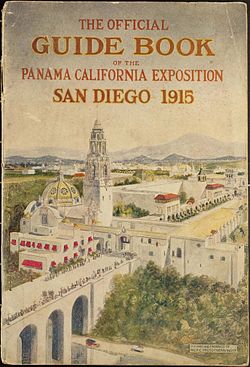
A guide book to the 1915 Panama–California Exposition
An assortment of guide books in Japan

A guide book or travel guide is "a book of information about a place designed for the use of visitors or tourists".[1] It will usually include information about sights, accommodation, restaurants, transportation, and activities. Maps of varying detail and historical and cultural information are often included. Different kinds of guide books exist, focusing on different aspects of travel, from adventure travel to relaxation, or aimed at travelers with different incomes, or focusing on sexual orientation or types of diet.

Travel guides or guide books can also take the form of travel websites.

History

[edit]
A Japanese tourist consulting a tour guide and a guide book from Akizato Ritō's Miyako meisho zue (1787)

Antiquity

[edit]

A forerunner of the guidebook was the periplus, an itinerary from landmark to landmark of the ports along a coast. A periplus such as the Periplus of the Erythraean Sea was a manuscript document that listed, in order, the ports and coastal landmarks, with approximate intervening distances, that the captain of a vessel could expect to find along a shore. This work was possibly written in the middle of the 1st century CE.[2] It served the same purpose as the later Roman itinerarium of road stops.

The periegesis, or "progress around" was an established literary genre during the Hellenistic age. A lost work by Agaclytus describing Olympia (περὶ Ὀλυμπίας) is referred to by the Suda and Photius.[3][4] Dionysius Periegetes (literally, Dionysius the Traveller) was the author of a description of the habitable world in Greek hexameter verse written in a terse and elegant style, intended for the klismos traveller rather than the actual tourist on the ground; he is believed to have worked in Alexandria and to have flourished around the time of Hadrian. An early "remarkably well-informed and interesting guidebook" was the Hellados Periegesis (Descriptions of Greece) of Pausanias of the 2nd century A.D.[5] This most famous work is a guide to the interesting places, works of architecture, sculpture, and curious customs of Ancient Greece, and is still useful to Classicists today. With the advent of Christianity, the guide for the European religious pilgrim became a useful guidebook. An early account is that of the pilgrim Egeria, who visited the Holy Land in the 4th century CE and left a detailed itinerary.

In the medieval Arab world, guide books for travelers in search of artifacts and treasures were written by Arabic treasure hunters, magicians, and alchemists. This was particularly the case in Arab Egypt, where treasure hunters were eager to find valuable ancient Egyptian antiquities. Some of the books claimed to be imbued with magic that could dispel the magical barriers believed to be protecting the artifacts.[6]

Travelogues

[edit]

Travel literature became popular during the Song dynasty (960–1279) of medieval China. The genre was called 'travel record literature' (youji wenxue), and was often written in narrative, prose, essay and diary style. Travel literature authors such as Fan Chengda (1126–1193) and Xu Xiake (1587–1641) incorporated a wealth of geographical and topographical information into their writing, while the 'daytrip essay' Record of Stone Bell Mountain by the noted poet and statesman Su Shi (1037–1101) presented a philosophical and moral argument as its central purpose.[7]

In the West, the guidebook developed from the published personal experiences of aristocrats who traveled through Europe on the Grand Tour. As the appreciation of art, architecture and antiquity became ever-more essential ingredients of the noble upbringing so they predominated in the guidebooks, particularly those devoted to the Italian peninsula. Richard Lassels (1603–1668) wrote a series of manuscript guides which were eventually published posthumously in Paris and London (1670) as The Voyage of Italy.[8] Grand Tour guidebooks poured off the presses throughout the eighteenth century, those such as Patrick Brydone's A Tour Through Sicily and Malta being read by many who never left England.[9]

Between 1626 and 1649, the Dutch publisher Officina Elzeviriana (House of Elzevir) published a bestselling pocketbook series, the Respublicae Elzevirianae (Elzevirian Republics), which has been described as the "ancestor of the modern travel guide".[10] Each volume gave information (geography, population, economy, history) on a country in Europe, Africa, the Near East or the Far East.[11]

An important transitional figure from the idiosyncratic style of the Grand Tour travelogues to the more informative and impersonal guidebook was Mariana Starke. Her 1824 guide to travel in France and Italy served as an essential companion for British travelers to the Continent in the early 19th century. She recognized that with the growing numbers of Britons traveling abroad after 1815 the majority of her readers would now be in family groups and on a budget. She therefore included for the first time a wealth of advice on luggage, obtaining passports, the precise cost of food and accommodation in each city and even advice on the care of invalid family members. She also devised a system of exclamation mark ratings [!!!], a forerunner of today's star ratings. Her books, published by John Murray, served as a template for later guides.

In the United States, the first published guidebook was Gideon Minor Davison's The Fashionable Tour, published in 1822, and Theodore Dwight's The Northern Traveller and Henry Gilpin's The Northern Tour, both from 1825.[12]

Modern guidebook

[edit]
John Murray

The modern guidebook emerged in the 1830s, with the burgeoning market for long distance tourism. The publisher John Murray began printing the Murray's Handbooks for Travellers in London from 1836.[13] The series covered tourist destinations in Europe, Asia and northern Africa, and he introduced the concept of "sights" which he rated in terms of their significance using stars for Starke's exclamation points. According to scholar James Buzard, the Murray style "exemplified the exhaustive rational planning that was as much an ideal of the emerging tourist industry as it was of British commercial and industrial organization generally."[14]

Karl Baedeker

In Germany, Karl Baedeker acquired the publishing house of Franz Friedrich Röhling in Koblenz, which in 1828 had published a handbook for travellers by Professor Johannes August Klein entitled Rheinreise von Mainz bis Cöln; ein Handbuch für Schnellreisende (A Rhine Journey from Mainz to Cologne; A Handbook for Travellers on the Move). He published this book with little changes for the next ten years, which provided the seeds for Baedeker's new approach to travel guides. After Klein died, he decided to publish a new edition in 1839, to which he added many of his own ideas on what he thought a travel guide should offer the traveller. Baedeker's ultimate aim was to free the traveller from having to look for information anywhere outside the travel guide; whether about routes, transport, accommodation, restaurants, tipping, sights, walks or prices. Baedeker emulated the style of John Murray's guidebooks,[15] but included unprecedented detailed information.

In 1846, Baedeker introduced his star ratings for sights, attractions and lodgings, following Mrs. Starke's and Murray's. This edition was also his first "experimental" red guide. He also decided to call his travel guides "handbooks", following the example of John Murray III. Baedeker's early guides had tan covers, but from 1856 onwards, Murray's red bindings and gilt lettering became the familiar hallmark of all Baedeker guides as well, and the content became famous for its clarity, detail and accuracy.[16]

Cover of Handbook for Travellers in Turkey, 1871

Baedeker and Murray produced impersonal, objective guides; works prior to this combined factual information and personal sentimental reflection.[16] The availability of the books by Baedeker and Murray helped sharpen and formalize the complementary genre of the personal travelogue, which was freed from the burden of serving as a guide book.[16] The Baedeker and Murray guide books were hugely popular and were standard resources for travelers well into the 20th century. As William Wetmore Story said in the 1860s, "Every Englishman abroad carries a Murray for information, and a Byron for sentiment, and finds out by them what he is to know and feel by every step."

After Karl Baedeker died, his son, also named Karl, inherited the Baedeker travel guide business; however, he was killed in action during World War I. British nationalism and anti-German sentiment resulted in some British people labeling Baedeker guides "instrumental to the German war effort", and their popularity in the United Kingdom dropped considerably.[17] As a result, the two editors of Baedeker's English-language titles left the company and acquired the rights to Murray's Handbooks. The resulting guide books, called the Blue Guides to distinguish them from the red-covered Baedekers, constituted one of the major guide book series for much of the 20th century and are still published today.

Post-WW2

[edit]
English-language guidebooks

Soon after World War II, two new names emerged which combined European and American perspectives on international travel. Eugene Fodor, a Hungarian-born author of travel articles, who had emigrated to the United States before the war, wrote guidebooks which introduced English-reading audiences to continental Europe. Arthur Frommer, an American soldier stationed in Europe during the Korean War, used his experience traveling around the Continent as the basis for Europe on $5 a Day (1957), which introduced readers to options for budget travel in Europe. Both authors' guidebooks became the foundations for extensive series, eventually covering destinations around the world.

Since then, Let's Go, Lonely Planet, Insight Guides, Rough Guides, Eyewitness Travel Guides and many other travel guide series have been published.

For specific activities

[edit]

Specialist climbing guidebooks for mountains have a long history owing to the special needs of mountaineering, rock climbing, hill walking, and scrambling. The guides by W A Poucher for example, are widely used for the hill regions of Britain. There are many more special guides to the numerous climbing grounds in Britain published by the Climbers Club, for example.

Travel guides are made for diving destinations and specific dive sites. These have been published as magazine articles, stand-alone books and websites, often publicising the dive sites in the vicinity of specific service providers.

Digital world

[edit]

With the emergence of digital technology, many publishers turned to electronic distribution, either in addition to or instead of print publication. This can take the form of downloadable documents for reading on a portable computer or hand held device such a PDA or iPod, or online information accessible via a web site. This enabled guidebook publishers to keep their information more current. Traditional guide book incumbents Lonely Planet, Frommers, Rough Guides, and In Your Pocket City Guides, and newcomers such as Schmap[18] or Ulysses[19] Travel Guides are now offering travel guides for download. New online and interactive guides such as Tripadvisor, Wikivoyage, and Travellerspoint enable individual travelers to share their own experiences and contribute information to the guide. Wikivoyage, CityLeaves, and Travellerspoint make the entire contents of their guides updatable by users, and make the information in their guides available as open content, free for others to use.

Guide book publishers

[edit]

This list is a select sample of the full range of English language guide book publishers - either contemporary or historical:

See also

[edit]

References

[edit]
Revisions and contributorsEdit on WikipediaRead on Wikipedia
from Grokipedia

A guidebook is a providing detailed directions, descriptions, and practical advice for travelers, particularly regarding specific destinations such as cities, regions, or countries, encompassing , , accommodations, transportation, and cultural norms.
The modern guidebook format originated in early 19th-century amid rising enabled by improved transportation, with the term "guidebook" first appearing in English around 1814.
Pioneering publishers like John Murray III, who launched the Handbook for Travellers series starting with in 1832, and , who began issuing guides in from the same year inspired by Murray's model, established standardized features including star-rated attractions, fold-out maps, and indexed practical information that facilitated independent exploration over reliance on guided tours.
These innovations democratized for the emerging , shaping perceptions of foreign locales through curated narratives and influencing the growth of mass by emphasizing efficiency, authenticity, and value.
Subsequent evolutions in the , such as budget-oriented series like Let's Go from 1960 and experiential guides from publishers like , adapted to backpacker demographics and global mobility, though physical guidebooks persist alongside digital alternatives for their depth and offline utility.

Definition and Core Elements

Defining Characteristics

A guidebook constitutes a structured offering practical, verifiable to facilitate or , encompassing details on destinations such as geographical coordinates, accommodation availability, transportation , and expenditure estimates based on observable market conditions. These works emphasize empirical data over personal narratives, incorporating elements like detailed maps for spatial orientation, suggested itineraries sequenced by time and distance, and factual descriptions of sites including operational hours and entry fees, all derived from direct assessments of physical and economic realities rather than anecdotal reporting. Central to their format is an organizational framework designed for rapid utility, featuring alphabetical indexes, cross-referenced appendices, and categorized sections on essentials like requirements or exchange rates, which enable users to address causal contingencies such as regulatory changes or supply disruptions. Practical advisories on risks—ranging from meteorological patterns affecting to localized threats grounded in incident statistics—further underscore their role as decision-aiding tools, prioritizing causal foresight over interpretive commentary. This distinction from opinion-driven formats ensures guidebooks serve as objective repositories, filtering information through verifiable criteria to minimize errors in planning. The inherent objectivity stems from methodological reliance on aggregated firsthand verifications and cross-checked , eschewing subjective valuations in favor of metrics like crowd correlations with peak seasons or cost variances tied to indices, thereby aligning content with reproducible outcomes. Such characteristics render guidebooks instrumental for autonomous , where utility hinges on precision rather than value.

Purposes and Uses

Guidebooks primarily serve to equip users with comprehensive, curated that facilitates informed in and activity planning, including details on transportation options, accommodation costs, local , and potential hazards. This enables efficient by helping travelers assess , budget implications, and safety risks, thereby minimizing inefficiencies such as overpayment for services or selection of suboptimal routes. For instance, by outlining comparative pricing for and dining, guidebooks allow users to optimize expenditures and avoid common pitfalls associated with unverified online sources. A key function is promoting self-reliant , which contrasts with structured guided tours that often entail higher costs and constrained itineraries. Guidebooks empower independent travelers to navigate destinations autonomously, fostering authentic interactions and flexibility while reducing dependency on intermediaries that may prioritize commercial interests over user preferences. indicates this role in mitigating travel uncertainties contributes to greater satisfaction and efficiency in solo or small-group journeys, as users can tailor experiences based on pre-vetted recommendations rather than real-time improvisation. Beyond leisure tourism, guidebooks extend to practical applications in business travel and hobbyist pursuits, such as providing logistical insights for corporate relocations or specialized advice for activities like hiking and birdwatching. Dedicated business travel references offer strategies for efficient itineraries, visa requirements, and networking venues, supporting professional objectives with minimal downtime. Similarly, niche guides for hobbies deliver targeted data on equipment, regulations, and optimal sites, evidenced by sustained demand in these categories amid broader digital shifts; U.S. travel guide sales, while declining from peaks, maintained a market value into the millions annually as of 2017, underscoring their ongoing utility in structured planning across non-touristic contexts.

Distinctions from Similar Publications

Guidebooks distinguish themselves from travelogues and memoirs by emphasizing objective, practical information over personal narratives and subjective experiences. Travelogues, such as those by , focus on storytelling and individual adventures, often incorporating unverified anecdotes that prioritize entertainment value. In contrast, guidebooks aim to deliver disinterested factual data, including logistics like transportation options, accommodation standards, and assessments based on observable conditions rather than authorial bias. Similarly, guidebooks differ from contemporary travel blogs, which frequently rely on prone to promotional influences, outdated details, or selective personal opinions lacking editorial oversight. Professional guidebooks undergo structured research and by specialized authors and publishers, fostering greater transparency and in recommendations, whereas blogs and crowdsourced platforms like review sites can propagate through unvetted submissions or algorithmic biases favoring popular rather than accurate input. This curatorial process in guidebooks reduces subjectivity, aligning with a commitment to verifiable for users. Encyclopedias provide comprehensive, general-knowledge summaries across broad topics, serving as static references without tailored, actionable guidance for specific activities like or budgeting in a destination. Guidebooks, by , concentrate on localized, practical advice—such as optimal itineraries, cost estimates derived from recent fieldwork, and contextual integrations of history with real-time applicability—eschewing encyclopedic breadth for targeted traveler support. Unlike standalone maps, which offer purely visual or graphical representations of for directional purposes, guidebooks incorporate maps as supplementary tools within a framework that explains routes, landmarks, and potential hazards through descriptive and empirical observations. This synthesis enables users to contextualize spatial data with operational insights, such as terrain challenges or seasonal accessibility, beyond mere cartographic depiction.

Historical Development

Ancient and Classical Origins

The earliest precursors to guidebooks in consisted of descriptive periegeis and itineraries that cataloged sites, routes, and distances through direct empirical observation, serving practical needs for travelers, pilgrims, and administrators rather than commercial audiences. These texts emphasized verifiable details over embellishment, reflecting causal imperatives like religious devotion, , and scholarly in a world of arduous overland and sea travel. Pausanias' Description of Greece (Greek: Periegesis Hellados), written in the mid-2nd century AD by the Greek geographer from Asia Minor (active c. 120–180 AD), exemplifies a site-specific precursor structured as regional itineraries. Spanning ten books, it methodically describes architectural remains, sculptures, cults, and myths in , the , and central Greece, based on the author's personal inspections during extensive journeys. Pausanias prioritized observable facts—such as temple layouts and statue positions—while noting distances and sequences for sequential visitation, akin to a topographical tour for culturally informed visitors. This work's utility stemmed from Greece's enduring pilgrimage circuits to sanctuaries like and Olympia, where accurate site details aided ritual preparation amid ruins from earlier eras. Roman counterparts, such as the (Latin: Itinerarium Antonini), compiled in the early AD (post-197 AD, possibly after 286 AD), provided utilitarian lists of 225 road segments across the empire, detailing stations (mansiones), distances in Roman miles, and branching paths from sources like official records. Covering routes from Britain to the , it focused on functional metrics for military redeployments—enabling legions to cover 20–30 miles daily—and mercantile efficiency along engineered highways totaling over 50,000 miles. Unlike Pausanias' cultural annotations, its non-narrative format prioritized causal connectivity between imperial nodes, omitting scenic or ethnographic digressions. Circulation of these texts was constrained by reliance on papyrus scrolls or codices copied by hand, a process demanding skilled scribes and incurring high costs, thus confining access to literate elites including officials, scholars, and patrons in urban centers like and . Low literacy rates—estimated below 10% empire-wide—and absence of mechanical reproduction precluded mass dissemination, rendering such works tools for the privileged rather than broadly advisory publications.

Medieval Travelogues and Early Guides

Medieval travelogues emerged as transitional texts that combined narrative accounts of journeys with rudimentary practical guidance, primarily motivated by religious pilgrimages such as the or visits to Christian holy sites, alongside exploratory and mercantile interests. These works lacked the structured formats of later guidebooks but offered empirical details on routes, distances, local , and hazards, derived from the authors' direct experiences amid the logistical challenges of feudal and the Islamic world, including poor roads, banditry, and seasonal weather. Unlike ancient itineraries focused on Roman infrastructure, medieval accounts reflected expanding trade networks and crusading expeditions, facilitating causal that supported commerce despite institutional constraints like manorial obligations and monopolies on routes. One prominent European example is The Book of the Marvels of the World, dictated by to around 1298–1299 while imprisoned in , detailing his travels from to between 1271 and 1295 via the . The text describes overland and maritime paths, marketplaces, currencies, and administrative practices in Mongol territories, providing merchants with actionable intelligence on trade opportunities in spices, silks, and , which influenced subsequent European and , as evidenced by carrying a copy during his 1492 voyage. Despite its embellished style emphasizing wonders, Polo's empirical observations on distances—such as estimating 40 days' journey from Acre to —served proto-guide functions by mapping feasible itineraries under feudal travel limitations, where armed escorts and Venetian state support were often necessary. In the Islamic sphere, Ibn Battuta's (full title A Gift to Those Who Contemplate the Wonders of Cities and the Marvels of Traveling), compiled in 1354–1355 from his dictation to Ibn Juzayy under commission from Moroccan Sultan Abu Inan, chronicles 29 years of travel covering over 120,000 kilometers across , the , , and starting from in 1325 for the . It includes precise route descriptions, such as caravan paths through the with notes on water sources and customs, alongside cultural and political insights like judicial systems in courts, offering practical advice for pilgrims and traders navigating dar al-Islam's interconnected networks. This knowledge transfer aided causal expansion of trade in goods like and textiles, countering feudal-like tribal disruptions, though the text's reliance on oral memory introduced potential inaccuracies unverified by maps. European pilgrimage accounts, such as those advising on seasonal crossings of the or provisioning for routes, similarly blended devotion with logistics but remained episodic rather than systematic.

19th-Century Commercialization

The commercialization of guidebooks in the coincided with industrialization and advancements in transportation, particularly the expansion of railways and steamships, which democratized travel for the emerging . Railways proliferated across starting in the , reducing travel times and costs, while steamships facilitated transcontinental journeys, enabling bourgeois tourists to undertake self-reliant excursions previously limited to the . This surge in leisure mobility created demand for reliable, printed information to navigate unfamiliar destinations, shifting guidebooks from bespoke manuscripts or elite narratives to mass-produced commodities sold via commercial publishers. Karl Baedeker initiated this commercial era with his first guide, Rheinreise von Mainz bis Köln, published in 1828 in , targeting practical itineraries for independent travelers. Baedeker's innovations included ratings for attractions and accommodations, introduced around , which provided objective evaluations based on factual assessments rather than subjective opinion, appealing to efficiency-minded tourists. These red-bound volumes emphasized verifiable details on routes, costs, and sights, countering information gaps in an era of rapid infrastructural change and fostering a standardized approach to . In Britain, John Murray III launched the competing Handbooks for Travellers series in 1836 with A Handbook for Travellers on the Continent, prioritizing compact, data-driven advice for self-guided exploration. Murray's guides featured red covers, detailed maps, and emphasis on economical, verifiable travel logistics, reflecting the era's focus on personal agency amid railway timetables and steamship schedules. Both series profited from the growing market of affluent yet resourceful travelers, with sales driven by repeat editions updated for new transport links, establishing guidebooks as essential tools for mitigating risks in burgeoning mass tourism.

20th-Century Mass Production

Eugene Fodor launched the modern guidebook era in 1936 with On the Continent, a practical manual for American tourists exploring by rail and emerging automobile routes, emphasizing verifiable details on accommodations, routes, and cultural sites to enable efficient self-directed . The book's initial printing sold out within three days of its 1937 European release, demonstrating surging demand amid interwar economic recovery and rising transatlantic mobility for middle-class Americans. Fodor's approach prioritized annual updates and empirical listings over anecdotal narratives, adapting to faster paces enabled by improved roads and vehicles, which required guides with quick-reference indexes for real-time decision-making. World War I disrupted established publishers like , whose German origins fueled postwar boycotts among English-speaking readers, opening markets for Anglo-American alternatives that scaled production through and wider distribution networks. further halted civilian guidebook output, redirecting resources to soldier handbooks with topographic and logistical data, though this wartime pivot underscored guidebooks' utility in mapping unfamiliar terrains under duress. These interruptions, combined with and travel restrictions, suppressed temporarily but amplified latent demand tied to causal factors like returning veterans' wanderlust and rebuilt infrastructure. By the 1950s, extended this trajectory with Europe on $5 and $10 a Day in 1957, a slim volume detailing budget itineraries with itemized costs—such as $1.50 nightly hostels and 50-cent meals—targeting GIs and leveraging cheap postwar fares for independent exploration. Frommer's empirical breakdowns, drawn from personal audits, reflected adaptations to automobile-driven road trips, incorporating fold-out maps and categorized indexes to handle dynamic routing amid expanding highways. This format standardization facilitated mass-market scalability, as cheaper enabled print runs in the hundreds of thousands, aligning guidebooks with the era's causal shift toward democratized, velocity-oriented mobility over elite escorted tours.

Post-World War II Globalization

Following , the expansion of international air travel and sustained economic growth in Western economies facilitated a surge in global tourism, prompting guidebook publishers to target diverse markets beyond elite travelers. The introduction of commercial jet aircraft, such as the Boeing 707 in 1958, drastically reduced transatlantic flight times from over 12 hours to under 8 hours, lowering costs and enabling mass access to distant destinations. International tourist arrivals rose from 25.3 million in 1950 to 278 million by 1980, reflecting this accessibility amid post-war recovery and trade liberalization under frameworks like the General Agreement on Tariffs and Trade (GATT). Guidebooks evolved to cover emerging hotspots in , , and , emphasizing practical logistics for growing middle-class and independent tourists rather than luxury itineraries. In 1973, Tony and Maureen Wheeler founded in , self-publishing Across Asia on the Cheap after their overland journey from to , which provided firsthand, budget-oriented advice for backpackers seeking authentic, low-cost experiences. This series prioritized author fieldwork over secondary sources, offering route maps, accommodation tips, and cultural insights tailored to self-reliant travelers avoiding package tours, and expanded rapidly to over 100 titles by the 1980s as backpacking gained popularity. Similarly, launched in 1982 with a focus on alternative routes and in-depth cultural narratives, appealing to adventurers via direct reporting on lesser-visited sites and local interactions. These imprints contrasted with established series like and , which scaled globally but retained a more conventional structure, by leveraging personal exploration to guide users toward off-mainstream paths amid rising demand for experiential travel. Guidebook sales proliferated in the and , aligning with tourism's contribution to global GDP, which grew from under 5% in the to over 9% by through expanded visitor spending on accommodations and services. alone sold millions of copies annually by the late 1980s, with the series reaching 150 million units over five decades, driven by correlations between air passenger growth—doubling every decade post-1960—and demand for portable, fieldwork-based resources in non-Western markets. This era marked guidebooks' shift to multilingual editions and regional specializations, adapting to deregulated airlines and currency stabilizations that boosted outbound travel from and to developing economies.

Types and Classifications

Travel and Destination Guides

Travel and destination guides constitute a primary category of guide books dedicated to specific geographic regions, cities, or countries, emphasizing practical to facilitate visitor and . These publications typically detail attractions, accommodations, transportation networks, dining options, and essential local , enabling travelers to allocate time and resources efficiently based on verifiable on-site conditions and . Unlike broader narratives, they prioritize actionable data derived from , such as walking times between sites or seasonal accessibility of transport hubs, to support causal in itinerary construction. Prominent examples include the series, which offers concise, budget-oriented itineraries tailored for independent travelers, focusing on efficient routes through major European hubs like or , with emphasis on public transit schedules and self-guided sightseeing loops informed by repeated author reconnaissance. In contrast, the Blue Guides provide in-depth scholarly analyses of historical and architectural sites, such as extended treatments of monuments in or , integrating primary archaeological evidence and timelines to contextualize visitor experiences beyond surface-level descriptions. The Lonely Planet series exemplifies market scale, with titles spanning over 221 countries and territories, aggregating empirical data from contributor networks to outline pathways through high-traffic areas like or , where guides quantify crowd patterns and alternative access points to mitigate logistical bottlenecks in overtouristed locales. Core features across these guides encompass enumerated and recommendations vetted for reliability via post-visit audits, detailed matrices including fares and frequencies for buses, trains, or ferries, and etiquette protocols grounded in observed local practices—such as tipping norms in or queueing customs in —to reduce friction in interpersonal interactions. Updates often incorporate user-submitted reports cross-verified against official schedules, ensuring alignment with real-time infrastructural changes like new rail extensions or seasonal road closures.

Activity-Specific Guides

Activity-specific guides provide specialized instructions for engaging in particular hobbies or pursuits, prioritizing techniques that address causal risks such as environmental hazards, physiological limits, and equipment failures derived from empirical observations and physical principles. These publications differ from general travel guides by concentrating on the mechanics of the activity itself—such as identification methods in or load-bearing dynamics in —rather than logistical planning or destination overviews. They often incorporate data-driven safety protocols, like terrain-specific gear choices that reduce injury rates based on , to enable participants to mitigate predictable dangers like slips on inclined surfaces where coefficients vary with surface wetness and boot tread design. In birdwatching, guides from the National Society exemplify this focus by supplying identification keys that differentiate through observable traits including patterns, vocalizations, and behavioral cues, supplemented by distributions and seasonal migration data compiled from field records. These elements facilitate precise recognition amid variable field conditions, such as obscured views or between similar , thereby reducing misidentification errors that could lead to ecological misunderstandings or overlooked conservation threats. For instance, range maps and abundance notes account for effects, grounded in long-term sighting databases rather than anecdotal reports. Hiking guides stress techniques attuned to physics and kinetics, recommending gear like trekking poles to redistribute weight and lower center-of-gravity shifts on descents, which empirical studies link to decreased stress and fall risks on uneven substrates. Publications such as those detailing outline methods and first-aid responses calibrated to exposure risks, emphasizing causal chains like from overexertion in high-altitude environments where oxygen scarcity amplifies . Safety handbooks further detail redundancies—combining maps, compasses, and assessment—to counter disorientation from weather-induced visibility loss, drawing from incident analyses showing that preparedness halves retrieval times in remote areas. Culinary guides, particularly the Michelin series, evaluate dining pursuits through anonymous inspector assessments of core criteria: ingredient freshness, technical proficiency in preparation, flavor equilibrium, chef individuality, and sustained performance across visits. This methodology uncovers quality variances, such as inconsistent heat control leading to overcooked proteins that degrade texture via protein denaturation beyond optimal temperatures, informing amateurs on replicable techniques like precise timing to preserve molecular structures. By revealing these disparities without venue favoritism, such guides promote discernment based on verifiable sensory and chemical outcomes rather than marketing claims.

Specialized Reference Guides

Specialized reference guides constitute a subset of guide books tailored for professional, technical, or operational utility, delivering data-driven insights and procedural frameworks to facilitate in non-leisure contexts. Unlike recreational aids, these publications integrate quantitative metrics, causal analyses of environmental factors, and empirically derived protocols, often drawing from specialized datasets or institutional expertise to enhance efficacy in fields such as investment analysis, resource-specific industries, and high-stakes fieldwork. Their -oriented structure—featuring indexes, charts, and verifiable indicators—prioritizes precision over narrative appeal, enabling users to apply information directly to practical outcomes like or process optimization. In financial and business domains, these guides compile economic indicators and market analytics to support strategies, often focusing on locational or sectoral data. For example, "The Trader's Guide to Key Economic Indicators," published in 2004 by Bloomberg, details twelve core metrics including GDP revisions, which historically correlate with equity returns at rates up to 0.6 in predictive models, alongside unemployment data influencing actions. Similarly, "The Economic Indicator Handbook" by James H. Lilley, released in 2012, employs graphical trend evaluations of indicators like industrial production indices to identify macroeconomic turning points, aiding portfolio adjustments based on observed volatility patterns from 1980 onward. Such works, while not city-exclusive, extend to urban handbooks that benchmark local GDP growth against national averages for . Technical guides for niche industries, such as , emphasize causal relationships between geophysical variables and production outcomes, providing reference tools for optimizing yields through site-specific recommendations. "Vineyards, Rocks, and Soils: The Wine Lover's Guide to " by Alex Maltman (2018) analyzes how minerals like contribute to acidity in wines via water retention mechanisms, with case studies from regions like Champagne demonstrating flavor persistence linked to levels exceeding 80% in soils. E. White's "Understanding Soils" (2009, ) quantifies impacts of clay content on availability, noting that soils with 20-30% clay sustain higher phenolic concentrations in , informed by long-term trials minimizing erosion to preserve microbial activity essential for root health. These references integrate data, such as degree-days above 10°C correlating with ripening success rates above 85% in temperate zones, to guide planting decisions grounded in causality. Military and survival reference manuals function as doctrinal compendia for operational resilience, codifying procedures validated through historical engagements and simulations to maximize mission continuity. U.S. Army Field Manuals (FMs), maintained by the Army Publishing Directorate, serve as primary references for tactics, with over 300 titles covering evolutions in since 1940, including FM 3-0 on operations that incorporates data from post-conflict analyses to refine force structures for terrain-specific maneuvers. In contexts, manuals like FM 3-05.70 (2002) outline evasion techniques prioritized by environmental probabilities, such as signaling methods achieving detection rates of 60-80% in open terrain based on aerial search parameters derived from Cold War-era exercises, emphasizing first water sourcing to counter risks escalating mortality by 10% daily in arid conditions. These prioritize empirical hierarchies— over —to align with causal chains of physiological failure observed in field recoveries.

Publishing and Production

Research and Authorship Processes

Guidebook authors prioritize empirical to compile accurate, practical , conducting on-site visits to destinations, accommodations, restaurants, and attractions to verify details firsthand. This typically involves multi-week research trips where writers test transportation routes, measure walking times, sample local services, and assess conditions to ensure recommendations reflect real-world usability rather than unverified . Interviews with local residents, business owners, and officials supplement observations, providing insights into recent developments and insider tips while cross-checking against multiple sources to confirm factual accuracy, such as current pricing and operational hours. Authors are generally selected for their established expertise, often derived from extensive prior travel, residency, or immersion in the covered regions, enabling them to draw on lived experience for nuanced, reliable guidance. This background helps in identifying subtle changes, like shifts in local customs or emerging safety concerns, that desk-bound compilation might overlook. Guidebooks undergo revisions every 2 to 4 years—or more frequently for dynamic areas—to incorporate such updates, driven by the rapid evolution of landscapes including new openings, closures, and economic fluctuations. To counter inherent subjectivity in evaluations, authors apply standardized criteria, such as uniform rating systems for quality (e.g., based on , service reliability, and value) and objective metrics for like and duration derived from timed trials. This methodical approach emphasizes causal realism—linking recommendations directly to observable outcomes—over personal anecdotes or external influences, thereby reducing and enhancing the guide's utility for readers seeking verifiable tools. Where opinions appear, they are typically framed as informed preferences grounded in repeated testing, with transparency about potential variability in user experiences.

Major Publishers and Series

's publishing house, established in , , in 1827, pioneered systematic travel guidebooks with detailed itineraries, maps, and cultural insights, beginning with the 1829 Rheinreise von bis Düsseldorf. The series expanded internationally, with English editions starting in 1861 for the , emphasizing empirical descriptions of sites, costs, and transportation. Post-World War II, the firm was revived in 1950 by Karl Friedrich Baedeker in , shifting to more concise formats while retaining focus on historical and architectural depth, though modern editions have faced critique for reduced originality compared to pre-1914 volumes. Lonely Planet, founded in 1973 by Tony and Maureen Wheeler in as an independent guide to overland travel from to , grew into a dominant series covering over 900 titles by emphasizing firsthand research and budget-oriented advice. Acquired by in 2007 for £88.1 million (75% stake) and fully in 2011, it was sold to NC2 Media in 2013 amid criticisms of editorial interference eroding its independent voice, then to in 2020. The series maintains comprehensive global coverage but has drawn complaints for outdated practical details in rapidly changing destinations, relying on contributor updates rather than exhaustive annual verifications. Frommer's, launched by in 1957 with Europe on $5 a Day, prioritizes value-driven itineraries and family-friendly options, appealing to cost-conscious American travelers with over 350 guides. ' series, started in the , focuses on efficient European sightseeing for U.S. audiences, integrating self-guided tours and anti-tourist-trap recommendations based on the author's annual on-site inspections. Blue Guides, originating in 1910 under firm Findlay Muirhead, excel in scholarly examinations of , , and , with rigorous site analyses but limited practical logistics, suiting culturally oriented readers over casual tourists. These publishers collectively hold significant market presence, with longstanding brands like and adapting to digital pressures while preserving print editions for in-depth reference.

Economic Realities and Challenges

The primary revenue streams for guidebook publishers derive from physical and digital book sales, supplemented by licensing content to operators, apps, and media outlets. These models face structural pressures from high upfront costs for on-site research and verification, which can exceed 50% of production expenses due to the need for expert authors and frequent updates. Print guidebook sales peaked in 2006 at approximately 19 million units , after which they declined sharply, halving over the subsequent decade amid the rise of smartphones, apps, and free online resources like blogs and review sites. This downturn, exceeding 40% in both the and markets from 2005 levels by 2011, stems causally from consumers shifting to real-time digital alternatives that reduce perceived value in static print formats, despite guidebooks' advantages in curated, offline depth. The exacerbated these vulnerabilities, with publishers reporting 95-99% revenue evaporation in 2020 as global lockdowns halted travel and distribution. Recovery began in 2021, accelerating by 2024 with travel demand rebounding to near pre-pandemic levels, though print volumes remain below 2006 peaks and digital piracy poses ongoing threats by enabling unauthorized of licensed content. Profitability hinges on repeat editions every 1-2 years to reflect destination changes, generating backlist sales with minimal incremental research costs, alongside tie-ins such as co-branded merchandise or partnerships with airlines. Empirical patterns in publishing indicate higher returns on investment for niche guides—targeting specialized segments like adventure trekking or cultural heritage—compared to general overviews, as narrower audiences yield less competition and premium pricing for verified expertise, often achieving margins 20-30% above broad-market titles. Balancing these drivers against digital disruption requires publishers to emphasize proprietary data and trust, as commoditized information erodes barriers to entry.

Societal Impact and Evaluation

Positive Contributions to Travel and Knowledge

Guidebooks have historically expanded access to travel by supplying verifiable logistical details, enabling middle-class individuals to undertake journeys that were once confined to the aristocracy's Grand Tours. In the , publishers like and John Murray produced handbooks that detailed routes, accommodations, and cultural sites based on firsthand inspections, reducing uncertainties and encouraging broader participation in leisure travel across . This corresponded with the rise of rail networks and steamships, as guidebooks integrated transportation schedules to facilitate efficient itineraries, thereby correlating with the surge in tourist volumes during the . By standardizing information with features like star ratings for attractions and hotels, these publications promoted data-driven decisions that minimized risks associated with unfamiliar destinations, fostering greater cultural exchanges through directed visits to historical and artistic landmarks. Baedeker's guides, for instance, covered much of by 1914, empowering readers to navigate independently and engage with local customs via practical advice on etiquette and expenses. Such resources countered elite monopolies on , as they were affordable and portable, allowing self-reliant without reliance on costly intermediaries. Guidebooks also imparted practical skills essential for real-world application, including budgeting through cost estimates for and , and navigation via mapped routes and timetables, which honed users' abilities in planning and adaptability. Later series, such as those from the , extended these benefits by incorporating off-the-beaten-path recommendations and financial tips, enhancing travelers' self-sufficiency and informed decision-making in diverse environments. This educational function grounded travel in empirical outcomes, as users applied the provided data to achieve successful, low-risk excursions that broadened geographical and .

Criticisms of Accuracy and Bias

Guidebooks frequently suffer from outdated information owing to the fast-paced changes in travel destinations, such as closures, hotel renovations, and fluctuating prices, which render printed editions obsolete shortly after publication. The intensified this problem, as publishers delayed or canceled print runs amid lockdowns and restrictions, resulting in 2020 and 2021 editions that failed to reflect widespread business closures and evolving entry requirements persisting into 2022. Academic literature identifies multiple accuracy shortcomings in guidebook content, including factual errors in listings and recommendations that mislead users relying on them for planning. User comparisons between guidebooks and on-site realities often reveal discrepancies, with travelers reporting that older editions contain up to significant portions of irrelevant details on defunct attractions or services. Critics contend that guidebooks exhibit a Western-centric , crafted primarily by and for audiences from developed nations, which can underrepresent local socio-economic challenges or safety nuances in developing regions. In series like , this manifests as a shift toward mainstream appeal, prioritizing sanitized, tourist-optimized narratives over gritty local perspectives, as noted in analyses of editorial decisions favoring broad accessibility. Content analyses of popular guidebooks reveal a pervasive positive framing, such as portraying destinations as perpetually welcoming ("never short of a "), which downplays environmental or cultural frictions that could inform more realistic expectations. Commercial imperatives further exacerbate these biases, as publishers under financial strain prioritize sales by curating content that promotes destinations attractively, often glossing over persistent issues like elevated rates in high-tourism areas to avoid deterring potential buyers. Some observers argue this leads to selective omissions, where causal factors driving local instability—such as inadequate or failures—are minimized in favor of aspirational descriptions, reflecting the tension between journalistic rigor and market viability. These pressures have drawn from travel writers, who note that corporate ownership influences tone toward optimism, potentially compromising the objective assessment of risks in non-Western contexts.

Controversies Including Liability and Commercialization

In 2011, Hawaii lawmakers proposed House Bill 548, which sought to impose civil liability on authors and publishers of guidebooks or travel websites for deaths or injuries occurring at sites they "knowingly or negligently encourage" visitors to access, particularly hazardous public or private lands like cliffs or trails with restricted access. The bill arose from incidents where tourists, following guidebook recommendations, ventured to dangerous spots such as the Haiku Stairs or remote beaches, leading to fatalities and prompting local officials to argue that promoters bore partial responsibility for inadequate warnings. Opponents, including media coalitions, contended the measure violated First Amendment protections and created an undue burden on free speech, as guidebooks typically disclaim liability and rely on users' judgment; the bill ultimately stalled in the without becoming law. Critics of guidebook commercialization argue that profit pressures have shifted content from independent, exploratory advice to advertiser-favored recommendations, undermining editorial integrity and reader trust. For instance, , once renowned for offbeat itineraries, has faced accusations of prioritizing corporate partnerships and mainstream attractions post its 2013 sale to NC2 Media and subsequent ownership changes, resulting in diluted authenticity and a reported decline in market dominance as competitors like independent bloggers gained traction. This , driven by revenue needs amid print sales drops, includes increased promotion of high-volume sites amenable to sponsorships, such as chain hotels or tour operators, over lesser-known locales, per travel industry analyses. Such commercialization exacerbates ethical debates over guidebooks' role in fueling overtourism at fragile destinations, where mass recommendations strain infrastructure and ecosystems without sufficient caveats on capacity limits. At Machu Picchu, Peru, annual visitor numbers surged past 1.5 million by 2019—exceeding the site's sustainable threshold of 800 daily entrants—partly due to guidebooks' longstanding emphasis on it as an unmissable icon, contributing to trail erosion, waste accumulation, and cultural site degradation as documented in UNESCO monitoring reports. Similarly, in Venice, Italy, guidebook-driven pilgrimages to hotspots like St. Mark's Square have intensified seasonal overcrowding, with over 20 million tourists annually by the mid-2010s prompting resident exodus and waterway pollution, as critiqued in European Parliament studies on tourism impacts. Proponents of reform urge publishers to integrate carrying capacity data and discourage peak-season visits, though commercial incentives often prevail, raising questions about accountability for foreseeable environmental harms.

Digital Evolution and Future

Transition from Print to Digital

The shift from print to digital guidebooks was primarily driven by increasing accessibility, which enabled real-time information dissemination and , eroding the monopoly of printed materials on curated travel advice. In the early , major publishers began offering online supplements to their print editions; for instance, integrated web-based resources, including podcasts by , to provide updates and extensions that print could not match in speed or interactivity. This initial phase contrasted print's tangible, self-contained format—ideal for offline use—with digital's capacity for rapid revisions, though adoption remained limited by connectivity constraints and traveler preferences for physical books. The proliferation of smartphones after intensified the transition, as mobile apps and GPS integration allowed instant access to maps, reviews, and itineraries, diminishing reliance on static print volumes. Empirical underscores this erosion: U.S. travel guidebook unit sales peaked at approximately 19 million in but fell to 6.9 million by , largely attributed to competition from blogs, forums, and apps offering free, crowdsourced alternatives. Despite digital's advantages in timeliness, print retained value for its vetted, expert-compiled content, which filtered unreliable user inputs prevalent in sources, preserving a niche for offline reliability in remote or data-poor areas. The from 2020 to 2022 accelerated hybrid models, as global travel restrictions caused print guidebook revenues to plummet by 95-99% during lockdowns, forcing publishers to emphasize digital updates while maintaining print for post-recovery demand. This period highlighted print's enduring appeal for tactile navigation and disconnection from battery-dependent devices, even as digital formats gained traction for their adaptability, though print's persistence reflected travelers' trust in structured, pre-vetted guidance over fragmented online data.

Features of Digital Guidebooks and Apps

Digital guidebooks and apps incorporate interactive elements such as GPS integration for real-time navigation and location-based recommendations, allowing users to access directions, nearby attractions, and personalized itineraries dynamically adjusted to their position. For instance, apps like and specialized travel trackers such as Polarsteps utilize GPS to log routes, overlay user notes, and provide offline-capable mapping, enhancing practical utility during travel. User-generated reviews, often integrated from platforms like , enable crowdsourced feedback on accommodations and sites, but studies indicate variable accuracy due to potential fake or biased submissions, with algorithms detecting only a portion of suspicious patterns. Platforms like Hostfully exemplify digital guides tailored for vacation rentals, featuring content including photos, videos, and AI-supported itinerary builders alongside house rules and local recommendations, delivered via customizable, mobile-optimized formats without coding requirements. These tools support faster dissemination of updates, such as altered opening hours or pricing, surpassing print editions' static nature, and include offline access for maps and essentials to mitigate connectivity issues. However, digital formats trade comprehensive, editorially vetted depth—characteristic of print baselines—for brevity and , potentially limiting nuanced historical or . amplifies risks, as research on sites reveals that perceived influences user trust but unverified inputs can skew perceptions, with low-rating reviews disproportionately impacting affective over high ones. Empirical analyses of data underscore how technical attributes predict satisfaction, yet systemic issues like incentivized or fabricated content persist, necessitating user discernment. In 2024 and 2025, hybrid print-digital guidebooks have gained traction as publishers integrate interactive PDFs and companion apps with traditional formats to offer offline reliability alongside real-time updates, countering the limitations of purely app-based tools that often prioritize algorithmic recommendations over curated depth. This approach appeals to travelers seeking niche personalization, such as region-specific itineraries tailored to low-impact exploration, amid a broader shift toward experience-driven travel. Post-COVID recovery has underscored guidebooks' resilience, with sales rebounding after 95-99% revenue drops during lockdowns, as physical editions outperform blogs and generic apps in user trust for complex planning due to their ad-free, verifiable content and independence from connectivity issues. Empirical metrics from traveler surveys indicate higher reliance on established guides for logistical accuracy compared to user-generated online content, which frequently lacks editorial oversight. Looking ahead, AI-generated guide content poses risks of eroding empirical rigor through hallucinations and outdated , as evidenced by cases where fabricated itineraries led to financial losses and concerns, prompting a preference for human-verified updates that preserve causal accuracy in recommendations. Sustainable models emphasizing on-the-ground verification could dominate, particularly as eco-focused proliferate to address tourism's environmental externalities, aligning with the sector's projected growth to $279 billion by 2025. This trajectory favors specialized publishers prioritizing firsthand over automated generality, ensuring guidance remains a tool for informed, low-harm mobility.

References

Add your contribution
Related Hubs
User Avatar
No comments yet.