



Community hub
Recent from talks
Contribute something
Nothing was collected or created yet.
Star (rocket stage)
View on WikipediaThe Star is a family of US solid-propellant rocket motors originally developed by Thiokol and used by many space propulsion and launch vehicle stages. They are used almost exclusively as upper stages, often as apogee kick motors. The number designations refer to the approximate diameter of the fuel casing in inches.
Three Star 37 stages, and one Star 48 stage, were launched on solar escape trajectories; fast enough to leave the Sun's orbit and out into interstellar space, where barring the low chance of colliding with debris, they will travel past other stars in the Milky Way galaxy and survive potentially intact for millions of years.
Star 13
[edit]The Star 13 (TE-M-458) is a solid fuel apogee kick motor.[1][2] It was used on NASA's Anchored Interplanetary Monitoring Platform satellites.[3] Several other versions were developed.[1][4][5][6][7][8][9][2] Star 13D (TE-M-375) was used on the Syncom 1, Star 13A (TE-M-516) on LES 1/2, Aurora (P67-1), Orbiscal (P68-1), Lincoln Calibration Sphere 4, S3-2, Solrad 11A/B, SPX plume generator package, Freja, Meteor and Equator-S, Star 13C (TE-M-345-11/12) on AMSAT P3A and Star 13B (TE-M-763) on AMPTE-CCE payloads.[3]
| Name | Thiokol# | Mass (kg) | Prop. mass fract. | Imp. | Burn (s) | ||
|---|---|---|---|---|---|---|---|
| Total | Empty | Spec., Isp (s) | Tot. (kgf-sec) | ||||
| Star 13 | TE-M-458 | 36 | 5 | 0.869 | 273 | 8,524 | 22 |
| Star 13A | TE-M-516 | 38 | 5 | 0.87 | 287 | 9,544 | 15 |
| Star 13B | TE-M-763 | 47 | 6 | 0.87 | 286 | 11,807 | 15 |
| Star 13C | TE-M-345-11/12 | 38 | 8 | 0.795 | 218 | 8,252 | |
| Star 13D | TE-M-375 | 35 | 6 | 0.81 | 223 | 7,799 | |
| Star 13E | TE-M-385 | 31 | 6 | 0.822 | 211 | 6,438 | |
| Star 13F | TE-M-444 | 40 | 7 | 0.83 | 240 | 9,608 | |
Star 17
[edit]The Star 17 (TE-M-479) is a solid fuel apogee kick motor, first launched in 1963.[10] It was used for payloads such as Radio Astronomy Explorer, SOLRAD and S3 satellites. The Star 17A (TE-M-521-5) version was used for orbit circularization on Skynet 1, NATO 1, IMP-H and IMP-J satellites.[10][11]
| Name | Thiokol# | Mass (kg) | Prop. mass fract. | Imp. | Burn (s) | Length (m) | |||
|---|---|---|---|---|---|---|---|---|---|
| Total | Empty | Prop. | Spec., Isp (s) | Tot. (kgf-sec) | |||||
| Star 17 | TE-M-479 | 79 | 9 | 70 | 0.881 | 286 | 20177 | 18 | 0.98 |
| Star 17A | TE-M-521-5 | 126 | 14 | 112 | 0.903 | 287 | 32556 | 19 | 0.98 |
Star 20 (Altair 3A)
[edit]The Star 20 (TE-M-640) is a solid fuel apogee kick motor, also known as Altair-3A.[12] It was used as a second stage on an Atlas-E/F vehicle launching Stacksat.[13][14] The TE-M-640 motor is similar to Altair 3 (FW-4S), and both are designated by NASA as Altair IIIA.[15]
| Name | Thiokol# | Mass (kg) | Prop. mass fract. | Imp. | ||
|---|---|---|---|---|---|---|
| Total | Prop. | Spec., Isp (s) | Tot. (kNs) | |||
| Star 20 Spherical | TE-M-251 | 123 | 114.8 | 0.934 | 234 | 296.25 |
| Star 20 | TE-M-640-1 | 300.9 | 273.2 | 0.908 | 286.5 | 771.77 |
| Star 20A | TE-M-640-3 | 314.3 | 286.0 | 0.910 | 291.9 | 822.48 |
| Star 20B | TE-M-640-4 | 306.7 | 273.8 | 0.893 | 289.1 | 776.53 |
Star 24
[edit]The Star 24 (TE-M-604) is a solid fuel apogee kick motor, first qualified in 1973.[16][17] It burns an 86% solids carboxyl-terminated polybutadiene (CTPB)[broken anchor]-based composite propellant.[16][18] The "24" designation refers to the approximate diameter of the Titanium fuel casing in inches.[16]
| Name | Thiokol# | Mass (kg) | Prop. mass fract. | Imp. | Burn (s) | Length (m) | |||
|---|---|---|---|---|---|---|---|---|---|
| Total | Empty | Prop. | Spec., Isp (s) | Tot. (kNs) | |||||
| Star 24 | TE-M-604 | 218.2 | 18.33 | 199.9 | 0.916 | 282.9 | 560.5 | 29.6 | 1.03 |
| Star 24A | TE-M-604-2 | 198 | 19 | 179 | 0.903 | 282 | 500 | ||
| Star 24B | TE-M-604-3 | 219 | 19 | 200 | 0.915 | 283 | 561.6 | ||
| Star 24C | TE-M-604-4 | 239.3 | 19.73 | 219.5 | 0.92 | 282.3 | 613.9 | 28.0 | 1.07 |
Star 26
[edit]The Star 26 (Burner 2A or TE-M-442) is an upper stage motor used in Burner II stage of the Sandia Strypi IV vehicle introduced in 1965.[22] The Star 26B (TE-M-442-1) variant was used on the Thor-LV2F Burner-2A launcher.[23] Star 26C (TE-M-442-2) was used on the DOT sounding rocket.[24][25]
| Name | Thiokol# | Mass (kg) | Prop. mass fract. | Imp. | Burn (s) | ||
|---|---|---|---|---|---|---|---|
| Total | Empty | Spec., Isp (s) | Tot. (kN) | ||||
| Star 26 | TE-M-442 | 268 | 37 | 0.86 | 220 | 39.10 | 18 |
| Star 26B | TE-M-442-1 | 261 | 23 | 0.91 | 272 | 34.63 | 18 |
| Star 26C | TE-M-442-2 | 264 | 32 | 0.88 | 272 | 35 | 17 |
Star 27
[edit] A Star 27H kick motor for IBEX | |
| Country of origin | United States |
|---|---|
| Solid-fuel motor | |
The Star 27 is a solid apogee kick motor, with the 27 representing the approximate diameter of the stage in inches.[26][27] It burns HTPB-based composite propellant with an average erosion rate of 0.0011 inches per second (0.028 mm/s).[28][26]
It as used as a second stage on a version of the Atlas E/F rocket, launching the Solwind and Geosat satellites.[29] When used on the Pegasus air-launch rocket payloads are capable of leaving Earth orbit.[26]
A version of the Star 27, designated the Star 27H,[30] was used in the launch of the IBEX spacecraft.[31] The spacecraft had a mass of 105 kg by itself and together with its Star 27H motor, 462 kg.[31] The Star 27H helped it get to a higher orbit, beyond Earth's magnetosphere.[31]
| Name | Thiokol# | Mass (kg) | Prop. mass fract. | Imp. | ||
|---|---|---|---|---|---|---|
| Total | Empty | Spec., Isp (s) | Tot. (kgf-sec) | |||
| Star 27 | TE-M-616 | 361 | 27 | 0.924 | 288 | 96986 |
| Star 27A | TE-M-616-1 | 336 | 27 | 0.919 | 288 | 89684 |
| Star 27B | TE-M-616-4 | 345 | 28 | 0.921 | 288 | 92296 |
| Star 27C | TE-M-616-5 | 333 | 28 | 0.918 | 288 | 88555 |
| Star 27D | TE-M-616-8 | 332 | 26 | 0.921 | 288 | 88668 |
| Star 27E | TE-M-616-9 | 331 | 26 | 0.921 | 287 | 88301 |
Star 30
[edit]The Star 30 (TE-M-700-2) is a solid fuel motor, with the 30 representing the approximate diameter of the stage in inches.[37] Different versions (A, B, C, E and BP) were used as an apogee motor for satellites such as G-STAR, Skynet 4, Koreasat or the HS-376 satellite bus.[37] Star 30E was used by the small ORBEX orbital launcher.[37] A Star 30 booster was also used on the CONTOUR comet probe.[38]
| Name | Thiokol# | Mass (kg) | Prop. mass fract. | Imp. | ||
|---|---|---|---|---|---|---|
| Total | Empty | Spec., Isp (s) | Tot. (kgf-sec) | |||
| Star 30 | TE-M-700-2 | 492 | 28 | 0.943 | 293 | 136455 |
| Star 30A | TE-M-700-4 | 492 | 28 | 0.942 | 295 | 137095 |
| Star 30B | TE-M-700-5 | 537 | 32 | 0.941 | 293 | 148816 |
| Star 30C | TE-M-700-18 | 630 | 39 | 0.939 | 287 | 171002 |
| Star 30E | TE-M-700-19 | 667 | 45 | 0.932 | 291 | 182216 |
| Star 30BP | TE-M-700-20 | 543 | 38 | 0.931 | 292 | 148816 |
Star 31 (Antares 1A)
[edit]The Star 31 (also known as Antares 1A or X-254) is a solid fuel motor, with the 31 representing the approximate diameter of the stage in inches.[44] It had a thrust of 60.50 kN and a mass of 1225 kg.[44] It was used as a stage on the WASP missile, Scout X, Scout X-1, Blue Scout Junior, Blue Scout I, Blue Scout II, Scout X-1A and RAM B.[44]
Star 37
[edit] Star 37E (TE-M-364-4) | |
| Country of origin | United States |
|---|---|
| Date | 1963-present |
| Manufacturer | Thiokol |
| Application | Upper stage/Spacecraft propulsion |
| Predecessor | Star 27 |
| Successor | Star 48 |
| Status | Active |
| Solid-fuel motor | |
| Configuration | |
| Chamber | 1 |
| Performance | |
| Thrust, vacuum | 33.600 kN (7,554 lbf) |
| Specific impulse, vacuum | (161,512 N•s/kg) |
| Dimensions | |
| Length | 2.27 m (7.44 ft) |
| Diameter | 0.66 m (2.16 ft) |
| Empty mass | 113 kg (249 lb) |
| Used in | |
| Upper stage on Thor and Delta | |
The Star 37 was first used as the engine for the Thor-Burner upper stage in 1965. The Burner I used the Thiokol FW-4 engine and the Burner II used the Thiokol TE-M-364-2.[45]
The "-37" designation refers to the approximate diameter of the titanium fuel casing in inches; Thiokol had also manufactured other motors such as the Star 40 and Star 48. Internally, Thiokol's designation was TE-M-364 for early versions, TE-M-714 for later ones, and TE-M-783 for a special HTPB model used for FLTSATCOM launches.
Subtypes are given one or more letter suffixes after the diameter number, or a trailing number (i.e., "-2") after the internal designation. Not surprisingly, the "T" prefix stands for Thiokol, and the following letter refers to the company division that developed the rocket motor. In this case, "M" refers to the Magna, UT Division. "E" refers to the Elkton, MD division.
The Star 37FM rocket motor was developed and qualified for use as an apogee kick motor on FLTSATCOM. The motor is a replacement for the Star 37E Delta, which has been discontinued. The Nozzle assembly uses a 3D carbon-carbon throat and a carbon-phenolic exit cone. Maximum propellant weight is 2,350 pounds (1,070 kg), while the motor has been qualified for propellant off-loading to 2,257 pounds (1,024 kg).
A spin-stabilized (Star 37FM) or thrust-vectoring (Star 37FMV) version of Star 37 is used as the final stage of the Minotaur V launch vehicle.[46][47]
The Pioneer 10 & 11, and Voyager 1 & 2 Propulsion Modules used Star 37E motors; each is now on a similar interstellar trajectory to its companion probe, and is set to leave the Solar System (except the Pioneer 11 stage, which is thought to have remained in solar orbit[48]).
| Name (Thiokol#) | Mass (kg) | Prop. mass fract. | Prop. | Thrust, vac. (kN) | Imp. | Burn (s) | Length (m) | Remark | |||
|---|---|---|---|---|---|---|---|---|---|---|---|
| Total | Empty | Prop. | Spec., Isp (s) | Tot. (kNs) | |||||||
| Star 37 (TE-M-364-1) | 621.2 | 62.7 | 558.4 | 0.899 | Solid | 43.50 | 260.0 | 1584.46 | 42 | 0.80 | |
| Star 37B (TE-M-364-2) | 718.4 | 64.7 | 653.7 | 0.910 | Solid | ? | 291.0 | 1858.91 | ? | ? | |
| Star 37C (TE-M-364-18) | 1047.5 | 82.8 | 964.7 | 0.921 | Solid | ? | 285.5 | 2707.19 | ? | ? | |
| Star 37D (TE-M-364-3) | 718.4 | 64.7 | 653.7 | 0.910 | Solid | ? | 266.0 | 1858.91 | ? | ? | |
| Star 37E (TE-M-364-4) | 1122.7 | 83.1 | 1039.6 | 0.926 | Solid | ? | 283.6 | 2910.03 | ? | ? | Discontinued |
| Star 37F (TE-M-364-19) | 934.1 | 67.3 | 866.8 | 0.928 | Solid | ? | 286.0 | 2444.46 | ? | ? | Discontinued |
| Star 37FM (TE-M-783) | 1147.4 | 81.5 | 1065.9 | 0.929 | HTPB | 47.26 | 289.8 | 3051.35 | 63 | 1.69 | Developed and qualified for use as an apogee kick motor on FLTSATCOM |
| Star 37G (TE-M-364-11) | 1152.4 | 86.4 | 1065.9 | 0.925 | Solid | ? | 289.9 | 2988.36 | ? | ? | |
| Star 37N (TE-M-364-14) | 622.9 | 63.5 | 559.3 | 0.898 | Solid | ? | 290.0 | 1590.24 | ? | ? | |
| Star 37S (TE-M-364-15) | 711.4 | 53.4 | 658.0 | 0.925 | Solid | ? | 287.3 | 1872.43 | ? | ? | |
| Star 37X (TE-M-714-1) | 1150.0 | 82.8 | 1067.2 | 0.928 | Solid | 51.10 | 295.6 | 3047.69 | 60 | ? | |
| Star 37XE (TE-M-714-4) | ? | ? | ? | ? | Solid | ? | ? | ? | ? | ? | |
| Star 37XF (TE-M-714-6) | 953.2 | 67.7 | 885.4 | 0.929 | Solid | ? | 290.0 | 2542.03 | ? | ? | |
| Star 37XF (TE-M-714-8) | 882.5 | 67.1 | 815.4 | 0.924 | Solid | ? | 291.1 | 2342.74 | ? | ? | |
| Star 37XFP (TE-M-714-17/18) | 955.3 | 71.7 | 883.6 | 0.925 | HTPB | 38.03 | 290.0 | 2537.49 | 67 | 1.50 | Qualified as the orbit insertion motor for Boeing's Global Positioning Satellite (GPS), and as the apogee motor for the RCA SATCOM Ku-Band satellite. |
| Star 37Y (TE-M-714-2) | 1152.1 | 80.6 | 1071.4 | 0.930 | Solid | ? | 297.0 | 3118.20 | ? | ? | |
Star 48
[edit] Star-48B rocket motor | |
| Country of origin | United States |
|---|---|
| Date | 1982 - present |
| Manufacturer | Thiokol |
| Predecessor | Star 37 |
| Solid-fuel motor | |
The Star 48 is a type of solid rocket motor developed primarily by Thiokol Propulsion, which was purchased by Orbital ATK in 2001. In 2018, Orbital ATK in turn was acquired by Northrop Grumman.
The "48" designation refers to the approximate diameter of the fuel casing in inches; Thiokol had also manufactured other motors such as the Star 37 and Star 30. Internally, Thiokol's designation was TE-M-711 for early versions, and TE-M-799 for later ones. Subtypes are given one or more letter suffixes after the diameter number, or a trailing number (i.e., "-2") after the internal designation. The "T" prefix stands for Thiokol, and the following letter refers to the company division that developed the rocket motor. In this case, "E" refers to the Elkton, MD division and the "M" stands for motor.
The most common use of the Star 48 was as the final stage of the Delta II launch vehicles. Other launchers such as ULA's Atlas 551 have also incorporated the motor, but with lower frequency. On board the Space Shuttle, the complete stage (motor plus accessories) was referred to as the Payload Assist Module (PAM), as the Shuttle could only take satellites to low Earth orbit. Because geostationary orbit is much more lucrative, the additional stage was needed for the final leg of the journey. On such missions, the stage was spin-stabilized. A turntable, mounted in the shuttle payload bay or atop the previous Delta stage, spun the PAM and payload to approximately 60 rpm prior to release.
Usually after motor burnout and just prior to satellite release the spin is canceled out using a yo-yo de-spin technique.
A non-spinning, thrust-vectoring version is known as the Star 48BV, which had its design based off of the Star 48B.[49] It is available, but much less common. A Star 48BV is the final stage of the Minotaur IV+ launch vehicle.
A Star 48B motor used in the 3rd stage of the New Horizons probe was the first part of the New Horizons mission to reach Jupiter, crossing Pluto's orbit in 2015 at a distance of 200 million kilometers.[50] It is now set to leave the Solar System, traveling on a similar interstellar trajectory to its companion probe for the indefinite future.
In 2013 a Star 48GXV was tested for the Parker Solar Probe mission as the upper stage on an Atlas V 551 vehicle,[51] but the development was canceled, in favor of a Delta IV Heavy / Star 48BV combination. The Star 48GXV boasted a carbon composite casing and nozzle, enabling it to operate at triple the chamber pressure of an ordinary Star 48. It also featured electro-mechanical actuators to gimbal the nozzle, along with digital flight controls.[52]
Star 63
[edit]The Star 63 is a solid fuel motor, with the 63 representing the approximate diameter of the stage in inches. Different versions exist: Star 63D (used on PAM-D2), Star 63DV and Star 63F.[53][54] It was used to launch payloads from the Space Shuttle, and as stage on the Titan 34D and Delta 7925 rockets.[53][54]
| Name | Thiokol# | Mass (kg) | Prop. mass fract. | Imp. | Burn (s) | ||
|---|---|---|---|---|---|---|---|
| Total | Empty | Spec., Isp (s) | Tot. (kNs) | ||||
| Star 63D | TU-936 | 3499.1 | 248.4 | 0.929 | 283.0 | 9043.23 | 118 |
| Star 63DV | 118 | ||||||
| Star 63F | TE-M-963 | 4590.4 | 325.9 | 0.929 | 297.1 | 12530.64 | 120 |
References
[edit]- ^ a b c "Star 13". www.astronautix.com. Retrieved 2024-10-02.
- ^ a b c "Star-13". space.skyrocket.de. Retrieved 2024-10-02.
- ^ a b "Star 13". www.planet4589.org. Retrieved 2024-10-02.
- ^ a b "Star 13A". www.astronautix.com. Retrieved 2024-10-02.
- ^ a b "Star 13B". www.astronautix.com. Retrieved 2024-10-02.
- ^ a b "Star 13C". www.astronautix.com. Retrieved 2024-10-02.
- ^ a b "Star 13D". www.astronautix.com. Retrieved 2024-10-02.
- ^ a b "Star 13E". www.astronautix.com. Retrieved 2024-10-02.
- ^ a b "Star 13F". www.astronautix.com. Retrieved 2024-10-02.
- ^ a b c "Star 17". www.astronautix.com. Retrieved 2024-10-01.
- ^ a b "Star 17A". www.astronautix.com. Retrieved 2024-10-01.
- ^ a b "Star-20 (Altair-3A)". space.skyrocket.de. Retrieved 2024-10-06.
- ^ "Atlas with solid-fuel upper stage". Gunter's Space Page. Retrieved 2024-10-06.
- ^ "Atlas-E/-F Altair-3A". Gunter's Space Page. Retrieved 2024-10-06.
- ^ Merryman; Smith (December 1974). PERFORMANCE OF A UTC FW-4S SOLID-PROPELLANT ROCKET MOTOR UNDER THE COMBINED EFFECTS OF SIMULATED ALTITUDE AND ROTATIONAL SPIN (PDF). NATIONAL AERONAUTICS AND SPACE ADMINISTRATION (LRC). p. 5.
- ^ a b c d "Orbital ATK Propulsion Products Catalog (October 2016) - Page 84-85" (PDF). Archived from the original (PDF) on 2016-08-26. Retrieved 2017-05-06.
- ^ "Star 24". www.astronautix.com. Retrieved 2024-09-30.
- ^ C.E.Carr II and D.W.Walstrum - Solid Rocket Propulsion for Small-Satellite Applications, Presented at Third Annual AIAA/Utah State University Conference on Small Satellites, Utah State University, Logan, Utah (26-28 September 1989) - Page 9
- ^ "Star 24A". www.astronautix.com. Retrieved 2024-10-01.
- ^ "Star 24B". www.astronautix.com. Retrieved 2024-10-01.
- ^ "Star 24C". www.astronautix.com. Retrieved 2024-10-01.
- ^ a b "Star 26". www.astronautix.com. Retrieved 2024-09-30.
- ^ a b "Star 26B". www.astronautix.com. Retrieved 2024-09-30.
- ^ a b "Star 26C". www.astronautix.com. Retrieved 2024-09-30.
- ^ "DOT". www.astronautix.com. Retrieved 2024-09-30.
- ^ a b c David Darling (2003). The Complete Book of Spaceflight: From Apollo 1 to Zero Gravity. Wiley. pp. 317–318. ISBN 978-0-471-46771-7.
- ^ "Star 27". www.astronautix.com. Retrieved 2024-09-30.
- ^ George P. Sutton; Oscar Biblarz (2011). Rocket Propulsion Elements. Wiley. p. 592. ISBN 978-1-118-17461-6.
- ^ "Atlas-E/-F OIS". Gunter's Space Page. Retrieved 2024-10-06.
- ^ "Les lanceurs Pegasus". www.capcomespace.net. Retrieved 2017-02-12.
- ^ a b c IBEX
- ^ "Star 27A". www.astronautix.com. Retrieved 2024-09-30.
- ^ "Star 27B". www.astronautix.com. Retrieved 2024-09-30.
- ^ "Star 27C". www.astronautix.com. Retrieved 2024-09-30.
- ^ "Star 27D". www.astronautix.com. Retrieved 2024-09-30.
- ^ "Star 27E". www.astronautix.com. Retrieved 2024-09-30.
- ^ a b c d "Star 30". www.astronautix.com. Retrieved 2024-10-01.
- ^ Williams, David R. (2002). "CONTOUR - NSSDCA Master Catalog".
- ^ "Star 30A". www.astronautix.com. Retrieved 2024-10-01.
- ^ "Star 30B". www.astronautix.com. Retrieved 2024-10-01.
- ^ "Star 30C". www.astronautix.com. Retrieved 2024-10-01.
- ^ "Star 30E". www.astronautix.com. Retrieved 2024-10-01.
- ^ "Star 30BP". www.astronautix.com. Retrieved 2024-10-01.
- ^ a b c "Antares 1A". www.astronautix.com. Retrieved 2024-09-28.
- ^ https://www.globalsecurity.org/space/systems/thor.htm Global Security
- ^ "Orbital's Minotaur V launches LADEE mission to the Moon | NASASpaceFlight.com". www.nasaspaceflight.com. 7 September 2013. Retrieved 2017-02-12.
- ^ Kyle, Ed. "Space Launch Report ... Minotaur Data Sheet". www.spacelaunchreport.com. Retrieved 2017-02-12.
- ^ "rockets - Where are the upper stages for the Voyager/Pioneer stages?". Space Exploration Stack Exchange. Retrieved 2022-06-08.
- ^ ATK Space Propulsion Products Catalog (PDF). ATK. 2012. pp. 99ff. Retrieved 2013-06-06.
- ^ Derelict Booster to Beat Pluto Probe to Jupiter
- ^ ATK and NASA Successfully Demonstrate New Rocket Motor for Solar Probe Plus Mission
- ^ "Orbital ATK to Augment ULA Rocket for Launch of NASA Solar Probe". ExecutiveBiz. Retrieved 2017-02-12.
- ^ a b c "Star 63". www.astronautix.com. Retrieved 2024-10-06.
- ^ a b c "Star-63". space.skyrocket.de. Retrieved 2024-10-06.
External links
[edit]- Astronautix - Star 27
- Solid Propellant Rocket Fundamentals Archived 2012-06-19 at the Wayback Machine (Pages 417–418)
| Liquid fuel |
|  | ||||||||||||||||
|---|---|---|---|---|---|---|---|---|---|---|---|---|---|---|---|---|---|---|
| Solid fuel |
| |||||||||||||||||
| ||||||||||||||||||
Spacecraft engines and motors | ||
|---|---|---|
| Liquid fuel engines | 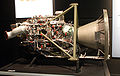 | |
| Solid propellant motors | ||
| Related articles | ||
Star (rocket stage)
View on GrokipediaIntroduction
Background and Naming
The Star family comprises a series of solid-propellant rocket motors originally developed by Thiokol Chemical Corporation, now produced by Northrop Grumman, primarily for use as upper stages and apogee kick motors in space launch vehicles and satellite systems.[1] These motors provide reliable, high-thrust propulsion for post-launch maneuvers, leveraging solid propellant technology to deliver precise velocity increments in vacuum environments.[1] The naming convention for the Star motors is straightforward and size-based, with the numerical designation indicating the approximate diameter of the motor casing in inches—for instance, the Star 37 features a casing around 37 inches in diameter.[1] This system allows for easy identification of the motor's scale and intended application within the family, which has evolved over decades to include configurations optimized for various mission profiles.[1] In general, Star motors serve critical roles in orbit insertion, velocity adjustments, and payload delivery for space missions, enabling satellites and probes to reach their operational orbits after separation from primary launch vehicles.[1] The family encompasses a broad size range, from smaller variants like the 13-inch diameter Star 13 to larger ones such as the 63-inch diameter Star 63, with total impulses varying from thousands of lbf-sec in compact models (e.g., approximately 280 lbf-sec for the Star 3) to millions of lbf-sec in high-performance units (e.g., over 2.8 million lbf-sec for the Star 63F).[1] This versatility supports applications across scientific, commercial, and military space endeavors.[1]Role in Space Missions
The Star family of solid rocket motors has played a pivotal role as upper stages in launch vehicles such as Delta and Titan, providing the necessary thrust for payload deployment into high-energy orbits following separation from lower stages. These motors have also served as apogee and perigee kick motors for satellites, enabling precise orbit circularization and adjustments after initial insertion, which is essential for long-term operational stability in geosynchronous or other specialized orbits. Additionally, Star motors function as kick stages for deep space probes, delivering the final velocity increments required for escape trajectories beyond Earth's influence.[1] Notable achievements of the Star series include enabling interstellar trajectories for landmark NASA probes, such as Pioneer 10 and 11, Voyager 1 and 2, and New Horizons, where they provided critical propulsion burns to achieve solar system escape velocities and facilitate extended exploration of the outer planets and beyond. The family has accumulated over 1,300 successful flights across NASA, U.S. military, and commercial missions, demonstrating exceptional reliability in diverse environments from low Earth orbit to interplanetary space. For instance, the motors powered the propulsion module for Voyager spacecraft, igniting shortly after Centaur separation to boost the probes toward Jupiter and Saturn encounters.[3][1][4][2] Integration examples highlight the Star family's versatility, including its use in the Payload Assist Module (PAM) systems for Delta-launched satellites, where variants like the Star 48 provide spin-stabilized boosts to geosynchronous transfer orbits; the Burner upper stages for Thor-derived vehicles, enhancing payload capacity for early military reconnaissance missions; and contributions to air-launched programs like Pegasus and ground-based ones like Minotaur, supporting small satellite constellations and responsive launches. This widespread adoption has significantly improved mission accessibility by offering low-cost, storable solid propulsion solutions that reduce complexity and preparation time for orbit raising and small payload delivery, thereby democratizing space access for scientific and commercial endeavors.[1][3]Development History
Origins at Thiokol
The Star family of solid-propellant rocket motors originated at Thiokol Chemical Corporation during the 1950s and 1960s, as the company expanded from chemical manufacturing into aerospace propulsion to meet growing demands for reliable upper-stage engines in the early space era.[5] Thiokol established dedicated facilities, including a major solid-fuel rocket plant in Utah in 1956, to support this shift amid the Cold War emphasis on missile and satellite technologies.[6] The development was driven by the need for dependable solid motors following the mixed successes of early programs like Vanguard, where upper-stage solid propellants proved essential but highlighted reliability challenges in achieving orbital insertion.[7] Key contracts from the U.S. Air Force and NASA fueled Thiokol's early efforts, positioning the Star series as a cornerstone for military and civilian space applications. In 1958, the Air Force awarded Thiokol one of the three primary contracts for the Minuteman intercontinental ballistic missile's solid-propellant stages, alongside Hercules and Aerojet, accelerating Thiokol's expertise in scalable, high-performance motors.[6] NASA, seeking robust propulsion for sounding rockets and satellite launches post-Vanguard, integrated Thiokol motors into programs like Nike-Tomahawk vehicles developed for atmospheric research.[7] These partnerships emphasized motors that could deliver precise thrust for upper stages, addressing the limitations of liquid-fueled alternatives in terms of storability and simplicity. The first major qualifications of the Star family marked Thiokol's breakthrough in the mid-1960s, with the Star 26 certified in 1964 for use in the Air Force's Thor-Burner upper stage and Sandia's Strypi IV vehicle, enabling controlled orbital insertions for reconnaissance payloads.[1] This was followed by the Star 37's qualification in 1965, also for the Thor-Burner II configuration, which powered multiple Delta and Thor launches to support early satellite deployments.[1] Early innovations included the adoption of composite propellants—combining ammonium perchlorate oxidizer with polymer binders for improved energy density and stability—alongside fiberglass-reinforced cases to reduce weight and manufacturing costs compared to steel alternatives.[8] These advancements, demonstrated in tests like the 156-inch fiberglass case motor in the early 1960s, laid the foundation for the Star family's versatility in space missions.[9]Evolution and Modern Use
During the 1980s and 1990s, the Star family saw expanded applications in key U.S. space programs, including the Star 48 motor integrated into the Payload Assist Module-D (PAM-D) for deploying commercial satellites from Space Shuttle missions, such as those on STS-5 through STS-61-B.[10] Similarly, variants like the Star 63 were employed as upper-stage kick motors in the Titan IV launch vehicle, supporting national security payloads through the program's operational peak.[1] These developments coincided with significant corporate restructuring: Thiokol merged with Morton-Norwich in 1982 to form Morton Thiokol, which spun off its aerospace division as Thiokol Corporation in 1989; by 1998, Thiokol rebranded as Cordant Technologies to reflect its diversified propulsion portfolio.[11] Cordant was acquired by Alcoa in 2000, briefly placing the Star production under aluminum giant oversight.[12] In 2001, Alliant Techsystems (ATK) acquired Thiokol Propulsion from Alcoa for $685 million, consolidating expertise in solid rocket motors and enabling further integration of Star variants into defense and space applications.[13] ATK merged with Orbital Sciences in 2015 to create Orbital ATK, enhancing launch vehicle capabilities that incorporated Star motors. The acquisition of Orbital ATK by Northrop Grumman was completed on June 6, 2018, renaming the propulsion unit Northrop Grumman Innovation Systems and positioning the Star family within a broader portfolio of advanced solid propulsion systems. Full integration of the acquired assets occurred through a sector reorganization effective January 1, 2020, which absorbed Innovation Systems into the Aeronautics Systems, Defense Systems, Mission Systems, and Space Systems sectors.[14] As of 2025, Northrop Grumman continues production of Star motors, notably the Star 48BV variant used as an optional fourth stage on the Minotaur IV launch vehicle, which achieved a successful NROL-174 mission for the National Reconnaissance Office in April 2025, demonstrating 100% reliability across recent Minotaur flights since 2010.[15] To enhance supply chain resilience, the company has conducted digital manufacturing tests, including model-based systems engineering for large solid rocket motors like those in the 2024 Solid Motor Annual Rocket Technology Demonstrator (SMART Demo), which streamlines design and production processes applicable to legacy families such as Star. Emerging adaptations explore Star-derived technologies for hypersonic applications, leveraging their proven high-thrust performance in rapid-response scenarios.[16] Certain variants, such as the Star 63, were phased out following the Titan IV program's decommissioning in 2005, ending its role in heavy-lift military launches after 36 successful missions.[1] Nonetheless, Northrop Grumman maintains active support for legacy Star missions through sustainment programs, ensuring reliability for stored motors and potential reactivation in government contracts.[17]Technical Design
Construction and Materials
The Star family of solid rocket motors features a modular construction that allows scalability across a range of sizes, with structural components designed for high pressure containment and thermal protection during operation. Early models, such as the STAR 5C, 5CB, and 5F, utilized steel cases, typically D6AC alloy, for robust pressure vessels in initial developments by Thiokol. Subsequent iterations transitioned to lighter materials for improved performance; for instance, aluminum cases were employed in the STAR 5A and 6B, while titanium alloys like 6Al-4V became standard in smaller to medium variants including the STAR 3, 5D, 8, 13B, 17, 17A, and 24, offering a balance of strength and reduced weight. Later evolutions incorporated advanced composites for further mass efficiency: fiberglass-epoxy in the STAR 20, Kevlar-epoxy in the STAR 31, and graphite-epoxy (e.g., IM7/55A filament-wound) in models like the STAR 4G, 9, 12GV, 15G, 30XL, 48GXV, and related GEM series, enabling significant weight reductions compared to metallic cases while maintaining structural integrity under operational loads.[1][18] Nozzle designs in the Star family vary between fixed and extendible configurations to accommodate different mission requirements, with many incorporating flexseal mechanisms for thrust vector control in vectorable variants. Fixed nozzles predominate in non-steerable models, featuring carbon-phenolic or graphite exit cones for thermal resistance, as seen in the STAR 20 and Orion 32. Extendible flexseal nozzles, derived from qualified fixed designs, enable deployment and vectoring (e.g., ±4° in the STAR 48BV), utilizing polyisoprene or natural rubber seals with steel shims and actuators for flexibility and sealing. Throats across the family commonly employ carbon-carbon composites, such as 3D or 4D carbon-carbon for high-temperature endurance, or graphite/pyrolytic graphite in earlier or smaller motors like the STAR 17 and 37FM; aft closure systems integrate these nozzles seamlessly with the case for vehicle-level assembly.[1][19][18] Ignition systems rely on pyrotechnic pyrogen assemblies, often head-end or forward-mounted for reliable propellant initiation, with redundant designs in models like the STAR 13A/B and consumable aluminum-cased variants in modern iterations; the STAR 27, for example, includes a 0.5 lbm pyrogen charge. Thermal insulation consists of elastomeric liners, primarily EPDM rubber formulations—such as silica-filled EPDM in the STAR 30C or aramid-filled EPDM in the GEM 60 and ASAS series—to shield the case from combustion heat and prevent burn-through, with Kevlar-filled options enhancing durability in high-stress environments. These components support modular assembly, facilitating customization and scalability across the family.[1][18][20] The Star motors exhibit scalable dimensions to suit diverse applications, with diameters ranging from approximately 3 inches in the smallest variants like the STAR 3 to 63 inches in larger ones such as the STAR 63D, lengths from about 11 inches (e.g., STAR 3) to 150 inches (e.g., STAR 30XL at 144.2 inches), and inert masses spanning less than 1 kg for the smallest models to around 500 kg in extended configurations like the STAR 48 series (e.g., 131 kg inert for STAR 48A).[1][18][21]Propellant and Performance
The Star family of solid rocket motors primarily employs composite solid propellants based on hydroxyl-terminated polybutadiene (HTPB) as the binder, combined with ammonium perchlorate (AP) as the oxidizer and aluminum (Al) powder as the fuel additive, with aluminum content typically ranging from 6% to 20% by weight.[1] Earlier variants utilized polybutadiene-based binders or carboxyl-terminated polybutadiene (CTPB), reflecting evolutionary improvements in propellant formulation for enhanced energy density and stability.[1] These high-solids-content formulations, often exceeding 85-89% solids loading, enable efficient combustion in space environments.[1] Propellant grain geometries within the Star family are designed to achieve tailored thrust profiles, commonly featuring finocyl or star-shaped configurations that provide neutral to progressive burning characteristics.[22] These geometries optimize the burning surface area evolution, supporting burn durations from less than 1 second to 120 seconds, depending on mission requirements.[1] The grains are cast to ensure high propellant utilization, approaching 95% efficiency through precise control of regression rates and minimal residue formation.[23] Performance metrics for the Star family include vacuum specific impulses ranging from approximately 190 to 310 seconds, reflecting the propellant's chemical efficiency and nozzle expansion ratios optimized for upper-stage applications.[1] Total impulses scale with motor size from about 10³ to 10⁷ N·s, enabling a broad spectrum of velocity increments for orbital insertion and maneuvering.[1] Thrust-to-weight ratios generally fall between 10 and 20, balancing high acceleration with structural integrity under operational loads.[1] Burn characteristics emphasize reliability in vacuum and zero-gravity conditions, with neutral burns for steady thrust and progressive profiles for rapid impulse delivery in short-duration firings.[1] Qualification involves extensive static fire testing to verify performance under simulated flight environments, contributing to the family's overall success rate of 99.79% across thousands of tests and flights.[1]Variants
Star 13
The Star 13 represents the smallest variant in the Star family of solid-propellant rocket motors, originally developed by Thiokol Chemical Corporation for precise, low-thrust applications in early satellite missions requiring fine orbit adjustments. With a diameter of 13 inches (0.33 m) and a length of approximately 60 inches (1.52 m), it was designed to provide controlled velocity increments for small payloads, enabling apogee raising and attitude control in resource-constrained environments.[24] Key specifications include a propellant mass ranging from 22 to 35 kg of solid fuel, delivering a total impulse between 6,438 and 11,807 kgf·s and a specific impulse (Isp) of 211 to 287 seconds. Average thrust levels fall in the range of approximately 3 to 5 kN, with burn times varying from 15 to 22 seconds depending on the configuration, making it suitable for micro-adjustments without excessive structural demands on the host spacecraft. The motor's total mass spans 31 to 47 kg across variants, balancing performance with minimal added weight for lightweight satellites.[1][25] The Star 13 encompasses several sub-variants, designated 13A through 13F, each optimized for specific mission profiles such as orbit insertion, inclination changes, or retrofiring. For instance, the 13A (TE-M-516) features a stretched case for enhanced propellant capacity, while the 13B (TE-M-763) incorporates a titanium alloy case for improved strength-to-weight ratio and was qualified in 1983. The 13D (TE-M-375) prioritized reliability for early geosynchronous attempts, and later iterations like 13E and 13F focused on higher impulse efficiency through refined nozzle designs. These adaptations allowed the motor to serve as an apogee kick motor (AKM) or perigee kick motor (PKM) in elliptical transfer orbits.[26][1][24] Notable applications include its debut flight in 1963 as the apogee motor for Syncom 1, NASA's pioneering geosynchronous communications satellite, where it successfully demonstrated solid-propellant orbit circularization despite the mission's ultimate communications failure due to other factors. In 1966, a Star 13A variant propelled Explorer 33 into lunar orbit as part of the Anchored Interplanetary Monitoring Platform program, enabling magnetospheric studies despite partial mission anomalies from launch vehicle performance. The motor's final major use came in 1992 aboard Sweden's Freja scientific satellite, where a Star 13A raised the apogee to 1,756 km for auroral and magnetosphere observations, marking its role in international collaborations.[27][28][29] A distinctive feature of the Star 13 is its lightweight case construction, often using filament-wound composites or titanium alloys to minimize mass for small payloads, which contributed to its efficiency in low-thrust scenarios. Though retired from production by the late 1990s following the acquisition of Thiokol's propulsion assets by Northrop Grumman, the Star 13 left a legacy in enabling precise maneuvers for over two decades of missions, influencing subsequent small-motor designs for microsatellite propulsion.[1][18]Star 17
The Star 17 is a compact solid-propellant rocket motor developed by Thiokol Chemical Corporation as part of the early Star family, featuring a diameter of 17.4 inches (0.44 m) and a length of approximately 27 inches (0.69 m).[30] It utilizes a titanium case and TP-H-3062 propellant, an 86% solids-loaded carboxy-terminated polybutadiene (CTPB) formulation that represented an early advancement in polybutadiene-based composites for improved performance and stability in vacuum environments.[30][18] The motor's design emphasized reliability for apogee maneuvers, with a propellant mass of 70 kg (153.5 lbm) and an 8-point star grain configuration to achieve consistent burn characteristics.[30] Key performance specifications for the Star 17 include a total impulse of 20,200 kgf⋅s (44,500 lbf⋅s), an effective specific impulse of 286 s, maximum thrust of 12.3 kN (2,775 lbf), average thrust of 11 kN (2,460 lbf), and a burn time of 18 seconds.[1][30] The nozzle incorporates a carbon throat insert and silica-phenolic exit cone with an expansion ratio of 53:1 to optimize vacuum operation.[30] A variant, the Star 17A (TE-M-521-5), extends the length to 38.6 inches (0.98 m) with added straight section for integration, increasing total mass to 126 kg (277 lbm) and propellant mass to 112 kg (247.5 lbm), while delivering a higher total impulse of 32,556 kgf⋅s (71,800 lbf⋅s), specific impulse of 287 s, maximum thrust of 17.3 kN (3,900 lbf), and burn time of 19 seconds.[18][31]| Parameter | Star 17 | Star 17A |
|---|---|---|
| Diameter (in/cm) | 17.4 / 44.2 | 17.5 / 44.5 |
| Length (in/cm) | 27.1 / 68.8 | 38.6 / 98.0 |
| Total Mass (kg/lbm) | 79 / 174.3 | 126 / 277 |
| Propellant Mass (kg/lbm) | 70 / 153.5 | 112 / 247.5 |
| Total Impulse (kgf⋅s / lbf⋅s) | 20,200 / 44,500 | 32,556 / 71,800 |
| Specific Impulse (s) | 286 | 287 |
| Average Thrust (kN / lbf) | 11 / 2,460 | 17 / 3,800 (approx.) |
| Burn Time (s) | 18 | 19 |
Star 20
The Star 20 is a family of small solid-propellant rocket motors developed by Thiokol Chemical Corporation, with the Altair-3A designation applied to certain configurations used in upper-stage roles. These motors feature a filament-wound fiberglass-epoxy composite case and were designed for high propellant mass fractions, typically around 0.91-0.93, enabling efficient performance in space environments.[1][33] Key specifications for the Star 20 include a diameter of 20 inches (0.51 m) and a length of approximately 82 inches (2.08 m) in baseline configurations, though variants exhibit some dimensional variations. Propellant mass ranges from 100-150 kg, delivering total impulses between 296 and 822 kN·s, with specific impulses of 234-292 seconds and average thrusts of about 5-7 kN.[34][35] Multiple configurations exist within the family, such as the TE-M-251 (Star 20 Spherical) with a total mass of 123 kg and the TE-M-640-3 (Star 20A) at 314 kg, featuring burn times of 40-80 seconds tailored to mission requirements.[1][34] In applications, the Star 20 served as a second-stage motor on refurbished Atlas E/F launch vehicles from the 1960s through the 1970s, providing velocity increments for small payloads. It was notably employed in the 1990 Atlas E/F launch of the Stacksat experiment, a stack of three microsatellites (POGS, SSR, and TEX) for technology demonstrations in low Earth orbit. Additionally, under the Altair-3A designation, it supported sounding rocket missions and suborbital tests, leveraging its modular design for rapid integration.[36][37] A distinctive aspect of the Star 20 lineage is its evolution from the Altair series, incorporating advancements in composite casing and propellant formulations that bridged early solid-propellant designs with performance characteristics approaching hybrid systems in efficiency and controllability. This adaptability made it suitable for both orbital insertion and suborbital trajectories, with configurations qualified for flight as early as the 1970s.[1][33]Star 24
The Star 24 is a solid-propellant apogee kick motor developed by Thiokol, qualified in 1973 as a mid-sized option for satellite orbit circularization and transfer maneuvers in the mid-1970s.[1] It marked an early adoption of carboxyl-terminated polybutadiene (CTPB) propellant, specifically the TP-H-3062 formulation with 86% solids loading, which provided higher energy density compared to prior polybutadiene-based binders and improved performance for geosynchronous missions.[18] This innovation enhanced specific impulse while maintaining compatibility with spin-stabilized upper stages, addressing the growing demand for reliable propulsion in Department of Defense (DoD) and scientific satellite programs.[38] Key specifications for the Star 24 include a diameter of 24 inches (0.61 m), an overall length of approximately 42 inches (1.07 m), and a propellant mass ranging from 200 to 220 kg depending on configuration.[1] The motor delivers a total impulse of 560 to 614 kN·s, with a vacuum specific impulse of 282 to 283 seconds and average thrust around 20 kN, enabling efficient delta-v additions for payloads up to several hundred kilograms.[39] Burn times are typically 28 to 30 seconds, supporting precise insertion into high-energy orbits without excessive structural demands on the host vehicle.[1]| Parameter | Value (Standard) | Value (Star 24C Variant) |
|---|---|---|
| Total Mass (kg) | 218 | 239 |
| Propellant Mass (kg) | 200 | 220 |
| Empty Mass (kg) | 18 | 19 |
| Total Impulse (kN·s) | 560 | 614 |
| Specific Impulse (s) | 283 | 282 |
| Average Thrust (kN) | 20 | 22 |
| Burn Time (s) | 30 | 28 |
Star 26
The Star 26, designated TE-M-442 by Thiokol, is a solid-propellant rocket motor developed as an upper stage for early space applications, with a diameter of 26 inches (66 cm) and a nominal length of 33 inches (84 cm).[1] It features a propellant mass of approximately 230-238 kg using the TP-H-3114 formulation, delivering a total impulse of 138,500-142,760 lbf-s (equivalent to about 616-635 kN-s), a specific impulse of 271-273 seconds, and an average thrust of 7,500-7,800 lbf (33-35 kN) over a burn time of 16.8-17.8 seconds.[1] Qualified in 1964, the motor was initially constructed with a D6AC steel case, emphasizing reliability for short-burn boost phases in sounding and target missions.[1] Variants of the Star 26 include the baseline Star 26 and lightweight iterations Star 26B (TE-M-442-1, qualified 1970) and Star 26C (TE-M-442-2), which incorporate titanium cases for reduced mass (total inert mass around 30-40 kg, yielding overall motor masses of 261-268 kg) and enhanced performance in high-spin environments up to 400 rpm.[1] These later models maintain similar performance envelopes but offer a propellant mass fraction of 0.86 and nozzle expansion ratios of 16.7:1 to 17.8:1, supporting adaptability for upper-stage roles without significant redesign.[1] The titanium-cased variants achieved at least 14 flights collectively, demonstrating the motor's evolution from steel-based prototypes to optimized configurations for dynamic mission profiles.[1] In applications, the Star 26 served as the upper stage for the Sandia National Laboratories' Strypi IV vehicle in the 1960s, providing precise velocity increments for re-entry and target testing.[1] It also powered the Burner 2A stage in the Thor-LV2F launch vehicle, enabling suborbital and orbital insertions for Air Force experiments during the late 1960s and early 1970s.[43] Additionally, the Star 26C variant was employed in the U.S. Army's Designated Optical Tracker (DOT) sounding rockets, which utilized a configuration of two Recruit boosters, a Castor first stage, and the Star 26C for atmospheric research and tracking demonstrations.[44] These roles highlighted the motor's versatility in short-duration, high-thrust scenarios for both developmental and operational sounding rocket programs.[1]Star 27
The Star 27 is a solid-propellant rocket motor developed by Thiokol (now Northrop Grumman) as an apogee kick stage, primarily utilized in satellite missions and launch vehicle upper stages from the late 1970s through the 2000s.[1] It features a nominal diameter of 27 inches and lengths ranging from 48 to 102 inches, depending on configuration, with propellant masses between 300 and 500 kg.[1] The motor delivers a total impulse of 88,000 to 97,000 kgf·s, a specific impulse of 287 to 288 seconds in vacuum, and an average thrust of approximately 20 kN.[45] Key variants include the baseline Star 27 (designation TE-M-616, qualified in 1975) and the Star 27H (TE-M-1157, qualified in 2007), with total masses of 331 to 361 kg and burn times of 30 to 50 seconds.[1] The Star 27H incorporates an HTPB-based propellant (TP-H-3340) for enhanced performance, achieving a longer burn duration of about 46 seconds and a higher nozzle expansion ratio of 81.7:1 compared to the baseline's 48.8:1.[1] In applications, the Star 27 served as the upper stage for Atlas E/F launches, including the Solwind satellite in 1979 and Geosat in 1985, providing final orbital insertion.[46] It also functioned as a kick motor for the Pegasus launch vehicle and powered apogee maneuvers for satellites such as the Communications Technology Satellite (CTS) in 1976, GOES weather series, and NASA's Interstellar Boundary Explorer (IBEX) mission in 2008 using the Star 27H variant.[1] These uses highlight its role in achieving geosynchronous or high-altitude orbits for scientific and commercial payloads.[1] A distinctive feature of the Star 27 is its standard use of forged titanium cases (6Al-4V alloy), which offer high strength-to-weight ratios and corrosion resistance for reliable performance in space environments.[45] The design emphasizes high reliability, with over 300 successful flights across the broader STAR family, and supports extended burns for geostationary transfer orbit (GTO) insertions in commercial satellites.[1] Propellant formulations like TP-H-313S enable tailored performance, including options for partial offloading to match mission delta-v requirements.[45]Star 30
The Star 30 is a family of solid-propellant rocket motors developed by Thiokol (now part of Northrop Grumman Innovation Systems) specifically for apogee kick applications in geosynchronous Earth orbit (GEO) satellite missions, with initial deployments beginning in the mid-1980s.[1] These motors provided the critical velocity increment needed to circularize transfer orbits into operational GEO slots for commercial and military communications satellites.[47] Optimized for reliability in vacuum environments, the Star 30 variants emphasized lightweight construction and precise burn profiles to minimize mass while delivering sufficient delta-V for payloads up to several thousand kilograms.[1] Key specifications for the Star 30 include a diameter of 30 inches (0.76 m), lengths ranging from 59 to 110 inches (1.50 to 2.79 m) across variants, propellant mass of 500-800 kg, total impulse between 136 and 182 thousand kgf-s (1.33-1.78 MN-s), specific impulse of 287-295 seconds, and average thrust of approximately 25 kN.[1] These parameters enabled efficient orbital insertion for GEO transfers, with the motors using hydroxyl-terminated polybutadiene (HTPB)-based solid propellants for consistent performance.[1]| Variant | Propellant Mass (kg) | Length (in) | Total Impulse (thousand kgf-s) | Isp (s) | Avg. Thrust (kN) | Burn Time (s) |
|---|---|---|---|---|---|---|
| Star 30BP | 505 | 59.3 | 149 | 295 | 26.6 | 55 |
| Star 30C | 591 | 58.8 | 170 | 289 | 32.5 | 52 |
| Star 30E | 631 | 66.3 | 185 | 293 | 35.2 | 52 |
Star 31
The Star 31 is a solid-propellant rocket motor developed by Thiokol (now Northrop Grumman), featuring a nominal diameter of 31 inches (0.79 m). It served dual roles in both civilian launch vehicles and military missile systems, with the early variant designated Antares 1A (also known as X-254). This motor provided upper-stage propulsion for small orbital insertions, emphasizing lightweight construction for enhanced performance in constrained payload environments.[1][51] The Antares 1A variant, qualified in the early 1960s, had a total mass of 1,225 kg, including approximately 931 kg of solid propellant, a length of about 3.38 m, and a burn time of 39 seconds. It delivered a vacuum thrust of 60.5 kN and a specific impulse of 256 seconds in vacuum, enabling reliable third-stage performance for lightweight vehicles. The standard Star 31, evolved in the late 1970s as the Antares III (TE-M-762), featured improved specifications including a diameter of 30.1 inches, length of 113 inches, total mass of 1,393 kg (with 1,286 kg propellant using TP-H-3340), average thrust of 82.3 kN (18,500 lbf), specific impulse of 293.5 seconds (effective), total impulse of 3,740 kN·s, and burn time of 45 seconds. Both variants utilized filament-wound cases, with the later incorporating a Kevlar-epoxy composite for reduced weight and higher structural efficiency compared to earlier steel designs.[1][51] In launch vehicle applications, the Star 31 powered upper stages for the Scout family during the 1960s and 1970s, including the Scout X and Scout X-1 configurations for NASA missions. The Antares 1A variant supported early Scout X flights starting in 1960, while the Antares III served as the third stage for later Scout vehicles, such as the 1979 MAGSAT satellite launch, achieving 17 successful flights with 100% reliability. Military adaptations included the Blue Scout series, where the Antares 1A functioned as the third stage in vehicles like Blue Scout I, II, and Junior for U.S. Navy target and reentry vehicle testing from the early 1960s. Additionally, the Antares 1A propelled the WASP (West Air Solid Propellant) anti-satellite missile system, a ground-launched interceptor developed for potential orbital target engagement in the 1960s. These military roles highlighted the motor's versatility in rapid-response scenarios, contrasting with its more limited civilian applications confined primarily to Scout orbital insertions. The Star 31's design prioritized simplicity and storability, making it suitable for both space access and defense needs, though production emphasized military target vehicles over broader commercial use.[1][51][52]Star 37
The Star 37 is a versatile family of solid-propellant rocket motors, nominally 37 inches (94 cm) in diameter, developed by Thiokol Chemical Corporation (later Orbital ATK and Northrop Grumman) for upper-stage applications in launch vehicles and spacecraft propulsion modules.[1] First flown in 1965 as the propulsion for the Thor-Burner II upper stage, it provided reliable performance for orbital insertion and trajectory adjustments, with lengths ranging from 66 to 130 inches (168-330 cm), propellant masses of 600-1,200 kg, vacuum specific impulses of 260-297 seconds, average thrusts of 33.6-51.1 kN, and total impulses up to approximately 3,060 kN·s.[53][54] Its design emphasized high mass fractions (around 0.92) and adaptability, enabling it to support a wide range of missions from Earth orbit to deep space.[1] Key variants include the Star 37FM, qualified in 1984 for apogee kick motor roles with a titanium case, fixed nozzle, propellant mass of about 1,066 kg, burn time of 63 seconds, and total impulse of 3,053 kN·s; the Star 37FMV, featuring a vectorable flexseal nozzle (±4°) for three-axis control in upper stages, with similar performance but enhanced maneuverability; the Star 37XFP, optimized for extended performance in orbit insertion using an enhanced propellant formulation and fixed contoured nozzle, delivering a total impulse of 2,537 kN·s over 66 seconds with a propellant mass of 884 kg; and the Star 37GV, incorporating a lightweight graphite-epoxy composite case for high-performance geostationary transfer orbits, demonstrated in 1998 with a burn time of 49 seconds and total impulse of 2,823 kN·s.[1] These variants typically feature front-end ignition, composite nozzles (carbon-carbon throats with carbon-phenolic exits), and masses between 622 and 1,152 kg, allowing customization for specific mission delta-V requirements.[1][2] The Star 37 saw extensive use in Thor-Delta launch vehicles starting from its debut, powering upper stages for scientific and military payloads, including the Burner II configuration for suborbital and orbital tests.[53] It played a pivotal role in historic deep-space exploration, serving as the third stage (Star 37E variant) for Pioneer 10 and 11 launches in 1972 and 1973, providing the velocity increment for Jupiter flybys and eventual escape from the solar system.[55] Similarly, in 1977, Star 37 motors in the Voyager 1 and 2 propulsion modules enabled their hyperbolic trajectories to the outer planets and beyond the heliosphere, marking the first human artifacts to achieve interstellar space. These applications highlighted the motor's unique capability with flexseal nozzles in later variants for precise attitude control during burns, ensuring reliable escape velocities exceeding 16 km/s relative to Earth.[1]Star 48
The Star 48 is a family of solid-propellant rocket motors developed by Thiokol Chemical Corporation (now part of Northrop Grumman Innovation Systems) for use as upper stages in space launch vehicles, primarily for geosynchronous orbit insertion and high-energy interplanetary trajectories.[1] With a nominal diameter of 48 inches (1.22 m), it features a lightweight titanium spherical case designed to withstand high pressures while minimizing mass, enabling efficient performance in vacuum environments.[2] The motor's propellant is typically a hydroxyl-terminated polybutadiene (HTPB)-based formulation with high solids loading, providing reliable ignition and controlled burn characteristics.[1] Key specifications for the Star 48 include a propellant mass ranging from approximately 2,000 to 2,430 kg (4,431 to 5,357 lbf), depending on the configuration and offloading for mission-specific velocity requirements.[1] Total impulse varies from 5,650 to 7,000 kN·s across variants, with vacuum specific impulse (Isp) around 286–294 seconds and average thrust of 65–70 kN (14,600–15,700 lbf).[1] Burn time is typically 84–87 seconds, and the overall length ranges from 80 to 148 inches (2.03 to 3.76 m) to accommodate short- or long-nozzle options for optimized expansion in space.[2] Gross mass, including inert components, is 2,000–3,000 kg, with the high propellant mass fraction (over 0.94) contributing to its efficiency for payload deployment.[56]| Variant | Length (in) | Propellant Mass (kg) | Total Impulse (kN·s) | Isp (s) | Average Thrust (kN) | Notes |
|---|---|---|---|---|---|---|
| Star 48A (Short) | 80 | ~2,430 | ~6,800 | 283 | 66 (approx.) | Early configuration for increased payload; short nozzle.[1] |
| Star 48A (Long) | 88–94.8 | ~2,430 | ~6,950 | 290 | 67 (approx.) | Extended for higher impulse; used in PAM integrations.[1] |
| Star 48B (Short) | 72 | ~2,010 | ~5,680 | 288 | 66 (approx.) | For Space Shuttle PAM-S; offloadable propellant.[2] |
| Star 48B (Long) | 80–94.8 | ~2,010 | ~5,800 | 294 | 66 (approx.) | Standard for Delta II PAM-D; spin-stabilized option.[1] |
| Star 48BV | 81.7 | ~2,010 | ~5,800 | 294 | 66 (approx.) | Features thrust vector control via flexseal nozzle; for precision maneuvers.[57] |