Hubbry Logo
StatueStatueMain
Open search
Statue
Community hub
Statue
logo
8 pages, 0 posts
0 subscribers
Be the first to start a discussion here.
Statue
Statue
from Wikipedia

Abraham Lincoln statue, Lincoln Memorial (1920)

A statue is a free-standing sculpture in which the realistic, full-length figures of persons or animals are carved or cast in a durable material such as wood, metal or stone. Typical statues are life-sized or close to life-size. A sculpture that represents persons or animals in full figure, but that is small enough to lift and carry is a statuette or figurine, whilst those that are more than twice life-size are regarded as colossal statues.[1]

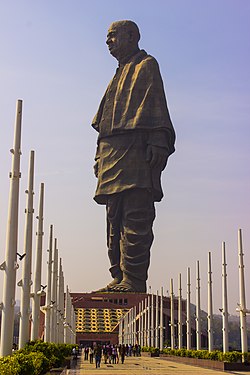
Statues have been produced in many cultures from prehistory to the present; the oldest-known statue dating to about 30,000 years ago. Statues represent many different people and animals, real and mythical. Many statues are placed in public places as public art. The world's tallest statue, Statue of Unity, is 182 metres (597 ft) tall and is located near the Narmada dam in Gujarat, India.

Colors

[edit]

Ancient statues often show the bare surface of the material of which they are made. For example, many people associate Greek classical art with white marble sculpture, but there is evidence that many statues were painted in bright colors.[2] Most of the color has weathered off over time; small remnants were removed during cleaning; in some cases small traces remained that could be identified.[2] A travelling exhibition of 20 coloured replicas of Greek and Roman works, alongside 35 original statues and reliefs, was held in Europe and the United States in 2008: Gods in Color: Painted Sculpture of Classical Antiquity.[3]

Details such as whether the paint was applied in one or two coats, how finely the pigments were ground or exactly which binding medium would have been used in each case—all elements that would affect the appearance of a finished piece—are not known.[2] Gisela Richter goes so far as to say of classical Greek sculpture, "All stone sculpture, whether limestone or marble, was painted, either wholly or in part."[4]

Medieval statues were also usually painted, with some still retaining their original pigments. The coloring of statues ceased during the Renaissance, since excavated classical sculptures, which had lost their coloring, became regarded as the best models.

Historical periods

[edit]

Prehistoric

[edit]
Urfa Man, a 1.80 metres (5 ft 11 in) of standstone developed in c. 9,000 BC and now housed at Şanlıurfa Museum

The Venus of Berekhat Ram, an anthropomorphic pebble found on the Golan Heights and dated to at least 230,000 years before present, is claimed to be the oldest known statuette. However, researchers are divided as to whether its shape is derived from natural erosion or was carved by an early human.[5] The Venus of Tan-Tan, a similar object of similar age found in Morocco, has also been claimed to be a statuette.[6]

The Löwenmensch figurine and the Venus of Hohle Fels, both from Germany, are the oldest confirmed statuettes in the world, dating to 35,000-40,000 years ago.[7][8][9]

The oldest known life-sized statue is Urfa Man found in Turkey which is dated to around 9,000 BC.

Antiquity

[edit]

Religion

[edit]
Hermes and the Infant Dionysus by Praxiteles, a 4th century BC statue now housed at the Archaeological Museum of Olympia in Greece

Throughout history, statues have been associated with cult images in many religious traditions, from Ancient Egypt, Ancient India, Ancient Greece, and Ancient Rome to the present. Egyptian statues showing kings as sphinxes have existed since the Old Kingdom, the oldest being for Djedefre (c. 2500 BC).[10] The oldest statue of a striding pharaoh dates from the reign of Senwosret I (c. 1950 BC) and is the Egyptian Museum, Cairo.[11] The Middle Kingdom of Egypt (starting around 2000 BC) witnessed the growth of block statues which then became the most popular form until the Ptolemaic period (c. 300 BC).[12]

The focal point of the cella or main interior space of a Roman or Greek temple was a statue of the deity it was dedicated to. In major temples these could be several times life-size. Other statues of deities might have subordinate positions along the side walls.

The oldest statue of a deity in Rome was the bronze statue of Ceres in 485 BC.[13][14] The oldest statue in Rome is now the statue of Diana on the Aventine.[15]

Politics

[edit]

For a successful Greek or Roman politician or businessman (who donated considerable sums to public projects for the honour), having a public statue, preferably in the local forum or the grounds of a temple was an important confirmation of status, and these sites filled up with statues on plinths (mostly smaller than those of their 19th century equivalents). Fragments in Rome of a bronze colossus of Constantine and the marble colossus of Constantine show the enormous scale of some imperial statues; other examples are recorded, notably one of Nero.

The wonders of the world include several statues from antiquity, with the Colossus of Rhodes and the Statue of Zeus at Olympia among the Seven Wonders of the Ancient World.

Middle Ages

[edit]

While sculpture generally flourished in European Medieval art, the single statue was not one of the most common types, except for figures of the Virgin Mary, usually with Child, and the corpus or body of Christ on crucifixes. Both of these appeared in all size up to life-size, and by the late Middle Ages many churches, even in villages, had a crucifixion group around a rood cross. The Gero Cross in Cologne is both one of the earliest and finest large figures of the crucified Christ. As yet, full-size standing statues of saints and rulers were uncommon, but tomb effigies, generally lying down, were very common for the wealthy from about the 14th century, having spread downwards from royal tombs in the centuries before.

While Byzantine art flourished in various forms, sculpture and statue making witnessed a general decline; although statues of emperors continued to appear.[16] An example was the statue of Justinian (6th century) which stood in the square across from the Hagia Sophia until the fall of Constantinople in the 15th century.[16] Part of the decline in statue making in the Byzantine period can be attributed to the mistrust the Church placed in the art form, given that it viewed sculpture in general as a method for making and worshiping idols.[16] While making statues was not subject to a general ban, it was hardly encouraged in this period.[16] Justinian was one of the last Emperors to have a full-size statue made, and secular statues of any size became virtually non-existent after iconoclasm; and the artistic skill for making statues was lost in the process.

Renaissance

[edit]
Michelangelo's David, 1504, housed at The Accademia Gallery in Florence, Italy

Italian Renaissance sculpture rightly regarded the standing statue as the key form of Roman art, and there was a great revival of statues of both religious and secular figures, to which most of the leading figures contributed, led by Donatello and Michelangelo. The equestrian statue, a great technical challenge, was mastered again, and gradually statue groups.

These trends intensified in Baroque art, when every ruler wanted to have statues made of themself, and Catholic churches filled with crowds of statues of saints, although after the Protestant Reformation religious sculpture largely disappeared from Reformed and Anglican churches, though the Evangelical Lutheran churches retained them.[17] In England, churches instead were filled with increasing elaborate tomb monuments, for which the ultimate models were continental extravagances such as the Papal tombs in Rome, those of the Doges of Venice, or the French royal family.

In the late 18th and 19th century there was a growth in public open air statues of public figures on plinths. As well as monarches, politicians, generals, landowners, and eventually artists and writers were commemorated. World War I saw the war memorial, previously uncommon, become very widespread, and these were often statues of generic soldiers.

Modern era

[edit]
The chancel of Grace Evangelical Lutheran Church in Milwaukee, Wisconsin contains a prominent statue of Jesus (2022).

Starting with the work of Maillol around 1900, the human figures embodied in statues began to move away from the various schools of realism that had been followed for thousands of years. The Futurist and Cubist schools took this metamorphism even further until statues, often still nominally representing humans, had lost all but the most rudimentary relationship to the human form. By the 1920s and 1930s statues began to appear that were completely abstract in design and execution.[18]

The notion that the position of the hooves of horses in equestrian statues indicated the rider's cause of death has been disproved.[19][20]

They are commonly present in religious spaces. Statues are feature of the churches of certain Western Christian denominations, particularly those of the Roman Catholic and Evangelical Lutheran traditions.[17][21] The temples of Indic religions, including those of Hinduism, Buddhism and Jainism often contain statues as a focal point of worship (cf. murti).[22]

[edit]

See also

[edit]

References

[edit]
[edit]
Revisions and contributorsEdit on WikipediaRead on Wikipedia
from Grokipedia
A statue is a freestanding three-dimensional sculpture depicting realistic full-length figures of humans, animals, or non-representational forms, carved, cast, or modeled from durable materials such as stone, metal, wood, or ivory. Originating in the Upper Paleolithic period, statues represent one of humanity's earliest artistic expressions, with ivory and mammoth bone figurines dating to around 35,000 BCE exemplifying rudimentary yet deliberate human representation. Subsequent civilizations advanced statue-making techniques, employing materials like gypsum, limestone, and bronze for monumental works that served religious, commemorative, and political purposes, as seen in Early Dynastic Mesopotamian sculptures from 2900–2350 BCE featuring inlaid eyes and fringed attire. These artifacts not only demonstrate evolving craftsmanship but also cultural priorities, such as divine embodiment in temple settings or heroic commemoration in public spaces, enduring as tangible records of societal values despite periodic destruction through conquest or iconoclasm.

Definition and Classification

Definition and Etymology

A statue is a three-dimensional sculptural work, typically free-standing and carved, modeled, cast, or assembled to represent a human figure, animal, deity, or symbolic form, designed for viewing from multiple angles. Unlike reliefs, which project from a background surface, or abstract sculptures that may lack representational intent, statues emphasize naturalistic or idealized figurative depiction, often life-sized or larger, to convey presence, narrative, or commemoration. While all statues qualify as sculptures under the broader category of three-dimensional art, the term statue specifically denotes figurative pieces evoking a sense of solidity and permanence, distinguishing them from non-figurative or partial forms like busts or abstract constructs. The English word "statue" entered usage in the late 14th century, borrowed from "estatue" or "statue," which itself derived from Latin "statua," a feminine denoting an or figure set up in a place. This Latin term stems from the "statuere," meaning "to set up," "to erect," or "to cause to stand," reflecting the act of positioning a sculpted form as a fixed, enduring object, often for votive, commemorative, or honorific purposes. The root traces further to "status," implying a stationary state or position, underscoring the statue's inherent quality of immobility and stability in contrast to dynamic artistic media. In ancient Roman context, "statua" frequently referred to portrait-like figures of ancestors or leaders placed in homes or forums, evolving over time to encompass broader sculptural traditions across cultures.

Types and Forms

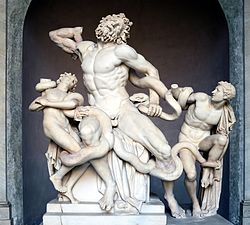
![Michelangelo's David - right view 2.jpg][float-right] Statues, as a subset of sculpture, are freestanding three-dimensional works designed for viewing from all sides, distinguishing them from reliefs attached to a surface. This form allows for full spatial engagement, with the figure detached from any background plane. Common morphological types include single-figure representations, busts, equestrian depictions, and multi-figure groups. Single full-length figures constitute the most prevalent type, often portrayed in standing, seated, or dynamic poses to convey movement or stability. Standing statues, such as the Archaic Greek kouroi (youthful male figures) from approximately 600–500 BCE, exemplify rigid frontal poses with one foot advanced, reflecting early conventions in Egyptian and Near Eastern art adapted by Greek sculptors. Seated figures, prevalent in ancient Egyptian and Mesopotamian traditions, typically depict rulers or deities in authoritative postures, as seen in pharaonic throne statues from the Old Kingdom (c. 2686–2181 BCE). Michelangelo's David (1501–1504), a 5.17-meter marble statue, represents Renaissance revival of contrapposto—a naturalistic weight shift on one leg—for enhanced anatomical realism and dynamism. Busts focus on the head and shoulders, emphasizing portraiture and character study, with origins traceable to Roman funerary and commemorative practices from the 1st century BCE. These truncated forms prioritize facial expression and upper anatomy, often life-sized for intimate display, differing from full figures by omitting the body to highlight individuality. Equestrian statues portray a rider atop a horse, symbolizing military prowess and leadership; the form emerged prominently in antiquity, with the bronze Equestrian Sculpture of Marcus Aurelius (c. 176 CE) surviving as a rare ancient example, standing over life-size at 3.24 meters. Multi-figure groups, or tableaux, integrate multiple statues into narrative scenes, as in Hellenistic works like the Laocoön and His Sons (c. 160 BCE–20 BCE), where intertwined bodies heighten emotional intensity and spatial complexity. Monumental scale amplifies these forms for public impact, with colossal examples like the Great Sphinx of Giza (c. 2558–2532 BCE) measuring 73 meters long, serving protective or symbolic roles. Modern developments introduced abstract and kinetic forms, departing from figurative traditions; kinetic statues incorporate movement via mechanisms, as pioneered in 20th-century works, while abstract statues prioritize geometric shapes over representation. However, traditional figurative types persist in commemorative and religious contexts.

Materials and Techniques

Primary Materials

![Michelangelo's_David_-_right_view_2.jpg][float-right] Stone has been a predominant material for statues due to its durability and availability, with types such as limestone, marble, sandstone, granite, and alabaster employed across civilizations. Limestone, soft and easily carved, was extensively used in ancient Egyptian sculpture for monumental figures, often painted after completion. Marble, noted for its fine grain and ability to take a polish, emerged as a preferred medium in classical Greek sculpture from around the 6th century BCE, sourced from quarries like those on Paros and Naxos, enabling detailed anatomical rendering as seen in works like the Venus de Milo (c. 130–100 BCE). ![AurigaDelfi.jpg][center] Metals, particularly bronze—an alloy of copper and tin—provided advantages in tensile strength and the capacity for casting intricate forms via the lost-wax technique, which originated in the Bronze Age and was refined by Greek artisans by the 5th century BCE. This method allowed for hollow statues that could capture dynamic poses, as exemplified by the Charioteer of Delphi (c. 474 BCE), though many originals were melted down, leaving Roman marble copies. Other metals like gold and silver were used for smaller, precious votive figures in ancient cultures, often over wood cores. Wood served as a primary material in regions with abundant timber but scarce stone, such as parts of ancient Egypt and Polynesia, where it was carved and sometimes gilded or draped in cloth for acrolithic statues combining wood bodies with marble extremities. Its susceptibility to decay limited survival, but examples include Egyptian wooden statues coated in plaster and painted. Clay, fired into terracotta for permanence, was a versatile early material for both small votive statuettes and larger architectural elements, prevalent from Minoan times onward due to its moldability before firing. In Etruscan and early Roman sculpture, terracotta enabled detailed polychrome figures before the shift to bronze. Other materials like ivory for small-scale works and plaster for models or temporary forms supplemented these primaries, though less common for enduring statues.

Sculptural Techniques

Sculptors employ subtractive and additive methods to create statues, with carving representing the primary subtractive technique and modeling, assembly, and casting as additive approaches. Carving involves removing material from a solid block, such as stone or wood, using tools like chisels, mallets, and rasps to reveal the form within, a process that demands precise control to avoid irreparable errors once material is excised. This technique has been used since prehistoric times for durable stone figures, as evidenced by ancient Egyptian and Greek works where artisans progressively refined monolithic blocks into freestanding statues. In modeling, sculptors build forms additively from malleable materials like clay or wax, often supported by an armature of wire or wood to maintain structure during manipulation. This preparatory stage allows for iterative adjustments and undercutting, producing a positive form that can be translated into permanent media via casting; for instance, wax models were historically smoothed and detailed before encasement. Assembly extends additive principles by joining disparate elements, such as welding metal components or fastening wood segments, enabling complex, kinetic, or large-scale compositions beyond single-block limitations. Casting, particularly lost-wax for bronze statues, transforms modeled originals into metal through indirect reproduction: a wax positive is coated in refractory material to form a mold, heated to melt out the wax (leaving a cavity), then filled with molten alloy poured at temperatures exceeding 1,000°C (1,832°F). Ancient Greeks adapted hollow lost-wax methods around the 5th century BC to produce life-sized or colossal hollow figures, reducing material use and weight while allowing internal armatures for stability; the process included chasing—post-casting refinement with chisels and abrasives—to enhance surface details. Variations like solid or indirect lost-wax persisted into modern eras, with foundries employing ceramic shells for precision in replicating fine textures, as seen in 19th-century works by Auguste Rodin. These techniques prioritize material properties—stone's compressive strength for carving, bronze's tensile durability for casting—ensuring statues withstand environmental stresses over millennia.

Polychromy and Surface Treatments

Polychromy refers to the use of multiple colors on sculptures, a practice integral to ancient statuary from Egypt, Mesopotamia, Greece, and Rome, where statues were painted, gilded, or inlaid to enhance realism and symbolic meaning. Evidence from microscopic analysis, ultraviolet and infrared photography, and surviving paint traces confirms that marble and other stone sculptures, now often seen as white due to weathering, cleaning, and burial, originally featured vibrant pigments applied selectively to elements like hair, eyes, lips, and drapery, or comprehensively across surfaces. Inorganic and organic pigments were mixed with binders such as proteins, waxes, or plant gums for adhesion, with techniques varying by period: stylized patterns in Archaic Greek works evolving to naturalistic shading in Classical and Hellenistic phases. Literary sources like Pliny the Elder and Vitruvius describe these methods, corroborated by Roman wall paintings depicting colored statues and archeometric studies revealing over 300 paint traces on artifacts like sarcophagi. In Roman contexts, polychromy extended to gilding and silvering, sometimes fully obscuring marble, while colored marbles from imperial quarries added inherent hues; selective applications highlighted attributes for lifelike effect. Reconstructions since the 19th century, aided by digital imaging, restore these colors, challenging the Renaissance-era monochromatic ideal that prioritized bare marble's translucency. Surface treatments beyond pigmentation include polishing, patination, and gilding to achieve texture, protection, and aesthetic enhancement. For stone statues, smoothing via rasps, rifflers, or abrasives like sand and emery precedes polishing for a glossy finish, often sealed with wax to prevent staining and highlight natural veining. Metal statues, particularly bronzes, undergo patination—a controlled oxidation process using chemicals to form a stable patina layer, typically green or brown, that protects against further corrosion while imparting color; natural patina develops over exposure to air and moisture. Gilding applies thin or silver leaf via adhesives like protein-based glues or, historically, mercury amalgam for fire-gilding, creating a luminous surface on , stone, or metal substrates; this technique appears in ancient Roman sculptures and persists in traditional methods using bole clay for burnishing. Inlays of , semi-precious stones, or metals for eyes and jewelry added contrast and detail, as seen in Greek chryselephantine statues combining and . Modern treatments for outdoor bronzes avoid aggressive methods like , favoring gentle to preserve integrity. These processes not only beautify but also mitigate environmental degradation, with choices reflecting both artistic intent and material durability.

Historical Development

Prehistoric and Neolithic Eras

The earliest known statues emerged during the Upper Paleolithic, associated with the Aurignacian culture approximately 40,000 to 35,000 years ago. These small-scale figurines, often carved from ivory or stone, represent some of the first evidence of representational sculpture by anatomically modern humans. The Löwenmensch, or Lion Man, figurine, standing about 31 cm tall and crafted from mammoth tusk ivory, depicts a hybrid humanoid-lion form and was unearthed in the Hohlenstein-Stadel cave in southwestern Germany. Techniques involved meticulous carving with stone tools to shape the material, evidencing advanced skill for the period. Contemporaneous with the Löwenmensch is the Venus of Hohle Fels, a 6 cm tall ivory carving of a female figure from the Swabian Jura region in Germany, also dating to around 40,000 years ago. This artifact, one of the earliest undisputed depictions of a human being, features exaggerated sexual characteristics and was likely produced using similar ivory-working methods. Later Upper Paleolithic examples from the Gravettian culture, such as the Venus of Dolní Věstonice from Moravia, Czech Republic, dated 29,000 to 25,000 years ago, demonstrate innovation in materials with the use of fired clay—the earliest known ceramic sculptures. This 11 cm figurine was modeled from clay and subjected to low-temperature firing, indicating experimentation with pyrotechnology. The Venus of Willendorf, a 11 cm limestone statuette coated in red ochre from Austria, dated approximately 28,000 to 25,000 years ago, exemplifies continued emphasis on stylized female forms with prominent breasts, hips, and abdomen, carved from oolitic limestone using flint tools. During the Neolithic period, coinciding with the advent of agriculture around 10,000 years ago, statues increased in scale and complexity. The Ain Ghazal statues from Jordan, dating to circa 7000 BC, represent some of the largest prehistoric human figures, with heights up to 1 meter. Constructed by layering lime plaster over bundled reeds and twine for structural support, these anthropomorphic forms included modeled facial features, inset bitumen eyes (sometimes with shell pupils), and were often found in fragmented busts or full figures buried beneath house foundations. Discovered in the Pre-Pottery Neolithic B settlement of 'Ain Ghazal, their production required specialized knowledge of plaster calcination and molding, suggesting communal ritual or symbolic functions, though interpretive claims remain speculative without direct textual evidence. ![Ain Ghazal statues, c. 7000 BC, found in Ain Ghazal, Jordan][center] These Neolithic examples mark a shift toward more monumental and possibly public-facing sculptures, contrasting with the portable, intimate Paleolithic figurines, potentially reflecting societal changes from hunter-gatherer mobility to sedentary communities.

Ancient Civilizations

In ancient Mesopotamia, particularly among the Sumerians from around 3000 BC, sculptors produced small-scale votive statues depicting worshipers in rigid prayer poses, serving as proxies for devotees in temple settings to ensure perpetual offerings to deities. These figures, often carved from gypsum alabaster or limestone, featured exaggerated large eyes symbolizing unwavering attention to the gods, as seen in the Tell Asmar hoard of approximately 12 statues dating to circa 2700–2500 BC, recovered from a temple at Eshnunna dedicated to the god Abu. Later Mesopotamian traditions, including Akkadian and Assyrian, emphasized royal and protective figures, though many monumental works took the form of reliefs rather than fully three-dimensional statues; examples include inscribed diorite statues of Gudea, ruler of Lagash circa 2144–2124 BC, portraying him in seated or standing devotional attitudes. Ancient Egyptian statuary emphasized permanence and divine kingship, with Old Kingdom examples from the Fourth Dynasty (c. 2613–2494 BC) including colossal limestone figures like the paired statues of Pharaoh Snefru excavated at Dahshur, marking early mastery of large-scale carving for tomb and temple contexts. These works adhered to canonical frontal poses with left foot advanced, symbolic proportions prioritizing metaphysical order over anatomical realism, as in the Great Sphinx at Giza, a hybrid lion-pharaoh guardian carved from a single limestone outcrop during Khafre's reign. Smaller tomb statues, intended to house the ka spirit, proliferated in the Middle Kingdom (c. 2055–1650 BC), often in hard stones like diorite, maintaining stylistic continuity for over two millennia to affirm eternal life and cosmic harmony. In the Aegean and classical Greek world, Archaic period (c. 800–480 BC) statues such as kouroi (youthful male figures) and korai (maidens) emulated Egyptian rigid stances with one foot forward and arms at sides, numbering in the thousands as votive dedications or grave markers, crafted from marble or limestone with stylized anatomy reflecting early naturalistic aspirations. The Classical era (c. 480–323 BC) advanced toward anatomical precision and contrapposto weight shift, exemplified by bronze charioteer statues like the Charioteer of Delphi from 474 BC, celebrating athletic and religious victories with individualized features and dynamic drapery. This evolution prioritized human proportion and movement, influencing subsequent Western sculpture while rooted in civic and heroic commemoration.

Medieval Period

In medieval Europe, following the collapse of the Roman Empire around 476 AD, large-scale statue production diminished significantly during the Early Middle Ages, with surviving works limited to small-scale ivory carvings, reliquary figures, and metalwork often produced in monastic workshops for liturgical use. A revival began in the Carolingian era (c. 751–888 AD), influenced by classical models, but architectural sculpture dominated from the Romanesque period (c. 1000–1150 AD), featuring robust, stylized stone figures integrated into church portals, columns, and capitals to convey biblical narratives and saintly exemplars, as seen in the tympanum reliefs at the Abbey Church of Vézelay (c. 1120–1132 AD). These served didactic purposes, educating illiterate congregations through visible hierarchies of Christ, apostles, and monsters symbolizing sin. Wooden polychrome statues, such as crucifixes and Virgin Mary figures, proliferated indoors for altarpieces and processional use, with techniques emphasizing expressive gestures over anatomical precision. The Gothic style (c. 1150–1400 AD) marked a shift toward taller, more slender figures with flowing drapery and increased naturalism, drawing partial inspiration from Byzantine prototypes, evident in the portal jamb statues at Chartres Cathedral (c. 1145–1220 AD), where over 200 figures depict kings, queens, and prophets in elongated proportions to harmonize with soaring architecture. Polychromy—painting statues in vivid colors with gilding—enhanced realism and symbolic potency, though much has faded or been stripped, altering modern perceptions. In the Byzantine Empire, the Iconoclastic Controversy (726–843 AD) mandated destruction of religious images, including statues, to combat perceived idolatry, severely curtailing three-dimensional sculpture thereafter; surviving works favored flat icons and low-relief ivories over freestanding statues. Islamic territories, expanding from the 7th century AD, adhered to aniconism in religious art to prevent idolatry, resulting in negligible production of figurative statues; instead, abstract geometric and vegetal motifs adorned mosques, with rare secular figurative reliefs in palaces like those at Mshatta (c. 744 AD) limited to flat carving rather than rounded forms. In contrast, East and South Asian traditions sustained monumental statue-making tied to Buddhism, Hinduism, and Jainism. In Japan, the Nara Daibutsu—a cast-bronze seated Buddha completed in 752 AD at Todai-ji Temple, measuring approximately 15 meters tall—was commissioned by Emperor Shomu to invoke imperial protection and Buddhist cosmology. In India, the Gommateshvara Bahubali at Shravanabelagola (carved c. 981 AD) exemplifies Jain ascetic monumentalism, a 17-meter granite monolith depicting the saint in meditative stillness, annually anointed in a ritual underscoring non-violence. Chinese Tang dynasty (618–907 AD) workshops produced gilt-bronze bodhisattvas with serene expressions and fluid robes, reflecting syncretic influences from Central Asia. These non-European traditions prioritized spiritual embodiment over narrative integration with architecture, often employing lost-wax casting for metals or direct carving for stone to achieve durable, votive forms.

Renaissance and Early Modern

The Renaissance initiated a profound revival of classical sculpture in Italy during the 15th and 16th centuries, driven by humanist interest in ancient Greco-Roman models and advancements in anatomical precision and perspective. Sculptors shifted from medieval rigidity toward naturalistic forms, employing techniques like contrapposto to convey weight shift and dynamic balance in freestanding figures. This period's patronage, primarily from Florentine republics and Medici families, funded works blending biblical themes with civic symbolism, emphasizing human potential and proportion derived from empirical study of the body and antiquities. Donatello's bronze David, cast circa 1440 and standing about 158 cm tall, represented a breakthrough as the first life-sized, freestanding nude male statue produced in over a millennium, depicting the biblical hero in a relaxed contrapposto pose with Goliath's head at his feet to evoke Florentine triumph over tyranny. Commissioned likely for the Medici palace, its slender, eroticized form and innovative lost-wax casting technique highlighted bronze's potential for detailed surface texture and patina, influencing subsequent secular and allegorical statuary. Michelangelo Buonarroti elevated these ideals in his marble David, carved from 1501 to 1504 from a discarded block of Carrara marble measuring over 5 meters in height and weighing approximately 6 tons, transforming it into a hyper-realistic figure with tensed musculature and intense gaze symbolizing vigilant republican defense against Medici rule. Originally slated for a Florence Cathedral buttress, its relocation to the Piazza della Signoria in 1504 underscored statues' role in public political discourse, achieved through Michelangelo's subtractive chiseling that revealed underlying veins, sinews, and foreshortened proportions for multi-viewpoint impact. Transitioning into the Early Modern era, Baroque sculpture from the early 17th to mid-18th centuries emphasized theatricality, motion, and emotional depth, responding to Counter-Reformation demands for persuasive religious imagery that engaged viewers sensorially. Gian Lorenzo Bernini, active from 1618 onward, pioneered this style through integrated compositions merging sculpture, architecture, and illusionistic effects, as in his marble David of 1623–1624, a 170 cm figure captured mid-action with twisted torso and straining limbs to convey imminent combat, departing from Renaissance stasis toward narrative immediacy and psychological tension. Bernini's (1647–1652), a 350 cm in with gilded rays and hidden sources, dramatized mystical union through Teresa's contorted ecstasy and angel's piercing , sited in Rome's Cornaro to immerse patrons in the event's fervor and exemplify Bernini's holistic approach to and in papal commissions. This period saw expanded use of for flowing and bronzes for equestrian monuments, like Bernini's unrealized designs, with statues adorning churches, palaces, and gardens to propagate absolutist and Catholic amid Europe's religious wars.

Industrial and 19th-Century Developments

The Industrial Revolution facilitated advancements in sculpture by enabling mass production of materials and the establishment of extensive manufacturing facilities, which increased the scale and quantity of statues produced. New metal alloys and industrial processes, including refined bronze casting techniques, allowed for more durable and replicable monumental works. By the mid-19th century, mechanical casting methods enabled the mass production of bronze sculptures, broadening access to such art forms beyond elite patronage. In the 19th century, demand surged for bronze statues commemorating wartime heroes and political leaders, driven by nationalistic sentiments and urban development, with specialized foundries adopting sand casting and lost-wax methods for larger pieces. The lost-wax casting process, refined through industrial specialization, permitted intricate details in works by sculptors like Auguste Rodin, who produced over 200 bronze pieces using this technique starting in the 1880s. Monumental examples, such as the Statue of Liberty unveiled in 1886, integrated industrial engineering like iron pylon frameworks designed by Gustave Eiffel to support its 93-meter height, demonstrating how manufacturing innovations scaled sculptures to unprecedented sizes. This era also saw stylistic diversification and rapid dissemination of forms, from neoclassical public monuments to realist figures reflecting industrial society's complexities, with cities erecting statues of statesmen and cultural icons in growing numbers. Foundries like those in Europe and emerging American operations, such as Roman Bronze Works by 1900, focused exclusively on lost-wax for high-fidelity reproductions, underscoring the period's emphasis on technological precision over traditional handcrafting.

20th and 21st Centuries

The 20th century marked a divergence in statue production, with Western artistic circles increasingly favoring abstraction and non-figurative forms amid modernist influences, yet figurative statues endured in public commemorative roles, particularly in non-Western contexts and under regimes emphasizing realism. Early in the century, sculptors like Auguste Rodin extended 19th-century naturalism into emotive, textured bronze figures, such as The Thinker (cast 1904), which captured introspective human forms through fragmented surfaces and dynamic poses, influencing subsequent generations. Meanwhile, in the Soviet Union, socialist realism mandated monumental figurative statues glorifying leaders and workers, exemplified by Vera Mukhina's Worker and Kolkhoz Woman (1937), a 24-meter stainless steel pair symbolizing industrial triumph, produced via sheet metal welding for durability and scale. These contrasts highlight how political demands sustained representational sculpture against avant-garde trends toward dematerialization. Post-World War II developments emphasized industrial materials and techniques, with welding and assemblage enabling abstract yet occasionally figurative constructs, as in David Smith's steel works exploring human-machine hybrids. Public monuments often retained anthropomorphic realism for accessibility, such as the 30-meter Motherland Calls in Volgador, USSR (1967), a concrete and steel figure rallying national memory, or the 28-meter Christ the Redeemer in Rio de Janeiro (dedicated 1931, but iconic through mid-century), reinforced concrete clad in soapstone to withstand tropical climates. In Asia, traditional figurative traditions persisted with innovations, like Japan's Sendai Daikannon (1994), a 100-meter animated goddess statue incorporating elevators and lights, blending religious iconography with engineering for tourism. Empirical data from production records show bronze and concrete dominating durable outdoor statues, with over 70% of mid-century public commissions in Europe and the Americas favoring figurative designs for civic legibility despite abstract critiques. ![Statue of Unity, the world's tallest statue at 182 meters, depicting Sardar Vallabhbhai Patel, inaugurated October 31, 2018, in Gujarat, India.][float-right] Entering the 21st century, statue-making integrated digital technologies like 3D scanning and printing for precise replication and scaling, alongside composites for lighter, weather-resistant structures, enabling unprecedented heights without proportional instability. The Statue of Unity (2018), at 182 meters in Gujarat, India—constructed from 210,000 cubic meters of concrete, 6,500 tons of steel, and bronze cladding—exemplifies nationalistic mega-projects, commemorating independence leader Sardar Patel with laser-scanned facial details for historical fidelity. Similarly, China's Spring Temple Buddha (2008), 153 meters tall in concrete and steel, reflects economic-driven expansions of religious statuary, with internal voids reducing material use by 40% compared to solid forms. These engineering feats, verified by structural analyses showing wind-resistant designs via finite element modeling, prioritize spectacle and symbolism over artistic innovation, countering Western abstraction's decline in favor of globally marketable figurative icons. Controversial claims of cultural homogenization overlook causal factors like state funding enabling such scales, absent in subsidy-scarce art markets.

Functions and Cultural Roles

Religious and Spiritual Significance

Statues have served as central elements in religious practices across numerous traditions, functioning as representations of deities, saints, or enlightened beings that facilitate worship, meditation, and ritual interaction. In ancient polytheistic societies, such as those of Greece and Rome, cult statues were often regarded as loci of divine presence, where gods could manifest or be accessed through offerings and ceremonies, though not equated with the deities themselves but as conduits for the numinous. Daily rituals, including bathing, clothing, and feeding these images, underscored their role in maintaining cosmic order and human-divine reciprocity. In Dharmic religions, statues embody spiritual principles through consecration rites that invoke divine or enlightened essence. Hindu murtis, physical forms of deities like Vishnu or Shiva, undergo prana pratishtha, a ritual installing life force to transform inert material into a temporary abode of the divine, enabling devotees to perform puja offerings directly to the presence invoked therein. Similarly, in Buddhism, statues of the Buddha or bodhisattvas act as focal points for mindfulness and ethical reflection rather than objects of literal worship, reminding practitioners of the historical Buddha's teachings and virtues to inspire personal cultivation of wisdom and compassion. Jain tirthankara images, such as the 57-foot Gommateshvara Bahubali erected between 978 and 993 AD, symbolize liberation from karma, drawing pilgrims for mahamastakabhisheka anointings every 12 years to affirm ascetic ideals. Within Christianity, the use of statues and icons varies significantly by denomination, rooted in theological debates over the Second Council of Nicaea (787 AD), which affirmed veneration (proskynesis) of images as honor passed to the prototype—Christ, Mary, or saints—without adoration reserved for God alone, grounded in the Incarnation's validation of material representation. Catholic and Orthodox traditions employ statues in liturgy and devotion to evoke spiritual realities, as seen in medieval reliquary figures or Baroque altarpieces, while Protestant reformers, citing Exodus 20:4-5 against graven images, rejected them as idolatrous risks that divert focus from scripture and faith. In contrast, aniconic faiths like Islam and Judaism prohibit representational statues in worship to prevent misattribution of divinity to created forms, emphasizing abstract monotheism over visual mediation.

Political and Commemorative Uses

Statues have long functioned as instruments of political authority, legitimizing rulers through monumental depictions that conveyed permanence and divine sanction. In ancient Egypt, the four colossal seated statues of Pharaoh Ramesses II at Abu Simbel, each standing about 20 meters tall and carved from sandstone cliffs circa 1264 BC during his reign (1279–1213 BC), served to commemorate military victories over Nubia and assert the pharaoh's god-like dominion, intimidating subjects and rivals while integrating religious reverence with state power. Similarly, in the Roman Republic and Empire, bronze and marble portrait statues were commissioned to mark consular triumphs and imperial exploits, evolving under Augustus (r. 27 BC–14 AD) into systematic propaganda that idealized leaders as restorers of order and prosperity. During the medieval and early modern periods, commemorative statues reinforced monarchical legitimacy amid feudal fragmentation, though fewer in number due to material constraints and iconoclastic risks; royal effigies on tombs, such as those in from the , blended personal memorialization with dynastic continuity. The marked a proliferation of public monuments across amid nationalist fervor and state consolidation, with statues embodying collective identity and historical narratives. In , post-1870 republican sculptures in provincial towns symbolized resilience after the Franco-Prussian defeat, promoting civic virtues over monarchical glorification. Germany's Hermannsdenkmal, unveiled in 1875 and standing 53 meters tall, commemorated Arminius's victory over Roman legions in 9 AD, channeling pan-German unity against French rivalry. In the 20th century, totalitarian states amplified statues' propagandistic role to deify leaders and enforce ideological conformity. The Soviet Union erected around 15,000 statues of Vladimir Lenin by 1991, depicting him in heroic poses to incarnate Bolshevik revolution and proletarian destiny across public squares and factories. Nazi Germany similarly deployed monumental figures, though emphasizing mythic archetypes over personal cults, as in the 1939 plans for a 50-meter Hitler statue at Berlin's Volkshalle to symbolize eternal Reich dominance. In contrast, democratic contexts favored statues commemorating shared values; the Statue of Liberty, gifted by France and dedicated on October 28, 1886, embodies enlightenment, republican solidarity, and immigrant aspiration, its torch signifying progress amid U.S. industrialization. Contemporary political uses persist in nation-building, such as India's Statue of Unity (inaugurated 2018), a 182-meter bronze figure of Sardar Vallabhbhai Patel honoring his role in post-1947 unification, funded by public contributions to evoke federal cohesion. These examples illustrate statues' causal role in shaping perceptions of power—erecting them consolidates loyalty through visual dominance, while their scale and placement amplify psychological impact on populations, grounded in empirical patterns of state symbolism rather than abstract equity concerns.

Artistic and Public Display

Statues function as a enduring medium for artistic expression by materializing abstract concepts, human anatomy, and emotional states in three-dimensional form, offering viewers an immersive interaction beyond flat representations. This spatial dimensionality allows sculptors to manipulate light, shadow, and perspective, evoking realism or idealization as seen in Hellenistic works like the Venus de Milo, which exemplifies classical Greek emphasis on harmonious proportions and contrapposto stance to convey graceful movement. Sculptors such as Praxiteles advanced this through subtle surface modeling and emotional subtlety, influencing subsequent artistic traditions. In public display, statues integrate into communal spaces to enhance aesthetic environments, foster civic pride, and transmit cultural narratives, often commissioned by states or benefactors to align with prevailing ideologies. Ancient Roman exemplars, positioned in forums, bridged authority and populace by glorifying leaders and deities, thereby reinforcing social hierarchies through visual permanence. Modern instances include Auguste Rodin's The Thinker (1880–1904), initially conceived as part of The Gates of Hell but cast separately for widespread public placement, symbolizing introspective contemplation and human intellect amid industrialization. Similarly, Frédéric Auguste Bartholdi's Statue of Liberty (dedicated 1886), a colossal neoclassical figure standing 93 meters tall including pedestal, was engineered as a harbor beacon embodying enlightenment and immigration ideals, drawing millions annually to New York and shaping national identity. (https://blog.windstarcruises.com/best-public-art-displays-in-the-world/) Public statues also provoke interaction and debate, serving as focal points for community reflection; for example, Rodin's The Burghers of Calais (1884–1889), depicting six citizens' sacrificial march in lifelike bronze agony, was installed in Victoria Tower Gardens, , to evoke historical heroism and collective endurance rather than triumphant glorification. Empirical studies of urban placements indicate such works boost pedestrian engagement and perceived space vitality, with data from city revitalization projects showing up to 20% increases in foot traffic near monumental sculptures. However, selections often reflect patron biases, prioritizing symbolic potency over diverse representation, as evidenced by historical overemphasis on elite figures in Western public art inventories. This dual role underscores statues' capacity to both artistically innovate and publicly anchor societal values, enduring as tangible records of cultural priorities.

Controversies and Iconoclasm

Historical Instances of Destruction

In ancient Mesopotamia and the Near East, conquerors frequently mutilated or destroyed statues of defeated rulers to symbolically eradicate their legitimacy and divine favor, a practice evident as early as the Akkadian period around 2300 BCE, where enemies beheaded and mutilated captive statues alongside human executions. Similar defacement occurred in ancient Egypt, where successors like Akhenaten (r. 1353–1336 BCE) systematically erased images of the god Amun and previous pharaohs' monuments to impose monotheistic reforms, though many were later restored under Tutankhamun. The Byzantine Iconoclasm of the 8th and 9th centuries marked a state-enforced campaign against religious images, initiated by Emperor Leo III in 726–730 CE, who banned veneration of icons as idolatrous, leading to the whitewashing, removal, or smashing of statues and paintings in churches across the empire; this first phase (726–787 CE) destroyed thousands of artworks, though archaeological evidence suggests survival of many through concealment rather than wholesale annihilation. A second wave under Emperor Leo V (814–842 CE) renewed the efforts, targeting remaining icons until the restoration of icon veneration in 843 CE. During the Protestant Reformation, iconoclastic fervor peaked with the ("Image ") in the in 1566, where Calvinist mobs systematically demolished statues, altars, and stained-glass windows in over churches, destroying an estimated 90% of in the to purge perceived Catholic . In , from 1535 onward, royal injunctions under and later ordered the destruction of images, resulting in the defacement or removal of thousands of statues in monasteries and churches, with spontaneous mob actions accelerating during the mid-16th century. Scotland saw similar upheavals from 1559, as reformers targeted crucifixes and saint figures to align with scriptural prohibitions against graven images. The French Revolution (1789–1799) unleashed widespread iconoclasm against monarchical and ecclesiastical symbols, including the beheading and melting down of 28 statues of Judean kings on Notre-Dame Cathedral's façade in 1792, misinterpreted as French monarchs, and the systematic looting of royal effigies from sites like Saint-Denis Basilica, where tombs were desecrated and remains scattered to dismantle feudal and divine-right legacies. Revolutionary decrees from 1793 onward mandated the destruction of "feudal monuments," affecting thousands of statues across France, often justified as eradicating superstition but driven by anti-clerical violence that spared utilitarian art while targeting sacred or royal representations. In the 20th and early 21st centuries, religiously motivated destructions persisted, as seen in the Taliban's demolition of the Bamiyan Buddhas—two 6th-century CE sandstone statues measuring 55 meters and 38 meters tall—in March 2001 using dynamite and anti-aircraft guns, following Mullah Omar's edict against idolatry, which obliterated these UNESCO-listed relics despite international pleas. Similarly, ISIS militants in 2015 seized Palmyra, Syria, where they hammered, bulldozed, and exploded ancient statues including those of Roman deities and local figures, alongside the Temple of Baalshamin, as part of a doctrinal campaign to purge pre-Islamic heritage, though some artifacts survived underground storage. These acts, documented via ISIS propaganda videos, erased irreplaceable Roman-era (c. 200 CE) sculptures while serving recruitment and territorial assertion.

Modern Removal Debates and Viewpoints

In the 2010s, debates over the removal of statues depicting historical figures linked to slavery, colonialism, and segregation gained prominence, particularly in the United States and United Kingdom, often framed as efforts to confront legacies of racial injustice. These discussions escalated following the killing of George Floyd on May 25, 2020, which sparked widespread protests and led to the vandalism, toppling, or official removal of numerous monuments. In the U.S., at least 168 Confederate symbols were eliminated in 2020, with over 90% occurring after Floyd's death, including 94 monuments compared to 54 removed between 2015 and 2019. Globally, incidents included the toppling of a statue of slave trader Edward Colston in Bristol, England, on June 6, 2020, by protesters who dragged it to the harbor and threw it into the water, an act later resulting in acquittals for the participants on grounds of public debate value. Similar actions targeted statues of Christopher Columbus, with dozens vandalized or removed amid claims of glorifying genocide against indigenous peoples. Proponents of removal argue that such statues function as endorsements of oppression, misrepresenting history by prioritizing figures who defended slavery or white supremacy over their victims, and that their presence inflicts ongoing psychological harm on marginalized groups. Organizations like the Southern Poverty Law Center contend these monuments, many erected during the Jim Crow era or post-Civil Rights Movement, were intended to reinforce racial hierarchies rather than commemorate neutral history. Advocates, including some historians, assert that relocation to museums or destruction allows space for inclusive narratives, preventing public spaces from serving as implicit celebrations of past injustices. In Europe and Africa, campaigns against figures like Cecil Rhodes—whose Oxford statue prompted "Rhodes Must Fall" protests starting in 2015—echo this view, positing removal as a corrective to colonial glorification. Opponents counter that toppling statues erases complex historical records, imposing contemporary moral standards anachronistically and hindering education about multifaceted legacies, as no figure is wholly virtuous or villainous. Preservation advocates, including bodies like the American Historical Association, emphasize contextualization through plaques or interpretive signs over destruction, arguing that removal sanitizes the past and risks a slippery slope toward broader cultural erasure. Public opinion polls reflect division: a 2024 survey found 52% of Americans support preserving Confederate history, while a North Carolina poll showed 65% favoring retention of such monuments in public spaces; partisan splits are stark, with 47% of Republicans preferring to leave them in place versus 46% of Democrats favoring museum relocation. Critics of mass removals highlight that many occurred via extralegal mob actions rather than democratic processes, potentially undermining rule of law, and note that statues often commemorate specific achievements—like Winston Churchill's wartime leadership—despite personal flaws. Empirical analyses suggest iconoclastic surges correlate with political instability rather than genuine historical reckoning, as seen in historical precedents where destruction targeted symbols of defeated regimes to assert dominance. By 2025, institutional responses varied: some cities enacted removal policies, while courts occasionally reinstated statues, as in a 2023 Virginia case upholding a Confederate monument against state orders. Ongoing controversies, such as debates over Columbus statues repurposed or stored post-2020, underscore tensions between heritage preservation and reinterpretation, with evidence indicating that contextual measures—rather than outright removal—better sustain public engagement with history without endorsing past ideologies.

Preservation and Analysis

Conservation Methods

Conservation of statues emphasizes minimal intervention to preserve original material and patina while addressing threats like corrosion, weathering, and biological colonization. Principles from institutions such as the Getty Conservation Institute advocate for documentation, condition assessments, and reversible treatments to extend lifespan without altering aesthetic intent. Preventive strategies form the core, involving annual inspections to detect early deterioration and site modifications to reduce exposure to pollutants, moisture, and mechanical damage from maintenance activities. For bronze statues, exposed outdoors, conservation techniques prioritize patina preservation. Mechanical cleaning uses low-abrasive media like walnut shells or glass beads under controlled pressure to remove dirt and friable corrosion, avoiding loss of stable patina layers formed over decades. Chemical treatments, such as benzotriazole for active corrosion, are applied selectively, followed by protective coatings including microcrystalline waxes or Incralac lacquer, reapplied every 5–10 years depending on environmental conditions. Steam cleaning with neutral pH detergents serves for lighter soiling, ensuring thorough rinsing to prevent residue buildup. Stone statues, vulnerable to acid rain and salt crystallization, undergo surface cleaning via low-pressure water jets, poultices with chelating agents like EDTA for soot removal, or laser ablation for precise graffiti elimination without substrate damage. Consolidation employs silane or acrylic resins injected into porous stone to strengthen weakened structures, tested for compatibility to avoid trapping moisture. Biological growth, such as lichen, is managed through biocide applications or mechanical brushing, followed by hydrophobic coatings to deter regrowth and water ingress. Interventive restoration, as in the 1990s re-erection of Easter Island moai using seismic monitoring and material analysis, integrates empirical testing to ensure stability against earthquakes and coastal erosion. Overall, cyclic maintenance programs, documented photographically and analytically, sustain long-term integrity, with costs offset by averting major reconstructions.

Scholarly Study and Empirical Insights

Archaeological scholarship on statues employs scientific methods such as stable isotope analysis to determine provenance of materials like Greek and Roman marble, enabling authentication and tracing of trade networks. X-ray techniques, including computed tomography, facilitate non-destructive examination of internal structures in wooden or composite statues, revealing construction details and hidden repairs without damage. Digital reconstruction and 3D scanning have advanced the analysis of fragmented ancient sculptures, allowing precise morphometric studies to assess stylistic evolution and cultural attributions in prehistoric figurines. Prehistoric statues, such as Aurignacian-era ivory carvings from sites like Hohlenstein-Stadel, have been subjected to contextual analysis linking them to ritual practices and early symbolic expression, with peer-reviewed examinations emphasizing narrative elements in visual culture. Studies of Neolithic and Mesolithic figurines, including rare sandstone examples dated to 6400–6100 B.C. from Damjili Cave, highlight transitions in material use and anthropomorphic representation, informing debates on embodied identities in burial contexts. For monumental works like Easter Island's moai, detailed surveys of 961 statues reveal transport and erection techniques, challenging prior assumptions about societal collapse through empirical re-evaluation of abandonment patterns. Empirical research on public statues indicates mixed psychological effects from viewing sculptural art, with systematic reviews showing reductions in stress markers and enhancements in eudaimonic well-being via emotion regulation and meaning-making processes. However, certain commemorative statues can evoke negative affective responses, such as anxiety among marginalized groups exposed to symbols of historical oppression, as evidenced in perception studies of Confederate monuments. Broader impacts on social cohesion remain inconclusive, with public art surveys documenting benefits in place-making and cultural engagement but limited causal data linking statues specifically to community bonding or economic vitality. These findings, often drawn from interdisciplinary fields prone to interpretive biases, underscore the need for rigorous, longitudinal studies to disentangle correlative from causal influences.

References

Add your contribution
Related Hubs
User Avatar
No comments yet.