


Community hub
Recent from talks
Contribute something
Nothing was collected or created yet.
Biennale
View on Wikipedia

In the art world, a biennale (/ˌbiːɛˈnɑːleɪ, -li/ BEE-en-AH-lay, -lee, Italian: [bi.enˈnaːle]; Italian for 'biennial' / 'every other year'), is a large-scale international contemporary art exhibition. The term was popularised by the Venice Biennale, which was first held in 1895, but the concept of such a large scale, and intentionally international event goes back to at least the 1851 Great Exhibition in London. The 1990s saw the boom of art biennials, a period of multiplication of this exhibition form during which art biennials grew from approximately five to over 250 internationally.[1]
Although typically used to refer to art festivals or exhibitions which occur every two years, the term is not always applied strictly. Since the 1990s, the terms biennale and biennial have both been used to refer to large-scale international survey shows of contemporary art that recur at regular intervals (Documenta is held every five years, and Skulptur Projekte Münster every ten).[2]
The term has also derived a suffix for other creative events, as in "Berlinale" for the Berlin International Film Festival and "Viennale" for the Vienna International Film Festival, both of which are actually held annually.
Characteristics
[edit]According to author Federica Martini, what is at stake in contemporary biennales is the diplomatic and international relations potential as well as urban regeneration plans. Besides being mainly focused on the present (the "here and now" where the cultural event takes place and their effect of "spectacularisation of the everyday"), because of their site-specificity cultural events may refer back to,[who?] produce or frame the history of the site and communities' collective memory.[3]

A strong and influent symbol of biennales and of large-scale international exhibitions in general is the Crystal Palace, the gigantic and futuristic London architecture that hosted the Great Exhibition in 1851. According to philosopher Peter Sloterdijk,[4][page needed] the Crystal Palace is the first attempt to condense the representation of the world in a unitary exhibition space, where the main exhibit is society itself in an a-historical, spectacular condition. The Crystal Palace main motives were the affirmation of British economic and national leadership and the creation of moments of spectacle. In this respect, 19th century World fairs provided a visual crystallization of colonial culture and were, at the same time, forerunners of contemporary theme parks.
The Venice Biennale as an archetype
[edit]
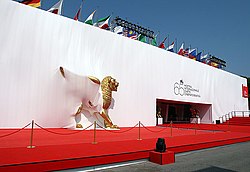
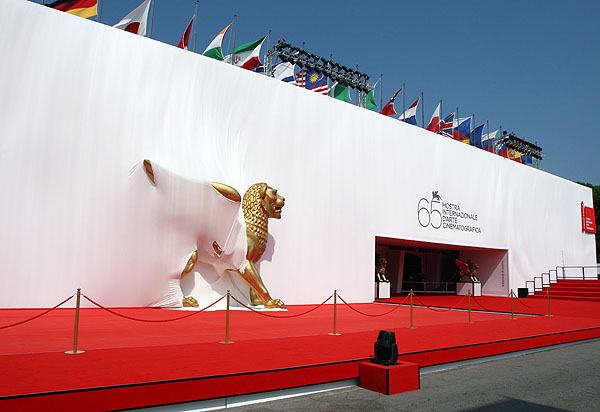
The Venice Biennale, a periodical large-scale cultural event founded in 1895, served as an archetype of the biennales. Meant to become a World Fair focused on contemporary art, the Venice Biennale used as a pretext the wedding anniversary of the Italian king and followed up to several national exhibitions organised after Italy unification in 1861. The Biennale immediately put forth issues of city marketing, cultural tourism and urban regeneration, as it was meant to reposition Venice on the international cultural map after the crisis due to the end of the Grand Tour model and the weakening of the Venetian school of painting. Furthermore, the Gardens where the Biennale takes place were an abandoned city area that needed to be re-functionalised. In cultural terms, the Biennale was meant to provide on a biennial basis a platform for discussing contemporary art practices that were not represented in fine arts museums at the time. The early Biennale model already included some key points that are still constitutive of large-scale international art exhibitions today: a mix of city marketing, internationalism, gentrification issues and destination culture, and the spectacular, large scale of the event.
Biennials after the 1990s
[edit]The situation of biennials has changed in the contemporary context: while at its origin in 1895 Venice was a unique cultural event, but since the 1990s hundreds of biennials have been organized across the globe. Given the ephemeral and irregular nature of some biennials, there is little consensus on the exact number of biennials in existence at any given time.[citation needed] Furthermore, while Venice was a unique agent in the presentation of contemporary art, since the 1960s several museums devoted to contemporary art are exhibiting the contemporary scene on a regular basis. Another point of difference concerns 19th century internationalism in the arts, that was brought into question by post-colonial debates and criticism of the contemporary art "ethnic marketing", and also challenged the Venetian and World Fair's national representation system. As a consequence of this, Eurocentric tendency to implode the whole word in an exhibition space, which characterises both the Crystal Palace and the Venice Biennale, is affected by the expansion of the artistic geographical map to scenes traditionally considered as marginal. The birth of the Havana Biennial in 1984 is widely considered an important counterpoint to the Venetian model for its prioritization of artists working in the Global South and curatorial rejection of the national pavilion model.
International biennales
[edit]In the term's most commonly used context of major recurrent art exhibitions:
- Adelaide Biennial of Australian Art, South Australia
- Asian Art Biennale, in Taichung, Taiwan (National Taiwan Museum of Fine Arts)
- Athens Biennale, in Athens, Greece
- Diriyah Contemporary Art Biennale, in Diriyah, Saudi Arabia
- Bienal de Arte Paiz, in Guatemala City, Guatemala[5]
- Arts in Marrakech (AiM) International Biennale (Arts in Marrakech Festival)
- Bamako Encounters, a biennale of photography in Mali
- Bat-Yam International Biennale of Landscape Urbanism
- Beijing Biennale
- Berlin Biennale (contemporary art biennale, to be distinguished from Berlinale, which is a film festival)
- Bergen Assembly (triennial for contemporary art in Bergen, Norway)www.bergenassembly.no
- Beta – Timișoara Architecture Biennial, Romania
- Bi-City Biennale of Urbanism\Architecture, in Shenzhen and Hong Kong, China
- Bienal de Arte de Ponce in Ponce, Puerto Rico
- Biënnale van België, Biennial of Belgium, Belgium
- BiennaleOnline Online biennial exhibition of contemporary art from the most promising emerging artists.
- Biennial of Hawaii Artists
- Biennale de la Biche, the smallest biennale in the world held at deserted island near Guadeloupe, French overseas region[6][7]
- Biwako Biennale, in Shiga, Japan
- La Biennale de Montreal
- Biennale of Luanda : Pan-African Forum for the Culture of Peace,[8] Angola
- Boom Festival, international music and culture festival in Idanha-a-Nova, Portugal
- Bucharest Biennale in Bucharest, Romania
- Bushwick Biennial, in Bushwick, Brooklyn, New York
- Canakkale Biennial, in Canakkale, Turkey
- Cello Biennale, Amsterdam, the Netherlands
- Cerveira International Art Biennial, Vila Nova de Cerveira, Portugal [9]
- Changwon Sculpture Biennale in Changwon, South Korea
- Dakar Biennale, also called Dak'Art, biennale in Dakar, Senegal
- Documenta, contemporary art exhibition held every five years in Kassel, Germany
- Estuaire (biennale), biennale in Nantes and Saint-Nazaire, France
- EVA International, biennial in Limerick, Ireland
- Göteborg International Biennial for Contemporary Art, in Gothenburg, Sweden[10]
- Greater Taipei Contemporary Art Biennial, in Taipei, Taiwan
- Gwangju Biennale, Asia's first and most prestigious contemporary art biennale
- Havana biennial, in Havana, Cuba
- Helsinki Biennial, in Helsinki, Finland[11]
- Herzliya Biennial For Contemporary Art, in Herzliya, Israel
- Incheon Women Artists' Biennale, in Incheon, South Korea
- Iowa Biennial, in Iowa, US
- Istanbul Biennial, in Istanbul, Turkey
- International Roaming Biennial of Tehran, in Tehran and Istanbul
- Jakarta Biennale, in Jakarta, Indonesia
- Jerusalem Biennale, in Jerusalem, Israel
- Jogja Biennale, in Yogyakarta, Indonesia
- Karachi Biennale, in Karachi, Pakistan
- Keelung Harbor Biennale, in Keelung, Taiwan
- Kochi-Muziris Biennale, largest art exhibition in India, in Kochi, Kerala, India
- Kortrijk Design Biennale Interieur, in Kortrijk, Belgium
- Kobe Biennale, in Japan
- Kuandu Biennale, in Taipei, Taiwan
- Lagos Biennial, in Lagos, Nigeria[12]
- Light Art Biennale Austria, in Austria
- Liverpool Biennial, in Liverpool, UK
- Lofoten International Art Festival (LIAF), on the Lofoten archipelago, Norway[13]
- Manifesta, European Biennale of contemporary art in different European cities
- Mediations Biennale, in Poznań, Poland
- Melbourne International Biennial 1999
- Mediterranean Biennale in Sakhnin 2013
- MOMENTA Biennale de l'image (formerly known as Le Mois de la Photo à Montréal), in Montreal, Canada
- MOMENTUM, in Moss, Norway[14]
- Moscow Biennale, in Moscow, Russia
- Munich Biennale, new opera and music-theatre in even-numbered years
- Mykonos Biennale
- Nakanojo Biennale[15]
- NGV Triennial, contemporary art exhibition held every three years at the National Gallery of Victoria, Melbourne, Australia
- October Salon – Belgrade Biennale, organised by the Cultural Center of Belgrade, in Belgrade, Serbia[16]
- OSTEN Biennial of Drawing Skopje, North Macedonia[17]
- Biennale de Paris
- Riga International Biennial of Contemporary Art (RIBOCA), in Riga, Latvia[18]
- São Paulo Art Biennial, in São Paulo, Brazil
- SCAPE Public Art Christchurch Biennial in Christchurch, New Zealand[19]
- Prospect New Orleans
- Seoul Biennale of Architecture and Urbanism
- Sequences, in Reykjavík, Iceland[20]
- Shanghai Biennale
- Sharjah Biennale, in Sharjah, UAE
- Singapore Biennale, held in various locations across the city-state island of Singapore
- Screen City Biennial, in Stavanger, Norway
- String Quartet Biennale Amsterdam, the Netherlands
- Biennale of Sydney
- Taipei Biennale, in Taipei, Taiwan
- Taiwan Arts Biennale, in Taichung, Taiwan (National Taiwan Museum of Fine Arts)
- Taiwan Film Biennale, in Hammer Museum, Los Angeles, U.S.
- Thessaloniki Biennale of Contemporary Art, in Thessaloniki, Greece[21]
- Dream city, produced by ART Rue Association in Tunisia
- Vancouver Biennale
- Visayas Islands Visual Arts Exhibition and Conference (VIVA ExCon) in the Philippines [22]
- Venice Biennale, in Venice, Italy, which includes:
- Venice Biennale of Contemporary Art
- Venice Biennale of Architecture
- Venice Film Festival
- Vladivostok biennale of Visual Arts, in Vladivostok, Russia
- Whitney Biennial, hosted by the Whitney Museum of American Art, in New York City, NY, US
- Web Biennial, produced with teams from Athens, Berlin and Istanbul.
- West Africa Architecture Biennale,[23] Virtual in Lagos, Nigeria.
- WRO Biennale, in Wrocław, Poland[24]
- Music Biennale Zagreb
- [SHIFT:ibpcpa] The International Biennale of Performance, Collaborative and Participatory Arts, Nomadic, International, Scotland, UK.
- Yerevan Print Biennale
See also
[edit]References
[edit]- ^ Checa-Gismero, Paloma (2024). Biennial Boom : Making Contemporary Art Global. Durham. ISBN 978-1-4780-3051-5.
{{cite book}}: CS1 maint: location missing publisher (link) - ^ Niemojewski, Rafal (2021). Biennials : the exhibitions we love to hate. London. ISBN 978-1-84822-388-2. OCLC 1205590577.
{{cite book}}: CS1 maint: location missing publisher (link) - ^ Vittoria Martini e Federica Martini, Just another exhibition. Histories and politics of biennials, Postmedia Books, 2011 ISBN 88-7490-060-0, ISBN 978-88-7490-060-2.
- ^ Im Weltinnenraum des Kapitals, 2005.
- ^ "In Guatemala, the Bienal de Arte Paiz Offers an Object Lesson in Community-Based Art Done Right". artnet News. September 7, 2018. Retrieved August 3, 2020.
- ^ ArtReview: World's 'smallest' biennial on Ilet la Biche, Guadeloupe
- ^ "Welcome to the world's smallest art fair – on a disappearing speck of sand". The Guardian. January 24, 2017.
- ^ "Home | Biennale of Luanda 2021".
- ^ "Bienal de Cerveira". Bienal de Cerveira.
- ^ "GIBCA • home". www.gibca.se.
- ^ Dunmall, Giovanna (July 26, 2023). "Art and island-hopping in Finland's cultural capital". The National (Abu Dhabi). Retrieved July 27, 2023.
- ^ "Lagos Biennial (Nigeria)". Biennial Foundation. Archived from the original on April 24, 2017. Retrieved February 23, 2021.
- ^ "Lofoten International Art Festival LIAF (Norway)". Biennial Foundation. Archived from the original on June 7, 2013. Retrieved July 1, 2021.
- ^ "Momentum (Norway)". Biennial Foundation. Retrieved August 2, 2020.
- ^ "ENGLISH|NAKANOJO BIENNALE". June 12, 2013.
- ^ "October Salon (Serbia)". Biennial Foundation. Retrieved August 2, 2020.
- ^ Gallery, Osten. "Drawing". osten.mk. Archived from the original on September 5, 2018. Retrieved January 12, 2020.
- ^ "RIBOCA - Riga International Biennial of Contemporary Art (Latvia)". Biennial Foundation. Retrieved August 3, 2020.
- ^ "Scape Public Art". Retrieved July 7, 2016.
- ^ "Sequences (Iceland)". Biennial Foundation. Retrieved June 26, 2021.
- ^ "Thessaloniki Biennale of Contemporary Art (Greece)". Biennial Foundation. Retrieved July 25, 2021.
- ^ "About Us – VIVA ExCon Organization". Archived from the original on November 21, 2021.
- ^ "West Africa Architecture Biennale". A3 Africa. Retrieved March 1, 2023.
- ^ "Biennale WRO". WRO ART CENTER. November 24, 2009.
Further reading
[edit]- Filipovic, Elena (2010). Marieke van Hal, Solveig Øvsteø (ed.). The Biennial Reader. Bergen, Norway: Bergen Biennial Conference.
- Checa-Gismero, Paloma (2024), Biennial Boom: Making Contemporary Art Global, Durham: Duke University Press
{{citation}}: CS1 maint: location missing publisher (link) - (Spanish) Niemojewski, Rafal (2013) "Venecia o La Habana: Una polémica sobre la génesis de la bienal contemporánea." Denken Pensée Thought Mysl... Criterios, Issue 47 (October).
- Jones, Caroline (March 29, 2006), Biennial Culture, Institute national d'histoire de l'art, Paris
{{citation}}: CS1 maint: location missing publisher (link) - (in English and Italian) Vittoria Martini e Federica Martini, Just another exhibition. Histories and politics of biennials, Postmedia Books, 2011 ISBN 88-7490-060-0, ISBN 978-88-7490-060-2
- Federica Martini, Cultural event in Mobile A2K Methodology guide, 2002.
- Manifesta Journal No 2 Winter 2003/ Spring 2004 - Biennials. Artimo Foundation. June 1, 2003. ISBN 90-75380-95-X.
- Morris, Jane (May 1, 2019). "Why is the Venice Biennale still so important?". The Art Newspaper. Retrieved May 4, 2019.
- Niemojewski, Rafal (2006) "Whence Come You, and Whither Are you Going? On the Memory and Identity of Biennials" Manifesta Journal, MJ – Journal of Contemporary Curatorship, N°6 Winter 2005/06
- Niemojewski, Rafal (2014) "Turning the Tide: the oppositional past and uncertain future of the contemporary biennial" Seismopolite: Journal of Art and Politics, Volume 1, Issue 6, (February).
- Niemojewski, Rafal (2018) "Contemporary Art Biennials: Decline or Resurgence?" Cultural Politics, Duke University Press, Volume 14, Issue 1, (Spring).
- Niemojewski, Rafal (2021) Biennials: The Exhibitions We Love to Hate, Lund Humphries. ISBN 9781848223882
- Vanderlinden, Barbara (June 2, 2006). Elena Filipovic (ed.). The Manifesta Decade: Debates on Contemporary Art Exhibitions and Biennials in Post-Wall Europe (illustrated ed.). The MIT Press. ISBN 0-262-22076-8.
External links
[edit]- Biennial Foundation site dedicated to biennales around the world
- "Global Exhibitions: Contemporary Art and the African Diaspora". Liverpool. February 19, 2010.
- Byrne, John (2005). "Contemporary Art and Globalisation: Biennials and the Emergence of the De-Centred Artist". Cambridge: University of Cambridge. Archived from the original on September 1, 2007. Retrieved June 5, 2013.
| International | |
|---|---|
| National | |
| Other | |

Biennale
View on GrokipediaDefinition and Etymology
Origins of the Term and Concept
The term "biennale" originates from the Italian adjective biennale, denoting something occurring every two years, derived from the Latin biennālis, which combines bi- ("two") and annus ("year").[8][9] This etymology reflects a temporal periodicity rather than any artistic connotation, with the word entering broader usage to describe recurring events structured on a biennial cycle. In non-art contexts, "biennial" had long described plants with two-year life cycles or legislative sessions spanning two years, but its application to organized exhibitions marked a novel adaptation.[8] The concept of the biennale as a large-scale, periodic international art exhibition emerged in late 19th-century Italy, specifically with the founding of the Venice Biennale. On April 19, 1893, the Venetian City Council passed a resolution proposing the creation of a "biennial national artistic exhibition" (Esposizione biennale artistica nazionale) to revive the city's cultural prestige and stimulate tourism amid economic decline.[2] This initiative formalized the biennial format—distinguishing it from annual salons or irregular world's fairs—by committing to exhibitions every two years, with the first edition opening on April 22, 1895, in the city's public gardens (Giardini).[10][11] Although initially focused on Italian artists, it quickly incorporated international participation, establishing the model of national pavilions and thematic curation that defined subsequent biennales. No prior art exhibitions strictly adhered to this biennial rhythm, positioning Venice as the progenitor of the format amid Europe's tradition of episodic expositions like the Paris Salons (annual since 1737) or the Great Exhibition of 1851.[11] This innovation responded to practical and cultural imperatives: the two-year interval allowed sufficient time for artist preparation, venue expansion, and funding cycles, while fostering anticipation and institutional continuity absent in one-off events. The term "biennale" thus crystallized around this Venetian prototype, later exporting the concept globally without earlier precedents in verifiable records of recurring international art shows.[2]Application to Art Exhibitions
In the context of visual arts, the biennale format designates large-scale international exhibitions of contemporary art convened every two years, providing platforms for global artistic exchange and experimentation. This application emphasizes the curation of thematic ensembles by appointed directors, who select works addressing pressing sociocultural issues through diverse media such as installations, performances, and multimedia. Venues span city-wide sites, including galleries, industrial spaces, and outdoor areas, accommodating hundreds of artists and attracting substantial audiences— for instance, the 2022 Venice Biennale drew over 800,000 visitors across its displays.[12][13][14] The structure often incorporates national representations, as exemplified by the Venice model's permanent pavilions where countries fund and curate submissions reflecting domestic artistic output, alongside a central exhibition that imposes a cohesive interpretive framework. This dual approach fosters competition and diplomacy in art presentation, though it can amplify state agendas or curatorial preferences, potentially sidelining dissenting voices. Adaptations in other biennales, such as site-specific integrations in the Biennale of Sydney or regionally focused selections in the Dakar Dak'Art, tailor the format to local ecologies while preserving its periodic rhythm, which enables in-depth preparation and evolving dialogues on artistic trends.[2][15] Biennales distinguish themselves from commercial art fairs by prioritizing non-market-driven discourse over sales, though market influences persist through collector attendance and post-exhibition acquisitions. Their expansive scope supports ambitious, ephemeral projects impractical in standard museum settings, yet the format's reliance on transient funding and thematic pivots invites critique for superficiality or ideological slant, as curators—often from academic or institutional backgrounds—shape narratives that may reflect prevailing progressive orthodoxies in art discourse. Empirical data from biennial surveys indicate rising participation from non-Western artists since the 1990s, correlating with globalization, but source analyses reveal uneven representation favoring established networks.[16][17]Historical Origins
Establishment of the Venice Biennale (1895)
The Venice Biennale originated from a resolution passed by the Venice City Council on April 19, 1893, proposing the establishment of a biennial national artistic exhibition to foster artistic exchange and elevate the city's cultural profile.[2] Headed by Mayor Riccardo Selvatico, the council aimed to transform informal gatherings of artists at Caffè Florian into a structured event, initially conceived as national in scope but quickly evolving to include international participation.[10] The proposal received royal approval from King Umberto I later that year, aligning with celebrations for the silver wedding anniversary of Umberto and Queen Margherita of Savoy.[2] Preparation for the inaugural edition involved forming organizational committees for programming, promotion, and press, with Antonio Fradeletto appointed as general secretary to oversee artist selections and logistics.[2] A dedicated pavilion, the Palazzo dell'Esposizione, was constructed between 1894 and 1895 in the public gardens of Castello (Giardini), drawing inspiration from models like the Munich Secession to accommodate invited and unsolicited submissions—limited to two unexhibited works per Italian artist.[18] This setup marked Venice's first international art exhibition, positioning the event as a platform for contemporary Italian and foreign works amid the city's post-unification economic challenges.[19] The first edition, titled I Esposizione Internazionale d'Arte della Città di Venezia, opened on April 30, 1895, in the presence of King Umberto I and Queen Margherita, attracting over 200,000 visitors during its run.[2] Featuring 516 works, it awarded major prizes to painters Giovanni Segantini and Francesco Paolo Michetti, establishing precedents for juried recognition and public acclaim that would define future iterations.[3] Under city council management until 1930, the Biennale's founding emphasized artistic merit over commercialism, though its success immediately boosted tourism and local prestige.[4]Early Developments and Institutional Growth
Following the success of the inaugural International Art Exhibition in 1895, which drew over 224,000 visitors to the Palazzo dell'Esposizione in Venice's Giardini di Castello, the event was established as a biennial occurrence, with subsequent editions in 1897, 1899, and beyond, solidifying its role as a platform for contemporary Italian and international art.[10] This early continuity reflected growing public and institutional support, as attendance figures rose—exceeding 300,000 by 1899—prompting infrastructure enhancements, including the Pro Arte Pavilion to accommodate expanding displays.[20] A pivotal development came in 1907 with the construction of the first permanent national pavilion for Belgium in the Giardini, designed by Léon Sneyers under the initiative of Belgian Fine Arts director Prof. Fierens-Gevaert, marking the shift toward dedicated spaces for foreign participants and enhancing the Biennale's international prestige.[2] Subsequent pavilions followed rapidly: Hungary, Germany, and Britain in 1909; France and Sweden in 1912; reaching seven foreign pavilions (excluding Italy's) by the 1914 edition's Russian pavilion inauguration, which fostered national representations and long-term commitments from participating countries.[10] These structures, built on Biennale-assigned land, represented institutional growth by decentralizing exhibitions from a single venue and embedding diplomatic-cultural ties into the event's fabric. Post-World War I reorganization advanced curatorial innovation and governance: in 1920, Secretary General Vittorio Pica introduced avant-garde works, broadening artistic scope amid Italy's cultural shifts, while administrative roles separated, with the mayor no longer doubling as Biennale president.[10] By 1926, a formalized board of 13 members oversaw operations, with Antonio Maraini as General Secretary, and in 1928, the Istituto Storico d'Arte Contemporanea (later the Historical Archive of Contemporary Arts) opened on November 8 to preserve exhibition records, underscoring archival institutionalization.[2][10] The most significant institutional milestone occurred in 1930, when Royal Decree (law no. 33 of January 13) transformed the Biennale into an Ente Autonomo, granting it independent status under president Count Giuseppe Volpi di Misurata and shifting oversight from the Venice City Council to the Italian national government, which enabled financial stability and programmatic expansion.[10] This autonomy facilitated diversification beyond visual arts, launching the International Music Festival, the first Venice Film Festival (August 6–21, 1932, at Lido's Excelsior Hotel), and the Theatre Festival (1934), while supporting overseas exhibitions, such as in New York in 1932.[2] Further infrastructure, like the 1937 Palazzo del Cinema, reinforced this growth until wartime interruptions in 1942.[10]Global Expansion
Post-World War II Proliferation
The resumption of international art exhibitions after World War II began with the Venice Biennale's return in 1948, following a wartime hiatus, as Italy sought to reassert its cultural influence amid reconstruction efforts.[2] This revival coincided with broader geopolitical shifts, including the Cold War's emphasis on cultural diplomacy and the emergence of newly independent or modernizing nations promoting art as a tool for national identity and global engagement.[21] A key milestone in global expansion occurred in 1951 with the founding of the São Paulo Art Biennial, organized by the Museu de Arte Moderna de São Paulo under the leadership of figures like Ciccillo Matarazzo, who modeled it on Venice to elevate Brazilian modern art and attract international participation from over 100 artists across 23 countries in its inaugural edition.[22] Held at the newly constructed Ibirapuera Park pavilion, it featured works by European modernists such as Picasso and Matisse alongside Latin American talents, underscoring Brazil's postwar economic boom and aspiration for cultural autonomy from European centers.[23] By 1955, proliferation accelerated with the launch of Documenta in Kassel, Germany, curated by Arnold Bode to reintegrate German artists into global modernism after the Nazi era's suppression of avant-garde expression, drawing 130,000 visitors to its first edition focused on abstract and expressive postwar tendencies.[24] Concurrently, the Alexandria Biennale for Mediterranean Countries debuted in Egypt under President Gamal Abdel Nasser's patronage, aiming to foster regional solidarity among artists from 15 nations amid decolonization, with 500 works exhibited to highlight non-Western perspectives often marginalized in Eurocentric circuits.[25] These initiatives reflected causal drivers like state-sponsored soft power and the Non-Aligned Movement's push against bipolar dominance, leading to further establishments such as the Tehran Biennial in 1962, which showcased Iranian and international modernists to signal the shah's modernization agenda.[21] This postwar wave, concentrated in Latin America, the Middle East, and Europe, increased the number of recurring international exhibitions from a handful pre-1945 to over a dozen by the late 1960s, facilitating cross-cultural exchanges but also exposing tensions over curatorial control and representation in an era of uneven global development.[26]Boom in the 1990s and Beyond
The proliferation of art biennials accelerated markedly in the 1990s, following the end of the Cold War and the intensification of global economic integration, which prompted cities worldwide to adopt these events as tools for cultural branding, tourism revenue, and soft power projection.[27][28] By 1990, only 36 regularly occurring international art biennials existed globally; this number doubled to 68 by 2010 and reached approximately 200 by 2019, with growth concentrated in emerging markets outside traditional Western centers.[29] A 2016 survey identified 316 biennials overall, with over 75% focused on visual arts and the sharpest expansion occurring from the mid-1980s onward, peaking in the 1990s due to neoliberal policies emphasizing urban regeneration through spectacle.[28] This boom reflected a causal link between geopolitical shifts—such as the fall of the Berlin Wall in 1989 and the spread of market-oriented reforms—and the decentralization of the art world from Euro-American dominance, enabling peripheral regions to host events that asserted local narratives amid globalization.[30][31] Key examples included the inaugural Gwangju Biennale in South Korea in 1995, Asia's first major international contemporary art event, which drew over 700,000 visitors and symbolized the region's rising economic clout; the Johannesburg Biennale in 1995, launched post-apartheid to foster reconciliation through art; and the Istanbul Biennial's expansion in the 1990s, leveraging Turkey's bridging role between East and West.[32][33] Subsequent foundations, such as Berlin's in 1998 and Shanghai's in 2000, further illustrated how biennials served as platforms for post-reunification or rapid urbanization narratives, often funded by municipal governments aiming to attract investment.[32] Into the 2000s and 2010s, the trend extended to non-Western locales, with biennials emerging in places like Sharjah (1993 onward, emphasizing Gulf perspectives), Havana (continuing from 1984 but globalizing in scale), and Auckland (2001), reflecting demands for diverse curatorial voices amid critiques of Western-centric art markets.[33][34] This expansion correlated with rising attendance figures—such as Gwangju's 1995 event—and a broader ecosystem of art infrastructure, including new museums and fairs, though it also drew scrutiny for potential commodification of culture under neoliberal agendas.[35][30] By the 2020s, the format's saturation prompted innovations like multi-year cycles or thematic resistances to globalization, yet the 1990s surge fundamentally globalized contemporary art's exhibitionary framework.[36]Structural Characteristics
Biennial Format and Scheduling
The biennial format designates large-scale international exhibitions of contemporary art occurring every two years, a rhythm rooted in the Latin biennium for a two-year span, which facilitates cyclical renewal, artist preparation, and global anticipation distinct from annual fairs or quinquennial events like documenta.[12] [35] This periodicity emerged as a core trait post-Venice Biennale's founding, enabling curators to respond to evolving artistic trends while maintaining institutional continuity amid logistical demands of assembling works from multiple nations.[15] Scheduling typically spans four to seven months to accommodate visitor influxes, with openings often in spring or early summer for optimal weather and tourism synergy; the 2024 Venice Biennale, for example, operated from April 20 to November 24 across venues like the Giardini and Arsenale, enforcing daily hours from 11 a.m. to 7 p.m. during peak seasons.[37] Similarly, the 2026 edition is set for May 9 to November 22, illustrating a pattern of extended runs that prioritize accessibility over brevity, though durations can contract to weeks in resource-constrained contexts.[38] Venues enforce structured access, including timed admissions and national pavilion integrations, to manage crowds exceeding hundreds of thousands annually. Variations arise from disruptions like wars or pandemics, occasionally shifting biennials to triennial cadences or irregular intervals, yet the format's adherence to even or odd-year slots—such as Venice's predominant odd-year alignment post-1895—preserves its role in synchronizing the international art calendar without overlapping major auctions or fairs.[15] Over 100 such exhibitions now recur globally, with 30 to 40 active yearly, underscoring the model's scalability while risking saturation if periodicity dilutes curatorial depth.[39]Curatorial Models and Thematic Focus
Curatorial models for biennials generally entail the selection of a director or lead curator by the organizing institution, who then assembles a team to conceptualize the exhibition, invite artists, and oversee production and installation. This process emphasizes contextual relevance, with curators prioritizing timely works that resonate with current artistic and societal dynamics rather than fixed canons.[40][15] Variations include single-curator leadership, as in many editions of the Venice Biennale where one figure proposes the core vision, or collaborative teams handling distinct sections, which allows for broader representation but can introduce inconsistencies in coherence. Artist-curator models, exemplified by the Kochi-Muziris Biennale, prioritize practitioners' insights to foreground experimental practices over traditional scholarly curation.[41][42] Thematic focus serves as the curatorial anchor, typically articulated by the lead figure to unify disparate works under a conceptual umbrella addressing contemporaneity, such as geopolitical tensions, technological shifts, or cultural identities. In the Venice Biennale's main exhibition, this manifests as a curator-driven narrative—for the 2026 edition, "In Minor Keys" evokes subtlety and discord in musical terms to probe underrepresented artistic voices—distinct from autonomous national pavilions that pursue country-specific agendas. Themes evolve per edition, reflecting the curator's interpretive lens while adapting to institutional mandates, though critics note potential overemphasis on transient trends at the expense of enduring artistic merit.[43][44][45]Key International Examples
Venice Biennale in Detail
The Venice Biennale, officially the Esposizione Internazionale d'Arte della Città di Venezia, originated from a resolution passed by the Venice City Council on April 19, 1893, leading to its inaugural edition in 1895 as an international art exhibition aimed at revitalizing the city's economy through tourism and cultural prestige.[2] Initiated by Mayor Riccardo Selvatico, the first exhibition ran from April 22 to October 13, 1895, in the newly repurposed Giardini Pubblici (Public Gardens), attracting over 200,000 visitors and featuring works primarily from Italian artists alongside select international participants. [20] This event established a biennial cycle for visual arts, held in odd-numbered years, with architecture exhibitions alternating in even years starting from 1980.[1] The Biennale's structure centers on a curated central exhibition, organized by a appointed artistic director who selects artists and imposes a thematic framework— a practice formalized in the late 20th century but evolving from earlier commissioner-led selections.[3] Permanent national pavilions, beginning with Belgium's in 1907 within the Giardini, now number approximately 30 for major participating nations, each managed independently by their respective governments or cultural institutions to showcase country-specific representations.[4] Additional collateral events and temporary pavilions, often in historic venues like churches and palazzi across Venice, extend participation to over 40 nations in recent editions, though these operate outside the core Biennale administration.[2] The Arsenale, a former naval complex, serves as a primary venue for large-scale installations since the 1980s, complementing the Giardini to accommodate expansive contemporary works.[1] Attendance has grown substantially, reflecting its status as a premier global art event; the 2022 art edition drew over 800,000 visitors, while the 60th International Art Exhibition in 2024 recorded 699,304 paid admissions over seven months, with young people and students comprising 30% of attendees.[1] [46] This scale underscores the Biennale's role in fostering international artistic dialogue, though its selection processes have faced scrutiny for favoring established networks over broader diversity, as evidenced by curatorial choices prioritizing thematic coherence over exhaustive representation.[47] As part of the broader La Biennale di Venezia foundation, established in 1932 to oversee expansions into film (1932), music, theater, dance (1999), and other disciplines, the art exhibition remains the foundational element driving the institution's influence on global biennial models.[1]Documenta and European Counterparts
Documenta, founded in 1955 by artist and curator Arnold Bode in Kassel, Germany, emerged as a key European exhibition model distinct from the Venice Biennale's biennial rhythm, convening every five years to survey global contemporary art. Bode initiated the event amid post-World War II reconstruction, integrating it with the Federal Horticultural Show (Bundesgartenschau) to rehabilitate modernist art suppressed during the Nazi era, with the first edition opening on July 15, 1955, and drawing over 130,000 visitors through displays of abstract expressionism and European abstraction at venues like the Fridericianum museum. Subsequent editions expanded its scope: documenta 2 (1959) incorporated literature and music, while documenta 5 (1972), curated by Harald Szeemann, pioneered the "100 Days" format and emphasized individual artist presentations over national pavilions, influencing curatorial practices worldwide. By its 15th edition in 2022, documenta had hosted over 1,000 artists, attracting around 900,000 visitors per cycle and establishing Kassel as a temporary global art capital during its 100-day run.[48][49][50] Unlike Venice's fixed, state-backed structure, Documenta's independent foundation—governed since 2018 by a non-profit entity—allows thematic flexibility, with curators like Catherine David (documenta X, 1997) introducing critical theory and postcolonial perspectives, though recent iterations have sparked debates over ideological balance. The 15th edition, curated by Indonesian collective ruangrupa under the "lumbung" (rice barn) model of communal resource-sharing, prioritized non-Western and collective practices but drew widespread condemnation for including antisemitic imagery, such as the "People's Justice" mural by Indonesia's UFFC depicting Jewish tropes like hooked noses and blood libel motifs, which was covered after public outcry and prompted a German parliamentary inquiry revealing vetting failures. An independent commission later criticized the edition's tolerance of anti-Zionist rhetoric veering into antisemitism, leading to resignations and a 2025 code of conduct adopting the IHRA definition of antisemitism amid accusations from some quarters of stifling free speech. These events underscore Documenta's evolving tensions between artistic experimentation and accountability in publicly funded institutions.[51][52][53] Among other European counterparts, Manifesta stands out as a nomadic biennial conceived in the early 1990s to address post-Cold War fragmentation, launching its inaugural edition in Rotterdam in 1996 with a focus on bridging Eastern and Western European art scenes through rotating host cities. Unlike Documenta's fixed locale, Manifesta's peripatetic model—selecting biennial sites via open calls, such as Pristina, Kosovo in 2022—emphasizes contextual engagement, with 14 editions by 2024 featuring over 500 artists and programs in urban regeneration, drawing 200,000–500,000 visitors per event depending on the host. Its curatorial emphasis on dialogue over canon-building has included experimental formats, like Manifesta 12 (2018) in Palermo integrating archaeology with contemporary works, though critics note occasional logistical strains from frequent relocations. Other notable European models include the Berlin Biennale, established in 1998 by the KW Institute for Contemporary Art to provoke discourse on German reunification, with 12 editions by 2024 adopting politically charged themes, and the Liverpool Biennial, founded in 1999 as the UK's largest free contemporary art festival, hosting over 50 artists triennially since 2010 across Merseyside venues to boost regional economies. These events collectively extend the biennial paradigm across Europe, prioritizing thematic innovation and local integration over Venice's historical prestige.[54][55][56]Biennales in Non-Western Contexts
The São Paulo Bienal, established in 1951 in Brazil, stands as the oldest recurring international art exhibition in the Americas and the second-oldest globally after the Venice Biennale, initially modeled on the latter to elevate Brazilian modernism amid post-World War II cultural aspirations.[57] Organized by the Fundação Bienal de São Paulo, it featured over 100 artists in its inaugural edition, drawing from Europe and the Americas to foster cross-continental dialogue, though early iterations emphasized Western influences before gradually incorporating Latin American voices.[22] By the 1960s and 1970s, political turbulence under Brazil's military regime led to boycotts and thematic shifts toward conceptual art, underscoring the biennial's entanglement with national politics.[58] In Cuba, the Havana Biennial launched in 1984 as a deliberate counterpoint to Eurocentric models, prioritizing artists from Latin America, Africa, and Asia in a "tri-continental" framework that rejected national pavilions and prizes to emphasize solidarity among developing nations.[59] The first edition showcased over 600 participants, focusing on peripheral artistic practices amid Cold War dynamics, with Cuban state support enabling access for artists from embargoed regions but also imposing ideological alignments.[60] Subsequent editions, such as the 1987 event, expanded discourse on postcolonial themes, influencing global curatorial networks by validating non-Western narratives outside market-driven structures.[61] Africa's entry into the biennial format accelerated post-apartheid, with the Johannesburg Biennale debuting in 1995 to reintegrate South African art after decades of cultural isolation under sanctions.[62] The inaugural edition, titled "Africus," featured 200 artists from 40 countries across sites like the Johannesburg Art Gallery, highlighting continental diversity while grappling with reconciliation themes, though logistical challenges and funding shortfalls limited its recurrence beyond 1997.[63] This model paralleled earlier efforts like the Dakar Biennale (Dak'Art), initiated in 1992 in Senegal, which prioritizes African creators through competitive selections to counterbalance external gazes.[64] Asia's biennial landscape crystallized with the Gwangju Biennale in 1995, South Korea's inaugural contemporary art event commemorating the 1980 Gwangju Uprising against authoritarian rule, positioning the city as a hub for democratic expression.[65] Drawing 87 artists from 49 nations under the theme "Beyond the Borders," it marked Asia's first major biennial, fostering regional exchanges amid economic boom and cultural liberalization, with later editions emphasizing geopolitical tensions.[66] Complementary events, such as the Sharjah Biennial in the UAE (founded 1993), integrated Gulf perspectives on migration and history, while the Istanbul Biennial (1987, Turkey) navigated Ottoman legacies and East-West divides, often adapting Western formats to local socio-political realities.[67] These non-Western biennials diverge from Venice by de-emphasizing national competition and commodification, instead leveraging state or foundation backing to amplify marginalized voices and local histories, though they frequently contend with governmental oversight—evident in Havana's revolutionary framing or Gwangju's protest origins—that shapes thematic autonomy.[26] Collectively, they have decentralized global art circuits since the 1980s, enabling over 100 such events by the 2010s, primarily in the Global South, to prioritize discursive platforms over sales, albeit with variable sustainability amid economic pressures.[68]Cultural Impact
Facilitation of Artistic Exchange
Biennales serve as platforms for artists, curators, and institutions from diverse national and cultural backgrounds to converge, enabling direct interaction and the cross-pollination of artistic ideas and practices. These events facilitate exchanges through curated exhibitions that juxtapose works from multiple regions, often incorporating national pavilions or collaborative projects that highlight regional specificities alongside universal themes. For instance, the International Biennial Association, founded to promote global cooperation among such events, explicitly aims to expand curatorial and artistic knowledge sharing via international partnerships and joint initiatives.[69] This structure has historically amplified networking opportunities, with biennials drawing thousands of professionals annually to discuss techniques, critique works, and form lasting collaborations that extend beyond the event's duration. In the case of the Venice Biennale, established in 1895 and held biennially, participation has grown to include over 80 national representations by the 21st century, fostering a "Venice Effect" where exhibited artists experience heightened visibility and subsequent international opportunities. Empirical analysis of artist trajectories shows that inclusion correlates with increased global exhibitions and market engagement post-event, as the biennale's prestige incentivizes curators worldwide to scout and invite participants from underrepresented locales.[70] Similarly, programs like the British Council's Biennials Connect initiative provide grants to support mid-career curators and artists from various countries, resulting in tangible outcomes such as co-curated shows and interdisciplinary residencies that bridge gaps between, for example, UK and African visual artists.[71] Beyond networking, biennales contribute to cultural diplomacy by transcending linguistic barriers through visual and performative media, allowing governments and NGOs to showcase soft power without overt political rhetoric. UNESCO recognizes this role, noting that international art biennials depend on artist and curator mobility to exchange ideas and information, thereby strengthening intercultural understanding amid geopolitical tensions.[72] However, the efficacy of such exchanges varies; while peer-reviewed studies affirm biennials' transformative impact on global art discourse by connecting peripheral artists to central hubs, critics from academic sources argue that dominant Western curatorial models can sometimes prioritize thematic conformity over genuine dialogue, though data on post-biennale collaborations indicates persistent innovative outputs.[73][74] Overall, these events have empirically expanded artistic repertoires, with biennial alumni frequently reporting expanded professional networks and hybrid practices informed by encountered influences.Shaping Contemporary Art Narratives
Art biennials shape contemporary art narratives by serving as curatorial platforms that select, frame, and amplify specific themes and artistic practices, thereby defining what gains prominence in global discourse. Curators impose conceptual frameworks on diverse works, often emphasizing social, political, and environmental issues such as migration, identity fluidity, and ecological risk, which in turn influence artists, collectors, and institutions worldwide. This process consolidates regional practices into a unified "contemporary" canon, as seen in the proliferation of biennials from fewer than five major events before the 1990s to over 200 today, enabling broader dissemination of non-Western perspectives while fostering debate on artistic relevance.[75][15] Prominent examples illustrate this narrative-setting role. The Venice Biennale, established in 1895, has historically pioneered trends through its thematic central exhibitions and national pavilions; the 2022 edition, "The Milk of Dreams," explored human-animal hybrids and technological alienation, while the 2024 theme "Foreigners Everywhere" highlighted dislocation and otherness amid global mobility. Similarly, the Dakar Biennale's 2024 iteration, "The Wake," centered African diasporic responses to colonial legacies and climate threats, drawing international attention to underrepresented voices. These events not only curate narratives but amplify them via high visibility, with Venice alone selling 800,000 tickets in 2022, up from 600,000 in 2019, thereby directing market interest and critical acclaim toward featured artists and motifs.[75] Beyond individual biennials, the format's adaptability—ranging from site-specific installations to distributed events across urban sites—encourages innovation in how art engages contemporaneity, such as the 2013 Venice Biennale's psychoanalytic focus or the Liverpool Biennial's integration of year-round cultural programming. This has shifted art's center from Euro-American dominance toward the Global South and East, elevating figures like Ghanaian sculptor El Anatsui through transnational exposure. However, curatorial emphasis on thematic spectacle can prioritize rhetorical fragmentation over substantive critique, potentially homogenizing trends around activist aesthetics despite the format's diversity.[15][75]Economic Aspects
Tourism and Local Economies
The Venice Biennale exemplifies how international art biennales stimulate tourism in host cities, drawing hundreds of thousands of visitors during their run. In 2024, the event sold 700,000 tickets, with an additional 27,966 attendees at the preview, of which 59% were international visitors.[76] These figures represent a surge over typical off-peak periods, as the biennale's seven-month duration from April to November overlaps with high season, amplifying foot traffic to venues like the Giardini and Arsenale.[77] This influx generates direct economic benefits through visitor expenditures on accommodations, dining, and transport, often exceeding those of standard tourists due to the event's appeal to affluent art enthusiasts who extend stays for in-depth exploration.[78] In Venice, where tourism constituted 13% of GDP in 2019 prior to pandemic disruptions, biennale-related visitors contribute to the sector's annual €3.3 billion output, supporting jobs in hospitality and retail amid seasonal dependencies.[79] Similar patterns occur in other biennale hosts; for instance, events like Documenta in Kassel have historically increased hotel occupancy by up to 90% and local spending by millions of euros during exhibition periods, fostering multiplier effects in ancillary services.[80] Beyond immediate revenue, biennales spur infrastructure investments and year-round cultural branding that sustain tourism pipelines. In non-Western contexts, such as the Sharjah Biennial, these events have correlated with rises in foreign arrivals and business revenues, though quantifiable impacts depend on local absorption capacity.[81] Empirical assessments, including input-output models, indicate that for every euro spent on biennale operations, host economies see returns of 1.5 to 3 times through induced tourism, albeit with caveats for displacement effects during peak crowding.[82] In Venice, the biennale's role in attracting "quality" visitors—those less prone to day-tripping—helps mitigate some overtourism strains while bolstering fiscal resilience against broader declines, as evidenced by post-2020 recovery data.[78]Ties to the Art Market
Biennales maintain close connections to the art market primarily through enhanced visibility for artists, which translates into increased commercial opportunities rather than direct sales during the events themselves. Inclusion in major biennales, especially the Venice Biennale, generates a "halo effect" that elevates an artist's prestige, leading to higher demand from collectors and galleries post-exhibition.[83][84] For instance, artworks by participating artists often experience accelerated sales and price appreciation, as curatorial endorsement signals quality to market players, though curators have historically downplayed these outcomes.[85] This market linkage manifests in indirect ways, such as galleries reporting surges in inquiries and transactions following biennale appearances. In the 2024 Venice Biennale, dealers noted potential price escalations for emerging artists, with initial ranges of $25,000 to $50,000 expected to climb gradually due to sustained collector interest.[86] Auction houses have increasingly sponsored national pavilions and artist projects amid shrinking public budgets—for example, providing financial backing estimated in the hundreds of thousands of euros per installation—to gain promotional leverage and access to emerging talent.[87] Such involvement underscores biennales' role as talent scouting grounds, where market actors identify and acquire works that later command premiums at auctions or private sales.[87] Despite formal prohibitions on on-site commerce—such as Venice's ban on art sales implemented in the 1970s—biennales facilitate broader economic flows by drawing high-net-worth collectors who network with gallerists and curators, often resulting in off-site deals.[88] This dynamic contributes to the globalization of the art market, with biennales acting as nodes for cross-border transactions, though it creates tensions between non-commercial ideals and profit-driven incentives inherent to the contemporary art ecosystem.[89] Empirical observations from multiple editions confirm that biennale exposure correlates with career acceleration and valuation uplifts, independent of direct vending.[90]Criticisms and Debates
Elitism and Exclusivity
The Venice Biennale and similar international exhibitions have faced persistent accusations of elitism due to their curatorial processes, which often rely on invitation-only selections favoring artists within established Western networks. Critics argue that a small cadre of predominantly white, European or North American curators dominates biennial programming, perpetuating a cycle where opportunities accrue to a narrow pool of globally mobile talent connected through galleries, residencies, and prior exhibitions.[91] This structure, evident in events like the 54th Venice Biennale in 2011, has been described as prioritizing autonomy over broader accessibility, reinforcing perceptions of detachment from diverse artistic practices.[92] Exclusivity manifests in logistical and financial barriers that limit participation, particularly for artists from non-Western or economically disadvantaged regions. Travel, accommodation, and production costs for national pavilions can exceed hundreds of thousands of euros per country—for instance, Slovakia allocated €200,000 for its 2024 pavilion, funded entirely by government resources—effectively excluding nations or individuals without state or institutional backing.[93] While public attendance remains substantial, with 699,304 visitors to the 2024 Art Biennale excluding previews, the event's influence on careers, sales, and discourse is concentrated among affluent collectors, dealers, and critics who access VIP previews and collateral events, sidelining broader publics or emerging voices.[47][76] Such critiques highlight a tension between biennials' rhetorical commitment to global dialogue and their operational realities, where high-profile openings and networking prioritize insiders over inclusive representation. For example, the influx of international elites during events strains local resources in host cities like Venice, which has only 258,000 residents yet hosted over 800,000 Biennale visitors in 2022, underscoring how mass tourism coexists with gated artistic spheres.[94] Despite efforts to diversify—such as increased youth attendance (30% under 26 in 2024)—structural biases in funding and selection persist, as noted in analyses of biennial economies that favor prestige over equity.[95][96]Ideological and Political Content
Biennales, particularly the Venice Biennale, have historically served as platforms for political expression, reflecting tensions from European fascism in the 1930s to Cold War divisions, with national pavilions often embodying state ideologies or diplomatic maneuvers.[6][97] Curators and artists frequently embed critiques of capitalism, colonialism, and Western hegemony, as seen in thematic exhibitions prioritizing decolonial narratives and identity politics, which align with dominant perspectives in the global art ecosystem.[98] This content, while framed as provocative discourse, has drawn criticism for fostering ideological hegemony, where dissenting or conservative viewpoints are marginalized, turning biennials into echo chambers that prioritize social critique over aesthetic innovation.[96] National representations amplify political frictions; for instance, Poland's 2024 Venice entry shifted after a centrist government ousted a prior conservative administration's selected artist, Ignacy Czwartos, prompting accusations of censorship from the displaced commissioner who exhibited under "Polonia Uncensored."[99][100] Similarly, Australia's 2026 selection of Khaled Sabsabi was revoked amid debates over his work's alignment with institutional politics, sparking backlash over artistic freedom.[101] Russian pavilions from 2011–2015 exemplified paradoxes, blending state nationalism with curatorial autonomy challenges under geopolitical strain.[89] These cases illustrate how biennales intersect with realpolitik, where pavilion allocations can reward or penalize based on international alliances rather than merit.[102] Critics argue that biennales exhibit selective outrage, condemning Western democracies while featuring works from autocratic regimes like Saudi Arabia and China without equivalent scrutiny, revealing inconsistencies in their anti-imperial rhetoric.[103] Protests at the 2024 Venice Biennale, including those targeting specific national entries, underscored ongoing geopolitical mind games, yet the events' structure often amplifies leftist activism—such as anti-capitalist or pro-Palestine messaging—while sidelining broader ideological pluralism.[104][105] This pattern stems from curatorial biases in an art world skewed toward progressive institutions, where empirical diversity in viewpoints lags behind professed inclusivity, as evidenced by recurring calls to denounce "identity politics" dominance.[106][75] Such dynamics risk biennales becoming spectacles of performative critique, undermined by their own contradictions and detachment from causal political realities beyond elite discourse.Commercialization and Oversaturation
The rapid proliferation of art biennials since the 1990s has prompted criticisms of oversaturation, with estimates placing the number of active events worldwide at over 200 by the mid-2020s, up from a handful prior to that decade.[75] [107] This expansion, often driven by cities seeking to boost cultural profiles and tourism, has led to a crowded calendar where events overlap and compete for attention, diminishing their collective impact on discourse within contemporary art.[108] Critics contend that the format risks becoming formulaic, prioritizing scale and spectacle over depth, as curators grapple with exhibiting hundreds of artists in temporary, resource-intensive setups that strain local infrastructures and artistic innovation.[109] [110] Commercialization has intensified alongside this growth, with biennials increasingly dependent on corporate sponsorships, private foundations, and gallery partnerships to offset underfunding from public sources. For example, the Venice Biennale, the archetype of the format, derives significant revenue from sponsors like illy Caffè, which has backed it since 2003, and entities such as the Ford Foundation, which committed $1.1 million for a 2022 pavilion exhibition.[111] [112] [113] This reliance blurs distinctions between non-commercial cultural platforms and market-driven art fairs, as biennials facilitate sales, networking, and brand exposure—activities historically more associated with commercial galleries.[114] Observers have noted that such dynamics instrumentalize biennials for economic agendas, including city marketing, potentially compromising curatorial independence and turning art into a commodified spectacle.[75] [115] These trends have fueled broader debates about sustainability, with some arguing that the biennial model's inherent contradictions—ambitions for global dialogue versus logistical and financial pressures—undermine its viability without reform.[75] Proponents of the format counter that sponsorships enable accessibility and scale, yet detractors highlight how market ties can prioritize high-profile, saleable works over experimental or peripheral practices.[116] In peripheral or emerging biennials, commercialization often manifests as a tool for integration into global circuits, but at the risk of homogenizing local narratives under economic imperatives.[26]References
- https://en.wiktionary.org/wiki/biennial