


Community hub
Recent from talks
Contribute something
Nothing was collected or created yet.
Steven Sim Chee Keong
View on Wikipedia
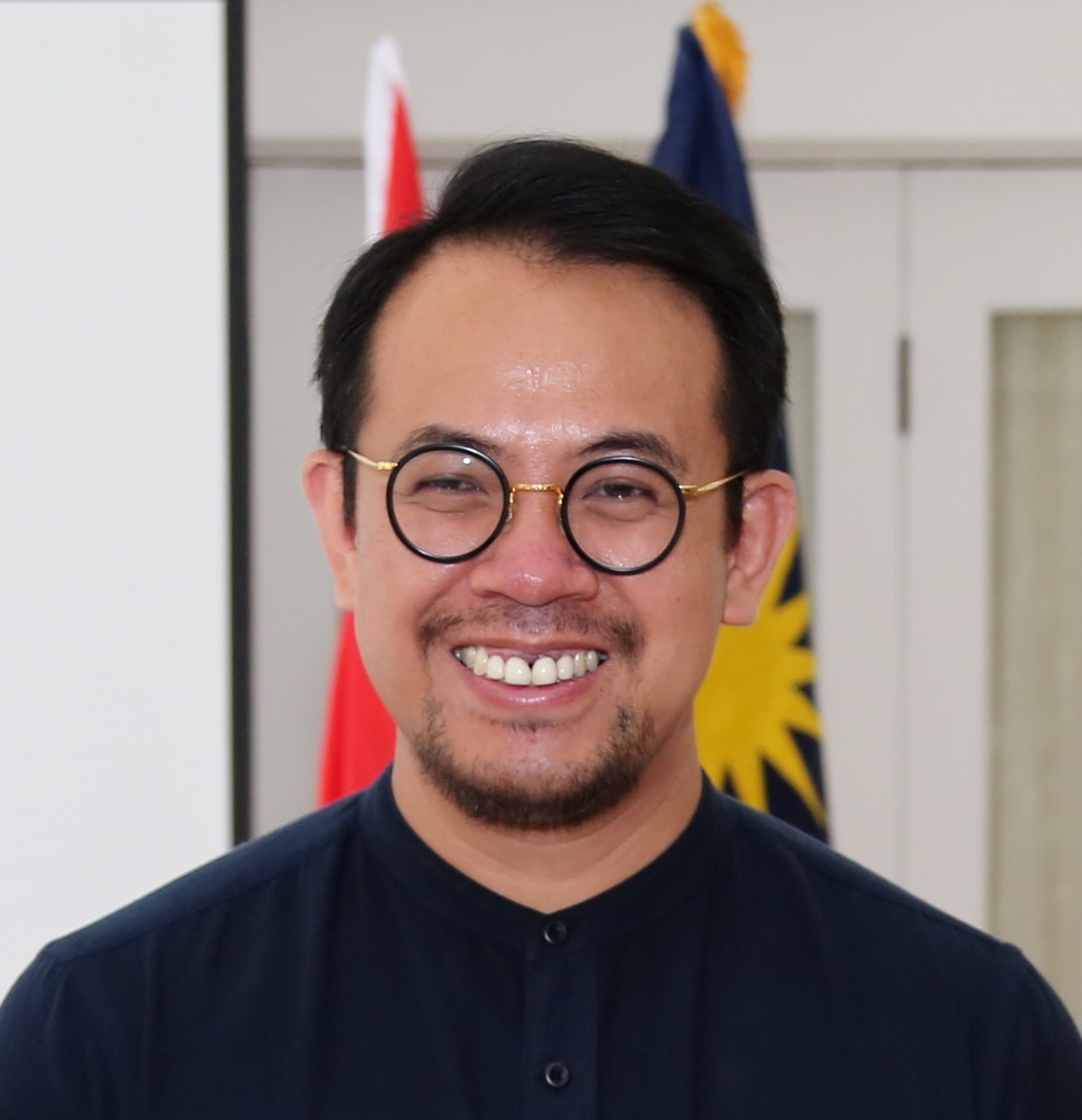
Steven Sim Chee Keong[a] (born 13 May 1982) is a Malaysian politician who has served as the Minister of Entrepreneur and Cooperatives Development in the Unity Government administration under Prime Minister Anwar Ibrahim since December 2025 as well as the Member of Parliament (MP) for Bukit Mertajam since May 2013. He served as the Minister of Human Resources in the Unity Government administration under Prime Minister Anwar under Prime Minister and Minister Anwar from December 2023 to December 2025 and the Deputy Minister of Finance II in the PH administration from December 2022 to December 2023 and the Deputy Minister of Youth and Sports in the PH administration under former Prime Minister Mahathir Mohamad and former Minister Syed Saddiq from July 2018 to the collapse of the PH administration in February 2020. He is a member of the Democratic Action Party (DAP), a component party of the PH coalition. He has served as the Deputy Secretary-General of DAP since March 2025 and State Chairman of DAP of Penang since September 2024. He also served as the National Organising Secretary of DAP from March 2022 to March 2025.[1][2] He is presently the fourth youngest Cabinet minister in the Anwar Ibrahim cabinet, after Minister of Youth and Sports Mohammed Taufiq Johari, Minister of Economy Akmal Nasir and Minister of Natural Resources and Environmental Sustainability Arthur Joseph Kurup at the age of 43 years, 277 days.
Key Information


Early life and education
[edit]Steven Sim Chee Keong was born in Bukit Mertajam, Penang, Malaysia on 13 May 1982. His early education started at SK Stowell and Bukit Mertajam High School (HSBM). He graduated from University of Malaya in Computer Science in 2004. He later pursued a Masters in Sustainable Development at the Jeffrey Sachs Centre on Sustainable Development in Sunway University and graduated in 2020.
Early career
[edit]Steven served in a multinational corporation for three years before joining the Penang state government in 2008.[3] He also sits on the governing board of the Penang Institute, a leading public policy think tank based in Penang, Malaysia.
Steven was formerly the executive secretary of the Network of Social Democracy in Asia, a regional dialogue of political parties, scholars and NGOs of the social democratic persuasion.
Political career
[edit]Early political career
[edit]In January 2011, Steven was appointed as a member of the Seberang Perai Municipal Council (MPSP), one of the largest local governments of Malaysia.
In 2012, he was named as a Young Global Leader of the Geneva-based World Economic Forum.[4] He is also a member of the Board of Directors of Penang Institute, a public policy think-tank based in Penang.
Steven writes regularly for Penang Monthly (formerly Penang Economic Monthly) as well as contributing opinion pieces to prominent Malaysian online news portals such as Malaysiakini and the Malaysian Insider. He has authored 4 books, including "A contemporary socio-political critique of the Malay classic Hikayat Hang Tuah, Hang Tuah: Adiwira Bangsa" in 2021.
Steven was elected into the DAP central executive committee (CEC) in 2022.
Minister of Human Resources (since 2023)
[edit]In a cabinet reshuffle on 12 December 2023, Steven was promoted to a Cabinet minister and assigned a new portfolio. He was appointed as the Minister of Human Resources to replace V. Sivakumar, who was the only Cabinet minister to be dropped in the reshuffle and whose aides were facing corruption charges.
State Chairman of DAP Penang (since 2024)
[edit]In the 2024 DAP Penang state party elections, Steven was appointed as the Penang DAP chairman for the 2024 - 2027 term.[5]
Personal life
[edit]Steven is married to Chan Jo Rin.
He speaks English, Malay, Hokkien, and Mandarin.[6]
Election results
[edit]| Year | Constituency | Candidate | Votes | Pct | Opponent(s) | Votes | Pct | Ballots cast | Majority | Turnout | ||
|---|---|---|---|---|---|---|---|---|---|---|---|---|
| 2013 | P045 Bukit Mertajam | Steven Sim Chee Keong (DAP) | 55,877 | 80.29% | Gui Guat Lye (MCA) | 12,814 | 18.41% | 69,588 | 43,063 | 88.09% | ||
| 2018 | Steven Sim Chee Keong (DAP) | 63,784 | 85.40% | Gui Guat Lye (MCA) | 10,907 | 14.60% | 75,977 | 52,877 | 85.37% | |||
| 2022 | Steven Sim Chee Keong (DAP) | 71,722 | 77.33% | Steven Koh Tien Yew (PAS) | 14,037 | 15.14% | 93,695 | 57,685 | 77.34% | |||
| Tan Yang Pang (MCA) | 6,986 | 7.53% | ||||||||||
Honours
[edit]Honours of Malaysia
[edit] Malaysia
 Recipient of the 17th Yang di-Pertuan Agong Installation Medal (2024)


Award
[edit]- Young Global Leader (2012)[14]
Bibliography
[edit]Books
[edit]- The Audacity to Think: An Invitation to Rethink Politics (2012)
- Being Malaysia (2018)
- An anthology of Malay poems, Dalam Salju Ada Bunga (2018)
- A contemporary socio-political critique of the Malay classic Hikayat Hang Tuah, Hang Tuah: Adiwira Bangsa (2021).
External links
[edit]- Official website
 Media related to Steven Sim Chee Keong at Wikimedia Commons
- The Audacity to Think

References
[edit]- ^ "Age no longer a factor, says deputy to youngest minister". Free Malaysian Today. 5 July 2018. Retrieved 24 July 2018.
- ^ "Steven Sim is new Penang DAP chairman". The Star. 22 September 2024. Retrieved 22 September 2024.
- ^ Arnold Loh (26 June 2018). "Three Penang MPs lying low until official Cabinet announcement". The Star. Retrieved 17 July 2018.
- ^ "Penang Institute's Steven Sim awarded Young Global Leader by WEF". The Sun Daily. 8 March 2012. Retrieved 23 September 2012.[permanent dead link]
- ^ "Steven Sim new Penang DAP chief, Ramkarpal is deputy | FMT". www.freemalaysiatoday.com. Retrieved 28 July 2025.
- ^ http://www.guangming.com.my/node/450761/terms [dead link]
- ^ "Keputusan Pilihan Raya Umum Parlimen 2013" (in Malay).[permanent dead link] Results only available from the 2004 election.
- ^ "Malaysia General Election". undiinfo Malaysian Election Data. Malaysiakini. Retrieved 5 May 2014. Results only available from the 2004 election.
- ^ "KEPUTUSAN PILIHAN RAYA UMUM 13". Sistem Pengurusan Maklumat Pilihan Raya Umum (in Malay). Election Commission of Malaysia. Retrieved 24 March 2017.Results only available for the 2013 election.
- ^ "my undi : Kawasan & Calon-Calon PRU13 : Keputusan PRU13 (Archived copy)". www.myundi.com.my. Archived from the original on 31 March 2014. Retrieved 9 April 2014.
- ^ "Keputusan Pilihan Raya Umum ke-13". Utusan Malaysia. Archived from the original on 21 March 2018. Retrieved 26 October 2014.
- ^ "SEMAKAN KEPUTUSAN PILIHAN RAYA UMUM KE - 14" (in Malay). Election Commission of Malaysia. Retrieved 17 May 2018. Percentage figures based on total turnout.
- ^ "The Star Online GE14". The Star. Retrieved 24 May 2018. Percentage figures based on total turnout.
- ^ "Penang Institute's Steven Sim awarded Young Global Leader by WEF". The Sun Daily. 8 March 2012. Retrieved 23 September 2012.[permanent dead link]
Notes
[edit]- ^ simplified Chinese: 沈志强; traditional Chinese: 沈志強; pinyin: Shěn Zhìqiáng; Pe̍h-ōe-jī: Sím Chì-kiông. In this Chinese name, the family name is Sim (沈). In accordance with custom, the Western-style name is Steven Sim and the Chinese-style name is Sim Chee Keong.
.jpg)
| International | |
|---|---|
| National | |
| Other | |

Steven Sim Chee Keong
View on GrokipediaEarly life and background
Childhood and family
Steven Sim Chee Keong was born in Bukit Mertajam, Penang, Malaysia, to an ethnic Chinese family, and spent his childhood in the town alongside his parents and family members.[2][5] His parents exemplified a pragmatic voting pattern common among Penang's ethnic Chinese community, supporting opposition parties nationally to maintain checks and balances while favoring the ruling coalition locally for infrastructure and development benefits.[6] Sim's earliest political recollections date to the 1999 general election, when he was approximately 16 or 17 years old; identifying as a "Mahathir boy" in admiration of then-Prime Minister Mahathir Mohamad, he debated his mother after she voted for Democratic Action Party leader Lim Kit Siang.[6] This episode highlighted his initial alignment with the Barisan Nasional government before later shifts in perspective. No public records detail siblings or specific parental occupations or origins beyond their local voter behavior.Education
Steven Sim Chee Keong attended SK Stowell for his primary education and Bukit Mertajam High School for secondary education in Penang.[3] He earned a Bachelor of Computer Science from Universiti Malaya in 2004.[2][3] Sim subsequently completed an Executive Master of Public Administration at the Lee Kuan Yew School of Public Policy, National University of Singapore.[3] In 2020, he obtained a Master of Sustainable Development from Sunway University through the Jeffrey Sachs Centre.[2]Pre-political career
Engineering and professional roles
Prior to entering formal politics, Steven Sim Chee Keong pursued a career in computer engineering after completing his Bachelor of Computer Science degree from Universiti Malaya in 2004.[2][3] Following graduation, Sim worked for two years in the corporate information technology sector at a large multinational corporation, applying his technical skills in a professional engineering capacity.[6] This role marked his primary pre-political professional experience in engineering, during which he contributed to corporate IT operations amid Malaysia's growing tech industry in Penang.[6] Before his university studies, Sim had briefly operated as a small-scale chocolate entrepreneur, though this venture predated his technical training and did not involve engineering functions.[6] His engineering tenure concluded around 2006–2007, after which he shifted focus toward political volunteering with the Democratic Action Party, assisting with IT support for parliamentary operations.[6]Political entry and parliamentary tenure
2013 election and initial roles
Steven Sim Chee Keong contested the Bukit Mertajam federal parliamentary seat as the Democratic Action Party (DAP) candidate in Malaysia's 13th general election on 5 May 2013, defeating the Barisan Nasional incumbent Gui Guat Lye with a majority of 52,877 votes. At age 31, Sim, who had joined DAP in 2005 and served as a Seberang Perai Municipal Council councillor since 2011, secured the seat in a constituency long held by the opposition, reflecting strong support for Pakatan Rakyat amid national contests over electoral fairness and governance.[6][2] As a first-term opposition MP, Sim's initial parliamentary role involved constituency representation for Bukit Mertajam, including addressing local infrastructure and community concerns in Penang's Seberang Perai region.[3] He participated in early Dewan Rakyat sessions, delivering his maiden speech on 26 June 2013 critiquing government policies on electoral reforms and public accountability.[7] Without executive positions available to opposition members following Barisan Nasional's retention of federal power, Sim focused on legislative oversight and DAP's shadow cabinet contributions, building on his pre-election experience in municipal governance.[6]Key parliamentary contributions and positions
Steven Sim served as the Member of Parliament for Bukit Mertajam from May 2013 onward, contributing to debates on public administration, education access, sports policy, and local governance efficiency.[8] His interventions often critiqued bureaucratic obstacles and advocated for accountability in resource allocation. In June 2022, Sim questioned the Education Ministry's requirement for elected representatives to obtain prior approval for donations to schools, describing it as unnecessary red tape that hindered community support for public education.[9] [10] He raised similar concerns during Dewan Rakyat sessions, urging streamlined processes to facilitate direct aid without federal oversight delays.[11] On sports funding, Sim opposed the government's November 2021 decision to limit participation of 144 athletes in international events due to budget constraints, proposing instead the dismissal of ineffective ministers to preserve competitive opportunities and national performance.[12] Sim also addressed fiscal impacts on local authorities, condemning federal policies in late 2020 that reduced municipal revenues and earnings, as reported in analyses of government expenditure patterns.[13] Throughout his early parliamentary years, he promoted technology-driven enhancements to governance and constituent services, leveraging his engineering background to push for digital improvements in public delivery systems.[14]Executive and party leadership roles
Deputy Minister of Finance II (2022–2023)
Steven Sim Chee Keong was sworn in as Deputy Minister of Finance II on 10 December 2022, as part of Prime Minister Anwar Ibrahim's Cabinet following the 15th Malaysian general election and the formation of a unity government.[1] In this role, he assisted the Minister of Finance in overseeing fiscal policy implementation, budget formulation, economic recovery efforts post-COVID-19, and initiatives to enhance Malaysia's competitiveness in Southeast Asia.[15] His tenure focused on strategic resource allocation, including increasing development expenditure to RM97 billion in 2023 from RM71.6 billion the previous year, aimed at fostering growth and attracting foreign direct investment (FDI).[15] Sim emphasized targeted economic measures, such as officiating a RM50 million, 280-metre elevated skybridge in Johor Bahru on 19 June 2023, linking Coronade Square to Johor Bahru Sentral as part of the RM5 billion Iskandar Puteri Ibrahim International Business Centre project.[15] This aligned with Johor's RM80.6 billion FDI inflows in 2023, driven by investments from companies including Tesla, Amazon, Geely, and Rongsheng Petrochemical.[15] He projected a 4.5% GDP growth for 2023, attributing it to disciplined fiscal spending on productive sectors despite a nominal budget of RM388.1 billion.[16] [17] In policy advocacy, Sim pushed for expanding local currency settlement frameworks with high-trade-volume partners to reduce USD dependency and currency risks, as stated on 25 September 2023.[18] He prioritized small and medium enterprises (SMEs) and the middle 40% income group (M40) in Budget 2024 preparations, announcing on 3 October 2023 that the budget would center on SME support to drive inclusive growth.[19] [20] Sim also oversaw the RM100 e-wallet assistance program for eligible households, confirming on 19 October 2023 that distributions would commence in December despite delays.[21] Engaging stakeholders, Sim held dialogues with industry groups like the Small and Medium Enterprises Association of Malaysia (SAMENTA) on 10 July 2023 to address SME-government collaboration gaps.[22] His efforts contributed to broader fiscal transparency and economic resilience, though specific outcomes were tied to the ministry's collective actions. Sim's term ended on 12 December 2023 amid a Cabinet reshuffle, transitioning him to the Ministry of Human Resources.[1]Minister of Human Resources (2023–present)
Steven Sim Chee Keong was appointed Minister of Human Resources on 12 December 2023, following a cabinet reshuffle by Prime Minister Anwar Ibrahim, succeeding V. Sivakumar who was dropped from the position.[23][24] Prior to this, Sim had served as Deputy Minister of Finance II since December 2022.[1] In his inaugural address, he emphasized elevating worker dignity regardless of race or religion as a core priority.[24] Under Sim's leadership, the ministry advanced labor dispute resolution through mediation, which resolved disputes worth RM60 million in the previous year, promoting cost-effective and harmonious outcomes over litigation.[25] The government under his tenure removed barriers to labor union formation, enhancing workers' rights and solidarity, as highlighted in commitments to further reforms.[26] Parliament passed the Gig Workers Bill 2025, extending welfare protections to over 1.2 million gig economy participants following a Federal Court ruling affirming their status, while preserving platform flexibility without mandating employee classification.[27][28] Sim engaged directly with gig workers, describing them as "modern-day heroes" driving the economy and assuring protections amid evolving regulations.[29] Sim prioritized skills development, mandating TalentCorp as a strategic think tank for human capital initiatives and contributing to Malaysia's rise from 33rd to 25th in the IMD World Competitiveness Ranking's talent pillar through integrated education, training, and industry partnerships.[30][31] The ministry opened the National Training Week to all ASEAN citizens under Malaysia's ASEAN Chairmanship, fostering regional workforce mobility.[32] Amendments to the Employment Act 1955 were tabled to extend protections to 24-hour shifts, ensuring coverage beyond standard hours.[33] Internationally, Sim led efforts in the ASEAN Year of Skills 2025 and announced hosting the Global Skills Forum in Kuala Lumpur from 22-23 October 2025, focusing on green and digital skills investments.[34][35] His approach to artificial intelligence emphasized adaptation over replacement, preparing workers to collaborate with AI technologies.[36] The International Labour Organization's Director-General commended Sim in October 2025 as one of Southeast Asia's most dynamic and visionary labor ministers for advancing regional human capital agendas.[4]DAP Penang State Chairman (2024–present)
Steven Sim Chee Keong was elected unopposed as the Chairman of the Democratic Action Party's (DAP) Penang branch on 22 September 2024 during the party's state convention, succeeding Chow Kon Yeow for the 2024–2027 term.[37][38] Chow, who had held the position since 1999, stepped down to concentrate on his role as Penang Chief Minister, breaking a longstanding convention where the chief minister typically also served as state party chairman.[39][40] The new 15-member state committee, which selected Sim, included Bukit Gelugor MP Ramkarpal Singh as deputy chairman, Tanjong Bunga assemblyman Zairil Khir Johari as secretary, and former state executive councillor Jagdeep Singh Deo as treasurer.[41][42] In this capacity, Sim, concurrently serving as federal Human Resources Minister and Bukit Mertajam MP, has emphasized party unity and collaboration with the state government.[43] On 16 November 2024, the Penang DAP State Committee under Sim's leadership conducted a courtesy visit to Chief Minister Chow, discussing priorities such as the 2025 state budget allocations, municipal councillor appointments, and mechanisms for enhanced inter-party cooperation.[44] Observers have described unifying Penang DAP's internal factions as Sim's primary challenge, given historical tensions and the leadership transition's implications for the party's influence in the state, where DAP holds a dominant position within the Pakatan Harapan coalition.[40][45] Sim has publicly advocated for Penang's business community to drive a "bold transit" toward a "Penang 2.0" vision, focusing on economic transformation amid the state's evolving political landscape.[46] The election outcome, with limited support for candidates aligned to certain party figures, was interpreted by some analysts as a signal of grassroots preference for Sim's leadership over entrenched influences.[47] As of October 2025, no major policy shifts or electoral activities directly attributable to his chairmanship have been reported, reflecting the role's early stage.[43]Policy initiatives and reforms
Labor market and skills development
As Minister of Human Resources since March 2023, Steven Sim has focused on enhancing workforce adaptability through targeted skills initiatives amid technological shifts, including artificial intelligence's projected impact on job roles. A ministry-commissioned national labour market study indicated that 60% of employers in 10 key economic sectors expect AI to drive significant changes, such as role evolution or displacement, necessitating proactive reskilling.[48] To counter this, the government allocated RM100 million in training grants via the Skills Development Fund Corporation (PTPK) to subsidize upskilling programs, emphasizing short-term courses for rapid workforce integration.[49] Sim spearheaded the ASEAN Year of Skills 2025 (AYOS), launched under Malaysia's ASEAN chairmanship in partnership with the International Labour Organization, to foster regional human capital development through collaborative training frameworks. This initiative integrates skills investments with broader employment policies, aiming for inclusive growth by prioritizing accessible, demand-driven programs in digital literacy, AI, and vocational trades. The International Labour Organization's Director-General commended Sim's leadership in AYOS, describing it as a visionary effort to empower ASEAN's future workforce.[50][51] A flagship component, the National Training Week (NTW) 2025, was expanded for the first time to all ASEAN citizens, offering free courses in AI, digital technologies, and emerging sectors, positioning it as the region's largest inclusive skills event with participation projected to exceed prior years' national scope. Complementing this, Malaysia hosted the Global Skills Forum 2025—the first outside Geneva—where Sim advocated for equitable skills access, stating that future-proofing must address disparities affecting workers from coders to informal laborers.[32][52][53] Domestically, the ministry rolled out KESUMA, a digital platform curating and syndicating high-quality skills courses from local and international providers to facilitate continuous learning and labor market alignment. In November 2024, Sim outlined a plan to mitigate graduate-job mismatches by promoting vocational pathways and industry partnerships, targeting high-skilled sectors with persistent vacancies. These efforts align with broader workforce projections, including AI's potential to create new high-value roles while requiring systemic upgrades in training infrastructure.[54][55][56]Social security and worker protections
As Minister of Human Resources since March 2023, Steven Sim Chee Keong has prioritized expanding social security coverage under the Social Security Organization (SOCSO, or PERKESO) to include protection for incidents occurring outside traditional working hours. In September 2025, he announced amendments to the Employees' Social Security Act 1969 (Act 4) to introduce 24-hour accident insurance coverage, ensuring workers receive benefits for injuries sustained anytime, not just during official shifts, with the bill slated for tabling in Parliament by the end of 2025.[57][33] This initiative builds on a reported 63 percent increase in SOCSO-covered workers from 2015 to 2025, alongside a 140 percent rise in benefit payouts, reflecting broader efforts to strengthen the contributory scheme's scope amid evolving work patterns.[57] A cornerstone of Sim's worker protections agenda is the Gig Workers' Commission Bill 2025, passed by Parliament on September 8, 2025, which establishes a framework for voluntary social security enrollment for approximately 1.2 million gig economy participants, including e-hailing drivers and delivery riders, primarily through SOCSO's employment injury and invalidity schemes.[58] Sim described the legislation as a "turning point" in Malaysia's labor landscape, following a 2024 Federal Court ruling classifying gig workers as independent contractors, though mandatory contributions from platforms remain off the table to preserve operational flexibility, with future phases potentially addressing retirement savings via the Employees Provident Fund (EPF).[27][59] To promote uptake, his ministry launched a nationwide awareness tour in October 2025, engaging gig workers in states like Penang and Perlis.[60] Sim has also advocated for targeted protections in niche sectors, such as urging media companies in March 2025 to voluntarily fund SOCSO contributions for freelance journalists and photographers, addressing gaps in coverage for non-traditional media roles.[61] Earlier, in June 2024, he extended a SOCSO amnesty program by one month to June 30, incentivizing employers to register outstanding workers without penalties, thereby broadening compliance and access to benefits like medical care and rehabilitation.[62] These measures align with Malaysia's hosting of the 7th World Social Security Forum in September 2025, where Sim emphasized sustainable, inclusive protection systems adaptable to demographic shifts and informal work.[59]Gig economy and emerging sectors
As Minister of Human Resources, Steven Sim Chee Keong spearheaded the Gig Workers Bill 2025, tabled in Parliament on August 25, 2025, to extend protections to approximately 1.2 million gig economy workers in sectors such as e-hailing, food delivery, and freelance entertainment.[27] The legislation mandates platform providers to formalize written or verbal agreements with workers, ensuring priority payment of wages in cases of producer or investor bankruptcy, and requires contributions to social security schemes without immediate mandatory employer funding for SOCSO, where workers currently pay annual premiums ranging from RM157 to RM593.[63] Passed by Parliament on September 8, 2025, and the Senate on September 9, 2025, the bill addresses judicial gaps following a 2024 Federal Court ruling classifying gig workers as independent contractors, marking a shift toward formalized protections while avoiding overregulation that could stifle platform growth.[58] [64] Sim emphasized the bill's role in bridging welfare gaps for gig workers, who often face unstable incomes and limited access to benefits, with plans for a nationwide KESUMA roadshow launched in October 2025 to educate stakeholders including musicians and delivery riders.[65] He highlighted risks in the gig model, citing a 2022 study showing 47.16% of gig workers hold only SPM or diploma qualifications, potentially trapping them from higher-skilled roles and limiting economic mobility.[66] The International Labour Organization praised the initiative during a October 22, 2025, meeting with Malaysian tripartite leaders, noting its alignment with global standards for platform worker rights.[67] In emerging sectors like artificial intelligence and green industries, Sim's reforms prioritize skills reskilling to counter workforce disruptions, with Malaysia focusing on data-driven training programs to prepare workers for AI integration and an estimated 30 million ASEAN green jobs by 2030 per ILO projections.[68] [69] He advocated for labor protections in trade deals, arguing against sacrificing worker rights for economic gains, as stated in a May 13, 2025, APEC address, while promoting union facilitation and productivity enhancements to support transitions into digital and sustainable roles.[70] These efforts build on broader ministry goals of elevating worker welfare through targeted upskilling, avoiding dignity-eroding gig dependencies amid technological shifts.[71]Controversies and criticisms
Internal DAP disputes
Steven Sim's ascension to Penang DAP chairman in September 2024 followed contentious internal elections marked by factional tensions that had persisted since the party's 2023 state election losses. Analysts attributed the discord to a generational clash, with older members favoring continuity under veteran leaders like Lim Guan Eng, while younger figures like Sim pushed for renewal and reduced family influence within the party's structure.[72][47] The polls saw Sim secure the top position, displacing candidates aligned with the Lim family, including Guan Eng's sister Lim Hui Ying, signaling grassroots rejection of entrenched leadership dynamics.[47][73] Tensions escalated publicly on February 16, 2025, during a dinner honoring DAP veteran Lim Kit Siang in Penang, where Tan Khong Chong, an associate of national chairperson Lim Guan Eng, heckled Sim, calling him a "traitor" in Hokkien vulgarities amid accusations of backstabbing Guan Eng.[74][75] Tan later apologized, expressing regret for the outburst, while Sim downplayed the incident as isolated and urged the party to "move on and go forward."[76][77] DAP secretary-general Anthony Loke indicated the party would investigate only if a formal complaint was filed, framing the episode as reflective of broader internal challenges rather than systemic failure.[78] Further friction emerged during DAP's central executive committee elections in early 2025, where Sim denied allegations of vote-buying leveled by former assemblyman Tan Kok Wai, who claimed irregularities favored Sim's slate.[79] Sim dismissed the claims as baseless attempts to undermine the process, insisting no fissures persisted post-election despite the bruising contest.[80][81] Loke described uniting Penang's factions under Sim's leadership as his most significant political test, linking it to the state's internal polls where disputes had spilled over from prior electoral setbacks.[45] Observers noted that such infighting risked weakening DAP's cohesion ahead of national leadership transitions, with Sim's ambitions for higher roles exacerbating perceptions of rivalry against Guan Eng's circle.[82][83]Policy and administrative accusations
In April 2024, the National Union of Bank Employees (NUBE) accused Human Resources Minister Steven Sim Chee Keong of abusing his power under the Industrial Relations Act 1967 by referring a long-standing dispute over Festival Aid 2024 payments—impacting approximately 15,000 mostly B40 and M40 bank workers—to the Industrial Court on April 18, without declaring a formal deadlock in ongoing conciliation efforts with the Director-General of Industrial Relations on March 21 and 27.[84] NUBE, representing over 25,000 employees, filed two police reports alleging the referral violated procedural requirements and constituted an offence under Penal Code Section 166, claiming it undermined tripartite negotiations between the union, Malayan Commercial Banks' Association, and government.[84] Critics, including opinion pieces in Malaysian media, described Sim's refusal to convene a direct meeting with NUBE as arrogant and dismissive of stakeholder engagement, potentially alienating thousands of workers and failing to address ancillary issues like inadequate prayer facilities for Muslim staff in banks.[85] Sim's ministry has not publicly detailed a response to the abuse-of-power claims beyond the referral process, though the dispute highlights tensions in administrative handling of collective bargaining under his oversight of labor relations policy.[84] In August 2024, social media posts accused Sim of cronyism and nepotism for allegedly appointing unqualified favorites, referred to derogatorily as "his gal (amoi)," to senior roles in the Human Resources Ministry, including claims of a private secretary being displaced from her office and a communications director gaining undue control over budgets and perks like a dedicated vehicle.[86] The allegations, amplified by opposition-aligned online accounts, portrayed these as favoritism in administrative appointments, but were refuted by the named private secretary, Karmun Loh, who confirmed her office allocation, and DAP leaders who labeled them malicious and unsubstantiated smears aimed at undermining Sim's leadership.[86] Separately, in March 2025, claims surfaced linking Sim to an alleged advisor involved in a RM10 million fraud probe, but his office categorically denied any such appointment, stating no advisors had been named and distancing the ministry from the individual.[87] Sim reiterated in a public statement that he had never appointed any advisor, framing the assertion as baseless amid the controversy.[88] Regarding oversight of the Human Resources Development Corporation (HRD Corp), a 2024 Auditor-General's report flagged RM3.77 billion in levy funds misused for investments and assets rather than worker training, prompting Malaysian Anti-Corruption Commission probes and criticism of agency management under Sim's ministry.[89] While no direct administrative accusations targeted Sim personally, he faced scrutiny for policy implementation gaps, responding by forming a task force, dismissing the CEO, and vowing no leniency for irregularities, with ongoing clarifications on specific misuse allegations like RM51.7 million in grants.[89][90] The government awaited MACC findings as of November 2024, emphasizing firm action against proven wrongdoing.[91]Public and legal challenges
In June 2025, Steven Sim accused PAS Sungai Buloh chief Zaharuddin Muhammad of inciting racial sentiments through a social media post criticizing the appointment of Datuk Seri Mohamad Nazirul bin Mohamad, a Malaysian Chinese Lieutenant-General, as Deputy Chief of Army, alleging manipulation of an image to imply ethnic favoritism in the Malaysian Armed Forces.[92][93] Sim described the remarks as racist, emphasizing that "bullets don't see race" in military service, and called for firm action against such divisiveness.[92] Zaharuddin rejected the characterization, attributing it to political bias by Sim and others, and argued his commentary highlighted merit-based promotions rather than race.[93] On July 4, 2025, Zaharuddin's son-in-law, representing him, issued a letter of demand seeking RM1.5 million in damages from Sim for alleged defamation stemming from these public accusations.[94][95] Sim dismissed attempts to serve the letter at his office—claiming it was closed for legitimate reasons—and accused PAS of politicizing the matter while reaffirming his readiness to defend the claims in court.[96][97] As of October 2025, no formal lawsuit has been filed, though Sim has reiterated his stance without retraction.[95] In August 2024, Sim faced public allegations of cronyism, including claims that his private secretary operated without an official office and favored personal connections in ministry appointments.[86] The secretary denied the assertions, stating she held a valid position with allocated resources, and described the accusations as an unsubstantiated smear lacking evidence.[86] Sim did not directly address the claims but aligned with the denial, framing them as politically motivated without further escalation or verification from independent probes. Under Sim's oversight as Human Resources Minister, the ministry's Human Resources Development Corporation (HRD Corp) drew scrutiny in July 2024 after Auditor General's Office findings revealed potential irregularities in fund allocations totaling millions of ringgit, prompting Sim to direct a formal report to the Malaysian Anti-Corruption Commission for investigation.[98] Sim publicly disagreed with HRD Corp's initial response of threatening legal action against media reports on the audit, instructing the agency to retract the threat and cooperate fully with probes to ensure accountability.[99] No charges against Sim personally have arisen from these institutional issues.Personal life
Family and personal interests
Sim is married to Chan Jo Rin, whom he has publicly described as a supportive partner understanding of his demanding ministerial duties.[100][101] Beyond his immediate family, Sim has demonstrated a strong personal commitment to aiding underprivileged children, often stepping in as a guardian or financial supporter for those in dire circumstances. As of 2023, reports indicate he has informally adopted or provided for over 70 such children, including recent cases like becoming the guardian of a boy named Wan En after his grandmother's passing and sponsoring education for youths from impoverished backgrounds, such as covering software engineering studies for a 21-year-old whose mother requested assistance upon her death.[102][103][104] Sim's personal interests revolve around literature and intellectual pursuits; he describes himself as an avid reader with a focus on philosophical and socio-political writings, and he has engaged in translation and authorship as outlets for reflection.[2] These activities align with his broader engagement in sustainable development and social justice themes outside formal politics.[105]Electoral history
Parliamentary elections
Steven Sim Chee Keong first entered Parliament by winning the Bukit Mertajam constituency in the 2013 general election (GE13) on May 5, representing the Democratic Action Party (DAP) as part of the Pakatan Rakyat coalition. With 78,996 eligible voters, he secured victory with a substantial margin, capturing approximately 80.5% of the votes against the Barisan Nasional (BN) candidate.[106] This debut success marked his entry into national politics after prior service as a Seberang Perai Municipal Council councillor since 2011. In the 2018 general election (GE14) on May 9, Sim retained the seat under the Pakatan Harapan (PH) banner, again with DAP, amid the opposition's national victory that ousted BN. Facing 88,998 registered voters, he garnered 63,784 votes for an 85.4% share, defeating BN's Gui Guat Lye who received 10,907 votes (14.6%).[107] Sim defended Bukit Mertajam successfully in the 2022 general election (GE15) on November 19, representing PH-DAP against a fragmented opposition. Out of 120,819 voters, he obtained 71,722 votes (77.33%), prevailing over Perikatan Nasional's (PN) Steven Koh Tien Yew with 14,037 votes (15.14%) and BN's Tan Yang Pang with 6,986 votes (7.53%).[108] His consistent dominance in the constituency, held since 2013, reflects strong local support in Penang's Seberang Perai region, where DAP has maintained a firm base.| General Election | Party/Coalition | Votes Obtained | Vote Share (%) | Main Opponent (Votes, %) |
|---|---|---|---|---|
| 2013 (GE13) | DAP (Pakatan Rakyat) | Not specified in available data | 80.5 | BN (margin reflected in share)[106] |
| 2018 (GE14) | DAP (Pakatan Harapan) | 63,784 | 85.4 | BN: Gui Guat Lye (10,907, 14.6)[107] |
| 2022 (GE15) | DAP (Pakatan Harapan) | 71,722 | 77.33 | PN: Steven Koh Tien Yew (14,037, 15.14); BN: Tan Yang Pang (6,986, 7.53)[108] |