Hubbry Logo
Student orientationStudent orientationMain
Open search
Student orientation
Community hub
Student orientation
logo
8 pages, 0 posts
0 subscribers
Be the first to start a discussion here.
Student orientation
Student orientation
from Wikipedia
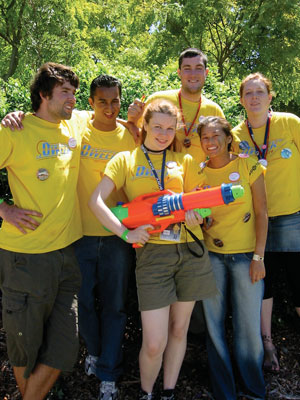
O-Week tour leaders at the University of New South Wales, Sydney, Australia, 2004

Student orientation or new student orientation (often encapsulated into an orientation week, o-week, frosh week, welcome week[1] or freshers' week) is a period before the start of an academic year at a university or tertiary institutions. A variety of events are held to orient and welcome new students during this period. The name of the event differs across institutions. Post-secondary institutions offer a variety of programs to help orient first year students. These programs can range from voluntary community building activities (frosh week) to mandatory credit-based courses designed to support students academically, socially, and emotionally. Some of these programs occur prior to the start of classes while other programs are offered throughout the school year. A number of research studies have been done to determine the factors to be considered when designing orientation/transition programs.[2][3][4][5][6][7][8]

Although usually described as a week, the length of this period varies widely from university to university and country to country, ranging from about three days to a month or even more (e.g. four or five weeks, depending on the program, at Chalmers). The length of the week is often affected by each university's tradition as well as financial and physical constraints. Additionally, institutions may include programming in the summer months before the first-year to aid in the transition.[9] Some programs may be audience-specific, such as international orientation, transfer student orientation, graduate student orientation.

Orientation programming, regardless of length or format, aims to introduce students to both the academic and social aspects of an institution as they transition from high school.[10] For institutions that have enhanced their orientations to serve as a comprehensive transition program, learning outcomes are developed to assess success. CAS Professional Standards for Higher Education provide objectives for what Orientation programs should aim to accomplish.[11] In North America, organizations exist to share practices that are built upon these outcomes. Two prominent organizations are NODA-Association for Orientation, Transition, and Retention in Higher Education and the Canadian Association Colleges and Universities Student Services (CACUSS), which has Orientation, Transition and Retention Community of Practice. The CACUSS community of practice specifically serves as a network for student affairs professionals to share best practices, research, and trends seen at Canadian institutions.


Terminology

[edit]

The week before the term starts is known as: Frosh (or frosh week) in some[12] colleges and universities in Canada. In the US, most call it by the acronym SOAR for Student Orientation And Registration;[13] Freshers' week in the majority of the United Kingdom and Ireland and Orientation week or O-week in countries such as Australia, South Africa and New Zealand, and also in many Canadian universities. In Sweden, it is known as nollning (from nolla, 'zero', in this case meaning the students have not earned any credit points yet) or inspark (being 'kicked in' to university life). Orientation week is the common phrase[clarification needed] in the United States. Some schools use the acronym WOW for Week of Welcome.

In Canada, first-year students are called "frosh" or "first-years", although the term frosh has been phased out as orientations have become dry events.[14] The terms freshies and freshers are also emerging. In the United States, first-year university students are typically[citation needed] referred to as freshmen. In Australia and New Zealand, first-year students are known simply as "first-years", although in some the colleges of the University of Melbourne and the University of Sydney they are also called "freshers". In the U.K. and Ireland, first-year students are known as freshers or first-years. Freshies is also an emerging term in New Zealand. In Sweden, the student is a nolla (a 'zero') during the orientation period and usually upgraded to the status of an etta (student who is in her/his first college term) at a ceremony involving a fancy three-course dinner and much singing.

History of student orientation

[edit]

In modern society, student orientation programs are meant to guide and assist students with their transition into post-secondary. Each institution follows different activities to welcome, transition and assist students in their transition to a new educational experience. Although it seems like every institution has some sort of student orientation they were only developed in 1888 at Boston University.[15] They were created by faculty in an attempt to ensure that students understood the role of a student in academia. These faculty members were predominantly the driving force behind student orientation programs until the 1920s.[15] From 1920-onwards a shift in the development of these orientation practices occurred. Administration at the institutions began to work towards the development. In Canada, this shift happened much later due to the 1960s and 1970s as orientation functions were developed and created by student governments.[16] Specifically, between the 1960s and 1970s, deans acting in the role in loco parentis, were focused on orientation, transition and retention programs that soon became fundamental to higher education institutions.[16] In 1948, directors, administration, and presidents met for the first time to discuss the student orientation. From this meeting the National Orientation Directors Association (NODA) was developed.

In Canada, this shift happened much later due to the 1960s and 1970s, orientation functions were developed and created by student governments. In the 1980s this shift continued to orientation programming being completed by student affairs professionals as a way to eliminate risks associated with students developed practices. Like the United States, orientation programming was used by higher education institutions to focus on transition and retention. In Canada, information, research and data around orientation programming is shared at conferences such as CACUSS.[16]

Purpose of student orientation

[edit]

Many orientation programs aim to provide students with the tools that they will need to be successful within their academic career, such as acquainting them with their campus and the academic supports available to them, as well as providing them with opportunities to meet their fellow students and build meaningful connections.

The overall message of getting familiar with the learning environment and institution has remained the same. The goals of the orientation programs are to create student's familiarity with the institution's regulations and academic standards, acquaint the students with their classmates and to learn about the other institutional members that will help students succeed.[17]

Orientation programs also serve the purpose of introducing students to rules and policies that can help keep them safe. Legislation in different North American states and provinces has led to programming that addresses consent, gendered violence, and the introduction of the campus sexual assault policy.[18][19]

Around the world

[edit]

Australia

[edit]

In Australia, some universities require students to arrive at university a week before classes start in order to gain course approval. This also allows students a chance to orient themselves to student life without the pressure of lectures—hence the term Orientation week is used to describe this week of induction into university life.

In Australian universities, such as the University of Melbourne, University of New South Wales and University of Sydney, the last or second last night is usually celebrated with a large-scale event such as a famous band playing at an entertainment venue on campus. This is generally followed by continued partying and drinking.

The University of Adelaide O-Week runs from Monday to Thursday in the week before lectures begin.[20] During O-Week sporting clubs and societies set up a variety of tented areas where clubs display their activities. The Adelaide University Union coordinates a variety of events centering around beer, bands and barbecues on the lawns near the Union complex. A major event for the week is the O-Ball (live entertainment and licensed areas) which takes place in the Cloisters (Union House). The O-Ball attracts many thousands of revellers, not all of whom are Adelaide University students. In recent times Sports and Clubs have sought to distance themselves from the student union and student association controlled activities and have set themselves up on the Maths lawns.

The Australian National University has a full week (Sunday to Sunday)[21] of events, parties and social activities open to all students of the university, organised by the Australian National University Students Association. The residential colleges often have their own O-week activities catered primarily for residents as well as the annual Burgmann Toga Party held at Burgmann College open to students from all residential colleges. Burgmann Toga is the largest party held at a university residence in the Southern Hemisphere.

Winters College Frosh Students and Bosses playing icebreakers during O-Week at York University, Toronto, Ontario, Canada, 2006

Canada

[edit]

In Canada, there is a large variety of student orientation programming offered by Canadian institutions. Some institutions have their Orientation programming run by the student union, by student groups, by university staff, or a combination. The duration and complexity of programs to support the transition for students as they enter post-secondary institutions can vary quite drastically depending on the institution.[9][22] Below are some examples of the kind of structure and programming provided by some Canadian universities:

  • Ottawa, has two universities within its urban centre; the University of Ottawa and Carleton University, both with orientations spanning approximately seven days. At the University of Ottawa, Frosh Week is called 101 week. At Carleton University there are multiple orientations, SPROSH (Sprott Frosh), ENG Frosh, Radical Frosh, and the largest, CUSA/RRRA/SEO Frosh. In the province of Quebec, because of the CEGEP system, "froshies" are of legal drinking age and Frosh activities may include the option to drink alcohol. Moreover, the proximity of the two Ottawa universities also allows them to take advantage of the drinking age in neighbouring Gatineau, Quebec.
  • The University of British Columbia cancels the first day of class for all students, and hosts an orientation day for new students, called Imagine Day. As of 2007, the Faculty of Science also holds an annual, day-long Science Frosh event for approximately 300 first-year students, while the commerce faculty holds a three-day-long frosh weekend before classes begin.
  • The University of Toronto has a number of different "Frosh Weeks" organized concurrently by different student groups within the university; including college societies, professional faculties (perhaps the best known being organized by Engineering Society, Skule (engineering society), in which 'F!ROSH' and 'F!ROSH Leedurs' dye their bodies purple) and the University of Toronto Students' Union.
  • Toronto Metropolitan University (the former Ryerson University) also has a number of "Frosh Weeks" organized by different student groups, although it also has a central frosh team known as the 'TMU Orientation Crew'. At the Friday of frosh week, the TMU Students' Union holds a concert that is free for all TMU students; the headliners for the 2015 concert included Drake and Future.
  • McMaster University also organizes many events during what they term "Welcome Week". The week strongly encourages solidarity, first with members of one's own residence or for off-campus students, and later the members of a student's faculty.
  • University of Guelph holds hundreds of orientation activities for its incoming students. These events are run by student clubs, academic groups, the undergraduate student union, along with university staff and faculty. Their main events include Move-In Day programming, large-scale informational events promoting campus safety, and the Pep Rally in which students from each residence perform a dance on the football field. The Guelph Engineering Society also hosts a series of special events for Engineering Frosh including frosh olympics, beach day, and a scavenger hunt.
  • Western University hosts the largest orientation program in Canada, involving 1200 student volunteers and an entire week of activities.
  • St Thomas University, in Fredericton, New Brunswick, hosts a week-long event including activities for each residence and activities for new students.
  • Queen's University hosts an optional Frosh week, in which students will bond through various activities, such as chants and numerous traditions such as graduated students returning to watch, as well as consume excessive amounts of alcohol.
  • University of Waterloo has a week-long orientation with classes incorporated. Students participate in programs run by each of the six faculties, as well as centralized events with all of the first-year students. The university also runs additional orientations for international students, transfer students, exchange students, out-of-province students and graduate orientation.
  • The Royal Military College of Canada has a three week orientation program, called First Year Orientation Program (FYOP) for students who have completed the initial phase of the BMOQ (Basic Military Officer Qualification). During this period, first year students will undergo mentally and physically straining tasks in order to obtain their cap brass and replace the Canadian Armed Forces issued cap brass. After the three weeks, students will complete the obstacle course around campus in which students will be pushed to the limit to complete it with their flights. After this, First Year students will go on parade to receive their RMC cap brasses, as well as receive their challenge coins with their student numbers.
  • The Royal Military College Saint-Jean goes through a similar program to RMCC. Where the core of FYOP is the same, but is reduced down from three weeks to two weeks. The same activities are conducted.

Orientation programming is often available for all levels of study; it is generally thought of as something primarily for undergraduate students but many institutions will at least provide some kind of informational Orientation for their graduate level students. International students are likely to also have their own Orientation - in addition to general Orientation - where they are provided with information about life in Canada as an international student.

Denmark

[edit]

At Roskilde University in Denmark, orientation week (in Danish rusvejledning) normally lasts from one and a half weeks to two whole weeks. During the period, approximately 14 teams consisting of 10–16 tutors each take care of an individual house to which the new students have been allocated. There is normally one house of Natural Sciences, four of Social Studies and Economics, four houses of Arts and Language and two of technology and design. Each of the first three houses described has an International version as well, where the courses are taught in English instead of Danish.

Each tutor group spends roughly fourteen days (and three to five days of pre-education in the spring semester) living on campus before the arrival of the new students (also called ruslings). These periods usually involve heavy amounts of drinking, partying and sexual activity among the tutors themselves. However most festive activities including alcohol only occur after 4 p.m. due to the alcohol policies of the university. Because of this policy, most daily activity is spent planning and preparing activities for the new students.

When the students arrive all tutor groups welcome the ruslings with the infamous Marbjergmark show usually a display of wacky sketches such as naked people playing chess, smashing rotten eggs at bystanders or themselves or men chasing midgets with a butcher's knife (to name a few examples).

During the two-week period the tutor group teach and introduce the new students to life on campus, both the social and educational aspects. As it is with the preparation period, festive activities take place after 4 p.m., and educational activities are held during the day.

The two-week period ends in a four-day period in which the house will leave campus to varied destinations. During these days mostly social activities are held, including the more secret hazing rituals of the university.

The tutors uphold a strict set of rules to maintain a safe and pleasant tutorship to prevent harmful and humiliating hazing rituals. Examples are the presence of minimum two sober tutors at each party (in Danish ædruvagter). Engaging in sexual relations with new students is also strongly discouraged. Also, it is generally not seen as appropriate to force people to drink alcohol through various games and activities. Furthermore, the university dictates that each tutor must be taught basic first aid, as well as a couple of courses in conflict management and basic education psychology.

At DTU (Danish Faculty of Technology and Engineering), Copenhagen Business School and Copenhagen University, similar periods are held. They however vary, and are significantly shorter than the overall orientation period at Roskilde University.

Finland

[edit]
First-year fuksi (tursas) student orientation, Tampere University of Applied Sciences, Finland, 2014

In Finnish universities, the student organizations for each department independently organize orientation activities for the new students in their respective departments. New students are often assigned in groups to an upperclassman tutor and participate in many activities with their tutoring group. New students may be referred to as piltti ('child'), fuksi ('freshman'), fetus or other names according to their major subject. Activities for new students may include "orienteering", pub crawls, sporting events, swimming in fountains or other forms of "baptism", sitsit parties and saunas, often done wearing homemade fancy-dress costumes. It is also considered important for the new students to participate in the regular activities of the student department organizations.

Indonesia student orientation better known as OSPEK (Student Orientation and Campus Introduction)

Indonesia

[edit]

In past years a typical orientation may consist of verbal harassment as well as initiation leading to humiliation. An orientation of freshers in Indonesia is usually called OSPEK (Orientasi Studi dan Pengenalan Kampus) for some universities and MOS (Masa Orientasi Sekolah) in middle and high school. Orientations in Indonesia have event organizers consisting of seniors and the presidium of universities. The most basic form of orientation in Indonesia consists of an educational board run and introduction to campus cultural behavior.[23] What makes orientation in Indonesia (for some universities and schools) distinctive to other countries would arguably be the freshmens' requirement to wear unusual accessories or hairstyles (i.e. freshmen were asked to wear hats made of bird's nests, neckties made of folded paper, military hairstyles for male students or intricate braids for females, and the usage of a sack instead of a rucksack). Harsh physical punishments were not uncommon during the Suharto era, and mass media continues to report inhumane activities during those orientations that led to a few cases of death.

Nowadays, however, orientation is more tolerable as physical abuse is now forbidden by law; however, it is still criticized by many psychologists and people as 'too much' because of excessive verbal harassment and the use of unusual and humiliating attributes typically found in orientations in junior high and high schools.[citation needed] As well, it is also criticized by many parents for being economically inconvenient. The reason cited by psychologists is that orientation is often used as a tool of revenge by the board of organizers for what the seniors did to them during their freshman year.[24] Because of this, there are many people who believe that MOS or OSPEK are useless traditions that need to be erased.[25][26] The cruelty of MOS and OSPEK varies between universities and schools in Indonesia,[27] although in (most) major universities and institutes, that kind of humiliation and harassment no longer exists, or is greatly limited to pending applicants or pledges for certain campus organizations.[28]

New Zealand

[edit]

As in Australia, in New Zealand students have a week to orient themselves to university life before the start of formal classes. This orientation week is a time for many social events, and is often a reason for alcohol fests.[29] Flat warmings are often held within the time limit to couple the alcohol oriented event with the general party week.

In New Zealand's main university towns such as Dunedin and Palmerston North (where students make up around one fifth of the population) orientation week leads a wide range of events. Many top overseas and local bands tour the country at this time, and the orientation tour is one of the highlights of the year's music calendar. The University of Otago in the Scottish-settled city of Dunedin traditionally holds a parody of the Highland Games called the Lowland Games, including such esoteric events as porridge wrestling.

Student pranks were once common during orientation week, but have fallen out of favour in recent years.[citation needed] Until recent years, many halls of residence also inducted new residents with "Initiation" (a form of hazing, though considerably milder than the rituals found among American college fraternities).

Although officially designated as a week, in several New Zealand universities and polytechnics orientation week stretches to over ten days.

Sweden

[edit]

Most Swedish universities have some kind of nollning ('zeroing') or inspark ('kicking-in'). This is most extensive at the technical faculties and at the student nation communities of Uppsala and Lund.[30][31] Since student union membership was mandatory in Sweden (until July 2010), the nollning is usually centrally organized from the student union with support from the universities.

At the old universities, these traditions have often turned civilized after a dark history of hazing.[32][30] Today, many student unions have strict rules against inappropriate drunkenness, sexual harassment and other problematic behaviour.

At the technical faculties, the people who organize the nollning play roles in a theatrical manner and often wear sunglasses and some form of weird clothes. Most senior students who are mentors during the nollning wear their student boilersuits or the b-frack (a worn tailcoat). This kind of organized nollning developed at KTH and Chalmers and spread to the rest of the country.

Thailand

[edit]

In Thailand, the activity is commonly called rapnong (รับน้อง), translated as 'welcoming of freshmen'. It takes place in the first week or month of the academic year at universities and some high schools. The purpose is to adapt new students to university culture. Activities include games, entertainment and recreation. These let the newcomers get to know other members of the university and reduce tension in the changing environment. It sometimes includes alcohol. The main object is to let juniors carry on the universities' tradition and identity and to bind together the new generation into one. Long-term activity often includes seniors taking freshman or older years to meals and meetings; usually the most senior pays for it all. Hazing is a concern in this activity, as many students have been humiliated, abused, and dehumanized by their upperclassmen.[citation needed]

For over 50 years, SOTUS – a hazing-based system used for college initiation in Thailand – has been involved in Thai universities. It stands for Seniority, Order, Tradition, Unity, and Spirit.[33] It is the system for freshmen to bring harmony to their friends and to show their pride through their institute. By seniors, freshmen have to do activities such as singing university songs. Moreover, freshmen are required to do a lot of things, for example, wearing a name tag and showing respect to seniors. These requirements lead seniors to try to make their juniors do what they desire and punish them if they do not follow seniors' orders.

Presently, there are adolescents and adults opposing those who had committed unethical or deadly actions to juniors. This group of adolescents has formed an "Anti-SOTUS"[34] group and it has become one of the main issues in Thailand recently.[citation needed] They consider the SOTUS system to be "old-fashioned and a source of brutality".[This quote needs a citation] Since it was established, this has become a group of people who share their opinions about the SOTUS system based on their experiences.

On the other hand, some seniors who support this system resist the anti-SOTUS attitude. They tend to say that SOTUS makes them get along together and feel proud of themselves by becoming part of their institute. Some seniors, however, coerce their freshmen to attend every activity held by them as part of preparing them to be able to live happily in university. This becomes worse when some freshmen suffer from what their senior has done to them.

In Thai society, news related to this system has been reported almost every year, for example, recent news about a male freshman[35] who died in this tradition. This news has resulted in people thinking that rapnong should end or, at least, be controlled.

In 2016, GMMTV made a television series based on this system, called SOTUS: The Series starring Perawat Sangpotirat and Prachaya Ruangroj.

United Kingdom and Ireland

[edit]

As well as providing a chance to learn about the university, freshers' week allows students to become familiar with the representatives of their Student Union and to get to know the city or town which is home to the university, often through some form of pub crawl.

Live music is also common, as are a number of organized social gatherings especially designed to allow freshers to make new friends and to get to know their course colleagues. Because of the intensity of activities, there are often many new friendships made, especially in group accommodation, some not lasting past Freshers' Week and others lasting for the whole University career and longer.

Typically a freshers' fair for student clubs and societies is included as part of the activities to introduce new students to facilities on offer, typically outside their course of study, such as societies, clubs and sports. The various societies and clubs available within the university have stalls and aim to entice freshers to join. Most campuses take the opportunity to promote safe sex to their students and sometimes offer leaflets on the subject and free condoms, as well as promoting the Drinksafe campaign. The aim is to lower the rate of sexually transmitted disease and to reduce the level of intoxication commonly witnessed in freshers' week.

Freshers' flu is a predominately British term which describes the increased rates of illness during the first few weeks of university. Although called freshers' flu, it is often not a flu at all.

United States

[edit]
Students and professor in conversation during orientation at Shimer College.

Freshmen is the traditional term for first-year students arriving at school in the United States, but the slang term frosh[36] is also used. Due to the perceived gender exclusiveness of the term, some institutions including the University of North Carolina have adopted first-year student as the preferred nomenclature.[37] Lasting between a few days and a week, the orientation is these students' informal introduction and inauguration to the institution. Typically, the first-year students are led by fellow students from upper years over the course of the week through various events ranging from campus tours, games, competitions, and field trips. At smaller liberal arts colleges, the faculty may also play a central role in orientation.

In many colleges, incoming freshmen are made to perform activities such as singing of songs, engaging in group physical activities, and playing games. These activities are often done to help freshmen make friends at their new establishment, and also to bond with each other and the upperclassmen.

Despite the fact that most first-year students are below the legal drinking age (currently 21 years in all states), heavy drinking and binge drinking may occur outside the orientation curriculum. Some programs require their organizers to sign waivers stating they will not be under the influence of any substances over the course of the week as they are responsible for the well-being of the students. Most programs have one final party on the final night to finish off the week of celebrating, in which the organizers join in.[citation needed]

Although it has been officially banned at many schools, hazing is not uncommon during the week. This can be anywhere from the organizers treating the first-year students in a playfully discouraging manner to forcing them to endure rigorous trials.

The attitude of the events also depends on the school. Many colleges encourage parents to come to the first day to help new students move into their dormitory, fill out paper work, and get situated.[38] Some schools view their week as an initiation or rite of passage while others view it as a time to build school spirit and pride. In towns with more than one university, there may be a school rivalry that is reflected in the events throughout the week.

At most schools, incoming freshmen arrive at the school for a couple of days during the summer and are put into orientation groups led by an upperclassman trained for the position. Their orientation leader will take them around campus, do activities with them, have discussions with them, help them register for the next semester's classes and make them feel comfortable about coming to school in the fall.

Freshmen orientation is usually mandatory for all new students, especially international students, which is one way to activate the status of their visa.[citation needed]

United States transfer student orientation

[edit]

After first-year students have completed some time at their university, they may find that they did not make the right choice, miss being close to home, or simply want to attend a different institution. When this occurs, they may transfer to another university, usually after their first year. Many other students transfer to four-year institutions after completing an associate degree at a community college. A smaller number of students transfer as part of a dual degree program (such as a 3-2 engineering program).[citation needed]

Many universities will hold another student orientation similar to freshman orientation for these transfer students. Freshman orientation lasts a few days or a week; on the other hand, transfer student orientation will typically last between one and three days. Transfer orientation's purpose is to acquaint transfer students with their new university. This usually includes campus tours, introducing transfer students to their adviser or perhaps a few of their teachers, and filling out paperwork for proper enrollment. At some colleges, transfer orientation is mandatory for all transfer students.[39]

Unlike freshmen, transfer students are already familiar with the independence of college life. Therefore, their orientation focuses mostly on becoming familiar with the layout and policies of their new institution, providing information about essential campus resources, and getting acquainted with other transfer students so they may make friends at their new university.[40] Transfer students may engage in games, conversations with University faculty, and discussions with current students to make acquaintances and learn more about the university.

See also

[edit]

References

[edit]

Further reading

[edit]
Revisions and contributorsEdit on WikipediaRead on Wikipedia
from Grokipedia
Student orientation refers to a transitional program conducted by universities and colleges to familiarize incoming students, particularly first-year undergraduates, with institutional policies, academic resources, facilities, and social expectations before the formal start of classes. These programs typically span one to several days and encompass activities such as guided tours, sessions for course registration, presentations on student conduct codes, and interactive sessions to foster peer connections and a of belonging. Originating in the late through initiatives like those of campus Young Men's Christian Associations , which aimed to support welfare amid rapid enrollment growth, orientation evolved from informal receptions to structured events by the early , with formalized courses appearing as early as at institutions like . Empirical studies indicate that well-designed orientations enhance retention and academic persistence by addressing adjustment challenges, such as building social networks and clarifying expectations, though effectiveness varies with program depth and delivery mode, including online formats. While primarily informational, some orientations have drawn criticism for incorporating mandatory sessions on ideological topics—such as or political viewpoints—potentially resembling coercive thought reform rather than neutral acclimation, raising concerns about free expression and institutional bias in higher education settings where left-leaning perspectives predominate. Formats differ globally, from rigorous physical challenges in programs like Indonesia's OSPEK to conversational seminars in liberal arts colleges, reflecting cultural adaptations but consistently prioritizing practical integration over abstract .

Definition and Terminology

Core Concepts and Variations

Student orientation constitutes a foundational transitional program in higher education, designed to acquaint incoming students with institutional policies, academic expectations, resources, and peer networks, thereby mitigating initial adjustment challenges. These initiatives, often mandatory for first-year undergraduates, emphasize practical acclimation through guided activities that foster familiarity with daily operations and reduce early attrition risks, as evidenced by participation rates exceeding 90% at many U.S. institutions where orientations precede fall semesters. At its core, the program integrates administrative functions such as course registration and ID issuance with educational components like sessions and policy briefings on conduct codes, health services, and financial aid processes. Social elements, including icebreakers and group outings, complement these to build , with empirical indicating that structured peer interactions during orientation correlate with higher first-semester retention by up to 10-15% compared to non-participants. Variations emerge in program scope and delivery: short-format sessions (1-2 days) focus on logistics at commuter colleges, while extended models (3-7 days) at residential universities incorporate overnight stays and team-building exercises to deepen immersion. Delivery modalities further diversify orientations, with in-person formats yielding superior student satisfaction scores (averaging 4.2/5) over virtual alternatives (3.5/5), per surveys of over 1,000 participants, due to enhanced relational opportunities absent in remote setups. Hybrid approaches, accelerated post-2020, blend online modules for flexibility with on-site events, particularly benefiting transfer or non-traditional students who comprise 20-30% of enrollees at select public universities. Internationally, programs adapt to cultural contexts; for example, European orientations prioritize academic seminars over social rites, contrasting U.S. emphases on extracurricular integration, while some Asian institutions integrate familial involvement in multi-day events. Tailored variants for subpopulations—such as graduate-specific sessions emphasizing research protocols or modules on compliance—address unique needs, with data from 65 U.S. four-year colleges showing 60% offering differentiated tracks to boost inclusivity. Student orientation programs primarily serve as short-term introductions to institutional policies, navigation, and basic academic procedures, typically spanning one to seven days before the academic term begins, in contrast to broader student initiatives that extend over weeks or months to support ongoing retention, skill development, and personalized integration into life. For instance, orientation sessions often focus on immediate tasks like course registration and resource overviews, while incorporates follow-up mentoring and progress monitoring to address barriers to persistence. Unlike first-year experience (FYE) courses or programs, which are structured academic interventions—frequently offered for credit and spanning the entire freshman year to build competencies in areas such as , college-level study habits, and career —student orientation remains non-credit-bearing and preparatory, emphasizing one-off exposure to university expectations rather than sustained curricular support. Orientation thus functions as an entry point within larger FYE frameworks but lacks the longitudinal evaluation and skill-assessment components typical of FYE, which have been linked to improved GPA and retention rates in empirical studies. Student orientation also diverges from welcome weeks or frosh weeks, which extend beyond administrative induction into predominantly social and extracurricular , often commencing after students have settled into residence and featuring peer-led , performances, and informal networking to foster community ties rather than formal policy dissemination. While some institutions blend these—such as designating frosh week as student-union organized orientation with a heavier emphasis on festivities—traditional orientation prioritizes mandatory informational modules on topics like and health services, distinguishing it from the optional, celebratory nature of welcome programming.

Historical Development

Origins in Early Higher Education

In medieval European universities, such as the in the 15th century, incoming students—often as young as 14—underwent informal initiations that served as precursors to modern orientation by enforcing hierarchy and familiarizing novices with institutional norms, though these frequently involved rituals like donning monstrous costumes, enduring verbal insults, hair-pulling, and mock executions before purchasing wine for seniors. Similar practices at the prohibited violence against freshmen in communal spaces, indicating widespread peer-led acclimation efforts amid strict daily schedules of lectures, prayers, and prohibitions on or excessive . These rituals, documented in texts like the Manuale scholarium, emphasized subservience to upperclassmen and integration into faculty nations, reflecting causal pressures from small, homogeneous student bodies where survival in a rough environment demanded quick . In early American higher education, —established in 1636—pioneered rudimentary orientation by assigning experienced upperclassmen to guide new entrants through campus transitions and rites of passage, which included elements later viewed as to build resilience and camaraderie among predominantly local, religiously homogeneous students. By the late , as enrollments expanded and student diversity increased, Harvard formalized faculty involvement in addressing freshman-specific administrative and adjustment needs, a model adopted by other institutions to mitigate attrition from unfamiliar academic rigor. Parallel student-initiated efforts emerged through campus Young Men's Christian Associations (YMCAs) starting in the late , where members organized events to support incoming freshmen, prioritizing organizational welfare, peer fellowship, and moral guidance amid growing secular influences on campuses. These voluntary programs, driven by undergraduates rather than administrators, focused on practical acclimation—such as navigating dormitories and classes—laying empirical foundations for later structured orientations by demonstrating that proactive reduced isolation and improved retention in expanding colleges.

Expansion in the 20th Century

The expansion of student orientation programs in the 20th century was driven by rising college enrollments, the need for structured socialization amid growing institutional scale, and contributions from student organizations like the YMCA and YWCA. Following the first formal program at Boston University in 1888, adoption accelerated in the early decades; by 1912, YMCA associations operated on approximately 80% of U.S. campuses, providing handbooks, receptions, and settlement assistance to incoming freshmen. These efforts evolved from evangelical student-led initiatives—such as the YMCA's Fall Campaign formalized around 1889, which greeted arrivals at train stations and oriented them to campus life—into more comprehensive activities, including freshman camps introduced in 1926 at the University of Illinois and soon adopted elsewhere. By 1925, over 25 colleges offered dedicated orientation courses, with roles like Directors of Orientation emerging to coordinate them. The saw further formalization, as programs shifted from ad hoc faculty or peer efforts to administratively managed events like Freshman Week, first implemented at the in 1923 and at in 1927. Over 100 institutions had established such programs by the 1940s, reflecting broader administrative specialization amid steady enrollment growth from the late onward. This era emphasized acclimating students to academic routines, housing, and social norms, often through handbooks expanding from brief guides in the 1880s to over 100-page volumes by the . The first national conference of orientation directors, held December 6-7, 1948, in , with 24 delegates from six states, addressed aims and objectives, signaling a push for shared techniques as orientation became integral to admissions and retention. Post-World War II expansion was particularly pronounced, fueled by the of 1944, which spurred a surge in enrollments—from about 1.5 million students in 1940 to 2.7 million by 1950—necessitating scaled programs to facilitate transitions for diverse, often older veterans. The 1950s brought greater structure, with first-year courses supplanting some freshman weeks, while the 1960s introduced pre-college elements like peer mentoring in small groups. By the 1970s, amid further diversity increases and legislative shifts like the Family Educational Rights and Privacy Act (), which curtailed parental data access, orientations emphasized student autonomy and retention, culminating in the National Orientation Directors Association's incorporation in 1977. The 1980s and 1990s standardized practices through bodies like the Council for the Advancement of Standards (1979 onward), incorporating retention metrics, parent sessions, and early technology such as VHS-based virtual orientations at the , as programs addressed nontraditional and transfer students comprising up to 60% of four-year graduates.

Contemporary Evolution and Standardization

In the decades following the mid-20th century expansion, student orientation programs underwent significant evolution, incorporating , psychological support, and retention-focused elements alongside traditional academic and administrative guidance. By the , orientations had transformed into multifaceted experiences blending rigorous academic with social and cultural acclimation, often resembling intensive boot camps that addressed students' shifting life circumstances, such as increased diversity and demands. This shift responded to empirical observations of higher 's role in mitigating early attrition, with programs extending durations—such as from two days to two weeks at some institutions—and emphasizing community building to foster long-term engagement. Into the , orientations increasingly integrated and data-driven approaches, prioritizing measurable outcomes like enrollment persistence and sense of belonging, particularly as first-year retention rates became key institutional metrics. The accelerated hybrid and virtual formats, prompting reevaluations to enhance peer connections and combat isolation, with satisfaction rates rebounding to pre-pandemic levels by 2023 among in-person participants (around 80% at four-year institutions). However, some evolutions, including mandatory diversity or pluralism sessions introduced in the (e.g., probing personal attitudes on sensitive topics), have faced scrutiny for veering into ideological conditioning rather than neutral transition support, potentially alienating students without proven causal benefits for academic success. Standardization emerged as a counterbalance to these variations, driven by professional bodies establishing benchmarks for program quality and assessment. The Council for the Advancement of Standards in Higher Education (CAS) published dedicated guidelines for new student orientation programs, outlining criteria for mission alignment, diversity responsiveness, and ethical practices, which institutions adopted for self-evaluation starting in the early 2000s. The National Orientation Directors Association (NODA), formalized in but influential in contemporary frameworks, disseminated these CAS standards and promoted evidence-based techniques, such as longitudinal evaluations of program impacts on transition metrics. By the 2010s, over 1,000 institutions referenced CAS protocols in program audits, fostering uniformity in components like and family involvement while allowing flexibility for institutional contexts, though adherence varies and lacks universal enforcement. This standardization has correlated with improved program efficacy in targeted areas, such as reducing first-semester dropout rates by facilitating structured peer networks, per institution-specific longitudinal data.

Core Purposes and Objectives

Academic and Administrative Integration

Student orientation programs facilitate administrative integration by guiding participants through essential enrollment processes, such as obtaining student identification cards, setting up campus email accounts, and completing financial aid paperwork, which collectively ensure compliance with institutional policies and timely access to services. These sessions, often conducted in the first 1-3 days of arrival, address bureaucratic hurdles that could otherwise delay academic starts; for instance, a 2021 study of first-year students found that orientation-assisted registration reduced scheduling errors by providing hands-on support from staff, minimizing conflicts in prerequisites and credit loads. Administrative components also cover access, health services registration, and parking permits, with programs at two-year colleges emphasizing these to accommodate commuter populations who face heightened logistical challenges. Academic integration within orientation emphasizes familiarization with degree requirements, major selection, and learning resources, typically through workshops led by advisors who outline general credits, elective options, and progression timelines. Participants engage in mock advising sessions or group consultations, where advisors review transcripts and recommend initial course loads—evidence from programs indicates that such proactive guidance during orientation correlates with higher first-semester enrollment rates in foundational courses, as students avoid under- or over-loading credits that could lead to . For example, orientations at public two-year institutions often integrate academic planning with registration, enabling 80-90% of attendees to finalize schedules on-site, thereby bridging the gap between high school advising and university-level . This phase counters common pitfalls like misunderstanding credit transfer equivalencies, particularly for transfer students, by providing direct interaction with faculty or department representatives. While administrative and academic elements of orientation yield immediate practical benefits, empirical assessments reveal mixed long-term impacts on integration, with retention gains more attributable to follow-up advising than one-off sessions; a review of orientation data notes that technical tasks like registration achieve high completion rates (over 95% in structured programs) but require reinforcement to sustain academic momentum. Institutions prioritizing these components, such as those aligning orientation with intrusive advising models, report reduced dropout in the first term due to fewer procedural dropouts, though causal links weaken without ongoing support structures. Overall, these integrations serve as foundational , empirically easing the causal pathway from admission to productive enrollment by mitigating information asymmetries inherent in large-scale higher education systems.

Social and Psychological Adjustment

Student orientation programs aim to mitigate the psychological stressors of the college transition, including heightened anxiety, depression risk, and adjustment disorders, by introducing mechanisms, resources, and resilience-building exercises. Incoming students often experience elevated stress from academic demands and separation from familiar support systems, with first-year anxiety prevalence reaching up to 55% in some cohorts. Orientation activities, such as workshops on time management and emotional regulation, target these issues by normalizing transitional challenges and connecting students to counseling services early. Socially, orientations facilitate integration through peer-led group events, club fairs, and collaborative tasks that encourage bonding and reduce isolation, countering the interpersonal deficits linked to poor outcomes. These elements promote a sense of belonging, which empirical data associate with lower dropout intentions and sustained engagement; for example, overnight programs have demonstrated enhanced persistence via early social ties. Blended or in-person modalities further amplify connectedness, as participants report stronger perceived post-orientation compared to non-participants. Research on specialized formats, like outdoor orientations, reveals causal links to improved psychological and stress reduction, with participants showing gains in and interpersonal resilience that persist into the semester. However, efficacy varies by program design; sessions explicitly addressing , such as those on substance resistance and life balance, yield measurable declines in anxiety metrics. Overall, these components align with causal pathways where proactive social exposure buffers against the 32% median anxiety rate among undergraduates, fostering adaptive behaviors over time.

Long-Term Retention and Success Goals

Student orientation programs aim to enhance long-term retention by equipping participants with foundational skills and connections that promote persistence through degree completion. Retention in this context refers to the proportion of first-year students returning for subsequent terms, with national U.S. averages hovering around 70-80% from first to second year, though varying by institution type. Programs target this by addressing early attrition risks, such as academic underpreparedness and , which empirical analyses link to dropout rates exceeding 30% in the first year at many four-year institutions. A quantitative study of orientation completers found they achieved higher cumulative GPAs and rates compared to non-participants, suggesting an associative boost in academic trajectory. Success goals extend beyond retention to encompass measurable outcomes like timely and post-graduation . Orientations often incorporate modules on time management, study strategies, and career , posited to cultivate habits that correlate with higher six-year rates, which stand at approximately 63% nationally for public four-year colleges. Research on orientations indicates positive effects on term-to-term persistence, with one analysis attributing a 7% retention increase to mandatory sessions that improved academic . Similarly, evaluations of first-year seminars integrated into orientations report correlations with elevated GPAs and reduced withdrawal, though causal links require controlling for self-selection biases in attendance. Mechanistically, these programs foster enduring networks and institutional commitment, which longitudinal data tie to sustained engagement. Peer mentoring during orientation, for instance, builds that buffers against later stressors, with studies showing participants 10-15% more likely to utilize resources over time. However, effectiveness hinges on program design; short, informational sessions yield weaker long-term impacts than those emphasizing skill-building and follow-up, as evidenced by persistence rate disparities across delivery methods. While not panaceas—external factors like financial aid exert stronger influences—orientations contribute incrementally to success by aligning early experiences with institutional expectations.

Typical Components and Formats

Pre-Arrival and In-Person Activities

Pre-arrival activities in student orientation programs typically involve preparatory steps to facilitate smooth transition to life, such as completing checklists for registration, financial verification, and housing assignments. Students are often required to submit required documents like immunizations and set up security measures, such as two-factor authentication systems, before arrival. These measures aim to reduce administrative burdens during in-person sessions and allow students to focus on acclimation. Many universities offer optional pre-arrival programs, including virtual workshops on resources, service projects, and peer presentations to build early connections and confidence. For instance, programs may feature small-group sessions for outdoor adventures or acclimation activities to foster relationships among incoming students prior to physical arrival. International students frequently participate in targeted pre-arrival sessions addressing visa compliance, cultural adjustment, and academic expectations through question-and-answer formats with current students. In-person activities commence upon students' arrival, often spanning one to two days immediately before the academic term, and include guided tours to familiarize participants with facilities, libraries, and administrative buildings. These sessions typically incorporate meetings where students select courses, review degree requirements, and register for classes under faculty or advisor guidance. Orientation leaders, often upper-class peers, lead group icebreakers such as photo scavenger hunts or team-building exercises to encourage and reduce isolation. Additional in-person components involve presentations on policies, protocols, and available services like counseling and centers, enabling students to identify support networks early. Many programs include opportunities to join clubs, attend faculty meet-and-greets, and participate in residence hall activities, with some providing overnight stays in dormitories to simulate daily routines. Practical tasks, such as obtaining IDs and completing remaining paperwork, are handled on-site to streamline enrollment. Variations exist by institution, with larger universities emphasizing logistical efficiency while smaller ones prioritize personalized interactions.

Virtual and Hybrid Elements

Virtual elements in student orientation programs encompass asynchronous online modules, interactive webinars, virtual campus tours, and self-paced videos covering academic policies, registration processes, and campus resources. These components emerged prominently in higher education following the , which necessitated remote for incoming students in 2020, with many institutions retaining them for and cost efficiency. Hybrid models integrate these digital features with limited in-person sessions, such as optional meetups or peer-led hybrid events, to accommodate diverse student needs including commuters, transfer students, and those in fully online degree programs. Empirical data indicate mixed outcomes for virtual orientations. A study of online students at a U.S. institution reported a 7% retention increase from fall to spring after mandatory online orientation implementation, attributed to improved familiarity with course navigation and support systems. Similarly, completion of self-paced online modules has been linked to students' self-reported better preparation for online coursework, with participants demonstrating higher confidence in time management and technical skills post-orientation. However, satisfaction rates lag behind in-person formats; only 55% of four-year college students rated virtual orientations as good or excellent, compared to 80% for in-person, potentially due to reduced opportunities for real-time social interaction. Hybrid approaches seek to mitigate these gaps by blending modalities, fostering social connectedness through combined online forums and brief in-person activities. One of first-year students found blended orientations positively influenced perceived social ties, though quantitative persistence rates varied by institution. In terms of wellness, a hybrid program for counseling students showed no overall self-efficacy gains but increases in 89% of participants' scores or stability, alongside modest rises in social and emotional wellness domains. Despite these benefits, highlights causal challenges: virtual elements excel in scalability for large cohorts—serving thousands without venue constraints—but may underperform in building causal pathways to long-term absent follow-up in-person reinforcement. Ongoing trends as of 2025 emphasize data-driven in hybrid designs, such as AI-tailored content, to enhance equity for underrepresented groups facing access barriers.

Peer-Led and Faculty Involvement

Peer-led elements in student orientation programs typically involve upper-year students serving as mentors, guides, or facilitators who conduct tours, lead activities, and provide informal advice on academic and social adjustment. These roles leverage the relatability of peers, as shows students often trust peer leaders more than staff for fostering during the transition to higher education. Empirical studies demonstrate that such increases first-year students' sense of belonging and inclusion, with trained peer-mentors contributing to a more supportive atmosphere that reduces early dropout risks. For instance, peer interactions in orientation have been linked to improved cognitive and social development, as peers model successful of life. Faculty involvement complements peer efforts by emphasizing academic expectations and direct engagement, such as through welcome addresses, course previews, or question-and-answer sessions that clarify demands and study habits. Participation by faculty in these programs delivers high-impact messaging on institutional values and learning strategies, which orientation professionals identify as essential for orienting students beyond social aspects. Studies affirm that informal faculty-student interactions during orientation build early relational ties, correlating with sustained engagement and retention by signaling academic support availability. This involvement is deemed critical, as faculty presence humanizes the and addresses potential mismatches in student expectations versus realities, though implementation varies by size and resources. The between peer and roles enhances overall program efficacy, with peers handling relational and experiential guidance while provide authoritative academic insights, together mitigating isolation and promoting persistence. Quantitative analyses of orientation efficacy, including retention metrics, support this division, showing combined approaches yield better adjustment outcomes than isolated efforts. However, effectiveness depends on training quality for peers and buy-in, as untrained participants may dilute intended benefits.

Empirical Evidence on Effectiveness

Key Studies on Retention and Engagement

A study at a technology-focused college analyzed data from 1,505 first-year students across 2018 and 2019 cohorts, finding that retained students attended significantly more orientation sessions (mean 3.56–3.79) than those who departed (mean 2.66–2.97), with p < 0.001 via t-tests. Logistic regression indicated that attendance at specific sessions, such as Step 1 (odds ratio 2.22–2.79, p < 0.001) and Block 3 (odds ratio 1.55–2.13, p < 0.001–0.023), increased retention odds, alongside higher first-semester GPAs (2.49 vs. 1.99, p < 0.001) and co-curricular involvement (1.84 vs. 1.26 memberships, p < 0.001) for those attending over 50% of sessions. Overall first-to-second semester retention was 79.5%, and first-to-second year was 63%. At a rural Kentucky community college, a 2010 cohort analysis of 296 first-time, full-time students showed academic orientation program (AOP) attendees had 93% term-to-term persistence versus 84% for non-attendees (p = 0.009) and 73% retention versus 62% (p = 0.049), with linear regressions confirming positive effects (β = 0.100 for retention, β = 0.127 for persistence). No significant differences emerged in GPA, credit hours, or credentials earned. A quantitative analysis at Minnesota State University, Mankato compared on-campus and online orientations for first-year students from 2021–2023, revealing 82.6% fall-to-fall persistence for on-campus attendees (N = 2,034) versus 76.2% for online-only (N = 2,482), with logistic regression yielding an odds ratio of 1.481 (p < 0.001). Completion of more online modules correlated positively with persistence, though effect size was weak (phi = -0.074). In a pilot for online courses, face-to-face orientation yielded 91% retention (32/35 attendees) versus under 18% (6/29 non-attendees), with p = 0.9143, attributing gains to built learning communities and social support. Qualitative interpretive phenomenological analysis of first-year residential students at small private institutions identified orientation's role in fostering sense of belonging, peer connections, and transition confidence, themes linked to enhanced engagement and persistence into the sophomore year. Non-attendees showed lower retention (e.g., 60% in one cohort), while overall rates hovered around 80–82% for attendees. Related meta-analyses on first-year seminars, which often incorporate orientation elements, report small positive effects on one-year retention (δ = 0.11, k = 195, N = 169,666), though effects vary by program type and institution, suggesting modest overall influence rather than transformative impact.

Metrics of Success and Causal Factors

The primary metrics evaluating the effectiveness of student orientation programs center on retention and persistence rates, particularly first-to-second-year continuation at the institution. Studies consistently report associations between orientation attendance and elevated retention, though often correlational rather than causal due to self-selection among participants. For example, analysis of 1,505 first-year undergraduates at the (2018–2019 cohorts) found retained students attended a mean of 3.56 orientation session blocks compared to 2.80 for those who departed (t=6.673, p<0.001), with logistic regression showing attendance in initial program blocks raising fall-to-spring retention odds by 2.22 times (p<0.001) and fall-to-second-year odds by 1.63 times (p=0.004). In another case, mandating an asynchronous virtual orientation for online learners at Williams Baptist University increased fall-to-spring retention from 88% (2016–2017 cohorts, n=129 per year) to 95% (2018 cohort). Broader reviews rank orientation among high-impact retention strategies, with institutions emphasizing it achieving notable persistence gains, though pre-1980s data like Lenning et al. (1980) lack modern controls for confounders such as demographics or pre-entry preparation. Secondary metrics include academic outcomes like grade-point average (GPA), credit accumulation, and degree completion, alongside psychosocial indicators such as sense of belonging and engagement. Orientation-linked advising has yielded statistically significant first-semester GPA improvements and higher credits earned in subsequent terms, per evaluations of proactive models involving faculty monitoring and skill workshops. Self-reported data from large surveys indicate 73% of attendees view orientations positively for transition support, correlating with reduced early withdrawals. Causal factors driving these metrics involve program elements promoting integration per Tinto's departure model, including multi-session formats covering academic advising, registration, and social events to foster institutional fit. Attendance in comprehensive blocks—encompassing peer interactions and expectation-setting—shows strongest associations with persistence, as fragmented participation yields weaker odds ratios. integration enhances retention across 17 analyzed programs by building community and reducing isolation, particularly for first-generation or underrepresented students, while also boosting completion rates in 5 cases. Holistic advising, with sustained faculty-student contact and nonacademic supports like time management training, causally links to better persistence via randomized trials, though single-institution studies predominate and may inflate effects due to institutional incentives. Experimental evidence remains limited, highlighting risks of overattributing outcomes to orientation amid confounding variables like socioeconomic status.

Limitations in Research Findings

Research on the effectiveness of student orientation programs in improving retention, engagement, and academic success often relies on correlational designs rather than randomized controlled trials, making it difficult to establish causality. Self-selection bias is a pervasive issue, as participants who attend orientations tend to be more motivated or academically prepared than non-attendees, inflating apparent benefits independent of the program itself. For instance, studies frequently compare voluntary enrollees to non-participants without adequately controlling for preexisting differences in student background or psychological attributes. Confounding variables further undermine findings, including uncontrolled factors such as family support, work commitments, socioeconomic status, and concurrent interventions like academic advising, which may independently influence outcomes. Many analyses struggle to statistically isolate orientation's isolated impact amid these influences, as noted in reviews highlighting the complexity of social connections and individual differences. Additionally, external disruptions, such as the shift to online formats during the in 2020, introduce variability that retrospective studies cannot fully disentangle from program effects. Sample sizes and scopes are often limited, with much evidence drawn from single institutions or small cohorts—such as one rural community college study involving 296 students over two years—restricting generalizability across diverse higher education contexts. Longitudinal data tracking long-term retention (beyond the first year) remains scarce, with many evaluations relying on short-term or cross-sectional measures like immediate satisfaction surveys rather than sustained academic performance. Measurement challenges persist, including reliance on self-reported data prone to social desirability bias and imprecise attendance tracking (e.g., via card swipes without verifying engagement). These limitations collectively suggest that while orientation programs correlate with positive metrics, rigorous evidence of causal efficacy is inconclusive, warranting caution in attributing retention gains solely to such initiatives. Future research requires quasi-experimental approaches, larger multi-institutional samples, and controls for selection effects to better isolate true impacts.

Criticisms and Controversies

Ideological Content and Indoctrination Risks

Critics contend that student orientations frequently embed ideological content through mandatory sessions on diversity, equity, and inclusion (DEI), presenting progressive viewpoints on topics such as systemic racism, microaggressions, and gender identity as unquestioned truths, potentially fostering indoctrination rather than open inquiry. A 2022 analysis of 55 U.S. college orientations found that approximately 70% of materials focused on DEI-related themes, including bias training and anti-racism workshops, with limited emphasis on academic skills or neutral integration topics. Specific examples include 's required DEI orientation module covering privilege and intersectionality, and 's mandatory viewing of the "Blue Eyed" film on racism awareness during freshman events, which employs confrontational exercises to challenge participants' beliefs. These sessions often occur in group settings with peer facilitators, amplifying social pressure to conform without opportunities for dissent or exposure to counterarguments. The risks of indoctrination arise from the one-sided presentation of contested social theories, which may precondition students to view disagreement as moral failing or bias, thereby chilling free expression early in their college experience. Reports indicate that such trainings correlate with heightened perceptions of ubiquitous discrimination among participants, potentially exacerbating division rather than promoting empirical understanding of campus dynamics. For instance, a Speech First study of 248 institutions revealed widespread DEI requirements integrated into orientations and general education, framing ideological conformity as a graduation prerequisite and limiting viewpoint diversity. Critics, including free speech advocates, argue this mirrors thought reform techniques by leveraging authority figures and group dynamics to shift beliefs, particularly vulnerable among impressionable freshmen separated from prior support networks. Empirical concerns are compounded by academia's documented left-leaning bias, which influences orientation content toward uncritical endorsement of progressive frameworks without balancing evidence from alternative perspectives, such as evolutionary psychology or classical liberal critiques of identity politics. While proponents claim these sessions build inclusivity, surveys post-orientation show subsets of students reporting discomfort or self-censorship on political topics, suggesting unintended conformity effects. Absent rigorous, peer-reviewed evaluations isolating causal impacts, the prevalence of mandatory ideological elements raises questions about whether orientations prioritize institutional agendas over individual critical thinking development.

Practical Shortcomings and Subgroup Disparities

Practical shortcomings of student orientation programs include information overload from condensed sessions that attempt to cover administrative logistics, academic policies, and campus resources in limited timeframes, often leading to diminished retention of key details among participants. For instance, multi-day in-person orientations can exhaust attendees with repetitive presentations and mandatory activities, reducing engagement as students prioritize social bonding over substantive learning. Online formats exacerbate these issues by struggling to foster genuine peer connections, with studies noting lower interaction levels compared to hybrid or in-person models due to technical barriers like inadequate device compatibility or absence of real-time feedback mechanisms. Additionally, failure to update content regularly results in outdated information on policies or technology, undermining program utility; one analysis of community college orientations found that unrefreshed materials correlated with student confusion on enrollment processes. Subgroup disparities manifest in uneven program effectiveness, particularly for first-generation students who often enter with less familiarity of higher education norms, leading to lower perceived value from generic orientations that emphasize procedural details over navigational guidance. A study of first-generation community college students revealed that standard orientations inadequately addressed their unique barriers, such as decoding implicit academic expectations, resulting in heightened anxiety and reduced initial GPA compared to continuing-generation peers. International students face additional hurdles, including cultural mismatches in program design; for example, sessions on U.S. classroom etiquette are frequently superficial, leaving participants overwhelmed by unaddressed differences in communication styles and individualism, which contribute to isolation during the critical first weeks. Separate orientations for racial minorities, intended to build support networks, have been critiqued for inadvertently promoting segregation by limiting cross-group interactions, with enrollment data from community colleges showing Black and Hispanic students participating at rates 10-15% lower than White students in general programs, potentially exacerbating feelings of exclusion. Empirical retention analyses indicate these groups experience smaller gains from orientation—e.g., first-generation and underrepresented minority students show only marginal improvements in persistence rates (around 2-5%) versus 7-10% for others—attributable to insufficient tailoring for socioeconomic or cultural capital deficits.

Economic and Resource Critiques

Orientation programs impose direct financial burdens on students through mandatory fees, often ranging from $50 to $200 or more per participant, covering activities, meals, materials, and staffing. These fees, assessed as one-time charges upon enrollment, exclude additional expenses such as travel and lodging for multi-day events, which can exacerbate access barriers for low-income or rural students. At institutions like , the two-day program costs $155, including meals but requiring separate transportation arrangements. Institutions face substantial operational costs, including personnel for facilitation, venue usage, and event logistics, though comprehensive aggregate data remains sparse. In response to fiscal pressures, including post-pandemic budget constraints and enrollment declines, many universities have scaled back programs to mitigate resource strain. For instance, the University of Maryland Baltimore County shortened daily sessions and shifted advising to virtual formats, while Reed College reduced required in-person time to 2-3 sessions per day over five days, relocating non-essential content online. These adjustments reflect critiques of inefficiency, where extended on-campus events demand disproportionate staff hours and facilities without proportional gains in student outcomes. Critics argue that orientation spending represents an opportunity cost, diverting funds from high-impact areas like academic advising or financial aid amid broader higher education fiscal scrutiny. Student feedback often highlights perceived low value relative to fees, with complaints of redundant information and minimal long-term utility, such as at UCLA where $400+ programs were deemed underwhelming. Broader analyses question non-academic expenditures, including orientations, as contributors to rising tuition and fees without rigorous cost-benefit validation. While some studies claim favorable returns through retention, the absence of standardized economic evaluations limits claims of efficiency, prompting shifts toward hybrid models to lower per-student costs.

Global and Institutional Variations

North American Practices

In the United States, student orientation programs for incoming undergraduates generally occur in late summer, lasting from one to seven days, and focus on practical acclimation to campus environments. These sessions typically include guided campus tours to familiarize students with facilities such as libraries, dining halls, and residence areas; academic advising meetings to assist with course selection and registration; and mandatory information sessions covering institutional policies on conduct, sexual assault prevention, and access to support services like counseling and financial aid. Participation is often required for full-time freshmen, with larger public universities like those in the University of California system hosting multi-day events that integrate peer mentors to lead small-group discussions and icebreaker activities aimed at building early social networks. Community colleges may offer shorter, half-day formats emphasizing transfer pathways and vocational resources, while some institutions have shifted to hybrid models post-2020, combining online modules on academic integrity with in-person social events. Canadian practices, frequently termed "Frosh Week" or "O-Week," mirror U.S. structures but place greater emphasis on peer-driven social integration, particularly at universities like the University of Toronto and McGill, where upper-year student leaders organize events such as barbecues, games, and faculty meet-and-greets to foster a sense of belonging among first-year cohorts. These programs, held in early September, incorporate academic components like workshops on study skills and library use, alongside sessions for international students on immigration regulations and cultural adjustment, with institutions such as the University of Waterloo providing regional transportation for off-campus explorations. Attendance is encouraged but not always mandatory, and recent evolutions have reduced alcohol-centric traditions in favor of inclusive activities, reflecting institutional responses to safety concerns and demographic shifts toward diverse student bodies. Across both countries, orientations increasingly feature digital tools, such as mobile apps for navigation and event scheduling, with surveys from 2023 indicating that 80% of U.S. four-year college students rated in-person orientations positively compared to 55% for virtual alternatives, underscoring preferences for direct interpersonal engagement in building retention-supporting connections. Variations exist by institution type, with private liberal arts colleges prioritizing intellectual discussions and public research universities emphasizing scale through mass convocations, though equity-focused reviews highlight gaps in accessibility for underrepresented groups, prompting recommendations for tailored pre-orientation surveys and feedback mechanisms.

European and Other Western Approaches

In the United Kingdom, student orientation is commonly known as Freshers' Week, typically occurring in the week before the academic term begins, with activities centered on campus tours, society fairs, and social events to facilitate integration. Universities such as those in and emphasize practical sessions on academic procedures, student services, and settling into UK life, often including nightlife and club sign-ups that can involve significant alcohol consumption. Continental European universities conduct orientation weeks focused on academic and administrative guidance, such as program briefings, stress management workshops, and departmental meet-and-greets, as seen at institutions like Europa-Universität Flensburg in Germany and the University of Tübingen. In Germany, some high schools offer preliminary orientation semesters for undecided students transitioning to higher education, bridging secondary and tertiary levels. Central European University in Hungary structures its week with initial "Meet and Greet" sessions starting September 1, prioritizing peer and faculty connections. Scandinavian approaches feature structured welcome programs with mentor-led activities, cultural integration events like Swedish fika, sports, and fairs connecting students to unions and services, exemplified by Lund University's orientation weeks and Uppsala's receptions in historic buildings. In Norway, Bergen’s Fadder Week pairs newcomers with mentors for peer support during introductory events. These programs aim to ease transition through social and practical support, often spanning the first semester's start in early September. In Australia, Orientation Week, or O-Week, precedes classes with celebratory events, information sessions, and support services to acquaint students with campus life, as implemented at UNSW Sydney and the University of Queensland. Universities like and Monash host workshops and activities tailored to faculties, with events running for one to two weeks per semester, emphasizing transition aid for both domestic and international students. Compared to North American models, European and Australian orientations tend toward greater student autonomy and less institutionalized hand-holding, though they similarly prioritize retention through early socialization.

Developing Regions and Adaptations

In developing regions, student orientations often adapt to resource scarcity, large enrollment surges, and entrenched cultural hierarchies, prioritizing peer-led integration over resource-intensive programming common in wealthier nations. Universities in sub-Saharan Africa, for instance, face challenges like overcrowded campuses and limited administrative support, leading to orientations that emphasize basic acclimation to institutional routines and survival skills amid infrastructural deficits. A study on South African higher education highlights seven strategies for enhancement, including structured pre-arrival information and peer mentoring to boost retention rates, which hover around 70-80% for first-year students in such contexts due to socioeconomic barriers. In Southeast Asia, particularly Indonesia, orientations known as ospek (orientasi studi dan pengenalan kampus) exemplify cultural adaptations rooted in seniority systems, where senior students guide newcomers through campus navigation, extracurricular recruitment, and social norms, typically spanning one to two weeks at the start of the academic year. However, these programs frequently devolve into hazing rituals involving verbal abuse, physical tasks, and humiliation, reflecting hierarchical traditions dating to the 1950s but resulting in documented harms, including six student deaths from exhaustion or violence between 2010 and 2015. Reforms have been proposed, such as shifting to formalized, faculty-supervised sessions to mitigate risks while preserving adaptive elements like rapid socialization in high-density environments. African adaptations vary by country; in Nigeria, institutions like the University of Lagos conduct multi-day orientations for thousands of freshmen, focusing on academic expectations, registration processes, and anti-corruption sensitization starting April 9, 2025, to address high dropout rates exceeding 30% linked to unpreparedness. Similarly, the integrates orientation from August 27, 2025, with emphasis on campus mapping and support networks to counter regional instability and economic pressures. In India, orientations at public universities like 's Hindu College involve introductory sessions on July 15, 2006, adapted to massive intakes by leveraging alumni volunteers for logistical efficiency amid funding constraints. These practices underscore causal trade-offs: while cost-effective and culturally resonant, they risk exacerbating subgroup disparities, such as for rural or low-income students, without robust oversight.

Technological and Post-Pandemic Innovations

The COVID-19 pandemic accelerated the adoption of virtual and hybrid formats in student orientation programs, with many institutions shifting from in-person events to online platforms in 2020 to comply with health restrictions and maintain accessibility. By 2021, as campuses reopened, hybrid models persisted, combining live sessions with digital resources to accommodate diverse student needs, such as remote participation for transfer students or those with health concerns, leading to reported improvements in retention rates at community colleges, where first-year persistence rose to around 67% post-2020. These adaptations emphasized data-driven personalization, with online hubs providing timely information via preferred channels like mobile apps and email, fostering virtual communities before physical arrival. Technological tools have enhanced orientation efficiency through dedicated software and mobile applications, enabling interactive schedules, checklists, and navigation aids tailored to individual student profiles. For instance, platforms offering filtered programming and geolocation-based campus mapping allow incoming students to simulate their paths and access resources asynchronously, reducing logistical confusion during move-in. Post-pandemic trends, as of 2023-2024, prioritize inclusivity and engagement via these digital experiences, with institutions using analytics to track participation and refine content, though satisfaction rates for orientations dipped initially during remote phases before rebounding. Emerging innovations include virtual reality (VR) for immersive previews and artificial intelligence (AI) for guided support. A 2020 study on distance education found that VR orientations improved students' knowledge of campus facilities, reduced anxiety, and boosted post-session scores compared to traditional methods, with participants expressing more positive views of the technology. AI agents, deployed in tools like chatbots since around 2019, assist with personalized queries during orientation, streamlining tasks such as course selection and policy navigation without requiring staff intervention, thereby scaling support for large cohorts. These technologies, while promising for engagement, rely on empirical validation from controlled implementations rather than widespread adoption, with VR particularly effective in reducing orientation-related stress in virtual settings.

Emphasis on Mental Health and Resilience

In response to escalating mental health challenges among college students, with over 60% meeting criteria for at least one mental health condition during the 2020–2021 academic year, many universities have integrated dedicated sessions on mental health awareness and resilience-building into orientation programs. These initiatives, accelerated by the COVID-19 pandemic's exacerbation of anxiety and depression, aim to equip incoming students with coping strategies early in their academic transition. For instance, 's 2025 orientation program featured introductions to campus mental health resources alongside activities fostering gratitude and emotional regulation to promote long-term well-being. Resilience training components, often delivered through workshops or peer-led discussions, emphasize adaptive coping mechanisms such as stress management and problem-solving skills. A 2021 pilot study of resilience training for college student-athletes found it enhanced the use of effective strategies against academic and athletic stressors, with participants reporting sustained benefits in emotional regulation. Similarly, a pragmatic clinical trial of a brief resilience intervention demonstrated reductions in depression and stress levels among undergraduates, particularly those self-reporting high baseline symptoms, with effect sizes indicating clinical relevance (e.g., Cohen's d > 0.5 for stress reduction). Programs like Resilience 101, a five-week tailored for freshmen, have increased participants' knowledge of resilience factors, correlating with lower anxiety scores post-intervention. Outdoor and experiential elements in orientations have also shown promise for bolstering resilience; a 2018 evaluation of university outdoor programs reported significant pre-post improvements in participants' resilience scores (measured via the Connor-Davidson Resilience Scale) and overall well-being, attributed to in controlled challenge environments. A 2024 randomized trial of resilience training further confirmed its efficacy in mitigating depressive (F=11.542, p<0.01) and anxiety symptoms (F=13.67, p<0.01) among students, though long-term follow-up data remains limited, suggesting benefits may wane without ongoing support. Hybrid formats, blending in-person and virtual sessions, yielded mixed wellness outcomes in a 2022 study, with gains in emotional and social domains offsetting minor declines in physical wellness. Despite these findings, causal evidence linking orientation-specific interventions to reduced dropout rates or improved academic persistence is preliminary, as most studies rely on self-reported measures prone to short-term reactivity. Institutions prioritizing these elements, such as through mandatory modules, report higher initial help-seeking behaviors, aligning with broader trends where 70% of students have faced struggles since enrollment. This emphasis reflects a shift toward proactive, evidence-informed programming, though and integration with existing counseling services remain key challenges for efficacy.

Policy Shifts and Backlash Responses

In response to growing criticism of mandatory (DEI) sessions in student orientations, several U.S. states enacted legislation between 2023 and 2025 restricting such programs at public institutions. Florida's Senate Bill 266, signed in May 2023, prohibited the use of state funds for DEI initiatives, leading to the elimination of mandatory orientation components focused on topics like systemic and at universities such as the and . Similarly, Texas's Senate Bill 17, effective January 2024, banned DEI offices and required the removal of ideological training from new student programs, prompting institutions like the to revise orientation agendas to emphasize academic resources over themes. These shifts were driven by concerns that orientations served as vehicles for ideological conformity, as documented in a 2022 Speech First analysis of over 50 programs, which found that 80% included content pressuring students to affirm progressive views on race and sexuality, often at the expense of viewpoint diversity. Federally, the Trump administration's 2025 actions accelerated these changes, with a DOJ memo declaring certain DEI practices, including compulsory orientation workshops on equity and inclusion, unlawful under civil laws, threatening federal for non-compliant schools. , facing potential loss of billions in , responded by dismantling DEI elements; for instance, in August 2025, multiple institutions in and scaled back orientation requirements, replacing them with optional sessions or neutral informational modules on campus policies. Backlash from advocacy groups like the Foundation for Individual Rights and Expression () highlighted empirical evidence of , with surveys showing over 60% of freshmen avoiding political discussions post-orientation due to perceived enforcement of orthodoxy. Even private institutions adapted amid legal and reputational pressures; the system eliminated diversity statements in hiring in March 2025, extending scrutiny to orientation practices that mirrored such ideological vetting. Critics, including congressional Republicans, argued these reforms restored orientations to their core purpose of practical acclimation, citing data from pre-DEI eras where dropout rates were comparable without ideological mandates. However, proponents of retained DEI elements claimed the backlash disproportionately affected minority retention, though studies post-reform, such as those tracking enrollment in affected states, showed no significant declines in underrepresented student participation. This tension reflects broader causal dynamics, where initial expansions of orientation content correlated with rising campus polarization, prompting evidence-based recalibrations toward neutrality.

References

Add your contribution
Related Hubs
User Avatar
No comments yet.