


Community hub
Recent from talks
Contribute something
Nothing was collected or created yet.
Suparshvanatha
View on Wikipedia| Suparshvanatha | |
|---|---|
7th Jain Tirthankara | |
 Idol of Suparshvanatha depicting Śvetāmbara iconography | |
| Venerated in | Jainism |
| Predecessor | Padmaprabha |
| Successor | Chandraprabha |
| Symbol | Swastika |
| Height | 200 bows (600 meters) |
| Age | 2,000,000 purva (141.12 Quintillion years) |
| Color | Golden |
| Genealogy | |
| Born | |
| Died | |
| Parents |
|
| Dynasty | Ikṣvākuvaṁśa |
| Part of a series on |
| Jainism |
|---|
 |

Suparshvanatha (Sanskrit: सुपार्श्वनाथ Supārśvanātha), also known as Suparśva, was the seventh Jain Tīrthankara of the present age (avasarpini). He was born to King Pratistha and Queen Prithvi at Varanasi on 12 Jestha Shukla in the Ikshvaku clan. He is said to have attained moksha at Shikharji on the sixth day of the dark half of the month of Phālguna.
Jain biography
[edit]Suparśvanātha was the seventh Jain Tīrthankara of the present age (avasarpini).[1] He was born to King Pratishtha and Queen Prithvi at Varanasi on 12 Jestha Shukla in the Ikshvaku clan.[2] There is temple dedicated to Suparshvanatha built in Bhadaini, Varanasi to commemorate the birth of Suparshvanatha.[3][4] Nine months before the birth of Suparśvanātha, Queen Prithivī dreamt the sixteen most auspicious dreams.[5]
His height is mentioned as 200 dhanusha.[6] He is said to have lived for 2,000,000 purva.[6] Suparśvanātha spent 5 lakh pūrva as youth (kumāra kāla) and ruled His kingdom for 14 lakh pūrva and 20 pūrvāṇga (rājya kāla).[7] Suparśvanātha was married and ruled after his father King Pratistha. He conducted affairs in state and looked after well being of individual.[8]
According to Jain legends, When he observed tree leaves falling and flower wilting, he renounced his worldly life. He gave his kingdom to his son and became a Jain ascetic. After 9 months and then obtained Kevala Jnana (omniscience). After a many years of spreading his knowledge, he is said to have attained nirvana at Sammed Shikharji on the sixth day of the dark half of the month of Phālguna.[8][7]
According to Jain texts Balladatta Svami was the leader of the Suparśvanātha disciples and 20 lakh years he also achieved nirvana.[7]
Suparsvanatha is said to have been born 9,000 crore sagara after his predecessor, Padmaprabha.[6] His successor, Chandraprabha, is said to have been born 900 crore sagara after him.[6]
As a historical figure
[edit]The Yajurveda is also said to have mentioned the name of Suparśvanātha but the meaning is different. It is an epithet of God which means "All-Pure Lord".
The Mahavagga book of the Khandhaka (1. 22. 13), a Buddhist text, mentions a temple of Suparśvanātha situated at Rajgir in the time of Gautama Buddha.[9]
At Mathura, there is an old stupa with the inscription of 157 CE. This inscription records that an image of the tīrthankara Aranatha was set up at the stupa built by the gods. However, Somadeva Suri stated in Yashstilaka and Jinaprabha Suri in Vividha Tirtha Kalpa that the stupa was erected for Suparśvanātha.[9]
Adoration
[edit]Svayambhūstotra by Acharya Samantabhadra is the adoration of twenty-four Tīrthankaras. Its five slokas (aphorisms) are dedicated to Tīrthankara Suparśvanātha.[10]
As an inanimate equipment (a vehicle, for example) requires an animate being (a man) for its operation, so does the body, that the soul adopts as its encasement, require the soul for its functioning. The body is repugnant, foul-smelling, perishable, and a source of anxiety and, therefore, it is futile to have attachment towards it. O Lord Suparśvanātha, this is your benign precept.
— Svayambhūstotra (7-2-32)[11]
Suparshvanatha is associated with Nandavarta (Dig.) & Svastika (Svet.) emblem, Sirisa tree, Varanandin (Dig.) & Matanga (Svet.) Yaksha and Kali (Dig.) & Santa (Svet.) Yakshi.[12][13]
In literature
[edit]Supasnath Chariyam was compiled during reign of Mokkhal in 1422-23 at Dilwara.[14]
Iconography
[edit]Suparshvanatha is usually depicted in a lotus or kayotsarga posture. Statues and paintings show his head shielded by a multi-headed serpent, fanned out like an umbrella.[15]
Serpent-hood iconography is not unique to Suparshvanatha; it is also found above the icons of Parshvanatha, the 23rd of the 24 tirthankaras, but with a small difference.[16] Suparshvanatha's serpent hood has five heads, and a seven (or more)-headed serpent is found in Parshvanatha icons. Statues of both tirthankaras with serpent hoods have been found in Uttar Pradesh and Tamil Nadu, dating to the 5th to 10th centuries.[17][18]
Unlike Parshvantha who is depicted with coils of snake behind the body, Suparshva is depicted with snake hood only overhead. Suparshva's emblem of swastika is carved (or stamped) beneath his legs as an icon identifier.[19][13][20]
-
 Suparsvanatha, c. 900 CE, Norton Simon Museum
 -
 16th century bronze idol of Suparsvanatha, Honolulu Museum of Art
 -
 Jain chaumukha sculpture with Suparshvanath and three other Tirthankaras, 1st century
 -
 Supārśva in middle with Pārśva on both side, Jain temple, Deogarh
 -
 Suparshvanatha with yaksha Varanandin and yakshi Kali


.jpg)
Main temples
[edit]- Suparshvanatha temple, Pavagadh
- Mandaragiri
- Shri Mandavagadh Teerth, Mandu
- Suparshavanath Jain Basadi, Bhadaini
- Suparshavanath Jain Basadi, Narlai : believed to be more than 1000 years old.[21]
-
 Suparshavanath Temple at Ranakpur
 -

-
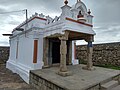 Suparshvanatha Basadi, Shravanabelagola


See also
[edit]
References
[edit]Citations
[edit]- ^ Tukol 1980, p. 31.
- ^ Singh 2015.
- ^ Singh 2009, p. 54.
- ^ Lodha 2013, p. 544.
- ^ Jain 2015, p. 188.
- ^ a b c d Finegan 1952, p. 190.
- ^ a b c Jain 2015, p. 189.
- ^ a b Jain 2009, p. 78.
- ^ a b Jain 2009, p. 77.
- ^ Jain 2015, p. 44-50.
- ^ Jain 2015, p. 45.
- ^ Tandon 2002, p. 44.
- ^ a b Titze 1998, p. 5.
- ^ Neeraj & Nīraja 1991, p. 9.
- ^ Cort 2010, p. 385.
- ^ Cort 2010, pp. 278–279.
- ^ Harvard & Tirthankara Suparsvanatha.
- ^ Pal, Huyler & Cort 2016, p. 204.
- ^ Harrell 2013, p. 124-125.
- ^ Shah 1987, p. 139.
- ^ Mehta 1970, p. 130.
Sources
[edit]- Finegan, Jack (1952), The archeology of world religions, Princeton University Press
- Johnson, Helen M. (1931), Suparshvanathacaritra (Book 3.5 of the Trishashti Shalaka Purusha Caritra), Baroda Oriental Institute
- Jain, Vijay K. (2015), Acarya Samantabhadra's Svayambhustotra: Adoration of The Twenty-four Tirthankara, Vikalp Printers, ISBN 9788190363976,
Non-Copyright
- Tandon, Om Prakash (2002) [1968], Jaina Shrines in India (1 ed.), New Delhi: Publications Division, Ministry of Information and Broadcasting, Government of India, ISBN 81-230-1013-3
- Tukol, T. K. (1980), Compendium of Jainism, Dharwad: University of Karnataka
- Jain, Arun Kumar (2009), Faith & Philosophy of Jainism, Gyan Publishing House, ISBN 9788178357232, retrieved 23 September 2017
- Cort, John E. (2010), Framing the Jina: Narratives of Icons and Idols in Jain History, Oxford University Press, ISBN 978-0-19-538502-1
- Shah, Umakant Premanand (1987), Jaina-rūpa-maṇḍana: Jaina iconography, vol. 1, Abhinav Publications, ISBN 978-81-7017-208-6
- Pal, Pratapaditya; Huyler, Stephen P.; Cort, John E. (2016), Puja and Piety: Hindu, Jain, and Buddhist Art from the Indian Subcontinent, University of California Press, ISBN 978-0-520-28847-8
- Harvard, "From the Harvard Art Museums' collections Tirthankara Suparsvanatha in Kayotsarga, or Standing Meditation, Posture and Protected by a Five-Headed Naga", www.harvardartmuseums.org
- Titze, Kurt (1998), Jainism: A Pictorial Guide to the Religion of Non-Violence, Motilal Banarsidass, ISBN 978-81-208-1534-6
- Singh, Binay (25 August 2015), "4 Jain Tirthankaras born in Varanasi", The Times of India
- Neeraj, Jai Singh; Nīraja, Jayasiṃha (1991), Splendour of Rajasthani Painting, Abhinav Publications, ISBN 9788170172673
- Lodha, Jain Chanchalmal (2013), History of Oswals, Panchshil Publications, ISBN 9788192373027
- Singh, Rana (2009), Banaras: Making of India's Heritage City, Cambridge Scholars Publishing, ISBN 9781443815796
- Mehta, Jodh Sinha (1970), Abu to Udaipur (Celestial Simla to City of Sunrise), Motilal Banarsidass
- Harrell, D. Fox (2013), Phantasmal Media: An Approach to Imagination, Computation, and Expression, MIT Press, ISBN 9780262019330
External links
[edit]| Gods | |||||
|---|---|---|---|---|---|
| Philosophy | |||||
| Branches |
| ||||
| Practices | |||||
| Literature | |||||
| Symbols | |||||
| Ascetics | |||||
| Scholars | |||||
| Community |
| ||||
| Jainism in |
| ||||
| Jainism and | |||||
| Dynasties and empires | |||||
| Related | |||||
| Lists | |||||
| Navboxes | |||||


Suparshvanatha
View on GrokipediaBiography
Birth and early life
Suparshvanatha, the seventh Tīrthañkara of the present avasarpiṇī era in Jain cosmology, was born in Vārāṇasī (modern-day Varanasi) to King Pratishtha and Queen Prithvi.[4][2] His birth occurred on the twelfth day of the bright half of the month of Jyeṣṭha, during a time when divine omens such as the descent of auspicious dreams to his mother signaled his destined role.[5] Belonging to the Ikshvaku dynasty and the Bharata kula, he was part of a illustrious Kṣatriya lineage associated with solar origins in Jain tradition.[4] At birth, he possessed extraordinary physical attributes, including a height of 200 dhanuṣa (approximately 180 meters or 600 feet) and a lifespan of 2,000,000 pūrva years, reflecting the immense scale of beings in early avasarpiṇī cycles.[4][6] In his early life, Suparshvanatha exhibited innate qualities of compassion and wisdom, as his soul had previously incarnated as King Nandisen of Kṣetrapurī in Pūrvamahāvideha, where rigorous penance and meditation elevated him to the sixth Graiveyaka heaven before descending for his final human birth.[5][2] According to Śvetāmbara accounts, he married and assumed kingship after his father, governing justly while fostering prosperity and ethical conduct among his subjects.[4] He fathered a son to whom he later entrusted the throne, ensuring continuity of rule.[7] As a householder, Suparshvanatha began to perceive the impermanence of worldly pleasures through observations of nature's cycles—such as the fleeting beauty of flowers and the inevitable decay of material wealth—which cultivated a profound sense of detachment without disrupting his royal duties.[7] This introspective phase underscored his spiritual inclinations, setting the foundation for his future ascetic path.[4]Renunciation and enlightenment
After a princely life of 500,000 pūrva years and a reign of 1,400,000 pūrva years and 20 pūrvāṅgas, Suparshvanatha was inspired to renounce worldly life after observing the decay of flowers in a royal garden, which served as a poignant reminder of the transient nature of material existence. He abdicated his throne in Varanasi and underwent diksha, the formal initiation into asceticism, under a sirisa (also known as shala) tree in the Sahasramravana grove, accompanied by a thousand fellow kings who also embraced the mendicant path.[8][9] Following his renunciation, Suparshvanatha practiced rigorous asceticism for a period of nine months and twelve and a half days, during which he endured 28 chief penances to purify his soul and destroy karmic bonds. These austerities included prolonged fasting, meditation in various postures, and exposure to natural elements, culminating in the final stages of pure concentration. On the sixth day of the dark half of Phālguna, while seated in meditation under the same sirisa tree in Sahasramravana, he attained kevala jnana, the state of infinite omniscience, as the veils of karmic ignorance were completely lifted.[10] Immediately after enlightenment, Suparshvanatha established the fourfold sangha, comprising monks, nuns, laymen, and laywomen, to propagate the path of liberation; his chief disciple, ganadhara Bhadattaswami, provided leadership to the monastic order. He continued his wandering ministry for the remainder of his life, guiding countless souls toward ethical conduct and spiritual awakening. At the end of his 2,000,000 pūrva-year lifespan, on the seventh day of the dark half of Phalguna, Suparshvanatha achieved moksha, final liberation from the cycle of rebirth, at Sammed Shikharji in the Parasnath Hills, ascending to the siddhashila alongside 500 fellow ascetics.[11][9]Disciples and samavasaranas
Suparshvanatha's sangha formed in the wake of his renunciation, as seekers gathered to follow his path of spiritual discipline and enlightenment. His primary ganadhara, or chief disciple, was Bhadattaswami, also known as Balladatta, who led 38,000 sadhus and 59,000 sadhvis within the monastic order.[4] The overall sangha encompassed a vast community of 300,000 sadhus, 430,000 sadhvis, 257,000 shravakas, and 493,000 shravikas (according to Śvetāmbara sources), reflecting the widespread appeal of his teachings during his era.[4] Among these, eleven ganadharas served as chief male disciples, guiding the male ascetics, while nine ganinis headed the female ascetics, ensuring the structured propagation of Jain doctrine across the community.[4] Suparshvanatha's samavasaranas were extraordinary divine preaching assemblies, meticulously constructed by celestial beings to accommodate devotees from all realms. In these grand halls, he sat upon a lion throne facing east, symbolizing strength and direction toward liberation, and expounded key principles including ahimsa (non-violence toward all life forms), aparigraha (renunciation of possessions to avoid karmic bondage), and anekantavada (the doctrine of multifaceted reality to foster tolerance and nuanced understanding).[12] These assemblies not only disseminated his wisdom but also inspired mass initiations into monastic and lay life, solidifying the fourfold Jain community.[4] Suparshvanatha led the sangha for nearly 100,000 pūrva years before attaining nirvana at Sammet Shikharji.[4][9]Historical context
Mentions in ancient texts
The earliest explicit mentions of Suparshvanatha occur in Jain canonical literature, dating from approximately 300 BCE to 500 CE. The Kalpa Sutra, attributed to Acharya Bhadrabahu (c. 4th century BCE), lists Suparshvanatha as the seventh Tirthankara in its section on the "Lives of the Lords" (chapter 4), detailing his parents as King Pratishtha and Queen Prithvi of Varanasi, his emblem as the swastika, and his attainment of kevala jnana (omniscience). This text establishes his place in the lineage of 24 Tirthankaras, emphasizing his role in establishing the fourfold Jain sangha. Similarly, the Trilokaprajnapti (c. 3rd-5th century CE), a Svetambara cosmological treatise, references Suparshvanatha within descriptions of the tirthas (fords to liberation) across the three worlds, portraying him as a preacher in Bharata-ksetra whose samavasarana (divine assembly) radiated purity and non-violence. These canonical works form the foundational textual evidence for Suparshvanatha's doctrinal significance in early Jainism. Suparshvanatha, like other Tirthankaras, is a legendary figure in Jain cosmology, with no historical evidence for his traditional lifespan in the 9th–8th century BCE, though his worship dates to early centuries BCE.Archaeological and epigraphic evidence
Archaeological excavations at Kankali Tila in Mathura uncovered a Jain stupa dating to around 157 CE, with iconographic elements such as serpent motifs associated with snake-canopied Tirthankaras. A fourfold Jain image including Suparshvanatha has been identified from the site, circa 1st century CE.[13] Inscriptions from the Gupta period (4th–5th century CE) at Kankali Tila reference Tirthankara worship by lay and monastic communities, including veneration of multiple Jinas at the site.[14][15] The rock-cut cave temples at Udayagiri and Khandagiri, dating to the 2nd century BCE, contain early Tirthankara icons carved on interior walls, including two depictions of Suparshvanatha in Barabhuji Gumpha at Khandagiri that serve as prototypes for his later iconography with hooded serpents and meditative posture.[16] No direct archaeological evidence exists for Suparshvanatha's traditional lifespan in the 9th–8th century BCE, though indirect support arises from Jain migration patterns documented from the 2nd century BCE onward, tracing community movements from Varanasi—his legendary birthplace—to key centers like Mathura.[17]Iconography and attributes
Depiction in art
Suparshvanatha is commonly represented in Jain art in two primary postures: seated in dhyana mudra, with hands in the meditative gesture placed one over the other in the lap, often upon a lotus throne, or standing in the kayotsarga pose, with arms extended rigidly alongside the body and palms facing inward toward the thighs.[18] These depictions emphasize his ascetic ideal, portraying a figure—nude in Digambara tradition and clothed in white robes in Śvetāmbara—with broad shoulders, a slender torso, elongated earlobes, and short, tightly curled hair arranged in a topknot, conveying an idealized serene form.[19] His complexion is rendered as golden in Śvetāmbara traditions or greenish in Digambara ones, conveying a serene and tranquil expression that symbolizes spiritual liberation.[18] A defining feature is the five-hooded serpent (naga) canopy arching over his head, serving as a protective hood and emblem of his legendary association with serpents from his mother's dream during pregnancy; this contrasts with the seven or more hoods typically shown for Pārśvanātha.[18] The śrivatsa mark, a auspicious curl, appears on his chest, while the figure often stands or sits against a plain back slab with minimal ornamentation to underscore detachment from worldly attachments.[19] These elements are consistent across sects in terms of symbolism, though differing in attire as noted. Depictions of Suparshvanatha in sculpture and painting date from the early medieval period, with notable examples in bronze and stone from the 7th century CE onward. A 7th–8th century cast bronze statue from Tamil Nadu, now in the Harvard Art Museums, shows him in kayotsarga under a five-headed naga hood, highlighting the South Indian Pallava style's fluid lines and detailed cold-working.[19] Similarly, a 9th-century schist figure from Karnataka at the Norton Simon Museum captures the standing pose with the serpent canopy, exemplifying Deccan craftsmanship.[18] In temple reliefs, such as those in Rajasthan's 14th-century marble carvings at the British Museum, he appears seated in padmasana with a nine-headed variant of the canopy, reflecting evolving iconographic flexibility.[18] These artworks, found in museum collections and Jain temple contexts, illustrate Suparshvanatha's role in devotional iconography without the elaborate narratives seen in other Tirthankara representations.Symbols and yakshas
Suparshvanatha, the seventh Tirthankara in Jainism, is identified by his distinctive emblem, known as the lanchan, which is placed beneath his feet in iconographic representations. In the Digambara tradition, this emblem is the nandavarta, an elaborate form of the swastika symbolizing auspiciousness and the eternal cycle of existence. In the Svetambara tradition, it is the simpler svastika, a fundamental auspicious symbol in Jainism representing the four states of existence and liberation.[20] These emblems serve as key identifiers distinguishing Suparshvanatha from other Tirthankaras in temple sculptures and paintings. The sacred tree, or vriksha, associated with Suparshvanatha is the sirisa (Albizia lebbeck), under which he is said to have attained kevala jnana, or omniscience.[21] In artistic depictions, the sirisa tree is shown with its branches spreading above the Tirthankara's figure, often featuring delicate leaves and flowers to evoke the moment of enlightenment.[22] This tree holds symbolic importance in Jain cosmology, representing the natural setting of spiritual attainment. Suparshvanatha's attendant deities, the yaksha (male) and yakshini (female), flank him in icons as protective figures who revere the Tirthankara. In the Svetambara sect, the yaksha is Matanga, depicted holding a baton or staff symbolizing guardianship, while the yakshini is Shanta, portrayed with lotuses or protective emblems denoting peace and devotion.[20] In the Digambara tradition, the yaksha is Varanandi (or Varanandin), similarly armed with a baton to ward off obstacles, and the yakshini is Kali, shown with fierce yet protective attributes like a sword and shield, emphasizing her role in safeguarding the faith.[18] These attendants are never depicted above the Tirthankara in height, underscoring the supremacy of the enlightened being.[23] The color associated with Suparshvanatha varies by sect but generally symbolizes purity and detachment from worldly attachments. Digambara icons often render him in green, evoking nature and serenity, while Svetambara depictions use golden hues to signify divine radiance.[20] In painted representations, cream tones may also appear, particularly in medieval manuscripts, to highlight ethereal qualities.[24] Variations between the Digambara and Svetambara sects extend to the overall rendering of these symbols, with Digambara images emphasizing nudity and asceticism in the Tirthankara's form alongside the nandavarta and Varanandi yaksha, while Svetambara art includes white robes, the svastika, and Matanga yaksha for a more adorned aesthetic.[20] Additionally, Suparshvanatha's icons frequently feature a five-hooded serpent forming a canopy overhead, distinguishing him from Parsvanatha who has seven hoods.[25]Worship and adoration
Role in Jain cosmology
In Jain cosmology, Suparshvanatha holds the position of the seventh Tirthankara among the 24 who appear during the descending half of the cosmic time cycle, known as avasarpini.[2] As one of these enlightened beings, he plays a pivotal role in reviving and propagating the eternal dharma, providing guidance on ethical conduct and spiritual liberation following the foundational teachings established by the first Tirthankara, Rishabhanatha.[3] His appearance underscores the cyclical renewal of Jain principles within the broader framework of time, where each Tirthankara restores the path to moksha amid declining moral conditions. Suparshvanatha's teachings contribute to the understanding of the loka, or universe, structured as the triloka comprising the upper world (urdhva-loka) of celestial beings, the middle world (madhya-loka) inhabited by humans and animals, and the lower world (adho-loka) of infernal realms.[26] He emphasizes ahimsa, or non-violence, as a universal principle extending across these three realms, prohibiting harm to all life forms through thought, word, or deed to prevent karmic bondage and facilitate soul purification.[27] The purvacharita, or account of previous existences, outlines Suparshvanatha's prior births through which he accumulated the merits leading to his Tirthankara status, culminating in his final human incarnation.[28] Upon attaining kevala jnana and subsequently moksha at Sammed Shikharji, his purified soul ascends to Siddhashila, the summit of the universe where liberated beings (siddhas) reside eternally, free from rebirth. Symbolically, Suparshvanatha is depicted with a five-hooded serpent canopy, representing his mastery over inner demons and passions such as anger, positioning him as a guardian against malevolent influences that obstruct spiritual progress.[29] This imagery aligns with Jain metaphysical views of conquering kaayotsarga-like attachments to achieve cosmic harmony.Rituals and festivals
Devotees of Suparshvanatha engage in daily worship through the ashta-prakari puja, an eightfold ritual that includes offerings of rice, flowers, and incense to his icons, symbolizing devotion and purification.[30] This practice follows traditional Jain protocols for honoring Tirthankaras, emphasizing non-violence and mindfulness during the offerings.[31] Annual festivals dedicated to Suparshvanatha include his Jayanti, celebrated on the 12th day of the bright half of Jestha (Jyeshtha Shukla 12), which commemorates his birth with processions, recitations of scriptures, and voluntary fasting to reflect on his teachings of detachment.[3] The Nirvana Kalyanak, marking his attainment of liberation, occurs on the 7th day of the bright half of Phalguna (Phalguna Shukla 7), featuring similar communal gatherings, austerities, and celebrations of his role as a ford-maker across the cycle of rebirths in Jain cosmology.[4] In rural Jain communities, protective rituals invoke Suparshvanatha's attendant yaksha, Matanga, to ward off serpents and other misfortunes, often through simple mantras or small altars during times of vulnerability, drawing on the Tirthankara's symbolic association with serpent imagery.[32] Sectarian differences in adoration are evident: Svetambara Jains prioritize temple-based rituals with decorated icons and elaborate pujas, while Digambara practitioners emphasize meditative contemplation of Suparshvanatha's attributes, such as his golden hue and swastika emblem, in austere settings without ornate worship.[33] Since the 2000s, modern Jain practices have incorporated eco-friendly elements into Suparshvanatha festivals, such as using biodegradable materials for offerings and promoting water conservation during processions, aligning with heightened environmental awareness in the tradition.[34]Literary depictions
In canonical scriptures
Suparshvanatha, the seventh Tīrthaṅkara in the present time cycle according to Jain tradition, receives a brief biographical outline in the Kalpa Sūtra, a foundational Śvetāmbara text attributed to Bhadrabāhu around 300 BCE. This scripture lists the key life events of the intermediate Tīrthaṅkaras, including Suparshvanatha, primarily through their temporal placements relative to other Jinas and standardized tithis for the four major kalas: conception, birth, initiation (dīkṣā), and attainment of omniscience (kevala jñāna). Specifically, Suparshvanatha's conception occurred on the 6th day of the bright half of the month Bhādrapada, his birth on the 12th day of the bright half of Jyeṣṭha, dīkṣā on the 12th day of the dark half of Jyeṣṭha, and kevala jñāna on the 6th day of the dark half of Phālguna; his lifespan spanned 2 million pūrva years, with mokṣa attained on the 7th day of the dark half of Phālguna at Sammed Śikharjī.[7] The Aṅgāgama scriptures reference Tīrthaṅkaras as exemplars of ascetic ideals, emphasizing renunciation and strict adherence to non-violence and self-discipline as models for monks pursuing liberation. In the Ācārāṅga Sūtra, the lives of Tīrthaṅkaras illustrate the principles of right conduct (sāmāyika) and the avoidance of harm, portraying them as paragons of restraint amid worldly temptations. Similarly, the Sthānāṅga Sūtra enumerates Tīrthaṅkaras whose practices exemplify the stages of spiritual progression, highlighting their role in establishing the path of ahiṃsā. The Bhagavatī Sūtra (Vyākhyāprajñapti), the fifth Aṅga, discusses the karma doctrine, explaining the influx, bondage, and cessation of karmic particles to assemblies of humans, animals, and deities. These accounts underscore teachings on how karma veils the soul's innate purity, using examples from ascetic practices to illustrate the efficacy of austerity in eradicating karmic obstructions. Canonical portrayals of Suparshvanatha exhibit variations between the Śvetāmbara and Digambara traditions, stemming from their distinct scriptural corpora. While the Śvetāmbara Aṅgas provide the outlined tithis and ascetic focus, Digambara traditions emphasize nudity as a symbol of complete detachment, differing from Śvetāmbara depictions of clothed renunciation. Digambara narratives expand on his previous births, incorporating details of multiple incarnations involving heroic deeds and meritorious acts leading to his final life.In medieval and later literature
In post-canonical Jain literature, Suparshvanatha receives notable attention in Acharya Samantabhadra's Svayambhustotra (c. 2nd century CE), a devotional hymn adoring the twenty-four Tīrthankaras, where specific verses praise his embodiment of purity and path to enlightenment as a model for spiritual detachment.[35] These poetic elaborations draw briefly from canonical foundations in texts like the Ādi Purāṇa to highlight his virtues without doctrinal exposition.[36] A key medieval narrative is the Suparśvanāth Caritam (also known as Suparsvanath Chariyam), a verse compilation produced between 1422 and 1423 CE during the reign of Mewar ruler Mokal at Devkulpatak (Dilwara), which details the Tīrthankara's life events, from royal birth to omniscience, in an illustrated manuscript format blending biography with moral instruction.[37] Hemachandra's Triṣaṣṭiśalākāpuruṣacaritra (12th century CE), an epic chronicle of sixty-three illustrious Jain figures, expands on Suparshvanatha's (referred to as Suparsva) spiritual conquests over inner enemies such as anger and attachment, portraying his ascetic triumphs as allegories for overcoming karmic bonds, and details his prior existence as King Nandīśena, where severe penance propelled his soul toward Tīrthaṅkarahood.[38][39] In the 20th and 21st centuries, Suparshvanatha's story appears in accessible retellings through Jain comics and novels produced by communities inspired by Shrimad Rajchandra, such as illustrated biographies emphasizing ethical lessons on non-violence and self-control for contemporary devotees.[40] These modern adaptations prioritize inspirational narratives over historical detail, adapting medieval motifs for educational purposes. Scholarly coverage of Suparshvanatha in Western academia remains limited post-1950, with few dedicated analyses; this gap suggests opportunities for comparative studies linking his serpent symbolism to broader Indo-European myths of guardianship and renewal.[41]Temples and sites
Birthplace and primary temples
Suparshvanatha, the seventh Tirthankara of Jainism, is traditionally regarded as having been born in Varanasi, anciently known as Kashi, to King Pratistha and Queen Prithvi of the Ikshvaku clan.[42] The Bhadaini Tirth in Varanasi serves as the primary site commemorating his birth, situated on the banks of the Ganga river approximately 1.5 km from Bhelupur and 4 km from Varanasi railway station.[43] This sacred location witnessed all four kalyanakas (auspicious events) of Suparshvanatha's life: conception, birth, initiation, and omniscience.[43] The Bhadaini Temple complex includes separate Shvetambara and Digambara shrines dedicated to Suparshvanatha, featuring white marble idols of the Tirthankara seated in padmasana (lotus posture).[43] The idols, measuring 68 cm and 46 cm in height respectively, are sheltered under a five-hooded serpent canopy. The idols bear the swastika emblem (lanchhana) associated with Suparshvanatha.[43][44] The serene riverside setting enhances the site's spiritual ambiance, with the sound of flowing waters contributing to meditative practices.[43] Within the same Bhadaini area, the Adinath Digambar Jain Temple forms part of the extended complex, incorporating shrines to Suparshvanatha alongside the primary Adinatha idol.[45] Elements of the site trace back to the 10th century, reflecting Varanasi's ancient Jain heritage linked to Adinatha, with significant renovations occurring in the early 20th century to preserve the structures.[46] Another key primary shrine is found in the Jain temple group at Khajuraho, Madhya Pradesh, where an 11th-century structure houses a detailed sculpture of Suparshvanatha in kayotsarga (standing meditation) pose.[18] These temples exemplify Nagara-style architecture, characterized by towering shikharas and intricate carvings, including serpent motifs that echo Suparshvanatha's iconography. Annual festivals, such as the Janma Kalyanaka celebrations, attract thousands of pilgrims to these sites, fostering communal worship and processions.[43] Historical renovations at Khajuraho, including protections initiated by the British-era Archaeological Survey of India in the 19th century, have safeguarded these monuments. Broader pilgrimage routes connect Bhadaini and Khajuraho to other Jain centers, emphasizing Suparshvanatha's role in the tirtha tradition.[46]Other pilgrimage sites
Sammed Shikharji, situated in the Parasnath Hills of Jharkhand, is revered as the nirvana site where Suparshvanatha attained liberation, with a dedicated shrine to the seventh Tirthankara located among the 20 peaks commemorating the moksha of 20 Tirthankaras.[47] The pilgrimage involves ascending the sacred hills, where devotees perform rituals such as circumambulation and meditation to honor Suparshvanatha's spiritual legacy.[48] This site draws hundreds of thousands of pilgrims each year, underscoring its central role in Jain devotion.[49] The site features 5th-century CE rock-cut icons of Jain Tirthankaras, including remnants associated with early worship practices. In Uttar Pradesh, sites at Mathura and Hastinapur preserve ancient connections to Suparshvanatha through archaeological findings and temple complexes. Excavations at Kankali Tila in Mathura uncovered ancient votive figures and sculptures of Tirthankaras, including four-fold images featuring Suparshvanatha dating to the 1st century CE, reflecting early Jain iconography.[50] At Hastinapur, a cluster of Digambara Jain temples on a hillock includes idols of various Tirthankaras, with Suparshvanatha venerated in the broader complex as part of the site's ancient Jain tradition.[51] Regional temples further extend Suparshvanatha's worship, such as those in Gujarat's Palitana, where idols of the seventh Tirthankara are installed in cluster formations among the 863 shrines on Shatrunjaya Hill, forming part of the comprehensive representation of all 24 Tirthankaras.[52] Similarly, in Karnataka's Shravanabelagola, Suparshvanatha idols appear in multi-Tirthankara installations within the temple complexes surrounding the iconic Bahubali statue, emphasizing collective veneration in South Indian Jain architecture.[53]References
- https://commons.wikimedia.org/wiki/File:Four_Fold_Jain_Image_with_Suparshvanath_and_Three_Other_Tirthankaras_-_Circa_1st_Century_CE_-_ACCN_00-B-67_-_Government_Museum_-_Mathura_2013-02-24_6023.JPG