Hubbry Logo
SatyaSatyaMain
Open search
Satya
Community hub
Satya
logo
8 pages, 0 posts
0 subscribers
Be the first to start a discussion here.
Satya
Satya
from Wikipedia

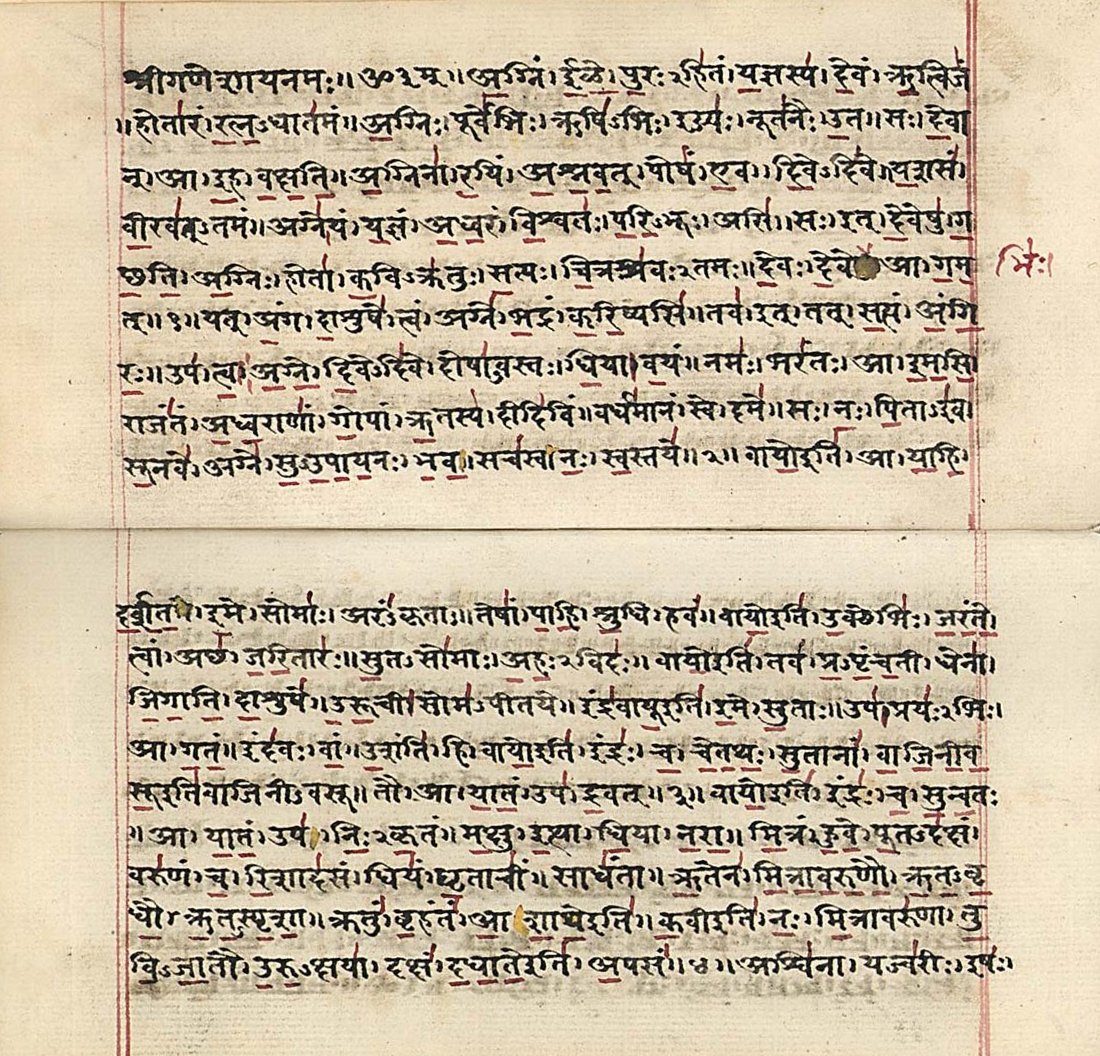
Satya is an important concept and virtue in Indian religions. Rigveda, dated to be from the 2nd millennium BC, offers the earliest discussion of Satya.[1][2] It can be seen, for example, in the fifth and sixth lines, in this Rigveda manuscript image.

Satya (Sanskrit: सत्य; IAST: Satya) is a Sanskrit word that can be translated as "truth" or "essence.“[3] Across Indian religions, it stands as a deeply valued virtue, signifying the alignment of one's thoughts, speech and actions with reality.[4] In Yoga philosophy, particularly in Patañjali's Yoga Sutras, Satya is one of the five yamas—moral restraints designed to cultivate truthfulness and prevent the distortion of reality through one’s expressions and behavior.[5]

Etymology and meaning

[edit]

In the Vedas and later sutras, the meaning of the word satya evolves into an ethical concept about truthfulness and an important virtue.[4][6] It means being true and consistent with reality in one's thought, speech, and action.[4]

Satya has cognates in a number of diverse Indo-European languages, including the word "sooth" and "sin" in English, "istina" ("истина") in Russian, "sand" (truthful) in Danish, "sann" in Swedish, and "haithya" in Avestan, the liturgical language of Zoroastrianism.[7]

Sat

[edit]

Sat (Sanskrit: सत्) is the root of many Sanskrit words and concepts such as sattva ("pure, truthful") and satya ("truth"). The Sanskrit root sat has several meanings or translations:[8][9]

  1. "Absolute reality"
  2. "Fact"
  3. "Brahman" (not to be confused with Brahmin)
  4. "that which is unchangeable"
  5. "that which has no distortion"
  6. "that which is beyond distinctions of time, space, and person"
  7. "that which pervades the universe in all its constancy"

Sat is a common prefix in ancient Indian literature and implies variously that which is good, true, genuine, virtuous, being, happening, real, existing, enduring, lasting, or essential; for example, sat-sastra means true doctrine, sat-van means one devoted to the truth.[10]: 329–331 [8] In ancient texts, fusion words based on Sat refer to "Universal Spirit, Universal Principle, Being, Soul of the World, Brahman".[11][12]

The negation of sat is asat, meaning delusion, distorted, untrue, the fleeting impression that is incorrect, invalid, and false.[10]: 34 [8] The concepts of sat and asat are famously expressed in the Pavamana Mantra found in the Bṛhadāraṇyaka Upaniṣad (1.3.28):

Asato mā sad gamaya
tamaso mā jyotir gamaya
mṛtyor mā amṛtam gamaya

Translation:

Lead me from delusion to truth
from darkness to light
from mortality to immortality

Sat is one of the three characteristics of Brahman as described in sat-chit-ananda.[12] This association between sat, 'truth', and Brahman, ultimate reality, is also expressed in Hindu cosmology, wherein Satyaloka, the highest heaven of Hindu cosmology, is the abode of Brahman.

Hinduism

[edit]

Vedic literature

[edit]

Satya is a central theme in the Vedas. It is equated with and considered necessary to the concept Ṛta (ऋतं, ṛtaṃ)—that which is properly joined, order, rule, nature, balance, harmony.[1][13] Ṛta results from satya in the Vedas, as it[ambiguous] regulates and enables the operation of the universe and everything within it.[14] Satya is considered essential, and without it, the universe and reality falls apart, cannot function.[14]

In Rigveda, rita and satya are opposed to anrita and asatya (falsehood).[1] Truth and truthfulness is considered as a form of reverence for the divine, while falsehood a form of sin. Satya includes action and speech that is factual, real, true, and reverent to Ṛta in Books 1, 4, 6, 7, 9, and 10 of Rigveda.[2] However, in the Vedas satya encompasses one's current and future contexts in addition to one's past contexts.[clarification needed] De Nicolás[clarification needed] states, that in Rigveda, "Satya is the modality of acting in the world of Sat, as the truth to be built, formed or established".[2]

Upanishads

[edit]

Satya is widely discussed in various Upanishads, including the Brihadaranyaka Upanishad where satya is called the means to Brahman, as well as Brahman (Being, true self).[15][16] In hymn 1.4.14 of Brihadaranyaka Upanishad, Satya (truth) is equated to Dharma (morality, ethics, law of righteousness),[17] as

Nothing is higher than the Law of Righteousness (Dharma). The weak overcomes the stronger by the Law of Righteousness. Truly that Law is the Truth (Satya); Therefore, when a man speaks the Truth, they say, "He speaks Righteousness"; and if he speaks Righteousness, they say, "He speaks the Truth!" For both are one.

— Brihadaranyaka Upanishad, I.4.xiv[16][17]

Taittiriya Upanishad's hymn 11.11 states, "Speak the Satya (truth), conduct yourself according to the Dharma (morality, ethics, law)".[18][17]

Truth is sought, praised in the hymns of Upanishads, held as one that ultimately, always prevails. The Mundaka Upanishad, for example, states in Book 3, Chapter 1,[19]

सत्यमेव जयते नानृतं[20]
Translation 1: Truth alone triumphs, not falsehood.[21]
Translation 2: Truth ultimately triumphs, not falsehood.[22]
Translation 3: The true prevails, not the untrue.[23]

— Mundaka Upanishad, 3.1.6[19]

Sandilya Upanishad of Atharvaveda, in Chapter 1, includes ten forbearances[24] as virtues, in its exposition of Yoga. It defines satya as "the speaking of the truth that conduces to the well being of creatures, through the actions of one's mind, speech, or body."[25]

Deussen states that satya is described in the major Upanishads with two layers of meanings—one as empirical truth about reality, another as abstract truth about universal principle, being, and the unchanging. Both of these ideas are explained in early Upanishads, composed before 500 BC, by variously breaking the word satya or satyam into two or three syllables. In later Upanishads, the ideas evolve and transcend into satya as truth (or truthfulness), and Brahman as the Being, Be-ness, real Self, the eternal.[26]

Epics

[edit]

The Shanti Parva of the Mahabharata states, "The righteous hold that forgiveness, truth, sincerity, and compassion are the foremost (of all virtues). Truth is the essence of the Vedas."[27]

The Epic repeatedly emphasizes that satya is a basic virtue, because everything and everyone depends on and relies on satya.[28]

सत्यस्य वचनं साधु न सत्याद विद्यते परम
सत्येन विधृतं सर्वं सर्वं सत्ये परतिष्ठितम
अपि पापकृतॊ रौद्राः सत्यं कृत्वा पृथक पृथक
अद्रॊहम अविसंवादं परवर्तन्ते तदाश्रयाः
ते चेन मिथॊ ऽधृतिं कुर्युर विनश्येयुर असंशयम

—The Mahabharata, Chapter CCLIX: Shanti Parva[28]
Translation:

To speak the truth is meritorious. There is nothing higher than truth. Everything is upheld by truth, and everything rests upon truth. Even the sinful and ferocious, swear to keep the truth amongst themselves, dismiss all grounds of quarrel and uniting with one another set themselves to their (sinful) tasks, depending upon truth. If they behaved falsely towards one another, they would then be destroyed without doubt.

Yoga Sutras

[edit]

In the Yoga Sutras of Patanjali, it is written, “When one is firmly established in speaking truth, the fruits of action become subservient to him."[29] In Yoga sutra, satya is one of the five yamas, or virtuous restraints, along with ahimsa (restraint from violence or injury to any living being); asteya (restraint from stealing); brahmacharya (celibacy or restraint from sexually cheating on one's partner); and aparigraha (restraint from covetousness and craving). Patanjali considers satya as a restraint from falsehood in one's action (body), words (speech, writing), or feelings / thoughts (mind).[5][30] In Patanjali's teachings, one may not always know the truth or the whole truth, but one knows if one is creating, sustaining, or expressing falsehood, exaggeration, distortion, fabrication, or deception.[29] Satya is, in Patanjali's Yoga, the virtue of restraint from such falsehood, either through silence or through stating the truth without any form of distortion.[31]

Jainism

[edit]

Satya is one of the five vows prescribed in Jain Agamas. Satya was also preached by Mahavira.[32] According to Jainism, not to lie or speak what is not commendable.[sentence fragment][33]: 61  The underlying cause of falsehood is passion and therefore, it is said to cause hiṃsā (injury).[33]: 66 

According to the Jain text Sarvārthasiddhi: "that which causes pain and suffering to the living is not commendable, whether it refers to actual facts or not".[34]

According to the Jain text Puruşārthasiddhyupāya:[33]: 33 

All these subdivisions (injury, falsehood, stealing, unchastity, and attachment) are hiṃsā as indulgence in these sullies the pure nature of the soul. Falsehood etc. have been mentioned separately only to make the disciple understand through illustrations.

— Puruşārthasiddhyupāya (42)

Buddhism

[edit]

The term satya (Pali: sacca) is translated into English as "reality" or "truth." In terms of the Four Noble Truths (ariyasacca), the Pali can be written as sacca, tatha, anannatatha, and dhamma.

'The Four Noble Truths' (ariya-sacca) are the briefest synthesis of the entire teaching of Buddhism,[35][36] since all those manifold doctrines of the threefold Pali canon are, without any exception, included therein. They are the truth of suffering (mundane mental and physical phenomenon), of the origin of suffering (tanha, craving), of the extinction of suffering (Nibbana or nirvana), and of the Noble Eightfold Path leading to the extinction of suffering (the eight supra-mundane mind factors).[37]

Sikhism

[edit]

The Gurmukhs do not like falsehood; they are imbued with Truth; they love only Truth.

— Gurubani, Hymn 3, [38]

Sat or truthfulness is one of the 5 virtues in Sikhism.

Indian emblem motto

[edit]
National Emblem of India

The motto of the republic of India's emblem is Satyameva Jayate which is literally translated as 'Truth alone triumphs'.

See also

[edit]
  • Dharma – Key concept in Indian philosophy and Eastern religions, with multiple meanings
  • Rta – Vedic principle of universal nature order
  • Sacca
  • Satnam – 'Satnam' was concept of Guru Nanak ji
  • Satyaloka – Abode of the Hindu god Brahma
  • Satya Yuga – First of four yugas (ages) in Hindu cosmology
  • Transcendentals – Truth, beauty, and goodness
  • Truth – Being in accord with fact or reality

References

[edit]
Revisions and contributorsEdit on WikipediaRead on Wikipedia
from Grokipedia
Satya (: सत्य) is a foundational ethical and philosophical concept in Indian traditions, denoting truthfulness, , and the that transcends empirical existence. It serves as a core virtue across , , , and , guiding adherents to align their thoughts, words, and actions with reality while avoiding falsehood or harm through speech. In Hinduism, particularly within the framework of Patanjali's Yoga Sutras, Satya is the second of the five yamas (moral restraints), emphasizing non-lying and the cultivation of truthful expression; sutra 2.36 states that perfection in Satya ensures that one's words and intentions manifest results effortlessly, fostering spiritual progress and personal integrity. This principle originates in ancient Vedic texts and is elaborated in the Upanishads, where Satya represents the eternal essence of Brahman, the absolute reality, distinguishing it from transient phenomena and underscoring truth as a path to self-realization. In Vedantic philosophy, Satya is synonymous with the unchanging divine truth, integral to ethical living and liberation (moksha). In , Sat (truth) is one of the five and a fundamental attribute of the divine, as expressed in the Mool Mantar, emphasizing living in alignment with eternal reality. In , Satya forms one of the five mahavratas (great s) for ascetics, mandating strict truthfulness by prohibiting all forms of deception, including lies, half-truths, or speech that causes harm, thereby purifying the soul and aiding in the cessation of karma. Jaina scriptures, such as the Agamas, prescribe Satya as a daily recited maxim during the ritual, reinforcing its role in ethical discipline and spiritual ascent toward . This extends to lay practitioners in a moderated form (anuvrata), promoting harmless truth as essential for non-violence () and moral conduct. Buddhism incorporates Satya through the principle of sacca (Pali equivalent), emphasizing right speech as part of the , where truthful communication avoids divisiveness and supports enlightenment, echoing its Indian roots in fostering clarity and compassion. Overall, Satya's practice cultivates inner harmony, societal trust, and metaphysical insight, remaining a timeless pillar of across these traditions. Beyond religious philosophy, it inspires cultural symbols such as India's national motto, Satyameva Jayate ("Truth Alone Triumphs").

Etymology and Core Meaning

Linguistic Origins

The term satya derives from the Sanskrit root sat-, denoting "being," "," or "that which is real," with satya functioning as the abstract neuter expressing "" or "." This root forms the present sat of the as- "to be," emphasizing an inherent connection between truth and ontological . Linguistically, satya traces to Proto-Indo-Iranian *satyás ("true"), reconstructed from the *h₁es- ("to be"), via the *h₁sónts yielding *h₁sn̥t-yó-s. Its closest appears in as haēuua-, signifying "" or "truth," highlighting shared Indo-Iranian heritage in conceptualizing truth as aligned with being. This etymological link underscores parallels across ancient , where cognates like English "sooth" (truth) preserve traces of the same root. In early , as attested in the (composed ca. 1500–1200 BCE), satya emerges in its archaic forms, primarily as a neuter s-stem noun with declensions such as nominative/accusative singular satyam and instrumental singular satyena (meaning "truly" or "by truth"). Historical evidence from hymns marks its initial usage as a term evoking a cosmic tied to existence, with around 30 occurrences across the text. By the classical period (ca. 500 BCE onward), the word's morphology stabilized within standardized , retaining satyam as the accusative form in idiomatic expressions like satyam vada ("speak truth"), though its phonetic and semantic core remained consistent with Vedic precedents.

Philosophical Significance

In , Satya represents the profound alignment of thought, word, and action with , serving as a for ethical and metaphysical . This principle demands consistency across these domains to reflect the unchanging essence of , fostering authenticity and inner . In contrast, asatya denotes untruth or illusion, encompassing falsehoods that distort perception and lead to disharmony, often rooted in ignorance or . Philosophical debates in Indian thought distinguish between empirical truth, or vyavaharika satya, which pertains to conventional, everyday realities dependent on perception and social conventions, and absolute truth, or paramarthika satya, which reveals the ultimate, unchanging reality beyond dualities and illusions. Vyavaharika satya operates within the realm of practical affairs, such as causal interactions and linguistic designations, while paramarthika satya, often equated with emptiness or non-dual consciousness, is discerned through profound insight and meditation. This duality, explored across schools like Madhyamaka and Vedanta, highlights how conventional truths serve as a provisional scaffold for apprehending the ultimate, ensuring ethical actions align with deeper ontological truths.

Satya in Hinduism

Vedic Foundations

In the , the earliest Vedic text, Satya first emerges as a fundamental cosmic principle intertwined with , the order of the universe, representing the sustaining truth that upholds reality. One of the seminal references appears in 10.190.1, where the describes the genesis of the : "Truth (satya) and truthfulness were born of arduous ; thence was night generated, thence also the billowy ocean." Here, Satya is portrayed not merely as factual accuracy but as the primordial force emerging from (cosmic heat or austerity), initiating the sequence from non-existence to the structured world, including night, seasons, gods, and beings. This pairing with underscores Satya's role in maintaining universal harmony, where governs the rhythmic laws of nature and Satya provides the essential verity that binds them. Satya's integration into Vedic sacrificial hymns further emphasizes its ritualistic dimension, serving as the truthful invocation that ensures the efficacy of offerings to deities. In these hymns, priests (ṛtviks) recite mantras with unwavering truthfulness to align human actions with cosmic order, thereby compelling divine response and averting chaos. For instance, the precise enunciation of praises in yajña rituals invokes Satya to bridge the mortal and divine realms, making the sacrifice potent against misfortune. This truthful utterance is deemed essential, as any deviation could disrupt ṛta and render the rite ineffective. The concept of Satya evolved within Vedic cosmology from broader Indo-Aryan notions of existential , adapting into a structured principle that attributes divine oversight to gods like . Varuna, as the sovereign guardian of , embodies Satya as his core attribute, overseeing moral and cosmic truth through his omniscient gaze, punishing violations while rewarding adherence in hymns such as 7.86. This evolution marks Satya's transition from a rudimentary ethical ideal to a pillar of Vedic , integral to creation narratives like 10.190, where it facilitates the emergence of order from primordial void.

Upanishadic Interpretations

In the , Satya is presented as the foundational essence underlying the cosmic order, intimately connected to and the (atman). In verse 1.4.14, (duty or moral order) is explicitly identified as Satya, serving as the supreme principle that upholds the , with nothing higher than it; this truth enables even the weak to prevail over the strong, mirroring the authority of a , and is established as the support for all existence arising from the primordial , which is . Here, Satya equates truth with the atman, emphasizing that those who realize this unity become established in both worldly and transcendent realms, while partial understanding limits one to mere worldly stability. The elevates Satya to the status of the ultimate reality transcending sensory experience. In 8.3.4, the enlightened being, upon departing the body, attains the highest light and assumes its true form (satyam), which is the immortal realm of , free from the constraints of physical perception and embodiment. This portrayal underscores Satya as the non-dual essence beyond the illusory veils of the senses, where reveals the singular, unchanging truth that permeates all. In the , Satya acquires an ethical dimension tied to liberation (), achieved through the pursuit of truthful knowledge. Verse 3.1.6 declares that "truth alone triumphs, not untruth," positioning Satya as the ethical imperative that guides the seeker toward discerning the imperishable , thereby severing the bonds of and samsara. This truthful discernment fosters by aligning the individual with the supreme reality, where knowledge of Satya dissolves all doubts and leads to eternal freedom.

In Epics and Puranas

In the Mahabharata, Satya emerges as a cornerstone of through narrative teachings and character exemplars, particularly in the where expounds to on its supreme status among virtues. describes Satya as synonymous with the eternal , the highest reality, and imparts a Vedic centered on truth that purifies the soul, wards off misfortune, and ensures prosperity for those who recite it with unwavering adherence. This portrayal underscores Satya's role in sustaining moral order amid personal and societal trials, positioning it as indispensable for kings and righteous individuals. Yudhishthira, epitomizing Satya's demands, demonstrates its unyielding application during the infamous dice game in the . Despite the game being manipulated by , Yudhishthira truthfully stakes and loses his kingdom, wealth, brothers, and even his wife , accepting the consequences without deceit, which leads to the ' 13-year exile. His commitment to truth, even at catastrophic cost, highlights Satya as a that transcends material loss, earning him the epithet Dharmaraja while illustrating the epic's theme of virtue tested by adversity. The Ramayana narrates Satya's supremacy through Rama's voluntary exile, a pivotal act that prioritizes truth over royal entitlement. When King , bound by boons to , commands 's 14-year banishment to fulfill her wishes, immediately accepts without protest, declaring that upholding his father's word preserves the integrity of royal promises and familial . This choice, over rejecting the unjust decree to claim the throne, affirms Satya as superior to kingship and power, guiding , , and through forest hardships and ultimately restoring cosmic balance by defeating . In the , Satya manifests through Vishnu's avatars combating , as detailed in the 's enumeration of 24 incarnations, each restoring righteousness in eras of moral decline. For instance, the avatar slays the demon king to protect the devotee , upholding Satya against tyrannical falsehood, while the avatar reclaims the heavens from the through clever adherence to truth in a divine bargain. Similarly, the and Krishna avatars eliminate burdens like and , who embody , thereby reestablishing Satya as the foundation of divine intervention and ethical governance across yugas. A striking Puranic tale testing Satya's limits is that of King in the , where his vow of absolute truthfulness subjects him to profound suffering yet ultimate vindication. Provoked by sage Vishwamitra, Harishchandra donates his kingdom as a fee for a , then sells himself, his Shaivya, and Rohita into servitude to settle the ; he endures degrading labor as a cremation attendant at Varanasi's ghats, even preparing to immolate his family upon their deaths. Deities, including and (disguised as his master), intervene to revive his kin and restore his realm, affirming that unswerving Satya triumphs over orchestrated trials and elevates the adherent to divine favor.

In Yoga and Ethical Texts

In the yogic tradition, Satya is enshrined as the second of the five , the ethical restraints that form the foundational limb of Patanjali's eightfold path outlined in the Yoga Sutras. This path, known as Ashtanga Yoga, begins with yamas to cultivate moral discipline, followed by niyamas, , , , dharana, dhyana, and , guiding practitioners toward . Satya emphasizes unwavering truthfulness in thought, word, and action, extending beyond mere avoidance of lies to alignment with one's authentic nature and the , thereby fostering inner clarity and ethical integrity. Patanjali elaborates on Satya in Yoga Sutra 2.36: "When one is firmly established in speaking truth, the fruits of action become subservient to him." This aphorism, often rendered as "satya-pratiṣṭhāyāṁ kriyā-phala-āśrayatvam," signifies that a grounded in truthfulness experiences the effortless fruition of intentions and actions, as their words and deeds resonate with cosmic harmony, obviating unnecessary exertion or karmic obstacles. Commentaries interpret this as a (spiritual power) where truth manifests reality, underscoring Satya's role in purifying the mind and accelerating spiritual progress within the framework. In ethical texts like the , Satya is presented as a practical tempered by , particularly in balance with (non-violence). Verses 4.138–144 advise: "He shall say what is true; and he shall say what is agreeable; he shall not say what is true but disagreeable; nor shall he say what is agreeable but untrue; this is the ." This guidance permits minor deviations from absolute truth—such as withholding harmful facts—to prevent , prioritizing non-harmful speech while upholding truth as the ideal. The text thus integrates Satya into daily conduct, ensuring it supports social and moral restraint without rigid absolutism. Within traditions, Satya finds expression in the (16.1–3), where it is enumerated among the divine qualities (daivi sampad) of the wise and spiritually elevated: "fearlessness, purity of heart, steadfastness in knowledge and , charity, , , study of the scriptures, , straightforwardness, non-violence, truthfulness, absence of ..." Here, Satya is a hallmark of godly , distinguishing the sattvic devotee who aligns actions with divine will, fostering devotion through honest self-surrender and ethical living.

Satya in Jainism

As a Vow

In , Satya constitutes the second of the five mahavratas, or great s, undertaken by ascetics upon initiation into monastic life, mandating complete abstinence from all false speech to foster ethical purity and spiritual discipline. This extends beyond overt lies to encompass , , and any verbal expression—truthful or otherwise—that inflicts , discord, or emotional distress on others, with monks instructed to observe silence in situations where speech might contravene non-violence (). The codifies Satya in its seventh chapter, particularly in sutra 7.1, as one of the core restraints involving desistance from falsehood, where truthful speech is explicitly aligned with non-violence by ensuring words neither injure living beings nor bind additional karma to the soul. For ascetics, adherence involves cultivating five key observances: relinquishing , , fear, jesting, and committing to faultless discourse as prescribed in scriptures, thereby preventing passions from tainting communication. Lay Jains observe Satya as an anuvrata, a moderated form of the integrated into worldly responsibilities, prohibiting lies motivated by personal gain or intended to , while allowing limited exceptions—such as deceptive words to avert severe injury—to prioritize without fully renouncing speech. This practice aims to minimize karmic accumulation in daily interactions, supporting gradual soul refinement. Violations of Satya, whether by ascetics or , necessitate penances outlined in texts like the Tattvartha Sutra's ninth chapter on karmic shedding, including (alocana), self-reproach, repentance, and reinitiation into the if severely lapsed, all designed to expiate faults and restore purity. Through rigorous observance, Satya purifies the () by eradicating deluding karma, essential for attaining , or liberation from the cycle of rebirth.

Relation to Other Doctrines

In , Satya is intrinsically linked to , the principle of non-violence, as truthfulness must never cause harm to living beings. This integration prioritizes ahimsa as the supreme vow, subordinating Satya to it; thus, speaking a hurtful truth is avoided in favor of silence or a compassionate alternative, such as withholding information to protect a fugitive. Hemacandra's Yogaśāstra (2.63) defines Satya as the alignment of speech, mind, and body with reality, but permits exceptions like to safeguard life, ensuring that expressions remain pleasing, salutary, and non-injurious unless necessary for ethical discipline. Satya further intersects with anekāntavāda, the doctrine of many-sidedness, which posits reality as multifaceted and interconnected through infinite relations, rendering absolute claims incomplete or misleading. Under this framework, Satya manifests as partial truths that capture only aspects of an object's complex nature, promoting humility in assertions to align with the relativistic essence of existence. Complementing this, syādvāda, the doctrine of conditional predication, embodies truthful relativity by prefixing statements with "syāt" (perhaps or in a way), allowing for seven modes of description that acknowledge perspectives without dogmatism. These doctrines collectively ensure Satya avoids absolutism, fostering a nuanced expression of truth that respects reality's multiplexity. Within samyag-darśana, or right faith, Satya plays a pivotal role by enabling truthful of the soul's pure and the path to liberation. This right vision involves discerning without distortion from delusions or , where adherence to Satya purifies the by uprooting falsehoods and karmic bonds, thus advancing spiritual clarity and ethical conduct.

Satya in

In the Noble Truths

In Buddhist doctrine, the Pali term sacca (Sanskrit satya), meaning "truth" or "verified reality," is central to the Four Noble Truths as expounded in the Dhammacakkappavattana Sutta, the Buddha's first discourse after enlightenment, where these are presented as fundamental, undeceptive realities that must be realized for liberation. These truths form the core of the Buddha's teaching on the nature of existence and the path to its transcendence, emphasizing sacca as objective facts rather than mere propositions. The first Noble Truth, dukkha-sacca (the truth of suffering), identifies the inherent unsatisfactoriness and impermanence of conditioned existence, encompassing birth, aging, illness, death, sorrow, and the five clinging-aggregates (form, feeling, perception, formations, and consciousness) as sources of dukkha. This truth underscores that all phenomena marked by impermanence (anicca) and lack of self (anatta) inevitably lead to suffering, serving as the foundational sacca that reveals the problematic nature of samsaric existence without which enlightenment cannot proceed. The fourth Noble Truth, magga-sacca (the truth of the path), outlines the as the verified means to the cessation of , leading to Nibbana through ethical conduct, mental discipline, and wisdom, including truthful speech as a component of right speech. This path integrates sacca into practice by fostering right view, which directly counters false views (miccha-ditthi) such as eternalism or that obscure the truths and perpetuate . The Buddha emphasized sacca as the indispensable basis for enlightenment, stating that full penetration of these truths—through knowledge, vision, and realization—extinguishes the outflows of defilement and ends rebirth, as exemplified in his own awakening where unprovoked release arose upon their comprehension. By rejecting miccha-ditthi, adherence to these ariya-sacca (noble truths) ensures a direct confrontation with reality, forming the doctrinal cornerstone for spiritual nobility. In this context, sacca also aligns with broader ethical commitments, akin to a vow of fidelity to verified truths in pursuit of liberation.

Ethical and Meditative Aspects

In , known as sīla, Satya manifests prominently through sammā-vācā (right speech), the third factor of the . This practice entails abstaining from four forms of unwholesome speech: deliberate lying (musāvāda), divisive talk that sows discord (pisuṇā vācā), harsh or abusive words (pharusā vācā), and idle or frivolous chatter (samphappalāpa). By cultivating right speech, practitioners foster clarity, harmony, and ethical integrity, aligning verbal actions with the path to liberation. For lay Buddhists, Satya is embodied in the fourth of the five precepts (pañca-sīla), which commits one to refrain from false speech (musāvādā veramaṇī). This precept extends beyond mere avoidance of lies to include all deceptive or harmful communication, promoting trust and social cohesion within the saṅgha (community) and beyond. Observance of this precept supports communal harmony by encouraging speech that unites rather than divides, essential for collective spiritual progress. In meditative practice, particularly vipassanā (insight meditation), Satya involves truthful reflection on phenomena to pierce through delusion (moha) and perceive reality (yathābhūta). The , a foundational commentary, instructs meditators to observe the three characteristics—impermanence (anicca), suffering (dukkha), and non-self (anattā)—with unclouded awareness, thereby discerning true nature from illusory perceptions. This process refines , transforming ethical truthfulness into profound insight. Mahayana traditions further develop Satya through compassionate truth-telling, emphasizing upāya (skillful means) to benefit sentient beings. In the , the lay exemplifies this by employing eloquent, non-dual speech that reveals profound truths while adapting to listeners' capacities, prioritizing others' welfare over rigid literalism. Such approaches integrate Satya with great (mahākaruṇā), guiding practitioners toward enlightenment without harm.

Satya in Sikhism

Scriptural References

In the , the central Sikh scripture, Satya is foundational to the concept of , most notably articulated in the , the inaugural composition by Dev Ji. The Mool Mantar, which precedes the pauris, declares "Ik Oankar Sat Naam," portraying Sat Naam as the eternal name and essence of the one universal creator, embodying unchanging reality beyond the transient world. This invocation establishes Satya not merely as a moral principle but as the intrinsic nature of , the wondrous enlightener, inviting devotees to align their lives with this eternal truth through contemplation and recitation. Guru Nanak further elaborates on Satya in Asa di Var, a poetic var () that reinforces its connection to Ik Oankar while decrying falsehood as a barrier to spiritual awakening. Here, truthful living is equated with recognition of the singular divine , urging rejection of deceptive rituals, ego-driven actions, and illusions that obscure the creator's oneness; as Guru Nanak states in the shlokas, those entangled in falsehood suffer perpetual cycles, whereas the gurmukh (one oriented toward the guru) embraces Satya to transcend duality. This teaching underscores Satya as the antidote to untruth, fostering a life of under divine command (). The , composed by Dev Ji, extends this theme in its opening ashtpadi (stanza 1), where meditation on Satya—through the remembrance of the divine name—dissolves the ego and culminates in union with . The salok and pauris emphasize that persistent (meditation) on this truth bestows and liberation, redeeming the soul from rebirth and merging it with the eternal. Throughout the , Satya is thus distinguished from maya, the veiling power of illusion that binds beings to worldly attachments, positioning it as the sole path to authentic existence in harmony with Waheguru's will.

Practical Application

In the Sikh Rehat Maryada, the official code of conduct approved by the in 1945, Satya is upheld as a fundamental principle requiring to practice truth in thought, word, and deed, including through honest earning known as kirat karna. This manifests in daily life as earning a livelihood by ethical means without deceit, ensuring personal integrity aligns with communal harmony. Truthful speech is particularly emphasized in interactions, where adherents must avoid falsehood, slander, or to foster an environment of mutual respect and sincerity. Satya is one of the five cardinal virtues in —along with (santokh), (daya), (nimrata), and love (pyar)—which guide ethical conduct and spiritual development. It plays a vital role in sewa, the selfless service central to Sikh practice, and in the langar, the community kitchen that symbolizes equality. In sewa, truthfulness ensures actions are performed with and without hidden motives, promoting genuine communal support. During langar, where all sit together regardless of social status, adherence to Satya upholds equality by eliminating or , reinforcing the Sikh commitment to treating everyone as equals through honest and just interactions. Guru Gobind Singh emphasized Satya in the , particularly in compositions like , where it is linked to in upholding against . He proclaimed his mission to protect the truthful and oppressed while destroying evil-doers, portraying truth as a force that empowers to confront tyranny with moral fortitude. In modern Sikh writings, such as those by scholars like Devinder Pal Singh (2023), Satya is interpreted as integral to , extending truthful living to advocacy for equality, ethical , and resistance against injustice in contemporary society. This application encourages to embody truth in efforts toward communal welfare and , aligning personal ethics with broader societal reform.

Cultural and Symbolic Uses

National Emblem of India

The national emblem of India is derived from the , a sculptural pillar erected by Emperor at in the 3rd century BCE to commemorate the first sermon of . This capital features four Asiatic lions standing back to back on a circular adorned with reliefs of an , a galloping , a bull, and a lion, separated by Dharma Chakra wheels, symbolizing power, courage, confidence, patience, perseverance, speed, pride, determination, and the eternal cycle of law. Below the abacus in the adapted emblem, the inscription "" appears in script, integrating the ancient concept of satya (truth) as the foundational motto of the nation. The phrase "," meaning "Truth Alone Triumphs," originates from verse 3.1.6 of the , a key text in the Upanishadic tradition dating to around 500–200 BCE. The verse states: satyam eva jayate nānṛtaṃ satyena panthā vitato devayānaḥ, emphasizing that truth prevails over untruth and illuminates the divine path trodden by realized sages. This selection underscores satya as an ethical imperative rooted in Vedic philosophy, where truth is not merely factual accuracy but a cosmic principle upholding righteousness and . Following India's independence, the Lion Capital was adopted as the provisional seal of the in December 1947, reflecting the assembly's intent to ground the new republic in ancient symbols of moral authority. The full , complete with the , was officially adopted by the on January 26, 1950, the date marking the commencement of the and the establishment of the republic. This choice by the highlighted satya as the ethical cornerstone of independent India's governance, aligning constitutional values with timeless ideals of and . The , embodying satya through its , is prominently featured on official seals, coins, currency notes, passports, and government publications, signifying the commitment to truth and ethical conduct in and national affairs. It serves as a visual reminder that truthful ensures the triumph of and societal harmony, influencing the integrity of state institutions and diplomatic representations.

In Modern Movements

In the 20th century, transformed the ancient concept of satya (truth) into a cornerstone of modern through his philosophy of , literally "truth-force," which integrated satya with (nonviolence) to challenge colonial oppression. Gandhi first applied on a national scale during the 1919 Rowlatt Satyagraha, a campaign protesting the Rowlatt Acts that curtailed in British ; participants engaged in peaceful strikes, boycotts, and to uphold truth against unjust laws, mobilizing millions and marking a pivotal moment in India's independence struggle. This approach emphasized that true power resides in adherence to moral truth, even under duress, influencing global movements for justice. Building on Gandhian principles, environmental and activists in the late 20th and 21st centuries have invoked satya to confront corporate dominance and ecological degradation. , a prominent ecofeminist and founder of the Navdanya seed conservation movement, has drawn on to advocate for "seed satyagraha," framing as a fight for truth against the falsehoods of industrial monocultures and genetically modified organisms promoted by giants. In her activism, Shiva portrays satya as an ethical imperative for biodiversity preservation and , echoing Gandhi's to expose corporate narratives that prioritize profit over planetary health. The motto "" gained widespread cultural prominence through the Indian television series Satyamev Jayate, hosted by actor and aired from 2012 to 2014 across three seasons. The program tackled pressing social issues including gender-based violence, healthcare disparities, and environmental concerns, using truthful storytelling to foster public awareness and drive reforms, thereby embodying satya as a tool for societal transformation. , revitalized by in the late 19th and early 20th centuries, positioned satya as a universal ethical foundation accessible to all humanity, transcending religious boundaries and promoting global spirituality. Vivekananda interpreted satya within as the and for and selfless service, urging practitioners to embody truth in daily life to foster harmony among diverse faiths. His teachings, disseminated through lectures and the , influenced modern interfaith efforts by framing satya as a unifying of and . In post-2000 interfaith dialogues, satya has emerged as a bridge between Eastern and Western conceptions of truth, particularly in global forums addressing ethics and conflict resolution. Initiatives drawing on Gandhian satyagraha integrate satya with principles like Jain anekantavada (multi-perspectival truth) to mediate interreligious tensions, emphasizing nonviolent truth-seeking in discussions aligned with United Nations goals for peace and sustainable development. For instance, models for interfaith conflict resolution highlight satya as essential for ethical dialogue, enabling mutual understanding in multicultural settings and contributing to UN efforts on civilizational alliances.

References

Add your contribution
Related Hubs
User Avatar
No comments yet.