


Community hub
Recent from talks
Contribute something
Nothing was collected or created yet.
Thermocouple
View on Wikipedia
| Thermoelectric effect |
|---|
 |
A thermocouple, also known as a "thermoelectrical thermometer", is an electrical device consisting of two dissimilar electrical conductors forming an electrical junction. A thermocouple produces a temperature-dependent voltage as a result of the Seebeck effect, and this voltage can be interpreted to measure temperature. Thermocouples are widely used as temperature sensors.[1]
Commercial thermocouples are inexpensive,[2] interchangeable, are supplied with standard connectors, and can measure a wide range of temperatures. In contrast to most other methods of temperature measurement, thermocouples are self-powered and require no external form of excitation. The main limitation with thermocouples is accuracy; system errors of less than one degree Celsius (°C) can be difficult to achieve.[3]
Thermocouples are widely used in science and industry. Applications include temperature measurement for kilns, gas turbine exhaust, diesel engines, and other industrial processes. Thermocouples are also used in homes, offices and businesses as the temperature sensors in thermostats, and also as flame sensors in safety devices for gas-powered appliances.
Principle of operation
[edit]In 1821, the German physicist Thomas Johann Seebeck discovered that a magnetic needle held near a circuit made up of two dissimilar metals got deflected when one of the dissimilar metal junctions was heated. At the time, Seebeck referred to this consequence as thermo-magnetism. The magnetic field he observed was later shown to be due to thermo-electric current. In practical use, the voltage generated at a single junction of two different types of wire is what is of interest as this can be used to measure temperature at very high and low temperatures. The magnitude of the voltage depends on the types of wire being used. Generally, the voltage is in the microvolt range and care must be taken to obtain a usable measurement. Although very little current flows, power can be generated by a single thermocouple junction. Power generation using multiple thermocouples, as in a thermopile, is common.


The standard configuration of a thermocouple is shown in the figure. The dissimilar conductors contact at the measuring (aka hot) junction and at the reference (aka cold) junction. The thermocouple is connected to the electrical system at its reference junction. The figure shows the measuring junction on the left, the reference junction in the middle and represents the rest of the electrical system as a voltage meter on the right.
The temperature Tsense is obtained via a characteristic function E(T) for the type of thermocouple which requires inputs: measured voltage V and reference junction temperature Tref. The solution to the equation E(Tsense) = V + E(Tref) yields Tsense. Sometimes these details are hidden inside a device that packages the reference junction block (with Tref thermometer), voltmeter, and equation solver.
Seebeck effect
[edit]The Seebeck effect refers to the development of an electromotive force across two points of an electrically conducting material when there is a temperature difference between those two points. Under open-circuit conditions where there is no internal current flow, the gradient of voltage () is directly proportional to the gradient in temperature ():



where is a temperature-dependent material property known as the Seebeck coefficient.

The standard measurement configuration shown in the figure shows four temperature regions and thus four voltage contributions:
- Change from to , in the lower copper wire.
- Change from to , in the alumel wire.
- Change from to , in the chromel wire.
- Change from to , in the upper copper wire.

The first and fourth contributions cancel out exactly, because these regions involve the same temperature change and an identical material. As a result, does not influence the measured voltage. The second and third contributions do not cancel, as they involve different materials.
The measured voltage turns out to be

where and are the Seebeck coefficients of the conductors attached to the positive and negative terminals of the voltmeter, respectively (chromel and alumel in the figure).


Characteristic function
[edit]The thermocouple's behaviour is captured by a characteristic function , which needs only to be consulted at two arguments:


In terms of the Seebeck coefficients, the characteristic function is defined by

The constant of integration in this indefinite integral has no significance, but is conventionally chosen such that .

Thermocouple manufacturers and metrology standards organizations such as NIST provide tables of the function that have been measured and interpolated over a range of temperatures, for particular thermocouple types (see External links section for access to these tables).
Reference junction
[edit]
To obtain the desired measurement of , it is not sufficient to just measure . The temperature at the reference junctions must also be known. Two strategies are often used here:
- "Ice bath": The reference junction block is maintained at a known temperature as it is immersed in a semi-frozen bath of distilled water at atmospheric pressure. The precise temperature of the melting point phase transition acts as a natural thermostat, fixing to 0 °C.
- Reference junction sensor (known as "cold junction compensation"): The reference junction block is allowed to vary in temperature, but the temperature is measured at this block using a separate temperature sensor. This secondary measurement is used to compensate for temperature variation at the junction block. The thermocouple junction is often exposed to extreme environments, while the reference junction is often mounted near the instrument's location. Semiconductor thermometer devices are often used in modern thermocouple instruments.
In both cases the value is calculated, then the function is searched for a matching value. The argument where this match occurs is the value of :

- .

Practical concerns
[edit]Thermocouples ideally should be very simple measurement devices, with each type being characterized by a precise curve, independent of any other details. In reality, thermocouples are affected by issues such as alloy manufacturing uncertainties, aging effects, and circuit design mistakes/misunderstandings.
Circuit construction
[edit]A common error in thermocouple construction is related to cold junction compensation. If an error is made on the estimation of , an error will appear in the temperature measurement. For the simplest measurements, thermocouple wires are connected to copper far away from the hot or cold point whose temperature is measured; this reference junction is then assumed to be at room temperature, but that temperature can vary.[4] Because of the nonlinearity in the thermocouple voltage curve, the errors in and are generally unequal values. Some thermocouples, such as Type B, have a relatively flat voltage curve near room temperature, meaning that a large uncertainty in a room-temperature translates to only a small error in .


Junctions should be made in a reliable manner, but there are many possible approaches to accomplish this. For low temperatures, junctions can be brazed or soldered; however, it may be difficult to find a suitable flux and this may not be suitable at the sensing junction due to the solder's low melting point. Reference and extension junctions are therefore usually made with screw terminal blocks. For high temperatures, the most common approach is the spot weld or crimp using a durable material.[5]
One common myth regarding thermocouples is that junctions must be made cleanly without involving a third metal, to avoid unwanted added EMFs.[6] This may result from another common misunderstanding that the voltage is generated at the junction.[7] In fact, the junctions should in principle have uniform internal temperature; therefore, no voltage is generated at the junction. The voltage is generated in the thermal gradient, along the wire.
A thermocouple produces small signals, often microvolts in magnitude. Precise measurements of this signal require an amplifier with low input offset voltage and with care taken to avoid thermal EMFs from self-heating within the voltmeter itself. If the thermocouple wire has a high resistance for some reason (poor contact at junctions, or very thin wires used for fast thermal response), the measuring instrument should have high input impedance to prevent an offset in the measured voltage. A useful feature in thermocouple instrumentation will simultaneously measure resistance and detect faulty connections in the wiring or at thermocouple junctions.
Metallurgical grades
[edit]While a thermocouple wire type is often described by its chemical composition, the actual aim is to produce a pair of wires that follow a standardized curve.
Impurities affect each batch of metal differently, producing variable Seebeck coefficients. To match the standard behaviour, thermocouple wire manufacturers will deliberately mix in additional impurities to "dope" the alloy, compensating for uncontrolled variations in source material.[5] As a result, there are standard and specialized grades of thermocouple wire, depending on the level of precision demanded in the thermocouple behaviour. Precision grades may only be available in matched pairs, where one wire is modified to compensate for deficiencies in the other wire.
A special case of thermocouple wire is known as "extension grade", designed to carry the thermoelectric circuit over a longer distance. Extension wires follow the stated curve but for various reasons they are not designed to be used in extreme environments and so they cannot be used at the sensing junction in some applications. For example, an extension wire may be in a different form, such as highly flexible with stranded construction and plastic insulation, or be part of a multi-wire cable for carrying many thermocouple circuits. With expensive noble metal thermocouples, the extension wires may even be made of a completely different, cheaper material that mimics the standard type over a reduced temperature range.[5]
Aging
[edit]Thermocouples are often used at high temperatures and in reactive furnace atmospheres. In this case, the practical lifetime is limited by thermocouple aging. The thermoelectric coefficients of the wires in a thermocouple that is used to measure very high temperatures may change with time, and the measurement voltage accordingly drops. The simple relationship between the temperature difference of the junctions and the measurement voltage is only correct if each wire is homogeneous (uniform in composition). As thermocouples age in a process, their conductors can lose homogeneity due to chemical and metallurgical changes caused by extreme or prolonged exposure to high temperatures. If the aged section of the thermocouple circuit is exposed to a temperature gradient, the measured voltage will differ, resulting in error.
Aged thermocouples are only partly modified; for example, being unaffected in the parts outside the furnace. For this reason, aged thermocouples cannot be taken out of their installed location and recalibrated in a bath or test furnace to determine error. This also explains why error can sometimes be observed when an aged thermocouple is pulled partly out of a furnace—as the sensor is pulled back, aged sections may see exposure to increased temperature gradients from hot to cold as the aged section now passes through the cooler refractory area, contributing significant error to the measurement. Likewise, an aged thermocouple that is pushed deeper into the furnace might sometimes provide a more accurate reading if being pushed further into the furnace causes the temperature gradient to occur only in a fresh section.[8]
Types
[edit]Certain combinations of alloys have become popular as industry standards. Selection of the combination is driven by cost, availability, convenience, melting point, chemical properties, stability, and output. Different types are best suited for different applications. They are usually selected on the basis of the temperature range and sensitivity needed. Thermocouples with low sensitivities (B, R, and S types) have correspondingly lower resolutions. Other selection criteria include the chemical inertness of the thermocouple material and whether it is magnetic or not. Standard thermocouple types are listed below with the positive electrode (assuming ) first, followed by the negative electrode.

Nickel-alloy thermocouples
[edit]
Type E
[edit]Type E (chromel–constantan) has a high output (68 μV/°C), which makes it well suited to cryogenic use. Additionally, it is non-magnetic. Wide range is −270 °C to +740 °C and narrow range is −110 °C to +140 °C.
Type J
[edit]Type J (iron–constantan) has a more restricted range (−40 °C to +1200 °C) than type K but higher sensitivity of about 50 μV/°C.[2] The Curie point of the iron (770 °C)[9] causes a smooth change in the characteristic, which determines the upper-temperature limit. Note, the European/German Type L is a variant of the type J, with a different specification for the EMF output (reference DIN 43712:1985-01[10]).
The positive wire is made of hard iron, while the negative wire consists of softer copper-nickel.[11] Due to its iron content, the J-type is slightly heavier and the positive wire is magnetic.[12] It is highly vulnerable to corrosion in reducing atmospheres, which can lead to significant degradation of the thermocouple's performance.[13]
Type K
[edit]Type K (chromel–alumel) is the most common general-purpose thermocouple with a sensitivity of approximately 41 μV/°C.[14] It is inexpensive, and a wide variety of probes are available in its −200 °C to +1350 °C (−330 °F to +2460 °F) range. Type K was specified at a time when metallurgy was less advanced than it is today, and consequently characteristics may vary considerably between samples. One of the constituent metals, nickel, is magnetic; a characteristic of thermocouples made with magnetic material is that they undergo a deviation in output when the material reaches its Curie point, which occurs for type K thermocouples at around 150 °C.[15]
They operate very well in oxidizing atmospheres. If, however, a mostly reducing atmosphere (such as hydrogen with a small amount of oxygen) comes into contact with the wires, the chromium in the chromel alloy oxidizes. This reduces the emf output, and the thermocouple reads low. This phenomenon is known as green rot, due to the color of the affected alloy. Although not always distinctively green, the chromel wire will develop a mottled silvery skin and become magnetic. An easy way to check for this problem is to see whether the two wires are magnetic (normally, chromel is non-magnetic).
Hydrogen in the atmosphere is the usual cause of green rot. At high temperatures, it can diffuse through solid metals or an intact metal thermowell. Even a sheath of magnesium oxide insulating the thermocouple will not keep the hydrogen out.[16]
Green rot does not occur in atmospheres sufficiently rich in oxygen, or oxygen-free. A sealed thermowell can be filled with inert gas, or an oxygen scavenger (e.g. a sacrificial titanium wire) can be added. Alternatively, additional oxygen can be introduced into the thermowell. Another option is using a different thermocouple type for the low-oxygen atmospheres where green rot can occur; a type N thermocouple is a suitable alternative.[17][unreliable source?]
Type M
[edit]Type M (82%Ni/18%Mo–99.2%Ni/0.8%Co, by weight) are used in vacuum furnaces for the same reasons as with type C (described below). Upper temperature is limited to 1400 °C. It is less commonly used than other types.
Type N
[edit]Type N (Nicrosil–Nisil) thermocouples are suitable for use between −270 °C and +1300 °C, owing to its stability and oxidation resistance. Sensitivity is about 39 μV/°C at 900 °C, slightly lower compared to type K.
Designed at the Defence Science and Technology Organisation (DSTO) of Australia, by Noel A. Burley, type-N thermocouples overcome the three principal characteristic types and causes of thermoelectric instability in the standard base-metal thermoelement materials:[18]
- A gradual and generally cumulative drift in thermal EMF on long exposure at elevated temperatures. This is observed in all base-metal thermoelement materials and is mainly due to compositional changes caused by oxidation, carburization, or neutron irradiation that can produce transmutation in nuclear reactor environments. In the case of type-K thermocouples, manganese and aluminium atoms from the KN (negative) wire migrate to the KP (positive) wire, resulting in a down-scale drift due to chemical contamination. This effect is cumulative and irreversible.
- A short-term cyclic change in thermal EMF on heating in the temperature range about 250–650 °C, which occurs in thermocouples of types K, J, T, and E. This kind of EMF instability is associated with structural changes such as magnetic short-range order in the metallurgical composition.
- A time-independent perturbation in thermal EMF in specific temperature ranges. This is due to composition-dependent magnetic transformations that perturb the thermal EMFs in type-K thermocouples in the range about 25–225 °C, and in type J above 730 °C.
The Nicrosil and Nisil thermocouple alloys show greatly enhanced thermoelectric stability relative to the other standard base-metal thermocouple alloys because their compositions substantially reduce the thermoelectric instabilities described above. This is achieved primarily by increasing component solute concentrations (chromium and silicon) in a base of nickel above those required to cause a transition from internal to external modes of oxidation, and by selecting solutes (silicon and magnesium) that preferentially oxidize to form a diffusion-barrier, and hence oxidation-inhibiting films.[19]
Type N thermocouples are suitable alternative to type K for low-oxygen conditions where type K is prone to green rot. They are suitable for use in vacuum, inert atmospheres, oxidizing atmospheres, or dry reducing atmospheres. They do not tolerate the presence of sulfur.[20]
Type T
[edit]Type T (copper–constantan) thermocouples are suited for measurements in the −200 to 350 °C range. Often used as a differential measurement, since only copper wire touches the probes. Since both conductors are non-magnetic, there is no Curie point and thus no abrupt change in characteristics. Type-T thermocouples have a sensitivity of about 43 μV/°C. Note that copper has a much higher thermal conductivity than the alloys generally used in thermocouple constructions, and so it is necessary to exercise extra care with thermally anchoring type-T thermocouples. A similar composition is found in the obsolete Type U in the German specification DIN 43712:1985-01.[10]
Platinum/rhodium-alloy thermocouples
[edit]
Types B, R, and S thermocouples use platinum or a platinum/rhodium alloy for each conductor. These are among the most stable thermocouples, but have lower sensitivity than other types, approximately 10 μV/°C. Type B, R, and S thermocouples are usually used only for high-temperature measurements due to their high cost and low sensitivity. For type R and S thermocouples, HTX platinum wire can be used in place of the pure platinum leg to strengthen the thermocouple and prevent failures from grain growth that can occur in high temperature and harsh conditions.
Type B
[edit]Type B (70%Pt/30%Rh–94%Pt/6%Rh, by weight) thermocouples are suited for use at up to 1800 °C. Type-B thermocouples produce the same output at 0 °C and 42 °C, limiting their use below about 50 °C. The emf function has a minimum around 21 °C (for 21.020262 °C emf=-2.584972 μV), meaning that cold-junction compensation is easily performed, since the compensation voltage is essentially a constant for a reference at typical room temperatures.[21]
Type R
[edit]Type R (87%Pt/13%Rh–Pt, by weight) thermocouples are used 0 to 1600 °C. Type R Thermocouples are quite stable and capable of long operating life when used in clean, favorable conditions. When used above 1100 °C ( 2000 °F), these thermocouples must be protected from exposure to metallic and non-metallic vapors. Type R is not suitable for direct insertion into metallic protecting tubes. Long term high temperature exposure causes grain growth which can lead to mechanical failure and a negative calibration drift caused by Rhodium diffusion to pure platinum leg as well as from Rhodium volatilization. This type has the same uses as type S, but is not interchangeable with it.
Type S
[edit]Type S (90%Pt/10%Rh–Pt, by weight) thermocouples, similar to type R, are used up to 1600 °C. Before the introduction of the International Temperature Scale of 1990 (ITS-90), precision type-S thermocouples were used as the practical standard thermometers for the range of 630 °C to 1064 °C, based on an interpolation between the freezing points of antimony, silver, and gold. Starting with ITS-90, platinum resistance thermometers have taken over this range as standard thermometers.[22]
Tungsten/rhenium-alloy thermocouples
[edit]These thermocouples are well-suited for measuring extremely high temperatures. Typical uses are hydrogen and inert atmospheres, as well as vacuum furnaces. They are not used in oxidizing environments at high temperatures because of embrittlement.[23] A typical range is 0 to 2315 °C, which can be extended to 2760 °C in inert atmosphere and to 3000 °C for brief measurements.[24]
Pure tungsten at high temperatures undergoes recrystallization and becomes brittle. Therefore, types C and D are preferred over type G in some applications.
In presence of water vapor at high temperature, tungsten reacts to form tungsten(VI) oxide, which volatilizes away, and hydrogen. Hydrogen then reacts with tungsten oxide, after which water is formed again. Such a "water cycle" can lead to erosion of the thermocouple and eventual failure. In high temperature vacuum applications, it is therefore desirable to avoid the presence of traces of water.[25]
An alternative to tungsten/rhenium is tungsten/molybdenum, but the voltage–temperature response is weaker and has minimum at around 1000 K.
The thermocouple temperature is limited also by other materials used. For example beryllium oxide, a popular material for high temperature applications, tends to gain conductivity with temperature; a particular configuration of sensor had the insulation resistance dropping from a megaohm at 1000 K to 200 ohms at 2200 K. At high temperatures, the materials undergo chemical reaction. At 2700 K beryllium oxide slightly reacts with tungsten, tungsten-rhenium alloy, and tantalum; at 2600 K molybdenum reacts with BeO, tungsten does not react. BeO begins melting at about 2820 K, magnesium oxide at about 3020 K.[26]
Type C
[edit](95%W/5%Re–74%W/26%Re, by weight)[23] maximum temperature will be measured by type-c thermocouple is 2329 °C.
Type D
[edit](97%W/3%Re–75%W/25%Re, by weight)[23]
Type G
[edit](W–74%W/26%Re, by weight)[23]
Others
[edit]Chromel–gold/iron-alloy thermocouples
[edit]
In these thermocouples (chromel–gold/iron alloy), the negative wire is gold with a small fraction (0.03–0.15 atom percent) of iron. The impure gold wire gives the thermocouple a high sensitivity at low temperatures (compared to other thermocouples at that temperature), whereas the chromel wire maintains the sensitivity near room temperature. It can be used for cryogenic applications (1.2–300 K and even up to 600 K). Both the sensitivity and the temperature range depend on the iron concentration. The sensitivity is typically around 15 μV/K at low temperatures, and the lowest usable temperature varies between 1.2 and 4.2 K.
Type P (noble-metal alloy) or "Platinel II"
[edit]Type P (55%Pd/31%Pt/14%Au–65%Au/35%Pd, by weight) thermocouples give a thermoelectric voltage that mimics the type K over the range 500 °C to 1400 °C, however they are constructed purely of noble metals and so shows enhanced corrosion resistance. This combination is also known as Platinel II.[citation needed]
Platinum/molybdenum-alloy thermocouples
[edit]Thermocouples of platinum/molybdenum-alloy (95%Pt/5%Mo–99.9%Pt/0.1%Mo, by weight) are sometimes used in nuclear reactors, since they show a low drift from nuclear transmutation induced by neutron irradiation, compared to the platinum/rhodium-alloy types.[27]
Iridium/rhodium alloy thermocouples
[edit]The use of two wires of iridium/rhodium alloys can provide a thermocouple that can be used up to about 2000 °C in inert atmospheres.[27]
Pure noble-metal thermocouples Au–Pt, Pt–Pd
[edit]Thermocouples made from two different, high-purity noble metals can show high accuracy even when uncalibrated, as well as low levels of drift. Two combinations in use are gold–platinum and platinum–palladium.[28] Their main limitations are the low melting points of the metals involved (1064 °C for gold and 1555 °C for palladium). These thermocouples tend to be more accurate than type S, and due to their economy and simplicity are even regarded as competitive alternatives to the platinum resistance thermometers that are normally used as standard thermometers.[29]
HTIR-TC (High Temperature Irradiation Resistant) thermocouples
[edit]HTIR-TC offers a breakthrough in measuring high-temperature processes. Its characteristics are: durable and reliable at high temperatures, up to at least 1700 °C; resistant to irradiation; moderately priced; available in a variety of configurations - adaptable to each application; easily installed. Originally developed for use in nuclear test reactors, HTIR-TC may enhance the safety of operations in future reactors. This thermocouple was developed by researchers at the Idaho National Laboratory (INL).[30][31]
Comparison of types
[edit]The table below describes properties of several different thermocouple types. Within the tolerance columns, T represents the temperature of the hot junction, in degrees Celsius. For example, a thermocouple with a tolerance of ±0.0025×T would have a tolerance of ±2.5 °C at 1000 °C. Each cell in the Color Code columns depicts the end of a thermocouple cable, showing the jacket color and the color of the individual leads. The background color represents the color of the connector body.
| Type | Temperature range (°C) | Tolerance class (°C) | Color code | ||||||
|---|---|---|---|---|---|---|---|---|---|
| Continuous | Short-term | One | Two | IEC[32] | BS | ANSI | |||
| Low | High | Low | High | ||||||
| K | 0 | +1100 | −180 | +1370 | −40 – 375: ±1.5 375 – 1000: ±0.004×T |
−40 – 333: ±2.5 333 – 1200: ±0.0075×T |
 |
 |
 |
| J | 0 | +750 | −180 | +800 | −40 – 375: ±1.5 375 – 750: ±0.004×T |
−40 – 333: ±2.5 333 – 750: ±0.0075×T |
 |
 |
 |
| N | 0 | +1100 | −270 | +1300 | −40 – 375: ±1.5 375 – 1000: ±0.004×T |
−40 – 333: ±2.5 333 – 1200: ±0.0075×T |
 |
 |
 |
| R | 0 | +1600 | −50 | +1700 | 0 – 1100: ±1.0 1100 – 1600: ±0.003×(T − 767) |
0 – 600: ±1.5 600 – 1600: ±0.0025×T |
|
 |
Not defined |
| S | 0 | +1600 | −50 | +1750 | 0 – 1100: ±1.0 1100 – 1600: ±0.003×(T − 767) |
0 – 600: ±1.5 600 – 1600: ±0.0025×T |
|
Not defined | |
| B | +200 | +1700 | 0 | +1820 | Not available | 600 – 1700: ±0.0025×T | No standard | No standard | Not defined |
| T | −185 | +300 | −250 | +400 | −40 – 125: ±0.5 125 – 350: ±0.004×T |
−40 – 133: ±1.0 133 – 350: ±0.0075×T |
 |
 |
 |
| E | 0 | +800 | −40 | +900 | −40 – 375: ±1.5 375 – 800: ±0.004×T |
−40 – 333: ±2.5 333 – 900: ±0.0075×T |
 |
 |
 |
| Chromel/AuFe | −272 | +300 | — | — | Reproducibility 0.2% of the voltage. Each sensor needs individual calibration. |
||||
Thermocouple insulation
[edit].jpg)
Wires insulation
[edit]The wires that make up the thermocouple must be insulated from each other everywhere, except at the sensing junction. Any additional electrical contact between the wires, or contact of a wire to other conductive objects, can modify the voltage and give a false reading of temperature.
Plastics are suitable insulators for low temperatures parts of a thermocouple, whereas ceramic insulation can be used up to around 1000 °C. Other concerns (abrasion and chemical resistance) also affect the suitability of materials.
When wire insulation disintegrates, it can result in an unintended electrical contact at a different location from the desired sensing point. If such a damaged thermocouple is used in the closed loop control of a thermostat or other temperature controller, this can lead to a runaway overheating event and possibly severe damage, as the false temperature reading will typically be lower than the sensing junction temperature. Failed insulation will also typically outgas, which can lead to process contamination. For parts of thermocouples used at very high temperatures or in contamination-sensitive applications, the only suitable insulation may be vacuum or inert gas; the mechanical rigidity of the thermocouple wires is used to keep them separated.
Table of insulation materials
[edit] | This section needs additional citations for verification. (June 2014) |
| Type of Insulation | Max. continuous temperature | Max. single reading | Abrasion resistance | Moisture resistance | Chemical resistance |
|---|---|---|---|---|---|
| Mica–glass tape | 649 °C/1200 °F | 705 °C/1300 °F | Good | Fair | Good |
| TFE tape, TFE–glass tape | 649 °C/1200 °F | 705 °C/1300 °F | Good | Fair | Good |
| Vitreous-silica braid | 871 °C/1600 °F | 1093 °C/2000 °F | Fair | Poor | Poor |
| Double glass braid | 482 °C/900 °F | 538 °C/1000 °F | Good | Good | Good |
| Enamel–glass braid | 482 °C /900 °F | 538 °C/1000 °F | Fair | Good | Good |
| Double glass wrap | 482 °C/900 °F | 427 °C/800 °F | Fair | Good | Good |
| Non-impregnated glass braid | 482 °C/900 °F | 427 °C/800 °F | Poor | Poor | Fair |
| Skive TFE tape, TFE–glass braid | 482 °C/900 °F | 538 °C/1000 °F | Good | Excellent | Excellent |
| Double cotton braid | 88 °C/190 °F | 120 °C/248 °F | Good | Good | Poor |
| "S" glass with binder | 704 °C/1300 °F | 871 °C/1600 °F | Fair | Fair | Good |
| Nextel ceramic fiber | 1204 °C/2200 °F | 1427 °C/2600 °F | Fair | Fair | Fair |
| Polyvinyl/nylon | 105 °C/221 °F | 120 °C/248 °F | Excellent | Excellent | Good |
| Polyvinyl | 105 °C/221 °F | 105 °C/221 °F | Good | Excellent | Good |
| Nylon | 150 °C/302 °F | 130 °C/266 °F | Excellent | Good | Good |
| PVC | 105 °C/221 °F | 105 °C/221 °F | Good | Excellent | Good |
| FEP | 204 °C/400 °F | 260 °C/500 °F | Excellent | Excellent | Excellent |
| Wrapped and fused TFE | 260 °C/500 °F | 316 °C/600 °F | Good | Excellent | Excellent |
| Kapton | 316 °C/600 °F | 427 °C/800 °F | Excellent | Excellent | Excellent |
| Tefzel | 150 °C/302 °F | 200 °C/392 °F | Excellent | Excellent | Excellent |
| PFA | 260 °C/500 °F | 290 °C/550 °F | Excellent | Excellent | Excellent |
| T300* | 300 °C | – | Good | Excellent | Excellent |
Temperature ratings for insulations may vary based on what the overall thermocouple construction cable consists of.
Note: T300 is a new high-temperature material that was recently approved by UL for 300 °C operating temperatures.
Applications
[edit]Thermocouples are suitable for measuring over a large temperature range, from −270 up to 3000 °C (for a short time, in inert atmosphere).[24] Applications include temperature measurement for kilns, gas turbine exhaust, diesel engines, other industrial processes and fog machines. They are less suitable for applications where smaller temperature differences need to be measured with high accuracy, for example the range 0–100 °C with 0.1 °C accuracy. For such applications thermistors, silicon bandgap temperature sensors and resistance thermometers are more suitable.
Steel industry
[edit]Type B, S, R and K thermocouples are used extensively in the steel and iron industries to monitor temperatures and chemistry throughout the steel making process. Disposable, immersible, type S thermocouples are regularly used in the electric arc furnace process to accurately measure the temperature of steel before tapping. The cooling curve of a small steel sample can be analyzed and used to estimate the carbon content of molten steel.
Gas appliance safety
[edit]

Many gas-fed heating appliances such as ovens and water heaters make use of a pilot flame to ignite the main gas burner when required. If the pilot flame goes out, unburned gas may be released, which is an explosion risk and a health hazard. To prevent this, some appliances use a thermocouple in a fail-safe circuit to sense when the pilot light is burning. The tip of the thermocouple is placed in the pilot flame, generating a voltage which operates the supply valve which feeds gas to the pilot. So long as the pilot flame remains lit, the thermocouple remains hot, and the pilot gas valve is held open. If the pilot light goes out, the thermocouple temperature falls, causing the voltage across the thermocouple to drop and the valve to close.
Where the probe may be easily placed above the flame, a rectifying sensor may often be used instead. With part ceramic construction, they may also be known as flame rods, flame sensors or flame detection electrodes.
-and-flame-sensor.jpg)
Some combined main burner and pilot gas valves (mainly by Honeywell) reduce the power demand to within the range of a single universal thermocouple heated by a pilot (25 mV open circuit falling by half with the coil connected to a 10–12 mV, 0.2–0.25 A source, typically) by sizing the coil to be able to hold the valve open against a light spring, but only after the initial turning-on force is provided by the user pressing and holding a knob to compress the spring during lighting of the pilot. These systems are identifiable by the "press and hold for x minutes" in the pilot lighting instructions. (The holding current requirement of such a valve is much less than a bigger solenoid designed for pulling the valve in from a closed position would require.) Special test sets are made to confirm the valve let-go and holding currents, because an ordinary milliammeter cannot be used as it introduces more resistance than the gas valve coil. Apart from testing the open circuit voltage of the thermocouple, and the near short-circuit DC continuity through the thermocouple gas valve coil, the easiest non-specialist test is substitution of a known good gas valve.
Some systems, known as millivolt control systems, extend the thermocouple concept to both open and close the main gas valve as well. Not only does the voltage created by the pilot thermocouple activate the pilot gas valve, it is also routed through a thermostat to power the main gas valve as well. Here, a larger voltage is needed than in a pilot flame safety system described above, and a thermopile is used rather than a single thermocouple. Such a system requires no external source of electricity for its operation and thus can operate during a power failure, provided that all the other related system components allow for this. This excludes common forced air furnaces because external electrical power is required to operate the blower motor, but this feature is especially useful for un-powered convection heaters. A similar gas shut-off safety mechanism using a thermocouple is sometimes employed to ensure that the main burner ignites within a certain time period, shutting off the main burner gas supply valve should that not happen.
Out of concern about energy wasted by the standing pilot flame, designers of many newer appliances have switched to an electronically controlled pilot-less ignition, also called intermittent ignition. With no standing pilot flame, there is no risk of gas buildup should the flame go out, so these appliances do not need thermocouple-based pilot safety switches. As these designs lose the benefit of operation without a continuous source of electricity, standing pilots are still used in some appliances. The exception is later model instantaneous (aka "tankless") water heaters that use the flow of water to generate the current required to ignite the gas burner; these designs also use a thermocouple as a safety cut-off device in the event the gas fails to ignite, or if the flame is extinguished.
Thermopile radiation sensors
[edit]Thermopiles are used for measuring the intensity of incident radiation, typically visible or infrared light, which heats the hot junctions, while the cold junctions are on a heat sink. It is possible to measure radiative intensities of only a few μW/cm2 with commercially available thermopile sensors. For example, some laser power meters are based on such sensors; these are specifically known as thermopile laser sensor.
The principle of operation of a thermopile sensor is distinct from that of a bolometer, as the latter relies on a change in resistance.
Manufacturing
[edit]Thermocouples can generally be used in the testing of prototype electrical and mechanical apparatus. For example, switchgear under test for its current carrying capacity may have thermocouples installed and monitored during a heat run test, to confirm that the temperature rise at rated current does not exceed designed limits.
Power production
[edit]A thermocouple can produce current to drive some processes directly, without the need for extra circuitry and power sources. For example, the power from a thermocouple can activate a valve when a temperature difference arises. The electrical energy generated by a thermocouple is converted from the heat which must be supplied to the hot side to maintain the electric potential. A continuous transfer of heat is necessary because the current flowing through the thermocouple tends to cause the hot side to cool down and the cold side to heat up (the Peltier effect).
Thermocouples can be connected in series to form a thermopile, where all the hot junctions are exposed to a higher temperature and all the cold junctions to a lower temperature. The output is the sum of the voltages across the individual junctions, giving larger voltage and power output. In a radioisotope thermoelectric generator, the radioactive decay of transuranic elements as a heat source has been used to power spacecraft on missions too far from the Sun to use solar power.
Thermopiles heated by kerosene lamps were used to run batteryless radio receivers in isolated areas.[34] There are commercially produced lanterns that use the heat from a candle to run several light-emitting diodes, and thermoelectrically powered fans to improve air circulation and heat distribution in wood stoves.
Process plants
[edit]Chemical production and petroleum refineries will usually employ computers for logging and for limit testing the many temperatures associated with a process, typically numbering in the hundreds. For such cases, a number of thermocouple leads will be brought to a common reference block (a large block of copper) containing the second thermocouple of each circuit. The temperature of the block is in turn measured by a thermistor. Simple computations are used to determine the temperature at each measured location.
Thermocouple as vacuum gauge
[edit]A thermocouple can be used as a vacuum gauge over the range of approximately 0.001 to 1 torr absolute pressure. In this pressure range, the mean free path of the gas is comparable to the dimensions of the vacuum chamber, and the flow regime is neither purely viscous nor purely molecular.[35] In this configuration, the thermocouple junction is attached to the centre of a short heating wire, which is usually energised by a constant current of about 5 mA, and the heat is removed at a rate related to the thermal conductivity of the gas.
The temperature detected at the thermocouple junction depends on the thermal conductivity of the surrounding gas, which depends on the pressure of the gas. The potential difference measured by a thermocouple is proportional to the square of pressure over the low- to medium-vacuum range. At higher (viscous flow) and lower (molecular flow) pressures, the thermal conductivity of air or any other gas is essentially independent of pressure. The thermocouple was first used as a vacuum gauge by Voege in 1906.[36] The mathematical model for the thermocouple as a vacuum gauge is quite complicated, as explained in detail by Van Atta,[37] but can be simplified to:
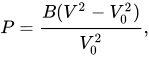
where P is the gas pressure, B is a constant that depends on the thermocouple temperature, the gas composition and the vacuum-chamber geometry, V0 is the thermocouple voltage at zero pressure (absolute), and V is the voltage indicated by the thermocouple.
The alternative is the Pirani gauge, which operates in a similar way, over approximately the same pressure range, but is only a 2-terminal device, sensing the change in resistance with temperature of a thin electrically heated wire, rather than using a thermocouple.
See also
[edit]References
[edit]- ^ "Thermocouple temperature sensors". Temperatures.com. Archived from the original on 2008-02-16. Retrieved 2007-11-04.
- ^ a b Ramsden, Ed (September 1, 2000). "Temperature measurement". Sensors. Archived from the original on 2010-03-22. Retrieved 2010-02-19.
- ^ "Technical Notes: Thermocouple Accuracy". IEC 584-2(1982)+A1(1989). Retrieved 2010-04-28.
- ^ "How to Prevent Temperature Measurement Errors When Installing Thermocouple Sensors and Transmitters" (PDF). acromag.com. Acromag. Retrieved 3 February 2017.
- ^ a b c Wang, T. P. (1990) "Thermocouple Materials" Archived 2014-08-19 at the Wayback Machine in ASM Handbook, Vol. 2. ISBN 978-0-87170-378-1
- ^ Pyromation, Inc. "Thermocouple theory" (2009).
- ^ Rowe, Martin (2013). "Thermocouples: Simple but misunderstood", EDN Network.
- ^ Kerlin, T.W. & Johnson, M.P. (2012). Practical Thermocouple Thermometry (2nd Ed.). Research Triangle Park: ISA. pp. 110–112. ISBN 978-1-937560-27-0.
- ^ Buschow, K. H. J. Encyclopedia of materials: science and technology, Elsevier, 2001 ISBN 0-08-043152-6, p. 5021, table 1.
- ^ a b "Standard [WITHDRAWN] DIN 43710:1985-12".
- ^ Trento, Chin (Sep 4, 2024). "Positive or Negative? A Beginner's Guide to Thermocouple Wire Identification". Stanford Advanced Materials. Retrieved Oct 7, 2024.
- ^ Shabbir, Babar; Huang, He (2017). "Evidence for superior current carrying capability of iron pnictide tapes under hydrostatic pressure". Physical Review Materials. 1 (4) 44805. Bibcode:2017PhRvM...1d4805S. doi:10.1103/PhysRevMaterials.1.044805.
- ^ Zuo, Rongjun; Wood, Thomas (2004). "Inhibiting mild steel corrosion from sulfate-reducing and iron-oxidizing bacteria using gramicidin-S-producing biofilms". Applied Microbiology and Biotechnology. 65 (6): 746–753. doi:10.1007/s00253-004-1651-1. PMID 15278311.
- ^ Manual on the Use of Thermocouples in Temperature Measurement (4th Ed.). ASTM. 1993. pp. 48–51. ISBN 978-0-8031-1466-1. Archived from the original on 2013-08-14. Retrieved 2012-09-04.
- ^ Lamb, Frank (2013). "Appendix F". Industrial Automation: Hands-On, 1st Edition. McGraw-Hill Education. ISBN 978-0-07-181645-8. Retrieved 20 May 2025.
- ^ "Helping thermocouples do the job... - Transcat". www.transcat.com.
- ^ "Green Rot in Type K Thermocouples, and What to Do About It". WIKA blog. 2018-05-29. Retrieved 2020-12-01.
- ^ Burley, Noel A. Nicrosil/Nisil Type N Thermocouples Archived 2006-10-15 at the Wayback Machine. www.omega.com.
- ^ Type N Thermocouple Versus Type K Thermocouple in A Brick Manufacturing Facility. jms-se.com.
- ^ "Thermocouple sensor and thermocouple types - WIKA USA". www.wika.us. Retrieved 2020-12-01.
- ^ "Thermocouple Theory". Capgo. Archived from the original on 14 December 2004. Retrieved 17 December 2013.
- ^ "Supplementary Information for the ITS-90". International Bureau of Weights and Measures. Archived from the original on 2012-09-10. Retrieved 2 February 2018.
- ^ a b c d OMEGA Engineering Inc. "Tungsten-Rhenium Thermocouples Calibration Equivalents".
- ^ a b Pollock, Daniel D. (1991). Thermocouples: Theory and Properties. CRC Press. pp. 249–. ISBN 978-0-8493-4243-1.
- ^ "Archived copy" (PDF). Archived from the original (PDF) on 2020-12-08. Retrieved 2020-02-22.
{{cite web}}: CS1 maint: archived copy as title (link) - ^ "Design of Thermocouple Probes for Measurement of Rocket Exhaust Plume Temperatures" (PDF).
- ^ a b Thermoelectricity: Theory, Thermometry, Tool, Issue 852 by Daniel D. Pollock.
- ^ 5629 Gold Platinum Thermocouple Archived 2014-01-05 at the Wayback Machine. fluke.com.
- ^ BIPM – "Techniques for Approximating the ITS-90" Archived 2014-02-01 at the Wayback Machine Chapter 9: Platinum Thermocouples.
- ^ "CORE-Materials • High Temperature Irradiation Resistant Thermocouple (HTIR-TC)". Archived from the original on 2017-06-27. Retrieved 2019-05-29.
- ^ "high-temperature irradiation-resistant thermocouples: Topics by Science.gov". www.science.gov. Retrieved 2020-12-02.
- ^ IEC 60584-3:2007
- ^ Flammable Vapor Ignition Resistant Water Heaters: Service Manual (238-44943-00D) (PDF). Bradford White. pp. 11–16. Retrieved 11 June 2014.
- ^ "New Scientist". New Scientist Careers Guide: The Employer Contacts Book for Scientists. Reed Business Information: 67–. 10 January 1974. ISSN 0262-4079. Retrieved 28 May 2012.
- ^ Hablanian, M. H. (1997) High-Vacuum Technology: A Practical Guide, Second Ed., Marcel Dekker Inc., pp. 19–22, 45–47 & 438–443, ISBN 0-8247-9834-1.
- ^ Voege, W. (1906) Physik Zeit., 7: 498.
- ^ Van Atta, C. M. (1965) Vacuum Science and Engineering, McGraw-Hill Book Co. pp. 78–90.
External links
[edit]
- Thermocouple Operating Principle – University Of Cambridge
- Thermocouple Drift – University Of Cambridge
- Two Ways to Measure Temperature Using Thermocouples
Thermocouple data tables:
- Text tables: NIST ITS-90 Thermocouple Database (B, E, J, K, N, R, S, T)
- PDF tables: J K T E N R S B
- Python package thermocouples_reference containing characteristic curves of many thermocouple types.
- R package [1] Temperature Measurement with Thermocouples, RTD and IC Sensors.
- Data table: Thermocouple wire sizes
| International | |
|---|---|
| National | |
| Other | |

Thermocouple
View on GrokipediaHistory
Invention and Early Developments
The discovery of the thermoelectric effect, which forms the basis of the thermocouple, is attributed to Thomas Johann Seebeck, a Baltic German physicist, who in 1821 observed that a closed circuit formed by joining two dissimilar metals—such as antimony and bismuth—experienced a temperature difference between its junctions, resulting in a deflection of a nearby magnetic compass needle.[5] Seebeck initially misinterpreted this phenomenon as a form of thermomagnetism, believing the heat directly induced magnetic polarization in the metals rather than generating an electric current that produced the magnetic field, as later clarified by Hans Christian Ørsted.[6] In his experiments, detailed in a paper presented to the Prussian Academy of Sciences on August 16, 1821, Seebeck demonstrated the effect using a circular loop of copper and bismuth wires with one junction heated, causing consistent compass deflections proportional to the temperature gradient.[7] Building on Seebeck's findings, French physicist Jean Charles Athanase Peltier discovered the reverse thermoelectric effect in 1834, observing that passing an electric current through a junction of two dissimilar conductors, such as iron and bismuth, caused heat absorption at one junction and release at the other, depending on the current direction.[8] This Peltier effect provided experimental evidence of the bidirectional nature of thermoelectric phenomena and laid groundwork for understanding energy conversion at junctions.[9] In 1851, William Thomson (later Lord Kelvin) extended these discoveries by predicting and observing the Thomson effect, where heat is absorbed or evolved along a single conductor carrying current in the presence of a temperature gradient, completing the trio of classical thermoelectric effects.[10] Thomson's theoretical framework, published in the Proceedings of the Royal Society, unified the Seebeck and Peltier effects under thermodynamic principles, explaining their interrelations without invoking new forces.[11] Practical implementation began with Leopoldo Nobili's invention of the thermopile in 1829, a series of thermocouple junctions connected to amplify the thermoelectric signal for detecting infrared radiation and temperature differences, further refined by Macedonio Melloni in the early 1830s.[12] In 1826, Antoine César Becquerel made the first recorded proposal to employ the Seebeck effect for temperature measurement, utilizing the electromotive force generated by temperature differences.[13] By the late 19th century, French chemist Henry Le Chatelier advanced this in 1887 by developing a platinum-10% rhodium/platinum thermocouple, which enabled accurate readings up to 1,600°C in metallurgical furnaces for monitoring steel production processes.[5] In the early 20th century, thermocouples found use in automotive and aviation for engine temperature monitoring, such as in exhaust systems and cylinder heads, supporting the growth of internal combustion engines and aircraft propulsion.[14]Standardization and Widespread Adoption
In the mid-20th century, the Instrument Society of America (ISA), later adopted by the American National Standards Institute (ANSI), introduced letter designations for common thermocouple types to standardize identification and eliminate proprietary names, with Type K (chromel-alumel) among those formalized in the 1940s through early ASTM efforts leading to specifications like E230.[15][16] Concurrently, color codes for thermocouple wires were developed to facilitate quick identification, with ANSI establishing conventions such as yellow for the positive leg of Type K and red for the negative, evolving from national practices in the 1950s to support industrial wiring consistency.[17][18] Key milestones in standardization included the establishment of ANSI MC96.1 in the 1970s (revising earlier 1960s drafts) for U.S. thermocouple specifications, covering terminology, fabrication, and color coding to ensure interoperability in temperature measurement.[19] Internationally, the IEC 60584 series was first published in 1977, providing reference electromotive force (EMF) tables and tolerances for types including J, K, T, and noble-metal variants, promoting global consistency in calibration and application.[20] These standards addressed variations in material composition and performance, enabling reliable use across industries. Post-World War II, the boom in electronics and process control industries drove widespread thermocouple adoption, with their ruggedness and accuracy suiting automated manufacturing and chemical processing from the 1950s onward.[21] In nuclear applications, thermocouples were integrated into early reactors like the U.S. Sodium Reactor Experiment in 1957 for monitoring coolant temperatures and core conditions, supporting the expansion of atomic energy programs. Their role extended to space exploration, notably in NASA's Apollo missions, where thermocouples in the Heat Flow Experiment on Apollo 15 and 17 measured lunar subsurface temperatures to assess heat flux from 1971 to 1977.[22] Global standards evolved further with updates like IEC 60584-3:2007, which refined construction tolerances for extension and compensating cables to minimize errors in non-mineral-insulated setups, aligning with advances in materials science.[23] The National Institute of Standards and Technology (NIST) has played a pivotal role since the 1970s, maintaining and updating reference tables—such as those in Monograph 175 (1993)—based on the International Temperature Scale of 1990 (ITS-90), ensuring precise EMF-to-temperature conversions for all letter-designated types.[24][25]Principles of Operation
Seebeck Effect
The Seebeck effect, discovered by Thomas Johann Seebeck in 1821, refers to the generation of an electromotive force (EMF) in a closed circuit composed of two dissimilar conductors joined at two junctions maintained at different temperatures.[10] This phenomenon arises from the thermoelectric properties of materials, where a temperature gradient induces a voltage without any external current flow.[26] Thermocouples operate based on the Seebeck effect. The Seebeck effect involves the generation of electromotive force (voltage) in a circuit of two different metals when there is a temperature difference between the junctions. This effect was discovered by Thomas Johann Seebeck in 1821. In a thermocouple, one junction (the hot junction) is exposed to the measurement temperature, while the other (the cold or reference junction) is exposed to a known temperature. The voltage produced due to the temperature difference is proportional to the temperature according to the Seebeck coefficient, and the temperature is determined by measuring this voltage. Mathematically: , where are the Seebeck coefficients of the two materials. The underlying mechanism involves the diffusion of charge carriers, primarily electrons, from the hotter junction to the colder one due to the greater thermal agitation at the hot end. This diffusion creates a net charge separation, with excess electrons accumulating at the cold junction and a deficit at the hot junction, establishing an electric field that opposes further diffusion and results in a measurable voltage.[27] The Peltier effect, which describes heat absorption or release at a junction under current flow, and the Thomson effect, which involves heat evolution or absorption along a temperature gradient in a current-carrying conductor, are related reversible thermoelectric processes but distinct from the Seebeck effect, as they pertain to interactions between electric current and heat rather than temperature-induced voltage alone; these effects are interconnected via Kelvin relations in thermodynamics.[26] The strength of the Seebeck effect is quantified by the Seebeck coefficient , defined as the derivative of the generated voltage with respect to temperature difference : typically expressed in microvolts per degree Celsius (V/°C).[26] The total voltage generated across a finite temperature difference is the integral of the relative Seebeck coefficient over the temperature range: or equivalently, using absolute Seebeck coefficients: For instance, the relative Seebeck coefficient for a copper-constantan pair is approximately 40 V/°C near room temperature.[28] This coefficient is influenced by intrinsic material properties, including electronic band structure, carrier density, and scattering mechanisms, and it varies nonlinearly over temperature ranges, affecting the effect's magnitude and stability.[26] In thermocouple conventions, the positive leg is designated as the conductor exhibiting the higher (more positive) Seebeck coefficient relative to the negative leg.[29]Characteristic Function
A thermocouple functions as a temperature sensor by producing an electromotive force (EMF), or voltage, that is a function of the temperature difference between its measuring junction (exposed to the environment being measured) and its reference junction (maintained at a known temperature). This voltage arises from the Seebeck effect and is measurable across the open ends of the thermocouple wires, allowing indirect determination of the measuring junction temperature once the reference temperature is accounted for.[30][3] To relate the generated EMF (in microvolts) to the temperature (in °C) at the measuring junction relative to the reference, polynomial approximations are employed for practical computation and calibration. These take the general form where can extend up to 14th order depending on the temperature range and required accuracy, and the coefficients are standardized by the National Institute of Standards and Technology (NIST) in reference tables derived from fixed-point calibrations and empirical data. Inverse polynomials convert measured voltage back to temperature, enabling electronic implementation in measurement systems.[24][3] The characteristic voltage-temperature relationship of a thermocouple is inherently non-linear, with the Seebeck coefficient (sensitivity, dE/dT) varying with temperature, leading to curved response profiles that deviate from simple proportionality. For instance, the output may increase non-uniformly across ranges, necessitating these higher-order polynomials, lookup tables from NIST, or dedicated compensation circuits in instrumentation to achieve accuracies better than ±1°C over wide spans.[30][3] Accurate operation requires the thermocouple wires to be homogeneous, meaning uniform chemical composition and physical properties along their length, as per the law of homogeneous circuits. Any inhomogeneity—such as variations from manufacturing impurities or thermal aging—can create unintended parasitic junctions under temperature gradients, generating extraneous EMFs that distort the measured voltage and introduce errors up to several microvolts or more, depending on the gradient path. NIST calibration guidelines emphasize testing and selecting materials from single lots with verified uniformity to minimize such effects.[31]Reference Junction and Compensation
In thermocouple measurements, the total electromotive force (EMF) generated depends on the temperature difference between the measuring junction (hot junction) and the reference junction (cold junction), necessitating a known reference temperature for accurate interpretation.[32] Historically, this reference was established by immersing the cold junction in an ice bath maintained at 0°C, providing a stable baseline against which the hot junction temperature could be referenced.[33] However, practical constraints often prevent maintaining the ice bath, leading to the cold junction problem where variations in the cold junction temperature introduce measurement errors unless compensated.[34] Compensation techniques address this by effectively simulating a 0°C reference through hardware or software methods, ensuring the measured EMF corresponds to the desired temperature scale. Hardware approaches typically employ isothermal blocks—conductive metal enclosures that maintain uniform temperature across the cold junction connections—paired with auxiliary sensors such as resistance temperature detectors (RTDs) or thermistors to directly measure the cold junction temperature.[35] These sensors provide real-time data for adjustment, often integrated into the measurement circuit to minimize thermal gradients and electromagnetic interference.[36] Software compensation, in contrast, uses digital processing to calculate the offset based on the sensed cold junction temperature and the thermocouple's characteristic function, which relates voltage to temperature.[37] The compensated voltage is computed as , where is the EMF from the hot to cold junction, and is the voltage equivalent to the cold junction temperature relative to 0°C, derived from the characteristic function.[32] This adjustment allows the total voltage to represent the EMF as if the cold junction were at 0°C, enabling accurate determination of the hot junction temperature via standard reference tables or polynomials.[34] For example, with a Type K thermocouple, suppose the measured voltage is 3.41 mV and the cold junction temperature is 22°C. From the Type K table (e.g., NIST), the voltage equivalent at 22°C (cold junction) is 0.87 mV. The compensated EMF (effective voltage for hot junction relative to 0°C) is 3.41 mV + 0.87 mV = 4.28 mV. From the Type K table, 4.28 mV corresponds to a hot junction temperature of 100°C. In contemporary systems, integrated electronics within transmitters and data acquisition modules automate this compensation using on-chip temperature sensors and analog-to-digital converters, often achieving overall measurement errors below 1°C across typical operating ranges.[38] For instance, silicon-based integrated circuits can provide cold junction sensing with precision of ±0.75°C over 0°C to 70°C after calibration, supporting high-accuracy applications in industrial monitoring and scientific instrumentation.[39] Extension wires made of compatible materials further aid hardware setups by preventing unintended junctions that could complicate compensation.[35]Thermocouple Types
Thermocouples are standardized by ASTM E230, which defines types based on material combinations and provides temperature-EMF reference tables.[1] The following subsections describe common types, with standard temperature ranges per this specification.Base-Metal Thermocouples
Base-metal thermocouples, also known as nickel-alloy thermocouples, are constructed primarily from inexpensive alloys of nickel, chromium, iron, copper, and other base metals, making them cost-effective for a wide range of industrial and scientific applications compared to noble-metal types.[24] These thermocouples offer broad temperature measurement capabilities, typically from cryogenic levels up to around 1300°C, but they are generally limited by susceptibility to oxidation and corrosion at elevated temperatures exceeding 1000°C in oxidizing environments.[24] Common accuracy classes for base-metal types follow standards such as those defined by ASTM and IEC, with tolerances like ±2.2°C or ±0.75% of the reading for many types over their standard ranges.[31] The most prevalent base-metal thermocouple is Type K, composed of chromel (approximately 90% nickel and 10% chromium) as the positive leg and alumel (approximately 95% nickel with small additions of aluminum, manganese, and silicon) as the negative leg, enabling a temperature range of -270°C to 1372°C.[24] Type K is the most widely used thermocouple type due to its versatility and broad applicability in processes like heat treatment and engine monitoring, though it is prone to "green rot"—a selective oxidation of chromium in the chromel leg that occurs in low-oxygen or alternating oxidizing/reducing atmospheres between 800°C and 1050°C, leading to drift and embrittlement.[24][40] Other common types include Type J, made from iron (positive) and constantan (approximately 55% copper and 45% nickel, negative), with a range of -210°C to 1200°C but practical stability limited to 760°C due to iron oxidation in air.[24] Type E uses chromel (positive) versus constantan (negative), spanning -270°C to 1000°C and offering the highest sensitivity among base-metal types with a Seebeck coefficient up to 62 µV/°C, though it oxidizes rapidly above 870°C.[24] Type T consists of copper (positive) and constantan (negative), suitable for -270°C to 400°C, particularly in cryogenic applications where it maintains high accuracy (±1.0°C or ±0.75% up to 350°C) but degrades above 350°C due to copper oxidation.[24] Type N, an advanced base-metal variant, employs nicrosil (nickel-chromium-silicon, positive) and nisil (nickel-silicon-magnesium, negative) alloys, providing a range of -270°C to 1300°C with superior stability and oxidation resistance compared to Type K, especially up to 1300°C in oxidizing or inert atmospheres, due to its composition that minimizes drift and green rot effects.[1] This makes Type N a preferred alternative for high-temperature stability without the cost of noble metals.| Type | Composition (Positive/Negative) | Temperature Range (°C) | Key Properties |
|---|---|---|---|
| K | Chromel (Ni-Cr) / Alumel (Ni-Al-Mn-Si) | -270 to 1372 | Widely used; accuracy ±2.2°C (0–1250°C); green rot susceptibility |
| J | Iron / Constantan (Cu-Ni) | -210 to 1200 | Cost-effective for mid-range; oxidizes above 760°C |
| E | Chromel (Ni-Cr) / Constantan (Cu-Ni) | -270 to 1000 | High sensitivity; stable to 900°C |
| T | Copper / Constantan (Cu-Ni) | -270 to 400 | Excellent for cryogenics; accuracy ±1.0°C (0–350°C) |
| N | Nicrosil (Ni-Cr-Si) / Nisil (Ni-Si-Mg) | -270 to 1300 | Improved stability over K; accuracy ±2.2°C (0–1250°C) |
Noble-Metal Thermocouples
Noble-metal thermocouples, primarily composed of platinum and rhodium alloys, are designed for precise temperature measurements in high-temperature environments, offering superior stability and accuracy compared to base-metal types.[41] These thermocouples are particularly valued in applications requiring reliability up to 1800°C, such as calibration standards, furnace monitoring, and industrial processes involving oxidizing conditions.[42] The most common types include Type S, which consists of a platinum-10% rhodium alloy versus pure platinum, with an operational range of -50°C to 1768°C.[41] Type R features a platinum-13% rhodium alloy versus pure platinum, providing a similar temperature range of -50°C to 1768°C and comparable performance characteristics.[43] Type B, made from platinum-30% rhodium versus platinum-6% rhodium, extends the range to 0°C to 1820°C but exhibits low emf output below 600°C, limiting its utility in lower-temperature measurements.[44] These thermocouples achieve high accuracy, typically within ±1°C or better under special limits, due to their well-defined thermoelectric properties.[45] They demonstrate excellent stability in oxidizing atmospheres, with minimal drift over extended exposure, attributed to the inert nature of platinum and rhodium.[42] However, the alloys are brittle, prone to mechanical damage, and significantly expensive owing to the high cost of platinum.[46] Type S, in particular, serves as a reference standard in calibrations at the National Institute of Standards and Technology (NIST), ensuring traceability for high-precision thermometry.[47] Despite their advantages, noble-metal thermocouples perform poorly in reducing atmospheres, where rhodium can volatilize or react, leading to degradation.[42] To mitigate this, they require protective sheaths, such as alumina tubes, to shield the wires from corrosive or reactive environments.[48] For high-temperature operations, reference junction compensation remains essential to account for cold-end effects and maintain measurement integrity.[41]Refractory-Metal Thermocouples
Refractory-metal thermocouples, primarily based on tungsten-rhenium alloys, are designed for ultra-high-temperature measurements in non-oxidizing environments. These thermocouples exploit the high melting points of tungsten (3422°C) and rhenium (3186°C) to enable operation up to 2320°C or higher.[49] The most common configurations include Type C (W-5%Re versus W-26%Re), suitable from 0°C to 2320°C; Type G (pure W versus W-26%Re), with a similar range; and Type D (W-3%Re versus W-25%Re), rated up to 2300°C.[50] These alloys provide a thermoelectric output of approximately 37 mV at 2300°C for Type C, though the response exhibits non-linearity at extreme temperatures.[51] The key properties of refractory-metal thermocouples stem from their constituent materials' exceptional thermal stability and resistance to deformation under heat, making them ideal for vacuum furnaces, hydrogen atmospheres, or inert gases. However, they are inherently fragile due to the brittleness of tungsten and rhenium, requiring careful handling to avoid mechanical failure. These thermocouples cannot withstand oxidizing environments, as they undergo rapid oxidation in air above approximately 400°C, leading to degradation and loss of functionality.[52][53] Development of tungsten-rhenium thermocouples occurred in the 1950s, driven by aerospace and nuclear applications requiring reliable sensing beyond 1700°C.[52] While standardized tables exist per ASTM E230 and E1751 for high temperatures, their calibration is less precise below 1000°C due to lower sensitivity and potential inconsistencies in alloy purity.[54] In practice, these thermocouples are deployed with protective molybdenum sheaths to shield the wires in vacuum or reducing conditions, though long-term exposure causes embrittlement from hydrogen diffusion or thermal cycling.[55] They are not suited for extended use, as repeated heating promotes grain growth and brittleness in the wires, limiting service life in demanding environments.[56]Specialty Thermocouples
Specialty thermocouples are designed for niche applications where standard types fail due to extreme conditions such as cryogenic temperatures, high radiation, ultra-high purity environments, or specialized industrial processes. These non-standard variants often employ exotic alloys or pure metals to achieve superior performance in targeted scenarios, though they typically require custom fabrication and calibration, limiting their commercial availability.[57] One prominent example is the Type P thermocouple, also known as Platinel II, which utilizes a 70% palladium-30% platinum alloy paired with platinum-6% rhodium. Developed by Engelhard Industries for sustained operation in oxidizing atmospheres, it operates effectively from -45°C to 1100°C and is particularly suited for medical and high-temperature industrial applications requiring stability beyond Type K limits.[58][59] For cryogenic measurements, the chromel-gold/iron thermocouple, typically chromel versus gold with 0.07 atomic percent iron, excels in ultra-low temperature environments down to 4 K, with usability extending below 1 K under optimal conditions. This configuration provides high sensitivity for precise monitoring in superconductivity research and low-temperature physics, though its performance depends on iron concentration for the desired range up to 600 K.[60][61] In nuclear reactors and space applications, the high-temperature irradiation-resistant thermocouple (HTIR-TC) incorporates molybdenum/niobium or molybdenum/rhenium thermoelements to endure temperatures up to 1600°C and neutron fluences around 10^21 nvt without significant drift. Developed by Idaho National Laboratory, this design withstands extreme radiation and thermal cycling, enabling direct in-pile temperature sensing for reactor safety and advanced fuel cycle monitoring.[62][63] The gold-platinum (Au-Pt) thermocouple offers exceptional precision for low-temperature measurements, achieving uncertainties as low as ±0.5°C at 1000°C and deviations below 0.1 K at the silver fixed point. Composed of pure gold and platinum wires, it is favored in metrology and calibration labs for its low drift and high homogeneity, often requiring special heat treatments for optimal low-temperature stability.[57][64] For ultra-high purity environments, iridium-rhodium (Ir/Rh) thermocouples, such as 60% Ir-40% Rh versus pure iridium, measure up to 2100°C with high accuracy in semiconductor processing and crystal growth. These noble-metal combinations resist contamination in vacuum or inert atmospheres, providing reliable output due to their thermal conductivity and stability.[65][66] Platinum-molybdenum (Pt/Mo) thermocouples, featuring Pt-5% Mo versus Pt-0.1% Mo alloys, are tailored for vacuum furnaces and in-core nuclear temperature monitoring up to 1500°C. Their resistance to oxidation in low-pressure conditions makes them ideal for high-vacuum heat treatments, though they necessitate careful alloy composition to minimize decalibration.[67][68] Pure noble-metal thermocouples like platinum-palladium (Pt/Pd) are employed in astronomy for calibrating high-temperature instruments simulating stellar conditions, offering low drift up to 1500°C and superior homogeneity over alloy-based types. These require fixed-point calibrations for uncertainties below 0.1°C, underscoring their role in precision scientific instrumentation.[57][69]Comparison of Types
Thermocouples are categorized into base-metal, noble-metal, refractory-metal, and specialty types, each offering distinct performance characteristics that influence their suitability for specific applications. Standard temperature ranges are per ASTM E230.[1] Selecting the appropriate type involves balancing factors like the required temperature range, desired accuracy, relative cost, compatibility with the operating environment, and long-term stability. The following table summarizes key metrics for common types, based on standard industry references.[70]| Type | Temperature Range (°C) | Accuracy (±°C or % of reading) | Relative Cost | Environment Suitability | Stability/Drift Rates |
|---|---|---|---|---|---|
| J (Base) | -210 to 1200 | ±2.2 or ±0.75% (standard); ±1.1 or ±0.4% (special) | Low to moderate | Oxidizing up to 760°C; avoid reducing or sulfurous atmospheres | Moderate; shorter lifespan and higher drift at elevated temperatures due to oxidation |
| K (Base) | -270 to 1372 | ±2.2 or ±0.75% (standard); ±1.1 or ±0.4% (special) | Low | Oxidizing or inert; avoid vacuum, sulfur, or reducing gases | Good overall, but can drift 1-2 μV/h in oxidizing environments at high temperatures; radiation-resistant[71] |
| T (Base) | -270 to 400 | ±1.0 or ±0.75% (standard); ±0.5 or ±0.4% (special) | Moderate | Oxidizing, moist, or cryogenic; good in vacuum | Excellent at low temperatures with low drift and high repeatability |
| E (Base) | -270 to 1000 | ±1.7 or ±0.5% (standard); ±1.0 or ±0.4% (special) | Moderate | Oxidizing or inert; short-term in reducing | High stability in clean environments; stronger signal output reduces noise impact |
| N (Base) | -270 to 1300 | ±2.2 or ±0.75% (standard); ±1.1 or ±0.4% (special) | Moderate | Oxidizing at high temperatures; better than K in oxidation | Superior high-temperature stability and repeatability compared to K, with lower drift |
| R (Noble) | -50 to 1768 | ±1.5 or ±0.25% (standard); ±0.6 or ±0.1% (special) | High | Oxidizing or inert at high temperatures | Very high stability; minimal drift, suitable for precision calibration |
| S (Noble) | -50 to 1768 | ±1.5 or ±0.25% (standard); ±0.6 or ±0.1% (special) | High | Oxidizing or inert; often used with ceramic protection | Excellent long-term stability with low drift rates, ideal for reference standards |
| B (Noble) | 0 to 1820 | ±0.5% (standard); ±0.25% (special) | High | High-temperature inert or vacuum; avoid oxidizing | High accuracy and stability above 600°C; low output and drift at lower temperatures |
| C (Refractory) | 0 to 2320 | ±2.2 or ±1.1% (approximate, varies by supplier) | High | Vacuum, inert, or reducing; avoid oxidizing atmospheres | Good stability in extreme conditions but susceptible to contamination-induced drift |
Construction and Materials
Wire Composition and Grades
Thermocouple wires are fabricated from precisely controlled alloys to generate reliable thermoelectric voltages, with purity requirements varying by type to ensure consistent Seebeck coefficients and minimal contamination effects. For noble-metal thermocouples such as Types R, S, and B, platinum purity is critical, typically reaching 99.999% by mass to limit impurities that could alter emf output.[72] The ASTM E1159 standard specifies grades for platinum-rhodium alloys, requiring high-purity platinum prior to alloying for the positive thermoelement in these types, while the negative thermoelement in Types R and S must meet a designated purity grade to maintain homogeneity.[73] In contrast, base-metal thermocouples like Type K employ alloys such as chromel (approximately 90% nickel, 10% chromium) and alumel (approximately 95% nickel, 2% aluminum, 2% manganese, 1% silicon), where compositional tolerances are defined by ANSI/ASTM standards but with less stringent purity demands than noble metals.[74] Quality grades for thermocouple wires, as outlined in ASTM E230 and ANSI MC96.1, include standard and special (often termed premium) categories, which primarily affect initial tolerance limits and material homogeneity. Standard-grade wires meet basic emf accuracy specifications, such as ±2.2°C or ±0.75% for Type K above 0°C, while premium grades offer tighter tolerances, typically ±1.1°C or ±0.4%, due to enhanced alloy uniformity and reduced impurities.[75] This improved homogeneity in premium grades minimizes variations in the Seebeck coefficient along the wire length, leading to lower decalibration risks during use. Inclusions and elemental segregation within the wire matrix represent key metallurgical issues that compromise performance by introducing local inhomogeneities, resulting in decalibration as the emf deviates from expected values along the wire. Such defects, often originating from melting or casting processes, cause inconsistent thermoelectric properties, with NIST documentation noting that inhomogeneities can arise during manufacturing or subsequent handling, leading to measurement errors up to several degrees Celsius in non-uniform temperature fields.[76] Wire diameters typically span 0.025 mm to 3 mm, with finer diameters (e.g., below 0.5 mm) enabling faster thermal response times—often under 1 second for bare junctions—but reducing mechanical strength and increasing fragility against vibration or bending.[77] Conversely, thicker wires (above 1 mm) enhance durability and support longer exposure to harsh environments but slow response, with thermal time constants potentially exceeding 10 seconds.[78] Manufacturing thermocouple wires involves wire drawing to achieve precise diameters, followed by annealing to counteract work-hardening and promote uniform microstructure. The drawing process reduces alloy rod diameter through successive dies under controlled tension, introducing dislocations that increase strength but risk inhomogeneity if not addressed.[79] Annealing, typically performed at temperatures between 800°C and 1200°C depending on the alloy, relieves these internal stresses and recrystallizes the material, ensuring consistent thermoelectric behavior across the wire length.[76] For optimal low-noise operation, the positive and negative thermoelements are matched during production to exhibit nearly identical emf characteristics, minimizing differential signals from inhomogeneities that could introduce electrical noise in measurements. This pairing, verified through scanning techniques, is essential for applications requiring high precision, such as calibration standards.[80]Insulation and Protection
Thermocouples require insulation to electrically isolate the dissimilar metal wires while withstanding the operational temperature and environmental conditions. Common insulation materials for thermocouple extension and compensating wires include polyvinyl chloride (PVC), which is suitable for low-temperature applications up to 105°C due to its flexibility and cost-effectiveness but offers limited chemical resistance to solvents.[81] Fiberglass insulation provides mid-range performance, rated up to 482°C, with excellent resistance to acids, bases, and flames, though it has poor water submersion capability and requires binders that degrade above 204°C.[81] For environments demanding chemical resistance, polytetrafluoroethylene (PTFE, also known as Teflon) is preferred, offering a temperature limit of 260°C, superior abrasion resistance, and excellent performance against moisture, solvents, and humidity.[81] Sheath materials encase the insulated wires to protect against mechanical damage, corrosion, and extreme temperatures in probe assemblies. Stainless steel sheaths, such as 304 or 316 grades, provide good corrosion resistance in oxidizing environments and are rated up to 800°C, making them ideal for general industrial use.[82] Inconel 600 sheaths excel in high-temperature oxidation resistance, supporting operations up to 1150°C, and are immune to chloride-induced stress corrosion cracking, though not recommended with certain noble-metal thermocouples above 800°C.[82] For extreme conditions exceeding 1600°C, ceramic sheaths, often alumina-based, offer superior thermal stability and are used in furnaces or kilns where metal sheaths would fail.[82]| Material Type | Example | Max Temperature | Dielectric Strength | Compatibility Notes |
|---|---|---|---|---|
| Organic Insulation | PVC | 105°C | Moderate (good for low-voltage) | Low-temp, flexible; fair chemical resistance to acids/bases |
| Organic Insulation | PTFE (Teflon) | 260°C | High (non-conductive, flame-resistant) | Chemical/oil resistance; suitable for harsh environments |
| Inorganic Insulation | Fiberglass | 482°C | High (excellent thermal isolation) | Flame/acid resistance; poor moisture tolerance |
| Inorganic Insulation | MgO (Mineral) | 1200°C | Very high (>100 MΩ at 50 VDC) | High-pressure, corrosive; used in MI cables for durability |
| Sheath | Stainless Steel (304/316) | 800°C | N/A (protective outer) | Corrosion in air/seawater; general industrial |
| Sheath | Inconel 600 | 1150°C | N/A (protective outer) | Oxidation/chloride resistance; high-temp oxidation |
| Sheath | Ceramic (Alumina) | >1600°C | N/A (protective outer) | Extreme heat; oxidizing/reducing atmospheres |