


Community hub
Recent from talks
Contribute something
Nothing was collected or created yet.
Inconel
View on Wikipedia
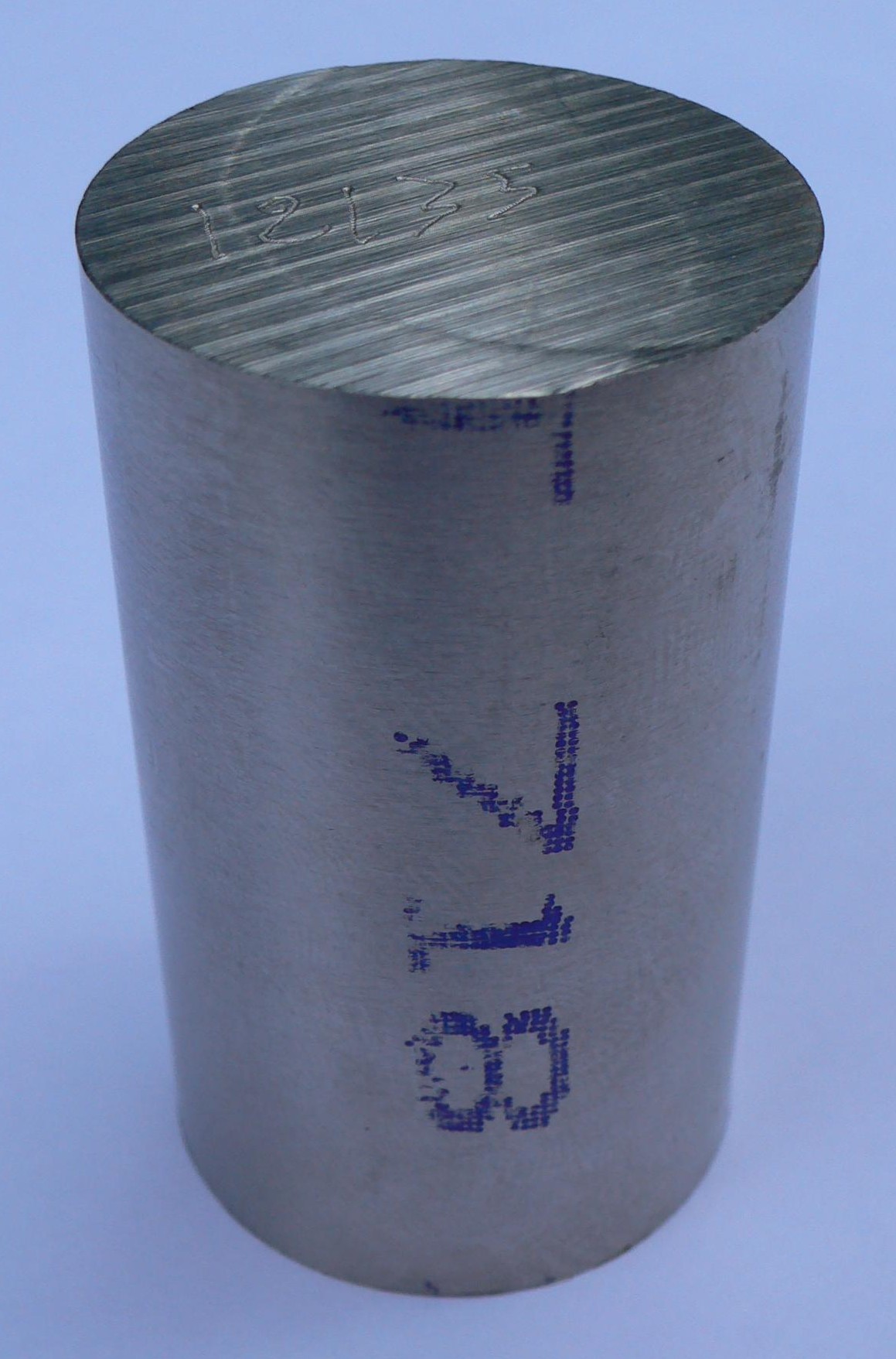
Inconel is a nickel-chromium-based superalloy often utilized in extreme environments where components are subjected to high temperature, pressure or mechanical loads. Inconel alloys are oxidation- and corrosion-resistant. When heated, Inconel forms a thick, stable passivating oxide layer protecting the surface from further attack. Inconel retains strength over a wide temperature range, making it attractive for high-temperature applications in which aluminum and steel would succumb to creep as a result of thermally-induced crystal vacancies. Inconel's high-temperature strength is developed by solid solution strengthening or precipitation hardening, depending on the alloy.[1][2]
Inconel alloys are typically used in high temperature applications. Common trade names for various Inconel alloys include:
- Alloy 625: Inconel 625, Chronin 625, Altemp 625, Sanicro 625, Haynes 625, Nickelvac 625 Nicrofer 6020 and UNS designation N06625.[3]
- Alloy 600: NA14, BS3076, 2.4816, NiCr15Fe (FR), NiCr15Fe (EU), NiCr15Fe8 (DE) and UNS designation N06600.
- Alloy 718: Nicrofer 5219, Superimphy 718, Haynes 718, Pyromet 718, Supermet 718, Udimet 718 and UNS designation N07718.[4]
History
[edit]The Inconel family of alloys was first developed before December 1932, when its trademark was registered by the US company International Nickel Company of Delaware and New York.[5][6] A significant early use was found in support of the development of the Whittle jet engine,[7] during the 1940s by research teams at Henry Wiggin & Co of Hereford, England a subsidiary of the Mond Nickel Company,[8] which merged with Inco in 1928. The Hereford Works and its properties including the Inconel trademark were acquired in 1998 by Special Metals Corporation.[9]
Specific data
[edit]| Alloy | Solidus °C (°F) | Liquidus °C (°F) |
|---|---|---|
| Inconel 600[10] | 1354 (2,469) | 1413 (2,575) |
| Inconel 617[11][12] | 1332 (2,430) | 1377 (2,511) |
| Inconel 625[13] | 1290 (2,350) | 1350 (2,460) |
| Inconel 690[14] | 1343 (2,449) | 1377 (2,511) |
| Inconel 718[15] | 1260 (2,300) | 1336 (2,437) |
| Inconel 738CL[16] | 1269 (2,316) | 1336 (2,437) |
| Inconel X-750[17] | 1390 (2,530) | 1430 (2,610) |
Composition
[edit]Inconel alloys vary widely in their compositions, but all are predominantly nickel, with chromium as the second element.
| Inconel | Element, proportion by mass (%) | ||||||||||||||
|---|---|---|---|---|---|---|---|---|---|---|---|---|---|---|---|
| Ni | Cr | Fe | Mo | Nb & Ta | Co | Mn | Cu | Al | Ti | Si | C | S | P | B | |
| 600[18] | ≥72.0[a] | 14.0–17.0 | 6.0–10.0 | — | ≤1.0 | ≤0.5 | ≤0.5 | ≤0.15 | ≤0.015 | ||||||
| 617[19] | 44.2–61.0 | 20.0–24.0 | ≤3.0 | 8.0–10.0 | 10.0–15.0 | ≤0.5 | ≤0.5 | 0.8–1.5 | ≤0.6 | ≤0.5 | 0.05–0.15 | ≤0.015 | ≤0.015 | ≤0.006 | |
| 625[20] | ≥58.0 | 20.0–23.0 | ≤5.0 | 8.0–10.0 | 3.15–4.15 | ≤1.0 | ≤0.5 | ≤0.4 | ≤0.4 | ≤0.5 | ≤0.1 | ≤0.015 | ≤0.015 | ||
| 690[21] | ≥58 | 27–31 | 7–11 | ≤0.50 | ≤0.50 | ≤0.50 | ≤0.05 | ≤0.015 | |||||||
| Nuclear grade 690[21] | ≥58 | 28–31 | 7–11 | ≤0.10 | ≤0.50 | ≤0.50 | ≤0.50 | ≤0.04 | ≤0.015 | ||||||
| 718[1] | 50.0–55.0 | 17.0–21.0 | Balance | 2.8–3.3 | 4.75–5.5 | ≤1.0 | ≤0.35 | ≤0.3 | 0.2–0.8 | 0.65–1.15 | ≤0.35 | ≤0.08 | ≤0.015 | ≤0.015 | ≤0.006 |
| X-750[22] | ≥70.0 | 14.0–17.0 | 5.0–9.0 | 0.7–1.2 | ≤1.0 | ≤1.0 | ≤0.5 | 0.4–1.0 | 2.25–2.75 | ≤0.5 | ≤0.08 | ≤0.01 | |||
Properties
[edit]When heated, Inconel forms a thick and stable passivating oxide layer protecting the surface from further attack. Inconel retains strength over a wide temperature range, attractive for high-temperature applications where aluminium and steel would succumb to creep as a result of thermally induced crystal vacancies (see Arrhenius equation). Inconel's high temperature strength is developed by solid solution strengthening or precipitation strengthening, depending on the alloy. In age-hardening or precipitation-strengthening varieties, small amounts of niobium combine with nickel to form the intermetallic compound Ni3Nb or gamma double prime (γ″). Gamma prime forms small cubic crystals that inhibit slip and creep effectively at elevated temperatures. The formation of gamma-prime crystals increases over time, especially after three hours of a heat exposure of 850 °C (1,560 °F), and continues to grow after 72 hours of exposure.[23]
Strengthening mechanisms
[edit]The most prevalent hardening mechanisms for Inconel alloys are precipitate strengthening and solid solution strengthening. In Inconel alloys, one of the two often dominates. For alloys like Inconel 718, precipitate strengthening is the main strengthening mechanism. The majority of strengthening comes from the presence of gamma double prime (γ″) precipitates.[24][25][26][27] Inconel alloys have a γ matrix phase with a face-centered cubic (fcc) structure.[26][28][29][30] γ″ precipitates are made of Ni and Nb, specifically with a Ni3Nb composition. These precipitates are fine, coherent, disk-shaped, intermetallic particles with a tetragonal structure.[25][26][27][28][31][32][33][34]
Secondary precipitate strengthening comes from gamma prime (γ') precipitates. The γ' phase can appear in multiple compositions such as Ni3(Al, Ti).[25][26][27] The precipitate phase is coherent and has an fcc structure, like the γ matrix;[34][28][31][32][33] The γ' phase is much less prevalent than γ″. The volume fraction of the γ″ and γ' phases are approximately 15% and 4% after precipitation, respectively.[25][26] Because of the coherency between the γ matrix and the γ' and γ″ precipitates, strain fields exist that obstruct the motion of dislocations. The prevalence of carbides with MX(Nb, Ti)(C, N) compositions also helps to strengthen the material.[26] For precipitate strengthening, elements like niobium, titanium, and tantalum play a crucial role.[35]
Because the γ″ phase is metastable, over-aging can result in the transformation of γ″ phase precipitates to delta (δ) phase precipitates, their stable counterparts.[26][28] The δ phase has an orthorhombic structure, a Ni3(Nb, Mo, Ti) composition, and is incoherent.[36][30] As a result, the transformation of γ″ to δ in Inconel alloys leads to the loss of coherency strengthening, making for a weaker material. That being said, in appropriate quantities, the δ phase is responsible for grain boundary pinning and strengthening.[34][33][30]
Another common phase in Inconel alloys is the Laves intermetallic phase. Its compositions are (Ni, Cr, Fe)x(Nb, Mo, Ti)y and NiyNb, it is brittle, and its presence can be detrimental to the mechanical behavior of Inconel alloys.[28][34][37] Sites with large amounts of Laves phase are prone to crack propagation because of their higher potential for stress concentration.[32] Additionally, due to its high Nb, Mo, and Ti content, the Laves phase can exhaust the matrix of these elements, ultimately making precipitate and solid-solution strengthening more difficult.[33][37][29]
For alloys like Inconel 625, solid solution hardening is the main strengthening mechanism. Elements like Mo[clarification needed] are important in this process. Nb and Ta can also contribute to solid solution strengthening to a lesser extent.[35] In solid solution strengthening, Mo atoms are substituted into the γ matrix of Inconel alloys. Because Mo atoms have a significantly larger radius than those of Ni (209 pm and 163 pm, respectively), the substitution creates strain fields in the crystal lattice, which hinder the motion of dislocations, ultimately strengthening the material.
The combination of elemental composition and strengthening mechanisms is why Inconel alloys can maintain their favorable mechanical and physical properties, such as high strength and fatigue resistance, at elevated temperatures, specifically those up to 650 °C (1,202 °F).[24]
Machining
[edit]Inconel is a difficult metal to shape and to machine using traditional cold forming techniques due to rapid work hardening. After the first machining pass, work hardening tends to plastically deform either the workpiece or the tool on subsequent passes. For this reason, age-hardened Inconels such as 718 are typically machined using an aggressive but slow cut with a hard tool, minimizing the number of passes required. Alternatively, the majority of the machining can be performed with the workpiece in a "solutionized" form,[clarification needed] with only the final steps being performed after age hardening. However some claim[who?] that Inconel can be machined extremely quickly with very fast spindle speeds using a multifluted ceramic tool with small width of cut at high feed rates as this causes localized heating and softening in front of the flute.
External threads are machined using a lathe to "single-point" the threads or by rolling the threads in the solution treated condition (for hardenable alloys) using a screw machine. Inconel 718 can also be roll-threaded after full aging by using induction heat to 700 °C (1,290 °F) without increasing the grain size.[citation needed] Holes with internal threads are made by threadmilling. Internal threads can also be formed using a sinker electrical discharge machining (EDM).[citation needed]
Joining
[edit]Welding of some Inconel alloys (especially the gamma prime precipitation hardened family; e.g., Waspaloy and X-750) can be difficult due to cracking and microstructural segregation of alloying elements in the heat-affected zone. However, several alloys such as 625 and 718 have been designed to overcome these problems. The most common welding methods are gas tungsten arc welding and electron-beam welding.[38]
Uses
[edit]
Inconel is often used in extreme environments. It is common in gas turbine blades, seals, and combustors, as well as turbocharger rotors and seals, electric submersible well pump motor shafts, high temperature fasteners, chemical processing and pressure vessels, heat exchanger tubing, steam generators and core components in nuclear pressurized water reactors,[39] natural gas processing with contaminants such as H2S and CO2, firearm sound suppressor blast baffles, and Formula One, NASCAR, NHRA, and APR, LLC exhaust systems.[40][41] It is also used in the turbo system of the third generation Mazda RX-7, and the exhaust systems of high powered Wankel engine and Norton motorcycles where exhaust temperatures reach more than 1,000 °C (1,830 °F).[42] Inconel is increasingly used in the boilers of waste incinerators.[43] The Joint European Torus and DIII-D tokamaks' vacuum vessels are made of Inconel.[44] Inconel 718 is commonly used for cryogenic storage tanks, downhole shafts, wellhead parts,[45] and in the aerospace industry -- where it has become a prime candidate material for constructing heat resistant turbines.[46]
Aerospace
[edit]- The Space Shuttle used four Inconel studs to secure the solid rocket boosters to the launch platform, eight total studs supported the entire weight of the ready to fly Shuttle system. Eight frangible nuts are encased on the outside of the solid rocket boosters, at launch explosives separated the nuts releasing the Shuttle from its launch platform.[citation needed]
- North American Aviation constructed the skin of the North American X-15 rocket-powered aircraft out of Inconel X/750 alloy.[47]
- Rocketdyne used Inconel X-750 for the thrust chamber of the F-1 rocket engine used in the first stage of the Saturn V booster.[48]
- SpaceX uses Inconel (Inconel 718[49]) in the engine manifold of their Merlin engine which powers the Falcon 9 launch vehicle.[50]
- In a first for 3D printing, the SpaceX SuperDraco rocket engine that provides launch escape system for the Dragon V2 crew-carrying space capsule is fully printed. In particular, the engine combustion chamber is printed of Inconel using a process of direct metal laser sintering, and operates at very high temperature and a chamber pressure of 6.9 megapascals (1,000 psi).[51][52][53][54][55][56]
- SpaceX cast the Raptor rocket engine manifolds from SX300, later SX500, which are nickel superalloys (improvement over older Inconel alloys).[57]
Automotive
[edit]- Tesla claims to use Inconel in place of steel in the main battery pack contactor of its Model S so that it remains springy under the heat of heavy current. Tesla claims that this allows these upgraded vehicles to safely increase the maximum pack output from 1300 to 1500 amperes, allowing for an increase in power output (acceleration) Tesla refers to as "Ludicrous Mode".[51][58]
- Ford Motor Company is using Inconel to make the turbine wheel in the turbocharger of its EcoBlue diesel engines introduced in 2016.[59]
- The exhaust valves on NHRA Top Fuel and Funny Car drag racing engines are often made of Inconel.[60]
- Ford Australia used Inconel valves in their turbocharged Barra engines. These valves have been proven very reliable, holding in excess of 1900 horsepower.[61]
- BMW has since used Inconel in the exhaust manifold of its high performance luxury car, the BMW M5 E34 with the S38 engine, withstanding higher temperatures and reducing backpressure.[62]
- Jaguar Cars has fit, in their Jaguar F-Type SVR high performance sports car, a new lightweight Inconel titanium exhaust system as standard which withstands higher peak temperatures, reduces backpressure and eliminates 16 kg (35 lb) of mass from the vehicle.[63]
- DeLorean Motor Company offers Inconel replacements for failure prone OE trailing arm bolts on the DMC-12. Failure of these bolts can result in loss of the vehicle.[64]
- Honda used Inconel 751 on the exhaust valves of the motorcycle CBR250RR (1990 - 2000) that enabled a 19,000 rpm redline.[65]
Rolled Inconel was frequently used as the recording medium by engraving in black box recorders on aircraft.[66]
Alternatives to the use of Inconel in chemical applications such as scrubbers, columns, reactors, and pipes are Hastelloy, perfluoroalkoxy (PFA) lined carbon steel or fiber reinforced plastic.
Inconel alloys
[edit]Alloys of Inconel include:
- Inconel 188: Readily fabricated for commercial gas turbine and aerospace applications.
- Inconel 230: Alloy 230 Plate & Sheet mainly used by the power, aerospace, chemical processing and industrial heating industries.
- Inconel 600: In terms of high-temperature and corrosion resistance, Inconel 600 excels.[67]
- Inconel 601
- Inconel 617: Solid solution strengthened (nickel-chromium-cobalt-molybdenum), high-temperature strength, corrosion and oxidation resistant, high workability and weldability.[68] Incorporated in ASME Boiler and Pressure Vessel Code for high temperature nuclear applications such as molten salt reactors c. April, 2020.[69]
- Inconel 625: Acid resistant, good weldability.[70] The LCF version is typically used in bellows. It is commonly used for applications in aeronautic, aerospace, marine, chemical and petrochemical industries.[71] It is also used for reactor-core and control-rod components in pressurized water reactors and as heat exchanger tubes in ammonia cracker plants for heavy water production.[72]
- Inconel 690: Low cobalt content for nuclear applications, and low resistivity[73]
- Inconel 706
- Inconel 713C: Precipitation hardenable nickel-chromium base cast alloy[2]
- Inconel 718: Gamma double prime strengthened with good weldability[74]
- Inconel 738
- Inconel X-750: Commonly used for gas turbine components, including blades, seals and rotors.
- Inconel 751: Increased aluminum content for improved rupture strength in the 1600 °F range[75]
- Inconel 792: Increased aluminum content for improved high temperature corrosion resistant properties, used especially in gas turbines
- Inconel 907
- Inconel 909
- Inconel 925: Inconel 925 is a nonstabilized austenitic stainless steel with low carbon content.[76]
- Inconel 939: Gamma prime strengthened to increase weldability
In age hardening or precipitation strengthening varieties, alloying additions of aluminum and titanium combine with nickel to form the intermetallic compound Ni3(Ti,Al) or gamma prime (γ′). Gamma prime forms small cubic crystals that inhibit slip and creep effectively at elevated temperatures.
See also
[edit]

References
[edit]- ^ a b Inconel alloy 718 Archived 2017-05-17 at the Wayback Machine, Special Metals Corporation
- ^ a b "Engineering Properties of ALLOY 713C". Archived from the original on 2015-09-02. Retrieved 2015-09-16.
- ^ "Special Alloys: Inconel 625". Archived from the original on 2009-06-05. Retrieved 2010-04-26.
- ^ "Inconel Alloy 718". Retrieved 2023-01-16.
- ^ "Word Mark: Inconel". United States Patent and Trademark Office. Trademark Electronic Search System (TESS).[permanent dead link]
- ^ Monel, Inconel, Nickel, and Nickel Alloys. Development and Research Division: International Nickel Company. 1947.
- ^ Jones, T.L. "Frank Whittle's W2B Turbojet: United Kingdom versus United States Development". EngineHistory.org. Aircraft Engine Historical Society, Inc. Archived from the original on 30 March 2016. Retrieved 27 March 2016.
- ^ Annual Report on the Mineral Production of Canada. Canada. Dominion Bureau of Statistics. 1932. p. 88.
- ^ "Special Metals Corporation: History". Archived from the original on April 21, 2008. Retrieved 2012-05-18.
- ^ "NINC30". ASM Material Data Sheet. asm.matweb.com.
- ^ "Inconel 617 Alloy". American Elements.
- ^ "NINC32". ASM Material Data Sheet. asm.matweb.com.
- ^ "Inconel 625 Alloy". American Elements.
- ^ "Inconel 690 Alloy". American Elements.
- ^ "Inconel 718 Alloy". American Elements.
- ^ "THERMOPHYSICAL PROPERTIES OF IN738LC, MM247LC AND CMSX-4 IN THE LIQUID AND HIGH TEMPERATURE SOLID PHASE" (PDF). TMS (The Minerals, Metals & Materials Society).
- ^ "NINC35". ASM Material Data Sheet. asm.matweb.com.
- ^ Inconel alloy 600 Archived 2021-01-27 at the Wayback Machine, Special Metals Corporation
- ^ hightempmetals.com, High Temp Metals
- ^ Inconel alloy 625, Special Metals Corporation
- ^ a b Inconel alloy 690 Archived 2021-01-27 at the Wayback Machine, Special Metals Corporation
- ^ Inconel alloy X-750 Archived 2021-01-25 at the Wayback Machine, Special Metals Corporation
- ^ "DoITPoMS - Full Record". www.doitpoms.ac.uk.
- ^ a b Mignanelli, P. M.; Jones, N. G.; Pickering, E. J.; Messé, O. M. D. M.; Rae, C. M. F.; Hardy, M. C.; Stone, H. J. (2017-07-15). "Gamma-gamma prime-gamma double prime dual-superlattice superalloys". Scripta Materialia. 136: 136–140. doi:10.1016/j.scriptamat.2017.04.029. ISSN 1359-6462.
- ^ a b c d Devaux, A.; Nazé, L.; Molins, R.; Pineau, A.; Organista, A.; Guédou, J. Y.; Uginet, J. F.; Héritier, P. (2008-07-15). "Gamma double prime precipitation kinetic in Alloy 718". Materials Science and Engineering: A. 486 (1): 117–122. doi:10.1016/j.msea.2007.08.046. ISSN 0921-5093.
- ^ a b c d e f g Hosseini, E.; Popovich, V. A. (2019-12-01). "A review of mechanical properties of additively manufactured Inconel 718". Additive Manufacturing. 30 100877. doi:10.1016/j.addma.2019.100877. ISSN 2214-8604.
- ^ a b c Shankar, Vani; Bhanu Sankara Rao, K; Mannan, S. L (2001-02-01). "Microstructure and mechanical properties of Inconel 625 superalloy". Journal of Nuclear Materials. 288 (2): 222–232. Bibcode:2001JNuM..288..222S. doi:10.1016/S0022-3115(00)00723-6. ISSN 0022-3115.
- ^ a b c d e Tucho, Wakshum M.; Cuvillier, Priscille; Sjolyst-Kverneland, Atle; Hansen, Vidar (2017-03-24). "Microstructure and hardness studies of Inconel 718 manufactured by selective laser melting before and after solution heat treatment". Materials Science and Engineering: A. 689: 220–232. doi:10.1016/j.msea.2017.02.062. ISSN 0921-5093.
- ^ a b Yu, Xiaobin; Lin, Xin; Tan, Hua; Hu, Yunlong; Zhang, Shuya; Liu, Fencheng; Yang, Haiou; Huang, Weidong (2021-02-01). "Microstructure and fatigue crack growth behavior of Inconel 718 superalloy manufactured by laser directed energy deposition". International Journal of Fatigue. 143 106005. doi:10.1016/j.ijfatigue.2020.106005. ISSN 0142-1123.
- ^ a b c Jambor, Michal; Bokůvka, Otakar; Nový, František; Trško, Libor; Belan, Juraj (2017-06-01). "Phase Transformations in Nickel base Superalloy Inconel 718 during Cyclic Loading at High Temperature". Production Engineering Archives. 15 (15): 15–18. doi:10.30657/pea.2017.15.04.
- ^ a b Bennett, Jennifer; Glerum, Jennifer; Cao, Jian (2021-01-01). "Relating additively manufactured part tensile properties to thermal metrics". CIRP Annals. 70 (1): 187–190. doi:10.1016/j.cirp.2021.04.053. ISSN 0007-8506.
- ^ a b c Li, Zuo; Chen, Jing; Sui, Shang; Zhong, Chongliang; Lu, Xufei; Lin, Xin (2020-01-01). "The microstructure evolution and tensile properties of Inconel 718 fabricated by high-deposition-rate laser directed energy deposition". Additive Manufacturing. 31 100941. doi:10.1016/j.addma.2019.100941. ISSN 2214-8604.
- ^ a b c d Glerum, Jennifer; Bennett, Jennifer; Ehmann, Kornel; Cao, Jian (2021-05-01). "Mechanical properties of hybrid additively manufactured Inconel 718 parts created via thermal control after secondary treatment processes". Journal of Materials Processing Technology. 291 117047. doi:10.1016/j.jmatprotec.2021.117047. ISSN 0924-0136.
- ^ a b c d Deng, Dunyong; Peng, Ru Lin; Brodin, Håkan; Moverare, Johan (2018-01-24). "Microstructure and mechanical properties of Inconel 718 produced by selective laser melting: Sample orientation dependence and effects of post heat treatments". Materials Science and Engineering: A. 713: 294–306. doi:10.1016/j.msea.2017.12.043. ISSN 0921-5093.
- ^ a b Aeether Co Limited. "What is Solid Solution? Why do Nickel Alloy / Superalloy need Solution Treatment?". aeether.com. Retrieved 2023-05-08.
- ^ Wang, Yachao; Shi, Jing (2019-12-01). "Microstructure and Properties of Inconel 718 Fabricated by Directed Energy Deposition with In-Situ Ultrasonic Impact Peening". Metallurgical and Materials Transactions B. 50 (6): 2815–2827. Bibcode:2019MMTB...50.2815W. doi:10.1007/s11663-019-01672-3. ISSN 1543-1916.
- ^ a b Sohrabi, Mohammad Javad; Mirzadeh, Hamed; Rafiei, Mohsen (2018-08-01). "Solidification behavior and Laves phase dissolution during homogenization heat treatment of Inconel 718 superalloy". Vacuum. 154: 235–243. Bibcode:2018Vacuu.154..235S. doi:10.1016/j.vacuum.2018.05.019. ISSN 0042-207X.
- ^ Joining (PDF), retrieved 2009-10-09.
- ^ "Inconel alloy 625, Specials Metals, 2015" (PDF). Archived from the original (PDF) on 2009-02-26.
- ^ Power Generation Archived 2012-09-14 at archive.today, Special Metals Corporation.
- ^ Chemical Processing Archived 2013-02-02 at archive.today, Special Metals Corporation.
- ^ Motorcycle Trader.Norton Rotary Revival.Cathcart.Dec 2007.
- ^ Inconell – state-of-the-art corrosion protection Archived 2008-11-15 at the Wayback Machine by Babcock & Wilcox Vølund, 2003
- ^ The Inconel JET vessel in use since 1983 Archived 2010-02-27 at the Wayback Machine. A simple, sturdy structure.
- ^ Inconel Alloy, Inconel 718.
- ^ "What are the applications for Inconel 718?". Langley Alloys. Retrieved 2022-03-23.
- ^ Robert S. Houston, Richard P. Hallion, and Ronald G. Boston, Editor's introduction, "Transiting from Air to Space: The North American X-15" Archived 2007-08-10 at the Wayback Machine, The Hypersonic Revolution: Case Studies in the History of Hypersonic Technology, Air Force History and Museums Program, 1998. NASA.gov.
- ^ Anthony Young, "The Saturn V Booster: Powering Apollo into History", Springer-Verlag, 2009.
- ^ "History of inconel and superalloys". Archived from the original on 2020-08-09. Retrieved 2020-10-24.
- ^ "Space Launch Report: SpaceX Falcon 9 Data Sheet". 1 May 2017. Archived from the original on 6 Apr 2022.
- ^ a b "Elon Musk's recent "Ludicrous" announcement hints at more synergy between Tesla and SpaceX - Electrek". Electrek. Archived from the original on 12 September 2015.
- ^ Norris, Guy (2014-05-30). "SpaceX Unveils 'Step Change' Dragon 'V2'". Aviation Week. Archived from the original on 2014-05-31. Retrieved 2014-05-30.
- ^ Kramer, Miriam (2014-05-30). "SpaceX Unveils Dragon V2 Spaceship, a Manned Space Taxi for Astronauts — Meet Dragon V2: SpaceX's Manned Space Taxi for Astronaut Trips". space.com. Retrieved 2014-05-30.
- ^ Bergin, Chris (2014-05-30). "SpaceX lifts the lid on the Dragon V2 crew spacecraft". NASAspaceflight.com. Retrieved 2015-03-06.
- ^ Foust, Jeff (2014-05-30). "SpaceX unveils its "21st century spaceship"". NewSpace Journal. Retrieved 2015-03-06.
- ^ "SpaceX Launches 3D-Printed Part to Space, Creates Printed Engine Chamber for Crewed Spaceflight". SpaceX. Archived from the original on 2017-08-25. Retrieved 2015-03-06.
Compared with a traditionally cast part, a printed [part] has superior strength, ductility, and fracture resistance, with a lower variability in materials properties. ... The chamber is regeneratively cooled and printed in Inconel, a high performance superalloy. Printing the chamber resulted in an order of magnitude reduction in lead-time compared with traditional machining – the path from the initial concept to the first hotfire was just over three months. During the hotfire test, ... the SuperDraco engine was fired in both a launch escape profile and a landing burn profile, successfully throttling between 20% and 100% thrust levels. To date the chamber has been fired more than 80 times, with more than 300 seconds of hot fire.
- ^ SpaceX Casting Raptor Engine Parts from Supersteel Alloys Feb 2019
- ^ "Three Dog Day". www.teslamotors.com.
- ^ "New Ford EcoBlue turbodiesel engine debuts amid diesel woes". Autoblog.com. April 26, 2016.
- ^ J. Smith, Evan (2020-03-22). "Piping for Power: How to choose the best headers for your combination". NHRA. Retrieved 2022-08-09.
- ^ "Inside a 7-second Ford Barra street car | fullBOOST". YouTube. 2021-05-09. Archived from the original on 2021-12-12.
- ^ Shard, Abhinav; Deepshikha; Gupta, Vishal; Garg, M P (2021). "The Comprehensive Review on machining of Inconel 718". IOP Conference Series: Materials Science and Engineering. 1033 (1) 012069. Bibcode:2021MS&E.1033a2069S. doi:10.1088/1757-899X/1033/1/012069. S2CID 234133836.
- ^ "Jaguar Introduces Ultra-High Performance F-Type SVR ahead of Geneva Debut". www.jaguarusa.com. Archived from the original on 2016-05-09. Retrieved 2016-06-29.
- ^ "Trailing Arm Bolts". www.delorean.com.
- ^ Honda Motor Co. (March 1990). "スーパー・レスポンス・エンジン" [Super Response Engine] (in Japanese). Retrieved 20 June 2025.
- ^ Barrett, Brian (10 January 2011). "The Secret Sauce of an Airplane's Black Box". Archived from the original on 16 September 2017. Retrieved 9 September 2017.
- ^ thepipingmart (2023-06-28). "Inconel 600 Plates vs Inconel 625 Plates: Which One Should You Choose?". Steemit. Retrieved 2023-07-14.
- ^ "Inconel alloy 617" (PDF). March 2005. Retrieved 14 July 2022.
- ^ "Commercial alloy qualified for new use, expanding nuclear operating temperature". U.S. Department of Energy Idaho National Laboratory. April 28, 2020.
- ^ "Inconel 625". Advanced Refractory Metal. Retrieved Aug 11, 2024.
- ^ Oliveira, Mauro; Couto, Antonio (2019). "Mechanical Behavior of Inconel 625 at Elevated Temperatures". Metals. 9 (3): 301. doi:10.3390/met9030301. hdl:11449/188982.
- ^ Shankar, Vani; Rao, K.B. (2001). "Microstructure and mechanical properties of Inconel 625 superalloy". Journal of Nuclear Materials. 288 (2–3): 222–232. doi:10.1016/S0022-3115(00)00723-6.
- ^ Inconel alloy 690 Archived 2013-11-12 at the Wayback Machine, NDT Resource Center
- ^ "DMLS in Aluminum, Inconel or Titanium - Is it worth it? - Blog". gpiprototype.com.
- ^ Inconel alloy 751, Special Metals Corporation
- ^ Vishal Kumar Jaiswal "Experimental Investigation of Process Parameters on Inconel 925 for EDM Process by using Taguchi Method." International Journal for Scientific Research and Development 6.5 (2018): 277-282. , IJSRD