


Community hub
Recent from talks
Contribute something
Nothing was collected or created yet.
Heat flux sensor
View on Wikipedia


A heat flux sensor is a transducer that generates an electrical signal proportional to the total heat rate applied to the surface of the sensor. The measured heat rate is divided by the surface area of the sensor to determine the heat flux.

The heat flux can have different origins; in principle, convective, radiative, as well as conductive heat can be measured. Heat flux sensors are known under different names, such as heat flux transducers, heat flux gauges, or heat flux plates. Some instruments are actually single-purpose heat flux sensors, like pyranometers for solar radiation measurement. Other heat flux sensors include Gardon gauges[1] (also known as a circular-foil gauge), thin-film thermopiles,[2] and Schmidt-Boelter gauges.[3]
Usage
[edit]Heat flux sensors are used for a variety of applications. Common applications are studies of building envelope thermal resistance, studies of the effect of fire and flames or laser power measurements. More exotic applications include estimation of fouling on boiler surfaces, temperature measurement of moving foil material, etc.
The total heat flux is composed of a conductive, convective and radiative part. Depending on the application, one might want to measure all three of these quantities or single one out.
An example of the measurement of conductive heat flux is a heat flux plate incorporated into a wall.
An example of measurement of radiative heat flux density is a pyranometer for measurement of solar radiation.
An example of a sensor sensitive to radiative as well as convective heat flux is a Gardon or Schmidt–Boelter gauge, used for studies of fire and flames. The Gardon must measure convection perpendicular to the face of the sensor to be accurate due to the circular-foil construction, while the wire-wound geometry of the Schmidt-Boelter gauge can measure both perpendicular and parallel flows. In this case the sensor is mounted on a water-cooled body. Such sensors are used in fire resistance testing to put the fire to which samples are exposed to the right intensity level.
There are various examples of sensors that internally use heat flux sensors, including laser power meters, pyranometers, etc.
We will discuss three large fields of application in what follows.
Applications in meteorology and agriculture
[edit]Soil heat flux is a most important parameter in agro-meteorological studies, since it allows one to study the amount of energy stored in the soil as a function of time.
Typically, two or three sensors are buried in the ground around a meteorological station at a depth of around 4 cm below the surface. The problems that are encountered in soil are threefold:
- First is the fact that the thermal properties of the soil are constantly changing by absorption and subsequent evaporation of water.
- Second, the flow of water through the soil also represents a flow of energy, going together with a thermal shock, which often is misinterpreted by conventional sensors.
- The third aspect of soil is that by the constant process of wetting and drying and by the animals living on the soil, the quality of the contact between sensor and soil is not known.
The result of all this is the quality of the data in soil heat flux measurement is not under control; the measurement of soil heat flux is considered to be extremely difficult.
Applications in building physics
[edit]
In a world ever more concerned with saving energy, studying the thermal properties of buildings has become a growing field of interest. One of the starting points in these studies is the mounting of heat flux sensors on walls in existing buildings or structures built especially for this type of research. Heat flux sensors mounted to building walls or envelope components can monitor the amount of heat energy loss/gain through that component and/or can be used to measure the envelope thermal resistance, R-value, or thermal transmittance, U-value.
The measurement of heat flux in walls is comparable to that in soil in many respects. Two major differences, however, are the fact that the thermal properties of a wall generally do not change (provided its moisture content does not change) and that it is not always possible to insert the heat flux sensor in the wall, so that it has to be mounted on its inner or outer surface. When the heat flux sensor has to be mounted on the surface of the wall, one has to take care that the added thermal resistance is not too large. Also, the spectral properties should match those of the wall as closely as possible. If the sensor is exposed to solar radiation, this is especially important. In this case, one should consider painting the sensor in the same color as the wall. Also, in walls, the use of self-calibrating heat flux sensors should be considered.
Applications in medical studies
[edit]The measurement of the heat exchange of human beings is of importance for medical studies, and when designing clothing, immersion suits and sleeping bags.
A difficulty during this measurement is that the human skin is not particularly suitable for the mounting of heat flux sensors. Also, the sensor has to be thin: the skin essentially is a constant temperature heat sink, so added thermal resistance has to be avoided. Another problem is that test persons might be moving. The contact between the test person and the sensor can be lost. For this reason, whenever a high level of quality assurance of the measurement is required, it can be recommended to use a self-calibrating sensor.
Applications in industry
[edit]Heat flux sensors are also used in industrial environments, where temperature and heat flux may be much higher. Examples of these environments are aluminium smelting, solar concentrators, coal fired boilers, blast furnaces, flare systems, fluidized beds, cokers,...

Applications in aerospace and explosive research
[edit]Special heat flux solutions are used in highly transient temperatures. These gauges, called Thermocouple MCT, allow the measurement of highly transient surface temperatures. Fast-response direct heat-flux sensors are Atomic Layer Thermopiles with a temporal resolution in the microsecond range.[4] For example, they are typical for testing wind tunnel models in impulse facilities, the change of the cylinder wall temperature during one cycle of a combustion engine, all types of industrial applications, and research-oriented work where the registration of highly transient temperatures is of importance. The response time of the gauges has been proven to be in the range of a few microseconds.
The output of all gauges represents the time-dependent temperature of its measuring part, which in this case may significantly deviate from the temperature of the gauge-surrounding heating or cooling environment. For example, in a piston engine, a flush wall-mounted temperature gauge registers with its typical response time the variation of the cylinder wall temperature and not the variation of the average gas temperature within the cylinder. The measured time-dependent surface temperature of the gauge and its known thermal properties allow to recalculate the time-dependent heat flux from the heating environment onto the gauge, which caused the temperature change of the gauge. This is accomplished by the theory of heat conduction into a semi-infinite body. The design of the gauges is such that during a typical time period of about 10 ms, the requirements of a body of semi-infinite thickness are fulfilled. The direction of the deduced heat flux is perpendicular to the measuring surface of the gauge.
Properties
[edit]A heat flux sensor should measure the local heat flux density in one direction. The result is expressed in watts per square meter. The calculation is done according to:

Where is the sensor output and is the calibration constant, specific for the sensor.


As shown before in the figure to the left, heat flux sensors generally have the shape of a flat plate and a sensitivity in the direction perpendicular to the sensor surface.
Usually, a number of thermocouples connected in series, called thermopiles, are used. General advantages of thermopiles are their stability, low ohmic value (which implies little pickup of electromagnetic disturbances), good signal-noise ratio and the fact that zero input gives zero output. Disadvantageous is the low sensitivity.
For a better understanding of heat flux sensor behavior, it can be modeled as a simple electrical circuit consisting of a resistance, , and a capacitor, . In this way it can be seen that one can attribute a thermal resistance , a thermal capacity and also a response time to the sensor.


Usually, the thermal resistance and the thermal capacity of the entire heat flux sensor are equal to those of the filling material. Stretching the analogy with the electric circuit further, one arrives at the following expression for the response time:
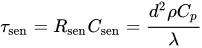
In which is the sensor thickness, the density, the specific heat capacity and the thermal conductivity. From this formula, one can conclude that the material properties of the filling material and dimensions determine the response time. As a rule of thumb, the response time is proportional to the thickness to the power of two.


Other parameters that determine sensor properties are the electrical characteristics of the thermocouple. The temperature dependence of the thermocouple causes the temperature dependence and the non-linearity of the heat flux sensor. The non-linearity at a certain temperature is, in fact, the derivative of the temperature dependence at that temperature.
However, a well-designed sensor may have a lower temperature dependence and better linearity than expected. There are two ways of achieving this:
- As a first possibility, the thermal dependence of the conductivity of the filling material and of the thermocouple material can be used to counterbalance the temperature dependence of the voltage that is generated by the thermopile.
- Another possibility to minimize the temperature dependence of a heat flux sensor is to use a resistance network with an incorporated thermistor. The temperature dependence of the thermistor will balance the temperature dependence of the thermopile.
Another factor that determines heat flux sensor behavior is the construction of the sensor. In particular, some designs have a strongly nonuniform sensitivity. Others even exhibit a sensitivity to lateral fluxes. The sensor schematically given in the above figure would, for example, also be sensitive to heat flows from left to right. This type of behavior will not cause problems as long as fluxes are uniform and in one direction only.

To promote uniformity of sensitivity, a so-called sandwich construction, as shown in the figure to the left, can be used. The purpose of the plates, which have a high conductivity, is to promote the transport of heat across the whole sensitive surface.
It is difficult to quantify non-uniformity and sensitivity to lateral fluxes. Some sensors are equipped with an extra electrical lead, splitting the sensor into two parts. If during application, there is non-uniform behavior of the sensor or the flux, this will result in different outputs of the two parts.
Summarizing: The intrinsic specifications that can be attributed to heat flux sensors are thermal conductivity, total thermal resistance, heat capacity, response time, non-linearity, stability, temperature dependence of sensitivity, uniformity of sensitivity and sensitivity to lateral fluxes. For the latter two specifications, a good method for quantification is not known.
Calibration of thin heat flux transducers
[edit]In order to do in-situ measurements, the user must be provided with the correct calibration constant . This constant is also called sensitivity. The sensitivity is primarily determined by the sensor construction and operation temperatures, but also by the geometry and material properties of the object that is measured. Therefore, the sensor should be calibrated under conditions that are close to the conditions of the intended application. The calibration set-up should also be properly shielded to limit external influences.

Preparation
[edit]To do a calibration measurement, one needs a voltmeter or datalogger with resolution of ±2 μV or better. One should avoid air gaps between layers in the test stack. These can be filled with filling materials, like toothpaste, caulk or putty. If need be, thermally conductive gel can be used to improve contact between layers.[5] A temperature sensor should be placed on or near the sensor and connected to a readout device.
Measuring
[edit]The calibration is done by applying a controlled heat flux through the sensor. By varying the hot and cold sides of the stack, and measuring the voltages of the heat flux sensor and temperature sensor, the correct sensitivity can be determined with:

where is the sensor output and is the known heat flux through the sensor.

If the sensor is mounted onto a surface and is exposed to convection and radiation during the expected applications, the same conditions should be taken into account during calibration.
Doing measurements at different temperatures allows for determining sensitivity as a function of the temperature.
In-situ calibration
[edit]
While heat flux sensors are typically supplied with a sensitivity by the manufacturer, there are times and situations that call for a recalibration of the sensor. Especially in building walls or envelopes, the heat flux sensors cannot be removed after the initial installation or may be very difficult to reach. In order to calibrate the sensor, some come with an integrated heater with specified characteristics. By applying a known voltage on and current through the heater, a controlled heat flux is provided, which can be used to calculate the new sensitivity.
Error sources
[edit]The interpretation of measurement results of heat flux sensors is often done assuming that the phenomenon that is studied is quasi-static and taking place in a direction transversal to the sensor surface. Dynamic effects and lateral fluxes are possible error sources.
Dynamic effects
[edit]The assumption that conditions are quasi-static should be related to the response time of the detector.

The case that the heat flux sensor is used as a radiation detector (see figure to the left) will serve to illustrate the effect of changing fluxes. Assuming that the cold joints of the sensor are at a constant temperature, and an energy flows from , the sensor response is:

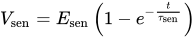
This shows that one should expect a false reading during a period that equals several response times, . Generally, heat flux sensors are quite slow and will need several minutes to reach 95% response. This is the reason why one prefers to work with values that are integrated over a long period; during this period, the sensor signal will go up and down. The assumption is that errors due to long response times will cancel. The upgoing signal will give an error, the downgoing signal will produce an equally large error with a different sign. This will be valid only if periods with stable heat flow prevail.
In order to avoid errors caused by long response times, one should use sensors with a low value of , since this product determines the response time. In other words, sensors with low mass or small thickness.

The sensor response time equation above holds as long as the cold joints are at a constant temperature. An unexpected result shows when the temperature of the sensor changes.
Assuming that the sensor temperature starts changing at the cold joints, at a rate of , starting at , is the sensor response time, the reaction to this is:


See also
[edit]References
[edit]- ^ R.Gardon, "An instrument for the direct measurement of intense thermal radiation", Rev. Sci. Instrum., 24, 366-370, 1953.
- ^ T.E. Diller, Advances in Heat Transfer, Vol. 23, p.297-298, Academic Press, 1993.
- ^ C.T. Kidd and C.G. Nelson, "How the Schmidt-Boelter gage really works," Proc. 41st Int. Instrum. Symp., Research Triangle Park, NC: ISA, 1995, 347-368
- ^ Knauss, Helmut; Roediger, Tim; Bountin, Dimitry A.; Smorodsky, Boris V.; Maslov, Anatoly A.; Srulijes, Julio (March 2009). "Novel Sensor for Fast Heat Flux Measurements". AIAA Journal of Spacecraft and Rockets. 46 (2): 255–265. Bibcode:2009JSpRo..46..255K. doi:10.2514/1.32011. ISSN 0022-4650.
- ^ ASTM C1130-17 Standard Practice for Calibration of Thin Heat Flux Transducers (1.0 ed.). ASTM International. 2017 [2017-01-01]. Archived from the original on November 23, 2017. Retrieved May 30, 2018.
External links
[edit] Media related to Heat flux sensor at Wikimedia Commons

Heat flux sensor
View on GrokipediaIntroduction
Definition and purpose
A heat flux sensor is a transducer designed to measure the rate of heat energy transfer per unit area, known as heat flux, and convert it into an electrical signal proportional to the flux magnitude.[7] Heat flux, denoted as , represents the thermal energy flow through a surface and is fundamentally expressed by the equation , where is the heat transfer rate (in watts) and is the surface area (in square meters).[8] The standard SI unit for heat flux is watts per square meter (W/m²), which quantifies this energy transfer in a precise, vectorial manner.[8] In operation, the sensor generates an output voltage that is linearly related to the heat flux via , where is the sensor's sensitivity (typically in μV·m²/W).[9] This proportionality allows for direct quantification of heat transfer by sensing the temperature gradient across the sensor element, providing a reliable metric for various heat transfer modes.[7] The primary purpose of heat flux sensors is to enable accurate measurement of convective, radiative, or conductive heat transfer, which is essential for maintaining energy balances in thermal systems.[10] In fields such as thermal engineering, these sensors play a critical role in optimizing thermal management and process efficiency by offering insights into heat flow dynamics, thereby supporting the design and validation of systems where precise control of thermal energy is paramount.[11]Historical development
The concept of a heat flow transducer was first introduced in Germany by Max Hencky in 1919, marking the early origins of heat flux measurement devices through a basic wall principle that detected temperature differences across a thermal resistance.[12] This innovation laid the groundwork for direct quantification of heat transfer, evolving from theoretical principles to practical instrumentation. In 1923, Ernst Schmidt advanced the technology by applying similar transducers for laboratory measurements of heat flow in industrial insulation, demonstrating their utility in controlled field tests and filing a patent for a device for heat measurement that year. These early developments shifted focus from indirect calorimetric methods to more precise, transducer-based approaches, emphasizing mechanical transduction of thermal gradients. Key milestones in the 1930s included the development of the Schmidt-Boelter gauge by Ernst Schmidt and L.M.K. Boelter, designed specifically for measuring aerodynamic heating in high-speed flows, which integrated thermopile elements for enhanced sensitivity in aviation and propulsion testing.[13] This gauge represented a significant innovation in handling dynamic heat fluxes, bridging laboratory concepts to engineering applications. By the 1950s, Robert Gardon introduced the Gardon gauge in 1953, a circular-foil design optimized for high-intensity radiation measurements up to several MW/m², patented and detailed in his seminal paper, which improved accuracy for intense thermal environments like combustion and reentry simulations. These inventions by Hencky, Schmidt, Boelter, and Gardon highlighted the progression from mechanical to more robust electronic transduction, enabling broader industrial adoption. Post-World War II advancements in the 1960s saw the widespread integration of thermopile-based sensors for meteorological applications, such as ground heat flux monitoring in energy balance studies, with devices like those from early automatic weather stations using multi-junction thermopiles for precise radiation and conduction measurements. This era expanded sensor use beyond labs to environmental science. In the 1980s, NASA pioneered thin-film heat flux sensors for aerospace, fabricating platinum-rhodium thermocouples on substrates for fast-response measurements in hypersonic flows, as documented in their development reports.[14] In the modern era from the 2000s to 2025, heat flux sensors have shifted toward flexible and thin-film designs for conformal applications, alongside Peltier-based thermoelectric modules that leverage the Seebeck effect for self-powered, bidirectional flux detection, as explored in comprehensive reviews since 2017.[15] Recent 2020s innovations include IoT integration for real-time monitoring in buildings and renewable energy systems, where sensors track heat flux alongside temperature to optimize energy efficiency in solar panels and HVAC, enabling predictive analytics via connected networks.[16] This evolution reflects a transition to smart, adaptable technologies driven by miniaturization and digital connectivity.Operating Principles
Fundamental physics
Heat flux measurement fundamentally relies on the principles of heat transfer, which occurs through three primary modes: conduction, convection, and radiation. Conduction, the direct transfer of thermal energy through a material due to a temperature gradient, is governed by Fourier's law, expressed as , where is the heat flux vector, is the material's thermal conductivity, and is the temperature gradient.[17] This law forms the basis for most heat flux sensors, which quantify the conductive component by relating heat flow to the spatial variation in temperature. Convective heat transfer involves fluid motion carrying thermal energy, while radiative transfer occurs via electromagnetic waves, particularly at higher temperatures; sensors can capture these modes when integrated into environments where all three contribute to the total flux.[7] In sensors employing thermoelectric transduction, the Seebeck effect plays a central role, generating a voltage proportional to the temperature difference across junctions of dissimilar materials. This effect, discovered in the early 19th century, enables the conversion of thermal gradients into electrical signals without external power, making it ideal for passive heat flux detection in thermopile configurations where multiple junctions amplify the output.[18] The resulting voltage , with as the Seebeck coefficient, directly correlates to the heat flux through the associated temperature differential. From an energy balance perspective, a heat flux sensor functions as a thermal resistor with known geometry and properties, where incoming heat flux induces a measurable temperature difference across a layer of thickness . Under one-dimensional conditions, the flux magnitude is then , derived from integrating Fourier's law, allowing direct computation of heat flow per unit area.[17] This approach assumes steady-state operation, where temperatures do not vary with time, and one-dimensional heat flow, implying uniform flux perpendicular to the sensor surface without lateral variations. Additionally, the sensor's surface must thermally match the measured interface to minimize perturbations.[19] These physical models have inherent limitations, particularly in transient scenarios where heat flux varies temporally, leading to time-dependent temperature profiles that deviate from steady-state predictions and require dynamic corrections. Non-uniform flux distributions can also violate the one-dimensional assumption, causing errors in gradient estimation across the sensor area.[20]Measurement mechanisms
Heat flux sensors transduce the heat flow into a measurable electrical signal primarily by detecting the temperature gradient across a thin layer of material with known thermal properties. This gradient arises from the heat flux passing through the sensor, following Fourier's law, which states that the heat flux is proportional to the negative gradient of temperature: , where is the thermal conductivity and is the temperature gradient.[21] The transduction relies on the Seebeck effect, where a temperature difference between two dissimilar materials generates a voltage; in heat flux sensors, this is amplified by stacking multiple thermocouples into a thermopile configuration, producing an output voltage proportional to the overall temperature difference and thus to the incident heat flux.[22][21] The output signal from these sensors is typically an analog voltage or current that scales linearly with the heat flux magnitude. For steady-state measurements, the voltage is given by , where is the sensor sensitivity (in ) and is the heat flux.[22] Modern sensors often incorporate analog-to-digital converters (ADCs) for digital output, enabling direct integration with data acquisition systems. For applications requiring total heat transfer over time, the integrated output can relate to cumulative energy as , where is the effective Seebeck coefficient of the thermopile, providing a measure of total heat .[23] Most heat flux sensors exhibit directional sensitivity, designed to measure unidirectional flux from one side, with the sensitive surface oriented toward the heat source to capture the gradient accurately. Bidirectional measurement can be achieved using differential thermopile setups, where opposing sensors detect flux in both directions.[21] These sensors are commonly integrated with low-noise amplifiers to boost the microvolt-level signals and paired with data loggers or microcontrollers for real-time monitoring and recording, ensuring minimal perturbation to the heat flow path.[22]Types of Heat Flux Sensors
Thermopile-based sensors
Thermopile-based heat flux sensors consist of a series of thermocouple junctions formed by alternating dissimilar metal alloys, arranged in series across a thin thermal insulator or resistance layer that separates the hot and cold sides.[24] When heat flux passes through the sensor, it creates a temperature gradient between the exposed hot junctions and the reference cold junctions, generating a voltage output via the Seebeck effect, where the voltage is proportional to the temperature difference across the junctions.[24] This configuration allows the sensor to measure the heat flux as the product of the thermal conductivity of the insulating layer and the temperature gradient, with the thermopile amplifying the signal through multiple junctions.[25] These sensors offer high sensitivity, typically on the order of 50–60 μV/(W/m²), making them particularly suitable for steady-state measurements in low-flux environments, such as those below 100 W/m².[1] Their robustness and ability to handle small temperature differences stem from the serial connection of thermocouples, which linearly scales the output voltage with the number of junctions.[22] A representative example is the heat flux plate (HFP), such as the HFP01 model, which employs a thermopile embedded in a ceramics-plastic composite body for applications in soil heat flux monitoring at depths around 0.05 m or through building walls to assess thermal performance via U-value and R-value calculations.[1] The sensitivity of such a thermopile sensor, defined as the output voltage per unit heat flux (), can be expressed as , where is the number of thermocouple pairs, is the relative Seebeck coefficient of the thermocouple materials, is the thickness of the thermal insulator, and is its thermal conductivity; this relation derives from the voltage and the temperature difference , with as the heat flux.[24] Thermopile-based sensors have been widely adopted since the mid-20th century for environmental monitoring, with significant applications emerging in the 1960s for heat transfer studies in insulation and meteorology.[25] Despite their sensitivity, these sensors exhibit limitations, including a relatively slow response time on the order of seconds—such as 180 seconds for 95% response in the HFP01—to reach steady-state conditions, making them less ideal for transient or rapidly varying fluxes.[1] They are also prone to errors from lateral heat loss if the sensor's thermal conductivity mismatches that of the surrounding medium, potentially disturbing the local heat flow and introducing uncertainties in heterogeneous environments like soil.[25]Slug and Gardon gauges
Slug gauges, particularly the Schmidt-Boelter type, feature a thick disk or cylindrical slug of high-conductivity metal, such as copper, with an embedded thermopile to measure the temperature difference across the axial thickness. The design relies on one-dimensional heat conduction through the slug following absorption of incident heat flux on a blackened surface.[26][27] This configuration allows for steady-state operation in environments with significant thermal loads, where the heat conduction is modeled using principles of axial diffusion.[28] Gardon gauges employ a thin circular foil, often made of constantan, mounted taut over a heat sink with a thermocouple junction at the center.[29] Upon exposure to heat flux, the foil absorbs energy uniformly, leading to a radial temperature gradient from the center to the cooled periphery, assuming isotropic heat conduction.[30] The heat flux is calculated as where is the thermal conductivity of the foil, is its thickness, is the radius to the edge, and is the temperature difference between the center and edge.[29] This radial spreading ensures the gauge responds to high-intensity radiation perpendicular to the surface, making it suitable for transient measurements.[13] Both slug and Gardon gauges offer fast response times on the order of milliseconds, enabling capture of dynamic heat flux variations, and can handle fluxes exceeding 10 kW/m², with upper limits reaching hundreds of kW/m² in water-cooled variants.[31] Their robust construction, using durable metals and protective coatings, ensures reliability in harsh conditions such as high-temperature aerospace testing or fire exposure.[28] These gauges originated in the 1930s to 1950s, driven by aerospace needs for measuring reentry heat loads, with the Schmidt-Boelter design emerging from early thermopile innovations and the Gardon gauge patented by Robert Gardon in 1956.[13] The National Institute of Standards and Technology (NIST) references both in calibration protocols, using blackbody radiators and transfer standards to ensure traceability for fire testing and high-enthalpy applications.[32] Despite their strengths, these gauges assume isotropic heat flow and uniform radial symmetry, which can introduce errors in anisotropic or non-circular configurations due to edge effects and lateral losses.[33]Thin-film and advanced sensors
Thin-film heat flux sensors employ deposited thermocouples, such as platinum or NiCr-NiSi pairs, onto substrates like alumina via sputtering or magnetron deposition techniques, resulting in minimal thicknesses under 1 mm that facilitate rapid thermal response. These designs typically incorporate a thin insulating layer, such as SiO₂ or Al₂O₃ (around 5–2000 nm thick), to create a measurable temperature gradient across the sensor according to Fourier's law, enabling high-resolution mapping with low flow disturbance.[5][34] Advanced variants expand functionality beyond traditional thermopiles. Peltier-based sensors utilize commercial thermoelectric modules in reverse via the Seebeck effect to generate voltage proportional to heat flux, simplifying construction with a single metamaterial layer and providing lower thermal resistance compared to multi-junction thermopiles. Flexible polymer-embedded designs, often on polyimide substrates with embedded ITO-In₂O₃ thermopiles and microhole arrays, support conformal attachment to curved or dynamic surfaces like human skin for wearable applications. Infrared or optical sensors integrate gradient or Laplacian methods with IR thermography, using thin metallic foils or slabs to derive two-dimensional heat flux distributions from surface temperature maps without direct contact.[35][36][37] Performance characteristics include response times below 1 ms, as demonstrated by Wheatstone bridge configurations achieving 270 μs, and measurement ranges up to 1 MW/m² in high-temperature environments like engine testing.[5][38] Unique developments trace to NASA Glenn Research Center's work in the 1980s, pioneering thin-film thermopile and bridge arrays for turbine blade instrumentation and hypersonic flow measurements, with ongoing refinements into ceramic matrix composites. In the 2020s, IoT-integrated variants have emerged, embedding self-powered thin-film sensors into networks for real-time thermal monitoring in smart systems.[17][39] Challenges include mechanical fragility in suspended or flexible structures, which limits durability under stress, and the precision required for microfabrication processes like photolithography and ion beam deposition to ensure uniform thin layers.[40][41]Design and Construction
Key components
The sensing element is the core of a heat flux sensor, typically comprising a thermocouple, thermopile, or foil core designed to detect temperature gradients arising from heat flow. Thermopiles, consisting of multiple thermocouples connected in series, generate a voltage proportional to the temperature difference between a hot side exposed to heat flux and a cold reference side, enabling precise gradient measurement across the sensor surface.[42] In some configurations, a thin foil core, such as constantan, serves as the conductive medium where thermocouples are attached to measure radial heat conduction.[27] A thermal barrier, often an insulating layer like ceramics (e.g., alumina) or thin protective coatings, is incorporated to direct the heat flux perpendicular to the sensing surface, minimizing lateral losses and ensuring one-dimensional heat flow for accurate readings. This layer maintains a controlled thermal resistance, typically on the order of 10^{-3} to 10^{-4} K m²/W, which helps in establishing a measurable temperature gradient without excessive distortion.[43][34] The protective housing encases the internal components, usually formed from metal (e.g., stainless steel) or polymer materials to shield against environmental factors such as moisture, dust, and mechanical damage, while including wiring terminals for signal output to external data acquisition systems. This casing also facilitates mounting and ensures electrical isolation, with typical ingress protection ratings like IP67 for industrial use.[42][44] Auxiliary parts include reference junctions for the cold side of thermocouples or thermopiles to provide temperature compensation, preventing errors from ambient variations, and amplifiers for signal conditioning to boost the low millivolt outputs into usable voltage levels for recording. Integrated temperature sensors, such as Type K thermocouples, monitor the sensor body temperature to apply corrections for thermal dependence.[43][34] Assembly considerations emphasize low thermal mass to achieve fast response times, often through thin-film or compact designs, with typical sensor dimensions ranging from 10 to 50 mm in diameter or side length to balance sensitivity and practicality in various installations. Proper bonding, such as using thermal grease or adhesives, ensures intimate contact with the measured surface, reducing air gaps that could introduce errors.[42][34]Materials and fabrication techniques
Heat flux sensors require careful selection of materials to ensure optimal thermal conduction, electrical performance, and mechanical durability across diverse operating environments. Thermal conductors, such as metals like copper and constantan, are commonly employed in slug and foil designs to facilitate heat transfer and generate measurable temperature gradients. Copper, with its high thermal conductivity of approximately 400 W/m·K, serves as an effective heat sink or spreading layer in these components, enabling rapid equilibration and accurate flux measurement. Constantan, a copper-nickel alloy with a lower thermal conductivity around 23 W/m·K, is frequently paired with copper in thermopile configurations due to its favorable Seebeck coefficient for thermoelectric voltage generation.[45] Semiconductors, including bismuth telluride (Bi₂Te₃) and calcium cobalt oxide (Ca₃Co₄O₉), are utilized in advanced thermopile-based sensors for their enhanced thermoelectric efficiency, particularly in thin-film applications where high-temperature stability is needed.[46][47] Recent advances as of 2025 include rhenium-based designs for ultra-high-temperature operation exceeding 1000 °C.[48] Insulating materials play a critical role in isolating heat paths and preventing parasitic conduction, thereby maintaining measurement precision. Ceramics, such as alumina (Al₂O₃) or silicon dioxide (SiO₂), are selected for their low thermal conductivity (typically 1-30 W/m·K, depending on composition) and high dielectric strength, forming barriers that confine heat flux to the sensing element.[34] Polyimide films like Kapton provide flexible, low-thermal-conductivity insulation (around 0.12 W/m·K) ideal for thin barriers in compact or conformal sensors, offering additional benefits in electrical insulation and mechanical flexibility.[49] Adhesives, often epoxy-based with tailored thermal contact resistance, are used for bonding layers, ensuring minimal heat loss at interfaces while preserving structural integrity.[50] Fabrication techniques for heat flux sensors emphasize precision to achieve uniform material deposition and minimal defects. Thin-film sensors are produced via sputtering to deposit metallic or semiconductor layers onto substrates, followed by photolithography and etching to pattern thermopile junctions and insulators, enabling nanoscale features for high spatial resolution.[51][52] For plate-based designs, thick-film printing or screen-printing techniques apply conductive and insulating pastes onto ceramic substrates, which are then sintered to form robust metering surfaces.[53] Emerging methods, such as molding for polymer-encapsulated plates, allow for scalable production of larger-area sensors, while 3D printing facilitates custom prototypes with integrated geometries in research settings.[54] Specialized applications demand tailored materials to address environmental challenges. For aerospace environments, high-temperature alloys such as nickel-based superalloys or titanium variants are selected for sensor bodies, offering resistance to extreme thermal conditions while maintaining structural properties.[55] Material choices involve inherent trade-offs: thinner layers enhance sensitivity by reducing thermal resistance and improving response times, but they compromise durability against mechanical stress or abrasion; conversely, thicker constructions bolster robustness for long-term deployment at the expense of reduced flux resolution.[56]Properties and Performance
Sensitivity and measurement range
Sensitivity in heat flux sensors refers to the electrical output produced per unit of incident heat flux, typically expressed in microvolts per watt per square meter (μV/(W/m²)). For thermopile-based sensors, such as heat flux plates used in low-flux applications, a representative sensitivity is 50 μV/(W/m²), as seen in the HFP01 model, where the output voltage is generated by the Seebeck effect across multiple thermocouple junctions.[57] This sensitivity is fundamentally determined by the number of thermopile junctions, with more junctions yielding a proportionally higher output for the same flux, or by the geometry of the thin foil in slug-type gauges like the Gardon design, where the foil's diameter and thickness influence the thermal gradient and thus the voltage response.[31] The measurement range of heat flux sensors varies significantly by type to suit different applications, with plate sensors typically operating from 0 to 100 W/m² for environmental monitoring, though extended ranges up to ±2000 W/m² are possible without saturation under steady-state conditions.[57] In contrast, high-flux Gardon gauges can measure up to 1000 kW/m², but saturation effects occur at extremes due to thermal overload or non-linear response in the sensing element, limiting accurate readings beyond the rated capacity.[31] At high fluxes, this saturation manifests as a plateau in output voltage, potentially introducing errors if not accounted for in the measurement setup. Several factors influence the proportionality of sensor output to heat flux. The active sensing area plays a key role, as larger areas collect more total heat for a given flux density, enhancing the overall signal strength and effective sensitivity while minimizing local disturbances to the flux field.[56] Additionally, the temperature coefficient affects performance, with output varying due to changes in the Seebeck coefficient of the thermopile materials; for instance, Schmidt-Boelter gauges exhibit up to 9.5% deviation without temperature-specific corrections.[58] The calibration factor, defined as where is the output voltage and is the heat flux, quantifies this relationship, and linearity is evaluated through plots of versus to ensure consistent response across the operational range. For building applications, standards like ISO 8302 verify sensor ranges by specifying steady-state heat transfer measurements in guarded hot plate setups, ensuring reliability for fluxes typical of insulation testing (often below 100 W/m²).[59]Response time and accuracy
The response time of a heat flux sensor is characterized by its time constant τ, which represents the time required for the sensor output to reach approximately 63% of its final value in response to a step change in heat flux. For sensors operating on thermal diffusion principles, this time constant is given by τ = (ρ c d²) / k, where ρ is the density, c is the specific heat capacity, d is the sensor thickness, and k is the thermal conductivity of the sensing material.[60] Thinner designs, such as thin-film sensors, achieve very short response times below 1 ms, enabling capture of rapid transients, while thicker plate-type sensors exhibit longer times exceeding 1 s, often up to 180 s for 95% response in soil applications.[17][1] Accuracy in heat flux measurements typically ranges from ±3% to ±5% under reference conditions, such as controlled laboratory environments at 20°C and moderate flux levels around 350 W/m².[1] This precision can be influenced by factors like spatial non-uniformity in flux distribution across the sensor surface and hysteresis effects from material thermal history, which may introduce deviations in repeated measurements.[1] In practical deployments, such as building or soil monitoring, overall uncertainty may rise to ±6-20% due to installation variability, though calibrated sensors maintain core accuracy within the stated bounds.[1] Testing for response time and accuracy commonly involves step-response experiments, where a sudden change in heat flux (e.g., via laser or heater activation) is applied, and the sensor's output is analyzed to determine the time constant at 63.2% of steady-state value.[60] For alternating current (AC) or oscillatory flux scenarios, frequency response testing uses periodic signals, such as sinusoidal or rectangular waves from 100 Hz to 2 kHz, with fast Fourier transform analysis to evaluate amplitude attenuation and phase shift, confirming usable bandwidths up to 1.5 kHz or higher in optimized designs.[60] Recent improvements in sensor performance emphasize low-mass designs, such as nanoscale thin films, which reduce thermal inertia and achieve response times in the microsecond range by minimizing d in the time constant formula, thereby enhancing suitability for dynamic environments.[17] Additionally, digital filtering techniques, including moving average and Savitzky-Golay algorithms with window widths of 51-101 points, have been integrated into 2020s-era processing pipelines to suppress noise in small heat flux signals (5-10 W/m²), improving signal-to-noise ratios by up to 7 dB while preserving temporal fidelity through optimized parameter selection via intersection region methods.[61] In aerospace applications, particularly for transient events like atmospheric re-entry, heat flux gauges prioritize response times below 10 ms to accurately resolve peak heating pulses lasting milliseconds, with advanced thin-film variants achieving sub-microsecond performance to minimize flow disruption in hypersonic flows.[62]Calibration Procedures
Laboratory calibration methods
Laboratory calibration of heat flux sensors is performed in controlled environments to establish their sensitivity and ensure traceability to international standards, typically using reference equipment that generates known heat fluxes. These methods focus on absolute calibration techniques to determine the sensor's responsivity, defined as the output signal per unit heat flux, under steady-state conditions. Common approaches include electrical substitution and guarded hot plate methods, which provide uncertainties typically below 3% for high-precision sensors.[63] The electrical substitution method, a primary technique at the National Institute of Standards and Technology (NIST), simulates radiative heat flux using a blackbody radiator or electrical resistor to balance the temperature rise in the sensor against a known electrical power input. In this two-step transfer calibration process, a reference electrically calibrated radiometer (ECR) is first calibrated against a primary standard, such as a quantum efficiency detector, using laser radiation; the ECR then serves as the transfer standard for calibrating the heat flux sensor under blackbody radiation from a variable-temperature blackbody source up to 2773 K. The calibrated heat flux is calculated as , where is the electrical power input and is the sensor's active area, enabling direct comparison of radiative and electrical heating to achieve uncertainties around 1.5% (k=2). This method is particularly suited for high-heat-flux sensors, such as Gardon gauges, with ranges up to 50 kW/m².[64][63] For lower heat flux levels relevant to building applications, the heat flow meter apparatus method follows ASTM C518, where the sensor is embedded in or placed on a metering plate between hot and cold surfaces, creating a known unidirectional heat flux through a temperature difference across a calibrated specimen of known thermal resistance. The heat flux is determined from the plate temperature difference and the specimen's thermal conductivity, allowing evaluation of sensor output linearity and sensitivity. Calibration using a 610 mm heat flow meter apparatus under this standard has been explored for thin-film sensors, confirming equivalency across sensor sizes with deviations under 7% when positioned optimally within the insulation layer.[65] General procedures involve applying stepwise heat fluxes from 0 to the sensor's maximum range in a controlled chamber, recording output signals at steady state, and fitting the data with least-squares regression to assess linearity and compute the calibration factor. Equipment such as calorimeters or radiometers ensures uniform flux application, with post-2020 calibrations emphasizing traceability to SI units through primary radiometric standards for enhanced accuracy in applications like aerospace testing. High-precision sensors require annual recalibration to maintain uncertainties below 2%, accounting for potential drift in thermopile junctions or foil elements.[63][64]In-situ and field calibration
In-situ calibration of heat flux sensors involves on-site adjustments to account for installation-specific conditions, such as thermal contact resistance and environmental influences, which can deviate from controlled laboratory settings. These methods ensure measurement accuracy in operational environments by verifying and correcting sensor response without removal from the installation site. Unlike laboratory procedures, in-situ approaches focus on relative verification and practical corrections to maintain reliability over time.[66] Key techniques include comparative measurement using a reference sensor placed adjacent to the primary sensor under similar conditions to identify discrepancies in output. This relative method imposes identical heat fluxes on both sensors, allowing sensitivity correction through direct comparison of their signals. Another technique is transient heating, such as applying a short pulse from a lamp or integrated film heater, to check the sensor's dynamic response and verify time constants in the field.[67][66] Common procedures establish a zero-flux baseline by insulating the sensor to eliminate heat flow, enabling offset correction for any residual signal. Multi-point flux simulation generates varying known heat inputs, often via controlled heating elements, to map the sensor's response across its operational range. Software-based drift correction algorithms monitor long-term signal deviations and apply real-time adjustments, typically using baseline subtraction during low-activity periods.[68][69][70] The ISO 9869 standard guides in-situ calibration for building applications, specifying procedures for heat flux measurements in envelopes to determine thermal resistance and transmittance, with requirements for sensor placement and data averaging over extended periods. Challenges include mounting variability, such as air gaps or uneven contact, which can introduce errors up to 20% if not addressed through proper installation verification.[71] In meteorology, these methods are routinely applied to soil heat flux sensors to support energy balance calculations at weather stations.[72] Environmental factors, like surrounding material conductivity, necessitate sensitivity adjustments, often expressed aswhere is the adjusted sensitivity, is the laboratory value, and is the correction factor derived from site-specific conditions. Self-calibrating designs, such as those with integrated heaters, automate this process to compensate for installation effects.[73][66]