Hubbry Logo
TuesdayTuesdayMain
Open search
Tuesday
Community hub
Tuesday
logo
8 pages, 0 posts
0 subscribers
Be the first to start a discussion here.
Contribute something
Tuesday
Tuesday
from Wikipedia
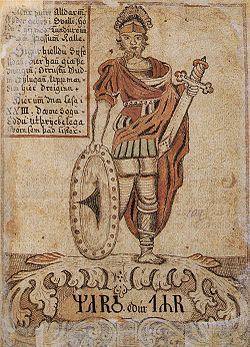
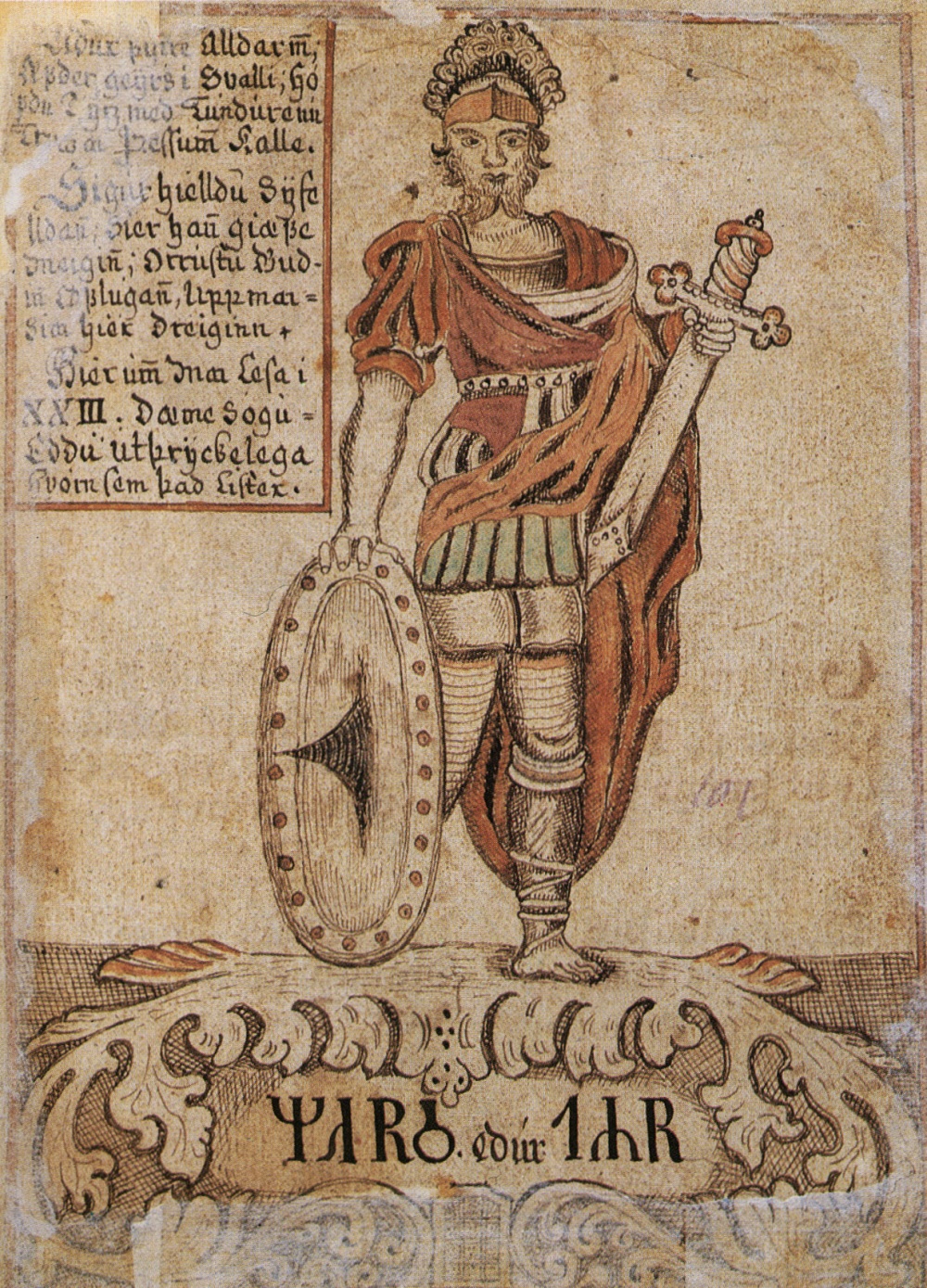
The god Týr or Tiw, identified with Mars, after whom Tuesday is named. Icelandic National Library, Reykjavík.

Tuesday is the day of the week between Monday and Wednesday. According to international standard ISO 8601, Monday is the first day of the week; thus, Tuesday is the second day of the week.[1] According to many traditional calendars, however, Sunday is the first day of the week, so Tuesday is the third day of the week. In some Muslim countries, Saturday is the first day of the week and thus Tuesday is the fourth day of the week.

The English name is derived from Middle English Tewesday, from Old English Tiwesdæg meaning "Tīw's Day", the day of Tiw or Týr, the god of single combat, law, and justice in Norse mythology. Tiw was equated with Mars in the interpretatio germanica, and the name of the day is a translation of Latin dies Martis.

Etymology

[edit]

The name Tuesday derives from the Old English Tiwesdæg and literally means "Tiw's Day".[2] Tiw is the Old English form of the Proto-Germanic god *Tîwaz, or Týr in Old Norse. *Tîwaz derives from the Proto-Indo-European base *dei-, *deyā-, *dīdyā-, meaning 'to shine', whence comes also such words as "deity".[3]

The German Dienstag and Dutch dinsdag are derived from the Germanic custom of the thing, as Tiw / Týr also had a strong connection to the thing.

The Latin name dies Martis ("day of Mars") is equivalent to the Greek ἡμέρα Ἄρεως (hēméra Áreōs, "day of Ares"). In most languages with Latin origins (Italian, French, Spanish, Catalan, Romanian, Galician, Sardinian, Corsican, but not Portuguese), the day is named after Mars, the Roman parallel of the Ancient Greek Ares (Ἄρης).

In some Slavic languages the word Tuesday originated from Old Church Slavonic word въторъ meaning "the second". Bulgarian and Russian Вторник (Vtornik) (Serbian: уторак utorak) is derived from the Bulgarian and Russian adjective for 'second' – Втори (Vtori) or Второй (Vtoroi).

In Japanese, the second day of the week is 火曜日 (kayōbi), from 火星 (kasei), the planet Mars. Similarly, in Korean the word Tuesday is 화요일 (hwa yo il), means literally fire day, and Mars the planet is referred to as the fire star with the same words, but this is unrelated to the Roman god Mars, which is referred to phonetically as Mars.

In the Indo-Aryan languages Pali and Sanskrit the name of the day is taken from Angaraka ('one who is red in colour'),[4] a style (manner of address) for Mangala, the god of war, and for Mars, the red planet.

In the Nahuatl language, Tuesday is Huītzilōpōchtōnal (Nahuatl pronunciation: [wiːt͡siloːpoːt͡ʃˈtoːnaɬ]) meaning "day of Huitzilopochtli".

In Arabic, Tuesday is الثلاثاء (al-Thulatha'), and in Hebrew it is יום שלישי (Yom Shlishi), meaning "third day". When added after the word يوم / יום (yom or youm) it means "the third day".

Religious observances

[edit]

In the Eastern Orthodox Church, Tuesdays are dedicated to Saint John the Baptist. The Octoechos contains hymns on this theme, arranged in an eight-week cycle, that are chanted on Tuesdays throughout the year. At the end of Divine Services on Tuesday, the dismissal begins with the words: "May Christ our True God, through the intercessions of his most-pure Mother, of the honorable and glorious Prophet, Forerunner and Baptist John…"

In Hinduism, Tuesday is a popular day for worshipping and praying to Hanuman and Kartikeya, some also worship Kali, Durga, Parvati, and Ganesha. Many Hindus fast during Tuesday.[5][6][7] Many Hindu married women also observe the Mangala Gauri Vrat of fasting every Tuesday in the Hindu month of Shravana, as the month is dedicated to Gauri and Shiva. Tuesday is also viewed as the day ruled by Mangala (Mars) in Hinduism.

Cultural references

[edit]

Common occurrences

[edit]

United States

[edit]

Tuesday is the usual day for elections in the United States. Federal elections take place on the Tuesday after the first Monday in November; this date was established by a law of 1845 for presidential elections (specifically for the selection of the Electoral College), and was extended to elections for the House of Representatives in 1875 and for the Senate in 1914. Tuesday was the earliest day of the week which was practical for polling in the early 19th century: citizens might have to travel for a whole day to cast their vote, and would not wish to leave on Sunday which was a day of worship for the great majority of them. However, a bill was introduced in 2012 to move elections to weekends, with a co-sponsor stating that "by moving Election Day from a single day in the middle of the workweek to a full weekend, we are encouraging more working Americans to participate. Our democracy will be best served when our leaders are elected by as many Americans as possible."[12]

Video games are commonly released on Tuesdays in the United States, this fact often attributed to the Sonic the Hedgehog 2 "Sonic 2s day" marketing campaign in 1992.[13] DVDs and Blu-rays are released on Tuesday.[14] Albums were typically released on Tuesdays as well, but this has changed to Fridays globally in 2015.[15]

Australia

[edit]

In Australia, the board of the Reserve Bank of Australia meets on the first Tuesday of every month except January.[16] The federal government hands down the federal budget on the second Tuesday in May, the practice since 1994 (except in 1996 and 2016).[17] The Melbourne Cup is held each year on the first Tuesday in November.[18]

Astrology

[edit]

In astrology, Tuesday is aligned by the planet Mars and the astrological signs of Aries and Scorpio.[citation needed]

Named days

[edit]

References

[edit]
[edit]
Revisions and contributorsEdit on WikipediaRead on Wikipedia
from Grokipedia
Tuesday is the third day of the week in calendars where is considered the first day, such as traditional Christian and Jewish systems, though in the standard it is the second day following . The name originates from tīwesdæg, meaning "Tīw's day," referring to Tīw, the Germanic god of war, , and , who corresponds to the Norse deity Tyr and the Roman Mars. In , it derives from Latin diēs Martis, "day of Mars," reflecting the ancient Roman planetary nomenclature that associated weekdays with gods and celestial bodies. Germanic languages preserve the Tiw/Tyr attribution, while Slavic languages often denote it numerically as "second" (e.g., Russian vtornik), treating Monday as the first weekday. Culturally, Tuesday carries martial connotations due to its divine namesake, influencing superstitions in some traditions, such as avoidance of certain actions in Islamic folklore linking it to trials, though such views lack universal doctrinal support. In modern usage, it holds no universal religious observance but features prominently in routines, elections in the United States, and historical events tied to conflict, underscoring its enduring association with action and strife.

Etymology and Historical Origins

Proto-Indo-European and Indo-European Roots

The English weekday name "Tuesday" originates from Tīwesdæg, literally "Tīw's day," referring to the Anglo-Saxon Tīw. This form reflects Proto-Germanic *Tīwaz dagą, where *dagą denotes "day" and derives from Proto-Indo-European (PIE) *h₂éǵʰ- ("to burn, shine"), while Tīwaz stems from PIE *deywós, a neuter meaning "" or "divine being." The root underlying deywós is PIE *dyew- ("to shine, sky, "), which evokes luminous celestial phenomena and forms the basis for sky- nomenclature across Indo-European languages. Tīwaz functions as the Germanic cognate of PIE *Dyēus, the reconstructed daylight-sky deity, whose name directly continues *dyew- and appears in variants like Vedic Dyáus ("sky") and Avestan Dyāu-. In comparative linguistics, this root systematically links deity names tied to heavenly or radiant attributes: Greek Zeús (from Dyēus), Latin diēus ("day-god" in Iuppiter, contracted from Dyēus patēr "sky father"), and Sanskrit deva- ("god, divine"). The PIE deywós thus denotes not a specific mythological figure but a semantic category of exalted, shining entities, with reflexes in weekday etymologies preserving Indo-European theonymic patterns through Germanic adaptation. This etymological lineage illustrates a broader Indo-European for temporal units, where divine descriptors from *dyew- integrate into calendrical terms; for instance, Latin diēs ("day") shares the , paralleling Germanic dagą and underscoring how PIE speakers conceptualized days as extensions of celestial . In Germanic , Tīwaz-based forms appear consistently for the third weekday, as in Old Norse Týsdagr, reinforcing the inherited PIE substrate amid later phonological shifts like , which devoiced PIE *d- to Germanic t-.

Roman Planetary Naming and Adoption

The Roman planetary week, adopted during the late Republic, designated the third day as dies Martis, or "day of Mars," linking it to the deity Mars, who embodied warfare, protection, and virility in Roman tradition. This nomenclature stemmed from Hellenistic astrological influences, where days were assigned to the seven visible celestial bodies—Saturn, Jupiter, Mars, the Sun, Venus, Mercury, and the Moon—in a sequence determined by planetary hours, with Roman gods substituted for Greek equivalents (Mars replacing Ares). Historical records, including literary references from the 1st century BCE onward, confirm dies Martis as the standard term, reflecting Rome's militaristic ethos where Mars ranked second only to Jupiter among male gods. Under Julius Caesar's Julian calendar reform in 45 BCE, which recalibrated the solar year to 365.25 days by adjusting month lengths and introducing leap years, the planetary day names like dies Martis were retained amid the broader adoption of the continuous seven-day cycle. While the reform primarily addressed seasonal misalignment from the prior lunar-solar system, it facilitated the integration of the astrological week, already gaining traction in urban Roman society, into official timekeeping; the sequence placed dies Martis after dies Lunae and before dies Mercurii. This period marked a shift from the traditional eight-day nundinae market cycle toward the seven-day planetary structure, evidenced by its persistence in administrative and astrological texts. Roman military expansions from the 2nd century BCE to the 2nd century CE disseminated these day names across , from Britain to the Danube provinces, as Latin became the lingua franca of governance and commerce. Inscriptions on altars, milestones, and legal documents in provinces like and reference planetary days, demonstrating practical usage beyond Italy. Early Christian writers, such as those in the 3rd–4th centuries CE, critiqued pagan yet preserved the nomenclature in ecclesiastical calendars, allowing dies Martis equivalents to endure in derivatives and influence post-Roman vernaculars.

Germanic and Norse Transformations

In Germanic traditions, the Roman god Mars, associated with war, was syncretized with the deity Tiwaz or Týr, a figure embodying justice, oaths, and martial prowess, as evidenced by Roman inscriptions such as those dedicating altars to Mars Thingsus, linking the Roman war god to Germanic assemblies and legal warfare. This equivalence is further supported by Tacitus' observations in Germania, where he identifies Germanic gods with Roman counterparts, equating a sky and war deity akin to Týr with Mars. Archaeological finds, including runic inscriptions invoking the Tiwaz rune (ᛏ) for protection and victory, underscore Týr's role in Germanic martial and juridical contexts, adapting Roman planetary nomenclature to local cosmology. Among , this transformation manifested in naming the day Tīwesdæg after Tīw, as recorded by in De Temporum Ratione (725 CE), where he the dedication to a god of war and , directly replacing dies Martis. In Norse contexts, influenced by expansions from the 8th to 11th centuries, the day became Týsdagr, tied to Týr's of binding the , as detailed in the by (c. CE), symbolizing heroic and the enforcement of cosmic order through conflict, which causally reinforced warlike attributes. This narrative, where Týr forfeits his hand to ensure the gods' security, illustrates a causal link between justice, binding threats, and martial resolve, distinct from Mars' unnuanced aggression. The Germanic nomenclature persisted in English as Tuesday following the of CE, retained among the populace despite Norman French influence, which preserved Latin-derived mardi in like French and martes in Spanish. This endurance reflects the substrate resilience of against Norman overlay, with day names embedded in everyday usage and rural traditions, contrasting the Roman retention in continental tongues.

Astronomical Associations

Planetary Correspondence to Mars

The planetary correspondence of Tuesday to Mars originates from the Babylonian development of the seven-day week around BCE, which assigned each day to one of the seven celestial bodies visible to the : the Sun, , Mercury, , Mars, , and Saturn. This heptatonic system drew from empirical sidereal observations of these bodies' periodic motions across the , with the sequence of days derived from the Hellenistic of Babylonian planetary hours—repeating cycles of seven hours ruled by the bodies in order of decreasing apparent (Saturn slowest to fastest). The resulting day order, starting with under the Sun's influence, placed Mars as the ruler of the third day (Tuesday in later Roman and Germanic calendars), reflecting its position in the observed geocentric sequence after the luminaries and inner planets. Mars' assignment was informed by its distinct observable characteristics from Earth, including a persistent reddish hue—resulting from sunlight reflecting off iron oxide (rust) dust covering much of its surface—and periodic retrograde motion, where it appears to loop backward against the fixed stars for about two months every 687-day synodic cycle. These features were meticulously tracked by Babylonian astronomers using cuneiform records dating to at least the 7th century BCE, noting Mars' erratic path and blood-like color, which stood out against the night sky at oppositions when it reaches peak brightness (magnitude -2.9). In Ptolemaic astronomy, codified in Claudius Ptolemy's Almagest around 150 CE, Mars' superior planet status in the geocentric model—positioned beyond the Sun—necessitated complex epicycles on deferents to account for its pronounced retrogrades and varying orbital speeds, aligning predictions with accumulated Babylonian positional data spanning centuries. Nicolaus Copernicus's heliocentric model, published in De revolutionibus orbium coelestium in 1543, repositioned Mars as the fourth from the Sun (semi-major axis 1.52 AU), with Earth passing it during oppositions to retrograde illusions via relative orbital velocities—Mars' 24.6-hour sidereal day and 687-day year yielding predictable encounters every 780 days. This framework eliminated the need for Ptolemaic epicycles by grounding motions in causal gravitational dynamics and elliptical orbits (later refined by Kepler), yet it did not alter the entrenched , as Mars' mythic and observational legacy from geocentric eras persisted in traditions despite the model's empirical superiority in predicting positions. Modern observations confirm these ancient visibilities, with Mars' features and atmospheric enhancing its ruddy across visible wavelengths.

Calendar Integration and Week Structure

In the for date and time representation, the week begins on , positioning Tuesday as weekday, a convention aligned with and international scheduling practices to facilitate consistent week numbering starting from the nearest 1. This reflects adaptations from earlier traditions where the seven-day week, tracing to Mesopotamian origins around the 21st century BCE and formalized in Jewish practice with as the first day following the , was incorporated into Roman civil by the 1st century CE, preserving the sequential order of days despite varying start points. In Roman adoption, the planetary sequence—beginning with dies Solis () followed by dies Lunae () and dies Martis (Tuesday)—established Tuesday's fixed role as the third day when reckoning from , a pattern that endured through Christianization under Constantine's 321 CE decree standardizing the week across the empire. Historical calendar reforms tested but ultimately reinforced the persistence of this seven-day planetary structure. The French Revolutionary Calendar, implemented from 1793 to 1805, replaced the week with the 10-day décade to sever religious ties, dividing months into three such cycles without planetary weekdays, yet its abandonment in favor of the restored Gregorian system underscored the entrenched cultural and practical adherence to the seven-day cycle. Similarly, the 1582 Gregorian reform, promulgated by Pope Gregory XIII to correct Julian calendar drift, skipped 10 days in October—advancing from Thursday, October 4, directly to Friday, October 15—without interrupting the weekday sequence, ensuring Tuesday retained its relative position amid the solar year's realignment. Global standardization of the Gregorian calendar, progressively adopted from 1582 onward (with Protestant regions like Britain following in 1752 by omitting 11 days), maintained the unbroken continuity of the week across jurisdictions, as adjustments targeted date discrepancies rather than weekday nomenclature or order, thereby embedding Tuesday's position within solar calendars worldwide. This resilience highlights the week's independence from lunar phases, rooted instead in astronomical planetary associations that predated and outlasted reform attempts.

Religious Observances and Significance

In Abrahamic Religions

In Judaism, Tuesday corresponds to the third day of creation in the Genesis narrative, where the phrase "and God saw that it was good" (ki tov) appears twice—after the gathering of waters and the emergence of vegetation—unlike other days, rendering it symbolically auspicious in some traditions, though without scriptural mandate for specific observances. This double affirmation has led to a cultural preference for conducting weddings on Tuesdays among certain Orthodox communities, as it evokes divine approval, but halakhic requirements prioritize practical considerations like court verification midweek rather than day-specific sanctity. The Talmud in tractate Ketubot outlines marriage timings for maidens on Wednesdays to allow betrothal review, underscoring that Tuesday's favor is interpretive folklore rather than binding law. Christianity ascribes no universal liturgical or status to Tuesday, with the weekly centered on Sunday as the Lord's Day commemorating the Resurrection. Historical fasting practices, such as the quarterly ember days established by the early Church for ordination prayers and seasonal penance, designate Wednesdays, Fridays, and Saturdays—not Tuesdays—for abstinence, adapting Jewish precedents of midweek fasts while emphasizing Christ's fulfillment over calendrical causality. Pre-Reformation customs occasionally aligned local vigils or saint commemorations with Tuesdays in monastic calendars, but Protestant reforms critiqued such accretions as unbiblical, prioritizing scriptural injunctions against ritualism and reducing day-specific ties beyond core sacraments. In Islam, Tuesday lacks prescribed rituals or elevated status in the Quran, with hadiths in attributing the creation of illnesses, of , and hellfire to this day, as narrated from Abu Hurairah: "Allah created what is detestable on Tuesday." Such narrations, while authentic in , do not imply prohibition of deeds or superstition, as the emphasized consistent and rejected omens tied to days, urging reliance on divine will over temporal . timings follow solar cycles empirically, without favoritism for Tuesdays, and scholars caution against deriving inauspiciousness from these reports, affirming that good actions yield reward irrespective of weekday.

In Hinduism and Other Eastern Traditions

In Hinduism, Tuesday, referred to as Mangalavara, is primarily dedicated to the worship of , the monkey revered for his devotion to , and to , the personifying the Mars. Devotees undertake fasts known as Mangalavara Vrat, abstaining from grains or certain foods from sunrise to sunset, to invoke 's blessings for physical , , and against adversity, as well as to appease Mars' astrological influences believed to cause or misfortune. This observance includes temple visits, recitation of the , and offerings of flowers or , practices traced to Puranic narratives emphasizing 's role in mitigating planetary doshas. While anecdotal reports from practitioners attribute health benefits like improved vitality to these fasts, no peer-reviewed clinical studies confirm such effects beyond general intermittent fasting outcomes unrelated to the day. In Buddhist traditions, particularly within Thai practices, Tuesday corresponds to the posture (Phra Sayasana or Pang Saiyasna), depicting the Buddha resting on his right side with head supported by the right hand, symbolizing detachment and entry into . This iconographic association serves devotional purposes, such as wearing or venerating amulets in that posture for merit, but lacks in core doctrinal texts like the , appearing instead as a localized cultural without scriptural mandate for weekly observances. exhibits no prominent Tuesday-specific rituals in its primary texts, such as the Agamas, with practices centered more on lunar tiths than solar weekdays; any minor temple gatherings on Tuesdays in contemporary communities reflect syncretic influences rather than foundational doctrine. Chinese traditions do not traditionally recognize Tuesday as a distinct ritual day, as the pre-modern calendar emphasized the sexagenary cycle of heavenly stems and earthly branches for dating events, without weekly planetary naming. Modern feng shui applications may loosely correlate certain stem-branch combinations falling on Tuesdays with fire element energies, influencing auspicious timings for activities, but empirical analyses of feng shui predictions, including randomized controlled trials on directional or elemental alignments, demonstrate no causal efficacy beyond placebo.

Historical Reforms and Variations

Early Christian authorities sought to distance the faith from pagan calendrical influences, including weekday names derived from deities such as Tiw (in Germanic traditions) or Mars (in Roman), by advocating numerical designations like "second day" instead of Tuesday. This resistance is evident in practices among some early communities and later groups like the Puritans, who viewed such nomenclature as idolatrous, yet entrenched Roman and Germanic usage prevailed due to the practical necessity of synchronized social and economic coordination across diverse populations. Radical secular reforms in modern eras further challenged the week's religious framework, indirectly affecting Tuesday's nominal ties to pre-Christian observances. The , enacted in , abolished the seven-day week in favor of a ten-day décade to sever ecclesiastical influence, eliminating fixed days like Tuesday amid broader de-Christianization efforts; it was restored in after logistical failures highlighted the causal rigidity of weekly rhythms in agriculture and trade. Similarly, the Soviet Union's 1929 nepreryvka system introduced staggered five- or six-day cycles without uniform rest days, explicitly targeting religious holidays including any vestigial weekday sanctity to promote atheism and industrial continuity, but economic inefficiencies and worker discontent led to its reversal by 1940, underscoring inertia against imposed temporal restructuring. Post-World War II globalization standardized the Gregorian calendar's seven-day worldwide, yet eroded religious attachments to specific weekdays, including Tuesday, as urbanization metrics—such as rising population density and per capita income—correlated with declining ritual observance. Cross-national analyses show religious service dropping from around 40-50% weekly in mid-20th-century and to under 20% by the 2000s in urbanized regions, with causal links to diminished communal ties and priorities over traditional ; this persisted despite the calendar's stability, revealing how empirical drivers like city living supplanted doctrinal weekday roles without formal .

Cultural and Folkloric Aspects

Mythological Figures and Symbolism

In , Mars served as the primary linked to the planetary day that became , embodying a functional duality as both patron of defensive warfare and protector of , reflective of Italic agrarian societies where martial activities aligned with seasonal cycles such as post-planting mobilizations in spring. This appears in ancient texts like Virgil's , where Mars is invoked as the of , fusing bellicose origins with Rome's foundational expansion, though the epic prioritizes Jupiter's supremacy amid Augustan-era shifts in divine . Archaeological remnants, including the in Augustus's Forum, dedicated on , 2 BCE, underscore state cults promoting Mars as avenger of civil strife, with the housing senatorial deliberations on and hosting imperial parades, evidencing pragmatic Roman integration of for political cohesion rather than purely devotional ends. In Norse traditions supplanting Roman , Tuesday honors , a god of war, oaths, and legal assemblies (þing), whose in Snorri Sturluson's (c. 1220 CE) centers on his calculated : his right hand as to lure the monstrous into the magical fetter , thereby averting Ragnarök's chaos through enforced binding, an act prioritizing order over personal wholeness. This narrative contrasts heroic impulsivity with deliberate enforcement of cosmic pacts, paralleling Indo-European war-god archetypes where martial duty enforces justice; Roman sources equated Týr (as Tiwaz or Mars Thingsus) with Mars via inscriptions from Germanic legions, highlighting shared emphases on contractual warfare and sky-derived authority across cultures, supported by linguistic cognates like deiwos for divine lawgivers.

Superstitions, Omens, and Astrology

In certain cultures, particularly in , , and Latin American countries, Tuesday the 13th is regarded as an unlucky day, often more so than , with beliefs discouraging major undertakings like or contracts due to associations with misfortune and conflict. This superstition stems from the Roman Mars, after whom Tuesday (martes in Spanish) is named, symbolizing and , compounded by the number 13's general ominous in these traditions. In , the aversion ties to linguistic links, such as "Triti" meaning both Tuesday and "third," evoking the idea that bad luck arrives in threes, while historical events like the 1453 Fall of Constantinople on a Tuesday reinforce the omen in folklore. Prevalence varies regionally; surveys indicate such day-specific fears are common in Mediterranean and Hispanic populations but less so elsewhere, with no global empirical data showing elevated belief rates beyond cultural clusters. Astrologically, Tuesday corresponds to Mars, the governing , , and strife, with practitioners claiming it influences heightened activity or disputes on that day, advising rituals for harnessing its or mitigating negativity. However, controlled tests, such as Shawn Carlson's 1985 double-blind experiment involving 193 participants and astrologers matching natal charts to personality profiles, found predictions no better than chance, attributing perceived validity to where individuals confirming instances and ignore contradictions. Subsequent reinforces this, showing superstitions like day-of-week omens arise from illusory correlations rather than causal planetary effects, with meta-analyses of behavioral revealing no statistical differences in outcomes such as accidents or financial across weekdays. Historical omens linking Tuesdays to ill fortune appear in medieval chronicles as post-hoc interpretations, such as attributions of battles or disasters to the day's symbolism, but lack verifiable and reflect narrative rationalization rather than empirical foresight. Modern surveys on , including those examining beliefs, Tuesday fears as persistent in specific demographics—e.g., higher endorsement in superstitious subsets—but consistently debunk causal claims through longitudinal data showing equivalent real-world regardless of day, underscoring psychological comfort over evidentiary support.

Literary and Artistic Depictions

In literature, Tuesday frequently appears as a marker of routine or perceptual flux rather than overt conflict, as in Virginia Woolf's 1921 short story collection Monday or Tuesday, which employs the day to structure experimental vignettes exploring fragmented consciousness and the passage of time through a hovering narrator's gaze. This modernist approach contrasts with earlier traditions but echoes the day's etymological ties to war deities, subtly invoking tension in everyday progression without explicit battle motifs. Artistic representations often link Tuesday to its planetary ruler Mars through iconography of the war god, reflecting Renaissance interest in classical mythology and astrology. Sandro Botticelli's Venus and Mars (c. 1485) portrays Mars disarmed and asleep amid satyrs, with Venus vigilant, symbolizing love's temporary triumph over martial vigor—a visual allegory for the day's underlying theme of strife subdued yet latent. Such depictions draw from astrological traditions where Mars governs Tuesday, as codified in medieval and Renaissance texts associating the planet with iron, blood, and conflict. These works preserve cultural continuity from Roman dies Martis to Germanic Tiw's day, emphasizing war's dual potential for disruption and dormancy without romanticizing violence. In modern media, Tuesday's connotation persists indirectly in visual tropes, though empirical patterns in prioritize practicality over symbolism. Major releases avoid Tuesdays, with single-day grosses peaking at $35.6 million for Spider-Man: Far From Home on , , but averaging far below highs due to midweek work constraints reducing , not aversion to the day's historical associations. This scheduling reflects causal economic factors—lower disposable time on weekdays—rather than tropes, underscoring how cultural echoes of conflict yield to prosaic realities in forms.

Named Days and Traditions

Culinary and Commercial Traditions

Taco Tuesday emerged as a promotional strategy in the United States during the early 1980s, when a Taco John's franchisee in Minnesota coined the term—initially as "Taco Twosday"—to attract customers on the chain's slowest sales day by offering discounted tacos. This mid-week boost addressed empirical demand patterns, where Tuesdays often saw reduced foot traffic following weekend peaks and Monday recoveries, with restaurants leveraging low marginal costs of tacos to drive volume. Taco John's federally trademarked the phrase in 1989, leading to enforcement actions and disputes, including a 2019 challenge from Taco Cabana and heightened attention in 2023 when Taco Bell's campaign prompted the chain to relinquish nationwide rights, allowing broader use. Industry surveys indicate such promotions yield substantial revenue gains, with participating restaurants reporting 22% to 36% increases in Tuesday sales volumes. The Ruby Tuesday casual dining , founded near the in Knoxville by Sandy Beall, exemplifies Tuesday's incorporation into commercial branding amid post- economic expansion and rising suburban . Named after , the outlet targeted students with affordable, fresh American in a relaxed setting, capitalizing on causal factors like increased disposable incomes and family-oriented dining trends that fueled growth from independent operations to national presence by the . While not tied to weekly promotions, the Tuesday nomenclature reflected marketers' use of the day to evoke informality and accessibility, aligning with broader shifts toward experiential eating out. Internationally, Tuesday-based food deals adapt to local preferences, such as offers by Japanese-inspired chains like , which discount teriyaki entrees to stimulate mid-week consumption amid similar slow-day . These variants demonstrate how U.S.-originated tactics diffuse globally, driven by verifiable cycles of lower Tuesday in service sectors, though varies by cultural habits and without uniform barriers outside .

Festive and Religious Named Tuesdays

Fat Tuesday, also known as Mardi Gras in French-speaking regions and Shrove Tuesday in English-speaking ones, is the Christian feast day immediately preceding Ash Wednesday and the start of Lent, always falling on a Tuesday due to the liturgical calendar's alignment with Easter's movable date. This observance originated in medieval Europe as a time to consume rich foods like fats, eggs, and dairy—prohibited during Lenten fasting—to avoid waste, evolving into carnivalesque celebrations emphasizing feasting and revelry before penance. In New Orleans, Louisiana, Mardi Gras features parades, masked balls, and public festivities organized by krewes (social clubs), with the 2024 event on February 13 drawing over a million visitors and generating an economic impact comparable to the prior year's $891 million in direct and indirect activity, including tourism revenue contributing about 1% to the local GDP. However, the influx correlates with elevated crime rates, including property and violent incidents; New Orleans Police Department data for the 2024 Mardi Gras period recorded hundreds of property crimes and dozens against persons, though officials noted subsequent decreases through enhanced policing. In the and , emphasizes pancake-making and races, a custom tracing to the or earlier, symbolizing the use of perishable ingredients before while originally tied to the of (from "shrive," meaning to hear ). These traditions have largely secularized, with pancakes served as a festive treat rather than a strictly religious rite, and events like pancake races persisting in towns such as Olney, Buckinghamshire, since at least 1445. Participation remains widespread for culinary enjoyment, though exact figures vary; British households consume millions of pancakes annually on this day, reflecting its cultural embedding over pious observance. Beyond these, few other cyclical religious holidays are nominally tied to Tuesdays, though the day's Norse etymology—deriving from Týr, the god of war and (as in Týsdagr)—influences informal Scandinavian customs like communal gatherings emphasizing resilience or coziness (hygge-like in ), without formalized rituals equivalent to Fat Tuesday's scale. Historical records show no widespread festive observances directly honoring Týr on Tuesdays post-Christianization, prioritizing empirical Christian precedents over mythological remnants.

Political and Civic Observances

In the United States, federal elections for President, Vice President, and members of Congress occur on the Tuesday following the first Monday in November, as mandated by the Presidential Election Day Act of 1845. This scheduling accommodated 19th-century agrarian society, where Sunday was reserved for religious services, Monday for travel to polling places by horse or foot, and Tuesday provided a weekday free from market days or court sessions that might conflict with voting. The law standardized disparate state practices, ensuring uniform national elections while prioritizing practical access over symbolic or superstitious factors. The weekday timing has drawn for its potential to , particularly for working-class voters without paid leave, contrasting with weekend or elections in many peer democracies that see higher participation. Empirical analyses indicate that U.S. midterm hovers around 40-50%, while presidential elections reach 60-66%; simulations suggest shifting to weekends or holidays could boost eligible voter participation by 2-5 points by reducing work conflicts, though causal effects remain debated due to variables like expansions. In the United Kingdom, the Chancellor's annual Budget speech was conventionally delivered on Tuesdays from the 1980s through the 1990s, selected for mid-week positioning to facilitate immediate parliamentary scrutiny and media dissemination without encroaching on weekend recesses. This practice, rooted in 19th-century parliamentary norms for fiscal announcements, emphasized logistical efficiency for debate over any cultural associations with the day. Recent shifts to Wednesdays align with scheduling, but the historical Tuesday preference underscores governance driven by procedural convenience.

Modern Practical and Social Occurrences

Workweek Patterns and Economic Impacts

In the standard five-day workweek that begins on , as codified in the for date and time representations, Tuesday serves as the full operational day after the weekend hiatus and Monday's readjustment phase. This positioning facilitates a recovery from post-weekend , with empirical studies indicating heightened focus and output on Tuesdays compared to Mondays. For instance, a 2019 survey of workers and HR managers by Accountemps found that 35% identified Tuesday as their peak productivity day, attributing it to renewed momentum and fewer distractions following Monday's administrative catch-up. Similarly, 39% of HR managers in a separate poll ranked Tuesday highest for overall team efficiency, contrasting with lower ratings for Thursdays and Fridays. Productivity data from the 2020s, including remote and hybrid work analyses, reinforce Tuesday's role in countering the "hump day" perception traditionally ascribed to Wednesday. Research tracking workflow patterns shows mid-morning hours on Tuesday—typically 10 a.m. to noon—exhibit peak cognitive performance, with fewer errors and higher task completion rates than later in the week. This pattern holds across sectors, driven by circadian alignment after Monday's elevated stress from weekend-to-work shifts, as evidenced by keystroke error studies revealing afternoon declines but Tuesday mornings as optimal. Such rhythms challenge Wednesday-centric fatigue narratives, with longitudinal data suggesting Tuesday's stability supports sustained weekly output rather than a midweek climax. The five-day cycle Tuesday originated in 19th-century industrial labor reforms, evolving into the modern 40-hour standard through early 20th-century innovations like Henry Ford's of a five-day, eight-hour , which boosted by 40% via reduced and higher . Economically, Tuesday's routine status correlates with lower variability in labor inputs, minimizing disruptions in supply chains and service delivery compared to Mondays' higher volatility. underscore this: Mondays record elevated absence rates—often 20-30% above midweek averages—due to extended weekends or illness onset, while Tuesdays see stabilization as workers adjust circadian rhythms, per U.S. full-time worker and industry benchmarks. This contributes to aggregate economic efficiency, with weekly cycles yielding measurable GDP contributions tied to consistent midweek performance rather than weekend-proximal lulls.

Regional and National Variations

In the , Tuesdays play a notable in electoral processes, exemplified by , when multiple states hold presidential primary elections on the same day to consolidate delegate allocation and accelerate nominee selection, a practice that emerged prominently in the late . This amplifies political activity on the first Tuesday in or in certain cycles, influencing campaign strategies since at least the 1976 primaries. Federal elections occur on the Tuesday following the first Monday in November, established by law in 1845 to align with post-harvest travel for rural voters while avoiding Sunday religious observances and Monday market days. Municipal in U.S. cities operates on weekly schedules assigned to specific weekdays, with Tuesdays designated in numerous localities such as , where collections occur Monday through . Banking operations proceed routinely on Tuesdays absent federal holidays, as the maintains standard except on designated closures like when it falls midweek. In Australia, local councils manage on fixed days, often weekly or fortnightly, with Tuesdays allocated in regions like parts of for general rubbish and services. Cultural references to Tuesday, such as in imported Western or branding, lack widespread local traditions or observances beyond standard routines. European nations with historical siesta , including and , feature work patterns with midday breaks that distribute daily more evenly, diminishing rigid distinctions across weekdays like Tuesday. In and broader , timings favor weekends to maximize , contrasting U.S. weekday polls. Large-scale surveys across regions, including the European Social Survey, detect negligible day-of-the-week effects on subjective well-being or mood, providing no for a consistent "Tuesday blues" phenomenon.

Notable Historical Events on Tuesdays

Black Tuesday, , 1929: The experienced a catastrophic , with the dropping 11.73%—from 260.64 to 230.07—amid trading of 16.4 million shares, as margin calls and investor panic liquidated positions, directly precipitating bank failures, a 30% contraction in U.S. GDP by 1933, and global economic contagion. D-Day, , : Allied forces executed , the largest amphibious in , landing 73,000 troops on Normandy's Utah, Omaha, , Juno, and beaches supported by 195,000 naval personnel and paratrooper drops, incurring around 4,400 confirmed deaths on the first day but securing a beachhead that enabled the liberation of France and contributed to the Axis surrender in Europe 11 months later. Challenger Disaster, January 28, 1986: NASA's Space Shuttle Challenger disintegrated at 48,000 feet due to erosion-compromised O-rings in its right solid rocket booster, exposed by launch-temperature anomalies below 53°F, killing commander Francis Scobee, pilot Michael Smith, mission specialists Ellison Onizuka, Judith Resnik, Ronald McNair, payload specialist Gregory Jarvis, and teacher Christa McAuliffe, leading to a 32-month grounding and redesign of shuttle components. These , spanning economic, , and technological domains, underscore Tuesdays' incidental alignment with high-impact occurrences, devoid of any inherent causal beyond calendrical chance.

References

Add your contribution
Related Hubs
Contribute something
User Avatar
No comments yet.