


Community hub
Recent from talks
Contribute something
Nothing was collected or created yet.
Hair twists
View on Wikipedia

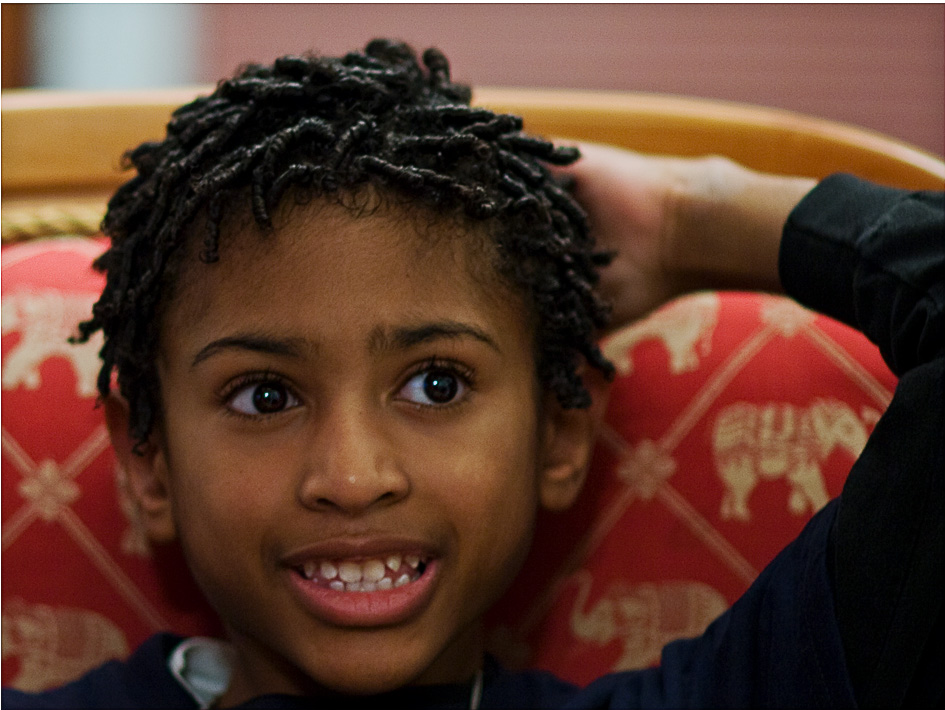
Hair twists, flat twists, or mini-twists, are a hairstyle popular with Afro-textured hair around the world, and sometimes with other hair textures. The style is achieved by dividing the hairs into several sections, twisting strands of hair, then twisting two twisted strands around one another. They can also be created with one strand of hair at a time, with a comb.[1] They are not to be confused with larger, longer dreadlocks, (or "locs").
Twists can be made when naturally curly hair is still wet and somewhat relaxed from soaking with hot water; when the hair dries, it will shrink, creating a tightly woven texture to the hair twists. Twists can also be done with dry hair for a different texture. Twists can be combined with other hairstyles at the same time, such as afro-puffs and Afro.
In order to maintain twist hairstyles, wearers are advised by hairstylists to cover their hair with a headscarf or durag at night.[2]
On July 3, 2019, California became the first US state to prohibit discrimination over natural hair. Governor Gavin Newsom signed the CROWN Act into law, banning employers and schools from discriminating against hairstyles such as twists, braids, afros, and locks.[3] Likewise, later in 2019 Assembly Bill 07797 became law in New York state; it "prohibits race discrimination based on natural hair or hairstyles."[4]
Twist out
[edit]A variation of hair twists is called a "twist out",[5] where twisted hair is untwisted to create a large, loosely crimped texture. There are two different variations to a "twist out," one method can be done with using two stands of hair and another method uses three stands of hair called a "three stand twist out". Both result in a textured hairstyle when untwisted.[6]
Other twist hairstyles include Senegalese twists, Marley twists, and Havana twists. All of these hairstyles require specific types of hair extensions that are installed to one's head. These styles have been labeled as protective styles because they protect the person's natural hair from daily manipulation. Senegalese twists originated in Senegal, Africa and are commonly performed in African hair salons across the U.K, Canada, and the U.S. This style uses synthetic Kanekalon hair, which can last anywhere from one to three months. Marley and Havana twists are more recent hairstyles widely spread through the black hair community in 2013. They look very similar to one another, but have distinct differences. Marley twists use Marley hair extensions that can be found in most hair supply stores from various hair companies and Havana twists use Havana hair extensions sold by few companies that are only available online. Havana twists are generally done with fewer twists than the Marley hairstyle and also weigh less in density because the hair is much fluffier in texture than Marley hair. Both hairstyles like Senegalese can last from one to three months, but should not be kept in for a longer period of time. Due to the technique of these hairstyles a person's natural hair can begin to get matted or form into dreadlocks.
See also
[edit]References
[edit]- ^ Johnson, Kalimah (2008). Locs for Life: The Root to Well Being for African-American Women. AuthorHouse. pp. 39–41. ISBN 9781434357212.[1]
- ^ Ford, Gilly; Helen Stewart (2003). Hairdressing: S/NVQ Level 3. Heinemann. p. 381. ISBN 9780435456474.
- ^ "California bans racial discrimination based on hair in schools and workplaces". JURIST. Retrieved 2019-07-03.
- ^ "New York bans discrimination against natural hair". The Hill. 2019-07-13. Retrieved 2019-07-18.
- ^ Da Costa, Diane (2004). Textured Tresses: The Ultimate Guide to Maintaining and Styling Natural Hair. Simon & Schuster. pp. xxiv. ISBN 9780743235501.
- ^ Da Costa, Diane (2004). Textured Tresses: The Ultimate Guide to Maintaining and Styling Natural Hair. Simon & Schuster. p. 103. ISBN 9780743235501.
Hair twists
View on GrokipediaHistory
Origins and Traditional Practices
Hair twisting practices trace back to ancient African civilizations, with depictions of twisted hairstyles appearing in artifacts from ancient Egypt around 3500 BC, often intertwined with braiding techniques for both aesthetic and practical purposes.[3] These early forms emphasized functionality for tightly coiled hair, protecting it from sun exposure, dust, and mechanical damage while signaling social roles such as age, marital status, or tribal affiliation.[4] In broader sub-Saharan contexts, twisting served as a foundational method in hair grooming, independent of braiding's parallel development, as evidenced by ethnographic records of nomadic and sedentary groups adapting it to environmental demands.[5] Among Southern African ethnic groups like the Zulu, traditional twisting evolved into Bantu knots—small, coiled sections formed by parting and tightly twisting damp hair against the scalp, a style documented as originating with Bantu-speaking peoples for its durability and cultural symbolism, often denoting rites of passage or warrior status.[6] In West Africa, the Fulani people incorporated twisting into elaborate cornrow-like patterns, using natural fibers or wool to reinforce sections, which communicated nomadic heritage and social hierarchy as observed in 19th-century traveler accounts.[7] Senegalese traditions featured the rao method, where hair was twisted with yoss (dried grass or synthetic equivalents) into rope-like spirals for protection and extension, a technique rooted in pre-colonial grooming rituals among Wolof and Serer communities to withstand humid climates and labor-intensive lifestyles.[8] These practices were not merely stylistic but rooted in practical causality: the helical structure of twisted hair minimized tangling and breakage in coily textures prone to shrinkage and fragility, as confirmed by anthropological studies of pre-colonial African material culture.[9] Twisting also held ritual significance, with hair viewed as a conduit to spiritual realms in folklore across Yoruba, Igbo, and Akan groups, where untwisted or loosely manipulated hair signified mourning or impurity, underscoring its role in identity preservation amid oral histories lacking written corroboration.[10] While similar twisting appears globally, African variants prioritized scalp-adhered, low-manipulation forms suited to endemic hair morphologies, distinguishing them from looser European or Asian rope styles.[5]Evolution in the African Diaspora
Enslaved Africans transported to the Americas during the transatlantic slave trade from the 16th to 19th centuries retained traditional hair twisting practices originating from West and Central African cultures, where such methods served protective and symbolic purposes for tightly coiled hair textures.[11] Upon arrival, heads were often shaved as a dehumanizing measure, yet women adapted by communally twisting and plaiting hair on Sundays using improvised materials like cotton thread to mimic curls and maintain scalp health under harsh conditions.[11] Styles akin to Bantu knots, involving sectioned twisting into coiled buns, evolved from Bantu ethnic group traditions in southern Africa but persisted in the diaspora as a means of cultural continuity and hair protection among enslaved populations, symbolizing identity amid forced assimilation.[12] [13] These techniques contrasted with imposed European straightening methods, allowing discreet retention of ancestral practices that encoded practical knowledge, such as braided patterns potentially mapping escape routes during slavery.[3] In the 20th century, post-emancipation pressures favored chemical relaxers and hot combs, pioneered by figures like Madam C.J. Walker around 1905, temporarily diminishing twisting's prominence, though underground communal styling endured.[11] The Civil Rights and Black Power movements of the 1960s and 1970s spurred a revival of natural textures, with twists reemerging alongside afros as assertions of heritage, further amplified in the 1980s and 1990s by West African influences like Senegalese twists—locally termed "rao" in Senegal—adapted with synthetic extensions for durability and length.[3] [14] By the late 20th and early 21st centuries, two-strand twists gained traction as low-manipulation protective styles within the natural hair movement, emphasizing hair retention over assimilation, with extensions enabling variations like Senegalese and Marley twists that blend traditional coiling with modern accessibility in African American communities.[15] This evolution reflects causal adaptations to environmental constraints—such as limited tools during enslavement and later commercial influences—while prioritizing empirical benefits like reduced breakage for coily hair types over imposed aesthetics.[11]Modern Revival Through Natural Hair Movement
The natural hair movement, which encourages individuals of African descent to embrace their unprocessed hair textures, experienced a significant resurgence in the early 2000s following decades of dominance by chemical relaxers and straightened styles. This revival was catalyzed by cultural critiques, including Chris Rock's 2009 documentary Good Hair, which exposed the health risks and societal pressures associated with hair straightening processes, prompting widespread discussions on the merits of natural textures.[16] By highlighting the $9 billion annual expenditure on Black hair care in the U.S., the film underscored the economic and psychological burdens of conforming to Eurocentric beauty standards, influencing many to transition away from relaxers toward styles like twists that preserve natural coil patterns.[17] Hair twists, particularly two-strand varieties, gained prominence within this movement as accessible protective styles that minimize manipulation and damage during the transition from relaxed to natural hair. In the 2010s, the proliferation of social media platforms and YouTube tutorials democratized techniques for creating twists, enabling users to achieve defined, elongated looks without heat tools or chemicals, which aligned with the movement's emphasis on hair health and retention.[18] This period saw a documented decline in relaxer sales alongside a boom in natural hair product markets, with twists serving as a versatile option for length retention and low-maintenance styling, often worn for weeks to promote growth rates comparable to unstyled hair when properly moisturized.[19] The adoption of twists reflected broader cultural reclamation, positioning them as symbols of resistance against texturism—the preference for looser curls over tighter coils—and fostering community-driven education on scalp care and twist maintenance. Empirical observations from natural hair forums and stylists indicate that consistent use of twists correlates with reduced breakage, though outcomes vary by hair porosity and porosity management; for instance, applying oils and satin wraps extends twist lifespan to 4-6 weeks.[20] This revival not only revitalized traditional practices but also integrated them into contemporary aesthetics, with variations like mini twists emerging as trendy, lightweight alternatives in the late 2010s.[21]Description and Techniques
Fundamental Process of Creating Twists
The fundamental process of creating hair twists, particularly two-strand twists, begins with preparing the hair to ensure manageability and longevity of the style. Hair is first cleansed using a shampoo suitable for textured hair, followed by conditioning to restore moisture, as coiled hair types prone to dryness benefit from hydration to prevent breakage during manipulation.[22] Detangling is performed gently with fingers or a wide-tooth comb while the conditioner is applied, starting from ends to roots, to remove knots without causing tension that could lead to traction alopecia.[23] Products such as leave-in conditioners, gels, or twisting creams are then applied section by section to provide slip for twisting and hold against unraveling, with amounts calibrated to hair porosity—typically a dime-sized portion per section for medium-length hair.[24] Hair is next divided into uniform sections based on desired twist diameter, often using clips to isolate parts, with smaller sections yielding tighter twists suitable for finer hair textures. For each section, the hair is parted squarely or in a brick-lay pattern at the scalp to promote even tension and scalp health.[25] The selected subsection is split evenly into two strands, and each strand is individually twisted counter-clockwise from root to tip to align the hair cuticles and enhance coil definition.[24] The two pre-twisted strands are then crossed over each other in a clockwise direction, maintaining consistent tension by holding the base firmly with one hand while rotating with the other, continuing until the ends where the twist naturally coils or is secured with a small amount of gel or by tucking.[22] This directional opposition—counter-clockwise on singles, clockwise on pairs—creates friction that locks the structure, reducing frizz and extending wear time up to several weeks with proper care.[24] The process is repeated across the entire head, working from nape to crown to accommodate growth patterns, with total time varying from 2-6 hours depending on hair length and density; for example, shoulder-length type 4 hair may require 4 hours for medium-sized twists.[25] Twists are allowed to set while air-drying or under a hooded dryer on low heat to minimize shrinkage and maximize definition, avoiding overnight damp twisting to prevent mold risk in humid environments.[25] This method relies on the hair's natural elasticity and protein structure, where S-curl patterns in afro-textured hair facilitate interlocking without adhesives, though excessive pulling can exceed the hair's tensile strength of approximately 1.5 pounds per strand, risking damage.[26]Tools and Materials Required
Essential tools for creating hair twists include a wide-tooth comb to gently detangle and separate hair sections without breakage, sectioning clips or duckbill clips to hold portions of hair aside during the process, and a spray bottle filled with water to lightly mist the hair for better manageability and product absorption.[27] A rat-tail comb may also be used for precise partings, particularly in intricate patterns like flat twists.[28] Key materials consist of moisturizing products such as leave-in conditioners or twisting creams to hydrate the strands and enhance elasticity, holding gels or butters for definition and longevity of the twists by reducing frizz and providing grip during twisting, and sealing oils like argan or jojoba to lock in moisture at the ends and scalp.[27][29] For extension-based twists, synthetic or human hair fibers are additionally required to blend with natural hair for added length and volume.[30] Selection of products should prioritize those suited to the hair's porosity and texture to avoid buildup or dryness, with water-based formulas preferred for their ease of removal.[31]Hair Type Suitability and Preparation
Hair twists are most suitable for textured hair types ranging from 3A to 4C, where the natural curl or coil pattern provides the necessary grip and elasticity to maintain the twisted structure without excessive slippage.[32] These hair types, characterized by medium to tight curls or kinks, benefit from twists as a protective style that minimizes manipulation and reduces breakage compared to looser styles.[33] Straight hair (type 1) or very fine wavy hair (type 2A) may not hold twists effectively without additional holding products, heat styling, or extensions, potentially leading to unraveling.[34] Preparation begins with cleansing the hair using a moisturizing shampoo to remove buildup while preserving natural oils, followed by a deep conditioning treatment to enhance hydration and detangle strands.[35] Thorough detangling with a wide-tooth comb or fingers, starting from ends to roots, prevents knots that could cause breakage during twisting.[36] Applying a leave-in conditioner, twisting cream, or natural oils such as jojoba or coconut oil ensures moisture retention and reduces friction, which is crucial for type 4 hair prone to dryness.[37] Sectioning the hair into even parts using clips or a rat-tail comb facilitates uniform twists; smaller sections yield tighter holds suitable for finer textures, while larger ones suit coarser hair.[35] Air-drying or diffusing on low heat post-wash preserves curl pattern integrity, avoiding the shrinkage distortion from full wet twisting.[25] This preparatory regimen, typically taking 30-60 minutes depending on hair length and density, optimizes twist longevity, which can extend 2-6 weeks with proper care.[38]Variations of Hair Twists
Two-Strand Twists
Two-strand twists involve sectioning the hair into parts, dividing each part into two equal strands, and rotating them around each other in opposite directions to form a coiled, rope-like structure from root to tip.[39] This technique requires minimal tools, typically just fingers or a comb for parting, and is applied to dry or slightly damp, moisturized hair to enhance hold.[22] Unlike braided styles, the twists allow for greater scalp visibility and breathability, making them lighter and less prone to excessive tension if installed loosely.[40] The style suits a range of natural hair textures, particularly types 3A to 4C, where it defines curls and reduces frizz by grouping strands together.[41] Section sizes determine the outcome: smaller sections (under 1 cm diameter) yield mini twists for intricate updos, while larger ones create jumbo twists emphasizing volume and quicker installation.[42] Flat two-strand twists, a variation, incorporate the hair against the scalp before extending outward, offering root security similar to cornrows but with simpler execution.[43] As a protective hairstyle, two-strand twists minimize daily manipulation, which empirical observations link to lower breakage rates and improved length retention compared to loose styles.[44] By tucking ends inward, they shield fragile tips from environmental friction and abrasion, though benefits derive from reduced handling rather than inherent growth promotion.[45] Tight installations, however, risk traction alopecia, as documented in dermatological cases where sustained pulling exceeds hair follicle tolerance.[46] With proper moisturizing and loose tension, the style can endure 2 to 4 weeks, transitioning to twist-outs for curl elongation upon unraveling.[47]Extension-Based Twists (e.g., Senegalese and Marley)
Extension-based twists incorporate synthetic hair extensions into natural hair to create elongated, rope-like sections that provide length, volume, and protection. Senegalese twists, also known as rope twists, involve twisting small sections of natural hair together with strands of jumbo braiding hair, such as Kanekalon or X-pression brands, which are smooth and crochet-like in texture.[48] This method results in thinner, uniform twists resembling braided ropes, typically lasting 4 to 8 weeks with proper care.[49] The technique for Senegalese twists begins with parting the hair into small square sections, then dividing each into two parts: one of natural hair and one of extension hair. These are twisted together in a rope fashion by rotating the strands around each other while maintaining tension to secure the structure without braiding.[50] Unlike traditional two-strand twists using only natural hair, the extensions add durability and prevent unraveling, making them suitable for medium to coarse textures that hold twists well.[51] Marley twists differ primarily in the extension material used, employing thicker, kinkier Marley hair that mimics afro-textured coils for a bulkier, dreadlock-inspired appearance.[52] This hair type creates larger twists, often 1-2 cm in diameter, compared to the finer profile of Senegalese twists, and installation follows a similar two-strand twisting process but accommodates the coarser texture for enhanced grip.[53] Marley twists typically endure 6 to 10 weeks, benefiting from the added weight and texture that reduce slippage on finer hair types.[43] Both styles serve as protective measures by minimizing manipulation of natural hair, though extension-based twists require moisture retention at the roots and avoidance of excessive tension to prevent traction alopecia.[54] Maintenance involves weekly conditioning with diluted oils and gentle detangling of loose ends, as synthetic fibers can dry out and frizz if exposed to high heat or harsh chemicals.[55] Professional installation is recommended to ensure even distribution and scalp health, with removal involving careful untwisting to avoid breakage.[56]Jumbo and Mini Twists
Jumbo twists consist of larger sections of hair, typically 1-2 inches in diameter, twisted together often with added synthetic or human hair extensions for added volume and length, creating a chunky, voluminous appearance.[57][43] This variation allows for quicker installation compared to finer twists, as fewer sections are required, reducing overall time to several hours for medium-length hair.[57][58] As a protective style, jumbo twists minimize daily manipulation of natural hair, promoting length retention while permitting scalp airflow that supports moisture balance and reduces buildup.[59] In contrast, mini twists utilize smaller hair sections, usually under 0.5 inches, resulting in thinner, more defined strands that mimic finer curl patterns.[60] Installation demands more precision and time, often spanning 8-12 hours or more, due to the increased number of twists needed for full coverage.[61] These twists exhibit greater longevity, enduring 3-8 weeks with proper care, as their compact size resists frizz and unraveling better than larger counterparts.[62] Mini twists suit coily and kinky hair types, particularly type 4 textures, providing a low-tension protective option that preserves strand integrity during extended wear.[63][64] The primary distinction between jumbo and mini twists lies in scale, influencing aesthetics, maintenance, and durability: jumbo styles offer bold versatility for shorter-term wear, while mini versions prioritize subtlety and endurance for natural hair protection.[65] Both techniques begin with sectioning detangled, moisturized hair, applying a twisting gel or cream for hold, and wrapping extensions if used before securing the ends with clips or fire-sealing synthetic fibers.[66] Suitability depends on hair density and lifestyle, with jumbo twists favoring those seeking rapid styling and mini twists appealing to individuals desiring intricate, long-lasting definition without excessive bulk.[57][63]Styling, Maintenance, and Aftercare
Achieving Twist-Outs and Related Styles
Twist-outs are achieved by creating two-strand twists on damp, product-saturated hair, allowing the twists to fully dry, and then gently unraveling them to produce elongated, defined curls that mimic the hair's natural pattern.[26] This technique enhances curl definition and volume, particularly for type 3 and 4 curly or coily hair textures, by setting the hair in a twisted formation that preserves moisture and reduces frizz upon release.[67] Success depends on starting with freshly washed and conditioned hair to ensure a clean base free of buildup, followed by detangling in sections while the hair remains wet to minimize breakage.[68] The process begins with applying a leave-in conditioner or moisturizer to damp hair, followed by a styling cream or gel for hold and shine; these products are layered in small sections—typically 1-inch wide—to ensure even distribution and prevent uneven drying.[26] Hair is then parted into uniform sections, with each grasped near the roots and twisted tightly toward the ends in a two-strand rope-like motion, tucking the ends securely to avoid unraveling during drying.[67] For air drying, twists should remain in place for at least 24-48 hours or until completely dry, as residual moisture can cause shrinkage and poor definition upon unraveling; alternatively, a hooded dryer on low heat can accelerate this step without excessive manipulation.[69] Unraveling requires careful separation of each twist starting from the ends, followed by gentle finger-fluffing at the roots to add volume and separate strands, often enhanced by applying a light oil to seal in moisture and combat frizz.[26] Smaller twist sections yield tighter, more defined curls, while larger jumbo twists produce looser waves, allowing customization based on desired outcome.[68] Common pitfalls include twisting on dry or insufficiently moisturized hair, which leads to weak hold and puffiness, or unraveling prematurely, resulting in limp styles; over-twisting at the roots can also contribute to traction stress if maintained too long.[67] [70] Related styles, such as three-strand twists, involve braiding three sections instead of two for a flatter, more elongated curl pattern upon release, offering variation in texture while following similar preparation and drying protocols.[71] Braid-outs, using cornrows or box braids as the base before unraveling, provide comparable definition but with added root grip for updos, though they require looser braiding to avoid scalp tension.[26] These methods prioritize moisture retention during the set phase, as dehydration is a primary cause of frizz in twist-derived styles.[69]Daily Upkeep and Longevity Factors
Daily moisturization forms the cornerstone of upkeep for hair twists, involving the application of lightweight leave-in conditioners or water-based sprays to the scalp and lengths to combat dryness, which can lead to frizz and premature unraveling.[47] [72] Sealing with natural oils such as jojoba or argan helps retain moisture without weighing down the style, particularly for two-strand twists where hydration directly influences structural integrity.[48] Over-manipulation should be minimized, as excessive handling disrupts the twist's coil and accelerates loosening, especially in finer hair textures.[47] Nighttime protection via a satin or silk scarf or bonnet is critical to reduce friction against cotton pillowcases, thereby preserving smoothness and preventing breakage or frizz accumulation overnight.[47] [73] For extension-based twists like Senegalese or Marley, gentle scalp cleansing with diluted shampoo or dry shampoo every 7-10 days maintains hygiene without saturating the synthetic fibers, which could cause slippage.[74] Edges require targeted attention, often involving a light misting with water followed by edge control products and scarfing to sustain neatness amid daily activities.[73] Longevity of hair twists typically ranges from 1-2 weeks for basic two-strand varieties to 4-6 weeks for extension styles like Senegalese or Marley when properly maintained, though individual results vary by installation quality.[47] [74] Key factors include hair texture, with coarser, high-porosity strands holding twists more securely due to natural grip compared to finer or low-porosity hair prone to slippage.[75] Twist size influences durability, as smaller sections provide tighter coils resistant to daily wear, whereas jumbo twists unravel faster from mechanical stress.[76] Initial use of holding gels or twisting creams during creation enhances resilience, but inadequate product absorption or overly loose installation shortens lifespan by allowing early frizz.[77] Environmental exposures, such as frequent sweating or water contact, degrade twists by promoting mold or weakening bonds if not countered with prompt drying and re-moisturizing.[65] Prolonged wear beyond recommended periods without root refreshing risks scalp buildup and traction-related tension, potentially leading to follicular stress.[64]Safe Removal and Potential Risks
Safe removal of hair twists begins with thorough preparation to minimize breakage and tangling. Prior to unraveling, apply a generous amount of deep conditioner or a slip-enhancing product, such as a mixture of water and conditioner, to saturate each twist and loosen knots formed during wear.[78] Section the hair into small, manageable parts to prevent overwhelming the process, and gently unravel from the ends upward rather than pulling from the roots, using fingers or a wide-tooth comb sparingly to avoid snagging.[79] Oils like jojoba or coconut can be incorporated to further soften the hair, particularly for twists worn longer than two weeks, facilitating smoother detangling without excessive force.[80] For extension-based twists, such as Senegalese or Marley varieties, clip or cut the synthetic hair at the base first, then apply conditioner directly to the natural hair sections before untwisting to reduce pulling on fragile roots.[81] Patience is essential; rushing the process increases friction, which can lead to unnecessary shedding mistaken for breakage—normal daily hair loss averages 100 strands, but improper technique may amplify this during takedown.[82] Post-removal, immediately rinse with cool water and apply a leave-in conditioner to restore moisture, as extended twist wear often results in dryness that heightens vulnerability to damage.[80] Potential risks arise primarily from prolonged wear or mishandled removal rather than the style itself when executed properly. Tight twists can induce traction alopecia, a form of hair loss from sustained tension on follicles, with symptoms including thinning at the hairline or temples after repeated use over months or years.[83] [84] During removal, dry or matted hair—common after four weeks or more—prone to single-strand knots in textured hair types, risks breakage if not adequately lubricated, potentially leading to split ends or uneven length retention.[85] Scalp irritation or minor inflammation may occur if residue from styling products accumulates, exacerbating sensitivity upon unraveling, though this is typically transient with proper cleansing.[86] Overly aggressive detangling can compound mechanical stress, mimicking the tension effects of traction alopecia, underscoring the need for hydration-focused techniques to preserve follicle integrity.[87]Benefits and Drawbacks
Protective and Practical Advantages
Hair twists function as protective styles by limiting direct handling of individual strands, thereby decreasing mechanical stress that contributes to breakage in Afro-textured hair.[1] This reduced manipulation allows hair to retain length over time, as the tucked ends are shielded from friction against clothing, bedding, and environmental factors such as wind or pollutants.[88] When installed loosely, twists impose minimal tension on the scalp and follicles, lowering the incidence of traction alopecia compared to tighter styles like cornrows or extensions.[46] Empirical assessments of twisted hair fibers demonstrate that at low to moderate twist levels, the tensile strength and elasticity remain recoverable upon untwisting, indicating no irreversible weakening of the hair structure under typical styling conditions.[89] Natural hairstyles including twists exhibit the fewest associations with adverse scalp and hair health outcomes relative to chemically straightened or heat-damaged alternatives, supporting their role in promoting overall hair integrity.[1] Proper moisture sealing during installation further aids in preserving hydration within the twists, countering the dryness prone in coiled hair types.[46] Practically, hair twists offer extended wear of up to two to three months with routine care, reducing the frequency of styling sessions and associated time expenditure.[1] They permit regular shampooing without disassembly, maintaining hygiene while preserving the style's form, and support physical activities due to their secure yet flexible structure.[1] Versatility in updos or twist-outs upon removal adds functional value, enabling multiple looks from a single installation process.[46]Limitations and Health Considerations
Tight twists can exert prolonged tension on hair follicles, leading to traction alopecia, a form of hair loss characterized by thinning or bald patches along the hairline or temples.[83][84] This condition arises from repetitive mechanical stress that damages follicles, with studies indicating higher prevalence among individuals with tightly coiled hair textures who frequently use such styles.[87] Risk increases with installation tightness, duration beyond 4-6 weeks, or repeated application without adequate recovery periods, potentially causing irreversible follicle scarring if untreated.[90] Synthetic extensions used in styles like Senegalese or Marley twists have been found to contain carcinogens such as acrylonitrile and vinyl chloride, as well as volatile organic compounds (VOCs), which may leach onto the scalp and contribute to skin irritation, rashes, or long-term health concerns like cancer upon inhalation or absorption.[91][92] Testing by Consumer Reports in 2025 detected these substances in multiple products marketed for braiding and twisting, with flame retardants adding further toxicity risks during wear or disposal.[93] Scalp neglect during extended wear—such as infrequent cleaning—can exacerbate issues like folliculitis, dryness, or matting, promoting bacterial growth and breakage.[94] Limitations include high installation time, often requiring 4-8 hours for medium-length hair, and frequent retwisting every 2-3 weeks to prevent unraveling or frizz, which demands ongoing product use that may weigh down strands or cause buildup.[86] Twists may not maintain structure on looser or finer textures without heavy holding agents, leading to slippage and reduced longevity compared to braids.[95] Over-manipulation during creation or upkeep can induce single-strand knots, particularly at ends, resulting in uneven breakage if hair is not pre-moisturized or detangled properly.[96] These factors make twists less ideal for active lifestyles involving frequent washing or high humidity, where humidity-induced shrinkage can distort the style.Comparison to Alternative Styles
Hair twists, particularly two-strand varieties, provide a less labor-intensive option compared to braids, as they require intertwining only two sections of hair rather than weaving three, typically reducing installation time to 2-4 hours for medium-length hair.[39][97] Braids, such as box or cornrows, demand more intricate crossing techniques, often extending setup to 4-8 hours or longer depending on density and length.[98][99] This efficiency makes twists preferable for individuals prioritizing minimal salon time, though braids offer superior structural integrity against unraveling. In terms of durability, braids outperform twists, maintaining form for 4-8 weeks with proper care, while twists tend to frizz and loosen after 2-4 weeks, especially in humid conditions or with active lifestyles.[39][98][95] Twists' simpler construction results in lower scalp tension and weight—often half that of braids—potentially decreasing traction-related stress on follicles, though both serve as protective styles by shielding strands from environmental damage and manipulation.[99][100] Braids, however, allow for more intricate updos and extensions, enhancing versatility at the cost of increased takedown difficulty and potential breakage during removal.[95]| Aspect | Hair Twists | Braids (e.g., Box or Cornrows) |
|---|---|---|
| Installation Time | 2-4 hours | 4-8+ hours |
| Longevity | 2-4 weeks | 4-8 weeks |
| Scalp Tension/Weight | Low | Medium to high |
| Takedown Ease | High (less tangling) | Medium (higher breakage risk) |