Hubbry Logo
Hime cutHime cutMain
Open search
Hime cut
Community hub
Hime cut
logo
8 pages, 0 posts
0 subscribers
Be the first to start a discussion here.
Hime cut
Hime cut
from Wikipedia
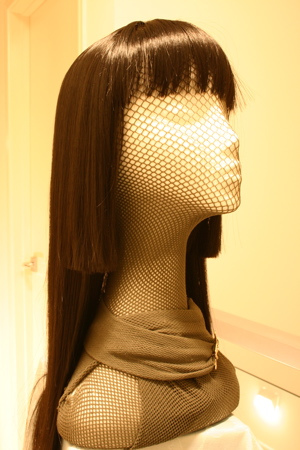
A hime cut wig

The hime cut (Japanese: 姫カット; IPA: [çime katːo], HEE-meh; lit.'princess cut') is a hairstyle consisting of straight, usually cheek-length sidelocks and frontal fringe. The rest of the hair is usually worn long and straightened. The style is thought to have originated, or at least become common, in the Imperial court during 794–1185 CE, when noble women would sometimes grow out their hair for their entire lives.[1]

History

[edit]

According to Professor Tomita of Yamano College of Aesthetics, the hime cut originated from the hairstyles of noblewomen in the Heian period in Japan.[1][2] Noblewomen in the Heian period had their hair styled in the subekarashi (垂髪) and amasogi styles.[further explanation needed] When a woman reached the age of 16, the hair around her ears would be cut shorter than the rest of her hair in a ceremony called binsogi (鬢削ぎ), resulting in short forelocks at the front and long hair at the back. In the Edo period, this ceremony was held on June 16 at the age of 16, and a woman's fiancé or her father or brother cut her hair.[3][4]

Though not known as the hime cut at the time, the name "hime cut" seems to have been retroactively applied in association with princesses of the Heian aristocracy, due to their depiction in media with the hairstyle.

A 1970s idol, Megumi Asaoka, is known in Japan for popularizing the hime cut, which became her trademark.[5][6]

Styling

[edit]
A cosplayer with a hime cut wig

The hime cut is high maintenance for those without naturally straight hair, and requires frequent touch-ups on the sidelocks and front bangs in order to maintain its shape. Hair straightening is sometimes used to achieve the hairstyle's straight appearance, as well as straightening irons and specially formulated shampoos for straight hair. Humidity is also cited as a problem with certain hair types, as the curling caused by excess humidity can change the shape of the hair. Occasionally, hair extensions are used for the side locks in order to prevent this.

The hairstyle is frequently seen in Lolita fashion, especially the classification of Gothic Lolita. Within the Lolita community, the hime cut is considered a more elegant alternative to other styles that may require frequent curling and crimping that can permanently damage the hair.[citation needed]

See also

[edit]

References

[edit]
[edit]
Revisions and contributorsEdit on WikipediaRead on Wikipedia
from Grokipedia
The hime cut is a distinctive Japanese hairstyle featuring long, straight at the back, paired with blunt bangs that fall straight across the and shorter, face-framing layers cut to chin or bob length at the sides, creating a structured, princess-like . The term "hime," meaning "" in Japanese, reflects its historical association with . Originating during Japan's (794–1185), the style draws from traditional practices like the binsogi coming-of-age ceremony, in which noblewomen cut their hair to ear length around age 20, and amasogi, a shoulder-length cut, evolving into the layered form seen today. Worn by imperial court noblewomen as a symbol of status and elegance, it emphasized long, flowing tresses as a mark of beauty and refinement. The hairstyle gained modern popularity in the 1970s through and Western icon , before surging again in the 21st century via idols like Lisa of and Momo of TWICE, as well as characters and Harajuku's Gothic subculture. Key to its appeal is versatility: the cut suits straight best for a sleek finish achieved through styling, though variations like bangs or microbangs allow customization for different face shapes, often slimming the jawline and adding dramatic framing. Today, it remains a cultural staple in Japanese fashion and global trends, blending historical poise with edgy, youthful vibes popularized on platforms like .

Definition and Features

Core Elements

The hime cut is defined by its blunt, straight bangs, or frontal fringe, which are cut evenly across the and typically end just above or at the eyebrows, creating a bold, uninterrupted line that frames the upper face. This feature is essential to the style's geometric precision and visual impact. Complementing the bangs are the face-framing sidelocks, which are trimmed straight and even at cheekbone or jaw level to form a sharp, symmetrical border around the face's contours. These sections enhance the hairstyle's structured elegance without introducing curves or . In its traditional form, the remaining flows long and straight, extending well past the shoulders, left uncut and free of layers to maintain a smooth, unbroken cascade down the back. The bangs are typically eyebrow-length, ensuring harmony with the longer sections. This combination yields an overall silhouette that evokes a doll-like, innocent aesthetic through its clean lines and minimal texture, reminiscent of noble styles from Japan's .

Distinctions from Similar Styles

The hime cut is distinguished from curtain bangs primarily by its blunt, undivided fringe that falls straight across the , creating a structured, geometric frame, whereas curtain bangs feature soft, parted layers that sweep to the sides for a more relaxed, face-softening effect. This sharp, unlayered bang style in the hime cut emphasizes precision and symmetry, avoiding the wispy, blended edges typical of curtain bangs. In contrast to the wolf cut, which incorporates heavy layering and shaggy texture throughout for an edgy, voluminous appearance, the hime cut maintains straight, even lengths with minimal internal layering, resulting in a sleek, flat that prioritizes clean lines over tousled movement. The wolf cut's multi-length chop creates a wild, rock-inspired vibe, while the hime cut's face-framing sidelocks and long back hair remain uniformly straight, highlighting its Japanese origins in structured elegance rather than Western-inspired messiness. Unlike layers, which involve soft, flowing face-framing sections blended into longer for a romantic, voluminous look, the hime cut eschews internal layering to keep the flat and straight, with distinct cheek-length sidelocks that form bold, disconnected sections. This avoidance of blended transitions sets the hime cut apart from the more graduated, ethereal quality of princess layers, focusing instead on a dramatic, architectural profile. The hime cut's hallmark "harsh" geometric lines—achieved through precise, straight cuts—differentiate it from softer Western fringe styles like baby bangs, which are shorter and more playful but lack the full, eyebrow-grazing coverage and symmetrical severity of the hime fringe.

Historical Development

Origins in the

The cut, characterized by its association with noblewomen ( meaning "princess") in Japan's Imperial court, emerged during the Heian period (794–1185 CE) as a refined emphasizing long, unbound tresses that signified elegance and high social standing. Noble women grew their hair straight and loose (taregami style), often extending beyond their height to trail on the floor, a practice that required extensive grooming time and resources available only to the . This style restricted elaborate hair arrangements to special occasions, prioritizing natural flow to evoke purity and maturity, while commoners tied or shortened their hair for practicality. The hairstyle's development was linked to coming-of-age rituals, such as the mogi ceremony around ages 12–13, where young noble girls transitioned to adulthood by oiling, parting, and tying their hair with a ribbon for the first time, though it remained predominantly long and loose in daily wear. Prior to this, girls often sported "mezashi" bangs reaching their eyes, which contributed to the face-framing aesthetic later associated with the full hime form as hair grew out post-ceremony. These rituals, including elements like the hatsubi where hair might be initially cut to chest length before further growth, underscored the hairstyle's role in marking maturity and eligibility within court society. The style further evolved through later ceremonies, including amasogi, involving a shoulder-length cut, and binsogi at around age 20, where noblewomen had the hair around their ears cut shorter, creating the chin-length side layers characteristic of the hime cut. Earliest literary depictions appear in (early 11th century), where court ladies are described with exceptionally long, straight hair pooling at their robes' hems, symbolizing ideal beauty without mention of tied styles. Such portrayals highlight straight frontal elements akin to bangs, evoking understated refinement. While influenced by Chinese (618–907 CE) fashions during early Heian exchanges, the style adapted to Japanese aristocratic ideals by favoring unbound, flowing lengths over Tang's more structured, tied-up arrangements, emphasizing subtlety and natural allure. Long hair thus became a marker of wealth and leisure, confined to the upper classes who could afford dedicated attendants for its care.

Evolution in Later Eras

Following the , where the hime cut served as a baseline for noblewomen's unbound with straight bangs and sidelocks, the hairstyle declined in prominence during the (1185–1333) and Muromachi (1336–1573) periods. The rise of culture shifted preferences toward shorter, more practical hairstyles for women, accommodating the demands of a and moving away from the elaborate courtly unbound styles of the . The hime cut saw a revival during the (1603–1868), particularly among and performers, who adapted elements of the style into elaborate updos while incorporating ornaments like combs and pins to evoke the nobility of Heian-era aesthetics. These adaptations maintained the long hair foundation but added decorative flair, reflecting the period's emphasis on visual artistry in entertainment and merchant classes. In the (1868–1912), the hime cut faced suppression amid rapid Westernization efforts, including government mandates promoting modern short hairstyles as symbols of progress and hygiene, which led many women to adopt cropped bobs influenced by European fashions. Despite this, the style persisted in rural areas and traditional settings, such as among who retained elaborate long-haired forms to preserve . The brought a resurgence of the hime cut in the and ... in period dramas depicting historical figures from earlier eras. This revival highlighted the hairstyle's enduring appeal in media representations of Japanese heritage. Prior to the 2000s, it held niche status within subcultures like , emerging in the 1990s as a key element of the "hime lolita" aesthetic, blending Victorian-inspired doll-like elegance with princess motifs.

Cultural Significance

Symbolism in Traditional Japanese Society

In traditional Japanese society, long, straight, unbound tresses represented innocence, youth, and femininity during the . The flowing hair symbolized emerging womanhood and sensual allure, aligning with Heian-era ideals where youthful appearance enhanced a woman's social value, as seen in court descriptions praising noblewomen's hair for its lustrous length exceeding their height, evoking ethereal grace. As a status indicator, unbound was reserved for elite women in the (794–1185 CE), where maintaining such elaborate styles required significant time and resources for grooming, inaccessible to commoners engaged in labor. Adopted in the Imperial court as a marker of , it linked the wearer to and refinement, distinguishing aristocratic refinement from practical, cropped styles of lower classes. The hairstyle's straight lines and natural flow connected to ideals of unadorned beauty, embodying harmony (wa) and simplicity, where hair's untouched state reflected spiritual purity and alignment with nature's impermanence. The reinforced gender roles in courtly life, promoting images of demure, passive women whose beauty served as a tool for alliances and subtle influence rather than overt agency. Heian poetry and art, such as in Murasaki Shikibu's , depicted noblewomen with to highlight their secluded elegance and selflessness, aligning with societal expectations of feminine restraint amid political intrigue. Taboos surrounded manipulation, viewing cutting as a profound disruption of life force; thus, was retained as a sacred emblem of continuity following girls' coming-of-age ceremonies, such as mogi, where was oiled and tied at to mark transitions. These rituals, rooted in Shinto-Buddhist practices, warded off misfortune and affirmed the wearer's protected status within the household and society.

Influence on Modern Pop Culture

The hime cut has gained prominence in modern anime and manga since the 1990s, where it is frequently used to portray characters with an ethereal, innocent aura. This association draws from the hairstyle's historical ties to nobility and purity, adapting traditional symbolism into contemporary narratives of delicate femininity. In the 2000s, the style became linked to kawaii and goth-lolita subcultures, enhancing the doll-like, princess-inspired aesthetics popular in Japanese street fashion and youth expression. It complemented elaborate outfits and accessories, reinforcing a playful yet regal vibe within these communities. The experienced a significant resurgence on starting in 2021, particularly on , where the # hashtag amassed over 150 million views by 2022, fueled by tutorials, transformations, and celebrity endorsements. K-pop idols, including Blackpink's Lisa, propelled its visibility through bold adaptations in music videos and performances, blending it with global pop trends. In 2025, the hime cut and its variations, such as the jellyfish style, gained further mainstream attention at the , worn by celebrities including , , and , influencing Western beauty standards through edgy, layered silhouettes. Japanese actresses in J-dramas and K-dramas, such as in Doona!, have also showcased it, amplifying its appeal in East Asian media. The cut's global spread extends to and Halloween trends, where it symbolizes "" or "" motifs in , often paired with costumes inspired by or .

Modern Interpretations

Variations and Adaptations

The layered hime cut introduces subtle internal layers to the long rear section, enhancing volume and movement while preserving the signature straight bangs and sidelocks, making it particularly suitable for individuals with thicker . This has gained popularity since the 2010s, allowing for a softer, more dynamic compared to the traditional uniform length. The asymmetrical hime cut modifies the classic form by extending one sidelock longer than the other, creating an uneven balance that integrates with contemporary edgy aesthetics. This variation emphasizes individuality and boldness, often appealing to those seeking a fusion of traditional Japanese elements with modern . Adapting the hime cut for wavy or curly involves softening the straight lines through texturizing techniques, such as loose curls on the sidelocks and ends, to accommodate non-Asian types prevalent in Western markets. This textured version maintains the blunt fringe but adds natural wave patterns for enhanced versatility and approachability across diverse textures. The short hime cut reimagines the style at chin length overall, resembling a structured bob with distinct shorter sidelocks framing the face, prioritizing practicality for everyday wear and aligning with the resurgence of bob trends in the . This compact adaptation retains the hime's regal framing while offering a low-maintenance alternative to longer versions. Color integrations in the hime cut apply dyes or targeted highlights to the bangs and sidelocks, amplifying the aesthetic without disrupting the underlying cut structure, as seen in vibrant interpretations that blend traditional form with playful vibrancy. These enhancements, often in shades like soft or lavender, have become a staple in modern styling to personalize the look while honoring its foundational straight elements.

Popularity in Contemporary Fashion

The hime cut experienced a significant revival in the early 2020s through platforms, particularly , where users shared transformations and styling tutorials starting around 2021, propelling it from a niche Japanese style to a global internet sensation. This viral momentum has persisted into 2025, with data indicating that searches for "hime cut" and related terms like "hime cut bangs" reached all-time highs in February 2025, driven by celebrity endorsements at events such as the , where , , and debuted variations of the style. The trend's surge has translated to increased salon demand, positioning the hime cut as one of the year's must-try hairstyles in both the and . In contemporary fashion, the hime cut has gained visibility on international runways and street styles, often blended with Y2K aesthetics for a nostalgic yet modern edge. It appeared in Prada's Fall/Winter 2021 collection and continued to influence shows like Miu Miu's Fall 2025 presentation at , where attendees sported the style. In Tokyo's district, a hub for innovative street fashion, the hime cut frequently pairs with Y2K-inspired outfits, such as layered tops and platform shoes, enhancing its playful, retro appeal among urban trendsetters. This integration reflects broader fashion cycles reviving early-2000s elements while honoring the style's Japanese roots. The hairstyle's primary appeal lies with (ages 18-25), who embrace its bold, customizable nature as an expression of individuality and maximalist aesthetics on platforms like and . Its sharp lines and face-framing elements offer androgynous versatility, attracting a diverse demographic beyond traditional gender norms. Commercially, the trend has spurred innovations like AI-powered apps from Perfect Corp's YouCam Makeup, which simulate hime cuts and other hairstyles for virtual try-ons, aiding consumer decision-making before salon visits. Specialized styling products, such as those for sleek straightening and fringe maintenance, have also proliferated in beauty lines to support the look's upkeep. Despite its popularity, the hime cut's adoption in Western contexts has sparked debates on cultural appropriation, with critics arguing that detachment from its Japanese heritage—originating in the —risks commodifying traditional elements without acknowledgment. Proponents counter that informed appreciation, as seen in fashion media crediting its , fosters exchange rather than exploitation, allowing the style to evolve globally while respecting its origins.

Practical Aspects

Styling Techniques

The hime cut requires precise sectioning of the to achieve its signature contrast between the straight bangs, chin-length side sections, and longer nape area. To begin the cutting process, divide the into three main sections: the frontal bangs area from forward, the side panels from the ears forward to jaw length, and the section extending downward. Use sharp swivel shears or a for the side sections to create blunt, straight ends that frame the face sharply, starting from the bottom and working upward in horizontal subsections while following a guide line for consistency. For the bangs, them forward and use point-cutting techniques from underneath to form a soft yet defined straight line that sits just above the eyebrows. The is typically left longer, past the shoulders, with minimal layering to maintain the style's dramatic elongation. Essential tools for executing the hime cut include a fine-tooth or long cutting with wide teeth for sectioning and guiding the , sectioning clips to isolate areas, sharp swivel shears for the bangs and blunt ends, and a for texturizing the side sections if a softer edge is desired. Post-cutting, a round brush and blow dryer are crucial for initial setting, along with a flat iron for straightening the lengths. Applying a heat protectant spray and a lightweight smoothing serum or oil helps achieve the glossy finish characteristic of the style. To set the look after cutting, blow-dry the hair while using a round brush to add subtle volume beneath the bangs, directing airflow downward for a sleek appearance. Straighten the side and sections with a flat iron, applying heat protectant first to prevent damage, and finish with a serum on the lengths for shine and control. For daily maintenance, use a mini straightener on the bangs and sides to keep them precise, avoiding excessive volume at the roots. Achieving a professional hime cut is best done in a salon, where stylists can ensure accuracy through dry cutting in the hair's fall and reference photos for customization based on face shape and texture. DIY attempts are feasible for minor touch-ups, such as trimming the bangs every 4-6 weeks with steady hands and the right tools, but full cuts risk unevenness without experience. Enhancements to the hime cut often involve pairing it with minimal, makeup to evoke a traditional ethereal effect, or contrasting it with bold and lips for a modern, dramatic vibe that highlights the hairstyle's framing qualities.

Hair Care and Maintenance

Maintaining the hime cut involves regular upkeep to preserve its signature straight silhouette and blunt edges, particularly the bangs and face-framing pieces. A typical trimming schedule includes cutting the blunt bangs every 2-3 weeks to keep their sharp, even line, as they grow quickly and can disrupt the style's precision. The shorter side pieces should be trimmed monthly or every 4-6 weeks to maintain their jaw-length shape without blending into the longer layers. For the overall cut, schedule a full trim every 8-12 weeks to refresh the long back sections and ensure the blunt ends remain neat. Selecting the right products is essential for controlling and providing hydration without weighing down the style. Opt for shampoos designed for frizz control, such as those infused with anti-humidity formulas, to keep the straight lines intact. Leave-in conditioners are recommended for the sections to maintain hydration and prevent dryness, while avoiding heavy oils on the bangs to prevent greasiness and loss of definition. Common challenges with the hime cut include uneven bang growth, which can be addressed by trimming them dry for greater accuracy in shaping. If the side pieces start curling, apply treatments sparingly to smooth them without over-processing the . Considerations for hair type help tailor maintenance to achieve the desired straightness. For fine hair, use volumizing to add body and prevent flatness around the bangs and sides. Coarse hair benefits from relaxers to enhance straightness and reduce in the longer sections. To extend the style's longevity, sleep on pillowcases, which reduce and prevent creases or overnight. Protect the hair from by applying anti- sprays, which create a barrier against for up to 24 hours.

References

Add your contribution
Related Hubs
User Avatar
No comments yet.