Hubbry Logo
HQM Sachsenring GmbHHQM Sachsenring GmbHMain
Open search
HQM Sachsenring GmbH
Community hub
HQM Sachsenring GmbH
logo
8 pages, 0 posts
0 subscribers
Be the first to start a discussion here.
HQM Sachsenring GmbH
from Wikipedia

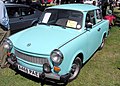
HQM Sachsenring GmbH is a Zwickau-based company that supplies chassis and body parts to the automotive industry. The company was named after the Sachsenring race track. Founded as VEB Sachsenring after the end of World War II, and operating out of the former Auto Union factory in Zwickau, Sachsenring was one of the few manufacturers of vehicles in East Germany, its best known product being the Trabant, produced between 1957 and 1991.[1] Following the reunification of Germany in 1990, Sachsenring transitioned from a government-owned company under a centrally planned economy to a private corporation in a free market economy.

Key Information

After three years in bankruptcy, Sachsenring AG was purchased in February 2006, by Härterei und Qualitätsmanagement GmbH (HQM) of Leipzig. Formerly the dominant major automaker in East Germany, Sachsenring has since departed from making motor vehicles. Today, it supplies, among other things, the Volkswagen factory with parts for the Golf and Passat models.

Entrance to Sachsenring AG buildings

Models

[edit]

Supermini

[edit]

Luxury vehicle

[edit]

Trucks

[edit]
  • IFA H3A (1957–1958)
  • IFA S4000 (1959–1960)

Cultural impact

[edit]

The German bitpop pioneers Welle:Erdball have been using a rotated version of the Sachsenring emblem as their band logo since 1996.

[edit]

References

[edit]
[edit]
Revisions and contributorsEdit on WikipediaRead on Wikipedia
from Grokipedia
HQM Sachsenring GmbH is a Zwickau-based automotive supplier specializing in the development, design, manufacture, and assembly of chassis and body components for the automotive industry. Established in 2006 through the acquisition of the bankrupt Sachsenring AG by the Leipzig-based Härterei und Qualitätsmanagement GmbH (HQM), the company continues operations at the historic site formerly associated with East Germany's VEB Sachsenring Automobilwerke, renowned for producing the Trabant small car from 1957 to 1991. As part of the HQM Group, it provides services to sectors including automotive, aviation, and motorsport, emphasizing high-quality metal processing and component modules. While the original Trabant assembly plant in Zwickau was transferred to Volkswagen AG post-reunification for engine and vehicle production, HQM Sachsenring GmbH focuses on precision engineering and supply chain contributions rather than full vehicle assembly.

History

Origins in post-WWII reconstruction (1945-1957)

After concluded in May 1945, the and facilities in , , sustained heavy bombing damage and fell under Soviet occupation following the U.S. Army's withdrawal on June 30, 1945. Soviet forces promptly expropriated the plants, dismantling machinery and equipment for while repurposing surviving infrastructure to manufacture vehicles and parts primarily for export to the USSR, reflecting the occupiers' emphasis on extracting industrial value from defeated . This period marked severe operational constraints, with production limited to rudimentary repairs and basic utility vehicles due to material scarcities, workforce disruptions from , and prioritization of reconstruction over consumer goods. The formation of the German Democratic Republic in October 1949 accelerated , transforming the works into Volkseigener Betriebe (VEB)—state-owned enterprises—including VEB Kraftfahrzeugwerk for larger vehicles and the emerging VEB Automobilwerke (AWZ). Under centralized planning, early efforts focused on prototyping amid ongoing shortages of steel and advanced components, shifting toward low-tech solutions like (a cotton-resin composite) bodies to bypass metal imposed by ideological commitments to industrial collectivization and Soviet-style . These constraints curtailed output to small-scale trials, underscoring state control's immediate stifling effects on and scale compared to pre-war private enterprise. By 1955, AWZ engineers unveiled the P70 Zwickau prototype, a compact front-wheel-drive derived from pre-war IFA-F8 designs but adapted with a 684 cc and construction for efficiency in resource-poor conditions; only prototypes and limited runs followed due to persistent supply issues. Concurrently, VEB Zwickau developed the P240, a 2.4-liter luxury sedan prototype aiming to evoke interwar elegance on a shortened , yet production remained experimental through 1957, hampered by engine sourcing challenges and broader economic directives favoring utilitarian output. These initiatives highlighted the era's causal tensions: war devastation recovery intersected with socialist reconfiguration, yielding prototypes that prioritized ideological self-sufficiency over technological ambition or market viability.

State-owned production under the GDR (1957-1990)

In 1957, the VEB was established as a () in the German Democratic Republic (GDR), consolidating prior automotive operations to focus on of affordable vehicles under centralized planning. The inaugural model, the P50, entered series production on November 7, 1957, featuring a body made from —a cotton-reinforced —to circumvent chronic shortages and enable rapid output using limited resources. This material choice prioritized material efficiency and volume over durability, reflecting the GDR's emphasis on fulfilling quotas amid resource constraints imposed by the command economy. Throughout the 1960s and 1970s, production shifted to the P601 series, introduced in and manufactured until 1991, with approximately 2.8 million units produced, dominating output as the most common vehicle in . The facility also integrated assembly of IFA trucks, including variants of the H3A and S4000 models, supporting needs until the mid-1960s when priorities consolidated around passenger cars like the . Total production from 1957 to 1990 reached about 3.1 million units, underscoring the scale of state-directed manufacturing but highlighting stagnation, as designs relied on outdated two-stroke engines with minimal updates over decades. Centralized planning manifested in empirical inefficiencies, such as average consumer wait times of 10 to 13 years for a after full payment, driven by production shortfalls and allocation priorities favoring exports for over domestic supply. High output volumes masked quality issues, including frequent breakdowns and environmental drawbacks from smoky two-stroke emissions, which stemmed from innovation suppression under the GDR's bureaucratic system that rewarded quantity metrics over technological advancement or consumer needs. Limited exports, primarily to other socialist states, further constrained and technological feedback, perpetuating a cycle of obsolescence evident in the unchanged core design persisting into the .

Transition and challenges after German reunification (1990-2006)

Following German reunification in 1990, VEB Sachsenring Automobilwerke Zwickau faced immediate market shocks as demand for its outdated Trabant vehicles collapsed; East Germans, previously waiting years for deliveries under the planned economy, rapidly shifted to affordable Western imports like Opel and Volkswagen models once currency convertibility enabled purchases. Production of the Trabant 601 series, including a short-lived Tramp convertible variant introduced as a modernization effort, ended on April 30, 1991, after approximately 3.7 million units across all models since 1957. These attempts at adaptation, such as fitting Volkswagen-sourced 1.0-liter four-stroke engines in late 1990 models to replace the inefficient two-stroke units, proved insufficient against competitive pressures from technologically superior imports. The , tasked with privatizing East German state enterprises, oversaw the partial repurposing of Sachsenring's facilities; acquired the main plant in September 1990, initiating production from May that year and later expanding to engine manufacturing, which absorbed some infrastructure but not the core Sachsenring entity. Sachsenring itself transitioned to a private AG structure amid divestitures, but persistent uncompetitiveness led to severe workforce reductions—from around 12,000 employees pre-unification to a fraction thereof by the mid-1990s—as obsolete production lines were idled and new contracts proved elusive without substantial retooling. By 2002, these challenges culminated in for Automobiltechnik AG, prompting proceedings and the creation of a holding entity in 2003 to seek buyers while preserving residual operations in prototyping and components. In February 2006, Härterei und Qualitätsmanagement (HQM) acquired the remnants, repositioning the firm away from full-vehicle assembly toward supplying and body modules, a pivot necessitated by the free-market inability of legacy socialist-era operations to sustain independent viability.

Modern era as part of HQM-Gruppe (2006-present)

In February 2006, the remnants of Sachsenring AG, following three years of , were acquired by Härterei und Qualitätsmanagement (HQM) of , integrating the operations into the HQM-Gruppe—a conglomerate founded in 1993 specializing in , , and services. This shift marked a pivot from legacy vehicle production to focused manufacturing of and body modules, leveraging the group's expertise in hardening processes and certifications for high-precision components essential for just-in-time supply chains. Since the acquisition, HQM Sachsenring GmbH has established enduring partnerships within the automotive sector, including supply relationships with the dating to 1994—culminating in the 2010 Award for exemplary supplier performance—and with Group since 2004. These collaborations underscore adaptation to global competitive demands through specialization in non-assembly components, such as structural modules, without engaging in full vehicle production. Diversification efforts have extended to parts manufacturing, aligning with the HQM-Gruppe's broader portfolio in Luftfahrt applications requiring rigorous quality controls. The company has maintained viability amid industry pressures by prioritizing precision manufacturing and logistics efficiency, including just-in-time delivery capabilities integrated via group subsidiaries like TTS since 2015. With a of approximately 300 employees, operations emphasize sustained output for Tier-1 automotive suppliers, demonstrating resilience through technological upgrades and strategic realignments, such as the 2013 formation of HQM Engineer GmbH for enhanced development services. This private-sector model contrasts with prior state-influenced inefficiencies, enabling integration into international value chains focused on quality and reliability over volume.

Products and manufacturing

Historical vehicles

The Sachsenring works produced the from 1956 to 1959 as an attempt to create a high-end vehicle using pre-war engineering, powered by a 2.4-liter overhead-valve inline-six generating 59 kW (80 hp). Available in four-door sedan and variants, the model prioritized robust construction for elite use but achieved only 1,382 units against an initial target of 15,000, underscoring resource constraints and mismatched priorities in the early GDR automotive sector. Early truck output included the IFA H3A, a short-hood lorry with 3-ton capacity manufactured from 1950 to 1959 at the facility, totaling over 30,000 units under Horch, IFA, and later branding. These vehicles employed basic mechanical designs with shared passenger-car components, emphasizing durability for reconstruction tasks amid limited material availability and technological stagnation. The series dominated production from 1957 to 1991, with the P601 model—built from 1964 onward—representing the peak of mass output at over 2.8 million units across variants. Its body, composed of phenolic resin-impregnated cotton waste fibers pressed into panels, reduced weight to 615 kg (kerb) for modest efficiency gains but provided inferior impact resistance compared to steel, lacking energy absorption in collisions. The P601's 595 cc two-cylinder produced 19 kW (26 hp) at 4,200 rpm, enabling a top speed of 100 km/h and supporting a 385 kg , though real-world performance suffered from high emissions, oil mixing requirements, and frequent mechanical faults like leaks due to manual assembly processes and quota-driven manufacturing that favored quantity over .

Current components for the

HQM Sachsenring GmbH specializes in the production of precision-engineered components for the automotive sector, including brake pressure lines, piping systems, and just-in-sequence (JIS) assemblies. These parts emphasize efficient assembly processes that minimize inventory waste through synchronized delivery to assembly lines. The company supplies cylinder head covers to Sachsen GmbH's engine plant in , a partnership established in 2002 that integrates these components into powertrains for vehicles such as the and Passat models. This collaboration with a leading Western OEM underscores the firm's adaptation to rigorous quality demands, as demonstrated by its receipt of the Award in 2010 for supplier excellence. Operations at sites in Massen and Tröbitz incorporate certified manufacturing standards to ensure compliance with industry benchmarks, facilitating the shift from legacy low-volume production to high-volume, defect-minimized outputs for global supply chains.

Operations and facilities

Location and infrastructure in Zwickau

HQM Sachsenring GmbH operates its primary production facilities at Crimmitschauer Str. 67, 08058 Zwickau, Saxony, Germany, a site historically tied to automotive manufacturing in the region. The infrastructure has been adapted for the development, design, manufacture, and assembly of chassis and body components, including just-in-sequence axle assembly and stainless steel pipe systems for brake and fluid lines. Modernization efforts within the HQM Gruppe, which includes , encompass strategic realignments such as the 2013 establishment of HQM Engineer GmbH for enhanced services and 2015 expansions in tube and pipe production via HQM Tubes. These upgrades support precision manufacturing processes tailored to automotive suppliers. The facility's location in positions it proximate to the racing circuit and Volkswagen's Zwickau-Mosel plant, fostering integration within Saxony's automotive cluster. Logistically, the plant contributes to the regional by providing components to major automakers, leveraging ties with entities like Volkswagen Sachsen GmbH and , and maintaining container management systems established since 2001. This enables efficient just-in-time delivery and export operations amid the shift toward production in the area.

Workforce and supply chain role

HQM Sachsenring GmbH maintains a of approximately 100 employees, focused on precision roles including machinists and engineers tasked with producing and body components. This scale reflects adaptations from large-scale GDR-era operations to efficient, specialized post-reunification production, emphasizing skill development in and automotive standards within the HQM-Gruppe structure. As a supplier in the automotive sector, the company integrates into global supply chains by delivering reliable chassis and body parts, primarily supporting 's operations in . In recognition of its performance, HQM Sachsenring received the Award in 2010, underscoring improvements in delivery reliability and quality over legacy state-planned silos. This role positions it as a mid-tier provider, contributing to just-in-time manufacturing for major OEMs while prioritizing measurable productivity metrics such as defect rates and on-time delivery.

Legacy and reception

Economic impact in East Germany and beyond

During the era, Sachsenring's production of approximately 3 million vehicles from 1957 to 1991 represented the primary means of personal mobility for East German citizens, fulfilling a basic demand in a centrally where private was limited and alternative options scarce. Despite achieving output peaks of around 146,000 units annually by the late , the system's inefficiencies—manifest in production bottlenecks, resource shortages, and technological stagnation—resulted in waiting lists of 10 to 13 years for consumers, constraining broader economic dynamism and consumer welfare. Exports remained minimal, primarily to countries, contributing negligibly to earnings as the sector prioritized domestic quotas over competitive innovation or global trade. Following reunification in 1990, the retention and repurposing of the facility under HQM Sachsenring GmbH averted immediate plant closure amid widespread East German , preserving employment for hundreds in a region vulnerable to . As part of the HQM-Gruppe, the company shifted to manufacturing chassis and body components, integrating into Saxony's automotive and supplying parts to major producers like , whose plant became a hub for assembly. This adaptation supported the regional cluster's growth, where the automotive sector accounts for nearly 30% of industrial turnover, bolstering local through just-in-time delivery roles rather than final assembly. The trajectory of exemplifies the causal shift from state-directed production—characterized by chronic shortages and insulated from market signals—to capitalist integration, where competitive pressures enabled specialization in high-value components and indirect contributions to advanced mobility technologies like electric vehicles. This transition mitigated the post-reunification economic shock in , fostering resilience in a former by leveraging inherited for diversified supplier functions, though it underscored the limitations of planned systems in sustaining long-term gains.

Criticisms of GDR-era output and technological limitations

The body panels of Sachsenring's vehicles, composed of phenolic resin reinforced with recycled cotton or wool fibers, exhibited significant brittleness and susceptibility to cracking, complicating repairs and reducing structural longevity compared to steel-bodied Western counterparts. This material choice, necessitated by material shortages in the German Democratic Republic (GDR), prioritized resource conservation over durability, as phenol-cotton composites inherently lacked the tensile strength and impact resistance of metallic alternatives, leading to frequent panel failures under stress or . While some defenders praised the as resourceful to , the causal trade-offs—such as accelerated degradation from environmental exposure—undermined long-term utility, with vehicles often requiring makeshift reinforcements unavailable in planned-economy supply chains. Trabants' two-stroke engines contributed to severe reliability issues and environmental drawbacks, with frequent breakdowns attributed to inadequate and overheating in the air-cooled , resulting in piston seizures and failures common among GDR owners. These engines emitted pollutants at approximately four times the rate of contemporary Western European vehicles, failing to meet emissions standards outside the due to unburned discharge from oil-gas premixing. Quantitative assessments post-reunification confirmed hydrocarbons and outputs far exceeding even 1980s norms, exacerbating urban air quality in without catalytic mitigation or advanced fuel systems. Systemic constraints under GDR central planning amplified these flaws, imposing wait times of 10 to 13 years for delivery after purchase deposits, reflecting chronic production inefficiencies and mismatched supply-demand signals absent market competition. Technological progress stalled, with the retaining 1950s-derived two-stroke architecture through 1990, while West Germany's evolved via iterative improvements in efficiency, safety, and powertrain sophistication over the same decades. State directives prioritized quantity over innovation, freezing designs to conserve foreign exchange for imports, which precluded R&D investment and perpetuated obsolescence relative to global automotive advances.

Post-reunification adaptation and achievements

Following the bankruptcy of Sachsenring AG after three years of insolvency proceedings, the company was acquired in February 2006 by Härterei und Qualitätsmanagement GmbH (HQM), a Leipzig-based firm specializing in heat treatment and quality management, marking a pivotal privatization that rescued the entity from liquidation. This acquisition reoriented the former East German mass producer toward specialized automotive supply, enabling HQM Sachsenring GmbH to pivot from outdated low-volume vehicle assembly to high-precision manufacturing of chassis and body components, such as subframes delivered just-in-sequence (JIS) to assembly lines. Under private ownership, the firm invested over €1 million annually in research and development by 2010, alongside several million euros in modernizing production facilities, which facilitated workforce upskilling in advanced techniques like precision welding and quality assurance, sustaining competitiveness without reliance on government subsidies post-acquisition. Long-term contracts with major automakers, including subframe supply for Volkswagen Golf and Passat models dating back to 1996 but expanded under HQM management, underscored this resilience; unlike numerous East German industrial peers that collapsed or required ongoing state intervention after reunification, HQM Sachsenring achieved self-sufficiency through market-driven efficiencies. Key milestones included the 2010 Award, one of 17 global honors for innovation and JIS reliability, recognizing strengthened chassis development since the 2006 takeover, with the company employing around 200 staff and generating approximately €90 million in turnover at that time as part of the broader HQM Group's 700 employees. Further adaptations involved integrating complementary technologies, such as and piping systems via the 2015 acquisition of TTS, and forming joint ventures like HQM in 2017 for expanded capabilities, contributing to economic reintegration by bridging East German manufacturing legacies with Western standards absent direct fiscal support.

References

Add your contribution
Related Hubs
User Avatar
No comments yet.