Hubbry Logo
VMFA-311VMFA-311Main
Open search
VMFA-311
Community hub
VMFA-311
logo
8 pages, 0 posts
0 subscribers
Be the first to start a discussion here.
VMFA-311
VMFA-311
from Wikipedia

Marine Fighter Attack Squadron 311
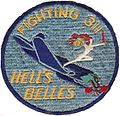
VMA-311 insignia
Active
  • 1 December 1942 – 15 October 2020[1]
  • April 14, 2023 – present
Country United States of America
Branch United States Marine Corps
TypeFighter/attack squadron
RoleClose air support
Air interdiction
Aerial reconnaissance
NicknamesTomcats
Hells Belles (WWII)
Tail CodeWL
Engagements
Commanders
Notable
commanders
Ralph K. Rottet
Michael R. Yunck
John P. Condon
Paul J. Fontana
John H. Miller
Robert Sofge
Aircraft flown
Fighter

Marine Fighter Attack Squadron 311 (VMFA-311) is a United States Marine Corps fighter attack squadron consisting of F-35C Lightning II. Known as the "Tomcats", the squadron is based at Marine Corps Air Station Miramar, California and falls under the command of Marine Aircraft Group 11 (MAG-11) and the 3rd Marine Aircraft Wing (3rd MAW).

History

[edit]

World War II

[edit]

Commissioning & early training

[edit]

Marine Fighting Squadron 311 (VMF-311) was commissioned on 1 December 1942 at Marine Corps Air Station Cherry Point, North Carolina. The squadron was assigned to Marine Aircraft Group 31 of the 3rd Marine Aircraft Wing and was commanded by Major Ralph K. Rottet .[2][3] The squadron moved to Marine Corps Air Station Parris Island, South Carolina on 18 April 1943.[4] While at Parris Island, the squadron transitioned from flying SNJ Texan trainers to flying the newly fielded Vought F4U Corsair. By the end of June, VMF-311 had 15 Corsairs on the flightline and had totally divested all of its SNJs.[5] On 31 August 1943, the squadron departed the east coast arriving at Marine Corps Air Depot Miramar, California on 8 September 1943.[4] On 23 September 1943, VMF-311 along with the other MAG-31 squadrons embarked aboard the USS Nassau (CVE-16) headed for the Pacific Theater.[6]

American Samoa & the Marshall Islands

[edit]

VMF-311 participated in what was one of the earliest American catapult operations involving the Corsair when 21 F4Us launched from USS Nassau on 6 October 1943 inbound to United States Naval Station Tutuila.[6] The squadron, along with the rest of MAG-31, was now part of the 4th Marine Base Defense Aircraft Wing. On 8 October, VMF-311 aircraft flew to a newly constructed airfield on Wallis Island where they remained until January 1944. During its time in American Samoa, the squadron was responsible for flying combat air patrols and other missions as required but did not engage any enemy aircraft.[6]

On 26 January 1944 VMF-311 personnel embarked on the USS Typhoon (LST-1118) and USS Constantine arriving at Roi-Namur on 6 February 1944.[4][7] Early in the morning on 12 February 1944, Japanese bombers hit Roi-Namur and destroying most of the squadron's equipment and all of its tents and personal gear. 14 officers and 99 enlisted Marines were casualties during this raid. On 24 February, the squadron was moved again, this time to Kwajalein Atoll. Beginning on 23 March 1944, the squadron began flying strafing missions against Wotje, Maloelap, Mille, Jaluit, and Taroa.[8] The strikes continued while the squadron moved back to Roi-Namur by 4 April. On 14 May, VMF-311 conducted its first bombing mission utilizing the F4U Corsair. During the squadron's time on Roi-Namur, Charles Lindbergh, at the time a consultant with United Aircraft, flew combat missions with the squadron.[9] VMF-311 continued in its roll of engaging bypassed Japanese Garrisons until March 1945.[8]

Okinawa and the end of the war

[edit]

On 8 March 1945, the squadron embarked on the USS Sitkoh Bay (CVE-86) and the USS Breton (CVE-23) with its newly arrived F4U-1Cs with 4 x 20mm cannons and four pairs of pylons for rockets. On 7 April, squadron aircraft landed at Yontan Airfield joining the Tactical Air Force, Tenth Army during the Battle of Okinawa. That same day the squadron scored its first enemy aircraft when multiple squadron aircraft flying combat air patrol engaged and destroyed a kamikaze Kawasaki Ki-48 headed for the Sitkoh Bay.[10] During the month of April the squadron was credited with shooting down 22 enemy aircraft and in May another 37.[11]

On 1 July the squadron departed Yontan to begin operations from Chimu Airfield, also on Okinawa. The next day, four squadron aircraft took part in the unit's first fighter sweeps against Kyushu.[12] Two more were conducted during the rest of July. At the close of combat operations on Okinawa, VMF-311 was credited with shooting down 71[13][14] Japanese aircraft in a four-month period.[15] This was the second highest total of Japanese aircraft in the Tactical Air Force.[12] During its five months on Okinawa, the squadron lost 16 aircraft with 3 pilots killed.[16] On 9 September 1945, the squadron departed Chimu Airfield for Yokosuka Naval Airfield.[17]

1946–1950

[edit]
TO-1 Shooting Star from VMF-311 in 1948

On 17 September 1945, the squadron landed at the Yokosuka Naval District to begin occupation duty in mainland Japan.[15] Occupational duty in Japan lasted till May 1946, when MAG-31 was notified to prepare for the termination of its Japanese assignment; VMF-311 was going home.[18] Between July 1946 and April 1947 the squadron had a sleeping existence and being transferred to MAG-32 and later MAG-12 while consisting of one officer, but in 1949 VMF-311 became the first West Coast Marine jet squadron when it started flying the TO-1 Shooting Star. Coincidentally the squadron was re-designated Marine Fighter Squadron 311 (VMF-311) and around that time acquired the code letters WL, phonetically pronounced as "William Love," but from which also came the nickname "Willy Lovers".[19] The squadron quickly transitioned to the F9F Panther in October 1949 and found itself once again preparing for war by November 1950, arriving once again at Yokusuka airfield in Japan.

The Korean War, 1950–1955

[edit]
Two VMF-311 F9F-2Bs at Pohang during the Korean War

Arriving in South Korea on 7 December 1950, VMF-311 was the first land-based Marine jet squadron to be used in combat providing close air support for the Marines and Soldiers on the ground.[20] In late-June 1952 the squadron participate in the attack on the Sui-ho Dam. Additionally, the squadron pioneered strip-alert tactics still practiced today. Legendary pilots during this era included later astronaut and Senator John Glenn and baseball star Ted Williams. In over 2+12 years of action in Korea the squadron amassed 18,851 combat sorties. In 1957, the squadron finally was re-designated Marine Attack Squadron 311 (VMA-311). The nickname "Tomcats" was also bestowed during this era.

Vietnam War

[edit]
VMA-311 A-4E over South Vietnam in 1970

The first A4D-2 Skyhawk was received in the summer of 1958, initiating 30 years of Skyhawk service. In May 1965 the squadron, now flying A-4Es, deployed to Chu Lai Air Base, South Vietnam and on 2 June, they conducted their first combat mission of the Vietnam War. In August 1965, VMA-311 supported the 7th Marine Regiment in Operation Starlite, the first major American operation of the war.[21] The squadron recorded a four-day sortie total of 240 from 5 to 8 May 1968 in support of their fellow marines during the Battle of Khe Sanh.[22]

The squadron moved to Danang Air Base in late July 1970.[23] In early 1971 the squadron provided support for Operation Lam Son 719 the South Vietnamese offensive into Laos and was credited with destroying eight People's Army of Vietnam tanks.[24]During May 1971 the squadron readied for redeployment, flying their last mission on 7 May before leaving South Vietnam on 12 May.[24]

The squadron rejoined Marine Aircraft Group 12 (MAG-12) at MCAS Iwakuni with the entire squadron redeployed by 27 May 1971.[24] On 29 October the squadron deployed to Naha Air Base until 15 January 1972.[25]

On 16 May 1972 VMA-311 once again deployed to South Vietnam with MAG-12 Forward and VMA-211 to Bien Hoa Air Base in response to the North Vietnamese Easter Offensive.[26] The squadron would support Army of the Republic of Vietnam forces fighting in the Battle of An Loc.[25] Their final sortie in-country would occur on 29 January 1973, a day before they would drop the last ordnance from a Marine A-4 Skyhawk during the war. VMA-311 would fly 54,625 combat sorties during their time supporting operations in Vietnam, Laos and Cambodia.[27]

The Gulf War

[edit]
Some 311 Harrier pilots in 1991

In 1988 VMA-311 received its first AV-8B Harrier and shortly thereafter headed into harm's way again. On 11 August 1990, after the Iraqi invasion of Kuwait, VMA-311 deployed in support of Operation Desert Shield, leading all other Marine fixed-wing squadrons into Saudi Arabia where they were based out of King Abdulaziz Naval Base. While there, the Tomcats were the most forward deployed fixed-wing squadron. On 17 January 1991 while in support of Operation Desert Storm the squadron became the first to utilize the AV-8B in combat when a flight of four Harriers destroyed an Iraqi artillery position in support of the Battle of Khafji. During 43 days of air combat operations, Tomcat pilots flew 1,017 combat missions and delivered 840 tons of ordnance against enemy targets throughout Kuwait and Southern Iraq.

A VMA-311 Harrier landing on USS Tarawa in 2001

Global War on Terrorism

[edit]

On 3 November 2001, VMA-311 Harriers attached to the 15th Marine Expeditionary Unit embarked aboard USS Peleliu became the first Harriers to fly combat missions in Afghanistan during Operation Enduring Freedom.

On 15 January 2003, VMA-311 deployed to the Northern Persian Gulf as part of Amphibious Task Force West. On 21 March 2003, almost 59 years to the day after VMF-311's first combat sortie in World War II, they flew their first combat sortie of Operation Iraqi Freedom. During the war they flew over 550 sorties while dropping 77 tons of precision ordnance, destroying or neutralizing 132 Iraqi targets while operating from two amphibious assault carriers, USS Bonhomme Richard and USS Tarawa. The squadron returned from the Persian Gulf on 24 July 2003. In October 2004, the squadron deployed to Al Asad Air Base in Iraq in support of Operation Iraqi Freedom, while simultaneously deploying a 6 jet 90 Marine detachment to MAG-12 in Iwakuni, Japan to support the 31st Marine Expeditionary Unit. In September of 2006, a contingent of 6 jets was sent to support the 15th MUE aboard the USS Boxer (LHD 4), which was subsequently sent into Al Asad, Iraq to support their sister squadron VMA-211. The detachment left Iraq to return to the USS Boxer in April of 2007 to return to their home base of Yuma, AZ. In early 2008, the squadron made its final deployment to Al Asad Air Base in support of Operation Iraqi Freedom, while simultaneously deploying a 6 jet detachment aboard the USS Peleliu (LHA 5) in support of the 15th Marine Expeditionary Unit. The squadron's 2008 deployment to Iraq marked the Marine Corps Harrier's final participation in Operation Iraqi Freedom, and on 5 October 2008, VMA-311's aircraft were the last Harriers to fly combat missions in support of Operation Iraqi Freedom. For the year 2008, VMA-311 had the distinction of being selected as the Marine Corps "Attack Squadron of the Year" by the Marine Corps Aviation Association (MCAA). Operation Iraqi Freedom deployments were soon followed in 2010 with deployments again to the 15th MEU and a Unit Deployment Program to the Pacific region. While there, they spent over two months aboard USS Essex with the 31st MEU while participating in the multilateral exercises Cobra Gold 2010 and Balikatan 2010. VMA-311 deployed to Camp Bastion, Helmand Province, Afghanistan in support of Operation Enduring Freedom from April to September 2013.

Decommissioning (2020)

[edit]

VMA-311 was decommissioned at MCAS Yuma on 15 October 2020.[1]

Reactivation (2023)

[edit]
VMFA-311 reactivation ceremony, 14 April 2023

The squadron was reactivated on 14 April 2023 and will work in tandem with VMFA-314 to transition to F-35Cs. The transition is due to be concluded by 2024.[28]

VMFA-311 F-35C's

The Tomcats declared Initial Operational Capability (IOC) in July of 2024 with their 6 aircraft.[29]

Squadron aces

[edit]

The following Marines from VMA-311 have been credited as Flying aces:[30][31]

Notable former members

[edit]
  • Eugene R. Brady - recipient of the Navy Cross for action during the Vietnam War flew with VMF-311 during the Korean War.
  • Ted Williams - Hall of Fame baseball player flew with the squadron during the Korean War.
  • John H Glenn Jr. - engineer, astronaut, businessman, and politician. He was the third American in space, and the first American to orbit the Earth, circling it three times in 1962, also flew with the squadron during the Korean War.[33]
[edit]

See also

[edit]

Citations

[edit]
Public Domain This article incorporates public domain material from websites or documents of the United States Marine Corps.
  1. ^ a b Barison, Gabriele (21 October 2020). "VMA-311 Deactivated as USMC Retires Iconic Harrier Jump Jet. Tomcats Will Reactivate as VMFA-311 Operating The F-35C Lightning II". theaviationgeekclub.com. Retrieved 25 October 2020.
  2. ^ Sambito 1978, pp. 1.
  3. ^ 3d MAW General Order 2-1942 Commissioning VMF-311 on 1 December 1942
  4. ^ a b c Sherrod 1952, pp. 467.
  5. ^ Sambito 1978, pp. 2–3.
  6. ^ a b c Sambito 1978, pp. 3.
  7. ^ Sambito 1978, pp. 4.
  8. ^ a b Sambito 1978, pp. 5.
  9. ^ Mersky 1983, pp. 93.
  10. ^ Sambito 1978, pp. 7.
  11. ^ Sambito 1978, pp. 8.
  12. ^ a b Sambito 1978, pp. 9.
  13. ^ Tillman 1979, pp. 152.
  14. ^ Styling 1995, pp. 80.
  15. ^ a b "Wings Over Fujiyama". The Pendleton Scout. Marine Corps Base Camp Pendleton. 11 February 1946. p. 2. Retrieved 22 December 2021.
  16. ^ Tillman 2014, pp. 123.
  17. ^ Sambito 1978, pp. 10.
  18. ^ Sambito 1978, pp. 11.
  19. ^ Sambito 1978, pp. 14.
  20. ^ http://collections.naval.aviation.museum/emuwebdoncoms/pages/doncoms/Display.php?irn=16001491&QueryPage=%2FDtlQuery.php Archived 2008-12-22 at the Wayback Machine National Museum of Naval Aviation
  21. ^ Sambito 1978, pp. 41.
  22. ^ Dorr 2005, pp. 205.
  23. ^ Sambito 1978, pp. 51.
  24. ^ a b c Sambito 1978, pp. 52.
  25. ^ a b Sambito 1978, pp. 53.
  26. ^ "USMC Status of Forces January - June 1973" (PDF). www.usmcu.edu. United States Marine Corps. p. 172. Retrieved 24 May 2022.
  27. ^ Mersky 1983, pp. 281.
  28. ^ "2018 Marine Aviation Plan" (PDF). Marines.mil. 2018.
  29. ^ Walls, Madison (July 2024). "Marine Corps' second F-35C Lightning II squadron declares initial operational capability". U.S. Marine Corps Forces, Pacific. Retrieved 24 April 2025.
  30. ^ List of WW2 Marine Aces, www.acepilots.com, 21 December 2007
  31. ^ Sambito 1978, pp. 9–10.
  32. ^ Styling 1995, pp. 87–90.
  33. ^ Sambito, William. A History of Marine Attack Squadron 311 PCN 19000308000 (PDF). p. 25. Retrieved 18 January 2023.

References

[edit]
[edit]
Revisions and contributorsEdit on WikipediaRead on Wikipedia
from Grokipedia
Marine Fighter Attack Squadron 311 (VMFA-311), the "Tomcats," is a unit specializing in multirole fighter operations, currently equipped with the F-35C Lightning II stealth fighter and based at , California. Commissioned on December 1, 1942, as Marine Fighting Squadron 311 (VMF-311) at Marine Corps Air Station Cherry Point, , the squadron has participated in every major U.S. conflict since , earning a reputation as one of the Marine Corps' pioneering units in and operations. During , VMF-311 transitioned from training aircraft like the North American SNJ Texan to the Vought F4U-1 Corsair, conducting operations in the Pacific Theater, including the where it destroyed 71 Japanese aircraft and received the Presidential Unit Citation. In the , equipped with the F9F-5 Panther, it achieved the first Marine Corps jet combat mission on December 10, 1950, and flew 18,851 combat sorties, including the last Marine jet mission of the war on July 27, 1953. The squadron, redesignated Marine Attack Squadron 311 (VMA-311) in 1957, deployed extensively in the from 1965 to 1973, flying the and completing 54,625 combat sorties from bases like and . Post-Vietnam, VMA-311 operated the A-4 Skyhawk variants and later the AV-8B Harrier II, participating in Operations Desert Storm (as the first Marine unit to employ the Harrier in combat), Enduring Freedom, and Iraqi Freedom, with its final Harrier deployments ending in 2010. Deactivated in 2020 after transitioning from the Harrier, the squadron was reactivated on April 14, 2023, as VMFA-311 with an initial cadre of 84 Marines and one F-35C aircraft, marking its shift to fifth-generation carrier-capable fighters. It declared Initial Operating Capability on July 31, 2024, after accumulating over 900 sorties, 1,700 flight hours, and extensive training, including the first independent live ordnance operations on July 25, 2024; full operational capability with 10 aircraft is expected in fiscal year 2025. Notable alumni include astronaut John Glenn, who flew with the squadron during Korea and earned the moniker "Magnet Ass" for his aircraft's battle damage.

Unit overview

Lineage and status

Marine Fighter Attack Squadron 311 (VMFA-311) traces its origins to its commissioning as Marine Fighting Squadron 311 (VMF-311) on December 1, 1942, at Marine Corps Air Station Cherry Point, , as part of the . The squadron underwent a significant redesignation on June 1, 1957, becoming Marine Attack Squadron 311 (VMA-311) to reflect its evolving mission focus on attack operations. It operated in this capacity through major conflicts including , the , and the , before being deactivated on October 15, 2020, at Marine Corps Air Station Yuma, Arizona, as part of the Marine Corps' transition away from the AV-8B Harrier II. VMFA-311 was reactivated on April 14, 2023, at Marine Corps Air Station Miramar, , marking its shift to a fighter-attack role with fifth-generation aircraft. As an active fixed-wing fighter-attack squadron assigned to , , VMFA-311 currently operates the F-35C Lightning II stealth fighter and achieved Initial Operational Capability (IOC) on July 31, 2024, after completing training and certification milestones. Full Operational Capability (FOC) was projected for 2025 upon receipt of its complete inventory of 10 aircraft, but as of January 2025, the squadron remained short four aircraft and operated approximately six F-35C Lightning II, with FOC pending due to delivery delays. The squadron maintains a typical strength of approximately 10 aircraft and around 250-300 personnel, including pilots, maintainers, and support staff, to support carrier-based and expeditionary operations. VMFA-311's distinguished service is recognized through several high-level unit awards, including the Presidential Unit Citation for actions during the , specifically for periods such as March 8 to April 30, 1951, and May 18 to June 30, 1951. It also earned the for service in the (multiple periods, including June 1 to December 15, 1965) and during the (1990-1991). Additionally, the squadron received the for contributions to Global War on Terrorism operations. These honors underscore VMFA-311's legacy of excellence in aerial combat and support roles across multiple decades of U.S. military engagements.

Nickname, insignia, and motto

VMFA-311 is officially nicknamed the "Tomcats," a moniker adopted in early 1957, coinciding with the squadron's transition to and redesignation as Marine Attack Squadron 311 (VMA-311). This name reflects the squadron's reputation for agile, predatory performance in aerial operations, evoking the swift and fierce nature of a tomcat in . Earlier, during as Marine Fighting Squadron 311 (VMF-311), the unit adopted the informal nickname "Hell's Belles," though it was rarely employed and did not persist. Between 1948 and 1957, following assignment of the tail code "WL," pilots playfully referred to themselves as the "Willy Lovers," a phonetic twist on the code that highlighted the squadron's early jet pioneering spirit. The squadron's , a key element of its identity, features motifs inspired by its nicknames and , including a heart from the "Willy Lovers" era. VMFA-311 does not maintain a distinct squadron-specific motto, instead upholding the ' official motto, ("Always Faithful"), which underscores the unit's unwavering loyalty, combat readiness, and commitment to the Corps' traditions.

Organization and bases

Current assignment and basing

VMFA-311 is currently assigned to (MAG-11), (3rd MAW), and I (I MEF), serving as a forward-deployable unit capable of carrier-based and expeditionary operations with its F-35C Lightning II aircraft. The squadron's primary home base is Marine Corps Air Station (MCAS) Miramar in , , where it has been stationed since the 1950s and continues to operate following its 2023 reactivation. Temporary detachments support Pacific theater exercises, including participation in Checkered Flag 24-2 at , , in May 2024, to enhance joint interoperability. Basing facilities at MCAS Miramar provide access to integration for F-35C operations, with recent exercises in 2024-2025 including Red Flag-Alaska 25-2 and 25-3 at , , in July 2025, and Service Level Training Exercise 4-25 (SLTE 4-25) at Marine Corps Air-Ground Combat Center , from July to August 2025. In its organizational role, VMFA-311 contributes to tactical air integration within Marine Air-Ground Task Forces (MAGTFs), emphasizing , strike missions, and offensive air support to ground forces.

Historical bases and deployments

VMFA-311 was commissioned on 1 December 1942 at Marine Corps Air Station (MCAS) Cherry Point, , where it conducted initial training with SNJ Texan aircraft. In April 1943, the squadron transitioned to F4U Corsair fighters and relocated briefly to Page Field, , for advanced training before deploying overseas. On 5 October 1943, VMF-311 embarked aboard the USS Nassau and arrived at in the Islands, serving as part of Marine Aircraft Group (MAG) 31 until January 1944. The squadron then operated from Eniwetok Atoll in February–March 1945, supporting operations in the Pacific theater. In April 1945, it deployed to Okinawa, flying combat missions from Yontan and Chimu airfields until July 1945, after which it moved to , , in September 1945 for occupation duties. Following , the squadron returned to the aboard the USS San Saba, arriving in on 4 July 1946, and was briefly reassigned to MCAS Miramar before relocating to MCAS El Toro, , on 26 September 1946, where it joined MAG-33. It remained based at El Toro through the late 1940s, focusing on reorganization and transition to . In November 1950, amid the , VMF-311 deployed aboard the USS Bairoko to , , arriving on 30 November, before forwarding elements to Yonp'o Airfield (K-27) in on 7 December 1950. The squadron shifted to Pusan Airfield (K-9) in on 15 December 1950, operating there until early 1951, then relocated to Pohang Airfield (K-3) on 5 February 1951, where it remained until April 1955 as part of MAG-33. Upon redeployment, were ferried to (NAS) , , on 18 April 1955, and the squadron returned to aboard the USS Princeton, arriving on 31 May 1955, before reestablishing at MCAS El Toro. During the Vietnam War era, VMA-311 deployed to , , on 11 May 1965, marking one of the earliest Marine attack squadron arrivals in the theater. The squadron relocated to in July 1970, operating under MAG-12 and continuing missions until its final withdrawal from on 29 January 1973. In the , the squadron participated in the Unit Deployment Program (UDP), including an extended rotation to MCAS Iwakuni, , beginning in 1971, which lasted approximately 18 months and involved multiple detachments for regional training and readiness. In the post-Vietnam period, VMA-311 maintained its home station at MCAS El Toro until the base's closure in 1999, after which it relocated to MCAS . The squadron conducted carrier qualifications aboard (CVS-12) in the early and (CVS-10) shortly thereafter, enhancing its expeditionary capabilities. During the , it deployed from Yuma in support of Operations Desert Shield and Desert Storm, conducting strikes from forward operating locations in the region beginning 17 January 1991. In the Global War on Terrorism, VMA-311 deployed to the Northern aboard the as part of Amphibious Task Force West on 15 January 2003, supporting Operation Iraqi Freedom. The squadron followed with a deployment to Al Asad Air Base, , in October 2004, where it operated until early 2005, flying missions; it returned for additional rotations through 2008. A detachment also supported operations at , , starting in 2001 as part of initial coalition efforts.

History

World War II

Marine Fighting Squadron 311 (VMF-311) was commissioned on December 1, 1942, at Marine Corps Air Station (MCAS) Cherry Point, , under the command of Major Ralph K. Rottet, initially consisting of two officers and 64 enlisted men. The squadron began training with 12 SNJ Texan trainers, focusing on fighter tactics, gunnery, and night carrier landings to prepare pilots for combat. By , VMF-311 transitioned to the F4U-1 Corsair at Page Field, Parris Island, South Carolina, receiving 15 aircraft by June and achieving combat readiness through East Coast exercises. In September 1943, the squadron relocated to Marine Corps Air Depot Miramar, California, before embarking on the escort carrier USS Nassau (CVE-10) and arriving at Pago Pago, American Samoa, on October 5 for defensive patrols against potential Japanese incursions, which continued until January 1944. VMF-311 then moved to Wallis Island on October 8, 1943, and deployed to Roi-Namur in the Marshall Islands on February 6, 1944, supporting the Kwajalein invasion by providing air cover and conducting strafing and bombing missions against Japanese positions on atolls including Wotje, Maloelap, Mille, and Jaluit, with its first strike occurring on March 23, 1944. The squadron alternated bases between Kwajalein and Roi through March 1945, refining ground attack tactics with the F4U-1 Corsair. VMF-311 arrived at Yontan Airfield, Okinawa, on April 7, 1945, immediately engaging in combat air patrols and strikes during the Okinawa campaign, later relocating to Chimu Airfield on 1. Flying the F4U-1C variant equipped with 20mm cannons and rocket pylons, the squadron supported ground forces against intense resistance, downed 71 Japanese aircraft between April and —including the first Tactical Air Force (TAF) kill of a on April 7—and earned the Presidential Unit Citation for its efforts, ranking second in TAF aerial victories. The squadron suffered seven pilot losses during due to accidents and enemy action. Following Japan's surrender in August 1945, VMF-311 transitioned to occupation duties, relocating to Naval Air Facility in to conduct reconnaissance and patrol missions in the area.

Postwar reorganization and Korean War

Following the conclusion of World War II, VMF-311 was inactivated on 20 January 1946 after returning from occupation duty in , but it was quickly reactivated on 14 June 1946 at Marine Corps Air Station (MCAS) Cherry Point, , and assigned to Marine Aircraft Group 31 (MAG-31). The squadron relocated to MCAS Miramar, , in September 1946 and then to MCAS El Toro, , in 1946, where it operated F4U Corsairs while focusing on and maintenance roles. By 1949, amid postwar drawdowns, VMF-311 had been reduced to cadre status with minimal personnel, reflecting broader Marine Corps efforts to reorganize and streamline units for peacetime operations. In a pioneering shift to , VMF-311 became the first Marine squadron on the West Coast to transition to jets, receiving its initial Lockheed TO-1 (P-80) Shooting Stars in April 1948 at MCAS El Toro. This marked a significant evolution from piston-engine fighters, emphasizing speed and high-altitude performance for emerging threats. By September 1949, the squadron fully transitioned to the more capable F9F-2 Panther, completing the shift by March 1950 and conducting intensive training to integrate the aircraft's four 20mm cannons and 1,000-pound bomb capacity into Marine tactics. The outbreak of the prompted VMF-311's rapid deployment, sailing from on 7 September 1950 aboard the escort carrier USS Bairoko (CVE-115) and arriving at , , later that month as part of MAG-33, (1st MAW). In December 1950, the squadron advanced to Korea, establishing operations at Pusan (K-9 Airfield) before relocating to (K-3) in February 1951 and later Kunsan, becoming the first land-based Marine jet squadron to enter combat on 10 December 1950. Over the course of the war, VMF-311 flew 18,851 sorties, delivering , armed reconnaissance, and strikes while operating from austere forward bases; notable contributions included providing critical cover during the Chosin Reservoir withdrawal in late 1950, where pilots like future astronaut and baseball star flew missions amid harsh winter conditions. Squadron pilots engaged North Korean and Chinese MiG-15s in several encounters, achieving confirmed victories including one MiG downed by Capt. William F. Guss on 4 November 1951 and two by Maj. Alexander J. Gillis on 6 October 1952 during a tour with U.S. units. For its valor in Korea, particularly during intense spring 1951 operations, VMF-311 shared in the 1st MAW's Presidential Unit Citation, one of three awarded to Marine aviation units in the conflict. The squadron remained in theater until the on 27 July 1953, continuing missions until its full withdrawal; it returned to the aboard USS Princeton (CV-37) in May 1955 and relocated to MCAS El Toro for West Coast basing under MAG-15, Air , where it prepared for future contingencies with upgraded F9F variants.

Vietnam War operations

VMA-311 (redesignated from VMF-311 on June 1, 1957), deployed to South Vietnam in May 1965 as one of the first Marine attack squadrons, arriving at Chu Lai Air Base with 24 A-4E Skyhawks to support the 7th Marine Regiment. The squadron conducted close air support (CAS) missions from Chu Lai until relocating to Da Nang Air Base in July 1970, participating in early operations such as Starlite in August 1965—the first major American ground offensive—and subsequent campaigns including Harvest Moon and Hastings. During Operation Rolling Thunder from 1965 to 1968, VMA-311 flew interdiction and CAS sorties against North Vietnamese supply lines and troop concentrations, destroying hundreds of structures, bunkers, and vehicles while averaging high sortie rates that set records among Marine fixed-wing units. In 1968, the squadron provided critical CAS during the , supporting Marines at in January–February and the Battle of Hue City, where A-4E Skyhawks delivered precision strikes on enemy positions despite intense antiaircraft fire; the aircraft's compact size and agility enabled effective low-level attacks in contested environments. VMA-311 continued operations through the Vietnamese Counteroffensive phases, including Dewey Canyon in 1969 and Lam Son 719 in 1971, destroying enemy tanks and fortifications. By September 1968, it had flown 25,000 combat sorties—a milestone unmatched by other Marine jet squadrons at the time—and amassed over 105,000 tons of ordnance delivered. During the 1972 Easter Offensive, VMA-311 redeployed from MCAS Iwakuni to in May, contributing to by striking North Vietnamese armor and logistics targets, including eight tanks in support of ARVN forces. The squadron earned multiple Navy Unit Commendations for periods including May 1965–April 1966, September 1967–March 1968, and May–December 1972, recognizing its sustained combat effectiveness. Overall, VMA-311 flew 54,625 combat sorties and logged 50,000 combat hours by January 1973, establishing it as the highest-sortie Marine squadron of the war. As part of , VMA-311 phased out combat operations, with its final mission on January 29, 1973—the last ordnance drop by a Marine A-4 in the war—before returning to MCAS on January 30, 1973, ending its deployment.

Post-Vietnam transitions and

Following the , VMA-311 transitioned its focus to modernization and training while based at Marine Corps Air Station (MCAS) , as part of (MAG-13). In the 1970s, the squadron upgraded its fleet to the A-4F Skyhawk, enhancing its capabilities for and ground attack missions during routine operations and exercises. By 1989, VMA-311 completed its shift to the , replacing the aging Skyhawks with the vertical/short takeoff and landing () aircraft that offered greater operational flexibility from austere forward bases. This transition emphasized training in Harrier-specific tactics, including short-field operations and precision strikes, at MCAS Yuma. Throughout the 1980s, VMA-311 honed its Harrier proficiency through participation in multinational exercises, such as the NATO-led Teamwork '80 in September 1980, which tested interoperability with allied forces in simulated combat scenarios. The squadron also conducted carrier-compatible operations, qualifying for shipboard deployments aboard amphibious assault ships to demonstrate the Harrier's unique ability to operate from non-traditional platforms without catapults or arrestor wires. These activities built on the squadron's emphasis on readiness, earning it the Marine Corps Aviator Association's Attack Squadron of the Year award in for exemplary performance. In response to Iraq's invasion of Kuwait, VMA-311 deployed 20 AV-8B Harriers to on August 11, 1990, initially staging at Sheik Isa Air Base in before relocating to King Abdul Aziz Naval Air Base, approximately 100 miles south of the Kuwaiti border, in support of Operation Desert Shield. On January 17, 1991, the squadron achieved a milestone as the first Marine unit to employ the AV-8B in combat during Operation Desert Storm, launching an alert division of four aircraft to strike Iraqi artillery positions shelling Marine forces at . Over the course of the conflict, VMA-311 flew 1,017 combat sorties, delivering 840 tons of ordnance—including cluster bombs, general-purpose bombs, and Maverick missiles—while conducting , armed reconnaissance, and deep strikes up to 210 miles into enemy territory to support the I Marine Expeditionary Force's ground advance. For its contributions, the squadron received the as part of I MEF, recognizing extraordinary heroism in action. Following the ceasefire in February 1991, VMA-311 returned to MCAS Yuma in April and continued Harrier operations through the 1990s, upgrading to Night Attack AV-8B variants on April 9, 1992, which incorporated night-vision-compatible cockpits for enhanced low-light missions. The squadron supported multiple deployments to Southwest Asia, including enforcement of the southern over under , conducting patrols and strikes to deter Iraqi aggression. These efforts included six consecutive detachments with the , culminating in a return from the final one in August 1999, maintaining the Harrier's role in .

Global War on Terrorism

Following the September 11, 2001, terrorist attacks, VMA-311, operating the AV-8B Harrier II, became the first Marine squadron to conduct combat missions in as part of . A detachment from the squadron, attached to the aboard the (LHA-5), launched the initial Harrier strikes against and al-Qaeda targets in late 2001, marking the Harrier's debut in the conflict and providing to special operations forces on the ground. These early missions emphasized the Harrier's vertical takeoff and landing capabilities for operations in austere environments, contributing to the rapid disruption of enemy command structures in the region. In 2003, VMA-311 shifted focus to Operation Iraqi Freedom, deploying from the Northern Arabian Gulf aboard the USS Bonhomme Richard (LHD-6) and in support of the invasion of . The squadron flew its first combat sortie on March 20, 2003, and executed over 550 sorties during the campaign, dropping 77 tons of precision-guided munitions that destroyed or neutralized 132 Iraqi targets. These operations included critical missions around key urban areas such as and , where Harriers integrated with Marine ground units to suppress positions and protect advancing forces amid intense fighting. The use of precision-guided munitions, such as laser-guided bombs, proved essential in minimizing in densely populated zones, though pilots faced challenges in coordinating with joint terminal attack controllers under dynamic battlefield conditions. VMA-311 conducted multiple subsequent rotations to Iraq's Al Anbar Province from 2004 to 2008, operating primarily from Al Asad Air Base. Deployments included November 2004 to May 2005, January to May 2007, and March to October 2008, during which the squadron provided close air support for major operations, including the offensives in Fallujah that cleared insurgent strongholds. These missions involved over 300 close air support engagements in urban settings, highlighting the Harrier's role in suppressing enemy fighters embedded among civilians and infrastructure. For its meritorious performance during the 2005 deployment, VMA-311 received the Meritorious Unit Commendation, recognizing exceptional combat effectiveness and integration with ground forces in counterinsurgency operations. Challenges persisted in adapting to irregular warfare, where rapid response times and real-time coordination via datalinks were vital for employing precision munitions without endangering non-combatants. The 2008 rotation marked the Harrier's final combat missions in Iraq, as drawdown efforts began amid shifting U.S. strategy in the Global War on Terrorism.

Deactivation and reactivation

In 2019, the U.S. Marine Corps outlined plans in its aviation strategy to transition VMFA-311 from the AV-8B Harrier to the F-35C Lightning II as part of broader modernization efforts, with the squadron's redesignation targeted for 2022. The deactivation of VMA-311 was formally announced in conjunction with the retirement of the Harrier fleet, culminating in a on October 15, 2020, at Marine Corps Air Station (MCAS) , where the squadron conducted its final flight. This event marked the end of the squadron's Harrier operations, which had begun with the receipt of its first AV-8B aircraft in 1988, spanning over three decades of service including combat deployments in the and the Global War on Terrorism. More than 200 Marines and sailors from the squadron were subsequently reassigned to other units within and across the Marine Corps to maintain operational readiness during the transition. Following deactivation, the squadron entered a hiatus period, during which its AV-8B Harrier aircraft were withdrawn from service and transferred to the 309th Aerospace Maintenance and Regeneration Group at Davis-Monthan Air Force Base for storage. The squadron's colors were cased during the October 2020 ceremony at MCAS Yuma, symbolizing the temporary suspension of operations, with the unit's lineage preserved for future reactivation under the at MCAS Miramar, California. Reactivation efforts commenced with the official recasing and redesignation of the squadron as VMFA-311 on April 14, 2023, at MCAS Miramar, where Maj. Janet Marrufo unfurled the colors to mark the return of the "Tomcats" as the Marine Corps' second F-35C squadron. The squadron achieved " for Flight" certification in September 2023, enabling independent flight operations with the F-35C and demonstrating the unit's proficiency in maintenance, training, and safety protocols. Key milestones included the declaration of Initial Operational Capability (IOC) on July 31, 2024, after completing live ordnance training and integrating capabilities for multi-domain operations. VMFA-311 participated in the Ulchi Freedom Shield 2024 exercise as part of the 3rd Marine Aircraft Wing's contributions to combined U.S.-Republic of Korea forces, honing joint interoperability in large-scale simulations. In 2025, VMFA-311 participated in Red Flag-Alaska 25-3 and commemorative events for the Marine Corps' 250th birthday, building toward full operational capability. By late 2025, the squadron is projected to receive its full inventory of 10 F-35C aircraft, achieving Full Operational Capability and solidifying its role in the Marine Corps' tactical aviation integration. Fully integrated into of the , VMFA-311 now emphasizes stealth strike missions and advanced , leveraging the F-35C's networked warfare capabilities to support expeditionary operations across the region.

Aircraft and equipment

Early piston-engine and transition to jets

VMF-311, originally designated as a Marine fighter squadron, equipped with the Vought F4U-1 Corsair piston-engine fighter during , receiving its initial aircraft in April 1943 at Page Field, Parris Island. The F4U Corsair featured a R-2800 producing 2,000 horsepower, achieving a top speed of approximately 417 mph at 19,900 feet, with a combat range of around 1,015 miles that sometimes limited operations over remote Pacific islands without forward basing. Armament consisted of six .50-caliber machine guns in the wings, supplemented by provisions for 1,000-pound bombs or rockets for ground attack roles. During operations in the Pacific Theater, particularly around Okinawa from April to July 1945, the squadron destroyed 71 Japanese aircraft in air-to-air combat while suffering only three pilot losses, none to enemy fighters. Following the war, the squadron briefly transitioned to other piston-engine types before adopting jets, though records indicate no significant operational use of the Brewster F2A-3 Buffalo, a 1,200-horsepower monoplane with a top speed of 323 mph that had been phased out as obsolete by 1946. In 1948, VMF-311 became the first Marine squadron on the West Coast to receive with the Lockheed TO-1 Shooting Star (equivalent to the U.S. F-80C), a subsonic straight-wing jet powered by an producing about 5,400 pounds of thrust, reaching speeds up to 558 mph and a service ceiling exceeding 45,000 feet. Armed with six .50-caliber machine guns and capable of carrying two 1,000-pound bombs under the wings, the TO-1 served primarily for training at Marine Corps Air Station El Toro, with no combat deployments and only minor accidents recorded. The full transition to jets occurred in March 1950 when VMF-311 received the F9F-2/5 Panther, a single-engine carrier-based fighter powered by an Allison J33-A-8 (F9F-2) or J48-P-6 (F9F-5) delivering approximately 5,200 to 7,250 pounds of thrust, attaining a top speed of approximately 580 mph and a range of approximately 1,000 miles that supported land-based operations without carrier reliance. The Panther's armament included four 20mm cannons in the nose, along with underwing hardpoints for bombs, rockets, or , enabling effective and interdiction missions. This aircraft marked the squadron's entry into jet-era combat during the , where it flew thousands of sorties but incurred losses primarily to antiaircraft fire rather than air-to-air engagements.

Cold War fixed-wing attack aircraft

During the , VMFA-311 operated variants of the , including the A-4B and A-4E models, as its primary light attack aircraft for and missions. The A-4E featured a J52-P-6 engine providing 8,500 pounds of thrust, enabling a maximum speed of approximately 670 mph and the capacity to carry up to 8,200 pounds of ordnance on five hardpoints. The squadron's Skyhawks supported major operations such as and , leveraging the aircraft's compact design and simplicity—which minimized maintenance requirements—to achieve high sortie generation rates in austere forward bases like and . Over its Vietnam deployment from 1965 to 1973, VMFA-311 flew a total of 54,625 combat , delivering ordnance against targets in , , and . Following the Vietnam era, VMFA-311 transitioned to the AV-8A Harrier in 1974 upon its reformation at , , marking the squadron's shift to vertical/short takeoff and landing () capabilities for enhanced ground support in expeditionary environments. Powered by the 11 turbofan engine delivering 21,500 pounds of thrust, the AV-8A enabled hover operations and short-field landings, allowing deployment from amphibious ships or improvised forward sites without extensive runways. This STOVL feature supported the squadron's roles in training exercises and contingency operations across the Pacific and , emphasizing rapid response and flexibility over traditional fixed-base airstrips. By the late 1980s, VMFA-311 upgraded to the AV-8B+ Harrier variant in preparation for the 1990-1991 , incorporating the AN/APG-65 radar for improved all-weather targeting and beyond-visual-range engagements. The upgrade increased ordnance capacity to 9,000 pounds, including precision-guided munitions, while retaining the engine's STOVL advantages for operations from forward arming and refueling points in theater. During Operation Desert Storm, the squadron conducted 1,017 from bases in , dropping 840 tons of ordnance on Iraqi positions in and southern , demonstrating the Harrier's effectiveness in and battlefield interdiction. The AV-8B+'s radar-enhanced capabilities and expeditionary STOVL profile evolved the squadron's attack role, enabling sustained operations in contested environments like those encountered in Korea, Vietnam-era contingencies, and the Gulf.

Modern stealth fighters

VMFA-311 transitioned to the F-35C Lightning II, the carrier-variant stealth multirole fighter designed for the U.S. and Marine Corps, as part of its reactivation in 2023. The aircraft features a single F135-PW-100 afterburning engine providing 43,000 pounds of thrust, enabling a top speed of approximately 1,200 miles per hour (Mach 1.6 at altitude). It incorporates internal weapons bays capable of carrying up to 5,700 pounds of munitions, such as air-to-air missiles and precision-guided bombs, to maintain low-observable stealth characteristics during missions. Key features of the F-35C integrated into VMFA-311's operations include advanced , which combines data from multiple onboard systems for enhanced , and the active electronically scanned array (AESA) radar for superior target detection and tracking. The aircraft offers a combat radius exceeding 600 nautical miles on internal fuel, supporting extended carrier-based operations in contested environments. Overall, it is optimized for , enabling seamless data sharing with joint forces to facilitate integrated air and sea strikes. During the squadron's transition in early 2024, maintenance inspections on newly delivered F-35C aircraft revealed issues including metal shavings contaminating the fuel systems and a tool left protruding from a wing fold, alongside other assembly discrepancies. These problems, affecting five jets, were addressed through corrective actions by and Marine Corps personnel, allowing VMFA-311 to achieve initial operational capability (IOC) on July 31, 2024, with six aircraft. As of early 2025, VMFA-311 operated six F-35C aircraft, with plans to reach full strength of ten, though deliveries were delayed. In 2025, the squadron participated in exercises such as , enhancing tactical integration with joint forces. Post-IOC, the squadron participated in exercises such as Ulchi Freedom Shield 2024, where its F-35Cs demonstrated tactical air (TACAIR) integration with allied forces, including large-scale maneuvers and proficiency training in fighter operations. This involvement highlighted the F-35C's role in enhancing joint expeditionary capabilities within the region.

Notable personnel

Flying aces

During , VMFA-311 (designated VMF-311 at the time) pilots achieved notable success as flying aces during the , contributing significantly to the squadron's tally of 71 confirmed aerial victories over Japanese aircraft between April and July 1945. These aces, defined by downing five or more enemy planes, exemplified the effectiveness of Marine Corps fighter tactics in the Pacific theater, particularly using the F4U Corsair's superior speed and firepower in dogfights and intercepts. The squadron's aces were instrumental in protecting U.S. naval forces from attacks and disrupting Japanese air operations supporting ground defenses on Okinawa. Among the major aces was William P. Brown Jr., who amassed seven confirmed kills during the Okinawa campaign. On May 4, 1945, Brown led a flight of four fighters in an attack on a large formation of enemy aircraft, personally shooting down four enemy aircraft within minutes, breaking up the attack before it could reach U.S. ships. His actions earned him a second , highlighting the Corsair's advantages in high-speed dives and close-range engagements with 20mm cannons, a configuration Brown was among the first to employ effectively in the campaign. Other prominent aces included Major Perry L. Shuman with six victories and Major Michael R. Yunck with five, both earning their status through aggressive fighter sweeps and combat air patrols over and Okinawa. In total, three VMF-311 pilots achieved confirmed ace status during the war. The legacy of VMFA-311's WWII extended beyond their combat records, as their expertise in aerial tactics and Corsair operations informed postwar Marine training programs, emphasizing speed-based maneuvers and coordinated intercepts that shaped early jet transition doctrines. No VMFA-311 pilots achieved status after , reflecting the shift to and missile technology in subsequent conflicts like Korea and , where air-to-air victories became rarer due to beyond-visual-range engagements and altered warfare dynamics.

Other distinguished members

Among the notable non-ace personnel associated with VMFA-311 (formerly VMF-311) are several celebrities whose fame extended beyond military service. , the legendary Boston Red Sox outfielder renowned for his .344 career and two MVP awards, served as a Marine Corps aviator during from 1942 to 1945, training as a pilot but seeing no combat due to the war's end and a subsequent injury; he later flew 39 combat missions in the F9F Panther with VMF-311 during the in 1953, providing without aerial victories. His celebrity status as "The Splendid Splinter" significantly boosted Marine Corps recruitment efforts in the post-war era, inspiring enlistments through public appearances and his visible commitment to service. John Glenn, who later became the first American to orbit Earth as an astronaut and a U.S. Senator from Ohio, flew 63 combat missions in the F9F Panther with VMF-311 during the Korean War from February to May 1953, earning the Distinguished Flying Cross and Air Medals for his ground attack operations. His subsequent pioneering role in NASA's Mercury program aboard Friendship 7 in 1962 symbolically linked VMFA-311 to the early U.S. space efforts, highlighting the squadron's legacy of producing trailblazers in aviation and exploration. Lt. Col. Eugene R. Brady, who flew 78 combat missions in the F9F-2 Panther with VMF-311 during the from January to September 1952, later earned the for extraordinary heroism as a CH-46 commander in on May 15, 1969, when he evacuated wounded Marines under intense enemy fire despite severe damage to his aircraft. His leadership in both fixed-wing and rotary-wing roles exemplified the squadron's transition to versatile air support operations across conflicts.

References

Add your contribution
Related Hubs
User Avatar
No comments yet.