Hubbry Logo
logo
Weather map
Community hub

Weather map

logo
0 subscribers
Read side by side
from Wikipedia
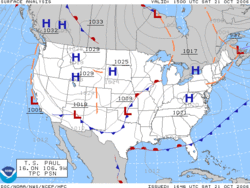
A surface weather analysis for the United States on October 21, 2006.

A weather map, also known as synoptic weather chart, displays various meteorological features across a particular area at a particular point in time and has various symbols which all have specific meanings.[1] Such maps have been in use since the mid-19th century and are used for research and weather forecasting purposes. Maps using isotherms show temperature gradients,[2] which can help locate weather fronts. Isotach maps, analyzing lines of equal wind speed,[3] on a constant pressure surface of 300 or 250 hPa show where the jet stream is located. Use of constant pressure charts at the 700 and 500 hPa level can indicate tropical cyclone motion. Two-dimensional streamlines based on wind speeds at various levels show areas of convergence and divergence in the wind field, which are helpful in determining the location of features within the wind pattern. A popular type of surface weather map is the surface weather analysis, which plots isobars to depict areas of high pressure and low pressure. Cloud codes are translated into symbols and plotted on these maps along with other meteorological data that are included in synoptic reports sent by professionally trained observers.

History

[edit]
Sir Francis Galton, the inventor of the weather map.

The use of weather charts in a modern sense began in the middle portion of the 19th century in order to devise a theory on storm systems.[4] During the Crimean War a storm devastated the French fleet at Balaklava, and the French scientist Urbain Le Verrier was able to show that if a chronological map of the storm had been issued, the path it would take could have been predicted and avoided by the fleet.

In England, the scientist Francis Galton heard of this work, as well as the pioneering weather forecasts of Robert FitzRoy. After gathering information from weather stations across the country for the month of October 1861, he plotted the data on a map using his own system of symbols, thereby creating the world's first weather map. He used his map to prove that air circulated clockwise around areas of high pressure; he coined the term 'anticyclone' to describe the phenomenon. He was also instrumental in publishing the first weather map in a newspaper, for which he modified the pantograph (an instrument for copying drawings) to inscribe the map onto printing blocks. The Times began printing weather maps using these methods with data from the Meteorological Office.[5]

US weather map from 1843

The introduction of country-wide weather maps required the existence of national telegraph networks so that data from across the country could be gathered in real time and remain relevant for all analysis. The first such use of the telegraph for gathering data on the weather was the Manchester Examiner newspaper in 1847:[6]

...led us to inquire if the electric telegraph was yet extended far enough from Manchester to obtain information from the eastern counties...inquiries were made at the following places; and hypothesis were returned, which we append...

It was also important for time to be standardized across time zones so that the information on the map should accurately represent the weather at a given time. A standardized time system was first used to coordinate the British railway network in 1847, with the inauguration of Greenwich Mean Time.

In the US, The Smithsonian Institution developed its network of observers over much of the central and eastern United States between the 1840s and 1860s once Joseph Henry took the helm.[7] The U.S. Army Signal Corps inherited this network between 1870 and 1874 by an act of Congress, and expanded it to the west coast soon afterwards. At first, not all the data on the map was used due to a lack of time standardization. The United States fully adopted time zones in 1905, when Detroit finally established standard time.[8][9]

20th century

[edit]
Light tables were important to the construction of surface weather analyses into the 1990s

The use of frontal zones on weather maps began in the 1910s in Norway. Polar front theory is attributed to Jacob Bjerknes, derived from a coastal network of observation sites in Norway during World War I. This theory proposed that the main inflow into a cyclone was concentrated along two lines of convergence, one ahead of the low and another trailing behind the low. The convergence line ahead of the low became known as either the steering line or the warm front. The trailing convergence zone was referred to as the squall line or cold front. Areas of clouds and rainfall appeared to be focused along these convergence zones. The concept of frontal zones led to the concept of air masses. The nature of the three-dimensional structure of the cyclone would wait for the development of the upper air network during the 1940s.[10] Since the leading edge of air mass changes bore resemblance to the military fronts of World War I, the term "front" came into use to represent these lines.[11] The United States began to formally analyze fronts on surface analyses in late 1942, when the WBAN Analysis Center opened in downtown Washington, D.C.[12]

In addition to surface weather maps, weather agencies began to generate constant pressure charts. In 1948, the United States began the Daily Weather Map series, which at first analyzed the 700 hPa level, which is around 3,000 metres (9,800 ft) above sea level.[13] By May 14, 1954, the 500 hPa surface was being analyzed, which is about 5,520 metres (18,110 ft) above sea level.[14] The effort to automate map plotting began in the United States in 1969,[15] with the process complete in the 1970s. A similar initiative was started in India by Indian Meteorological Department in 1969.[16] Hong Kong completed their process of automated surface plotting by 1987.[17]

By 1999, computer systems and software had finally become sophisticated enough to allow for the ability to underlay on the same workstation satellite imagery, radar imagery, and model-derived fields such as atmospheric thickness and frontogenesis in combination with surface observations to make for the best possible surface analysis. In the United States, this development was achieved when Intergraph workstations were replaced by n-AWIPS workstations.[18] By 2001, the various surface analyses done within the National Weather Service were combined into the Unified Surface Analysis, which is issued every six hours and combines the analyses of four different centers.[19] Recent advances in both the fields of meteorology and geographic information systems have made it possible to devise finely tailored products that take us from the traditional weather map into an entirely new realm. Weather information can quickly be matched to relevant geographical detail. For instance, icing conditions can be mapped onto the road network. This will likely continue to lead to changes in the way surface analyses are created and displayed over the next several years.[20]

Plotting of data

[edit]
Low étage (Sc,St) and upward-growing vertical (Cu, Cb)
Middle étage (Ac,As) and downward-growing vertical (Ns)
High étage (Ci,Cc,Cs)
Present weather symbols used on weather maps
Wind barb interpretation

A station model is a symbolic illustration showing the weather occurring at a given reporting station. Meteorologists created the station model to plot a number of weather elements in a small space on weather maps. Maps filled with dense station-model plots can be difficult to read, but they allow meteorologists, pilots, and mariners to see important weather patterns. A computer draws a station model for each observation location. The station model is primarily used on surface-weather maps, but can also be used to show the weather aloft. A completed station-model map allows users to analyze patterns in air pressure, temperature, wind, cloud cover, and precipitation.[21]

Station model plots use an internationally accepted coding convention that has changed little since August 1, 1941. Elements in the plot show the key weather elements, including temperature, dewpoint, wind, cloud cover, air pressure, pressure tendency, and precipitation.[22][23] Winds have a standard notation when plotted on weather maps. More than a century ago, winds were plotted as arrows, with feathers on just one side depicting five knots of wind, while feathers on both sides depicted 10 knots (19 km/h) of wind. The notation changed to that of half of an arrow, with half of a wind barb indicating five knots, a full barb ten knots, and a pennant flag fifty knots.

Because of the structure of the SYNOP code, a maximum of three cloud symbols can be plotted for each reporting station that appears on the weather map. All cloud types are coded and transmitted by trained observers then plotted on maps as low, middle, or high-étage using special symbols for each major cloud type. Any cloud type with significant vertical extent that can occupy more than one étage is coded as low (cumulus and cumulonimbus) or middle (nimbostratus) depending on the altitude level or étage where it normally initially forms aside from any vertical growth that takes place.[24][25] The symbol used on the map for each of these étages at a particular observation time is for the genus, species, variety, mutation, or cloud motion that is considered most important according to criteria set out by the World Meteorological Organization (WMO). If these elements for any étage at the time of observation are deemed to be of equal importance, then the type which is predominant in amount is coded by the observer and plotted on the weather map using the appropriate symbol. Special weather maps in aviation show areas of icing and turbulence.[26]

Types

[edit]
Alaskan aviation weather map

Aviation maps

[edit]

Aviation interests have their own set of weather maps. One type of map shows where VFR (visual flight rules) are in effect and where IFR (instrument flight rules) are in effect. Weather depiction plots show ceiling height (level where at least half the sky is covered with clouds) in hundreds of feet, present weather, and cloud cover.[27] Icing maps depict areas where icing can be a hazard for flying. Aviation-related maps also show areas of turbulence.[28]

Constant pressure charts

[edit]
An upper-level jet streak. DIV areas are regions of divergence aloft, which usually leads to surface convergence and cyclogenesis

Constant pressure charts normally contain plotted values of temperature, humidity, wind, and the vertical height above sea level of the pressure surface.[29] They have a variety of uses. In the mountainous terrain of the western United States and Mexican Plateau, the 850 hPa pressure surface can be a more realistic depiction of the weather pattern than a standard surface analysis. Using the 850 and 700 hPa pressure surfaces, one can determine when and where warm advection (coincident with upward vertical motion) and cold advection (coincident with downward vertical motion) is occurring within the lower portions of the troposphere. Areas with small dewpoint depressions and are below freezing indicate the presence of icing conditions for aircraft.[30] The 500 hPa pressure surface can be used as a rough guide for the motion of many tropical cyclones. Shallower tropical cyclones, which have experienced vertical wind shear, tend to be steered by winds at the 700 hPa level.[31]

Use of the 300 and 200 hPa constant pressure charts can indicate the strength of systems in the lower troposphere, as stronger systems near the Earth's surface are reflected as stronger features at these levels of the atmosphere. Isotachs are drawn at these levels, which a lines of equal wind speed. They are helpful in finding maxima and minima in the wind pattern. Minima in the wind pattern aloft are favorable for tropical cyclogenesis. Maxima in the wind pattern at various levels of the atmosphere show locations of jet streams. Areas colder than −40 °C (−40 °F) indicate a lack of significant icing, as long as there is no active thunderstorm activity.[30]

Surface weather analysis

[edit]
Streamline analysis of the tropical Pacific Ocean

A surface weather analysis is a type of weather map that depicts positions for high and low-pressure areas, as well as various types of synoptic scale systems such as frontal zones. Isotherms can be drawn on these maps, which are lines of equal temperature. Isotherms are drawn normally as solid lines at a preferred temperature interval.[2] They show temperature gradients, which can be useful in finding fronts, which are on the warm side of large temperature gradients. By plotting the freezing line, isotherms can be useful in determination of precipitation type. Mesoscale boundaries such as tropical cyclones, outflow boundaries and squall lines also are analyzed on surface weather analyses.

Isobaric analysis is performed on these maps, which involves the construction of lines of equal mean sea level pressure. The innermost closed lines indicate the positions of relative maxima and minima in the pressure field. The minima are called low-pressure areas while the maxima are called high-pressure areas. Highs are often shown as H's whereas lows are shown as L's. Elongated areas of low pressure, or troughs, are sometimes plotted as thick, brown dashed lines down the trough axis.[32] Isobars are commonly used to place surface boundaries from the horse latitudes poleward, while streamline analyses are used in the tropics.[33] A streamline analysis is a series of arrows oriented parallel to wind, showing wind motion within a certain geographic area. "C"s depict cyclonic flow or likely areas of low pressure, while "A"s depict anticyclonic flow or likely positions of high-pressure areas.[34] An area of confluent streamlines shows the location of shearlines within the tropics and subtropics.[19]

See also

[edit]

References

[edit]
Revisions and contributorsEdit on WikipediaRead on Wikipedia
from Grokipedia
A weather map is a graphical depiction of current or forecasted atmospheric conditions across a specific geographic region, illustrating key meteorological variables such as air pressure, temperature, wind patterns, precipitation, and frontal boundaries to facilitate weather analysis and prediction.[1] These maps, often produced at regular intervals by national meteorological services, serve as essential tools for meteorologists, enabling the visualization of weather systems like high- and low-pressure areas, which drive atmospheric circulation and influence daily weather events.[1] The development of weather maps traces back to the mid-19th century, when the invention of the telegraph allowed for the rapid collection of simultaneous observations from distant locations, enabling the creation of synoptic charts that captured evolving weather patterns across large areas.[2] In the United States, the Smithsonian Institution pioneered early weather mapping in 1849 by establishing a volunteer observation network that compiled telegraphic data into rudimentary charts, a practice that expanded nationally through the U.S. Army Signal Service starting in 1870.[3] By the 1920s, advancements like radiosondes—balloon-borne instruments transmitting upper-atmosphere data—enhanced the accuracy of maps, while the launch of the first weather satellite, TIROS I, in 1960 revolutionized global coverage by providing overhead imagery to supplement surface observations.[2][3] Today, weather maps encompass various types, including surface analysis charts that plot sea-level pressure and fronts, upper-air charts depicting conditions at constant pressure levels (e.g., 500 millibars), and specialized prognostic maps forecasting future states, all integrated with data from radars, satellites, and automated stations for real-time applications in aviation, agriculture, and disaster preparedness.[4] Key components on these maps include isobars (lines of equal pressure) outlining highs ("H") and lows ("L"), isotherms for temperature gradients, wind barbs indicating speed and direction, and symbols for precipitation types, with fronts marked by distinct lines—such as blue triangles for cold fronts and red semicircles for warm fronts—to denote boundaries between air masses.[1]

Fundamentals

Definition and Purpose

A weather map is a graphical representation of atmospheric conditions at a specific time or forecast period, depicting meteorological variables such as temperature, atmospheric pressure, wind speed and direction, and precipitation through the use of symbols, isobars, isotherms, and color shading.[4] These maps enable meteorologists to visualize weather patterns across a region, providing a snapshot that integrates data from multiple observation points.[4] Originating in the mid-19th century, weather maps emerged as a practical tool for analyzing synoptic-scale weather following the advent of telegraph networks, which allowed simultaneous collection of observations from distant stations starting in 1849 through the Smithsonian Institution's network in the United States.[3] The primary purpose of weather maps is to support weather forecasting by revealing the structure and movement of large-scale atmospheric systems, thereby aiding in the prediction of storms, temperature changes, and other phenomena.[4] They also facilitate scientific research into atmospheric circulation patterns, helping researchers understand global and regional weather dynamics.[4] In practical applications, weather maps communicate weather risks to the public, enabling timely warnings for severe events like hurricanes or floods.[4] Additionally, they inform decision-making across sectors: in agriculture, maps guide crop planting, irrigation, and harvest timing based on precipitation and temperature forecasts; in aviation, they enhance flight safety by highlighting turbulence, icing, and visibility hazards for route planning; and in emergency management, they support resource allocation during disasters influenced by weather.[5][6] Central to weather maps is the synoptic scale, which refers to large-scale weather systems in the lower troposphere, typically spanning 1,000 to 2,500 kilometers and involving migratory high- and low-pressure areas.[7] These maps play a key role in identifying critical features such as high-pressure systems (anticyclones), low-pressure systems (cyclones), atmospheric fronts, and jet streams, which drive weather evolution over hours to days.[4] By portraying these elements, weather maps bridge observational data with predictive models, evolving over time to include various types for specialized analyses.[4]

Basic Elements

Weather maps feature several core graphical elements that visually represent atmospheric conditions. Isobars are contour lines connecting points of equal atmospheric pressure, typically drawn at intervals of 4 hectopascals (hPa), with higher values indicating areas of high pressure and lower values denoting lows.[8] Isotherms connect locations of equal temperature, helping to delineate thermal gradients and fronts.[9] Isotachs illustrate lines of constant wind speed, often used on upper-air charts to highlight jet streams and wind shear. Streamlines depict the direction of wind flow, drawn tangent to the wind vectors to show airflow patterns without implying speed.[10] Color conventions enhance readability by using shading or filled areas to convey variable intensities in certain types of maps. For example, radar-based precipitation maps employ a gradient scale where light rain is shown in green or blue shades, moderate in yellow or orange, and heavy in red or purple, based on reflectivity values in decibels (dBZ).[11] On traditional surface analysis maps, cloud cover at weather stations is represented by symbols, such as partially or fully filled circles indicating the fraction of sky covered (e.g., 4/8 for scattered, 8/8 for overcast).[12] Temperature gradients may use color bands on digital maps, such as cool blues for lower temperatures and warm reds for higher ones. The scale and projection of weather maps are chosen to preserve angles and minimize distortion for meteorological analysis. Regional maps commonly utilize the polar stereographic projection for polar and high-latitude areas or the Lambert conformal conic projection for mid-latitude regions like North America, ensuring accurate representation of weather systems over continents.[13] These projections include latitude and longitude grids for precise positioning, along with coastlines and political boundaries to provide geographic context. Standard units on weather maps follow international meteorological conventions to ensure consistency. Atmospheric pressure is expressed in hectopascals (hPa), equivalent to millibars.[14] Temperature is given in degrees Celsius (°C). Wind speed is typically reported in knots (kt) on aviation-related charts, though meters per second (m/s) may be used in scientific contexts. Specific symbols for weather stations plot local observations, as covered in plotting conventions.

History

Early Developments

The earliest attempts at representing weather patterns date back to ancient times, with Aristotle's Meteorologica in the 4th century BCE describing wind directions and their seasonal variations, leading to the development of wind roses that diagrammed prevailing winds from multiple directions around a central point. These conceptual diagrams laid foundational ideas for visualizing atmospheric circulation, though they were qualitative rather than quantitative. In medieval Europe, weather diaries emerged as systematic records, with monks and scholars noting daily conditions like rain, wind, and temperature proxies from the 13th century onward, providing the first longitudinal datasets for later analysis.[15] By the early 18th century, European scientific societies established rudimentary barometer networks; for instance, the Societas Meteorologica Palatina operated from 1781 to 1792, coordinating simultaneous pressure readings across multiple stations in the Palatinate region to study atmospheric variations.[16] Mid-19th-century innovations accelerated the shift toward synoptic weather mapping through telegraphy, enabling near-real-time data collection over wide areas. The devastating Balaklava storm during the Crimean War on November 14, 1854, which wrecked or damaged around 37 Allied vessels and caused significant casualties, highlighted the need for rapid weather intelligence, prompting French astronomer Urbain Le Verrier to analyze telegraphic reports from across Europe and propose coordinated international observations to track storm paths.[17][18] In the United Kingdom, the establishment of Greenwich Mean Time in 1847 for railway synchronization coincided with the expansion of telegraph lines, allowing newspapers like the Manchester Examiner to compile and publish initial weather summaries from distant stations as early as August 1847.[19] These networks facilitated simultaneous observations, a critical step for mapping dynamic weather systems. Key figures advanced these efforts with pioneering visualizations. In 1861, British polymath Francis Galton created one of the first synoptic charts depicting weather conditions across England on January 16, using telegraphic data to illustrate wind, temperature, and pressure patterns; this work demonstrated the clockwise rotation of anticyclones, contrasting with cyclone behavior, and was published in his 1863 book Meteorographica.[20] Across the Atlantic, the Smithsonian Institution under Secretary Joseph Henry expanded a volunteer weather observation network starting in 1849, growing from 150 stations to over 500 by the 1860s, which supplied instruments to telegraph operators and produced early weather summaries to aid agriculture and navigation.[21] Foundational mapping concepts also emerged during this period. Alexander von Humboldt introduced isotherms—lines connecting points of equal temperature—in 1817 as part of his isoline methodology, building on earlier work to visualize global climate patterns in works like Des lignes isothermes et de la distribution de la chaleur sur le globe.[22] German meteorologist Heinrich Wilhelm Dove advanced isotherm mapping in the 1850s, publishing detailed global temperature distribution charts in his 1852 atlas Die Wärmeverbreitung, which incorporated monthly and seasonal variations to reveal hemispheric asymmetries in heat.[23] These isolines provided essential tools for interpreting weather maps, influencing subsequent synoptic charting.

20th Century Advances

In the early 20th century, the Norwegian School of Meteorology, led by Vilhelm Bjerknes, revolutionized weather mapping through the development of frontal theory in the 1910s. This theory, formulated in collaboration with his son Jacob Bjerknes and other Bergen School scientists, introduced the concept of distinct air masses separated by boundaries known as fronts, including warm fronts where warm air advances over cooler air and cold fronts where cold air displaces warmer air. These fronts were depicted as lines on synoptic weather maps, enabling meteorologists to visualize and predict cyclone development and storm progression more accurately than previous circulation models.[24][25] Building on 19th-century telegraphy for data collection, the adoption of standardized time zones in the United States in 1883 further improved the synchronization of weather observations across vast distances, allowing for more reliable simultaneous reporting essential to map construction.[26] By the 1920s, this frontal approach had spread internationally, laying the groundwork for modern synoptic analysis. During World War II, the U.S. Weather Bureau established the Analysis Center in Washington, D.C., in 1942, formally adopting frontal analysis into operations, building on Norwegian methods taught at institutions like the University of Chicago.[27][28] Weather maps featuring frontal boundaries played a pivotal role in Allied planning, such as the D-Day invasion on June 6, 1944, where predictions of clearing conditions behind a cold front determined the timing of Operation Overlord, averting potential disaster from adverse weather. Hand-drawn maps evolved into critical tools for aviation and naval maneuvers, with the U.S. Army Air Forces relying on them to navigate atmospheric conditions in theaters like Europe and the Pacific.[28] Postwar advancements expanded upper-air mapping, with the U.S. Weather Bureau introducing constant-pressure charts at the 700 hPa level in 1948 as part of the Daily Weather Map series, providing insights into mid-tropospheric flows around 3,000 meters above sea level. This was followed by the inclusion of 500 hPa analyses by May 14, 1954, depicting conditions at approximately 5,500 meters and improving the tracking of jet streams and large-scale weather patterns. These charts marked a shift from surface-only maps to multi-level analyses, enhancing long-range forecasting capabilities.[29] The late 20th century brought computer automation to weather map plotting, beginning in the United States in 1960 with systems that digitized observation data and generated contours mechanically, reducing manual labor and errors in synoptic chart production. By the 1970s, this process was largely complete, transitioning from hand-drawn illustrations to semi-automated outputs using early computers like the CDC series for surface and upper-air maps. In 1999, integration of digital systems such as Intergraph's geographic information systems (GIS) platforms advanced weather mapping by overlaying real-time data on interactive workstations, supporting more dynamic visualization for operational meteorology.[30][31] Culminating these developments, the World Meteorological Organization (WMO), through its ongoing World Weather Watch program established in the 1960s, has promoted unified global standards for weather analysis, including consistent methodologies for map production and data exchange to foster international cooperation in synoptic forecasting.[32] This evolution from artisanal hand-plotting to semi-automated digital tools dramatically increased the speed and accuracy of weather maps, enabling broader applications in civil and military contexts throughout the century.

Data Acquisition and Plotting

Sources of Weather Data

Weather data for maps originates primarily from ground-based observations, which form the foundational network for surface-level measurements. These include automated and manual weather stations that record essential atmospheric variables such as air pressure using barometers, temperature via thermometers, relative humidity with hygrometers, and wind speed and direction through anemometers and wind vanes, respectively.[33][34] Over oceans, voluntary observing ships and moored buoys contribute similar data, including sea surface temperature and wave conditions, extending coverage to marine environments where land stations are absent.[35] Upper-air data is collected through radiosondes, lightweight instrument packages attached to helium-filled balloons launched from approximately 1,000 global upper-air stations. These probes ascend to altitudes of up to 30 kilometers, transmitting real-time vertical profiles of pressure, temperature, humidity, and wind speed and direction via radio signals until the balloon bursts.[35][36] Launches occur twice daily, typically at 0000 UTC and 1200 UTC, to capture diurnal variations and support synoptic-scale analysis.[37] The World Meteorological Organization (WMO) coordinates these efforts through its Global Observing System (GOS), which encompasses over 17,500 surface-based stations and platforms worldwide, providing near-real-time data essential for weather map construction.[35] Historically, data collection relied on manual telegraphic reports, but a significant shift occurred in the 1980s with the adoption of automated sensors and digital transmission, enhancing frequency and reliability of observations from land stations. In January 2023, the WMO agreed to the global exchange of hourly surface reports and high-resolution radiosonde data, further improving the temporal resolution of observations.[38][39] To ensure accuracy, meteorological data undergoes rigorous quality control processes, including automated validation checks for plausibility (e.g., ensuring temperature values fall within physical limits) and temporal consistency (e.g., detecting abrupt changes inconsistent with prior readings).[40] Spatial buddy-checking further refines this by comparing an observation against neighboring "buddy" stations to identify outliers based on local variability, flagging inconsistencies for manual review or rejection.[41] These procedures, standardized by WMO guidelines, minimize errors before data integration into weather maps.[42]

Plotting Conventions and Symbols

Station models are standardized circular plots used to encode meteorological observations at specific reporting stations on weather maps. These models typically feature a central circle representing the station, with surrounding elements denoting key variables such as temperature, dew point, wind speed and direction, pressure tendency, and cloud cover. Temperature and dew point are plotted as two-digit numbers in degrees Fahrenheit (or Celsius in some conventions) to the upper-left and lower-left of the circle, respectively, providing a quick visual of thermal conditions and humidity. Wind direction is indicated by the orientation of barbs extending from the circle, pointing toward the direction from which the wind is blowing; speed is encoded via the barbs, where a full barb represents 10 knots, a half barb 5 knots, and a pennant (flag) 50 knots, allowing for compact representation of velocities up to 100 knots or more with combinations. Pressure tendency is shown to the right of the circle with a three-digit number indicating the 3-hour change in millibars (in tenths) and a symbol depicting the trend, such as an upward arrow for rising pressure. Cloud cover is illustrated by the fill level of the central circle—empty for clear skies, partially filled for scattered clouds, and fully filled for overcast—while up to three cloud type symbols (e.g., cumulus as small cumulus puffs, stratus as horizontal lines) can be plotted above the circle to denote layered conditions. These conventions follow World Meteorological Organization (WMO) guidelines for consistency in surface observations.[43] Front symbols on weather maps depict boundaries between contrasting air masses, using distinct geometric icons to convey type and direction of motion. A cold front, where cooler air advances to displace warmer air, is represented by a blue line with solid triangles pointing in the direction of movement. A warm front, involving warmer air overtaking cooler air, features a red line with semicircles oriented toward the advance side. Occluded fronts, formed when a cold front overtakes a warm front, are shown with a purple line alternating between triangles and semicircles on the forward side, distinguishing cold occlusions (coldest air behind) from warm ones (coldest air ahead). These symbols evolved from simpler 19th-century notations, such as arrows indicating wind shifts or pressure troughs on early synoptic charts, to the standardized forms developed by the Bergen School of meteorologists in the 1920s for clearer visualization of frontal dynamics.[44][45] The WMO has maintained standardized meteorological codes since its establishment in 1950, building on earlier International Meteorological Organization frameworks to promote global consistency in data encoding and symbol plotting on weather maps. These codes include detailed present weather symbols, such as slanted lines or dots for rain (distinguishing drizzle from heavier precipitation) and star-like asterisks or pellets for snow, which are plotted near station models to indicate ongoing or recent conditions. For example, moderate rain is often depicted with three slanted lines, while light snow uses a single asterisk, enabling uniform interpretation across international analyses. Such symbols are part of WMO Code Table 4677, which categorizes over 90 weather phenomena for precise reporting.[46][12] Pressure and wind patterns on weather maps are plotted using isobars—lines connecting points of equal atmospheric pressure—to visually represent gradients that influence wind strength. Closer spacing of isobars indicates a steeper pressure gradient, corresponding to stronger winds, while widely spaced lines suggest weaker flows; this spacing provides a conceptual basis for the geostrophic wind approximation, where winds flow parallel to isobars at speeds inversely proportional to their separation in the absence of friction. National meteorological services, aligned with WMO practices, typically plot isobars at 4-millibar intervals on surface charts to balance detail and readability.[47][48]

Types of Weather Maps

Surface Analysis Maps

Surface analysis maps depict weather conditions at or near the Earth's surface, typically at sea level, providing a snapshot of atmospheric pressure patterns, temperature distributions, and boundaries between air masses across a specific region or globally. These maps are essential for identifying current weather systems and supporting short-term forecasting by illustrating how pressure gradients drive wind patterns and influence precipitation. Produced by meteorological agencies such as the National Weather Service, they integrate data from surface observations, including pressure, temperature, wind, and moisture, to create a cohesive view of synoptic-scale features.[1] Key features on surface analysis maps include isobars, which are contour lines connecting points of equal sea-level pressure, typically in hectopascals (hPa), spaced at intervals like 4 hPa to highlight pressure gradients. High-pressure centers (anticyclones or "highs") are marked with an "H," indicating areas of subsidence and generally fair weather, while low-pressure centers (cyclones or "lows") are labeled "L," associated with rising air and unsettled conditions. Surface fronts—boundaries separating air masses of different densities—are depicted with standardized symbols: cold fronts as blue lines with triangles pointing in the direction of movement, warm fronts as red lines with semicircles, stationary fronts with alternating symbols, and occluded fronts combining both. Precipitation areas are shaded or symbolized, such as green for rain or blue for snow, often linked to frontal passages or low-pressure systems. These elements collectively enable meteorologists to assess short-term weather evolution, such as the approach of storms within 24-48 hours.[49][1] The analysis process begins with plotting observed data from weather stations onto the map, followed by manual or automated contouring to draw isobars and identify pressure centers. Meteorologists locate cyclones as closed lows where isobars form tight contours, signaling convergence and potential for cloud formation and precipitation; anticyclones appear as broad highs with widely spaced isobars, promoting divergence and clear skies. Troughs, elongated regions of low pressure without closed contours, are dashed lines indicating areas of wind shifts and often enhanced shower activity. Isotherms, lines of equal temperature, are overlaid to reveal thermal contrasts that define frontal zones, such as sharp gradients ahead of cold fronts where cooler air advances. This process highlights interactions between systems, like a cyclone drawing fronts toward its center, aiding in the diagnosis of weather progression.[49][1] A unique aspect of surface analysis maps is the adjustment of station pressures to mean sea-level equivalents, particularly in varied terrain, to ensure comparability across elevations. In mountainous regions, where actual surface pressure is lower due to reduced overlying air mass—such as readings below 850 hPa in the Rockies—this correction estimates the pressure as if the station were at sea level by adding the hypothetical weight of the air column from the surface to sea level, using standard atmospheric models. This reduction allows consistent depiction of synoptic patterns, preventing terrain-induced distortions from masking true weather systems. Globally, these maps reveal recurrent features like the North Atlantic storm tracks, where extratropical cyclones frequently develop and track from the U.S. East Coast toward Europe along the mid-latitude storm track, influenced by westerly flows.[50][51]

Upper-Air Charts

Upper-air charts, also known as constant-pressure charts, depict atmospheric conditions at specific pressure levels above the surface, providing insights into the vertical structure of the atmosphere, including wind patterns, temperature, and geopotential height.[52] These charts are essential for understanding mid- and upper-tropospheric dynamics that influence surface weather, such as the steering of cyclones and the development of precipitation systems. Unlike surface maps, which focus on sea-level pressure, upper-air charts plot geopotential height contours—lines of equal altitude for a given pressure surface—allowing meteorologists to analyze large-scale flow and vertical motion.[53] Standard pressure levels include the 850 hPa, 700 hPa, 500 hPa, 300 hPa, and 200 hPa surfaces, each revealing distinct atmospheric features. The 850 hPa level, at approximately 1,500 meters (5,000 feet) elevation, captures low-level winds and moisture transport, particularly in tropical regions where trade winds dominate and in mountainous areas where it approximates surface conditions; high precipitable water values here signal potential for heavy rainfall and flash flooding.[54] The 700 hPa level, around 3,000 meters (10,000 feet), highlights mid-level winds and is crucial for assessing the North American monsoon in the southwestern United States, where southerly moisture flows contribute to summer precipitation.[55] At the 500 hPa level, situated in the mid-troposphere at about 5,500 meters (18,000 feet), charts show the primary steering flow for extratropical cyclones, with height contours indicating longwave patterns and vorticity maxima revealing areas of rotation that guide storm tracks.[53] Higher up, the 300 hPa and 200 hPa levels, near 9,000–12,000 meters (30,000–39,000 feet), depict upper-level jet streams where winds exceed 70 knots (130 km/h), along with divergence zones that promote upward motion and cyclone intensification.[56][57] Key features on these charts include geopotential height contours, which replace pressure lines and reveal troughs and ridges in the flow; relative vorticity, often overlaid at 500 hPa to quantify rotational tendencies (in units of 10⁻⁵ s⁻¹), aiding in identifying shortwave disturbances; and jet streaks—embedded maxima within jet streams at 200–300 hPa—that drive cyclogenesis through ageostrophic divergence in their exit regions.[58][59] These elements became standard in operational meteorology following the widespread adoption of radiosonde networks after 1948, when comprehensive upper-air data enabled routine analysis of levels like 700 hPa for the first time, marking a shift from pre-war pilot balloon observations to global wind and temperature profiling.[60] Upper-air charts are applied to track large-scale phenomena such as Rossby waves, which appear as undulating height patterns at 500 hPa and propagate eastward to modulate weather regimes by transporting heat and momentum.[61] Additionally, potential vorticity analysis on these charts, often on isentropic surfaces intersecting upper levels, conserves dynamical information to diagnose stratospheric intrusions and tropospheric stability, enhancing forecasts of blocking patterns and severe weather outbreaks.[62][63]

Specialized Maps

Specialized weather maps are designed for particular sectors or regions, incorporating data overlays that address unique environmental hazards and operational needs beyond standard surface or upper-air analyses. In aviation, Significant Weather (SIGWX) charts, standardized by the International Civil Aviation Organization (ICAO), depict high-altitude phenomena such as moderate to severe turbulence outlined by thick dashed lines with reference numbers, icing areas, and embedded or frequent thunderstorms including cumulonimbus clouds. These charts forecast jet stream positions, tropopause heights, and frontal systems to aid flight planning at levels from flight level 250 to 630.[64] Low-level SIGWX variants and Graphical Forecasts for Aviation (GFA) from the U.S. National Weather Service (NWS) Aviation Weather Center further illustrate Visual Flight Rules (VFR) and Instrument Flight Rules (IFR) conditions, cloud ceilings, surface visibility, and low-level wind shear risks.[65] Marine prognostic charts, issued by NOAA's Ocean Prediction Center, focus on ocean-specific hazards for maritime navigation and safety. These include surface analysis and forecast maps showing wind speeds, significant wave heights, swell directions, and visibility reductions due to fog or precipitation, typically valid for 24 to 48 hours ahead.[66] Wind/wave charts overlay isobars, streamlines for wind patterns, and wave period contours to predict combined sea states, helping vessel operators anticipate rough conditions in open waters.[67] Fire weather maps, produced by the NWS, target wildfire management in prone regions by highlighting conditions that exacerbate fire spread. These outlooks delineate areas where sustained winds exceed 20 mph (or 15 mph in Florida), relative humidity drops below 15%, and dry fuels prevail, categorizing risks as elevated, critical, or extremely critical based on combined wind and humidity thresholds.[68][69] Such maps integrate temperature forecasts and fuel moisture indices to support prescribed burns and suppression efforts in arid landscapes like the western U.S.[70] Regional variations in specialized map formats reflect differing data priorities and infrastructures. In Europe, EUMETSAT's composite products emphasize satellite-derived imagery, such as RGB-enhanced visuals for cloud and convection tracking across the continent, often in BUFR or GRIB formats for model integration.[71] In contrast, U.S. NWS formats prioritize ground-observed data with standardized symbols on prognostic charts, focusing on national-scale textual bulletins and layered graphics for domestic sectors like aviation and marine. These differences stem from EUMETSAT's geostationary satellite emphasis on real-time European monitoring versus NWS's blend of radar, buoys, and models for hemispheric coverage.[72]

Interpretation and Analysis

Reading Weather Maps

Reading weather maps involves systematically analyzing key features to discern current atmospheric conditions and weather patterns. The process begins with identifying pressure centers, which are marked as "H" for high-pressure systems and "L" for low-pressure systems, serving as the primary drivers of wind circulation.[1] High-pressure centers typically indicate sinking air and fair weather, while low-pressure centers are associated with rising air and unsettled conditions.[73] Next, trace the isobars—lines connecting points of equal atmospheric pressure—to understand wind flow and pressure gradients. Isobars form closed contours around pressure centers, with winds flowing clockwise around highs and counterclockwise around lows in the Northern Hemisphere, parallel to the isobars in geostrophic balance away from frictional influences.[1] The spacing of isobars reveals intensity: closely spaced lines denote strong pressure gradients and thus stronger winds, whereas widely spaced lines suggest weaker gradients and lighter winds.[1] Following pressure analysis, identify fronts, which represent boundaries between air masses of differing properties, depicted by standard symbols such as blue lines with triangles for cold fronts and red lines with semicircles for warm fronts.[1] Fronts often extend from low-pressure centers and indicate zones of temperature contrasts, moisture differences, and wind shifts. Assess front spacing and orientation relative to isobars to gauge movement and associated weather, such as precipitation along the boundary. For pattern recognition, examine overall configurations: closed lows signify cyclonic systems, often bringing clouds, precipitation, and strong winds due to converging air.[74] In contrast, ridges—elongated high-pressure areas—correspond to stable, clear weather with diverging air aloft promoting subsidence.[75] Convergence zones, typically at fronts or troughs, lift moist air leading to cloud formation, while divergence zones, common in ridges, enhance clear skies.[1] A common pitfall in interpretation is assuming winds strictly follow geostrophic flow parallel to isobars everywhere; near fronts, actual winds exhibit ageostrophic components, converging perpendicularly into the boundary due to thermal contrasts and friction, which can alter expected directions and intensities.[76] Wind barbs, as detailed in plotting conventions, provide direct observations to verify these patterns.[1]

Forecasting Applications

Prognostic charts, also known as prog charts, are weather maps that depict expected future atmospheric conditions by extrapolating current patterns observed on analysis charts. These charts typically forecast conditions 24 to 48 hours ahead, illustrating projected positions of fronts, pressure systems, precipitation areas, and cloud cover to aid short-term predictions.[77] For instance, the National Centers for Environmental Information (NCEI) archives surface prognostic charts in 12/24-hour and 36/48-hour formats, which include isobars at 4-millibar intervals and symbols for weather elements to visualize evolving synoptic-scale features.[77] To address uncertainty in these forecasts, ensemble methods generate multiple simulations by varying initial conditions and model parameters, providing a probabilistic range of outcomes rather than a single deterministic prediction. The NOAA Global Ensemble Forecast System (GEFS), for example, produces 31 ensemble members up to 35 days ahead, quantifying predictability limits and spread in variables like temperature and wind.[78] This approach, rooted in dynamical ensemble forecasting, helps meteorologists assess forecast reliability, as detailed in NOAA's overview of ensemble techniques for meteorological predictions.[79] Weather maps, particularly prognostic and surface analysis types, support critical applications in storm tracking, enabling timely evacuations during severe events. NOAA's Warn-on-Forecast program uses high-resolution ensemble predictions from mapped data to extend lead times for tornado and flash flood warnings by up to an hour, facilitating evacuations and reducing casualties in vulnerable areas.[80] In agriculture, temperature and precipitation outlooks derived from these maps guide planting and harvesting decisions; the Climate Prediction Center (CPC) issues probabilistic maps for 6-10 day and monthly periods, helping farmers mitigate risks from frost or drought.[81] For the energy sector, wind predictions on prognostic charts optimize renewable power generation; NOAA's Wind Forecast Improvement Project enhances short-term wind speed forecasts, yielding approximately $150 million in annual savings for utilities through better grid integration.[82] Despite these advances, forecasting accuracy using weather maps diminishes significantly beyond five days, with 5-day predictions achieving about 90% reliability compared to 80% for seven days, due to chaotic atmospheric dynamics.[83] Weather maps play a foundational role in initializing numerical weather prediction (NWP) models, where surface and upper-air analyses provide the starting atmospheric state for simulations that generate longer-range forecasts.[84]

Modern Developments

Digital and Computer-Generated Maps

The transition to digital and computer-generated weather maps accelerated in the early 21st century with the deployment of advanced processing systems. Following the initial rollout of the Advanced Weather Interactive Processing System (AWIPS) in the late 1990s, post-2001 upgrades focused on enhancing data integration and visualization capabilities across National Weather Service (NWS) offices. By 2011, testing began for AWIPS II, a modular upgrade that improved real-time data handling and graphical rendering, with full deployment completed by 2015, enabling meteorologists to generate dynamic maps from diverse inputs like radar and model outputs.[85] Complementing such systems, Geographic Information System (GIS) software like the Grid Analysis and Display System (GrADS) emerged as a key tool for real-time rendering of meteorological data, allowing users to manipulate gridded datasets into layered visualizations since its open-source adoption in the 2000s.[86] These digital tools offer significant advantages over traditional methods, including interactive features that enhance usability and analysis. Automated contouring algorithms streamline the creation of isobars, isotherms, and other lines, reducing manual effort while ensuring precision in representing pressure and temperature gradients. Layered views permit overlaying multiple data types—such as wind vectors over precipitation fields—facilitating comprehensive assessments, while interactive zooming and panning allow detailed examination of regional phenomena without losing global context. Public accessibility has expanded through mobile applications, such as those from the NWS and commercial providers, which deliver real-time computer-generated maps to smartphones, empowering non-experts with forecast visualizations during events like storms.[87][88] Contemporary standards for digital weather maps emphasize interoperability and efficiency, guided by the World Meteorological Organization (WMO). The GRIB (GRIdded Binary) format, particularly GRIB2, serves as the WMO-recommended standard for encoding and exchanging gridded meteorological data, supporting compact transmission of global datasets over networks since its adoption in the early 2000s. In the 2020s, artificial intelligence (AI) has introduced enhancements for pattern detection, with machine learning models analyzing map features to identify synoptic-scale structures like fronts or cyclones more rapidly than traditional methods. For instance, convolutional neural networks applied to weather charts enable automated recognition of precipitation patterns, improving forecast initialization in operational systems.[89][90]

Integration with Satellite and Radar Data

Satellite imagery plays a crucial role in enhancing weather maps by providing broad-scale observations of cloud cover, storm development, and atmospheric motion. Geostationary satellites, such as the GOES series operated by NOAA, deliver continuous imagery over specific regions, enabling the derivation of cloud motion vectors (also known as atmospheric motion vectors or AMVs) that track wind patterns at various altitudes. These vectors are derived from sequential visible and infrared images, offering forecasters insights into upper-level winds and tropical cyclone movement, which are overlaid directly onto surface and upper-air charts for improved situational awareness.[91] Complementing geostationary systems, polar-orbiting satellites have provided global coverage of weather patterns since the 1970s, capturing high-resolution data twice daily over most locations. NOAA's first polar-orbiting satellite, NOAA-1, launched in 1970, initiated this capability with cloud imagery and temperature measurements, evolving into modern systems like the Joint Polar Satellite System (JPSS) that supply detailed profiles of clouds, precipitation, and sea surface temperatures for integration into global weather maps.[92] This polar data fills temporal and spatial gaps in geostationary coverage, particularly over polar regions and oceans, allowing for comprehensive composite maps that combine visible, infrared, and microwave observations.[93] Radar overlays further refine weather maps by adding localized, high-resolution details on precipitation and storm dynamics. Doppler radar systems measure radial velocity to detect wind shifts within storms and reflectivity to estimate precipitation intensity, enabling the visualization of rotation in thunderstorms and the tracking of heavy rain bands.[94] In the United States, the NEXRAD network—a collaboration of 160 S-band Doppler radars operated by NOAA, the FAA, and the Department of Defense—provides critical data for severe weather mapping, supporting warnings for tornadoes, hail, and flash floods by overlaying velocity and reflectivity fields on synoptic charts.[95] Fusion techniques integrate satellite and radar data with ground observations to create composite weather maps that offer a more complete picture of atmospheric conditions. Algorithms blend these remote sensing inputs with surface station reports and upper-air soundings, using methods like machine learning to correct biases in precipitation estimates and produce seamless visualizations of storm evolution. As of 2025, these composites support real-time updates every 5 to 15 minutes, driven by the rapid-scan capabilities of advanced geostationary satellites like GOES-R series and frequent radar volume scans, allowing meteorologists to monitor fast-moving weather systems with minimal latency.[96] Recent advancements in remote sensing continue to expand the utility of weather maps through hyperspectral imaging, which captures data across hundreds of narrow spectral bands to profile atmospheric composition, including water vapor, ozone, and aerosols. Instruments like NASA's Atmospheric Infrared Sounder (AIRS) on the Aqua satellite enable the derivation of vertical profiles of temperature, humidity, and trace gases, which are assimilated into maps to enhance forecasts of air quality events and convective initiation.[97] Additionally, satellite constellations such as Europe's Copernicus program, featuring Sentinel missions, address global observational gaps by providing continuous monitoring of atmospheric and surface parameters, ensuring near-complete coverage for weather analysis in data-sparse regions like the Arctic and remote oceans.[98]

References

User Avatar
No comments yet.