Hubbry Logo
YasujYasujMain
Open search
Yasuj
Community hub
Yasuj
logo
8 pages, 0 posts
0 subscribers
Be the first to start a discussion here.
Yasuj
Yasuj
from Wikipedia

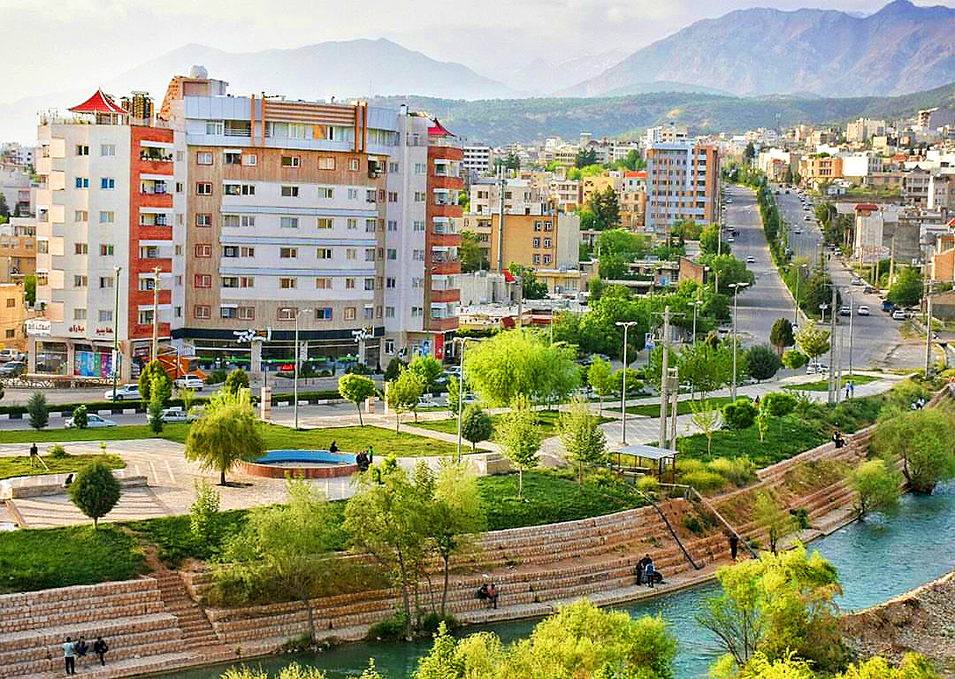
Yasuj (Persian: ياسوج; [jɒːˈsuːdʒ] )[a] is a city in the Central District of Boyer-Ahmad County, Kohgiluyeh and Boyer-Ahmad province, Iran, serving as capital of the province, the county, and the district.[5]

Key Information

Yasuj is an industrial city in the Zagros Mountains of southwestern Iran. The term Yasuj is also used to refer to the entire region.[6]

Yasuj has a sugar processing plant.[7]

History

[edit]

The area of Yasuj had been settled as early as the Bronze Age. Findings include the Martyrs Hills (dating from 3rd millennium BC), the Khosravi Hill from the Achaemenian period, the ancient site of Gerd, the Pataveh bridge, and the Pay-e Chol cemetery. Yasuj is the place where Alexander III of Macedon and his Macedonian forces stormed the Persian Gates (Darvazeh-ye Fars), and found a way into the Persian heartland (331 BC).[8]

The Yasuj Museum, which opened in 2002, displays coins, statues, pottery, and bronze vessels recovered from surrounding archaeological sites.[9]

In 2023, the city of Madavan and the villages of Balahzar, Jadval-e Ghureh-ye Mehrian, Madavan-e Sofla, Mehrian, Sarab-e Taveh, Servak, and Tall Khosrow merged with the city of Yasuj.[10]

Demographics

[edit]

Population

[edit]

At the time of the 2006 national census, the city's population was 96,786 in 20,297 households.[11] The following census in 2011 counted 108,505 people in 26,304 households.[12] The 2016 census measured the population of the city as 134,532 people in 34,850 households.[3]

The population of the Central District, in 2016, which includes the city of Yasuj and some suburban villages, is just over 250,000 people.[3]

Yasuj Census
Row City Name 1976 1986 1991 1996 2006[11] 2011[12] 2016[3]
1 Yasuj 4,524 29,991 48,957 69,133 96,786 108,505 134,532

Climate

[edit]

Yasuj has the typical continental-influenced Mediterranean climate (Köppen Csa) of western Iran, though because of its location in the direct line of rain-bearing winds from the Persian Gulf it is the wettest Iranian city south of the Alborz Mountains with an annual rainfall nine times that of Isfahan and twice that of Kermanshah. The heavy precipitation allows the existence of small glaciers on the highest Zagros peaks – in contrast the Kuhrud Mountains to the east have no glaciers despite being of the same height due to aridity. The long dry season sees only on average 4 millimetres (0.16 in) of rainfall between June and September, with the wet season extending into October, unlike many other Mediterranean climates.

Climate data for Yasouj (1991-2020, extremes 1987-2020)
Month Jan Feb Mar Apr May Jun Jul Aug Sep Oct Nov Dec Year
Record high °C (°F) 21.0
(69.8)
25.0
(77.0)
28.2
(82.8)
29.6
(85.3)
36.0
(96.8)
39.6
(103.3)
40.4
(104.7)
39.6
(103.3)
36.8
(98.2)
33.4
(92.1)
26.4
(79.5)
23.0
(73.4)
40.4
(104.7)
Mean daily maximum °C (°F) 9.4
(48.9)
11.7
(53.1)
15.7
(60.3)
20.8
(69.4)
27.2
(81.0)
33.2
(91.8)
35.6
(96.1)
35.0
(95.0)
31.3
(88.3)
25.1
(77.2)
17.0
(62.6)
12.3
(54.1)
22.9
(73.2)
Daily mean °C (°F) 2.9
(37.2)
5.1
(41.2)
8.9
(48.0)
13.7
(56.7)
19.1
(66.4)
24.3
(75.7)
27.0
(80.6)
26.1
(79.0)
21.9
(71.4)
16.2
(61.2)
9.3
(48.7)
5.1
(41.2)
15.0
(59.0)
Mean daily minimum °C (°F) −2.5
(27.5)
−0.7
(30.7)
2.3
(36.1)
6.4
(43.5)
10.1
(50.2)
14.1
(57.4)
17.6
(63.7)
16.5
(61.7)
12.4
(54.3)
7.7
(45.9)
2.7
(36.9)
−0.8
(30.6)
7.2
(45.0)
Record low °C (°F) −19.8
(−3.6)
−13.4
(7.9)
−6.6
(20.1)
−4.1
(24.6)
2.2
(36.0)
7.4
(45.3)
11.5
(52.7)
11.4
(52.5)
5.7
(42.3)
0.0
(32.0)
−5.6
(21.9)
−14.0
(6.8)
−19.8
(−3.6)
Average precipitation mm (inches) 160.1
(6.30)
134.0
(5.28)
154.6
(6.09)
77.9
(3.07)
17.2
(0.68)
1.0
(0.04)
1.1
(0.04)
2.6
(0.10)
0.9
(0.04)
14.2
(0.56)
97.2
(3.83)
156.0
(6.14)
816.8
(32.16)
Average precipitation days (≥ 1.0 mm) 9.4 8.6 8.2 6.7 1.9 0.2 0.3 0.5 0.1 1.5 5.7 7.4 50.5
Average relative humidity (%) 64 59 52 49 36 24 25 25 26 35 52 59 42.2
Average dew point °C (°F) −3.8
(25.2)
−3.2
(26.2)
−2.0
(28.4)
1.7
(35.1)
1.5
(34.7)
0.3
(32.5)
3.5
(38.3)
2.7
(36.9)
−0.3
(31.5)
−1.3
(29.7)
−1.6
(29.1)
−3.1
(26.4)
−0.5
(31.2)
Mean monthly sunshine hours 194 192 228 241 315 356 339 334 313 285 214 205 3,216
Source: NCEI[13]
Climate data for Yasouj (1987-2010, extremes 1987-2020)
Month Jan Feb Mar Apr May Jun Jul Aug Sep Oct Nov Dec Year
Record high °C (°F) 21.0
(69.8)
25.0
(77.0)
28.2
(82.8)
29.6
(85.3)
36.0
(96.8)
39.6
(103.3)
40.4
(104.7)
39.6
(103.3)
36.8
(98.2)
33.4
(92.1)
26.4
(79.5)
23.0
(73.4)
40.4
(104.7)
Mean daily maximum °C (°F) 8.4
(47.1)
11.0
(51.8)
15.2
(59.4)
20.7
(69.3)
27.2
(81.0)
32.8
(91.0)
35.3
(95.5)
34.8
(94.6)
31.1
(88.0)
25.0
(77.0)
17.4
(63.3)
11.8
(53.2)
22.6
(72.6)
Daily mean °C (°F) 3.1
(37.6)
5.3
(41.5)
9.1
(48.4)
13.9
(57.0)
19.1
(66.4)
23.8
(74.8)
26.9
(80.4)
26.1
(79.0)
22.2
(72.0)
16.7
(62.1)
10.4
(50.7)
5.9
(42.6)
15.2
(59.4)
Mean daily minimum °C (°F) −2.3
(27.9)
−0.3
(31.5)
2.9
(37.2)
7.1
(44.8)
11.0
(51.8)
14.8
(58.6)
18.5
(65.3)
17.5
(63.5)
13.2
(55.8)
8.4
(47.1)
3.5
(38.3)
-0.0
(32.0)
7.9
(46.2)
Record low °C (°F) −19.8
(−3.6)
−13.4
(7.9)
−6.6
(20.1)
−4.1
(24.6)
2.2
(36.0)
7.4
(45.3)
11.5
(52.7)
11.4
(52.5)
5.7
(42.3)
0.0
(32.0)
−5.6
(21.9)
−14.0
(6.8)
−19.8
(−3.6)
Average precipitation mm (inches) 170.4
(6.71)
150.3
(5.92)
151.6
(5.97)
69.9
(2.75)
14.2
(0.56)
0.9
(0.04)
1.1
(0.04)
2.4
(0.09)
1.0
(0.04)
11.2
(0.44)
68.2
(2.69)
182.1
(7.17)
823.3
(32.42)
Average precipitation days (≥ 1.0 mm) 10.2 8.7 9.6 6.1 1.8 0.2 0.4 0.4 0.1 1.5 5.1 8.6 52.7
Average snowy days (≥ 1.0 mm) 6.9 3.0 1.1 0.0 0.0 0.0 0.0 0.0 0.0 0.0 0.3 2.9 14.2
Average relative humidity (%) 71 63 55 51 37 27 27 27 27 37 52 64 45
Average dew point °C (°F) −3.8
(25.2)
−3.2
(26.2)
−2.0
(28.4)
1.7
(35.1)
1.5
(34.7)
0.3
(32.5)
3.5
(38.3)
2.7
(36.9)
−0.3
(31.5)
−1.3
(29.7)
−1.6
(29.1)
−3.1
(26.4)
−0.5
(31.2)
Mean monthly sunshine hours 183.9 189.2 212.7 240.2 320.6 358.5 343.5 329.7 314.2 286.1 218.9 193.3 3,190.8
Source 1: IRIMO[14]
Source 2: NCEI(dew point and extremes for 1991-2020)[13]

Economy

[edit]

The economy of Yasuj is based on the following local activities:

  • baskets
  • carpets/rugs
  • mosaic tiles
  • bricks
  • livestock feed

By 2014 a new refinery will be constructed by the private sector, at a cost of $2.2 billion. It will produce petrol, gasoil, kerosene, furnace oil, liquefied gas, asphalt, and sulfur.[15]

Education

[edit]

See also

[edit]

Notes

[edit]

References

[edit]
[edit]
Revisions and contributorsEdit on WikipediaRead on Wikipedia
from Grokipedia
Yasuj is the capital city of in southwestern , located in the along the Beshar River. At an elevation of approximately 1,830 meters (6,010 feet) above , it serves as an administrative, economic, and cultural hub for the region, with a 2016 of 134,532 residents. The city's geography is characterized by rugged mountainous terrain, lush valleys, and proximity to protected natural areas like the Dena Biosphere Reserve, making it a gateway to Iran's nomadic heritage and outdoor attractions. Yasuj experiences a (Köppen classification Csa), with hot, dry summers reaching average highs of 35°C (95°F) in July and cold, snowy winters dipping to lows of -2°C (28°F) in , annual averaging 865 mm concentrated in winter and spring. This climate supports diverse ecosystems, including oak forests and alpine meadows, but also poses challenges like seasonal flooding and . Economically, Yasuj relies on agriculture, particularly livestock rearing, wheat, and fruit production, supplemented by small-scale industries such as a sugar mill, brick and tile manufacturing, and traditional crafts like carpet weaving and basketry. The province's economy benefits from its thermoelectric power station and road connections to major cities like Shiraz and Bushehr, facilitating trade in agricultural goods and tourism. As a center for the predominantly Lur ethnic group, Yasuj preserves cultural traditions including nomadic pastoralism, music, and festivals, while modern developments include educational institutions and healthcare facilities serving the surrounding rural areas.

Geography

Location and Topography

Yasuj is situated at coordinates 30°40′02″N 51°34′47″E, with an elevation of approximately 1,839 meters above . As an industrial city in southwestern , it lies within the , positioned near the transitional zone to the , where the rugged fold-thrust belt meets the broader plateau interior. The topography of Yasuj features predominantly mountainous terrain characterized by steep slopes, deep valleys, and river systems that carve through the landscape. The Beshar River flows adjacent to the city, originating from the northern slopes of nearby and contributing to the region's hydrological network. The mountain range, whose highest peak, Qash-Mastan, reaches 4,409 meters—the highest in the —is located at the city's foothills, with its upper elevations supporting permanent glaciers such as Ghashmastan and Bozkosh, which serve as vital water sources for surrounding valleys. The region is part of the , a UNESCO-recognized supporting diverse and . Geologically, Yasuj occupies the High Central Zagros foreland, part of the folded and thrust-faulted Zagros range formed by the convergence of the Arabian and Eurasian plates. This structural setting exposes layered sedimentary rocks, including abundant formations that influence local resource extraction and landscape durability. The region's position in a tectonically active zone results in notable seismic activity, with fault systems like the contributing to ongoing deformation and risks. This topography also modulates local climate patterns, fostering cooler temperatures and higher precipitation compared to lowland areas.

Administrative Divisions

Yasuj has served as the capital of since the region's designation as a governorship on July 13, 1963, following its separation from parts of Fars and Khuzestan provinces, and was later elevated to full provincial status in 1974. The city is governed by Keyvan Ashna, who was appointed in September 2023 by the Minister of Interior. In a significant administrative expansion, Yasuj merged with the city of Madavan and seven surrounding villages—Balahzar, Jadval-e Ghureh-ye Mehrian, Madavan-e Sofla, Mehrian, Sarab-e Taveh, Servak, and Tall Khosrow—in 2023, as approved by Iran's Ministry of Interior, thereby broadening its municipal boundaries to incorporate additional rural peripheries. This integration enhanced the city's jurisdictional scope while integrating diverse local communities into its urban framework. Administratively, Yasuj distinguishes a densely developed central urban core—encompassing key governmental, commercial, and residential zones—from expansive peripheral rural areas that blend agricultural lands with emerging suburban developments. Examples of central neighborhoods include Madani and Shahrak-e Behesht, which house administrative offices and markets, while outer districts like those near Madavan feature more dispersed settlements tied to traditional livelihoods. This division facilitates targeted , from infrastructure maintenance in the core to initiatives on the edges.

History

Ancient and Prehistoric Periods

The region surrounding Yasuj exhibits evidence of early human occupation during the , particularly in the , as indicated by archaeological artifacts unearthed at sites like Martyrs Hills. These findings, including and tools, suggest settled communities engaged in basic and craftsmanship amid the ' rugged terrain. Nearby, the Deh Dumen graveyard, located about 70 km northwest of Yasuj, further attests to funerary practices, with production reflecting cultural exchanges in southwestern . During the Achaemenid era (6th–4th century BC), the area held strategic importance due to its position along key mountain passes, with architectural remains and artifacts discovered at Khosravi Hill, approximately 4 km south of modern Yasuj. This hill, associated with the ancient name Tal-e Khosrow, likely served as a defensive or administrative outpost within the Persian Empire's network. The Persian Gates (modern Tang-e Meyran), a narrow pass connecting Yasuj to Sedeh, functioned as a critical chokepoint; in early 330 BC, it was the site of the Battle of the Persian Gates, where Achaemenid satrap Ariobarzanes mounted a fierce resistance against the Great's forces before their eventual breakthrough. Early influences from pastoral tribes ancestral to the are discernible in the region's nomadic patterns, linking to pre-Achaemenid herding communities in the western Zagros. The Yasuj Museum, established in 2002, preserves and displays over 270 artifacts from these periods, including prehistoric stone tools and beads, Achaemenid coins and reliefs, and pottery alongside bronze vessels recovered from local excavations. These items provide tangible evidence of the area's continuous habitation from through antiquity, highlighting technological and cultural developments in isolation from major urban centers.

Modern Development

Yasuj was established during the reign of (1925–1941) as part of governmental initiatives to settle the nomadic Boyer-Ahmad tribe, following the Tang-e Tamradi war, aligning with broader Pahlavi policies to centralize control and integrate tribal regions. Yasuj was designated the capital when was established in 1963. Following the 1979 Islamic Revolution, Yasuj underwent accelerated urban expansion, driven by state-led infrastructure projects that included road networks, public utilities, and developments to support influx and regional stability, enhancing its as a provincial administrative center. Key milestones in Yasuj's modern trajectory include the emphasis on industrialization, where local policies promoted facilities such as mills and production to diversify the beyond . This period saw initial investments in industrial zones amid national reconstruction efforts post-revolution. More recently, in 2023, administrative mergers integrated the nearby city of Madavan and several villages into Yasuj, significantly broadening its municipal boundaries and governance responsibilities. Despite these advances, Yasuj has faced challenges from irregular , which has encroached on agricultural lands and natural areas, particularly in the northern, northeastern, and western directions. A study analyzing development indices from 1996 to 2011 concluded that this sprawl pattern, characterized by low-density expansion and inadequate utilization of endogenous resources, poses significant barriers to achieving sustainable urban development by increasing and inefficient .

Climate

Classification and Patterns

Yasuj features a hot-summer (Köppen Csa), characterized by dry summers and wet, mild winters, with notable continental influences arising from its elevation of approximately 1,831 meters in the . This classification reflects the region's transition from typical Mediterranean patterns to more variable conditions due to the highland setting, where extremes and are moderated by altitude but amplified by orographic effects. The area receives an average annual precipitation of 865 mm, establishing it as one of the wetter locales south of the Mountains, where much of central and experiences far less rainfall. These patterns are driven by seasonal Mediterranean cyclones that bring monsoon-like rains, primarily from to May, enhanced by the Zagros topography that orographically lifts moist air (as detailed in the Location and section). Summers remain arid with negligible rainfall, while winters contribute the bulk of the total, supporting relatively lush vegetation compared to surrounding arid zones. Temperature variations underscore the continental overlay, with summer highs reaching up to 35°C in and winter lows dropping to around -5°C in , influenced by the and influx of cold air masses. These ranges highlight the diurnal and seasonal swings typical of highland Mediterranean climates, where daytime heating is intense but nights cool rapidly. variations are pronounced across the region: higher Zagros peaks, exceeding 4,000 meters, sustain small permanent glaciers due to persistent snow accumulation, while lower valleys commonly form banks from temperature inversions and moisture trapping.

Seasonal Data

Yasuj experiences distinct seasonal variations in temperature and precipitation, characteristic of its Mediterranean climate classification detailed in the Classification and Patterns section. In winter, from December to February, average high temperatures range from 8.3°C to 11.8°C, while lows vary between -2°C and 0.5°C, often accompanied by frost. This period receives the heaviest rainfall, totaling approximately 539 mm across the three months, with December being the wettest at 205.1 mm. Humidity levels average 64-71%, contributing to cooler, damper conditions. Spring, spanning to May, brings milder weather with average highs rising from 14.4°C to 26.9°C and lows from 2.9°C to 11.1°C. peaks early in the season, averaging 165.8 mm in , though totals for the season amount to about 245.5 mm, decreasing sharply by May to 14.7 mm. drops to 38-57%, fostering clearer skies and increasing daylight hours up to 13.7. Summer, from to , is hot and arid, with average highs between 31.1°C and 35.1°C and lows from 13.5°C to 18.6°C. Rainfall is minimal, totaling less than 4 mm for the season, and remains low at around 26%, resulting in dry, sunny days with up to 12 hours of sunshine. Autumn, covering October and November, sees temperatures cooling, with average highs of 17.3°C to 24.7°C and lows of 3.7°C to 8.5°C. Rainfall increases to about 76 mm total, primarily in at 65 mm, and occasional may occur toward the end of the season as humidity rises to 36-52%. The all-time record high in Yasuj is 36.7°C, recorded during summer, while the record low is -5.6°C, observed in winter, based on historical data from 1980 to 2016. Recent trends indicate a slight warming, with Iran's mean annual increasing by approximately 0.3°C per , a pattern reflected in Yasuj through rising monthly anomalies relative to the 1980-2010 baseline. Additionally, Yasuj has shown significant increases in annual in recent decades.

Demographics

The population of Yasuj city proper has exhibited consistent growth, reflecting broader urbanization patterns in . The 2006 national recorded 96,786 residents in the city. This figure rose to 108,505 by the 2011 , indicating an annual growth rate of approximately 2.3% over the five-year period. The 2016 further documented 134,532 inhabitants, marking a sharper annual growth rate of about 4.4% from 2011, driven primarily by rural-urban migration from surrounding areas in . The broader Central District of Boyer-Ahmad County, encompassing Yasuj and its suburbs, reported 260,840 residents in the 2016 , highlighting the city's role as a regional hub. Administrative mergers in 2023 incorporated the city of Madavan and several nearby villages (Balahzar, Jadval-e Ghureh-ye Mehrian, Madavan-e Sofla, Mehrian, Sarab-e Taveh, Servak, Tall Khosrow), adding approximately 25,000 residents based on 2016 figures and contributing to continued expansion. As of the latest 2016 , the population was 134,532, with ongoing growth and expansions; updated figures await the 2025 national . Urban density in Yasuj's core stands at approximately 1,200 people per square kilometer, underscoring the pressures of population influx on and .

Ethnic and Linguistic Groups

Yasuj, as the capital of , is home to a predominantly population, which forms the ethnic majority in the region, exceeding 80% based on linguistic distribution patterns where Southern Luri speakers account for the largest group at approximately 510,000 individuals out of a provincial total of 713,052 in 2016. The speak the , a Southwestern Iranian tongue closely related to Persian, with dialects such as Southern Luri prevalent throughout the province's districts and often aligned with specific ethnic subgroups. This linguistic homogeneity underscores the ' cultural cohesion, marked by tribal traditions including distinctive like embroidered vests and turbans for men, and colorful shawls for women, as well as music featuring instruments such as the and dohol in communal festivals. Minority ethnic groups in Yasuj include , who speak standard Persian and represent urban influences, alongside Bakhtiaris—a Lur subgroup with their own dialect spoken by a notable portion in areas like Dogonbadan—and small Arab communities using , comprising about 0.9% of speakers in scattered locations. Nomadic influences from Qashqai tribes, who speak a Turkic language and migrate through nearby routes, and Mamasani add seasonal diversity, with Qashqai dialects present among Turkish-speaking minorities in the broader area. Religiously, the population is overwhelmingly Shia Muslim, aligning with the national pattern where 90-95% of Muslims follow , though small Sunni minorities exist among certain tribal elements like nomadic groups. Lur heritage emphasizes communal rituals tied to Shia observances, such as mourning processions, while preserving pre-Islamic folk beliefs in protective spirits within daily tribal life.

Economy

Traditional Sectors

Yasuj's traditional economy is predominantly driven by , which leverages the region's (Köppen: Csa) with cold winters featuring sufficient rainfall and hot, dry summers to support staple crop cultivation. and are the primary grains grown, thriving in the fertile valleys and plateaus around the city, while feed production for is integrated into farming practices to sustain . Livestock rearing, centered on sheep and , plays a crucial role, providing , , , and hides essential for local sustenance and trade, with nomadic herding traditions persisting among the and other tribal groups in the surrounding . Handicrafts form a vital component of Yasuj's traditional sectors, rooted in the province's nomadic heritage and abundant natural resources like and clay. Basket weaving, often using reeds and from nearby rivers, produces durable items for storage and transport, while production involves hand-knotting woolen rugs and kilims with geometric patterns inspired by tribal motifs. Artisans also engage in tile work and brick-making, utilizing local clay to create decorative tiles for and sturdy bricks for construction, preserving techniques passed down through generations. These crafts not only meet domestic needs but also contribute to . Small-scale industries in Yasuj focus on , such as drying fruits, milling grains, and production from local , alongside that transforms into fabrics and garments. These activities employ a significant portion of the workforce, supporting rural livelihoods amid the province's limited industrialization. As the capital of , Yasuj functions as a regional hub for trading tribal goods, where weekly bazaars and permanent markets facilitate the exchange of agricultural outputs, products, and handicrafts between nomadic communities and urban dwellers, bolstering local economic ties.

Infrastructure and Projects

Yasuj's infrastructure development emphasizes energy exploration, transportation enhancements, and to support economic growth in . Key initiatives include the ongoing development of the Mokhtar Yasuj gas field, where the Iranian Central Oil Zones Company is advancing extraction and capabilities to bolster regional energy supplies. A large gas storage facility is also planned for the site to meet up to 25% of national gas demand by 2026, enhancing storage and distribution networks amid Iran's push for self-sufficiency in . Road improvements form a critical component of Yasuj's , with recent completions aimed at improving connectivity and economic access. The 136 km Pataveh-Dehdasht road, part of the North-South Corridor, was inaugurated in July 2023, featuring 10 km of tunnels and multiple bridges to link remote areas and facilitate trade. Similarly, the Semirom-Yasuj Road (Lot 1), spanning 32.3 km, remains under construction to enhance links between and Yasuj, reducing travel times and supporting logistics for local industries. These efforts complement the establishment of the Yasuj Industrial Park, which hosts units focused on and agro-processing, contributing to the province's approximately 700 industrial operations. Urban development in Yasuj addresses sprawl through studies recommending sustainable to balance growth with environmental preservation. A 2023 analysis highlighted irregular expansion as a barrier to , advocating for integrated to optimize green spaces and distribution. Recent strategies, including SWOT-based assessments, promote that supports industrial parks while mitigating risks in the Beshar River valley, aiming for resilient urban expansion. International sanctions have delayed some timelines, yet projects prioritize local job creation, with initiatives like the Pataveh-Dehdasht road projected to benefit over 400 villages economically through improved access and employment opportunities estimated in the thousands.

Education

Higher Education

Yasuj University, the primary public institution of higher education in the city, was established in 1983 as the Yasuj Technical College, initially offering associate degrees in fields such as and welding mechanics. It evolved into a comprehensive by the , now serving over 6,000 students across its main and additional facilities. The university comprises faculties in sciences, , , and , providing undergraduate and graduate programs in areas like , , , and . In national rankings, it places approximately 148th among Iranian universities, reflecting its role as a key educational hub in the . The Yasuj University of Medical Sciences, dedicated to health-related education and training, was founded in 1986 to address regional healthcare needs following the expansion of medical infrastructure in post-revolutionary . It specializes in programs such as , , , , nutrition sciences, and paramedical fields, offering bachelor's, master's, and doctoral degrees through schools including health and nutrition sciences. With an enrollment of around 2,000 students, the institution emphasizes practical training and community health services, contributing to the province's medical workforce development. Complementing these public options, the Yasuj Branch of operates as a private institution within Iran's largest , providing accessible higher education since its establishment in the late 1980s as part of the broader Islamic Azad network. It offers diverse degree programs across disciplines including , , basic sciences, and , with a focus on serving local and regional students who may lack access to larger urban centers. The branch facilitates broader enrollment in undergraduate and postgraduate studies. Overall, higher education in Yasuj supports approximately 8,000 students across these institutions, with growing emphasis on in and environmental sciences tailored to the region's mountainous and forested terrain. Yasuj University's of Agricultural Engineering and , for instance, conducts studies on , , and sustainable crop management, leveraging facilities like the 706-hectare Research Education to address local . This orientation aligns with provincial priorities, fostering innovations in utilization amid environmental pressures.

Primary and Secondary Systems

In , primary and in Yasuj adheres to the national framework, where schooling is compulsory from ages 6 to 18 and consists of six years of (grades 1-6) followed by six years of divided into a three-year lower secondary phase (grades 7-9) and a three-year upper secondary phase (grades 10-12). Public schools dominate the system, offering free tuition and comprising the vast majority of institutions, while private schools serve a limited number of students primarily in urban areas. Enrollment rates in Yasuj's K-12 system are robust, with approximately 30,000 students attending primary and secondary schools, bolstered by provincial and national funding allocations that prioritize public education infrastructure. The adult literacy rate in Kohgiluyeh and Boyer-Ahmad Province lags behind the national average, which stood at 90.7% as of 2023–2024, due to regional socioeconomic factors. Upper secondary education includes academic, technical, and vocational tracks, with the latter emphasizing practical skills relevant to local industries. Access to education faces significant challenges in Yasuj's rural and tribal regions, particularly among nomadic communities where geographic isolation, poverty, and seasonal migrations disrupt consistent attendance. Multi-grade primary schools and mobile education units have been implemented to serve these populations, allowing instruction in tent-based or portable settings that align with nomadic lifestyles in the province's mountainous terrain. Since the early , targeted initiatives have focused on improving girls' , including programs and enrollment drives that have narrowed gaps in deprived areas, supported by national efforts from organizations like . Local facilities incorporate adaptations for nomadic needs, such as semi-mobile schools operating across Kohgiluyeh and Boyer-Ahmad to ensure continuity for children of families. Vocational in often integrates agriculture-focused curricula, covering topics like crop management and livestock husbandry to equip students for the province's predominant rural . These programs are delivered through public secondary schools and supported by the Ministry of Education's emphasis on practical skills in underdeveloped regions.

Culture and Tourism

Cultural Heritage

Yasuj's cultural heritage is deeply rooted in the traditions of the people, who form the majority ethnic group in the region and preserve a vibrant array of intangible cultural elements. features prominent instruments such as the , a long-necked used in both folk and spiritual performances to accompany singing and storytelling. Traditional Lur dances, often performed in groups during social gatherings, emphasize rhythmic movements that reflect communal bonds and regional identity. Oral , transmitted through epic tales and myths, serves as a key medium for preserving Lur history and values, with playing a sacred role in its dissemination. Annual tribal festivals in Yasuj highlight these traditions, bringing together communities to celebrate nomadic heritage through music, , and rituals aimed at reviving cultural and spiritual identities. Handicrafts represent another cornerstone of Yasuj's tangible heritage, particularly weaving, where local artisans create flat-woven textiles with distinctive geometric patterns inspired by Lur tribal motifs and natural surroundings. These s, along with related crafts like jajim-bafi and kilim-mashteh, have seen revival efforts to sustain traditional techniques passed down through generations in . Religious sites in Yasuj embody post-Islamic influences, predominantly Shia, with structures that blend architectural elegance and spiritual significance. The Yasuj Grand Mosque, also known as Jameh Mosque, stands as a central featuring intricate designs and serving as a hub for communal prayers. Nearby, the Imamzadeh Bibi Hakime Mausoleum honors a descendant of the seventh Shia Imam, , and exemplifies the region's devotion to Shia heritage through its serene complex and pilgrimage traditions. The Yasuj Museum of plays a vital role in curating and displaying Lur artifacts, including traditional clothing, tools, and ethnographic items that illustrate the daily life and customs of the local population alongside ancient regional history. Exhibits feature over 270 objects from archaeological sites, emphasizing the continuity of cultural practices within broader Iranian contexts.

Attractions and Development

Yasuj boasts a variety of natural attractions that draw visitors seeking outdoor experiences in the . The Beshar River, flowing through the region from the range, features picturesque waterfalls, including the 10-meter Yasuj Waterfall, surrounded by verdant orchards, streams, and pastures that create an ideal setting for nature enthusiasts. Further along the river, additional cascades and narrow passes enhance its appeal as a tourist spot near the city. The Mountains offer extensive hiking trails amid rugged terrain, deep valleys, and peaks surpassing 4,000 meters, some capped with permanent snow and glacial features. As part of Dena Protected Area, these sites provide breathtaking views and opportunities for adventure activities like trekking, while preserving the area's . Among historical sites accessible to tourists, the ruins of the Persian Gates pass, also known as Tang-e Meyran, stand out for their connection to ancient battles, including the Great's campaign against in 330 BCE. Nearby, the Martyrs Hills excavations reveal artifacts from the BCE, offering insights into settlements in the region. Tourism development in Yasuj has gained momentum with 2023 initiatives focused on expanding , such as building hotels and upgrading roads to improve access to remote natural and historical sites. These efforts emphasize eco-tourism in river valleys and protected areas, aiming to promote sustainable growth through that balances environmental conservation with economic benefits. However, challenges persist, including limited accommodation and facilities, which hinder visitor capacity in this lesser-developed . To counter this, government programs encourage tribal homestays among local nomadic communities, fostering authentic cultural immersion while supporting rural economies.

Transportation

Air and Road Networks

Yasuj Airport (YES), located in the , serves as the primary aerial gateway for the city, offering domestic flights exclusively to Tehran-Mehrabad International Airport. These services are operated by , with multiple daily flights accommodating regional travel needs. The airport's single asphalt runway measures 2,598 meters in length and supports operations at an elevation of 1,810 meters above , making it suitable for smaller commercial . Following a 2018 aviation incident, Iranian authorities implemented substantial infrastructure enhancements at the facility, including improved navigation aids and runway safety measures to mitigate risks associated with the mountainous terrain. The city's road connections integrate it into Iran's national highway system, with Road 6 providing the main link northwest to Borujen and onward to Isfahan, a distance of approximately 327 kilometers. To the southwest, routes connect Yasuj to over about 369 kilometers, facilitating access to and the Persian Gulf ports. These highways traverse the rugged Zagros terrain, supporting both passenger and goods movement across the region. Intercity bus services from Yasuj operate daily to major destinations such as and other provincial centers, managed by reputable operators like SeiroSafar and Hamsafar, offering both standard and VIP options for comfort on longer journeys. Highways emanating from Yasuj are essential for , particularly in conveying agricultural exports like grains, fruits, and products to national markets and beyond, contributing to Iran's overall road-based commodity transit volume exceeding 17 million tons annually.

Urban Mobility

Urban mobility in Yasuj, the capital of , relies primarily on a network of , minibuses, and a limited bus system, reflecting the challenges typical of smaller Iranian cities with growing populations. , including traditional yellow and green models as well as phone and variants, form the backbone of intra-city , operating along 31 designated lines with 14 stations. Approximately 1,048 were active as of , serving around 40,000 passengers daily, though reports indicate that about 500 vehicles are outdated and non-functional, with 335 drivers inactive due to violations. The bus system, managed by the , consists of a limited fleet with fewer than 13 active vehicles as of recent assessments, covering key routes such as those to universities, Sarabtaveh, Belehzar, and Madvan areas. These include both municipal and private buses, but usage remains low due to insufficient fleet size and public preference for amid concerns over bus and . Minibuses supplement the network, contributing to a total fleet of roughly 3,700 vehicles, though exact current figures are unavailable. Efforts to modernize include the refurbishment of 10 buses in 2021 at a cost of 22.65 billion rials and ongoing procurement of additional units, supported by 70 billion tomans in allocated bonds. Infrastructure supports include 25 bus stops and 100 signage units installed in 2021 across new routes like Sarok, Mehrivan, and Imamzadeh Ghasem, valued at 4 billion rials, with free fares offered initially to encourage adoption. However, challenges persist, including overcrowded stations, at hubs like Shahid Square, and a lack of smart systems or uniform fleet standards, leading to higher reliance on private cars that charge elevated fares. Municipal authorities emphasize the need for greater provincial and national support to expand affordable options and reduce urban congestion.

References

Add your contribution
Related Hubs
User Avatar
No comments yet.