Hubbry Logo
search
logo
Zester
Zester
current hub
1786906

Zester

logo
Community Hub0 Subscribers
Read side by side
from Wikipedia
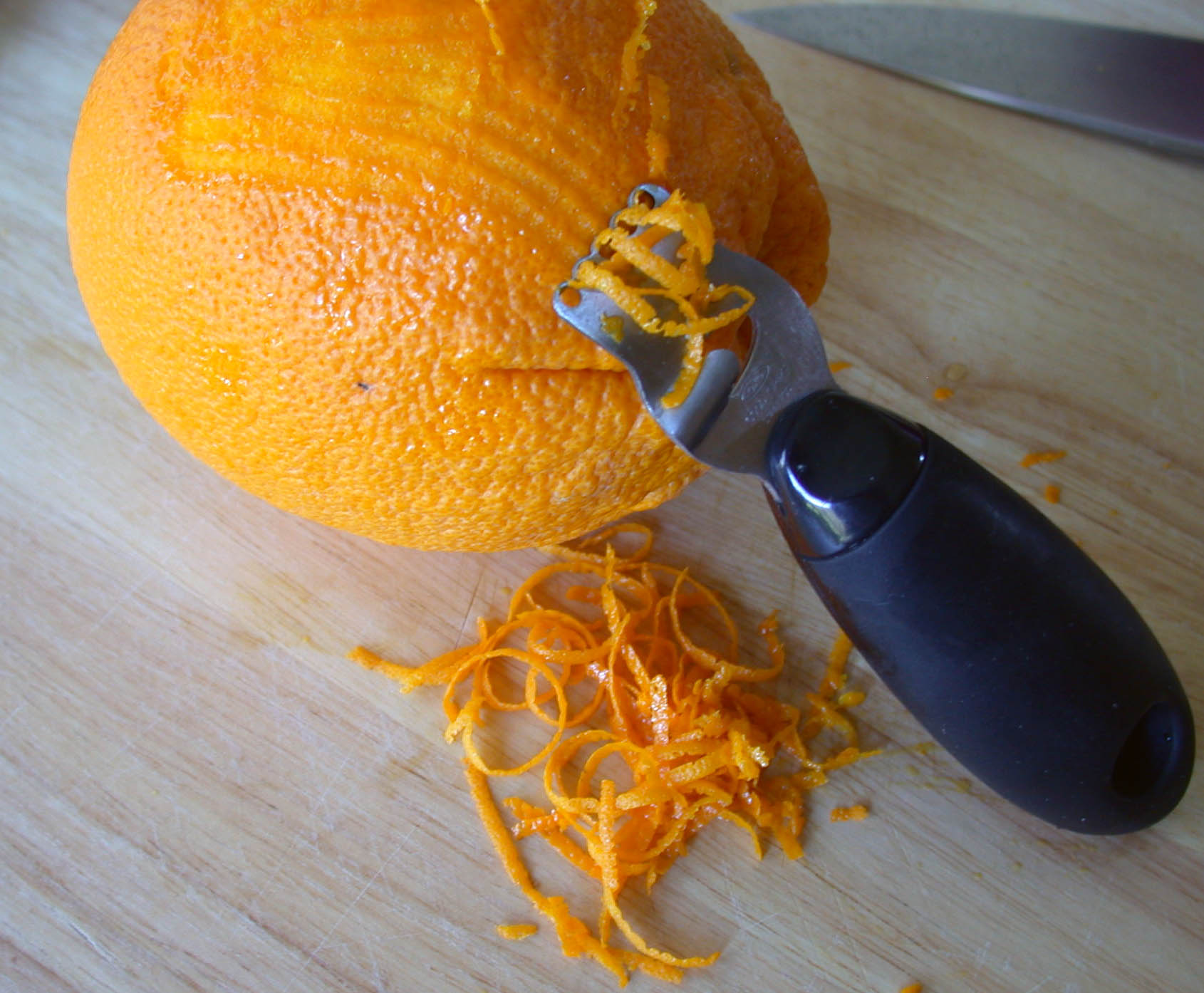
A zester zests an orange.
A Microplane grater / zester in use

A zester (also citrus zester or lemon zester) is a kitchen utensil for obtaining zest from lemons and other citrus fruit. A kitchen zester is approximately four inches (100 mm) long, with a handle and a curved metal end, the top of which is perforated with a row of round holes with sharpened rims. To operate, the zester is pressed with moderate force against the fruit and drawn across its peel. The rims cut the zest from the pith underneath. The zest is cut into ribbons, one drawn through each hole.[1]

Other tools are also sometimes called zesters because they too are able to separate the zest from a citrus fruit. For example, when Microplane discovered that its surform type wood rasps had become popular as food graters and zesters, it adapted the woodworking tools and marketed them as "zester / graters".[2]

See also

[edit]

References

[edit]
[edit]
Revisions and contributorsEdit on WikipediaRead on Wikipedia
from Grokipedia
A zester is a specialized kitchen utensil designed to extract the zest—the flavorful, aromatic outer layer of citrus fruit peels, such as those from lemons, limes, oranges, and grapefruits—while avoiding the bitter white pith underneath.[1] Typically featuring sharp blades or teeth, it produces fine shreds, strands, or gratings that enhance dishes with bright, essential oil-rich flavors without adding excess moisture or bitterness.[2] The concept of zesting dates back centuries in culinary traditions, where basic tools like knives or coarse graters were used to scrape citrus peels for flavoring in European, Mediterranean, and Asian cuisines.[3] However, the modern zester evolved significantly in the late 20th century, with the rasp-style version invented in 1990 by brothers Richard and Jeff Grace at their Grace Manufacturing Inc. facility in Russellville, Arkansas, initially as a woodworking rasp with photo-etched stainless steel teeth for precision filing.[4] In 1994, a Canadian homemaker serendipitously tested the tool on an orange while preparing a cake, discovering its superior grating performance over traditional dull graters, which prompted its pivot to kitchen applications and the founding of the Microplane brand.[4] This innovation revolutionized zesting by producing light, fluffy results that measure differently in recipes compared to coarser methods, quickly becoming a staple in professional and home kitchens worldwide.[5] Zesters come in several types to suit different textures and tasks: the classic zester, a handheld tool with a row of small holes or slits on a curved metal end for creating long, thin strands ideal for garnishes; the channel zester (or knife), featuring a V-shaped blade that carves continuous curls or twists from the peel for decorative purposes; and the rasp-style or Microplane grater, a flat, elongated blade with fine, razor-sharp teeth for producing powdery zest or mincing ingredients like garlic and ginger.[1] Beyond citrus, zesters are versatile for grating hard cheeses like Parmesan, shaving chocolate, nutmeg, or even fresh horseradish, offering efficiency and control that traditional box graters often lack.[2] High-quality models, often made from surgical-grade stainless steel, are prized for their durability, ease of cleaning, and ergonomic handles, though care must be taken to store them safely to protect the delicate edges.[4]

History

Origins and Early Development

The use of citrus zest in European cuisine dates back centuries, with citrus peels valued for their aromatic oils and employed in flavoring dishes, particularly in Italian and broader Mediterranean recipes, where the rind was manually scraped using knives to extract fine shavings for pastries, sauces, and preserves. This practice reflected the gradual integration of citrus into elite European diets, as lemons transitioned from exotic imports to more accessible ingredients in wealthier households. By the 18th century, grating tools adapted from earlier cheese graters became common for preparing citrus peels, as evidenced in British cookbooks like Susanna MacIver's Cookery and Pastry (1773), which instructed cooks to grate lemon rinds for puddings and cheesecakes.[6] These rudimentary graters, often made of perforated metal sheets, allowed for finer texture than knives alone, enhancing the infusion of zest's essential oils into recipes such as lemon curd and marmalades.[7] The expansion of citrus trade routes during the 18th and 19th centuries, with imports arriving via ports like Leith in Scotland, increased the availability of oranges and lemons, making zest preparation a staple in both home and professional kitchens across Europe.[6] Tin graters emerged in the early 1800s, marking a shift toward more durable and precise tools for zesting, as described in historical accounts of kitchen utensils.[7] By the mid-19th century, Victorian-era cookbooks frequently called for these grating tools in lemon curd preparations, where the rind was finely scraped to avoid the bitter pith while capturing the fruit's vibrant flavor. This development paralleled the growing popularity of citrus in British cuisine, driven by colonial trade, and laid the groundwork for specialized zesting implements in everyday use.[6]

Modern Innovations

The Microplane rasp, a pivotal modern innovation in zesting tools, was invented in 1990 by brothers Richard and Jeff Grace at their company, Grace Manufacturing Inc., in Russellville, Arkansas, initially as a woodworking tool featuring photo-etched stainless steel blades for precise material removal.[8] This etching process, patented under US Patent 5,100,506 in 1992, allowed for razor-sharp teeth that produced fine shavings without tearing, marking a significant advancement in blade technology originally intended for industrial applications like printer parts and woodworking.[9] The tool's transition to culinary use occurred serendipitously in 1994, when a Canadian housewife, frustrated with her traditional grater's performance while preparing an orange cake, borrowed her husband's Microplane woodworking rasp and discovered it produced perfect, fluffy shreds of citrus peel.[10] She contacted the Graces to suggest marketing it for kitchen purposes, prompting the company to adapt the design for food preparation, including zesting, grating cheese, and ginger; commercialization followed in the late 1990s, boosted by a New York Times article and celebrity interest.[11] The Microplane's impact was profound, earning rapid adoption among professional chefs in the late 1990s and early 2000s for its precision in tasks like zesting citrus and grating hard ingredients, with endorsements from figures such as Julia Child and Martha Stewart accelerating its popularity.[11] By the early 2000s, the brand had expanded globally, with Grace Manufacturing reporting over $20 million in annual sales by 2011—65% from culinary tools—and distribution in major retailers worldwide, solidifying the rasp-style zester as an essential kitchen implement.[8] Prior to the Microplane, zesting practices in Asian cuisines had long employed basic tools like knives for scraping citrus peels, contributing to global culinary traditions that influenced later European developments.[3]

Design and Types

Traditional Zesters

Traditional zesters are handheld kitchen tools engineered to extract thin strips of citrus zest through a scraping mechanism. The basic components include an ergonomic handle, typically constructed from wood or plastic for comfortable grip, connected to a slender metal shaft. At the working end of the shaft lies a specialized head featuring a row of small, rounded holes or slits, which function as cutting edges to shave off the peel in controlled passes.[12][13] The core functionality of these zesters revolves around precisely removing the flavedo—the vibrant, oil-rich outer layer of citrus fruits—while minimizing contact with the underlying white pith, which imparts bitterness. The shallow depth of the holes or slits ensures that only the surface peel is captured, producing fine, thin threads or strips of zest without deeper penetration. This design yields outputs suitable for decorative or flavor-enhancing applications.[14][15] Variations in traditional zesters cater to specific uses, with bar zesters featuring elongated shafts for precision work in cocktails, exemplified by the channel knife style that carves wider, continuous peels for twists. Shorter-handled versions, by comparison, are compact and versatile for everyday home cooking tasks.[16] Primarily, these tools employ stainless steel for the shaft and cutting head, offering sharpness, durability, and resistance to rust, paired with handles that enhance user control. In contrast to rasp-style zesters, which generate a finer, more powdery texture, traditional models focus on structured strips.[12][13]

Rasp-Style Zesters

Rasp-style zesters feature a flat or slightly curved stainless steel blade etched with hundreds of razor-sharp teeth, produced through a proprietary photo-etching process that creates precise, durable cutting edges originally adapted from woodworking tools.[17] The blade, typically 8 to 12 inches long and 1 to 1.5 inches wide, is mounted perpendicular to an ergonomic handle made of plastic or rubber for secure grip, even when wet, allowing for controlled rasping over ingredients.[2] This design enables fine, uniform shaving without tearing, distinguishing it from coarser grating methods. In operation, the tool employs a back-and-forth rasping motion across the surface of citrus peels, hard cheeses, or spices, yielding a fluffy, powder-like texture that integrates seamlessly into dishes.[4] It excels with tough ingredients such as nutmeg or ginger, where the sharp, low-angle teeth slice cleanly rather than crushing, producing more efficient results with less effort compared to traditional box graters.[18] The photo-etched teeth minimize clogging by allowing particles to fall away easily, enhancing usability for prolonged tasks.[17] Leading brands incorporate specialized enhancements for performance and safety. Microplane, the originator of the kitchen-adapted rasp, uses photo-etched blades with optimized tooth geometry to reduce residue buildup and maintain sharpness over time.[19] Other manufacturers, such as OXO, offer models with snap-on covers to shield the blade when stored, preventing accidental cuts while preserving the edges.[20] The evolution of rasp-style zesters traces back to single-sided coarse wood rasps in the 1990s, which were repurposed for culinary precision after early adaptations highlighted their zesting potential.[4] Modern iterations have expanded to multi-sided versions, integrating fine, medium, and ultra-fine grating surfaces on a single tool or in sets, accommodating diverse textures from delicate citrus zest to coarser shreds.[21]

Culinary Uses

Zesting Techniques

Proper preparation is essential for effective zesting. Begin by washing the citrus fruit thoroughly under cool running water to remove any surface dirt, wax, or pesticides, then pat it dry with a clean towel to ensure a secure grip. Hold the fruit firmly in your non-dominant hand to maintain stability while zesting, positioning it over a bowl or cutting board to catch the falling zest pieces. Technique variations depend on the type of zester used. With traditional channel zesters, which produce long, thin strips, gently scrape the tool along the fruit's surface from top to bottom in one smooth direction, rotating the fruit as needed for even coverage and to create uniform curls suitable for garnishes. For rasp-style zesters, such as Microplanes, employ short, light back-and-forth strokes or glide the grater across the stationary fruit held upside down, applying moderate pressure to finely grate the zest while targeting only the outer colored layer. In both cases, maintain an angle of about 45 to 90 degrees between the tool and fruit surface to penetrate just the flavedo without reaching the underlying white pith. Common pitfalls include inadvertently zesting into the bitter white pith, known as albedo, which imparts an unpleasant taste; to avoid this, use controlled light pressure and visually monitor progress by turning the fruit frequently. Zesting over a bowl helps collect the fine pieces efficiently and prevents loss, while a twisting motion with channel zesters can yield decorative spirals for garnishes. Practice with firmer pressure initially to get a feel for the tool, but adjust to lighter strokes for precision. A medium lemon typically yields about 1 tablespoon of finely grated zest, providing sufficient flavor for most recipes without excessive effort. Rasp-style zesters generally allow for quicker extraction compared to traditional models, enabling complete zesting of one fruit in under a minute when using efficient techniques like the upside-down method.

Applications in Recipes and Beverages

Citrus zest plays a key role in baking by infusing cakes, cookies, and custards with aromatic essential oils that enhance flavor without adding moisture. In lemon shortbread, for instance, the zest releases bright citrus notes during mixing and baking, contributing to a fragrant, tender crumb.[22] In savory applications, zest brightens oils, dressings, and marinades, adding complexity to dishes without overpowering other ingredients. Orange zest is particularly effective in fish glazes, where it provides a subtle sweetness and acidity that cuts through richness. It also elevates salads and vegetable sides when stirred into vinaigrettes, imparting freshness to greens or roasted produce.[23][24] Zest enhances beverages through garnishes and infusions, delivering concentrated aromas to cocktails, teas, and syrups. In modern mixology, lime or lemon twists—expressed over drinks like martinis or sours—release essential oils for a perfumed finish, a practice rooted in 19th-century punch recipes using oleo-saccharum from citrus peels. Historically, zest appeared in lemonade preparations, such as 17th- to 19th-century European variants where grated peels added depth to sugar-water mixtures. Zest infuses syrups for iced teas and liqueurs, notably in Italian limoncello, where lemon peels steep in vodka to extract pure citrus essence before sweetening.[25][26][27] The nutritional value of zest stems from its essential oils, such as limonene and citral, which impart potent flavor and aroma without the fruit's inherent acidity, allowing versatile use in low-acid recipes. Limonene, comprising up to 98% of some peel oils, offers antioxidant and anti-inflammatory effects, while citral contributes lemon-like notes with antimicrobial properties. These compounds feature in global cuisines, including Italian limoncello infusions and Middle Eastern spice blends like za'atar variants enhanced with dried orange or lemon zest for tangy, herbaceous profiles.[28][29][30]

Care and Maintenance

Cleaning and Hygiene

After using a zester, immediate cleaning is essential to remove food particles and oils, preserving the tool's sharpness and preventing residue buildup. Rinse the zester under hot running water with mild dish soap to dislodge zest or gratings from the blades or holes; for thorough cleaning, use a soft-bristled brush to gently scrub the surfaces without applying excessive pressure that could dull the edges.[31][32] Models with wooden handles should always be hand-washed and air-dried to avoid warping or cracking caused by the high heat and moisture in dishwashers.[33] For deeper cleaning, particularly to address stubborn citrus oils or dried particles on rasp-style zesters, tap the tool gently against a cutting board to loosen debris, then soak it briefly in hot soapy water before scrubbing with a non-abrasive sponge along the blade direction.[31][34] Stainless steel zesters resist rust but must be thoroughly dried with a clean towel after washing to inhibit moisture-related corrosion.[35] Plastic-handled varieties are typically dishwasher-safe on the top rack, allowing for convenient sanitization without hand-washing.[36] To maintain hygiene and prevent bacterial growth, follow FDA guidelines for food-contact surfaces by cleaning utensils to sight and touch standards, with sanitization using a solution of one teaspoon unscented liquid chlorine bleach per quart of water if cross-contamination risks are present.[37] In professional kitchens, zesters and similar tools should be cleaned and sanitized at least every 24 hours or after each use, depending on frequency of handling raw ingredients.[38] Proper post-use drying also aids in sharpness preservation, complementing storage practices.

Storage and Safety Considerations

Proper storage of zesters is essential to protect the sharp blades from damage and maintain their functionality over time. Many modern zesters, such as those from Microplane, include a protective cover or sheath that should be placed over the blades when not in use to prevent accidental contact and dulling from other utensils.[36] Storing the tool in a drawer divider or dedicated compartment helps organize the kitchen while keeping the blades shielded, and some designs feature a hole in the handle for hanging to promote air circulation and drying after use.[39] Avoiding humid environments, such as near sinks or in damp cabinets, minimizes the risk of corrosion or blade degradation, thereby extending the tool's lifespan.[36] Safety considerations for zesters focus on mitigating the risks posed by their razor-sharp teeth, which can cause significant cuts if mishandled. Contemporary designs incorporate safety features like covered rasp edges and reusable blade guards, as seen in Microplane's Premium Classic Series, which provide a barrier during storage and reduce injury potential when retrieving the tool.[40] The recommended grating technique—holding the food against the blades while keeping fingers away—further enhances safe use. In professional and home settings, improper grip during zesting contributes to minor lacerations, with U.S. Bureau of Labor Statistics data indicating over 8,000 cases of cuts from sharp kitchen tools in full-service restaurants alone in 2019, underscoring the need for cautious handling.[41] To promote longevity, zesters benefit from targeted maintenance practices beyond routine cleaning, such as rinsing residue immediately after use to prepare for storage. For rasp-style zesters like Microplane models, which feature photo-etched stainless steel blades, the blades cannot be sharpened; instead, users should monitor performance and replace the tool when dull blades produce uneven results rather than fine shavings.[42] Ergonomic, non-slip handles in many designs help reduce hand strain during extended sessions, contributing to safer and more comfortable prolonged use.[1]

References

User Avatar
No comments yet.