Hubbry Logo
Beta sheetBeta sheetMain
Open search
Beta sheet
Community hub
Beta sheet
logo
8 pages, 0 posts
0 subscribers
Be the first to start a discussion here.
Beta sheet
Beta sheet
from Wikipedia
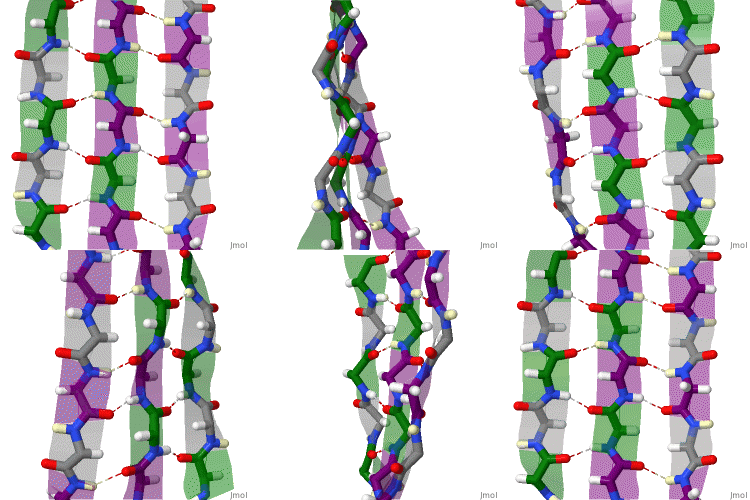
Three-dimensional structure[1] of parts of a beta sheet in green fluorescent protein
Protein secondary structureBeta sheetAlpha helix
The image above contains clickable links
Interactive diagram of hydrogen bonds in protein secondary structure. Cartoon above, atoms below with nitrogen in blue, oxygen in red (PDB: 1AXC​​)

The beta sheet (β-sheet, also β-pleated sheet) is a common motif of the regular protein secondary structure. Beta sheets consist of beta strands (β-strands) connected laterally by at least two or three backbone hydrogen bonds, forming a generally twisted, pleated sheet. A β-strand is a stretch of polypeptide chain typically 3 to 10 amino acids long with backbone in an extended conformation. The supramolecular association of β-sheets has been implicated in the formation of the fibrils and protein aggregates observed in amyloidosis, Alzheimer's disease and other proteinopathies.

History

[edit]
An example of a 4-stranded antiparallel β-sheet fragment from a crystal structure of the enzyme catalase (PDB file 1GWE at 0.88 Å resolution). a) Front view, showing the antiparallel hydrogen bonds (dotted) between peptide NH and CO groups on adjacent strands. Arrows indicate chain direction, and electron density contours outline the non-hydrogen atoms. Oxygen atoms are red balls, nitrogen atoms are blue, and hydrogen atoms are omitted for simplicity; sidechains are shown only out to the first sidechain carbon atom (green). b) Edge-on view of the central two β-strands in a, showing the righthanded twist and the pleat of Cαs and sidechains that alternately stick out in opposite directions from the sheet.

The first β-sheet structure was proposed by William Astbury in the 1930s. He proposed the idea of hydrogen bonding between the peptide bonds of parallel or antiparallel extended β-strands. However, Astbury did not have the necessary data on the bond geometry of the amino acids in order to build accurate models, especially since he did not then know that the peptide bond was planar. A refined version was proposed by Linus Pauling and Robert Corey in 1951. Their model incorporated the planarity of the peptide bond which they previously explained as resulting from keto-enol tautomerization.

Structure and orientation

[edit]

Geometry

[edit]

The majority of β-strands are arranged adjacent to other strands and form an extensive hydrogen bond network with their neighbors in which the N−H groups in the backbone of one strand establish hydrogen bonds with the C=O groups in the backbone of the adjacent strands. In the fully extended β-strand, successive side chains point straight up and straight down in an alternating pattern. Adjacent β-strands in a β-sheet are aligned so that their Cα atoms are adjacent and their side chains point in the same direction. The "pleated" appearance of β-strands arises from tetrahedral chemical bonding at the Cα atom; for example, if a side chain points straight up, then the bonds to the C′ must point slightly downwards, since its bond angle is approximately 109.5°. The pleating causes the distance between Cα
i
and Cα
i + 2
to be approximately 6 Å (0.60 nm), rather than the 7.6 Å (0.76 nm) expected from two fully extended trans peptides. The "sideways" distance between adjacent Cα atoms in hydrogen-bonded β-strands is roughly 5 Å (0.50 nm).

Ramachandran (φψ) plot of about 100,000 high-resolution data points, showing the broad, favorable region around the conformation typical for β-sheet amino acid residues.

However, β-strands are rarely perfectly extended; rather, they exhibit a twist. The energetically preferred dihedral angles near (φψ) = (–135°, 135°) (broadly, the upper left region of the Ramachandran plot) diverge significantly from the fully extended conformation (φψ) = (–180°, 180°).[2] The twist is often associated with alternating fluctuations in the dihedral angles to prevent the individual β-strands in a larger sheet from splaying apart. A good example of a strongly twisted β-hairpin can be seen in the protein BPTI.

The side chains point outwards from the folds of the pleats, roughly perpendicularly to the plane of the sheet; successive amino acid residues point outwards on alternating faces of the sheet.

Hydrogen bonding patterns

[edit]
Antiparallel β-sheet hydrogen bonding patterns, represented by dotted lines. Oxygen atoms are colored red and nitrogen atoms colored blue.
Parallel β-sheet hydrogen bonding patterns, represented by dotted lines. Oxygen atoms are colored red and nitrogen atoms colored blue.

Because peptide chains have a directionality conferred by their N-terminus and C-terminus, β-strands too can be said to be directional. They are usually represented in protein topology diagrams by an arrow pointing toward the C-terminus. Adjacent β-strands can form hydrogen bonds in antiparallel, parallel, or mixed arrangements.

In an antiparallel arrangement, the successive β-strands alternate directions so that the N-terminus of one strand is adjacent to the C-terminus of the next. This is the arrangement that produces the strongest inter-strand stability because it allows the inter-strand hydrogen bonds between carbonyls and amines to be planar, which is their preferred orientation. The peptide backbone dihedral angles (φψ) are about (–140°, 135°) in antiparallel sheets. In this case, if two atoms Cα
i
and Cα
j
are adjacent in two hydrogen-bonded β-strands, then they form two mutual backbone hydrogen bonds to each other's flanking peptide groups; this is known as a close pair of hydrogen bonds.

In a parallel arrangement, all of the N-termini of successive strands are oriented in the same direction; this orientation may be slightly less stable because it introduces nonplanarity in the inter-strand hydrogen bonding pattern. The dihedral angles (φψ) are about (–120°, 115°) in parallel sheets. It is rare to find less than five interacting parallel strands in a motif, suggesting that a smaller number of strands may be unstable, however it is also fundamentally more difficult for parallel β-sheets to form because strands with N and C termini aligned necessarily must be very distant in sequence [citation needed]. There is also evidence that parallel β-sheet may be more stable since small amyloidogenic sequences appear to generally aggregate into β-sheet fibrils composed of primarily parallel β-sheet strands, where one would expect anti-parallel fibrils if anti-parallel were more stable.

In parallel β-sheet structure, if two atoms Cα
i
and Cα
j
are adjacent in two hydrogen-bonded β-strands, then they do not hydrogen bond to each other; rather, one residue forms hydrogen bonds to the residues that flank the other (but not vice versa). For example, residue i may form hydrogen bonds to residues j − 1 and j + 1; this is known as a wide pair of hydrogen bonds. By contrast, residue j may hydrogen-bond to different residues altogether, or to none at all.

The hydrogen bond arrangement in parallel beta sheet resembles that in an amide ring motif with 11 atoms.

Finally, an individual strand may exhibit a mixed bonding pattern, with a parallel strand on one side and an antiparallel strand on the other. Such arrangements are less common than a random distribution of orientations would suggest, suggesting that this pattern is less stable than the anti-parallel arrangement, however bioinformatic analysis always struggles with extracting structural thermodynamics since there are always numerous other structural features present in whole proteins. Also proteins are inherently constrained by folding kinetics as well as folding thermodynamics, so one must always be careful in concluding stability from bioinformatic analysis.

The hydrogen bonding of β-strands need not be perfect, but can exhibit localized disruptions known as β-bulges.

The hydrogen bonds lie roughly in the plane of the sheet, with the peptide carbonyl groups pointing in alternating directions with successive residues; for comparison, successive carbonyls point in the same direction in the alpha helix.

Amino acid propensities

[edit]

Large aromatic residues (tyrosine, phenylalanine, tryptophan) and β-branched amino acids (threonine, valine, isoleucine) are favored to be found in β-strands in the middle of β-sheets. Different types of residues (such as proline) are likely to be found in the edge strands in β-sheets, presumably to avoid the "edge-to-edge" association between proteins that might lead to aggregation and amyloid formation.[3]

Common structural motifs

[edit]
The β-hairpin motif
The Greek-key motif

β-hairpin motif

[edit]

A very simple structural motif involving β-strands is the β-hairpin, in which two antiparallel strands are linked by a short loop of two to five residues, of which one is frequently a glycine or a proline, both of which can assume the dihedral-angle conformations required for a tight turn or a β-bulge loop. Individual strands can also be linked in more elaborate ways with longer loops that may contain α-helices.

Greek key motif

[edit]

The Greek key motif consists of four adjacent antiparallel strands and their linking loops. It consists of three antiparallel strands connected by hairpins, while the fourth is adjacent to the first and linked to the third by a longer loop. This type of structure forms easily during the protein folding process.[4][5] It was named after a pattern common to Greek ornamental artwork (see meander).

β-α-β motif

[edit]

Due to the chirality of their component amino acids, all strands exhibit right-handed twist evident in most higher-order β-sheet structures. In particular, the linking loop between two parallel strands almost always has a right-handed crossover chirality, which is strongly favored by the inherent twist of the sheet.[6] This linking loop frequently contains a helical region, in which case it is called a β-α-β motif. A closely related motif called a β-α-β-α motif forms the basic component of the most commonly observed protein tertiary structure, the TIM barrel.

The β-meander motif from Outer surface protein A (OspA).[7] The image above shows a variant of OspA (OspA+3bh) that contains a central, extended β-meander β-sheet featuring three additional copies (in red) of the core OspA β-hairpin (in grey) that have been duplicated and reinserted into the parent OspA β-sheet.
Psi-loop motif from Carboxypeptidase A

β-meander motif

[edit]

A simple supersecondary protein topology composed of two or more consecutive antiparallel β-strands linked together by hairpin loops.[8][9] This motif is common in β-sheets and can be found in several structural architectures including β-barrels and β-propellers.

The vast majority of β-meander regions in proteins are found packed against other motifs or sections of the polypeptide chain, forming portions of the hydrophobic core that canonically drives formation of the folded structure.[10]  However, several notable exceptions include the Outer Surface Protein A (OspA) variants[7] and the Single Layer β-sheet Proteins (SLBPs)[11] which contain single-layer β-sheets in the absence of a traditional hydrophobic core.  These β-rich proteins feature an extended single-layer β-meander β-sheets that are primarily stabilized via inter-β-strand interactions and hydrophobic interactions present in the turn regions connecting individual strands.

Psi-loop motif

[edit]

The psi-loop (Ψ-loop) motif consists of two antiparallel strands with one strand in between that is connected to both by hydrogen bonds.[12] There are four possible strand topologies for single Ψ-loops.[13] This motif is rare as the process resulting in its formation seems unlikely to occur during protein folding. The Ψ-loop was first identified in the aspartic protease family.[13]

Structural architectures of proteins with β-sheets

[edit]

β-sheets are present in all-β, α+β and α/β domains, and in many peptides or small proteins with poorly defined overall architecture.[14][15] All-β domains may form β-barrels, β-sandwiches, β-prisms, β-propellers, and β-helices.

Structural topology

[edit]

The topology of a β-sheet describes the order of hydrogen-bonded β-strands along the backbone. For example, the flavodoxin fold has a five-stranded, parallel β-sheet with topology 21345; thus, the edge strands are β-strand 2 and β-strand 5 along the backbone. Spelled out explicitly, β-strand 2 is H-bonded to β-strand 1, which is H-bonded to β-strand 3, which is H-bonded to β-strand 4, which is H-bonded to β-strand 5, the other edge strand. In the same system, the Greek key motif described above has a 4123 topology. The secondary structure of a β-sheet can be described roughly by giving the number of strands, their topology, and whether their hydrogen bonds are parallel or antiparallel.

β-sheets can be open, meaning that they have two edge strands (as in the flavodoxin fold or the immunoglobulin fold) or they can be closed β-barrels (such as the TIM barrel). β-Barrels are often described by their stagger or shear. Some open β-sheets are very curved and fold over on themselves (as in the SH3 domain) or form horseshoe shapes (as in the ribonuclease inhibitor). Open β-sheets can assemble face-to-face (such as the β-propeller domain or immunoglobulin fold) or edge-to-edge, forming one big β-sheet.

Dynamic features

[edit]

β-pleated sheet structures are made from extended β-strand polypeptide chains, with strands linked to their neighbours by hydrogen bonds. Due to this extended backbone conformation, β-sheets resist stretching. β-sheets in proteins may carry out low-frequency accordion-like motion as observed by the Raman spectroscopy[16] and analyzed with the quasi-continuum model.[17]

Parallel β-helices

[edit]
End-view of a 3-sided, left handed β-helix (PDB: 1QRE​)

A β-helix is formed from repeating structural units consisting of two or three short β-strands linked by short loops. These units "stack" atop one another in a helical fashion so that successive repetitions of the same strand hydrogen-bond with each other in a parallel orientation. See the β-helix article for further information.

In lefthanded β-helices, the strands themselves are quite straight and untwisted; the resulting helical surfaces are nearly flat, forming a regular triangular prism shape, as shown for the 1QRE archaeal carbonic anhydrase at right. Other examples are the lipid A synthesis enzyme LpxA and insect antifreeze proteins with a regular array of Thr sidechains on one face that mimic the structure of ice.[18]

End-view of a 3-sided, right-handed β-helix (PDB: 2PEC​)

Righthanded β-helices, typified by the pectate lyase enzyme shown at left or P22 phage tailspike protein, have a less regular cross-section, longer and indented on one of the sides; of the three linker loops, one is consistently just two residues long and the others are variable, often elaborated to form a binding or active site.[19]
A two-sided β-helix (right-handed) is found in some bacterial metalloproteases; its two loops are each six residues long and bind stabilizing calcium ions to maintain the integrity of the structure, using the backbone and the Asp side chain oxygens of a GGXGXD sequence motif.[20] This fold is called a β-roll in the SCOP classification.

In pathology

[edit]

Some proteins that are disordered or helical as monomers, such as amyloid β (see amyloid plaque) can form β-sheet-rich oligomeric structures associated with pathological states. The amyloid β protein's oligomeric form is implicated as a cause of Alzheimer's. Its structure has yet to be determined in full, but recent data suggest that it may resemble an unusual two-strand β-helix.[21]

The side chains from the amino acid residues found in a β-sheet structure may also be arranged such that many of the adjacent sidechains on one side of the sheet are hydrophobic, while many of those adjacent to each other on the alternate side of the sheet are polar or charged (hydrophilic),[22] which can be useful if the sheet is to form a boundary between polar/watery and nonpolar/greasy environments.

See also

[edit]

References

[edit]

Further reading

[edit]
[edit]
Revisions and contributorsEdit on WikipediaRead on Wikipedia
from Grokipedia
A beta sheet (also known as a β-sheet or β-pleated sheet) is a common secondary structure motif in proteins, formed by two or more beta strands—extended segments of the polypeptide chain—arranged adjacent to each other and stabilized by bonds between the backbone carbonyl oxygen (C=O) of one strand and the (N-H) of another, creating a rigid, pleated, sheet-like conformation that often exhibits a slight twist. This structure allows for maximal bonding along the backbone, contributing to the overall stability of the protein fold. The beta sheet was first proposed in 1951 by and Robert Corey as a new layer configuration of polypeptide chains, termed the "pleated sheet," based on model-building using known bond lengths and angles, which revealed it as a favorable arrangement due to its ability to satisfy hydrogen-bonding potential without strain. This discovery followed closely on their proposal of the and was inspired by diffraction patterns from fibrous proteins like silk fibroin, where beta sheets were later confirmed as the dominant structure. Early observations of beta-sheet-like patterns date back to by William Astbury, but Pauling and Corey's model provided the precise atomic details, including the pleated appearance arising from the zigzag orientation of side chains. Beta sheets can adopt two main topologies: antiparallel, where adjacent strands run in opposite N-to-C terminal directions, forming a more stable network of hydrogen bonds; and parallel, where strands align in the same direction, often requiring additional stabilizing elements like loops or helices. In both cases, the sheets are typically twisted due to the of L-amino acids, and edge strands often feature hydrophilic residues to prevent unwanted aggregation. These structures are ubiquitous in protein architectures, comprising up to 30% of residues in globular proteins and forming the core of beta barrels or sandwiches in domains like immunoglobulins and enzymes. Beyond structural roles, beta sheets are implicated in diseases involving misfolding, such as amyloid in Alzheimer's, where cross-beta structures aggregate into insoluble plaques, highlighting their potential for both stability and pathology. In natural proteins like silk fibroin, extensive beta sheets provide tensile strength, demonstrating their functional versatility across biological systems.

Fundamentals

Definition and Basic Structure

A beta sheet is a common secondary structure element in proteins, consisting of two or more beta strands aligned laterally to form an extended, sheet-like stabilized primarily by bonds between the carbonyl oxygen and atoms of the polypeptide backbone in adjacent strands. These bonds occur between strands rather than within a single strand, distinguishing beta sheets from other secondary structures. Beta strands themselves are stretches of polypeptide chain in an extended conformation, adopting a pattern that maximizes the distance between consecutive alpha carbons, with characteristic backbone dihedral angles of (φ) ≈ -139° and psi (ψ) ≈ +135°. Typically comprising 2 to 10 such strands, the resulting beta sheet has its backbone atoms roughly coplanar, while the side chains of the residues project alternately above and below this plane, contributing to the structure's overall stability and accessibility. The characteristic "pleated" appearance of the beta sheet arises from the non-coplanar arrangement of the units relative to the alpha carbon atoms, creating a corrugated surface rather than a perfectly flat plane. In contrast to the , where hydrogen bonds form within the same polypeptide chain to stabilize a coiled structure, the beta sheet's inter-strand bonding pattern allows for a more linear, layered organization that facilitates diverse tertiary interactions in proteins.

Historical Development

The early investigations into protein structures in the relied heavily on techniques applied to fibrous proteins such as from and , and fibroin. William T. Astbury and his collaborators at the identified distinct diffraction patterns, termed "alpha" for unstretched and "beta" for stretched or native , suggesting that the beta form involved fully extended polypeptide chains aligned in a planar, configuration. These studies indicated residue repeat distances of approximately 3.5 in the beta pattern, contrasting with the 5.1 in alpha, and highlighted the potential for hydrogen bonding between chains in fibrous assemblies. Building on this, Kurt H. Meyer proposed in 1936 that silk fibroin consisted of long, extended polypeptide chains analogous to those in , based on data showing a highly oriented, crystalline structure with chains running parallel to the fiber axis. Meyer's model emphasized the role of repeating units like and in enabling such extended conformations, providing an early conceptual framework for beta-like structures in natural fibers. This work occurred in the pre-DNA era, when determination depended entirely on empirical of accessible fibrous materials like and silk, as globular proteins proved more challenging to crystallize. Throughout the 1930s and , debates persisted regarding whether protein backbones favored extended zigzag arrangements, as suggested by Astbury and Meyer, or more compact helical coils to accommodate observed arcs. These discussions were fueled by incomplete atomic resolution from data and varying interpretations of bond angles in polypeptide chains. The controversy was largely resolved in 1951 when and Robert B. Corey, using molecular model-building informed by constraints and stereochemical principles, proposed the beta pleated sheet as a stable secondary structure, featuring hydrogen-bonded, extended strands in a corrugated plane. Their seminal paper in the Proceedings of the detailed parallel and antiparallel sheet variants, accurately depicting the pleated conformation first observed in silk fibroin and stretched .

Structural Features

Geometry and Dimensions

The beta sheet is characterized by a highly extended polypeptide conformation where adjacent strands align laterally, forming a pleated structure stabilized by hydrogen bonds between backbone atoms. The inter-strand distance, measured between the axes of adjacent beta strands, is approximately 4.7 , allowing for optimal packing and hydrogen bonding in protein structures. This spacing arises from the of the extended chain and contributes to the overall rigidity of the sheet. Hydrogen bonds in beta sheets typically exhibit a donor-acceptor (N-O) distance of about 2.9 and an N-H···O of approximately 150° for near-optimal linearity, which maximizes bond strength and structural stability. Along the direction of each strand, the rise per residue is 3.2–3.4 , reflecting the nearly fully extended backbone conformation with phi () and psi (ψ) dihedral angles around -120° to -140° and +120° to +140°, respectively. The extension of individual strands can be quantified by the distance between consecutive Cα atoms, which is approximately 3.8 Å. This value is derived from the geometry of the peptide unit and the characteristic φ and ψ dihedral angles in the beta region of the : dCαCα3.8A˚d_{\text{C}\alpha-\text{C}\alpha} \approx 3.8 \, \text{Å} where the distance results from the bond lengths and angles in the trans peptide configuration combined with the extended torsion angles. Due to the L-chirality of , beta sheets exhibit an intrinsic twist of 5–10° per residue in the plane of the sheet, resulting in a right-handed for larger assemblies. This twist prevents edge splaying and enhances hydrophobic packing between strands. In isolated beta strands, such as those in short peptides, the geometry is less constrained, with greater variability in dihedral angles and inter-residue distances (up to 0.2–0.5 deviation) due to the absence of inter-strand bonds; in contrast, sheet-embedded strands maintain more uniform dimensions enforced by the network of bonds. bonds contribute to these fixed distances by aligning the backbones precisely.

Hydrogen Bonding and Orientation

In beta sheets, stability arises primarily from hydrogen bonds formed between the backbone carbonyl oxygen atoms (C=O) of one β-strand and the hydrogen atoms (N-H) of an adjacent strand. These inter-strand hydrogen bonds link the polypeptide chains laterally, creating a network that extends across the sheet without involving side chains in the core bonding pattern. Every residue in the β-strands contributes its backbone groups to this network, with the bonds forming a regular alternation along the strands. Antiparallel β-sheets feature adjacent strands running in opposite N-to-C terminal directions, resulting in a highly uniform, ladder-like pattern of bonds that align to the strand direction. This configuration allows for optimal linear geometry of the bonds, with the carbonyl oxygen of a residue on one strand pairing directly with the of the corresponding residue on the adjacent strand, leading to stronger and more uniform interactions compared to other orientations. The straight alignment enhances overall sheet stability through better alignment and closer packing efficiency. In contrast, parallel β-sheets consist of strands oriented in the same N-to-C direction, producing a more distorted, pattern of bonds that slant across the strands. Here, the bonds connect the carbonyl of residue i on one strand to the of residue i+1 or i-1 on the adjacent strand, resulting in slightly weaker interactions due to less optimal angles and greater distortion from ideality. This arises from the uniform directionality, which shifts the relative positioning of donor and acceptor groups. The orientation influences the effective width of individual strands within the sheet: antiparallel arrangements lead to a slightly widened strand profile due to the bond alignment, while parallel ones exhibit a narrowed profile from the slanted bonds. Antiparallel β-sheets predominate in smaller structures, such as two- or three-stranded ribbons, owing to their superior bonding uniformity, whereas larger sheets often incorporate mixed parallel and antiparallel strands to accommodate topological constraints.

Amino Acid Propensities

The formation of beta sheets is strongly influenced by the intrinsic propensities of to adopt the extended backbone conformations required for strand alignment and hydrogen bonding. These propensities arise from the interplay between side-chain sterics, hydrophobicity, and backbone flexibility, determining which residues favor incorporation into beta strands. Analyses of protein structures reveal that certain exhibit high preferences for beta-sheet environments due to their ability to pack efficiently without steric clashes, while others are disfavored because they disrupt the regular geometry. Residues with high beta-sheet propensities include (Val), (Ile), (Tyr), (Phe), and (Thr), primarily because their branched or aromatic side chains promote favorable van der Waals interactions and fit well within the tightly packed hydrophobic core of beta sheets. Beta-branched residues like Val, Ile, and Thr, in particular, minimize steric hindrance in the extended phi-psi angle space of beta strands, enhancing stability through side-chain interstrand contacts. Aromatic residues such as Tyr and Phe further contribute by forming edge-to-face interactions that reinforce sheet packing. These preferences are evident across diverse protein folds, where such residues occur in beta sheets more frequently than expected by chance. In contrast, (Pro) and (Gly) display low propensities for beta sheets, as Pro's rigid ring restricts the backbone to angles incompatible with extended strands, often introducing kinks, while Gly's minimal confers excessive flexibility, favoring turns or loops over rigid sheet structures. This leads to underrepresentation of these residues in beta-sheet regions, where they can destabilize hydrogen bonding patterns if present. Seminal empirical scales, such as the Chou-Fasman parameters derived from statistical analysis of known protein structures, quantify these tendencies; for example, Val has a beta-sheet propensity (Pβ) of 1.70, Ile 1.60, Tyr 1.47, Phe 1.38, and Thr 1.19, while Pro scores 0.55 and Gly 0.75 (values normalized relative to average occurrence). These parameters highlight how composition biases beta-sheet formation, with high-propensity residues nucleating strand extension. To accommodate sequence variations or insertions that mismatch the ideal two-residue repeat of beta strands, local distortions known as beta-bulges occur, where an extra residue on one strand pairs with a single residue on the adjacent strand, temporarily widening the sheet without fully breaking bonds. These bulges, classified into types like G1 or based on residue positions and conformations, allow proteins to incorporate low-propensity or residues while preserving overall sheet integrity. Beta-bulges subtly influence sheet geometry by introducing irregular twists, but their primary role is functional adaptation to evolutionary changes. Statistical surveys of protein databases, such as the , indicate that beta-sheet residues are enriched in hydrophobic , with over 50% classified as such (e.g., Val, Ile, Leu, Phe), reflecting the burial of nonpolar side chains in the protein interior to drive folding and stability. This hydrophobic dominance aligns with the amphipathic nature of beta strands, where alternating patterns expose polar groups to . These propensities exhibit conservation, as site-specific preferences in beta-sheet positions remain stable across protein homologs despite sequence divergence, ensuring structural fidelity through selective pressure on residue types that optimize packing and interactions. Studies on resurrected ancestral proteins confirm that beta-sheet-forming residues like Val and Ile retain high incorporation rates over millions of years, underscoring the ancient origins of these biases in protein .

Structural Motifs

β-Hairpin Motif

The β-hairpin represents the simplest within β-sheets, comprising two adjacent antiparallel β-strands connected by a short loop that reverses the polypeptide chain direction. This motif typically spans 10-16 residues in total, with each strand consisting of 3-5 extended residues and the connecting turn encompassing 2-5 residues. The turn commonly adopts a type I' or II' β-turn conformation, which facilitates the tight reversal necessary for the strands to align in an antiparallel fashion. The antiparallel orientation allows for a ladder-like pattern of cross-strand hydrogen bonds, where the carbonyl oxygen of one strand pairs with the hydrogen of the opposing strand, typically forming 4-8 such bonds depending on strand length. These motifs are prevalent in small peptides, where they can fold independently, as well as in the interiors of globular proteins, contributing to local structural stability. A well-characterized example is the 16-residue β-hairpin from residues 41-56 of the B1 domain of streptococcal protein G, which features two short strands linked by a type I' turn and exhibits native-like folding in isolation under certain conditions. Stability in such hairpins arises not only from the hydrogen bonding network but also from hydrophobic packing of side chains along the non-hydrogen-bonded edges of the strands, where interstrand interactions bury nonpolar residues away from . Variations in β-hairpin structure include classical forms with tight turns lacking irregularities and those containing β-bulges, where an extra residue disrupts the regular hydrogen bonding pattern, often accommodating sequence-specific features or enhancing flexibility. These bulges, such as G1 types, are common in natural proteins and can occur at the turn or strand regions, altering the overall geometry while preserving the core antiparallel alignment.

Greek Key Motif

The Greek key motif represents a prevalent in protein β-sheets, characterized by four antiparallel β-strands connected in the 1-2-4-3, where strands 1 and 2 are adjacent via a short loop, strands 3 and 4 are similarly connected by a short loop, and the crossover loop between strands 2 and 3 is longer, creating a distinctive crossing pattern that resembles the interlocking design on . This connectivity ensures that strands 1 and 4 are adjacent in space despite being distant in the primary , with all bonds forming antiparallel between the paired adjacent strands (1-4, 4-3, 3-2, and 2-1). The motif typically adopts an up-down-up-down orientation in the β-sheet, contributing to a compact, twisted barrel-like architecture with a right-handed shear that enhances stability through interstrand packing. This motif is particularly common in β-sandwich folds, where it serves as a building block for larger structures, as seen in the SH3 domains of signaling proteins, which incorporate two successive Greek key motifs to form an eight-stranded β-barrel stabilized by hydrophobic interactions between the sheets. In such architectures, the short loops (often 2-5 residues) between strands 1-2 and 3-4 allow tight turns, while the extended crossover loop (typically 10-20 residues) accommodates the spatial rearrangement without steric clashes. propensities favor hydrophobic residues in the core for tight packing, with polar residues often at the edges to prevent aggregation. Evolutionarily, the Greek key motif is widespread in globular proteins, appearing as the topological signature in over 50% of β-barrel and β-sandwich structures surveyed in structural databases, underscoring its role in efficient folding and functional diversity across diverse protein families. Its prevalence suggests selective pressure for this connectivity, which balances compactness with accessibility for binding in motifs like those in immunoglobulin domains.

β-α-β Motif

The β-α-β motif is a recurring in proteins, consisting of two parallel β-strands connected by an intervening right-handed α-helix that crosses over on one face of the emerging β-sheet. This arrangement allows the polypeptide chain to form a crossover connection between the strands, with the α-helix positioned to flank the sheet edge, facilitating the extension of parallel β-structures. The motif is characterized by short loops at the junctions: a tight turn between the first β-strand and the α-helix, often featuring a glycine-rich sequence such as Gly-X-Gly, and another loop linking the helix to the second β-strand. In this motif, hydrogen bonding occurs primarily between the parallel β-strands, forming inter-strand bonds that stabilize the sheet core, while the α-helix contributes to edge capping through its backbone and carbonyl groups interacting with the strand termini. The parallel orientation of the strands results in hydrogen bonds that are more uniformly spaced compared to antiparallel arrangements, with the helix providing additional stabilization by shielding one side of the sheet from solvent exposure. This bonding pattern supports the motif's role in building layered β-sheets without requiring tight turns typical of all-β connections. Topologically, the β-α-β motif promotes the growth of parallel β-sheets by enabling sequential addition of strands in the same direction, as seen in the Rossmann fold of dehydrogenases where multiple such units form a central β-sheet flanked by helices. In the Rossmann fold, the motif repeats to create a six-stranded parallel β-sheet with α-helices on both faces, exemplifying how these units propagate sheet in nucleotide-binding domains. The dihedral angles in the β-strands maintain an extended conformation with φ ≈ -120° and ψ ≈ +120°, while the α-helix adopts standard right-handed values of φ ≈ -60° and ψ ≈ -45°, ensuring compatibility with the crossover geometry. Functionally, the β-α-β motif plays a in coenzyme binding sites, particularly for dinucleotides like NAD and , where the first β-α-β unit contacts the ADP moiety and groups via conserved residues in the crossover loop. This positioning allows the motif to form a binding that accommodates the cofactor's extended conformation, enhancing enzymatic efficiency in redox reactions. The motif is highly prevalent in nucleotide-binding domains, appearing in over 10,000 structures in the as part of Rossmann-like folds, which represent one of the most ancient and diversified protein architectures. Its conservation across diverse enzymes underscores its evolutionary success in facilitating cofactor interactions essential for .

β-Meander Motif

The β-meander motif represents a fundamental in protein architecture, characterized by a series of consecutive antiparallel β-strands linked sequentially by tight loops, resulting in an up-and-down . This motif typically features two or more strands, often three or four in basic units (e.g., strands 1-2-3 or 1-2-3-4), where each pair of adjacent strands runs in opposite directions, connected by loops of 2-4 residues that adopt type I or type II β-turn conformations to reverse the chain direction. The connectivity follows a simple (+1, +1) pattern, indicating right-handed crossovers between successive strands, which allows the motif to extend linearly without crossing connections. Hydrogen bonding in the β-meander is uniform and antiparallel between consecutive strand pairs, with each backbone carbonyl oxygen of one strand forming bonds to the of the adjacent strand, stabilizing the pleated sheet conformation. These bonds occur in a ladder-like , typically involving at least two to three residues per strand pair, contributing to the motif's rigidity and planarity. Larger β-sheets can be built by tandem repetition of β-meander units, commonly resulting in even numbers of strands (e.g., 4, 6, or 8) that form open or semi-closed sheets. The motif's simplicity makes it prevalent in all-β class proteins, where it serves as a building block for more complex topologies. A prominent example of the β-meander motif occurs in the constant domains of immunoglobulins, such as the CH1 domain in heavy s, where sequential antiparallel strands form one of the two β-sheets in the immunoglobulin fold, connected by short loops that position the strands in an up-down-up-down arrangement. In these structures, the first and last strands often pack against each other via hydrophobic interactions, creating a core stabilized by side- van der Waals contacts and occasional additional hydrogen bonds from loop residues. This packing enhances the motif's stability in solvent-exposed environments, as seen in the variable domains of immunoglobulins like the OPG2 heavy . The β-meander's prevalence in such domains underscores its role in forming robust, modular β-sheets essential for protein-ligand interactions.

Ψ-Loop Motif

The Ψ-loop (Ψ-loop) motif consists of two antiparallel β-strands connected by a short loop of typically 2-4 residues, in which the loop forms hydrogen bonds to both adjacent strands, resulting in a conformation that resembles the Greek letter ψ. This motif was first systematically described in analyses of protein topologies, highlighting its role as a recurring irregularity in antiparallel β-strands. The hydrogen bonding in the Ψ-loop features an atypical arrangement where the loop residues form bonds to the backbone amides and carbonyls of the flanking strands, often involving three key interactions that stabilize the protruding loop. In classic Ψ-loops, the sequence often includes a glycine in a key position for conformational flexibility due to its lack of a β-carbon, with adjacent residues typically non-proline to avoid steric hindrance; variants occur with other small or polar residues. Functionally, the Ψ-loop enables the incorporation of polar or charged residues into hydrophobic β-sheet cores, facilitating interactions with or substrates. A prominent example is found in , a , where the Ψ-loop near the accommodates catalytic residues and contributes to substrate binding specificity. Geometrically, this motif causes a local widening of inter-strand spacing by approximately 1–2 Å compared to ideal β-sheets, altering the sheet's curvature and providing a protrusion suitable for functional roles. Although rare, comprising less than 1% of β-sheet irregularities in known structures, Ψ-loops are disproportionately important in enzyme active sites, where their rigidity from side-chain interactions and exposed main-chain groups support or cofactor binding, as observed across diverse protein families. Amino acid propensities for key residues in such motifs favor , consistent with patterns in other β-sheet distortions.

Architectures and Topology

Beta Sheet Architectures in Proteins

Beta sheets serve as the foundational structural elements in a variety of higher-order protein folds, organizing into domain-level architectures that provide stability and functional versatility. Approximately 20% of known protein domains feature beta sheets as their core scaffold, as classified in structural databases like . These architectures arise from the packing and twisting of multiple beta strands, often incorporating structural motifs such as beta-hairpins or Greek keys to form compact, robust structures essential for enzymatic activity, binding, and molecular recognition. One prevalent architecture is the beta sandwich, consisting of two twisted beta sheets packed face-to-face in an antiparallel manner, typically enclosing a hydrophobic core. This fold is exemplified by the immunoglobulin domain, where seven to nine strands form two sheets connected by loops, enabling antibody-antigen interactions. The sandwich geometry enhances stability through extensive inter-sheet hydrogen bonding and van der Waals contacts, making it common in extracellular proteins. Beta propellers represent another key arrangement, featuring a circular array of 4 to 8 beta sheets radiating outward like blades from a central axis, often stabilized by a closure of the first and last blades. domains illustrate this fold, with seven blades each comprising four antiparallel strands, facilitating protein-protein interactions in signaling pathways. The propeller's supports multivalent binding and rotational flexibility. In beta prisms, three beta sheets pack in a triangular prism-like configuration, with each sheet formed by four antiparallel strands, creating binding pockets for carbohydrates. such as jacalin adopt this fold, where the pseudo-threefold allows for multiple sites per subunit. Up-and-down beta barrels form closed cylindrical structures from alternating up and down beta strands, typically 8 to 22 in number, hydrogen-bonded in an antiparallel fashion to create a pore lined by hydrophilic residues. Porins in bacterial outer membranes exemplify this architecture, enabling passive of small molecules across membranes. Although primarily an fold, the TIM barrel highlights the role of beta sheets in hybrid architectures, where eight parallel beta strands form a central cylindrical sheet serving as the structural base, surrounded by alpha helices. This arrangement is ubiquitous in metabolic enzymes, underscoring the adaptability of beta sheets in forming stable cores. These diverse architectures demonstrate how beta sheets, often assembled from recurring motifs, underpin the structural diversity of protein domains.

Topological Arrangements

In beta sheet topology, strands are typically represented in schematic diagrams using arrows that indicate the direction from the to the , with connecting loops depicted as lines to illustrate chain connectivity and spatial relationships. These abstract representations, often employing , simplify the three-dimensional structure into a two-dimensional map where nodes correspond to secondary structure elements and edges denote connections via loops or turns. Such diagrams facilitate the analysis of strand orientations (parallel or antiparallel) and the overall connectivity patterns without detailing atomic coordinates. The handedness of beta sheets predominantly exhibits a right-handed twist when viewed along the polypeptide chain direction, a feature arising from the of L-amino acids that minimizes steric clashes and optimizes bonding geometry. This twist is nearly universal in natural proteins, with left-handed twists being rare and typically unstable, as confirmed by energy calculations showing lower free energy for right-handed conformations. The magnitude of this twist varies but is generally around 5–10 degrees per residue, contributing to the compact packing in globular proteins. Common topological arrangements include the Greek key and beta-meander motifs, which differ in their strand connectivity patterns. In the Greek key topology, four antiparallel strands are connected such that the second and third strands cross over the first and fourth, forming a motif resembling decorative patterns; this is exemplified in proteins like gamma-crystallin. In contrast, the beta-meander topology involves sequential connections between adjacent antiparallel strands without crossing, leading to a more linear progression, as seen in . Diagrams of these topologies highlight the distinct loop placements: Greek key loops often bridge non-adjacent strands, while meander loops connect neighboring ones directly. Mixed topologies combine parallel and antiparallel strand pairings, often featuring parallel edges surrounding an antiparallel core to balance stability and flexibility in larger sheets. This arrangement is common in about 20% of beta sheets, allowing for diverse fold architectures while maintaining integrity. For instance, in some domains, outer parallel connections flank a central antiparallel , enhancing the sheet's . Classification of these topological arrangements relies on databases like (Topology Of Protein Structures), which abstracts folds into string patterns based on strand directions and chiralities, and CATH (Class, Architecture, Topology, Homology), which hierarchically groups domains by connectivity at the level. patterns, for example, encode beta sheets as sequences of up/down arrows with loop indicators, enabling automated comparison across protein structures. Similarly, CATH's topology level distinguishes beta sheet variants by strand order and orientation, aiding in fold prediction and evolutionary analysis. The overall twist angle θ\theta in a beta sheet can be approximated using the relation θn×t\theta \approx n \times t, where nn is the number of residues along the strand and tt is the average twist per residue (typically 5–8 degrees for antiparallel sheets). This formula derives from the cumulative rotation induced by asymmetric dihedral angles in L-amino acid chains, with higher nn amplifying the observable in larger sheets. θn×t\theta \approx n \times t Such quantitative descriptions underscore how local conformational preferences propagate to global .

Dynamics and Stability

Conformational Dynamics

Beta sheets exhibit inherent conformational dynamics characterized by a progressive right-handed twist, arising from the of L-amino acids and steric interactions within the polypeptide backbone. This twist manifests as a systematic between adjacent β-strands, typically on the order of 20–30° per strand pair in antiparallel arrangements, leading to an overall curl that intensifies with increasing sheet size. In larger β-sheets comprising multiple strands, the cumulative twist can reach up to approximately 180°, contributing to the adoption of curved or barrel-like architectures while maintaining structural integrity. This dynamic twisting influences the relative orientation of strands and is evident in both isolated sheets and protein contexts, where it accommodates local geometric constraints without disrupting bonding networks. Edge fraying represents another key dynamic feature, involving the partial disruption or weakening of bonds at the periphery of β-sheets. These edge bonds are inherently less stable than those in the sheet core due to fewer cooperative interactions and greater exposure, resulting in transient breaking and reforming on short timescales. Such fraying allows for localized flexibility, enabling adjustments in strand alignment while preserving the overall sheet . (MD) simulations highlight this phenomenon, showing higher occupancy fluctuations at sheet edges compared to interior bonds. Hydrogen bond fluctuations within β-sheets occur on picosecond to nanosecond timescales, reflecting vibrational modes and librational motions of the backbone groups. These rapid dynamics maintain the pleated structure while permitting subtle rearrangements, with root-mean-square fluctuations (RMSF) of backbone atoms typically ranging from 0.5 to 1 Å in stable sheets, as evidenced by NMR relaxation data and MD simulations. NMR studies reveal order parameters (S²) close to 0.9 for backbone N-H vectors in β-strands, indicating restricted but present mobility, while MD trajectories confirm correlated strand oscillations coupled through the network. In protein folding pathways, β-sheets often nucleate early as modular, local structures in collapsed intermediates, providing a scaffold for subsequent assembly. However, the final register and topological adjustments occur later, allowing strands to slide or realign for optimal packing. These late-stage dynamics ensure precise inter-strand hydrogen bonding and side-chain accommodation. Temperature plays a critical role in modulating these motions; above 300 K, increased enhances fluctuation amplitudes and fraying rates, leading to greater overall sheet flexibility without global unfolding. This temperature-dependent behavior underscores the balance between rigidity and adaptability in β-sheet function.

Factors Influencing Stability

The stability of β-sheets in proteins is profoundly influenced by hydrophobic , where the packing of nonpolar side chains into the core provides the dominant energetic contribution, accounting for approximately 60% of the overall stability in analyzed protein structures. This burial shields hydrophobic residues from exposure, minimizing unfavorable interactions and driving the collapse of extended strands into compact sheets, as demonstrated in studies of flat single-layer β-sheets where nonpolar surface burial outweighs other factors even at partially exposed positions. Hydrogen bonding within β-sheets exhibits , where the formation of each additional interstrand strengthens the network, contributing an incremental stability of about 1-2 kcal/mol per bond beyond the initial pair. This effect arises from polarization of the and carbonyl groups, enhancing bond strength in extended arrays, with experimental measurements in models showing average contributions of -1.1 ± 1.0 kcal/mol that increase with chain length due to cumulative electrostatic reinforcement. At the edges of β-sheets, salt bridges between oppositely charged side chains, such as glutamate and , and bonds between residues further bolster integrity by anchoring strands against fraying. These interactions, often positioned at strand termini, can increase thermal stability by up to several kcal/mol in designed β-sheet scaffolds, with providing covalent reinforcement that prevents edge unraveling under stress. Environmental factors like and solvent composition modulate β-sheet stability, with low pH destabilizing structures through of titratable groups such as aspartate and glutamate carboxylates, which disrupts salt bridges and hydrogen bonding networks. In hyperthermophilic proteins, acidic conditions below 4 lead to independent of these residues, reducing folding free energy by 0.5-2 kcal/mol per site and promoting partial unfolding of β-sheet domains. Chemical denaturants such as compromise β-sheet integrity primarily by forming competing hydrogen bonds with backbone amides and carbonyls, weakening interstrand interactions and facilitating unfolding with a characteristic free energy change (ΔG_unfolding) of 5-10 kcal/mol for small β-sheet motifs like hairpins or three-stranded units. concentrations above 4 M induce cooperative transitions in these structures, as observed in model proteins where spectroscopic unfolding curves reveal m-values indicating exposure of 20-50 backbone hydrogens to . Specific mutations introducing β-branched residues, such as , , or , enhance β-sheet stability by optimizing side-chain packing and restricting conformational in strands. These residues, with their Cβ branching, favor extended conformations and increase propensity scores by 0.5-1.0 units in statistical analyses of native proteins, leading to elevated melting temperatures with increases of up to 20-30°C observed in some mutated β-sheet designs.

Special Forms

Parallel β-Helices

Parallel β-helices represent a distinctive elongated in which multiple parallel β-sheets are stacked and twisted into a right-handed cylindrical , forming a repetitive, rod-like architecture unique to certain microbial proteins. Each helical repeat, or "rung," comprises one to three short β-strands arranged in parallel orientation, creating a triangular or rectangular cross-section depending on the number of strands per coil. These strands are linked by diverse loops of variable length, which contribute to the overall flexibility and specificity of the structure. Within each β-sheet, hydrogen bonds form in a parallel pattern between adjacent strands, stabilizing the intra-sheet backbone interactions, while the stacking of successive sheets relies on tight packing mediated by side-chain hydrophobic contacts and van der Waals forces rather than direct backbone hydrogen bonds between sheets. This arrangement allows for a compact core with exposed loops that can accommodate functional residues. The parallel hydrogen bonding aligns with patterns observed in other parallel β-sheet assemblies, emphasizing the geometric regularity of the fold. The resulting helix typically exhibits a pitch of approximately 4.8 Å per rung, enabling a gradual helical twist, with an overall diameter ranging from 15 to 25 Å and lengths that can extend up to 100 Å based on the number of repeats. Prominent examples include the ice-nucleation proteins from bacteria such as , where the β-helix facilitates formation, and pectate lyases from Erwinia species, which degrade plant cell walls using the extended scaffold for enzymatic activity. Evolutionarily, parallel β-helices are prevalent in proteins associated with bacterial and environmental adaptation, with phylogenetic analyses indicating their dissemination through among pathogens, allowing rapid acquisition of virulence-related traits across diverse microbial lineages. Beta barrels represent a class of closed beta sheet architectures in which a single beta sheet twists and coils to form a cylindrical , with the first and last strands connected via bonds to enclose the sheet. These structures typically comprise 8 to 22 antiparallel beta strands, arranged in a barrel-like that provides a stable scaffold for diverse protein functions, including enclosure of active sites or formation of pores. The barrel's interior often features hydrophobic residues, while the exterior is hydrophilic, facilitating solubility in aqueous environments or integration. The topology of beta barrels is characterized by two key parameters: the number of strands (n) and the shear number (S), which quantifies the cumulative shift in residue registry between consecutive strands along a hydrogen-bonded seam, thereby determining the barrel's tilt relative to its central axis. For instance, up-and-down beta barrels, where strands alternate direction without complex crossovers, exhibit a shear number of +6, as seen in proteins like . Connections between strands in these barrels often follow Greek key patterns, involving characteristic loop geometries such as -3x (tight turn connecting adjacent strands across the sheet) and +1x (simple hairpin turns), which promote efficient packing; however, some barrels incorporate mixed connections, blending Greek key elements with parallel strand pairings or psi-loop motifs for varied stability and function. A representative example is (GFP), where an 11-stranded antiparallel beta barrel encases the , shielding it from by the solvent. Variants of beta barrels include open forms like the beta clip, which consists of two orthogonally packed beta sheets connected by loops, resembling a clipped or horseshoe shape rather than a fully closed . This , formed by a long beta-hairpin folded upon itself at two points, appears in proteins such as those with SET domains, allowing flexibility in binding. In transmembrane contexts, beta barrels often function as pore-forming channels, with 16 to 22 strands spanning the ; the porin from Rhodobacter capsulatus exemplifies this, forming a trimeric 16-stranded antiparallel beta barrel that permits passive of small hydrophilic molecules across the outer . The overall stability of these structures relies on interstrand hydrogen bonds that seal the seam, supplemented by van der Waals interactions and, in membrane variants, lipid contacts that anchor the barrel.

Biological and Pathological Roles

Functional Roles in Proteins

Beta sheets serve as essential structural scaffolds in many enzymes, providing rigidity and stability to support catalytic functions. For instance, in (TIM), the beta sheets within the fold form a robust core that anchors the , enabling efficient interconversion of and glyceraldehyde-3-phosphate. This architecture exemplifies how beta sheets contribute to the mechanical framework necessary for enzymatic activity in metabolic pathways. The flat, extended surfaces of beta sheets often facilitate ligand binding by presenting accessible interfaces for molecular interactions. In , such as those with beta-prism folds, the concave or flat faces of antiparallel beta sheets create shallow binding pockets that recognize carbohydrates with high specificity, playing key roles in and immune responses. In structural proteins like fibroin, beta sheets confer exceptional mechanical properties, including high tensile strength due to extensive inter-strand hydrogen bonding networks. The crystalline beta sheet domains in silk enable it to withstand significant stress, achieving breaking strengths up to 1 GPa, which underlies its use in natural fibers for toughness and durability. Beta sheets also participate in , where their conformational flexibility allows signal transmission across protein domains. In allosteric proteins, transitions between tense and relaxed states involve twisting or shearing of central beta sheets, propagating effector binding effects to distant active sites and modulating function. This dynamic aspect enables precise control in regulatory enzymes. In multimeric proteins, beta sheets form critical interfaces that drive oligomerization and assembly. For example, in parvovirus capsids, beta-stranded motifs mediate protein-protein interactions, promoting the formation of stable oligomeric shells that encapsulate the viral genome. Evolutionarily, beta sheets offer advantages through their ability to pack compactly into diverse topologies, such as barrels and sandwiches, supporting a wide array of functions while maintaining structural integrity. This versatility has led to slower evolutionary rates in beta sheet regions compared to alpha helices, preserving core scaffolds across protein families and facilitating functional diversification.

Involvement in Pathology

Aberrant formation of beta sheets plays a central role in numerous protein misfolding diseases, where soluble proteins convert into insoluble aggregates that disrupt cellular function and lead to tissue damage. These pathological aggregates often feature extended beta sheet structures that are highly stable due to extensive hydrogen bonding networks. In particular, amyloid fibrils, which are hallmark structures in many such disorders, exhibit a characteristic cross-beta architecture composed of stacked beta sheets where individual beta strands run perpendicular to the fibril axis. Amyloid fibrils typically consist of in-register, parallel or antiparallel beta sheets that stack laterally to form protofilaments, as observed in fibrils formed by the amyloid-beta (Aβ) peptide in Alzheimer's disease. In Alzheimer's, Aβ peptides aggregate into plaques with this cross-beta motif, contributing to neuronal toxicity and cognitive decline. Approximately 60 clinical syndromes, including Alzheimer's disease, Parkinson's disease, and type 2 diabetes, are associated with amyloid diseases characterized by beta sheet-rich aggregates (as of 2025). The mechanisms underlying these pathological beta sheet formations often involve nucleation-dependent polymerization, where a rate-limiting nucleation step forms a critical that then rapidly elongates by templating additional monomers onto the growing beta sheet edge. Hydrogen bond templating stabilizes this process, as incoming monomers align their backbones to form new inter-strand s, propagating the beta sheet structure. This templating is evident in the self-propagating of aggregates, where preformed seed further assembly. Prion diseases exemplify beta sheet conversion in , where the cellular prion protein (PrP^C), rich in alpha helices, refolds into a beta sheet-enriched form (PrP^Sc) that templates further conversions. This conformational shift underlies transmissible spongiform encephalopathies, such as (mad cow disease), leading to neurodegeneration through amyloid-like plaque formation. Beyond Aβ, other examples include in neurodegenerative tauopathies, where hyperphosphorylated tau assembles into paired helical filaments with cross-beta sheet cores, forming neurofibrillary tangles that correlate with neuronal loss. In transthyretin amyloidosis, the normally tetrameric dissociates and refolds into beta sheet-dominant fibrils, depositing in tissues like the heart and causing systemic . Recent post-2020 research has highlighted the potential for beta sheet misfolding in viral pathology, with peptides from the proteome, including regions of the , capable of forming amyloid-like beta sheet aggregates that may contribute to and symptoms. Further studies as of 2024 have shown that can persist in the skull-meninges-brain axis, co-localizing with precursor protein and inducing , which may exacerbate neurological sequelae in .

Modern Applications

Prediction Methods

The Chou-Fasman method, introduced in 1978, is a seminal empirical approach for predicting protein secondary structures, including beta sheets, based on the observed propensities of amino acids to form alpha-helices, beta sheets, or turns. This statistical technique scans the protein sequence for clusters of residues with high beta-sheet propensity (such as valine, isoleucine, and phenylalanine) and assigns beta-sheet conformation if the average propensity exceeds a threshold of 1.05, while considering nucleating segments of at least five residues. The method achieves approximately 60% accuracy in three-state secondary structure prediction (helix, sheet, coil), though it struggles with distinguishing isolated strands from sheets due to its reliance on local sequence motifs without long-range interactions. Building on propensity-based ideas, the algorithm, developed in 1978, applies to predict secondary structures by calculating conditional probabilities of dihedral angles ( and psi) given the and its local environment. In the GOR method, beta-sheet prediction involves maximizing the from sliding windows of 17 residues, weighting contributions from the central residue and its neighbors to estimate the likelihood of extended conformations. Subsequent versions, such as GOR IV, incorporate multiple alignments to improve accuracy to around 65% for beta sheets, outperforming Chou-Fasman by accounting for evolutionary conservation. propensities, as utilized in these early algorithms, reflect the frequency of residues in known beta-sheet structures from crystallographic data. Modern approaches have significantly advanced beta-sheet prediction by leveraging large datasets from the (PDB). PSIPRED, introduced in 1999, uses neural networks trained on position-specific scoring matrices derived from PSI-BLAST profiles to predict secondary structures with per-residue accuracy exceeding 80% in three states, particularly effective for beta sheets in globular proteins due to its incorporation of evolutionary information. More recently, AlphaFold2, released in 2020, employs with attention mechanisms on multiple sequence alignments and structural templates to predict full three-dimensional structures, from which beta sheets are inferred with over 90% accuracy for well-folded regions, as demonstrated in CASP14 benchmarks where it resolved beta-sheet topologies in challenging targets. These methods excel in capturing nonlocal interactions that stabilize sheets, such as hydrogen bonding patterns between strands. Experimental validation of predicted beta sheets often relies on () spectroscopy, which measures the differential absorption of left- and right-circularly polarized by proteins in the far-UV range (190-250 nm) to estimate secondary content. Beta sheets exhibit characteristic negative bands at approximately 218 nm and a positive band near 195 nm, allowing quantitative of spectra using algorithms like DichroWeb or BeStSel to determine sheet fractions with errors typically under 10% for pure samples. is particularly useful for monitoring beta-sheet formation in solution under varying conditions, complementing computational predictions by providing direct without requiring crystals. Despite these advances, predicting beta sheets remains challenging due to their strong dependence on tertiary context, where strand pairing and edge-to-edge associations are influenced by distant residues and solvent exposure that local often overlooks. For instance, beta strands in sandwich folds require accurate modeling of inter-strand bonds and hydrophobic packing, which can lead to mispredictions in de novo designs or proteins where tertiary constraints differ from soluble globular domains. This context-dependence contributes to lower accuracy (around 70-80%) for isolated beta motifs compared to helices, as tertiary folds dictate strand registry and twist. Recent advances from 2021 to 2025 have introduced for de novo of beta-sheet , enabling generative sampling of conformations conditioned on or secondary motifs. For example, RFdiffusion (2023) uses a denoising on protein backbones to predict and generate beta-sheet topologies with , achieving success rates over 50% for designed monomers by iteratively refining noisy toward native-like sheets. Similarly, generative models like those in FrameDiff (2023) incorporate secondary objectives to predict de novo beta sheets, outperforming traditional methods in diversity and accuracy for beta-rich proteins by learning probabilistic distributions from PDB ensembles. These tools address prediction gaps in novel by simulating folding pathways, with applications in predicting amyloid-like beta aggregates.

Design and Engineering

The design of beta sheets de novo has advanced significantly through computational tools like , enabling the creation of novel structures from scratch. A seminal example is Betanova, a 20-residue, three-stranded antiparallel beta-sheet designed in 1998 using a backbone template and sequence optimization to favor hydrogen bonding and hydrophobic packing, which folds into a monomeric structure with high beta-sheet content as confirmed by NMR . Refinements in the 2020s have built on this foundation, incorporating Rosetta's fragment assembly and energy minimization to generate more complex topologies, such as small beta barrels with up to eight strands that achieve atomic-level accuracy and stability exceeding 80°C. Applications of engineered beta sheets extend to biomaterials, where amyloid-mimicking nanostructures serve as robust scaffolds for and due to their fibrillar beta-sheet architecture and mechanical strength. For instance, de novo designed charge-complementary peptide pairs self-assemble into beta-sheet nanofibers with tunable stiffness, mimicking while avoiding . Similarly, beta-sheet hydrogels, formed by strand-swapped beta-hairpin peptides or modular protein building blocks, exhibit shear-thinning properties ideal for injectable therapeutics, with storage moduli up to 10 kPa and rapid recovery post-deformation. Key challenges in beta-sheet engineering include preventing off-pathway aggregation, which arises from exposed hydrophobic edges in non-local strand interactions, often addressed by incorporating charged residues or loop optimizations in protocols. Stabilization strategies, such as engineered bridges, have proven effective in directing folding and enhancing , as demonstrated in de novo beta-hairpin designs where reduce mispairing and boost folded yields to over 90% in expression systems. Recent progress (2023–2025) leverages AI-driven methods, such as models integrated with , to design self-assembling beta-sheet peptides that form programmable nanostructures, like intracellular supramolecular assemblies from de novo peptides that recruit enzymes for cascade reactions, achieving assembly efficiencies greater than 85%. Overall, engineered beta-sheet proteins often exhibit folding yields exceeding 80%, reflecting improved design accuracy and biophysical validation through and .

References

Add your contribution
Related Hubs
User Avatar
No comments yet.