Hubbry Logo
PapainPapainMain
Open search
Papain
Community hub
Papain
logo
8 pages, 0 posts
0 subscribers
Be the first to start a discussion here.
Papain
Papain
from Wikipedia
Papain family cysteine protease
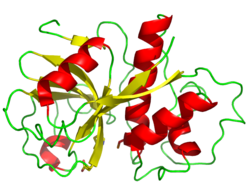
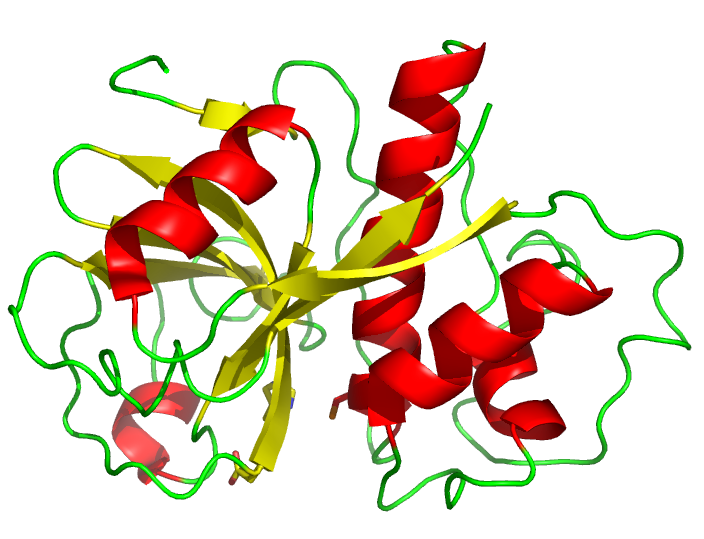
Papain from Carica papaya
Identifiers
SymbolPeptidase_C1
PfamPF00112
InterProIPR000668
PROSITEPDOC00126
SCOP21aec / SCOPe / SUPFAM
Available protein structures:
Pfam  structures / ECOD  
PDBRCSB PDB; PDBe; PDBj
PDBsumstructure summary
papain
Identifiers
EC no.3.4.22.2
CAS no.9001-73-4
Databases
IntEnzIntEnz view
BRENDABRENDA entry
ExPASyNiceZyme view
KEGGKEGG entry
MetaCycmetabolic pathway
PRIAMprofile
PDB structuresRCSB PDB PDBe PDBsum
Search
PMCarticles
PubMedarticles
NCBIproteins

Papain, also known as papaya proteinase I, is a cysteine protease (EC 3.4.22.2) enzyme present in papaya (Carica papaya) and mountain papaya (Vasconcellea cundinamarcensis). It is the namesake member of the papain-like protease family.

It has wide ranging commercial applications in the leather, cosmetic, textiles, detergents, food and pharmaceutical industries. In the food industry, papain is used as an active ingredient in many commercial meat tenderizers.[1]

Papain family

[edit]

Papain belongs to a family of related proteins, known as the papain-like protease family, with a wide variety of activities, including endopeptidases, aminopeptidases, dipeptidyl peptidases and enzymes with both exo- and endopeptidase activity.[2] Members of the papain family are widespread, found in baculoviruses,[3] eubacteria, yeast, and practically all protozoa, plants and mammals.[2] The proteins are typically lysosomal or secreted, and proteolytic cleavage of the propeptide is required for enzyme activation, although bleomycin hydrolase is cytosolic in fungi and mammals.[4] Papain-like cysteine proteinases are essentially synthesised as inactive proenzymes (zymogens) with N-terminal propeptide regions. The activation process of these enzymes includes the removal of propeptide regions, which serve a variety of functions in vivo and in vitro. The pro-region is required for the proper folding of the newly synthesised enzyme, the inactivation of the peptidase domain and stabilisation of the enzyme against denaturing at neutral to alkaline pH conditions. Amino acid residues within the pro-region mediate their membrane association, and play a role in the transport of the proenzyme to lysosomes. Among the most notable features of propeptides is their ability to inhibit the activity of their cognate enzymes and that certain propeptides exhibit high selectivity for inhibition of the peptidases from which they originate.[5]

Structure

[edit]

The papain precursor protein contains 345 amino acid residues,[6] and consists of a signal sequence (1-18), a propeptide (19-133) and the mature peptide (134-345). The amino acid numbers are based on the mature peptide. The protein is stabilised by three disulfide bridges. Its three-dimensional structure consists of two distinct structural domains with a cleft between them. This cleft contains the active site, which contains a catalytic dyad that has been likened to the catalytic triad of chymotrypsin. The catalytic dyad is made up of the amino acids cysteine-25 (from which it gets its classification) and histidine-159. Aspartate-158 was thought to play a role analogous to the role of aspartate in the serine protease catalytic triad, but that has since been disproved.[7]

Function

[edit]

The mechanism by which papain breaks peptide bonds involves the use of a catalytic dyad with a deprotonated cysteine.[8] A nearby Asn-175 helps to orient the imidazole ring of His-159 to allow it to deprotonate the catalytic Cys-25. This cysteine then performs a nucleophilic attack on the carbonyl carbon of a peptide backbone. This forms a covalent acyl-enzyme intermediate and frees the amino terminus of the peptide. The enzyme is deacylated by a water molecule and releases the carboxy terminal portion of the peptide. In immunology, papain is known to cleave the Fc (crystallisable) portion of immunoglobulins (antibodies) from the Fab (antigen-binding) portion.

Papain is a relatively heat-resistant enzyme, with an optimal temperature range of 60 to 70 °C.[9]

Papain prefers to cleave after an arginine or lysine preceded by a hydrophobic unit (Ala, Val, Leu, Ile, Phe, Trp, Tyr) and not followed by a valine.[10]

Uses

[edit]
Anthelmintic effect of papain on the worm Heligmosomoides bakeri.

Papain breaks down tough meat fibres, and was used before European contact to tenderise meat eaten in its native South America. Meat tenderisers in powder form with papain as an active component are widely sold and the culinary use of papaya peel has been featured in research papers.[1][11]

Papain can be used to dissociate cells in the first step of cell culture preparations. A ten-minute treatment of small tissue pieces (less than 1 mm3) will allow papain to begin cleaving the extracellular matrix molecules holding the cells together. After ten minutes, the tissue should be treated with a protease inhibitor solution to stop the protease action. Left untreated, papain activity will lead to complete lysis of the cells. The tissue must then be triturated (passed quickly up and down through a Pasteur pipette) to break up the pieces of tissue into a single cell suspension.

It is also used as an ingredient in various enzymatic debriding preparations, notably Accuzyme. These are used in the care of some chronic wounds to clean up dead tissue.

Papain is added to some toothpastes and mint sweets as a tooth whitener. Its whitening effect is minimal, because the papain is present in low concentrations and is quickly diluted by saliva. It would take several months of use to have a noticeable effect.[12]

Papain is the main ingredient of Papacarie, a gel used for chemomechanical dental caries removal. It does not require drilling and does not interfere in the bond strength of restorative materials to dentin.[13]

Papain has been known to interfere with urine drug tests for cannabinoids.[14] It is found in some drug detox products.

Recently, it has been demonstrated that papain can be used to assemble thin films of titania used in photovoltaic cells.[15]

Papain has also been used to create a degenerated disc disease model to assess various types of injectable therapies.[16][17]

Immunoglobulins

[edit]
The papain-digested antibody: two Fab fragments and an Fc fragment.

An antibody digested by papain yields three fragments: two 50 kDa Fab fragments and one 50 kDa Fc fragment. The papain-digested antibody is unable to promote agglutination, precipitation, opsonization, and lysis, however, the Fab fragment is still able to bind to and neutralize appropriate antigens, most commonly seen in the use of sheep anti-Crotalid toxin antibody preparations, known as CroFab and in Digibind, a similar sheep antiserum fragment, used to neutralize the cardiac medication digoxin in acute overdose situations.

Production

[edit]

Papain is usually produced as a crude, dried material by collecting the latex from the fruit of the papaya tree. The latex is collected after scoring the neck of the fruit, where it may either dry on the fruit or drip into a container. This latex is then further dried. It is now classified as a dried, crude material. A purification step is necessary to remove contaminating substances. This purification consists of the solubilization and extraction of the active papain enzyme system through a government-registered process. This purified papain may be supplied as powder or as liquid.

US restriction on marketing

[edit]

On September 23, 2008, the US Food and Drug Administration (FDA) warned companies to stop marketing ophthalmic balanced salt solutions and topical drug products containing papain by November 4, 2008. The FDA said, "Papain-containing drug products in topical form historically have been marketed without approval...".[18] According to the FDA's statement on the subject, "These unapproved products have put consumers' health in jeopardy, from reports of permanent vision loss with unapproved balanced salt solutions to a serious drop in blood pressure and increased heart rate from the topical papain products," said Janet Woodcock, director for the Center for Drug Evaluation and Research.

Unapproved topical papain products

[edit]

Topical drug ointments containing papain are used to remove dead or contaminated tissue in acute and chronic lesions, such as diabetic ulcers, pressure ulcers, varicose ulcers, and traumatic infected wounds. Trade names for these products include Accuzyme, Allanfil, Allanzyme, Ethezyme, Gladase, Kovia, Panafil, Pap Urea, and Ziox. Other products are marketed under the names of the active ingredients, for instance, papain-urea ointment.

In 2008 the FDA announced its intention to take action against these products because it had received reports of serious adverse events in patients using products containing papain. Reports included hypersensitivity (allergic) reactions that lead to hypotension (low blood pressure) and tachycardia (rapid heart rate). In addition, people allergic to latex can also be allergic to papaya, the source of papain, implying that people with latex sensitivity may be at increased risk of suffering an adverse reaction to a topical papain drug product.

FDA recommended that people with concerns about using topical papain preparations contact their health care provider about discontinuing use.

Human cysteine proteases from papain family

[edit]

See also

[edit]

References

[edit]
[edit]
Revisions and contributorsEdit on WikipediaRead on Wikipedia
from Grokipedia
Papain is a (EC 3.4.22.2), also known as papaya proteinase I, derived from the of unripe fruits of the plant (Carica papaya L.). This proteolytic catalyzes the of peptide bonds in proteins, breaking them down into smaller peptides or , and is characterized by its broad substrate specificity and activity across a wide range of 3.0 to 9.0. Structurally, papain consists of a single polypeptide chain of 212 amino acids with a molecular weight of 23,406 Da, featuring two domains—an α-helical domain and an antiparallel β-sheet domain—separated by a cleft that houses the active site. The catalytic mechanism relies on a nucleophilic cysteine residue (Cys25), assisted by histidine (His159) and asparagine (Asn175), enabling efficient peptide bond cleavage; it also contains three to four disulfide bridges that contribute to its thermal stability, resisting denaturation in up to 8 M urea or 70% ethanol. Papain was the first cysteine protease to have its three-dimensional structure determined by X-ray crystallography in 1968, providing foundational insights into the papain-like superfamily of enzymes. In its biological context, papain plays a key role in the plant's defense against pests and pathogens by degrading proteins in invading organisms, and it is involved in broader physiological processes such as and stress responses in plants. Industrially, papain is extensively applied as a in , a debriding agent for cleaning in pharmaceuticals, and in for exfoliation, as well as in tanning, clarification, and even as an against parasites. Despite its utility, papain can act as a respiratory sensitizer and cause or eye irritation, necessitating careful handling.

History

Traditional Uses

In indigenous cultures of Central and , raw papaya latex has long been applied as a wound dressing due to its purported properties, often used as a to treat cuts, burns, and skin infections. The latex was also valued as a digestion aid, consumed to alleviate , , and gastrointestinal discomfort, leveraging its natural proteolytic qualities. Additionally, in rural African communities, particularly in , papaya latex or leaf extracts were employed to tenderize tough meat by breaking down proteins, facilitating easier preparation and consumption in traditional cooking practices. Papaya's role in folk medicine extended across diverse regions, with applications for treating ulcers, , and various skin conditions. In folk medicine, papaya latex has been used topically for and corns.

Scientific Discovery

The proteolytic activity of papain was first formally identified in 1879 by French chemists Adolphe Wurtz and Ernest Bouchut, who isolated the enzyme from the latex of unripe papaya fruit (Carica papaya) and coined the name "papain" to describe its protein-digesting properties. This discovery built upon earlier observations of papaya latex's digestive effects in traditional practices, prompting systematic scientific investigation into its enzymatic potential. In the early , purification efforts advanced significantly, culminating in 1937 when American biochemist Albert K. Balls and colleagues achieved the first crystallization of papain from fresh latex, enabling more precise studies of its properties. Around this time, papain was recognized as a sulfhydryl-dependent , with its activity linked to the presence of essential (-SH) groups that could be activated or inhibited by reagents targeting cysteine residues, distinguishing it from other classes like serine or aspartic types. These findings established papain as a prototype for plant-derived proteases. The 1950s saw key biochemical studies elucidating papain's stability and activity profile, notably through the work of Joseph R. Kimmel and Emil L. Smith, who refined purification methods to obtain highly active crystalline forms and examined its substrate specificity, optimal pH range (around 6-7), and thermal stability up to approximately 65°C under reducing conditions. These investigations highlighted papain's broad hydrolytic capabilities against peptide bonds and its activation by reducing agents like , providing foundational insights into its mechanistic behavior. A major milestone occurred in 1968 when Dutch crystallographers Jan Drenth and colleagues determined papain's three-dimensional structure using at 2.8 resolution, revealing its bilobal fold with the active-site -histidine pair in a central cleft; this was the first such structural elucidation for any and among the earliest for enzymes overall.

Biological Properties

Structure

Papain consists of a single polypeptide chain comprising 212 residues in its mature form, with a calculated molecular weight of 23,406 Da. This compact structure is stabilized by three bridges located at positions Cys22–Cys63, Cys56–Cys95, and Cys153–Cys200, which link different segments of the chain to maintain its folded conformation. Additionally, a free residue at position 25 (Cys25) is essential for its catalytic function, remaining unpaired in the native state. The tertiary of papain adopts a characteristic L-shaped fold typical of cysteine proteases in the C1 , divided into two globular domains separated by a prominent cleft that accommodates substrates. The N-terminal domain (residues 1–107 and 204–212) is rich in α-helices, featuring three major helices that contribute to its elongated shape, while the C-terminal domain (residues 108–203) contains a twisted β-sheet core surrounded by additional α-helices and loops. Overall, the incorporates five α-helices and seven β-strands, forming a bilobal that enhances rigidity and positions key residues within the interdomain cleft. Papain demonstrates robust physicochemical stability, remaining active over a range of 3 to 9 and tolerating temperatures up to 65°C without significant denaturation. Its optimal conditions for enzymatic activity are 6.0–7.0 and 60–70°C, where the native fold is preserved to support efficient function. Post-translational processing from a precursor protein involves autolytic cleavage of the proregion, which regulates maturation but does not include notable modifications in the mature .

Classification and Family

Papain is classified with the Enzyme Commission (EC) number 3.4.22.2 and the systematic name papaya peptidase I, reflecting its role as a that hydrolyzes bonds with broad specificity, preferring substrates with large uncharged residues at P2. This enzyme belongs to peptidase clan CA, specifically family C1, also designated as the papain family within the broader category of proteases; this family encompasses numerous homologous peptidases characterized by a conserved fold and catalytic mechanism. The papain family exhibits ancient evolutionary origins, with phylogenetic analyses indicating its emergence in prokaryotic lineages before extensive diversification in eukaryotes, including multiple gene duplications that generated paralogs across kingdoms. In , this family has undergone further expansion, adapting to roles in development, defense, and ; papain itself is a plant-specific member derived from Carica papaya, highlighting the family's specialization in vascular . A defining structural feature tying papain to the C1 family is the conserved catalytic triad, comprising cysteine 25 (Cys25) as the nucleophile, histidine 159 (His159) as the base, and asparagine 175 (Asn175) for stabilization, which enables the thiol-based hydrolysis mechanism common to clan CA peptidases. Family members also share structural domains, such as the L-domain (residues 1–110) and R-domain (111–212), which form an active site cleft for substrate binding. Within the plant kingdom, papain demonstrates notable sequence similarity to other C1 family cysteine proteases, including ficin from Ficus carica (approximately 51% amino acid identity) and bromelain from Ananas comosus (approximately 41% identity), underscoring their shared evolutionary history and functional convergence in latex-based defense systems.

Mechanism and Function

Enzymatic Activity

Papain catalyzes the hydrolysis of peptide bonds as a member of the cysteine protease family, employing a catalytic triad composed of Cys25, His159, and Asn175. The mechanism begins with His159 acting as a base to deprotonate the thiol group of Cys25, forming a highly nucleophilic thiolate ion. This thiolate performs a nucleophilic attack on the carbonyl carbon of the substrate's scissile peptide bond, leading to the formation of a covalent acyl-enzyme intermediate and the release of the C-terminal fragment. Subsequently, a water molecule, activated by the protonated His159, hydrolyzes the acyl-enzyme intermediate, regenerating the active site and liberating the N-terminal product. The Asn175 residue plays a crucial role in stabilizing the imidazolium form of His159 via hydrogen bonding, thereby facilitating the ion-pair formation essential for catalysis. The enzyme's substrate specificity is characterized by a preference for hydrophobic residues, particularly or , at the P2 position of the substrate, which interacts favorably with the hydrophobic S2 subsite in papain's cleft. This allows papain to exhibit broad activity, efficiently cleaving internal bonds in a variety of protein substrates while showing less selectivity at the P1 and P1' positions. Such specificity enables papain to process diverse polypeptides, though it avoids bonds adjacent to acidic residues. Kinetic parameters for papain's activity have been extensively characterized using chromogenic substrates like Nα-benzoyl-L-arginine-p-nitroanilide (BAPNA). Typical Michaelis constants (Km) for BAPNA are around 0.5–2 mM, reflecting moderate substrate affinity, while the catalytic efficiency (kcat/Km) underscores its proficiency in cleavage, often exceeding 10^4 M^{-1} s^{-1} under optimal conditions. Papain's enzymatic activity follows a bell-shaped pH profile with an optimum between 5 and 7, governed by the pKa values of the catalytic residues: approximately 4 for Cys25 and 8.3 for His159. This profile arises because the thiolate requires of Cys25 and of His159 for efficient . Temperature dependence shows peak activity around 50–60°C, with thermal stability up to 65–70°C before denaturation impairs function. Inhibition of papain occurs through targeting the reactive Cys25 thiolate. Irreversible inhibitors like alkylate this residue, blocking nucleophilic attack and inactivating the enzyme. In contrast, E-64 provides potent, reversible inhibition by forming a stable thioether with Cys25, with a Ki in the nanomolar range, making it a valuable tool for studying activity.

Role in Papaya

Papain is primarily abundant in the latex of unripe fruit, where it constitutes 5–8% of the total protein content in the extracted cysteine endopeptidases, along with lesser amounts present in the leaves and roots of the Carica plant. This localization in the , a milky fluid that exudes from wounds or incisions, positions papain as a key component of the plant's vascular and protective systems. In its defense role, papain facilitates the proteolytic degradation of proteins from invading pathogens, , and , thereby inhibiting their growth and . Upon mechanical wounding or herbivore attack, papain expression is rapidly induced, leading to an increase in production and release at the injury site to deter further damage. This mechanism is particularly effective against lepidopteran larvae and other chewing , where papain's activity disrupts their digestive processes and survival. Papain plays a limited role in papaya fruit ripening compared to other proteases, primarily aiding in protein turnover during early maturation stages before its activity diminishes as the fruit ripens. Concentrations of papain and related enzymes decrease significantly in the latex as the fruit transitions from unripe to ripe, reflecting a shift away from defensive proteolysis toward other ripening processes like cell wall modification. The of is encoded by multiple genes within the , including paralogous sequences such as CPA1 and CPA2, which belong to the broader family of 33 papain-like (PLCP) genes identified through domain searches. Expression of these genes is tightly regulated by signals like , which influences developmental processes, and wounding cues that trigger defense responses. This genetic framework ensures papain's timely production in response to environmental stresses. Ecologically, papain contributes to papaya's resistance against fungal infections, notably by targeting pathogens like , where its activity limits pathogen virulence and spread. Pathogens often evolve inhibitors, such as cystatin-like proteins, to counteract papain, underscoring the enzyme's pivotal role in the plant's innate immunity and overall survival in tropical environments prone to such threats.

Production

Natural Sources

Papain is primarily sourced from the of unripe fruits of the plant, Carica papaya L., a tropical species native to but now cultivated worldwide. The milky exudes from incisions made in the skin of immature green fruits, where the concentration is highest, typically reaching 40 mg of protein per gram of wet , with papain constituting the predominant . This also plays a role in the plant's defense against herbivores and pathogens by degrading proteins in invading organisms. Yields of papain vary significantly with fruit maturity, peaking in unripe but fully developed fruits around 75–90 days after fruit set, and declining sharply as the fruit ripens due to reduced latex production and enzyme activity. Varietal differences influence output, with certain cultivars exhibiting higher latex flow; for instance, some Hawaiian varieties, historically significant in commercial papain production, demonstrate elevated yields compared to smaller 'Solo' types, which are less suitable for enzyme extraction. Environmental factors further modulate production: papaya thrives in tropical climates with temperatures of 21–32°C and adequate rainfall, but latex flow increases during dry seasons or under mild drought stress, enhancing enzyme accumulation as an adaptive response. While the fruit latex remains the principal source, papain occurs at lower concentrations in other plant parts, including leaves, , and , where extraction yields are substantially reduced compared to fruit-derived material. These secondary sources contribute minimally to commercial supplies but highlight the enzyme's widespread distribution in C. . A related species, (Vasconcellea cundinamarcensis), also produces papain in its latex, serving as a secondary natural reservoir, though at lower overall quantities than C. . Sustainability concerns arise from intensive harvesting of unripe fruits for latex, which can diminish fruit yields and strain papaya cultivation, particularly in regions reliant on wild or semi-cultivated stands; shifting to cultivated varieties and by-product utilization helps mitigate overharvesting impacts on biodiversity and agricultural productivity.

Commercial Methods

Papain is commercially obtained through the extraction of latex from unripe papaya fruits (Carica papaya), a process that relies on manual harvesting to maximize enzyme yield. Workers make shallow incisions or "score" the skin of nearly mature but green fruits still attached to the tree, typically in the early morning to avoid dilution from dew or rain, allowing the milky latex to ooze out over several hours. The collected latex is then scraped into containers and dried under controlled conditions, such as sun-drying or low-temperature oven drying at 40–50°C, to produce crude papain powder that is standardized based on enzymatic activity. Purification of crude papain involves sequential steps to remove impurities like other proteins, pigments, and latex components while preserving enzymatic activity. Initial fractionation typically employs at 40–80% saturation to selectively precipitate papain, followed by dialysis to remove salts. Subsequent refinement uses chromatographic methods, including ion-exchange chromatography (e.g., DEAE-cellulose columns) for charge-based separation and gel filtration (e.g., G-100) for size-based purification, often achieving purity greater than 90% as confirmed by analysis. Throughout purification, typical recovery yields range from 50% to 70% of the initial activity, depending on the scale and method, with losses primarily occurring during and due to denaturation or incomplete recovery. The purified papain is standardized to consistent potency using pharmacopeial assays, such as those defined by the (USP) for proteolytic activity on substrates or the Fédération Internationale Pharmaceutique (FIP) units, ensuring reproducibility for industrial applications. Modern alternatives to traditional extraction include recombinant production in microbial systems to bypass variability in plant sources and achieve higher purity. Papain has been successfully expressed in hosts like Escherichia coli using T7-promoter driven systems with redox pathway engineering to promote soluble, active enzyme folding, and in yeast such as Pichia pastoris via secretory pathways for extracellular recovery. However, these methods remain less common commercially due to elevated production costs compared to latex extraction, limiting their adoption to specialized high-purity needs. Global papain production is concentrated in tropical regions with significant papaya cultivation, with major exporters including , , and . As of 2024, India's annual output exceeds 7,000 metric tons, contributing substantially to worldwide supply, while total global production is approximately 15,200 metric tons, driven by demand in , pharmaceutical, and industrial sectors.

Applications

Food and Beverage Industry

Papain plays a significant role in the food and beverage industry due to its proteolytic activity, which enables the breakdown of proteins into smaller peptides and amino acids. This enzyme is particularly valued for enhancing texture, improving clarity, and aiding digestion in various processed foods and beverages. As a plant-derived cysteine protease, papain offers a natural alternative to animal or microbial enzymes in applications requiring protein hydrolysis. In meat tenderization, papain hydrolyzes tough connective tissues such as and myofibrils, converting them into more digestible forms and improving meat . It is commonly applied at concentrations of 0.01–0.1% in marinades, where controlled exposure—often limited to 30– at —prevents over-tenderization and mushy textures. Consuming meat marinated with raw papaya paste is safe for most people after cooking to an internal temperature of at least 75°C, which ensures food safety and partially deactivates papain; the residual enzyme activity aids protein digestion. This method is effective for lower-grade cuts, enhancing their commercial value without altering flavor profiles significantly. Papain serves as a chill-proofing agent in by hydrolyzing haze-forming proteins, such as proanthocyanidins and polypeptides, that cause in upon cooling. Typical dosages range from 10–50 ppm added during maturation, ensuring stability without impacting or . This application has been standard in the industry since the mid-20th century for producing clear, shelf-stable products. In cheese production, papain acts as a vegan substitute, coagulating by cleaving kappa-casein to form curds with efficiency comparable to traditional animal , particularly in soft and fresh cheese varieties. Doses around 2 g/L at optimal temperatures of 40–50°C yield high rates and minimal residual activity, supporting plant-based alternatives. Papain is incorporated into digestive supplements, such as chewable tablets, to facilitate protein in the by breaking down complex proteins into absorbable units. It is often combined with from for a broader enzymatic spectrum, targeting both acidic and neutral environments to alleviate and improve uptake from meals. Recent developments include papain in anti-obesity food formulations, where it degrades dietary proteins to reduce accumulation and associated with high-fat intake. Studies in high-fat diet models demonstrate its activation of AMPK pathways, promoting and when incorporated into functional foods. Papain holds (GRAS) status from the FDA for these food uses.

Medical and Pharmaceutical Uses

Papain has been employed in through its enzymatic action to selectively remove necrotic tissue from chronic , such as ulcers and burns, by hydrolyzing proteins in dead tissue while sparing viable cells. Historically, papain-urea formulations were used for this purpose dating back to the for sloughing , demonstrating reductions in necrotic tissue across various etiologies. However, the U.S. (FDA) has restricted topical papain products due to insufficient high-quality evidence supporting their efficacy and safety, leading to their classification as unapproved drugs since 2015, with no currently approved topical papain formulations available as of 2025. Despite these limitations, enzymatic with papain remains a concept in care, though alternatives like collagenase are preferred in clinical practice. In pharmaceutical applications, papain exhibits properties by breaking down inflammatory proteins and modulating levels, which can reduce swelling associated with conditions like . These effects are attributed to papain's broad proteolytic activity, though human trials emphasize its role as an adjunct rather than a primary treatment. Limited evidence from small studies suggests proteolytic combinations including papain may aid in reducing from sports , but larger trials are needed to confirm benefits. As a digestive aid, papain hydrolyzes undigested proteins in the , helping to alleviate symptoms of and (IBS) by enhancing overall protein breakdown similar to . Clinical studies on papaya-derived papain preparations, such as Caricol®, have demonstrated significant improvements in and among patients with digestive disorders, with one double-blind trial involving over 100 participants showing reduced symptom severity after supplementation. These benefits position papain as a supportive for protein , particularly in cases of enzyme insufficiency, though it is not a substitute for conventional therapies. In research and pharmaceutical production, papain is widely used to digest immunoglobulins, specifically cleaving IgG at the hinge region to generate Fab (antigen-binding) and Fc (crystallizable) fragments, which are essential for immunological studies and therapeutic antibody engineering. This proteolytic cleavage occurs under controlled conditions, typically at 37°C, producing stable fragments that retain antigen-binding specificity while removing the Fc portion to minimize non-specific interactions. The resulting Fab fragments are applied in diagnostics, biosensors, and targeted therapies, such as tumor imaging, where papain-digested monoclonal antibodies like cetuximab have shown enhanced tumor uptake in preclinical models. This method remains a standard in biotechnology due to its efficiency and cost-effectiveness compared to chemical fragmentation techniques. Emerging research highlights papain's potential in , where it disrupts tumor-associated proteins to inhibit proliferation; for instance, papain-incorporated hydrogels have demonstrated efficacy in treatment by enhancing and reducing tumor burden in preclinical settings. Antiviral applications include its use in breaking down lesions from herpes zoster (), with topical papain aiding in faster resolution of skin outbreaks comparable to conventional antivirals by promoting tissue repair and reducing viral persistence. Recent studies from 2021, building toward 2024 investigations, have explored papain's anti-obesity effects, showing that it ameliorates accumulation and in high-fat diet-induced obese mice via AMPK , suggesting a role in metabolic by regulating adipogenic factors. These developments indicate papain's versatility in novel therapeutic contexts, though further clinical validation is required.

Industrial and Cosmetic Uses

Papain finds significant application in the textile and industries due to its proteolytic activity, which facilitates the of proteins such as . In processing, papain serves as an eco-friendly agent for depilation, effectively removing hair and non-collagenous proteins from animal hides without the need for harsh chemicals like sulfides, thereby reducing environmental pollution from effluents. Additionally, during the bating stage, papain softens hides by breaking down and other proteins, improving leather pliability and quality while minimizing chemical usage. In , papain hydrolyzes in fibers, enabling processes like biopolishing to reduce pilling and enhance fabric smoothness, often in combination with reducing agents for optimal efficacy. In the detergent industry, papain acts as a key additive for removing protein-based stains such as blood, , and residues from fabrics. Its ability to degrade these stains stems from its broad substrate specificity, allowing penetration into structures for thorough cleaning. Chemical modifications, such as succinylation, enhance papain's stability in alkaline conditions typical of detergents ( 8–11), maintaining activity at elevated temperatures up to 60°C and enabling its use as a cost-effective alternative to subtilisin-type proteases. Papain's role in cosmetics centers on its gentle exfoliating properties, where it enzymatically breaks down dead cells and debris, promoting smoother texture and improved product absorption without mechanical abrasion. In anti-aging formulations, papain modulates by solubilizing excess proteins, potentially reducing fine lines and enhancing firmness through increased cell turnover. Typical concentrations in creams and lotions range from 0.5% to 2% to balance efficacy and safety, avoiding irritation while achieving visible exfoliation. Recent advancements (2024–2025) highlight papain's incorporation into dental cosmetic products for disruption, where it digests extracellular polymeric substances in oral plaques, aiding in and whitening with reduced abrasiveness compared to traditional dentifrices. In anti-obesity , such as body-firming creams, papain's properties help mitigate in adipose tissues, supporting localized fat reduction and skin tightening through downregulation of factors. Environmentally, papain offers a biodegradable alternative to synthetic chemical proteases in , particularly for degrading protein-rich organic pollutants in industrial effluents and . Its natural derivation from ensures rapid breakdown without persistent residues, facilitating sustainable processing in sectors like food and decolorization, where it achieves up to 90% of azo dyes like RR-195 under mild conditions.

Safety and Regulations

Health Effects

Papain exposure can lead to allergic reactions, particularly in occupational settings such as papaya processing facilities, where inhalation of papain-containing dust is common among workers. These reactions are typically IgE-mediated and manifest as , , or , with symptoms including wheezing, , and severe systemic responses like and urticaria. Allergic reactions to papain or papaya via ingestion are rare but possible, particularly in individuals with latex allergies due to immunological cross-reactivity. Symptoms may include itching, hives, and nausea. Ingestion of large oral doses of papain has been associated with gastrointestinal adverse effects, including , ulceration, and of the or lining. Case reports document severe outcomes such as esophageal following the use of papain-based meat tenderizers to dissolve food impactions, highlighting the enzyme's proteolytic activity on mucosal tissues. Additionally, high-dose oral administration can result in due to the hyperosmolar nature of papain preparations, leading to symptoms like , , and imbalances. Topical application of papain may cause skin irritation, , or chemical burns, especially with prolonged exposure exceeding 20 minutes, as the degrades proteins in the skin barrier. Rare instances of systemic absorption through damaged skin have been linked to or allergic , though such events are uncommon at standard concentrations. Regarding reproductive and developmental effects, papain at standard doses poses no major risks, with demonstrating no teratogenic potential or adverse impacts on fetal development. In rats, oral doses up to 800 mg/kg showed no signs of maternal , embryotoxicity, or teratogenicity during prenatal ontogenesis. However, pregnant individuals should avoid large amounts of unripe papaya, which contains high concentrations of latex that can induce uterine contractions. Papain exhibits fibrinolytic activity, which may interact with blood-thinning medications such as , potentially enhancing effects and increasing bleeding risk. Furthermore, its proteolytic properties can enhance the absorption of certain drugs across mucosal barriers, necessitating caution in combination therapies.

Regulatory Status

Papain has been affirmed as generally recognized as safe (GRAS) by the U.S. Food and Drug Administration (FDA) for use as a direct food ingredient under 21 CFR 184.1585, with no limitations other than current good manufacturing practice, based on its long history of safe use in food processing such as meat tenderization and stabilization. However, no topical papain products for wound debridement have ever been approved by the FDA, as they were historically marketed without required premarket approval; in 2008, the FDA enforced discontinuation of such unapproved products, including Accuzyme, due to safety concerns like hypersensitivity reactions. In the European Union, the European Food Safety Authority (EFSA) has evaluated papain derived from Carica papaya as safe for use as a food enzyme under Regulation (EC) No 1332/2008, confirming compliance with specifications for purity and absence of toxins when produced under good manufacturing practices. For cosmetic applications, papain is permitted under the Cosmetics Regulation (EC) No 1223/2009 and listed in the CosIng database, but as a Category 1 respiratory sensitizer per Annex VI of the Classification, Labelling and Packaging Regulation (EC) No 1272/2008, it requires specific labeling warnings if present above 0.001% in products that may lead to inhalation exposure, along with general purity requirements to limit impurities like heavy metals. In other regions, the and Standards Authority of (FSSAI) permits papain as a under Appendix A of the Food Safety and Standards (Food Products Standards and Food Additives) Regulations, 2011, for uses including treatment, stabilization, tenderization, and flavor enhancement, subject to good practices without a specified numerical limit. The recognizes papain's traditional use as a digestive aid in herbal medicines but does not list it on the Model List of . As of 2025, the FDA has issued alerts increasing detention without physical examination for imported products under Import Alert 99-05 due to residues exceeding tolerances, which can compromise the purity of extracted papain and lead to adulteration risks in downstream and supplement uses. Labeling requirements for papaya-derived products containing papain include voluntary warnings in the U.S. under FDA guidance, particularly for individuals with latex-fruit due to potential causing IgE-mediated reactions, though papaya is not a major under the Food Labeling and Act. In the , while papaya is not among mandatory s under (EU) No 1169/2011, papain's sensitizing potential necessitates emphasis in ingredient lists and precautionary statements for cosmetic and products to alert sensitive consumers.

Papain Superfamily

The papain superfamily, classified as clan CA in the MEROPS peptidase database, comprises proteases that share a characteristic right-handed α+β fold and a conserved catalytic dyad consisting of and residues. This clan primarily includes family C1, which encompasses papain-like proteases (PLCPs), and family C13, represented by legumain-like enzymes, among several others such as C2 (calpain) and C14 (). These enzymes catalyze the of bonds adjacent to basic or hydrophobic residues, often in acidic environments like lysosomes or vacuoles, and are distinguished by their broad substrate specificity and via propeptides or cystatins. The superfamily displays extensive diversity, with over 60,000 sequences annotated in the database across eukaryotic lineages, reflecting multiple gene duplication events that have expanded family sizes. In , these expansions are particularly pronounced, yielding up to around 100 members per in some , such as 97 in , clustered into subfamilies adapted for defense mechanisms such as production in or programmed cell death during pathogen attack. This plant-specific proliferation underscores their role in ecological adaptations, including herbivore deterrence and symbiotic interactions. Phylogenetic analyses trace the superfamily's origins to prokaryotes in the approximately 3 billion years ago, with early diversification through from into the first eukaryotic common ancestor. Subsequent gene duplications during generated eight ancestral C1A lineages in the last eukaryotic common ancestor, including precursors to L- and F-like proteases, which further radiated in and . Beyond plants, superfamily members occur in fungi and protozoa, often linked to nutrient scavenging or . Fungal examples include proteases in , which contribute to extracellular for carbon and nitrogen acquisition in nutrient-poor environments. In protozoa, falcipains from the parasite exemplify adaptations for degradation within host red blood cells, essential for parasite nutrition and survival. Functionally, the superfamily supports a spectrum of roles from bulk protein digestion and turnover to specialized processes like developmental signaling and host-pathogen dynamics. In non-plant eukaryotes, these enzymes facilitate fungal saprophytism or protozoan , while plant members emphasize stress acclimation and immunity, highlighting the conserved yet versatile catalytic core across evolutionary lineages.

Human Cysteine Proteases

Human cysteine proteases homologous to papain belong to the C1 family of papain-like enzymes, with key members including cathepsins B, H, L, and S, which are primarily localized in lysosomes. These proteases facilitate intracellular protein degradation by hydrolyzing bonds in a wide range of substrates, maintaining cellular through the breakdown of damaged or unnecessary proteins. Additionally, they contribute to by processing exogenous antigens into peptides that associate with molecules on antigen-presenting cells, thereby initiating adaptive immune responses. Cathepsin B, a carboxydipeptidase, plays a pivotal role in lysosomal proteolysis and has been implicated in the selective processing of antigens that favor Th2 immune responses. Cathepsin H functions mainly as an aminopeptidase, aiding in the trimming of peptides for MHC loading. Cathepsin L exhibits broad endopeptidase activity, supporting general lysosomal turnover, while cathepsin S is particularly vital for cleaving the invariant chain (Ii) in MHC class II compartments, enabling efficient peptide presentation in professional antigen-presenting cells like dendritic cells and B lymphocytes. Among these, cathepsin K stands out for its specialized role in , where it is abundantly expressed in osteoclasts and degrades and other matrix components during . This activity makes it a prime therapeutic target for , with selective inhibitors such as odanacatib demonstrating sustained increases in density and improved vertebral strength in clinical studies lasting up to five years. Dysregulation of these cathepsins contributes to various pathologies; overexpression of cathepsins B, L, and S promotes invasion by facilitating remodeling and tumor , as observed in multiple solid tumors. In contrast, deficiencies in lysosomal cathepsins, such as cathepsins B or L, are associated with lysosomal storage disorders characterized by the accumulation of undegraded substrates and lysosomal membrane proteins, leading to cellular dysfunction. Structurally, human cathepsins share 30–40% sequence identity with papain, particularly in the mature domain, and conserve the of (nucleophile), (base), and (stabilizer) essential for their activity. This homology underscores their evolutionary relation within the papain superfamily. The structural parallels with papain have positioned it as a valuable model for rational inhibitor design targeting human cathepsins, informing the development of selective compounds for diseases like , where cathepsin K inhibition reduces joint erosion in preclinical models of .

References

Add your contribution
Related Hubs
User Avatar
No comments yet.