Hubbry Logo
ToxtethToxtethMain
Open search
Toxteth
Community hub
Toxteth
logo
8 pages, 0 posts
0 subscribers
Be the first to start a discussion here.
Toxteth
Toxteth
from Wikipedia

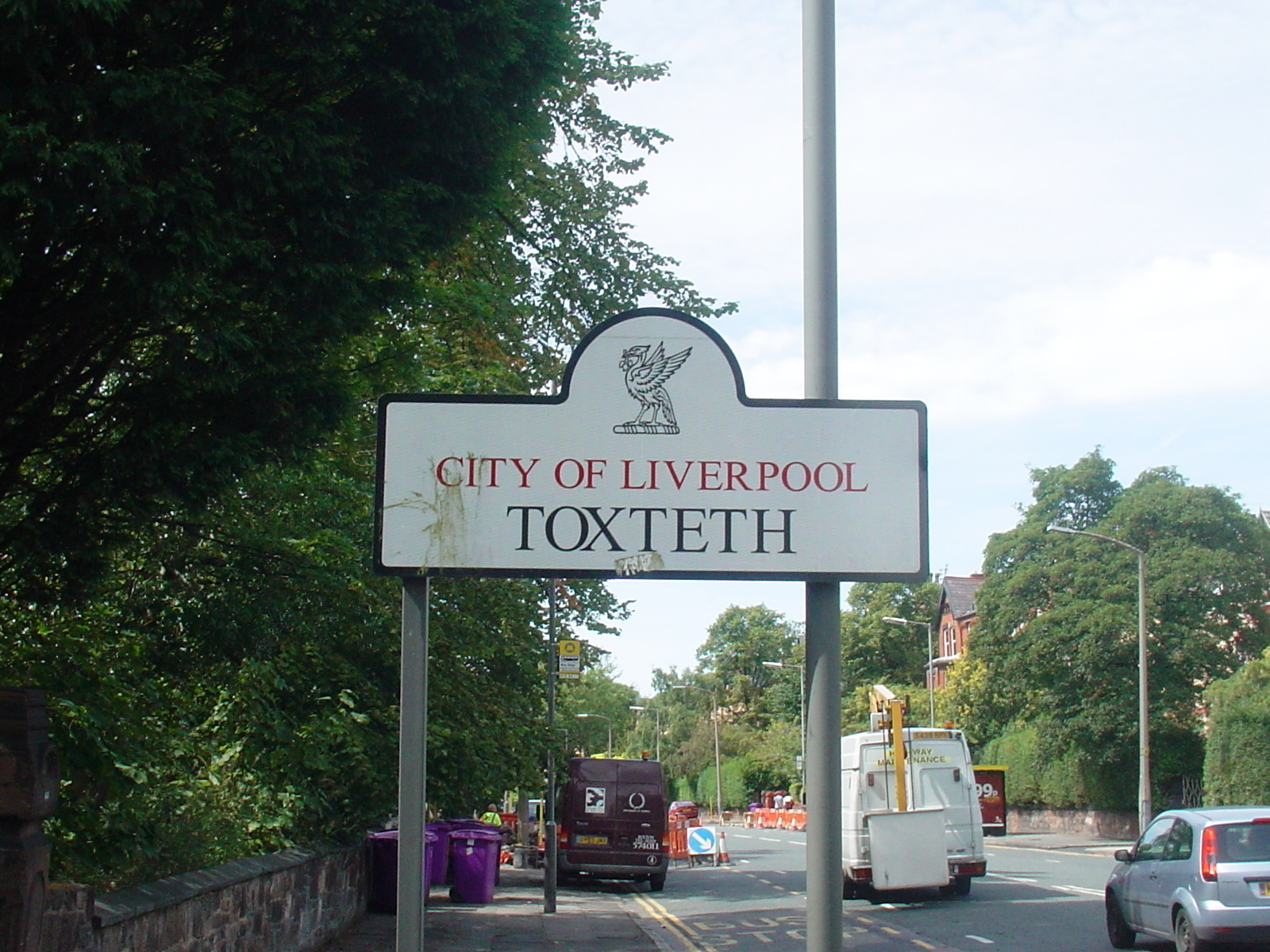
Toxteth is an inner-city area of Liverpool in the county of Merseyside.

Key Information

Toxteth is located to the south of Liverpool city centre, bordered by Aigburth, Canning, Dingle, and Edge Hill.

The area was originally part of a royal park and known as Toxteth Park. It remained predominantly rural up until the 18th century. Toxteth was then developed during this time and into the 19th century, mainly as a residential area to accommodate the increasing working-class community centred on Liverpool following the Industrial Revolution. The Welsh Streets in Toxteth were constructed in the mid-19th century to accommodate this demand. Immigration continued into the second half of the 20th century, resulting in a significant number of ethnic minority communities in the area.

Toxteth was badly hit by economic stagnation and unemployment by the late 1970s, culminating in riots in July 1981. Although attempts have been made to regenerate the area and improve living standards, significant problems with unemployment and crime remain into the 21st century. Many Georgian and Victorian buildings in the area have since been demolished, as well as some of the more recent council houses and flats which fell into disrepair and became difficult to let to new tenants.

Description

[edit]

The district lies within the borders of the ancient township of Toxteth Park.[1] Industry and commerce are confined to the docks on its western border and a few streets running off Parliament Street. Toxteth is primarily residential, with a mixture of old terraced housing, post-World War II social housing and a legacy of large Victorian houses.

In the 18th and 19th centuries, as Liverpool expanded the ancient park of Toxteth was gradually urbanised. Large Georgian houses were built in the Canning area, followed in the Victorian era by more grand houses, especially along the tree-lined Prince's Road/Avenue boulevard and around Prince's Park. The district quickly became home to the wealthy merchants of Liverpool, alongside a much larger poor population in modest Victorian terraces. Now, some of these streets of terraces are boarded up, awaiting demolition.

Two of the city's largest parks, Sefton Park and Princes Park, are located in or around Toxteth. The earlier Princes Park was laid out by Richard Vaughan Yates around 1840, intending it to be used as open space, funded by the grand houses to be constructed around its edge,[2] as would later happen with Sefton Park. Sefton Park was created by the Corporation of Liverpool in 1872, inspired partly by Birkenhead Park, across the River Mersey. Sefton Park has a large glass Palm House,[3] which contains a statue of William Rathbone V unveiled in 1887, and originally had many other features including an aviary and an open-air theatre.

History

[edit]

Toponymy

[edit]

There is some ambiguity as to the origin of the name. One theory is that the etymology is "Toki's landing-place". However, Toxteth is mentioned in the Domesday Book of 1086, and at this time, it appears as "Stochestede",[4] i.e. "the stockaded or enclosed place", from the Anglo-Saxon stocc "stake" and Anglo-Saxon stede "place" (found in many English placenames, usually spelled stead).

The manor

[edit]

Before the time of the Norman conquest, Toxteth was divided into two manors of equal size. One was owned by Bernulf and the other by Stainulf. After the conquest, part was granted by Count Roger of Poitou to the ancestor of the Earl of Sefton. From this time to about 1604, the land formed part of West Derby forest. The boundaries of the manor are described in the perambulation of 1228 as follows, "'Where Oskell's brook falls into the Mersey; up this brook to Haghou meadow, from this to Brummesho, following the syke to Brumlausie, and across by the old turbaries upon two meres as far as Lombethorn; from this point going down to the 'waterfall' of the head of Otter pool, and down this pool into the Mersey."[4] In 1327, Toxteth was granted to Henry, Earl of Lancaster.

Over the years, various leases and grants were made and the park was owned by Adam, son of William de Liverpool, in 1338. In 1385, William de Liverpool had licence "to take two cartloads of gorse weekly from the park for 12d. a year rent." In 1383 a grant was made to William Bolton and Robert Baxter, in 1394 the lease was resigned and handed over to Richard de Molyneux. The park finally came into the hands of Sir Thomas Stanley in 1447. The parkland descended within the Stanley family until 1596, when it was sold by William Stanley, Earl of Derby, to Edmund Smolte and Edward Aspinwall. In 1604, the Earl sold it to Richard Molyneux of Sefton[5] at a cost of £1,100. The estate descended from this time until 1972 with the death of the 7th Earl.[4]

Toxteth Park

[edit]
Toxteth Town Hall

The ancient township of Toxteth contains the village of Smeedon or Smithdown. It stretches over an area of three miles along the River Mersey and two miles inland, the highest point being on the corner of Smithdown Lane and Lodge Lane. A brook ran from the northern end of the area, near the boundary of Parliament Street, where it was used to power a water wheel before it ran into the river. Along the river are two creeks; the one near the middle is known as Knot's Hole, and another further south, called Dickinson's Dingle, received a brook which ran past the east end of St Michael's Church, Aigburth.[4]

At some time in history the creeks were filled in. The Dingle is now in the area where the old northern creek was situated, and St Michael's Hamlet is situated around the southern creek. Outside the southern boundary of the area lies the creek known as Otterspool, which formed the boundary between Wavertree and West Derby. The major road through the area was Park Lane, now Park Place and Park Road. The road ran from the Coffee House, which stood near Fairview Place, down towards the Dingle, and the "Ancient Chapel of Toxteth".[4]

Toward the end of the 16th century, the royal park ceased to be and Puritan farmers from Bolton settled in the area. Setting up 25 farms on land outside Church of England control, which became Toxteth Village, these Dissenters worshipped at the "Ancient Chapel" on Park Road, now known as the Toxteth Unitarian Chapel (not to be confused with Ullet Road Unitarian Church, in Toxteth, south Liverpool). In 1611, they built a school at the Dingle, appointing Richard Mather as schoolmaster. Some years later, he began preaching to the local farmers in the chapel.[6] Toxteth Town Hall, which as "Toxteth Park Public Offices" was the municipal centre of Toxteth Park, was completed in 1866.[7]

In 1796, the Herculaneum Pottery was established on the site of an old copper works. The site later became Herculaneum Dock, which was filled in during the 1980s.[8]

The Pavilion Theatre opened on Lodge Lane in 1908, and hosted a Beatles concert in 1962. It later became a bingo hall and then a supermarket.[9]

Smithdown

[edit]

Smithdown, referred to as Esmedune in the Domesday Book, and variously as Smededon, Smeddon, Smethesdune, Smethedon, Smethdon, Smethden,[4] has been merged into Toxteth Park since the granting of the Liverpool Charter in 1207. The definite boundaries of Smithdown have never been fully recorded, but the name continued in use from 1207 until the 16th century, although it is thought to have reached from Lodge Lane to the eastern boundary of Toxteth Park. In 1066, Smithdown was held as a separate manor, by Ethelmund. During the reign of King John the Manor of Smithdown was taken from its owner, and the king gave him Thingwall instead.

Second World War

[edit]

During the Second World War, the Free French 13th Demi Brigade of the French Foreign Legion were stationed in Toxteth. On 30 August 1940, the Demi Brigade departed Liverpool for operations against Vichy forces that would include the abortive Battle of Dakar and the storming of Libreville.

Places of worship

[edit]
Wellington Road Chapel, in Toxteth, was closed in 1932 and has been left vacant ever since.

As the area began to develop and become more urbanised, several places of worship were built to serve the growing community. The first church was St James's, in 1774. Other churches built during the 19th century include St Patrick's, 1827; St John the Baptist's, 1832; St Thomas's, 1840; St Barnabas's, 1841; St Clement's Windsor, 1841; St Matthew's, 1847; St Paul's, 1848; Holy Trinity, 1858; St Silas's, 1865; St Cleopas's, 1866; St Margaret's, 1869; Christ Church, 1870; St Philemon's, 1874; Our Lady of Mount Carmel, 1878; All Saints', 1884; St Gabriel's, 1884; St Agnes's, 1884; St Bede's, 1886; and St Andrew's, 1893; the last was built to relocate the earlier (1815) St Andrew's church from Renshaw Street, when its site was taken for the expansion of Liverpool Lime Street station.[10][4]

In addition, the following may be considered landmarks: the Welsh Presbyterian Church, nicknamed "Toxteth Cathedral", 1868; the Ullet Road Unitarian Church, 1899, "one of the most elaborate Non-conformist ensembles in the country";[11] the Church of St. Agnes and St. Pancras, also in Ullet Road; the Church of St Clare on the corner of Arundel Avenue and York Avenue, and the Princes Road Synagogue, 1874, "impressively combining Gothic revival and Moorish revival architecture". The Al-Rahma Mosque on Hatherley Street opened in 2008.

Politics

[edit]

Politically, Toxteth is within the parliamentary constituency of Liverpool Riverside. In the 2019 United Kingdom general election, Kim Johnson of the Labour Party, was elected the Member of Parliament. The council ward is Princes Park, and has three Labour councillors.

Demographics

[edit]

After the end of World War II, Toxteth became a popular destination for Commonwealth immigrants who arrived in Liverpool from the West Indies and the Indian subcontinent.

Immigration to Toxteth has taken place from the 19th century with the arrival of African and Chinese sailors and thousands of Irish Catholic and Welsh migrants, to the present day, most recently from the Caribbean, Yemen and Somalia with relatively few from the Indian sub-continent. The area has a very large community of mixed ethnicity as a result.

Unrest and crime

[edit]

The economic decline of Britain during the 1970s and early 1980s hit Toxteth and most of the rest of Liverpool particularly hard, leaving it with some of the highest unemployment rates in the country. Crime increased as a result. The standard of housing in both the public and private sector also declined, which would lead to eventual widespread demolition and refurbishment.

July 1981 saw riots in which dozens of young males clashed with police, resulting in numerous injuries on both sides as well as extensive damage to properties and vehicles. Poverty, unemployment, racial tension, racism and hostility towards the police were largely blamed for the disturbances, which were among the worst scenes of unrest seen during peacetime in Britain. Hundreds of people were injured, one man was killed by a police Land Rover, and numerous buildings and vehicles were damaged. This wave of rioting was perhaps the most prominent of a series of riots which other inner city areas during the spring and summer of 1981, with Brixton in London being the scene of another similarly violent riot.[12]

A second, less serious riot occurred in Toxteth on 1 October 1985. This was largely overshadowed by the riots which occurred that autumn in the Handsworth area of Birmingham and the Tottenham area of London.[13]

Vehicle crime has also blighted Toxteth since around 1980. A notable tragedy occurred on 30 October 1991, when two children (nine-year-old Daniel Davies and 12-year-old Adele Thompson) were fatally injured by a speeding sportscar driven by 18-year-old joyrider Christopher Lewin in Granby Street. Lewin was found guilty on a double manslaughter charge at Liverpool Crown Court on 24 September 1992 and sentenced to seven and a half years in prison, as well as being banned from driving for seven years. At the end of his trial, relatives and friends of the two victims pelted him with missiles and threatened to attack him. Five of them were ejected from the court.[14]

With Toxteth still fresh in the mind of British people a decade after the 1981 riots, it was reported in the international media during December 1991 that the area still suffered from many of the problems that were said to have triggered the original riots, and some local residents claimed that things had gone from bad to worse. Despite the efforts of community groups and other services to help train young people for jobs, youth unemployment in the area was reported to be above 50%.[15] In April 1994, The Independent newspaper highlighted that Toxteth was still one of the most deprived areas in Britain, with unemployment in some districts exceeding 40%, and theft, drug abuse and violent crime abundant.[16]

A third wave of rioting broke out in Toxteth on the evening of 8 August 2011 at a time when riots flared across England. This was again overshadowed by worse riots happening in Birmingham and London. Vehicles and wheelie bins were set alight in the district, as well as in nearby Dingle and Wavertree, and a number of shops were looted. Two police officers suffered minor injuries as a result of the rioting. It was brought under control in the early hours of the following morning.[17] Individuals arrested and charged were from addresses all across the city, with Toxteth residents being a clear minority. Just like in 1991, once again at a time when unemployment and social unrest were high as a result of a recession, various districts of London were even more affected by this wave of national rioting than Liverpool.[18]

Regeneration

[edit]
Once elegant glazed yellow-brick derelict terraced houses in tree-lined Ducie Street, Toxteth.

Much of the area continues to suffer from poverty and urban degradation. House prices reflect this; in summer 2003, the average property price was just £45,929 (compared to the national average of £160,625).

Despite government-led efforts to regenerate Toxteth after the 1981 riots, few of the area's problems appeared to have improved by 1991, by which time joyriding had also become a serious problem; on 30 October that year, a 12-year-old was killed by a speeding stolen car on Granby Street, seriously injuring a nine-year-old who died in hospital from his injuries six days later.[19]

By the time of the riot's 20th anniversary in July 2001, it was reported that many of the issues which contributed to the riots were still rife; not least unemployment and racial tension, as well as a decline in the sense of community in some neighbourhoods. Urban dereliction and gun crime remained a significant problem. However, there had already been some significant improvements by this stage, including the rebuilding of the Rialto complex (which was destroyed in the 1981 riot)[20] as a mix of retail, residential and commercial properties.[21]

Housing in Toxteth tends to be in terraces but there is a growing number of flats available as larger Victorian properties are broken up into separate dwellings. This is particularly the case in Canning, and around Princes Park.

Extensive regeneration has taken place in Toxteth over the last few years, including demolition of many of the Victorian terraces in the area. This has created much new development but also scarred the area with cleared sites and derelict streets. There has been strong local opposition to demolition of the Granby Triangle and the Welsh Streets, attracting extensive coverage in the national media and ultimately the Granby Four Streets were removed from the clearance plans. In 2015 a community regeneration initiative which involved a collaboration between a Community Land Trust, Steinbeck Studios and the artists collective Assemble was nominated for the Turner Prize.[22] The prize was awarded to Assemble in December 2015.[23]

Welsh Streets

[edit]

By 1850, over 20,000 Welsh builders worked in Liverpool who required housing and land in Toxteth was leased for housing development.[24] The Welsh Streets were designed by Richard Owens[25] and built by David Roberts, Son and Co.[26] Through this collaboration, Owens designed over 10,000 terraced houses in the city of Liverpool, particularly those in the surrounding Toxteth area where the Welsh Streets are located.[27] The streets were named after Welsh towns, valleys and villages and were built for Welsh migrants, by Welsh builders. Musician Ringo Starr was born in 9 Madryn Street, where he lived until the age of 4 before moving to 10 Admiral Grove.[28]

Council survey data published in 2005 showed the Welsh Streets were broadly popular with residents and in better than average condition, but were condemned for demolition because of a perceived 'over-supply' of 'obsolete' terraced houses in Liverpool. The proposals have divided the local community.[29] Following unsuccessful demolition plans in 2013, Voelas Street was the first in 2017 to be fully refurbished and offered for rent to tenants. Popularity of the scheme would determine whether further regeneration of the other streets would be undertaken, with later refurbishment work undertaken on Rhiwlas Street, Powis Street, Madryn Street, and Kinmel Street.

Parks

[edit]
Sefton Park

Toxteth has two parks within its borders:

Landmarks

[edit]

Transport

[edit]

Rail

[edit]

The local railway station is Brunswick, located on Sefton Street in the south-western extremity of the district. The station is on the Northern Line of the Merseyrail network with trains departing to Southport via Liverpool city centre and to Hunts Cross.

St. James Station is a disused railway station in Toxteth. It was located at the corner of St. James Place and Parliament Street, on the Merseyrail Northern Line. This station is in a deep cutting, cut into the Northern Line tunnel, being in effect an underground station with no roof. It was closed in 1917 as being too near to the terminus at Liverpool Central High Level railway station. Liverpool City Region Combined Authority announced in August 2019 that they were planning to use part of a £172m funding package to reopen the station, subject to the plans being approved.[30] The station is well located to serve the Liverpool Echo Arena at King's Dock and Liverpool Cathedral.

Sefton Park railway station, another disused station, was located at Smithdown Road and Garmoyle Road in nearby Wavertree. The station was closed to passengers in 1960.[31] The station is on the West Coast Main Line Spur with Merseyrail trains running through from Liverpool South Parkway and Lime Street stations.

Buses

[edit]

Toxteth is well served with bus routes.

Notable residents

[edit]
Catherine Walters
Jeremiah Horrocks makes the first observations of the transit of Venus in 1639.
George Melly, 1978
Billy Fury, 1968

Public service

[edit]

Science & business

[edit]

The Arts

[edit]

Sport

[edit]
Robbie Fowler, 2011

Other

[edit]

References

[edit]

Bibliography

[edit]
[edit]
Revisions and contributorsEdit on WikipediaRead on Wikipedia
from Grokipedia
Toxteth is an inner-city district in the southern part of Liverpool, Merseyside, England. The name derives from Old Norse elements, interpreted as "Toki's landing place," reflecting Viking settlement influences in the region. Originally comprising rural manors and serving as a royal hunting park within West Derby forest by the time of the Domesday Book in 1086, Toxteth remained largely agrarian until the 18th century, after which it underwent residential development driven by Liverpool's industrial expansion. The area attracted successive waves of migrants from the onward, including those of African descent, fostering one of the United Kingdom's earliest and most established black communities, concentrated in Toxteth and adjacent neighborhoods. By the late , Toxteth epitomized urban deprivation amid Liverpool's post-industrial decline, with rates exceeding 50% in some periods leading up to significant civil unrest. The , erupting after a confrontation involving police seizure of a bricklayer's van and escalating due to perceived discriminatory practices and failure to address community grievances, resulted in hundreds of injuries, widespread , and over several days. These events underscored causal links between economic marginalization, racial tensions, and aggressive policing tactics, prompting inquiries into systemic failures rather than isolated criminality. Toxteth has produced notable figures, including 17th-century astronomer , who observed from the area, and modern personalities such as boxer and footballer . Despite legacies of dereliction and social challenges, the district retains , green spaces like , and a resilient community identity shaped by migration and adaptation.

Geography

Location and Boundaries

Toxteth is an inner-city district situated in the southern portion of , , , approximately 2 miles (3.2 km) south of the city centre. The area lies adjacent to the River Mersey estuary, with its western extents reaching toward the waterfront. Unlike formally delimited administrative units, Toxteth lacks precisely defined official boundaries, a point affirmed by representatives who noted the absence of codified limits for Toxteth and the adjoining area. In common usage, its approximate spatial extent encompasses territory from Lodge Lane southward to the docks and from eastward to , covering an informal zone of several square kilometers primarily within the postcode district. This district includes postcodes such as L8 1XB to L8 9ZG, aligning with Toxteth's core residential and urban fabric. Toxteth interfaces with neighboring districts including to the west—often regarded as contiguous or subsumed within its broader informal perimeter—Aigburth to the south, and zones toward Edge Hill and to the north and east. Administratively, its terrain spans multiple electoral wards, such as Princes Park and elements of , reflecting fragmented modern governance overlays on the area's traditional contours.

Topography and Land Use

Toxteth occupies a low-lying area within , with elevations generally ranging from approximately 10 meters near the River Mersey in the west to around 40 meters on higher ground towards in the east, creating a gentle eastward that influences drainage patterns towards the . This topography reflects the broader glacial and fluvial shaping of the landscape, where post-glacial deposits contribute to relatively even terrain punctuated by minor undulations. The underlying soils are predominantly sandy, stemming from bedrock and glacial sands and gravels prevalent in the region, which historically supported woodland cover in the medieval Toxteth Park and facilitated early agricultural and urban expansion due to their drainage properties. in Toxteth is dominated by residential development, characterized by dense terraced housing from 19th-century expansion, alongside pockets of commercial activity along principal roads and remnants of former industrial sites now largely repurposed or derelict following in the late . Green spaces, including allotments and open areas, form a notable portion of the , contributing to urban amid the , though exact proportions vary by sub-ward. Proximity to the Mersey exposes lower western areas to fluvial and tidal flood risks, exacerbated by climate-driven projections indicating potential inundation of up to 4% of Liverpool's land by 2080, while high-density residential patterns amplify effects through reduced permeability and heat retention in built surfaces. Recent data underscores these vulnerabilities via detailed contour and land cover mappings, highlighting the need for adaptive measures in floodplain-adjacent zones.

History

Origins and Toponymy

Toxteth is first recorded in the of 1086 as Stochestede, an name denoting "the stockaded or enclosed place," likely referring to a fortified farmstead or enclosure amid the surrounding and heath. This entry places it within the hundred of (now ), under jurisdiction with no recorded population, consistent with many peripheral settlements documented sparsely due to their forested nature. Prior to the , the area formed part of an tract, divided into two equal manors held by Saxon thegns Bernulf and Stainulf, suggesting early Anglo-Saxon settlement patterns focused on agrarian enclosures for protection against wildlife or raids in the Mersey estuary's marshy fringes. The site's pre-urban character as a peripheral heathland outpost aligns with broader of sparse, defensible habitations in northwest England's post-Roman landscape, where Viking incursions from the may have influenced later naming. The modern form "Toxteth" evolved linguistically, with scholarly debate centering on whether it derives primarily from the Domesday Stochestede through phonetic shifts or incorporates elements as "Toki's staith," meaning the landing place of a Viking named Toki, reflecting Norse settlement along the Mersey. This ambiguity underscores the region's mixed Anglo-Scandinavian heritage, though primary documentary evidence favors the origin as the earliest attested, with Norse interpretations relying on comparative rather than direct records. No verified local survives to explain the name beyond these etymological theories.

Medieval Manor and Toxteth Park

In the of 1086, Toxteth was recorded as Stokestede, comprising two manors held by the Saxon thegns Bernulf and Stainulf, indicative of pre-Norman agrarian holdings amid woodland. By the early , King John seized the manor for , incorporating it with adjacent Smithdown (Esmedune) to form Toxteth Park as a royal deer park and hunting preserve, formalized around 1212 following his 1207 charter establishing borough. This royal enclosed extensive pre-1066 woodlands spanning much of south , with boundaries delineated in a 1228 perambulation under Henry III—from Otterspool on the Mersey northward via streams and ridges to the Pool of Liverpool, encompassing areas later urbanized like Brownlow Hill. The park's feudal oversight shifted from direct control; in 1232, it was granted to William de Ferrers, 4th , reflecting baronial stewardship under royal warrant, with later tenures under the —Sir Thomas Stanley receiving rights in 1447 and Henry Stanley, , in 1593, though the latter predates strict medieval bounds. Properties like , initially a thegnland integrated into Toxteth by the early , influenced tenure through family holdings (later Earls of Sefton), but primary medieval lordship rested with interests managing hunting rights and enclosures. The park featured lodges, huntsmen, and for deer management—evidenced by 1210 records of four huntsmen, 49 retainers, and specialized equipment—prioritizing preservation over settlement. Toxteth's medieval economy centered on limited tenant activities within constraints, with sparse agrarian output from assarts (cleared plots) and extraction, sustaining a likely under 1,000 households until the , as the enclosed status deterred expansion and favored royal forestry over open farming. Tenants, often bound to forestal duties like maintaining fences or aiding hunts, operated under strict vert and laws, yielding minimal surplus beyond subsistence, with no significant demographic growth until disafforestation in the late medieval period.

Urban Development (18th-19th Centuries)

In the early , Toxteth transitioned from royal parkland to initial suburban development as Liverpool's merchant class sought respite from the expanding urban core, leasing land for villas amid remaining rural expanses. Wealthy traders, profiting from Atlantic trade including slave commerce, constructed mansions such as those along what became Park Road, marking the area's shift toward elite residential use while much of the former Toxteth Park retained open fields. This phase represented an early, partially unrealized suburban ambition, with speculative plots like Harrington encountering slow uptake due to inadequate . By the mid-19th century, accelerated and subdivision fueled denser residential growth, driven by Liverpool's port expansion attracting laborers rather than factories, positioning Toxteth as a . Terraced proliferated from the , exemplified by "pioneer cottages" west of Park Road and later Victorian grids like the Welsh Streets, designed in the 1870s by architect to accommodate working-class influxes tied to dockside employment. Immigration, particularly Irish arrivals during the 1840s Great Famine and Welsh migrants, swelled the area's population beyond 50,000 by 1900, prompting nonconformist chapels in districts like Smithdown to serve diverse Protestant communities. Supporting infrastructure emerged incrementally, with new roads such as Park Road extensions enabling terrace layouts, while sewer systems and waterworks—adjacent to the 1846 and Harrington facilities—facilitated build-out on former agricultural plots from 1860 onward, though development lagged in some zones. This evolution tied Toxteth economically to 's maritime commerce without local , fostering a mix of remnants and amid rising density.

20th Century Expansion and World War II

In the early , Toxteth formed part of Liverpool's dense urban expansion, with terraced housing accommodating workers amid the city's industrial boom. Developments such as the Welsh Streets, constructed largely by Welsh builders from the late 19th into the early , exemplified this growth to house over 20,000 such migrants by mid-century precedents. This contributed to Liverpool's population peaking at 846,101 in the 1931 census, reflecting high density in inner areas like Toxteth before pressures mounted. Interwar efforts to alleviate involved Liverpool's council under the 1919 Housing and Town Planning Act and subsequent , building thousands of units in suburban extensions, though Toxteth retained its core of Victorian terraces amid ongoing densification. These initiatives addressed severe conditions, with 11,000 families—6.4% of the —living in shared accommodations by 1919, prompting shifts toward planned estates. Toxteth's longstanding communities, including African-descended residents tracing to 18th-century maritime ties, solidified during this era, with black settlements in the area predating mass post-war immigration. World War II disrupted this fabric through the , with raids commencing August 28, 1940, and intensifying in the May Blitz of 1941, when German targeted docks and surrounding districts. Toxteth endured direct hits, including machine-gunning of a bus by a Junkers 88 on October 3, 1940, averted from casualties by the driver's evasion. Landmarks suffered: St John the Baptist Church was damaged in the bombings, undergoing partial restoration before closure, while St Peter's Wesleyan Methodist Church on High Park Street lost its spire to blast effects, demolished between 1948 and 1952. Dozens perished locally amid Merseyside's 4,000 civilian deaths, with incendiaries causing widespread fires. Evacuations depleted the area, as with 12-year-old Patricia Allen from Road (adjacent to Toxteth) killed when the SS City of Benares—carrying 90 child evacuees—was torpedoed on September 17, 1940, claiming 81 young lives overall. Residents sought refuge in air raid shelters, including the public facility at Woodend/Hillfoot crossroads during December 1940 attacks. Initial post-raid repairs favored expediency, using temporary measures on damaged structures to restore habitability swiftly.

Post-War Decline

Following , Toxteth underwent extensive slum clearances as part of 's initiatives from the mid-1950s to the mid-1970s, demolishing overcrowded Victorian terraces that housed much of the area's working-class population and reducing inner-city housing density. These demolitions displaced thousands of residents, fragmenting established communities and contributing to social dislocation, with Liverpool authorities clearing over 6,000 unfit dwellings city-wide between 1975 and 1980 alone. In Toxteth, such efforts targeted neighborhoods like the Welsh Streets, where substandard housing had persisted despite earlier attempts at improvement. Replacement housing often consisted of high-rise blocks constructed in the 1960s, which suffered from systemic failures including poor quality, inadequate maintenance, and , mirroring broader critiques of modernist in Britain. Concurrently, eroded Toxteth's economic base, as the decline of 's docks and sectors drove upward, with the area's reliance on port-related jobs amplifying the impact by the late . accelerated during this period, as working-class families, facing rising ethnic diversity from post-war immigration, relocated to suburban council estates or outer boroughs, further straining inner-city cohesion. Liverpool City Council, dominated by Labour since the 1950s, faced accusations of mismanagement that worsened Toxteth's decay, including inefficient allocation of housing grants and failure to adapt to economic shifts, as highlighted in parliamentary critiques of the authority's handling of urban renewal funds. Housing vacancy rates in Liverpool climbed to around 5-7% by the early 1980s, with inner wards like Toxteth experiencing higher abandonment due to persistent underinvestment and population outflow. These factors intertwined with national welfare expansions, which some analyses link to shifts in family stability in deprived urban areas, though direct causal data for Toxteth remains correlative rather than conclusive.

Social Unrest and Crime

Precursors to Unrest

In the 1970s, Liverpool underwent severe , with the port sector—once a cornerstone of the local economy—experiencing sharp decline due to , competition from newer facilities elsewhere, and labor disruptions including the nationwide dockers' strike of 1970. This national amplified job losses in , where manufacturing and shipping employment fell markedly between 1971 and 1981, leaving entrenched in inner-city districts like Toxteth. By 1981, Toxteth's male rate reached 31 percent according to data, far exceeding the average of 18 percent and contributing to widespread economic despair among young residents. These figures reflected not only port-related job evaporation but also broader factory closures and a mismatch between available low-skilled labor and diminishing opportunities, fostering idleness and resentment in a community where over 80,000 adults in the region vied for fewer than 1,000 vacancies on the eve of unrest. Police-community relations deteriorated amid aggressive tactics, including stop-and-search operations under the and "sus" laws, which targeted suspected or suspicious behavior and were applied disproportionately in high-crime areas like Toxteth, where black youth comprised a significant portion of those stopped despite higher local offense rates for and . Such practices, enforced by to curb rising linked to economic hardship, bred perceptions of and eroded trust, particularly as conviction rates for arrests in Toxteth exceeded 70 percent, indicating substantive grounds in many cases but fueling grievances over . Contributing to social fragmentation, national trends in family structure showed single-parent households rising from 8 percent of families in 1971, a shift accelerated by economic pressures and welfare policies that strained inner-city communities like Toxteth, where one-person households increased disproportionately in deprived wards during the decade. This breakdown amplified youth vulnerability, intersecting with emerging petty gang activities and initial drug market encroachments—heralded by rising heroin use in Liverpool's port-adjacent neighborhoods—to heighten territorial conflicts and amplify causal pressures beyond purely economic explanations.

The 1981 Riots: Events and Immediate Causes

The disturbances in Toxteth erupted on the evening of July 3, 1981, when officers attempted to intercept a motorcyclist riding without lights on Selborne Street, near the Granby Street area. The rider fled the scene, prompting a confrontation that led to the arrest of Leroy Cooper, a 20-year-old black local resident perceived by onlookers as involving excessive force by officers. An angry crowd gathered, hurling bricks and bottles at police, escalating into the first clashes of what would become multi-day unrest centered in the Granby Triangle district, bounded by Upper Parliament Street, Lodge Lane, and Mill Street. Over the next four nights, primarily July 3 to July 6, rioters—predominantly youths in their late teens and some as young as 12—engaged in coordinated attacks on police lines using petrol bombs, paving stones, and missiles, alongside widespread and of shops. These actions damaged or destroyed around 70 buildings, many by fire, and injured approximately 460 police officers, with over 500 arrests made during the peak violence. Participant demographics reflected the area's mixed population, with proportionate involvement from both black and white youths, though accounts note a majority of black participants amid tactics like barricade-building and occasional vehicle assaults on cordons. Eyewitness reports from residents and participants describe the initial spark as a reaction to routine police stops perceived as discriminatory and aggressive, building on immediate distrust from operations like the earlier "Operation Basil" focused on suspected drug activity. Parliamentary debates at the time acknowledged these proximate triggers, including heavy-handed arrests, while emphasizing the involvement of mixed-ethnicity groups in what was characterized as a "black and white riot" rather than purely racial conflict. Contemporary analyses balanced community frustrations over perceived over-policing with evidence of opportunistic elements, such as targeted looting, suggesting the violence was not solely grievance-driven but amplified by youth idleness in a high-unemployment context shaped by both national economic policies under Margaret Thatcher and preceding local Labour council mismanagement of urban decay.

Riots Aftermath and Policy Responses

The 1981 Toxteth riots resulted in approximately 500 arrests by , with convictions secured for serious offenses including , criminal damage, and violent disorder; 468 officers were injured, and around 70 buildings were severely damaged or demolished. These outcomes underscored the enforcement of public order amid widespread property destruction and petrol bombings, countering narratives that downplayed criminality in favor of framing the events as justified protest. The , commissioned after the contemporaneous disturbances, shaped national reflections on the unrest, critiquing certain police tactics like "stop and search" while attributing primary causation to economic deprivation—such as rates exceeding 40% in inner-city areas—rather than entrenched institutional . Local inquiries similarly emphasized structural factors like job scarcity, where 81,629 adults pursued just 1,019 vacancies on the eve of the riots, over politicized interpretations prioritizing ethnic tensions. This evidence-based focus rejected claims of inevitable conflict from , instead highlighting failures in welfare policies and as causal drivers. Governmental reactions included limited short-term aid packages totaling over £10 million for immediate repairs and community programs, yet internal cabinet advice to Prime Minister advocated "managed decline" for , advising against major investments in what was deemed unviable "stony ground." Businesses accelerated their exodus from Toxteth post-riot, with and deterring reinvestment despite these funds, perpetuating . Policing reforms followed, incorporating community liaison units and training to improve relations with ethnic minorities, yielding a temporary dip in confrontations through efforts; however, these measures did not address entrenched or skill mismatches fueling , limiting long-term efficacy. Media portrayals sometimes glorified participants as agents of change, diverging from empirical accounts stressing the necessity of arrests and prosecutions to deter recurrence.

Persistent Crime Patterns

Following the 1981 unrest, Toxteth exhibited persistent patterns of property and vehicle-related offences, with vehicle crime emerging as a notable issue from the early onward amid broader in . High unemployment rates in the area, exceeding national averages during the and 1990s, correlated with elevated and incidents as individuals sought alternative means of sustenance, including through drug-related economies that fueled property crimes to finance habits. In the 2020s, overall rates in Toxteth ward stood at 112 incidents per 1,000 residents annually, surpassing the average in categories like and sexual offences, which were 47% higher than citywide figures. remained dominant, accounting for approximately 10% of reported crimes in recent police data for the neighbourhood. activities, particularly those involving drug distribution, continued to drive violent incidents, with Merseyside's organised crime groups leveraging local —often above 10% in inner-city wards—to recruit for low-barrier illicit markets as substitutes for formal . These patterns reflect causal links between structural economic deprivation and persistence, where limited job opportunities incentivize entry into trades over legitimate work, perpetuating cycles independent of policing intensity alone. Merseyside-wide trends show some amelioration, with total recorded declining nearly 8% in recent years, though Toxteth's rates remain elevated relative to suburban areas due to entrenched local factors.

Demographics

Toxteth's population expanded rapidly during the amid Liverpool's industrial boom, with decennial growth rates exceeding 60% between 1801 and 1851, driven by influxes of workers including Irish migrants fleeing the Potato Famine in the 1840s. This mirrored the city's overall trajectory, which reached a peak of 855,688 residents in the 1931 census before a long-term decline attributed to and suburban out-migration. By the 2021 census, the Toxteth Middle Layer Super Output Area (E02001390) enumerated 9,713 inhabitants, reflecting sustained depopulation in the compared to mid-20th-century levels. The area's measured 7,773 persons per square kilometer, concentrated in core Victorian terraces and post-war housing. The median age stood at 36 years, with a near-balanced ratio of approximately 47% and 53% . Recent data indicate stabilization in Liverpool's inner districts, including Toxteth, where net domestic out-migration has been partially offset by international inflows, contributing to the city's 4.2% rise from 466,415 in to 486,100 in 2021. analyses highlight persistent outflows from urban cores like Toxteth to suburbs and beyond, though regeneration initiatives, such as infill housing, support projections of modest numerical steadiness absent major economic shifts.

Ethnic Diversity and Migration

Toxteth's population historically drew from Irish and Welsh migrants during the , with over 4.5 million Irish emigrating to Britain amid the and industrial demand for labor, many settling in Liverpool's port districts including Toxteth for proximity to shipping and construction work. This established a Celtic-influenced base, evolving through early 20th-century arrivals of African and Chinese seafarers who formed nascent communities amid the area's maritime economy. Post-World War II labor shortages prompted significant Commonwealth migration, with immigrants from the Caribbean and Africa concentrating in affordable inner-city locales like Toxteth; by the 1950s-1970s, the Windrush generation and subsequent waves boosted the black population, building on Liverpool's pre-existing dating to the 1700s. The 2021 Census reflects Toxteth's high ethnic diversity within , where city-wide White British identification stands at approximately 77%, but inner areas like Toxteth exhibit markedly lower figures—around 40% , with over 30% Black African or and roughly 20% Asian, per localized ward data in Princes Park and Granby encompassing Toxteth. Recent patterns include sustained African inflows, notably Nigerian and Somali, alongside diminishing EU migration post-Brexit, fostering second-generation cohorts with elevated relative to first-generation but persistent hurdles in social cohesion. Ethnic communities have enriched Toxteth culturally, evident in events like the Afro-Cultural Carnival, which unites African, , and other groups through music and performance, and a vibrant 1950s-1960s black music scene influencing global genres. Integration challenges persist, however, with of parallel social structures in marginalized neighborhoods, where second-generation black youth face disproportionate involvement in youth justice systems amid socioeconomic exclusion, though residential mixing counters strict narratives.

Socioeconomic Indicators

Toxteth displays pronounced socioeconomic deprivation, with constituent lower-layer super output areas (LSOAs) frequently ranking in the top 10% most deprived in under the 2019 Index of Multiple Deprivation (IMD), which aggregates metrics across , , health, education, and domains. as a whole ranks 3rd most deprived among English local authorities, underscoring the area's entrenched challenges. Average household income in Toxteth stands at £32,600, below the city average of £34,101 and the England-wide figure of £43,960, reflecting limited earning potential amid structural barriers to higher-wage . affects approximately 6.7% of the working-age population in Toxteth, higher than national levels around 4%, though economic inactivity rates exceed 20% when accounting for long-term benefit claimants not actively seeking work. Educational attainment remains subdued, with Liverpool's Attainment 8 score averaging 41.3 in 2023/24 compared to the national 45.9, indicative of lower performance in subjects like English and maths. These outcomes correlate empirically with elevated rates of family instability; Liverpool recorded 18,917 lone-parent households with dependent children in the 2021 , representing a disproportionate share in deprived locales like Toxteth where single-adult caregiving reduces time and financial inputs for , perpetuating cycles of underachievement. Such patterns foster intergenerational , as post-1981 responses emphasized expansive state welfare—peaking with covering over 20% of the local in the early —over measures incentivizing , creating effective marginal rates that discourage low-skill workforce entry and entrench dependency. Limited entrepreneurial activity in sectors like retail offers modest counterpoints but fails to offset broader disincentives rooted in benefit structures exceeding entry-level wages.

Politics and Governance

Local Administration

Toxteth originated as an ancient township within the West Derby hundred of Lancashire, but its northern portion was incorporated into the Borough of Liverpool in 1835 under the Municipal Corporations Act, which reformed municipal governance by expanding boundaries and establishing elected councils in England and Wales. The remaining southern areas of Toxteth were annexed in 1895, fully integrating the district into Liverpool's administrative structure. In contemporary governance, Toxteth falls primarily within the Toxteth ward of , with adjacent areas covered by the Princes Park ward, as defined by the 64-ward boundaries established following the Local Government Boundary Commission's 2022 recommendations. The council oversees local services including , , and social care, with ward councillors representing resident interests in decision-making processes. Policing in Toxteth is managed by through a dedicated team focused on and specific to the area. Cross-boundary issues, such as transport infrastructure and regional economic initiatives, involve coordination with the , which handles devolved powers over and public services spanning districts.

Electoral History

The area encompassing Toxteth has exhibited consistent dominance by the Labour Party in both parliamentary and local elections since the mid-20th century, with the constituency's predecessor, Liverpool Toxteth, returning Labour MPs from 1945 until its abolition in 1983. Following boundary changes, Toxteth became part of the newly formed Liverpool Riverside constituency, which Labour has held continuously since the 1983 general election, achieving vote shares frequently exceeding 70% in the 2010s and majorities often surpassing 20,000 votes. In the , Labour secured approximately 85% of the vote, while the 2024 election saw a decline to 61.9% amid national shifts, yet retaining a commanding lead over the Green Party's 16.2%. The 1983 general election, held shortly after the , featured a notable challenge from the SDP-Liberal Alliance amid widespread urban unrest and dissatisfaction with Labour's leftward shift under , but the party retained the seat with a substantial equivalent to over 50% of the vote after transfers. SDP-Liberal candidates polled around 25% nationally in urban seats, reflecting protest votes linked to economic decline and inner-city tensions, though Labour's hold in Riverside underscored entrenched working-class loyalty. Local analyses attribute such patterns partly to clientelistic dynamics, where and targeted public spending foster reliable Labour support despite socioeconomic challenges. At the local level, Toxteth ward within has been represented almost exclusively by Labour councillors since the 1980s, with the party securing all seats in recent cycles, as in the 2023 elections where boundary changes did not disrupt control despite citywide turnout dipping to 28.1%. in Riverside has historically lagged national averages, often below 50%—for instance, 34% in 2001—signaling potential apathy or disillusionment amid persistent deprivation, though Labour's margins remain insulated. This pattern aligns with broader trends of low engagement in safe Labour seats, where opposition challenges from Conservatives, Liberal Democrats, or independents rarely exceed 10-15% of the vote.

Policy Controversies

In the 1970s, City Council's housing policies in Toxteth emphasized clearances, demolishing thousands of Victorian terrace houses deemed unfit, which displaced communities and fueled debates between advocates of wholesale and those favoring preservation and rehabilitation of the existing stock. This approach, part of a broader program affecting over 33,000 homes in inner-city areas including Toxteth, prioritized new construction over incremental improvements, leading to tenant protests over disrupted social networks and poor-quality replacements like high-rise estates. Critics, including local residents, argued that clearances ignored the potential for renovating habitable structures, exacerbating alienation in a already marked by neglect and subdivision of larger properties into substandard flats. Policing policies have long sparked in Toxteth, particularly around stop-and-search practices, which intensified after the riots amid accusations of and overreach under laws like the pre- "sus" provisions allowing stops on mere suspicion. While community groups and some politicians have condemned disproportionate targeting of black residents—evident in ongoing disparities where such searches correlate with higher encounter rates for ethnic minorities—empirical assessments indicate efficacy in crime hotspots, with targeted implementations linked to reductions in offenses like drug possession and weapon carrying. Local voices, including calls from residents in high-crime periods, have supported tougher measures to restore order, contrasting with narratives emphasizing alienation over deterrence, though data underscores the need for balanced application to avoid eroding trust. In the , the Labour-led City Council's resistance to rate-capping—defying limits on local spending through deficit financing and —inflamed debates over fiscal responsibility, with critics attributing worsened deprivation in Toxteth to policies that strained budgets and delayed service delivery amid post-riot recovery needs. Influenced by the hard-left faction, the council's stance avoided immediate cuts but led to near-bankruptcy by 1987, prompting accusations of mismanagement that prioritized ideological confrontation over pragmatic investment in areas like housing maintenance and youth programs. Recent regeneration efforts, such as the community-led Granby Four Streets project in Toxteth, have provoked resistance to perceived risks, with locals fearing displacement from rising property values, yet outcomes demonstrate stabilized neighborhoods through "enveloping" techniques that renovate without mass evictions, yielding tangible safety gains via reduced dereliction and increased community cohesion. These initiatives counter earlier top-down failures by empowering resident trusts, contradicting displacement alarms with evidence of sustained local occupancy and revitalized public spaces.

Economy and Regeneration

Historical Economic Role

Toxteth served as a residential hub for Liverpool's merchant elite during the , underpinning the port's expansion through the housing of traders who managed international commerce in commodities like and . By the mid-1800s, affluent shipowners and merchants relocated to the district's emerging suburbs, drawn by its proximity to the docks and rural appeal, which allowed them to oversee operations while maintaining estates indicative of accumulated wealth from maritime ventures. This settlement pattern directly bolstered Liverpool's role as Britain's premier Atlantic , with Toxteth residents contributing to the handling of over 1.5 million tons of shipping annually by the . Many of these adhered to nonconformist principles, prevalent in Liverpool's business community, which emphasized personal responsibility, industriousness, and expansive trade networks unbound by established church ties. Figures such as W. P. Lockhart, a and at Toxteth , exemplified this fusion of and , fostering ethical frameworks that prioritized reliable partnerships in global exchanges and helped sustain Liverpool's mercantile dominance into the . Manufacturing remained marginal in Toxteth, overshadowed by service-oriented roles like warehousing and financing that supported dockside activities, though earlier potteries had utilized local waterways for material transport before declining by the early 1800s. Wealth from these port-adjacent functions manifested in landmarks such as the grand villas encircling , developed from 1872 onward with over 200 substantial properties by century's end, signaling Toxteth's integral, if indirect, stake in Liverpool's pre-1900 economic ascent, during which the city's trade volume propelled national GDP contributions exceeding 10% from shipping alone.

Deindustrialization and Unemployment

The decline of Liverpool's docks, a primary employer for Toxteth residents, accelerated in the and due to global shifts toward and , which drastically reduced the demand for manual dock labor. Employment at the , which had supported thousands in loading and unloading cargo, fell sharply as mechanized cranes and larger vessels bypassed traditional labor-intensive methods, with overall city employment dropping 33% from 1971 to 1985 compared to a 3% national decline. This structural change was compounded by the port's loss of competitiveness, partly attributed to frequent strikes and union resistance to modernization, which deterred investment and prolonged the job exodus. By 1981, the impact on Toxteth was severe, with the recording a male rate of 31% in the area, far exceeding the 18% average for the rest of , and reaching 39.6% in the encompassing Granby ward. was particularly acute, exacerbating skill mismatches between a workforce trained for industrial roles and emerging service-sector demands, while gender disparities showed higher male rates tied to dock losses. Local job centers in Toxteth reported over 9,000 claimants against fewer than 110 vacancies by 1983, highlighting persistent structural barriers. The ensuing fostered a shift toward , with high channeling residents into benefits rather than retraining or , critiqued in analyses for entrenching inactivity over adaptive enterprise. Economic inactivity rates in Liverpool's inner areas, including Toxteth, exceeded 20% through the , reflecting failures in addressing causal factors like rigid labor markets and insufficient incentives for mobility. This dependency cycle, linked to deindustrial , persisted, with later showing Liverpool's working-age inactivity at 33.9% amid health and skill gaps.

Regeneration Efforts

Following the , the government established the Merseyside Task Force in 1981 as the first of its kind to address urban decline in riot-affected areas like Toxteth and Granby, channeling resources into physical improvements, job creation, and community programs through coordination with the Department of the Environment and Development Corporation. These initiatives, spanning the and , involved substantial public funding for infrastructure and repairs, though outcomes were mixed: while some localized environmental and partnership projects emerged, persistent socioeconomic deprivation in Toxteth indicated limited long-term impact on and housing quality, with renewal efforts often prioritizing city-center developments over peripheral districts. In the Welsh Streets area of Toxteth, regeneration debates in the 2000s centered on Liverpool City Council's Housing Market Renewal Initiative, which proposed demolishing around 271 Victorian terraces—designed by architect Richard Owen in the 1870s—for replacement with fewer modern homes, citing structural decay and low demand. Campaigners, including SAVE Britain's Heritage, argued against wholesale clearance, highlighting the viable condition of many properties and cultural significance, such as Ringo Starr's birthplace at 9 Madryn Street; this advocacy led to a 2012 government intervention saving 16 homes, including Starr's, from demolition and a shift toward refurbishment. By 2016, the council approved a hybrid plan by developer Place First involving selective demolition of severely derelict units and refurbishment of others, creating around 154 new or upgraded homes, though critics noted high costs and prolonged vacancy during disputes delayed broader revival. The Granby Four Streets project exemplified community-driven regeneration, where the architecture collective Assemble collaborated with residents from 2012 to refurbish derelict Victorian terraces using affordable, recycled materials like colored concrete tiles, culminating in the 2015 Turner Prize win for its innovative social and aesthetic approach to urban decay. This effort produced dozens of renovated homes for sale or rent, fostering local workshops and reducing dereliction without large-scale displacement due to resident involvement, though the process faced delays from funding dependencies and highlighted scalability limits for similar interventions. Complementing this, the Granby Four Streets Community Land Trust—formed as part of the initiative—acquired properties to ensure long-term affordability and resident control, aiming for sustainable tenancy through leasehold models that cap resale values, with early occupancy rates strong but ongoing challenges in scaling to wider Toxteth amid fluctuating housing markets.

Contemporary Developments

The Welsh Streets regeneration project in Toxteth concluded its final phase in September 2024, with developer Placefirst investing £42.8 million to refurbish and construct over 300 homes across six phases, many of which had lain derelict for decades. This initiative, accelerated post-2015 following community campaigns and heritage interventions, delivered market-rental and for-sale properties, aiding housing supply in an area previously marked by clearance and vacancy. These completions have supported stabilization in Toxteth ward, where net migration and new units offset earlier outflows, with Liverpool's broader output rising to address urban retention. However, affordability persists as a challenge; in April 2025, tenants reported rent hikes exceeding £300 monthly, prompting negotiations for caps amid market-driven pricing. Private sector activity has included mixed-use developments, though specific retail park expansions in Toxteth remain limited compared to city-wide trends; has risen, with ranking fourth among cities for startup viability in 2025, evidenced by increased local venture funding and business formations. From 2020 to 2025, post-COVID recovery emphasized green measures under the Climate Action Plan, including sustainable retrofits and low-carbon infrastructure, aligning with net-zero goals by 2030. Property values in rose 11.7% year-on-year to an average of £187,000 by August 2025, reflecting area-wide gains in Toxteth but widening affordability gaps relative to incomes. rates in Toxteth ward stood at 112 incidents per 1,000 residents annually, rated low relative to comparable urban wards, amid broader declines in certain categories. Despite progress, indices highlight persistent deprivation, with regeneration metrics showing uneven livability improvements.

Culture and Landmarks

Parks and Recreation Areas

Princes Park, a Grade II* listed municipal park in Toxteth, spans 110 acres and was designed by , opening to the public in 1842 as one of the earliest examples of a planned in . The layout features a central lake suitable for fishing (with permits required), perimeter paths, and historical elements including the remnants of former park structures, reflecting Victorian principles of inspired by English traditions. , adjacent and also within Toxteth, covers approximately 235 acres and opened in 1872 as a Grade I listed site, incorporating a serpentine lake, , and cricket ground amid undulating terrain mimicking natural landscapes. These parks serve as vital recreation areas, hosting community events such as parkruns, which draw regular participants for weekly 5 km runs, and seasonal activities including boating on 's lake. The Palm House in , a Victorian glasshouse restored through public campaigns and lottery funding, reopened in 2001 after decades of disuse, now functioning as a venue for weddings, exhibitions, and educational programs on exotic , contributing to awareness in an urban setting. Amid Liverpool's dense , the parks provide measurable benefits, including improved mental and , with green spaces countering urban stress as evidenced by community-led initiatives like health gardens in Princes Park funded by local partnerships. Maintenance relies on Liverpool City Council budgets supplemented by volunteer groups, such as the Friends of Princes Park, which address periodic critiques of underfunding through targeted restorations and litter campaigns, ensuring the parks remain accessible despite economic pressures on . Recent evaluations, including a 2025 report on the Palm House's operations, highlight sustained visitor engagement and economic contributions from events, underscoring the parks' role in fostering and in Toxteth.

Religious Sites

St. Michael's Church in the Hamlet, situated in the southern part of Toxteth, was constructed between 1813 and 1815 as a chapel of ease to St. Mary's Church in Walton, with consecration occurring on 21 June 1815 following the . Funded and built by local iron founder John Cragg, the structure exemplifies early 19th-century Gothic Revival design incorporating innovative cast-iron elements from his Mersey Iron Foundry, including columns and window tracery that mimic stonework. The church served the growing population of the area, which expanded with industrial development, and remains an active Anglican parish under the Diocese of , though like many churches, it has experienced attendance declines amid broader national trends where regular Sunday worshippers halved between 1992 and 2022. Nonconformist chapels proliferated in 19th-century Toxteth to accommodate Welsh and Irish immigrant communities drawn by and jobs, reflecting denominational diversity beyond the established Church. The Ancient Chapel of Toxteth, originating in 1618 as one of England's earliest surviving nonconformist sites, adopted Unitarian tenets by the and underwent restorations that sustained its role into the . Presbyterian and Methodist chapels, such as the Welsh Presbyterian Church on Princes Road (built late and Grade II listed), catered to Celtic influences, with the latter earning the local moniker "Toxteth Cathedral" for its imposing scale despite current dereliction. These sites fostered community ties among laborers but operated amid Liverpool's historical Protestant-Catholic frictions, which occasionally manifested in processions and rivalries rather than overt violence in Toxteth itself. In the , Toxteth's religious landscape diversified with , including the on Hatherley , the UK's third purpose-built mosque, constructed in 1965 and opened in 1974 to serve a growing Sunni population primarily from and later and the . Capable of accommodating 2,000 to 2,500 worshippers, it functions as a central hub for prayer, education, and social services, contributing to cohesion in a multi-ethnic ward where Muslims comprised about 15% of residents by 2021 census data. Similarly, the Greek Orthodox Church of St. Nicholas, a Grade II listed edifice at Berkley Street and Princes Road dating to the early 20th century, supports the area's Greek Cypriot diaspora, blending Byzantine elements with local brickwork to host liturgies and cultural events. Preservation efforts, including listings and heritage grants, have maintained these structures, even as overall Christian attendance wanes—Diocese of Liverpool figures indicate average Sunday attendance stabilized around 25,000 by 2023 after pandemic dips, yet against a rising "no religion" demographic from 17% in 2011 to 29% in 2021.

Key Architectural Features

Toxteth's architectural heritage is dominated by Victorian terraced housing, exemplifying mid-19th-century for industrial Liverpool's expanding workforce. The Welsh Streets, a block of seven parallel Victorian terraces designed by Welsh architect Richard Owens and constructed in the 1870s, represent a cohesive ensemble built by Welsh immigrants to house local families. These homes feature distinctive gable-end roofs and tree-lined layouts, with each street incorporating unique stylistic elements while maintaining grid uniformity. Toxteth Town Hall, erected between 1865 and 1866 to designs by Layland, stands as a key civic structure in High Park Street, originally designated as the Township of Toxteth Park Public Offices. Its classical facade and functional layout reflect municipal ambitions during Toxteth's incorporation into in 1835, serving administrative roles amid rapid suburban growth. The area preserves early 19th-century Georgian terraces, laid out in a grid pattern around 1800 by surveyor John Foster on former Mosslake Fields, highlighting Toxteth's transition from rural parkland to structured residential quarters. These multi-story row houses, with their symmetrical fronts and sash windows, embody neoclassical influences adapted for middle-class habitation near emerging docks. Industrial remnants include traces of the Mersey Iron Foundry, established in 1810 as the Mersey Steel and Iron Company adjacent to the river, which produced castings integral to local feats like church structures. Surviving elements, such as potential boundary walls near Harlow Street, underscore the area's early manufacturing legacy despite later urban redevelopment. Post-World War II pressures for affected parts of Toxteth, yet preservation efforts have sustained much of the Victorian and Georgian stock, as evidenced by regeneration projects retaining over 400 homes in the Welsh Streets rather than widespread demolition.

Demolished or Altered Sites

In the and , extensive programs in 's Toxteth district, part of the broader Liverpool 8 area, resulted in the demolition of thousands of Victorian terraced houses deemed unfit for habitation. These initiatives, driven by local authority efforts to eradicate overcrowding and poor sanitation, transformed densely packed working-class neighborhoods but often at the cost of cohesive communities, as captured in Nick Broomfield's 1971 documentary Who Cares?, which filmed the razing of slum housing in Toxteth and highlighted resident displacement. The Welsh Streets area in Toxteth exemplified these controversies, where post-war plans targeted clusters of early 20th-century terraced homes for demolition to make way for replacements at an estimated £15 million cost, reflecting a preference for modernist low-density designs over preservation. Opposition from heritage groups like SAVE Britain's Heritage ultimately blocked full-scale demolition in 2015, preserving some structures amid debates over the irreplaceable urban fabric lost to earlier clearances, which affected 88 designated action areas across , including sites near Toxteth's Cathedral vicinity. Such alterations eroded Toxteth's historical housing stock, with slum programs nationwide demolishing over 300,000 homes in the alone, contributing to 's shift from organic street patterns to fragmented post-clearance landscapes that struggled with and maintenance. While some cleared sites saw through later regeneration, the prevailing outcome was a diminished , as modernist interventions prioritized efficiency over heritage continuity, leading to ongoing critiques of top-down urban planning's long-term viability.

Transport

Rail Services

Brunswick railway station, located on Sefton Street in Toxteth, provides the district's main rail connection via Merseyrail's . Opened for passenger services on 1 June 1864 as part of the Garston and Liverpool Railway (later integrated into the network), the station facilitates suburban travel toward Central in the city center and southward to Hunts Cross. Trains on this branch operate every 15 minutes during daytime hours, with journey times to Central averaging around 7-10 minutes. Adjacent St Michaels railway station, in St Michael's Hamlet bordering Toxteth to the south, supplements local access on the same route, serving areas with similar frequencies and connectivity. The infrastructure underwent significant modernization in the 1970s, including third-rail electrification to enable the integrated electric fleet, replacing earlier steam and diesel operations and improving reliability for commuter patterns. For broader national connectivity, passengers from Toxteth stations interchange at Liverpool Central for mainline services or travel to Hunts Cross to link with toward ; nearby Liverpool South Parkway station, approximately 5-7 miles south, offers direct access to intercity routes including and services via a short bus or taxi connection from Hunts Cross. Usage remains modest compared to central hubs, reflecting the area's suburban character and proximity to docklands historically tied to freight rather than high-volume passenger flows.

Bus and Road Connectivity

Toxteth is connected by the A562 (), a key east-west arterial that links the district to via Upper Parliament Street and extends south towards Allerton and Garston, facilitating access to the docks and Airport. This route handles significant local traffic, contributing to broader congestion issues in south , where areas have been described as overwhelmed by vehicle volumes amid rising road usage across . Several bus routes operated by and Stagecoach Merseyside serve Toxteth, including the 27, 75, 80, 80A, 82, and 204, which provide links to the , Edge Hill, and surrounding suburbs with peak frequencies of every 10-15 minutes on core services like the 75 and 82. These routes integrate with the City Region's network, enabling onward travel to the docks via city centre interchanges and to the airport through southern extensions, though exact modal shares for Toxteth remain undocumented in surveys, which track regional bus usage at around 20-30% for urban trips in . Post-2019 regeneration efforts have enhanced non-motorized connectivity, particularly along Princes Boulevard, where a £4 million introduced dedicated cycle paths and widened pedestrian routes, marking Liverpool's first protected cycling boulevard and linking to wider neighbourhood networks for safer active travel. These improvements aim to reduce reliance on buses and roads amid ongoing challenges like vehicle-related disruptions, though uptake data specific to Toxteth is limited.

Notable Residents

Arts and Entertainment

Toxteth has contributed to Liverpool's cultural landscape through its influential music scene and notable performers in , acting, and early rock influences. In the 1950s and 1960s, the district, dubbed the "Harlem of Europe," fostered a vibrant community of black musicians specializing in calypso, , and , who performed in local clubs and shaped the Merseybeat genre. These artists often gigged in venues like the New Cabaret Artists' Club on Upper Parliament Street, where emerging bands including provided backing or drew stylistic inspiration, amid racial barriers that restricted access to certain establishments. Key figures include jazz singer and critic (1926–2007), born at The Grange near St. Michael's in Toxteth, who rose to prominence with bands like Mick Mulligan's and later as a solo performer and television personality, releasing albums such as Son of the Delta Blues in the 1990s. The Chants, Liverpool's pioneering all-black vocal group formed in 1961, featured Toxteth native Alan Harding on vocals; they supported on tour and charted with singles like "I Don't Care" in 1964, though mainstream breakthroughs remained elusive due to . In acting, Paul Barber (born 1951), raised in Toxteth, gained recognition for his role as Denzil in the sitcom (1986–2003), appearing in over 20 episodes, alongside film roles in (1997). Jake Abraham (born 1967), also from Toxteth, appeared in Guy Ritchie's Lock, Stock and Two Smoking Barrels (1998) as Dean, contributing to Liverpool's screen presence in British cinema. Socioeconomic challenges and post-1981 riot conditions have historically limited broader artistic exports from the area, with local scenes emphasizing community resilience over commercial dominance.

Sports Figures

Toxteth has produced several prominent athletes, particularly in football and , who have achieved national and international recognition despite the area's historical socio-economic difficulties. In , , a Toxteth native, developed through local youth systems to become a prolific striker for , where he scored 183 goals across 369 appearances in two spells from 1993 to 2001 and 2006 to 2007. , born in Toxteth in 1958, broke barriers as 's first black first-team player, making his debut as a substitute in October 1980 and later featuring in the 1981 European Cup semi-final against Bayern Munich. Curtis Jones, raised in Toxteth after his birth in on 30 January 2001, progressed through FC's academy to establish himself as a key midfielder, contributing to major trophies including the 2019 Champions League and multiple titles. In , , born in Toxteth in 1982, captured the WBC cruiserweight world championship in 2016 by defeating and defended it once before losing to in 2018, ending a professional career spanning 2007 to 2018 with a record of 30-3-1. Natasha Jonas, a Toxteth native, qualified as the first British woman to compete in Olympic at the 2012 London Games in the welterweight division and later secured world titles across two weight classes, including unified WBC and WBO honors at light-middleweight. Local clubs like Rotunda ABC have supported emerging talents, fostering discipline and opportunities amid challenges such as the , which highlighted broader community struggles with unemployment and unrest.

Science, Business, and Innovation

(c. 1618–1641), born in Toxteth Park, was an early English whose independent calculations predicted and enabled the first documented observation of on 24 November 1639 () from his home in the district. This event refined estimates of the Earth-Sun distance by measuring the solar parallax, marking a foundational advancement in heliocentric astronomy despite limited instrumentation. Horrocks also proposed a dynamical influenced by both solar and lunar gravitational forces, anticipating Newtonian explanations, and critiqued prevailing lunar theories through meticulous computations. William Lassell (1799–1880), who relocated to Toxteth with his family in 1815 at age 16, transitioned from a brewing business in Liverpool to pioneering telescope construction, funding his instruments through entrepreneurial ventures. His self-designed 24-inch reflecting telescope, operational by 1844, facilitated discoveries including Neptune's moon Triton in 1846 and Uranus's satellites Ariel and Umbriel in 1851, enhancing planetary observation techniques via innovative equatorial mounts and speculum metal polishing. Lassell's commercial acumen in brewing provided the capital for these scientific pursuits, exemplifying how local enterprise supported empirical astronomical progress in the 19th century. Toxteth's proximity to Liverpool's docks fostered merchant families whose trade innovations in indirectly bolstered scientific funding, though direct patents traceable to residents remain sparse in historical records. Self-made figures like Lassell demonstrate how personal innovation countered economic dependencies, with brewing profits enabling telescope fabrication that yielded verifiable celestial data.

Public Service and Activism

Dorothy Kuya (1933–2013), born in the Granby area of Toxteth, emerged as a leading activist in , campaigning against from the onward through roles in community relations and education. She contributed to the establishment of the in 2007 and founded Slavery Remembrance Day in 1999, drawing on her experiences of racial injustice in Liverpool 8 to advocate for historical acknowledgment and . Wally Brown, born and raised in Toxteth, chaired the Community Relations Council during the 1981 riots, mediating between the local black community and police to de-escalate tensions amid widespread unrest that resulted in over 500 arrests and 468 police injuries. His efforts earned recognition in a 1989 report co-authored with Lord Gifford, which highlighted persistent socioeconomic disparities, and led to awards including a CBE in 2001 for education services and the of in 2012. Maria O'Reilly, a lifelong resident and activist in 8, served as manager of the Liverpool 8 Law Centre in the 1980s, supporting legal access for marginalized communities, and was a member of the Defence Committee addressing post-riot injustices. She advanced through involvement in civil rights organizations and later became a patron of Mandela8, a group honoring anti-apartheid ties in Toxteth while promoting local reconciliation and justice initiatives. Local governance in Toxteth has featured activist-oriented councillors, such as Liz Drysdale, elected in 1987 as Liverpool's first black female representative for the Granby Ward, where she campaigned on equalities issues amid ongoing community recovery from the riots. Similarly, Glynn Pratt, born in Toxteth and elected as the city's first black councillor in 1973 for Clubmoor Ward, laid groundwork for minority representation in public service.

References

Add your contribution
Related Hubs
User Avatar
No comments yet.