


Community hub
Recent from talks
Contribute something
Nothing was collected or created yet.
Time 100
View on Wikipedia
| Time 100 | |
|---|---|
 | |
| Awarded for | Influence |
| Date | Annually since 2004 |
| Presented by | Time magazine |
| Website | time.com/100-most-influential-people |
The Time 100 is a list published by the American news magazine Time of the 100 most influential people in the world. First published in 1999 as the result of a debate among American academics, politicians, and journalists, the list is now a highly publicized annual event. It is generally considered an honor to be included on the list, but, much like the magazine's Person of the Year, Time makes it clear that entrants are recognized for changing the world, regardless of the consequences of their actions. The final list of influential individuals is exclusively chosen by Time editors, with nominations coming from the Time 100 alumni and the magazine's international writing staff.[1] Only the winner of the Reader's Poll, conducted days before the official list is revealed, is chosen by the general public.[2] The corresponding commemorative gala is held annually in Manhattan, and has emerged as one of the world's most celebrated galas as well as high fashion events.
In 2019, Time began publishing the Time 100 Next list, which "spotlights 100 rising stars who are shaping the future of business, entertainment, sports, politics, science, health and more".[3]
Selection criteria
[edit]In 2000, Time's editors identified "three rather distinct qualities" when choosing people to be listed. Time's editor-at-large Michael Elliott wrote:
First there were those who came to their status by means of a very public possession of power. President George W. Bush is the pre-eminent example others, though they are rarely heard from in public, nonetheless have a real influence on the great events of our time. Think of Ali Husaini Sistani, the Grand Ayatullah of Iraq's Shi'ites, who in effect has a veto on plans to transfer power from those who occupy his country to its people. Still others affect our lives through their moral example. Consider Nelson Mandela's forgiveness of his captors and his willingness to walk away from the South African presidency after a single term.[4]
For the 2007 list, managing editor Richard Stengel clarified that the Time 100 focused on the most influential people rather than the hottest, most popular, or most powerful people. He said:
Influence is hard to measure, and what we look for is people whose ideas, whose example, whose talent, whose discoveries transform the world we live in. Influence is less about the hard power of force than the soft power of ideas and example. Yes, there are Presidents and dictators who can change the world through fiat, but we're more interested in innovators like Monty Jones, the Sierra Leone scientist who has developed a strain of rice that can save African agriculture. Or heroes like the great chess master Garry Kasparov, who is leading the lonely fight for greater democracy in Russia. Or Academy Award-winning actor George Clooney who has leveraged his celebrity to bring attention to the tragedy in Darfur.[5]
History
[edit]2000s
[edit]From 2005 to 2008, Time magazine awarded one of Darko Mladenovic's Ray crystal sculptures to each Time 100 honoree. These sculptures were produced by Swarovski.[6]
In 2009, the winner of the online poll was 4chan founder Christopher Poole, who received 16,794,368 votes. Time claimed that their technical team "did detect and extinguish several attempts to hack the vote".[7] However, it was shown weeks before the poll ended that the results had been heavily influenced by hackers. The first letters of the top 21 names spell out "marblecake also the game". Marblecake was an obscene 4chan meme, and #marblecake was the name of the Internet Relay Chat channel used for communication by some of the participants in rigging the poll.[8][9]
2010s
[edit]In its online presentation, Time introduced the 2010 list as follows: "In our annual Time 100 issue, we name the people who most affect our world".[10] The overall list was organized with four main sub-lists: Leaders, Heroes, Artists, and Thinkers.[10] Oprah Winfrey continued a streak that began in 2004, having been included on every Time 100 list, and was one of 31 women on the list. While 2012 saw a break in Oprah's streak, she would be a finalist four more times during the decade and returned to the list in 2018. The 2010 list included many expected names and some surprises such as Scott Brown, who HuffPost described as a premature selection at that point in his career.[11]
The 2010 list included 10 Indians,[12] but according to a local news station in India, Time faced criticism when they excluded Bollywood actor Shah Rukh Khan from the list, even though he was supposedly "in the race".[13] According to Rob Cain of Forbes, "Khan is the biggest and most revered figure [in India]", and Khan's fan following is one of the largest in Bollywood.[14]
The announcement of the list was celebrated by a black tie gala at the Time Warner Center in New York City on May 4, 2010. Time readers contributed to the selection through an online vote of over 200 finalists.[15]
Time introduced the 2011 list as follows: "Meet the most influential people in the world. They are artists and activists, reformers and researchers, heads of state, and captains of industry. Their ideas spark dialogue and dissent and sometimes even revolution. Welcome to this year's Time 100."[16] The announcement was celebrated with a black tie event in New York City on April 26, 2011.[17] The honorees were joined by A-list celebrities at the Jazz at Lincoln Center for the event. Time readers contributed to the selection through an online vote of over 200 finalists.[18]
The list included familiar leaders, particularly U.S. president Barack Obama and German chancellor Angela Merkel, as well as "newcomers" to the global press.[19] The list included numerous figures representing the Arab Spring in the Middle East, including rebels, political leaders, and news correspondents. Media figures unrelated to the Arab Spring were also listed.[20] Additionally, Prince William and Kate Middleton were part of the list during the week before their wedding.[21] The list also included Katsunobu Sakurai, the mayor of Minamisōma, Fukushima, which was the city most affected by the 2011 Tōhoku earthquake and tsunami.[19]
Revealed on April 24, 2014, the 2014 list featured Beyoncé on the U.S. cover and Robert Redford, Jason Collins, and Mary Barra on international covers.[22] The list included 41 women, the most in the list's history.[23] The gala was held on April 29, 2014, in New York City.[24]
Time managing editor Nancy Gibbs commented:
The Time 100 is a list of the world's most influential men and women, not its most powerful, though those are not mutually exclusive terms. Power, as we've seen this year, can be crude and implacable, from Vladimir Putin's mugging of Crimea to North Korean dictator Kim Jong Un's summary execution of his uncle and mentor Jang Song-thaek. Those men made our list, but they are the outliers, and not just because we generally seek to celebrate the best work of the human spirit. The vast majority of this year's roster reveals that while power is certain, influence is subtle. Power is a tool, influence is a skill; one is a fist, the other a fingertip. You don't lead by hitting people over the head, Dwight Eisenhower used to say. That's "assault, not leadership." ... To assemble the list, we rely on our journalists around the world and our Time 100 alumni (many of whom are as influential as ever). ... If there is a common theme in many of the tributes, it's the eagerness to see what some engineer, actor, leader or athlete will do next. As much as this exercise chronicles the achievements of the past year, we also focus on figures whose influence is likely to grow, so we can look around the corner to see what is coming.
— Nancy Gibbs, "The Ties That Bind the 100"[25]
At age 14, Spanish-British born actress Millie Bobby Brown became the youngest person to be listed on the 2018 list, when Stranger Things was in its third season.[26] The 2018 list also included two Israelis: entrepreneur and WeWork founder Adam Neumann; and actress and model Gal Gadot.[27][28]
In the 2019 list, Time chose authors to write the honorees' blurbs. Some of the pairings include Gal Gadot writing about Dwayne Johnson, Shawn Mendes writing about Taylor Swift, Shonda Rhimes writing about Sandra Oh, Ava DuVernay writing about Gayle King, and Beyoncé writing about Michelle Obama.[29]
2020s
[edit]The 2020 list included Indian actor Ayushmann Khurrana, rapper Megan Thee Stallion, comedian Phoebe Waller-Bridge, tennis champion Naomi Osaka (her second time being included), F1 driver Lewis Hamilton, attorney Nury Turkel, American football player Patrick Mahomes, and environmental justice advocate Cecilia Martinez.[30]
On September 15, Time revealed the 2021 list, distributed into the categories Icons, Pioneers, Titans, Artists, Leaders and Innovators. Each category has a highlighted section of personalities being featured on the Time magazine cover, naming Prince Harry and Meghan Markle as Icons, Billie Eilish as Pioneer, Simone Biles as Titan, Kate Winslet as Artist, Ngozi Okonjo-Iweala as Leader and Jensen Huang as Innovator.[31] Furthermore, Time held a readers poll prior to the reveal of the editors list, asking whether certain personalities should be included in that year's annual list. Nearly 1.8 million votes were cast, with Britney Spears claiming the top spot while also being featured as an Icon.[32]
Editor-in-chief Edward Felsenthal commented on the current working circumstances at Time and the effects of the ongoing COVID-19 pandemic on the annual gala:
For the second year in a row, Time journalists assembled this project working apart, across time zones and continents. It was overseen for the fifth year by Dan Macsai, editorial director of the Time100, working with Ng, as well as Jennifer Duggan, Merrill Fabry, Lucy Feldman, Cate Matthews, Nadia Suleman and designer Katie Kalupson. Though COVID-19 prevented us from hosting our annual gala (back next year!), we are bringing the list to life once again through a Time100 TV special (Monday, Sept. 20, at 10 p.m. E.T. on ABC).
— Edward Felsenthal, "How We Chose the 2021 Time100"[33]
The 2024 list included Dua Lipa, Dev Patel, 21 Savage, Jenny Holzer, and Lauren Blauvelt.
The 2025 list included Ahmed al-Sharaa, Yoshiki, Serena Williams, Mark Zuckerberg, Elon Musk, and Snoop Dogg.[34]
Multiple appearances
[edit]Each category is given equal weight every year, but some people make repeat appearances over time.
The following list includes individuals who have appeared at least three times. The order is based on the number of times each person has been listed in Time 100. Those who are tied are listed alphabetically. Some individuals, such as Nelson Mandela, have also been listed in the one-off Time's list of "The Most Important People of the 20th Century". They are listed in bold.
Listed six times or more
[edit]-
 Xi Jinping
Listed thirteen times: 2022, 2021, 2020, 2019, 2018, 2017, 2016, 2015, 2014, 2013, 2012, 2011, and 2009
(Finalist in 2023) -
 Barack Obama
Listed eleven times: 2016, 2015, 2014, 2013, 2012, 2011, 2010, 2009, 2008, 2007, and 2005
(Finalist in 2018) -
 Oprah Winfrey
Listed eleven times: 2022, 2018, 2011, 2010, 2009, 2008, 2007, 2006, 2005, 2004, and the 20th century
(Finalist in 2023, 2021, 2020, 2019, 2017, 2015, and 2012) -
 Hillary Clinton
Listed ten times: 2016, 2015, 2014, 2012, 2011, 2009, 2008, 2007, 2006, and 2004
(Finalist in 2013 and 2010) -
 Angela Merkel
Listed nine times: 2020, 2016, 2015, 2014, 2012, 2011, 2009, 2007, and 2006
(Finalist in 2021, 2019, 2018, 2017, 2013, 2010, and 2008) -
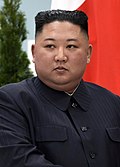 Kim Jong Un
Listed eight times: 2018, 2017, 2016, 2015, 2014, 2013, 2012, and 2011
(Finalist in 2023, 2022, 2021, 2020, and 2019) -
 Vladimir Putin
Listed seven times: 2022, 2017, 2016, 2015, 2014, 2008, and 2004
(Finalist in 2023, 2021, 2020, 2019, 2018, 2012, 2011, 2009, and 2007) -
 Donald Trump
Listed seven times: 2025, 2021, 2020, 2019, 2018, 2017, and 2016
(Finalist in 2023 and 2022) -
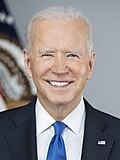
-
 Pope Francis
Listed six times: 2019, 2017, 2016, 2015, 2014, and 2013
(Finalist in 2023, 2022, 2021, 2020, and 2018) -
 Elon Musk
Listed six times: 2025, 2023, 2021, 2018, 2013, and 2010
(Finalist in 2022, 2020, 2019, 2017, 2016, and 2015)
.jpg)
_3.jpg)

.jpg)

.jpg)
_(cropped)_(higher_res).jpg)
_(3x4_close_cropped).jpg)
.jpg)
.jpg)
_(cropped).jpg)
Listed five times
[edit]-
 Jeff Bezos
Listed five times: 2018, 2017, 2014, 2009, and 2008
(Finalist in 2021, 2020, 2019, 2016, 2015, 2013, and 2012) -
 Tim Cook
Listed five times: 2022, 2021, 2016, 2015, and 2012
(Finalist in 2023, 2020, 2019, 2018, 2017, and 2014) -
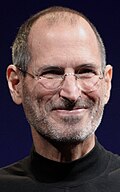
-

-
 Narendra Modi
Listed five times: 2021, 2020, 2017, 2015, and 2014
(Finalist in 2023, 2022, 2019, 2018, 2016, and 2012) -

-
 Nancy Pelosi
Listed five times: 2020, 2019, 2018, 2010, and 2007
(Finalist in 2023, 2022, 2021, 2013, 2009, and 2008) -
 Mark Zuckerberg
Listed five times: 2025, 2019, 2016, 2011, and 2008
(Finalist in 2023, 2022, 2021, 2020, 2018, 2017, 2015, 2014, 2012, and 2009)
_(cropped).jpeg)
.jpg)

_(cropped).jpg)
.jpg)
_(cropped).jpg)

(cropped_4).jpg)
Listed four times
[edit]-
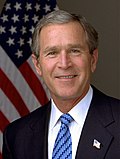
-

-

-

-
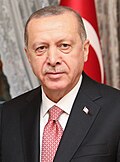 Recep Tayyip Erdoğan
2017, 2016, 2010, and 2004
(Finalist in 2023, 2022, 2021, 2019, 2015, 2014, and 2012) -
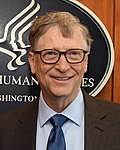 Bill Gates
2006, 2005, 2004, and the 20th century
(Finalist in 2019, 2018, 2017, 2016, 2014, 2010, and 2008) -
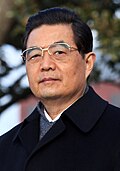
-

-

-

-

-
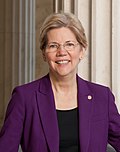 Elizabeth Warren
2017, 2015, 2010, and 2009
(Finalist in 2020, 2019, 2018, 2016, 2014, 2013, and 2011) -


.jpg)
.jpg)


.jpg)


.jpg)
Listed three times
[edit]-

-

-
 Beyoncé
2023, 2014, and 2013
(Finalist in 2021, 2020, 2019, 2018, 2017, 2016, 2015, 2012, 2011, and 2010) -

-
-
-
-
 Mario Draghi
2021, 2013, and 2012 -
-

-
-
 Charles Koch
2015, 2014, and 2011
(Finalist in 2016 and 2012)
(shared with brother David at all times) -
 David Koch
2015, 2014, and 2011
(Finalist in 2016 and 2012)
(shared with brother Charles at all times) -
 Luiz Inácio Lula da Silva
2023, 2010, and 2004 -
-

-
-

-

-
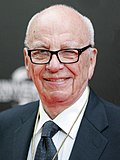
 Lorne Michaels
2025, 2015, and 2008 -
-

-
 Naomi Osaka
2021, 2020, and 2019 -

-

-
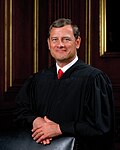
 Ren Zhengfei
2019, 2013, and 2005 -

-
-

-

-

-

-
 Malala Yousafzai
2015, 2014, and 2013


03.JPG)


.jpg)


.jpg)

.jpg)

.jpg)
.jpg)
.jpg)

.jpg)

.jpg)

.jpg)

.jpg)
.jpg)

_(cropped).jpg)
.png)


_Cropped.jpg)
Controversies
[edit]Exclusions
[edit]The exclusion of then-British prime minister Tony Blair from the 2004 list caused mild controversy. Time editor-at-large Michael J. Elliott defended the decision to consistently exclude Blair, saying that "Gerhard Schröder and Jacques Chirac are not there either. This is a worldwide list. There are no Western European political leaders on it because they are not that powerful or influential at this time."[35] The exclusion of then-President of the United States George W. Bush in 2007 generated similar controversy. Former Senator Rick Santorum (R–PA) said on Fox News:
The fact of the matter is, the president of the United States, I don't care who's in that office, is the most powerful man on the face of the Earth and has more influence over various aspects of lives, not just in this country, but around the world. And for Time magazine to dismiss that just shows you how biased and, I would argue, hateful they are.[36]
Adi Ignatius, Time's deputy managing editor who oversaw the list at the time, explained that "any U.S. president has a certain built-in influence ... Bush had actually squandered some of that built-in influence. His position on Iraq has cost him support in his own party. ... To a certain point, he sort of reached a lame-duck status".[37]
Inclusions
[edit]The list has also generated controversy over inclusions. In 2005, conservative commentator Ann Coulter was listed, which led Salon to observe:
When Time magazine named Ann Coulter among its 100 "most influential people" last week, alongside such heavyweights as Ariel Sharon, Bill Clinton, Nelson Mandela, and the Dalai Lama, the choice produced guffaws online. Plugging the issue on Fox News last week, Time executive editor Priscilla Painton insisted it was Coulter's use of "humor" that made her so influential, stopping just short of suggesting that Coulter is the conservative Jon Stewart. But even Fox's Bill O'Reilly wasn't buying it. He pressed Painton: "Do you think people, Americans, listen to Ann Coulter? Do you think she has influence in public opinion?"[38]
Time defended Coulter as a best-selling author whose controversial commentary strongly affected political debates in the United States. Coulter did not, however, make additional appearances on the list.
Mistakes
[edit]In February 2016, Time included the male British author Evelyn Waugh on its "100 Most Read Female Writers in College Classes" list, generating media attention and concerns regarding fact-checking at the magazine.[39] Time later issued a retraction. In a BBC interview with Justin Webb, Oxford professor Valentine Cunningham said the mistake was "a piece of profound ignorance on the part of Time magazine".[40]
Other Time lists
[edit]Next Generation Leaders
[edit]Since 2014, in partnership with Rolex, Time has published a class of young pioneers "in politics, business, culture, science and sports" who are reshaping the world around them.[41] It is, per the magazine's editor-in-chief Edward Felsenthal, "an opportunity to elevate" the trailblazers "who are building a better future".[42][43] Included in the 2022 list was Lina Abu Akleh, a human rights advocate who is the niece of Shireen Abu Akleh, a journalist likely killed by Israeli soldiers.[44]
The 25 Most Influential People on the Internet
[edit]From 2015 to 2019, Time also published a list titled "The 25 Most Influential People on the Internet", which featured people whose influence and dominance may have changed Internet culture; who have support, position, and prominence in various sections of social media; or who use and/or rely on the Internet as a platform for change. People who have been listed range from political figures, such as Donald Trump and Alexandria Ocasio-Cortez, to teenage YouTubers, such as JoJo Siwa and Emma Chamberlain.[45]
Others who have been listed include Lil Nas X, whose debut hit broke the record for most weeks spent atop the Billboard Hot 100 after being created and distributed on the Internet,[46] and actress and presenter Jameela Jamil, who is known widely beyond her profession for her online activism.[45]
Time 100 Next list
[edit]In 2019, Time began publishing the Time 100 Next list, which "spotlights 100 rising stars who are shaping the future of business, entertainment, sports, politics, science, health and more".[3] It is considered an expansion of the current Time 100 list.[47] Although the list has no explicit age cap, it is more focused on up-and-coming figures and "rising stars".[3][48] The Next list features profiles written by established Time 100 alumni.[3]
Time 100 Women of the Year
[edit]In 2019, Time created 89 new covers to celebrate women of the year starting from 1920.[49]
Time 100 Most Influential Companies
[edit]In 2021, Time solicited company nominations from industry and journalistic sources, which were then evaluated on relevance, impact, innovation, leadership, ambition and success. The top 100 were compiled into the Time100 Most Influential Companies list, which included well-known companies such as GM, Tesla, Volkswagen Group, Facebook, Google, Moderna, UPS, Netflix, and Zoom. Along with the list, Time launched Time Business.[50][51]
Time 100 Climate
[edit]In 2023, Time launched the Time Climate 100 list, which ranked the most influential climate action leaders based on recent and measurable achievements.[52] Its first edition included American singer Billie Eilish, United Steelworkers executive Roxanne Brown, World Bank president Ajay Banga, DSM-Firmenich vice-president Mark van Nieuwland, and indigenous rights activist Nemonte Nenquimo.[53]
Time 100 AI
[edit]In 2023, Time launched the Time AI 100 list, featuring the 100 most influential people in artificial intelligence. The first edition included business leaders such as Anthropic CEO and president Dario and Daniela Amodei, along with writers and academics including science fiction author Ted Chiang, researcher and policy advisor Alondra Nelson, and neural network pioneer Geoffrey Hinton, amongst others.[54]
Time 100 Health
[edit]In 2024, Time launched the Time Health 100 list, which recognizes the 100 most influential people in health. The list included French President Emmanuel Macron, U.S. President Jimmy Carter, and several other luminaries.[55]
Time 100 Philanthropy
[edit]In 2025, Time launched the Time Philanthropy 100 list, which recognizes the 100 most influential people in the field of philanthropy.[56]
See also
[edit]References
[edit]- ^ See who made Time's 100 most influential list. CNN. April 24, 2014. Archived from the original on October 4, 2015. Retrieved March 20, 2015 – via YouTube.
- ^ "The 100 Most Influential People in the World: Readers' Poll". Time. April 10, 2014. Archived from the original on May 12, 2015. Retrieved May 13, 2015.
- ^ a b c d "How We Chose the 2019 Time 100 Next". Time. Archived from the original on September 7, 2020. Retrieved November 30, 2020.
- ^ Elliott, Michael (April 26, 2004). "Time Names The World's Most Influential People". Time. Time Warner. Archived from the original on March 26, 2014. Retrieved May 15, 2011.
- ^ "President Paul Kagame nominated for the Time 100 magazine". The New Times. Rwanda. April 27, 2009. Archived from the original on March 2, 2020. Retrieved November 20, 2019.
- ^ "Darko Creative. Time 100". Tumblr. May 19, 2011. Archived from the original on March 26, 2023. Retrieved March 29, 2021.
From 2002 to 2008, Swarovski teamed with Paris based designer Darko Mladenovic ... the Ray was awarded to prominent recipients of Time Magazine's 100 World's Most Influential People Award for four years.
- ^ "The World's Most Influential Person Is ..." Time. April 27, 2009. Archived from the original on September 30, 2009.
- ^ Schonfeld, Erick (April 27, 2009). "Time Magazine Throws Up Its Hands As It Gets Pwned By 4Chan". TechCrunch. Archived from the original on November 26, 2014. Retrieved November 2, 2014.
- ^ "Marble Cake and moot". ABC News. April 30, 2009. Archived from the original on January 11, 2012. Retrieved November 2, 2014.
- ^ a b "The World's Most Influential People". Time. 2010. Archived from the original on July 24, 2011. Retrieved July 25, 2011.
- ^ Linkins, Jason (April 29, 2010). "The Time 100 In 2010". HuffPost. Archived from the original on April 21, 2012. Retrieved July 29, 2011.
- ^ "Ten Indians on The 2010 Time 100". Thaindian News. Archived from the original on June 14, 2013. Retrieved March 3, 2013.
- ^ "Why Shahrukh Khan was not among Time magazine's 100 most influential people". NDTV. April 30, 2010. Archived from the original on February 2, 2014.
- ^ Cain, Rob (April 16, 2016). "Don't Worry, Here's Proof That Shah Rukh Khan Is Still The World's Biggest Movie Star". Forbes. Archived from the original on March 21, 2019. Retrieved November 19, 2019.
- ^ "The 2010 Time 100 Poll". Time. Archived from the original on July 15, 2011. Retrieved July 29, 2011.
- ^ "The 2011 Time 100". Time. April 21, 2011. Archived from the original on July 25, 2011. Retrieved July 25, 2011.
- ^ Vena, Jocelyn (April 27, 2011). "Justin Bieber, Amy Poehler Breakout Stars At Time 100 Gala: 'Parks and Recreation' co-star Aziz Ansari calls Poehler 'tremendously talented and really a leader in her field.'". MTV. Archived from the original on June 4, 2011. Retrieved July 29, 2011.
- ^ "The 2011 Time 100 Poll". Time. Archived from the original on July 29, 2011. Retrieved July 29, 2011.
- ^ a b Wong, Curtis M. (April 22, 2011). "Time 100 Most Influential People: See Which World Figures Made The 2011 List". HuffPost. Archived from the original on August 10, 2011. Retrieved July 29, 2011.
- ^ Pompeo, Joe (April 21, 2007). "Time 100 list honors influencers in the year of Arab Spring". Yahoo! News. Archived from the original on July 1, 2012. Retrieved July 29, 2011.
- ^ Blas, Lorena (April 21, 2011). "William, Kate among 'Time' 100 List". USA Today. Archived from the original on September 9, 2011. Retrieved July 29, 2011.
- ^ Eley, Amy (April 24, 2014). "Beyonce lands 'Time 100' cover: 2014 list includes Robert Redford, Jason Collins". USA Today. Archived from the original on April 2, 2015. Retrieved March 20, 2015.
- ^ "'Time' list for 2014 includes 41 women". The Columbus Dispatch. Archived from the original on September 24, 2015. Retrieved March 20, 2015.
- ^ "Photos: 2014 Time 100 gala honors world's most influential people". Los Angeles Times. April 29, 2014. Retrieved May 22, 2024.
- ^ Gibbs, Nancy (April 24, 2014). "The Ties That Bind the 100". Time. Archived from the original on April 24, 2014. Retrieved November 17, 2019.
- ^ "Millie Bobby Brown Is Launching A Line With Pandora Celebrating Something Badass AF". Bustle. August 8, 2019. Archived from the original on August 8, 2019. Retrieved August 8, 2019.
- ^ Spiro, Amy (April 22, 2018). "Gal Gadot makes 'Time 100' list". The Jerusalem Post. Archived from the original on May 22, 2023. Retrieved May 22, 2023.
- ^ Solomon, Shoshana (April 25, 2018). "Microsoft CEO Nadella stars on Time cover for Most Influential 2018 issue". The Times of Israel. Archived from the original on May 22, 2023. Retrieved May 22, 2023.
- ^ Jensen, Erin (April 17, 2019). "Dwayne Johnson, Taylor Swift, Gayle King, more cover Time's 100 most influential people issue". USA Today. Archived from the original on April 17, 2019. Retrieved December 12, 2019.
- ^ Ayyub, Rana (September 22, 2020). "Bilkis Is on the 2020 Time 100 List". Time. Archived from the original on September 23, 2020.
- ^ "The 100 Most Influential People of 2021". Time. Archived from the original on September 15, 2021. Retrieved September 15, 2021.
- ^ "Here's Who Won Time's 2021 Time100 Reader Poll". Time. September 10, 2021. Archived from the original on September 15, 2021.
- ^ Felsenthal, Edward (September 15, 2021). "How We Chose the 2021 Time100". Time. Archived from the original on September 15, 2021. Retrieved September 16, 2021.
- ^ "Time100: The Most Influential People of 2025". Time. April 16, 2025. Retrieved April 19, 2025.
- ^ "Revealed: the world's 100 most influential people. (Sorry, Prime Minister, not you)". The Independent. April 18, 2004. Archived from the original on July 16, 2019. Retrieved July 16, 2019.
- ^ Hannity, Sean; Colmes, Alan (May 4, 2007). "President Bush Not 'Influential' Enough for Time". Fox News. Archived from the original on May 10, 2011. Retrieved May 15, 2011.
- ^ Brown, Emily (May 3, 2007). "Obama among Time's list of 100 most influential". The Honolulu Advertiser. Archived from the original on May 15, 2011. Retrieved May 15, 2011.
- ^ Boehlert, Eric (April 19, 2005). "Time hearts Ann Coulter". Salon.com. Archived from the original on May 17, 2006. Retrieved May 15, 2011.
- ^ Deutschmann, Jennifer (February 25, 2016). "Evelyn Waugh: 'Time' Names Male Writer In List Of '100 Most Read Female Authors'". Inquisitr. Archived from the original on July 16, 2019. Retrieved July 16, 2019.
- ^ "Time magazine correction: Evelyn Waugh was not a woman". BBC.com. February 26, 2016. Archived from the original on December 14, 2016. Retrieved June 21, 2018.
- ^ "Meet Time's Next Generation Leaders". Time. Archived from the original on March 2, 2023. Retrieved May 23, 2022.
- ^ "How Time Chose Its 2022 Next Generation Leaders". Time. Archived from the original on May 23, 2022. Retrieved May 23, 2022.
- ^ "How Time Chose Its 2021 Next Generation Leaders". Time. Archived from the original on May 26, 2022. Retrieved May 23, 2022.
- ^ The New Arab Staff (September 29, 2022). "Shireen Abu Akleh niece named in Time100 Next list". New Arab. Archived from the original on February 7, 2023. Retrieved January 11, 2023.
- ^ a b "The 25 Most Influential People on the Internet". Time. Archived from the original on August 7, 2019. Retrieved August 8, 2019.
- ^ Jensen, Erin. "Harry and Meghan, Ariana Grande on Time's list of most influential people on the internet". USA Today. Archived from the original on August 8, 2019. Retrieved August 8, 2019.
- ^ "First 'Time 100 Next' List Honors Kerby Jean-Raymond, Lil Nas X, Zion Williamson & More". HYPEBEAST. November 13, 2019. Archived from the original on February 6, 2021. Retrieved November 30, 2020.
- ^ "Time Names 'The Next 100' Most Influential People in the World". Highsnobiety. November 13, 2019. Archived from the original on September 9, 2023. Retrieved November 30, 2020.
- ^ "100 Women of the Year". Time. March 5, 2020. Archived from the original on December 23, 2022. Retrieved March 21, 2021.
- ^ "Time Reveals the First-ever List of the Time100 Most Influential Companies in the World". www.prnewswire.com (Press release). Retrieved June 30, 2024.
- ^ LaReau, Jamie L. "GM makes Time's 100 Most Influential Companies: Here's why". Detroit Free Press. Retrieved June 30, 2024.
- ^ "How We Chose the 100 Most Influential Climate Leaders in Business for 2023". Time. November 16, 2023. Archived from the original on November 17, 2023. Retrieved November 17, 2023.
- ^ "The 100 Most Influential Climate Leaders in Business 2023". Time. November 16, 2023. Archived from the original on November 16, 2023. Retrieved November 16, 2023.
- ^ "The 100 Most Influential People in AI 2023". Time. Retrieved September 9, 2024.
- ^ "Time Health 100 list". Time. Retrieved May 13, 2024.
- ^ "Time100 Philanthropy 2025". Time. Retrieved May 21, 2025.

If an internal link incorrectly led you here, you may wish to change the link to point directly to the intended article.
Time 100
View on GrokipediaOverview
Inception and Purpose
The TIME 100 originated with Time magazine's 1999 publication of "TIME 100: The Most Important People of the Century," a one-time compilation identifying 100 individuals who most profoundly shaped the 20th century through their contributions in fields such as science, politics, and social reform. The selection process involved input from American academics, politicians, and journalists, culminating in a complete list released on June 14, 1999, after initial category previews earlier that year.[8] This list highlighted figures like Albert Einstein, recognized for unlocking atomic and cosmic mysteries, and Mohandas Gandhi, noted for pioneering nonviolent resistance against colonial rule.[9] Building on the acclaim of the centennial project, Time magazine launched the TIME 100 as an annual feature starting with the 2004 edition, released on newsstands April 20, 2004, to spotlight current global influencers amid rapidly evolving events. This shift enabled ongoing assessment of individuals driving contemporary change, rather than retrospective analysis.[10] The core purpose remains to measure and acknowledge those exerting outsized influence on human affairs—via leadership, innovation, or disruption—by evaluating the tangible forces they unleash, distinct from transient fame or institutional authority alone.[3] Time editors have described the exercise as a means to "step back and measure the forces that move us," focusing on impact that alters trajectories in politics, culture, and beyond.[3] This emphasis on substantive agency over popularity underscores the list's intent to chronicle causal drivers of global shifts in real time.[11]Format and Categories
The TIME 100 list is structured into six primary categories—Leaders, Titans, Icons, Pioneers, Artists, and Innovators—to group honorees according to their domains of influence, such as governance, business, culture, activism, entertainment, and technology.[1][12] These groupings enable the presentation of diverse impact areas without rigid numerical quotas, allowing flexibility in selection volumes per category to align with prevailing global events and trends.[1] The total comprises approximately 100 individuals, with profiles typically including short essays or tributes authored by prominent figures who highlight the honoree's contributions.[1] Published annually in a dedicated issue of TIME magazine during April, the list is disseminated through print editions featuring multiple cover images of select honorees, alongside extensive online content such as interactive profiles, videos, and multimedia features.[1][13] For the 2025 edition, released on April 16, the format incorporated five worldwide covers and emphasized emerging business influence by including a record 16 corporate CEOs.[14][13] Complementing the publication, TIME organizes the TIME100 Summit on April 23 and the TIME100 Gala typically held later that week in New York City, events that gather honorees, influencers, and performers for networking and recognition, often broadcast or streamed for broader reach.[15][16] These elements collectively amplify the list's visibility, framing it as both an editorial ranking and a platform for discourse on global influence.[17]Selection Process
Criteria for Influence
The TIME 100 list evaluates candidates based on their demonstrated capacity to effect tangible changes in global affairs, prioritizing verifiable causal impacts over superficial measures of fame or public attention. Editors seek individuals whose actions—through innovations, policy shifts, leadership decisions, or cultural transformations—have produced measurable outcomes, such as halting disease outbreaks, forging international agreements, or reshaping industries via technological advancements.[3][2] This approach discounts popularity indicators like social media engagement or search trends, focusing instead on empirical evidence of influence, including breakthroughs that alter rules, set records, or challenge established boundaries.[3] Selection standards emphasize global reach and the verifiability of contributions, assessing whether an individual's efforts have influenced systems, societies, or behaviors on an international scale, irrespective of the positive or negative nature of those effects. For instance, the criteria highlight leaders who wield public authority to drive policy reforms or moral exemplars who inspire shifts in collective action, but only when supported by concrete results rather than intent or visibility alone.[18][2] Nominations are solicited from TIME 100 alumni, the magazine's global correspondents, and subject-matter experts to identify potential candidates, yet final determinations rest with editors who rigorously scrutinize the extent and authenticity of each nominee's impact.[18][3] This methodology underscores a commitment to causal realism in gauging influence, favoring those who have demonstrably moved the world through sustained, evidence-based agency over transient notoriety or polling data.[3][2]Editorial Decision-Making
Time's editorial team finalizes the TIME 100 list through an internal process of extended discussions among editors, correspondents, and select external contributors, spanning several months prior to annual publication.[2] This deliberation, often led by senior figures such as Dan Macsai and Cate Matthews, incorporates nominations and insights gathered from Time's global network of journalists and experts, culminating in a curated selection without formalized public criteria for final inclusions.[19] Ultimate authority resides with top editorial leadership, who approve the roster amid a lack of transparency regarding specific vote counts, debate transcripts, or rejection rationales, emphasizing discretionary journalistic expertise over algorithmic or democratic mechanisms.[2] While subjective in nature, the process integrates empirical signals of influence, including analyses of media prominence, enacted policy outcomes, and consultations with domain specialists to gauge real-world effects.[2] Each year's list represents a complete reevaluation, eschewing carryover mandates or proportional representation from prior editions, which permits responsiveness to unfolding global developments—such as the 2025 inclusion of Elon Musk, recognized amid his leadership in pioneering space ventures and artificial intelligence initiatives.[15][2] This approach prioritizes contemporaneous impact over longitudinal consistency, allowing for abrupt shifts in honorees tied to verifiable shifts in spheres like technology and governance.[2]Criticisms of Methodology
The TIME 100 selection process relies on qualitative assessments of influence, such as breakthroughs in fields like science or society and personal narratives gathered from insiders, without employing quantifiable benchmarks like economic output, citation counts, or measurable policy impacts.[3] This approach has drawn criticism for potentially prioritizing compelling stories or cultural narratives over empirical data, as evidenced by inclusions that emphasize activism or visibility rather than verifiable metrics of global change, contrasting with data-centric rankings like Forbes' Global 2000, which uses concrete figures such as $52.9 trillion in revenue and $4.9 trillion in profit across listed companies.[20] [21] The opacity of the methodology exacerbates concerns, as the final choices are made exclusively by TIME editors based on internal nominations from correspondents and alumni, with no public input, standardized scoring, or disclosure of deliberation details.[3] [22] Even TIME contributors have acknowledged the inherent arbitrariness, noting that thousands could qualify under vague influence criteria, fostering skepticism that editorial preferences may supersede objective evaluation.[23] [24] Historically, the process has depended on unverified internal judgments without third-party audits or cross-checks, undermining assertions of impartiality since the list's inception in 1999, where editorial discretion has consistently shaped outcomes absent external validation mechanisms common in more rigorous indices.[3] This reliance on subjective curation, as critiqued by observers, risks conflating prominence with profound influence, particularly when compared to transparent, metric-based alternatives that prioritize hard evidence over interpretive assessments.[25][20]Historical Development
Early Lists (1999-2009)
The Time 100 began as a retrospective compilation in 1999, selecting the 100 most influential persons of the 20th century across categories including Leaders & Revolutionaries, Scientists & Thinkers, Builders & Titans, Artists & Entertainers, and Heroes & Icons.[8] This inaugural effort drew from debates among academics, politicians, and journalists to identify century-defining figures such as Winston Churchill and Albert Einstein.[8] Annual lists commenced in 2004, amid a post-September 11, 2001 emphasis on global security and leadership, featuring U.S. President George W. Bush in the Leaders category for his role in international affairs and former New York City Mayor Rudy Giuliani for his crisis management. The 2004 selections highlighted American responses to terrorism, with Bush recognized for steering policy through wartime challenges. The omission of British Prime Minister Tony Blair from the 2004 list, despite his alliance with U.S. efforts in Iraq, elicited commentary from Time editors, who noted it alongside exclusions of figures like Federal Reserve Chairman Alan Greenspan and Secretary of State Colin Powell, underscoring subjective criteria focused on direct influence. By the late 2000s, the list incorporated broader global perspectives, with 2009 stabilizing into categorized formats such as Leaders & Revolutionaries and Builders & Titans, amid the financial crisis. U.S. President Barack Obama topped the 2009 Leaders section, cited for his electoral victory and early policy initiatives addressing economic turmoil.2010s Evolution
In the 2010s, the TIME 100 list reflected the decade's digital revolution by elevating technology leaders and social media pioneers whose innovations reshaped communication and information flow. Mark Zuckerberg's inclusion in 2011 highlighted Facebook's expanding global reach, while subsequent years featured figures like Elon Musk in 2013 for SpaceX advancements and Tim Cook in 2012 following his Apple leadership transition. This emphasis paralleled the proliferation of smartphones and platforms like Twitter and Instagram, which amplified individual influence beyond traditional power structures.[26] Thematic selections also responded to geopolitical upheavals, such as the Arab Spring protests starting in late 2010, which prompted inclusions of regional activists and reformers challenging authoritarian regimes through organized dissent. By mid-decade, categories broadened to spotlight artists and social advocates, aligning with rising awareness of cultural and humanitarian issues. The annual TIME 100 gala, established as a networking venue in Manhattan, gained prominence during this period, convening honorees for tributes and discussions that underscored the list's role in fostering elite connections.[27][28] Digital engagement features, including reader polls launched by 2018, invited public nominations—such as the campaign for BTS that year—but exerted no sway over final editorial choices, preserving TIME's curatorial authority amid debates on populism versus expertise. The 2017 edition exemplified era-specific tensions, listing President Donald Trump alongside family advisers Ivanka Trump and Jared Kushner, as well as opponents like James Comey, capturing the polarized influence dynamics post-2016 U.S. election. Later, amid the 2017 #MeToo revelations, activist profiles like Tarana Burke's gained traction in related TIME coverage, signaling a pivot toward voices addressing systemic abuses, though list inclusions prioritized demonstrated global ripple effects over transient buzz.[29][30][31]2020s and Recent Changes
In response to the COVID-19 pandemic, the 2020 TIME 100 list emphasized health experts and crisis managers, prominently featuring Dr. Anthony Fauci for his role in guiding U.S. public health responses, alongside global leaders addressing economic and social disruptions.[32][33] The selection process highlighted individuals demonstrating resilience and innovation amid lockdowns and vaccine development, with editor-in-chief Edward Felsenthal noting a focus on those providing "hope" through expertise rather than political figures alone.[34] This shift continued into 2021, incorporating figures like Simone Biles for mental health advocacy during the ongoing crisis, reflecting broader adaptations to public vulnerabilities exposed by the pandemic.[35] The 2020s saw expanded sub-lists addressing emerging global challenges, including the launch of the TIME Climate 100 in 2023 to recognize leaders in environmental action based on measurable impacts. Parallel to this, TIME introduced AI-focused recognitions, such as the 2024 list of 100 most influential people in AI, which prioritized corporate executives and researchers but notably excluded Elon Musk despite xAI's advancements in alternative AI models challenging dominant players.[36] Critics argued this omission overlooked Musk's influence via Grok and Tesla's autonomous driving integrations, attributing it potentially to editorial preferences favoring established tech ecosystems over disruptive newcomers.[37][38] The 2025 TIME 100, released on April 16, underscored a resurgence in business leadership, including a record number of CEOs such as BlackRock's Larry Fink for sustainable investing strategies, alongside Elon Musk and Meta's Mark Zuckerberg for technological expansions.[15][1] This edition signaled a pivot toward economic recovery post-pandemic, with innovators like Alex Karp of Palantir cited for data-driven defense applications amid geopolitical tensions. Complementing the main list, the TIME100 Next edition on September 30 highlighted emerging talents across entertainment and activism, such as Tate McRae and GloRilla, to capture rising influences outside traditional power structures.[39][40] Digital formats proliferated with the inaugural TIME100 Creators list in July 2025, spotlighting influencers like Kai Cenat for reshaping media consumption, though the core annual lists retained a print-centric release in TIME's magazine issues to maintain editorial gravitas.[41] Amid conflicts in Ukraine and the Middle East, selections faced scrutiny for uneven inclusivity, with Ukrainian President Volodymyr Zelenskyy featured in discussions but broader critiques questioning underrepresentation of on-ground actors versus Western-aligned figures, potentially reflecting institutional sourcing biases toward accessible, English-language narratives.[42]Patterns in Selections
Frequent Honorees
Individuals appearing most frequently on the TIME 100 list demonstrate sustained global influence over extended periods, often spanning decades in roles of political, economic, or cultural significance. Xi Jinping holds the record with 13 appearances, including selections in 2009 and from 2011 through 2022. Barack Obama has been honored 11 times, from 2005 and 2007 to 2016. Oprah Winfrey matches this total with 11 listings, encompassing the 20th century edition and annual selections from 2004 to 2011, plus 2018 and 2022. Hillary Clinton has appeared 10 times, primarily during her roles in U.S. politics from 2004 to 2016. Angela Merkel follows with 9 inclusions, reflecting her long tenure as German Chancellor from 2006 to 2020.[32] Kim Jong-un has 8 appearances from 2011 to 2018. Vladimir Putin and Donald Trump each have 7 selections; Putin from 2004, 2008, and 2014 to 2017 plus 2022, while Trump appeared consecutively from 2016 to 2021 and again in 2025.[1] Joe Biden, Pope Francis, and Elon Musk have each been listed 6 times, with Musk's recognitions tied to advancements in space exploration and electric vehicles since 2010.[1]| Name | Appearances | Notable Years |
|---|---|---|
| Xi Jinping | 13 | 2009, 2011–2022 |
| Barack Obama | 11 | 2005, 2007–2016 |
| Oprah Winfrey | 11 | 20th century, 2004–2011, 2018, 2022 |
| Hillary Clinton | 10 | 2004–2009, 2011–2012, 2014–2016 |
| Angela Merkel | 9 | 2006–2007, 2009, 2011–2012, 2014–2016, 2020 |
| Kim Jong-un | 8 | 2011–2018 |
| Vladimir Putin | 7 | 2004, 2008, 2014–2017, 2022 |
| Donald Trump | 7 | 2016–2021, 2025 |
| Joe Biden | 6 | 2011, 2013, 2020–2023 |
| Pope Francis | 6 | 2013–2017, 2019 |
| Elon Musk | 6 | 2010, 2013, 2018, 2021, 2023, 2025 |