



Community hub
Recent from talks
Contribute something
Nothing was collected or created yet.
NATO Joint Military Symbology
View on Wikipedia | This article includes a list of general references, but it lacks sufficient corresponding inline citations. (November 2009) |
| Example symbols | ||
|---|---|---|
 |
||
| An unidentified hostile motorized anti-tank division | ||
| 1 DPLeg |  |
Wyszków |
-_Infantry_(NATO_APP-6).svg)
| ||
| Polish 1st Legions Infantry Division of Operational Group Wyszków | ||
| 3 PPCLI |  |
1 CMBG |
-_Infantry_-_Light_Infantry_(NATO_APP-6A).svg)
| ||
| 3rd Battalion, Princess Patricia's Canadian Light Infantry of 1 Canadian Mechanized Brigade Group | ||
| 4 Pz |  |
XXIV |
-_Armour_(NATO_APP-6).svg)
| ||
| 4th Panzer Division of XXIV Army Corps | ||
 |
82 Abn | |
-_Artillery_-_Airborne_(NATO_APP-6).svg)
| ||
| 82nd Airborne Division Artillery Brigade | ||
NATO Joint Military Symbology is the NATO standard for military map symbols. Originally published in 1986 as Allied Procedural Publication 6 (APP-6), NATO Military Symbols for Land Based Systems, the standard has evolved over the years and is currently in its fifth version (APP-6E). The symbols are designed to enhance NATO's joint interoperability by providing a standard set of common symbols. APP-6 constituted a single system of joint military symbology for land, air, space and sea-based formations and units, which can be displayed for either automated map display systems or for manual map marking. It covers all of the joint services and can be used by them.
History
[edit]The first basic military map symbols began to be used by western armies in the decades following the end of the Napoleonic Wars. During World War I, there was a degree of harmonisation between the British and French systems, including the adoption of the colour red for enemy forces and blue for allies; the British had previously used red for friendly troops because of the traditional red coats of British soldiers. However, the system now in use is broadly based on that devised by the US Army Corps of Engineers in 1917. The infantry symbol of a saltire in a rectangle was said to symbolise the crossed belts of an infantryman, while the single diagonal line for cavalry was said to represent the sabre belt. With the formation of NATO in 1949, the US Army system was standardized and adapted, with different shapes for friendly (blue rectangle), hostile (red diamond) and unknown (yellow quatrefoil) forces.[1]
APP-6A was promulgated in December 1999. The NATO standardization agreement that covers APP-6A is STANAG 2019 (edition 4), promulgated in December 2000. APP-6A replaced APP-6 (last version, July 1986), which had been promulgated in November 1984 (edition 3 of STANAG 2019 covered APP-6), and was replaced in turn by Joint Symbology APP-6(B) (APP-6B) in 2008 (STANAG 2019 edition 5, June 2008) and NATO Joint Military Symbology APP-6(C) (APP-6C) in 2011 (STANAG 2019 edition 6, May 2011).
The U.S. is the current custodian of APP-6A, which is equivalent to MIL-STD-2525A.
Symbol sets
[edit]The APP-6A standard provides common operational symbology along with details on their display and plotting to ensure the compatibility, and to the greatest extent possible, the interoperability of NATO land component command, control, communications, computer, and intelligence (C4I) systems, development, operations, and training. APP-6A addresses the efficient transmission of symbology information through the use of a standard methodology for symbol hierarchy, information taxonomy, and symbol identifiers.
APP-6A recognises five broad sets of symbols, each set using its own SIDC (Symbol identification coding) scheme:
- Units, equipment, and installations
- Military operations (tactical graphics)
- METOC (meteorological and oceanographic)
- Signals intelligence
- MOOTW (military operations other than war)
Units, equipment, and installations consist of icons, generally framed, associated with a single point on the map. All sorts of graphical and textual modifiers may surround them, specifying categories, quantities, dates, direction of movement, etc.
Tactical graphics represent operational information that cannot be presented via icon-based symbols alone: unit boundaries, special area designations, and other unique markings related to battlespace geometry and necessary for battlefield planning and management. There are point, line and area symbols in this category.
Meteorological and oceanographic symbology is the only set not under the standard's control: rather, they are imported from the symbology established by the World Meteorological Organization.
The signals intelligence and military operations other than war symbology sets stand apart from Units, Equipment, and Installations although they obey the same conventions (i.e., they consist of framed symbols associated to points on the map). They do not appear in APP-6A proper, having been introduced by MIL-STD-2525B.
Symbol composition
[edit]Most of the symbols designate specific points, and consist of a frame (a geometric border), a fill, a constituent icon, and optional symbol modifiers. The latter are optional text fields or graphic indicators that provide additional information.
The frame provides a visual indication of the affiliation, battle dimension, and status of an operational object. The use of shape and colour is redundant, allowing the symbology to be used under less-than-ideal conditions such as a monochrome red display to preserve the operator's night vision. Nearly all symbols are highly stylised and can be drawn by persons almost entirely lacking in artistic skill; this allows one to draw a symbolic representation (a GRAPHREP, Graphical report) using tools as rudimentary as plain paper and pencil.
The frame serves as the base to which other symbol components and modifiers are added. In most cases a frame surrounds an icon. One major exception is equipment, which may be represented by icons alone (in which case the icons are coloured as the frame would be).
The fill is the area within a symbol. If the fill is assigned a colour, it provides an enhanced (redundant) presentation of information about the affiliation of the object. If colour is not used, the fill is transparent. A very few icons have fills of their own, which are not affected by affiliation.
The icons themselves, finally, can be understood as combinations of elementary glyphs that use simple composition rules, in a manner reminiscent of some ideographic writing systems such as Chinese. The standard, however, still attempts to provide an "exhaustive" listing of possible icons instead of laying out a dictionary of component glyphs. This causes operational problems when the need for an unforeseen symbol arises (particularly in MOOTW), a problem exacerbated by the administratively centralised maintenance of the symbology sets.
When rendering symbols with the fill on, APP-6A calls for the frame and icon to be black or white (as appropriate for the display). When rendering symbols with the fill off, APP-6A calls for a monochrome frame and icon (usually black or in accordance with the affiliation colour). NATO symbols can also be rendered with fill off using a frame coloured according to affiliation and a black icon,[2] though this is not defined in any APP-6 standard.
-
 Friendly mechanized infantry with fill on
 -
 Friendly mechanized infantry with fill off and monochrome colour frame and icon
 -
 Friendly mechanized infantry with fill off and monochrome frame and icon
 -
 Friendly mechanized infantry with fill off and bichrome frame and icon
-_Infantry_-_Mechanized_(NATO_APP-6).svg)
-_Infantry_-_Mechanized_(NATO_APP-6).svg)
-_Infantry_-_Mechanized_(NATO_APP-6).svg)
-_Infantry_-_Mechanized_(NATO_APP-6).svg)
Allegiance and affiliation
[edit]APP-6 colour representation
[edit]The concept of affiliation does not appear in the original APP-6 as these were not introduced until APP-6A. Instead, the original APP-6 described a series of "colour representations" with the purpose of distinguishing friendly and enemy elements.
- Multi-colour representation:
- Blue or black for friendly icons
- Red for enemy icons
- Green for man-made obstacles (friendly or enemy)
- Yellow for chemical, biological, radiological or nuclear events
- Other colours to be established in a map legend
- Tri-colour representation:
- Blue or black for friendly icons
- Red for enemy icons
- Green or yellow for man-made obstacles (friendly or enemy) and for chemical, biological, radiological or nuclear events
- Two colour representation:
- Blue, green, or black for friendly icons
- Red for enemy icons
- One colour representation:
- Single line border for friendly icons
- Double line border for enemy icons, and unbordered icons were labeled with "EN" to the lower right corner
-
 APP-6 friendly unit (colour)
 -
 APP-6 enemy unit (colour)
 -
 APP-6 friendly unit (B&W)
 -
 APP-6 enemy unit (B&W)
-_Unspecified_or_Composite_All-Arms_(NATO_APP-6).svg)
-_Unspecified_or_Composite_All-Arms_(NATO_APP-6).svg)
-_Unspecified_or_Composite_All-Arms_(NATO_APP-6).svg)
-_Unspecified_or_Composite_All-Arms_(NATO_APP-6).svg)
APP-6A affiliation
[edit]Affiliation refers to the relationship of the tracker to the operational object being represented. The basic affiliation categories are unknown, friend, neutral, and hostile. In the ground unit domain, a yellow quatrefoil frame is used to denote unknown affiliation, a blue rectangle frame to denote friendly affiliation, a green square frame to denote neutral affiliation, and a red diamond frame to denote hostile affiliation.[3]: 11 In the other domains (air and space, sea surface and subsurface, etc.), the same color scheme is used.
| Style | Friendly | Hostile | Neutral | Unknown |
|---|---|---|---|---|
| Fill on | -_Unspecified_or_Composite_All-Arms_(NATO_APP-6).svg)
|
-_Unspecified_or_Composite_All-Arms_(NATO_APP-6A).svg)
|
-_Unspecified_or_Composite_All-Arms_(NATO_APP-6A).svg)
|
-_Unspecified_or_Composite_All-Arms_(NATO_APP-6A).svg)
|
| Monochrome (for digital media) | -_Unspecified_or_Composite_All-Arms_(NATO_APP-6).svg)
|
-_Unspecified_or_Composite_All-Arms_(NATO_APP-6A).svg)
|
-_Unspecified_or_Composite_All-Arms_(NATO_APP-6A).svg)
|
-_Unspecified_or_Composite_All-Arms_(NATO_APP-6A).svg)
|
| Monochrome (for print media) | -_Unspecified_or_Composite_All-Arms_(NATO_APP-6).svg)
|
-_Unspecified_or_Composite_All-Arms_(NATO_APP-6A).svg)
|
-_Unspecified_or_Composite_All-Arms_(NATO_APP-6A).svg)
|
-_Unspecified_or_Composite_All-Arms_(NATO_APP-6A).svg)
|
The full set of affiliations is:
- Pending (P)
- Unknown (U)
- Assumed friend (A)
- Friend (F)
- Neutral (N)
- Suspect (S) (assumed hostile)
- Hostile (H)
- Exercise pending (G)
- Exercise unknown (W)
- Exercise assumed friend (M)
- Exercise friend (D)
- Exercise neutral (L)
- Exercise suspect (J)
- Exercise hostile (K)
There are no "assumed neutral" and "exercise assumed neutral" affiliations.
These colors are used in phrases such as "blue on blue" for friendly fire, blue force tracking, red teaming, and Red Cells.
Battle dimension
[edit]Battle dimension defines the primary mission area for the operational object within the battlespace. An object can have a mission area above the Earth's surface (i.e., in the air or outer space), on it, or below it. If the mission area of an object is on the surface, it can be either on land or sea. The subsurface dimension concerns those objects whose mission area is below the sea surface (e.g., submarines and sea mines). Some cases require adjudication; for example, an Army or Marine helicopter unit is a maneuvering unit (i.e., a unit whose ground support assets are included) and is thus represented in the land dimension. Likewise, a landing craft whose primary mission is ferrying personnel or equipment to and from shore is a maritime unit and is represented in the sea surface dimension. A landing craft whose primary mission is to fight on land, on the other hand, is a ground asset and is represented in the land dimension.
Closed frames are used to denote the land and sea surface dimensions, frames open at the bottom denote the air/space dimension, and frames open at the top denote the subsurface dimension.
| Dimension | Friendly | Hostile | Neutral | Unknown |
|---|---|---|---|---|
| Air and space | 
|

|

|

|
| Ground | 
|

|

|

|
| Sea surface | 
|
|
|
|
| Subsurface | 
|

|

|

|
An unknown battle dimension is possible; for example, some electronic warfare signatures (e.g., radar systems) are common to several battle dimensions and would therefore be assigned an "Unknown" battle dimension until further discrimination becomes possible. Special forces may operate in any dimension.
The full set of battle dimensions is, in ascending order of distance from Earth center:
- Special forces (F)
- Sea subsurface (U)
- Sea surface (S)
- Ground (G)
- Air (A)
- Space (P)
- Other (X)
- Unknown (Z)
The mnemonic for this ordering is "Fuss-Gap".
The letter in parentheses is used by the symbol identification coding (SIDC) scheme – strings of 15 characters used to transmit symbols.
The space and air battle dimensions share a single frame shape. In the ground battle dimension, two different frames are used for the friendly (and assumed friendly) affiliations in order to distinguish between units and equipment. The SOF (special operations forces) are assigned their own battle dimension because they typically can operate across several domains (air, ground, sea surface and subsurface) in the course of a single mission; the frames are the same as for the ground (unit) battle dimension.[4]: 47–48 The other battle dimension, finally, seems to be reserved for future use (there are no instances of its use as of 2525B Change 1).
Status
[edit]The status of a symbol refers to whether a warfighting object exists at the location identified (i.e., status is "present") or will in the future reside at that location (i.e., status is "planned, anticipated, suspected," or "on order"). Regardless of affiliation, present status is indicated by a solid line and planned status by a dashed line. The frame is solid or dashed, unless the symbol icon is unframed, in which case the icon itself is drawn dashed. Planned status cannot be shown if the symbol is an unframed filled icon.
Icon placement
[edit]The icon is the innermost part of a symbol which, when displayed, provides an abstract pictorial or alphanumeric representation of an operational object. The icon portrays the role or mission performed by the object. APP-6A distinguishes between icons that must be framed or unframed and icons where framing is optional.[3]: 39–43 APP-6A defined a standard octagon boundary within each map symbol frame. This octagon is not actually shown when symbols are drawn or rendered but, with a few defined exceptions, all icons inside the frame would also fit inside these octagons. APP-6C modified some symbol frames from previous editions of the standard. From top to bottom, here is the symbol boundary shown inside the APP-6C frames of space elements, air elements, land units, land equipment and surface sea elements, and sub-surface sea elements.
.svg)
Unit symbols
[edit]Unit icon modifiers
[edit]Unit symbols can be used independently as well as in combinations. There are also some symbols that cannot appear by themselves, but can only be used to modify other unit symbols:
| Modifier meaning | Friendly | Hostile | Neutral | Unknown | Notes |
|---|---|---|---|---|---|
| Airborne | -_Modifier_-_Airborne_(NATO_APP-6).svg)
|
-_Modifier_-_Airborne_(NATO_APP-6).svg)
|
-_Modifier_-_Airborne_(NATO_APP-6).svg)
|
-_Modifier_-_Airborne_(NATO_APP-6).svg)
|
In APP-6 was including air assault and paratrooper forces; since APP-6A is specifically parachute forces |
| Parachute | -_Parachute_(NATO_APP-6).svg)
|
-_Parachute_(NATO_APP-6).svg)
|
-_Parachute_(NATO_APP-6).svg)
|
-_Parachute_(NATO_APP-6).svg)
|
Symbol used in APP-6, not used in APP-6A and later editions |
| Airmobile | -_Modifier_-_Airmobile_(NATO_APP-6A).svg)
|
-_Modifier_-_Airmobile_(NATO_APP-6A).svg)
|
-_Modifier_-_Airmobile_(NATO_APP-6A).svg)
|
-_Modifier_-_Airmobile_(NATO_APP-6A).svg)
|
|
| Airmobile with organic lift | -_Modifier_-_Air_Assault_(NATO_APP-6A).svg)
|
-_Modifier_-_Air_Assault_(NATO_APP-6A).svg)
|
-_Modifier_-_Air_Assault_(NATO_APP-6A).svg)
|
-_Modifier_-_Air_Assault_(NATO_APP-6A).svg)
|
|
| Amphibious | -_Modifier_-_Amphibious_(NATO_APP-6A).svg)
|
-_Modifier_-_Amphibious_(NATO_APP-6A).svg)
|
-_Modifier_-_Amphibious_(NATO_APP-6A).svg)
|
-_Modifier_-_Amphibious_(NATO_APP-6A).svg)
|
|
| Motorized | -_Modifier_-_Motorized_(NATO_APP-6A).svg)
|
-_Modifier_-_Motorized_(NATO_APP-6A).svg)
|
-_Modifier_-_Motorized_(NATO_APP-6A).svg)
|
-_Modifier_-_Motorized_(NATO_APP-6A).svg)
|
|
| Mountain | -_Modifier_-_Mountain_(APP-6).svg)
|
-_Modifier_-_Mountain_(APP-6).svg)
|
-_Modifier_-_Mountain_(APP-6).svg)
|
-_Modifier_-_Mountain_(APP-6).svg)
|
|
| Cannon or gun system equipped | -_Modifier_-_Gun_System_Equiped_(NATO_APP-6A).svg)
|
-_Modifier_-_Gun_System_Equiped_(NATO_APP-6A).svg)
|
-_Modifier_-_Gun_System_Equiped_(NATO_APP-6A).svg)
|
-_Modifier_-_Gun_System_Equiped_(NATO_APP-6A).svg)
|
|
| Wheeled and cross-country capable | -_Modifier_-_Wheeled_CrossCountry_(NATO_APP-6).svg)
|
-_Modifier_-_Wheeled_CrossCountry_(NATO_APP-6).svg)
|
-_Modifier_-_Wheeled_CrossCountry_(NATO_APP-6).svg)
|
-_Modifier_-_Wheeled_CrossCountry_(NATO_APP-6).svg)
|
Unit basic icons
[edit]Land unit icons require a frame.
| Unit type[5] | Friendly | Hostile | Neutral | Unknown | Notes |
|---|---|---|---|---|---|
| Air defence | -_Air_Defence_(NATO_APP-6A).svg)
|
-_Air_Defence_(NATO_APP-6C).svg)
|
-_Air_Defence_(NATO_APP-6A).svg)
|
-_Air_Defence_(NATO_APP-6B).svg)
|
Evocative of a protective dome |
| Ammunition | -_CSS_-_Ammunition_(NATO_APP-6).svg)
|
-_CSS_-_Ammunition_(NATO_APP-6).svg)
|
-_CSS_-_Ammunition_(NATO_APP-6).svg)
|
-_CSS_-_Ammunition_(NATO_APP-6).svg)
|
Stylised breech-loaded, rimmed cartridge or shell |
| Anti-tank | -_Anti-Tank_(NATO_APP-6).svg)
|
-_Anti-Tank_(NATO_APP-6).svg)
|
-_Anti-Tank_(NATO_APP-6).svg)
|
-_Anti-Tank_(NATO_APP-6).svg)
|
Representing a concentrated, piercing action |
| Armour | -_Armour_(NATO_APP-6).svg)
|
-_Armour_(NATO_APP-6).svg)
|
-_Armour_(NATO_APP-6).svg)
|
-_Armour_(NATO_APP-6).svg)
|
Stylized tank treads |
| Artillery | -_Artillery_(NATO_APP-6).svg)
|
-_Artillery_(NATO_APP-6).svg)
|
-_Artillery_(NATO_APP-6).svg)
|
-_Artillery_(NATO_APP-6).svg)
|
A cannonball |
| Rotary-wing aviation | -_Aviation_(NATO_APP-6).svg)
|
-_Aviation_(NATO_APP-6).svg)
|
-_Aviation_(NATO_APP-6).svg)
|
-_Aviation_(NATO_APP-6).svg)
|
Blurred, spinning helicopter blades |
| Fixed wing aviation | -_Aviation_-_Fixed_Wing_(NATO_APP-6A).svg)
|
-_Aviation_-_Fixed_Wing_(NATO_APP-6A).svg)
|
-_Aviation_-_Fixed_Wing_(NATO_APP-6A).svg)
|
-_Aviation_-_Fixed_Wing_(NATO_APP-6A).svg)
|
Air screw |
| Bridging | -_Military_Engineers_-_Bridging_(NATP_APP-6).svg)
|
-_Military_Engineers_-_Bridging_(NATP_APP-6).svg)
|
-_Military_Engineers_-_Bridging_(NATP_APP-6).svg)
|
-_Military_Engineers_-_Bridging_(NATP_APP-6).svg)
|
Topographical map symbol for a bridge |
| Combat service support | -_CSS_-_Combat_Service_Support_(NATO_APP-6A).svg)
|
-_CSS_-_Combat_Service_Support_(NATO_APP-6A).svg)
|
-_CSS_-_Combat_Service_Support_(NATO_APP-6A).svg)
|
-_CSS_-_Combat_Service_Support_(NATO_APP-6A).svg)
|
|
| Combined manoeuvre arms | -_Combined_Manoeuvre_Arms_(NATO_APP-6C).svg)
|
-_Combined_Manoeuvre_Arms_(NATO_APP-6C).svg)
|
-_Combined_Manoeuvre_Arms_(NATO_APP-6C).svg)
|
-_Combined_Manoeuvre_Arms_(NATO_APP-6C).svg)
|
Introduced in APP-6C for an organization of infantry and armour; it is a hybrid of the two symbols |
| Engineer | -_Military_Engineers_(NATO_APP-6).svg)
|
-_Military_Engineers_(NATO_APP-6).svg)
|
-_Military_Engineers_(NATO_APP-6).svg)
|
-_Military_Engineers_(NATO_APP-6).svg)
|
Letter E on its side. Possibly: Stylised bridge |
| Electronic ranging | -_Signals_-_Electronic_Ranging_(NATO_APP-6).svg)
|
-_Signals_-_Electronic_Ranging_(NATO_APP-6B).svg)
|
-_Signals_-_Electronic_Ranging_(NATO_APP-6B).svg)
|
-_Signals_-_Electronic_Ranging_(NATO_APP-6B).svg)
|
Simplified parabolic antenna |
| Electronic warfare | -_Electronic_Warfare_(NATO_APP-6).svg)
|
-_Electronic_Warfare_(NATO_APP-6).svg)
|
-_Electronic_Warfare_(NATO_APP-6).svg)
|
-_Electronic_Warfare_(NATO_APP-6).svg)
|
|
| Explosive ordnance disposal | -_Explosive_Ordnance_Disposal_(NATO_APP-6A).svg)
|
-_Explosive_Ordnance_Disposal_(NATO_APP-6A).svg)
|
-_Explosive_Ordnance_Disposal_(NATO_APP-6A).svg)
|
-_Explosive_Ordnance_Disposal_(NATO_APP-6A).svg)
|
|
| Fuel, or petroleum, oil, and lubricants (POL) | -_CSS_-_Petroleum_Oil_Lubricants_(APP-6).svg)
|
-_CSS_-_Petroleum_Oil_Lubricants_(APP-6).svg)
|
-_CSS_-_Petroleum_Oil_Lubricants_(APP-6).svg)
|
-_CSS_-_Petroleum_Oil_Lubricants_(APP-6).svg)
|
Simplified funnel |
| Hospital | -_Medical_-_Hospital_(NATO_APP-6).svg)
|
-_Medical_-_Hospital_(NATO_APP-6).svg)
|
-_Medical_-_Hospital_(NATO_APP-6).svg)
|
-_Medical_-_Hospital_(NATO_APP-6).svg)
|
Derivative of the medical symbol below superimposed with "H" |
| HQ unit | -_Headquarters_Unit_(NATO_APP-6).svg)
|
-_Headquarters_Unit_(NATO_APP-6).svg)
|
-_Headquarters_Unit_(NATO_APP-6).svg)
|
-_Headquarters_Unit_(NATO_APP-6).svg)
|
This is the HQ unit, not the HQ itself. An HQ's physical position is represented by an empty rectangle with a line extending down from bottom left. |
| Infantry | -_Infantry_(NATO_APP-6).svg)
|
-_Infantry_(NATO_APP-6).svg)
|
-_Infantry_(NATO_APP-6).svg)
|
-_Infantry_(NATO_APP-6).svg)
|
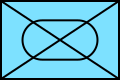
Evocative of the crossed bandoliers of Napoleonic infantry |
| Maintenance | -_CSS_-_Maintenance_(NATO_APP-6).svg)
|
-_CSS_-_Maintenance_(NATO_APP-6).svg)
|
-_CSS_-_Maintenance_(NATO_APP-6).svg)
|
-_CSS_-_Maintenance_(NATO_APP-6).svg)
|
Stylised wrench |
| Medical | -_Medical_(NATO_APP-6).svg)
|
-_Medical_(NATO_APP-6).svg)
|
-_Medical_(NATO_APP-6).svg)
|
-_Medical_(NATO_APP-6).svg)
|
Evocative of the Red Cross symbol |
| Meteorological | -_Meteorological_Services_(NATO_APP-6).svg)
|
-_Meteorological_Services_(NATO_APP-6).svg)
|
-_Meteorological_Services_(NATO_APP-6).svg)
|
-_Meteorological_Services_(NATO_APP-6).svg)
|
|
| Missile | -_Missile_-_Surface_to_Surface_(NATO_APP-6).svg)
|
-_Missile_-_Surface_to_Surface_(NATO_APP-6).svg)
|
-_Missile_-_Surface_to_Surface_(NATO_APP-6).svg)
|
-_Missile_-_Surface_to_Surface_(NATO_APP-6).svg)
|
Simplified missile |
| Mortar | -_Mortars_(NATO_APP-6).svg)
|
-_Mortars_(NATO_APP-6).svg)
|
-_Mortars_(NATO_APP-6).svg)
|
-_Mortars_(NATO_APP-6).svg)
|
Projectile with a vertical arrow symbolizing mortar's high arc trajectory |
| Military police | -_Military_Police_(NATO_APP-6).svg)
|
-_Military_Police_(NATO_APP-6).svg)
|
-_Military_Police_(NATO_APP-6).svg)
|
-_Military_Police_(NATO_APP-6).svg)
|
|
| Navy | -_Naval_(NATO_APP-6A).svg)
|
-_Naval_(NATO_APP-6A).svg)
|
-_Naval_(NATO_APP-6A).svg)
|
-_Naval_(NATO_APP-6A).svg)
|
Anchor |
| CBRN defence | -_CBRN_(NATO_APP-6).svg)
|
-_CBRN_(NATO_APP-6).svg)
|
-_CBRN_(NATO_APP-6).svg)
|
-_CBRN_(NATO_APP-6).svg)
|
Simplified crossed retorts, the principal elements in the insignia of the U.S. Army Chemical Corps |
| Ordnance | -_CSS_-_Ordnance_(NATO_APP-6).svg)
|
-_CSS_-_Ordnance_(NATO_APP-6).svg)
|
-_CSS_-_Ordnance_(NATO_APP-6).svg)
|
-_CSS_-_Ordnance_(NATO_APP-6).svg)
|
Derived from crossed cannon behind a disc |
| Radar | -_Radar_(NATO_APP-6).svg)
|
-_Radar_(NATO_APP-6).svg)
|
-_Radar_(NATO_APP-6).svg)
|
-_Radar_(NATO_APP-6).svg)
|
Stylised lightning flash and parabolic dish |
| Psychological operations | -_Psychological_Operations_(NATO_APP-6).svg)
|
-_Psychological_Operations_(NATO_APP-6).svg)
|
-_Psychological_Operations_(NATO_APP-6).svg)
|
-_Psychological_Operations_(NATO_APP-6).svg)
|
Electronic schematic symbol for loudspeaker, evocative of propaganda |
| Reconnaissance or cavalry | -_Reconnaissance_(NATO_APP-6).svg)
|
-_Reconnaissance_(NATO_APP-6).svg)
|
-_Reconnaissance_(NATO_APP-6).svg)
|
-_Reconnaissance_(NATO_APP-6).svg)
|
Inspired by the cavalry's sabre strap |
| Signals | -_Signals_or_Communication_(NATO_APP-6).svg)
|
-_Signals_or_Communication_(NATO_APP-6).svg)
|
-_Signals_or_Communication_(NATO_APP-6).svg)
|
-_Signals_or_Communication_(NATO_APP-6).svg)
|
Simplified lightning flash, evocative of radio signals (likewise used in the radar symbol above) |
| Special forces | -_Special_Operations_Force_-_Special_Forces_(NATO_APP-6A).svg)
|
-_Special_Operations_Force_-_Special_Forces_(NATO_APP-6A).svg)
|
-_Special_Operations_Force_-_Special_Forces_(NATO_APP-6A).svg)
|
-_Special_Operations_Force_-_Special_Forces_(NATO_APP-6A).svg)
|
|
| Special operations forces | -_Special_Operations_Force_(NATO_APP-6A).svg)
|
-_Special_Operations_Force_(NATO_APP-6A).svg)
|
-_Special_Operations_Force_(NATO_APP-6A).svg)
|
-_Special_Operations_Force_(NATO_APP-6A).svg)
|
|
| Supply | -_CSS_-_Supply_(NATO_APP-6).svg)
|
-_CSS_-_Supply_(NATO_APP-6).svg)
|
-_CSS_-_Supply_(NATO_APP-6).svg)
|
-_CSS_-_Supply_(NATO_APP-6).svg)
|
|
| Topographical | -_Military_Geomatics_-_Mapping_(NATO_APP-6).svg)
|
-_Military_Geomatics_-_Mapping_(NATO_APP-6).svg)
|
-_Military_Geomatics_-_Mapping_(NATO_APP-6).svg)
|
-_Military_Geomatics_-_Mapping_(NATO_APP-6).svg)
|
Stylised sextant |
| Transportation | -_CSS_-_Transport_(NATO_APP-6).svg)
|
-_CSS_-_Transport_(NATO_APP-6).svg)
|
-_CSS_-_Transport_(NATO_APP-6).svg)
|
-_CSS_-_Transport_(NATO_APP-6).svg)
|
Simplified wheel |
| Unmanned air vehicle | -_Unmanned_Aerial_Vehicles_(NATO_APP-6A).svg)
|
-_Unmanned_Aerial_Vehicles_(NATO_APP-6A).svg)
|
-_Unmanned_Aerial_Vehicles_(NATO_APP-6A).svg)
|
-_Unmanned_Aerial_Vehicles_(NATO_APP-6A).svg)
|
Flying wing silhouette |
Modified unit icons
[edit]Some of the most common combinations are:
-_Infantry_-_Mountain_(NATO_APP-6).svg)
-_Infantry_-_Airborne_(NATO_APP-6).svg)
-_Infantry_-_Airmobile_(NATO_APP-6A).svg)
-_Infantry_-_Armoured_(NATO_APP-6).svg)
-_Infantry_-_Mechanized_-_Amphibious_(NATO_APP-6A).svg)
-_Infantry_-_Mechanized_-_Wheeled_APC_(NATO_APP-6).svg)
-_Infantry_-_Mechanized_-_Wheeled_AFV_(NATO_APP-6).svg)
-_Anti-Tank_-_Tank_Destroyers_-_Wheeled_Agile_(NATO_APP-6).svg)
-_Armoured_Reconnaissance_-_Wheeled_Cross_Country_(NATO_APP-6).svg)
-_Military_Engineers_-_Armoured_Engineer_(NATO_APP-6).svg)
-_Military_Engineers_-_Combat_Engineers_-_Mechanized_(NATO_APP-6C).svg)
-_Artillery_-_Mechanized_(NATO_APP-6).svg)
-_Artillery_-_Mountain_(NATO_APP-6).svg)
-_Artillery_-_Rocket_Launchers_(MulitRocket)_(NATO_APP-6).svg)
-_Artillery_-_Rocket_Launchers_(MulitRocket)_-_Wheeled_Agile_(NATO_APP-6).svg)
-_Air_Defence_-_Mechanized_-_Close_Range_Guns_(NATO_APP-6B).svg)
-_Air_Defence_-_Missiles_(NATO_APP-6C).svg)
-_Aviation_-_Attack_(NATO_APP-6A).svg)
-_Aviation_-_Utility_-_Medium_(NATO_APP-6C).svg)
-_CSS_-_Supply_-_Petroleum_Oil_Lubricants_-_Theatre_Support_(NATO_APP-6A).svg)
-_CSS_-_Supply_%26_Transport_(NATO_APP-6).svg)
Unit size indicators
[edit]Above the unit symbol, a symbol representing the size of the unit can be displayed:[4]: 57
| Symbol | Name | Typical No. of personnel | No. of subordinate units | Typical rank of leader (Commonwealth and US) |
|---|---|---|---|---|

|
250,000–1,000,000+ | Several army groups |
| |

|
|
120,000–500,000 | Several armies or air forces |
|

|
Army[b] Air force |
100,000 | 2–4 fighting corps (5–10 fighting divisions) and support troops (often organized in divisions or brigades) | General |

|
Corps | 30,000–90,000 | 2–4 fighting divisions and support troops (often organized in brigades or groups) | Lieutenant general |

|
Division | 10,000–20,000 | Nominally several brigades and/or regiments | Major general |

|
2,000–10,000 | Several battalions or Commonwealth regiments. |
| |

|
500–3,000 | 3–7 battalions (usually of the same arm) |
| |
|
|
300–1,000 | 2–6 companies, batteries, U.S. troops, or Commonwealth squadrons, etc. |
| |

|
|
60–250 | 2–5 platoons/troops |
|
_-_Germany.svg)
|
Staffel[8] or echelon[9] (level of hierarchy unique to Germany) |
50–90 | 2 platoons/troops or 6–10 sections | Captain or staff captain |

|
|
25–40 | 3–5 squads, sections, or fighting vehicles |
|

|
Section | 7–13 | 2–3 fireteams |
|

|
Squad | 5–10 | 1–2 fireteams |
|

|
Fireteam | 3–5 | n/a |
|
The typical commander ranks shown in the table are for illustration. Neither the actual rank designated for a particular unit's commander, nor the rank held by the incumbent commander alters the appropriate symbol. For example, units are periodically commanded by an officer junior to the authorised commander grade, yet a company under the command of a lieutenant (U.S.) or captain (Commonwealth) is still indicated with two vertical ticks. Likewise, some peculiar types of companies and detachments are authorised a major, lieutenant colonel (personnel services companies) or colonel (some types of judge advocate detachments); the company or detachment is nevertheless indicated with, respectively, one vertical tick or three dots.
While in Commonwealth armies, the regiment as a tactical formation does not normally exist, in some cases a regimental sized (i.e. larger than battalion and smaller than brigade) task force may exist where the operational requirement exists. These formations may be commanded by colonels.
Note that, for brigades and higher, the number of Xs corresponds to the number of stars in the United States military's insignia for the typical general officer grade commanding that size unit. For example, a division is capped with XX and is usually commanded by a major general the American insignia for which is two stars.
Equipment icons
[edit]Equipment icons are "frame optional".
| Equipment symbol (framed) | (unframed) | Equipment type |
|---|---|---|
 |
 |
Bridge (e.g. AVLB) |
Installation icons
[edit]| Installation symbol | Installation type |
|---|---|
 |
Bridge production |
Symbol modifiers
[edit]APP-6A stops with field AB. MIL-STD-2525B and 2525B Change 1 add a number of other modifiers.

Graphic modifiers
[edit]- Echelon (field B) Identifies command level (see Unit sizes, above).
- Task force (field D) Identifies a unit as a task force. It may be used alone or in combination with echelon, like so:
| Type | Icon |
|---|---|
| Combat team or Company group |

|
| Battlegroup | 
|
| Regimental combat team or Marine expeditionary unit (MEU) |

|
| Brigade group or Brigade combat team or Marine expeditionary brigade (MEB) |

|
| Marine Expeditionary Force (MEF) | 
|
- Frame shape modifier (field E) A short textual modifier that completes the affiliation, battle dimension, or exercise description of an object ("U", "?", "X", "XU", "X?", "J" or "K"). It is treated as a graphic modifier, however.
- Direction of movement (field Q) A fixed-length arrow that identifies the direction of movement or intended movement of an object. It emanates from the symbol's centre except in the ground domain, where it is hooked to a short offset, straight down from the symbol's base centre (see diagram).
- Mobility indicator (field R) Depicts the mobility of an object. It is used only with equipment.
- Headquarters staff or offset location (field S) Identifies a unit as a headquarters, or indicates the object's actual location on the map when it has been shifted away in order to declutter the display. It goes straight down from the symbol's centre left, then angles towards the actual location (see diagram).
- Feint/dummy (field AB) Identifies a unit intended to draw the enemy's attention away from the area of the main attack, or a decoy designed to fool enemy intelligence. It consists of a dashed chevron, placed above the frame, like the echelon graphic modifier (the standard is unclear as to how the two combine graphically).
- Installation (field AC) Identifies a particular symbol as an installation. It sits atop the frame.
- Auxiliary equipment (field AG) Indicates the presence of a towed sonar array (used exclusively in the sea surface or subsurface battle dimensions). It sits below the frame, like field R.
- Area of uncertainty (field AH) Indicates the area where an object is most likely to be, based on the object's last report and the reporting accuracy of the sensor that detected it. This can take various forms, such as an ellipse, a bounding box, or lines indicating probable bearing and distance.
- Dead reckoning trailer (field AI) Identifies where an object should be located at present, given its last reported course and speed. This can take the form of a dotted line (extending from the symbol to the dead-reckoned position) or a dotted circle (bounding the zone the object may have reached since, when the direction of movement is unknown or uncertain).
- Speed leader (field AJ) Depicts the speed and direction of movement of an object. It is identical to the direction of movement indicator except that its length is variable (and there is no arrow head).
- Pairing line (field AK) Connects two objects.
Feints/dummies and installations
[edit]Source:[4]: 288
| Feint/dummy | Installations | |||
|---|---|---|---|---|
 |
 |
 |
 |

|
Mobility and auxiliary equipment
[edit]Source:[4]: 163–164
| Wheeled (limited cross-country) |
Wheeled cross-country |
Tracked | Half-tracked | Towed | Railway |
|---|---|---|---|---|---|
 |
 |
 |
 |
 |

|
| Snowmobile | Sled | Pack animals | Barge | Amphibious | |
 |
 |
 |
 |
 |
|
| Short towed array (typ. sonar) | Long towed array (typ. sonar) | ||||
 |

| ||||
Text modifiers
[edit]- Quantity (field C) Identifies the number of equipment items present.
- Reinforced or reduced (field F) Displays (+) for reinforced, (-) for reduced, (±) for reinforced and reduced.
- Staff comments (field G)
- Additional information (field H)
- Evaluation rating (field J) A letter-and-number reliability and credibility rating, assigned by intelligence.
- Combat effectiveness (field K)
- Signature equipment (field L) Used for hostile equipment; "!" indicates a detectable electronic signature.
- Higher formation (field M) Number or title of higher echelon command.
- field M of this company symbol shows that it belongs to the 42nd Armored Infantry Battalion:

- field M of this company symbol shows that it belongs to the 42nd Armored Infantry Battalion:
- Hostile (enemy) (field N) "ENY" denotes hostile equipment.
- IFF/SIF (field P) IFF/SIF Identification modes and codes.
- SIGINT mobility indicator (field R2) "M" for Mobile, "S" for Static, "U" for Uncertain.
- Unique designation (field T)
- field T shows this is Alpha Company:

- field T shows this is Alpha Company:
- Type (field V)
- Date/time group (DTG) (field W) Indicates the symbol's date and time stamp.
- Altitude/height/depth (field X)
- Location (field Y) Location in degrees, minutes, and seconds (or in UTM or other applicable display format).
- Speed (field Z) Velocity as set forth in MIL-STD-6040.
- Special C2 headquarters (field AA)
- Platform type (field AD) "ELNOT" (electronic intelligence notation) or "CENOT" (communications intelligence notation)
- Equipment teardown time (field AE) In minutes.
- Common identifier (field AF) Example: "Hawk" for a Hawk SAM system.


Other information
[edit]APP-6 organization chart of the 1st Marine Expeditionary Force (MEF):

A quick reference chart for friendly icons:

MIL-STD-2525A
[edit]APP-6A, Military Symbols for Land Based Systems was developed directly from MIL-STD-2525A, Common Warfighting Symbology. MIL-STD 2525A was the American standard for military symbols. The custodian of APP-6 is the United States. APP-6(A) remained unchanged as work on harmonizing it with ADatP-3, NATO Message Text Formatting System was carried out. In 1999, APP-6 was moved from the Army Service Board to the Joint Service Board. With this move, APP-6 was placed under the Information Exchange Requirements Harmonization/Message Text Format Working Group. The IERH/MTFWG then formed the Joint Symbology Panel to provide configuration management of APP-6 with the US custodian as the chairman. With the ratification and promulgation of APP-6(B) in 2008, the named was changed to NATO Military Symbology to better reflect the nature of the publication. In 2011, with the introduction of APP-6(C), the named was changed to NATO Joint Military Symbology. The US military required new symbols to support ongoing operations in Iraq and Afghanistan, so the pace of change between APP-6 and MIL-STD-2525 remained uneven until 2009. In 2009, a new chairman for DOD Symbology Standardization Management Committee was appointed, and the two configuration management organizations began to work together. The two organizations held joint meetings with full participation on both sides. The goal of both groups is to develop comprehensive joint military symbology that is common to both organizations to the greatest extent possible. APP-6(C) began the process of changing the format of the publications and introduced new symbol identification codes. MIL-STD-2525D[10] has carried that one step further with more symbols and more symbol sets derived from recent NATO and US operations. MIL-STD-2525D will serve as the base document for APP-6(D) as the two documents move closer together.
Notes
[edit]References
[edit]- ^ Hershey, Andrew (2012). "Not Just Lines on a Map: A History of Military Mapping" (PDF). Strategy & Tactics. 274: 22–27. Archived from the original (PDF) on January 7, 2014.
- ^ "NATO Map Symbol Programmed Instruction Package" (PDF). Canadian Forces School of Military Intelligence. Jan 2000. p. 6. Retrieved Nov 14, 2018.
- ^ a b Korkolis, M. (July 1986). "APP-6 Military Symbols For Land Based Symbols" (PDF). alternatewars.com. Archived from the original (PDF) on June 19, 2018. Retrieved Nov 14, 2018.
- ^ a b c d Thibault, D. U. (September 2005). "Commented APP-6A - Military symbols for land based systems" (PDF). DRDC Valcartier. Retrieved November 14, 2018.
- ^ "US Army FM 21-30 Military Symbols" (PDF). US Army Engineers. June 1965. p. 2–5. Retrieved 7 May 2020.
- ^ FM 1-02 Operational Terms and Graphics. US DoD. 21 September 2004. pp. 5–37.
- ^ "Military Units: Army". US Department of Defense. Retrieved 2023-05-18.
- ^ APP-6C NATO Joint Military Symbology. NATO. May 2011. pp. 2–25.
- ^ APP-6 Military Symbols for Land Based Systems. NATO. July 1986. pp. B8.
- ^ Department of Defense Interface Standard: Joint Military Symbology (MIL-STD-2525D) (PDF). Washington, DC: US Government (published 10 June 2014). 2014. Archived from the original (PDF) on 7 January 2017. Retrieved 6 January 2017.
External links
[edit]
- US War Department FM 21-30 Conventional Signs, Symbols, and Abbreviations of Second World War
- Korean War–era map symbols at ARMY.MIL
- The map symbols as TrueType Fonts
- MilSymb—LaTeX package for drawing military symbols (APP-6(C) only)
- APP-6 — Military Symbols for Land Based Systems (1986)
- APP-6(A) — Military Symbols for Land Based Systems (1998)
- APP-6(B) — Joint Symbology (2008)
- APP-6(C) — NATO Joint Military Symbology (2011)
- APP-6(D) — NATO Joint Military Symbology (2017)
- APP-06(E) — NATO Joint Military Symbology (2023)
- MIL-STD-2525C — Common Warfighting Symbology (2008)
- MIL-STD-2525D — Joint Military Symbology (2014)
- MIL-STD-2525 manuals from Defense Information Systems Agency (DISA)
- FM 101-5-1/MCRP 5-2A OPERATIONAL TERMS AND GRAPHICS, dated 30 September 1997
- FM 101-5-1/MCRP 5-2A OPERATIONAL TERMS AND GRAPHICS, dated 21 September 2004
- UK Interim APP-6A Manual (zipped PDF file) Note: this document has since been replaced with Issue 1.2, dated December 2003
- Thibault, D. U.; Commented APP-6A – Military Symbols for Land Based Systems, Defence R&D Canada – Valcartier, Technical Note TN 2005-222 (2005-08-01) (cover document)
- symbol.army—Web application to create military symbology according to MIL-STD-2525C
- map.army—Web application providing functions to draw, save, export and exchange Military Map Overlays according to MIL-STD-2525C.
NATO Joint Military Symbology
View on GrokipediaIntroduction and History
Definition and Purpose
NATO Joint Military Symbology is a standardized system of graphical symbols used by NATO and allied forces to represent military units, equipment, installations, control measures, activities, and operational information on maps, overlays, displays, and other media.[2] This symbology employs icons, modifiers, amplifiers, and frames, often within a bounding octagon, to create a common visual language that supports command and control functions across multinational operations.[2] It implements NATO's STANAG 2019 and APP-6 standards, ensuring compatibility and a consistent appearance for symbols in both manual and automated systems.[4] The primary purpose of this symbology is to facilitate rapid communication of tactical situations and operational data, enabling clear depiction of the common operational picture for planning, execution, and assessment of joint military operations.[2] It promotes interoperability among NATO member nations and partner forces by providing a unified framework that transcends service branches and national boundaries, thereby supporting coordinated actions in diverse environments.[2] Additionally, it aids in the timely acquisition of intelligence, target engagement, and force protection by allowing symbols to be observed and interpreted faster than textual descriptions alone.[2] Key benefits include reduced ambiguity in command and control processes, minimized risk of fratricide, and enhanced situational awareness through standardized representations of entities such as friendly, hostile, neutral, and unknown forces.[4] The system extends across operational levels from strategic to tactical and covers domains including land, air, sea surface, subsurface, space, cyberspace, and meteorological/oceanographic activities, thereby enabling integration with digital mapping and C2 systems.[2] This broad scope ensures that multinational forces can maintain effective coordination without interference, fostering operational success in complex joint environments.[4]Historical Development
The development of NATO Joint Military Symbology originated from the need for unified mapping and communication during World War II, when Allied forces employed varied national symbols that hindered interoperability on shared battlefields. Post-war, as NATO was established in 1949, early standardization efforts in the 1950s focused on harmonizing military procedures, including symbology, through the Military Agency for Standardization to facilitate joint operations among member nations. This culminated in the initial formalization under STANAG 2019, which laid the groundwork for consistent symbol use across land-based systems.[5] A key milestone came with the publication of APP-6, "Military Symbols for Land Based Systems," in July 1986, which established the first comprehensive NATO standard for symbology, primarily for land operations but applicable to air and naval contexts in joint scenarios. This was followed by revisions in the 1990s to address post-Cold War operational demands, leading to APP-6(A) in December 1999, which introduced color coding for affiliations, digital display compatibility, and a unified system for land, air, and sea symbols to support emerging computer-based command and control systems. Further enhancements appeared in APP-6(B) in June 2008, expanding tactical graphics and modifiers for more precise representation of units and equipment in multinational exercises.[6][7] Major updates continued with APP-6(C) promulgated on 24 May 2011, incorporating symbols for the space domain to reflect evolving threats and technologies in networked warfare. The most recent iteration at the time, APP-6(D), was released on 16 October 2017, integrating lessons from operations in Afghanistan and Iraq, as well as hybrid warfare scenarios, with expanded sets for multi-domain operations including electronic warfare, unmanned systems, and the cyber domain.[8][9][10] In parallel, U.S. developments influenced NATO standards; the Army's FM 101-5-1, "Operational Terms and Graphics," published on 30 September 1997, provided a foundational symbology framework that informed the initial MIL-STD-2525 in 1994, evolving into MIL-STD-2525D by 10 June 2014 to align closely with APP-6(C) for joint interoperability.[11][2] Subsequent updates include APP-6(E) under STANAG 2019 Edition 8, promulgated in October 2023, which further refines symbology to address contemporary challenges in multi-domain operations.[12] In 2025, the U.S. Army updated FM 1-02.2, "Military Symbols," effective January 2025, to further synchronize with APP-6(D), emphasizing symbols for joint all-domain command and control in response to contemporary multi-domain challenges like great-power competition. This evolution underscores NATO's ongoing commitment to adaptability, ensuring symbology remains a vital tool for seamless allied coordination.[13]Fundamental Components
Symbol Composition
NATO Joint Military Symbology employs a standardized modular framework for constructing symbols, ensuring interoperability across allied forces in command and control operations. The core structure revolves around distinct frame shapes tailored to entity types: units and installations are depicted using a rectangle frame, while equipment utilizes a diamond frame. This differentiation facilitates rapid identification on maps and displays.[14] The status of an entity is conveyed through the frame's fill: a filled frame indicates present or active elements, whereas an open (unfilled) frame signifies planned, anticipated, suspected, or destroyed status, providing essential operational context without altering the symbol's core shape. Within this frame, a central icon represents the primary function or type of the entity, serving as the visual anchor. Amplifiers and modifiers—such as textual labels for strength, direction, or echelon—are positioned around the frame's edges in designated sectors to avoid overlap and maintain clarity; each sector accommodates only one modifier, limited to three characters for brevity.[14] Color application enhances the symbol's informational density by denoting affiliation, with standard NATO colors integrated into frames and icons: blue for friendly forces, red for hostile, green for neutral, and yellow for unknown. These colors adapt to monochrome environments by substituting black or white outlines, ensuring visibility across varied media. Affiliation indicators, such as frame filling patterns, further refine this by overlaying on the base colors to signal battle dimensions like assumed friendly or pending status.[14] Symbols are assembled in distinct layers—beginning with the frame, followed by the central icon, and culminating in peripheral modifiers—to support scalability and rendering efficiency in both digital interfaces and printed formats. This layered approach, governed by a bounding octagon as a spatial reference, allows consistent sizing and placement regardless of resolution or medium. Underpinning the entire system is a prerequisite modular design principle, which mandates that all components combine seamlessly without visual or informational interference, promoting uniformity in joint multinational exercises as outlined in STANAG 2019.[14]Allegiance and Affiliation Indicators
In NATO Joint Military Symbology, allegiance and affiliation of entities are primarily denoted through a combination of frame colors, shapes, and amplifiers, allowing operators to quickly identify the side or relationship of units, equipment, or installations on maps and displays. The standard color scheme, established in APP-6 and refined in subsequent editions, uses blue for friendly forces, red for hostile, green for neutral, and yellow for unknown, with these colors applied to frames and fills to enhance visibility in both digital and manual formats.[15] Monochrome alternatives are provided for black-and-white printing or displays, substituting cyan for blue, neon green for neutral, yellow unchanged, and black outlines with text labels such as "ENY" for hostile to maintain clarity.[16] Early versions of APP-6 relied heavily on frame shapes to indicate affiliation, with a diamond for hostile, square for neutral, circle for friendly, octagon for assumed friend, and quatrefoil for unknown, often without color to ensure compatibility across printing methods.[16] The APP-6A edition introduced color integration into frames for improved distinction, while standardizing the basic frame structure (e.g., rectangle for units) and adding amplifiers like question marks in the frame's E-field for assumed statuses or half-filled frames for pending affiliation, where the entity's side remains unconfirmed.[16] Echelon indicators, such as size symbols (e.g., III for regiment), are integrated with these affiliation elements to denote both hierarchy and relationship without altering the core frame.[15] Sub-affiliations extend these indicators to specific categories, such as civilian or non-combatant entities, which use purple or black fills within neutral green frames or unframed icons, often with function codes like 2.X.3.4.1 for refugees to differentiate from military forces.[16] This supports interoperability with non-NATO forces by aligning with standards like STANAG 2019, ensuring symbols remain recognizable in multinational operations. In APP-6(D) and APP-6(E) (2023), enhancements include dedicated rectangle-framed icons for cyber entities (e.g., web servers or jammers) using the same color scheme, with green question marks proposed for assumed neutral in hybrid operations to address uncertainties in non-state or ambiguous threats.[15][17]| Affiliation | Color (Primary) | Frame Shape (APP-6/APP-6A) | Special Indicator | Monochrome Alternative |
|---|---|---|---|---|
| Friendly | Blue | Circle/Rectangle (assumed) | None | Cyan or black outline |
| Hostile | Red | Diamond | "ENY" label | Black with "ENY" |
| Neutral | Green | Square | None | Neon green |
| Unknown | Yellow | Quatrefoil | None | Yellow |
| Pending | Yellow | Half-filled | Question mark or hourglass | Black with "?" |
| Civilian | Purple/Black | Unframed or green square | Function code | Magenta or black |
Battle Dimensions and Status
In NATO Joint Military Symbology, battle dimensions denote the primary operational domains—land, air, sea, space, and cyberspace—in which military entities function, enabling clear depiction of multi-domain operations on maps and displays. These dimensions are primarily indicated by distinct frame shapes around the base icon, with additional modifier icons for specificity when needed. Land serves as the default domain, using a closed rectangle frame to represent ground-based units, equipment, and installations without additional domain markers.[2] Air domain symbols employ a vertical rectangle frame open at the bottom (pentagon-like), often incorporating wing-shaped icons for aircraft or missiles to signify aerial operations.[2] Sea surface uses a closed rectangle frame similar to land but with anchor or hull icons for naval vessels, while subsurface entities like submarines feature specialized inverted triangle frames open at the top.[2] Space operations are marked by frames open at the bottom, augmented with orbit path or satellite icons, and cyberspace relies on network node or electromagnetic spectrum symbols within a dedicated symbol set (e.g., 10 or 25).[2] For multi-domain overlays, symbols combine elements, such as adding a cyber network modifier to a land unit icon, to illustrate integrated effects across environments.[2] Status indicators provide critical context on an entity's operational readiness and location certainty, modifying the base symbol's fill and outline to avoid ambiguity in dynamic battlespaces. Present status is shown with solid lines and full fills, confirming an entity's confirmed existence and capability.[2] Planned or anticipated entities use dashed lines, indicating future positioning or intent without current presence.[2] Denied or suspected status employs dotted lines or a crossed-out overlay, signaling unconfirmed or inaccessible information, often paired with amplifiers like "?" for uncertainty.[2] Echelon levels—higher for command oversight or lower for subordinate elements—are denoted by vertical lines above or below the frame, respectively, to hierarchy without altering the core icon.[2] Activity states further refine entity conditions, focusing on motion, damage, or exercise contexts through targeted modifiers. Moving status adds a direction arrow or trailing line to the symbol, with the arrowhead orientation indicating velocity and path for units in transit.[2] Destroyed or neutralized entities receive an "X" overlay or red amplifier, while simulated elements in training scenarios use dashed outlines or joker indicators to distinguish from real operations.[2] These elements integrate seamlessly as modifiers to base icons, where dimensions dictate frame geometry, status adjusts line styles and fills, and activity adds directional or overlay graphics, ensuring symbols remain compact yet informative.[2] Frame colors from allegiance schemes briefly enhance status visibility, such as solid blue fills for friendly present forces.[2] The APP-6(E) standard (2023), building on APP-6(D) ratified in 2017, expanded cyber and space representations with dedicated icons and codes, reflecting NATO doctrines that emphasize multi-domain integration in response to evolving threats.[2][17]| Battle Dimension | Frame Shape | Representative Modifier Icon | Example Application |
|---|---|---|---|
| Land (Default) | Rectangle (closed) | Infantry icon | Ground unit symbol for infantry battalion |
| Air | Rectangle open bottom | Wing silhouette | Fighter aircraft in air patrol |
| Sea Surface | Rectangle (closed) | Anchor or hull | Naval destroyer on patrol |
| Sea Subsurface | Inverted triangle (open top) | Periscope | Submarine at periscope depth |
| Space | Rectangle open bottom | Orbit path/satellite | Space-based sensor platform |
| Cyberspace | Rectangle with symbol set 10 or 25 | Network node | Cyber attack unit |
Symbol Placement and Sizing
Icon Placement Rules
In NATO Joint Military Symbology, as standardized in APP-6(E) (October 2025) and harmonized with MIL-STD-2525E (August 2023), the primary function icon is positioned at the center of the symbol's main sector within a vertical bounding octagon frame, ensuring it represents the core entity such as a unit or equipment without obstruction.[18][19] Secondary icons, when used, are offset to adjacent sectors to maintain visual hierarchy and prevent overlap with the central element. This central placement aligns with the symbol's anchor point, typically the center of mass or location, facilitating accurate geospatial representation on maps.[2] Modifier positions follow a standardized clockwise orientation around the frame, starting from the top to promote readability and consistency across displays. At the 12 o'clock position (Sector 1), echelon indicators are placed to denote unit size or hierarchy.[2] The 3 o'clock position (Sector 3) accommodates quantity indicators, limited to a maximum of nine characters for equipment symbols or three in digital formats.[2] Direction of movement or capability modifiers occupy the 6 o'clock position (Sector 2), often depicted as an arrow extending from the frame.[2] Finally, the 9 o'clock position (Sector 4) is reserved for staff or headquarters indicators, extending leftward to signify command structure.[2] Only one modifier per sector is permitted to avoid clutter.[2] Spacing standards enforce a minimum 1:1 aspect ratio for the bounding frame, with icons scaled to fit the main sector without exceeding its boundaries, except for full-frame icons that may touch the edges.[2] Minimum element dimensions include a dot diameter of 0.15 times the frame height (L), and overall frame sizes range from 1.0L to 1.5L for optimal visibility.[2] In overlays, symbols align via anchor points for hierarchical stacking—vertically for subordinate units or horizontally for adjacent elements—while avoiding overlap through offset lines or proportional spacing along lines of advance.[2] Digital considerations emphasize vector-based rendering to support scalability across zoom levels in command and control systems, with Symbol Identification Codes (SIDC) enabling automated placement and exchange.[2] Frames and modifiers remain proportional during resizing, and amplifiers outside the frame can be adjusted for screen resolution, ensuring legibility in electronic displays without loss of standardization.[2]Unit Size and Strength Indicators
In NATO Joint Military Symbology, unit size indicators denote the organizational scale of a military unit, using standardized Roman numerals or graphic elements placed above the symbol frame to convey echelons from small teams to large formations.[2] These indicators, defined in APP-6(E) and aligned with MIL-STD-2525E, ensure interoperability across NATO forces by providing a visual shorthand for command levels without relying on textual labels alone.[18][19] For instance, "I" represents a squad, while "XXXX" signifies a division, allowing map users to quickly assess hierarchy and scale. The following table illustrates common unit size indicators, with placement consistently above the frame for clarity:| Indicator | Unit Size Example | Description |
|---|---|---|
| I | Squad/Section | Smallest tactical element, typically 8-12 personnel. |
| II | Platoon/Troop | Basic maneuver unit, around 20-50 personnel. |
| III | Company/Battery | Company-level formation, approximately 100-200 personnel. |
| X | Battalion/Squadron | Mid-level command, 300-800 personnel. |
| XX | Regiment/Group | Larger tactical unit, 1,000-2,000 personnel. |
| XXX | Brigade | Brigade echelon, 3,000-5,000 personnel. |
| XXXX | Division | Divisional command, 10,000-15,000 personnel. |
| XXXXX | Corps | Corps-level operations, 20,000-45,000 personnel. |
| XXXXXX | Army | Army group or field army, over 50,000 personnel. |
Primary Symbol Categories
Unit Symbols
Unit symbols in NATO Joint Military Symbology represent organizational entities composed primarily of personnel, such as military units ranging from small teams to large commands, distinguishing them from equipment or fixed installations. These symbols consist of a rectangular frame enclosing a functional icon, with optional amplifiers for size, mobility, and other attributes, as standardized in the APP-6 series (latest APP-6(E), 2023) and implemented in MIL-STD-2525D (2014).[2][3] The design promotes interoperability across NATO forces by providing a visual shorthand for unit roles, enabling rapid situational awareness in joint operations.[2] Basic icons for units are categorized by function: maneuver units for direct combat, combat support units for enabling fires and protection, and combat service support (CSS) units for logistics and sustainment. Maneuver icons include infantry, depicted as two vertical lines representing soldiers; armor, shown as parallel tracks symbolizing a tank; and mechanized infantry, combining the infantry icon with track lines.[2] (p. 18, 97-98) Combat support icons feature artillery as a circle with a line (cannon) or chevron (mortar), and air defense as a vertical line with branches (missile launcher).[2] (p. 92, 102) CSS icons represent functions like medical (cross) or supply (box with arrow).[2] (p. 103, 193-200) Unit hierarchy spans from tactical to strategic levels, indicated by amplifiers such as Roman numerals or bars flanking the frame. Fire teams use "I" or a single bar (echelon I); squads use "II" or double bars (II); platoons use "III" or triple bars (III); companies/batteries/troops use "IV" or quadruple bars (IV); battalions/squadrons use "V" or an "X" (V); brigades use "VI" or "XXX" (VI); divisions use "VII" or "XX" (VII); corps use "VIII" or "XXX" (VIII); armies use "IX" or "XXXX" (IX); and theater commands use "X" or a "V" Roman numeral (X).[2] (p. 106, 178; Section 5.3.6.1, Table D-III p. 171) This scaling ensures symbols convey both function and echelon without ambiguity. Branch-specific modifiers adapt base icons to denote capabilities, such as airborne units with added wings or parachutes, or mechanized units with track or wheel symbols beneath the icon.[2] (p. 98, 104) Composite units, like combined arms battalions or task forces, integrate multiple icons or use a headquarters icon with a task force amplifier (e.g., a diamond or "TF" label) to indicate mixed maneuver, support, and CSS elements.[2] (p. 24, 98, 105) Updates in the APP-6 series, including APP-6(E) (2023), address emerging capabilities, including icons for unmanned systems: unmanned aerial systems (UAS) use a winged diamond or propeller shape, unmanned ground systems feature a track with a "U" overlay, and unmanned underwater vehicles employ a submarine silhouette with drone modifiers.[2][3] (p. 150, 181, 332, 494-564) Joint task forces employ a headquarters icon (rectangle with diagonal line) augmented by a "JTF" amplifier or joint modifier (e.g., SIDC 12-10-00) to signify multinational or multi-service commands.[2] (p. 98, 107, 172) Examples illustrate application: a friendly mechanized infantry battalion appears as a blue frame with infantry lines over tracks and quintuple bars or "X" (SIDC 10-12-11-02).[2] (p. 24, 104, 178) A hostile air defense battery uses a red frame enclosing a missile icon with quadruple bars (SIDC 10-13-03-00, echelon IV).[2] (p. 18, 102) Affiliation indicators, such as blue for friendly or red for hostile, are applied to the unit frame as per standard rules.[2] (p. 18)Equipment Symbols
Equipment symbols in NATO Joint Military Symbology represent discrete military assets such as individual weapons, vehicles, and systems, rather than organized groups of personnel or installations. These symbols are constructed using a diamond-shaped frame to denote equipment, distinguishing them from unit symbols that employ rectangular frames and include echelon sizing indicators for organizational scale. The frame is typically filled or outlined based on affiliation—blue for friendly, red for hostile—and centered within a bounding octagon for digital displays. This structure ensures clarity in command and control systems, allowing rapid identification of specific platforms without implying command hierarchy.[2] Base icons for equipment are categorized by operational domain, providing stylized representations of the asset type. For ground equipment, such as tanks, the icon features a diamond outline with track marks to indicate armored vehicles, often subdivided into light, medium, or heavy variants based on weight class. Air equipment uses silhouette icons, with fixed-wing aircraft depicted as streamlined profiles for jets and bombers, while rotary-wing helicopters incorporate rotor blades. Naval equipment employs hull silhouettes for surface vessels or submarines, and missiles across domains are shown as arrowhead shapes to signify launchers or projectiles. These icons are standardized using 20-character numeric Symbol Identification Codes (SIDC), such as 10-07-07-01 for tanks or 10-11-01-01 for fixed-wing aircraft, enabling consistent rendering in mapping software.[2] Modifiers refine the base icon to convey platform details or operational context, applied as overlays or amplifiers within the symbol fields. Platform-specific modifiers include rotary-wing indicators (e.g., blades atop the silhouette) for helicopters versus fixed-wing profiles for jets, ensuring differentiation in mixed-domain scenarios. Quantity is indicated via alphanumeric text in a dedicated field, limited to nine characters (e.g., "2" for two assets) or sometimes small dots for multiples in analog representations. Battle dimension icons may be briefly referenced for air or sea equipment to specify the operational environment.[2] Representative examples illustrate practical application: a hostile tank symbol consists of a red-filled diamond frame with track marks and an "ENY" amplifier for enemy designation, while a friendly radar uses a blue diamond frame enclosing an antenna icon to denote surveillance equipment. These examples highlight how affiliation colors and textual modifiers enhance situational awareness on maps.[2] Updates in the APP-6 series, including APP-6(E) (2023), have incorporated symbols for emerging technologies, with MIL-STD-2525D including dedicated icons for unmanned systems such as drones (coded as 10-12-19-00 for unmanned aerial vehicles) to reflect their growing role in operations. While hypersonic weapons lack unique icons in the 2014 edition, they are represented using general missile arrowheads with speed or range amplifiers, aligning with post-2020 interoperability needs in NATO exercises.[2][3]Installation Symbols
Installation symbols in NATO Joint Military Symbology depict fixed facilities, bases, and infrastructure that support military operations, distinguishing them from mobile units or equipment through their static representation within rectangular or octagonal frames similar to those used for units. These symbols facilitate clear visualization of logistical and operational hubs on maps and overlays, ensuring interoperability across NATO forces. The symbology emphasizes the grouped, non-mobile nature of installations, with icons placed centrally within frames to denote affiliation via color or line style—such as blue for friendly or red for hostile.[2] Base icons form the core of installation symbology, including the airfield represented by parallel lines evoking runways to signify airports or air bases critical for aviation support. The command post icon features a flag or pennant, indicating control centers or unspecified command facilities that coordinate operations. Depots are symbolized by stacked boxes or rectangular enclosures, denoting storage and supply facilities like ammunition depots or warehouses essential for sustainment. These icons are standardized under codes such as 10 for land installations, ensuring consistent depiction across analog and digital systems.[2] Modifiers enhance installation symbols to convey specific attributes, with fortified variants incorporating wall-like lines or defensive overlays to represent hardened structures such as bunkers or protected sites. Temporary installations use tent-shaped icons to indicate non-permanent setups like field camps, while dual-use facilities may combine military icons with neutral or civilian indicators to highlight shared infrastructure. These modifiers are applied via standard identity designator codes (SIDC), allowing precise customization without altering the base frame.[2] Illustrative examples include the neutral port, framed in green with an anchor and dock icon to depict a harbor or naval base under neutral control, facilitating maritime logistics without implying threat. In contrast, a hostile bunker employs a red frame enclosing a solid or barred structure, signaling an enemy fortified position that requires caution in operational planning. Such examples underscore the symbology's role in rapidly communicating installation threats and capabilities.[2] Expansions in the APP-6 series, including APP-6(E) (2023), address emerging domains, introducing symbols for cyber infrastructure such as telecommunications nodes or web servers depicted with networked or server icons, vital for information operations. Space launch sites are represented by rocket or missile production icons, reflecting facilities for orbital assets and reflecting NATO's adaptation to multidomain warfare. Installations maintain a fixed character in this symbology, lacking inherent mobility symbols unless modified for temporary status, though battle dimension indicators can briefly note planned or destroyed conditions.[2][3]Symbol Modifiers
Graphic Modifiers
Graphic modifiers in NATO Joint Military Symbology consist of non-textual visual elements, such as lines, shapes, and patterns, that augment the basic symbol frame and icon to denote specific attributes like deception, structure, or attachment. These modifiers enable rapid visual interpretation in operational environments, adhering to standardized placement to maintain clarity and avoid overlap with core symbol components. Defined in standards like APP-6(C) and its evolutions up to APP-6(E) (as of 2023), they are positioned within or around the rectangular or octagonal frame, typically in designated sectors to preserve symbol integrity.[2][3] Key types of graphic modifiers include those for feints and dummies, installations, mobility, and auxiliary equipment. Feints and dummies are represented by dashed inverted "V" patterns, indicating deceptive or simulated entities; for instance, a dummy unit symbol features the standard unit icon with the dashed inverted V indicator to signify non-real assets.[2] Installations use outline shapes resembling buildings or shaded blocks added inside the frame, such as a solid shaded area for fortified positions, distinguishing fixed infrastructure from mobile units.[2] Mobility indicators attach wheel or track icons to the frame's base or sides, specifying whether equipment is wheeled or tracked; these are derived from entity subtypes and placed externally to the main icon.[2] Auxiliary modifiers depict attachments via connecting lines, as in towed artillery where a cannon icon links to a truck symbol with a dashed line, illustrating operational dependencies.[2] Placement follows precise rules to ensure uniformity: modifiers occupy sectors 1 (above the icon) or 2 (below the icon) within the bounding octagon, centered geometrically and limited to one per sector without extending beyond frame edges; for example, the feint dashed inverted V is placed across the symbol.[2] This sectoral approach, using anchor points for alignment, supports both manual plotting and digital rendering.[2] The evolution of these modifiers reflects refinements across APP-6 versions for emerging threats, with APP-6(E) maintaining backward compatibility while adapting to new operational needs. In APP-6(C), enhancements introduced hatched patterns for denied areas, such as restricted zones marked with cross-hatching to indicate minefields or no-go regions.[2] APP-6(D) further updated electronic warfare representations, incorporating jammer icons—often specialized shapes like barrage emitters—integrated as frame modifiers to denote signal interference capabilities.[2] In digital implementations, these elements are rendered as scalable vector graphics, leveraging anchor points (e.g., one for simple outlines, three for complex lines) to facilitate interoperability in command and control systems.[2]| Modifier Type | Graphical Representation | Placement | Example Application |
|---|---|---|---|
| Feints/Dummies | Dashed inverted "V" across frame | Main sector or perimeter indicator | Dummy infantry unit with dashed inverted V[2] |
| Installations | Building outline or shaded block | Inside frame, sector 1 or 2 | Fortified command post with outline shape[2] |
| Mobility | Attached wheels or tracks | Base or sides of frame | Tracked armored vehicle with track icons[2] |
| Auxiliary (Towed) | Line connecting icons | External to main frame | Artillery piece linked to towing truck[2] |