Hubbry Logo
search
logo
1970293

Alan Seeger

logo
Community Hub0 Subscribers
Read side by side
from Wikipedia

Alan Seeger (22 June 1888 – 4 July 1916) was an American war poet who fought and died in World War I during the Battle of the Somme, serving in the French Foreign Legion. Seeger was the brother of Elizabeth Seeger, a children's author and educator, and Charles Seeger, a noted American pacifist and musicologist; he was also the uncle of folk musicians Pete Seeger, Peggy Seeger, and Mike Seeger. He is lauded for the poem "I Have a Rendezvous with Death", a favorite of President John F. Kennedy.[1] A statue representing him is on the monument in the Place des États-Unis, Paris, honoring those American citizens who volunteered to fight for the Third French Republic while their country was still neutral and lost their lives during the war. Seeger is sometimes called the "American Rupert Brooke".[2]

Key Information

Early life

[edit]

Seeger was born on June 22, 1888, in New York City.[3] According to Alan's nephew, folk singer Pete Seeger, the Seeger family was "enormously Christian, in the Puritan, Calvinist New England tradition."[4] In practice, though, Alan's immediate family lived within the precepts of the evolution of Calvinism into Unitarianism. His parents were married in the Unitarian Church,[5] and Alan and his brother, Charles, were educated in schools based in Unitarianism: the Horace Mann School in Manhattan, the Hackley School in Tarrytown and Harvard College. The family traced their American heritage to the 18th century. A paternal ancestor, Karl Ludwig Seeger, a doctor from Württemberg, Germany, emigrated to America after the American Revolution and married into the old New England family of Parsons in the 1780s.[6]

Alan's father, Charles Louis Seeger Sr., was influential in the late 19th century development of Mexico and its relationship with the United States through publishing, infrastructure development, and sugar refining. Alan's first years included a brief time spent in Mexico City before the family returned to live on Staten Island, where his sister Elizabeth (Elsie) was born. Elizabeth became an author and New York City educator. Alan's older brother Charles Seeger Jr. became a noted musicologist, and the father of the American folk singers Pete Seeger, Mike Seeger, and Peggy Seeger.

Seeger's family was well-to-do, and Charles Sr. was a figure in international commerce throughout his life. In 1898, the family moved from Staten Island to an apartment near Central Park. In 1900, Charles' business interests took the family back to Mexico City where he took a role in the development of the city's transportation infrastructure and become a merchant of electric automobiles.

Young Alan's short time in Mexico provides material for his later, and longest, poem, "The Deserted Garden".[7] In 1902, Seeger left Mexico City with his brother to attend Hackley School in Tarrytown, New York, after which he attended Harvard University.[3] His Harvard class of 1910 included the poet T. S. Eliot.[8] During Seeger's first few years at Harvard, he was primarily fixated on intellectual pursuits and did not have a significant social life. However, as an upperclassman and editor at The Harvard Monthly, he found a group of friends that shared his aesthete sensibilities, including Walter Lippmann and John Reed.[9] With Lippmann, he founded a Socialist club at Harvard to protest anti-labor policies at the university.[8]

Upon graduation from Harvard, Seeger returned to Manhattan to live primarily in a boardinghouse at 61 Washington Square South that came to be known variously as The Alan Seeger House or House of Genius. Run by the Swiss émigré Catherine Branchard, its residents at one time or another included Theodore Dreiser, Stephen Crane, Frank Norris, Robert Moses, Sydney Porter (O. Henry), John Reed, and other figures of American literature.[5] While in Greenwich Village, he attended soirées at the Petitpas Restaurant, where the artist and sage John Butler Yeats, father of the poet William Butler Yeats, held court.[10] After two years, Seeger left Greenwich Village to move to Paris, where he lived in the Latin Quarter and continued to pursue a bohemian lifestyle.[3]

Military service and writing

[edit]

Seeger was living on Rue du Sommerard in Paris in 1914, when war was declared between France and Germany. He quickly volunteered to fight as a member of the Foreign Legion in the French Army, stating that he was motivated by his love for France and his belief in the Allies.[11] For Seeger, fighting for the Allies was a moral imperative; in his poem "A Message to America," he spoke out against what he saw as America's moral failure to join the war.[8]

During the two years he fought in the French Foreign Legion, Seeger wrote regular dispatches to the New York Sun, and the essay "As a Soldier Thinks of War" for Walter Lippman's fledgling magazine, The New Republic posited that though war was lamentable and the cause of death, this one was inevitable and necessary. For the most part, his poetry of that time was not well known and would not become so until after his death.[5] His work was heavily influenced by the Romantic school, and by the precepts of chivalry and medieval ethos of the knight. As the war progressed, the theme of death grew stronger in his poetry, culminating in what became his most famous poem, "I Have a Rendezvous with Death."[12]

Death and aftermath

[edit]
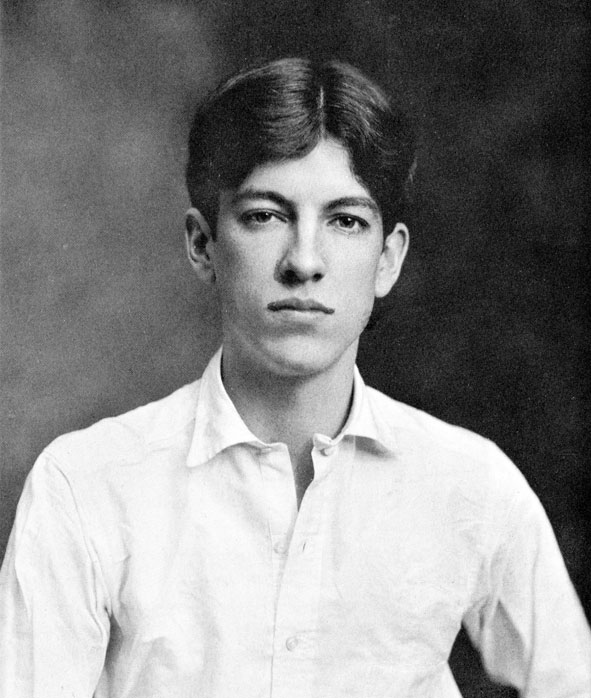
Seeger in his uniform.

In the winter of 1915, he developed bronchitis and spent several months recovering before he returned to the battlefront.[13] He was killed in action in 1916, during a French attack against the Imperial German Army at Belloy-en-Santerre, during the Battle of the Somme.[14] His fellow legionnaire, Rif Baer, later described his last moments: "His tall silhouette stood out on the green of the cornfield. He was the tallest man in his section. His head erect, and pride in his eye, I saw him running forward, with bayonet fixed. Soon he disappeared and that was the last time I saw my friend."[9][13] After being mortally wounded in no man's land, Seeger cheered on the passing soldiers of the Legion before he finally died from his injuries.[15] According to one account, knowing he was mortally wounded, he killed himself with a gunshot to the head.[16]

Seeger had been falsely reported dead after the Battle of Champagne in October 1915, in which he had fought.[9] The news of his actual death was met with public mourning in both America and France.[17] After the US entered World War I, Poems, a posthumously published collection of Seeger's war poetry, sold out six editions in a year.[12] The poet Edwin Arlington Robinson, who had described Seeger as "the Hedonist" after meeting him in 1911, suggested that it might be best that he had died in the war, "for I don't believe that he would ever have come anywhere near to fitting himself into this interesting but sometimes unfittable world."[18]

It is assumed, and officially stated, that Seeger's bones rest with other dead of the Belloy-en-Santerre battle in ossuary No. 1 of the French National Cemetery in Lihons.[19] After his death, Seeger's parents donated a bell to a local church and planted trees in his honor. Both of their contributions to Belloy-en-Santerre were destroyed during World War II,[17] though the remains of the bell were combined with other metals into a new church bell, and one of the apple trees was believed to be still alive behind the village hall at Belloy en Santerre as of 2016.

Poetry

[edit]
"I Have a Rendezvous with Death" by Alan Seeger, as it appears in the book, Poems

Seeger's poetry was published by Charles Scribner's Sons in December 1916 with a 46-page introduction by William Archer. Poems, a collection of his works, was relatively unsuccessful, due, according to Eric Homberger, to its lofty idealism and language, qualities out of fashion in the early decades of the 20th century.[20]

Poems was reviewed in The Egoist, where T.S. Eliot stated:

Seeger was serious about his work and spent pains over it. The work is well done, and so much out of date as to be almost a positive quality. It is high-flown, heavily decorated and solemn, but its solemnity is thorough going, not a mere literary formality. Alan Seeger, as one who knew him can attest, lived his whole life on this plane, with impeccable poetic dignity; everything about him was in keeping.[21][20]

His most famous poem, "I Have a Rendezvous with Death", is believed to have been completed during a winter 1916 bivouac at Crevecoeur,[5] and was published posthumously.[14][22] It begins,

I have a rendezvous with Death
At some disputed barricade,
When Spring comes back with rustling shade
And apple-blossoms fill the air—
I have a rendezvous with Death
When Spring brings back blue days and fair.

A recurrent theme in both his poetic works and his personal writings was his desire for his life to end gloriously at an early age.

According to the New York Times, "President Kennedy had loved the poem so much that his wife Jacqueline memorized it at his request."[1] The poem continues to resonate today and was quoted by the President of France, Emmanuel Macron, in a speech to the U.S. Congress in April 2018.[23]

Memorials and legacy

[edit]
Memorial to American Volunteers (Place des États-Unis, Paris)

In 1919, Seeger's father Charles, while living in Paris, determined to devote royalties received for Poems and for a subsequent Letters and Diary, published in 1917, to the founding of what became the American Library in Paris. Charles became its first board chairman.

On 4 July 1923, the President of the French Council of State, Raymond Poincaré, dedicated a monument in the Place des États-Unis to the Americans who had volunteered to fight in World War I in the service of France. The monument, in the form of a bronze statue on a plinth, executed by Jean Boucher, had been financed through a public subscription.[24]

Boucher had used a photograph of Seeger as his inspiration, and Seeger's name can be found, among those of 23 others who had fallen in the ranks of the Foreign Legion in the French Army on the back of the plinth. Also, on either side of the base of the statue, are two excerpts from Seeger's "Ode in Memory of the American Volunteers Fallen for France", a poem written shortly before his death on 4 July 1916. Seeger intended that his words should be read in Paris on 30 May of that year, at an observance of the American holiday, Decoration Day (later known as Memorial Day):

They did not pursue worldly rewards; they wanted nothing more than to live without regret, brothers pledged to the honor implicit in living one's own life and dying one's own death. Hail, brothers! Goodbye to you, the exalted dead! To you, we owe two debts of gratitude forever: the glory of having died for France, and the homage due to you in our memories.

On July 3 and 4, 2016, the centennial of Seeger's death was memorialized in two separate ceremonies at the monument at Place Des États-Unis, and at Belloy-en-Santerre, where 500 people from the US, France, Germany and Spain gathered to commemorate his role in the liberation of the village, as well as those of German poet Reinhard Sorge and Catalan poet Camil Campanya, also associated with the battle.

In 1921, Alan Seeger Natural Area, in central Pennsylvania, was named by the folklorist and conservationist Colonel Henry Shoemaker in honor of Seeger. In the same year, the "Alan Seeger Tree" was planted and dedicated in Washington Square Park before the Branchard boarding house in an event led by poet/historian Walter Adolphe Roberts. The tree disappeared at some point probably in the mid-century.[5] The liberty ship SS Alan Seeger, a tanker, was launched by the California Shipbuilding Corp 5 October 1943, during World War II.[25]

Author Chris Dickon wrote what is widely considered the definitive biography of Seeger in 2017, A Rendezvous with Death: Alan Seeger in Poetry, at War. Dickon spoke about Seeger and his work at the American Library, Paris, shortly after the publication of his book.[26]

Also in 2017, the oratorio Alan Seeger: Instrument of Destiny by American composer Patrick Zimmerli was premiered at the Cathédrale Saint Louis des Invalides in Paris, followed by an American premier at the Cathedral of St. John the Divine in New York in 2019. On 9 November 2018, an opinion commentary by Aaron Schnoor in The Wall Street Journal honored the poetry of World War I, including Seeger's poem "I Have a Rendezvous With Death".[27]

References

[edit]

Further reading

[edit]
[edit]
Revisions and contributorsEdit on WikipediaRead on Wikipedia
from Grokipedia
Alan Seeger (June 22, 1888 – July 4, 1916) was an American poet and soldier who enlisted as a volunteer in the French Foreign Legion shortly after the outbreak of World War I and died from wounds sustained in combat during the Battle of the Somme.[1][2][3] Born in New York City to a prosperous family with business interests in sugar refining, Seeger attended the Horace Mann School and graduated from Harvard University in 1910, after which he resided briefly in Greenwich Village before relocating to Paris in 1912 to embrace a bohemian existence centered on literary pursuits.[1][4] On August 24, 1914, motivated by admiration for France, he joined the Foreign Legion as a private, underwent training in Toulouse, and participated in trench warfare, including assaults at Artois and the Somme offensive where he fell leading a bayonet charge.[2][3] Seeger achieved posthumous recognition through his verse collection Poems (1916), particularly the sonnet "I Have a Rendezvous with Death," which articulates a stoic embrace of fatalism amid the era's mechanized carnage, reflecting his prewar Romantic influences and wartime experiences.[5][6]

Early Life and Education

Family and Childhood

Alan Seeger was born on June 22, 1888, in New York City to Charles Louis Seeger, a businessman engaged in sugar imports and refineries with significant interests in Mexico, and Elsie Simmons Adams Seeger.[7][8] He had an older brother, Charles Louis Seeger Jr. (born 1886), who later pursued a career in musicology and composition, and a younger sister, Elizabeth Seeger.[8] The family, rooted in a Unitarian background, enjoyed a privileged existence during Seeger's infancy, residing primarily on Staten Island where his father's prosperous ventures provided financial security.[7][9] In the late 1890s, the Seegers briefly relocated to an apartment near Central Park amid shifts in Charles Seeger's business activities.[4] By 1900, following the failure of his father's import-export firm, Seeger and Guernsey—which had ties to Mexican sugar operations—the family moved to Mexico City, where Charles sought to revive earlier commercial opportunities.[10][11] This transient period, lasting approximately two years until the family's return to the United States around 1902, immersed the 12-year-old Seeger in Mexico's cultural diversity, including its exotic landscapes and social contrasts, while exposing him to the underlying political instabilities of the Porfiriato regime's final years.[4][1][12] These early relocations underscored a pattern of affluence tempered by economic vicissitudes, fostering in Seeger an introspective disposition evident from his youth, though formal intellectual pursuits lay ahead.[7][4]

Moves and Early Influences

Seeger was born on June 22, 1888, in New York City to parents from established New England families, with his father involved in import-export and later sugar refining ventures.[13] At age one, the family relocated to Staten Island, where he spent a contented early childhood characterized by familial stability until roughly age ten.[4] Circa 1898, the Seegers moved to Mexico City for two years due to his father's business pursuits, immersing the adolescent Seeger in foreign landscapes and customs that enhanced his adaptability to varied American and international milieus.[4] The family's return to New York followed in 1900, marking the end of this transient phase.[1] Prosperity from familial enterprises afforded opportunities for such relocations and private instruction, including a tutor in Mexico who instilled an early affinity for poetry and refined literature, fostering contemplative traits amid these shifts.[13] This environment, free from academic rigor, subtly shaped an idealistic disposition evident in his withdrawn yet intellectually curious adolescence.[4]

Harvard Education and Early Intellectual Development

Seeger entered Harvard College in 1906, following preparatory studies at the Hackley School, and graduated with a Bachelor of Arts degree in 1910.[1] During his undergraduate years, he immersed himself in literary pursuits, contributing verse extensively to campus publications and engaging in wide reading across philosophy, history, and poetry at Harvard's libraries.[14] This period coincided with the Progressive Era's intellectual ferment, exposing him to idealistic currents in American thought, including transcendentalist echoes and European romanticism that emphasized aesthetic experience over utilitarian concerns.[4] As an upperclassman, Seeger became actively involved in Harvard's literary scene, serving as an editor of The Harvard Monthly, the university's prominent student magazine, where he helped shape its content and published several of his early poems.[1] [4] His associates included contemporaries like John Reed, a fellow member of the class of 1910 known for radical journalism, and interactions with slightly older figures such as T.S. Eliot, who praised Seeger's poetic efforts despite their differing class years.[1] [15] These connections reinforced his developing aesthetic sensibilities, drawing him toward romantic poets like Shelley and Keats, whose works influenced his emphasis on beauty, heroism, and transcendent ideals.[1] Seeger's Harvard experience cultivated a bohemian inclination and aversion to materialism, evident in his preference for introspective, non-commercial literary endeavors over practical career paths, as reflected in his campus writings and later recollections of the era.[4] He rejected the era's burgeoning corporate ethos, favoring instead a pagan-inflected philosophy of fate and vitality that prioritized personal romance and artistic authenticity, themes nascent in his student compositions.[14] This intellectual formation, grounded in first-hand engagement with canonical texts rather than rote academia, laid the groundwork for his lifelong pursuit of poetic expression unbound by conventional constraints.[14]

Pre-War Literary Career

Post-Harvard Life in New York and Paris

Upon graduating from Harvard University in 1910, Alan Seeger moved to Greenwich Village in New York City, embracing a bohemian lifestyle centered on poetry and sensory pursuits.[1] He shared quarters with writer John Reed and rejected his father's expectations of a business career, instead prioritizing artistic dedication amid familial tension.[1] For two years, Seeger navigated the Village's unconventional scene, relying on friends' support while composing verse, though the era's limited outlets for poets constrained his prospects.[1][16] Dissatisfied with New York's failure to match his romantic visions, he relocated to Paris in 1912, funded by contributions from admirers.[1] Settling in the Latin Quarter, Seeger joined the expatriate community of artists and writers, continuing his bohemian existence with heightened enthusiasm for the city's cultural vitality.[4][1] He sustained himself through modest means, including a small inheritance, while spurning commercial writing to uphold ideals of authentic poetic expression.[2][4] In Paris, Seeger immersed himself in literary study, translating Dante Alighieri's works and delving into medieval texts, including troubadour poetry, which reinforced his affinity for chivalric themes and romantic formalism.[1][9] This direct exposure to European heritage deepened his commitment to individualism and aesthetic purity, distinct from modern commercial pressures.[1][4]

Early Poetry and Literary Aspirations

Seeger's initial poetic output, later designated as Juvenilia, encompassed sonnets and odes exploring themes of natural splendor, romantic longing, and introspective melancholy, echoing the Romantic emphasis on emotion and the sublime found in poets like Keats and Shelley.[13] Poems such as "An Ode to Natural Beauty" invoked imagery of sunlit landscapes and ethereal inspiration, while "The Nympholept" delved into ecstatic communion with nature's mysteries.[17] These works, composed primarily between his Harvard years and 1914, reflected a conventional yet earnest style marked by formal verse structures and idealization of beauty, traits critics later attributed to youthful conventionality.[1] From adolescence, Seeger harbored ambitions to achieve poetic immortality akin to Keats, whose early struggles with obscurity he invoked as a model of perseverance amid neglect.[14] Relocating to Paris in 1912, he immersed himself in the bohemian literary milieu, viewing the city as a crucible for artistic refinement and aspiring to transcend ephemeral trends for enduring recognition.[13] His correspondence from this period documented a regimen of daily composition and revision, underscoring a self-imposed discipline to hone his craft despite financial precarity and isolation from American literary circles.[18] By mid-1914, Seeger had amassed a manuscript of Juvenilia sufficient for submission, traveling to London in pursuit of a publisher, only to encounter rejections that underscored the era's stringent gatekeeping by established houses favoring modernist innovations over traditional lyricism.[10] These setbacks, detailed in his pre-war letters, neither deterred his output nor dimmed his conviction in poetry's redemptive power, though they highlighted the unfulfilled trajectory of his pre-enlistment ambitions.[13]

Influences and Philosophical Foundations

Seeger's pre-war intellectual development was marked by a deep engagement with the Romantic poets, including Lord Byron, Percy Bysshe Shelley, and John Keats, whose emphasis on individual passion, heroic individualism, and the transcendent power of beauty resonated with his own aesthetic priorities.[18][19] These influences manifested in his preference for traditional poetic forms and meters that evoked emotional intensity and sublime experience over prosaic realism or utilitarian concerns.[19] Philosophically, Seeger rejected the materialism and cultural sophistication of early 20th-century modernity, viewing them as eroding personal honor and spiritual depth.[20][9] He drew on medievalist ideals of chivalry, duty, and fidelity as antidotes, prioritizing the pursuit of transcendent values—such as love, arms, and song—over economic or social collectivism.[21] This outlook critiqued the "tide of materialism" that he believed supplanted genuine freedom and aesthetic fulfillment with superficial progress.[9][22] His writings positioned life as a deliberate quest for ideals rooted in personal integrity rather than deterministic social forces or empirical utility.[20]

Enlistment and Motivations

Context of World War I and American Neutrality

The First World War commenced in late July 1914, escalating rapidly after Austria-Hungary's declaration of war on Serbia on July 28, amid a complex web of alliances triggered by the assassination of Archduke Franz Ferdinand earlier that month.[23] Germany, allied with Austria-Hungary, declared war on Russia on August 1 and France on August 3, implementing the Schlieffen Plan which required a swift invasion through neutral Belgium to outflank French defenses.[24] On August 4, German forces crossed into Belgium, violating its sovereignty as guaranteed by the 1839 Treaty of London, leading Britain to declare war on Germany that same day and drawing in the Allied powers of France, Russia, and Britain against the Central Powers.[25] This invasion, involving rapid advances and reported civilian atrocities, solidified the Western Front's trench stalemate by late 1914.[26] In response, President Woodrow Wilson proclaimed American neutrality on August 4, 1914, emphasizing strict impartiality amid widespread domestic isolationism rooted in geographic distance, recent immigration from both belligerent nations, and a tradition of avoiding European conflicts.[27] Wilson reiterated this stance in an August 19 address to Congress, urging citizens to be "neutral in fact as well as in name" and "impartial in thought as well as in action," reflecting elite and popular sentiment favoring non-intervention to preserve trade and avoid entanglement.[28] Public opinion remained divided through 1917, with pro-Allied leanings among Anglo-American elites and media highlighting Belgian suffering, countered by German-American sympathies, Irish antipathy toward Britain, and pacifist movements; polls and editorials showed majority opposition to entry until submarine warfare intensified.[29] Among American expatriates in Europe, particularly Paris, sentiments split between pro-Entente idealism and pro-German or neutralist views, influenced by press coverage of German actions.[30] The French Foreign Legion, seeking to bolster ranks amid mobilization, actively recruited foreigners from August 1914, with over 8,000 applications reported at the Paris office by August 3 alone, targeting neutrals and expatriates through appeals emphasizing defense against invasion.[31] Nearly 43,000 foreigners enlisted in the French army overall during the war, though not all served in Legion units, which prioritized non-French volunteers for frontline roles.[32] For Americans, volunteer numbers remained modest pre-1917, with approximately 100 joining the Legion specifically, part of broader expatriate efforts including ambulance services, driven by individual convictions amid official neutrality.[33] These enlistments underscored tensions between U.S. policy and personal alignments, as recruitment drives in Allied nations highlighted opportunities for foreigners to support the Entente without violating domestic laws prohibiting service under foreign flags.[34]

Personal Reasons for Volunteering in the French Foreign Legion

Alan Seeger enlisted in the French Foreign Legion on August 24, 1914, shortly after the outbreak of World War I, motivated by a profound sense of duty to defend Western civilization against what he perceived as Prussian militarism's threat to liberty and chivalric values.[35] In his letters, Seeger articulated this as aligning with the "side that I think right," viewing the conflict as a moral imperative transcending national boundaries, particularly given the United States' official neutrality proclaimed by President Woodrow Wilson on August 4, 1914, which emphasized impartiality "in fact as well as in name."[35] [36] This stance contrasted sharply with prevailing American isolationist sentiments, which prioritized avoiding entanglement in European affairs to preserve domestic peace and economic interests, as advocated by figures like Wilson who warned against "passionate partisans" favoring the Allies.[36] Seeger's personal rationale emphasized war as the ultimate test of manhood and a romantic pursuit of noble sacrifice, echoing medieval chivalric ideals he admired in figures like Sir Philip Sidney.[20] Writing to his mother on October 17, 1914, he declared, "I was never in better health nor felt my manhood more keenly," framing enlistment as an exhilarating affirmation of vitality amid "the pulsations... liveliest" of human experience.[35] By October 23, he expressed having "always thirsted for this kind of thing," prioritizing the heroic ideal of self-sacrifice over safety, even as he shouldered "the burden that so much of humanity is suffering under" without familial obligations binding him otherwise.[35] This romanticism positioned enlistment as a voluntary rendezvous with destiny, distinct from compulsory service, and critiqued neutrality as a form of moral evasion by those unburdened yet unwilling to act on universal principles of justice against authoritarian aggression.[13] While pro-neutrality advocates, including many in the U.S. press and Congress, argued that intervention would betray democratic self-determination and invite unnecessary bloodshed—echoing Wilson's 1916 reelection slogan "He kept us out of war"—Seeger aligned with early interventionists who saw Allied support as essential to preserving civilization from Prussian dominance.[36] His decision reflected a first-principles prioritization of ethical duty to combat perceived barbarism over legalistic allegiance to a neutral homeland, influencing later American volunteers who similarly rejected isolationism's passivity.[35] Seeger's writings thus embodied a causal realism: individual agency in moral crises outweighs collective inaction, substantiated by his immediate action upon war's declaration rather than awaiting national policy shifts.[9]

Process of Enlistment and Initial Training

Alan Seeger enlisted in the French Foreign Legion on August 24, 1914, at a recruiting office in Paris, signing a standard five-year contract as a private despite his American citizenship, which barred him from the regular French army.[2][37] The enlistment process for foreigners during the early weeks of World War I involved minimal formalities, with volunteers like Seeger rapidly processed amid the influx of eager recruits from neutral countries.[13] Following enlistment, Seeger underwent brief preliminary training in Rouen before being transferred to Toulouse, the primary depot for the 2nd Foreign Regiment (2e Régiment Étranger), where basic instruction commenced in late September 1914.[13] Training emphasized rapid assimilation of military skills, with recruits subjected to 12-hour daily drills starting at 5 a.m., covering marksmanship, marching, and infantry tactics—content equivalent to two years of peacetime preparation compressed into six weeks.[35] Legionnaires received nominal pay of one sou per day, and discipline was enforced through relentless repetition and physical exertion, as Seeger noted in a September 28 letter: "We have been putting in our time here at very hard drilling."[35] The multicultural composition of Seeger's unit presented adaptation challenges, including diverse nationalities such as French, English, Belgians, Russians, and Serbians, which complicated communication and cohesion during initial formation.[35] Linguistic barriers arose from the predominance of non-French speakers, though Seeger, fluent in French from his Parisian residence, navigated these by learning basic commands and fostering bonds through shared routines. Physical demands, including extended marches and exposure to southern France's climate, tested recruits' endurance, with Seeger documenting fatigue from drills amid scenic but unforgiving terrain of cornfields and vineyards.[35] Early experiences revealed discrepancies between romanticized enlistment ideals and bureaucratic realities, as prolonged drilling and administrative delays in Toulouse highlighted the Legion's emphasis on rote obedience over immediate heroism, prompting Seeger to observe the tedium of preparatory regimentation in his correspondence.[35] Despite these hurdles, the training forged basic unit discipline, preparing the battalion for transfer to northern camps by early October 1914.[35]

Military Service and Wartime Experiences

Deployments and Combat Roles

Seeger was assigned to the 2nd Foreign Infantry Regiment (2e REI), specifically Bataillon C, 1st Company, 3rd Section, following his enlistment in the French Foreign Legion in late August 1914.[35] After initial training at Toulouse from late September to early October 1914, his unit marched to the front lines, arriving in the Champagne sector by late October.[2] [35] There, the regiment engaged in trench warfare duties, including sentry posts, night patrols, and outpost guarding in the Aisne valley extending into early 1915.[35] In September 1915, Seeger's unit participated in the Second Battle of Champagne, a major French offensive aimed at breaking German lines, where the Foreign Legion suffered significant casualties from artillery, gas attacks, and close-quarters combat.[2] [35] Legionnaires, including Seeger's regiment, advanced to capture German first-line trenches amid intense fighting from October 1915 through early 1916, with roles encompassing assaults, trench consolidation, and defensive patrols.[35] The offensive resulted in heavy French losses, exceeding 190,000 casualties across Champagne and related Artois operations, though specific Legion figures were not separately tallied in contemporary reports.[38] Subsequent rotations included service in Haute-Saône and Alsace during August–September 1915, followed by redeployment to the Verdun sector by May–June 1916, where the unit held positions amid escalating German pressure.[35] Throughout these assignments from 1914 to mid-1916, Seeger's combat roles focused on static trench defense, reconnaissance patrols, and limited assaults, characteristic of the Legion's contributions to French efforts in key Western Front sectors like Champagne and Verdun.[35]

Daily Life and Challenges in the Legion

Seeger's service in the French Foreign Legion involved a cyclical routine of frontline duty, repose, and reserve periods, typically structured as six days in the first-line trenches, followed by six days of rest in a rear village approximately 10 kilometers back, and then six days in wooded reserve areas, repeating thereafter.[39] During training at Toulouse in September 1914, recruits underwent intensive 12-hour daily drills from 5 a.m. to 5 p.m., compressing two years of standard instruction into six weeks, supplemented by endurance marches such as a seven-hour trek on October 11, 1914.[35] Legionnaires carried over 60 pounds of gear during 15-kilometer marches between positions, with night guard duties lasting up to nine hours, leaving daytime for sleep, reading, or foraging.[39] Living conditions emphasized the Legion's demanding environment, particularly in trenches characterized by mud, cramped straw-lined dugouts infested with vermin, and persistent cold that worsened during winter months like November 1914.[35] Shelters in rear villages often consisted of ruined houses, cellars, stables, or caves, with soldiers improvising waterproof roofs and small fires for comfort; coal and straw were scavenged where available, as in positions near C----- in February 1915.[35] Rations remained austere, especially in forward positions, consisting of a half-loaf of bread, sardines, coffee, cheese, and chocolate delivered at 3 a.m., with evening soup and wine; Seeger noted on December 8, 1914, that "the ration is very small, but the nature of life in the trenches is not such as to sharpen one's appetite."[35] In cantonments, meals included twice-daily portions of coffee, bread, soup, meat, vegetables, and wine, occasionally augmented by bartered luxuries like extra chocolate.[35] Health challenges arose from environmental exposures and preventive measures, including common vermin infestations and dysentery in the trenches during late 1914, alongside side effects from mandatory typhoid inoculations in May 1915 that left soldiers weak and feverish for days.[35][39] Seeger himself contracted bronchitis in 1915, sidelining him from duty for several months into early 1916 while his unit remained in reserve.[2] The Legion's command structure enforced discipline through a hierarchy of corporals overseeing small outposts (petit postes), sergeants granting permissions, and higher officers like generals conducting reviews, as seen with General Joffre on March 3, 1915, and General Lyautey on July 30, 1915; pay was minimal at one sou per day during early training.[35][39] The Foreign Legion's multinational composition, drawing from nationalities including Serbs, Bulgarians, Alsatians, Belgians, Russians, and French, fostered interactions such as sharing Balkan war stories or singing hymns, though the regiment's reorganization on July 11, 1915, separated some groups like Russians and Belgians.[35][39] Encounters with French civilians occurred during repose, with troops receiving warm greetings in villages and purchasing goods from local farmers, while displaced residents inhabited ruined areas near the lines.[39][35] American volunteers, including Seeger, benefited from occasional leaves, such as a 48-hour permission in Paris arranged for July 4, 1915, by journalists to mark Independence Day.[39]

Correspondence and Observations on War

Seeger's correspondence with family members and publications like the New York Sun offered unfiltered accounts of trench warfare, emphasizing the physical and psychological strains alongside a sense of resolve. In a letter to his mother dated October 23, 1914, he depicted the relentless artillery exchanges, noting "a fierce cannonading is going on continually... shrapnel that burst in little puffs of white smoke; the French reply with explosive shells that raise columns of dust over the German lines."[35] These dispatches highlighted the monotony of guard duty interspersed with sudden perils, as in his February 26, 1915, letter to his father, where he recounted being grazed by a sniper's bullet: "I was shot a few days ago... one of the snipers... came within an ace of getting me."[39] Such incidents underscored the omnipresent risk, yet Seeger conveyed resilience, viewing the soldier's existence as "simply the test of the most misery that the human organism can support," amid cold, dirt, and discomfort.[35] Camaraderie emerged as a counterbalance to isolation, with Seeger noting interactions that bolstered morale. During rests near the front on December 4, 1914, he described "fraterniz[ing] with the soldiers and hear[ing] the narratives of men who have been in the thick of it since the beginning of the war," fostering shared narratives among regiments.[35] High spirits persisted in group settings, such as a March 24, 1915, review where "four thousand bayonets flashed in the air... [and the] band struck up the march," evoking collective enthusiasm upon return.[39] These bonds extended to multinational legionnaires, including a Servian comrade recounting defenses as "a living wall across the country."[39] Fear, however, infiltrated even routine tasks; Seeger detailed sensory distortions in advanced positions, where "the senses of sight and hearing become subject to strange hallucinations... a human form detaches itself from a tree trunk."[35] Purpose animated his observations, framing service as fulfillment despite hardships. On October 17, 1914, to his mother, he affirmed entering combat "with the lightest of light hearts... doing my share for the side that I think right."[35] Eyewitness accounts of German tactics revealed their elusiveness, as in November 12, 1914, when he portrayed the foe as "an invisible enemy," subjecting troops to "dangers of battle without any of its exhilaration."[35] Allied maneuvers drew pragmatic assessments, including the fortification deadlock by February 17, 1915—"the lull during the winter has allowed each side to fortify... deadlock here is permanent"—and stalled offensives like the Arras push in May 1915.[39] Minor logistical strains appeared, such as inadequate engineer support for labor-intensive trench maintenance, which soldiers resented more than combat itself.[39] Through June 1916, letters preserved a thread of stoic endurance, with Seeger affirming on July 31, 1915, a "feeling [of] no greater dignity possible" in aligning with France's defense.[39]

Death in Action

The Battle of the Somme

The Battle of the Somme commenced on July 1, 1916, as an Anglo-French offensive targeting German positions along a 25-mile front north and south of the Somme River in Picardy, France, involving the British Fourth Army, diversionary efforts by the British Third Army, and the French Sixth Army.[40] Strategic objectives centered on relieving French forces under strain at Verdun, depleting German manpower through attrition, and achieving a decisive breakthrough to shatter the trench stalemate and enable exploitation by cavalry reserves.[41] Allied preparations included a massive preliminary artillery bombardment from June 24 to July 1, 1916, during which over 1.5 million shells were fired to demolish trenches, artillery emplacements, and barbed wire obstacles ahead of the infantry advance.[41] Commanders anticipated a creeping barrage would shield advancing troops after neutralizing defenses, but tactical intelligence failures compounded material shortcomings: shrapnel shells—comprising two-thirds of the total—proved ineffective against deep concrete dugouts, up to 30 percent of munitions were defective duds, and incomplete wire destruction left kill zones intact, allowing German machine gunners to inflict devastating fire on exposed attackers.[40] In the southern sector south of the Somme, French units under the Sixth Army outperformed British expectations on July 1, surpassing initial objectives through concentrated heavy artillery that better suppressed German counter-battery fire and positions.[41] The French Foreign Legion's Régiment de Marche de la Légion Étrangère engaged in follow-up assaults, including a coordinated attack on the fortified village of Belloy-en-Santerre on July 4, 1916, where approximately 2,000 legionnaires advanced over open terrain against entrenched defenders, aiming to secure the locality and support broader French consolidation amid ongoing German resistance.[42] This action exacted severe tolls, with one Legion battalion losing all officers and most non-commissioned officers, over 100 killed, and around 150 missing, underscoring the regiment's role in grinding, localized pushes characteristic of the offensive's attritional phase.[43] The battle's first day produced 57,000 British casualties, marking the bloodiest single day in the British Army's history, while aggregate losses for Allied and German forces surpassed one million by the operation's termination on November 18, 1916.[40][41]

Circumstances of Seeger's Death

During the evening assault on Belloy-en-Santerre on July 4, 1916, Alan Seeger, aged 28, advanced with his squad from the French Foreign Legion's reserve company in the first wave of the attack.[13][14] The unit encountered enfilading fire from six concealed German machine guns positioned in a hollow way amid tall cornfields, resulting in heavy casualties among the squad.[13] Seeger was struck by multiple bullets but remained standing initially, cheering his advancing comrades and singing an English marching song to encourage them as they pressed forward.[13] Eyewitness Rif Baer, a fellow Legionnaire and friend, observed Seeger running ahead with bayonet fixed, his head erect and silhouette prominent against the field, before losing sight of him in the chaos.[14] Despite his wounds, Seeger refused evacuation, prioritizing aid to his comrades and continuing to urge the assault until he succumbed shortly thereafter.[44] His actions exemplified the high voluntary risks borne by American volunteers in the Legion prior to U.S. entry into the war, amid operations where such exposed charges against entrenched machine-gun positions typically yielded low survival rates for initial waves.[13] The next morning, after the village was secured, Seeger's body was recovered from the site and initially buried nearby, with Legion records confirming the circumstances of his death in action from wounds received.[13][14]

Immediate Aftermath and Recovery

Seeger's comrades in the French Foreign Legion recounted that, during the assault on Belloy-en-Santerre on July 4, 1916, he was struck multiple times by machine-gun fire while advancing in the first wave but persisted in cheering his fellow soldiers forward until he collapsed from his wounds.[13] These eyewitness accounts, preserved in regimental reports and later published recollections, emphasized his selflessness and resolve in the final moments, portraying him as a figure of inspiration amid the chaos of the Somme offensive.[45] His body was recovered shortly after the engagement by Legion recovery teams, as per standard French military procedures for fallen soldiers on the Western Front, and initially interred near the battlefield site alongside other casualties from the action.[3] Due to the intensity of the fighting and subsequent reburials, his remains were eventually incorporated into a collective grave in the French national cemetery at Lihons, where over 4,200 unidentified or commingled bodies from the sector were laid to rest, reflecting the logistical realities of handling foreign volunteers' effects and burials under wartime conditions.[46] Notification of Seeger's death reached his family in the United States through official channels of the French Foreign Legion, which maintained records and correspondence protocols for American volunteers despite U.S. neutrality at the time.[2] Initial U.S. press coverage was muted and delayed, appearing in limited expatriate or literary circles rather than mainstream outlets, consistent with the era's restricted wartime reporting and isolationist sentiments.[4] No personal effects such as letters or artifacts were immediately documented as returned, though his pre-death correspondence had already been dispatched home.

Poetic Output

Pre-War Works

Seeger's pre-war poetry, composed largely between 1906 and 1913 during his Harvard years and subsequent residence in New York City, appears in the "Juvenilia" section of his 1916 collection Poems.[18] These works encompass odes, lyrics, and a sequence of thirty sonnets, drawing on personal experiences in urban environments, romantic pursuits, and observations of natural scenery.[47] Many originated from his time editing and contributing to the Harvard Monthly, where he published verses reflecting youthful introspection and aesthetic ideals.[1] Key examples include "An Ode to Natural Beauty," which extols the pervasive inspiration of landscapes and celestial patterns as a vital force akin to creative genesis.[17] Love motifs recur in pieces like "The Need to Love," portraying an overwhelming compulsion that reshapes perception and eclipses prior concerns.[48] Urban alienation features in the sonnet sequence, such as Sonnet I, evoking the dimming haze of city streets and the encroaching dusk over human activity.[49] Other sonnets contrast metropolitan transience with elusive beauty or historical echoes, as in references to classical figures and locales. Stylistically, these poems adhere to traditional forms, employing iambic pentameter, rhyme schemes, and allusions to antiquity, including echoes of Dante and Ariosto, whom Seeger studied and translated informally.[1] Seeger himself designated them "Juvenilia," acknowledging their developmental stage without regard solely to chronology, as greater emotional depth might have matured his voice further.[18] Prior to 1914, circulation remained confined to campus periodicals like the Harvard Monthly and a private manuscript Seeger prepared for potential publication, which garnered no widespread acclaim or commercial release.[4]

Wartime Poetry

Seeger's wartime poetry, composed amid the rigors of frontline service in the French Foreign Legion from 1914 to 1916, primarily consists of sonnets and shorter verses that capture the physical and emotional demands of trench warfare and infantry marches. These works, including pieces from his "Sonnets" series, depict the stark realities of existence in the trenches—such as the chill of winter 1914–15 along the Aisne, where soldiers endured shelling, entombment in mud, and relentless vigilance—while interweaving descriptions of forced marches over kilometers of terrain. For instance, in letters dated December 8, 1914, Seeger detailed sentry duty and the monotonous hardships of alternating six-day trench stints with brief rests, contexts in which he drafted verses reflecting these experiences without succumbing to despair.[35][50] Unlike the disillusioned critiques of contemporaries such as Siegfried Sassoon, who emphasized war's futility, Seeger's poems blend empirical realism with an exaltation of soldierly sacrifice and duty, portraying combat as a noble trial that forged character and camaraderie. His sonnets, written during lulls in Champagne sector engagements in 1915 or preparatory phases before the Somme offensive in mid-1916, evoke the sensory toll of "harried, shelled" positions yet frame endurance as a heroic imperative, prioritizing voluntary commitment to France over personal grievance. This approach is evident in verses composed before July 4, 1916, during the buildup to assaults, where themes of steadfast resolve prevail amid the Legion's multinational ranks.[35][1] These compositions, often enclosed with correspondence to family or friends, underscore Seeger's practice of channeling immediate wartime observations into formal structures like the sonnet, maintaining a romantic inflection that contrasted sharply with emerging modernist war poetry's emphasis on horror and alienation. Empirical evidence from his diary entries confirms ongoing production during active duty rotations, with no recorded abandonment of verse despite the deprivations of billeting in stables or woods.[35][51]

Signature Poem: "I Have a Rendezvous with Death"

"I Have a Rendezvous with Death" was composed by Alan Seeger during his service with the French Foreign Legion in early 1916, shortly before his death on July 4 of that year. The poem embodies a fatalistic acceptance of mortality, framing death as an honorable, predestined encounter amid the perils of frontline combat rather than a random affliction. First published posthumously in Seeger's collection Poems in November 1916, it captures the mindset of a volunteer soldier confronting the certainties of war.[52][53] Structurally, the poem comprises three stanzas of unequal length—six, eight, and ten lines—employing predominantly iambic tetrameter with variations for rhythmic emphasis, and a flexible ABABCC rhyme scheme that reinforces themes of inexorability. Vivid imagery juxtaposes natural rejuvenation, such as "rustling shade" and "apple-blossoms fill[ing] the air," against wartime desolation on "scarred slope[s] of battered hill" and "disputed barricade[s]," heightening the contrast between life's vibrancy and death's encroachment. The recurring refrain "I have a rendezvous with Death" personifies mortality as a scheduled meeting, underscoring voluntary resolve over dread.[54][55] No significant manuscript variants are documented; the standard text derives from Seeger's wartime notebooks and the 1916 edition, preserved in collections like the Library of Congress alongside his published works. The poem's immediate resonance among contemporaries stemmed from its unflinching yet poetic confrontation with soldierly fate, distinguishing it from more jingoistic war verse of the era.[56]

Posthumous Recognition

Publication of Letters and Poems

Poems, a collection of Seeger's verse including pre-war lyrics, odes, sonnets, and early wartime pieces, was published posthumously by Charles Scribner's Sons in New York in 1916, featuring an introduction by the critic William Archer.[57] The volume encompassed works Seeger had composed prior to and during his service in the French Foreign Legion, with multiple printings following its release, indicating sustained demand amid news of his death.[58] In 1917, Charles Scribner's Sons issued Letters and Diary of Alan Seeger, compiling his personal correspondence, diary entries, and dispatches published as newspaper articles detailing frontline experiences in the war.[59] The New York Times reviewed it as a "prose record of the Great War," highlighting its value in revealing Seeger's observations and endurance.[59] These publications were assembled from materials gathered by Seeger's family, as evidenced by the French edition of his letters and poems, réunis par son père Charles-Louis Seeger.[35][60] French translations, including Alan Seeger, le poète de la Légion étrangère: ses lettres et poèmes écrits durant la guerre, rendered by Odette Raimondi-Matheron and published with a 1919 Prix Langlois award for the effort, facilitated wider dissemination among French readers and military circles.[61] Sales of Seeger's works persisted into the early 1920s, reflecting ongoing public interest in American volunteers' accounts, though exact circulation figures remain undocumented in available records.[62]

Military Honors and Awards

Seeger was posthumously awarded the Croix de Guerre by the French military in 1916 for his demonstrated valor and leadership during assaults at the Battle of the Somme, particularly in the attack on Belloy-en-Santerre on July 4, 1916, where he continued fighting despite a severe wound to the abdomen.[10] [1] The citation accompanying the award highlighted his exceptional courage under fire, as recorded in official French military dispatches recognizing American volunteers in the Foreign Legion.[1] In addition, Seeger received the Médaille militaire posthumously, a distinction typically reserved for enlisted personnel exhibiting prolonged bravery in combat, acknowledging his service from enlistment in the French Foreign Legion on August 24, 1914, through multiple engagements including the First Battle of the Marne and subsequent frontline duties.[10] [1] This honor, conferred later in 1924, was presented to his family as a formal commendation of his contributions to French forces prior to American entry into the war.[10] These awards aligned with recognitions given to other early American volunteers in French service, such as members of the Lafayette Escadrille, who similarly earned the Croix de Guerre for actions against German positions, though Seeger's infantry role underscored ground-level tenacity amid the Somme's high casualties.[1] No formal U.S. military decorations were issued during his lifetime or immediately posthumously, as his service predated America's 1917 declaration of war, though his honors influenced later tributes to pre-war volunteers.[63]

Contemporary Reception and Tributes

William Archer, in the introduction to Seeger's Poems published in late 1916, praised the collection as the "undesigned, but all the more spontaneous and authentic, biography of a very rare spirit," highlighting its record of a "poetic career which, though brief and tragic, burns with an authentic flame."[13] The volume captured Seeger's romantic valorization of combat as a transcendent ordeal, resonating amid initial reports of his July 4, 1916, death during the assault on Belloy-en-Santerre.[13] The 1917 edition of Letters and Diary, compiled by Seeger's mother, underscored his "patient endurance and steadfast devotion to an ideal," portraying him as a figure of unyielding commitment whose correspondence revealed the inner life of a volunteer enduring trench privations.[35] American periodicals, including The New York Times, noted his verse as a "remarkable achievement" by a young poet who died in the French Foreign Legion, framing his sacrifice as emblematic of pre-U.S. intervention heroism.[59] Following the U.S. declaration of war in April 1917, Seeger's reputation evolved in the press toward that of a prophetic patriot, with his poem "A Message to America" (1916) cited as an early call aligning personal honor with national duty against German aggression.[64] His works, emphasizing martial glory over mechanized horror, influenced doughboy writings by providing a template for viewing enlistment as noble rendezvous rather than futile drudgery, though this romantic strain waned amid mounting casualties by 1918.[65] "I Have a Rendezvous with Death" circulated in military circles and early memorials for fallen volunteers, evoking stoic acceptance of fate.[65]

Legacy and Influence

Memorials and Long-Term Commemorations

Seeger's remains were interred in Ossuary No. 1 at the Nécropole Nationale de Lihons in Lihons, France, following his death on July 4, 1916, during the Battle of the Somme; his body was never individually identified amid the collective burial of French Foreign Legion members.[8] [66] A plaque at the cemetery entrance commemorates his presence there, noting his service and poetic legacy.[67] In Paris, a bronze statue depicting Seeger crowns the Monument to American Volunteers at Place des États-Unis in the 16th arrondissement, honoring U.S. citizens who enlisted in French forces during World War I; the monument was dedicated on July 4, 1923, the seventh anniversary of his death.[68] [63] During the World War I centennial commemorations from 2014 to 2018, events marked the 100th anniversary of Seeger's death, including ceremonies in 2016 at the Paris monument where gatherings occurred beneath the statue, and a assembly of approximately 500 attendees from five nations at Belloy-en-Santerre near the Somme battlefield site.[69] [70]

Impact on American Literature and Patriotism

Seeger's wartime verses, emphasizing chivalric duty and sacrificial heroism, exerted a lasting influence on American literary traditions of war poetry, providing a counterpoint to disillusioned modernist critiques by upholding Romantic ideals of noble combat. His works appeared in prominent anthologies such as those compiled by the Poetry Foundation, where they reinforced narratives of voluntary enlistment as a path to personal transcendence.[1] This framing inspired later poets grappling with conflict, framing war not as futile but as a testing ground for virtue, as explored in analyses of early 20th-century American verse.[71] The poem "I Have a Rendezvous with Death" particularly resonated in patriotic circles, becoming a touchstone for resolve against adversity. President John F. Kennedy, who recited it at White House dinners and carried its ethos into his own naval service reflections, regarded it as emblematic of stoic acceptance of fate in defense of freedom, mirroring Cold War imperatives for vigilance and sacrifice.[72] [52] Kennedy's affinity, documented in family accounts and public addresses, elevated Seeger's lines as a symbol of elite commitment to national duty amid global threats.[73] Seeger's advocacy against U.S. neutrality, articulated in poems like "A Message to America," helped erode isolationist sentiments by portraying non-intervention as moral cowardice, thus bolstering interventionist arguments that influenced public opinion toward Allied alignment.[74] His early enlistment in the French Foreign Legion on August 24, 1914, exemplified and perpetuated traditions of American volunteering for perceived righteous causes, with historical examinations linking his example to sustained patterns of citizen-soldiers joining foreign efforts pre-U.S. entry into conflicts.[2] [71] This legacy reinforced patriotic ethos valuing individual initiative over collective hesitation, evident in commemorations of WWI volunteers as archetypes of proactive heroism.[75]

Debates on Romantic Heroism Versus Modern War Critiques

Seeger's portrayal of war as a noble arena for personal heroism and transcendent purpose has sparked ongoing scholarly and literary debates, contrasting his pre-disillusionment idealism with later modernist critiques emphasizing the mechanized futility of World War I. Defenders of Seeger's romanticism argue that his voluntary enlistment and acceptance of mortal risk empirically validated the causal necessity of armed sacrifice against aggressive expansionism, as the Allied victory on July 4, 1916—coinciding with his death—contributed to halting German advances that threatened European sovereignty and democratic institutions.[44] This perspective aligns with first-principles reasoning on total war: inaction or pacifism would have enabled unchecked tyranny, whereas Seeger's deliberate choice embodied honor as a rational response to existential threats, evidenced by his letters acknowledging modern artillery's grim realities yet affirming combat's redemptive potential.[74] Critics, often drawing from interwar pacifist sentiments amplified in left-leaning academic circles, contend that Seeger's glorification of death as a "rendezvous" naively romanticized industrialized slaughter, ignoring the trench-bound dehumanization that later poets like Wilfred Owen documented through empirical accounts of gas and machine-gun attrition.[51] Ernest Hemingway, emblematic of postwar disillusionment, parodied Seeger's sonnet in "Champs d'Honneur" (1922), subverting its heroic fatalism into sardonic rejection of battlefield honor amid the war's 10 million military deaths, a figure underscoring mechanized efficiency over chivalric ideals.[76] Such views, prevalent in 1920s-1930s literature, prioritize trauma's psychological causality—shell shock rates exceeding 80,000 British cases by 1918—over Seeger's emphasis on voluntary agency, framing his medievalist heroism (evoking Sidney's valor) as escapist delusion unfit for 20th-century conflict.[20] Conservative affirmations counter that Seeger's idealism provided transcendent purpose essential for sustaining morale in prolonged total war, where empirical outcomes—such as the French defense at Verdun holding against 700,000 German casualties—relied on individual resolve rather than collective cynicism.[11] This pro-duty stance echoes wartime leaders like Winston Churchill, who in 1915 speeches lauded voluntary legions for embodying civilization's will to survive, debunking overemphasis on universal trauma by highlighting Seeger's prewar awareness of infantry drudgery yet principled commitment to France's liberty post-1914 invasion fears.[69] While leftist critiques dominate modern academia, potentially biasing toward anti-militarism amid post-Vietnam pacifism, evidence from Allied archival records affirms that romantic heroism correlated with recruitment surges—Seeger's Foreign Legion drew 40,000 volunteers by 1916—causally bolstering the coalition that preserved Western order against autocratic conquest.[71]

References

User Avatar
No comments yet.