Hubbry Logo
History of the Jews in AlsaceHistory of the Jews in AlsaceMain
Open search
History of the Jews in Alsace
Community hub
History of the Jews in Alsace
logo
8 pages, 0 posts
0 subscribers
Be the first to start a discussion here.
History of the Jews in Alsace
from Wikipedia

A stone plaque commemorating a donation to a synagogue in Strasbourg in the 12th century

The history of the Jews in Alsace is one of the oldest in Europe. It was first attested to in 1165 by Benjamin of Tudela, who wrote about a "large number of learned men" in "Astransbourg";[1] and it is assumed that it dates back to around the year 1000.[2] Although Jewish life in Alsace was often disrupted by outbreaks of pogroms, at least during the Middle Ages, and reined in by harsh restrictions on business and movement, it has had a continuous existence ever since it was first recorded. At its peak, in 1870, the Jewish community of Alsace numbered 35,000 people.[3]

Language and origins

[edit]

The language traditionally spoken by the Jews of Alsace was a dialect of Yiddish, Judeo-Alsatian (Yédisch-Daïtsch),[4][5] originally a mixture of Middle High German, Old Alsatian, Medieval Hebrew and Aramaic, and largely indistinguishable from Western Yiddish. From the 12th century onwards, due among other things to the influence of the nearby Rashi school, French linguistic elements were incorporated as well; and from the 18th century onwards, due to immigration, some Polish elements were blended into Yédisch-Daïtsch too.[6] Judeo-Alsatian went extinct around 1930 though documentation goes back to the 18th century.[5]

Medieval antisemitism and massacre of 1349

[edit]
A kettle full of Jews (with white, pointed hats) burning in hell, an illustration from the 12th century Hortus deliciarum

Several disparaging representations of Jews in medieval Alsatian art, usually showing them with the characteristic three-pointed hat, have survived and can still be seen in situ, notably on the tympanum of the Romanesque Église Saints-Pierre-et-Paul in Sigolsheim, on the roof of the Église Saints-Pierre-et-Paul in Rosheim and the Église Saint-Léger in Guebwiller (both Romanesque as well, and showing a seated Jew holding a money purse), on Strasbourg Cathedral and on the gothic Collégiale Saint-Martin in Colmar, which shows two different representations of a Judensau. Other medieval representations have survived through copies of the Hortus deliciarum and as architectural fragments in the Musée de l’Œuvre Notre-Dame.[7] Stained glass windows in the Niederhaslach Church, frescoes in the Église Saint-Michel of Weiterswiller and a tapestry in the Église Saints-Pierre-et-Paul of Neuwiller-lès-Saverne also show disparaging representations of Jews in traditional attire.[8]

In 1286, Rabbi Meir of Rothenburg, one of the leading Jewish figures of his day, was imprisoned by the German king in a fortress near Ensisheim.

In 1349, Jews of Alsace were wrongfully accused of poisoning the wells with plague. On February 14, Saint Valentine's day, several hundred Jews were massacred during the Strasbourg pogrom.[9] Jews were subsequently forbidden to settle in the town and were reminded every evening at 10 o'clock by a Cathedral bell and a municipal herald blowing the "Grüselhorn" to leave. Alsatian Jews then settled in the neighbouring villages and small towns, where many of them became cloth merchants ("Schmatteshendler") or cattle merchants ("Behemeshendler").

Early modern times

[edit]

An important political figure for the Jews of Alsace and beyond was the long-serving "shtadlan" Josel of Rosheim. In 1510 he was made the parnas u-manhig (sworn guide and leader) of the Jewish communities of Lower Alsace, before becoming the Holy Roman emperor's favourite interlocutor on Jewish matters and the most influential intercessor on the Jews' behalf.

French rule until 1871

[edit]

With the annexation of Alsace to France in 1681, Catholicism was restored as the principal Christian current. However, the prohibition against Jews settling in Strasbourg, and the special taxes Jews were subjected to, were not lifted. In the 18th century, Herz Cerfbeer of Medelsheim, the influential merchant and philanthropist, became the first Jew to be allowed to settle in the Alsatian capital again. The French Revolution then admitted Jews back into the town.

By 1790, the Jewish population of Alsace was approximately 22,500, about 3% of the provincial population. Another 7500 Jews lived in neighboring Lorraine. Together they comprised three-fourths of the 40,000 Jews who lived in France at the time. The Jews were highly segregated, subject to long-standing anti-Jewish regulations. They maintained their own customs, language, and historic traditions within the tightly-knit ghettos; they adhered to Jewish law. Jews were barred from most cities and instead lived in hundreds of small hamlets and villages. They were also barred from most occupations, and concentrated in trade, services, and especially in moneylending. They financed about a third of the mortgages in Alsace. Leading philosophers of the French Enlightenment, such as Denis Diderot and Voltaire, ridiculed and condemned French Jews as misanthropic, rapacious, and culturally backward. In 1777, a local judge forged hundreds of receipts, which he gave to Catholic peasants, to "prove" they had repaid their debts to Jewish moneylenders. The Jews protested, and a Prussian official, Christian Wilhelm von Dohm, wrote a highly influential pamphlet "On the Civic Improvement of the Jews" (1781), which advanced the cause of Jewish emancipation in both Germany and France.

Religious tolerance grew during the French Revolution, with full emancipation given to Protestants in 1789, Sephardic Jews in 1790, and the Ashkenazi Jews of Alsace and Lorraine in 1791. When Napoleon created the "Grand Sanhedrin" in 1806, he appointed the Chief Rabbi of Strasbourg, Joseph David Sinzheim, as its first President. However, local antisemitism also increased, and Napoleon turned hostile in 1806, imposing a moratorium on repaying all debts owed to Jews. In 1808 Napoleon imposed tight limits on Jewish money-lending, capping interest rates at 5%. Napoleon's decrees collapsed after he fell from power, but an undercurrent of antisemitism remained. In the 1830–1870 era, urban middle-class Jews made enormous progress toward integration and acculturation, as antisemitism sharply declined. By 1831, the state began paying salaries to official rabbis, and in 1846 a special oath required for Jews in court was discontinued. Antisemitic riots occasionally occurred, especially during the Revolution of 1848. In 1854, Isaac Strauss became director of the orchestra of the bals de l'Opéra and then of the bals des Tuileries, before the empress Eugénie de Montijo replaced him with Émile Waldteufel in 1867. During this era before 1870 many Jews converted to Christianity, including David Paul Drach (1823), Francis Libermann (1826) and Alphonse Ratisbonne (1842). After Alsace was incorporated into Germany in 1871 (until 1918) antisemitic violence diminished.[10]

Dreyfus affair

[edit]
Degradation of Alfred Dreyfus, January 5, 1895

While the Dreyfus affair (1894–1906) by and large played out in France, and Alsace was a part of Germany at the time, it had immediate repercussions for the Jews in Alsace. Alfred Dreyfus was by birth a citizen of Mulhouse and thus suspected by French conservatives of innate sympathy with the German enemy by virtue of his being Alsatian and Jewish, which put him under suspicion of being doubly disloyal. One of the alleged traitor's strongest advocates was fellow Mulhousian Auguste Scheurer-Kestner, a (non-Jewish) chemist, industrialist, politician and philanthropist.[11] Another main player in the Affair, and advocate of Dreyfus' cause, was the Strasbourg-born army general Georges Picquart.

1940–1945

[edit]
Synagogue du Quai Kléber, Strasbourg, inaugurated in 1898, burnt and razed by the Nazis in 1940–1941[12]

In 1939, there were about 20,000 Jews living in Alsace and Lorraine. Immediately following the start of World War II on 3 September 1939, the French government started evacuating Jews from Alsace and Lorraine. About 14,000 Jews were evacuated to Périgueux and Limoges in southwest France, and far from the German border. About 5,000 more Jews fled to southern France after the German invasion and defeat of France in May 1940.[13][14]

Under the terms of the Armistice of 22 June 1940, Alsace became part of the German occupation zone. On 15 July 1940, most of the remaining Alsatian Jews (about 3,000) were evicted from their homes by the German authorities and deported to Vichy France.[15] The Germans declared Alsace and Lorraine to be Judenrein (lit: cleansed of Jews).[16]

Unlike most of the German-occupied region of France, Alsace was effectively annexed by Germany by 1942, when Alsatians became German citizens by decree, and Alsace formally became part of the administrative unit (Gau) of Baden-Elsaß.[17] During World War II, Germany established the Natzweiler-Struthof concentration camp in Alsace. August Hirt became an institute director at the Nazi University of Strasbourg; he is notorious for his experiments with concentration camp prisoners and for his efforts to establish a Jewish skull collection.

Many Alsatian Jews who had been relocated to western regions of the country were ultimately arrested and deported. It is estimated that 2,605 Jews from Bas-Rhin[18] and 1,100 from Haut-Rhin[19] were murdered during the Holocaust.

Businessmen such as Théophile Bader, founder of the Galeries Lafayette; Pierre Wertheimer, founder of the French cosmetics company Bourjois and partner of Coco Chanel; and Albert Kahn, banker and philanthropist would have faced confiscation of their properties and/or deportation to a death camp if they had not managed to flee in time.

Jews in Alsace today

[edit]

After the Algerian war, beginning in 1962 and as in the rest of France, Sephardic Jews arrived in Alsace from North Africa. In the year 2000, roughly 4,000 Jews in Strasbourg were Sephardic, making up a little over 25% of the total Jewish population.[20] In the year 2001, roughly 25% of the 500 Jewish families of Mulhouse were Sephardic.[21]

During modern times the distinct dialect and culture of the Alsatian Jews has been in decline. This is due to the priority of the community on assimilating into French culture and the lack of priority on preserving their own culture.[22]

Presentation of Alsatian Jewish history and heritage

[edit]
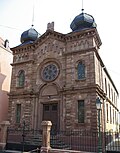
Ingwiller's now abandoned synagogue was built in 1822 over the ruins of a medieval castle, and enlarged in 1891.[23]

A presentation of the Alsatian Jews' history and culture through collections of artifacts and architectural elements can be found in the Musée Judéo-Alsacien of Bouxwiller, Bas-Rhin, in the Musée du bain rituel juif (Mikvah museum) of Bischheim, in the Musée alsacien and the Musée historique of Strasbourg, in the Musée historique of Haguenau, in the Musée d'Arts et Traditions Populaires of Marmoutier, in the Musée du vieux Soultz of Soultz-Haut-Rhin, in the Musée du pays de la Zorn of Hochfelden, in the Musée de l'image populaire of Pfaffenhoffen and in the Musée Bartholdi of Colmar.[24]

In 1984, the site of a medieval mikvah was found in a group of houses in Strasbourg and was later added to the government list of historical monuments.[25]

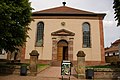
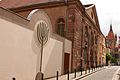
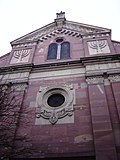
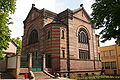
The annual European Day of Jewish Culture was initiated in 1996 by the B'nai Brith of Bas-Rhin together with the local Agency for Development of Tourism.[26] It now takes place in 27 European countries including Turkey and Ukraine.[27] The original aim of the day was to permit access to, and ultimately encourage restoration of, long-abandoned synagogues of architectural value such as those in Wolfisheim, Westhoffen, Pfaffenhoffen, Struth, Diemeringen, Ingwiller and Mackenheim.

Notable Jews born in Alsace

[edit]
[edit]

See also

[edit]

References

[edit]

Further reading

[edit]
[edit]
Revisions and contributorsEdit on WikipediaRead on Wikipedia
from Grokipedia
The history of the Jews in Alsace encompasses the settlement of Jewish communities in the region since the late 11th or early 12th century, initially in cities such as Strasbourg where the first documented presence dates to around 1170, followed by cycles of economic activity in moneylending and trade, severe persecutions including the 1349 Strasbourg massacre amid Black Death accusations that claimed about 2,000 lives, and repeated expulsions from urban centers leading to rural dispersion by the 15th century. Confined largely to villages, Alsatian Jews sustained themselves through livestock dealing, peddling, and small-scale commerce under discriminatory measures like the body tax (Leibzoll) and residency restrictions, with the population expanding to roughly 20,000 individuals by 1784 despite ongoing hardships. The French Revolution brought emancipation in 1791, conferring citizenship and enabling gradual urbanization, professional entry, and synagogue construction in the 19th century, though Napoleon's 1808 decrees imposed temporary curbs on debt collection and mobility that were lifted by 1818. The 20th century witnessed modernization and cultural adaptation until the 1940 Nazi annexation, which expelled nearly 30,000 Jews from Alsace to Vichy France with property confiscations and synagogue destructions, contributing to the deaths of at least 4,500 in the Holocaust through deportations and camps. Postwar recovery, bolstered by North African Jewish immigration, rebuilt communities, particularly in Strasbourg where the population reached about 15,000 by the early 21st century, preserving elements of a distinctive rural Ashkenazi heritage amid declining traditional practices.

Origins and Medieval Period

Arrival, Language, and Early Settlements

Jewish settlement in Alsace commenced in the late 11th or early 12th century, as Ashkenazi Jews expanded from Rhineland centers into the region amid opportunities for trade along the Rhine. The traveler Benjamin of Tudela provided the earliest written account around 1170, documenting a Jewish community in Strasbourg comprising approximately 1,000 individuals. Archaeological evidence, including tombstones from 1223, corroborates the presence of organized communities by the early 13th century. The primary language spoken by these early Alsatian Jews was Judeo-Alsatian, a dialect of Western Yiddish that fused local Alemannic German elements with Hebrew, Aramaic, and traditional Ashkenazi vocabulary, facilitating both internal cohesion and interaction with non-Jewish merchants. This linguistic tradition persisted as a marker of cultural distinctiveness, distinct from the surrounding Romance and Germanic vernaculars. Initial settlements concentrated in urban centers, with Strasbourg emerging as a hub; a dedicated Jewish quarter was established there by 1233, governed by regulations outlined in a 1200 code issued by the prince-bishop. By the early 13th century, communities had formed in Haguenau, Obernai, and Rosheim, followed by expansion to Colmar, Wissembourg, Guebwiller, Marmoutier, Rouffach, Ensisheim, Molsheim, Mulhouse, and Thann later in the century. These early groups, numbering in the dozens of localities by the close of the medieval period, primarily resided in about 20 towns, engaging in commerce and finance while maintaining ritual institutions like synagogues and cemeteries.

Economic Integration and Community Life

Jews in medieval Alsace primarily integrated into the economy through moneylending, a profession necessitated by Christian prohibitions on usury and restrictions barring Jews from land ownership, guilds, and most crafts. In Strasbourg, interest rates were regulated at 5-6% per week (equivalent to approximately 43% annually) by 1338, reflecting the high-risk nature of lending to often indebted peasants and the protective fees Jews paid for the privilege. Small-scale trade supplemented this, with Jews permitted daytime access to markets in cities like Strasbourg but required to depart by nightfall, underscoring their marginal yet essential role in local credit and commerce. Protection charters, such as the 1338 Strasbourg agreement costing 1,072 marks (divided among city, king, and bishop), explicitly enabled continued moneylending amid growing tensions. Community life centered on autonomous kehillot (organized Jewish communities) that provided mutual support, religious observance, and self-governance in over 40 localities by the 13th-14th centuries, including Strasbourg (attested c. 1170 by traveler Benjamin of Tudela), Colmar, and Sélestat. A designated Jewish quarter emerged in Strasbourg by 1233, fostering social cohesion around institutions like synagogues—evidenced by a 1338 record of a cantor named Jacob—and rabbinical academies that drew students from nearby towns such as Schlettstadt. These structures emphasized scholarly pursuits and ritual life, with rabbis delivering lectures that reinforced communal identity despite external pressures like mandatory badges and restrictive oaths. Daily interactions remained segregated, yet the kehillot's authoritarian leadership managed internal disputes, taxation for protections, and cultural persistence amid precarious economic conditions.

Roots of Antisemitism and the 1348-1349 Massacres

Antisemitism in medieval Alsace emerged from intertwined religious, economic, and social factors. Christian doctrine, reinforced by Church councils such as the Fourth Lateran Council of 1215, mandated distinctive clothing for Jews and propagated accusations of deicide and ritual murder, fostering a view of Jews as perpetual enemies of Christendom. In the Rhineland region including Alsace, these theological hostilities combined with local folklore and iconography depicting Jews in derogatory forms, such as grasping money purses or in bestial motifs, which symbolized greed and impurity. Economically, Jews in Alsace, barred from guilds and landownership, specialized in commerce and moneylending—professions prohibited to Christians by canon law against usury—leading to debtor resentment and stereotypes of exploitative Jewish financiers. Social segregation, with Jews residing in judengassen (Jewish quarters) and facing periodic expulsions from cities like Strasbourg after nightfall, exacerbated perceptions of otherness and suspicion. These undercurrents intensified during the Black Death pandemic of 1347–1351, which killed an estimated 30–60% of Europe's population through bubonic plague transmitted by fleas on rats. As the plague reached the Upper Rhine in late 1348, baseless rumors proliferated that Jews were poisoning wells to afflict Christians, confessions extracted under torture in places like Savoy and Switzerland lending false credibility to the charges. Flagellant movements and local preachers incited mobs, framing the crisis as divine punishment for tolerating Jews, overriding imperial protections issued by Emperor Charles IV in 1346 and 1348 that affirmed Jewish rights under his safeguard. In Alsace, pogroms erupted across towns, decimating communities. Strasbourg, hosting around 2,000 Jews engaged in trade and finance, saw initial resistance from the city council, which confined Jews to a cemetery for protection in December 1348. However, guilds and artisans, fearing economic competition and plague contagion, staged a coup on February 10, 1349, deposing the council and Peter Swarber, the bishop's advocate. On February 14, 1349—St. Valentine's Day—approximately 2,000 Jews were herded into a wooden structure, denied baptismal conversion offers, and burned alive; survivors faced enslavement or ransom, with their property confiscated to fund civic debts. Similar atrocities struck nearby locales like Erfurt and Basel, though Strasbourg's scale marked it as the era's deadliest single massacre, killing over 300 Jewish communities continent-wide in 1348–1349. Post-pogrom, Emperor Charles IV granted Strasbourg remission in September 1349 but extracted fines, while Jewish remnants fled eastward, temporarily halting organized life in Alsace until mid-14th-century readmissions under strict protections. This episode exemplified how crisis amplified preexisting prejudices, with empirical evidence of lower Jewish mortality rates—due to hygiene practices like well-water avoidance—dismissed in favor of conspiratorial narratives.

Early Modern Developments (14th-18th Centuries)

In the aftermath of the 1348–1349 Black Death pogroms, which decimated Jewish populations across Alsace, municipal authorities in major towns such as Strasbourg and Colmar enacted expulsions and long-term residence bans. Strasbourg's prohibition, formalized after the February 14, 1349, massacre of approximately 2,000 Jews, endured without significant readmission until the late 18th century, confining any surviving Jews to nearby villages or suburbs. Similarly, Colmar authorized the expulsion of its remaining Jews in 1512, pursuant to Emperor Maximilian I's 1510 decree, amid recurring local hostilities. These measures were often ratified by imperial edicts, such as Charles IV's 1349 confirmation of Alsatian municipal bans, reflecting a pattern of localized persecution under the fragmented Holy Roman Empire governance. Sporadic readmissions occurred in the 15th and 16th centuries, particularly in smaller towns and rural areas, where Jews secured temporary imperial protections as servi camerae regis (servants of the imperial chamber), entailing annual protection fees and taxes in exchange for limited toleration. Emperor Frederick III's 1444 authorizations facilitated returns to select localities, though these privileges were precarious and frequently revoked amid economic grievances or religious fervor. By the 17th century, under increasing French influence following partial annexations (e.g., Strasbourg in 1681), Jews navigated a patchwork of local ordinances, with advocates like Josel of Rosheim lobbying emperors for collective safeguards against arbitrary expulsions. Despite this, outright bans persisted in urban centers, forcing communities into dispersed village networks. Legal constraints compounded these expulsions, including mandatory residence in cramped Judengassen (Jewish alleys) where permitted, prohibitions on rural settlement in certain districts, and requirements to wear distinctive badges or hats for identification. Jews faced the humiliating More Judaico oath in legal proceedings, which invoked ritual curses, and were levied extraordinary tolls such as the Leibzoll (body tax), a per-person entry fee to towns imposed by French authorities from the late 17th century onward, treating Jews akin to merchandise. Numerical quotas limited family sizes and new arrivals, while bans on guild membership and land ownership barred agriculture and crafts, perpetuating dependency on princely or imperial patrons for survival. These edicts, enforced variably by local lords, underscored Jews' status as tolerated outsiders rather than citizens. Economic adaptation centered on niches inaccessible to Christians due to ecclesiastical usury bans or guild monopolies. Moneylending to peasants and minor nobility filled a critical gap for small, unsecured loans, with regulated rates reaching 5–6% weekly (equating to about 43% annually) to offset defaults and legal risks. Peddling emerged as a mainstay for poorer Jews, involving itinerant trade in textiles, notions, and livestock across rural circuits, often requiring protection letters to traverse territories. Cattle dealing and brokerage in agricultural goods supplemented incomes, leveraging networks across fragmented principalities. This specialization, while enabling demographic recovery—numbering several thousand by the 18th century—fueled resentments, as Jews became indispensable yet vilified creditors in agrarian economies, adapting through mobility and familial enterprises amid chronic insecurity.

Readmissions, Rural Networks, and Cultural Persistence

Following the devastations of the fourteenth-century pogroms and subsequent expulsions from urban centers, Jews began reappearing in Alsace during the fifteenth century under limited tolerances granted by local authorities, such as admission as citizens in Colmar from 1361, though with ongoing restrictions on residence and commerce. This pattern intensified in the seventeenth century amid the disruptions of the Thirty Years' War (1618–1648), which prompted a noteworthy immigration of Jews from the eastern bank of the Rhine into Alsace, where they sought refuge and opportunities in underserved rural economies. French annexation of parts of Alsace after the Peace of Westphalia in 1648 preserved certain privileges for Jewish settlers, including protections against blanket expulsions, allowing gradual readmissions under the patronage of local lords who valued their roles in credit and trade, despite persistent levies like the Leibzoll body tax. By the late seventeenth and eighteenth centuries, Alsatian Jewish life shifted decisively toward rural networks, as expulsions from cities like Strasbourg and Colmar confined most communities to over 100 villages across Lower and Upper Alsace, where Jews comprised up to 10–20% of some populations. These networks formed interconnected clusters of small Kehillot (communities), often centered on a synagogue, ritual bath (mikveh), and cemetery, sustained by familial and economic ties in cattle trading, peddling, and small-scale moneylending to peasants and nobles—occupations tolerated because they filled gaps in a Christian-dominated agrarian economy hostile to usury. Population growth reflected this resilience: from approximately 1,500 Jews around 1640 to 2,585 families (roughly 10,000–12,000 individuals) by 1750, expanding further to over 20,000 by the 1784 census under Louis XVI, with communities like those in the Sundgau region exemplifying dense rural clustering under seigneurial safeguards. Cultural persistence amid these constraints manifested in the steadfast adherence to Ashkenazi traditions, including the use of Western Yiddish (Judeo-Alsatian) as a vernacular for daily life, commerce, and religious texts, which reinforced communal identity against assimilation pressures. Religious observance centered on home-based practices and itinerant rabbis, with local customs like distinctive marriage contracts and burial rites varying slightly by village but unified by adherence to Talmudic law, enabling survival despite edicts limiting synagogue construction and public worship. Strong endogamous networks and mutual aid systems—such as communal funds for dowries and debt relief—countered economic marginalization, while literacy in Hebrew for prayer and study preserved intellectual continuity, as evidenced by surviving manuscripts and family genealogies from the period. This traditionalism endured local chicanery and periodic harassment, prioritizing communal autonomy over integration until the revolutionary upheavals of 1789.

Emancipation and Growth under French Rule (1789-1871)

Revolutionary Emancipation and Civic Integration

The French Revolution marked a pivotal shift for Alsace's Jewish population, which numbered approximately 20,000 to 25,000 individuals in 1789, comprising the majority of France's Ashkenazi Jews and concentrated in rural villages where they faced longstanding legal disabilities such as residence restrictions, special taxes, and bans on land ownership and certain trades. Prior to 1789, Alsatian Jews, often referred to as "country Jews," were tolerated but marginalized, engaging primarily in commerce, livestock trading, and moneylending due to guild exclusions, which fueled local resentments over perceived usury and economic competition. Emancipation unfolded unevenly amid revolutionary debates. While Sephardic Jews in Bordeaux and Avignon secured citizenship rights in January 1790 and 1791 through assemblies sympathetic to their urban, integrated status, Alsatian Ashkenazim encountered fierce provincial opposition, with petitions from Bas-Rhin and Haut-Rhin deputies citing risks of social unrest and economic disruption from granting rights to a Yiddish-speaking, religiously distinct group. On September 27, 1791, the National Assembly overcame these objections with Decree No. 7, proclaiming all Jews full French citizens with equal civic rights, including eligibility for public office, military service, and legal equality, a measure ratified by Louis XVI on September 29. This top-down legislative act, driven by universalist principles in the Declaration of the Rights of Man, ignored local majorities' preferences in Alsace, where anti-Jewish riots had occurred as early as 1789 amid revolutionary chaos. Civic integration proceeded gradually but faced practical barriers. Newly enfranchised Jews registered for civil status, with over 2,000 Alsatian Jewish men added to electoral rolls by 1792, enabling participation in local governance and the vote. However, linguistic isolation—Yiddish as the vernacular—and entrenched poverty limited immediate assimilation; many rural Jews remained in traditional roles, while urban migration to Strasbourg and Colmar began, fostering a nascent middle class. Napoleon's 1806 Assembly of Jewish Notables and 1807 Sanhedrin, convened partly to address Alsace's debt crises from Jewish lending, imposed oaths of allegiance and family naming reforms, promoting loyalty to France over separate communal autonomy. The March 17, 1808, "Infamous Decree" temporarily curtailed Jewish commercial activities in Alsace-Lorraine to 10-year limits and required state authorization for loans, reflecting pragmatic efforts to mitigate usury complaints substantiated by provincial reports of widespread indebtedness among peasants. Its revocation in 1818 under Louis XVIII restored unrestricted rights, accelerating integration as Jews entered professions, education, and the military, with conscription from 1810 onward dissolving prior exemptions and promoting national identity. By the 1830s, declining antisemitic violence and synagogue constructions signaled stabilizing civic participation, though full socioeconomic parity lagged until mid-century urbanization.

19th-Century Demographic Expansion and Occupational Shifts

The emancipation granted to Jews in 1791 facilitated demographic expansion in Alsace, where the community numbered approximately 22,000 individuals on the eve of the Revolution, constituting a significant portion of France's total Jewish population of around 40,000. By the early 19th century, this figure had stabilized amid Napoleonic restrictions, but subsequent repeal of the 1808 "Infamous Decree" in 1818 and broader civic integration spurred natural increase and reduced emigration pressures. Census data reflect modest growth, with Alsatian Jews reaching estimates of 25,000–30,000 by mid-century, supported by improved access to marriage without prior authorization and declining infant mortality linked to consistorial welfare initiatives. This expansion occurred against a backdrop of persistent rural dispersion, with over 200 small communities maintaining traditional structures, though urbanization accelerated toward Strasbourg, Colmar, and Mulhouse as economic opportunities broadened. The population peaked prior to the 1871 Franco-Prussian War annexation, after which emigration to metropolitan France reduced numbers to about 35,000 by 1890, indicating that 19th-century growth was temporarily reversed by geopolitical shifts rather than inherent stagnation. Factors such as family sizes averaging 3–4 children per household in early censuses contributed to this rise, though high poverty rates initially tempered absolute gains. Occupationally, Alsatian Jews transitioned from pre-emancipation constraints like peddling, cattle trading, and second-hand dealing—activities often confined to rural itinerancy and stigmatized by usury stereotypes—to diversified roles in commerce, artisanry, and emerging industries. The consistorial system, established under Napoleon, promoted French-language education and vocational training, enabling entry into wholesale trade, textiles, and banking; by the 1840s, notable families engaged in Mulhouse's dyeing and printing sectors, leveraging regional industrialization. Despite these shifts, a substantial underclass persisted in colportage and small-scale brokerage into the 1860s, with economic regeneration uneven due to limited land ownership and competition from Christian merchants. Liberal professions grew modestly, with Jews comprising a growing minority of lawyers and physicians in urban centers by century's end, facilitated by secondary schooling access post-1830s reforms. This occupational mobility correlated with synagogue constructions, such as those in Haguenau (1820) and Colmar (1839), signaling community consolidation amid modernization. Overall, emancipation catalyzed causal pathways from marginal trades to integrated economic participation, though traditional networks endured, underpinning resilience against recurrent antisemitic tensions.

German Annexation and Pre-WWI Era (1871-1918)

Life under the German Empire

The annexation of Alsace-Lorraine to the German Empire in 1871 disrupted the Jewish community, which stood at approximately 40,000 persons—half of France's total Jewish population—and deeply embedded in French civic life following emancipation. Profound francophile attachments, coupled with aversion to mandatory military service under Prussian command and fears of cultural erasure, prompted mass emigration to southern France; by 1905, Alsace had lost over 9,000 Jews, representing roughly 25% of its pre-annexation community. Under imperial rule, remaining Jews encountered Germanization mandates, including obligatory German instruction in schools and bureaucracy, which conflicted with their Yiddish vernacular and residual French orientations. Religious institutions upheld autonomy by rejecting German-appointed rabbis and sustaining orthodox frameworks, with rural congregations preserving traditional cattle trading economies alongside emerging urban commerce in textiles and finance. In Strasbourg, demographic recovery to about 8,000 members by 1889 facilitated monumental projects like the Quai Kléber Synagogue, completed in 1898, symbolizing communal resilience amid modernization. Persistent antisemitism drew from longstanding provincial stereotypes and amplified by imperial nationalists viewing Jews as inherently un-German or francophile agitators, though overt violence remained limited compared to earlier eras. Jews complied with conscription—serving in the Reichsheer—yet covertly nurtured pro-French identities, as rural peddlers and merchants formed tight-knit networks resistant to assimilation. By 1914, the community had stabilized near 30,000, poised for reintegration upon the region's reversion to France in 1918.

The Dreyfus Affair: Accusations, Trials, and Regional Tensions

Alfred Dreyfus, born on September 9, 1859, in Mulhouse, Alsace, to a wealthy Jewish textile manufacturing family, relocated with his family to Paris in 1871 following the German annexation of Alsace-Lorraine after the Franco-Prussian War. As a French artillery officer, Dreyfus was arrested on October 15, 1894, accused of treason for allegedly passing military secrets to Germany, based on a handwritten bordereau discovered in the German embassy in Paris. The accusation stemmed from flawed handwriting analysis linking the document to Dreyfus, amid suspicions heightened by his Jewish background and Alsatian origins, which evoked fears of disloyalty in the border region lost to Germany. In a closed-door court-martial from December 19 to 22, 1894, Dreyfus was convicted of treason by a military tribunal, relying on secret evidence including forged documents in a dossier shown only to judges, violating procedural norms. Sentenced to life imprisonment, he endured a public degradation ceremony on January 5, 1895, where his insignia were torn off amid jeers of "Death to the Jew!" before deportation to Devil's Island penal colony off French Guiana. Doubts emerged in 1896 when Lieutenant Colonel Georges Picquart identified Major Ferdinand Walsin Esterhazy as the bordereau's true author through matching handwriting, but military cover-up persisted, with Esterhazy acquitted in January 1898. Émile Zola's open letter "J'Accuse...!" published on January 13, 1898, in L'Aurore, accused high-ranking officers of conspiracy and antisemitism, galvanizing public division. A retrial at Rennes in August-September 1899 again convicted Dreyfus but with mitigating circumstances, leading to a presidential pardon from Émile Loubet on September 19, 1899, allowing his return to France. Full exoneration came on July 12, 1906, when the Court of Cassation annulled both convictions, restoring Dreyfus's rank and Legion of Honor. The affair exposed systemic antisemitism in the French military and judiciary, with fabricated evidence and procedural irregularities prioritizing institutional honor over justice. In Alsace-Lorraine under German administration since 1871, the Dreyfus Affair intensified regional tensions, as Dreyfus's Mulhouse birth cast him as a symbol of unresolved Franco-German antagonism and questioned loyalties of French-oriented Alsatians, particularly Jews. The scandal fueled revanchist sentiments in France, linking antisemitism to national humiliation over the annexation, while in German-held Alsace, pro-Dreyfus sympathies among francophile elements clashed with official suppression and rising antisemitic rhetoric portraying Jews as inherently disloyal. German authorities monitored and curtailed public discourse on the affair to prevent agitation for reunification with France, exacerbating divisions within the Alsatian Jewish community, which comprised about 20,000 individuals by 1900 and navigated dual identities amid economic integration but persistent prejudice. The case amplified local antisemitism, with incidents of hostility toward Jews echoing French mob violence, underscoring how borderland status amplified suspicions of espionage and cultural alienation for Alsatian Jews.

Interwar Period and World War II (1918-1945)

Return to France and Interwar Stability

Following the Armistice of 11 November 1918 and the subsequent reintegration of Alsace into France under the Treaty of Versailles in 1919, the region's Jewish community—estimated at around 20,000 individuals prior to World War I—reverted to the emancipated status they had enjoyed under French rule before 1871. Many Alsatian Jews, who had demonstrated pro-French sentiments through military service in the French army during the war and cultural resistance to Germanization policies, viewed the return as a restoration of their preferred national and civic environment. The local consistories for the departments of Bas-Rhin and Haut-Rhin, dormant under German administration, were promptly reorganized under the Consistoire Central Israélite de France, facilitating the resumption of religious, educational, and communal governance in alignment with French secular laws. The interwar decades brought relative stability to Jewish life in Alsace, characterized by continuity in traditional practices amid broader economic fluctuations. The population remained largely stable, hovering between 20,000 and 25,000 by the mid-1930s, concentrated in urban centers like Strasbourg (home to the largest community) and rural networks of merchants and cattle traders who preserved Yiddish-speaking orthodox households. Communal institutions thrived, including synagogues such as those in Haguenau (established 1820) and active rabbinical leadership; for instance, in Mulhouse, rabbis like Jacob Kaplan bolstered religious education and community cohesion post-1918. Yiddish periodicals and youth organizations, including scouting groups in Strasbourg, fostered cultural persistence, though some observers noted tensions between assimilationist tendencies and traditionalist commitments. Antisemitism persisted at low levels during the 1920s, influenced by national economic recovery efforts and the absence of widespread pogroms, but intensified modestly in the 1930s amid France's political polarization and the influx of approximately 50,000 Jewish refugees from Germany after 1933—few of whom settled in Alsace due to its border proximity. Local fascist movements, such as those documented in interwar Alsace, occasionally echoed anti-Jewish rhetoric tied to economic grievances, yet these did not disrupt communal stability or lead to systemic discrimination before 1940. Alsatian Jews maintained occupational patterns in commerce and small industry, benefiting from France's republican protections, which contrasted with the cultural pressures of the prior German era. This period thus represented a brief interlude of institutional normalcy and cultural resilience for the community.

Nazi Annexation, Deportations, and Near-Annihilation

Following the Franco-German armistice on June 22, 1940, Nazi Germany de facto annexed Alsace, incorporating it into the Gau Baden-Elsaß administrative district without a formal treaty, while subjecting the region to immediate Germanization policies. The Nazi authorities declared Alsace Judenrein (cleansed of Jews), prohibiting Jewish residence and ownership, with synagogues repurposed or destroyed and Jewish property confiscated systematically from July 1940 onward; for instance, the monumental Synagogue du Quai Kléber in Strasbourg, a landmark of the community completed in 1898, was burned by a Hitler Youth commando on September 12, 1940, and subsequently dynamited in 1941, exemplifying the destruction of Jewish religious sites during the annexation. Prior to the German invasion, French military orders had evacuated much of the Alsatian population, including approximately 20,000 Jews from Alsace and adjacent Lorraine, starting September 3, 1939, relocating them to southwestern France in the Vichy-controlled zone to preempt occupation. The few hundred Jews remaining in Alsace after evacuation—often those who returned illicitly or overlooked initially—faced rapid expulsion to Vichy France between July and October 1940, alongside German and Austrian Jewish refugees who had fled to the region since 1933. In the Vichy zone, these approximately 15,000–20,000 Alsatian Jews encountered escalating persecution under Vichy's Statut des Juifs (October 3, 1940), which defined Jews racially and barred them from public life, followed by internment in camps like Gurs and Rivesaltes. Roundups intensified after July 1942, with Alsatian Jews among the 75,670 total Jews deported from France, primarily via Drancy transit camp to Auschwitz-Birkenau, where mortality exceeded 90% due to gassing, starvation, and forced labor. Deportation records indicate at least 2,600 Jews from Bas-Rhin (northern Alsace) alone were transported eastward, though no direct deportations occurred from annexed Alsace itself; victims were funneled through Vichy infrastructure. Overall, of the pre-war Alsatian Jewish population nearing 30,000 (including refugees), roughly 15%—or about 4,500—perished in the Holocaust, with survivors numbering fewer than 1,000 returning post-liberation in November 1944, their communities shattered by asset seizures and familial annihilation. This near-eradication stemmed from Nazi racial policies causally enforced through Vichy complicity, overriding earlier evacuations, and leaving Alsace's Jewish infrastructure—synagogues, schools, and cemeteries—desecrated or abandoned until Allied advances.

Postwar Revival and Contemporary Community

Reconstruction and Influx from North Africa

Following the liberation of Alsace in late 1944 and early 1945, approximately 15,000 Jewish survivors returned to the region from evacuation and hiding, out of a pre-war population of under 30,000. Community rebuilding efforts focused on restoring religious and cultural institutions, with three synagogues— in Benfeld, Struth, and Wolfisheim—remaining intact, while others in Colmar and Mulhouse were repaired; a new synagogue was constructed in Strasbourg. Intellectuals like André Neher provided leadership in reestablishing communal life amid the trauma of deportations and losses. The returning Ashkenazi population faced demographic challenges, with rural communities declining as survivors concentrated in urban centers like Strasbourg, leading to initial stagnation. This changed after Algerian independence in 1962, when Sephardic Jews from North Africa, primarily Algeria, immigrated to France in large numbers, with some settling in Alsace. By 1970, the Jewish population of Alsace and Lorraine had grown to about 50,000, incorporating these newcomers and revitalizing the community. The influx introduced Sephardic customs, diversifying the predominantly Ashkenazi traditions and prompting adaptations in religious practices and communal structures. New immigrants contributed to economic and social revival, though integration involved navigating linguistic and cultural differences within the existing framework of French Jewish institutions.

Jewish Life in Alsace Today: Demographics, Institutions, and Challenges

The Jewish population in Alsace totals approximately 23,000 as of the early 2020s, concentrated primarily in urban centers with Strasbourg hosting around 20,000 residents. Smaller communities persist in Mulhouse and Colmar, though rural Jewish presence has dwindled significantly since the mid-20th century. This demographic reflects postwar reconstruction augmented by Sephardic immigration from North Africa, contrasting with the historical Ashkenazi majority. Religious and communal life is coordinated by the Consistoires Israélites du Bas-Rhin and du Haut-Rhin, which manage kosher certification, ritual services, and heritage preservation efforts, including a UNESCO-listed inventory of over 120 synagogues. Prominent institutions include the Synagogue de la Paix in Strasbourg, accommodating 1,600 worshippers for both Ashkenazi and Sephardic rites, alongside the Rambam and Esplanade synagogues; similar facilities operate in Colmar (seat of the Haut-Rhin Grand Rabbinate) and Mulhouse. Educational infrastructure features schools like École Aquiba (founded 1948), École Beth Hanna (for girls from primary to secondary levels), Gan Shalom (early childhood), and ORT Strasbourg (vocational training), blending secular and Judaic studies under consistorial oversight. Cultural sites, such as the Musée Judéo-Alsacien in Bouxwiller, document Alsatian Jewish traditions amid ongoing restoration projects. Contemporary challenges include a surge in antisemitic incidents, with Bas-Rhin ranking among France's most affected departments; nationally, recorded acts reached 1,570 in 2024, including violence and online harassment, exacerbated post-October 7, 2023. Community leaders report eroded security, prompting synagogue fortifications, school vigilance, and emigration to Israel, as many express disillusionment with French societal integration. Rural depopulation risks eroding heritage sites through neglect and desecrations, while assimilation pressures dilute traditional practices in a secularizing environment.

Cultural and Historical Legacy

Preservation of Heritage Sites and Traditions

Post-World War II efforts in Alsace focused on restoring and inventorying Jewish heritage sites devastated during the Nazi occupation, which destroyed or repurposed many synagogues and cemeteries. In the Bas-Rhin department alone, preservation initiatives in 2020 addressed 15 Jewish cemeteries, including ancient ones such as Rosenwiller (dating to before 1366 with over 6,000 tombs), Ettendorf (dating to the 15th century or earlier), Mackenheim (recorded since 1608), Sélestat (established around 1622), and Haguenau (one of the oldest with 17th-century burials), and 4 synagogues through targeted restoration work funded by regional authorities. A comprehensive two-year scientific inventory survey launched in 2023 examined over 120 synagogues, aiming to document and protect structures dating from the 18th to 20th centuries, many of which survived partial demolitions or conversions during the war. Key preserved sites include the Musée Judéo-Alsacien in Bouxwiller, housed in a synagogue built in 1842 and rescued from demolition in the 1980s to showcase rural Alsatian Jewish life through artifacts, documents, and reconstructions of traditional homes and synagogues. Other notable examples encompass the Benfeld synagogue, a rare intact 19th-century structure undergoing full-scale restoration since 2021, and the Colmar synagogue, constructed between 1839 and 1842, which serves as the seat of the local consistory and features preserved religious architecture. Alsace hosts over 200 Jewish sites overall, including 80 synagogues, mikvehs, and cemeteries, integrated into a 429-kilometer heritage route established to promote public awareness and tourism while ensuring maintenance. Preservation extends to traditions through museum exhibits, namely (from north to south): Musée alsacien de Haguenau (1972), Musée du patrimoine et du judaïsme alsacien (Marmoutier), Musée alsacien de Strasbourg (1907), Musée Bartholdi (Colmar), Musée historique de Mulhouse, that reconstruct daily practices, such as Sabbath observances and lifecycle events, using original objects like circumcision mappot—embroidered swaddling cloths recording family lineages—from Rhine-area communities. These institutions highlight the distinct Alsatian Yiddish dialect and rural customs, including economic roles in livestock trade and viticulture, countering historical erasures by Nazis who burned synagogues and confiscated ritual items. Archaeological finds, such as the 2016 genizah discovery in the Dambach-la-Ville synagogue attic yielding thousands of Hebrew manuscripts and objects, further aid in reviving lost ritual knowledge and textual traditions. Community-led associations, like those managing the Bouxwiller museum since its 1998 opening, sustain these efforts by integrating education on pre-emancipation Jewish village life with contemporary commemorations.

Historiography of the Jews in Alsace

Rabbi Moïse Ginsburger (also known as Moses Ginsburger), a prominent historian of Alsace Jewish history and editor of the Straßburger Israelitische Wochenschrift, founded the Société pour l'Histoire des Israélites d'Alsace et de Lorraine (SHIAL)/Gesellschaft für die Geschichte der Israeliten in Elsass-Lothringen on January 1, 1905, in Mulhouse; this society has preserved and researched Jewish history in Alsace and Lorraine through archives, publications, and collections of Judaica. Historians Robert Weyl and Freddy Raphael co-authored Juifs en Alsace: Culture, société, histoire (1977), analyzing cultural and social dimensions of Alsatian Jewish life. Paul Assall published Juden im Elsass (1984), discussing the history and presence of Jews in Alsace. Jean Daltroff documented Jewish heritage routes and synagogues in La Route du Judaïsme en Alsace (2006). Freddy Raphael, an Alsatian-born scholar, explored Jewish-Alsatian identity and rural communities in works emphasizing anthropological perspectives. Michel Krempper detailed integration and crises in Histoire des Juifs d'Alsace (2021). Rabbis Max Warschawski, chief rabbi of Strasbourg from 1970, and Claude Heymann contributed to community history and preservation efforts, with Warschawski advancing local studies and Heymann leading associations on Alsatian Jewish traditions.

Notable Alsatian Jews: Contributions and Influence

Josel of Rosheim (c. 1480–1554), born in Alsace, served as a leading shtadlan (advocate) for Jewish communities in the Holy Roman Empire during the reigns of Emperors Maximilian I and Charles V. As a prominent leader of Alsatian Jews, he successfully intervened against expulsions, persecutions, and false accusations like blood libels, securing imperial protections for Jews in Alsace and beyond. Herz Cerfbeer (1730–1793), born in Bischheim near Strasbourg, emerged as a pivotal figure among Alsatian Jews during the Ancien Régime as a military contractor supplying the French army, leveraging his position to advocate for communal rights. In 1781, he authored a memorandum denouncing the discriminatory corvée des Juifs (body tax) as humiliating and contrary to natural rights, contributing to its eventual abolition and facilitating broader petitions that eased settlement restrictions for Jews expelled from France centuries earlier. His philanthropy extended to protecting indigent Jews willing to engage in manual labor, marking a shift from traditional moneylending toward economic integration and influencing early emancipation efforts in Alsace. Charles Netter (1826–1882), born in Strasbourg to a Jewish family, co-founded the Alliance Israélite Universelle in 1860, an organization dedicated to promoting Jewish education, emancipation, and welfare globally. In 1870, he established Mikveh Israel, the first modern Jewish agricultural school near Jaffa in Ottoman Palestine, training students in farming techniques to foster self-sufficiency and settlement, thereby influencing early Jewish agricultural development in the region. Émile Waldteufel (1837–1915), born in Strasbourg to a Jewish family, composed over 200 waltzes and salon pieces, including the famous "Les Patineurs" (The Skaters' Waltz, 1882), which popularized light music across Europe and was favored by Empress Eugénie. His work exemplified Jewish participation in the performing arts during the era of cultural integration following emancipation. Zadoc Kahn (1839–1905), born in Mommenheim, Alsace, to a Jewish family, served as chief rabbi of Paris from 1868 to 1889 and chief rabbi of France from 1889 until his death. He contributed to Jewish communal leadership in the post-emancipation era by promoting religious education and advocating for the integration of Jews into French society. During the Dreyfus Affair, having officiated Alfred Dreyfus's wedding in 1890, he provided private support to the family, was among the first Jewish leaders to suspect antisemitic motivations, but maintained a cautious public stance to avoid escalating tensions. Hippolyte Bernheim (1840–1919), born in Mulhouse to a Jewish family, advanced medical understanding of the psyche as a neurologist in Nancy, pioneering the concept of suggestibility in hypnosis and arguing it as a natural psychological process rather than mere hysteria. His works, including Hypnosis, Suggestion, and Psychotherapy (1884–1886), emphasized therapeutic suggestion's role in treating neuroses, influencing Sigmund Freud's shift from purely hypnotic to psychoanalytic methods and establishing empirical foundations for modern psychotherapy. Bernheim's empirical approach, grounded in clinical observations of over 1,000 patients, challenged mystical views of hypnosis and promoted its integration into mainstream medicine. The Debré family, originating from Westhoffen in Alsace where their ancestor Rabbi Simon Debré was born in 1854, has exerted significant influence on modern French society across medicine, politics, and the arts. Robert Debré (1882–1978), son of Simon, pioneered French pediatrics by founding key institutions and advancing child health research. His son Michel Debré (1912–1996) served as the first Prime Minister of the Fifth Republic, drafting its constitution despite his personal conversion to Catholicism while retaining Jewish paternal heritage. Other family members, including painter Olivier Debré (1920–1999), politicians Bernard Debré (1944–2020) and Jean-Louis Debré (1944–2025), further exemplify their contributions to public service and culture. Lazare Weiller (1858–1928), born in Schlettstadt (Sélestat), Alsace, to a Jewish family, was an industrialist and inventor who pioneered advancements in electricity, photography, and early film technology. He financially backed aviation pioneers, notably funding Louis Blériot's successful 1909 English Channel crossing, and served as a deputy in the French parliament, exemplifying Alsatian Jewish contributions to technological innovation and public life. Alfred Dreyfus (1859–1935), born in Mulhouse to a prosperous Jewish textile family, exemplified Alsatian Jewish assimilation into French military and civic life before his 1894 wrongful conviction for treason, which ignited the Dreyfus Affair and exposed persistent antisemitism in elite institutions. Fully exonerated by 1906 after two trials and a pardon in 1899, his case mobilized intellectuals like Émile Zola, catalyzed the formation of the League of Human Rights, and indirectly spurred Theodor Herzl's Zionist ideology by revealing the limits of emancipation in Europe. Dreyfus's endurance and reinstatement as a major influenced legal reforms, including revisions to military justice codes, underscoring the causal link between individual injustice and broader societal reckonings with prejudice. Albert Kahn (1860–1940), born in Marmoutier, Bas-Rhin, to a Jewish family, rose as a banker in Paris before channeling his fortune into philanthropy, most notably funding the Archives de la Planète (1909–1931), a project that dispatched photographers worldwide to create over 72,000 color images and films documenting diverse cultures and landscapes, fostering global awareness and ethnographic preservation. Théophile Bader (1864–1942), originating from Dambach-la-Ville in Bas-Rhin, co-founded the Galeries Lafayette in 1893 with cousin Alphonse Kahn, transforming a 70-square-meter haberdashery into Paris's flagship department store by 1912 through innovative merchandising like fixed pricing and lavish displays. As CEO until 1932, Bader expanded the chain to multiple sites, employing over 10,000 by the interwar period and pioneering luxury ready-to-wear for the bourgeoisie, which economically empowered Jewish entrepreneurship amid post-emancipation opportunities. His Alsatian roots informed a resilient business model rooted in regional trade networks, sustaining French retail innovation despite rising antisemitism. Lucien Cromback (1884–1961), born in Saverne, Alsace, to a longstanding Jewish family with ancestral ties to communal leadership, was a prominent architect and community leader. Serving as chief architect for civil buildings and national palaces, he designed key Jewish institutions, including the Israelite colony in Schirmeck (1924–1926) and the Home Israélite de jeunes filles in Strasbourg (1926–1928). During World War II, he aided refugees, and post-war, he presided over the Consistoire Israélite du Bas-Rhin, contributing to community welfare and reconstruction. Mathematician Friedrich Wilhelm Levi (1888–1966), born in Mulhouse, Alsace, to a Jewish family, advanced abstract algebra through foundational work on abelian groups and group theory, including Levi's lemma. Dismissed from the University of Leipzig in 1935 under Nazi racial laws due to his Jewish ancestry, he emigrated to India and later the United Kingdom before returning to a university position in Germany after World War II. Nathan Katz (1892–1981), born in Waldighofen, Alsace, was a poet and playwright who composed works in the Alsatian dialect, preserving regional Jewish literary heritage. His dramatic poem 'S'Annele Balthasar', first performed in 1924, dramatizes the 1589 witch trial of a peasant girl in the Sundgau region, drawing on local historical events to explore themes of persecution and folklore. Painter Marcelle Cahn (1895–1981), born in Strasbourg to a Jewish merchant family, pioneered abstract art through geometric compositions influenced by Cubism, co-founding the Abstraction-Création group in 1931. Her exhibitions in Paris and international venues contributed to modernist movements, highlighting Alsatian Jewish resilience in the arts amid 20th-century upheavals. Pierre Villon (pseudonym of Roger Salomon Ginsburger, 1901–1980), born in Soultz-Haut-Rhin, Alsace, to a Jewish rabbinical family, trained as an architect and joined the French Communist Party. Under his resistance pseudonym, he played a pivotal role in the French Resistance, including membership in the National Council of the Resistance co-founded in 1943. Post-war, he served as a deputy in the French National Assembly, exemplifying Alsatian Jewish contributions to anti-fascist struggle and political resilience. In the 20th century, physicist Hans Bethe (1906–2005), born in Strasbourg to a family with Jewish maternal heritage, contributed foundational theories to nuclear astrophysics, earning the 1967 Nobel Prize for elucidating energy production in stars via proton-proton chains and CNO cycles. Dismissed from German academia in 1933 under Nazi racial laws due to his half-Jewish status, Bethe emigrated to the U.S., leading theoretical work on the Manhattan Project's implosion design for plutonium bombs, which informed postwar arms control debates. His later advocacy for nuclear restraint, including opposition to hydrogen bomb development in 1950, reflected a commitment to ethical science, balancing empirical rigor with realism about technology's destructive potential. Philosopher André Neher (1914–1988), born in Obernai, shaped post-Holocaust Jewish thought through biblical exegesis emphasizing divine silence and human vocation, as in The Exile of the Word (1961), analyzing scriptural absences to address theodicy amid genocide. Surviving wartime displacement, Neher's scholarship bridged German philology and Hebrew studies, influencing French Jewish renewal by integrating Shoah experiences into prophetic traditions without resorting to uncritical optimism. His leadership in intellectual colloquia fostered causal realism in theology, privileging textual evidence over ideological consolation. Poet Claude Vigée (1921–2017), born in Bischwiller, Alsace, to a Jewish family, composed poetry in French and Alsatian, delving into themes of Jewish identity, exile, and Alsatian heritage. Active in the French Jewish resistance during World War II, he escaped to Spain and later the United States, experiences that infused his work with reflections on displacement and return. His collections earned numerous literary awards in France and abroad, underscoring his contributions to trilingual Alsatian-Jewish literature. Marcel Marceau (1923–2007), born in Strasbourg to a Jewish family, achieved international renown as a mime artist, creating the iconic character Bip the Clown and mastering the art of silent expression to convey profound human emotions. During World War II, he participated in the French Resistance, using his emerging skills in pantomime to distract guards and facilitate the smuggling of Jewish children to safety in Switzerland, saving numerous lives while his father was deported to Auschwitz. Biochemist Étienne-Émile Baulieu (1926–2025), born in Strasbourg to Jewish parents, advanced steroid hormone research, co-developing RU-486 (mifepristone), the pioneering abortifacient approved in France in 1988, transforming reproductive health options. His broader work on neurosteroids influenced endocrinology and neuroscience, underscoring empirical innovation from Alsatian Jewish scientific traditions. Harpsichordist Huguette Dreyfus (1928–2016), born in Mulhouse, Alsace, to a Jewish family, was a prominent figure in the French Baroque music revival through performances, recordings of harpsichord repertoire, and teaching at institutions like the Schola Cantorum. Jean Kahn (1929–2013), born in Strasbourg, Alsace, to a Jewish family, was a lawyer and businessman who rose to prominence in French Jewish leadership. After earning a law degree from the University of Strasbourg and admission to the bar in 1953, he managed the family textile business while serving as president of the Jewish Community of Strasbourg from 1972 to 1990. He then led the Conseil Représentatif des Institutions juives de France (CRIF) as its seventh president from 1989 to 1995, advocating for Jewish community rights and human rights. Writer and philosopher Éliette Abécassis (born 1969), born in Strasbourg to a Sephardi Jewish family of Moroccan origin, has authored novels such as Qaré (1999) examining Jewish identity, ethics, and human relations. As a philosophy professor, her writings blend narrative with philosophical depth, enriching French literature on diaspora and moral inquiry.

References

Add your contribution
Related Hubs
User Avatar
No comments yet.