Hubbry Logo
ExoskeletonExoskeletonMain
Open search
Exoskeleton
Community hub
Exoskeleton
logo
8 pages, 0 posts
0 subscribers
Be the first to start a discussion here.
Exoskeleton
Exoskeleton
from Wikipedia
Discarded exoskeleton (exuviae) of dragonfly nymph
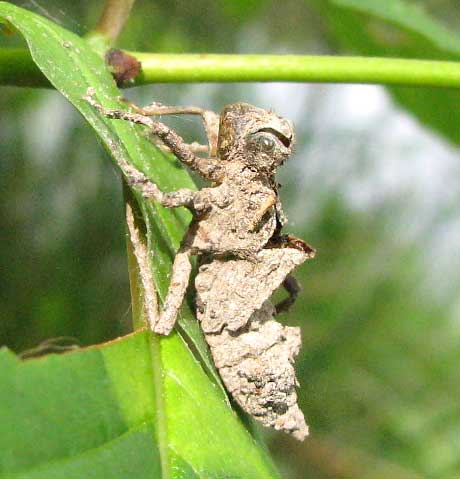
Exoskeleton of cicada attached to a Tridax procumbens (colloquially known as the tridax daisy)

An exoskeleton (from Ancient Greek έξω (éxō) 'outer' and σκελετός (skeletós) 'skeleton')[1][2][3] is a skeleton that is on the exterior of an animal in the form of hardened integument, which both supports the body's shape and protects the internal organs, in contrast to an internal endoskeleton (e.g. that of a human) which is enclosed underneath other soft tissues. Some large, hard and non-flexible protective exoskeletons are known as shell or armour.

Examples of exoskeletons in animals include the cuticle skeletons shared by arthropods (insects, chelicerates, myriapods and crustaceans) and tardigrades, as well as the skeletal cups formed by hardened secretion of stony corals, the test/tunic of sea squirts and sea urchins, and the prominent mollusc shell shared by snails, clams, tusk shells, chitons and nautilus. Some vertebrate animals, such as the turtle, have both an endoskeleton and a protective exoskeleton.

Role

[edit]

Exoskeletons contain rigid and resistant components that fulfill a set of functional roles in addition to structural support in many animals, including protection, respiration, excretion, sensation, feeding and courtship display, and as an osmotic barrier against desiccation in terrestrial organisms. Exoskeletons have roles in defence from parasites and predators and in providing attachment points for musculature.[4]

Arthropod exoskeletons contain chitin; the addition of calcium carbonate makes them harder and stronger, at the price of increased weight.[5] Ingrowths of the arthropod exoskeleton known as apodemes serve as attachment sites for muscles. These structures are composed of chitin and are approximately six times stronger and twice the stiffness of vertebrate tendons. Similar to tendons, apodemes can stretch to store elastic energy for jumping, notably in locusts.[6] Calcium carbonates constitute the shells of molluscs, brachiopods, and some tube-building polychaete worms. Silica forms the exoskeleton in the microscopic diatoms and radiolaria. One mollusc species, the scaly-foot gastropod, even uses the iron sulfides greigite and pyrite.[citation needed]

Some organisms, such as some foraminifera, agglutinate exoskeletons by sticking grains of sand and shell to their exterior. Contrary to a common misconception, echinoderms do not possess an exoskeleton and their test is always contained within a layer of living tissue.[citation needed]

Exoskeletons have evolved independently many times; 18 lineages evolved calcified exoskeletons alone.[7] Further, other lineages have produced tough outer coatings, such as some mammals, that are analogous to an exoskeleton. This coating is constructed from bone in the armadillo, and hair in the pangolin. The armour of reptiles like turtles and dinosaurs like Ankylosaurs is constructed of bone; crocodiles have bony scutes and horny scales.

Growth

[edit]

Since exoskeletons are rigid, they present some limits to growth. Organisms with open shells can grow by adding new material to the aperture of their shell, as is the case in gastropods, bivalves, and other molluscans. A true exoskeleton, like that found in panarthropods, must be shed via moulting (ecdysis) when the animal starts to outgrow it.[8] A new exoskeleton is produced beneath the old one, and the new skeleton is soft and pliable before shedding the old one. The animal will typically stay in a den or burrow during moulting,[citation needed] as it is quite vulnerable to trauma during this period. Once at least partially set, the organism will plump itself up to try to expand the exoskeleton.[ambiguous] The new exoskeleton is still capable of growing to some degree before it is eventually hardened. [citation needed] In contrast, moulting reptiles shed only the outer layer of skin and often exhibit indeterminate growth.[9] These animals produce new skin and integuments throughout their life, replacing them according to growth. Arthropod growth, however, is limited by the space within its current exoskeleton. Failure to shed the exoskeleton once outgrown can result in the animal's death or prevent subadults from reaching maturity, thus preventing them from reproducing. This is the mechanism behind some insect pesticides, such as Azadirachtin.[10]

Paleontological significance

[edit]
Borings in exoskeletons can provide evidence of animal behaviour. In this case, boring sponges attacked this hard clam shell after the death of the clam, producing the trace fossil Entobia.

Exoskeletons, as hard parts of organisms, are greatly useful in assisting the preservation of organisms, whose soft parts usually rot before they can be fossilized. Mineralized exoskeletons can be preserved as shell fragments. The possession of an exoskeleton permits a couple of other routes to fossilization. For instance, the strong layer can resist compaction, allowing a mould of the organism to be formed underneath the skeleton, which may later decay.[11] Alternatively, exceptional preservation may result in chitin being mineralised, as in the Burgess Shale,[12] or transformed to the resistant polymer keratin, which can resist decay and be recovered.

However, our dependence on fossilised skeletons also significantly limits our understanding of evolution. Only the parts of organisms that were already mineralised are usually preserved, such as the shells of molluscs. It helps that exoskeletons often contain "muscle scars", marks where muscles have been attached to the exoskeleton, which may allow the reconstruction of much of an organism's internal parts from its exoskeleton alone.[11] The most significant limitation is that, although there are 30-plus phyla of living animals, two-thirds of these phyla have never been found as fossils, because most animal species are soft-bodied and decay before they can become fossilised.[13]

Mineralized skeletons first appear in the fossil record shortly before the base of the Cambrian period, 550 million years ago. The evolution of a mineralised exoskeleton is considered a possible driving force of the Cambrian explosion of animal life, resulting in a diversification of predatory and defensive tactics. However, some Precambrian (Ediacaran) organisms produced tough outer shells[11] while others, such as Cloudina, had a calcified exoskeleton.[14] Some Cloudina shells even show evidence of predation, in the form of borings.[14]

Evolution

[edit]

The fossil record primarily contains mineralized exoskeletons, since these are by far the most durable. Since most lineages with exoskeletons are thought to have started with a non-mineralized exoskeleton which they later mineralized, it is difficult to comment on the very early evolution of each lineage's exoskeleton. It is known, however, that in a very short course of time, just before the Cambrian period, exoskeletons made of various materials – silica, calcium phosphate, calcite, aragonite, and even glued-together mineral flakes – sprang up in a range of different environments.[15] Most lineages adopted the form of calcium carbonate which was stable in the ocean at the time they first mineralized, and did not change from this mineral morph - even when it became less favourable.[7]

Some Precambrian (Ediacaran) organisms produced tough but non-mineralized outer shells,[11] while others, such as Cloudina, had a calcified exoskeleton,[14] but mineralized skeletons did not become common until the beginning of the Cambrian period, with the rise of the "small shelly fauna". Just after the base of the Cambrian, these miniature fossils become diverse and abundant – this abruptness may be an illusion since the chemical conditions which preserved the small shells appeared at the same time.[16] Most other shell-forming organisms appeared during the Cambrian period, with the Bryozoans being the only calcifying phylum to appear later, in the Ordovician. The sudden appearance of shells has been linked to a change in ocean chemistry which made the calcium compounds of which the shells are constructed stable enough to be precipitated into a shell. However, this is unlikely to be a sufficient cause, as the main construction cost of shells is in creating the proteins and polysaccharides required for the shell's composite structure, not in the precipitation of the mineral components.[4] Skeletonization also appeared at almost the same time that animals started burrowing to avoid predation, and one of the earliest exoskeletons was made of glued-together mineral flakes, suggesting that skeletonization was likewise a response to increased pressure from predators.[15]

Ocean chemistry may also control which mineral shells are constructed of. Calcium carbonate has two forms, the stable calcite and the metastable aragonite, which is stable within a reasonable range of chemical environments but rapidly becomes unstable outside this range. When the oceans contain a relatively high proportion of magnesium compared to calcium, aragonite is more stable, but as the magnesium concentration drops, it becomes less stable, hence harder to incorporate into an exoskeleton, as it will tend to dissolve.[citation needed]

Except for the molluscs, whose shells often comprise both forms, most lineages use just one form of the mineral. The form used appears to reflect the seawater chemistry – thus which form was more easily precipitated – at the time that the lineage first evolved a calcified skeleton, and does not change thereafter.[7] However, the relative abundance of calcite- and aragonite-using lineages does not reflect subsequent seawater chemistry – the magnesium/calcium ratio of the oceans appears to have a negligible impact on organisms' success, which is instead controlled mainly by how well they recover from mass extinctions.[17] A recently discovered[18] modern gastropod Chrysomallon squamiferum that lives near deep-sea hydrothermal vents illustrates the influence of both ancient and modern local chemical environments: its shell is made of aragonite, which is found in some of the earliest fossil molluscs; but it also has armour plates on the sides of its foot, and these are mineralised with the iron sulfides pyrite and greigite, which had never previously been found in any metazoan but whose ingredients are emitted in large quantities by the vents.[4]

Exoskeleton of a cicada

See also

[edit]

References

[edit]
Revisions and contributorsEdit on WikipediaRead on Wikipedia
from Grokipedia
An exoskeleton is a hard, external covering that both supports and protects the body of certain animals, most notably arthropods such as , crustaceans, and arachnids, where it is composed primarily of and provides structural integrity, muscle attachment sites, a barrier against , and sensory functions. In these organisms, the exoskeleton encases the body like a rigid armor, enabling efficient movement while constraining growth, which necessitates periodic molting to allow for expansion.

Definition and Characteristics

Definition

An exoskeleton is a rigid external covering that provides , protection, and shape to the body of certain animals, primarily , formed from materials secreted by the underlying epidermal cells. This structure contrasts with flexible integuments found in other organisms, offering a hardened framework that defines the organism's external form. In arthropods, the exoskeleton exhibits a layered , consisting of an outer epicuticle, a middle exocuticle, and an inner endocuticle, which together form the procuticle beneath the epicuticle. These layers provide varying degrees of rigidity and flexibility, with the epicuticle serving as a thin, protective barrier and the procuticle contributing to the overall mechanical strength. The term "exoskeleton" derives from the Greek roots exo- ("outside") and skeletos ("dried up" or "mummified"), referring to a positioned externally. It was first introduced in a biological context during the , around 1841, by the English anatomist to describe hardened external structures in animals such as crustaceans.

Chemical Composition

Exoskeletons in arthropods are primarily composed of , a long-chain derived from units, combined with sclerotized proteins that provide structural rigidity through phenolic cross-linking. In contrast, exoskeletons in mollusks and brachiopods consist mainly of in the form of or , often as low-magnesium in brachiopods, with minor organic components including proteins and that facilitate . Some diatoms possess silica-based frustules, which are exoskeletons composed of amorphous silica. The exhibits a layered structure that contributes to its material properties. The outermost epicuticle is a thin, acellular layer rich in waxes and , serving to prevent water loss without containing . Beneath it lies the exocuticle, where microfibrils are embedded in a matrix of sclerotized proteins hardened via tanning, enhancing mechanical strength. The innermost endocuticle provides flexibility through unhardened layers of parallel fibers and proteins arranged in stacked laminae. Variations in exoskeleton composition arise from mineralization processes, such as the deposition of crystals onto scaffolds in crustaceans, often forming magnesian calcite or amorphous phases that integrate with the organic matrix. In mollusks, the is organized into distinct microstructural layers like , influenced by acidic proteins that nucleate and orient . These mineral-organic composites allow for tailored and across taxa.

Occurrence and Types

In Arthropods

Exoskeletons are a defining characteristic of the Arthropoda, which encompasses over a million described and represents the most diverse animal group on , including the classes Insecta (), Crustacea (crustaceans), Arachnida (arachnids), and (myriapods). In all these groups, the exoskeleton forms the external covering that delineates body segments, jointed appendages, and specialized sensory structures such as antennae and setae, providing a rigid framework essential for their morphology and locomotion. This chitin-based structure, often reinforced with proteins and minerals, is secreted by the underlying and covers the entire body, enabling arthropods to thrive in diverse terrestrial, freshwater, and marine environments. A key of the is its jointed nature, which allows for flexible movement through articulated segments at the bases of appendages and between body regions, facilitating behaviors like walking, , and grasping. Another prominent is tagmosis, the evolutionary fusion of primitive segments into functional body regions known as tagmata, which optimizes specialization; for instance, in , the head (cephalo) integrates sensory and feeding structures, the supports locomotion, and the houses reproductive and digestive organs. In arachnids like spiders, tagmosis results in a prosoma () for sensing and , and an opisthosoma for visceral functions, enhancing efficiency in predation and web-building. Representative examples illustrate these adaptations' versatility. In such as dragonflies, the lightweight, sclerotized of the exoskeleton forms rigid bases that articulate with the , enabling powered flight through rapid oscillations while maintaining structural integrity against aerodynamic forces. Among crustaceans, the —a dorsal shield of the exoskeleton in like crabs and lobsters—often incorporates for added hardness, providing streamlined protection and support in aquatic habitats where it shields gills and reduces drag during . Molting frequency varies by life stage and ; juvenile lobsters may molt up to 10 times in their first year, while adults typically molt annually to accommodate growth in marine conditions.

In Other Invertebrates

Exoskeletons in non-arthropod invertebrates are generally less common and simpler in compared to the segmented, chitin-based full-body coverings typical of arthropods, often manifesting as protective shells or minimal cuticular layers rather than comprehensive skeletal supports. These structures primarily serve defensive roles, with mineralized compositions like in many cases providing rigidity against predation and environmental stresses. In mollusks, exoskeletons take the form of hard shells secreted by the mantle, composed mainly of in crystalline forms such as or . Bivalves, for instance, possess two-valved shells that enclose the soft body, offering robust protection while allowing filter-feeding. Chitons exhibit a distinctive shell arrangement of eight overlapping plates, which provide flexibility for navigating rocky substrates and can be used to clamp tightly against surfaces for defense. Gastropods often feature a single coiled shell, supplemented in many species by an operculum—a chitinous or calcified plate attached to the foot that seals the shell when the animal retracts, preventing and deterring predators. Brachiopods, marine invertebrates unrelated to mollusks, develop bivalved shells that function similarly as exoskeletons, with inarticulate forms typically phosphatic and articulate forms calcareous. These shells, secreted by the mantle, encase the lophophore feeding structure and provide anchorage in benthic environments. Annelids possess a thin chitinous cuticle covering the body, but their exoskeletal elements are limited to chitinous setae or chaetae—bristle-like projections from each segment that aid in locomotion and anchoring without forming a rigid framework. Tardigrades, microscopic extremophiles, are covered by a thin, flexible cuticle composed of chitin and proteins, serving as a lightweight exoskeleton that accommodates their ability to enter cryptobiosis under harsh conditions.

Functions

Mechanical Support

The exoskeleton in arthropods serves as a rigid framework that facilitates mechanical support by providing attachment sites for muscles, enabling efficient force transmission and leverage during movement. Muscles attach directly to the inner surface of the exoskeleton or to internal invaginations known as apodemes, which act as tendon-like structures to amplify . This arrangement allows arthropods to generate substantial forces relative to their body size; for instance, in , the exoskeleton's rigid chitinous structure combined with apodeme attachments enables lifting capacities up to 50 times their body weight through optimized limb and design. In locomotion, the segmented and jointed nature of the exoskeleton permits articulated movement, particularly in where flexible joints in legs allow for rapid, precise stepping and jumping. The exoskeleton's sclerotized regions provide the necessary rigidity to bear body weight and transmit propulsive forces, with biomechanical properties varying by —soft cuticles exhibit a of about 1 kPa for flexibility, while heavily sclerotized parts reach up to 20 GPa for load-bearing stability. In larger crustaceans, such as , high mineralization with enhances exoskeletal rigidity, supporting weight-bearing during terrestrial or aquatic locomotion without deformation under compressive strengths of approximately 50-60 MPa in regions. Biomechanical principles underlying this support involve stress distribution across exoskeletal segments to prevent localized failure. In arthropods, the exoskeleton's multi-layered structure—comprising epicuticle, exocuticle, and endocuticle—distributes tensile and compressive stresses effectively, with specialized organs like struts at joints reducing peak stresses by approximately 95% as demonstrated in finite element models of crab merus-carpus articulations. This segmental design acts like a series of lever arms at joints, optimizing torque for posture and gait without requiring internal hydrostatic reinforcement in rigid phases. In soft-bodied contexts, such as post-molt crustaceans, hydrostatic pressure within fluid-filled body cavities supplements exoskeletal support, providing temporary rigidity with stiffness values in the range of 100-300 MPa to maintain posture until sclerotization completes.

Protection

Exoskeletons serve as a primary physical barrier against predators by forming a rigid, chitin-based armor that resists penetration and crushing forces. In arthropods, this structure effectively deters attacks from vertebrates and , as the tough prevents many predators from accessing internal tissues. For instance, the exoskeleton of and crustaceans provides robust defense, often rendering bites or stings ineffective due to its layered composition. This barrier also shields against environmental stressors, including and (UV) radiation. The waxy epicuticle layer in terrestrial arthropods minimizes water loss, enabling survival in arid conditions by reducing through the . Additionally, the exoskeleton absorbs or blocks UV rays, protecting underlying tissues from , as seen in planktonic crustaceans like where the shell blocks up to 35% of UV light. Camouflage through coloration in cuticles further enhances protection by reducing visibility to predators. Pigments and structural colors in the cuticle, such as those in leafhoppers, provide adaptive blending with backgrounds, while reversible color changes in some arthropods allow quick adjustments to environmental cues for concealment. Armor-like features amplify defensive capabilities, including spines in crustaceans that deter grasping or biting by predators. In species like the Pachygrapsus crassipes, needle-like spines on the exoskeleton create a hazardous surface, complicating attacks. Mollusks such as chitons exhibit thickened shells composed of plates, offering enhanced resistance to abrasion and predation through their multilayered, flexible design. Following damage, exoskeletons demonstrate regenerative potential, restoring structural integrity post-injury. In like locusts, processes nearly double the mechanical strength of the after incisions, achieving up to 66% of original resilience. Immature arthropods can regenerate lost appendages over multiple molts, minimizing long-term vulnerability. Environmental adaptations tailor exoskeletons for specific habitats, such as in terrestrial forms via lipid-rich epicuticles that prevent in low-humidity environments. In deep-sea arthropods, like crustaceans, the mineralized exoskeleton withstands extreme hydrostatic pressures, maintaining integrity under conditions exceeding 100 atmospheres. Chemical hardening processes, involving sclerotization of the procuticle, contribute to these adaptive strengths.

Sensory and Other Roles

In , the exoskeleton provides attachment sites for sensory appendages such as antennae, which are equipped with and chemosensors to detect environmental stimuli like touch, chemicals, and air currents. Additionally, the exoskeleton is embedded with setae, hair-like structures that function as ; these innervated sensilla detect vibrations, airflow, and tactile inputs, enabling rapid sensory feedback for navigation and predator avoidance. In some mollusks with shells serving as exoskeletons, statocysts act as gravity-sensing organs; these spherical structures contain statoliths that stimulate ciliated cells in the wall, facilitating balance and orientation in aquatic environments. The exoskeleton also contributes to physiological regulation, particularly , through the low permeability of its outer epicuticle layer, which impedes water and loss in terrestrial and semi-terrestrial arthropods, maintaining internal in varying salinities. Furthermore, pigmentation in the exoskeleton plays roles in and signaling; darker melanized cuticles in like beetles absorb solar radiation to elevate body temperature for enhanced metabolic activity in cool conditions, while iridescent or aposematic colors serve as visual signals for mate attraction or warning predators of . Metabolically, the exoskeleton supports enzyme-mediated processes, notably through phenoloxidases such as and located beneath the epicuticle; these enzymes catalyze sclerotization by oxidizing to form cross-links in the procuticle, while also contributing to via production that encapsulates pathogens or neutralizes toxins during immune responses.

Growth and Maintenance

Molting Process

The molting process, or , enables arthropods to renew their exoskeleton for growth, consisting of three primary stages: pre-molt (proecdysis or apolysis), (shedding), and post-molt (metecdysis or sclerotization). During the pre-molt stage, the detaches from the old through apolysis, triggered by rising levels of ecdysteroids such as , which stimulate epidermal cells to secrete a new, soft beneath the old one while enzymes digest and recycle components of the existing exoskeleton. This stage prepares the animal for expansion and typically lasts days to weeks, depending on species and environmental factors. Ecdysis marks the active shedding of the old exoskeleton, coordinated by a cascade of neuropeptides including released from Inka cells, which initiates pre-ecdysic behaviors like air swallowing for body expansion and peristaltic movements to break the weakened seams of the old . , secreted by the corpora allata, modulates the nature of the upcoming molt—promoting larval-to-larval transitions in juveniles while suppressing metamorphic changes until the final —but does not directly control the shedding mechanics. The entire hormonal regulation ensures precise timing, with peaks driving apolysis and subsequent declines signaling ETH release for . In the post-molt stage, the newly expanded soft undergoes sclerotization, a tanning process involving phenolic compounds that proteins and , restoring rigidity and impermeability over hours to days. This phase briefly references chitin remodeling, where the is reorganized into the layered structure of the new exoskeleton. Molting imposes substantial energy costs, as arthropods often cease feeding and draw on and protein reserves to fuel the high metabolic demands of cuticle synthesis and resorption, potentially elevating oxygen consumption by approximately 40% in some during pre-molt. The post-molt vulnerability is acute, with the pliable new exoskeleton offering minimal protection against predators or mechanical damage until full hardening occurs, making this a high-risk period that influences behavioral strategies like burrowing or nocturnal activity. Molting frequency varies widely across ; for instance, larvae undergo frequent molts—typically 4 to 8 times during development to accommodate rapid growth—while adults generally cease molting after reaching maturity. In contrast, crustaceans like crabs exhibit higher frequency in juveniles (often 10 or more molts) that declines in adults to once per year or less, balancing growth with reproductive demands.

Size Limitations

The primary physical constraint on the size of organisms with exoskeletons arises from the square-cube law, which dictates that as linear dimensions scale up, surface area increases with the square of the scaling factor while —and thus —increases with the cube. This disparity means that the exoskeleton's structural strength, dependent on its cross-sectional area, cannot adequately support the disproportionately heavier body weight in larger terrestrial forms, leading to mechanical failure risks such as under compressive loads. For arthropods, this scaling issue is exacerbated by the rigid, chitin-based exoskeleton, which must bear the full load without internal skeletal reinforcement, effectively capping maximum body sizes for land-dwellers. Historical evidence illustrates these limits starkly: the millipede , the largest known , reached lengths of approximately 2.63 meters, but such giants were exceptional and tied to environmental factors like elevated atmospheric oxygen levels that mitigated respiratory constraints alongside mechanical ones. In contrast, modern terrestrial arthropods rarely exceed much smaller dimensions; the (Birgus latro), the largest extant land arthropod, achieves a leg span of up to 1 meter and a body weight of about 4 kilograms, representing a practical upper bound for exoskeleton-supported under current conditions. These size disparities highlight how exoskeletal rigidity, combined with scaling physics, prevents arthropods from evolving to the scale of large vertebrates. Certain adaptations partially circumvent these limitations in specific habitats. In aquatic environments, buoyancy counteracts gravitational forces, reducing the effective weight borne by the exoskeleton and enabling larger body sizes, as seen in extinct eurypterids like Jaekelopterus that approached 2.5 meters in length. For flying insects, the exoskeleton incorporates lightweight, porous chitin structures optimized for minimal mass while maintaining rigidity, allowing species like the Goliath beetle to reach 15 centimeters in length without compromising aerial mobility. Growth via periodic molting further enables incremental size increases within these bounds, though it becomes increasingly risky at larger scales due to vulnerability during the soft-bodied phase.

Evolutionary Perspectives

Origins and Development

The exoskeleton first emerged during the approximately 540 million years ago, marking a pivotal transition from soft-bodied ancestors to armored forms among early metazoans. This rapid diversification is associated with the evolution of segmented body plans, where played a crucial role in specifying anterior-posterior identities and promoting tagmosis, the fusion of segments into functional units. These genetic mechanisms, conserved across arthropods, facilitated the development of a modular architecture that supported the integration of protective external structures. In arthropods, the exoskeleton develops through secretion by underlying epidermal cells, which deposit layers of chitinous that harden to form the rigid outer framework. Genetic regulation of this process involves segment-polarity genes, such as engrailed, which define boundaries between segments by expressing in posterior compartments, ensuring precise patterning of the along the body axis. This developmental pathway allows for coordinated growth and differentiation, with engrailed expression marking sites where limb primordia and cuticular folds initiate. Early metazoan exoskeletons transitioned from flexible, organic cuticles—primarily composed of chitin—to mineralized shells through the incorporation of calcium carbonate or phosphate within the protein-chitin matrix, enhancing mechanical strength in response to ecological pressures. This mineralization likely evolved independently in multiple lineages, building upon the foundational flexible cuticle to support larger body sizes and more complex locomotion in aquatic environments.

Paleontological Record

The paleontological record of exoskeletons is exceptionally rich due to the durability of their hard, often mineralized structures, which resist decay and facilitate preservation in sedimentary rocks. exoskeletons, composed primarily of reinforced with in many cases, biomineralize to form or other minerals that enhance fossilization potential. For instance, exoskeletons from the period (approximately 485–443 million years ago) are among the most abundant and well-preserved fossils, providing detailed insights into early arthropod morphology and diversity. Exceptional fossil deposits reveal the early diversification of exoskeleton-bearing arthropods during the period. The Formation in , dating to about 508 million years ago, preserves a wide array of arthropods with intact exoskeletons, including trilobites and stem-group forms like , illustrating the rapid of euarthropods shortly after their origins. In the Devonian period (419–359 million years ago), fossils such as Oxyuropoda from Irish floodplains demonstrate early adaptations of exoskeletons to freshwater environments, with calcified structures aiding preservation. The fossil record of exoskeletons underscores their evolutionary significance in response to environmental changes. Rising oxygenation levels during the Ediacaran-Cambrian transition (around 541–521 million years ago) likely facilitated the synthesis of chitin-based exoskeletons by enabling aerobic in larger, more active arthropods. Mass extinctions profoundly affected exoskeleton bearers; for example, the end-Permian event (252 million years ago) wiped out trilobites entirely, eliminating over 90% of marine arthropod species and reshaping ecosystems.

Comparisons and Biomechanics

Versus Endoskeleton

Exoskeletons and endoskeletons represent two fundamental designs for skeletal support in animals, differing primarily in their positioning and structural coverage. An exoskeleton is an external, rigid framework that encases the entire body, often composed of or calcium-based materials, providing a continuous outer shell that interfaces directly with the environment. In contrast, an endoskeleton is an internal system of localized, hard elements such as or , embedded within soft tissues to form a supportive core that allows for muscle attachment and organ protection without full-body encasement. These designs reflect adaptations to diverse body plans, with exoskeletons enabling precise segmentation for jointed appendages in many , while endoskeletons facilitate flexible, growth-accommodating frameworks in vertebrates. In terms of occurrence, exoskeletons predominate among , particularly in the Arthropoda, where they characterize over 85% of all known animal , encompassing vast numbers of small-bodied organisms like , spiders, and crustaceans. Endoskeletons, however, are primarily found in chordates, especially vertebrates, which represent a much smaller fraction of animal diversity, with around 66,000 described relying on internal bony or cartilaginous structures for support. This distribution underscores the prevalence of external skeletal designs in the majority of animal life, driven by the evolutionary success of arthropod-like body plans in terrestrial and aquatic niches. Certain animal groups exhibit hybrid skeletal features, blending elements of both systems. For instance, echinoderms such as sea stars and sea urchins possess an composed of embedded just beneath the thin epidermal layer, creating a structure that is internal yet superficially positioned, akin to a subdermal exoskeleton in function and proximity to the surface. This arrangement provides rigid support while maintaining a flexible outer covering, distinguishing it from the fully external exoskeletons of arthropods or the deeply internalized bones of vertebrates.

Advantages and Disadvantages

Exoskeletons offer several key advantages, particularly for smaller organisms. Upon formation following molting, the new exoskeleton provides immediate and robust against physical damage, predators, and environmental stressors, as the freshly secreted chitinous layers harden rapidly to form a durable barrier. This structure is also lightweight due to its composition primarily of , a that delivers high strength relative to weight, enabling efficient locomotion and muscle leverage in small-bodied arthropods without excessive energetic costs. Additionally, the molting process facilitates repair by allowing the complete replacement of damaged or worn , regenerating lost appendages or healing injuries through the secretion of a new . Despite these benefits, exoskeletons present notable disadvantages related to growth and structural constraints. Expansion requires periodic shedding of the rigid outer layer, a process known as molting or , during which the animal becomes soft-bodied and highly vulnerable to predation and injury for several hours or days until the new exoskeleton sclerotizes. This intermittency inherently limits body size, as the exoskeleton's thickness must scale disproportionately with mass to provide adequate support, eventually rendering it impractical for larger forms due to prohibitive weight and metabolic demands. For instance, terrestrial arthropods rarely exceed a few kilograms; the largest, the (Birgus latro), weighs up to 4 kg. In evolutionary contexts, these traits yield specific trade-offs suited to certain lifestyles. Exoskeletons excel in facilitating rapid reproduction among insects, where small size and quick molting cycles support short generation times and high fecundity, contributing to their ecological dominance. Conversely, the rigidity and molting demands reduce adaptability for achieving the mobility and endurance seen in larger vertebrates, favoring exoskeletal designs primarily in compact, high-turnover taxa rather than expansive, agile forms.

References

Add your contribution
Related Hubs
User Avatar
No comments yet.